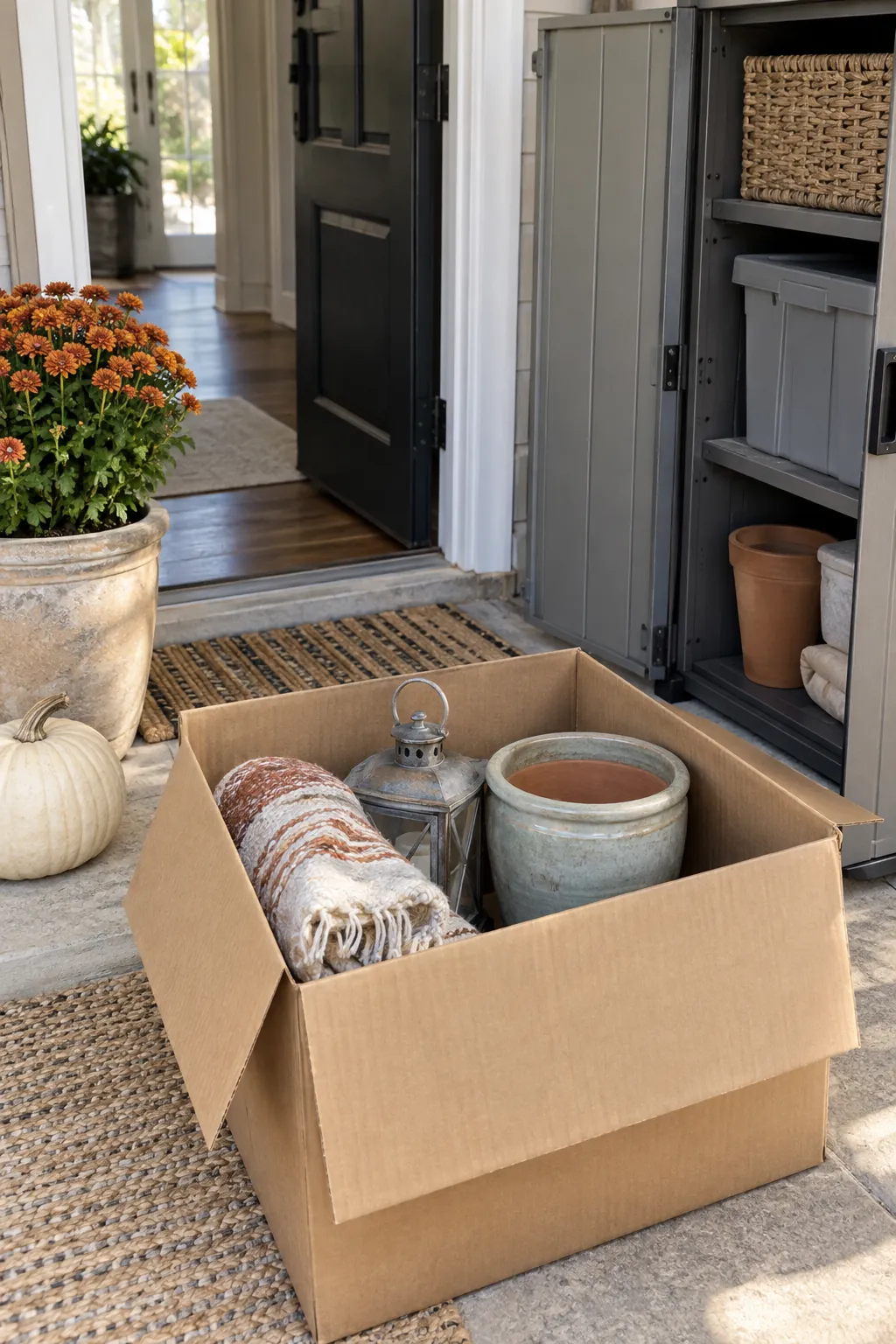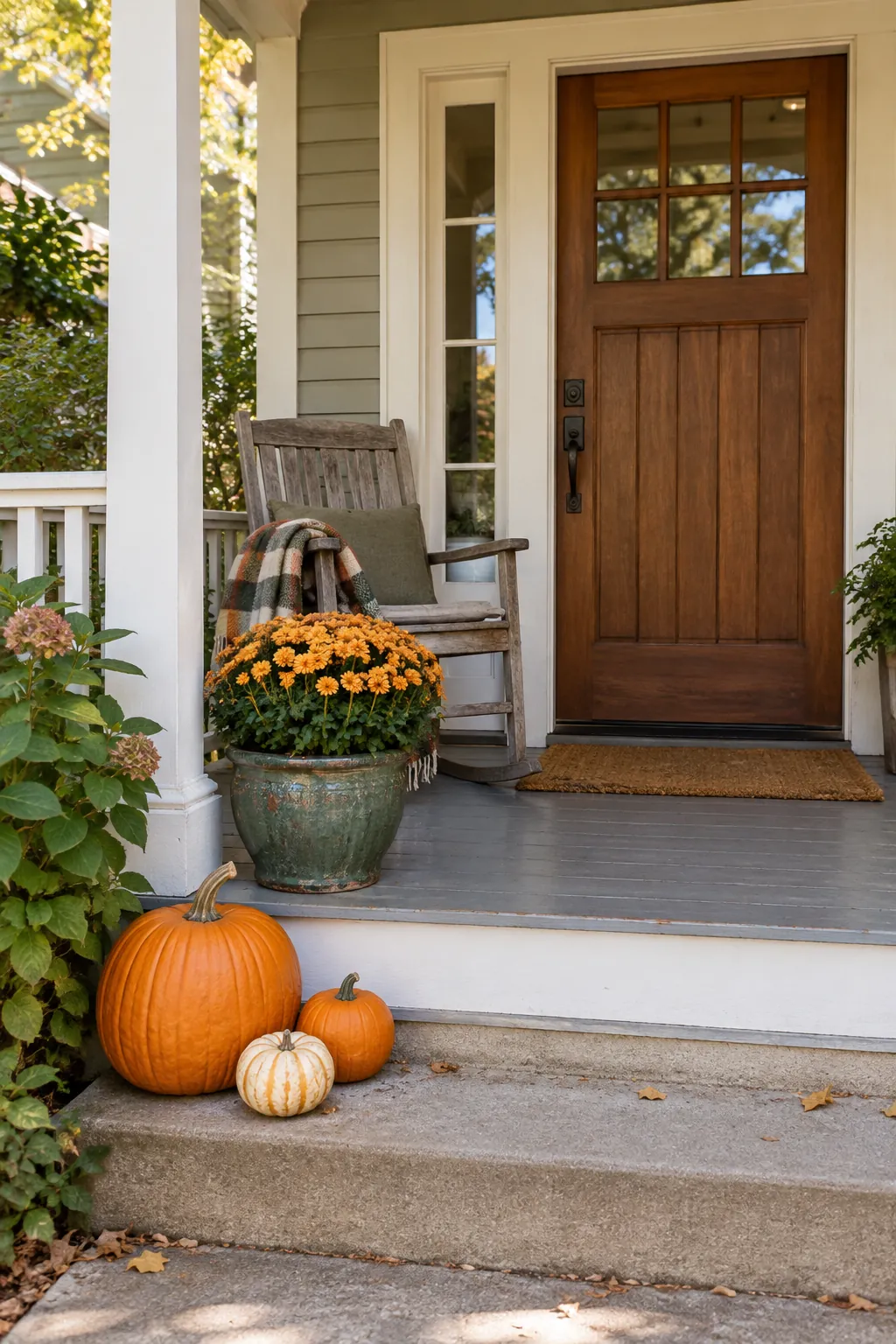
A fall porch does not need a cart of new decorations to feel complete. The useful first decision is what already has a place on your entry, then which small purchase solves a real gap. A clear path, healthy plants, and a few well chosen shapes usually do more work than a crowded collection.
Start With the Porch You Have
A porch can feel unfinished because its objects are scattered, not because it needs a shopping trip. Take a photo from the sidewalk, clear the threshold, and notice which corner is visible first. Measure the space the door needs and leave that route open before planning a display.
Choose one focal place, such as the top step, a bench end, or the side of the door. Gather the items you already own there for a trial arrangement. Seeing them together shows whether you need another plant, a better sized pumpkin, or nothing at all.
Reuse Summer Planters and Containers
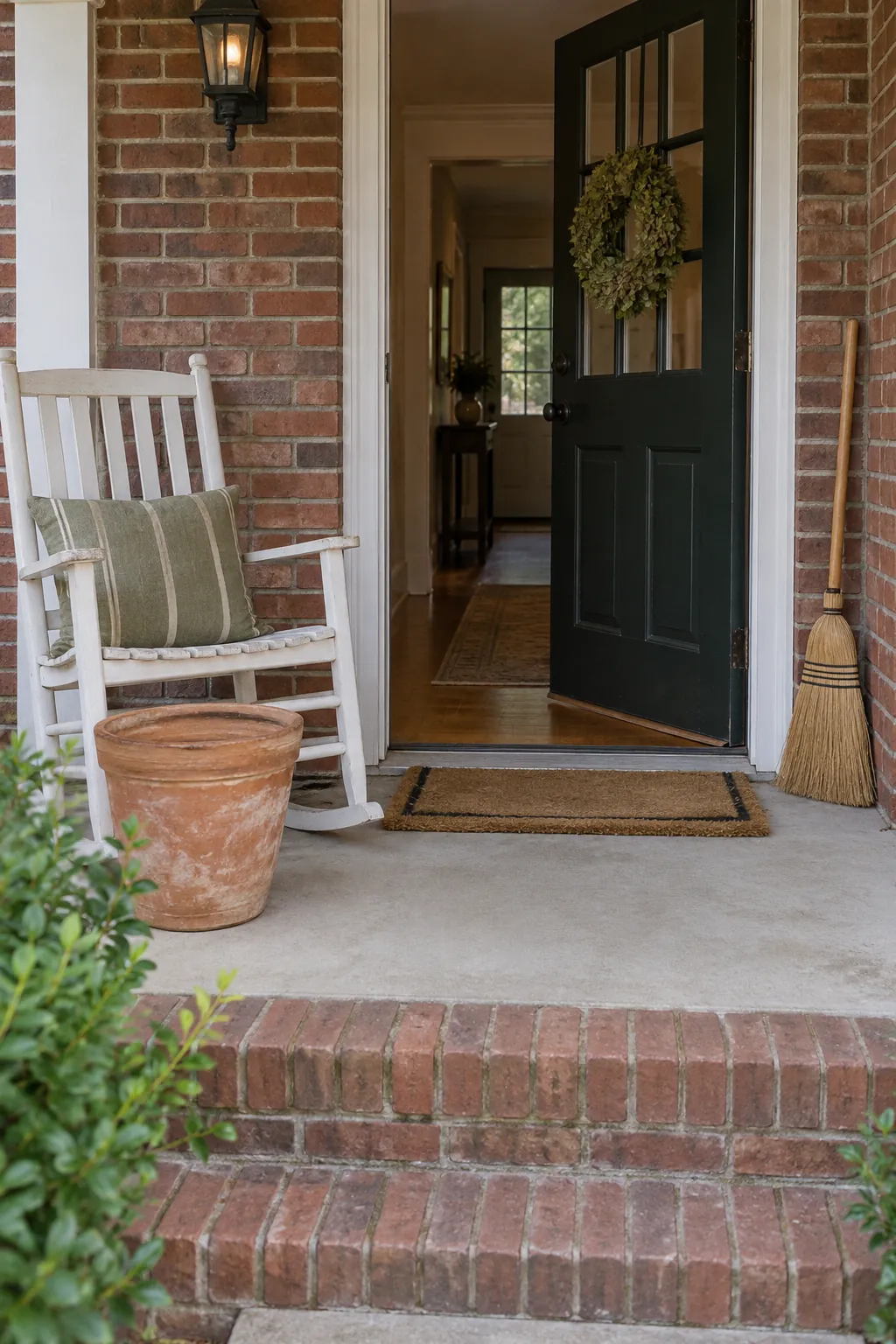
An empty summer planter is often the most useful fall porch piece you already have. Wash out old soil, check the drainage hole, and fit a nursery mum pot inside if its diameter allows. A plain ceramic or terracotta pot can look seasonal through the plant alone.
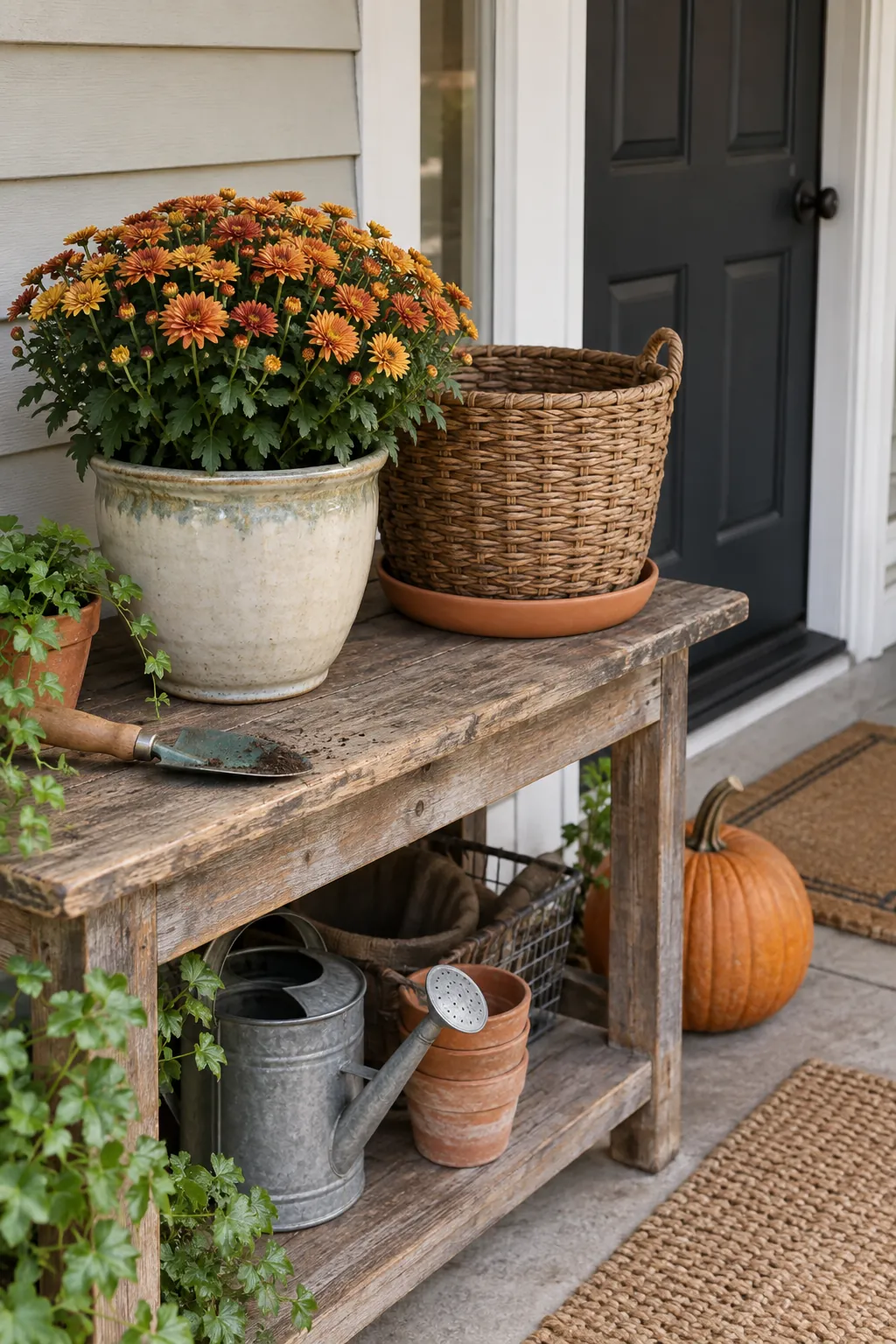
A basket can hide a less attractive pot, but water needs somewhere to drain without soaking the basket. Put the plant in a draining pot with a separate saucer, then lift it out for watering if the basket is not protected. Keep any container that is cracked or unstable off a busy step.
Move Furniture Before Buying Props
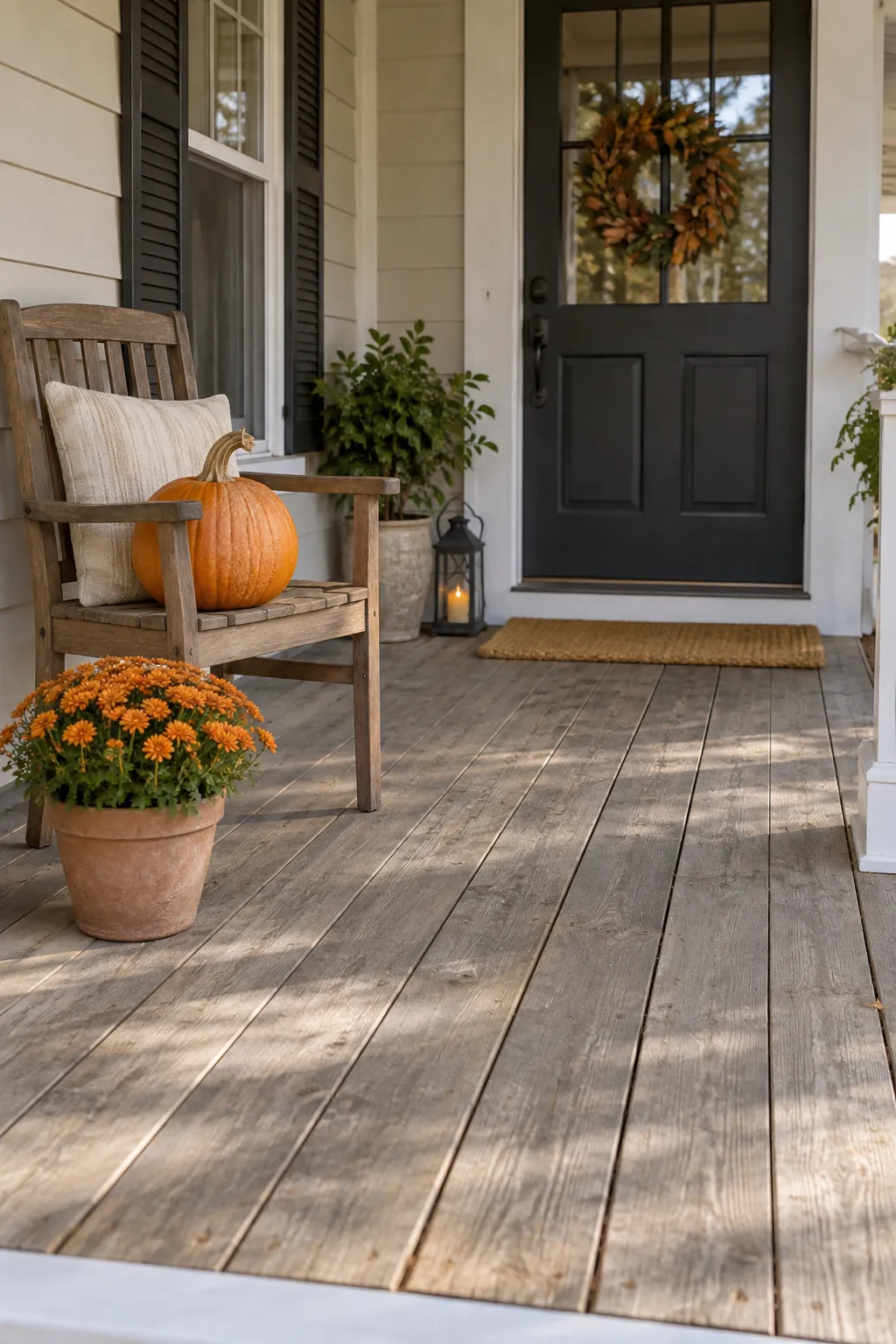
A chair, stool, or bench can give pumpkins height without buying a display stand. Shift one existing piece toward the side of the porch and test the walking line again. A small grouping beside it usually has more impact than decorations spread evenly across the floor.
Buy Plants That Suit Your Porch
A full mum can be the only new plant a small entry needs. Before buying, look for healthy foliage, a pot that drains, and buds as well as open flowers. Check whether the porch has sun or deep shade and whether someone can reach the pot to water it.
Climate changes the value of a living purchase. In a warm spell, a sheltered pot may dry quickly and a pumpkin may deteriorate sooner than expected. If the site is harsh, buy fewer plants and leave room to move them into better light or shelter as conditions change.
Choose Pumpkins for the Space
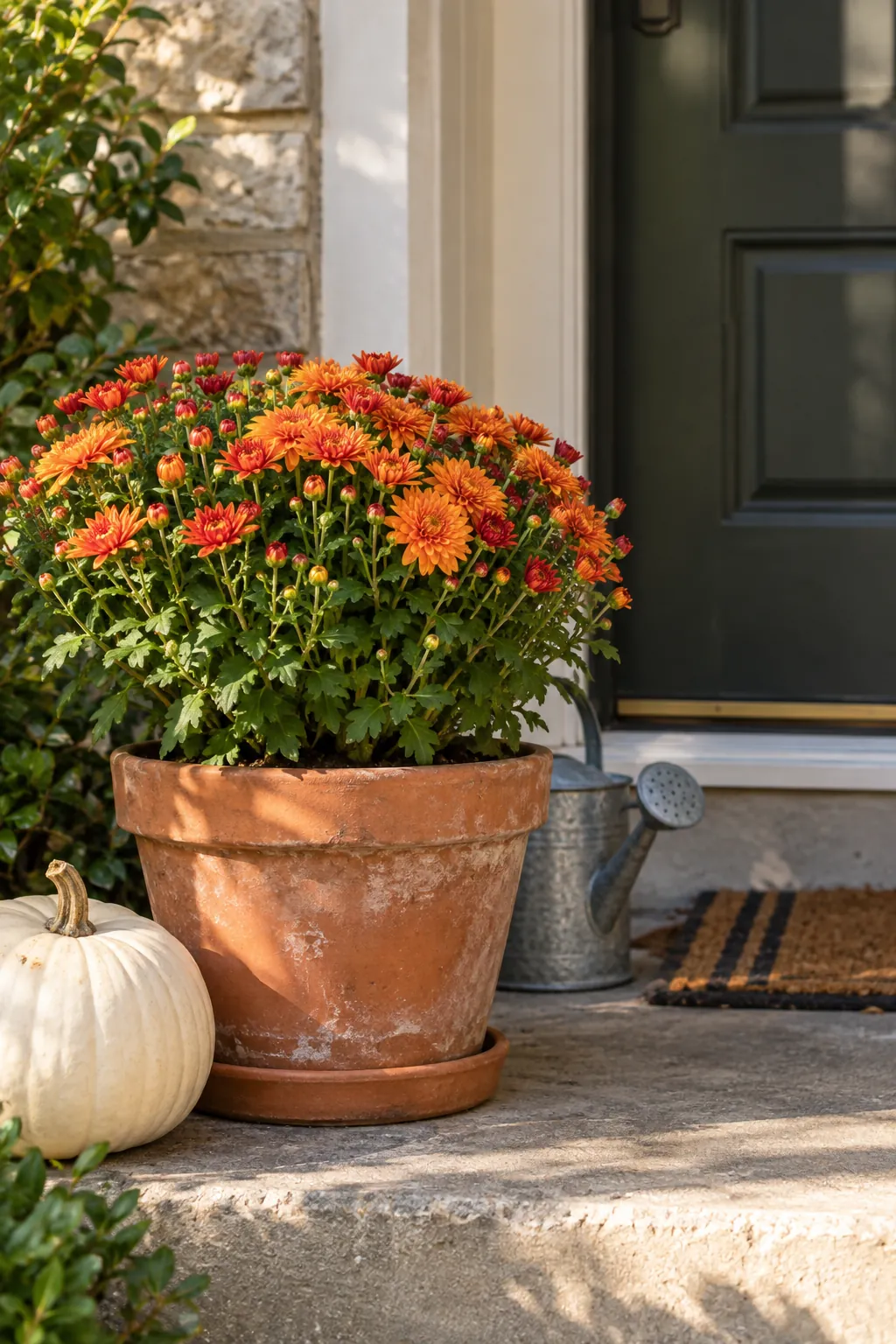
One substantial pumpkin and two smaller companions often give more shape than a pile of similar sizes. Check the base of each pumpkin for soundness and choose one with a stem or silhouette you like from the street. A local farm stand or grocery display may have a better fit for your porch than a large decorative bundle, so compare actual sizes before buying.
Thrift the Pieces You Can Use Again
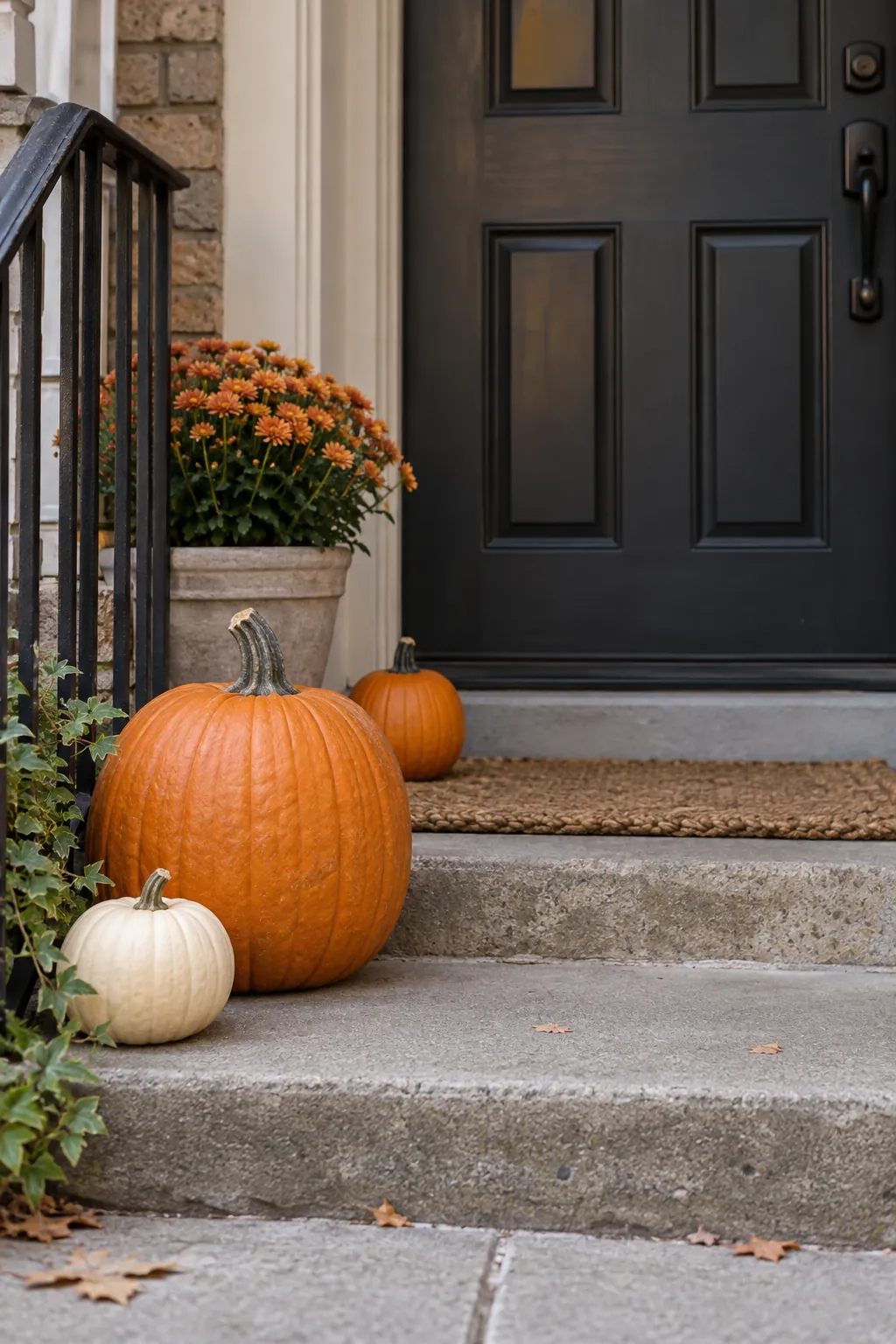
A secondhand lantern, sturdy pot, or plain tray can work across several seasons. Check for a stable base, cleanable surfaces, and enough room around plants before paying for it. Skip a bargain that requires repairs or storage space you do not have.
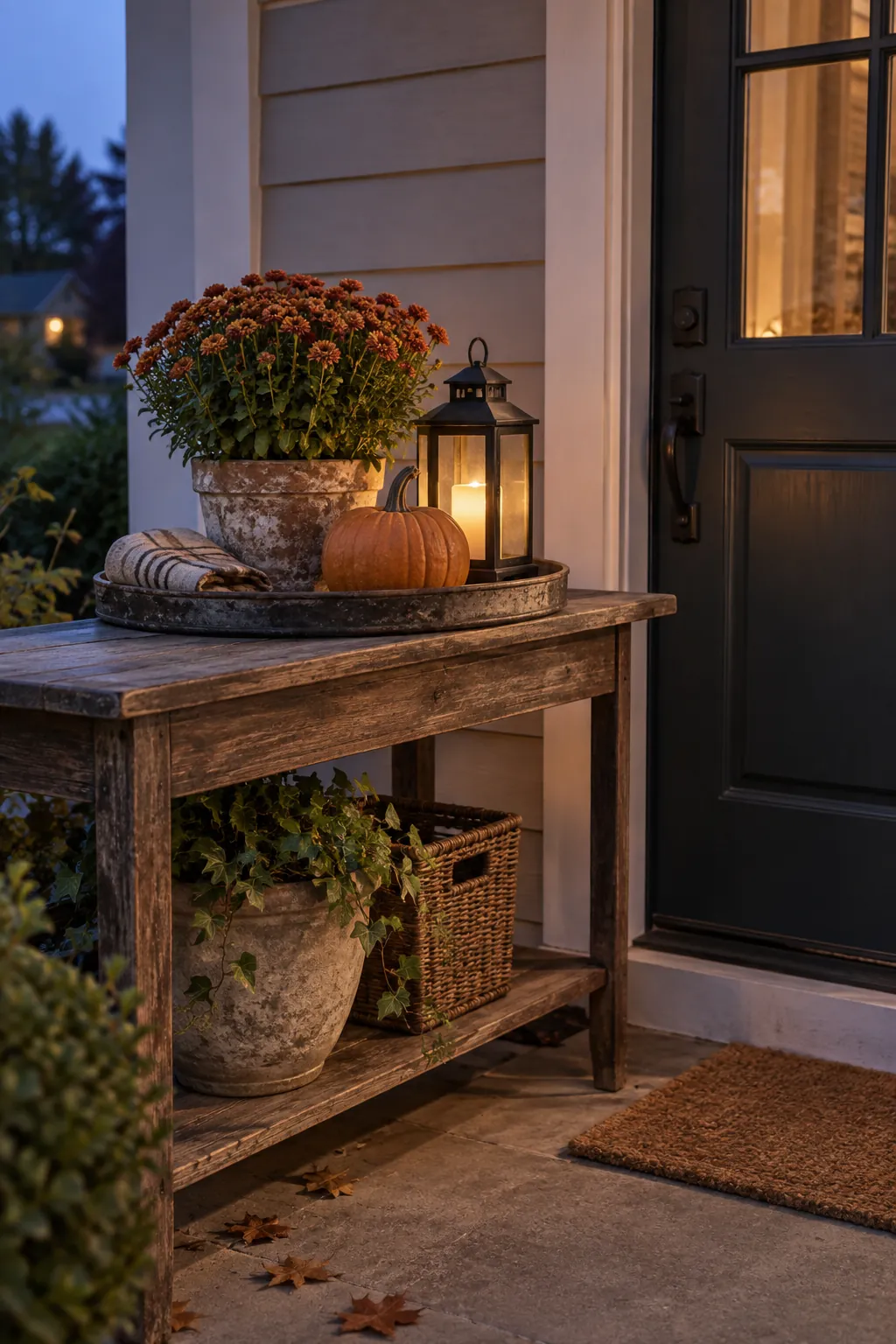
For evening light, use a battery lantern or a fixture rated for its outdoor location. Keep fabric and leaves away from any light source and avoid loose cords across the path. A simple warm glow is more useful than a cluster of accessories that makes the entrance awkward.
Set a Spending Rule and Store the Rest
Divide the budget by purpose before shopping: a living focal plant, a few pumpkins, and only one durable missing piece if the layout needs it. If an item cannot be placed in the trial arrangement, leave it at the store. This keeps the porch tied to its actual size rather than a display seen elsewhere.
At season end, clean and dry reusable containers, lanterns, and textiles before storing them together. Compost spent natural materials where local rules allow, and note which plant or pumpkin size worked best. That short record makes next fall easier to plan without buying the same filler twice.