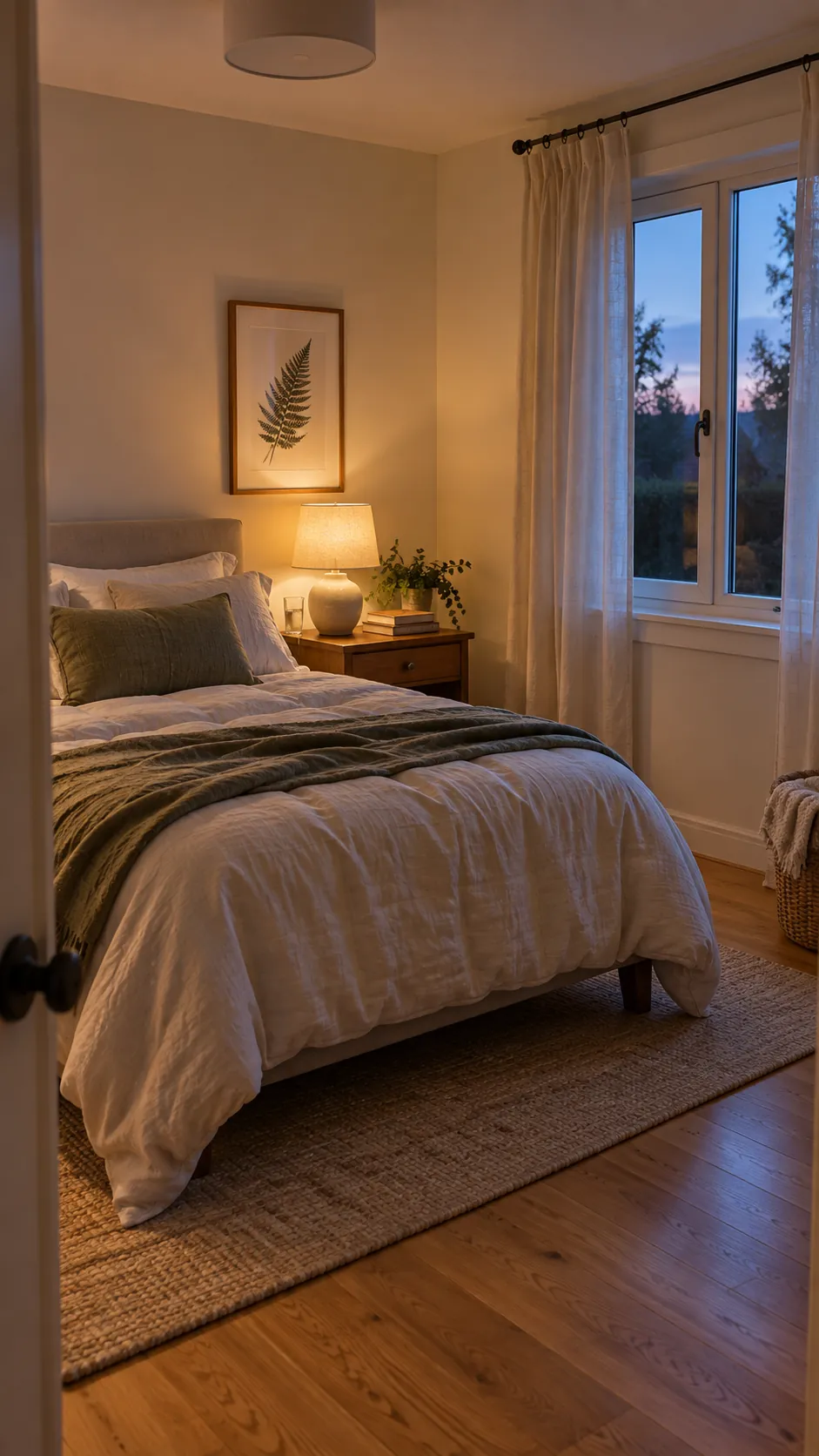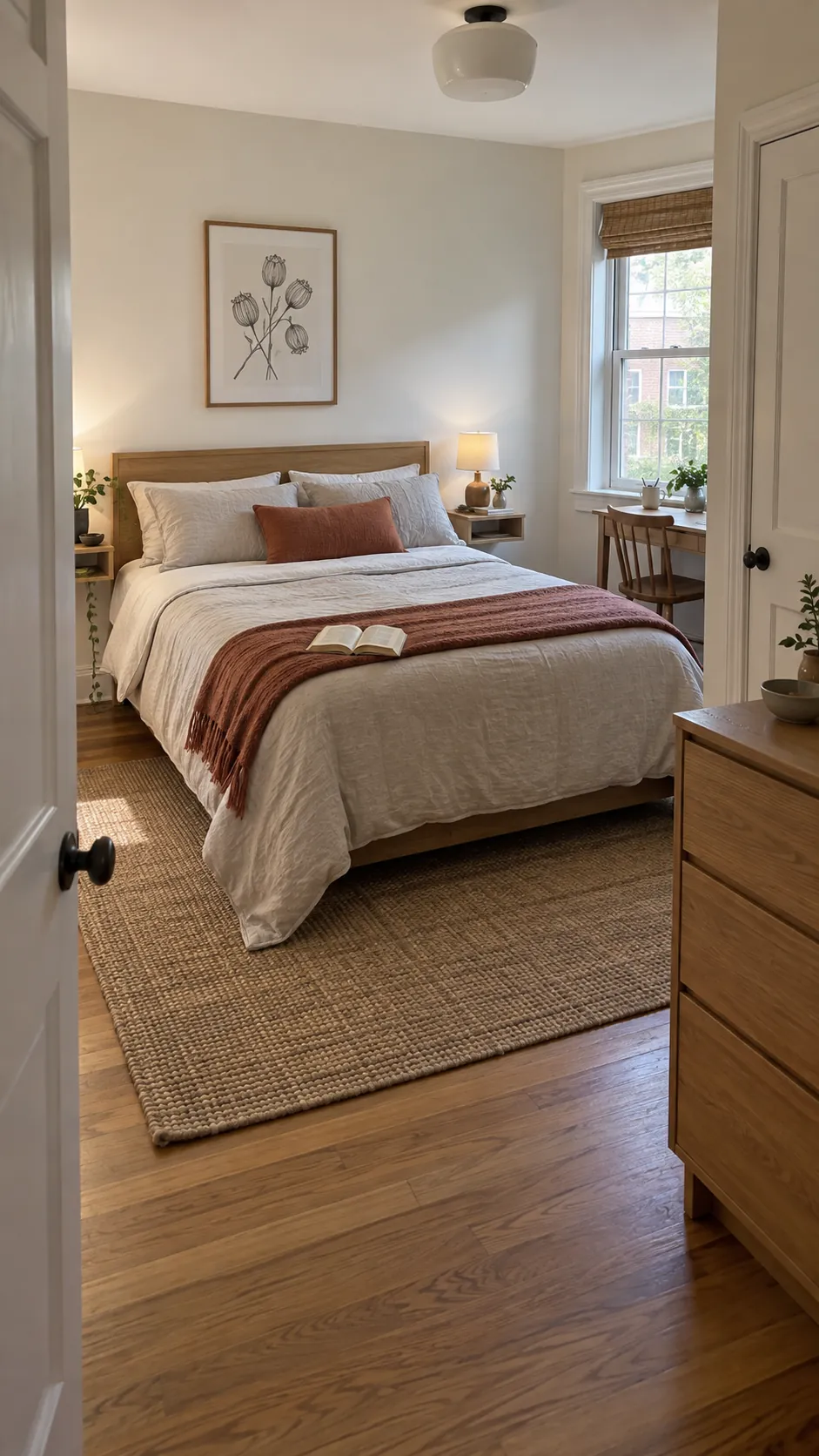
A square room can be surprisingly hard to arrange because every wall looks equally useful until the door, closet, and window are drawn in. Before deciding where the bed should go, measure the finished wall lengths and mark anything that needs room to open. A twelve foot square gives you a useful starting point, but trim, radiators, and furniture frames change the space you can actually use.
Sketch the real square, not an empty box
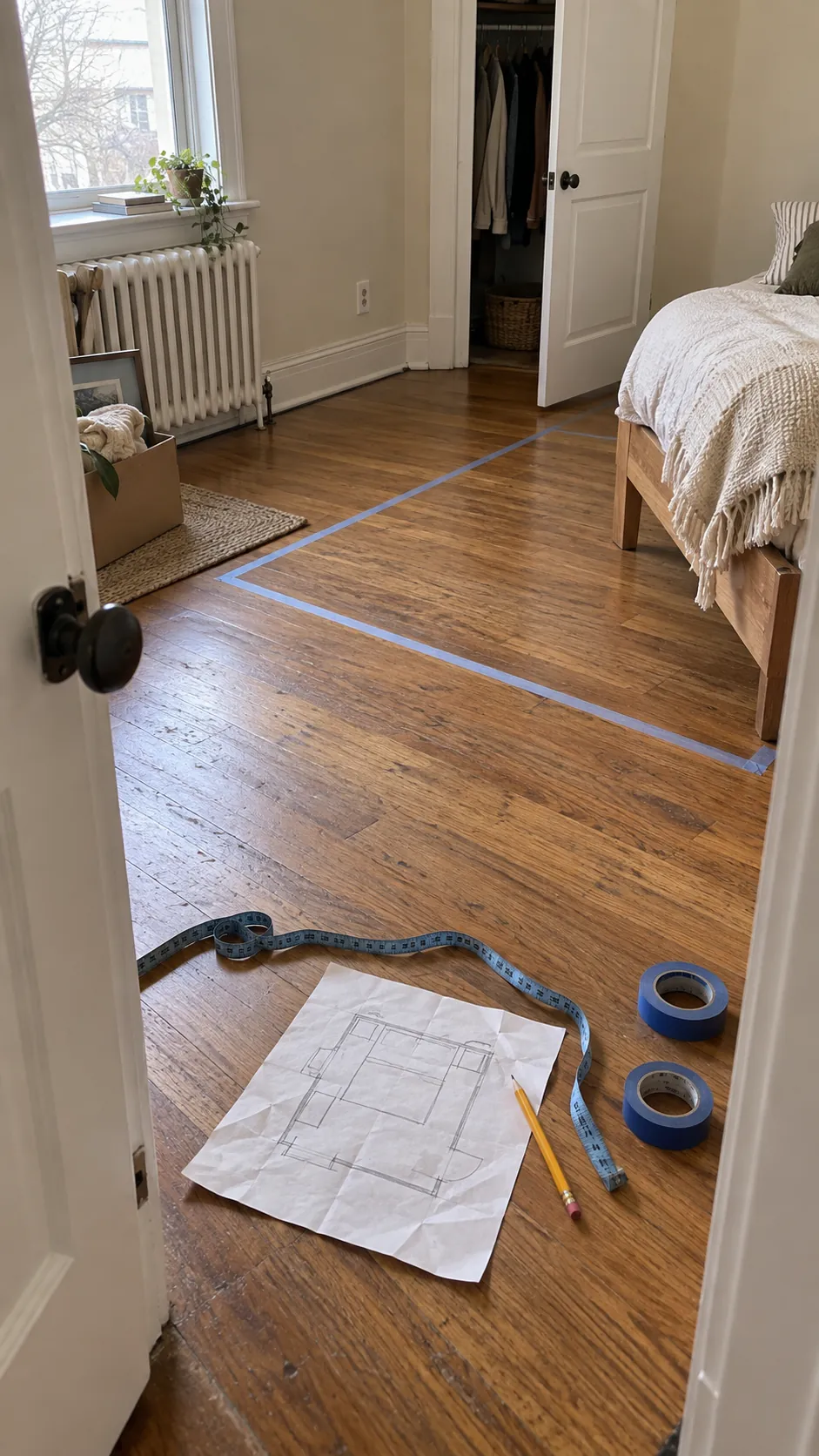
Draw the 12×12 bedroom layout with the entry swing, closet access, window, outlets, and heating or cooling equipment. Measure each piece of furniture at its widest point, including bed frame, drawer handles, and chair when pulled out. Then mark the route from door to bed and closet. If a plan forces you to walk sideways each morning, it needs a different arrangement even if everything technically fits.
Make two or three sketches before moving heavy pieces. One may prioritize access from both sides of the bed, while another gives a desk better daylight. Tape the largest furniture footprints onto the floor and open the door and closet to test them. This simple trial exposes conflicts a neat drawing can hide.
Place a queen bed for everyday access
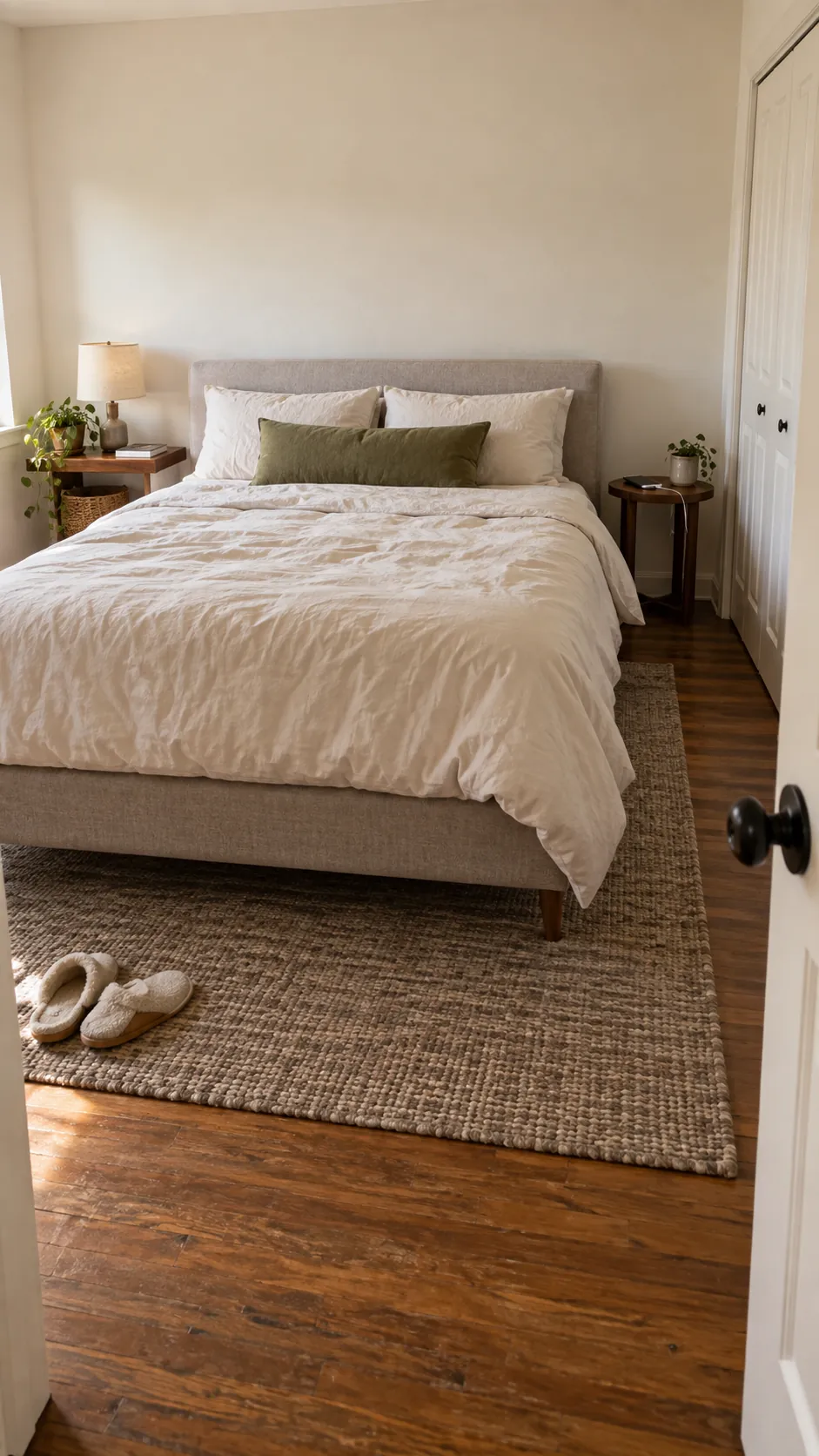
A queen bed in a 12×12 room can work, but the mattress is only part of its footprint. The frame and headboard may add width or length, so check the actual product dimensions. Centering the headboard on an uninterrupted wall often gives two people easier access and room for slim bedside surfaces. If the closet or door makes that impossible, move the bed off center deliberately instead of leaving a narrow, unusable strip on both sides.
Try to leave a sensible route at the foot as well as beside the mattress. A large bench there may look attractive in a photo but obstruct daily movement. Keep the bedside surface sized to what is used at night; a lamp, phone, and book may fit on a compact table or wall shelf. Test how easily bedding can be changed before committing to a bed against two walls.
Fit a desk without sacrificing the closet
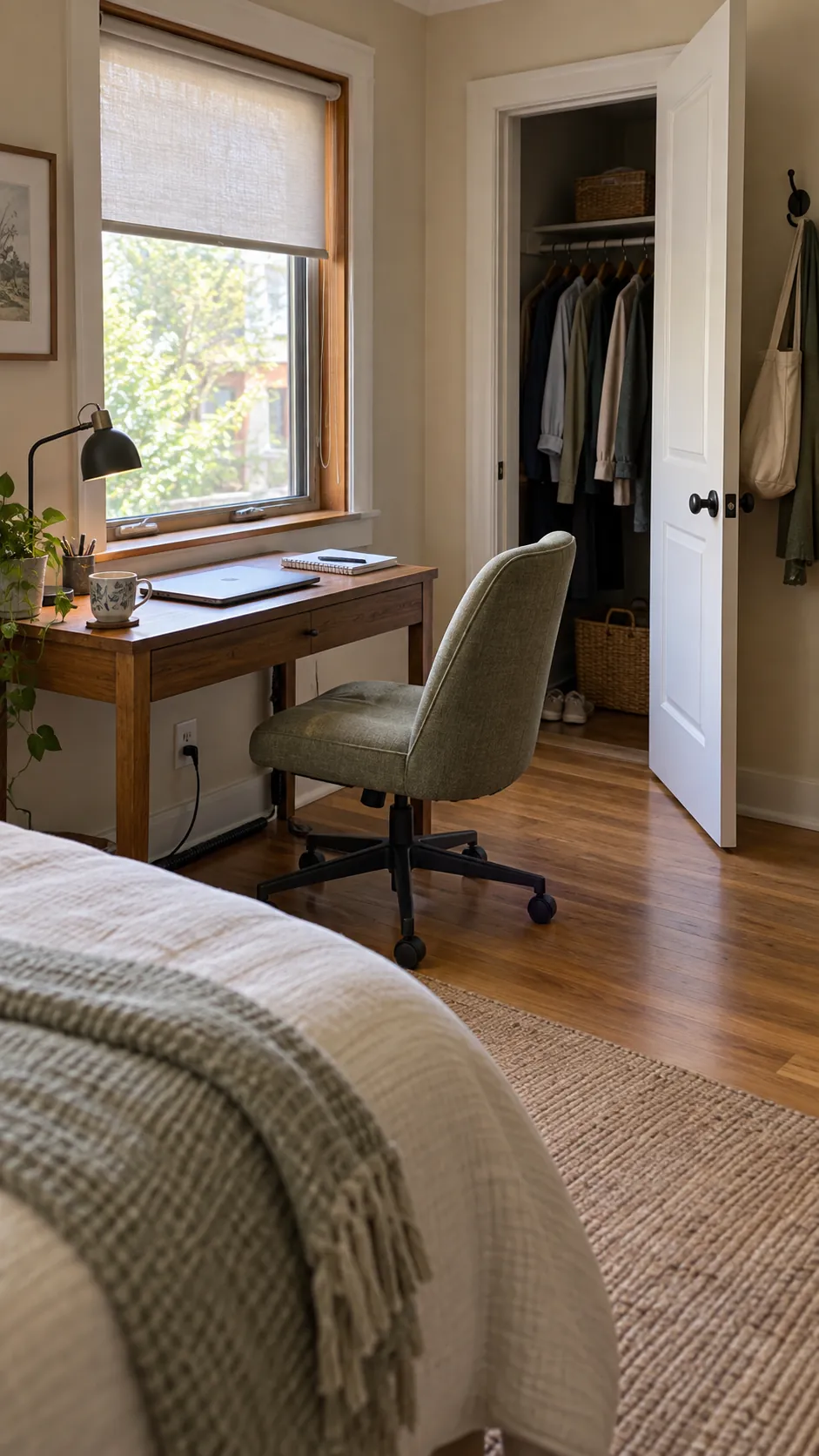
A desk in a 12×12 bedroom belongs where its chair can pull out and its screen is comfortable to use. Near the window may offer pleasant daylight, but place the screen so glare does not make work harder. A shallow desk can fit a side wall better than a deep one, especially when the bed already occupies the center of the room. Measure the chair in use, not just tucked under the top.
Keep the closet opening clear and check drawers at the same time. If the desk and wardrobe cannot both open comfortably, consider a smaller work surface, a different dresser location, or using another room for work. Square bedroom furniture placement should follow the tasks that actually happen there, not the hope that every function can be squeezed into one corner.
Choose a rug that relates to the bed
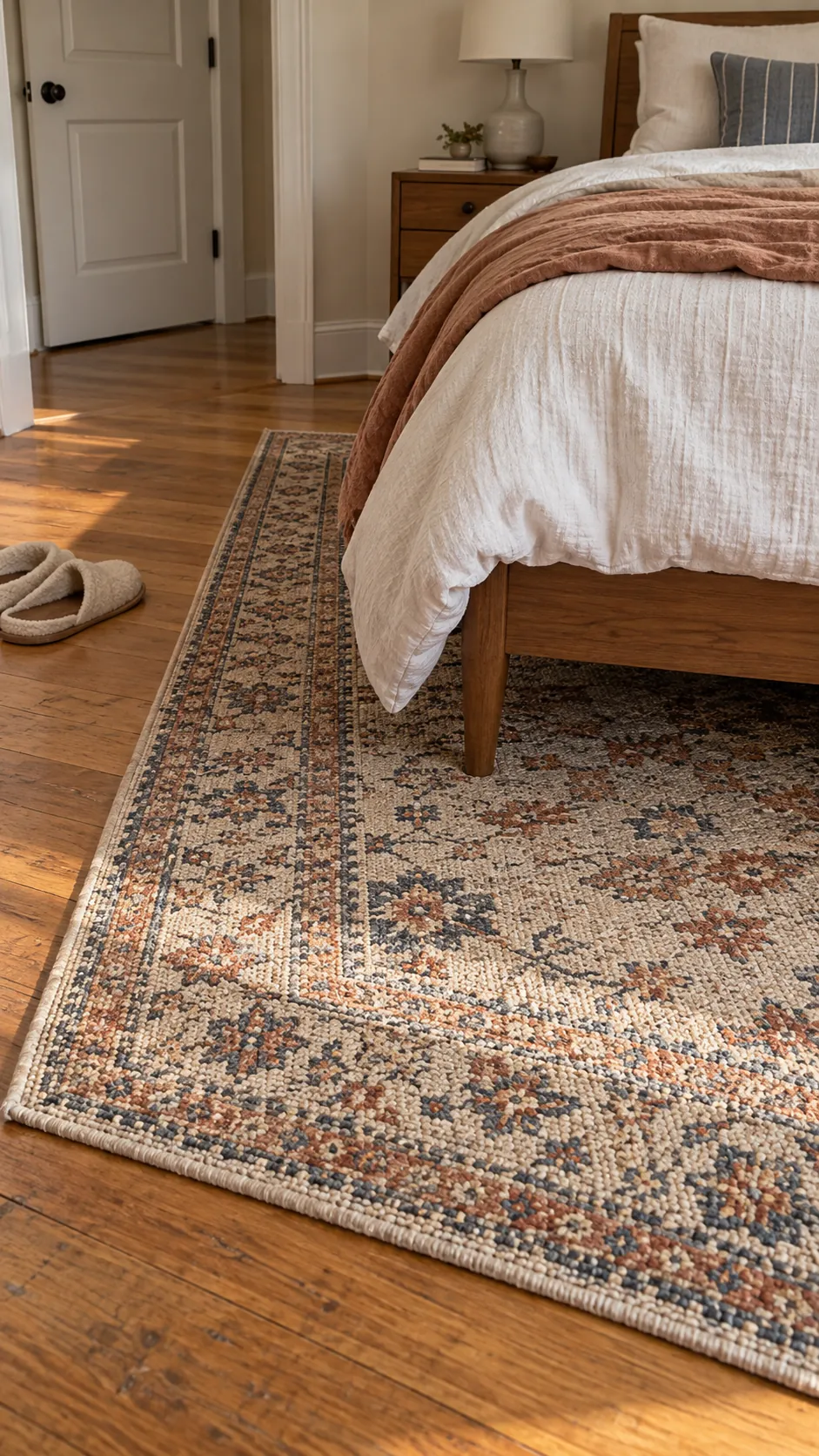
Bedroom rug size is easier to judge when you decide where bare feet will land. A rug partly beneath the bed can soften both sides and the foot without covering every board. Lay tape on the floor to check the proposed edges before ordering. Make sure the rug will not catch the door and that its exposed corners stay flat.
A small rug floating only at the foot may feel disconnected from the bed. Conversely, a very large rug can conceal much of a floor you like and make furniture movement awkward. The right choice depends on your bed placement and walking route. Use a suitable pad so the rug stays put.
Concentrate storage on useful walls
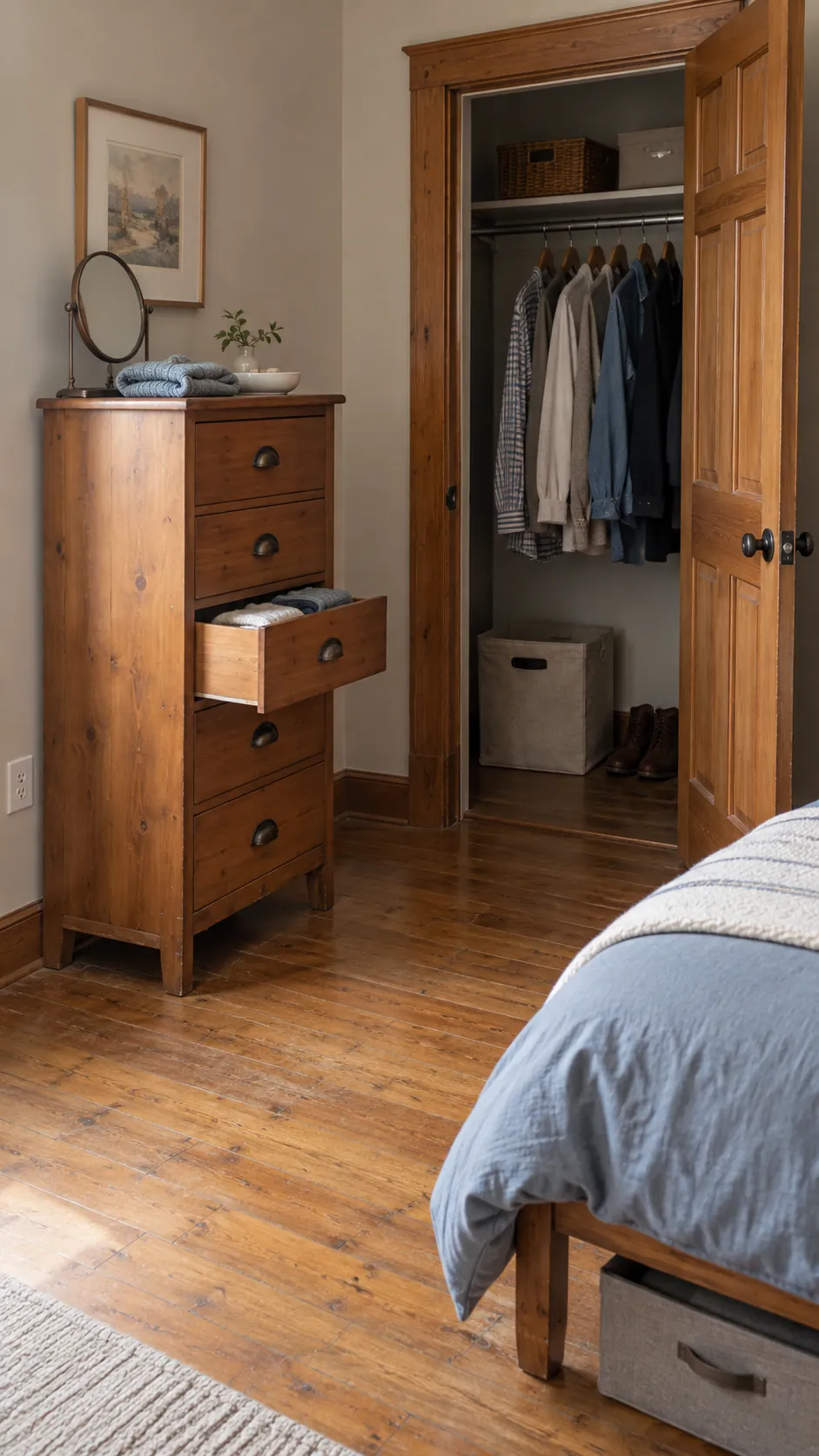
Small bedroom storage should serve the daily routine without filling every corner. A dresser on the wall nearest the closet can group clothing tasks and leave the window wall lighter. Choose drawer depth and handle projection carefully. If the dresser makes a narrow path, a taller but shallower piece may use the wall more efficiently, provided it is secured appropriately.
Under bed storage can hold seasonal items if the frame permits access. Keep everyday clothing in drawers or the closet rather than in boxes that are awkward to reach. One shelf for books or a basket for extra blankets may be enough. Leave a clear place to set things down while dressing, so the room does not become a collection of storage containers.
Make the square feel settled with light and texture
Once the layout works, 12×12 bedroom decor can make the room feel cozy without crowding it. Choose bedding that relates to the wall color, add a useful reading lamp, and give one piece of art or another personal object a clear place. A layered light plan is better than one bright ceiling fixture: combine ambient light with a lamp where you read or dress.
Keep the window easy to open and the curtains clear of bulky furniture. A coherent palette and a rug with enough presence can anchor the bed, while texture keeps the room from feeling flat. Review the arrangement from the doorway after living with it for a week. The best square bedroom is the one that supports sleeping, dressing, and any other essential task without making each task compete for the same floor space.