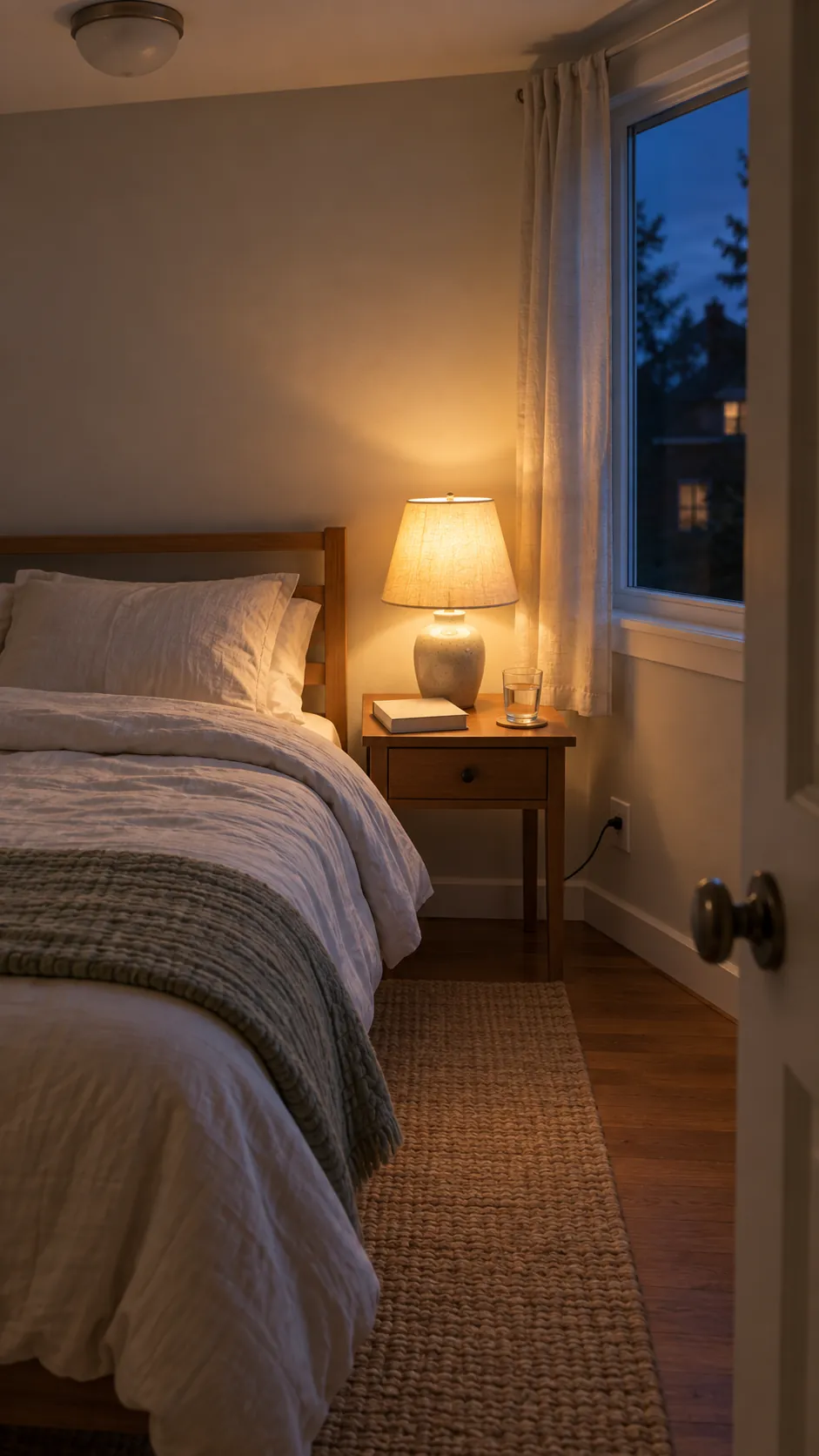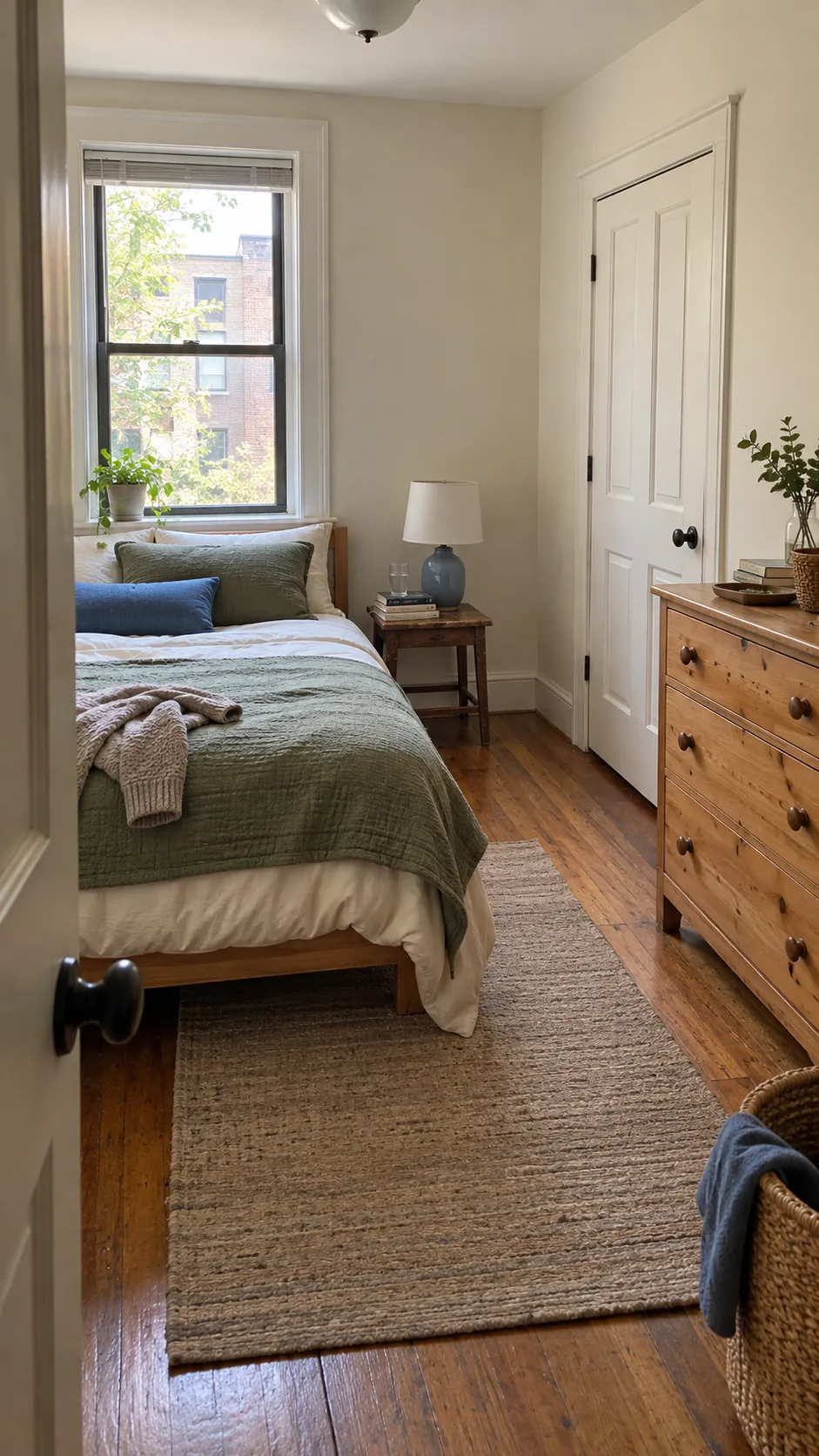
The expensive part of a small bedroom makeover is often buying the wrong thing twice. A narrow walkway, an awkward closet door, or a lamp with nowhere to plug in can defeat a lovely shopping list. Start with the room you have and spend only where a change will improve how it looks and works every day.
Spend after you map the room
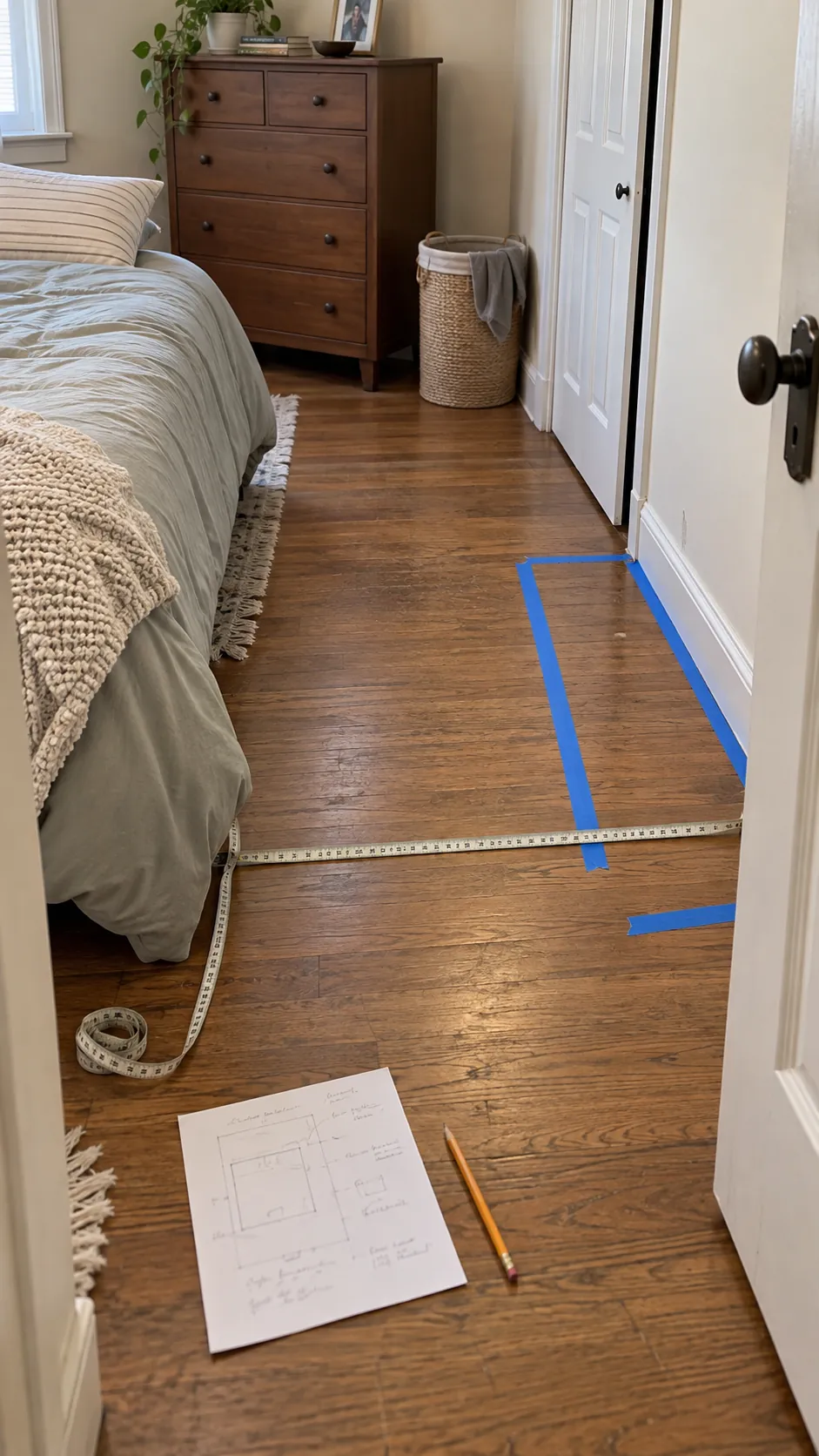
Move anything that does not belong in the bedroom out of the way, then take a photo from the door. Measure the bed, the usable wall beside it, and the space needed to open drawers and the closet. Try a new furniture arrangement before paying for new furniture. Even turning a dresser to a different wall may reveal room for a bedside lamp or a clearer path.
Write down the one problem that bothers you most, such as clothes on a chair or a dark reading corner. Set aside money for that problem first. Keep a separate small allowance for materials such as light bulbs, hooks, or a rug pad, since these easy to forget purchases can consume the last of a budget. If the room already functions well, spend on a visible textile or light source instead of another storage unit.
Look for used furniture with a job to do
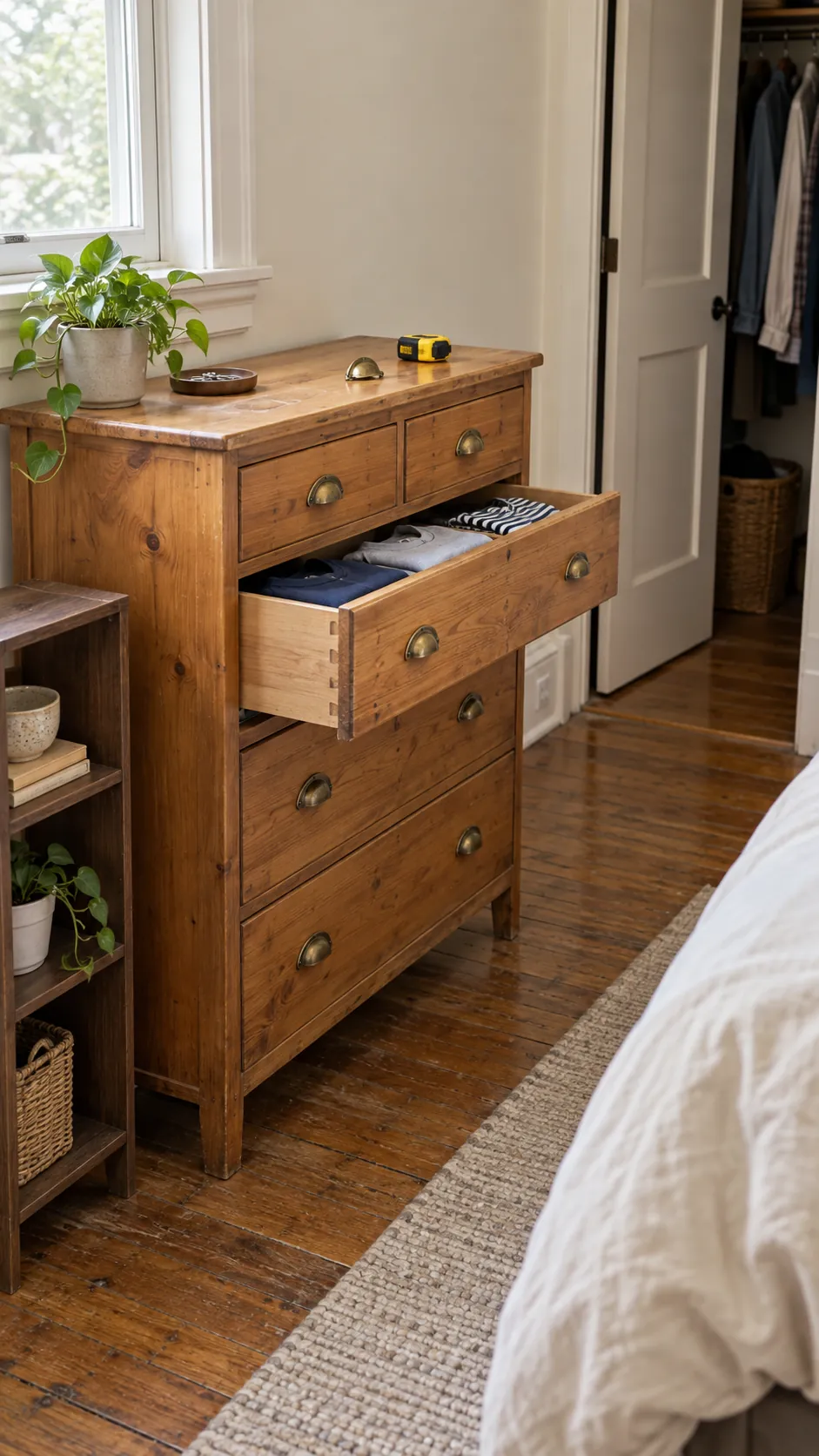
Thrifted bedroom furniture can stretch a budget, but a bargain is useful only if it fits. Carry your measurements when visiting a resale shop, charity store, or local pickup listing. A shallow dresser may be worth more to a tight room than a larger piece with a lower price. Check that drawers run, legs sit evenly, and the piece can pass through your doorway. Include transport, cleaning, and any hardware replacement in the real cost.
Solid wood tables and dressers can often be cleaned and reused with little work. Inspect seams and backs carefully before bringing secondhand furniture home, especially anything upholstered, and skip items with signs of pests or persistent odor. A matching set is rarely necessary. One bedside table and a slim wall shelf can serve two sides of a bed without making the room look like a crowded showroom.
Choose the piece that solves the daily task, then wait before collecting more. If the dresser takes all the walking space, inexpensive drawer organizers inside an existing closet may be the better purchase.
Let fabric change the largest surfaces
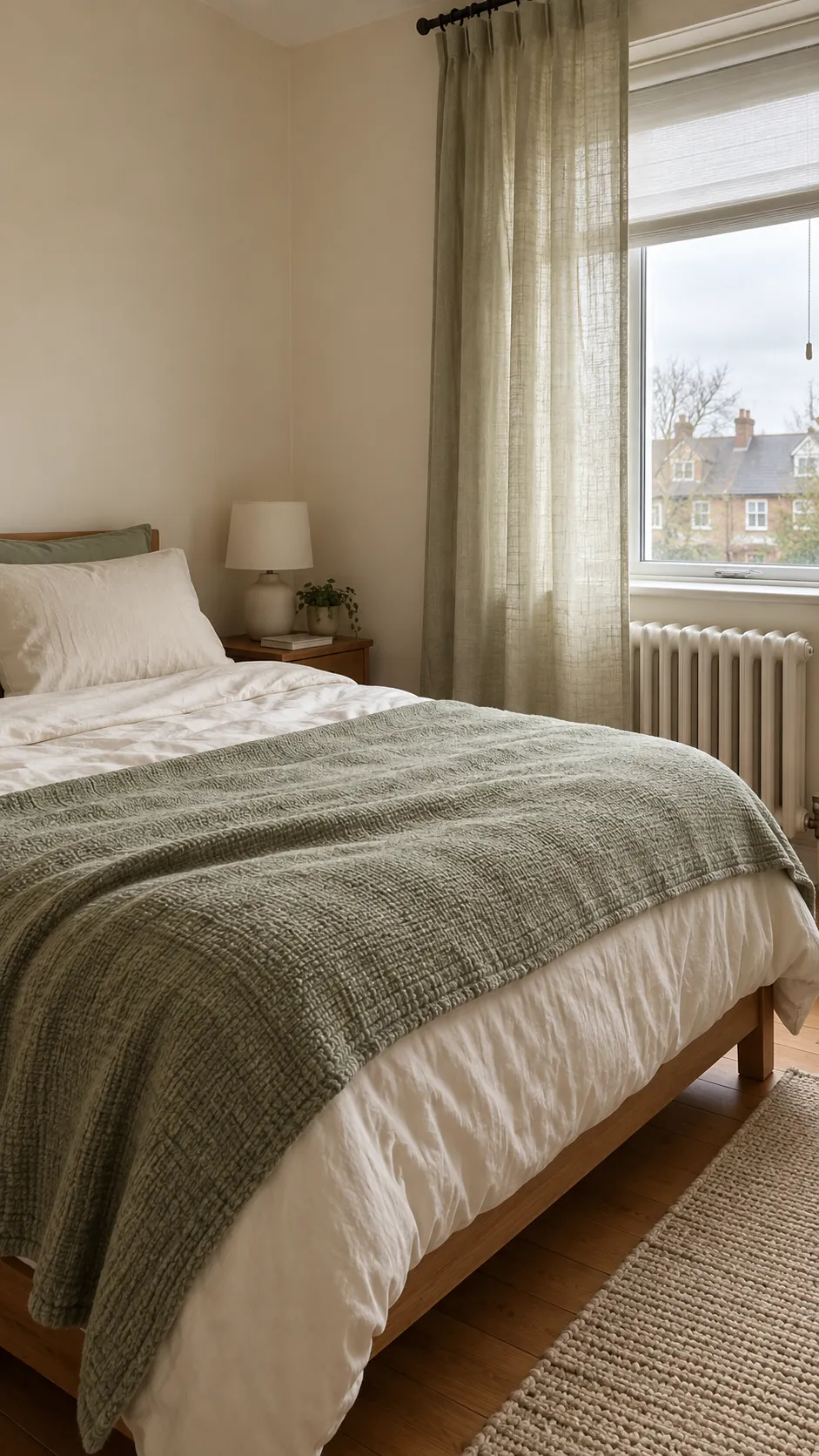
The bed usually occupies more of the view than any small decorative object. Before replacing it, wash and smooth the bedding you own, then choose one color or texture to add. A secondhand coverlet or a new pillowcase in a color that relates to the existing walls can make mismatched pieces feel intentional. The goal is a comfortable bed that can still be made in a few minutes, not a stack of cushions that has to be moved every night.
Window fabric matters just as much because it changes the light across the room. If the current blind provides privacy, a simple curtain panel can soften the frame without requiring a costly treatment. Measure the window and check the mounting rules before buying a rod, particularly in a rental. Keep fabric clear of heaters and make sure the window can still open. A small rug may help beside the bed, but tape its proposed outline on the floor so you do not buy one that catches the door.
Give the wall one personal focal point
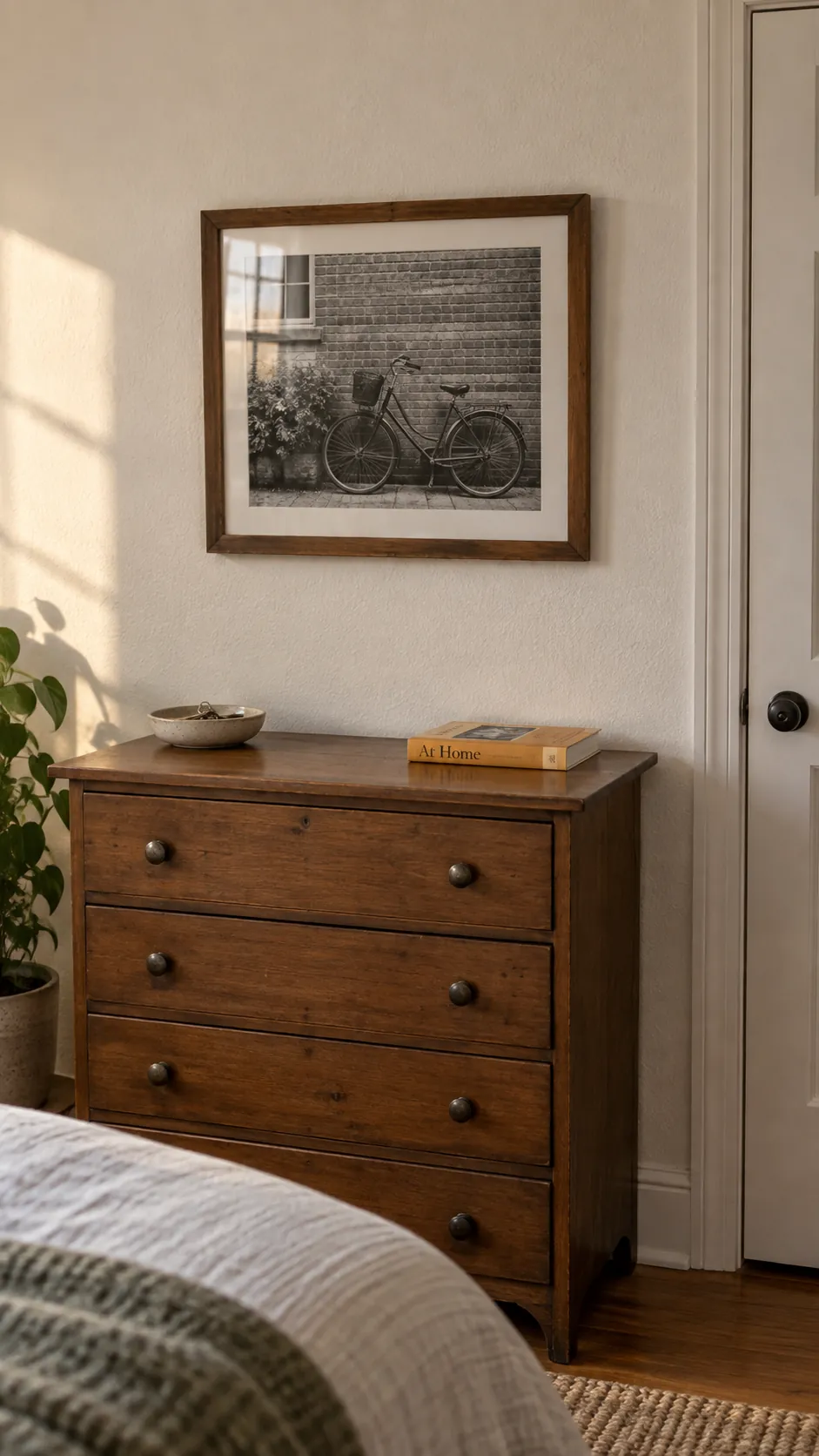
Affordable wall decor does not require filling every blank patch. A single picture over a dresser or beside the bed gives the eye somewhere to rest. Frame a print you already own, a drawing, or a photograph that means something to you. A thrifted frame can be cleaned or painted if its glass and backing are sound. If the picture is small, place it where it relates to the furniture beneath it instead of hanging it alone high near the ceiling.
For renter friendly bedroom decor, read the lease before making holes and test removable hanging products on an inconspicuous area according to the maker’s instructions. Adhesive products can still damage some paint when removed. Heavier frames need appropriate hardware and a suitable wall, so a small picture leaning safely on a dresser may be the simpler option. Choose one wall decision first; adding more art only helps if the room still feels calm.
Buy storage for the things you actually use
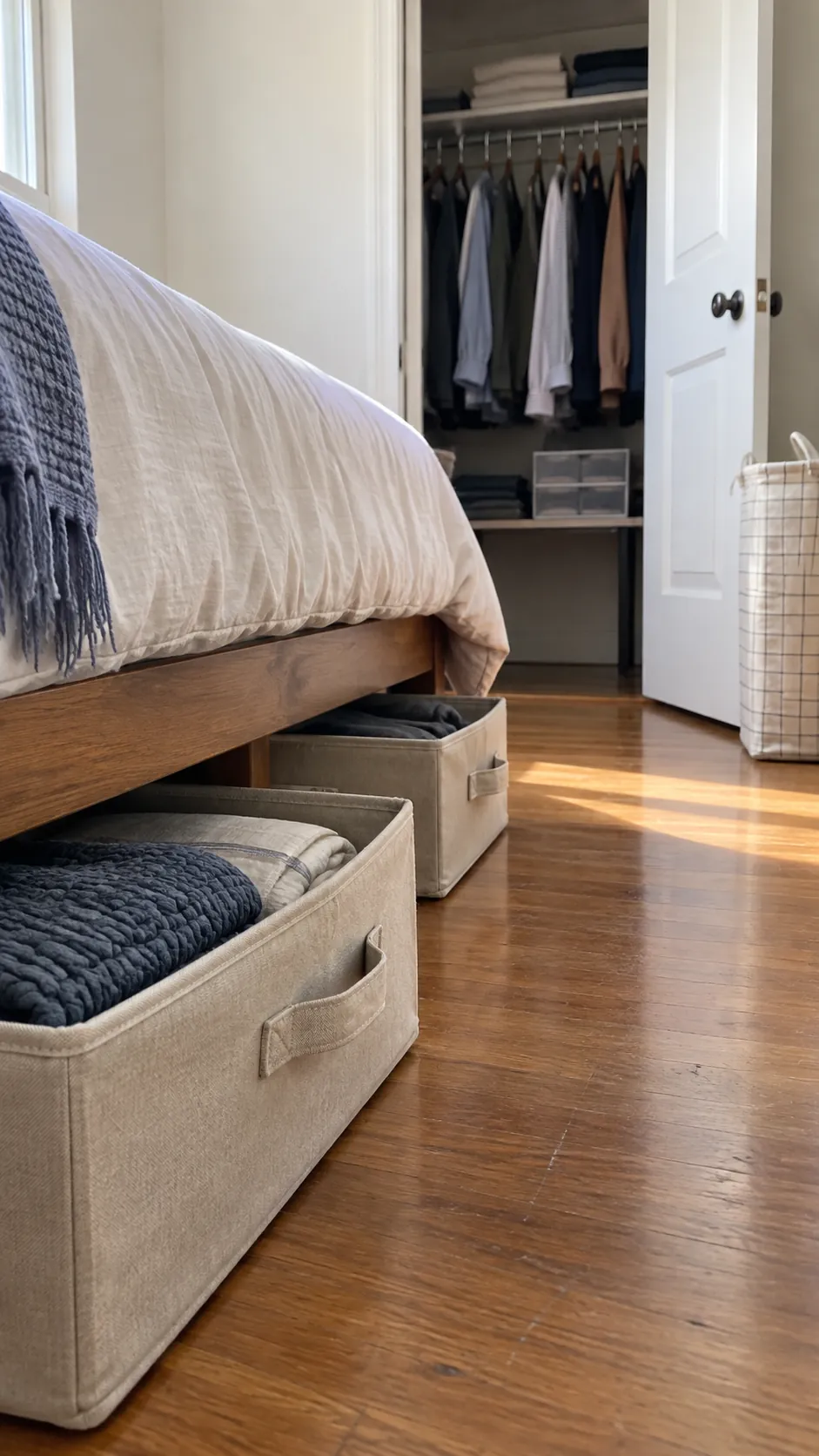
Cheap storage ideas fail when every basket becomes a place to hide a different mess. Sort clothes by how often you reach for them. Everyday items belong in the easiest drawer or closet section; occasional items can go into a labeled box beneath the bed if the frame leaves enough space to pull it out. Measure that clearance before buying bins. Avoid blocking a vent or forcing a box under a frame that cannot support it.
Small trays and dividers from a dollar store can keep a drawer useful, but take the drawer dimensions with you. A row of identical containers is not a saving if they do not fit. Use the back of a door only when its hinges, swing, and hardware can handle the organizer without scraping the wall. In a rental, check what may be mounted and keep heavy items low or secure them with suitable hardware. The best organization purchase is the one that keeps the floor clear without making another daily task harder.
Use one more light before one more purchase
A cozy bedroom on a budget needs useful light more than another decorative accessory. If the ceiling fixture leaves the bed or dresser dim, try a secondhand table lamp where you read or get dressed. Check its wiring and switch before use, choose a bulb within the fixture’s rating, and route the cord where nobody will trip. A lamp with a warm bulb can soften the room at night while the existing window supplies daylight. Then live with the changes for a week. The remaining blank space may be exactly what lets a small room breathe.