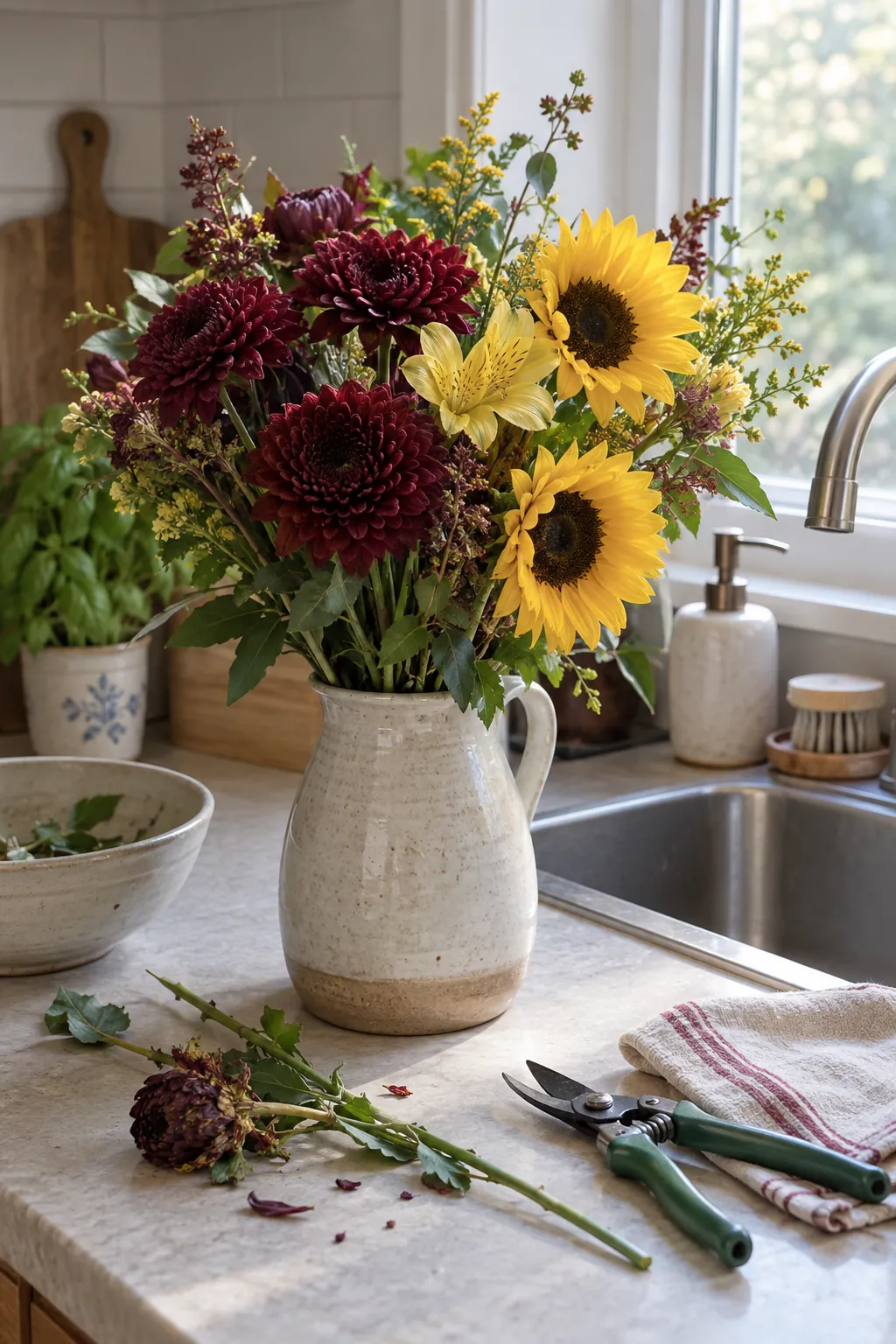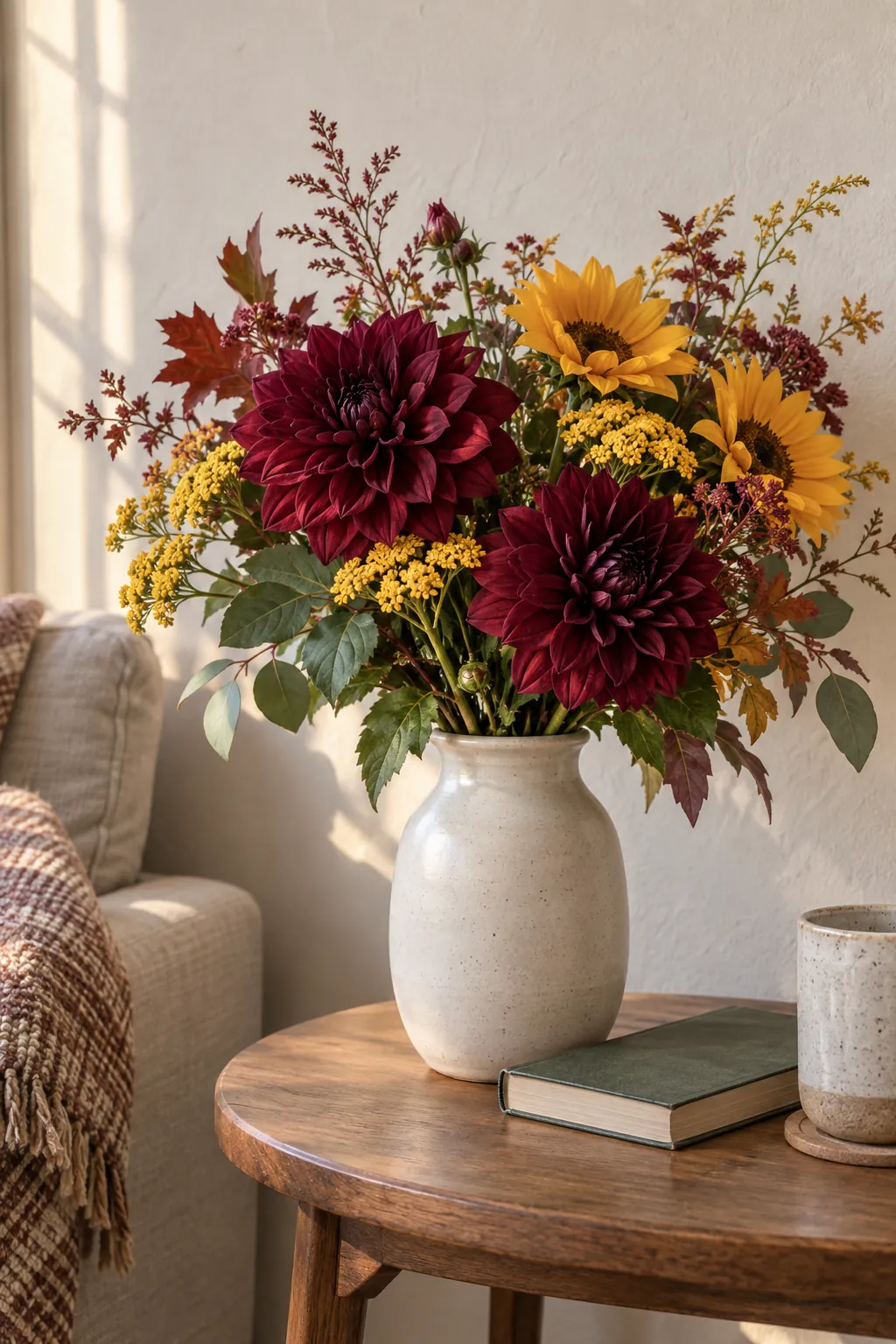
Strong color can make a bouquet feel joyful, yet the same stems can look divided once they enter a room. The key is to choose a visual lead, then use flower size, placement, and a quiet middle tone to connect the contrast. Start with what your local flower stand actually has and adjust the composition in the light where it will live.
Choose a Leading Color
The easiest way to calm a bold pairing is to let one color occupy more visual space. For a rich autumn bouquet, gather burgundy dahlias into a loose center and use fewer yellow cosmos around its edges. The yellow still reads clearly, but the dark blooms give the eye somewhere to rest.
Before cutting stems, hold the bunch at arm’s length in the room where it will sit. If both colors compete from that distance, remove one bright stem or move it deeper into the flowers. Aim for a visible lead color rather than a rigid numerical formula.
Compare Flower Shapes Before Buying More Stems
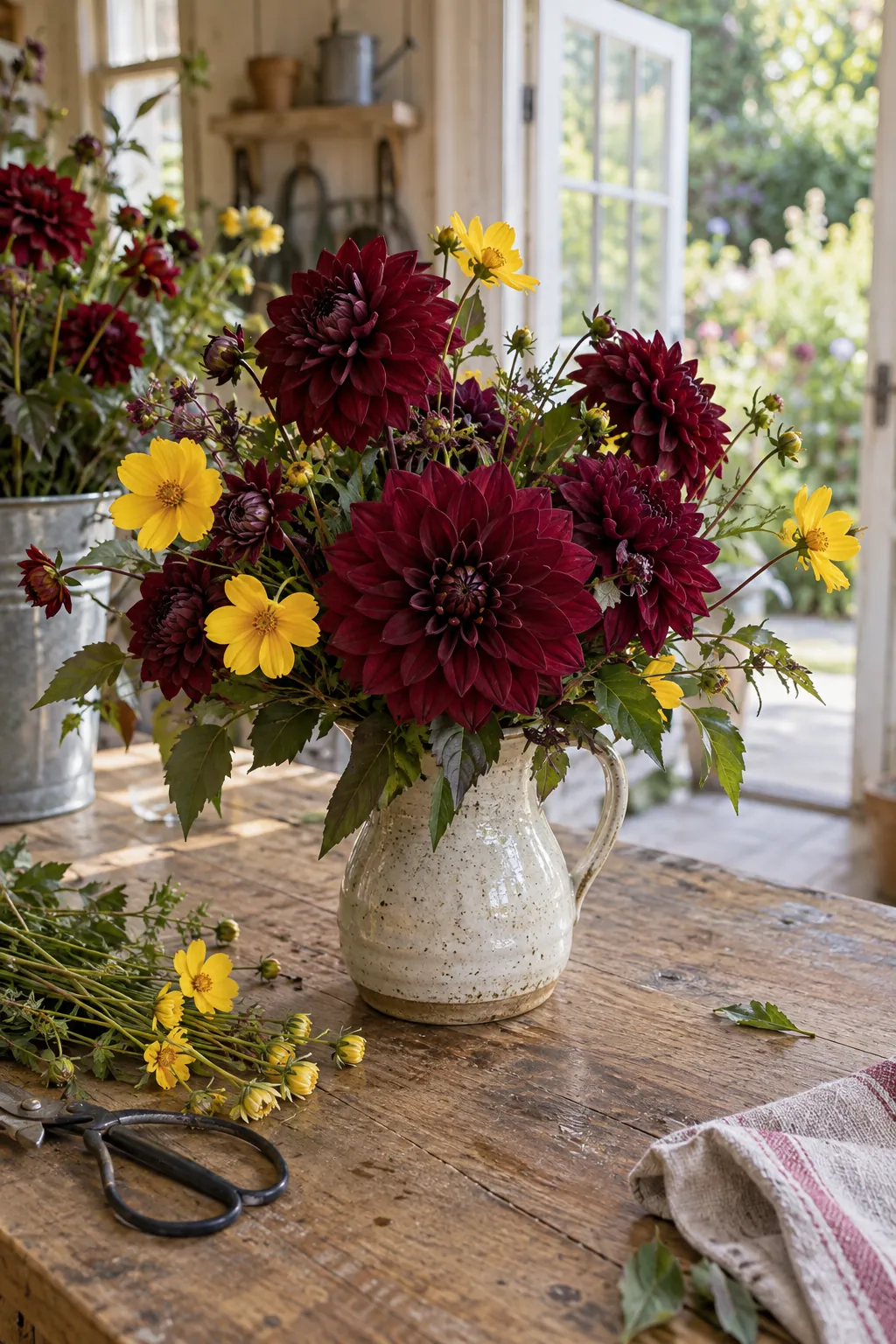
Color is only one kind of contrast. A round burgundy dahlia beside a small open yellow zinnia creates a lively rhythm, while two equally large blooms can look like separate teams. Choose one focal flower, one smaller supporting flower, and foliage with a quieter outline. Look at what is actually available in season rather than forcing a variety from an inspiration photo. This keeps the bouquet coherent when the shop has fewer choices than expected.
Add a Warm Bridge Color
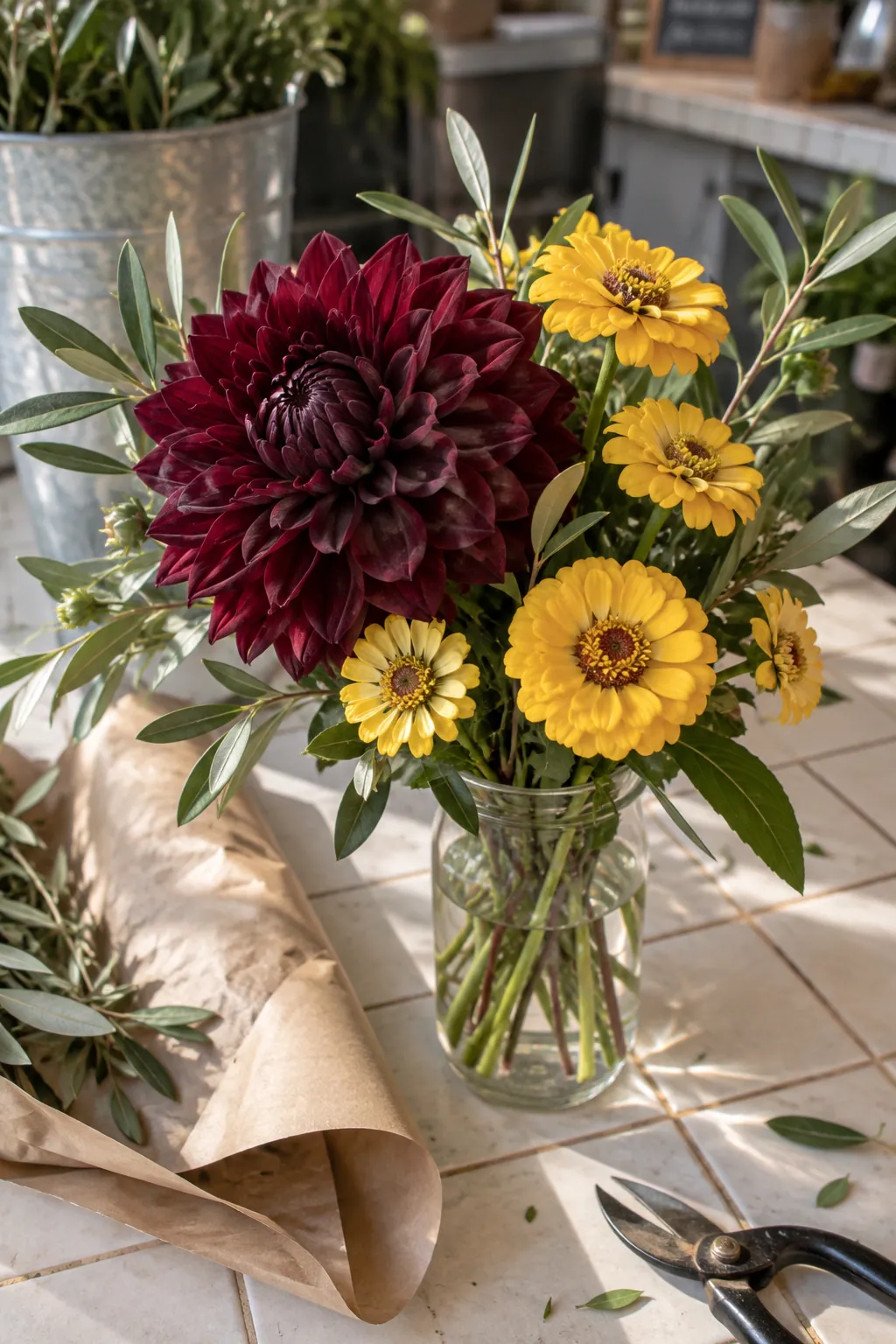
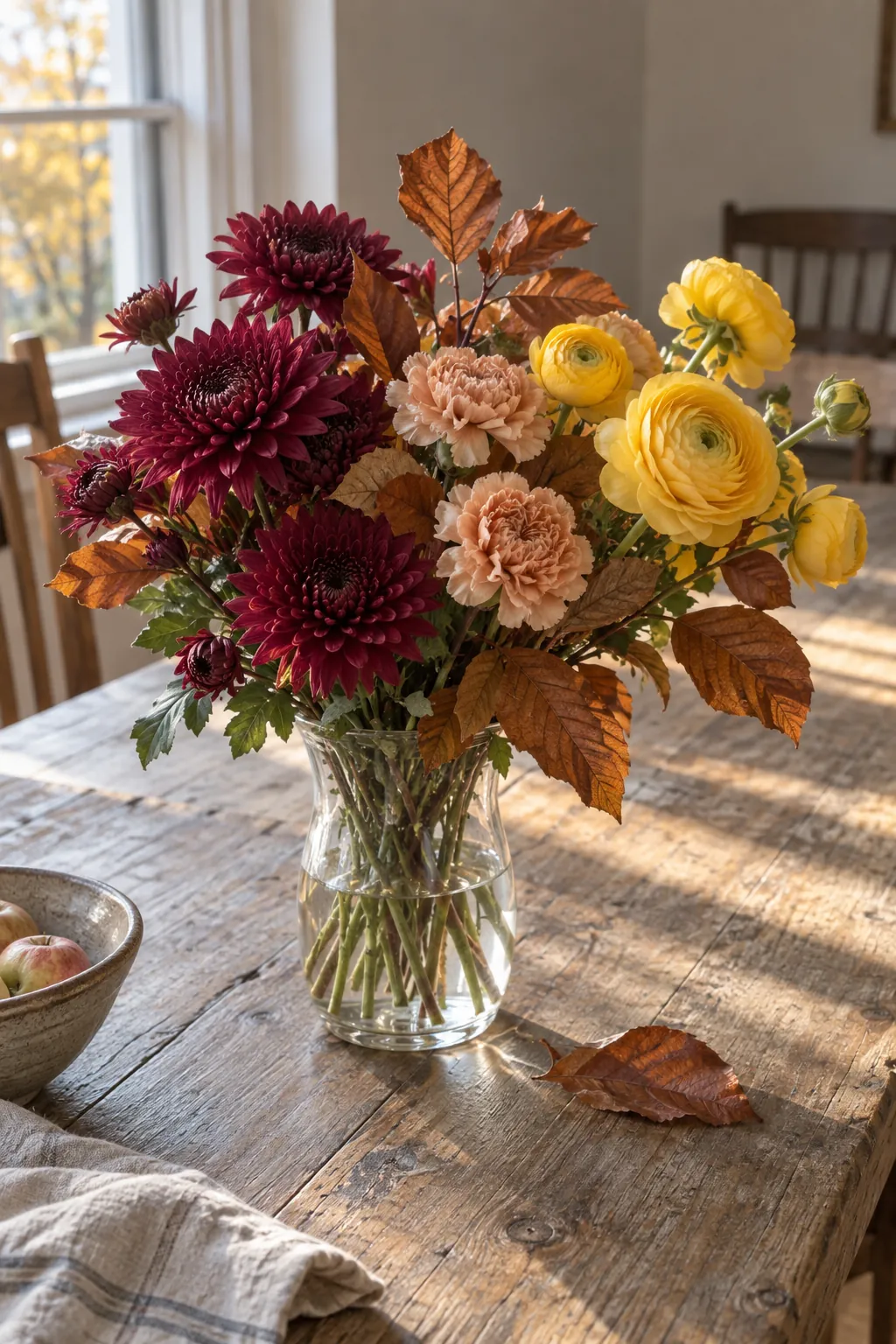
A bridge tone makes burgundy and yellow feel related without taking attention from either. Try a small amount of rust, apricot, or tawny foliage between the two groups. Place the middle tone where the colors meet, not evenly around the entire bouquet.
Copper leaves or faded peach carnations can do this work without adding another strong focal flower. Check the arrangement in daylight before adding more. What looks subtle under warm bulbs may become surprisingly orange by a window.
Build a Shape That Mixes the Colors
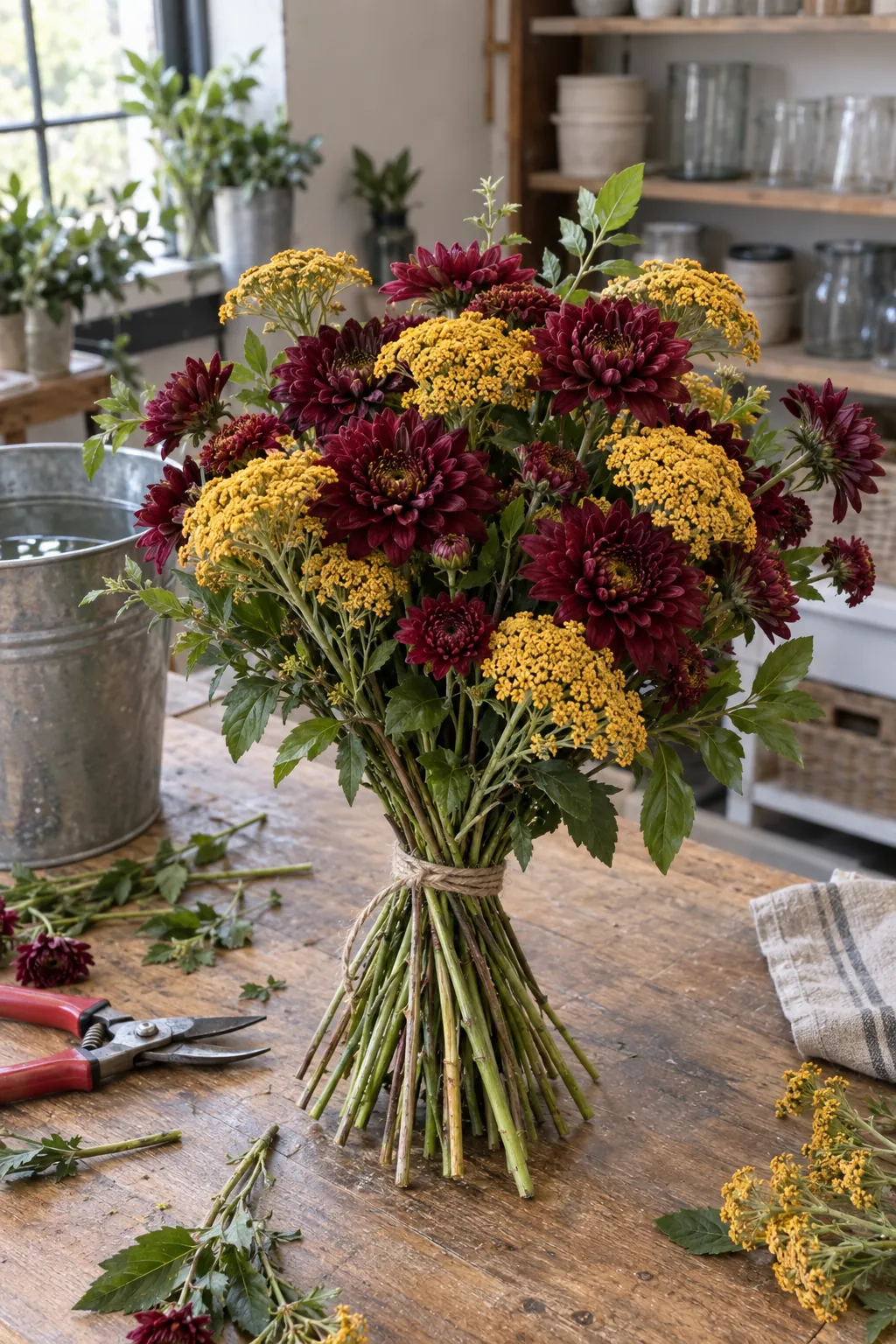
Start with three to five sturdy stems that establish the bouquet’s outline. Turn the bundle as you add flowers, placing each new stem where the color is missing rather than making one burgundy side and one yellow side.
Let one flower project slightly above the others and keep several smaller blooms at different depths. The staggered placement helps the eye travel through the whole bouquet.
Tie the stems only after checking the front, back, and side views.
Let the Vase and Room Support the Palette
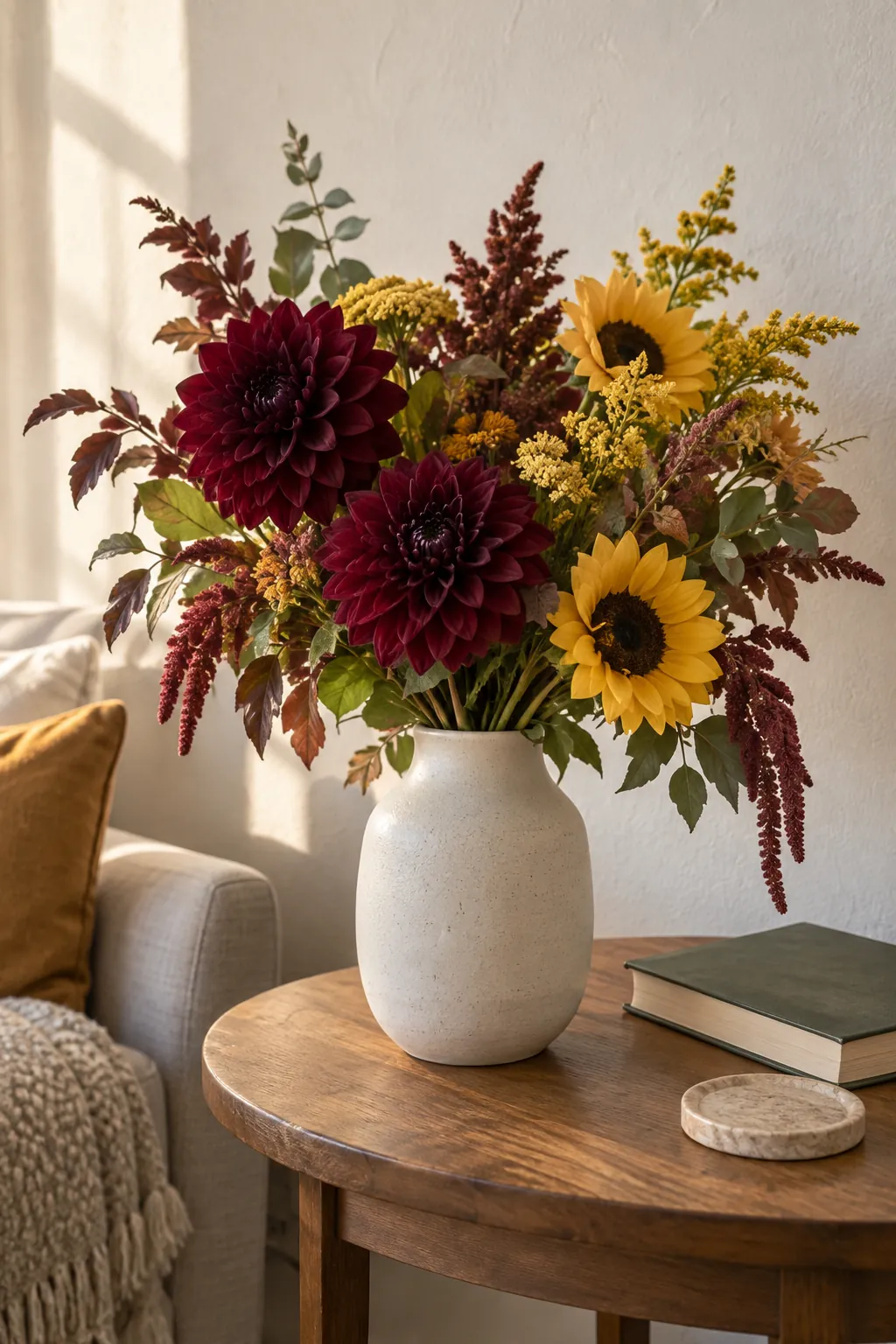
The vessel can either quiet this contrast or make it louder. Cream stoneware, weathered brown glass, and dark clay usually leave the flowers in charge. A glossy yellow vase, by contrast, can make the yellow blooms look like one large block.
Test the bouquet against the actual wall and table surface before you trim every stem. A dark background may hide burgundy petals, so bring one or two of them toward the window side. In a pale room, a few darker leaves can give the arrangement an anchor.
Keep the Balance as Flowers Open
Fresh flowers do not hold the same proportions for the whole week. Dahlias may open wider, while smaller yellow stems can fade or droop first. Check the arrangement each day and remove spent flowers before their color becomes a distracting brown.
Recut healthy stems when needed and refresh the vase water. If one color disappears, do not automatically buy more of it; a quieter bouquet may still look intentional. Turn the vase once to see whether the remaining blooms have a clear focal point from the room.