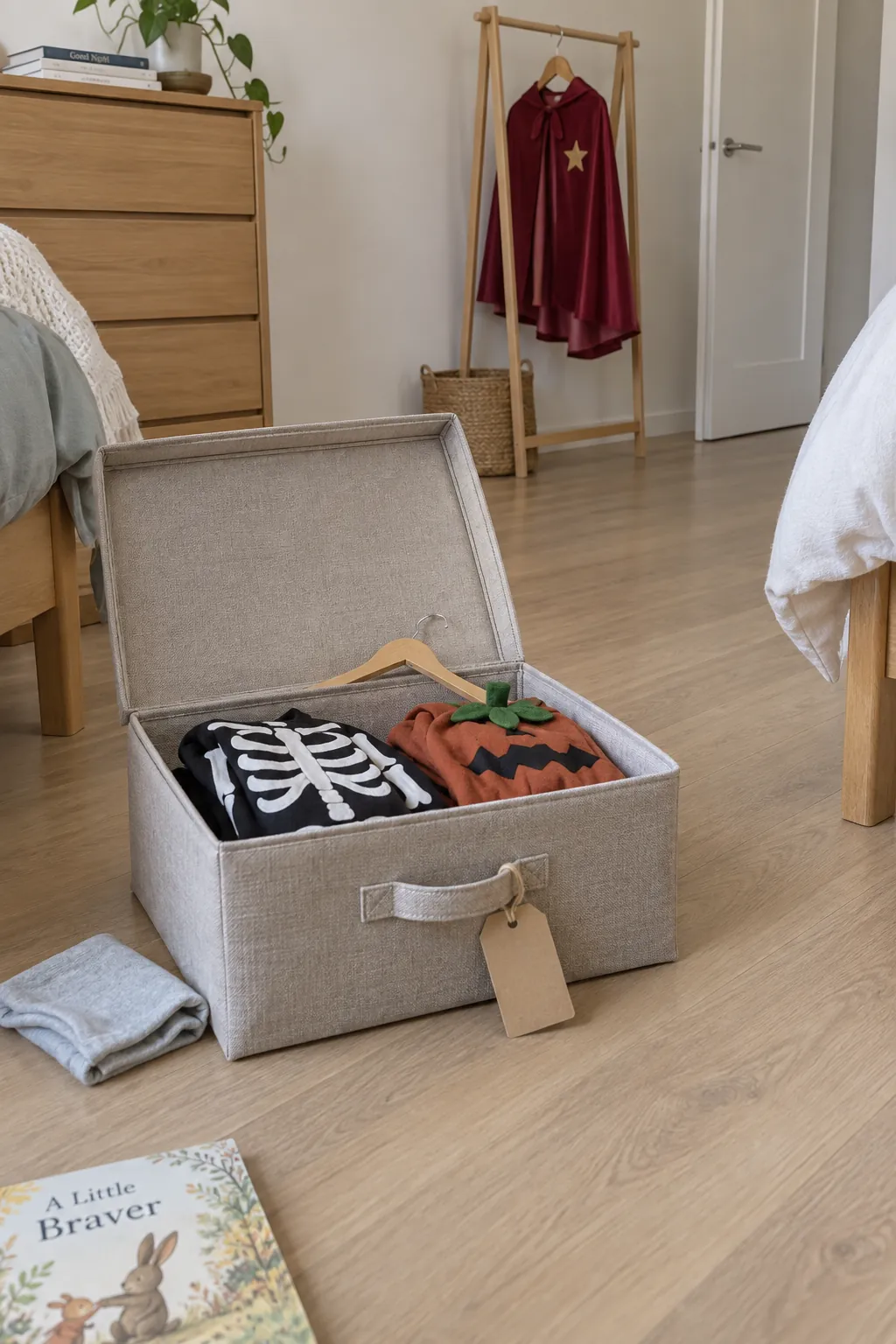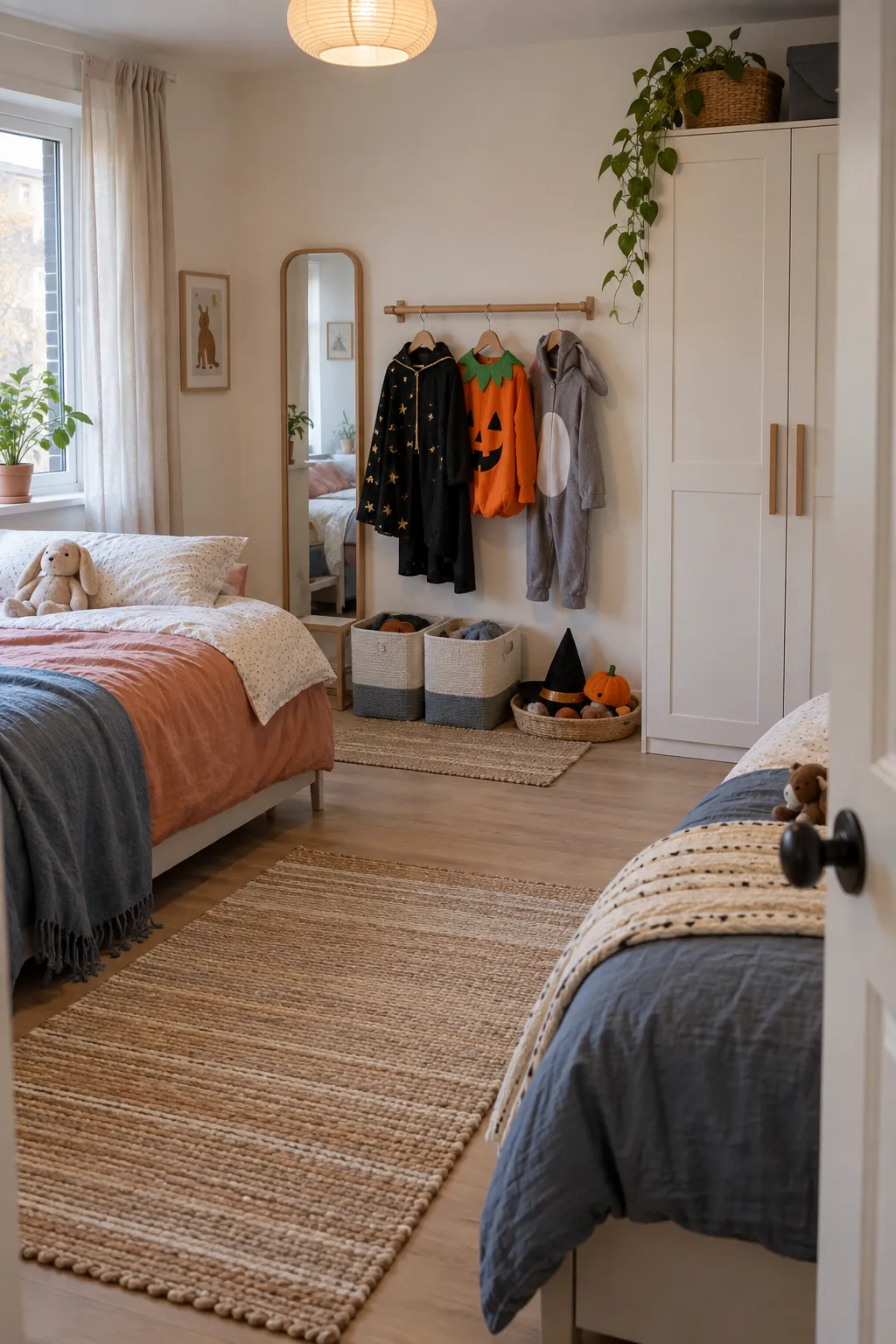
The costume pile often lands exactly where two children already compete for floor space. A rail, basket, and mirror can make dressing easier, but only if the station leaves a clear path to both beds and gives each child a place to put things back. Plan the footprint before buying another storage piece.
Find the space that can actually stay open
Watch how the room works on an ordinary morning. Open every drawer, closet door, and bedroom door, then walk from each bed to the exit. A costume station that fits on paper can still block a dresser or turn the route to the bathroom into an obstacle course.
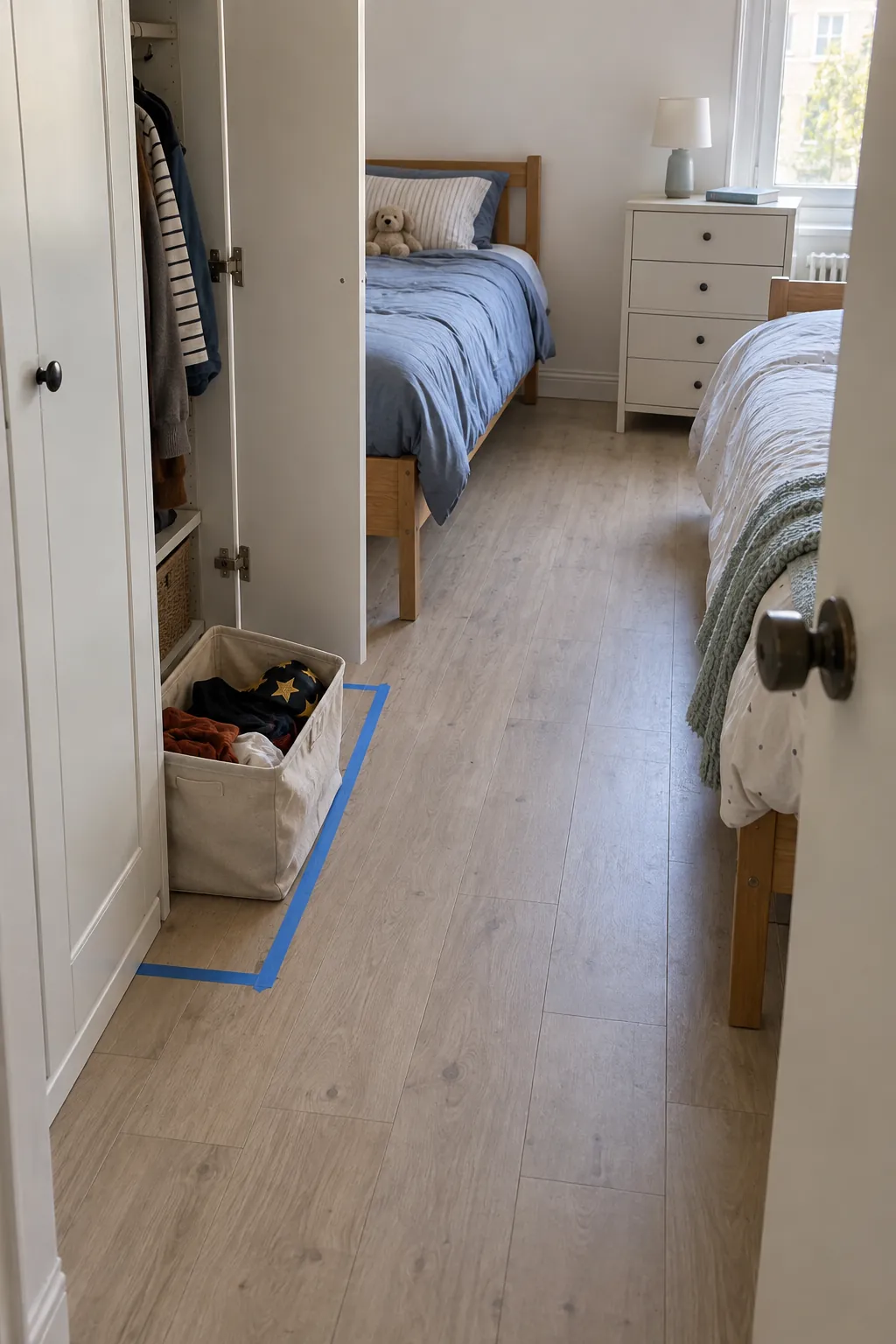
Choose a strip beside a wardrobe, the end of a low bookcase, or a section of wall that is already used for play. Mark its width on the floor with removable tape and set down a basket to test the depth. Keep the setup outside the door swing, away from heaters and outlets, and clear of the space needed to climb into either bed. If the only available spot is a passage, use a shallow wall hook arrangement instead of furniture.
Build around one narrow anchor
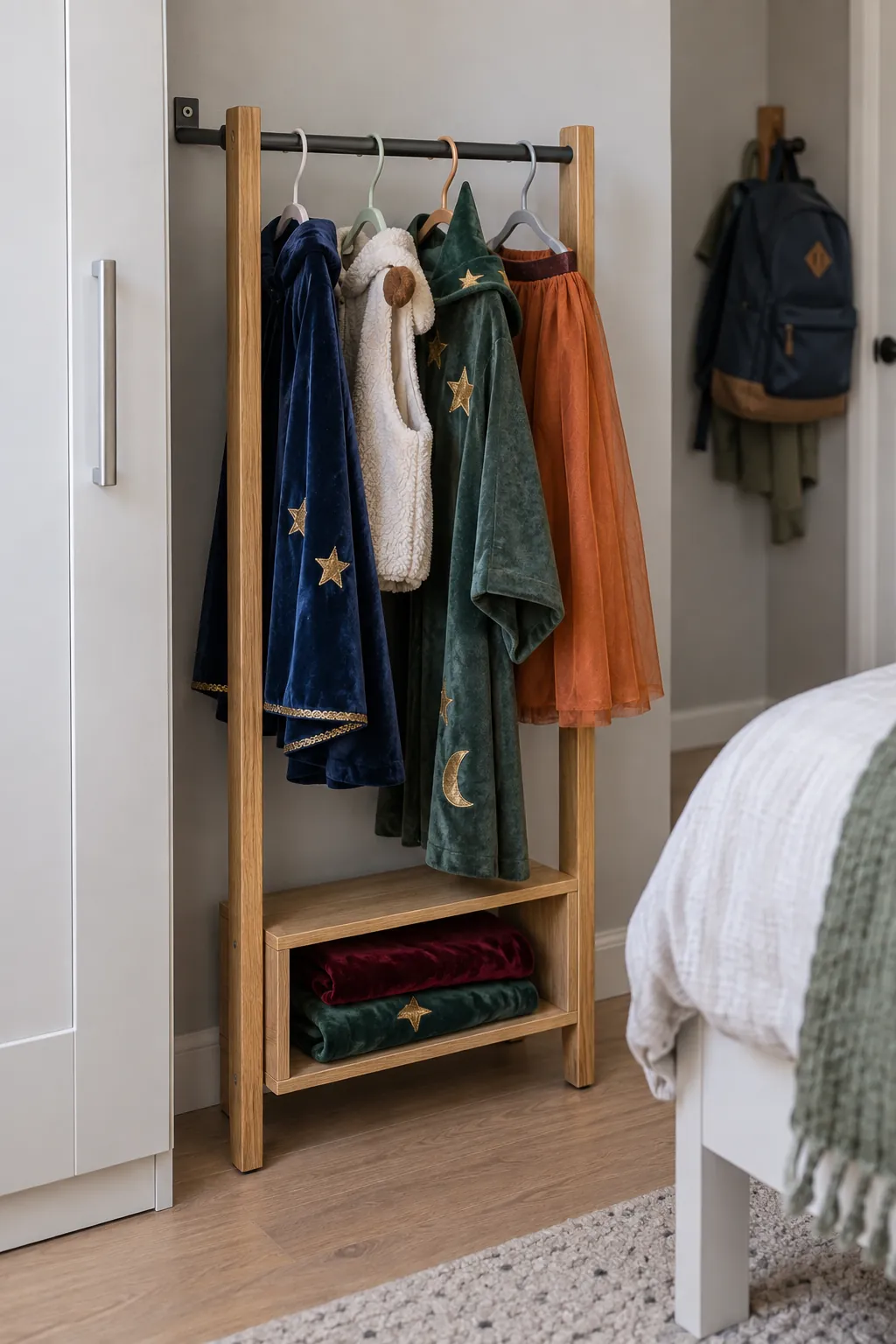
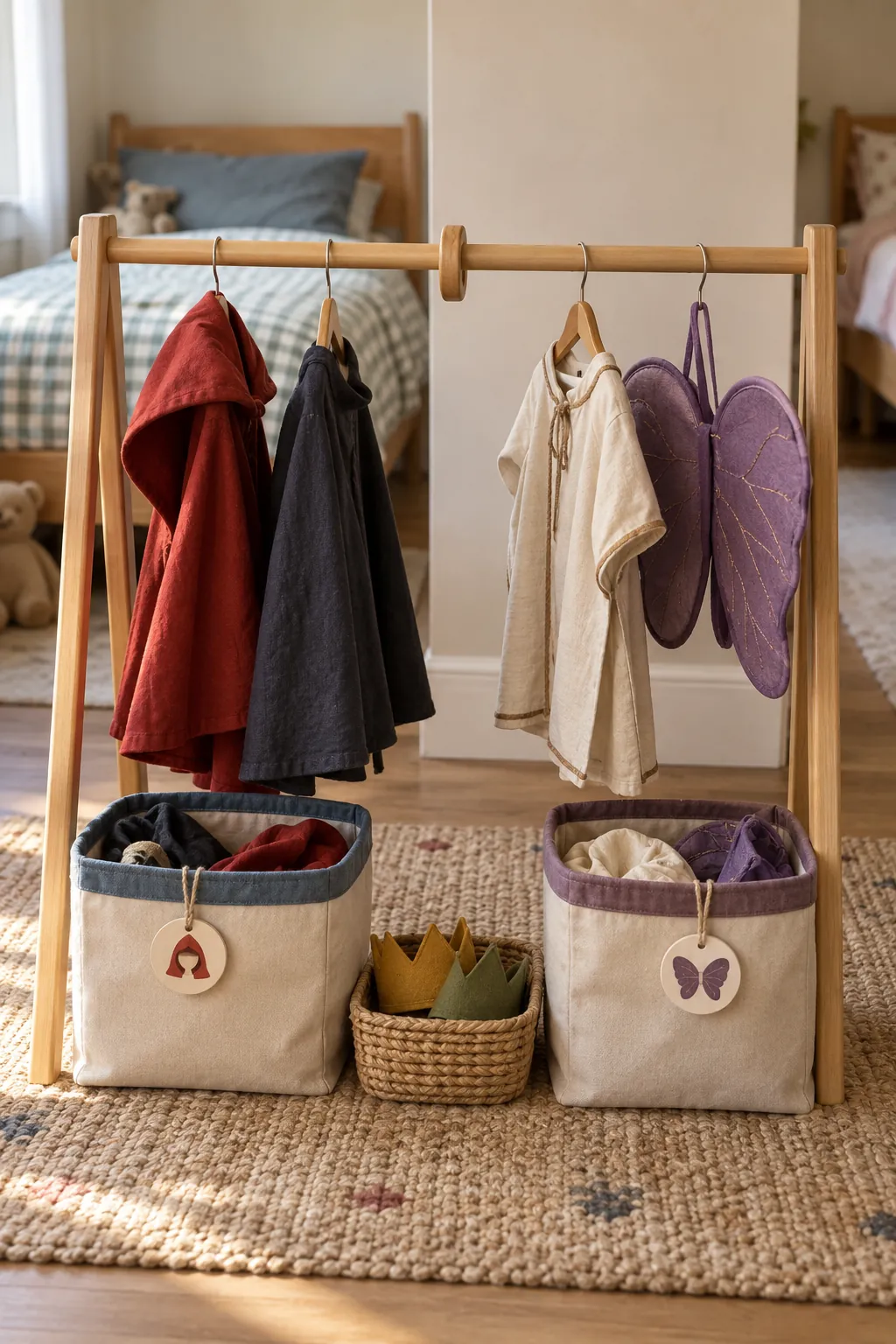
One anchor keeps Halloween costume storage from spreading across the bedroom. A short rail works when both children need to see their outfits; a low cubby works when folded capes and soft accessories outnumber hangable pieces. In a rental, a compact freestanding unit may be simpler than drilling, provided it can be secured against tipping according to its instructions.
Put the most frequently worn costumes within the children’s reach and move occasional pieces to a higher adult managed shelf. Avoid packing the rail shoulder to shoulder. Leave enough room to lift a hanger out without pulling down the next outfit, and check that long hems do not drag underfoot. This is a temporary costume dressing station, so resist giving it more room than everyday clothing.
Give each child a clear return spot
Shared room organization fails quickly when no one can tell where a cape or mask belongs. Divide the rail into two visible sections with a simple separator, or give each child one open bin beneath it. A shared middle basket can hold pieces that belong to both children, such as fabric wings or washable props. Keep a second small container for damaged items that need repair, so they do not disappear into the dress up clothes.
Use a picture label for children who cannot read confidently yet. The label should show the actual type of item inside, not just a decorative pumpkin. Let each child put away one complete outfit after a practice dress up session. If they cannot manage the hanger or reach the bin without help, lower the storage or simplify the sorting.
Contain the small accessories before they scatter
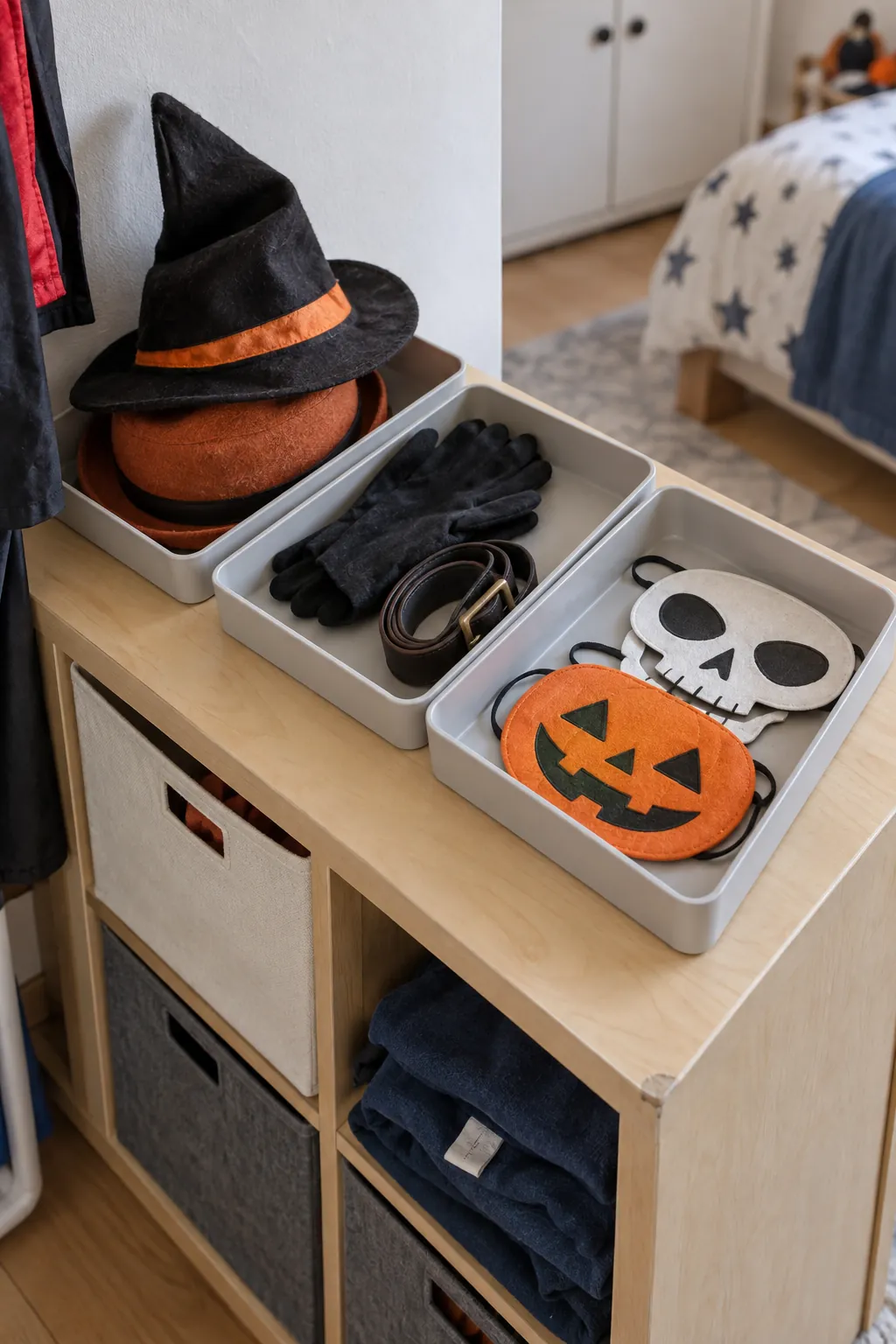
Hats, gloves, and costume jewelry cause more daily mess than a few hanging outfits. Give each category a shallow open container that a child can see into. Keep delicate masks flat rather than crushed under shoes, and place hard props where they cannot fall from a high shelf. A tray on top of a stable low unit can hold the pieces needed for the next Halloween party without taking over a bedside table.
Check each prop for sharp edges, loose batteries, and broken fasteners before it joins the station. Put small parts away from younger siblings according to their age and the product guidance. If accessories have to spill onto the floor to be found, the bins are too deep or too full; edit the collection before adding more containers.
Make dressing possible without claiming the whole room
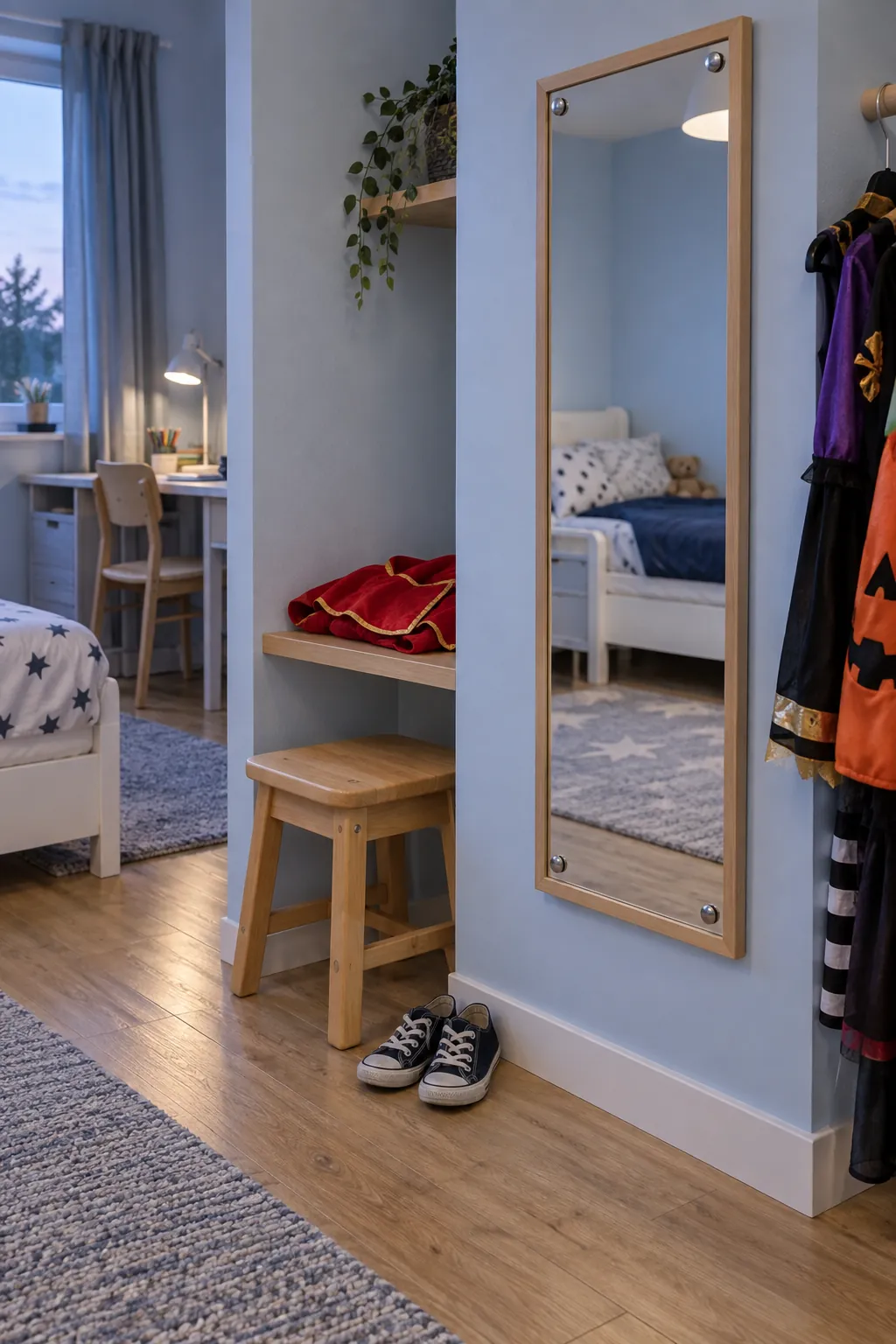
A costume area needs a place to check fit, but a large vanity is rarely necessary in a small kids room. A safely mounted mirror near the rail lets children see whether a cape is caught under a collar. Put a small stool nearby only if it can be tucked away after shoes go on. Keep the dressing spot out of the sibling’s main play or study zone, especially during bedroom party prep.
Set a simple turn taking rule before both children want the mirror at once. Lay the next child’s pieces in their own bin rather than across a bed. Good boundaries make the station feel shared without making every costume communal.
Reset the station after Halloween
Temporary bedroom storage works best when it has an exit plan. After the last event, check each costume for stains or missing pieces, follow its care label, and let everything dry completely before packing it. Keep the outfits the children still use for everyday pretend play within reach. Move seasonal pieces to a labeled container elsewhere so the rail can return to normal clothing or open floor space.
Before storing anything, ask each child which pieces they will genuinely wear again. Donate usable extras where appropriate and discard damaged items that cannot be made safe. The station has done its job when both children can find a costume, get dressed, and put it away without turning their shared bedroom into a permanent Halloween closet.