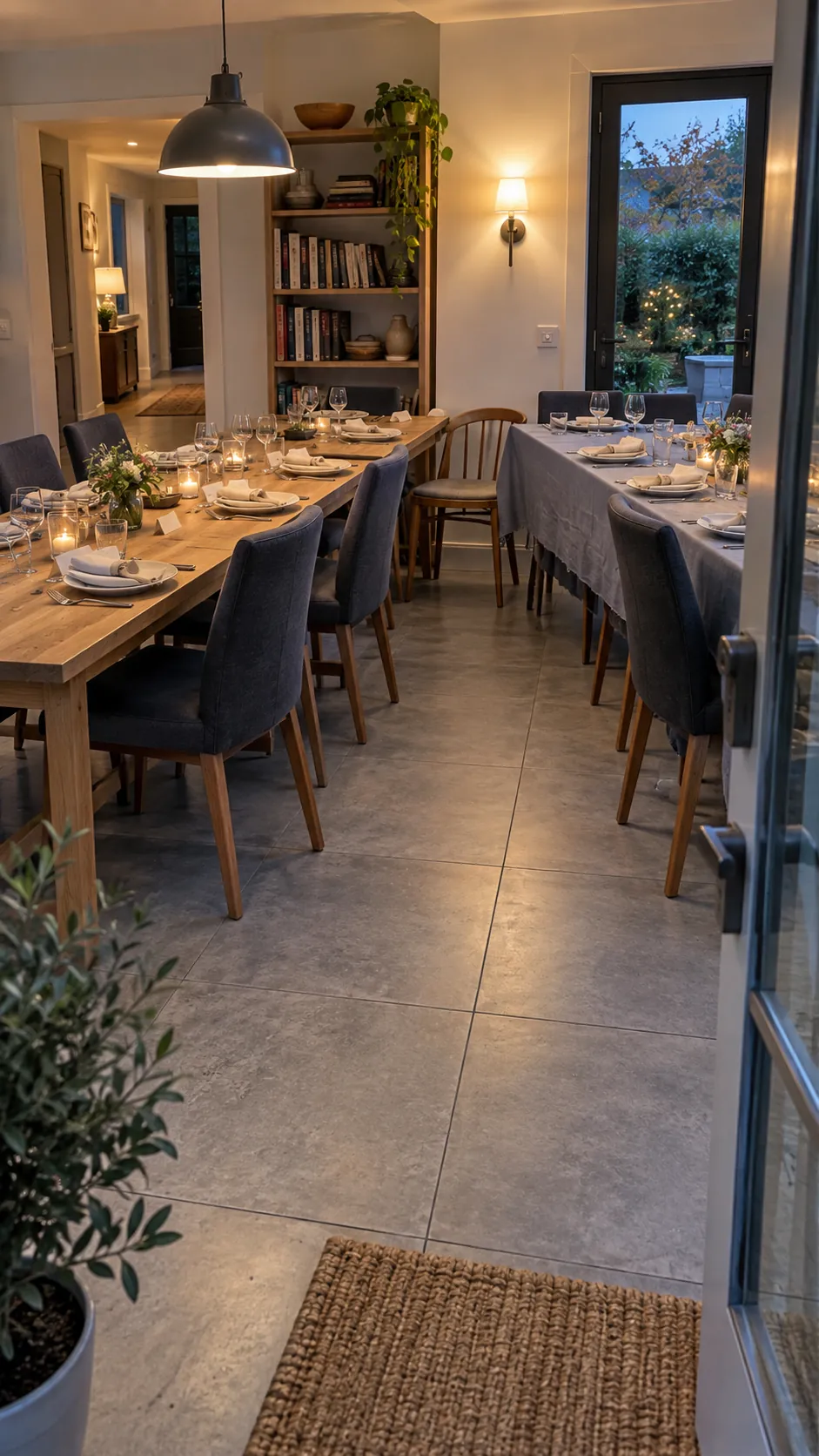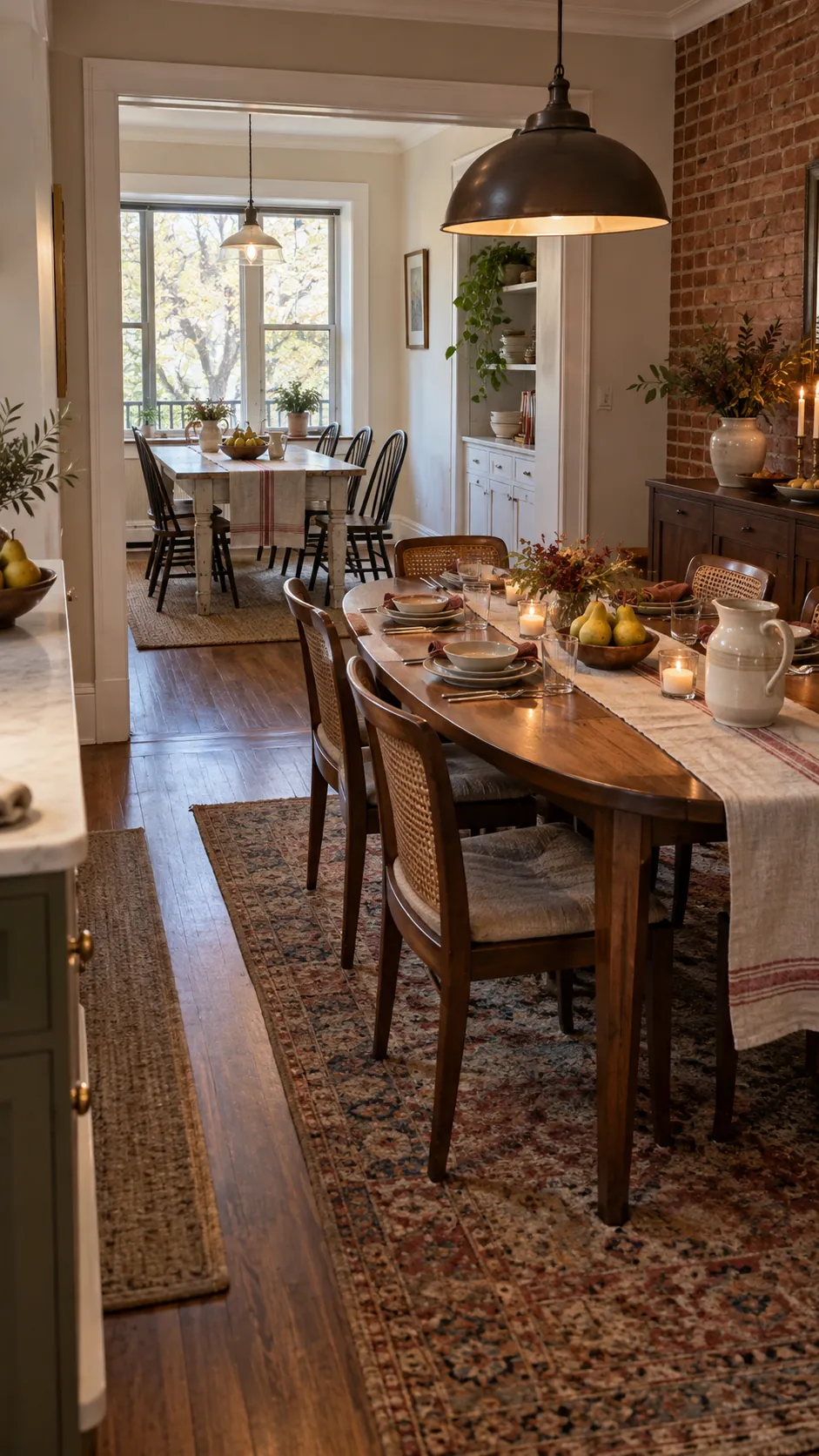
The awkward part of a crowded holiday dinner is rarely finding another tabletop. It is deciding where that table belongs so nobody feels sent away, and so the person carrying hot dishes can still reach every seat. Begin with the room and the route through it, then decide which furniture arrangement actually serves the people coming.
Start With the People and the Shape of the Room
Count places where someone can eat a full plate comfortably, rather than counting chairs you own. A couch beside a low table may work for a casual meal, but it is a poor substitute for a dining chair when an older relative needs back support. Ask about mobility needs before you assign the outermost seats.
Sketch the dining room, nearby doors, kitchen entrance, and any furniture that cannot move. Place the first table on that sketch, then mark the space needed when chairs are pulled out. The second table should fit the remaining usable space rather than the empty floor seen when every chair is tucked in.
Choose One of Three Useful Table Layouts
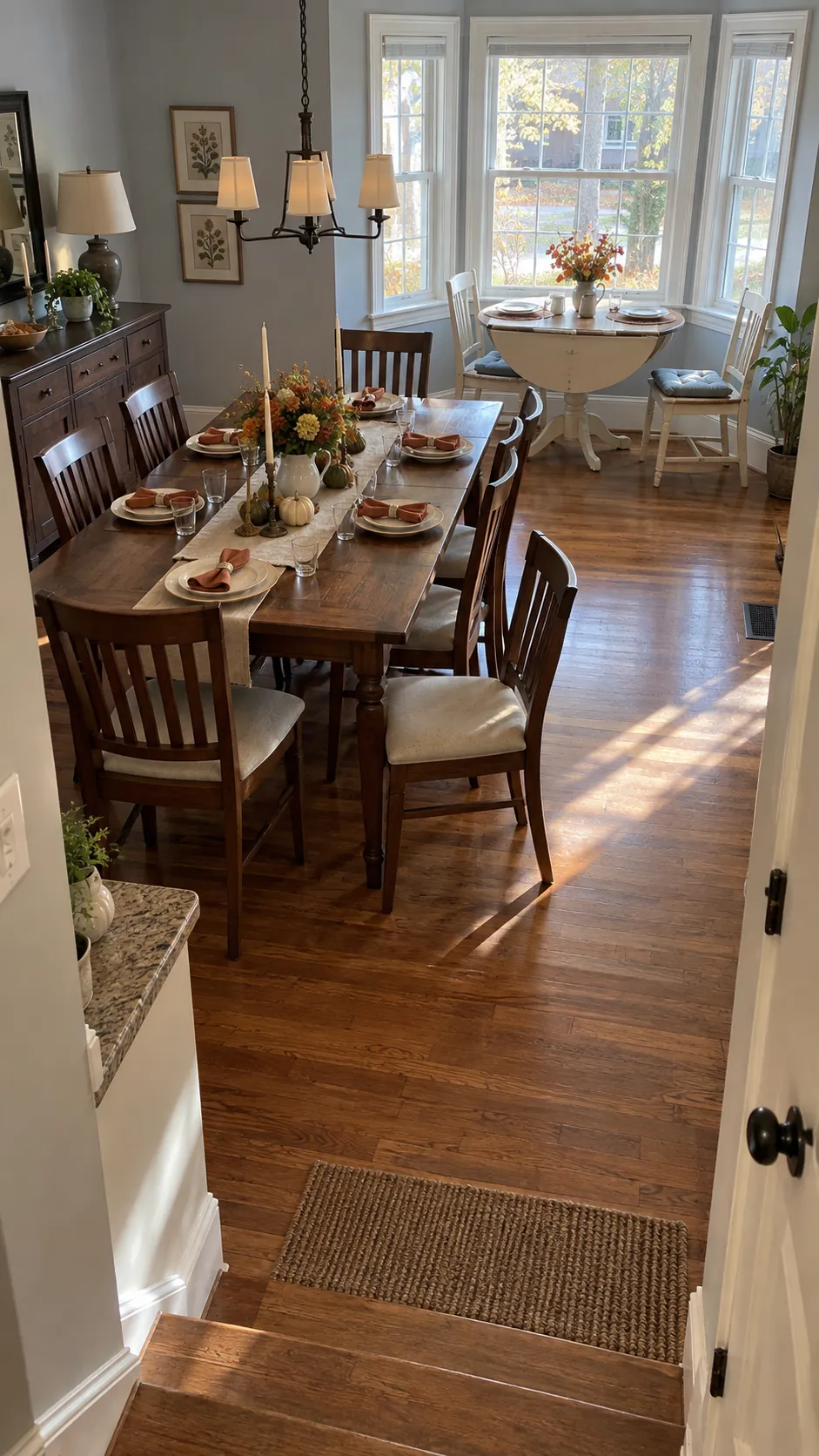
Join the tables end to end when their heights are close and the room has enough length. Keep the seam obvious enough that nobody expects a plate or heavy serving dish to sit securely across it. This layout makes one conversation easier, but it can leave too little space at the far ends of a short room.
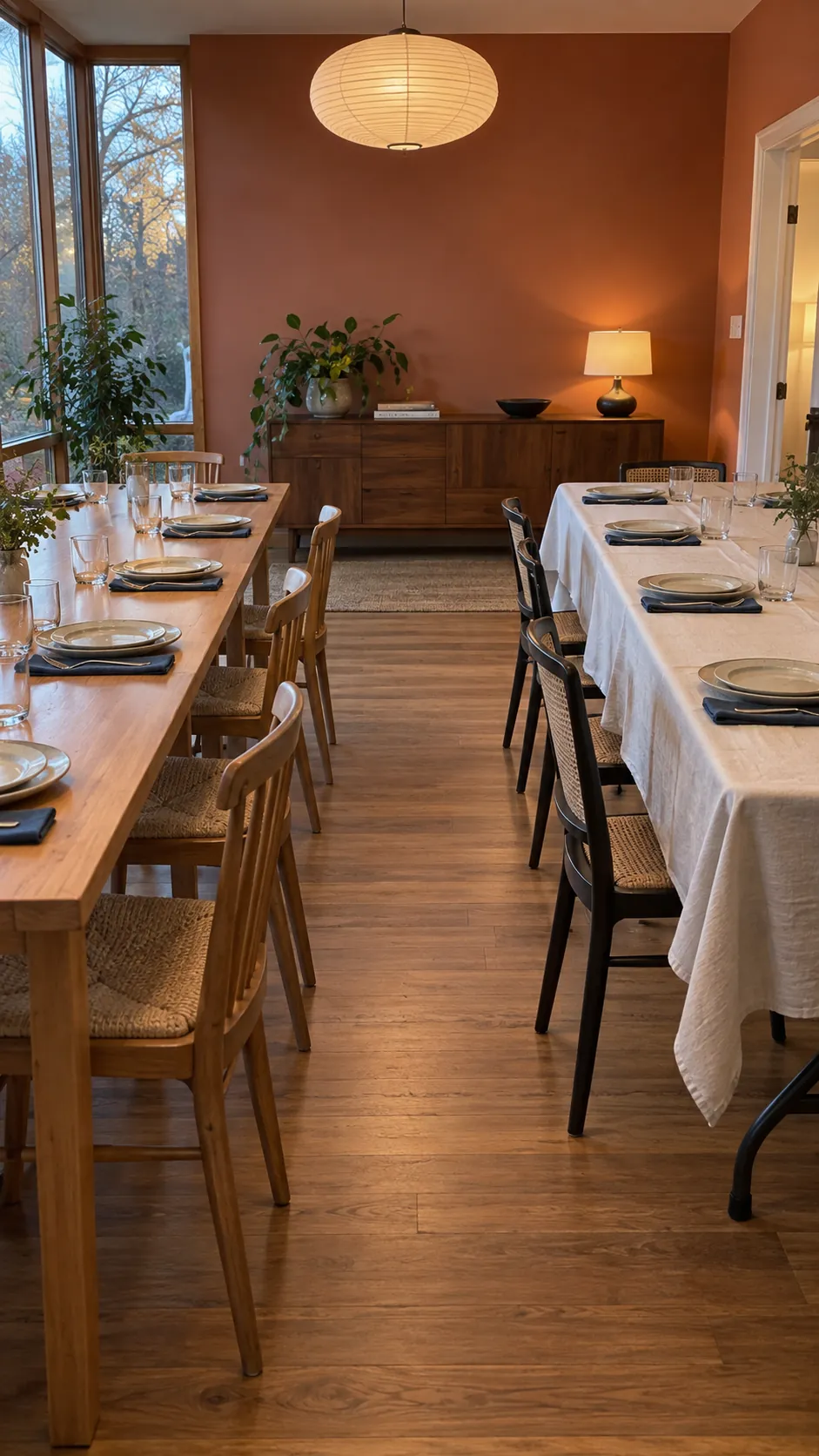
Use two parallel tables when the room is wide enough for chairs to pull out without meeting in the middle. An L shape can work around a doorway or fireplace, provided its inner corner remains a real seat rather than a trapped place setting. If neither layout leaves a generous path, place the second table in a connected room where voices and service can still flow between them.
Protect the Route for Food and Guests
Walk from the kitchen to every seat while holding an empty serving platter. Notice where you turn sideways, where a chair leg catches your foot, and whether an open door blocks the path. A layout that looks balanced from above may fail this simple test.
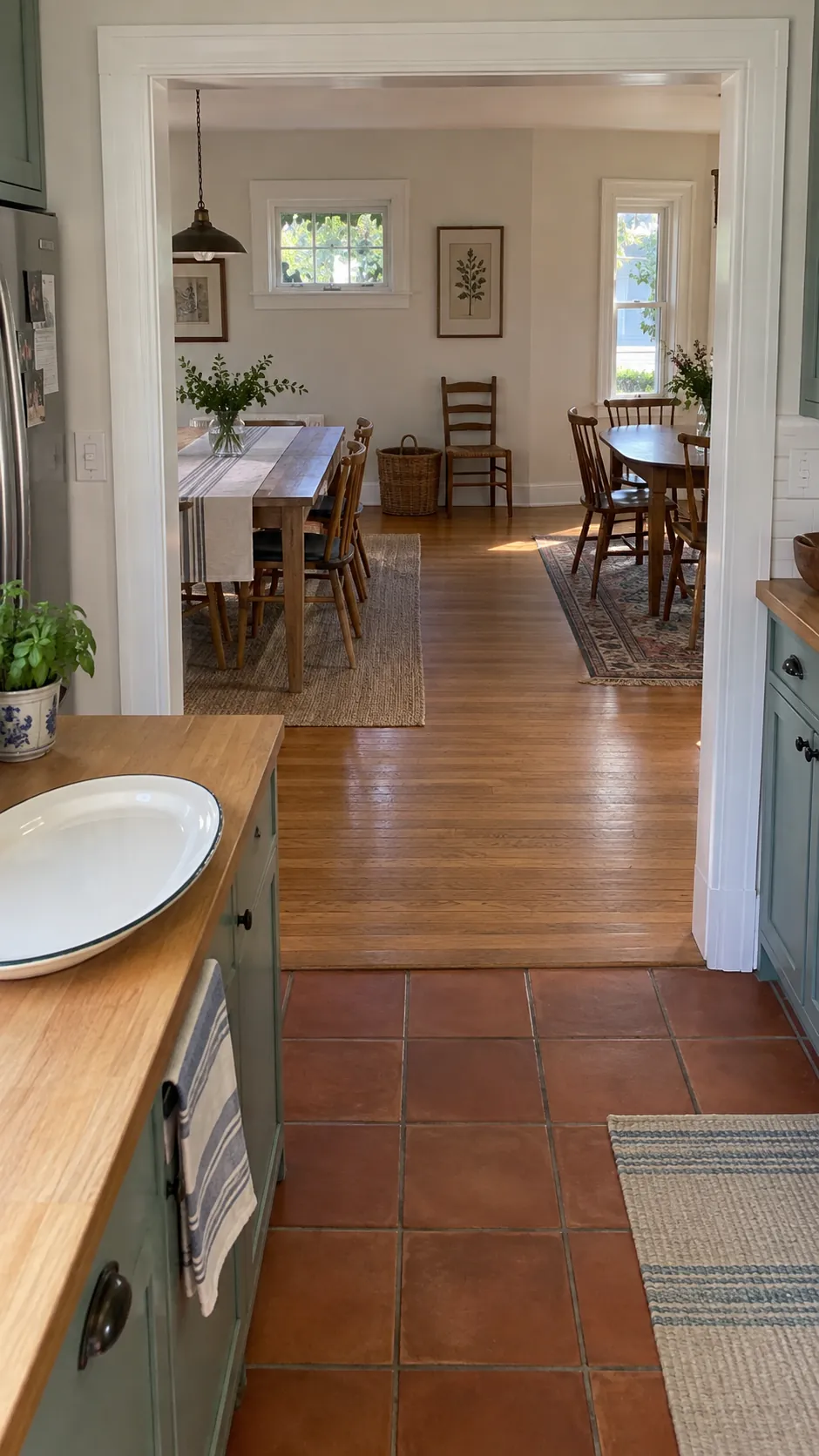
Move a sideboard, floor basket, or spare chair before squeezing the tables closer. Keep door swings and access to a bathroom free throughout dinner, not just while guests arrive. If a route narrows after everyone sits, carry dishes around the outside rather than asking people to shift repeatedly.
Seat People Without Creating an Overflow Table
Two tables can feel like one gathering when both have a mix of close family, new conversation partners, and someone who can help pass food. Avoid filling the smaller table only with people who arrived last. A separate children’s table works best when the children actually want that arrangement and an adult can still check on them easily.
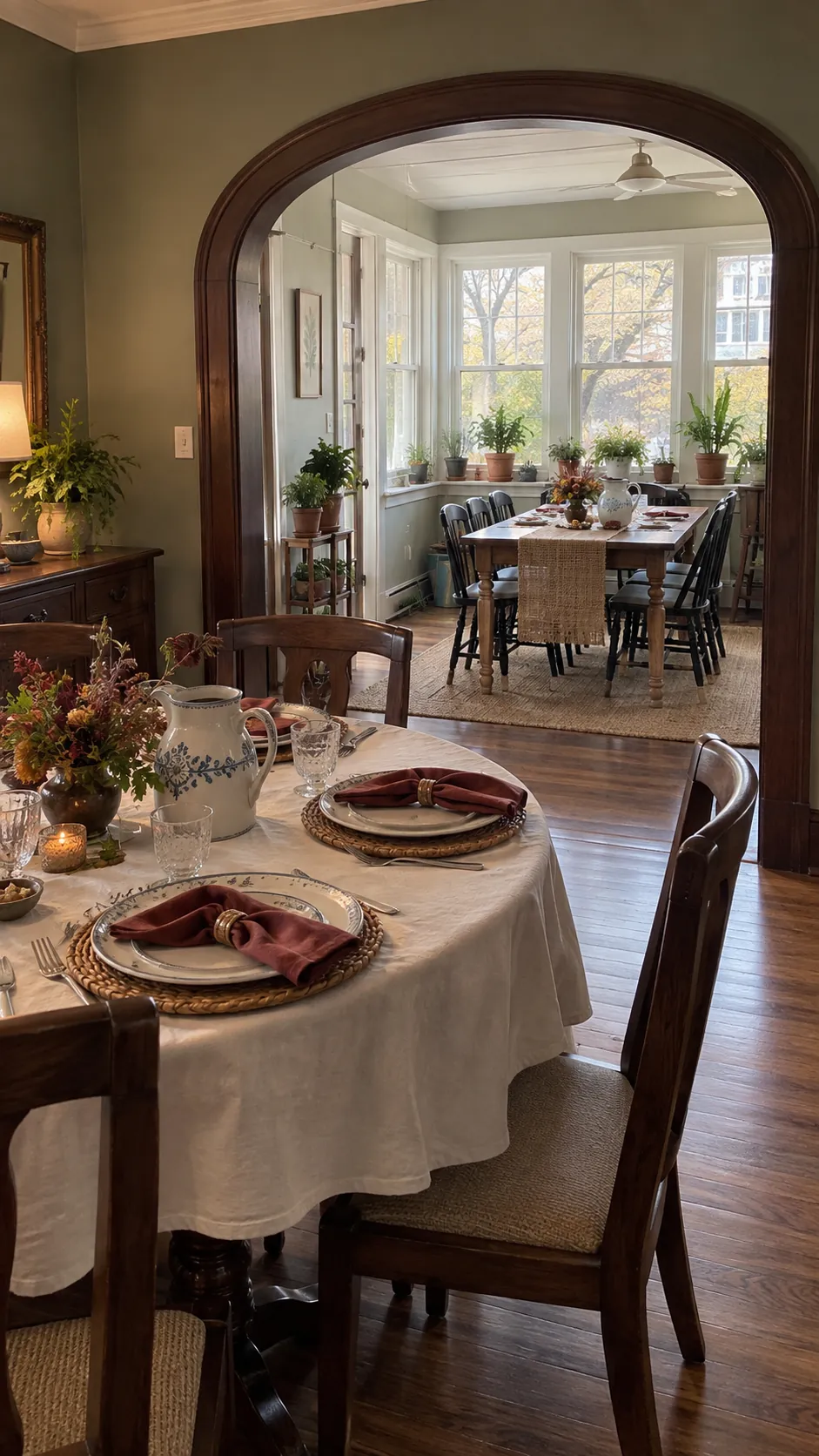
Put guests who need a stable chair, a simple exit, or space for mobility aids where those needs are met first. Then consider who would enjoy sitting near whom. If the tables are in adjoining rooms, leave the connecting doorway open and orient seats so each group can see the other without twisting constantly.
Give Each Table What It Needs
Repeat practical items at both tables: water, napkins, condiments, and the dishes guests will reach for often. Matching every plate and chair matters less than preventing one group from having to interrupt the other for basics. A common runner color or similar low centerpiece can connect the tables visually without taking up serving space.
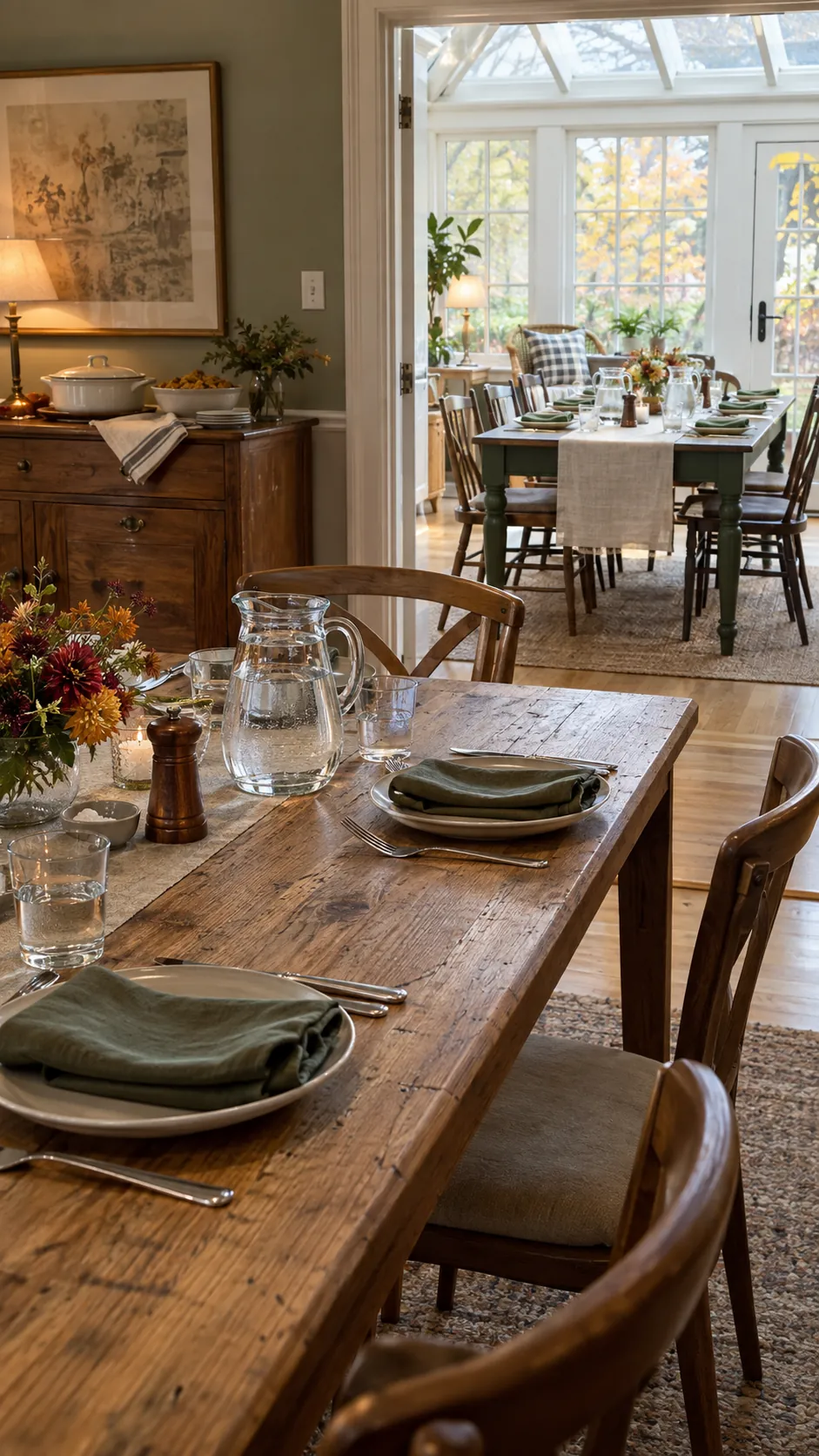
Decide where the large dishes will live before setting the table. If the tabletops cannot hold platters safely, put food on a nearby sideboard and let guests serve themselves in a clear sequence. Keep hot dishes away from the narrow edge where someone must pull out a chair.
Run the Whole Setup Before Dinner
Set every chair in its occupied position, then walk the routes to the kitchen, bathroom, and both ends of each table. Sit in the seats near the wall and the table seam to find the places with poor elbow room. This short rehearsal often reveals a fix as simple as rotating the second table or removing one decorative chair.
Switch on the lights at the hour you plan to eat. Someone at the second table should be able to see their plate and the person speaking without a lamp in their eyes. Once the arrangement works for conversation, service, and movement, leave it alone; a lived in room can welcome a full table without looking perfectly matched.