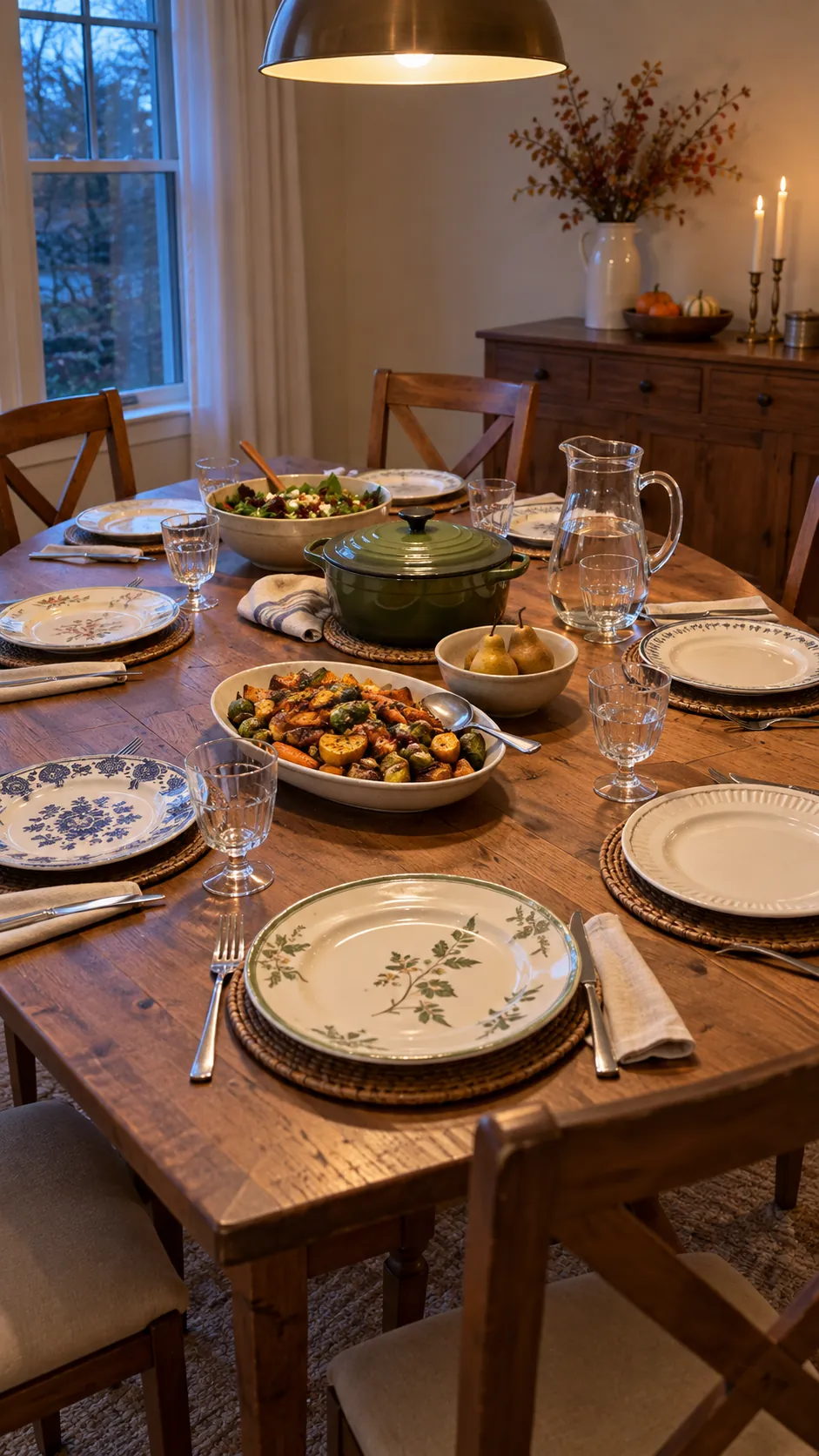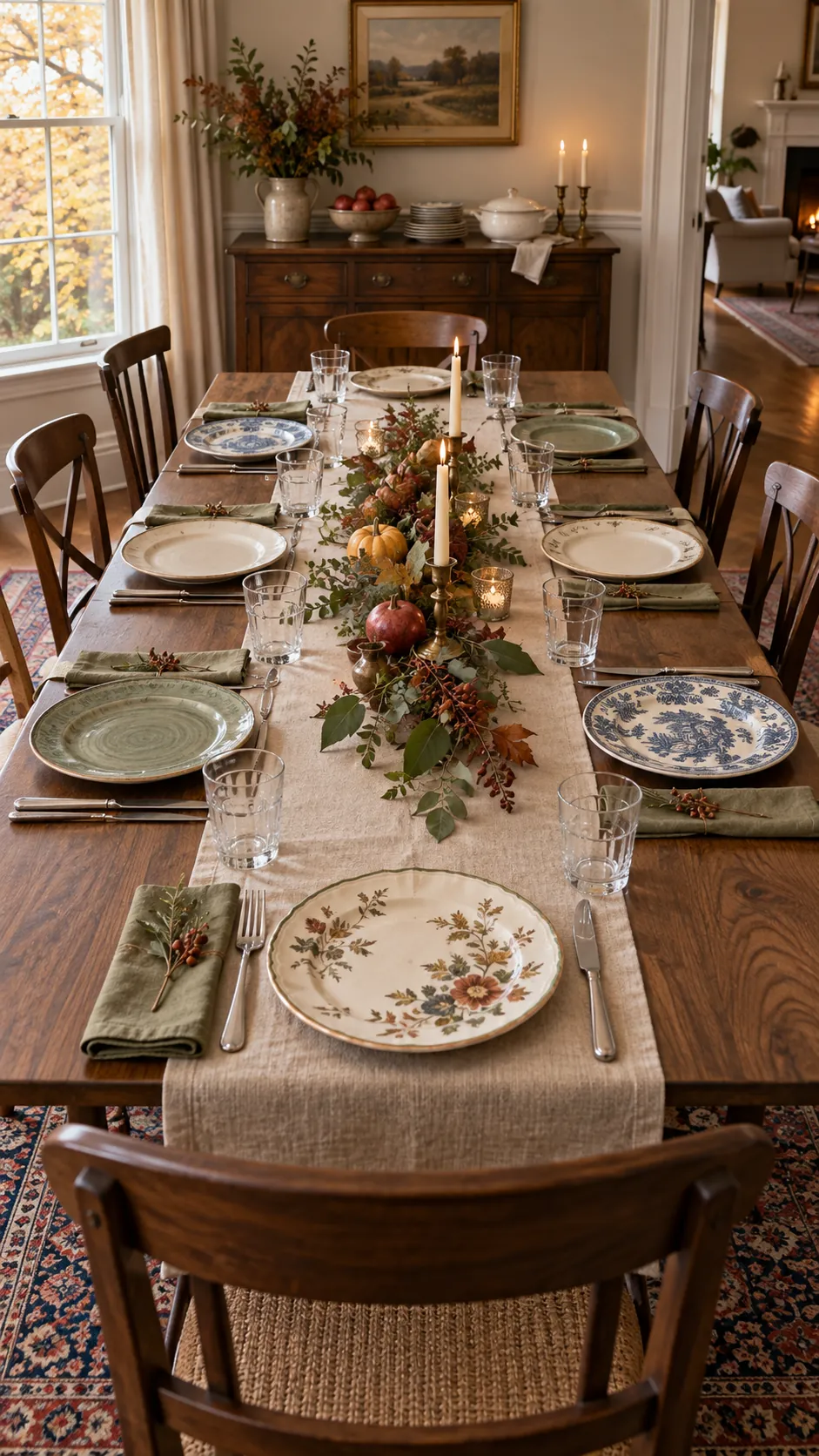
The cupboard has enough plates for everyone, but they came from three households and none of the stacks quite match. Buying another complete set solves the wrong problem. A comfortable holiday table needs plates that work for the meal and a few visible choices that make the mix feel deliberate.
Start with the dishes you already own. You can build a welcoming Thanksgiving table around inherited china, everyday stoneware, and thrifted finds when you give the eye a consistent place to rest.
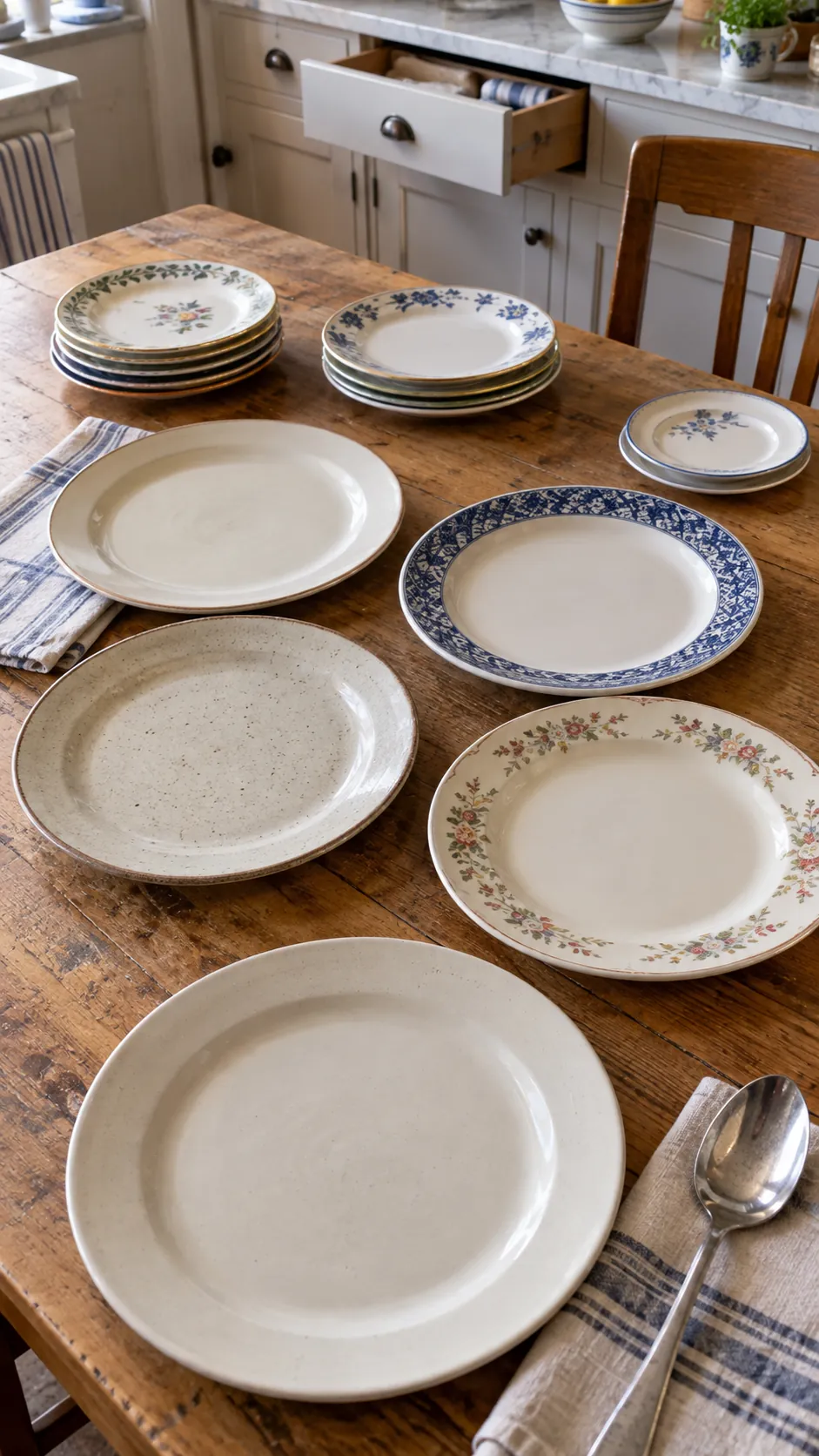
Sort the plates by what they can actually hold
Spread the dinner plates on a clean surface and count usable pieces before thinking about color. Set aside chipped plates, pieces with unstable bases, and anything so small that a serving of turkey and sides would be awkward. Measure by comparison rather than a ruler: place one plate from each set together and look for a similar eating area.
Keep salad, bread, and dessert plates in separate groups. A floral salad plate can sit on plain dinnerware, but a tiny decorative plate should not become someone’s main dinner plate just to complete a pattern. If the guest count exceeds your dinner plates, borrow a few similar sized plain ones before adding more unusual shapes.
Give the table one quiet foundation
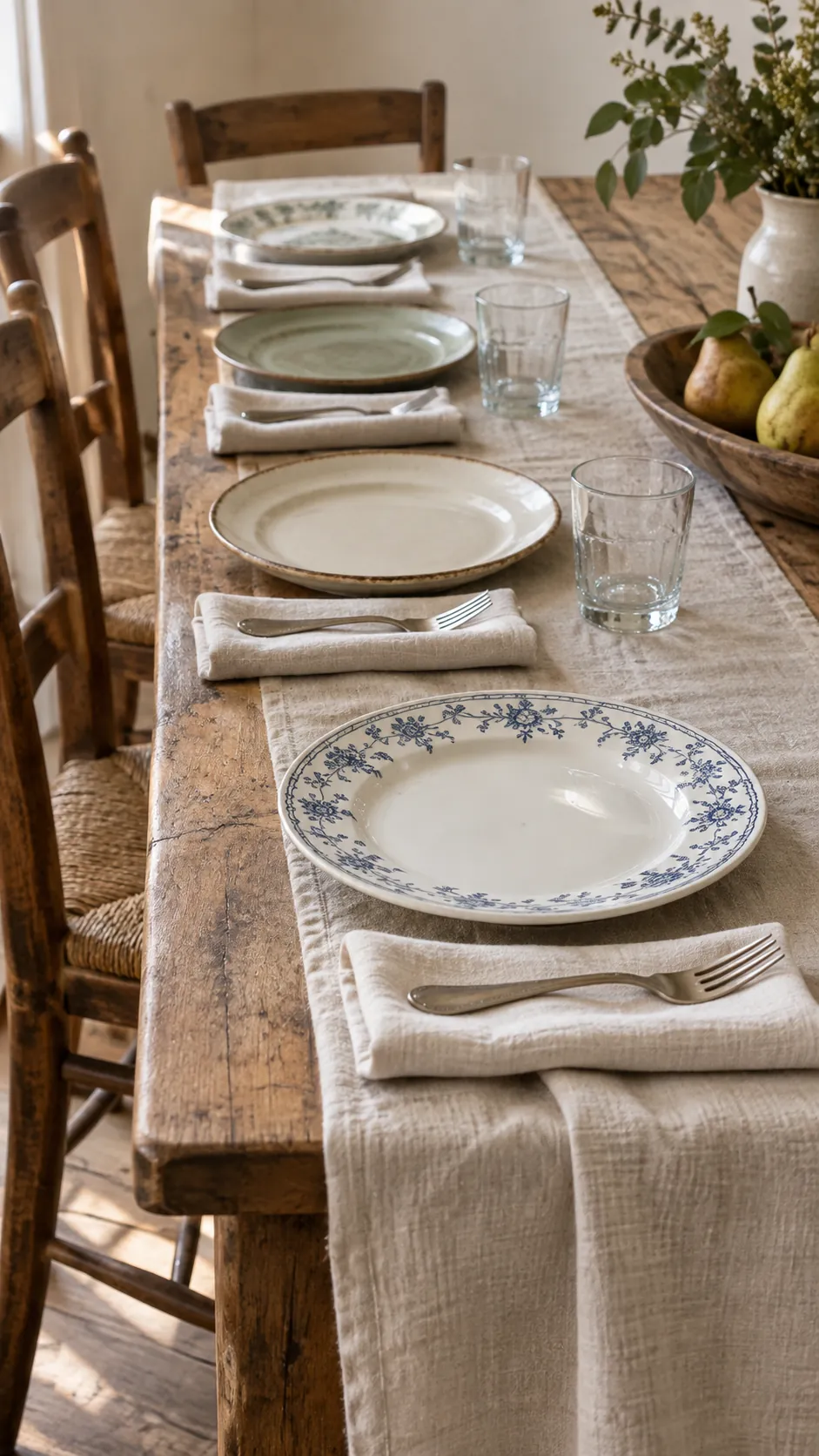
A simple cloth or runner makes unrelated plates look as though they belong in the same room. Oatmeal linen, warm white cotton, or a muted olive fabric gives patterned china space to stand out. If your table surface is beautiful, leave it visible and use matching placemats instead.
Avoid asking the cloth, napkins, and centerpiece to compete with the dishes. When the plates are heavily patterned, use solid napkins and a low centerpiece with a restrained color range. Creases and natural fabric texture feel at home with older porcelain; a rigid formal arrangement can make ordinary mismatches look accidental.
Repeat a color without forcing every pattern to match
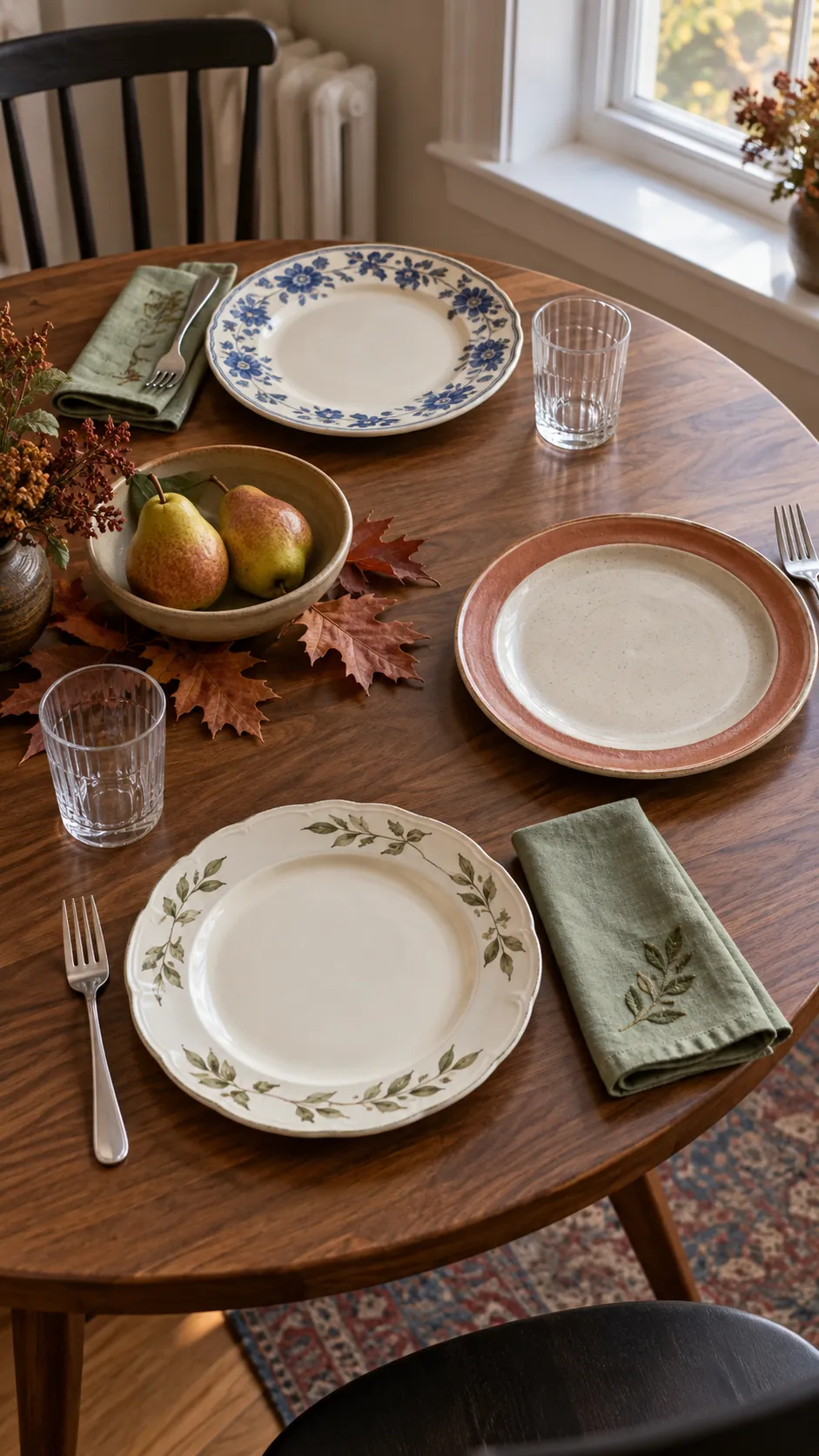
Choose one color that appears in several pieces, then echo it in a small supporting detail. A sage rim can connect to an olive napkin; a rust flower can connect to a few autumn leaves. The repeat should be visible from across the table, but it does not have to appear at every seat.
Put your busiest plates beside quieter ones. Two dense floral patterns side by side may blur together, while a plain cream plate gives each design its own outline. If every plate has a strong motif, use a common neutral beneath them and repeat only one accent color elsewhere. The goal is a rhythm the eye can follow, not a perfect palette chart.
Arrange the seats before guests arrive
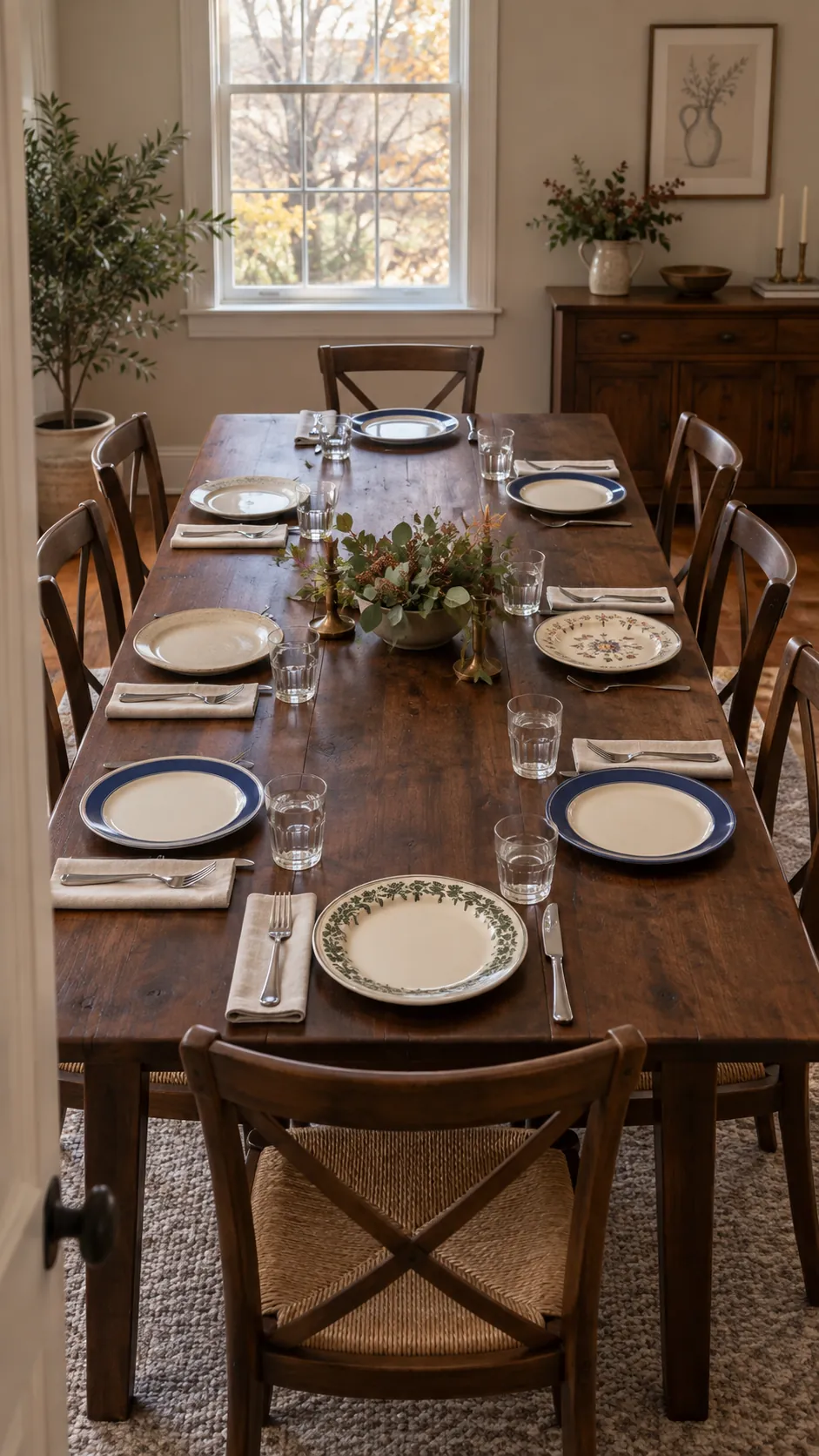
Walk around the table with a plate in each hand and distribute styles evenly. If you have four blue rimmed plates and four floral plates, alternate them or place them opposite each other. If every piece differs, repeat a simpler element at each setting, such as the same napkin fold or a plain salad plate. Photograph the table from the doorway to spot an unintended cluster of dark or bright patterns.
You do not need perfect symmetry. Let a treasured inherited plate mark a host’s place, but make sure its size still works for dinner. Leave enough room between settings for elbows and serving dishes; a handsome arrangement loses its charm if guests cannot set down a glass.
Let glassware and flatware carry the repetition
Matching clear drinking glasses can steady a mix of colorful plates without drawing attention to themselves. Use one flatware finish across the table if you have enough pieces, and lay each setting in the same order. A consistent water glass and fork placement matter more to the whole view than identical dinner plates.
If your glasses also vary, group them by shape or height instead of mixing one tall goblet into a row of short tumblers. Borrowing a few plain glasses is often less expensive and more useful than buying another dinnerware set. Keep candleholders and vases low so people can see each other over the meal.
Run a practical rehearsal with the serving dishes
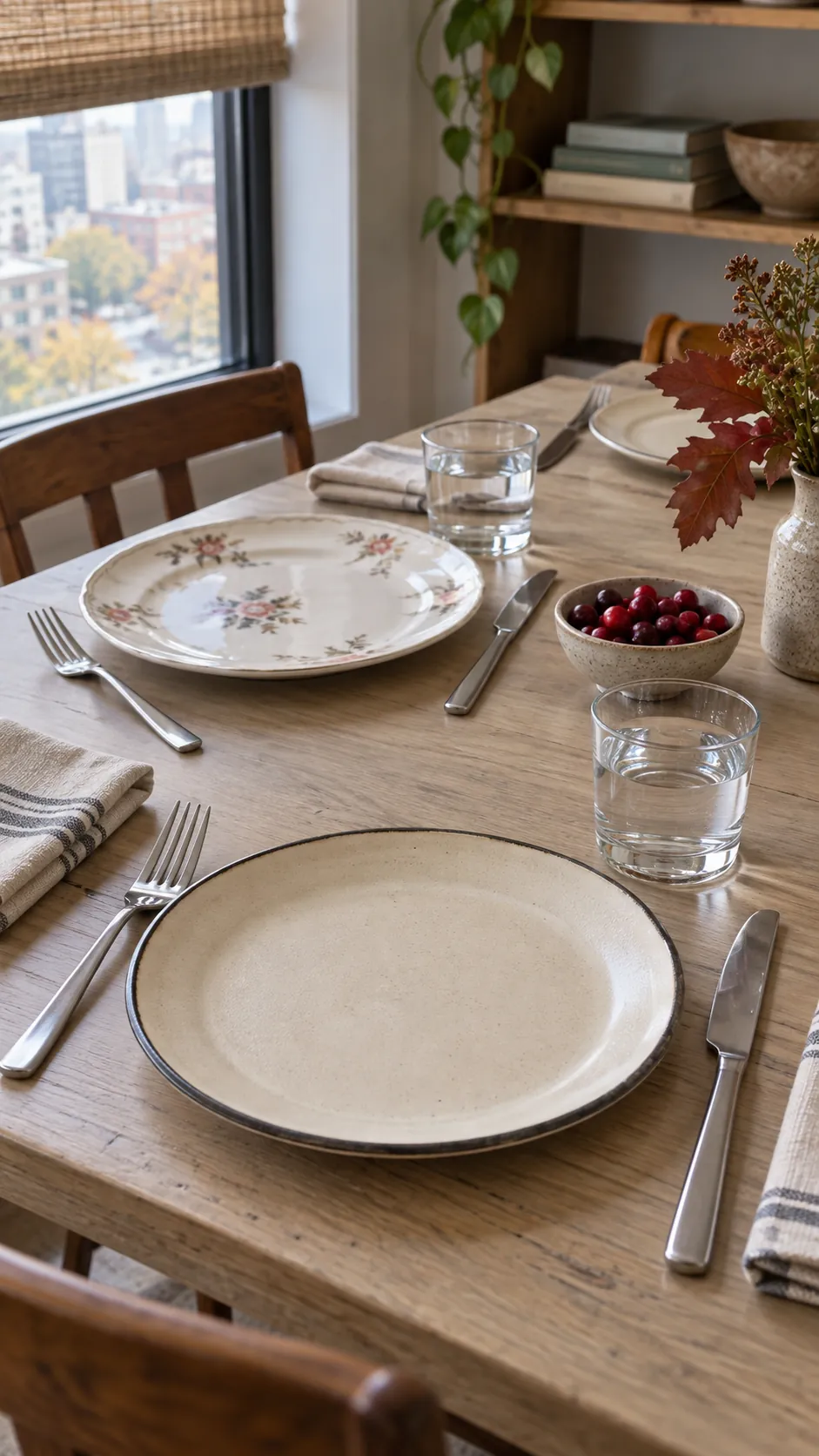
Set out the platters, bowls, and water pitcher before the food is ready. This reveals whether your centerpiece occupies the only place a casserole can go. Move a decorative object to the sideboard if it blocks passing a dish or makes guests reach across candles.
Check care requirements before serving on inherited or delicate china. A plate with an uncertain finish or fragile repair may be better for bread than a hot, wet main course. Put a small spare stack within reach for a dropped utensil or an unexpected guest. Once each setting is useful and the serving path is clear, the differences between plates become part of the hospitality rather than a flaw to conceal.