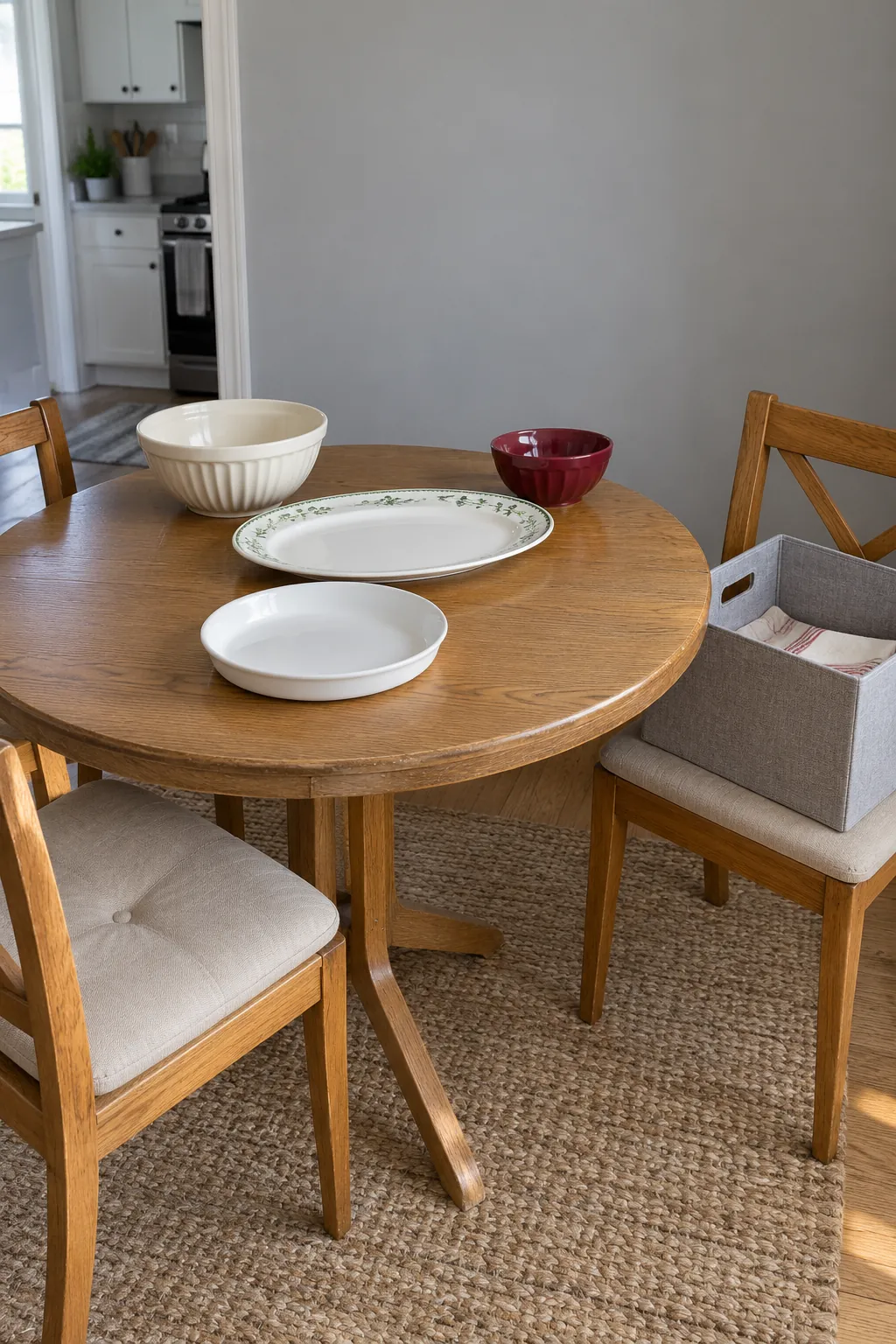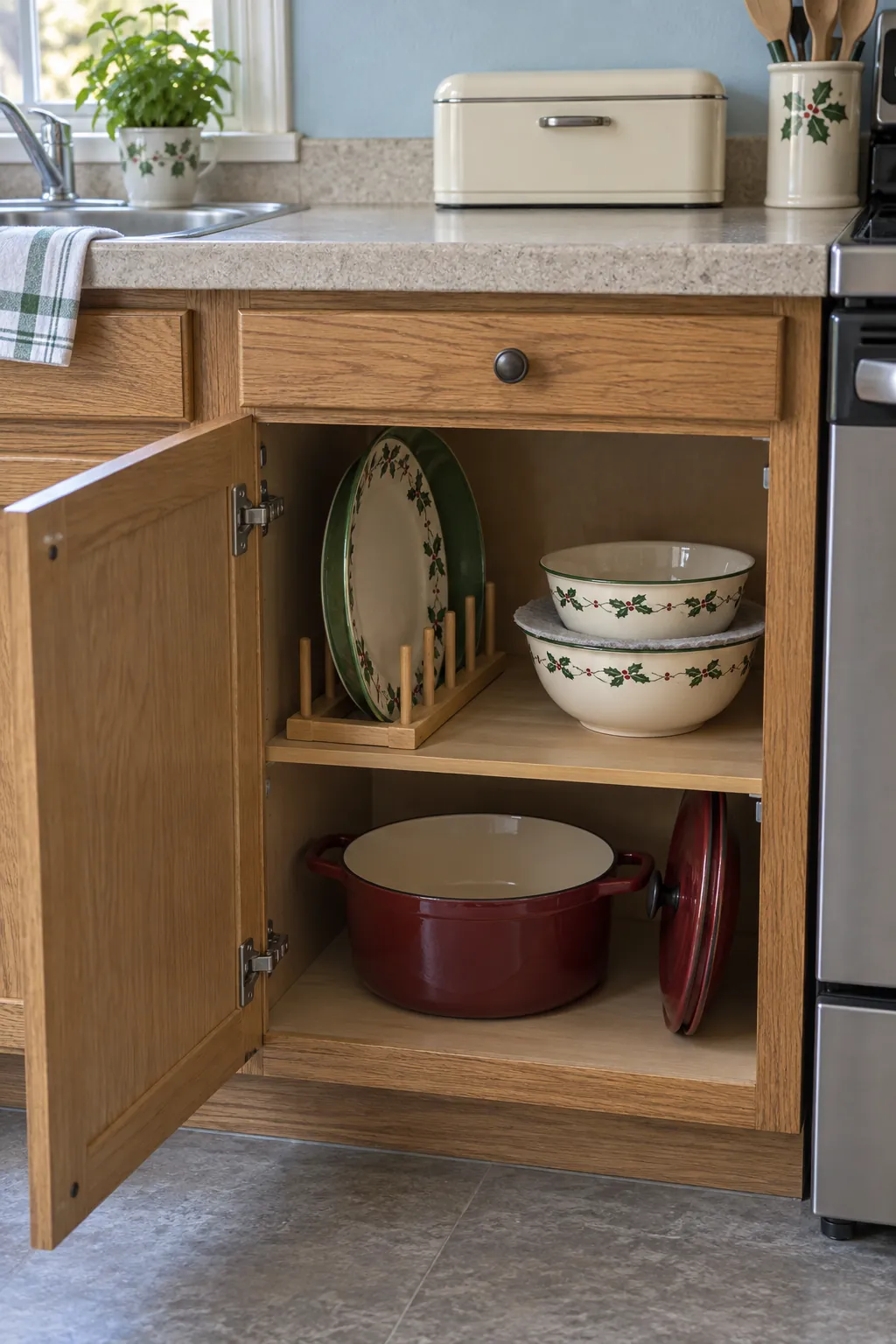
The turkey platter can take up an entire shelf while the bowls you use every morning end up squeezed behind it. Seasonal serving pieces need a home that protects their rims without making the kitchen harder to use. Start with the weight and shape of each dish, then choose storage you can safely reach and return to after a meal.
Keep daily dishes in the easiest cabinet
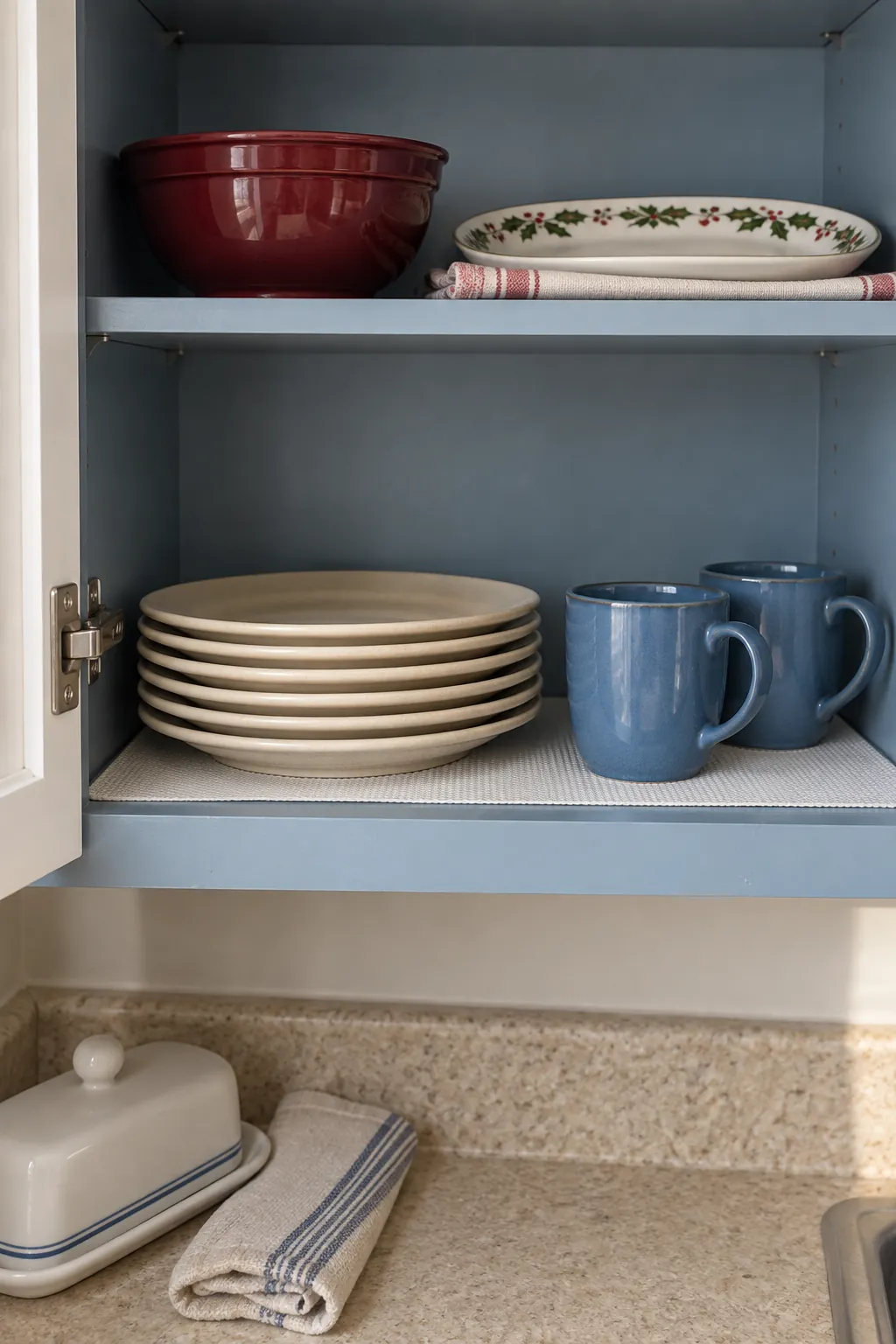
Start by protecting the shelf you reach for at breakfast, even if the holiday platters look prettier there. Move Christmas serving dishes to a less convenient location before rearranging your everyday plates and mugs. A kitchen with few cabinets works better when seasonal pieces do not require a daily reshuffle. Place a washable shelf liner under the remaining stacks and check that each door closes without touching a rim.
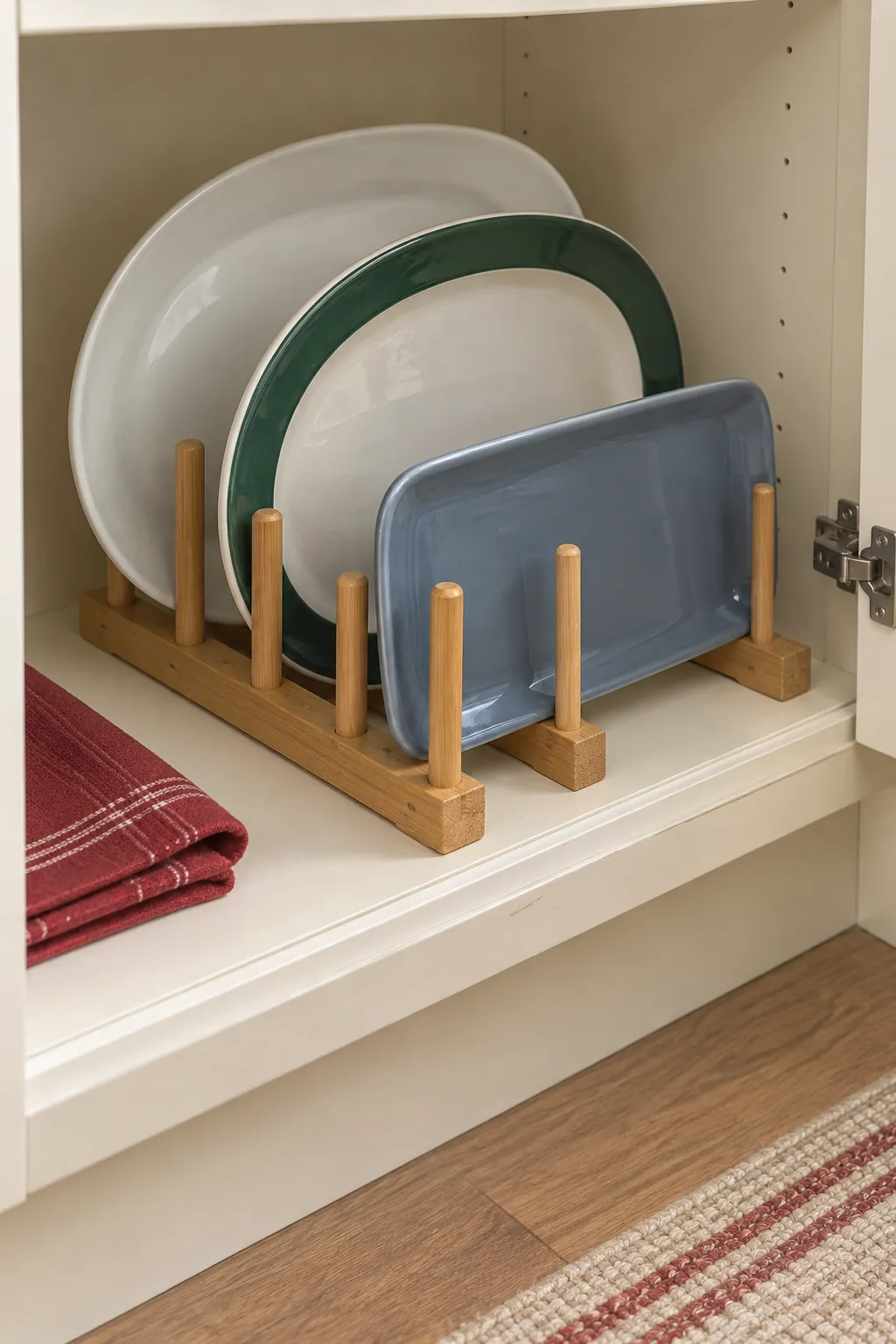
File sturdy platters in a supported vertical rack
A freestanding rack lets you remove one flat platter without lifting a heavy pile. Choose slots wide enough for the thickest rim and a base that fits fully inside the cabinet. Only store a dish upright if its shape sits securely and the rack is designed to support its weight. Keep delicate handled trays and unusually curved pieces flat instead of forcing them into narrow dividers.
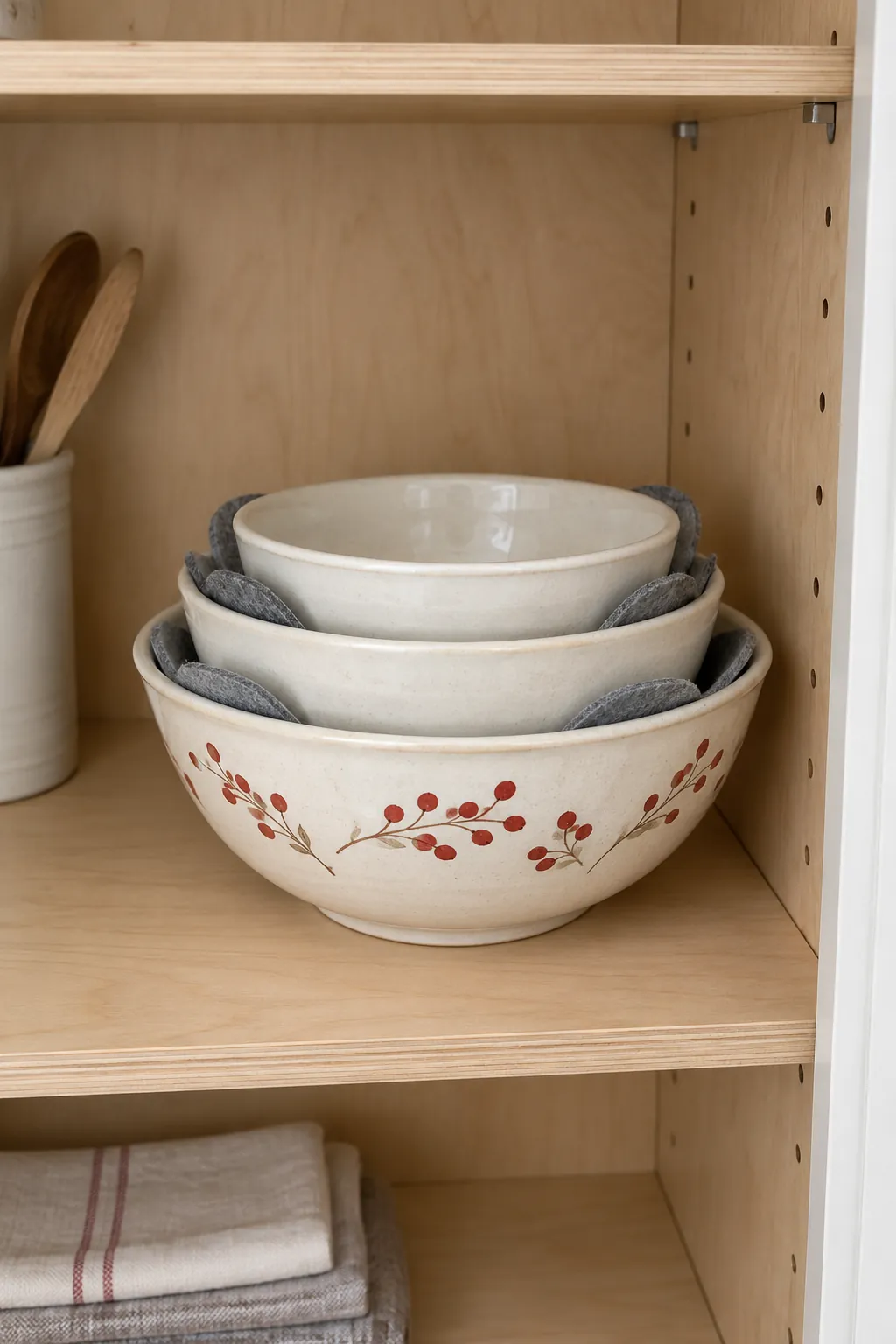
Nest compatible bowls with soft separators
Test the fit of serving bowls on the counter before committing to a nested stack. The smaller bowl should rest steadily inside the larger one without pressing on a fragile rim or decorative handle. Put a clean felt separator between compatible pieces and keep the stack shallow enough to lift comfortably. Store bowls that rock or wedge together on separate shelves.
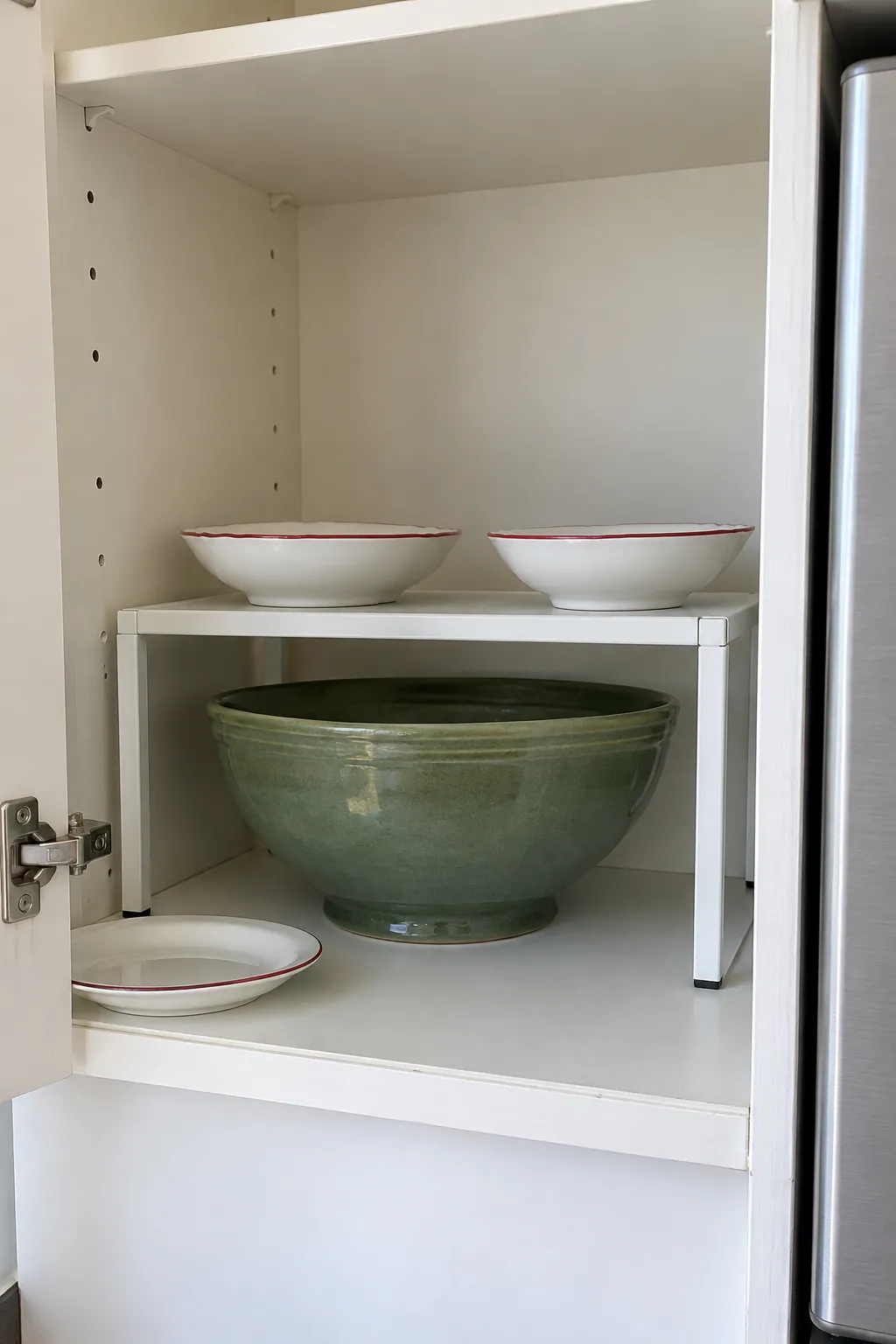
Use a shelf riser for lightweight serving pieces
A riser can reclaim the empty air above short bowls without turning them into an unstable tower. Measure the cabinet height and choose a sturdy model with a stated load limit. Put smaller lightweight dishes on top and heavier pieces directly on the cabinet shelf below. Leave enough space to lift the top dish clear rather than dragging it against the underside of the next shelf.
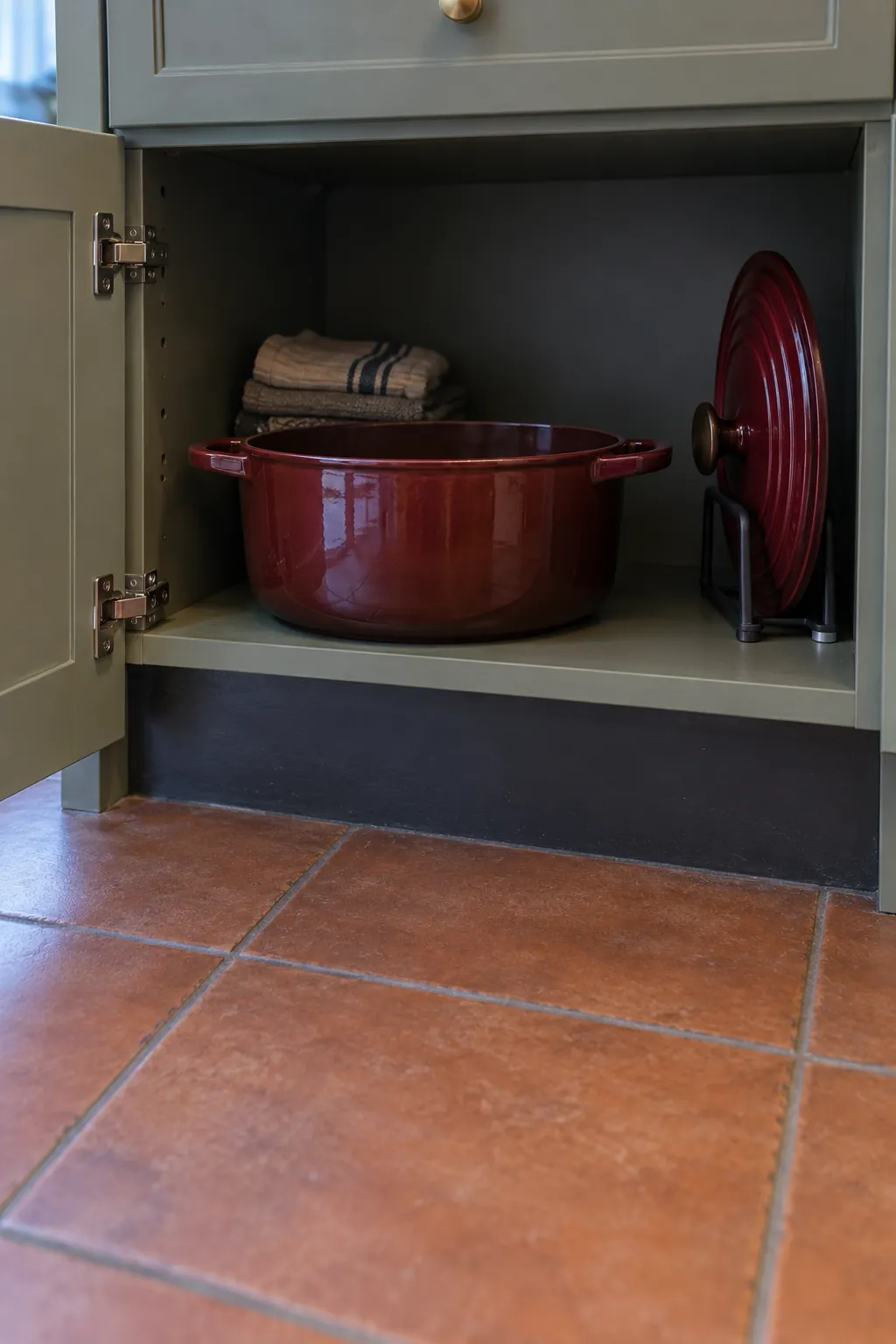
Give heavy casseroles a low shelf
Store ceramic casseroles near knee or waist height where you can lift them with both hands. A deep dish may fit on an upper shelf, but reaching overhead with its full weight makes retrieval harder. Keep its matching lid beside it in a supported holder if stacking would put pressure on the handle. Check the shelf supports and avoid placing the casserole on a flimsy removable riser.
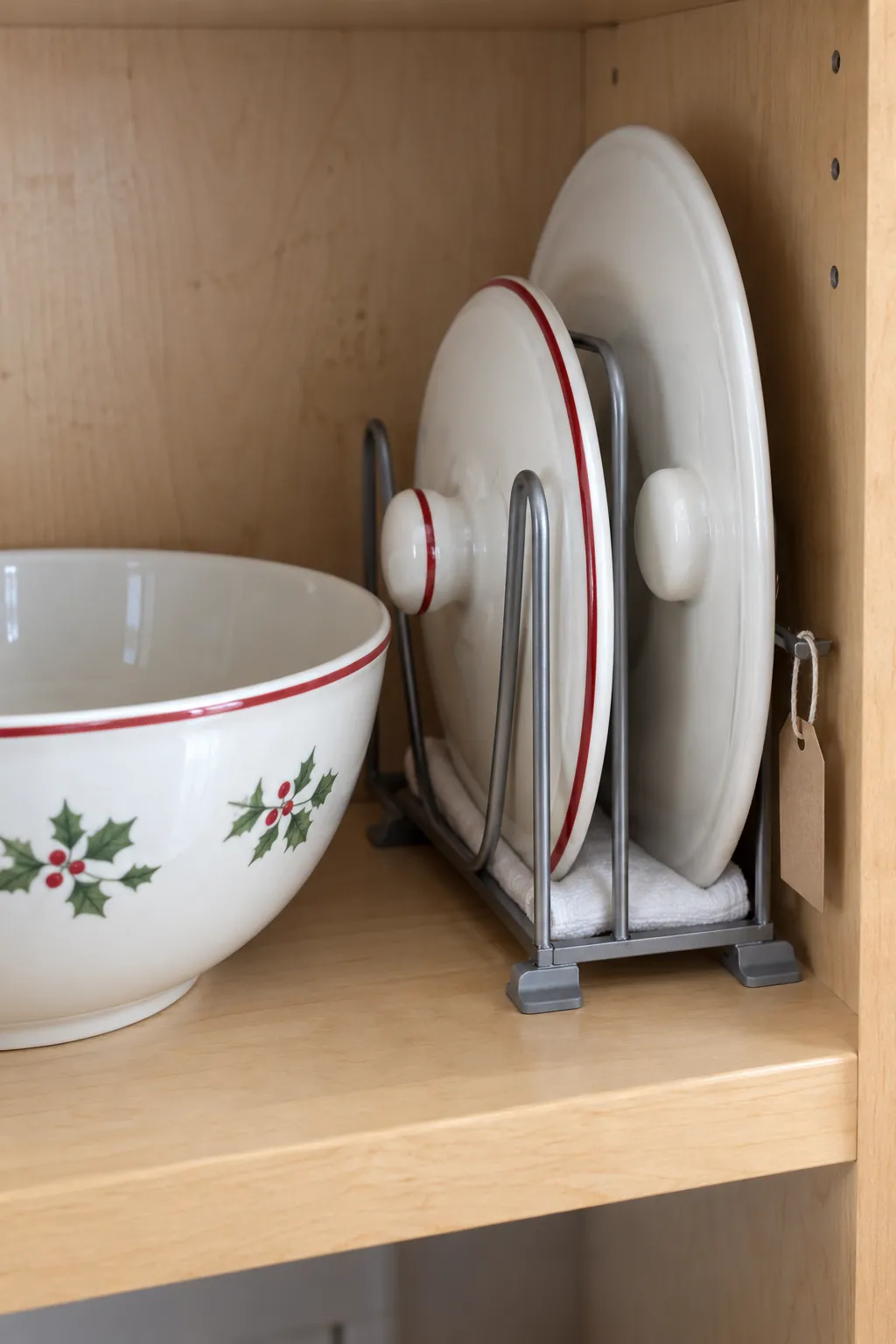
Separate lids from the serving bowls
Loose lids often steal more cabinet space than the bowls beneath them. Use a small divider at the side of the shelf so each lid rests securely without leaning against another dish. Pair similar lids with a removable label on the storage holder rather than adhesive on a food contact surface. Before buying a rack, measure any knob that needs extra clearance.
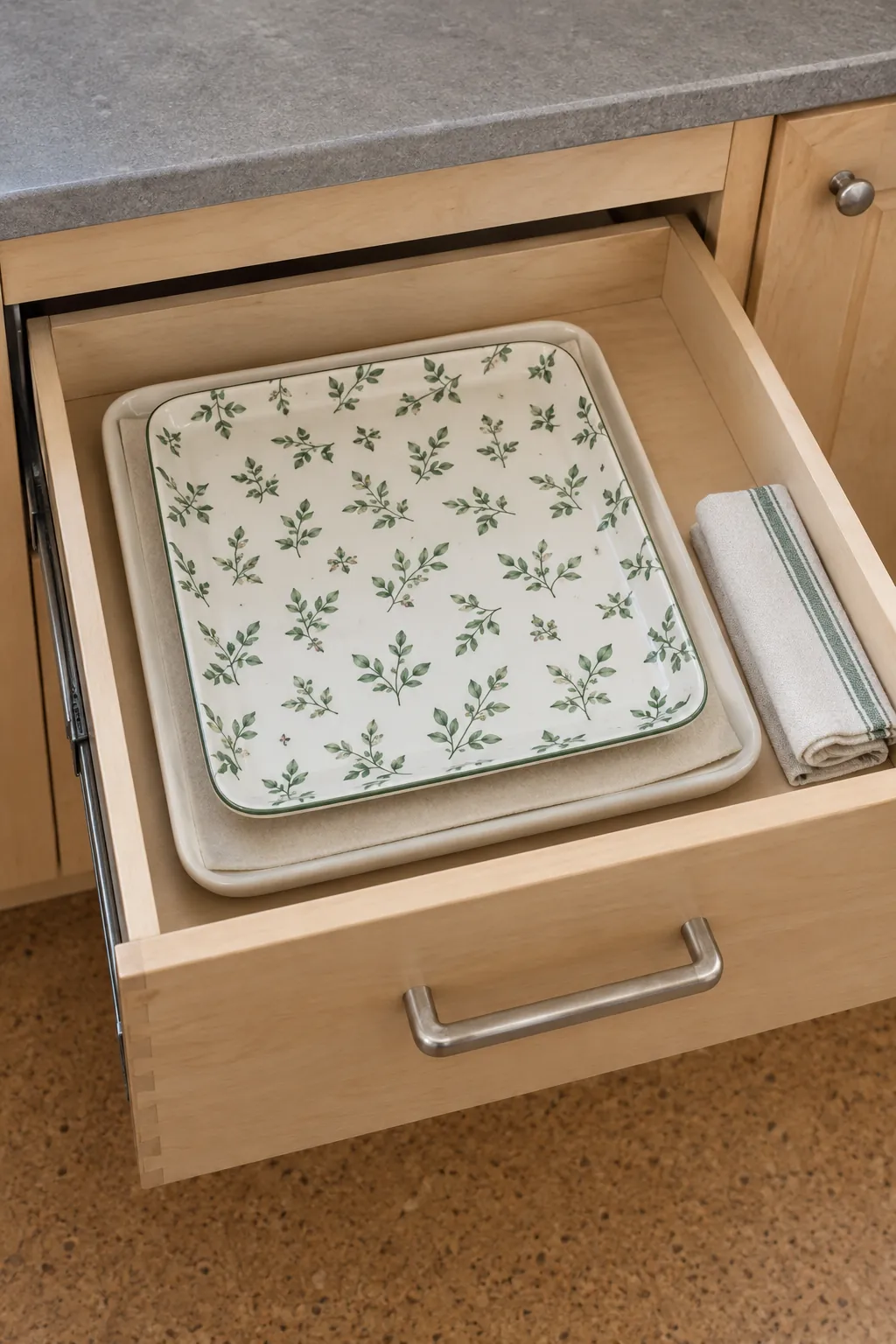
Reserve a deep drawer for shallow trays
If a drawer is stronger and wider than your cabinets, use it for a few low serving trays laid flat. Check the drawer load rating and its inside dimensions, including space lost to the runners. Add soft separators between trays and keep any stack below the drawer opening. Open it fully before lifting a dish so the rim does not scrape the frame.
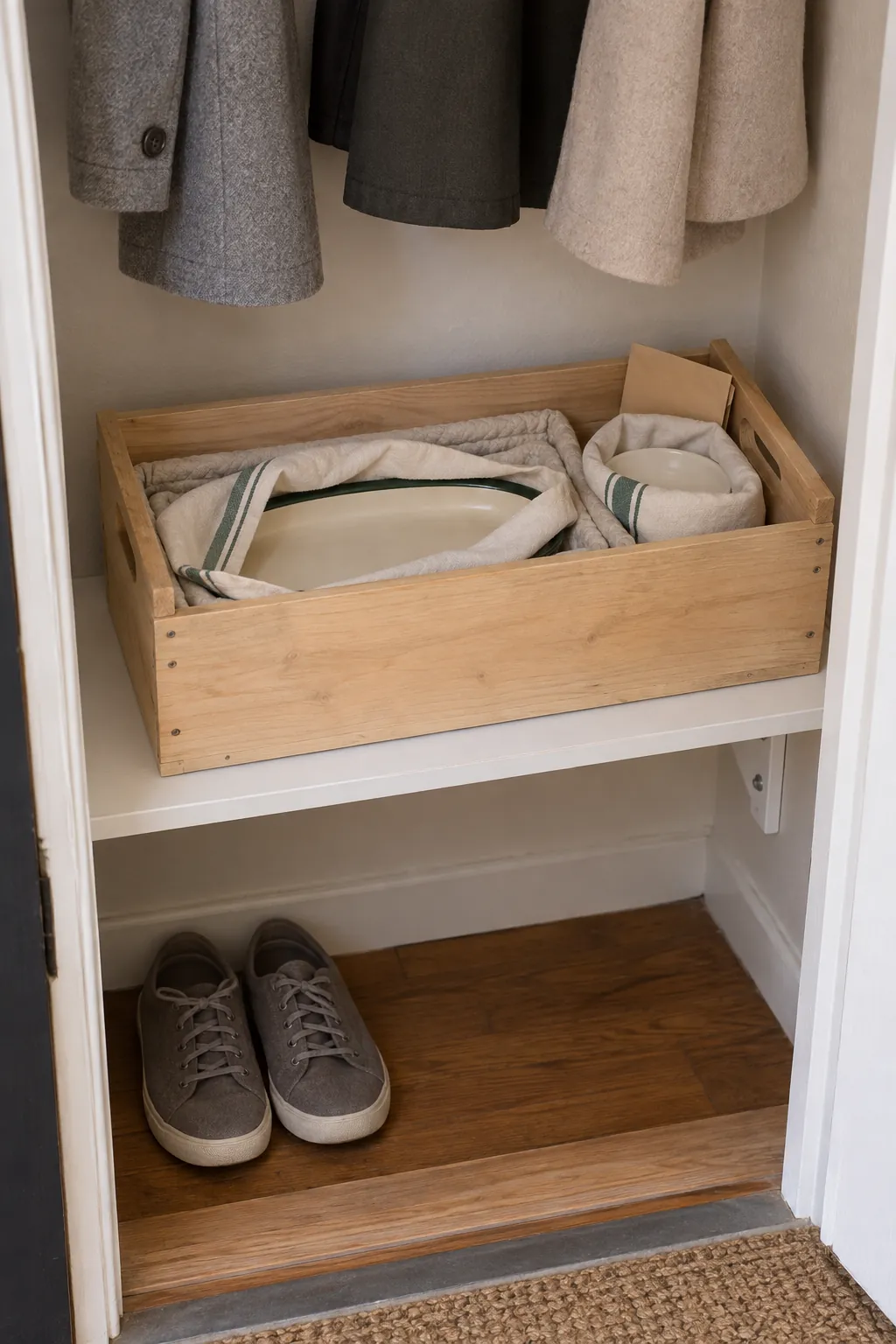
Fit a small dish crate on a closet shelf
Seasonal dish storage does not have to stay in the kitchen. A sturdy crate on a low hall closet shelf can hold infrequently used serving pieces close to the dining area. Wrap each dry dish, cushion the base, and leave the crate light enough to carry safely. Keep it away from cleaning chemicals and never balance it on the edge of a shelf.
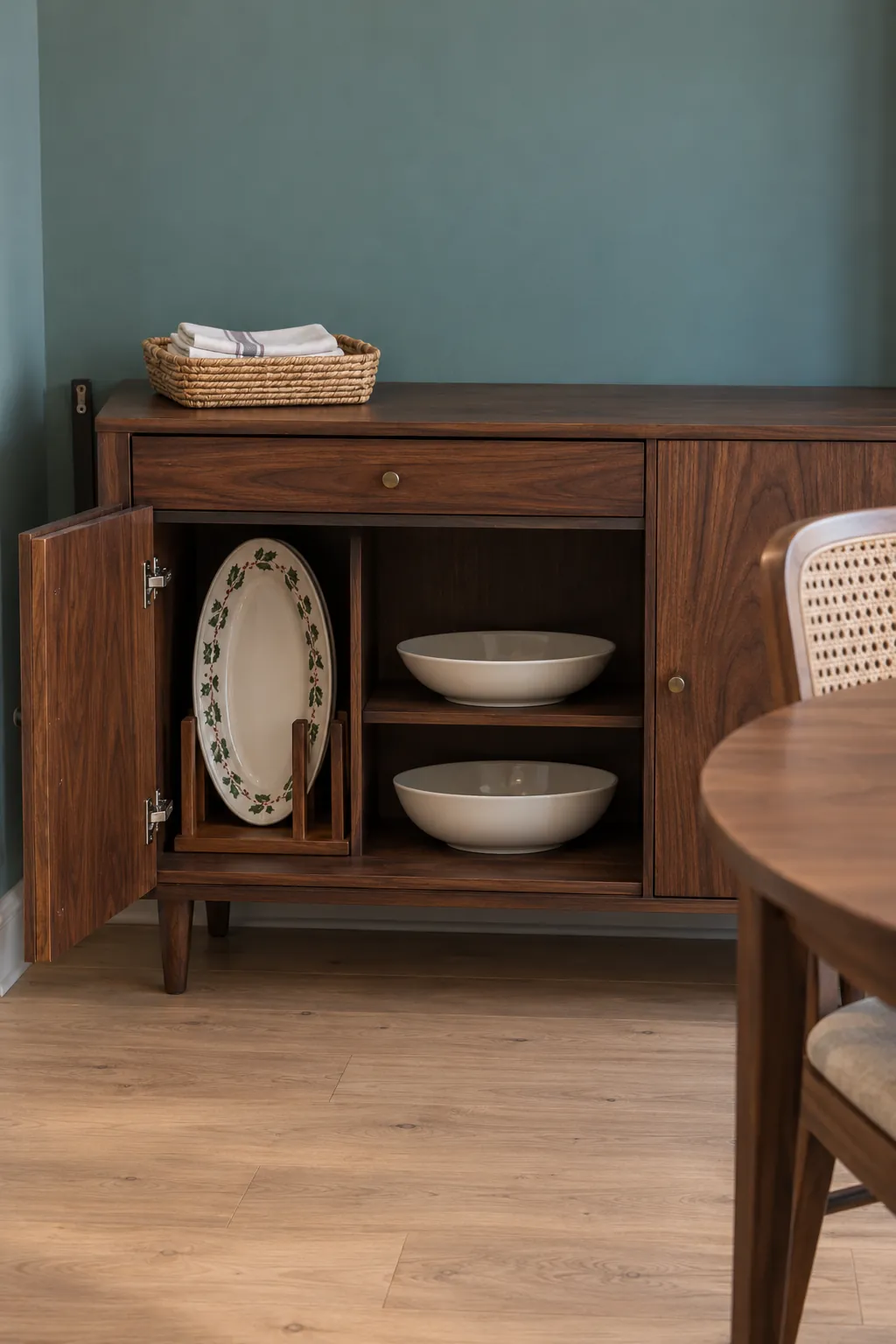
Turn a sideboard shelf into holiday dish storage
A dining sideboard offers a natural home for platters that only appear when guests arrive. Dedicate one shelf to serving pieces and leave the drawer above for napkins or utensils. Use adjustable dividers or shallow stacks so the space remains accessible during a busy meal. Secure tall furniture as directed by its manufacturer, especially in homes with children.
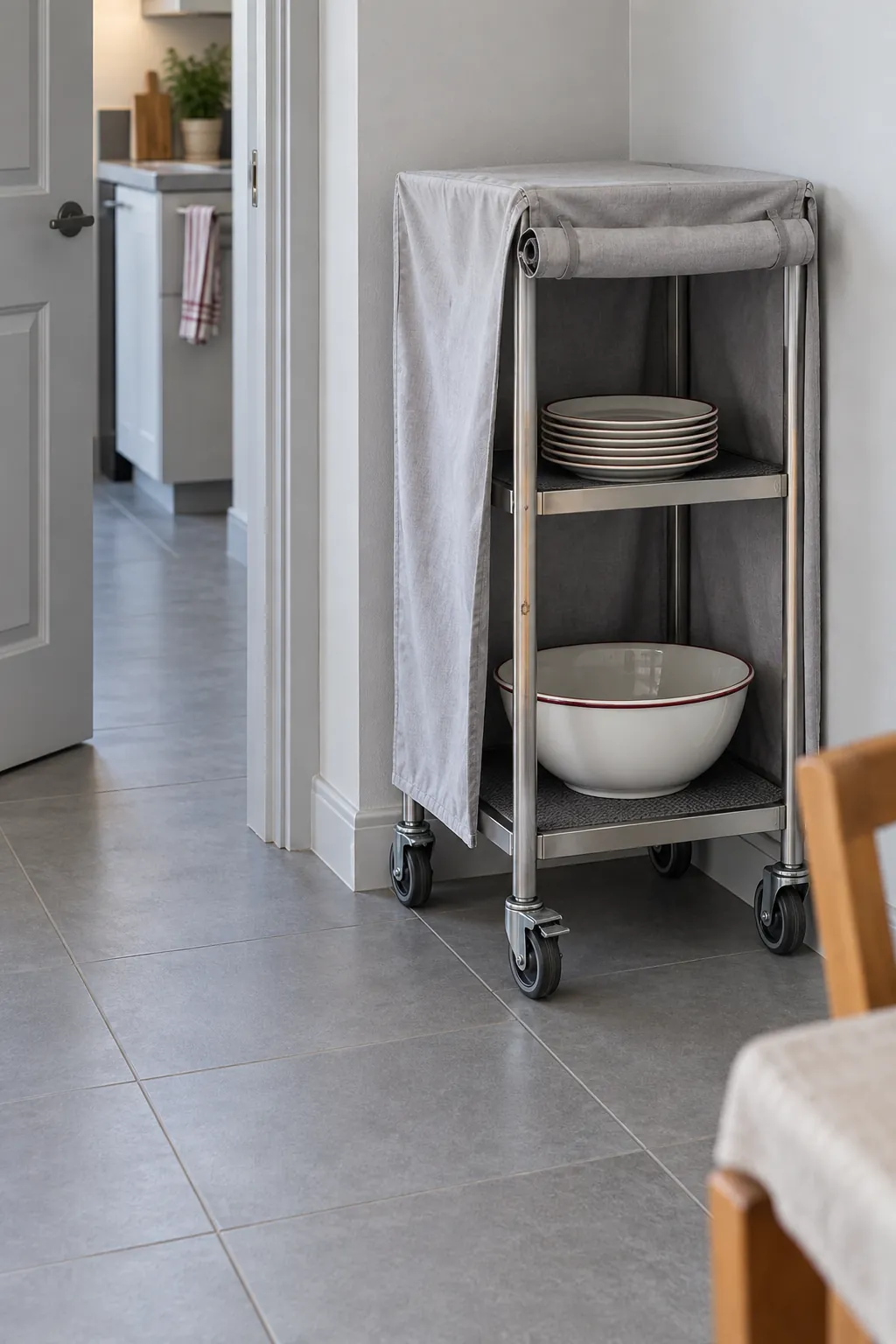
Use a closed cart that fits outside the cooking lane
A compact cart can add apartment kitchen storage when there is a parking spot that does not narrow the main walkway. Choose an enclosed or covered shelf for dishes so cooking grease and dust do not settle on them. Put the heaviest items on the lowest level and lock the wheels before loading or unloading. Skip the cart if it blocks an appliance door or forces people to squeeze past a hot stove.
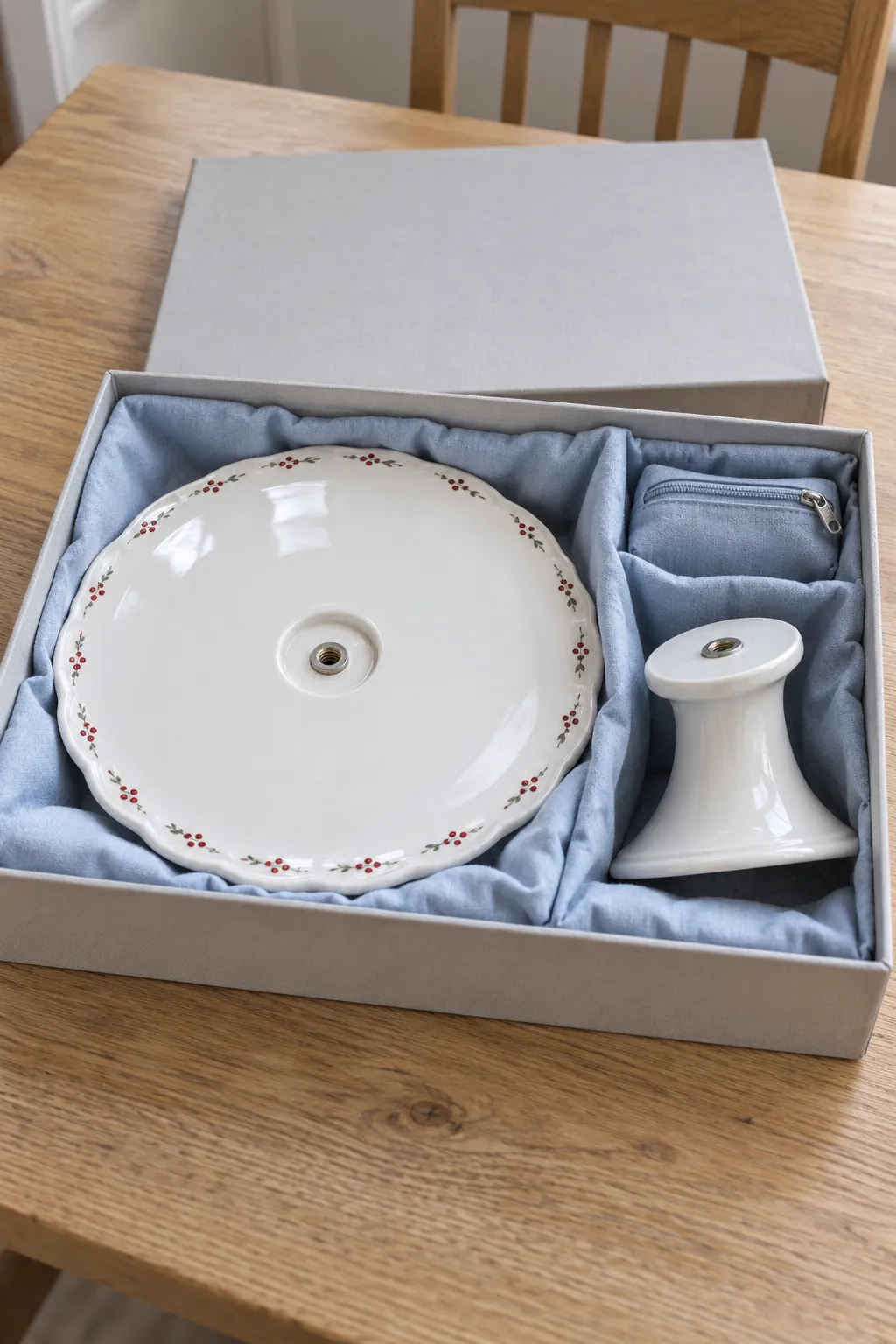
Store detachable cake stands as separate parts
Some cake stands are designed with a removable pedestal, which makes them much easier to pack. Follow the maker’s instructions before taking a stand apart and keep the fastening pieces in a small labeled pouch. Cushion the plate and base separately so they cannot knock together inside the box. Leave glued, fixed, or fragile antique stands assembled rather than trying to gain a few inches.
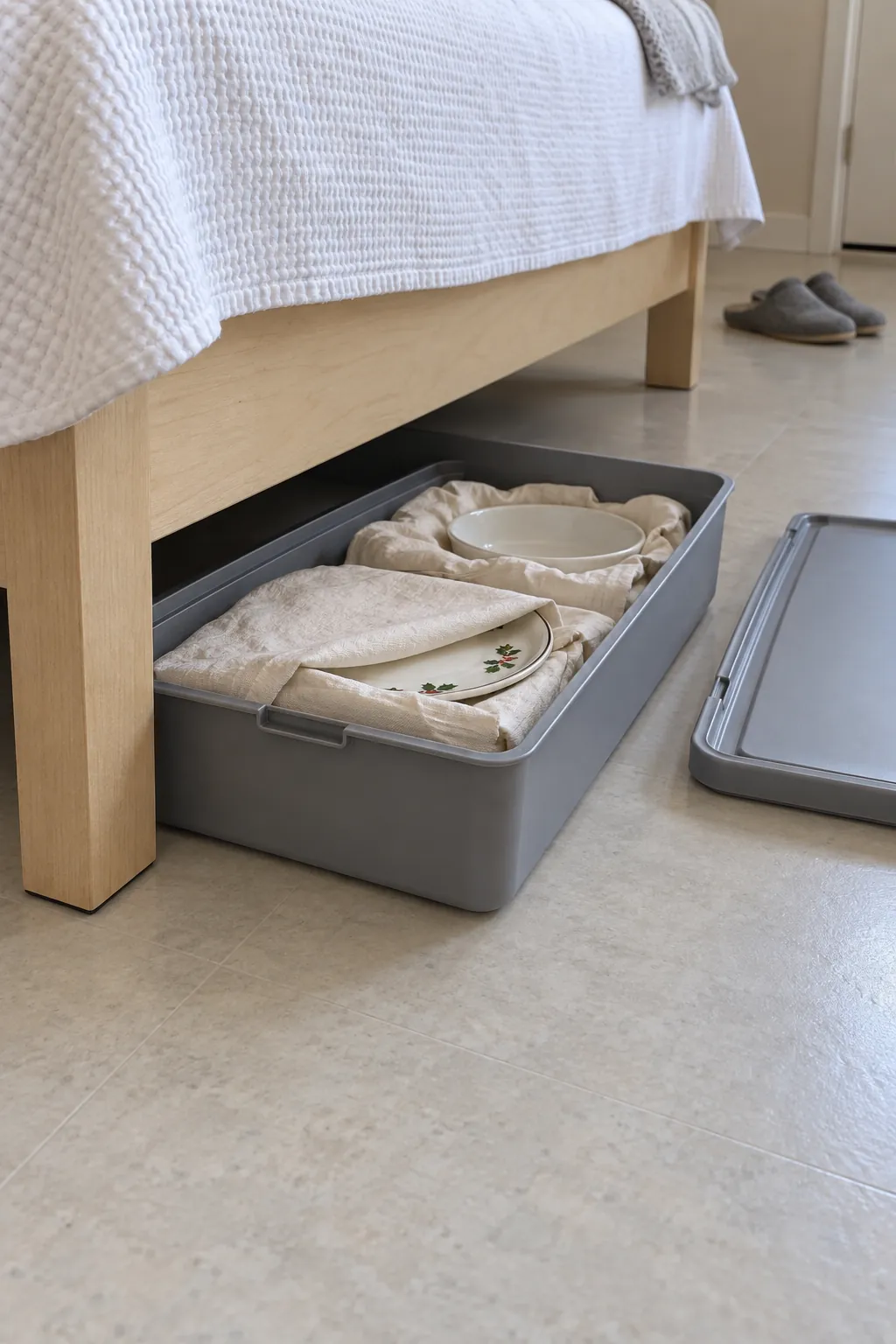
Protect seasonal dishes in a shallow underbed box
A rigid underbed container can hold light serving dishes when kitchen cabinet storage is exhausted. Check the clearance with the lid attached and choose a dry location that is easy to clean. Wrap dishes separately, place heavier pieces at the bottom, and keep the box light enough to slide without jerking it. Wash the dishes before their next use, even when they have been stored covered.
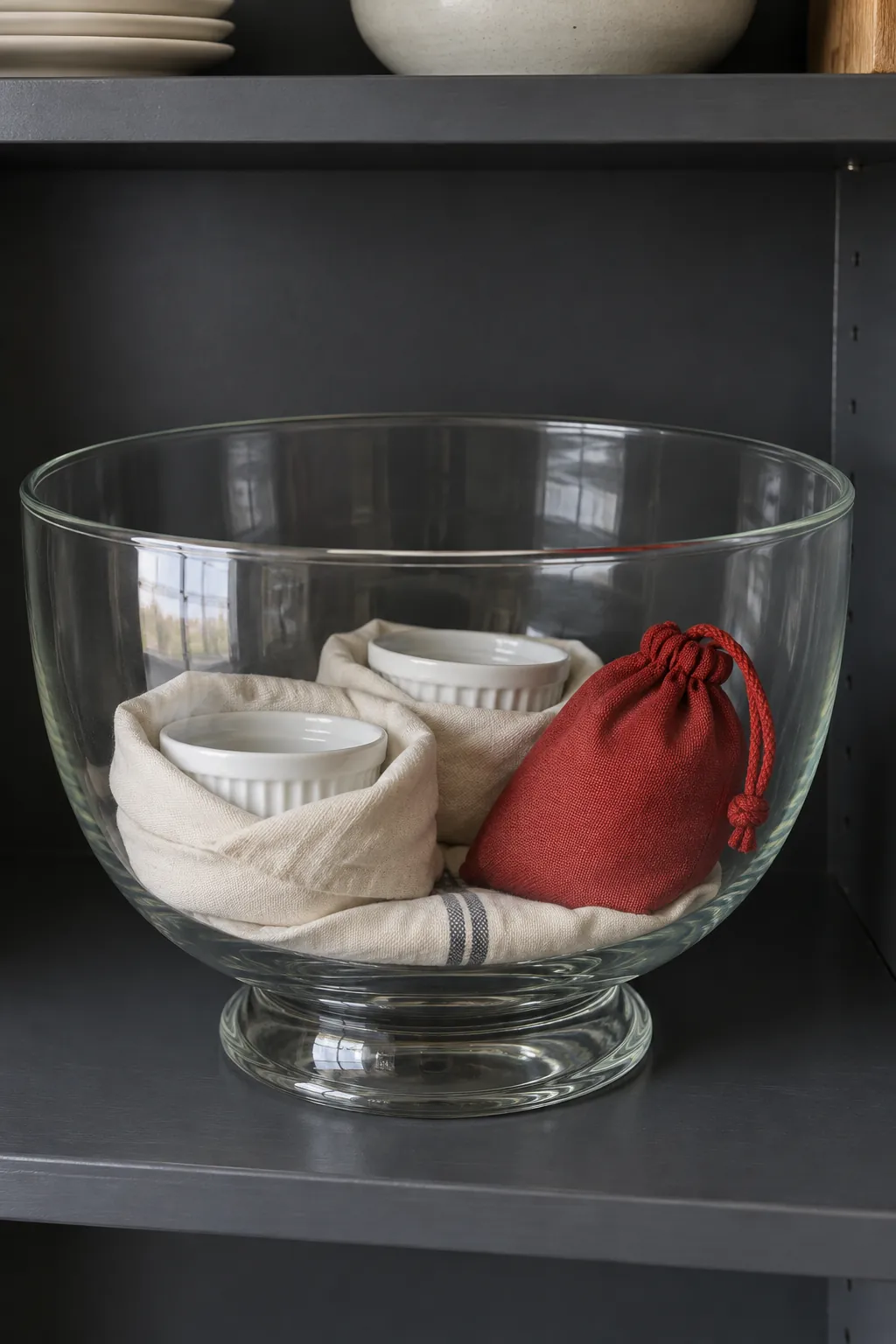
Use the largest bowl for small serving accessories
A large punch bowl can hold wrapped ramekins or a cloth pouch of serving spoons during storage. Cushion each small piece so it does not rattle against the bowl’s interior. Avoid filling the bowl so heavily that lifting it becomes awkward or putting a sharp utensil directly against glaze. Empty the accessories first whenever you need to move the bowl.
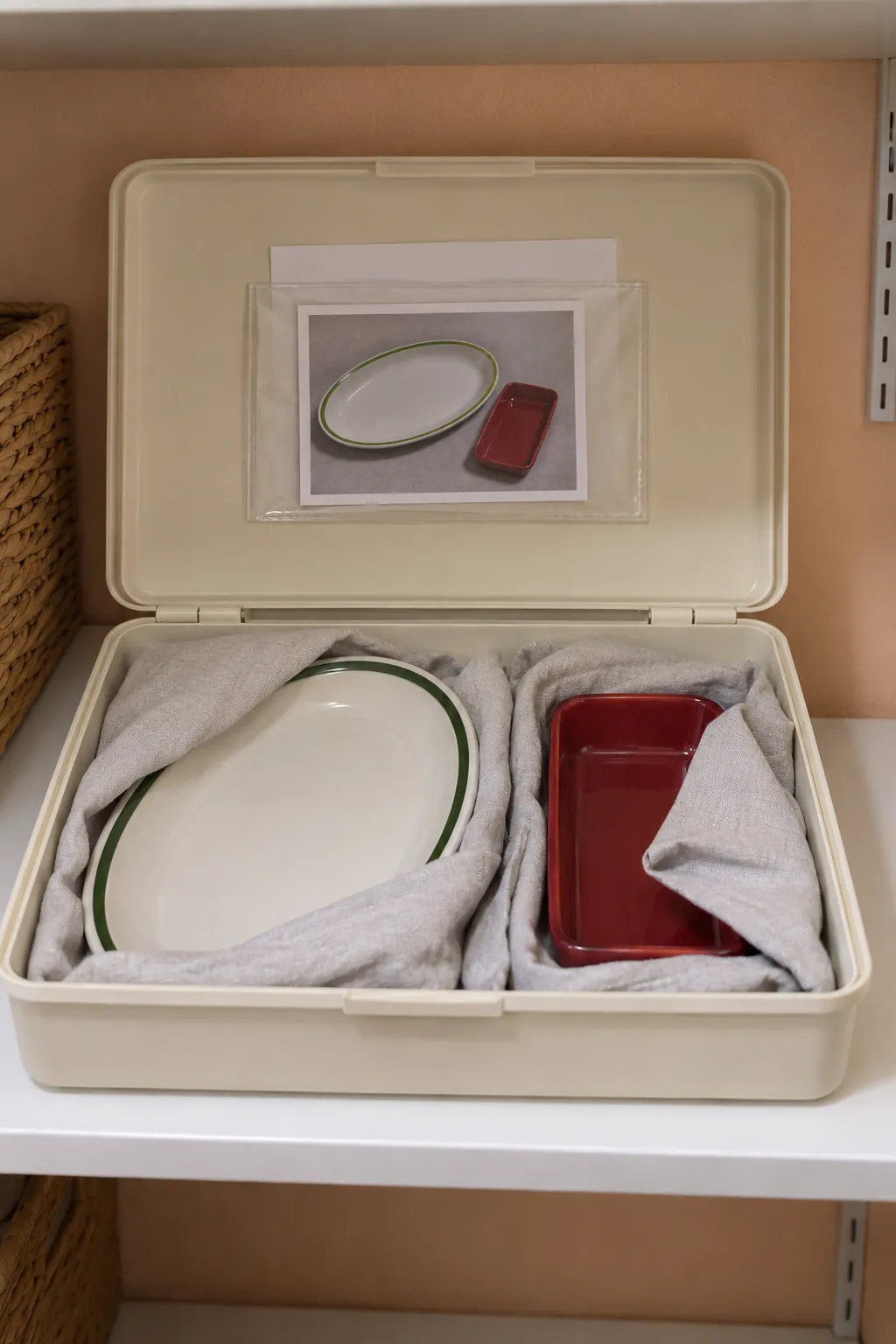
Keep one photographed inventory with the dishes
Take a simple photo of the serving set before packing it away and store a printed copy inside the container lid. Note the location of any matching pieces stored elsewhere so you do not unpack every box before dinner. This is especially useful for holiday platter organization when several plain containers look alike. Update the inventory after donating, replacing, or borrowing a piece.
Limit the collection to what your table uses
Lay out the dishes for a realistic Christmas menu and notice which pieces have the same job. Keep the platters and bowls that fit your table, guest count, and available storage rather than every item that once came with a set. Borrow a rarely needed extra dish or use an everyday bowl when the menu grows. The best small space dish storage leaves room to put the clean dishes away after the meal.