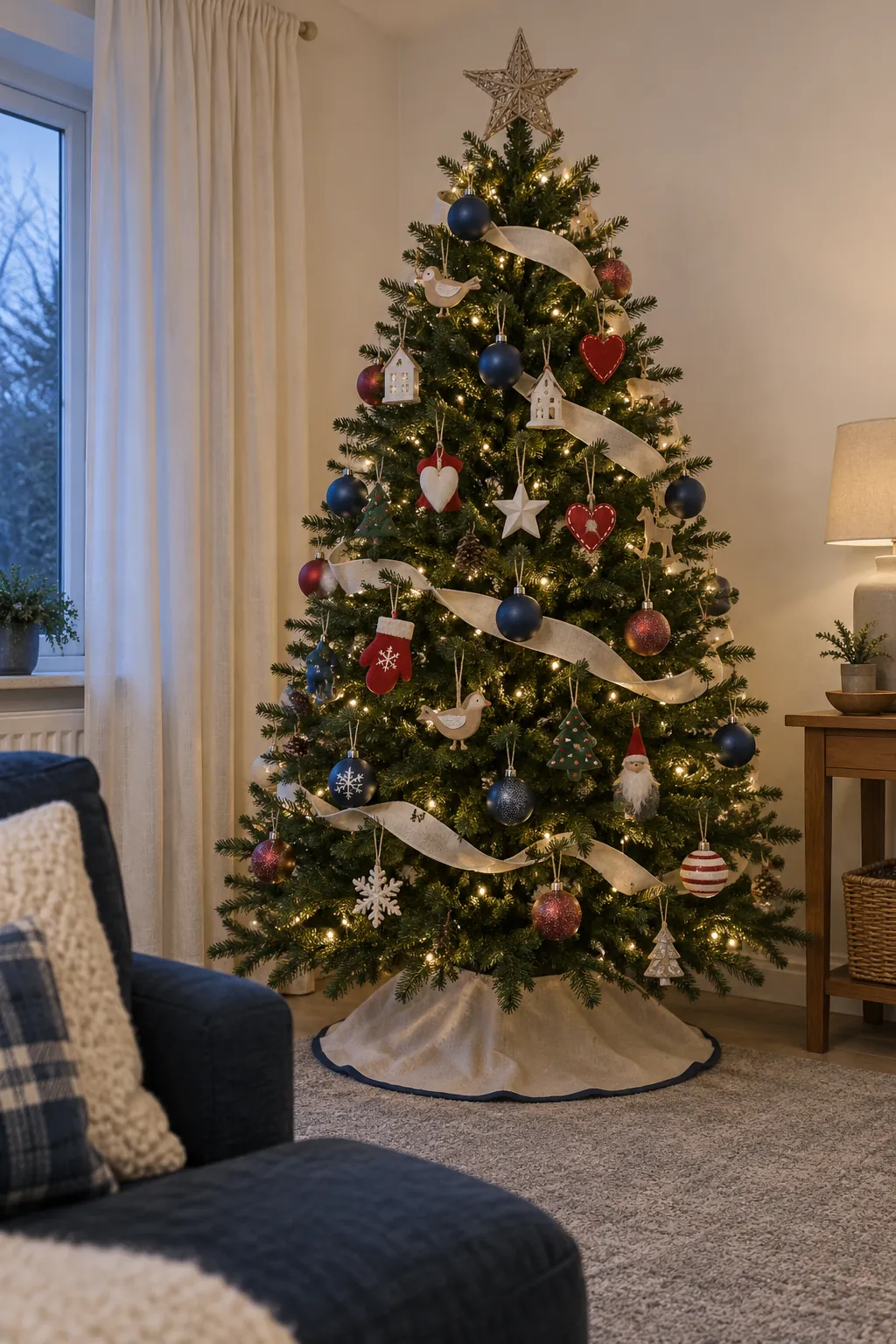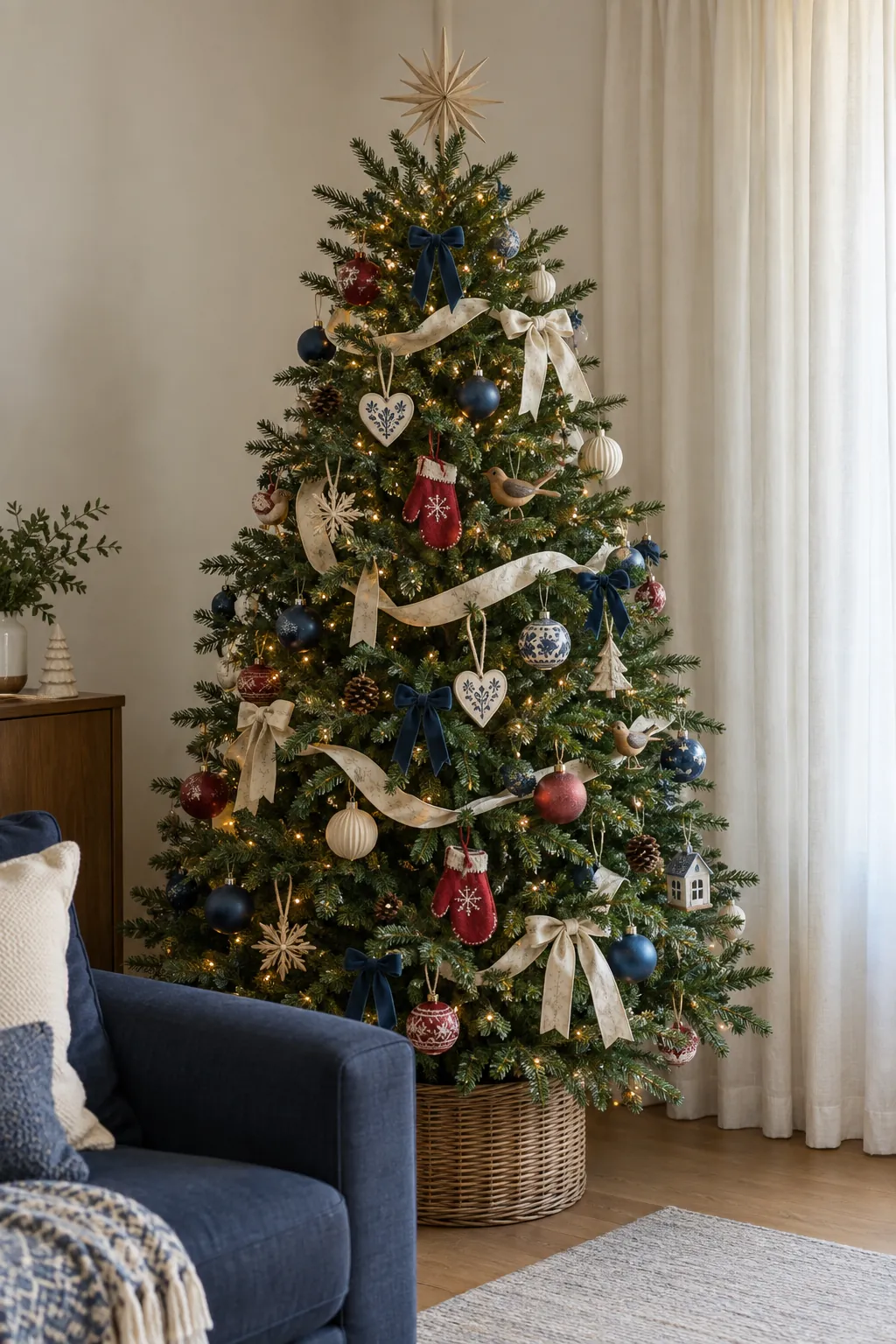
The box can hold a school craft, a souvenir, and a delicate ornament from someone you miss, while the new ribbon belongs to an entirely different palette. Those pieces do not need to match in order to deserve a place. Let the new colors create a quiet structure around the old collection, then give the meaningful shapes room to be seen.
Decide Which Ornaments Are Part of Christmas for You
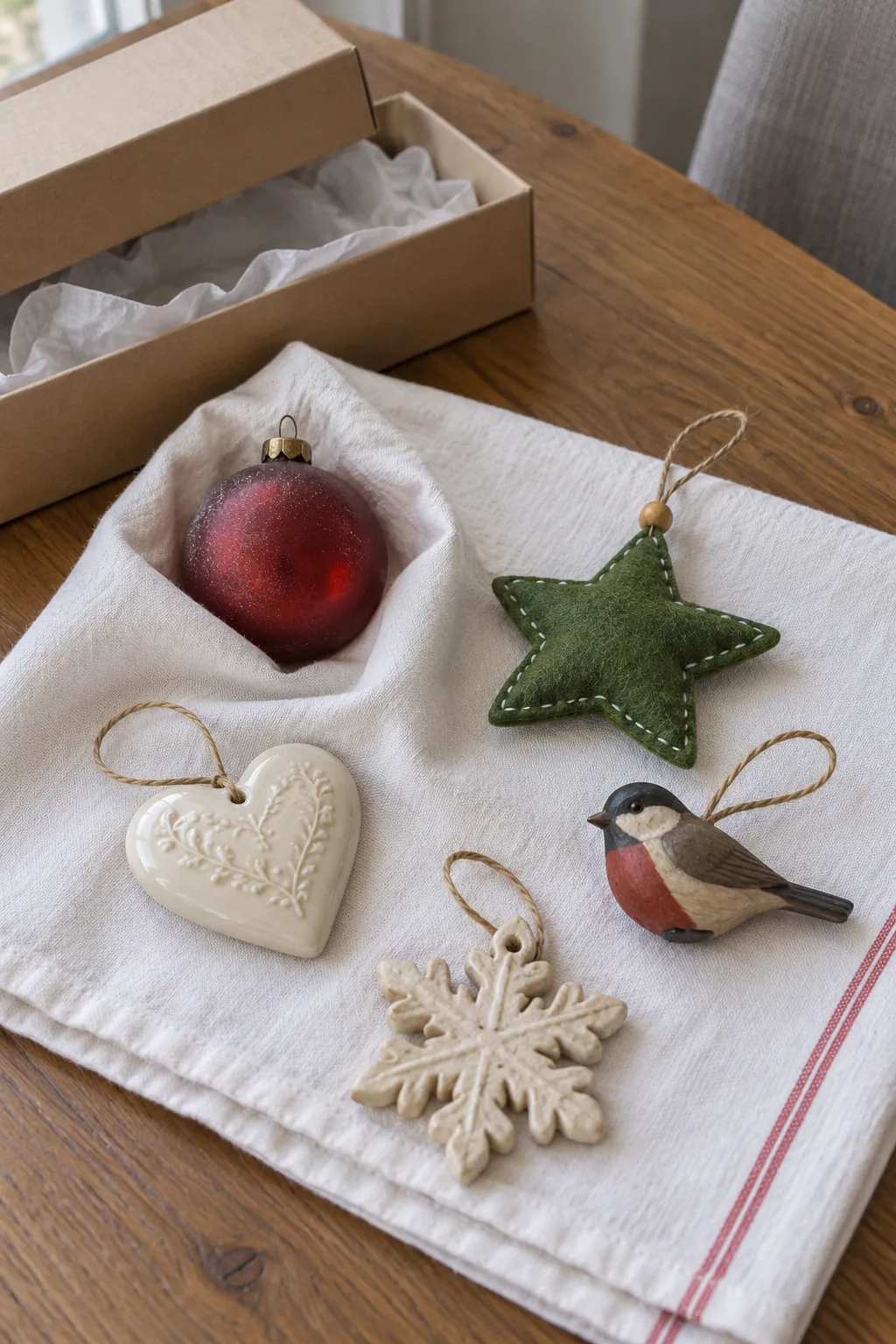
A color scheme should organize the background, not decide which memories are allowed on the tree. Before buying anything, set out the ornaments you would genuinely miss seeing this year. Include the awkward colors, handmade shapes, and pieces that matter to someone else in the household. This is your starting collection, not a problem pile to hide.
Ask family members which pieces need a visible place, because a decoration that looks ordinary to you may carry someone else’s favorite story. Keep delicate ornaments on a soft surface while you sort, and check loops, caps, and hooks before hanging them. Do not repaint an heirloom or cover a child’s drawing simply to force it into the new palette. A display can become more coordinated without permanently changing the objects that make it yours.
Choose a Palette That Gives the Old Pieces Somewhere to Belong
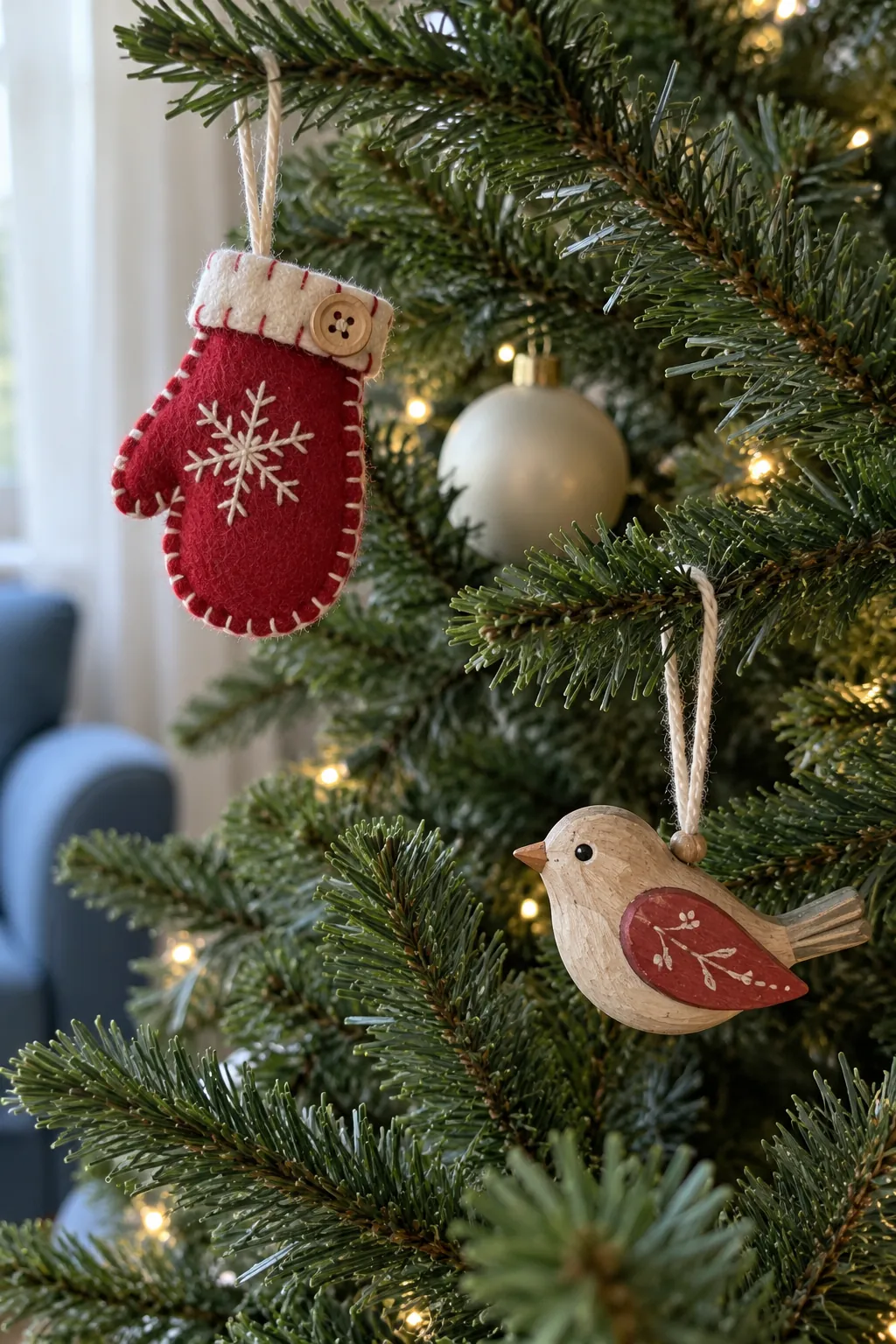
Look for a color or finish that already appears in several favorites, then use it as the bridge to the new scheme. A little red in a painted bird and a vintage bauble can support burgundy ribbon, even if the pieces are not the same shade. If the collection contains almost every color, cream, soft silver, natural wood, or another quiet neutral can provide a common background. Choose the neutral that suits the actual room and ornaments rather than assuming gold works with everything.
Keep the supporting palette limited enough to recognize from across the room. For example, blue and cream filler ornaments can hold a mixed collection together while small red keepsakes remain welcome exceptions. The scheme does not need an exact proportion or a rule that every visible item must obey. Its job is to give the eye a repeated color to return to.
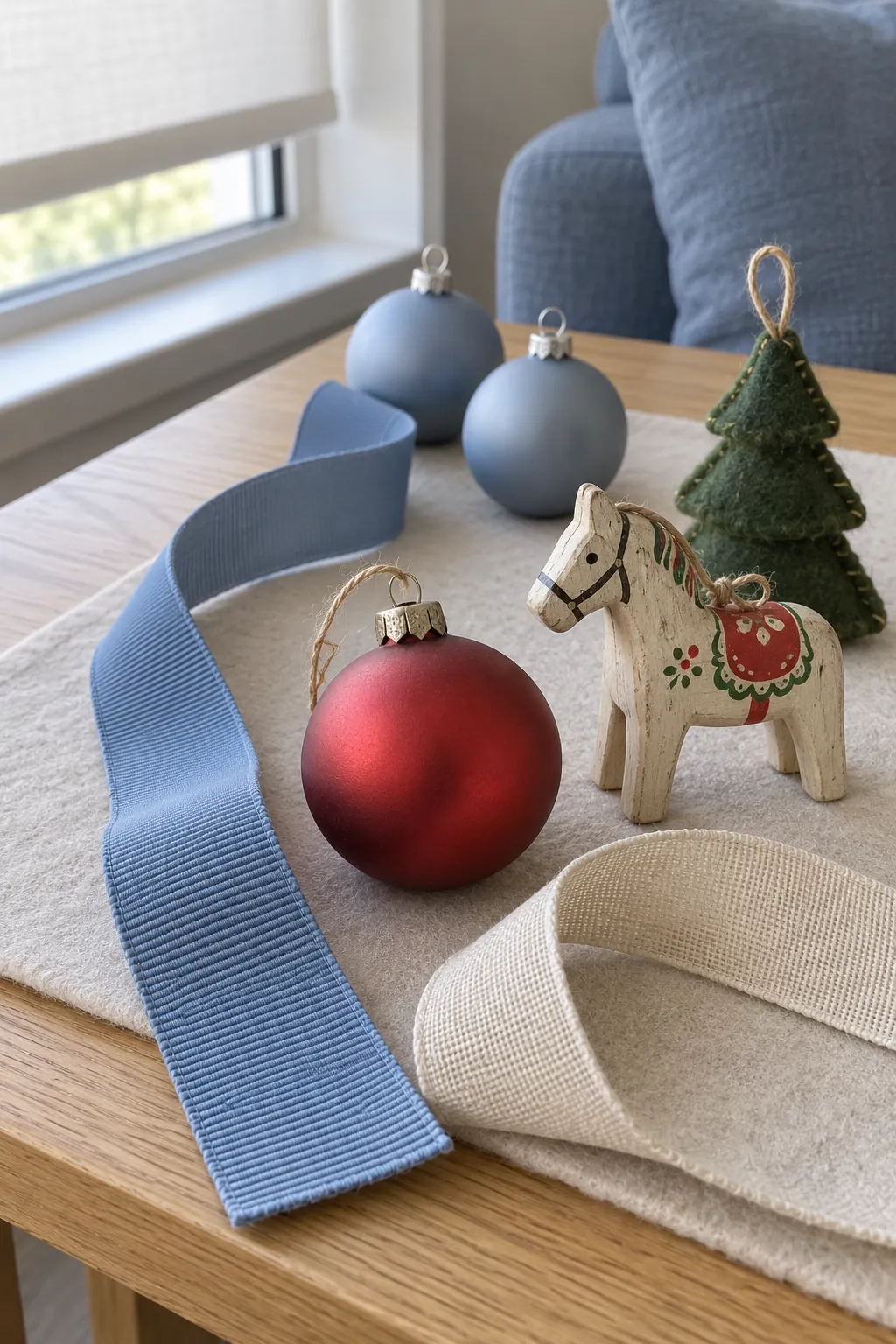
Place a ribbon sample beside several sentimental ornaments before committing to a full roll. View the group in daylight and with the tree lights on, since satin, glass, and metallic finishes can look quite different in each condition. If one sample overwhelms the small handmade details, try a softer finish or a narrower ribbon. This small test is more useful than buying a matching set and discovering that it leaves no room for the old pieces.
Build a Quiet Base Before Adding the Special Pieces
Start with a tree that is assembled securely, then arrange its lights according to the product instructions before adding decorations. A consistent light color gives old and new ornaments a shared setting, while mixed light temperatures can make their differences more noticeable. Keep cords clear of routes where people walk, and avoid overloading branches or electrical connections. The lighting should support the collection rather than make every ornament compete with a bright point.
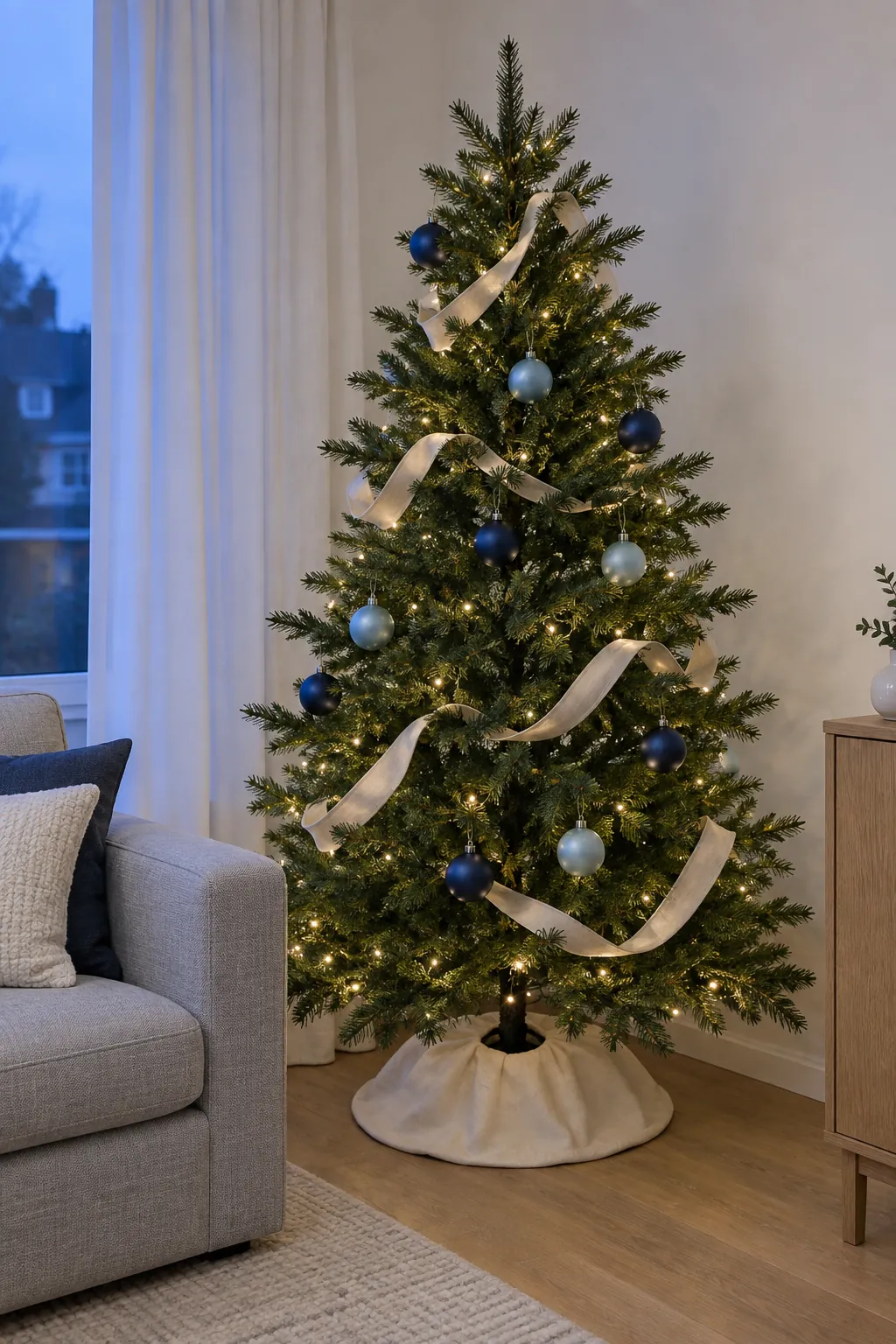
Add your main ribbon or simple filler ornaments in loose repeated areas across the tree. Leave branch tips and open pockets available for favorites instead of finishing a complete coordinated tree and squeezing the keepsakes in afterward. Broad ribbon can overwhelm a small tree, so choose a scale that leaves individual shapes readable. Stop while there is still space; the sentimental pieces are part of the finished plan, not the last layer of clutter.
Give Important Ornaments a Good View and a Secure Branch
Hang the pieces you most want to notice on outward-facing branches near the viewing height that matters in your room. A favorite can sit beside a quiet cream ball rather than next to another equally detailed keepsake. Spread recognizable shapes through the front and sides so the mixed ornament tree has interest from more than one seat. Keep heavier pieces closer to sturdy branch junctions, checking the tree and ornament instructions rather than trusting a delicate outer tip.
Protect fragile items from pets, small children, swinging doors, and busy walkways with placement that suits your household. A high branch is not automatically secure if its ornament is heavy or the tree can be reached from furniture. Replace a damaged hanging loop only when that can be done without harming the piece, and set unstable ornaments aside for a different display. The best viewing position is the one that is both visible and reliable.
A strong color that appears only once can become a focal point instead of a mistake. Try moving it to a position where its shape can stand alone, then step back before adding similar new ornaments around it. If the contrast still feels abrupt, repeat a smaller amount of that color in an ordinary filler ornament elsewhere. You can balance the effect without surrounding the original with a matching cluster.
Use Repetition Around the Keepsakes, or Give Them a Separate Display
A repeated hanging ribbon can connect ornaments made from different materials when their existing loops can accept it safely. Tie the same narrow ribbon to a few suitable pieces, keeping knots small and clear of painted details. Leave fragile caps and original attachments alone if changing them risks damage. Matching the support is often enough; the ornaments themselves can stay wonderfully different.
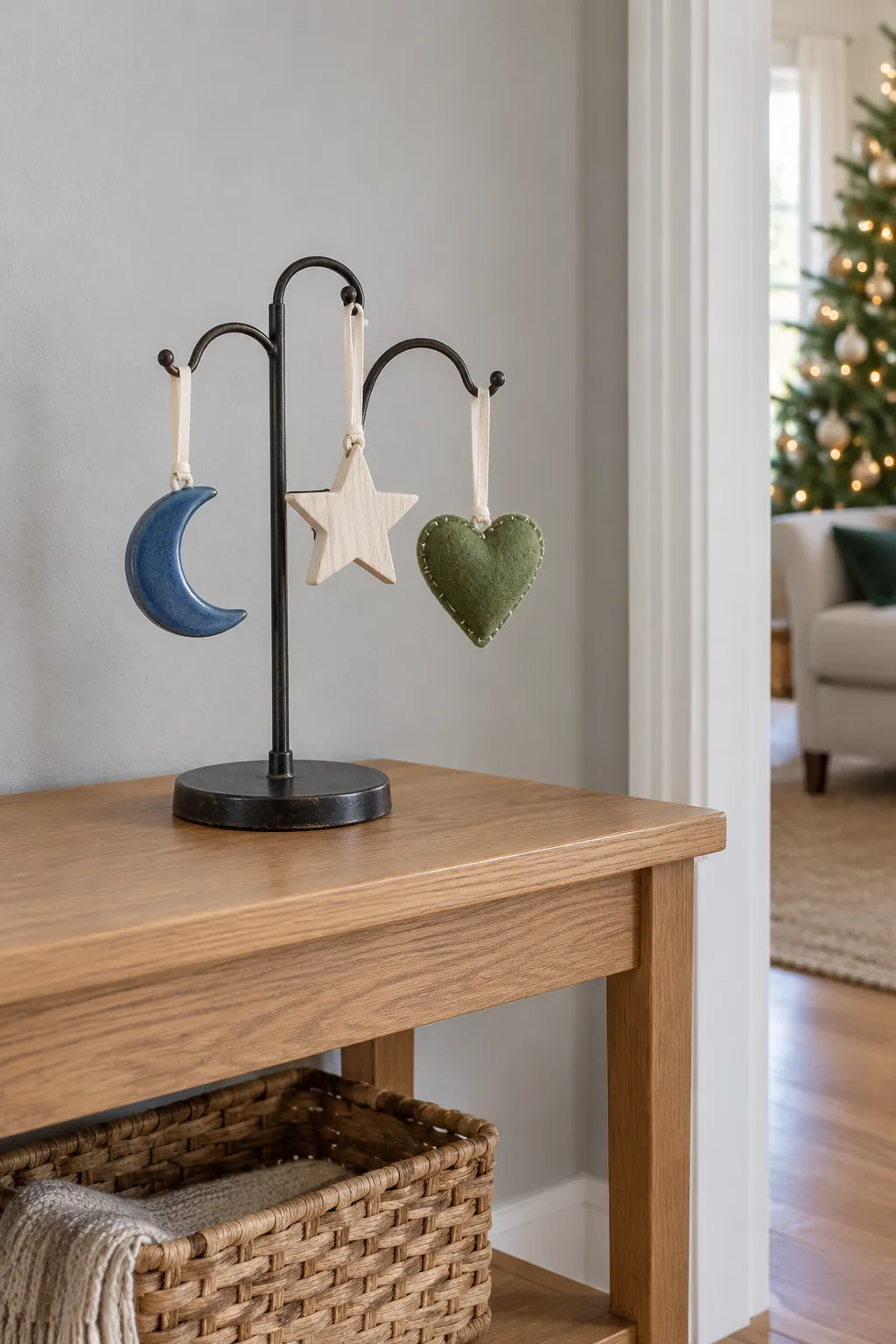
When a fragile or unusually shaped piece cannot sit securely on the tree, a stable ornament stand or shallow protected display can give it a better place. Choose a stand designed for its weight, with enough space that hanging objects do not touch each other. Place the display where the household will actually see it, away from heat and vulnerable edges. This is also a useful option for a small tree that cannot comfortably carry every favorite.
Judge the Whole Tree From the Room, Then Stop Editing
Walk to the sofa, doorway, and other places from which the tree is usually seen. Look for a repeated supporting color, a few readable personal pieces, and enough space between detailed ornaments. A busy patch can often be improved by moving one large filler ball deeper into the branches or relocating a ribbon loop. Change one area at a time so you can tell what actually improves the Christmas tree visual balance.
Check again with the evening lights on before deciding that something clashes. Reflections can make shiny ornaments appear much stronger, while fabric and wood may become quieter. If the new colors are too dominant, remove some filler rather than hiding more of the family collection. The point of coordination is to make the interesting pieces easier to notice.
You do not need to use every stored ornament, and you do not need to remove every color outside the scheme. If you rotate pieces, keep them protected and let the people who care about them help decide what changes next year. A family Christmas tree earns its place through what you enjoy seeing on it, not through perfect matching. When the important ornaments have a secure, visible home, the palette has done its job.