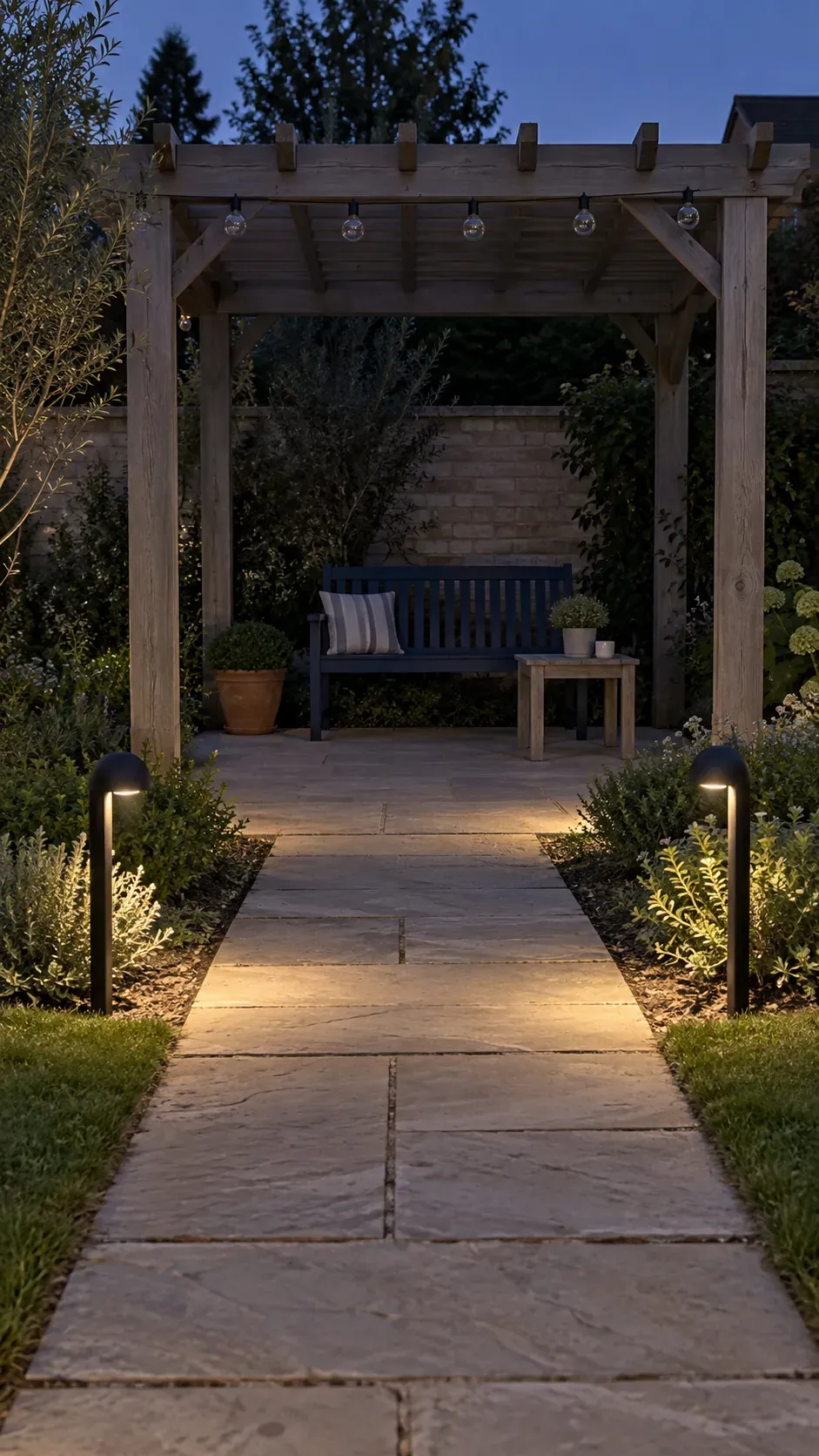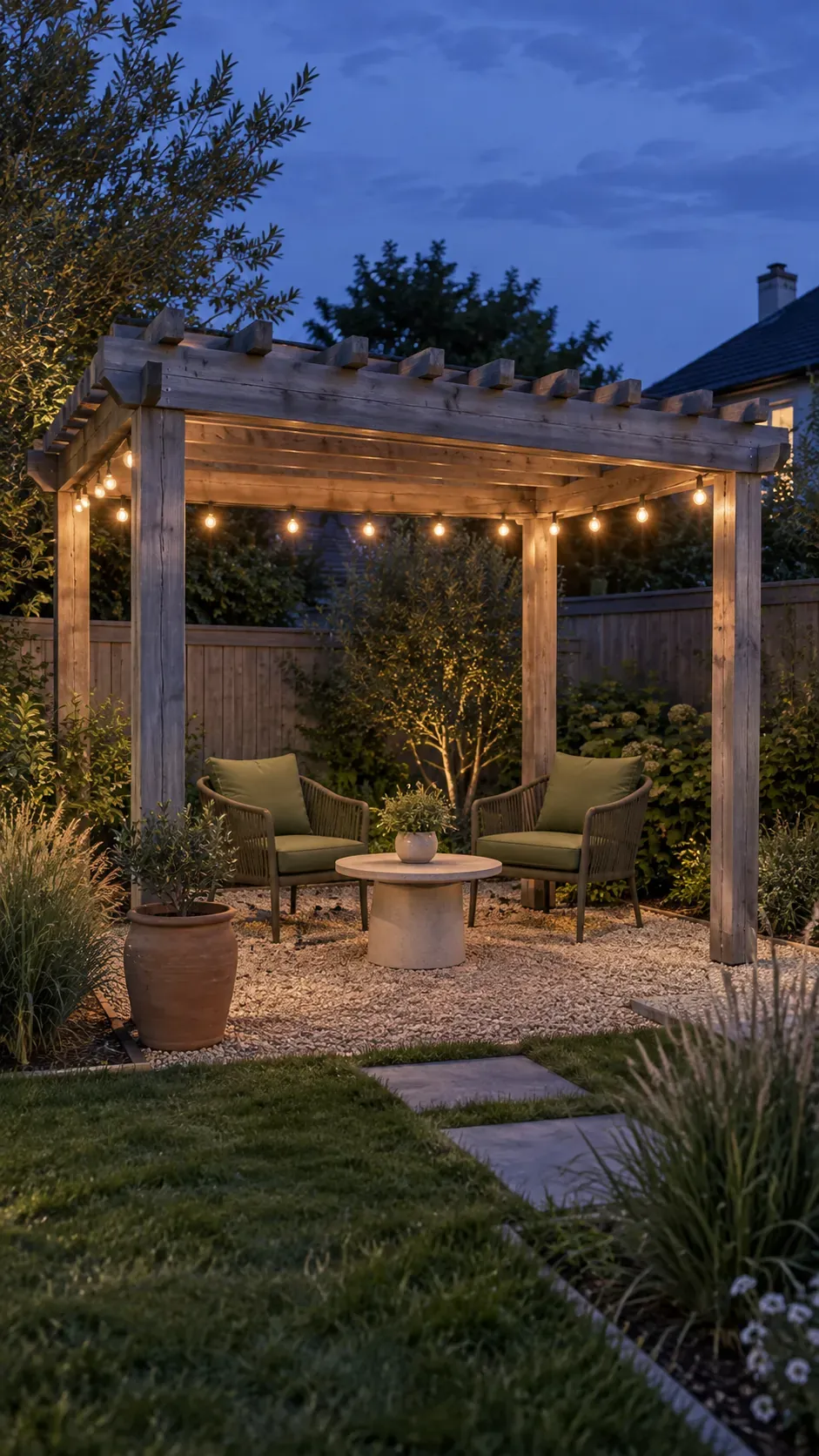
Bright bulbs can make a patio harder to use when they shine straight into your eyes. Start with what you need to see: the table, the seats, the steps and the route indoors. Then choose a few light sources that serve those tasks without making the garden feel like a floodlit stage.
Use outdoor rated fixtures and power equipment suitable for the actual exposure, and follow the manufacturer instructions. Have permanent wiring installed by a qualified professional, with the protection required by local electrical rules.
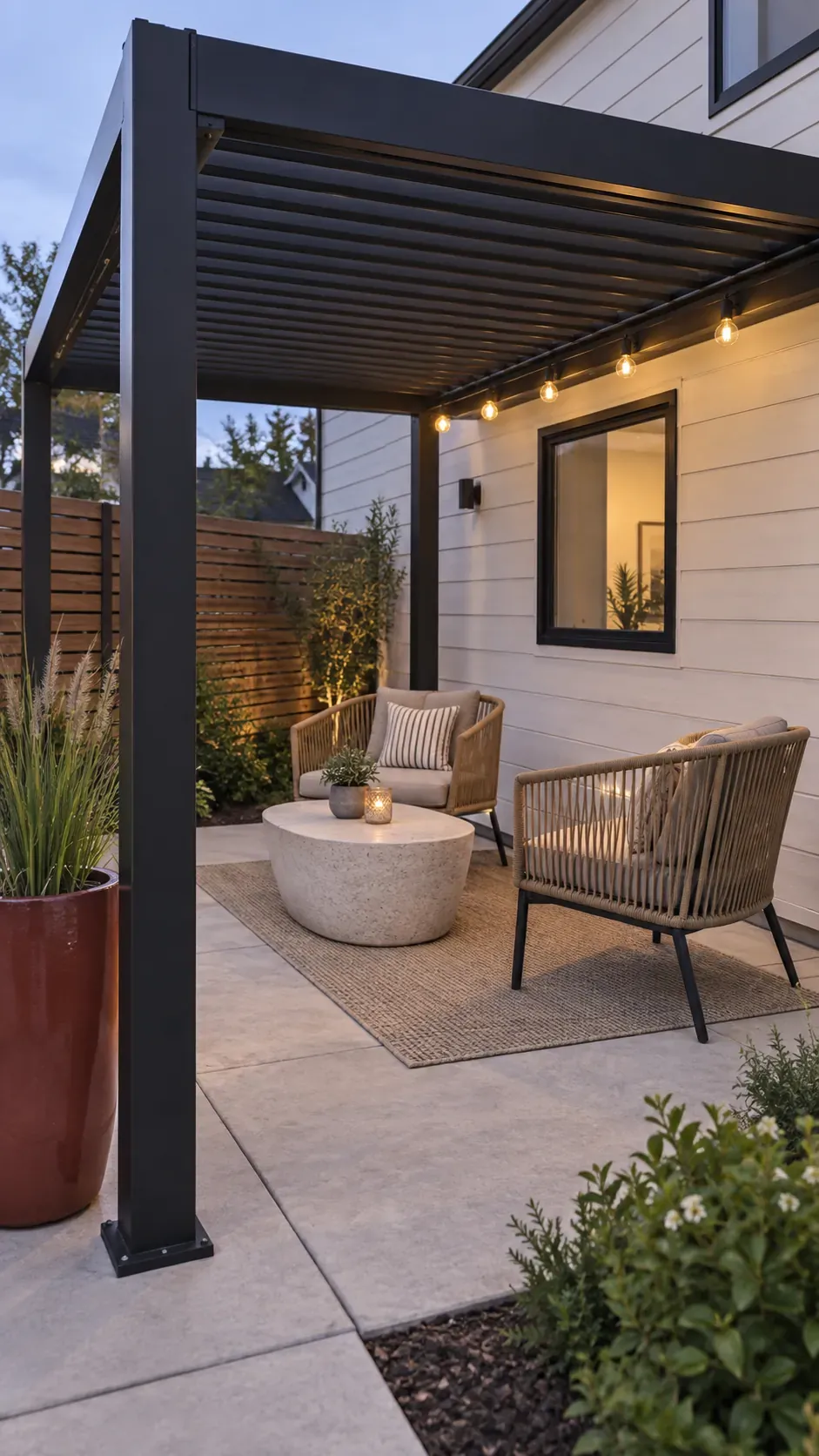
String lights following the outer beams
Run string lights along the frame when you want a clear outline without filling the whole roof. Keep the bulbs above walking headroom and secure the cable with fittings suited to the product. Choose outdoor rated equipment and protect the power supply according to local requirements. A neat perimeter is especially useful on a small pergola where several crossing strands would feel crowded.
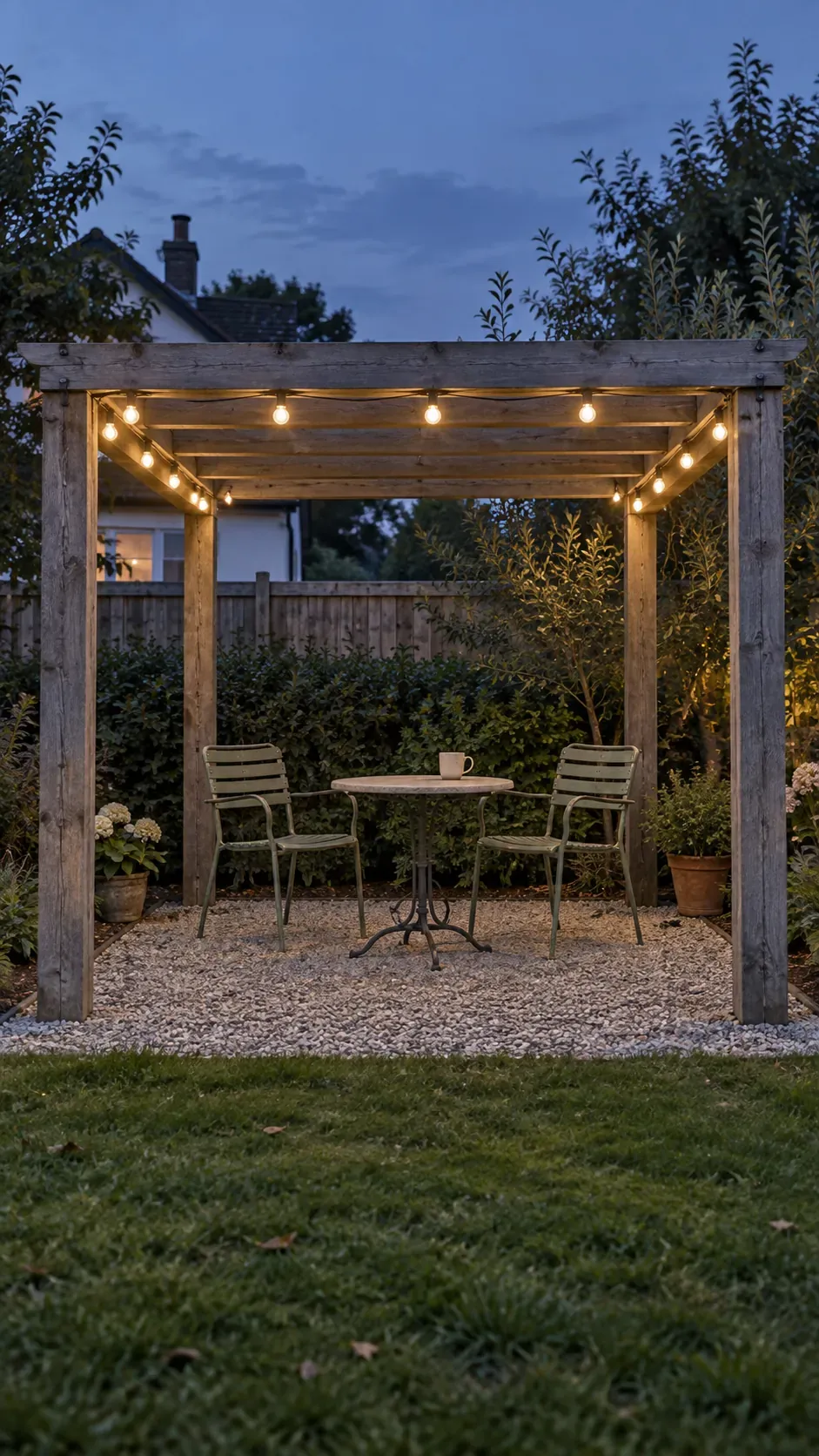
A single overhead strand above a dining table
One strand above the table can supply a gentle focal line without making a low canopy feel busy. Place it where the light reaches plates rather than shining directly into seated eyes. Do not stretch the electrical cable beyond the product instructions or use it as a structural support. Check the view from every chair before committing to the final height.
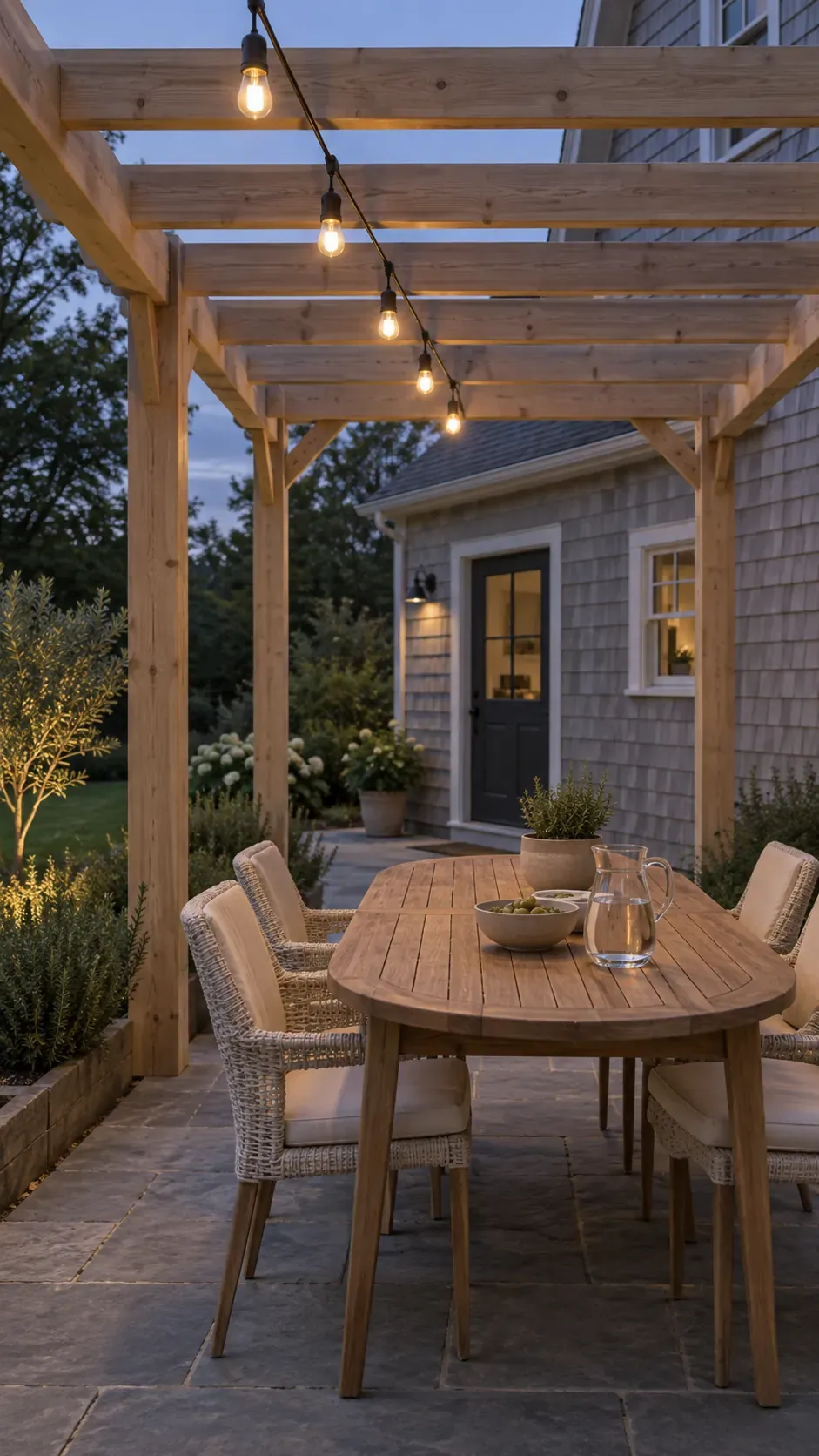
A pendant over the center of a meal space
An outdoor suitable pendant makes the dining area feel defined after dark. Its location should follow the table rather than the geometric center of the pergola. Leave clearance for standing and for any moving shade system. Have permanent electrical fittings installed by a qualified professional rather than adapting an indoor fixture to wet conditions.
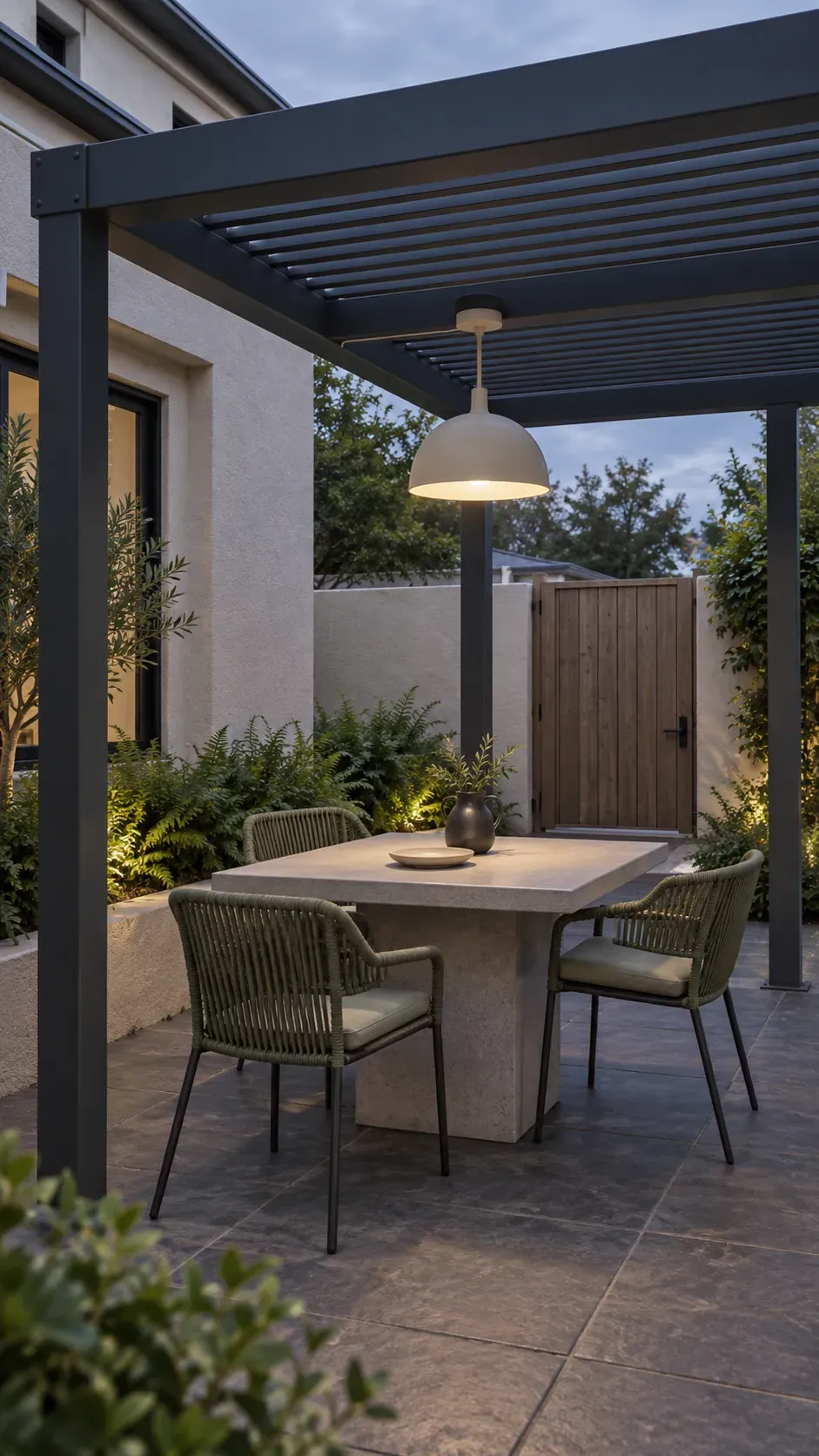
Downlights aimed toward the floor
Downward lighting can reveal the walking surface with less direct glare than exposed bright bulbs. Use fixtures designed for the installation and keep their light away from neighboring windows. A few considered locations can be more useful than fitting a light to every beam. Test the deck or patio edges because those are the places people need to read clearly.
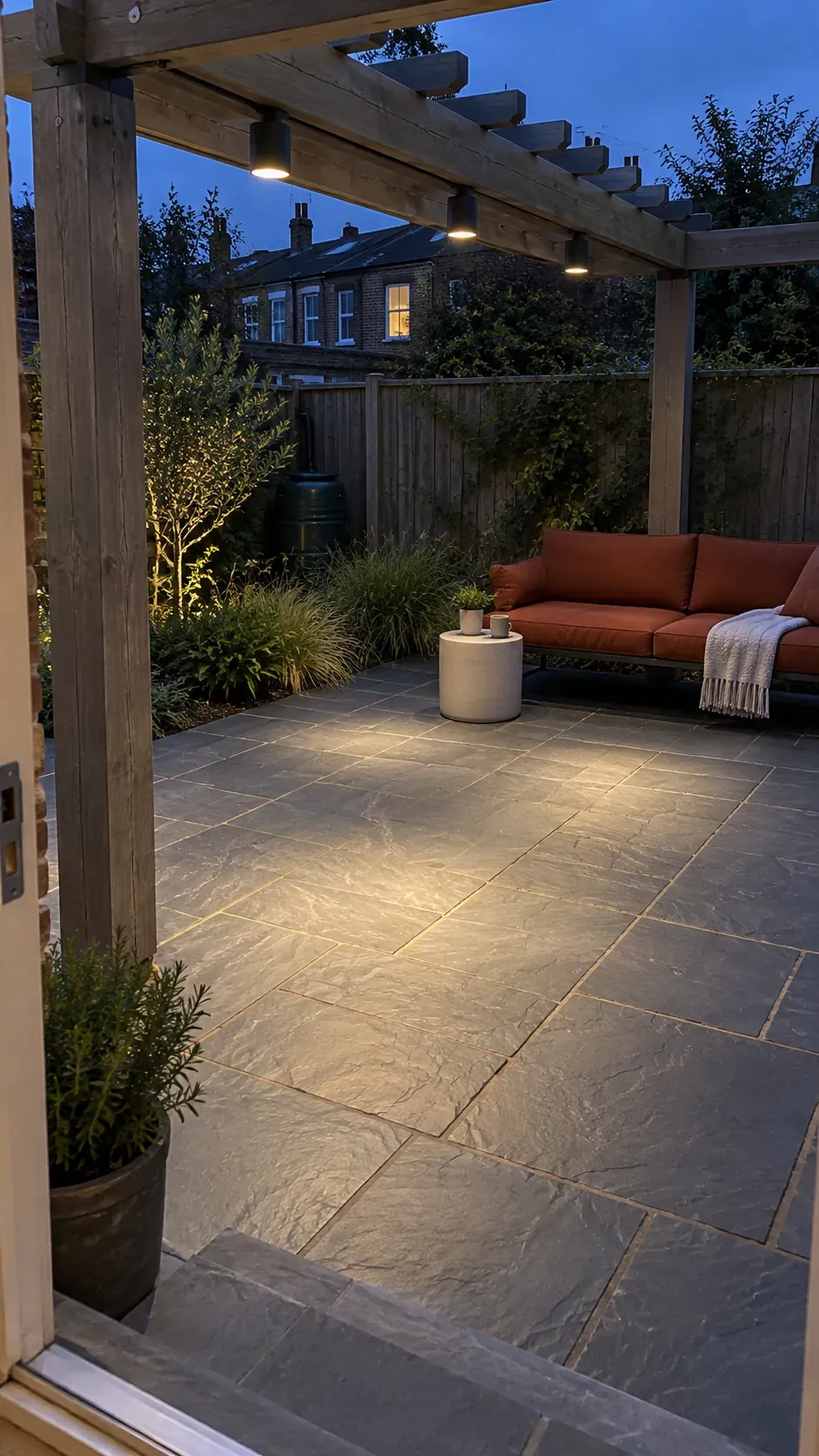
Post lights at the entrance
Lights on the entrance posts make the opening easier to recognize at night. Mount them where they do not project into the walking path or dazzle someone approaching the seats. Keep the fixture design simple if the frame already has strong details. Use the entrance pair as a guide, then add only the light needed for the seating task.
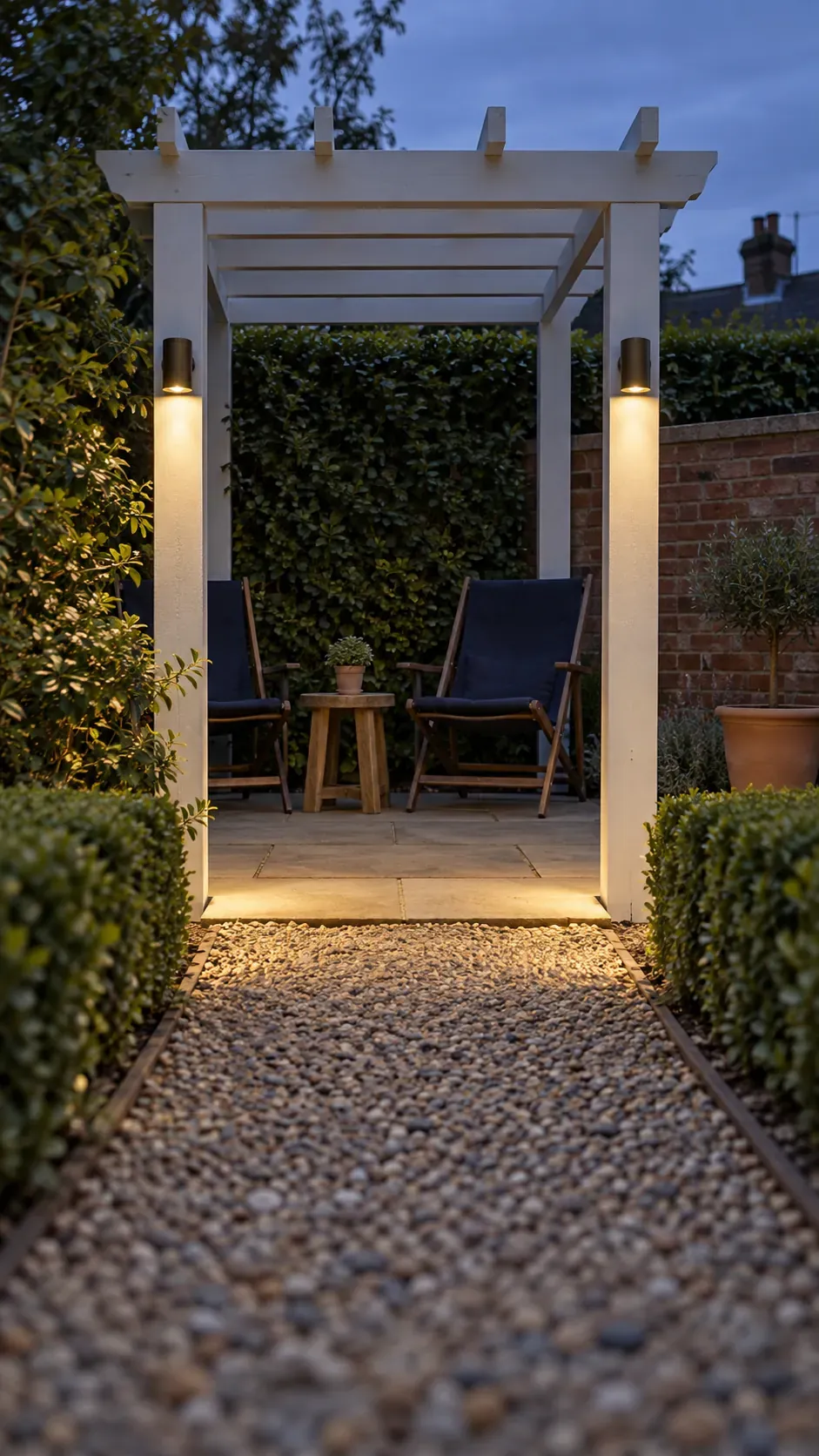
Concealed strips beneath a beam
A hidden light strip can give the canopy a soft edge without exposing a line of bright dots. Specify outdoor rated strip, housing, connectors and power equipment as one suitable system. Keep the assembly reachable for maintenance and clear of water collection points. Diffuse light should remain useful rather than making the timber appear to glow from within.
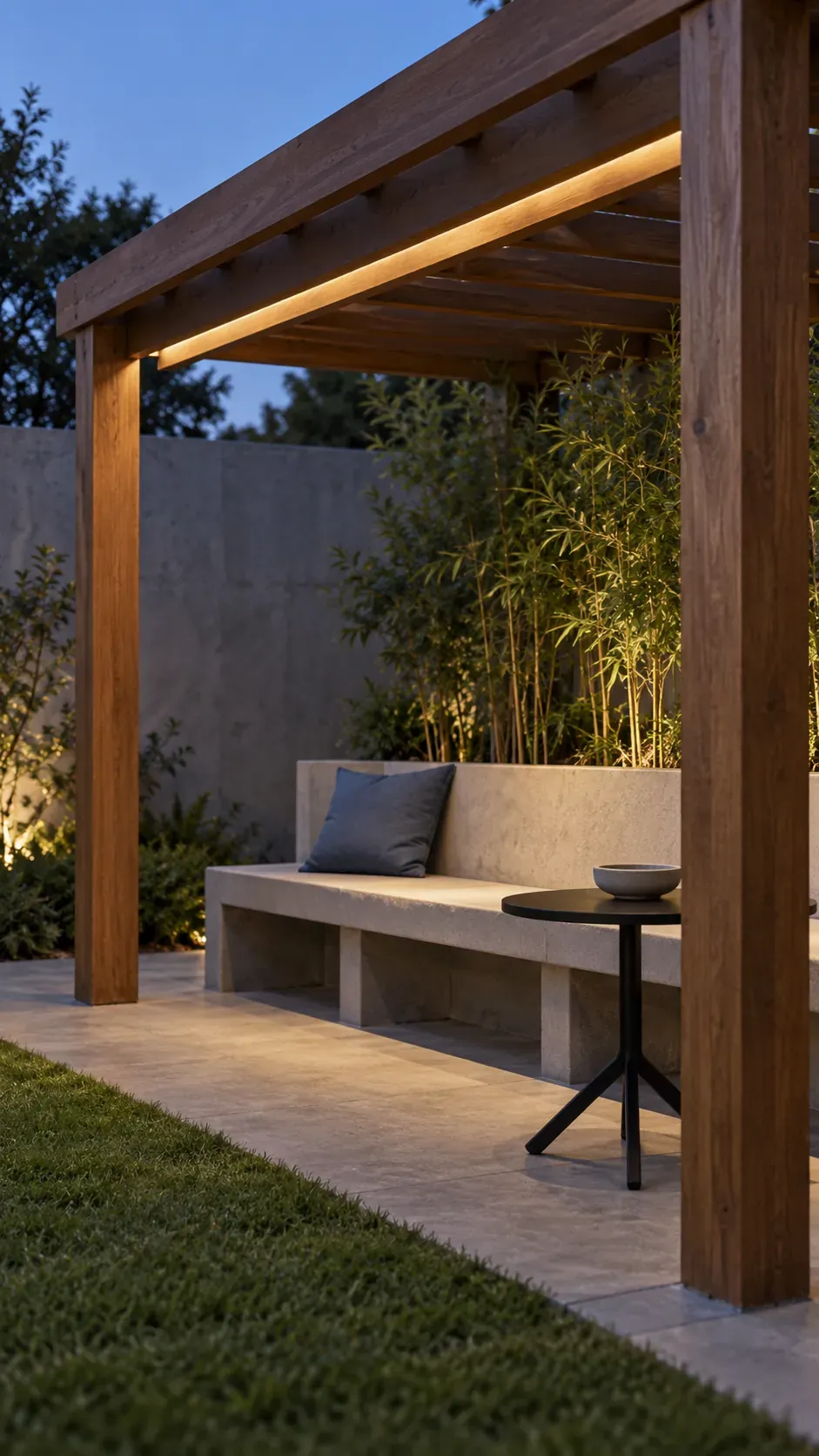
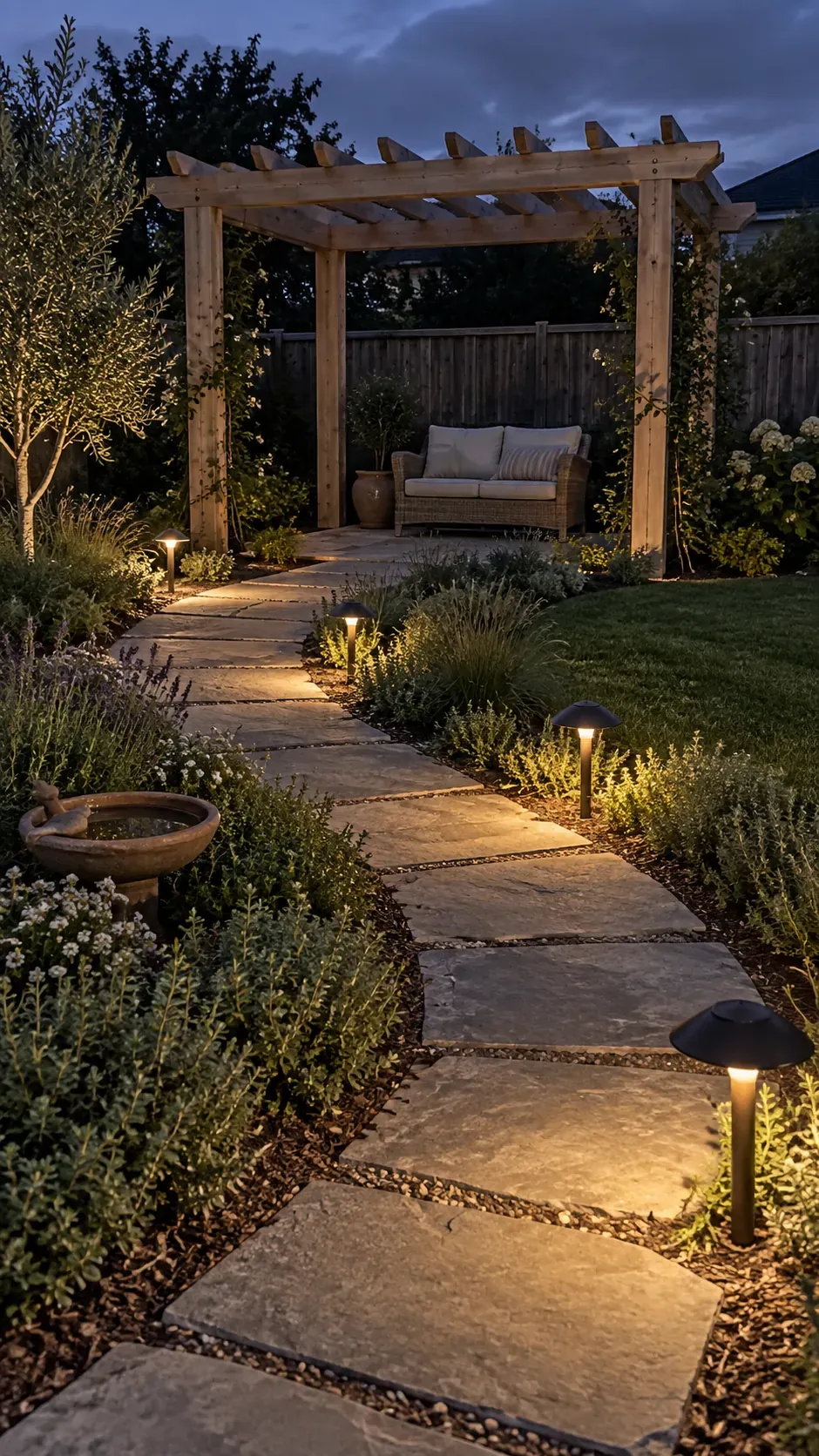
Low path lights approaching the pergola
The approach matters as much as the seats once daylight fades. Low path fixtures can show where to walk without relying on a bright light under the roof. Keep the fixtures out of the actual foot route and direct them downward. This approach suits small backyard ideas where the pergola sits apart from the house.
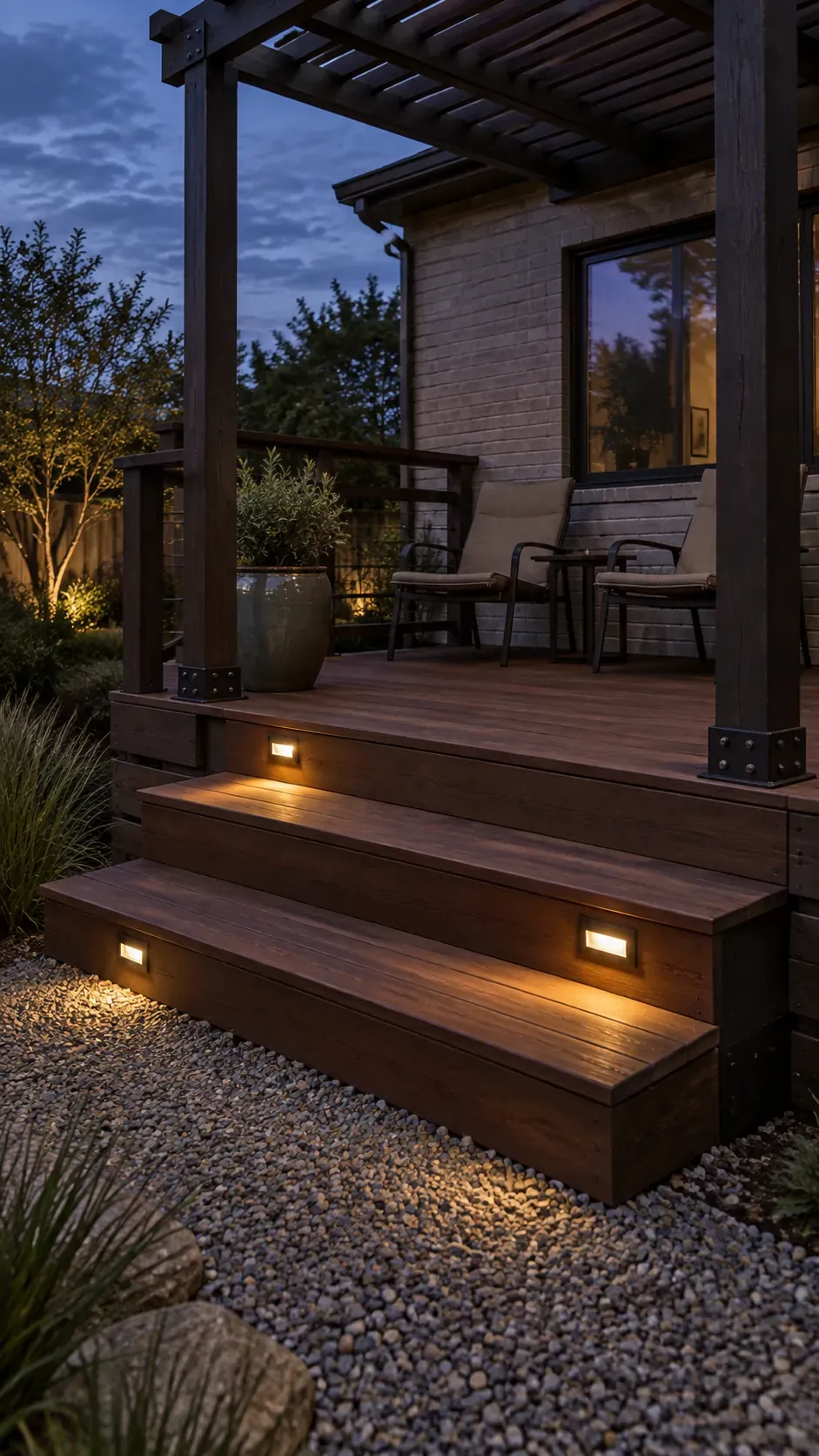
Step lighting on a pergola deck
A pergola over a deck needs a clear step edge when people leave the seating area. Place suitable low lighting where it reveals the tread and riser without shining toward eye level. Avoid hiding the step behind large planters or low tables. Outdoor patio lighting ideas work better when movement remains legible as well as the decorative canopy.
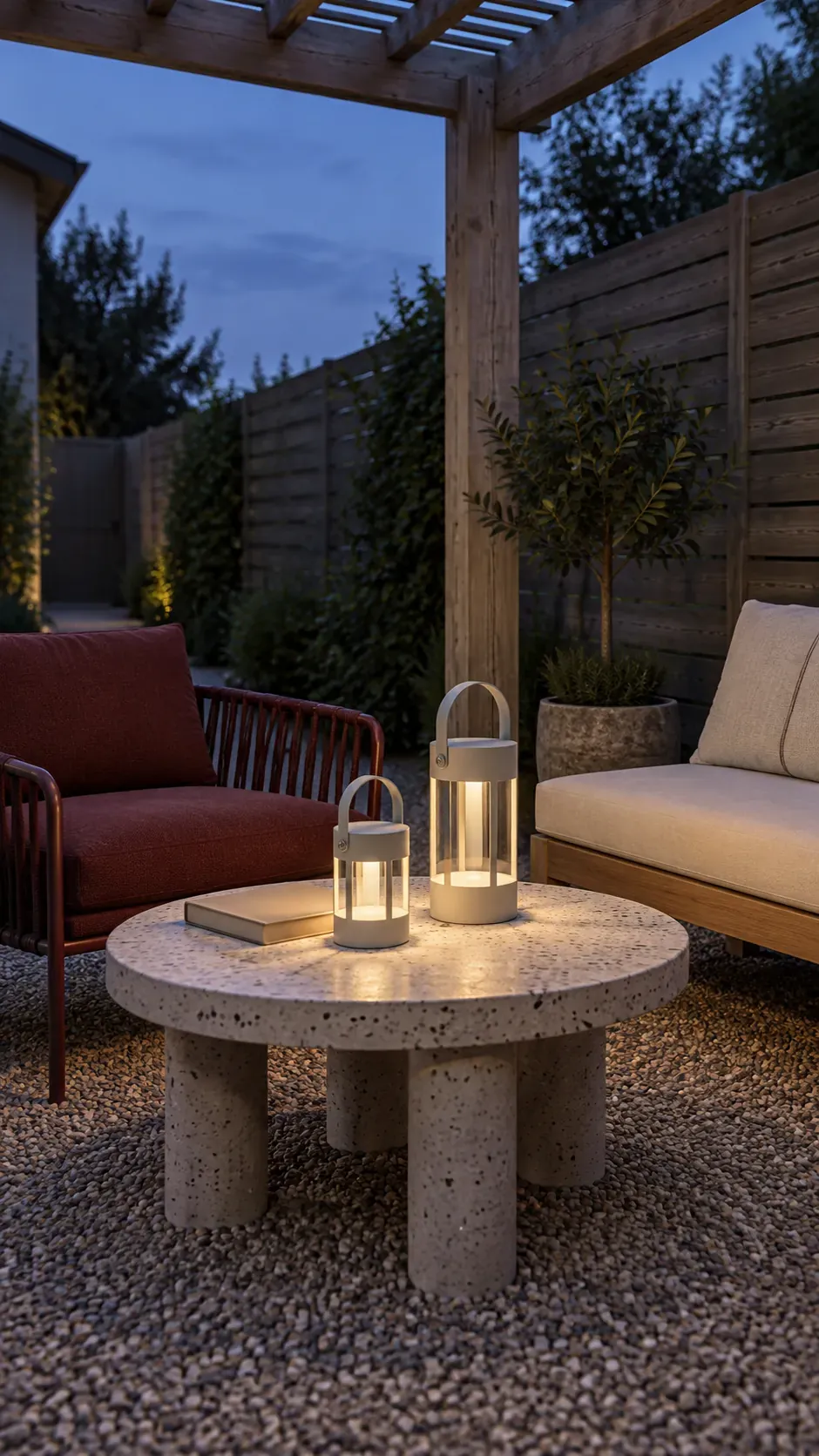
Battery lanterns on a low table
Battery lanterns add a movable pool of light where fixed wiring is impractical. Choose lanterns suitable for their outdoor exposure and follow the storage and charging instructions. Keep them stable and out of the way of glasses or plate edges. Their light may suit conversation, but add separate route lighting if the surrounding floor remains dark.
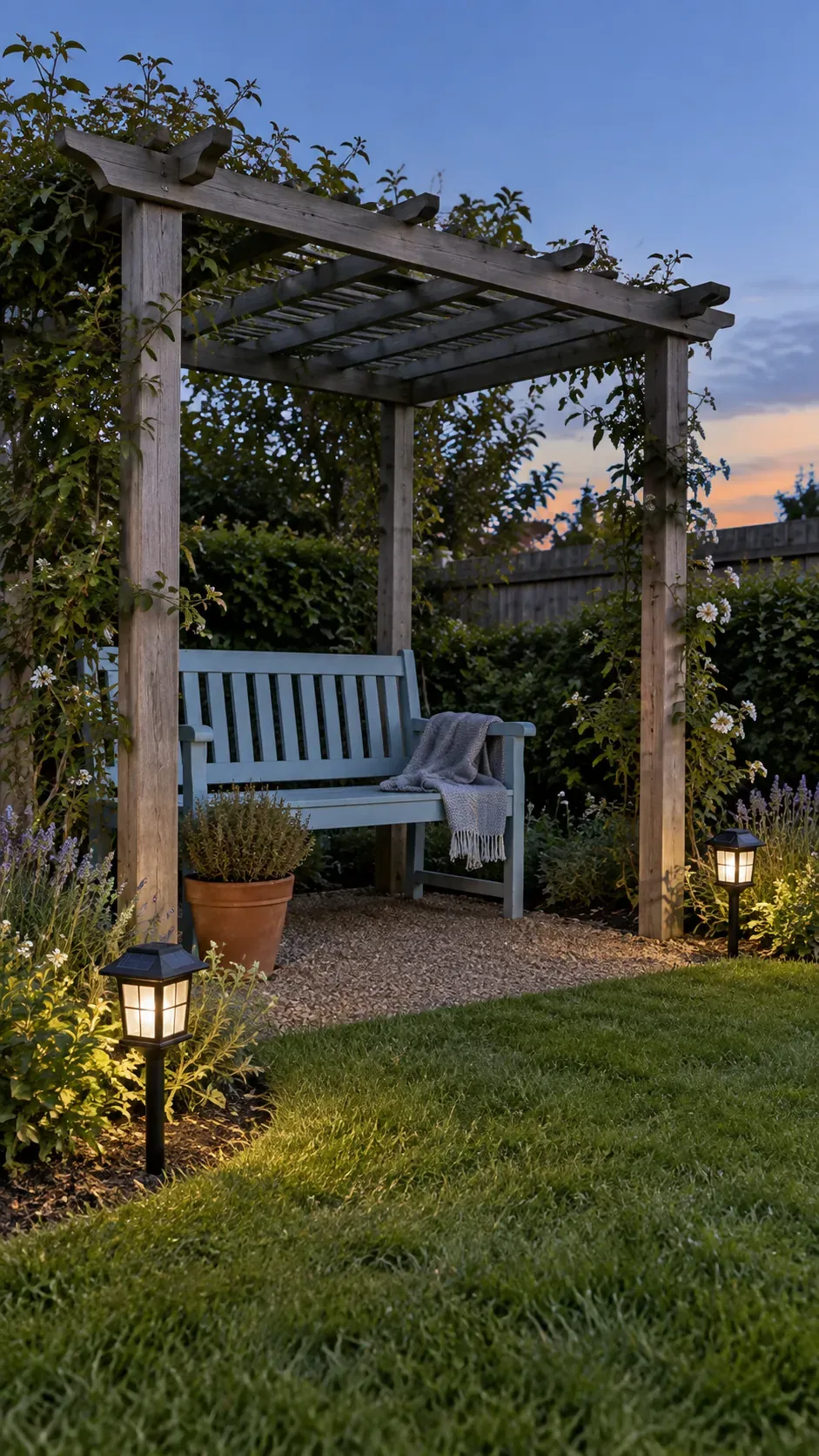
Solar lights for a garden seat
Solar fixtures can help when the pergola is far from a power point. Place their panels where they actually receive useful daylight, not beneath dense slats or foliage. Output and duration vary with the product, weather and season, so do not assume reliable all night lighting. Test the performance at the intended location before buying a whole matching set.
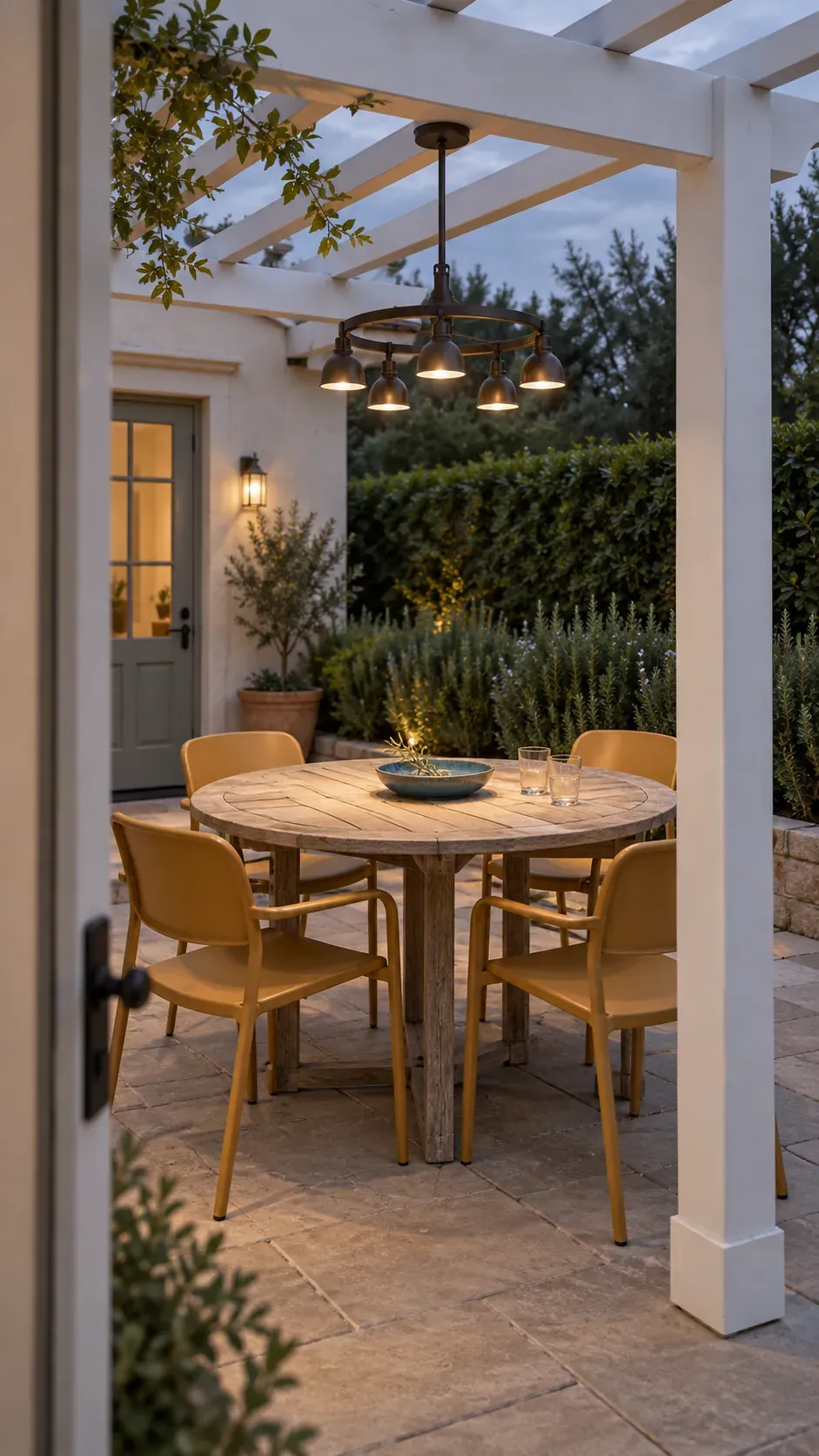
A small chandelier with outdoor suitability
A modest chandelier can give an outdoor entertaining area a defined center. The fixture must be suitable for its actual exposure, including wind and moisture. Keep it proportionate to the canopy so it does not crowd headroom or compete with the structure. Use restrained surrounding light instead of adding several decorative systems around the same focal fixture.
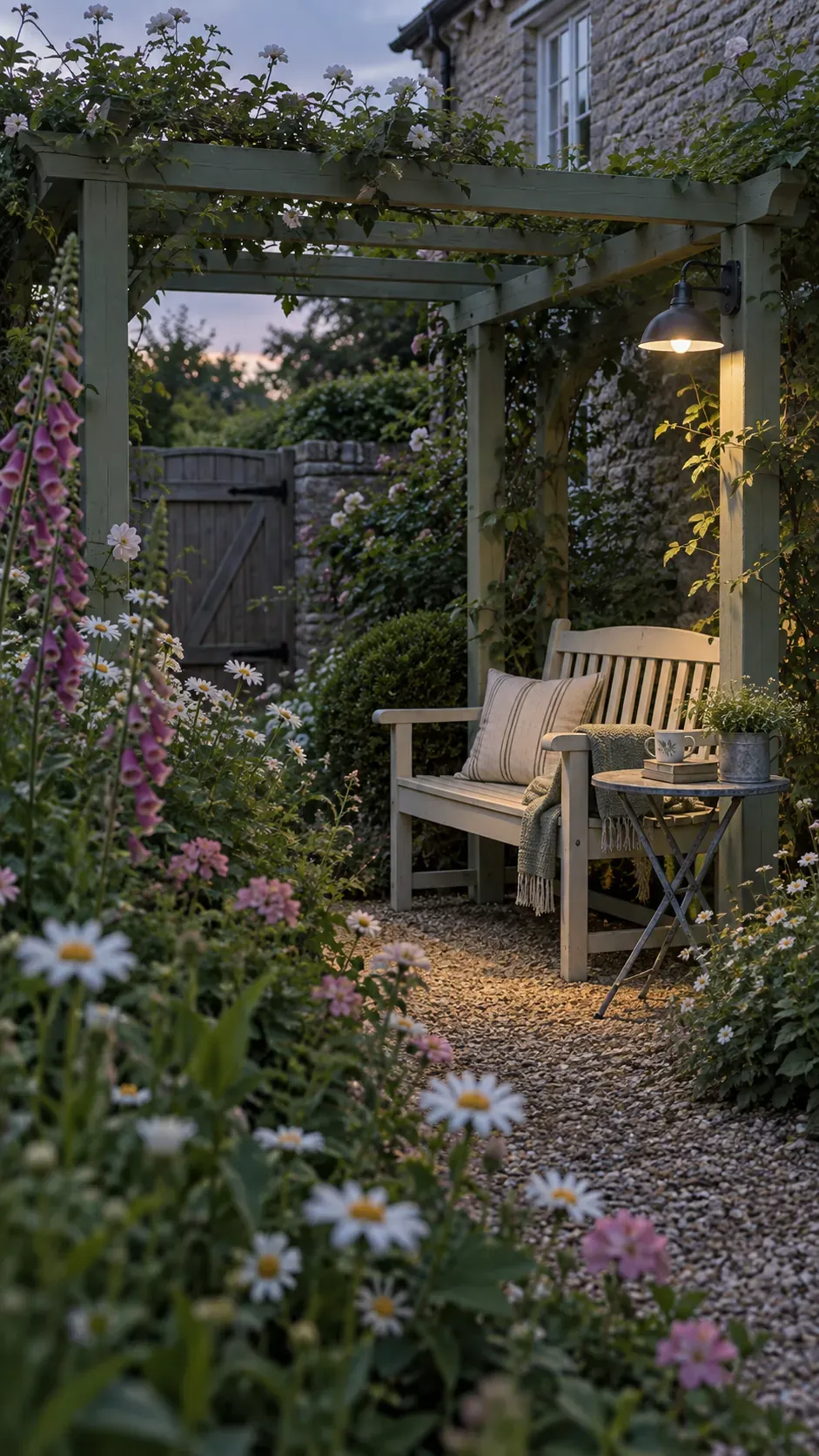
Warm light in a cottage planting setting
A gentle warm source can make timber and cottage planting feel inviting after dusk. Keep the brightness low enough that flowers and leaves retain depth instead of turning into a bright flat backdrop. Place the fittings where you can reach them without pulling apart a climber. Outdoor pergola lighting ideas should support the garden rather than overpower it.
Simple lighting on a dark metal frame
A dark metal pergola can disappear after sunset unless the seating or frame receives some light. Small restrained fixtures can clarify its edges without outlining every member. Keep glare controlled because a dark background makes an exposed bright source seem stronger. Matte surfaces and a limited fixture palette help the space stay visually calm.
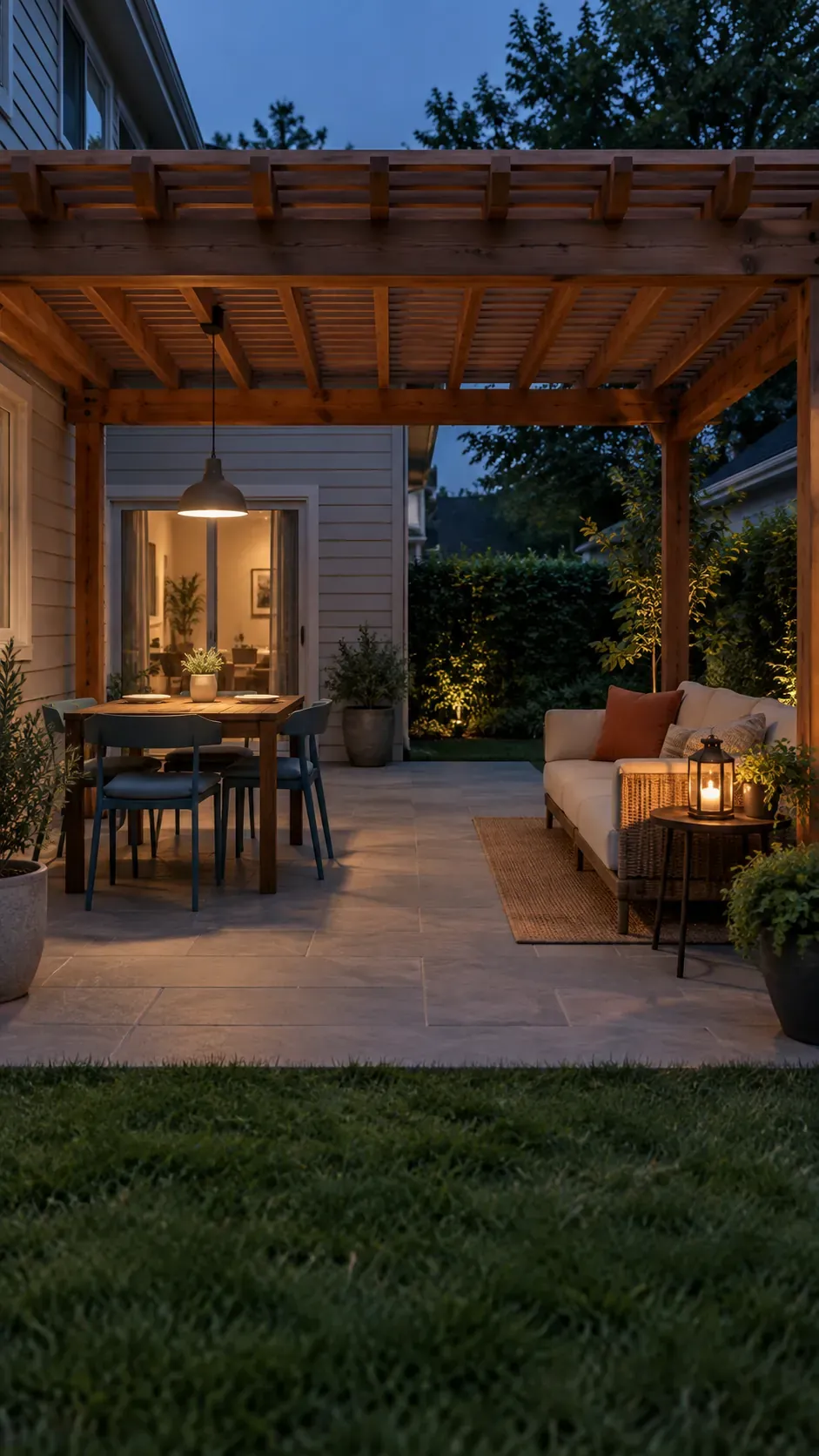
A dimmable dining and lounge setup
Dining and conversation may need different light levels on the same patio. Choose compatible fixtures and controls if you want to adjust them together. Keep enough route light when you dim the seating area. A comfortable low setting should still let people identify tables, chair legs and the way back indoors.
A task light near the outdoor serving area
A serving surface benefits from light that reaches its working area directly. Keep the fixture separate from cooking heat and follow appliance and electrical clearance requirements. Avoid aiming it across the whole seating area when only the counter needs brighter light. Task lighting works best when it solves a specific visibility problem without becoming a glaring focal point.
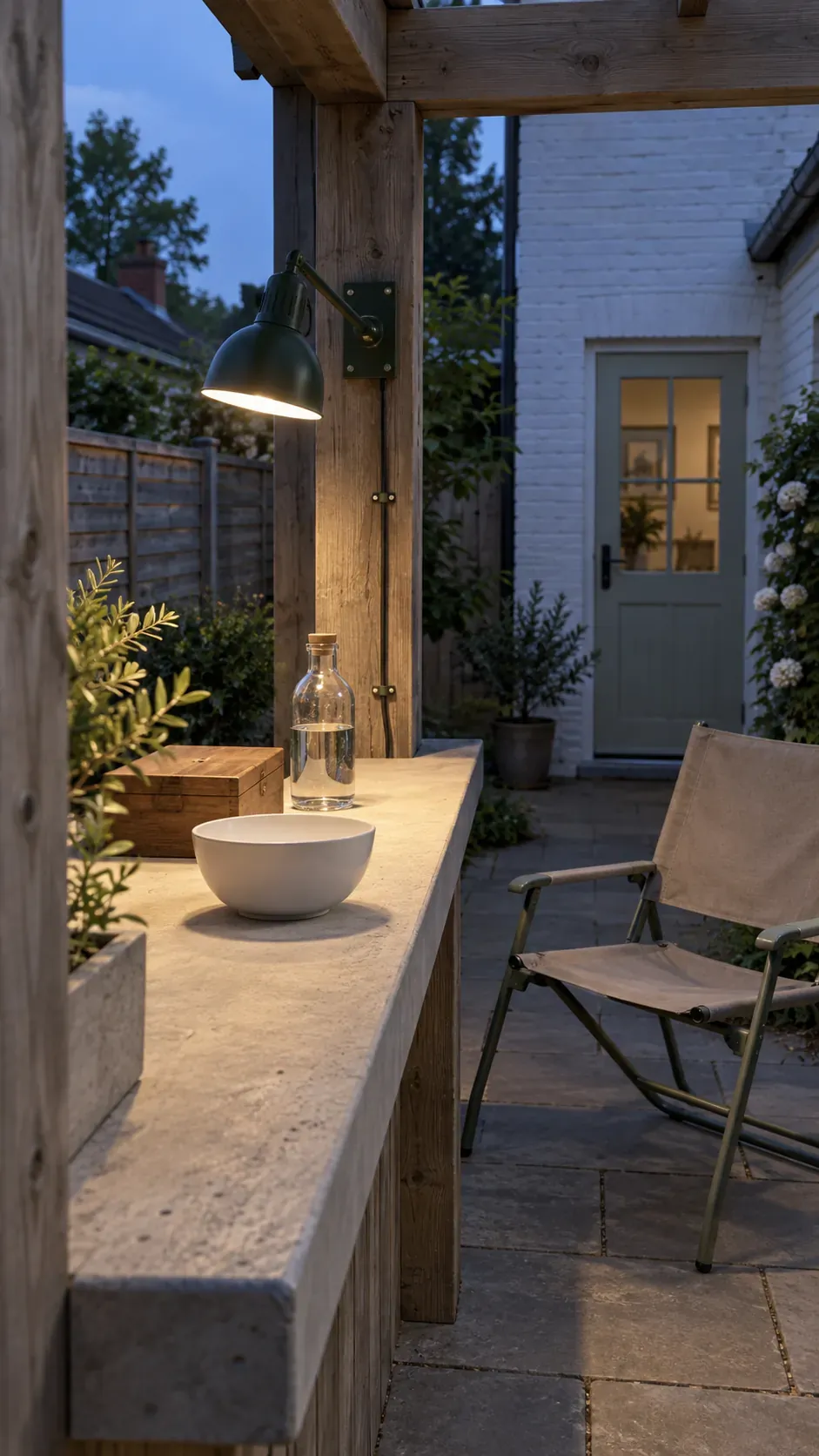
A wall light beside an attached pergola
An existing outdoor wall light can help an attached pergola feel connected to the house. Check whether the new frame blocks its beam or casts unwanted shadows on the door. Direct light toward the entry and useful floor area rather than straight toward the chairs. Keep the house connection, gutter and electrical fittings accessible after decorating.
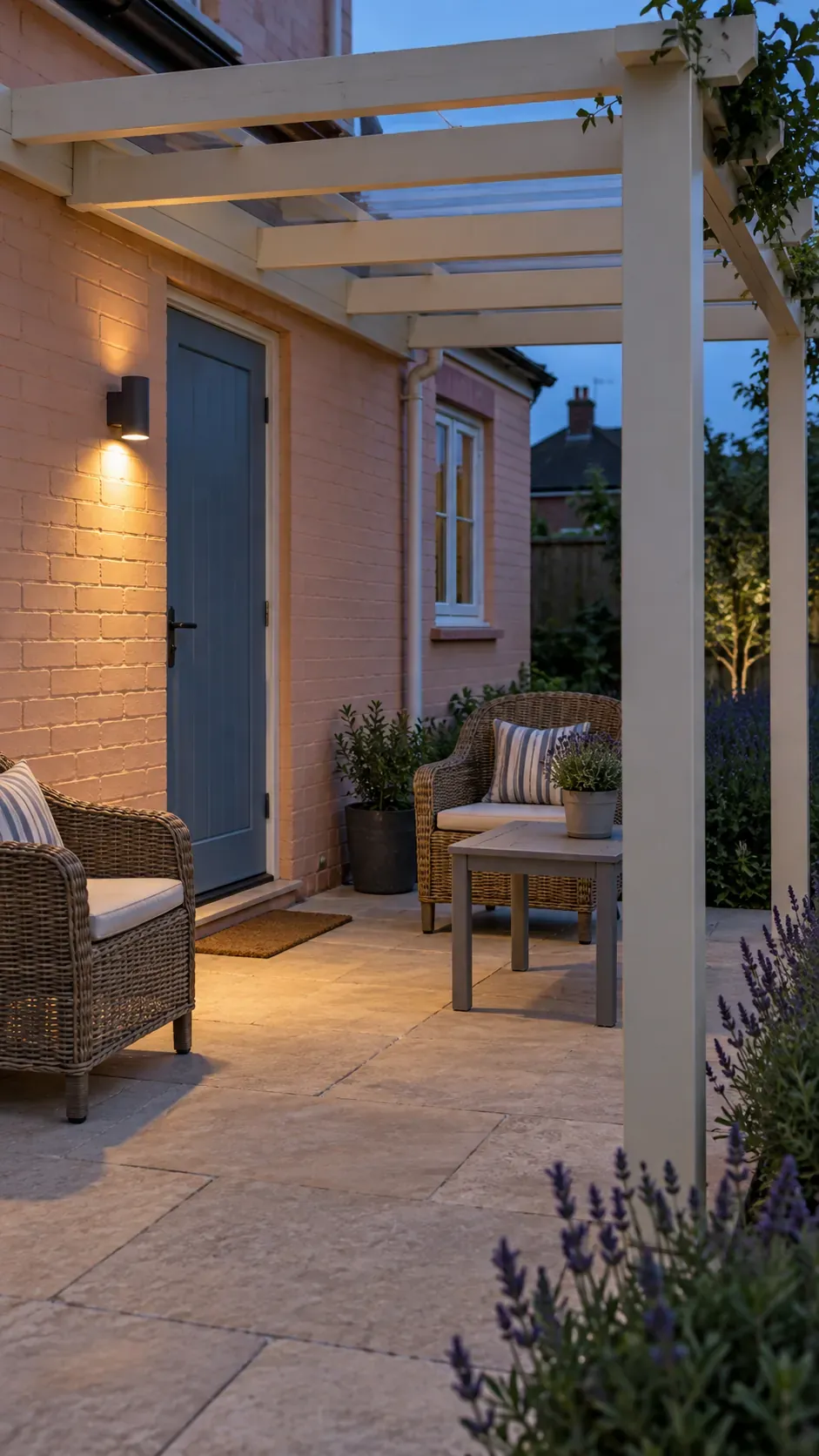
A subtle light behind a bench
Light behind a bench can separate the seating from a dark garden background. Use a suitable protected fixture and leave access for cleaning or replacement. Keep it from shining upward directly into seated eyes or turning the backrest into an intense glowing panel. Combine the soft background with a clear path so the mood does not come at the expense of movement.
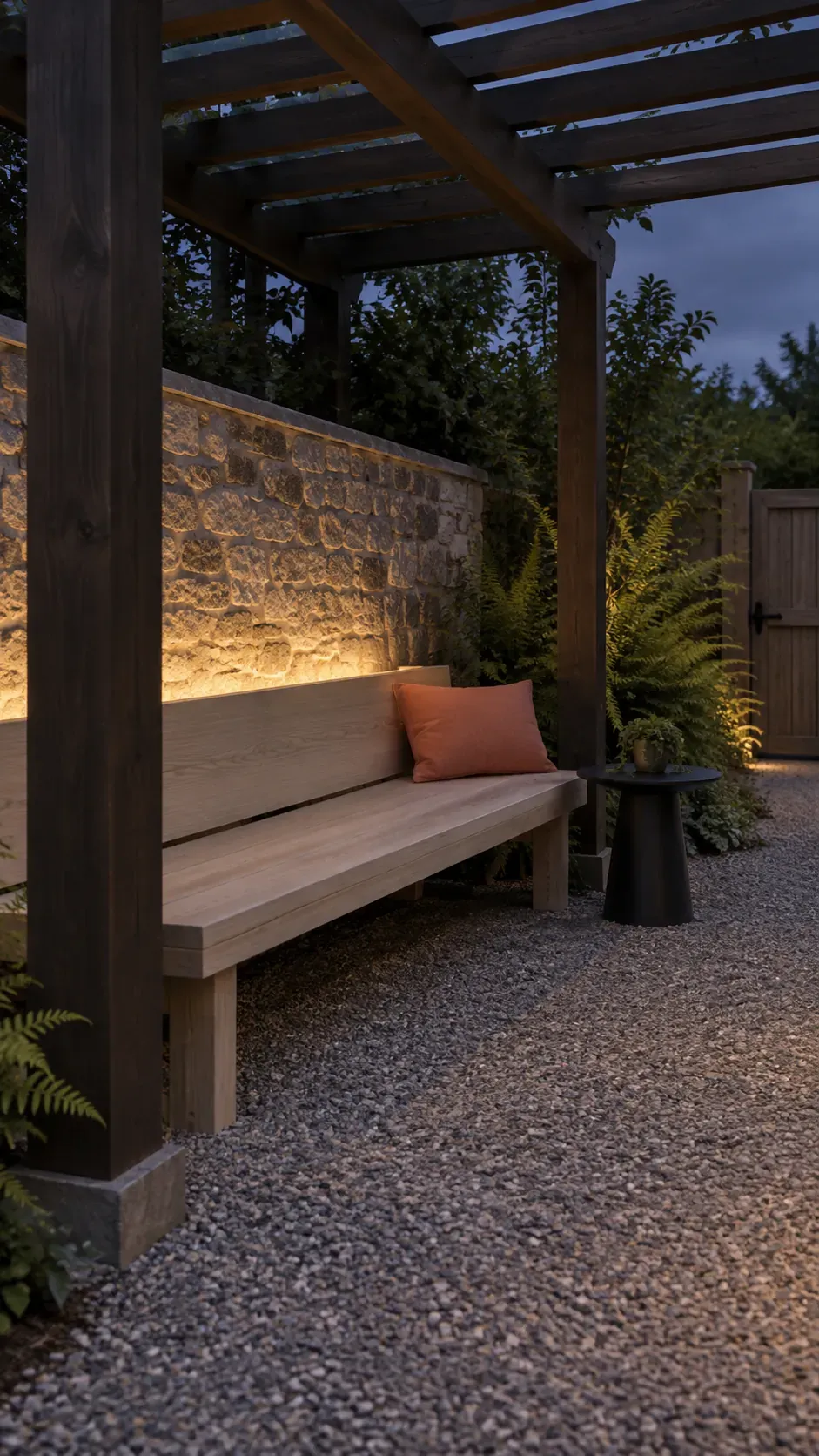
A limited number of bulbs for a narrow canopy
A narrow pergola does not need the same number of fixtures as a large terrace. Start with the light needed at the seats and the entrance, then assess the result from outside the canopy. Too many visible bulbs can make a small structure feel cluttered even when each bulb is modest. A simpler layout also makes cables and maintenance easier to manage.
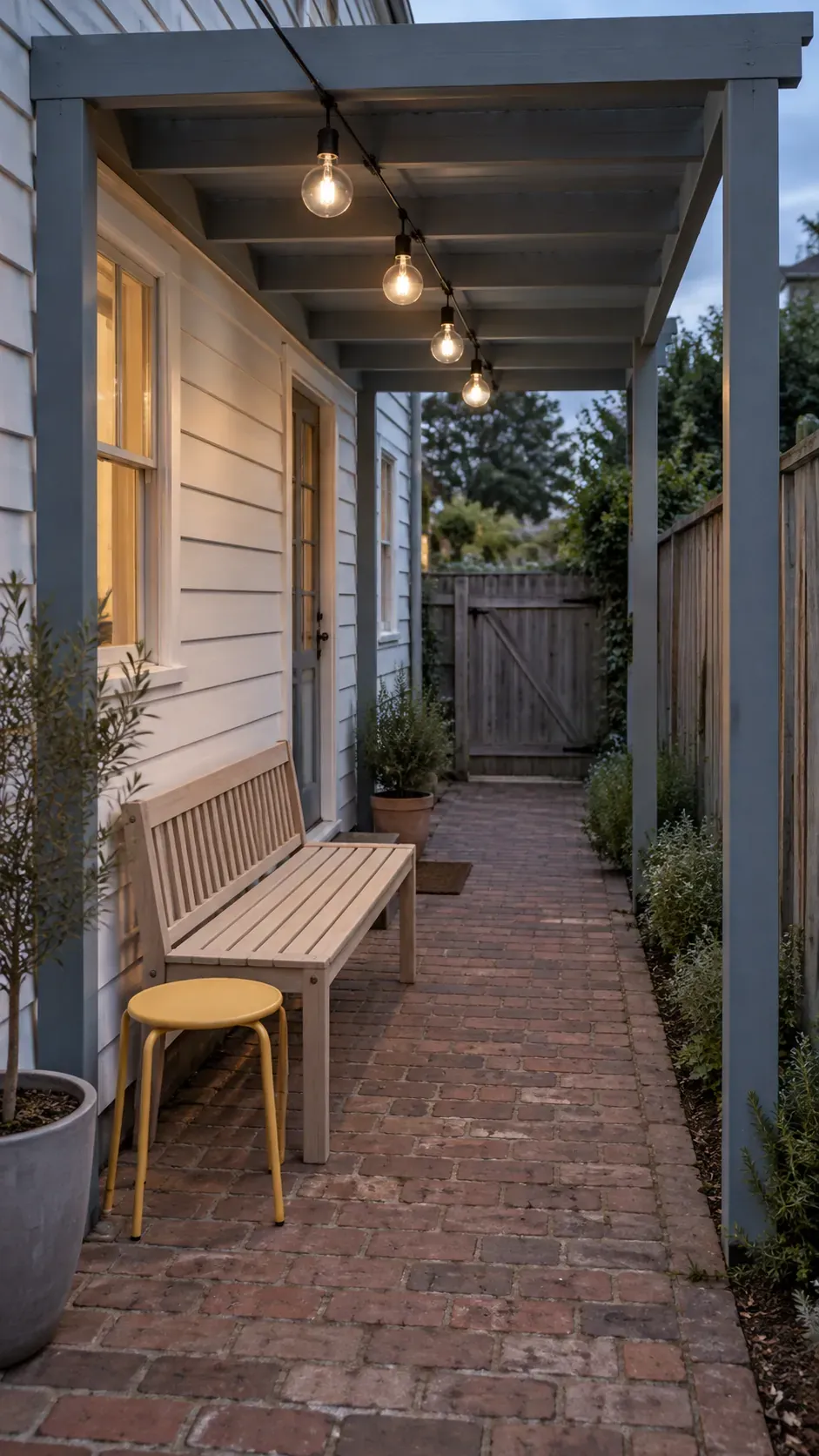
Consistent light color across the seating
Different fixture colors can make one patio feel divided for no useful reason. Compare lamps together before choosing the final set, since product descriptions alone may not predict how they look side by side. Use the same general light character across related seating zones unless a specific task calls for a difference. Keep decorative color effects secondary to seeing faces, furniture and the walking route comfortably.
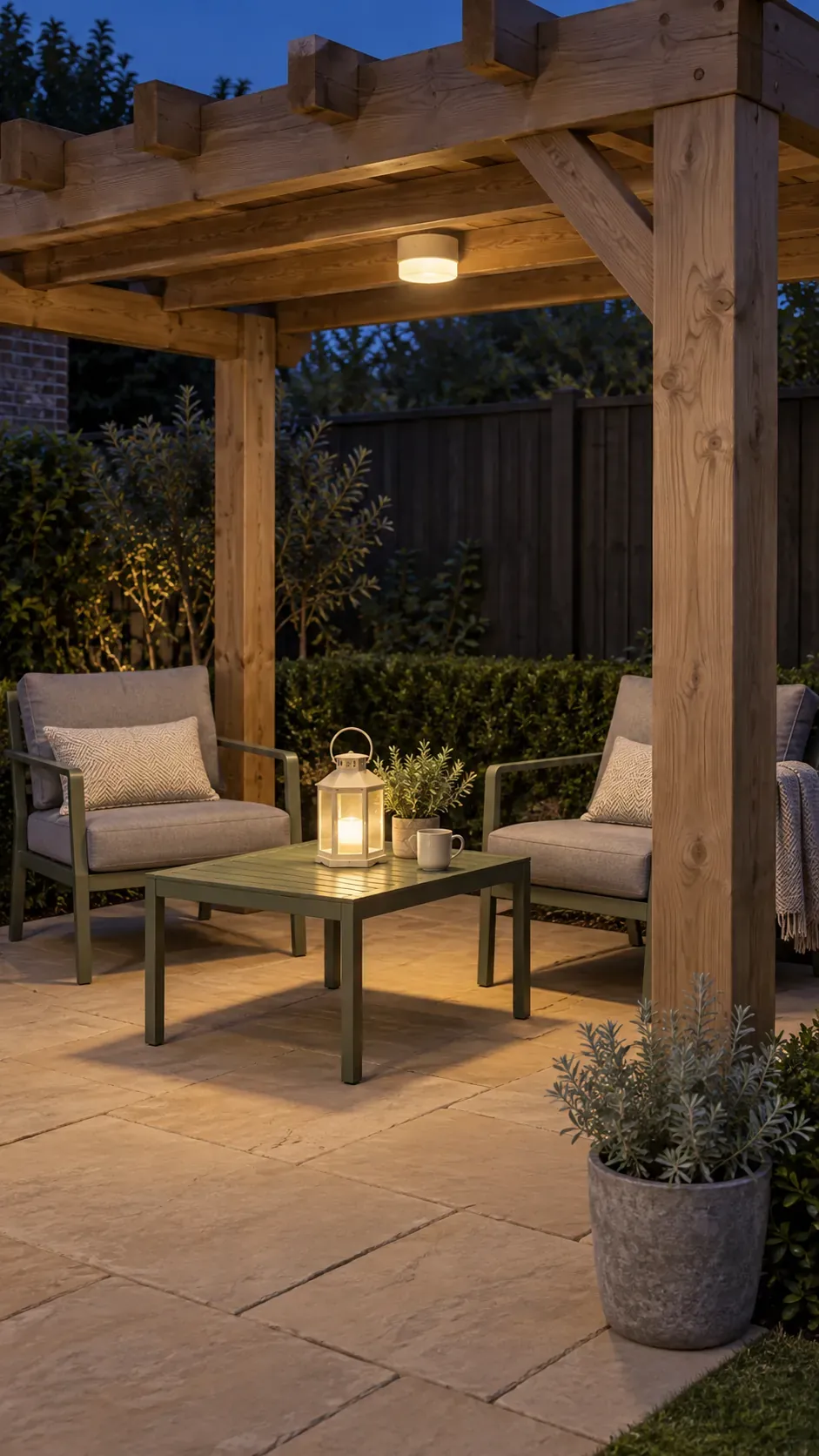
A clear route when the decorative lights are off
Plan the route back to the house independently of the decorative lighting. A suitable entry or path light can keep that route visible when table lanterns are stored or canopy bulbs are switched off. Check cables, furniture edges and steps from the position of someone leaving the seats. The best evening setup lets you change the mood while keeping everyday movement straightforward.