

A clear panel can make a room look larger while leaving less space to enter the bath. A curtain can open the whole tub but needs careful drying and spray control. Before comparing finishes, check the opening, the moving parts, and the jobs the bath must handle every day.
Start with the opening you actually use
A shower enclosure can fit the bath and still make the bathroom awkward. The important space is the route from the room door to the place where you step into the shower. A curtain usually suits a layout that needs a wide, flexible opening, while a glass screen suits a layout with a dependable entry gap and a clear place for any moving panel.
First draw the bathroom door swing, vanity projection, toilet position, and bath edge on the same floor plan. Use the actual product drawings rather than the advertised overall size. Add handles, hinges, towel rails, and the space a person needs to turn and dry off. Then test the route in the room with tape and cardboard before committing to an enclosure.
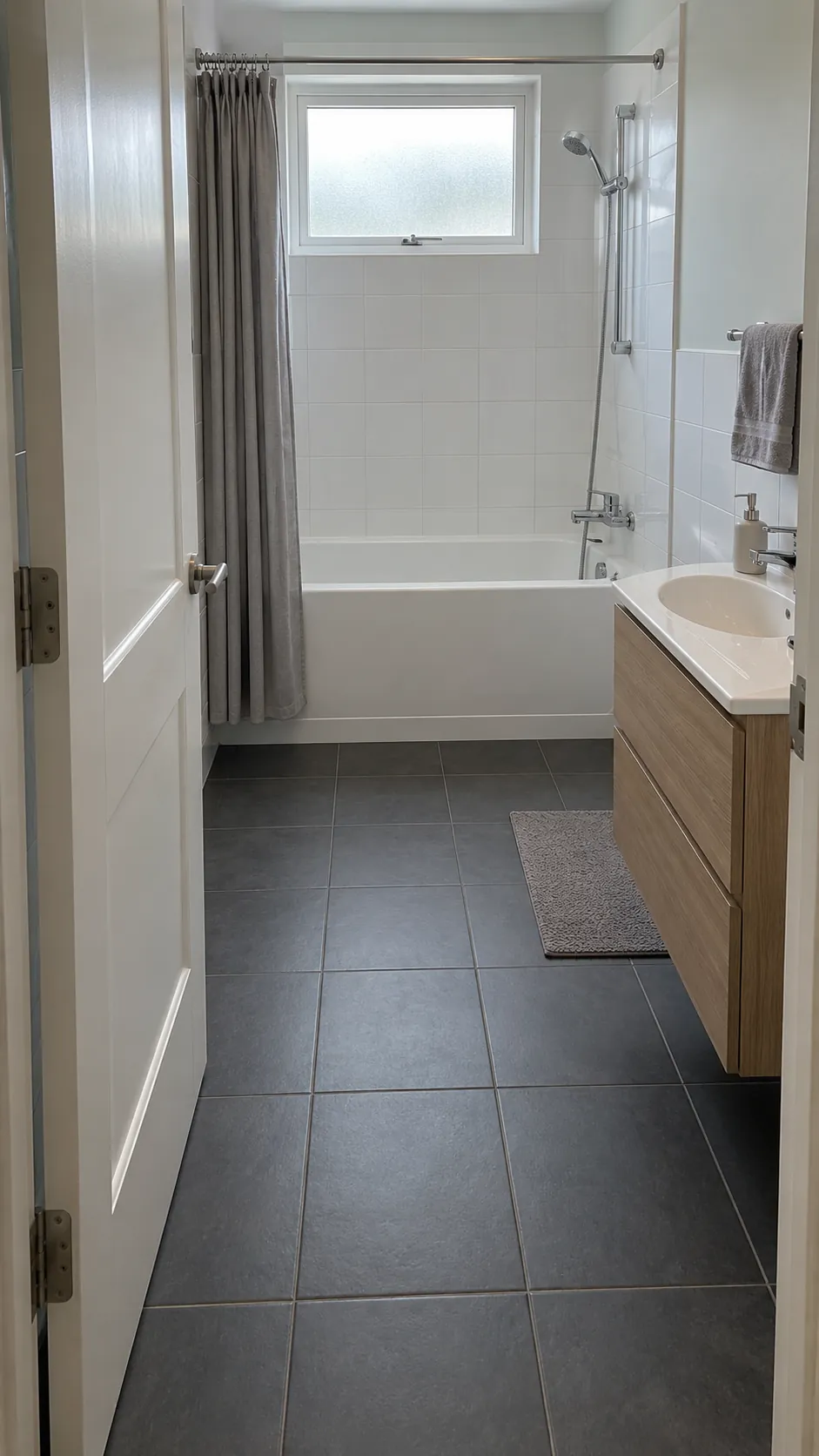
Choose a curtain when the bath needs full access
A curtain slides aside without leaving a permanent panel across the bath rim. That matters when an adult helps a child bathe, cleans the far corner, or uses the bath separately from the shower. In a narrow room, a curtain also avoids a glass door swinging toward the toilet or vanity.
Keep the liner inside the tub during showering and choose its length for the actual rod height. Spread it out afterward so folds can dry, following the care label for washing. A heavier liner with suitable weights may reduce billowing, but it still needs space away from the person showering. If the bath is already cramped inside, a curved rod must be checked for intrusion into the room as well as improved elbow room.

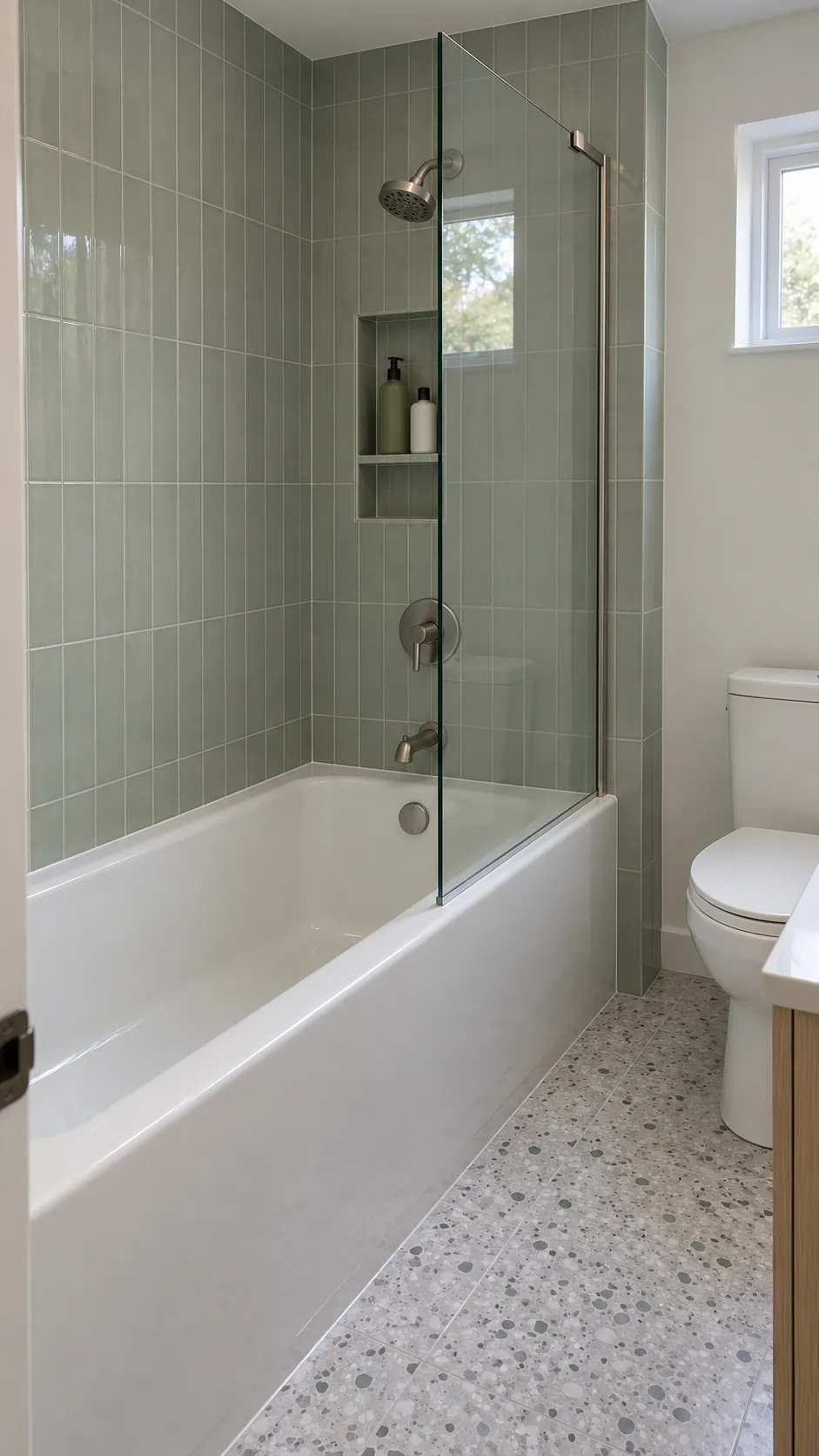
Use a fixed screen only when its open gap works
A fixed glass screen leaves the tile visible and removes curtain movement. It can work beside the shower end of a tub when the remaining opening gives comfortable entry and the shower spray stays within the protected area. It is less convincing when a short panel leaves the normal spray path aimed straight through the opening.
Check where the shower head points, where you stand, and how water can bounce from your body. Screen width alone does not prove that the floor will stay dry. Ask the installer to review the chosen panel, tub rim, seals, and shower position together.
A fixed panel also stays in the way when you reach into the bath. Try the cleaning reach and any bathing assistance with a cardboard panel in the proposed position. Clear glass improves sight lines, but it does not create additional physical access.
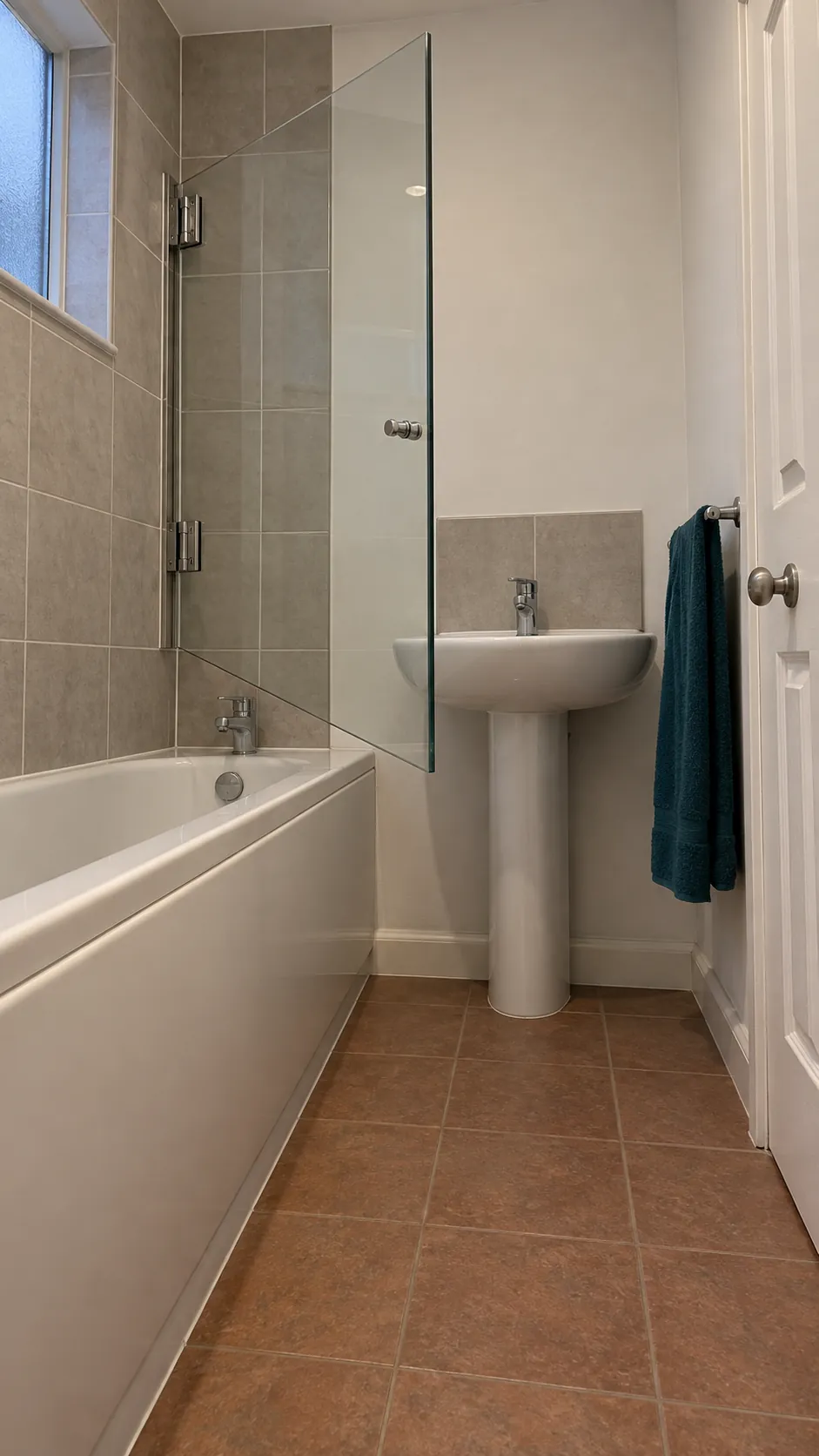
Check the whole swing of a hinged screen
A hinged bathtub screen offers more access than a fixed panel, provided it can move where you need it. Some models fold inward, some outward, and some allow movement in both directions. The permitted movement must come from the specific manufacturer instructions, not from an assumption based on a similar looking product.
Plot the panel and handle at several points through the swing. A vanity corner, tap, toilet, window ledge, or towel rail can stop it before it reaches a useful position. Include the bathroom door in that test, since two doors can compete for the same patch of floor. Never treat the screen as a grab rail or rely on it for balance when stepping over the bath rim.
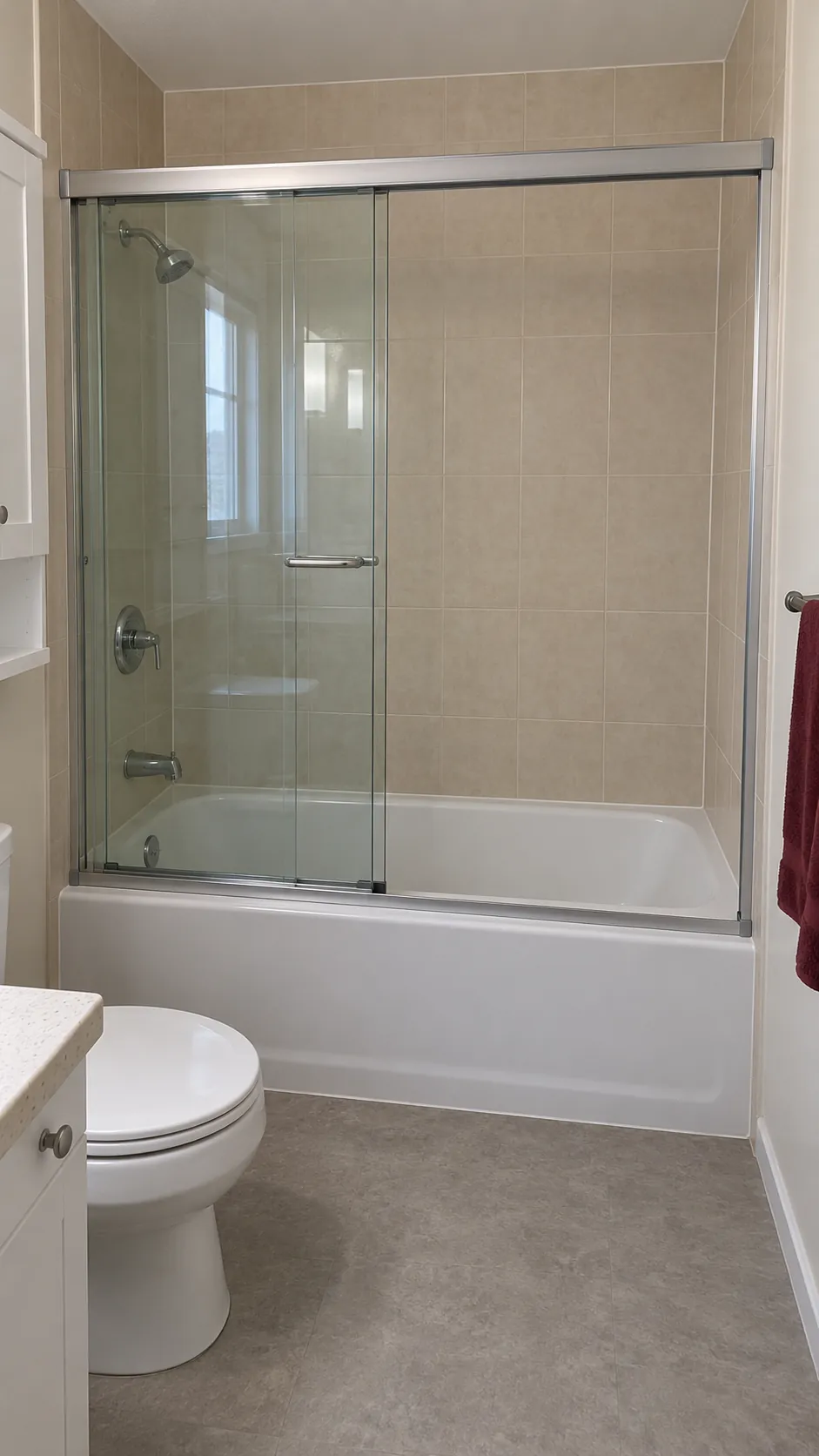
Compare sliding doors by the clear entry width
Sliding glass doors avoid an outward swing, which can help when a fixture sits opposite the tub. Their tradeoff is the opening left after the panels overlap. A door advertised for the full bath width may provide a much narrower usable entry.
Read the stated clear opening and test that width with the people who will use it. Check whether you can reach the controls without leaning awkwardly and whether a helper can assist if needed. For someone with limited mobility, involve a qualified bathroom designer or occupational therapist; replacing a curtain with glass does not resolve the bath step.
Lower tracks and overlapping panels introduce cleaning surfaces that a plain curtain rod does not have. Look for accessible seals and care instructions before ordering. A sliding arrangement is useful only if its entry and upkeep remain practical after installation.
Match the cleaning routine and installation limits
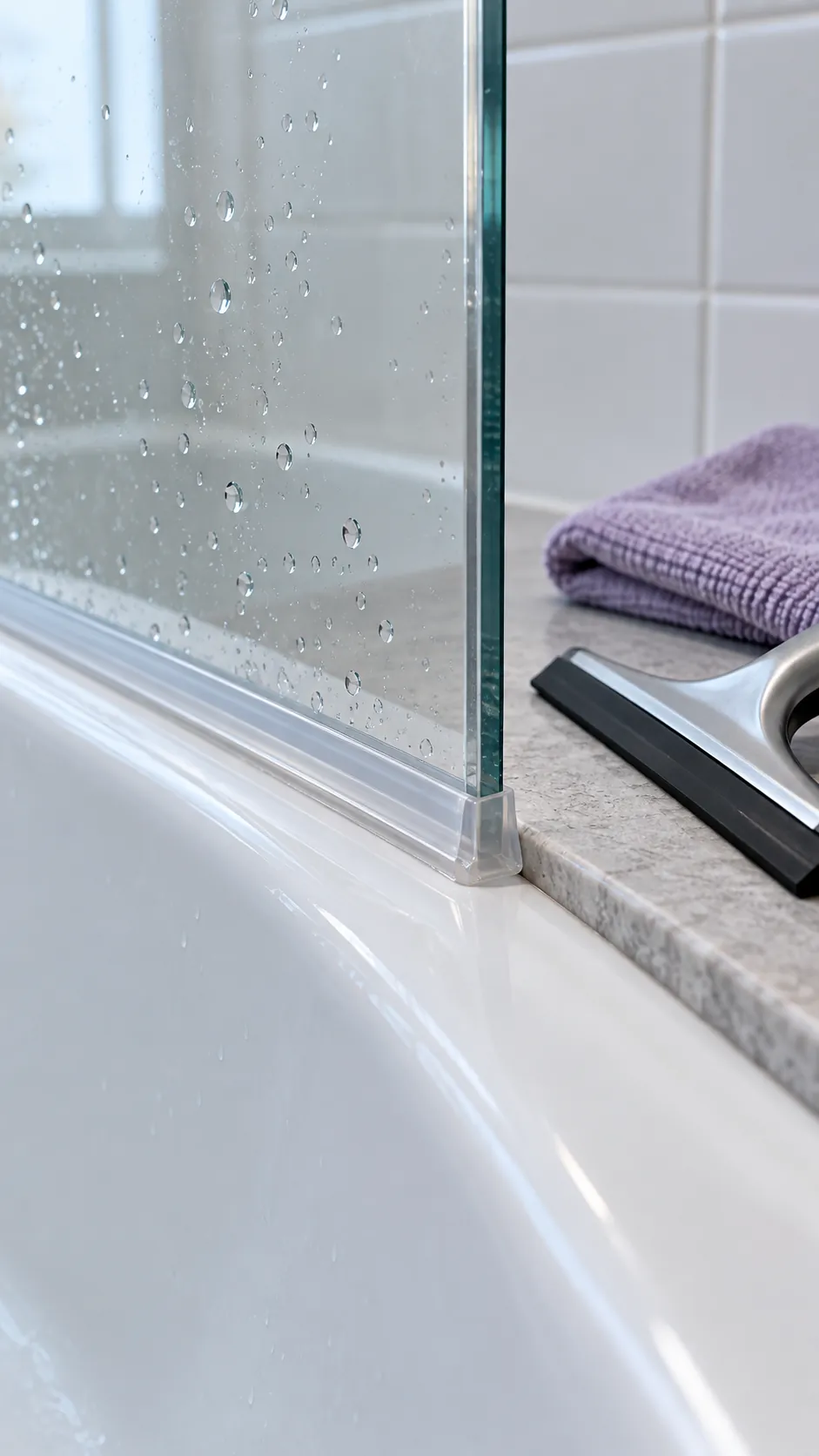
Glass needs routine care on both sides, including seals and any tracks. Hard water can leave visible deposits even on clear panels marketed as easy to clean. Follow the glass and coating instructions, since abrasive tools or unsuitable chemicals may damage the finish.
A curtain trades daily glass wiping for liner washing, drying, and eventual replacement. Neither option removes the need for ventilation or a properly sealed wet area. For a rental, confirm permission before drilling or changing an existing enclosure, and verify that any tension rod suits the surfaces and load.
Glass installation also needs compatible wall support, safe glazing, and fixings suitable for the specific tub or shower. Leave drilling, panel support, and waterproof junctions to an appropriate installer. A screen should never be ordered solely because its nominal width matches the bath.
Make the choice with a layout test
Choose a curtain when the room needs the opening to move completely aside, the bath has several uses, or a reversible installation matters. Choose a fixed screen when the entry gap, spray protection, and cleaning reach all work without moving it. Consider hinged or sliding glass only after its full movement and clear opening pass the same test.
Bring the floor plan, product drawing, and photographs to the installer before ordering. Confirm local requirements and the manufacturer installation instructions rather than treating a generic clearance as a universal rule. If you cannot enter, reach the controls, contain the spray, and clean the enclosure comfortably, the layout needs another choice. The useful enclosure is the one that lets the room function when the shower is in use.