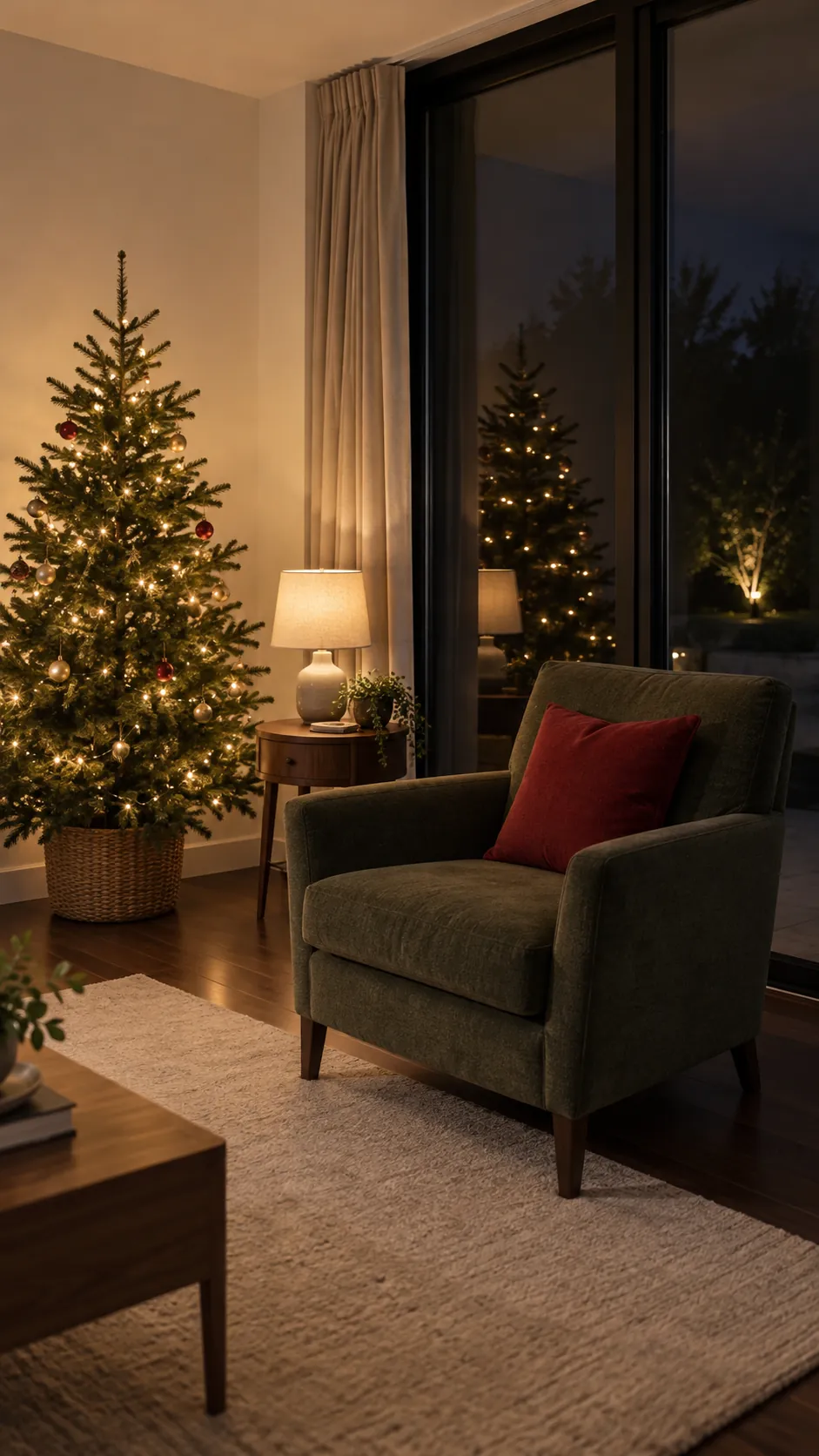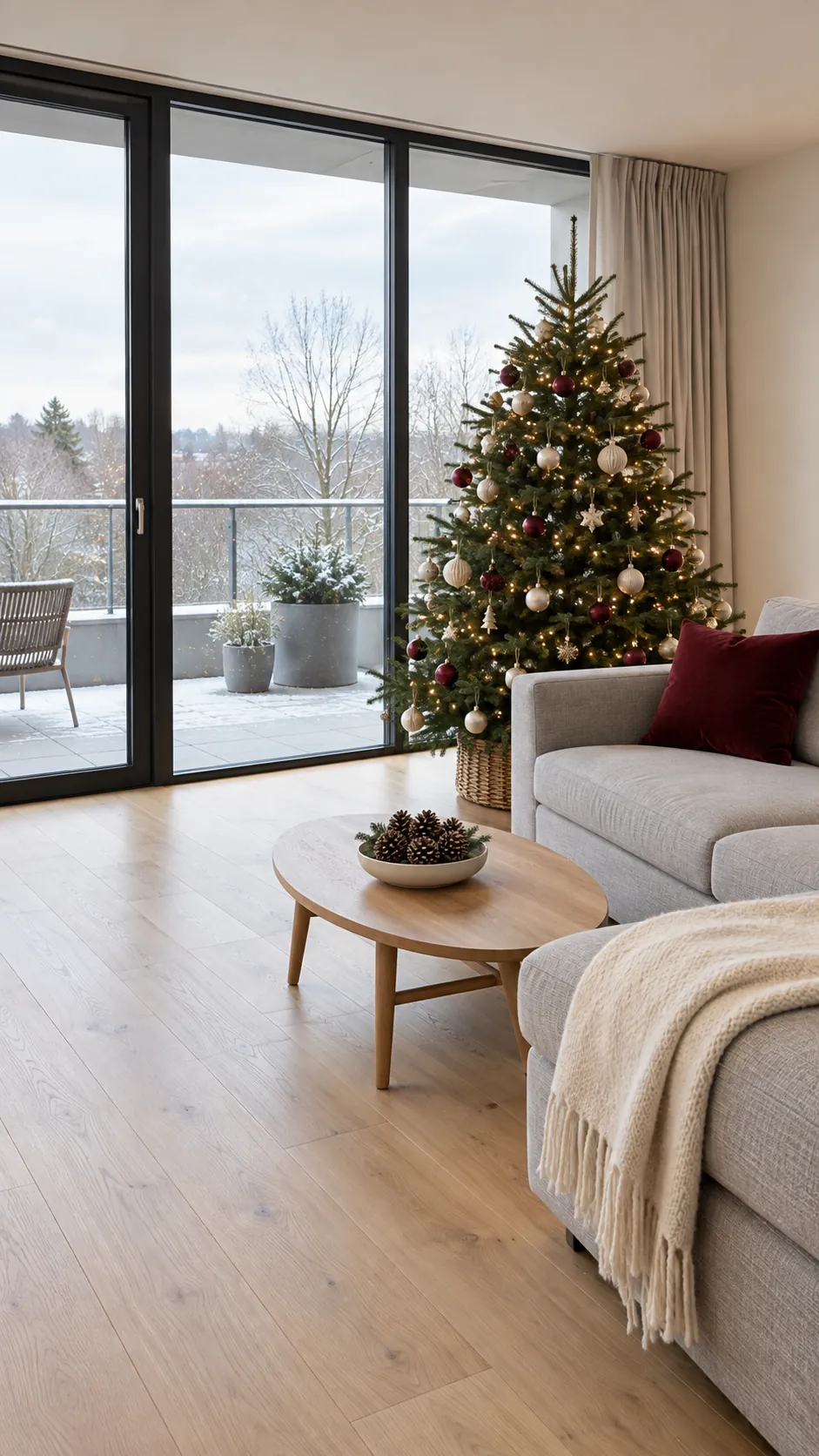
A wall of glass gives you light and a view, but it removes many of the places where holiday decorations usually go. The answer is to choose a few furniture based focal points and protect the movements that make the room usable. Keep the windows, seats and doors working first, then let the seasonal details support them.
Plan around the glass before choosing decorations
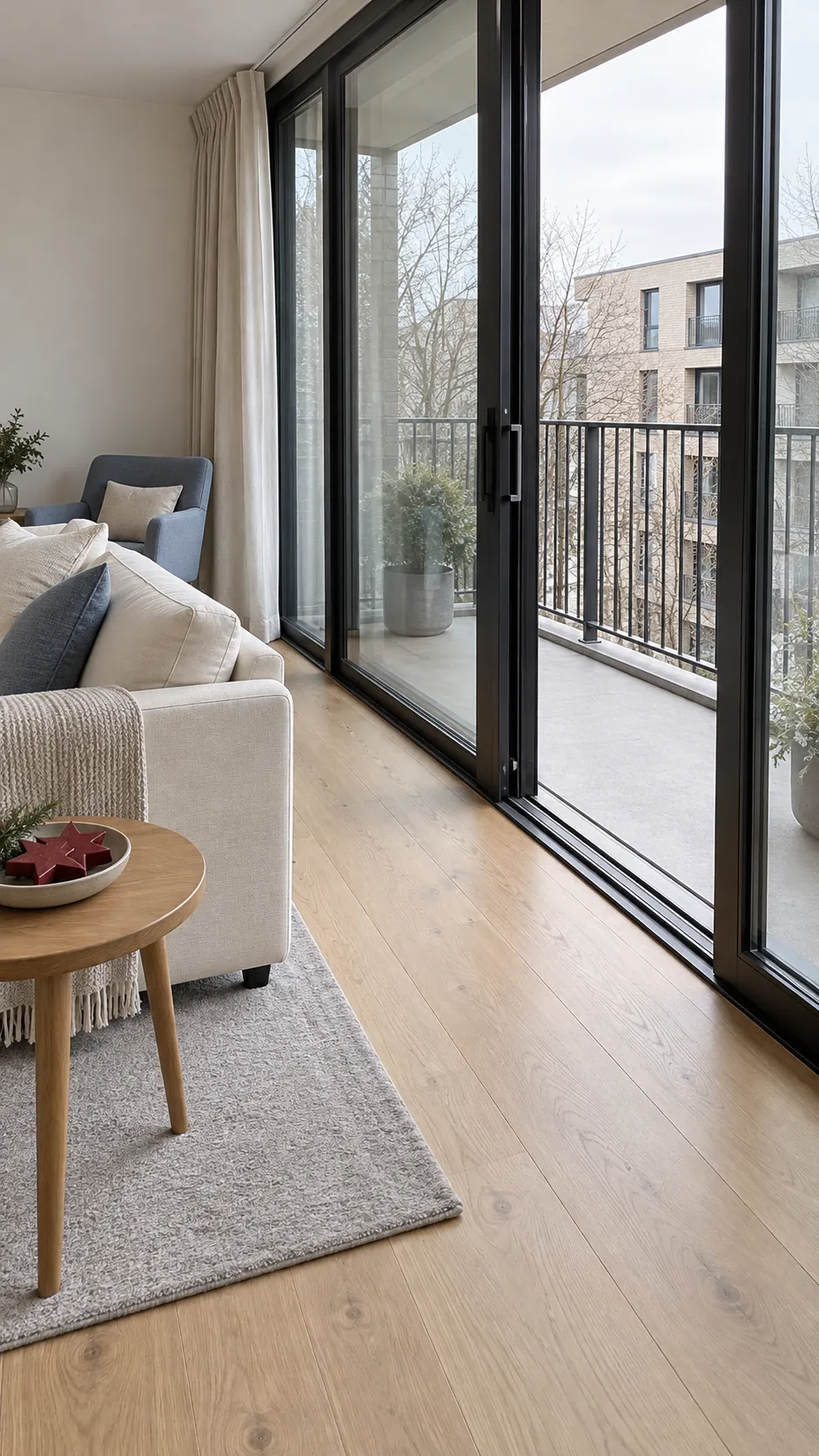
Start with the parts of the room that have to keep working. Open the balcony door, draw every blind and curtain, and walk from the entrance to each seat. These movements reveal the areas that cannot hold a tree, a lantern or a trailing length of greenery.
A Christmas focal point does not have to sit in the middle of the largest window. Look from your usual sofa seat and choose a location that feels part of the seating group. A corner beside a fixed pane can work, while a similar looking corner beside a sliding door may be your main route outdoors.
Give the tree a furniture zone
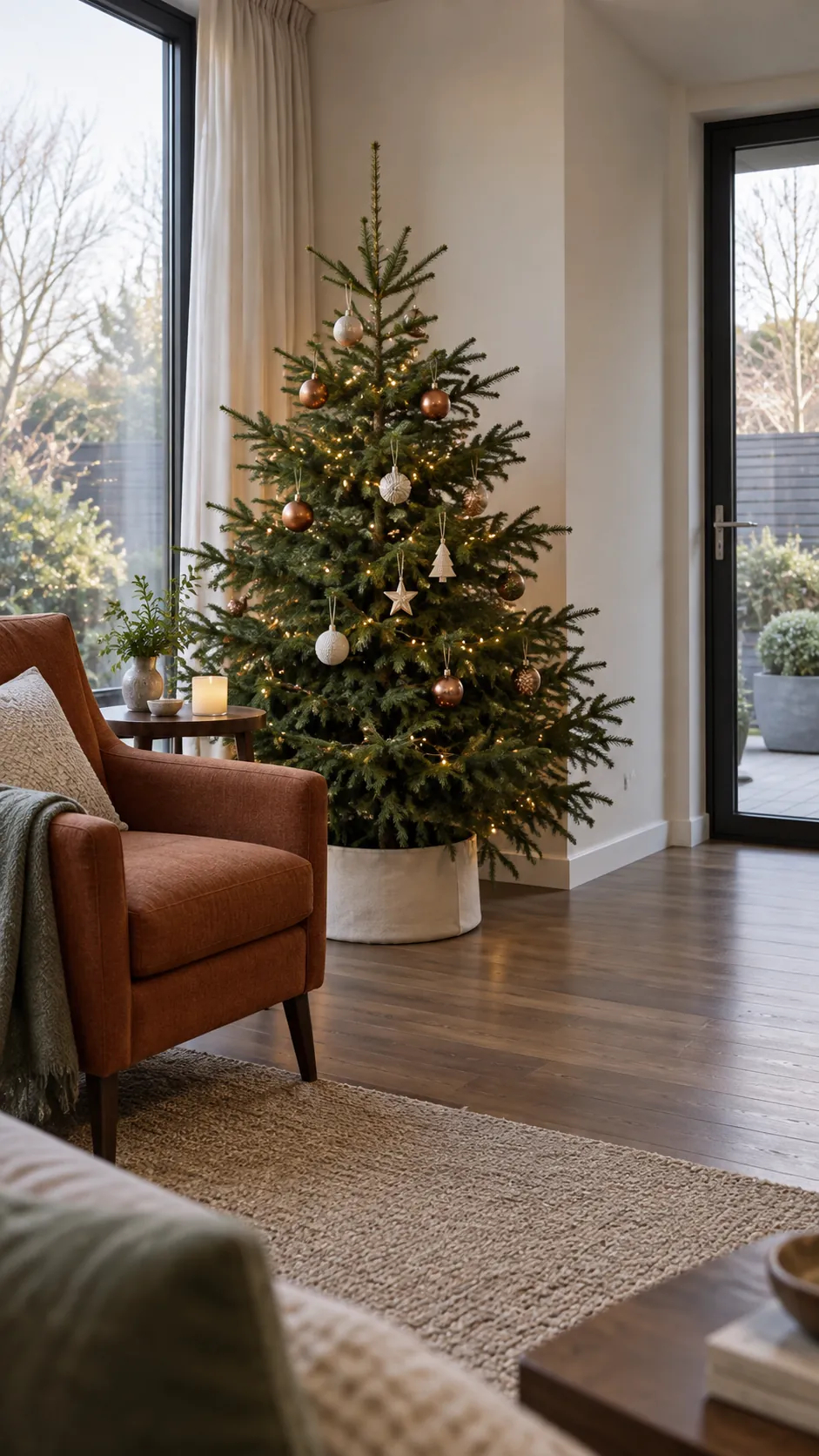
Measure the tree at its widest lower branches, rather than judging only its height. Include the stand, any basket or collar, and the room needed to reach its water reservoir if it is real. Mark that footprint with a towel before moving furniture or buying a larger tree.
Place it beside a chair or near the end of a sofa so it belongs to an existing furniture zone. Keep the glazing accessible for cleaning and leave curtains free to move. Follow the tree and light manufacturers’ clearance guidance, particularly around radiators and other heat sources.
If every possible position cuts into the room’s circulation, use a smaller tree on a stable table or make another surface the main display. A tall ceiling does not create extra floor space. A compact focal point that you can see from the sofa usually feels more intentional than a large tree squeezed into a doorway.
Use the solid surfaces you already have
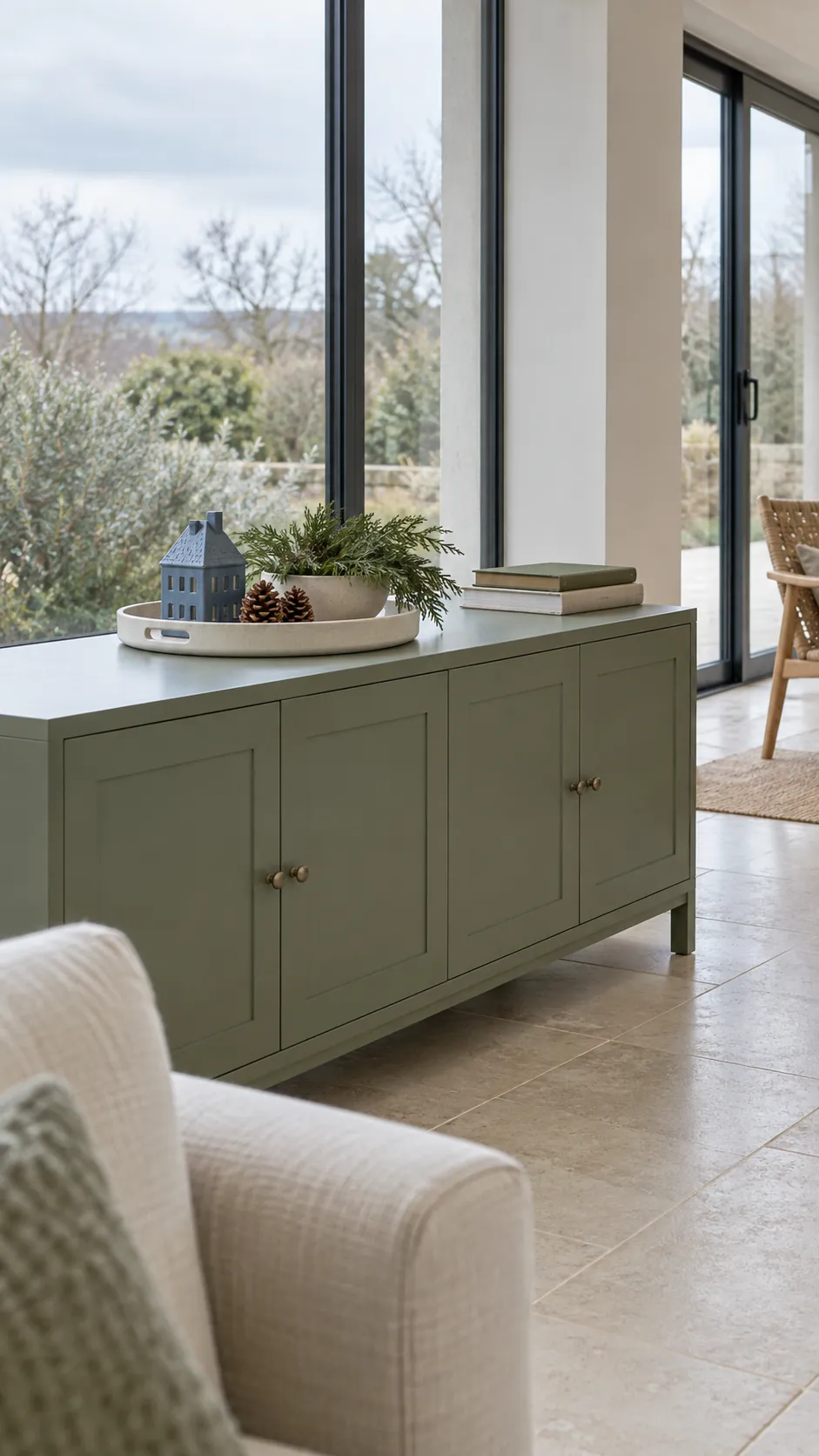
A low sideboard, bookcase end or console can carry Christmas decoration when there is little wall space. Group a small branch arrangement, a ceramic house and a bowl of ornaments in one part of the surface. Leave the rest available for the objects that live there each day.
Keep the grouping below the main sightline where a cabinet stands near the glass. This preserves the view and prevents the display from becoming a second wall. Use a tray if the surface needs to switch between decoration and serving drinks.
Put warmth into the seating area
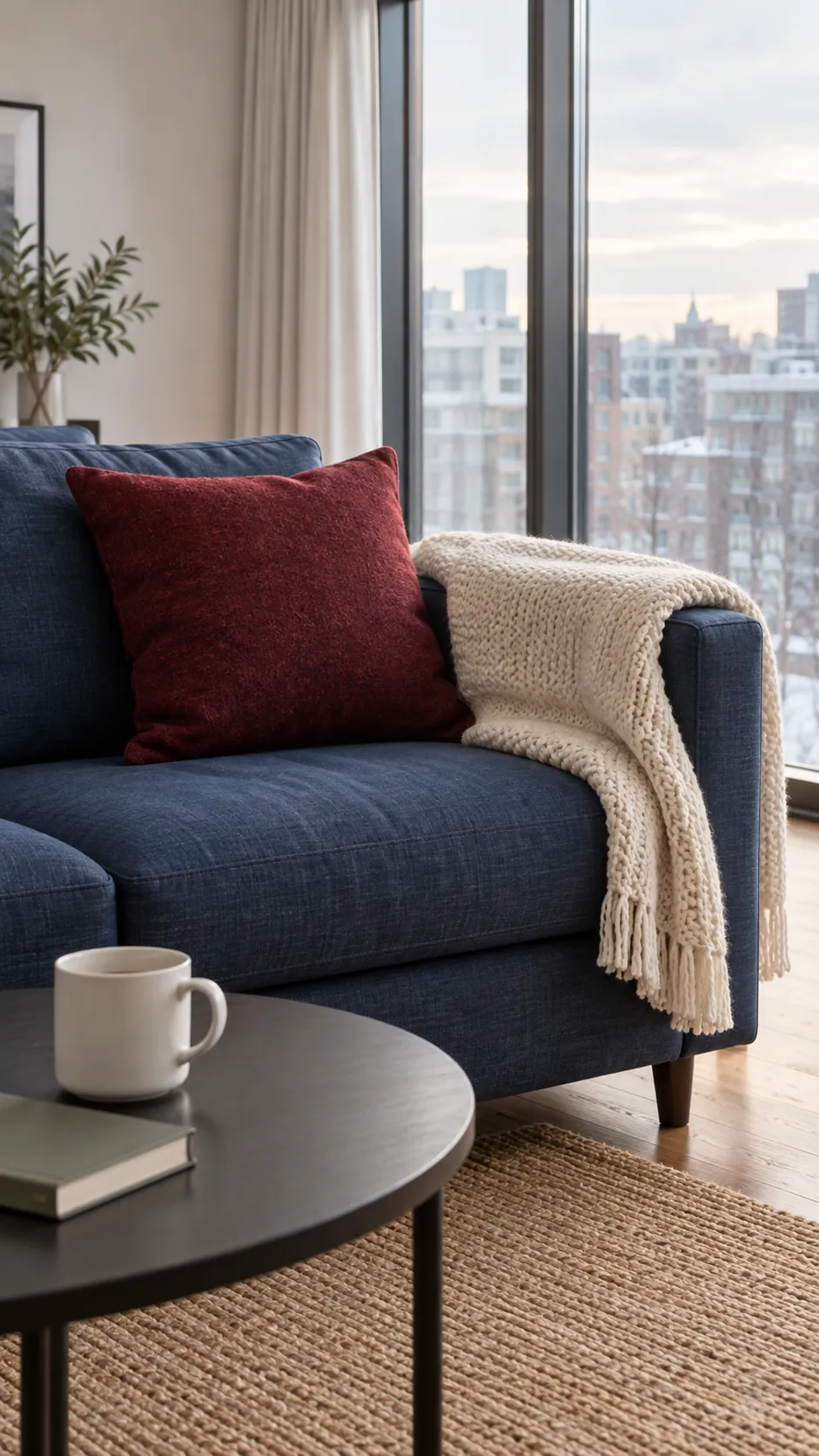
Large windows can make a room feel visually cool even when it is comfortable. Add a wool throw, one or two cushion covers and a small touch of Christmas color to the sofa you already use. The fabric should support the room’s existing palette, so a burgundy cushion can work better than adding several competing reds.
Choose a texture that reads in daylight, such as a compact knit, brushed wool or a simple woven check. Keep most of the seat clear and fold the throw where it will not slide into the walkway. This gives a modern glazed living room a seasonal centre without hanging anything from the windows.
Let the window stay a window
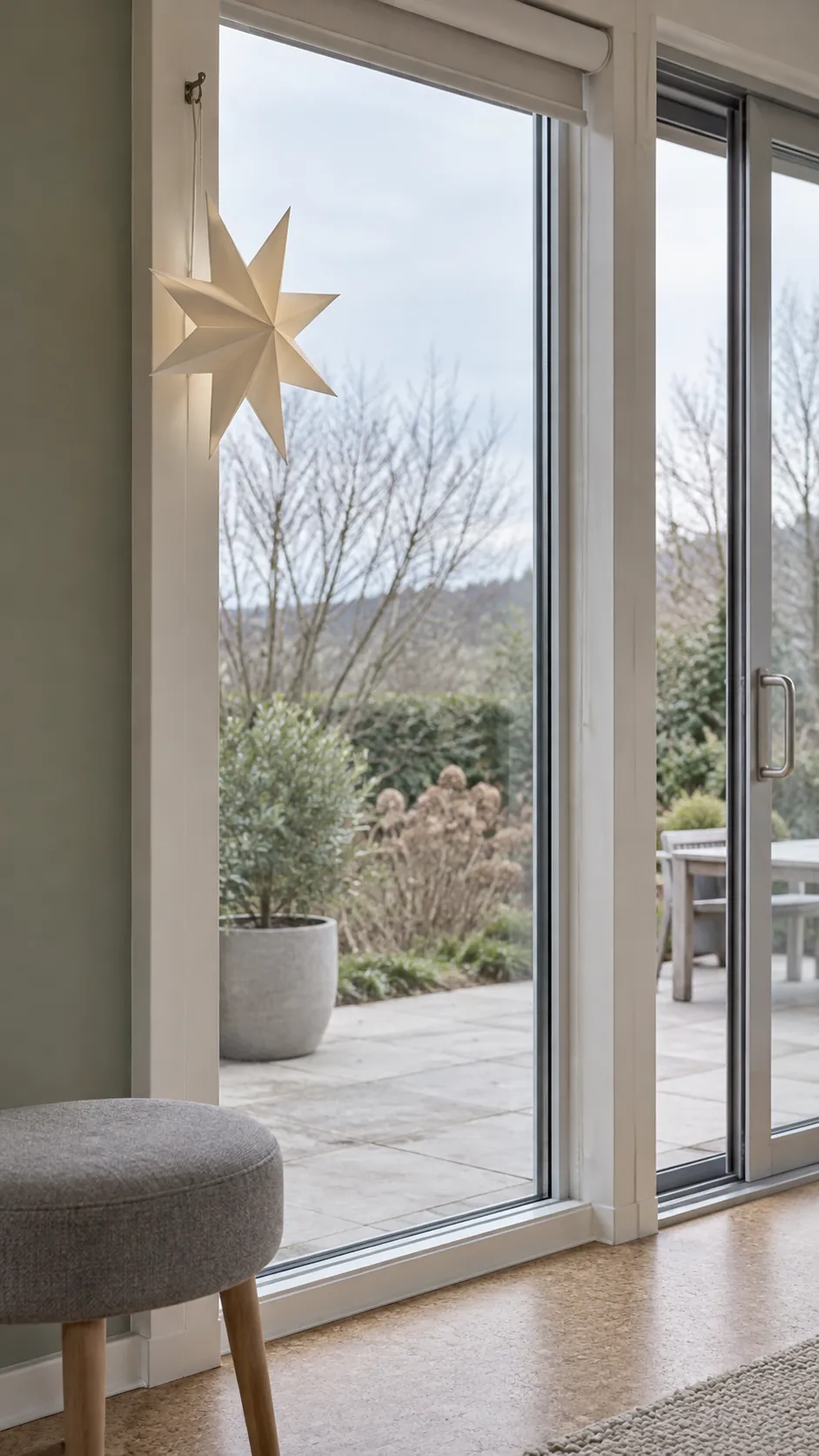
Before attaching a star or wreath near the glazing, check the surface, fixing instructions and blind travel. Prefer an existing suitable hook or a removable fixing approved for that surface and load. Do not attach decorations to blind cords, door handles or the moving edge of a sliding panel.
A single light paper star beside a fixed pane can provide a clear silhouette without covering the view. Keep it away from heaters, lamps and condensation that could damage paper. If there is no suitable place to suspend it, use a freestanding decoration on furniture instead; the glass does not need to carry the display.
Check the room after dark
At night, large windows can reflect the interior rather than showing the outside view. Switch on the tree lights and your normal lamps, then sit where you usually relax. A second reflected tree may look attractive, but several bright strings can create more visual activity than you expected.
Use a modest group of warm lights near the seating area instead of outlining every window. Keep leads beside furniture and out of door tracks, with no cable crossing a walking route. Follow the lights’ indoor rating and connection instructions, and avoid relying on decorations to conceal unsafe wiring.
Finish by closing the curtains or blinds and checking the room again. Move anything that prevents them from working or that feels crowded once the view disappears. The best holiday room layout keeps its clear routes, useful seats and comfortable evening light for the whole season.