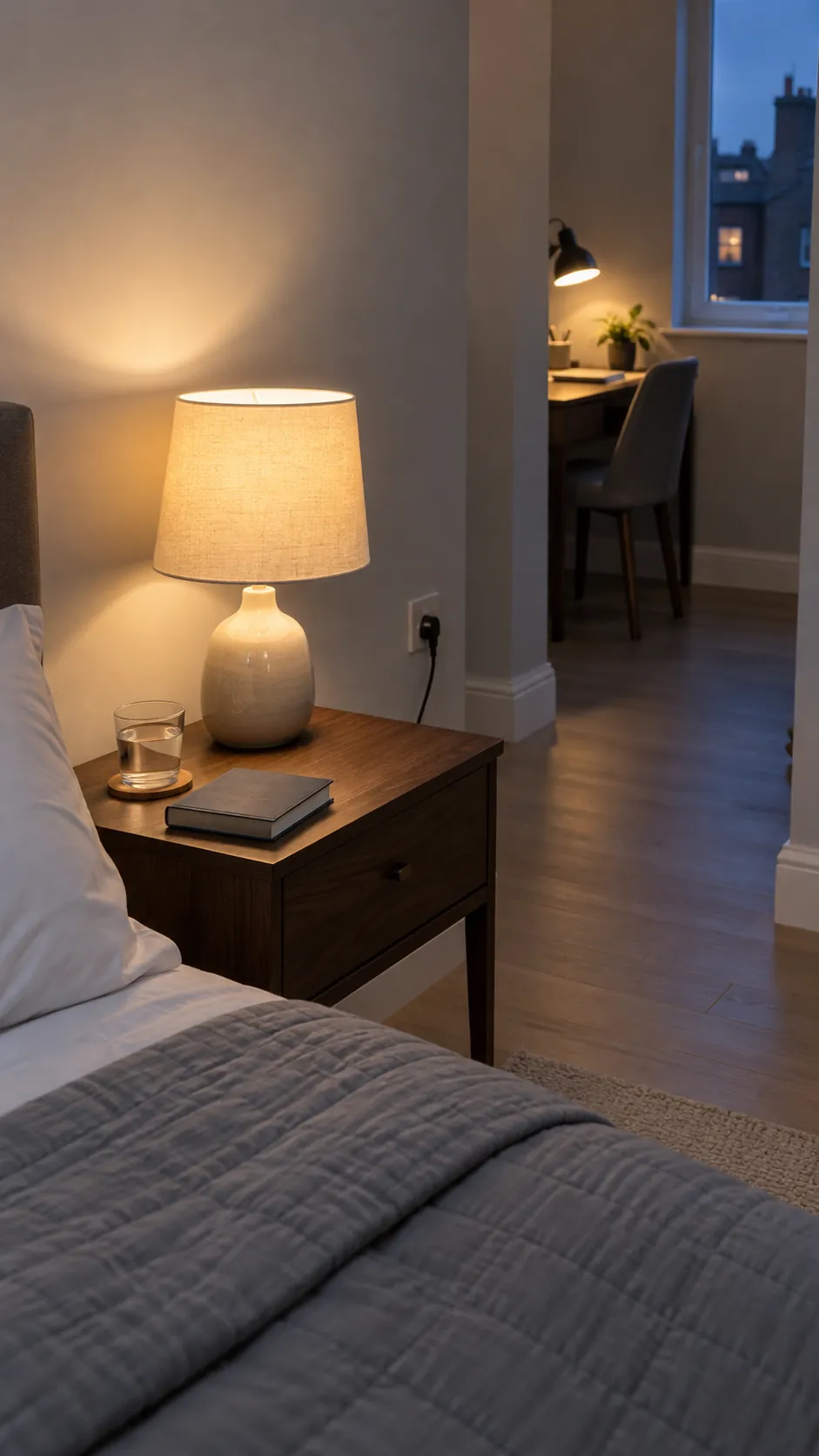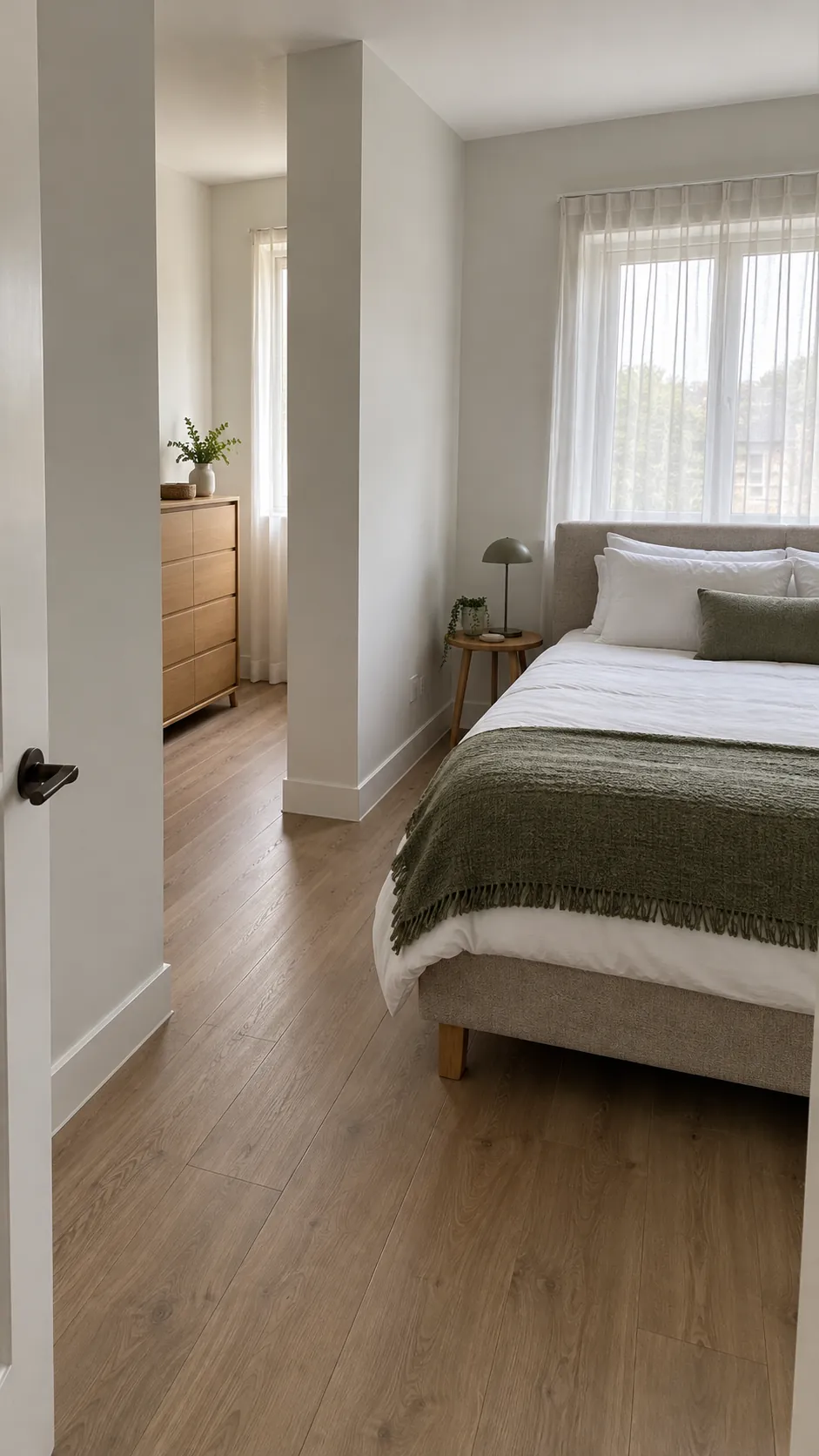
The awkward part of a bent bedroom is often the journey from the door to the bed. A chair can look perfect in the little recess and still block the wardrobe every morning. Start with the route you need to use, then give each part of the room a job.
You do not need to make the floor plan look rectangular. You need a comfortable sleeping area, storage you can open, and a smaller zone that earns its space. The decoration works better once those decisions are settled.
Measure the bend before choosing furniture
Draw the room as two connected rectangles and record the length of every wall, including the short return at the inside corner. Mark the door swing, wardrobe doors, sockets, windows, radiators, and any sloping ceiling. Measure usable floor space rather than relying on the widest wall alone.
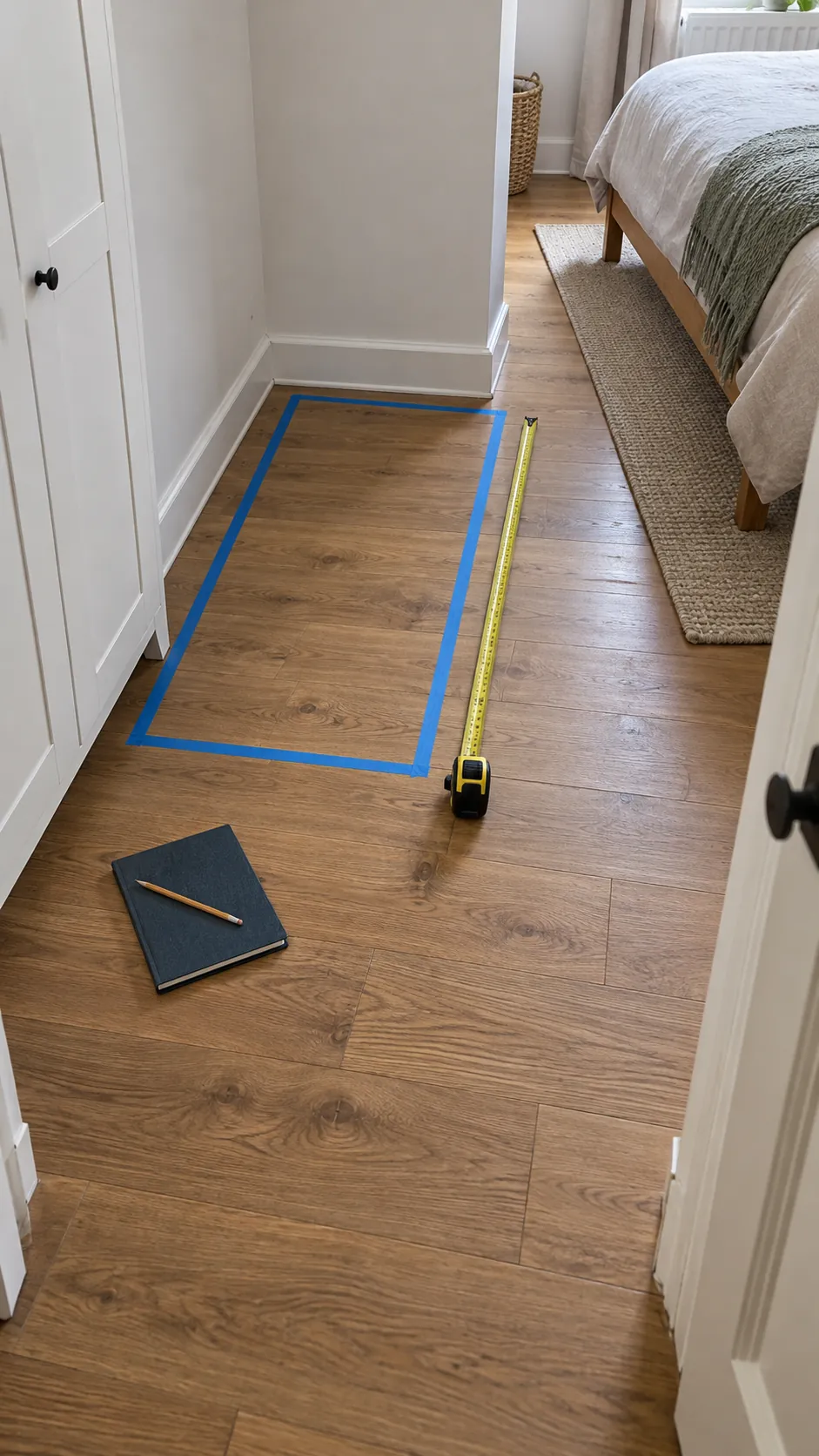
Use painter tape to mark the outer footprint of your bed frame, not just the mattress. Tape out a dresser with its drawers open, too. Walk from the entrance to both the bed and storage while carrying a laundry basket. If you have to turn sideways at the bend, move or reduce the furniture before buying anything.
Give the bed the rectangle it actually fits
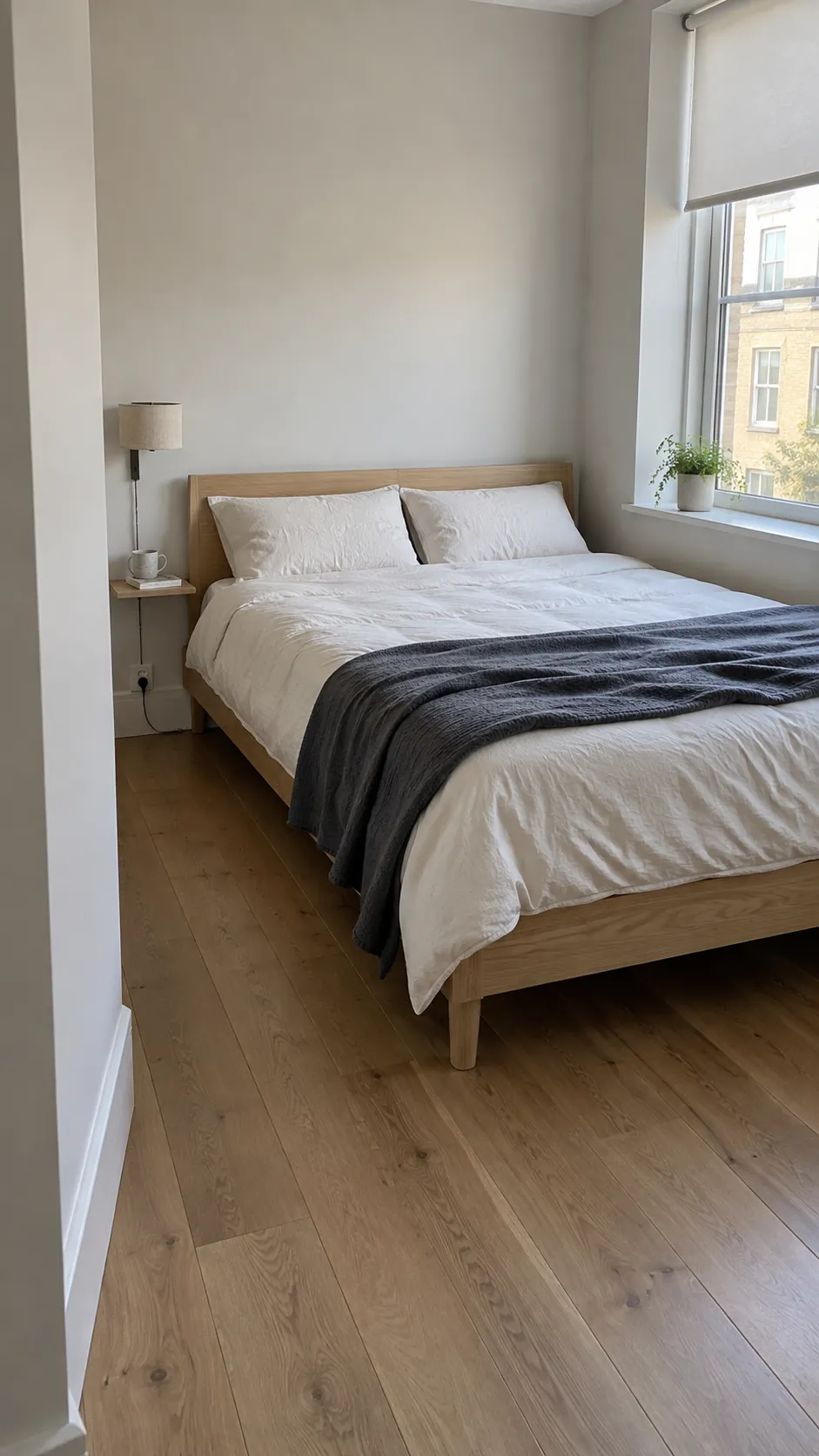
The larger arm usually suits the bed, but the best position depends on doors and access. Try the headboard on an uninterrupted wall so the mattress does not project into the connecting passage. For two people, keep a usable route on both sides whenever the room allows it. A bed pushed against a wall may work for one sleeper, but it makes shared access and changing sheets harder.
Rotate the taped footprint before deciding that you need a smaller bed. Compare the clear space beside the mattress and at the foot, then check whether windows and heating remain accessible. A slim frame can recover useful inches that a wide upholstered surround consumes. Do not let visual symmetry force the bed into the doorway.
Make the smaller arm serve one daily task
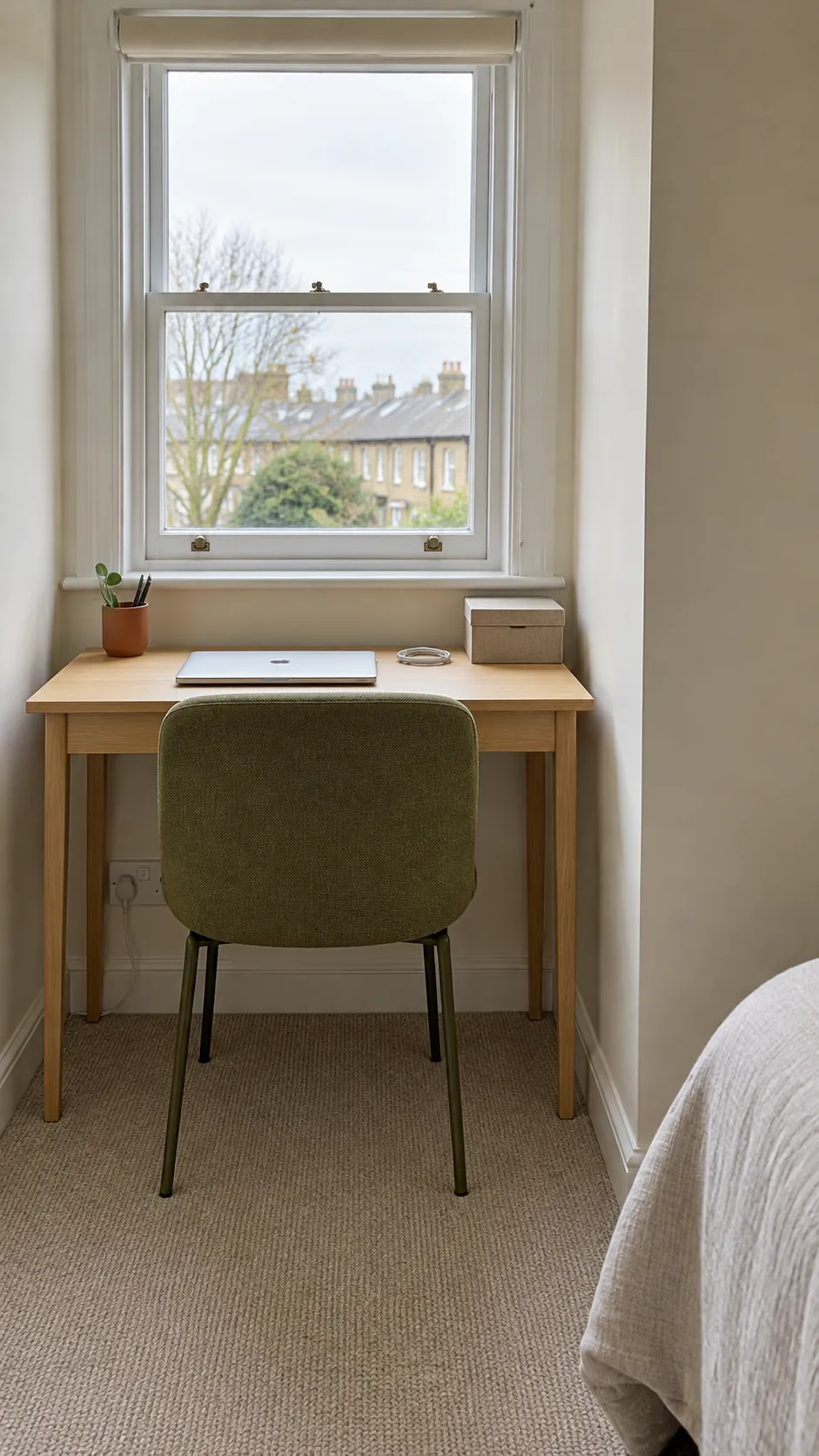
A recess becomes useful when its contents support something you actually do. Put a compact desk near daylight if you work there, or use a shallow dresser if getting dressed is the priority. A reading chair belongs only where you can sit, stand, and pass it without shifting other furniture.
For a desk, include the chair pulled back in your measurements. A narrow worktop can hold a laptop, but it should not leave your knees trapped against drawers. Keep work equipment in a closed box after use so it does not visually spill into the sleeping zone.
If the recess is too tight for seating, leave it as circulation with a small wall hook or a mirror placed safely away from the door. Empty floor space can be the most useful part of a small bedroom layout.
Choose storage by how it opens
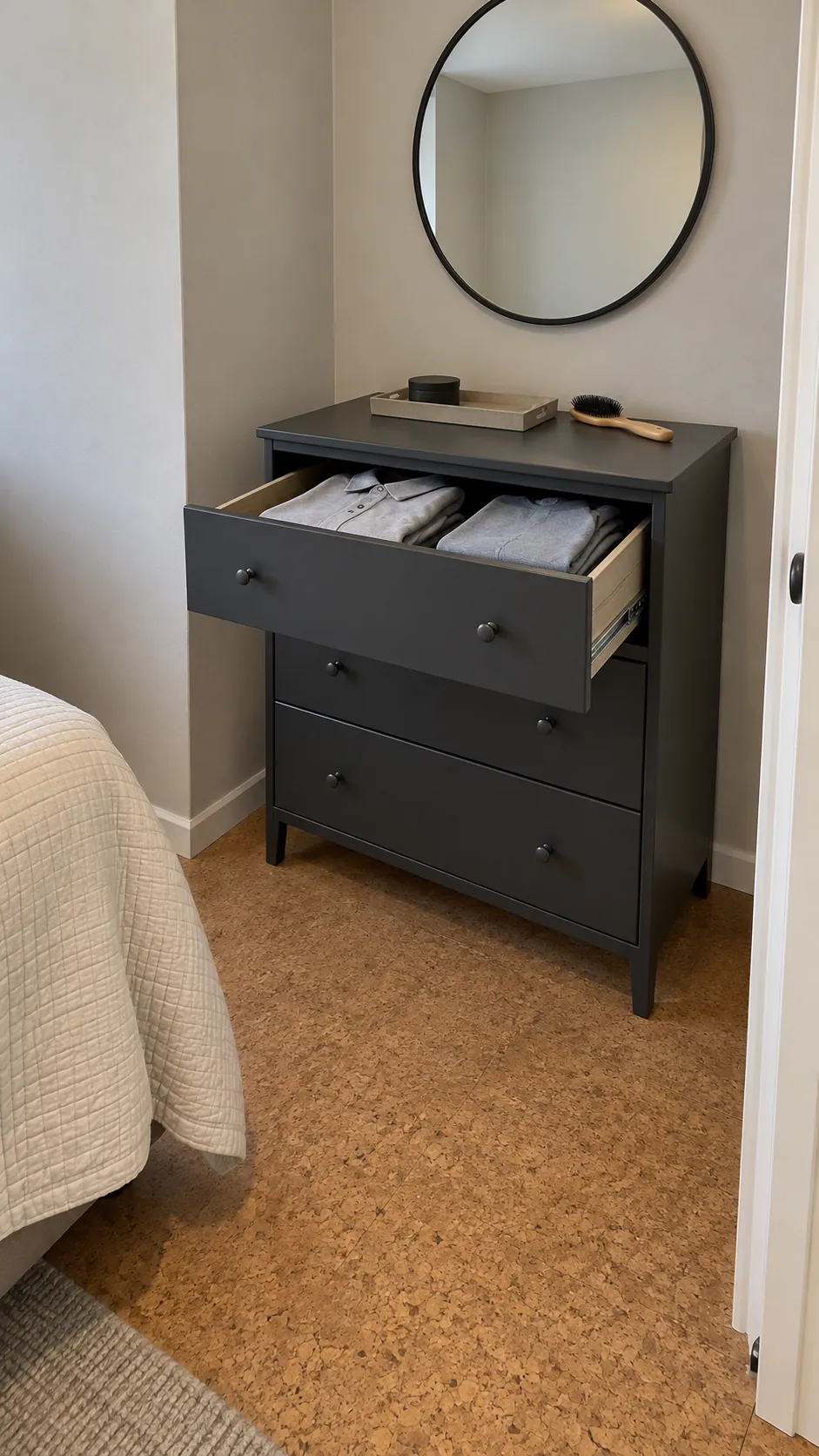
Bedroom storage ideas need more than a footprint check. Drawers need space in front of them, hinged doors need an arc, and boxes beneath a bed need a route out. A shallow cabinet on the short arm may be easier to use than a deep dresser squeezed beside the mattress.
Reserve the easiest shelves and drawers for clothes you use every week. Put seasonal bedding in accessible containers beneath the bed only if you can pull those containers out fully. Sliding wardrobe doors can reduce swing space, but they do not remove the need to stand in front and reach inside. Anchor tall storage according to its instructions and use fixings suited to the wall, with landlord permission where needed.
Repeat a palette without disguising the shape
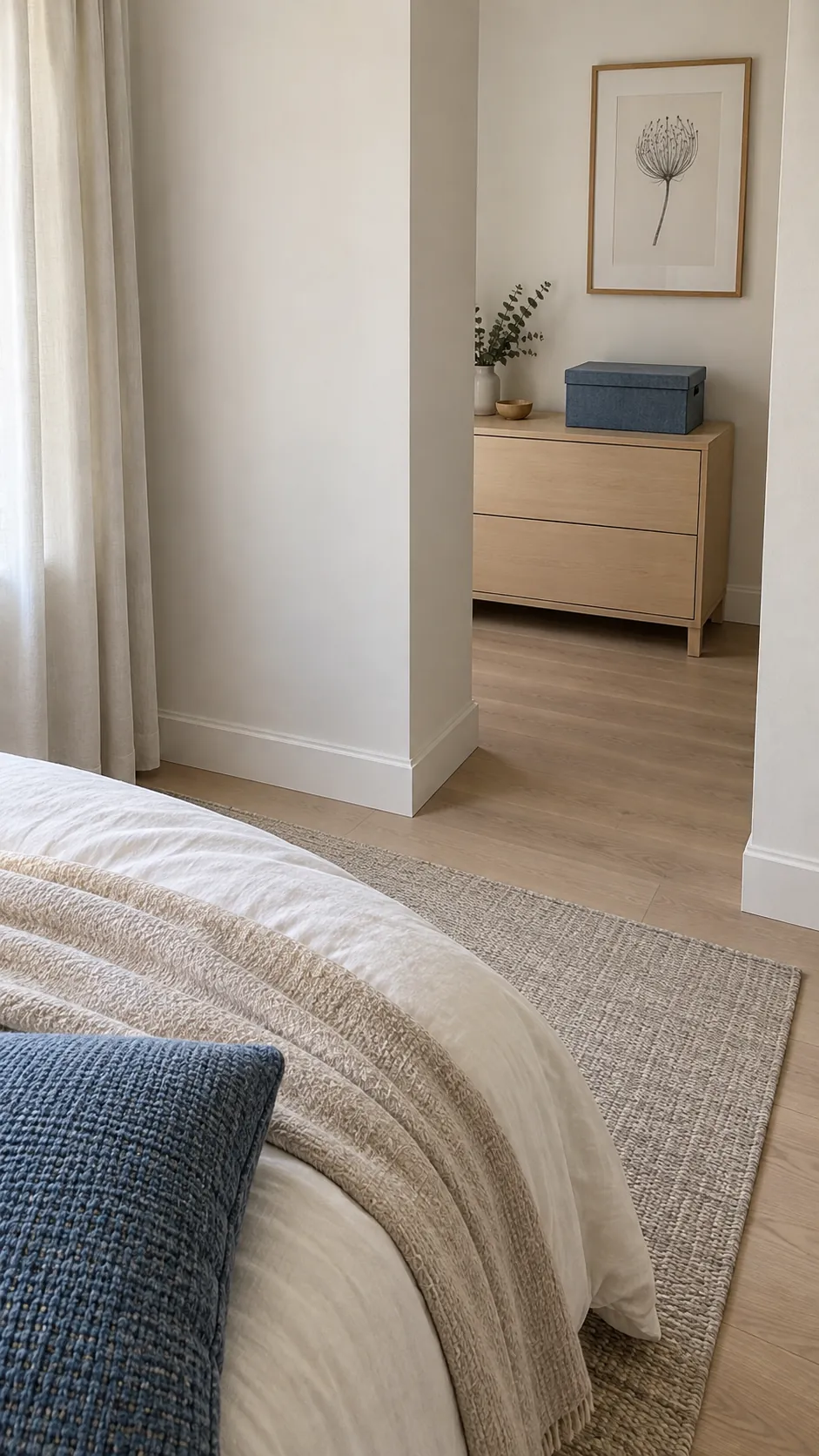
Use a shared wall color across the bend to connect the two zones. Then repeat one accent in separate places, such as a muted blue pillow by the bed and a blue storage box at the desk. Matching every object is unnecessary; repeating a few colors and finishes gives small bedroom decor a clear direction.
A rug can define the sleeping rectangle without stretching into the narrow passage. Check that its edges lie flat and do not catch the door. Curtains with a similar tone to the walls keep the window area quiet, while a visible wood grain or woven blanket adds depth. Test paint samples in both arms because the same color can look different in a bright window recess and a darker sleeping corner.
Light both arms and test the finished route
A ceiling light in the larger rectangle may leave the smaller arm dim. Add a reading light near the bed and a separate task lamp where you dress or work. Choose shades that keep bright bulbs out of your direct view when lying down.
For a rented room, a compact bedside lamp or a plug in wall light can be a practical option if its cable stays outside the walking route. Keep cords away from rugs, door swings, and heating surfaces. A mirror can reflect available light, but place it where the reflection helps you rather than pointing a bright lamp back at the pillow.
Finish your small bedroom makeover by testing an ordinary evening: open the wardrobe, pull out the desk chair, switch off the lights, and walk to bed. Remove the piece that makes that sequence awkward before adding another accessory. The bend should organize the room, not interrupt it.