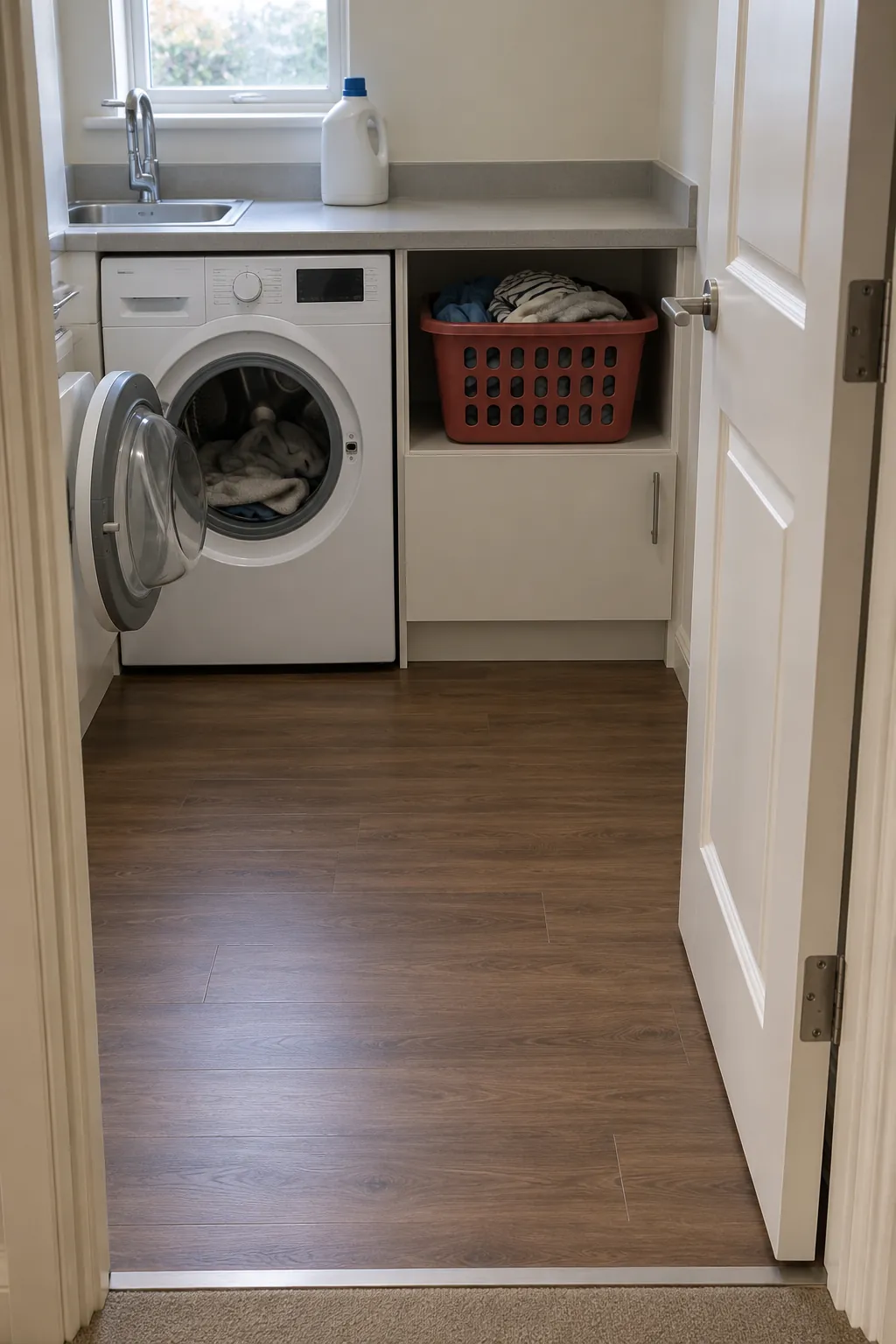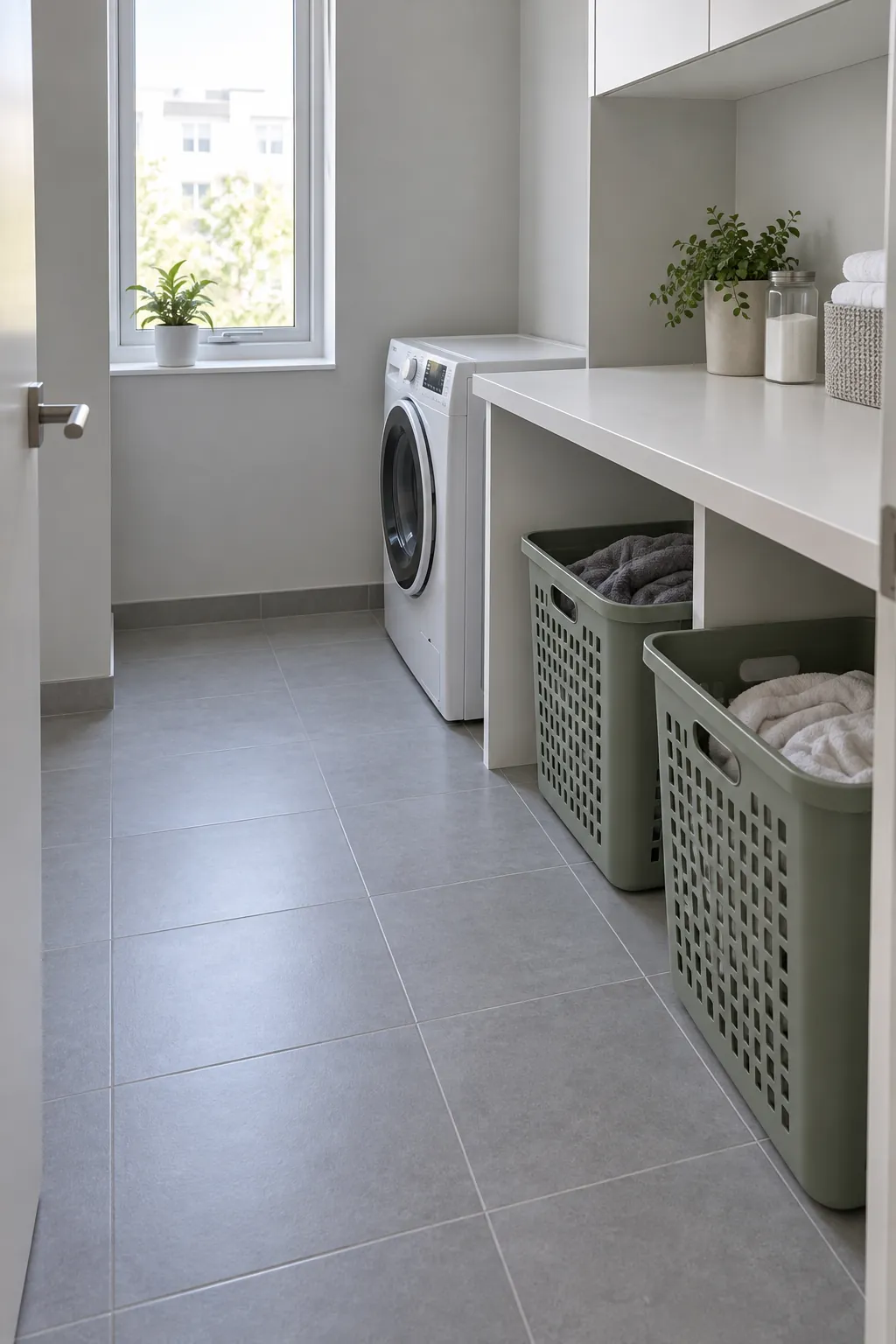
The safest basket position is usually inside a counter bay, beside an unused end wall, or outside the laundry room altogether. Choose the spot that keeps the route to the machines open while a basket is full and every door you need is open. A slim container does not solve the problem if you must move it before each load.
Measure the usable room after allowing for appliance depth, hoses, handles, and door movement. Then check the basket’s outside dimensions rather than its advertised capacity. This simple distinction makes laundry hamper placement a question of daily access instead of how many storage products you can fit against a wall.
Start with a parking space beneath the counter
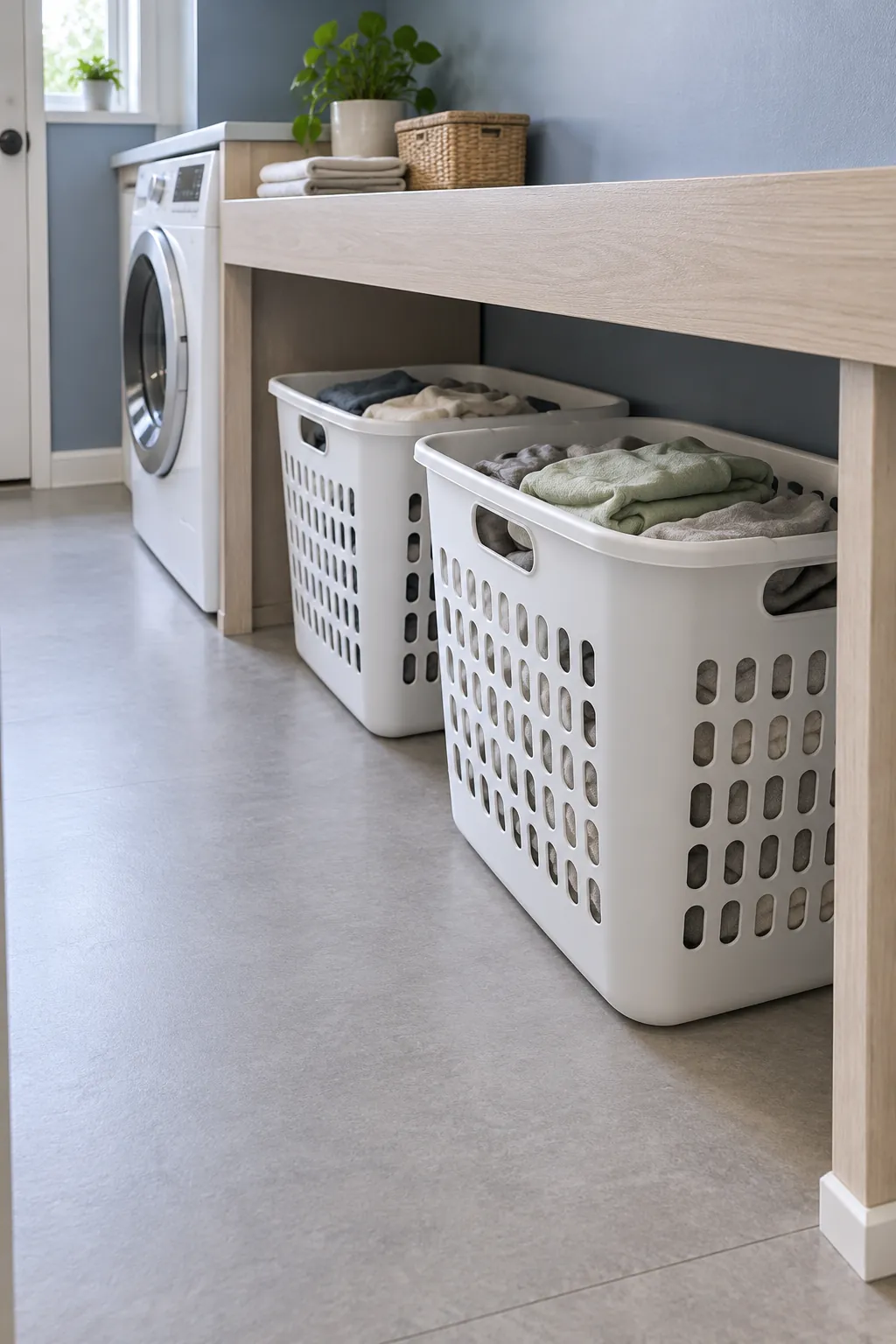
Put laundry baskets beneath an existing folding counter when they can sit entirely behind its front edge. This uses a sheltered footprint instead of narrowing the route beside the machines. Check the baskets at their widest points, including handles and any fabric liner that bulges when full. A basket that fits empty may become an aisle obstacle after a week of washing.
Turn the narrow end toward the room if that gives you a comfortable grip and enough room to lift it out. Leave space above the rim for your hand, not merely enough height to slide an empty container in. Two smaller laundry sorting baskets may be easier to remove than one wide hamper, but only choose separate categories that your household actually uses. Keep shutoff valves, service panels, and appliance ventilation accessible; a storage gap is not spare space if you need it for maintenance.
Use the end of the room when it is outside the working route
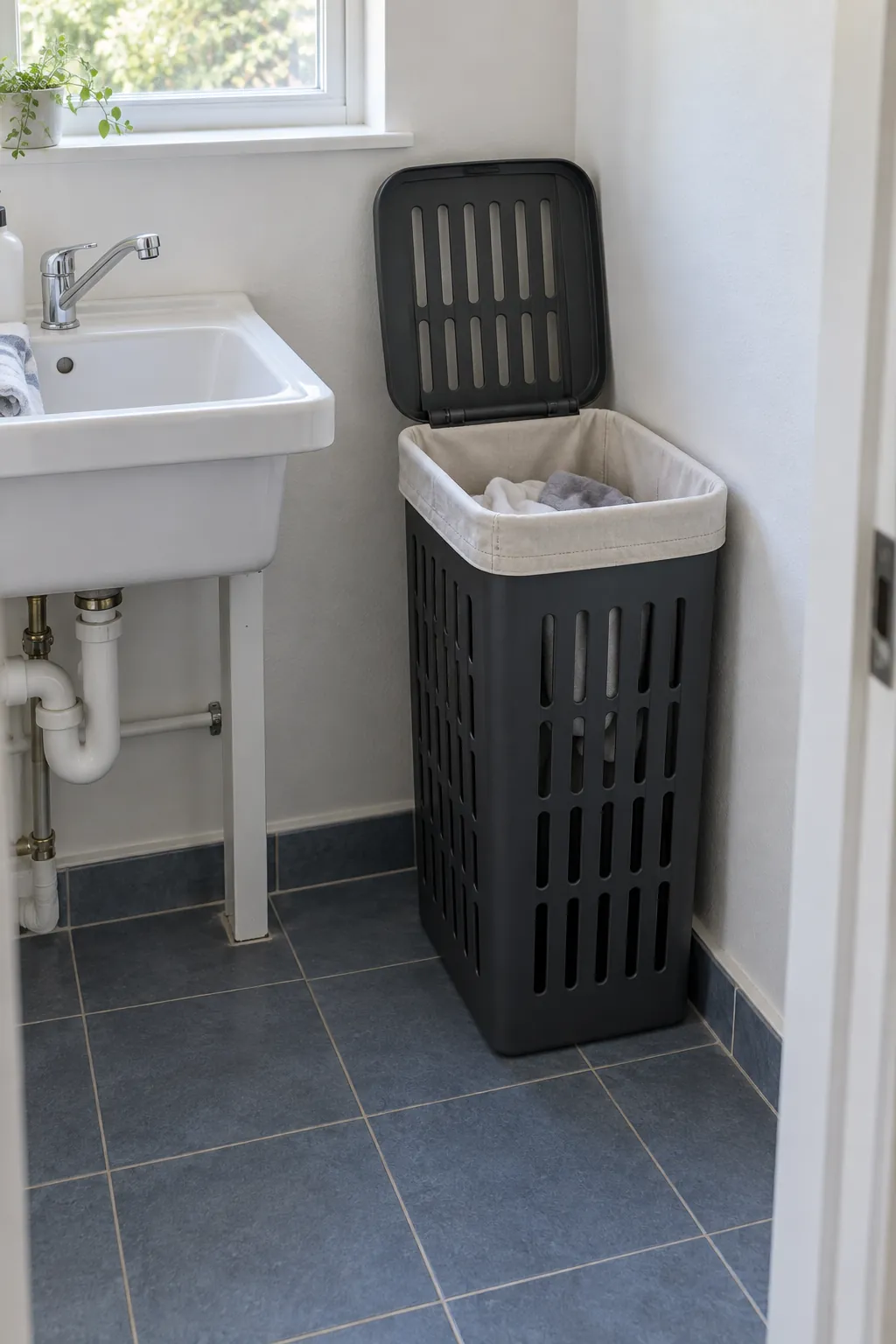
A slim hamper against the short end wall can work when nobody needs to walk or open a door through that spot. Set it beside the sink rather than in front of the washer, and check that you can still reach the tap and any wall controls. Open the lid fully during the test, since a tall lid may strike a counter or a window handle. If the room ends at an exterior door, electrical panel, or frequently used cupboard, keep that access clear instead of treating it as a storage corner. The narrowest container is useful only if you can remove a full load without scraping your hands along the walls.
Choose a fitted pullout only after testing its open position
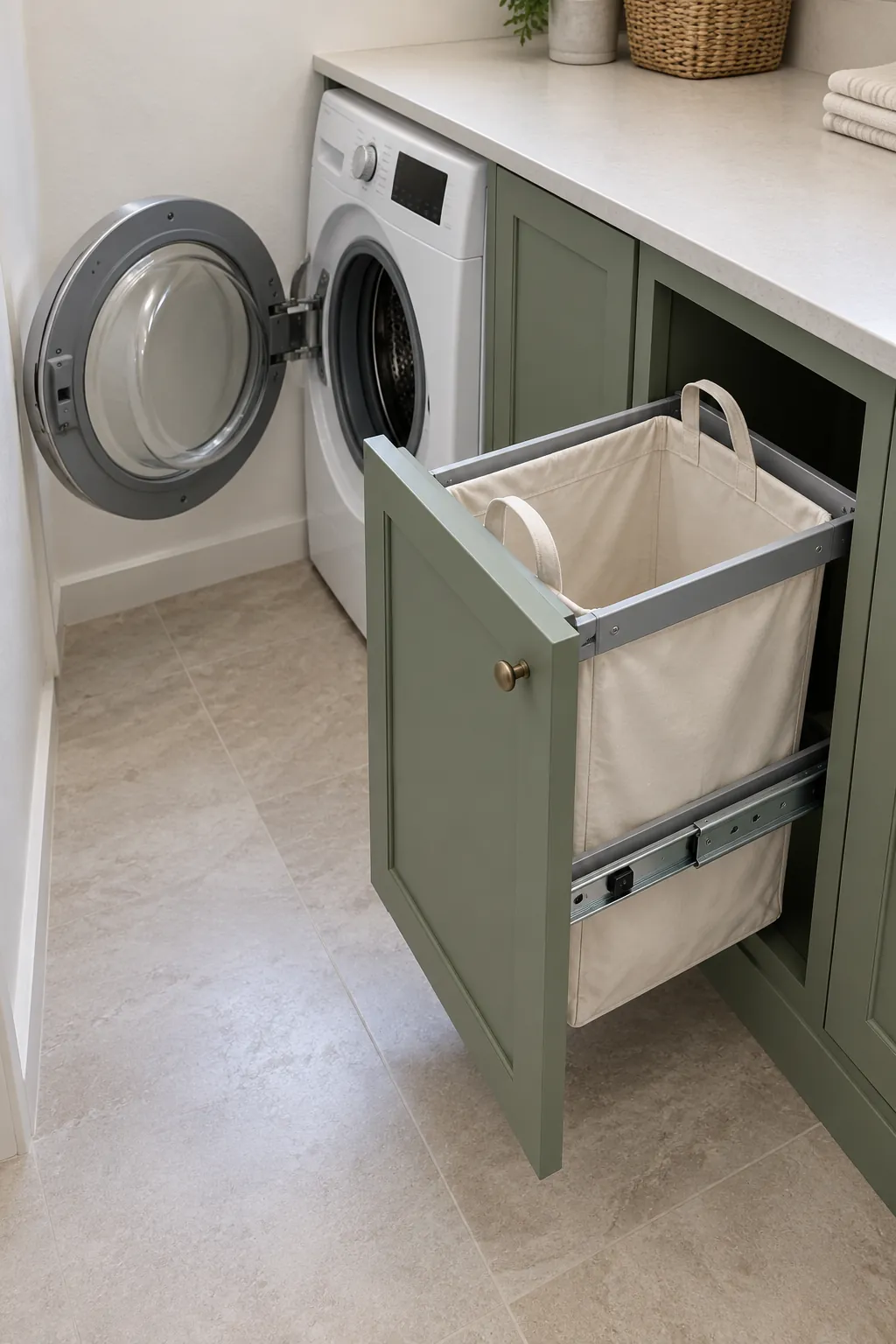
A hamper pullout can keep compact laundry storage within the cabinet line while it is shut. In a narrow room, the difficult measurement is the space left when the drawer extends and the washer door opens. Tape the proposed open footprint on the floor before ordering the cabinet, then stand where you would sort and load clothing. If you cannot reach the machine without stepping over the pullout, the closed appearance is hiding an awkward routine.
Check the removable basket separately from the cabinet opening. You need room to lift its handles, clear the drawer front, and turn toward the exit with a full load. A soft liner can be easier to remove than a rigid tub, but it should be washable and able to stay upright in its frame. Choose slides and fixings rated for the intended load rather than assuming that any kitchen drawer fitting is suitable.
Keep damp towels out of a closed hamper until they have dried enough for ordinary collection. A closed cabinet is storage, not a drying system. Ventilated basket sides help air reach the contents, but they do not make wet fabric safe to leave compressed indefinitely.
Store empty baskets vertically and keep daily sorting small
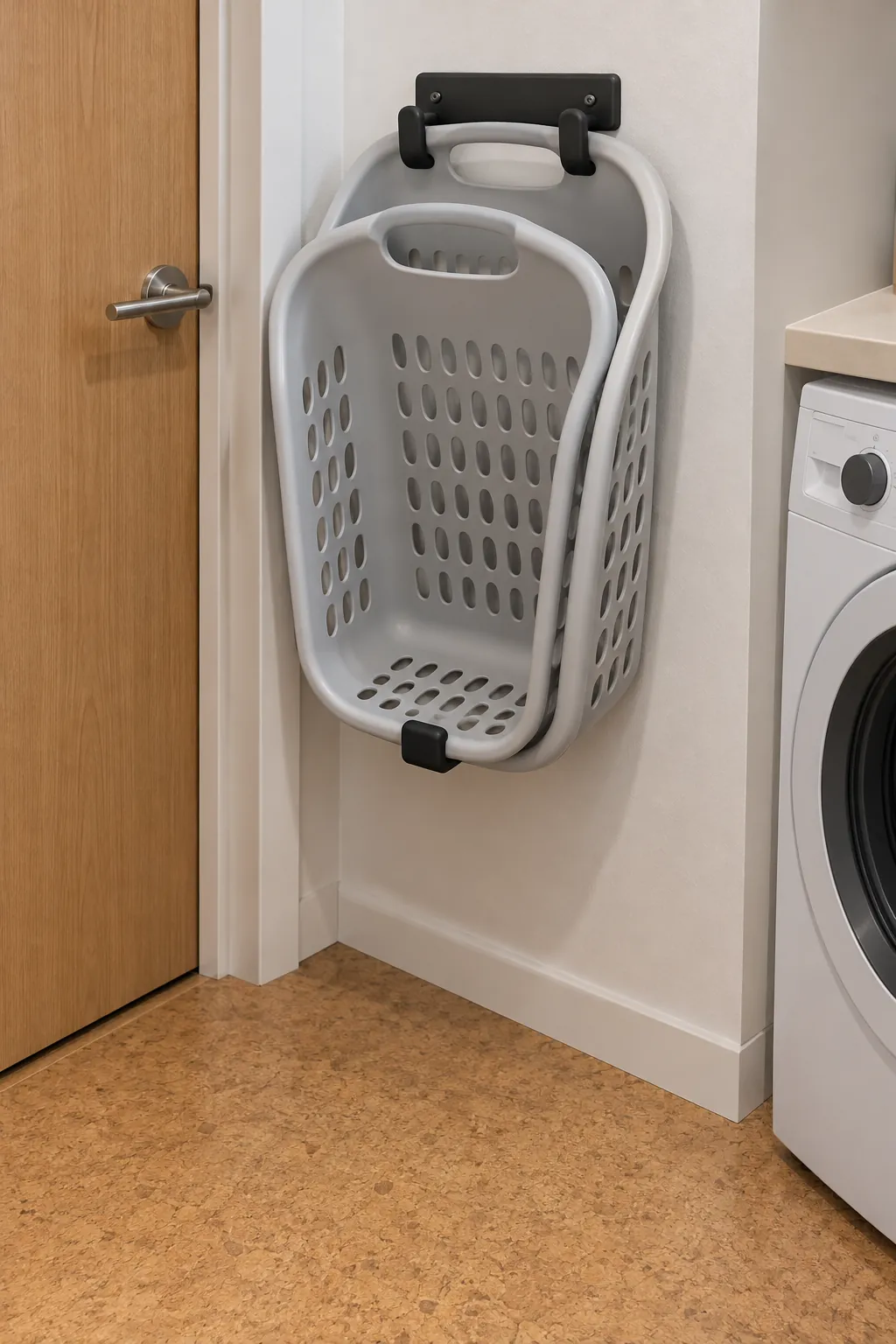
Empty carrying baskets do not need the same permanent floor space as a collection hamper. Nest compatible baskets or retain a lightweight empty one vertically on hooks designed for its shape and weight. Put the mounting point at a height you can reach without stretching over a machine, and make sure the basket cannot fall into the aisle. Keep loaded baskets on a stable supported surface rather than hanging them from an improvised handle hook. If you sort into several categories only on wash day, use temporary small containers during that task and return them to storage afterward.
Move collection closer to where clothes come off
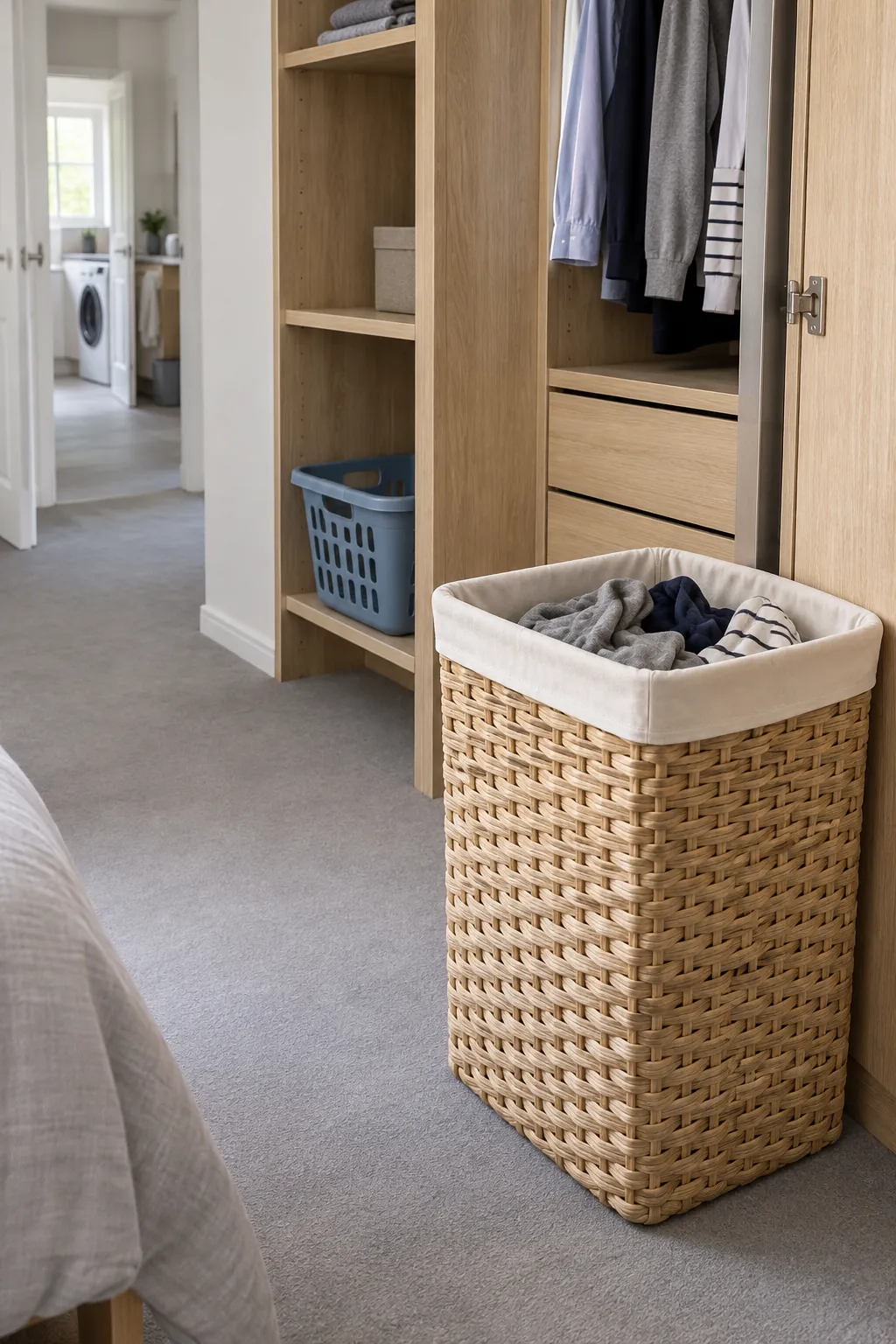
When every laundry room position interrupts access, place the main collection hamper in a bedroom or dressing area instead. Bring only the next wash into the laundry, then use the same carrying basket for clean clothes. This reduces how many containers must stay beside the machines all week. It also avoids buying a very narrow hamper that holds too little for the household’s routine.
Separate the collecting task from the transfer task when their needs differ. A ventilated hamper can stay near the wardrobe while a light carrying basket nests in a safe storage spot. Keep dirty and clean contents separate in use, and clean the carrying basket when needed before loading fresh laundry. If several people share the room, agree where a waiting load belongs so it does not quietly reappear on the floor outside the door.
Test the complete laundry route before keeping the arrangement
Place the actual baskets in the proposed positions and open every door, lid, drawer, and cupboard you use during laundry. Load and unload an empty machine, reach the detergent, and carry a comfortably weighted basket through the doorway. Check the narrowest point at handle height as well as at the floor. Leave the clearances required by the appliance maker and any applicable access rules; there is no single aisle number that suits every machine, doorway, and user.
Repeat the test with a full basket, because its weight and bulging sides change the movement. Choose a location that lets you turn and set it down without blocking the exit or covering a vent. If a basket must move every time you open the washer, give it another home or reduce the number kept in the room. The useful arrangement is the one that still leaves a route through the room halfway through a wash.