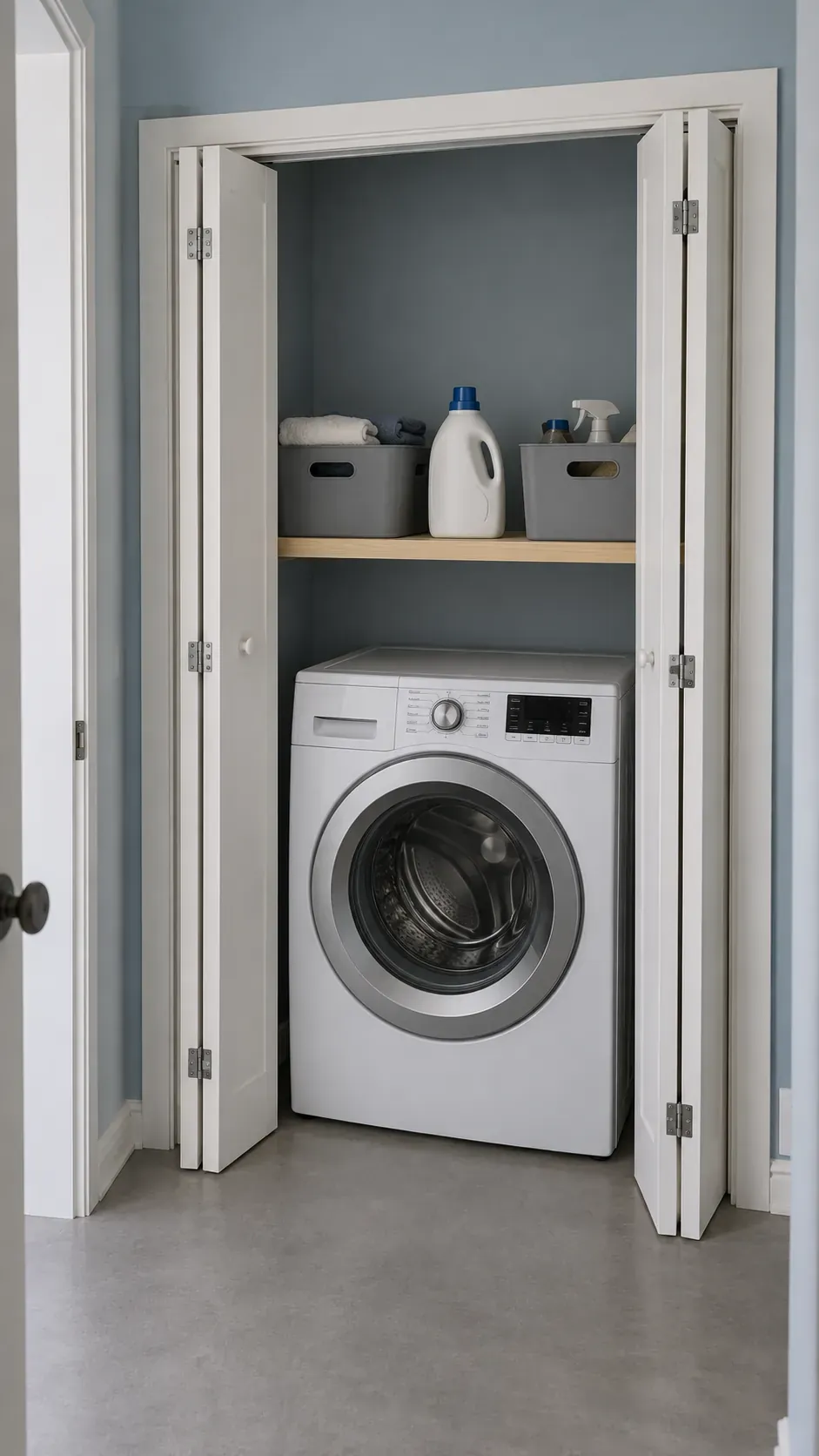
A shelf is not useful just because it fits behind the doors. You also need room to see its contents, grip a container, and bring it through the opening without catching a hinge. Start with the doors fully parked, then organize the space you can actually reach.
Check the appliance maker’s clearances, ventilation needs, and service access before adding storage. Keep cleaning products in their original packaging, follow the label directions, and secure them away from children and pets. These changes focus on access within the existing closet, so test each one against the door movement before buying or fitting hardware.
Put daily supplies in the exposed center
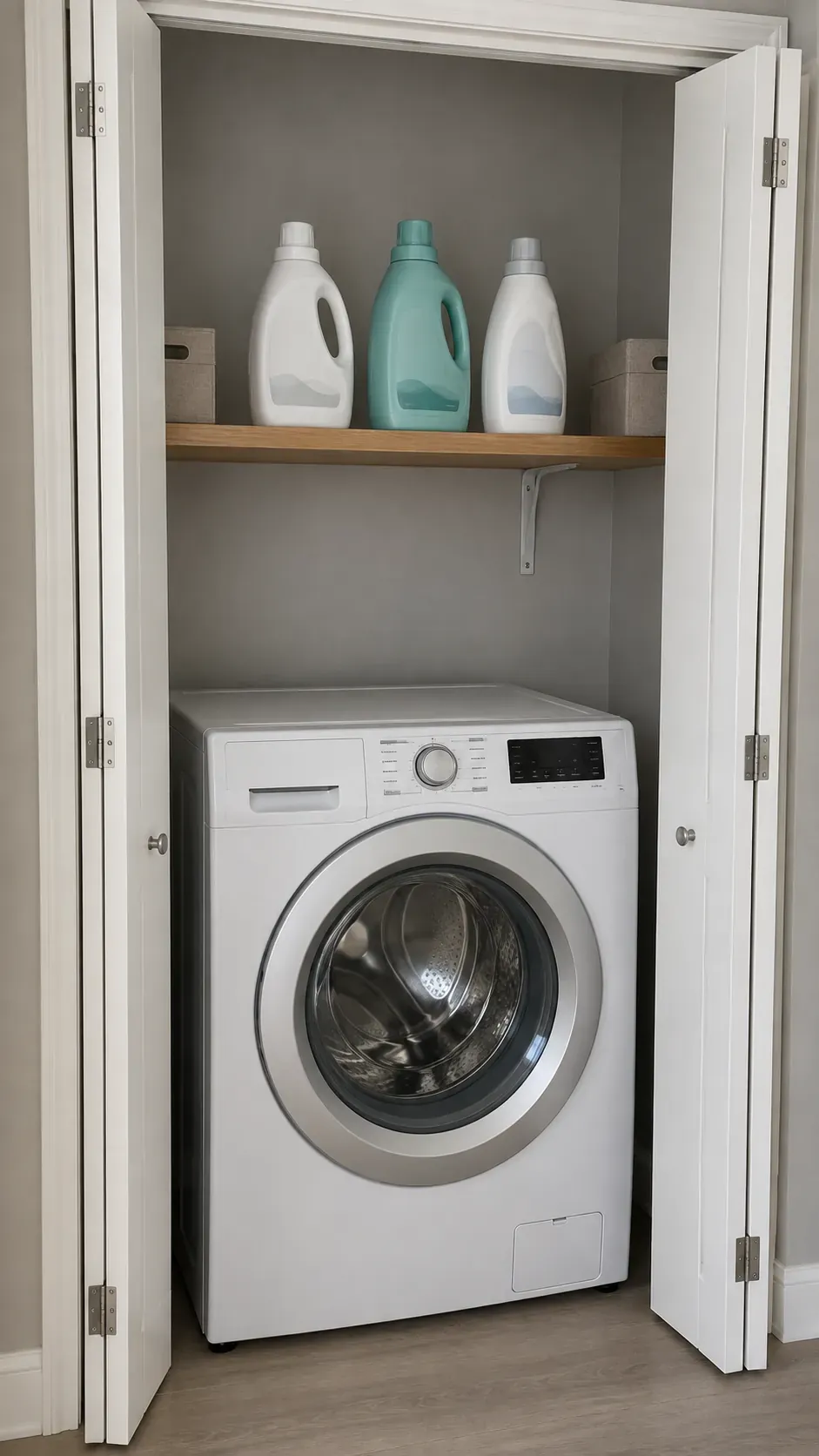
Place the products you use for every wash in the shelf area visible between the folded door stacks. Reach into that opening with both doors fully parked before deciding where the daily zone starts and ends. Keep detergent in its original closed packaging, following its storage directions and securing it away from children and pets. The hidden ends are better for occasional items than the bottle you need with every load.
Choose bins that pass through the real opening
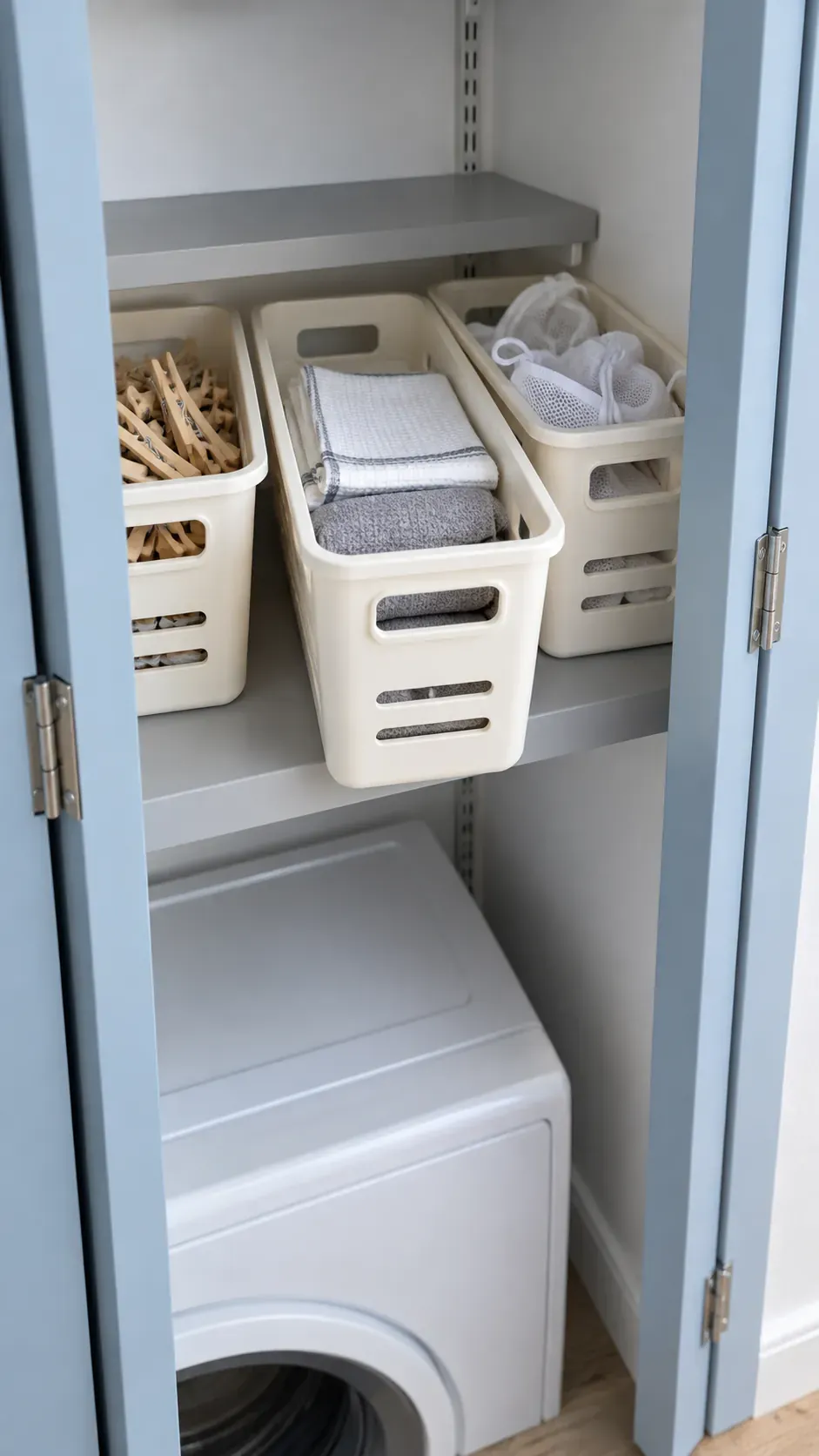
A shelf can be wider than the route available to remove a basket. Measure the gap between the folded door panels, then check each bin with its handles included. Several narrow laundry supply baskets are often easier to retrieve than a single wide tub. Leave a little grip space beside each one so you do not need to drag neighboring supplies out first.
Bring a deep shelf forward on a pullout tray
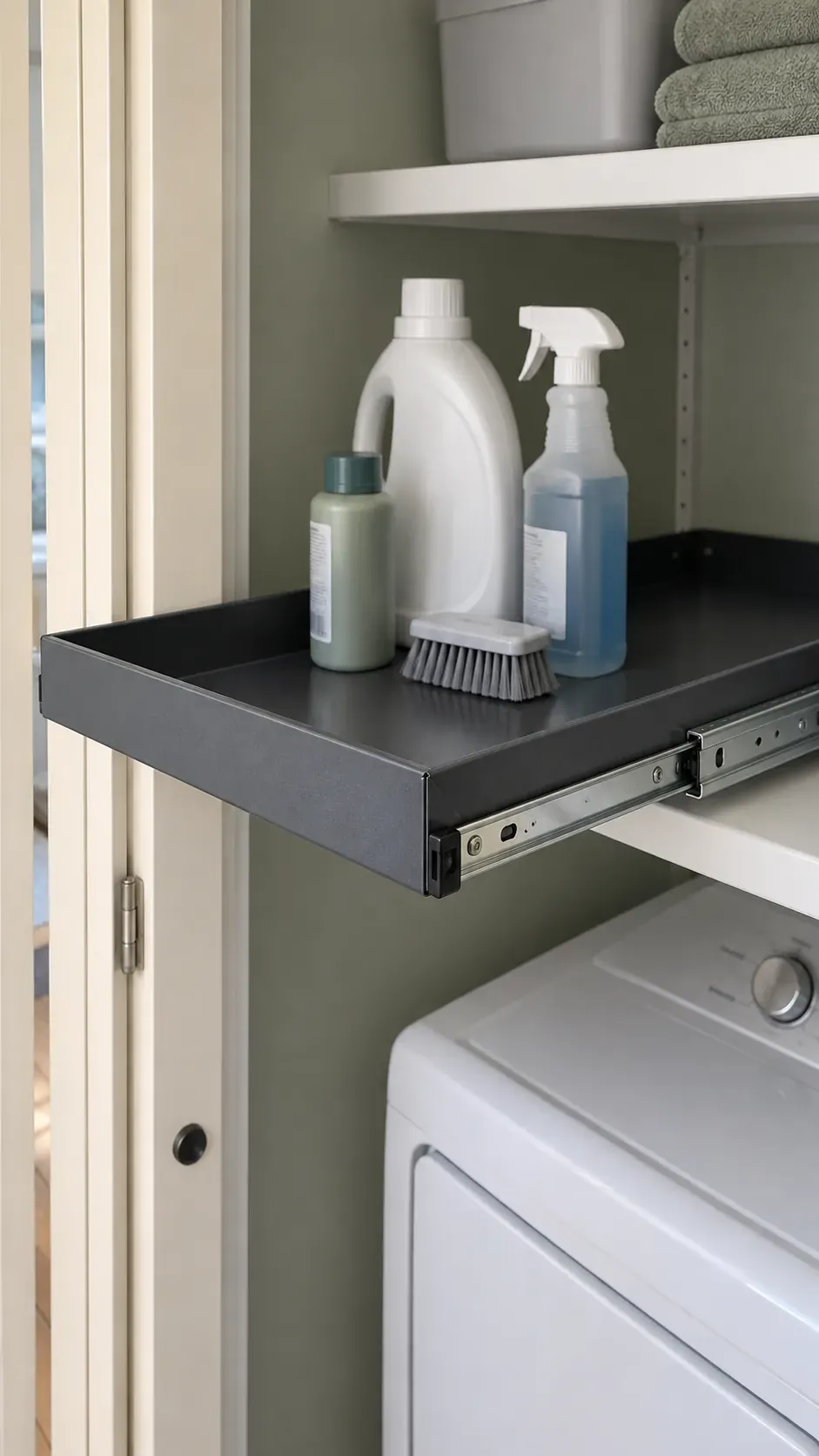
A rated pullout tray can make the back of a deep shelf reachable without leaning across a machine. Confirm that the tray clears the folded door edge through its entire travel before fitting it. Use suitable shelf supports and slides for the loaded weight, and add a retaining edge so bottles cannot tip off.
A tray that catches the door halfway out needs a different position, not a harder pull. Remove the containers before adjusting the tray hardware. Test the empty tray first, then add the intended load and check its movement again.
Use a turntable for small stable bottles
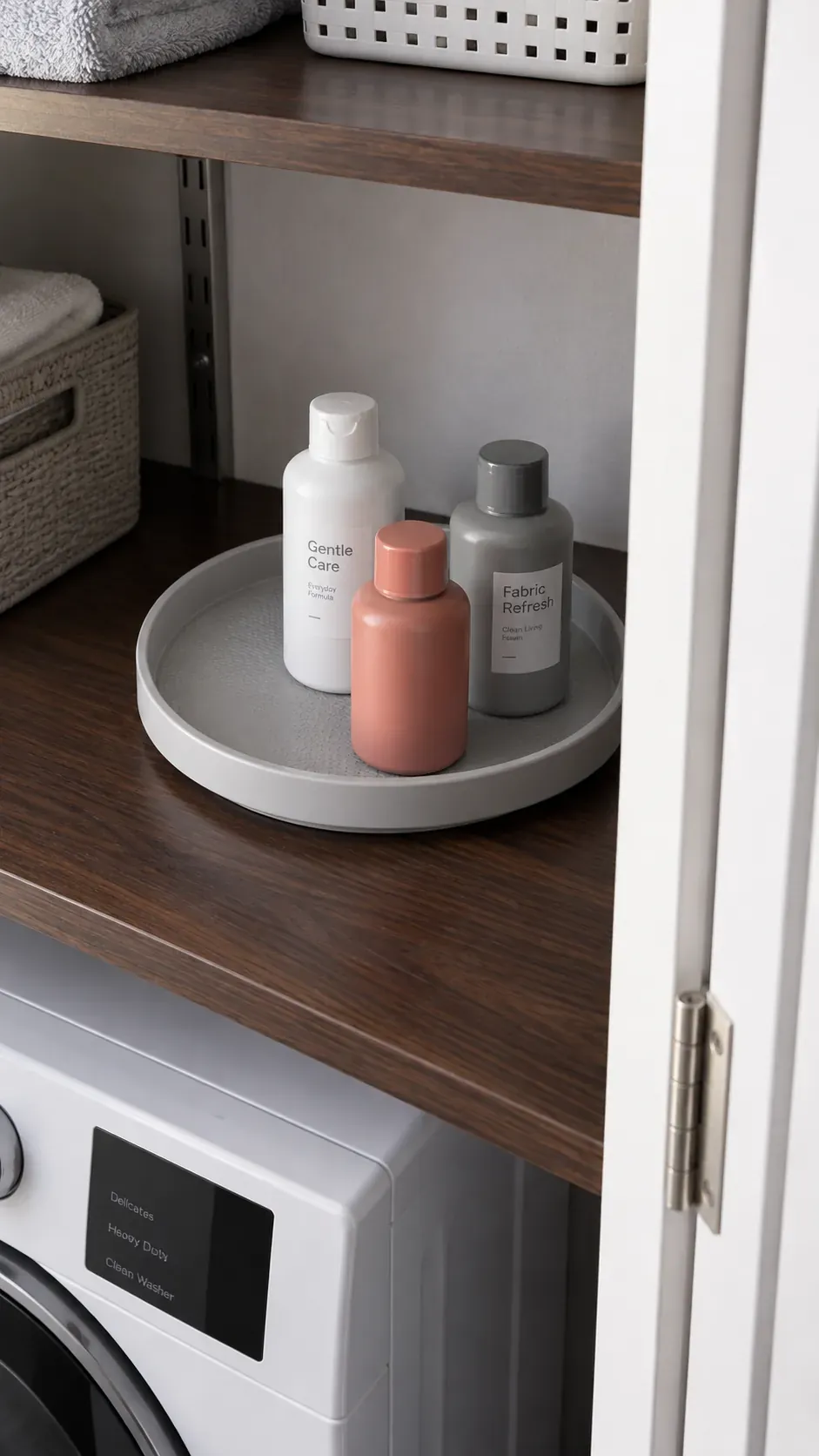
A shallow turntable can bring a few upright containers out of a hidden shelf corner. Check that the full circle fits without striking a shelf bracket, door panel, or tall neighboring bottle. Choose a rimmed model and keep heavier items near its center within its stated capacity. Leave chemicals in their labeled packaging and do not use rotation as a reason to pack the shelf tightly.
Add a shallow ledge to a clear side wall
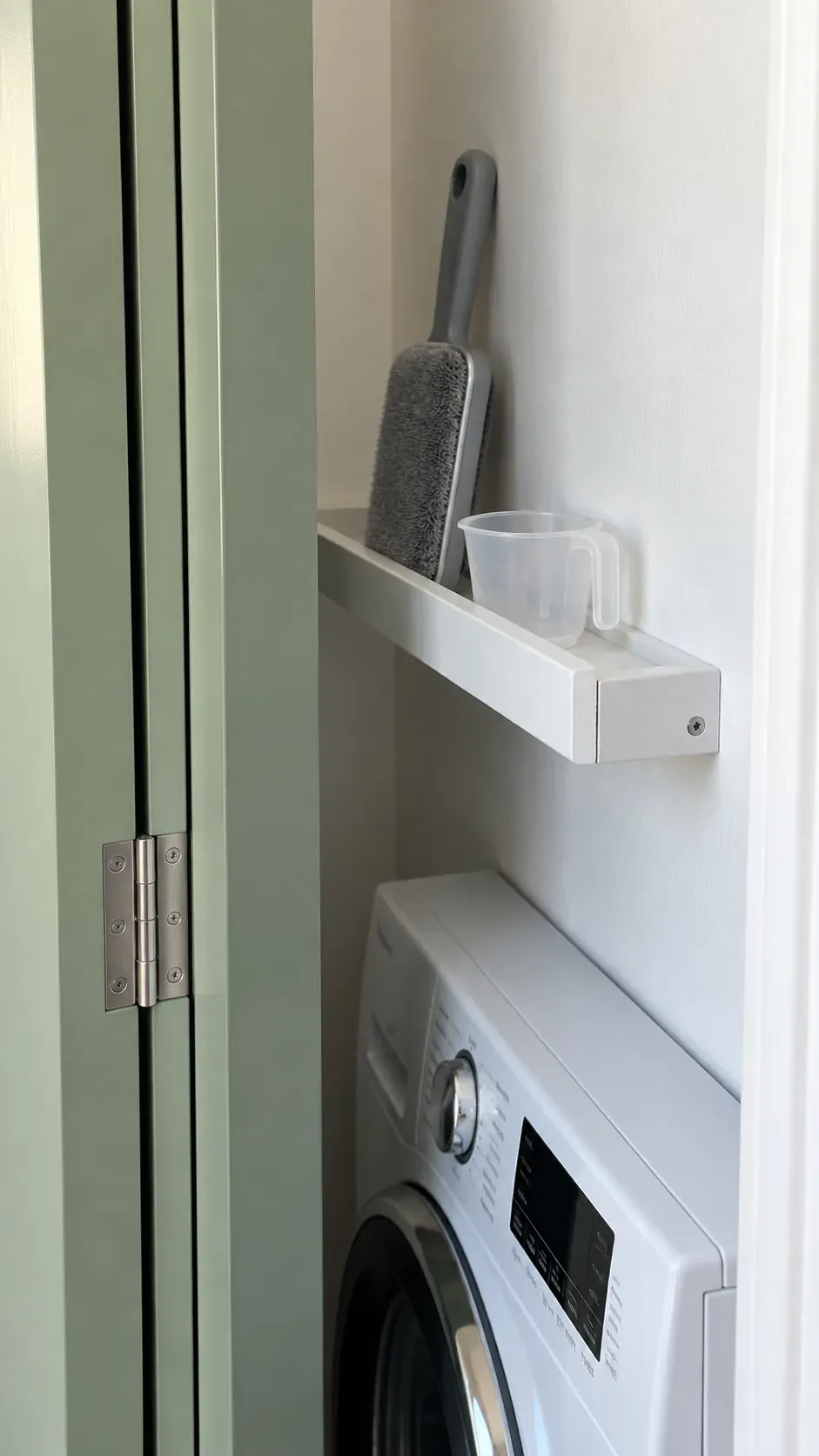
A shallow ledge on a side wall can hold small tools where the front shelf is obscured. Open the bifold doors completely and check their folded thickness before marking the ledge position. Keep the ledge outside appliance clearances and use fixings suitable for the wall. A lint brush or measuring tool needs much less projection than a full depth storage basket.
Lower one shelf to a comfortable reach
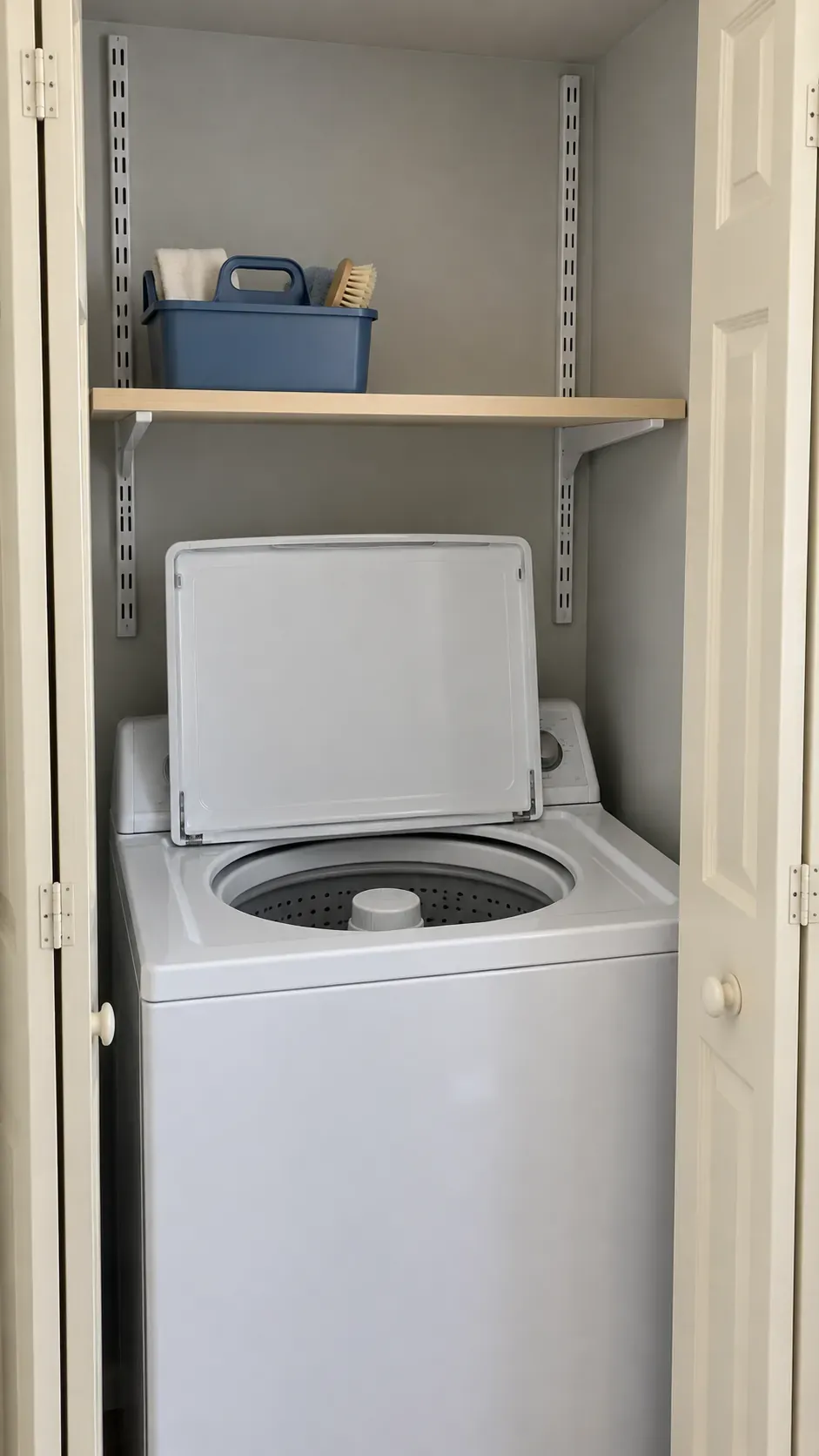
Moving an adjustable shelf can make its contents visible below the folded door’s most awkward edge. Test the proposed height while the washer lid and any raised control panel are in their working positions. Keep the appliance maker’s ventilation and service clearances rather than filling every gap. The useful height lets you lift a container safely without standing on a machine or stretching over an open lid.
Use clear boxes for small dry accessories
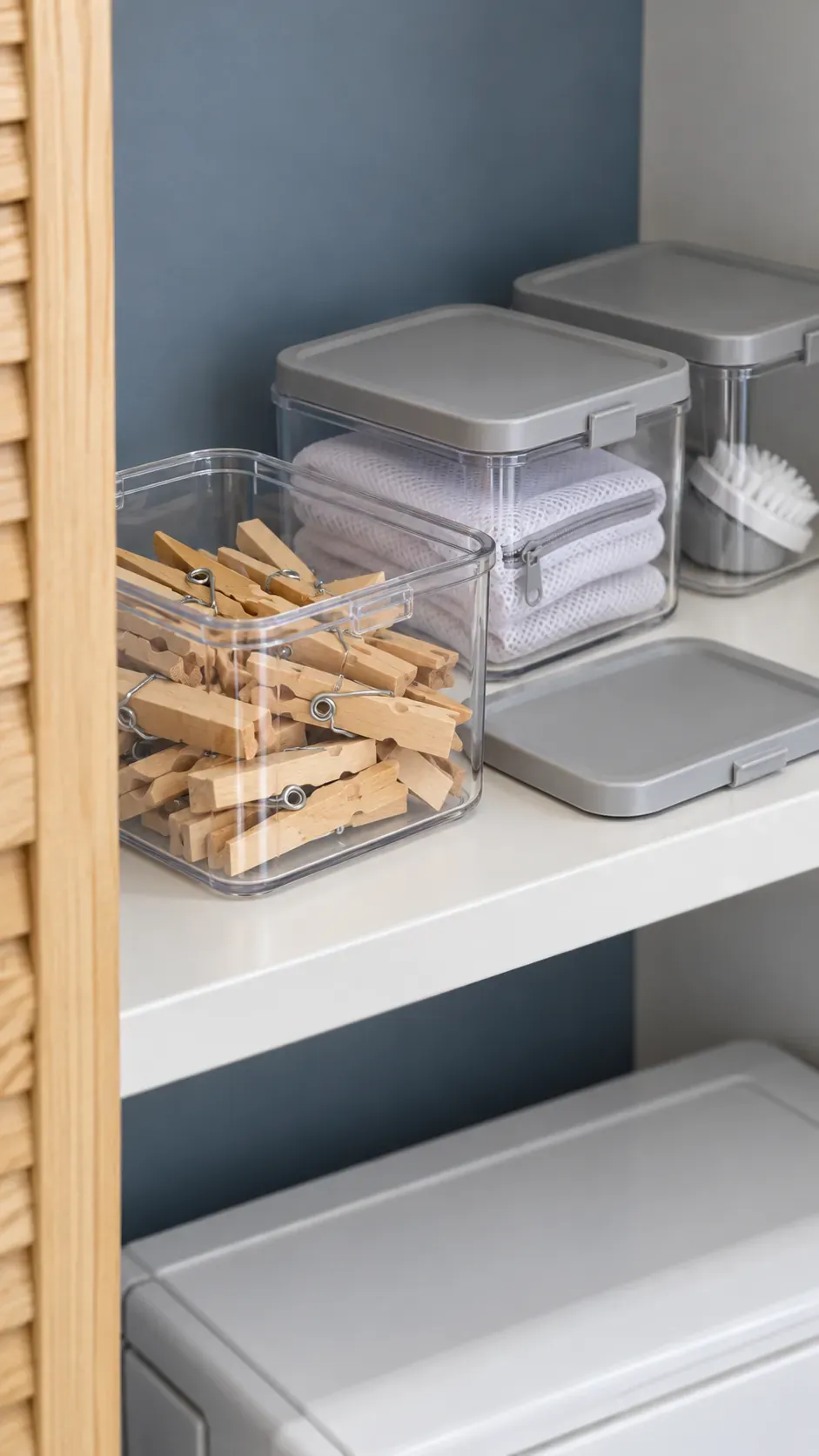
Clear boxes help you spot spare pegs, laundry mesh bags, or brush heads without removing every container. Keep each box small enough to pass through the exposed opening and choose a lid you can release at a counter. Store only compatible dry accessories together, with cleaning chemicals left in their own original packages.
Visibility helps most when the contents remain shallow enough to see rather than forming another mixed pile. Group spare items by the task they serve so the box has a clear purpose. Return the lid before putting the box back to keep loose pieces from spilling behind the machine.
Face open bin handles toward the gap
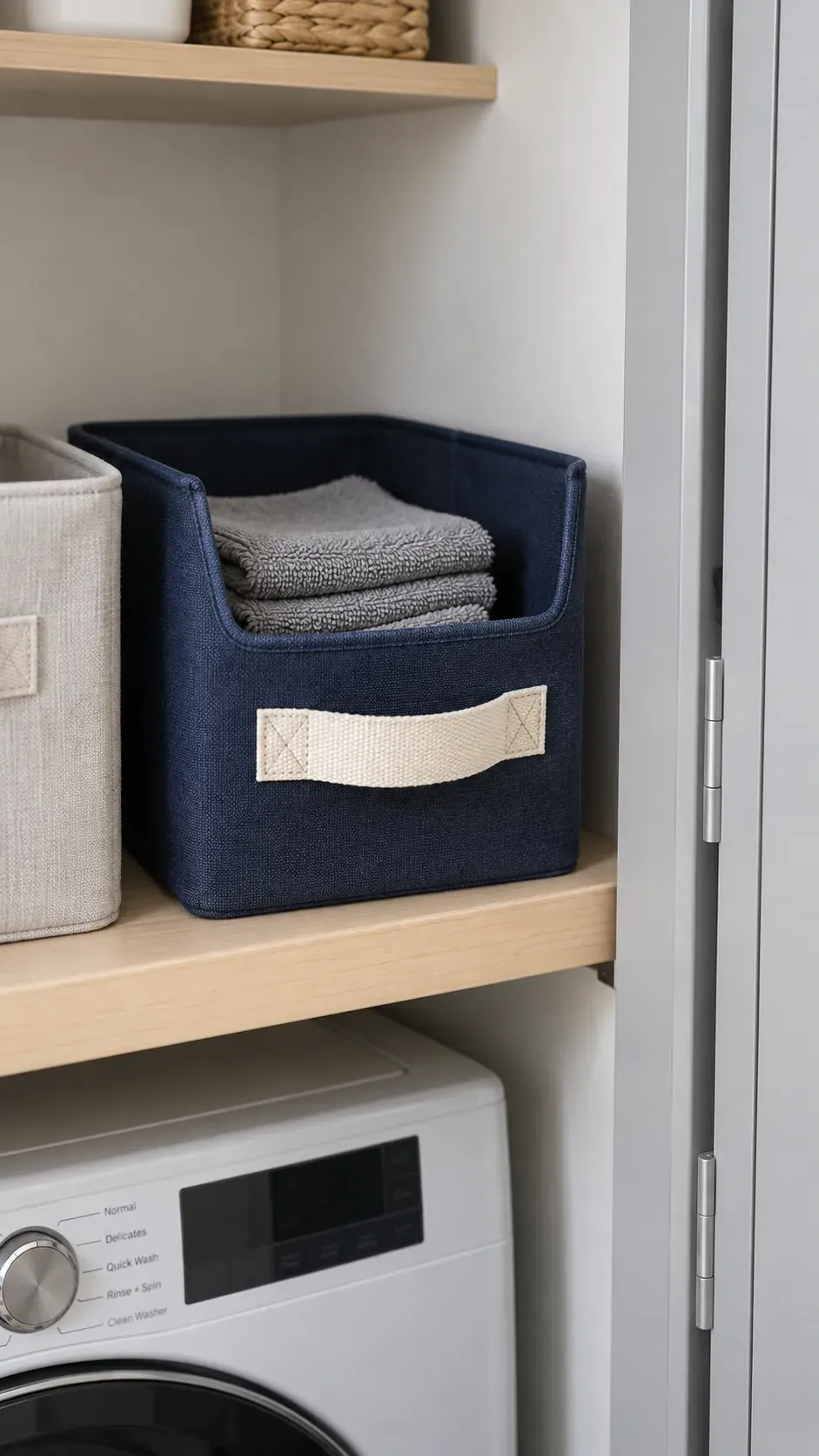
An open front bin with a proper grip can make a partly hidden shelf easier to use. Turn its handle toward the central opening rather than toward the door stack. Keep heavier containers low and leave enough space above the bin to lift it without scraping the shelf. If a full bin is awkward to control, divide its contents into two lighter groups.
Label the edge you can actually see
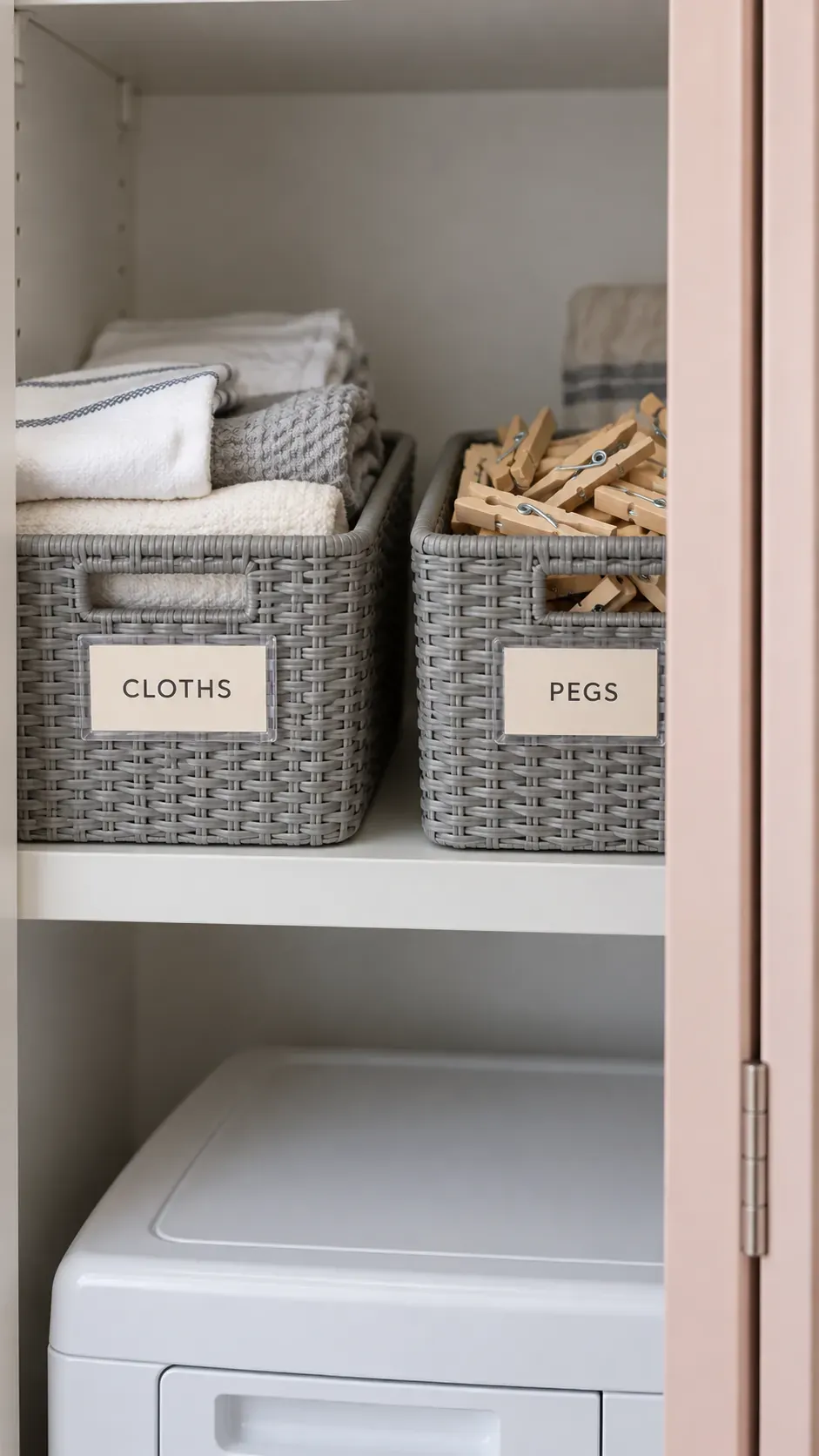
Put a short content label on the front edge that remains visible when the doors are open. Use familiar categories such as cloths, pegs, or spare bags rather than a code nobody else understands. Keep the label clear of a handle and make it large enough to read from the normal standing position. Labels guide return to the right place, but they cannot make an oversized basket fit through the opening.
Light the shadow behind the folded panel
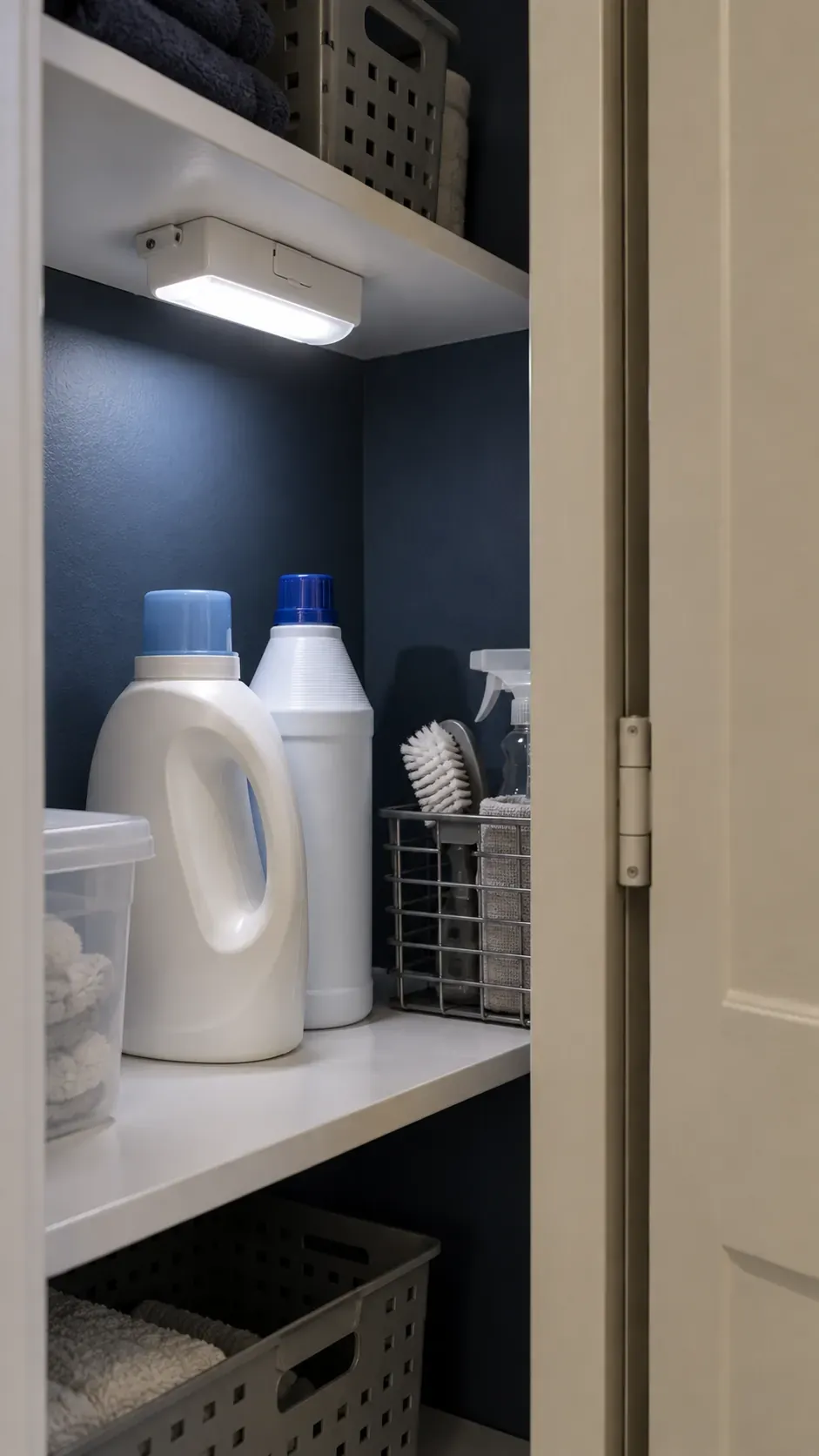
A small suitable closet light can reveal supplies hidden in the door stack’s shadow. Choose lighting appropriate for the location and follow the maker’s mounting and clearance instructions. Keep wiring and battery access away from door hinges, damp areas, and appliance heat. Aim the light toward the shelf contents so you can identify the right item without a bright glare in your eyes.
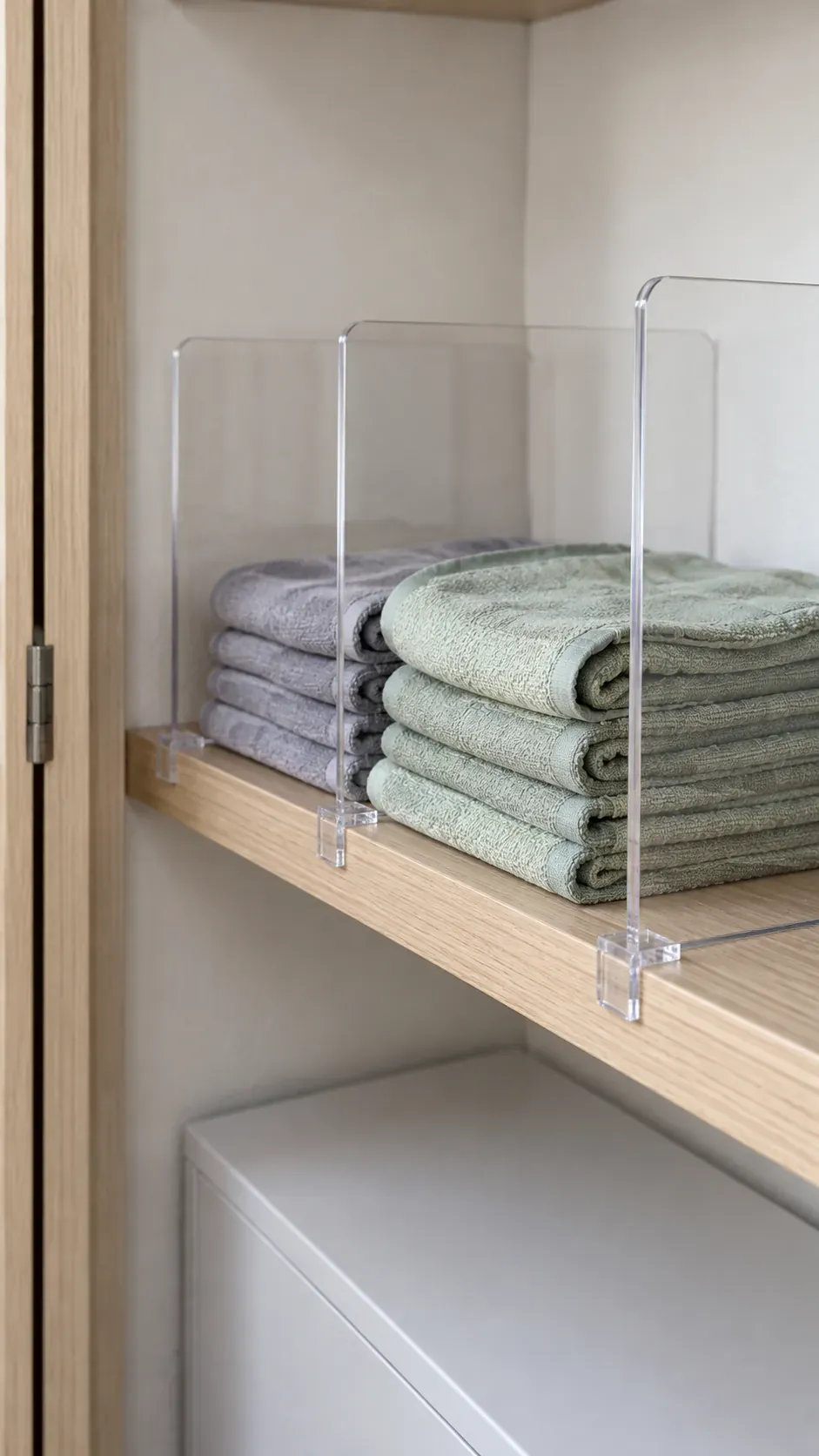
Stand folded cloths between dividers
Shelf dividers keep small stacks of clean cloths from spreading into the hidden corners. Size each compartment so you can remove one cloth from the front without lifting the whole pile. Use smooth dividers that will not snag fabric and make sure they are secured to a shelf that can carry them. Keep clean textiles separate from products that could leak onto them.
Reserve the highest shelf for light occasional items
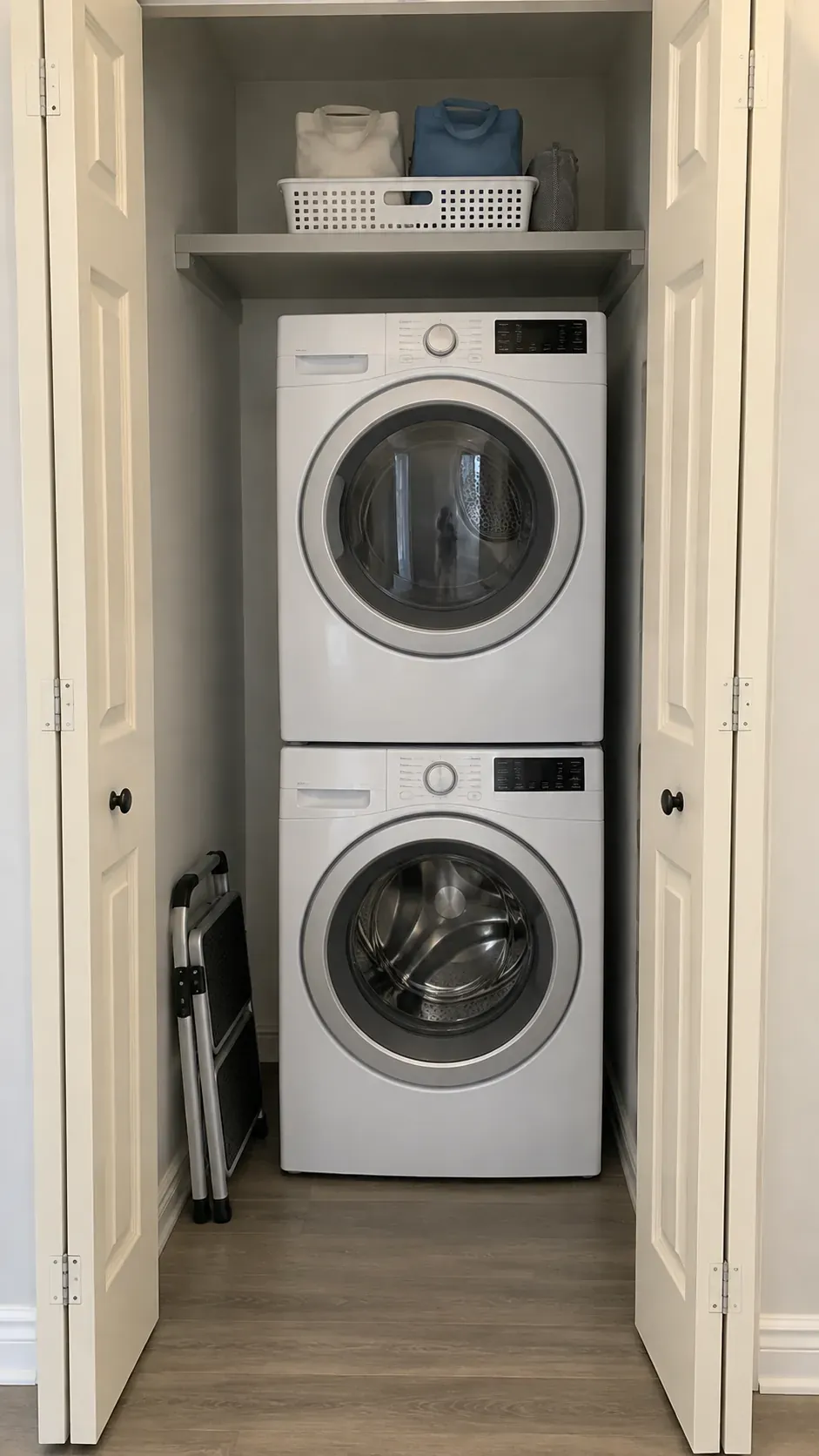
The highest shelf is a poor home for a heavy bottle you need every morning. Use it for light, dry items such as spare mesh bags or an empty fabric tote, stored where they cannot fall forward. Retrieve them with a suitable stable step stool placed on a clear floor, never by climbing on the washer.
Reduce what you keep there if opening the doors leaves no safe place to stand. Keep the step stool in a known place outside the closet rather than balancing it on stored baskets. Ask for help with retrieval if the available floor cannot support a comfortable stable position.
Park a narrow cart in a service safe gap
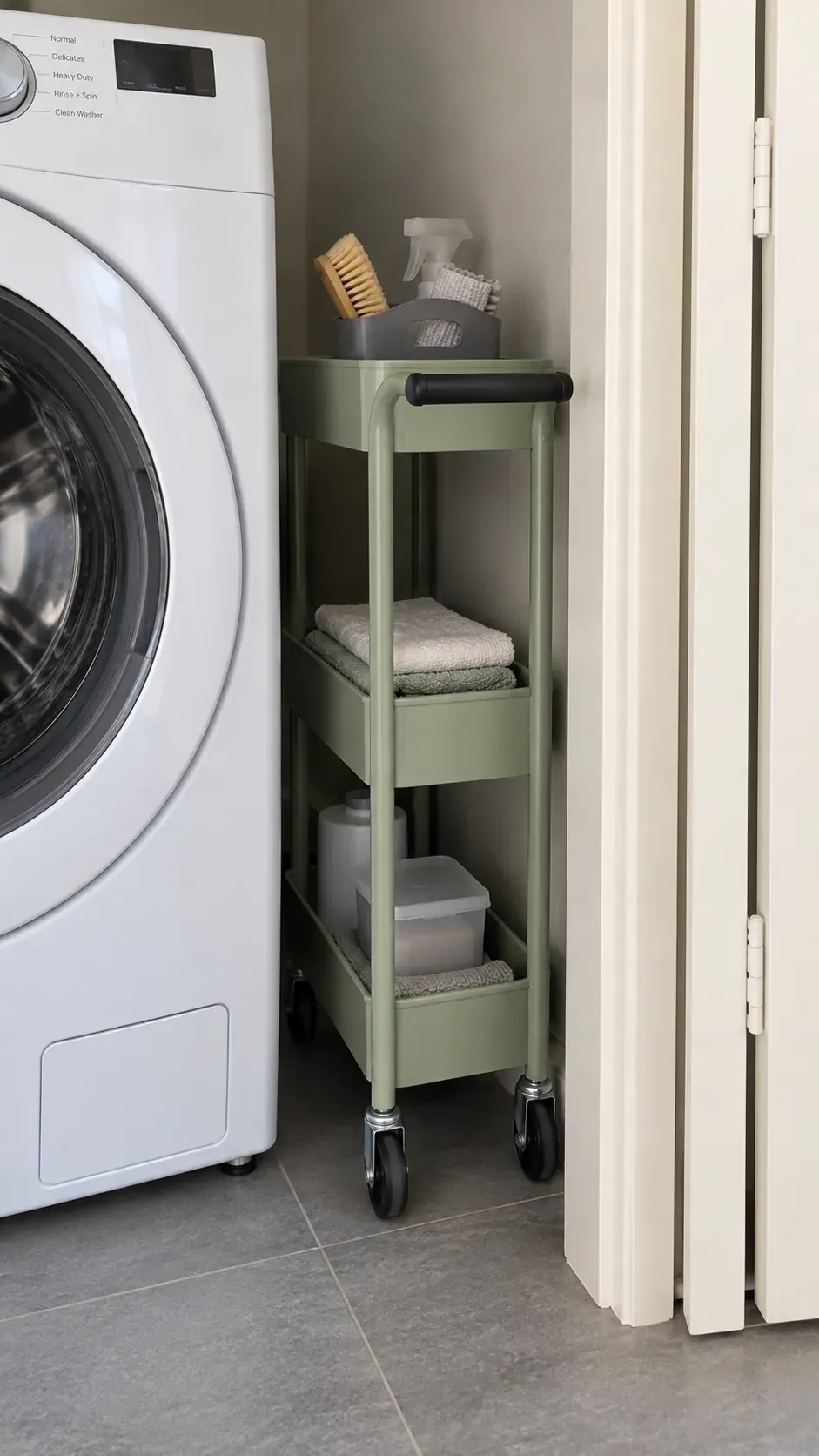
A narrow rolling cart can organize a genuine spare side gap without making the back shelf deeper. Confirm that the gap is not required for hoses, appliance ventilation, heat clearance, or service access. Choose a cart that rolls fully out through the door opening and keep its load within the maker’s limits. Leave its handle accessible so removing it is one controlled movement rather than a sideways struggle.
Keep a visible route to shutoff valves
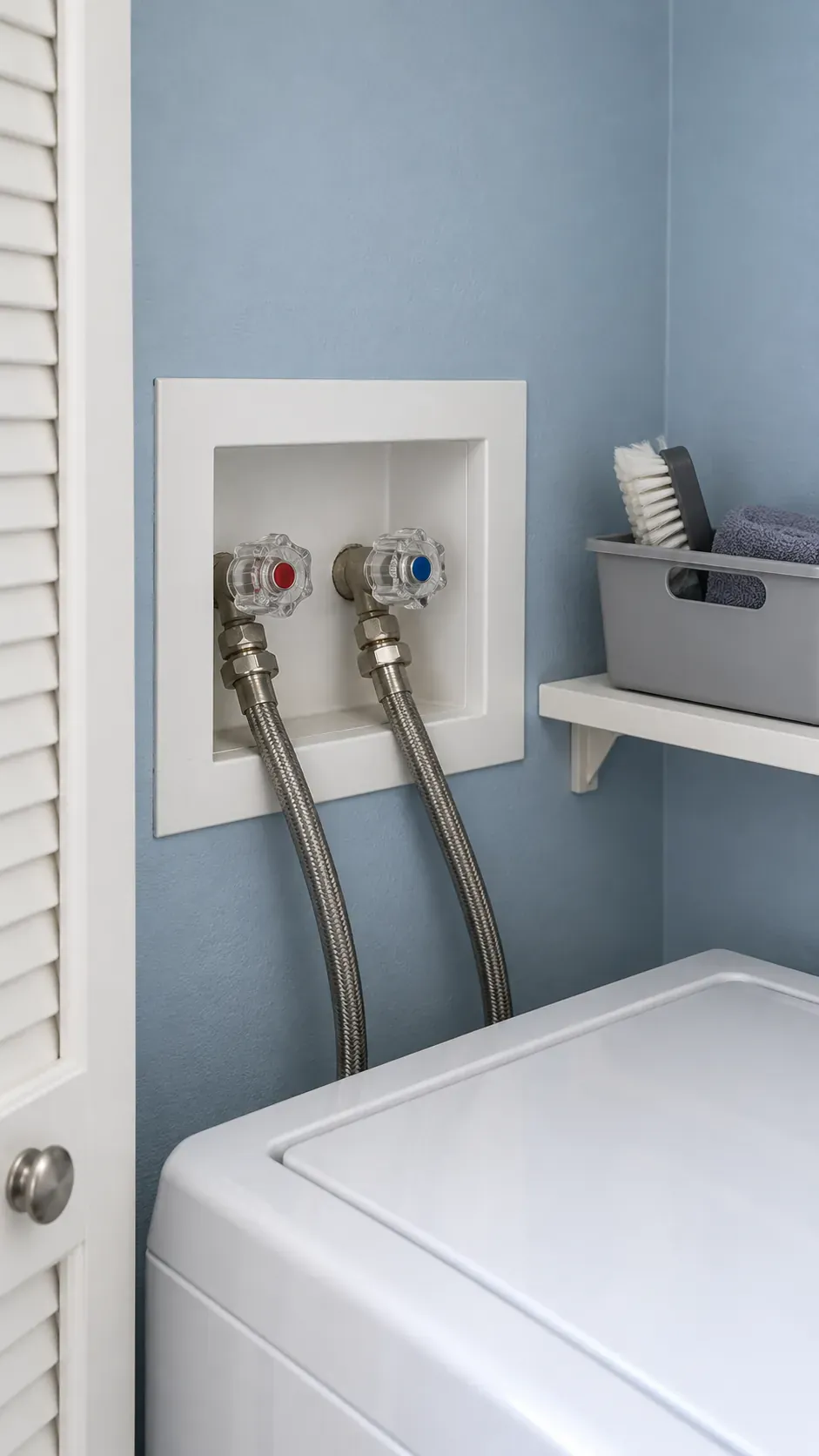
A removable supply caddy is preferable to a permanent obstruction in front of a shutoff valve. Identify the service points before arranging shelves, then keep them reachable without dismantling cabinetry. Store the caddy where it can be lifted away easily and avoid loading it with heavy bulk containers. Clear service access may look like unused storage space, but it has a job when a hose leaks.
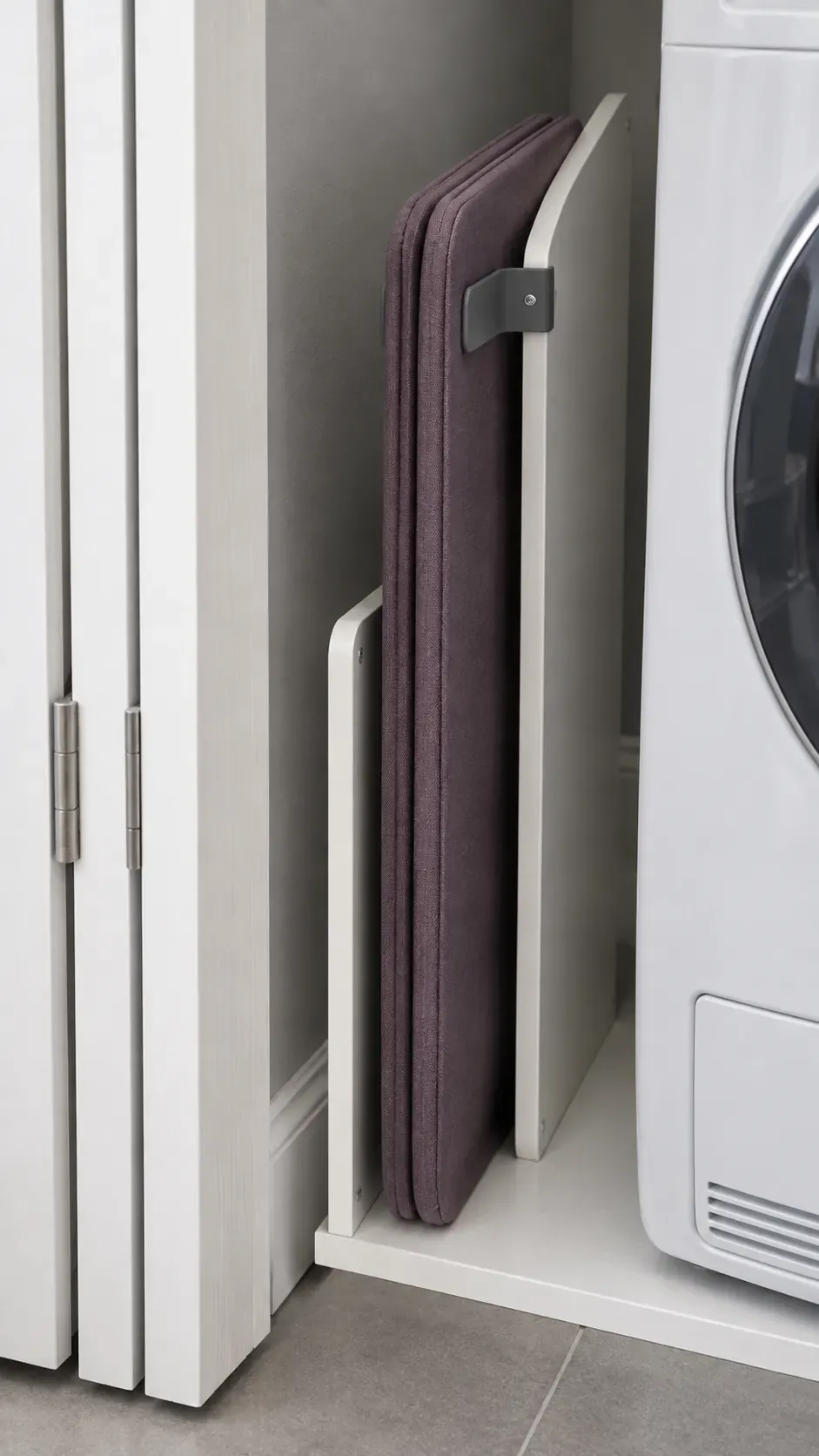
Store a folding mat in a vertical slot
A clean folding mat can stand in a narrow retained slot rather than lie across supplies. Check that its stored edge clears the folded doors and does not cover an appliance vent. Add a smooth retaining clip or divider suited to the mat so it cannot slide onto the machine. Put it away dry and remove it before reaching for the containers behind its storage position.
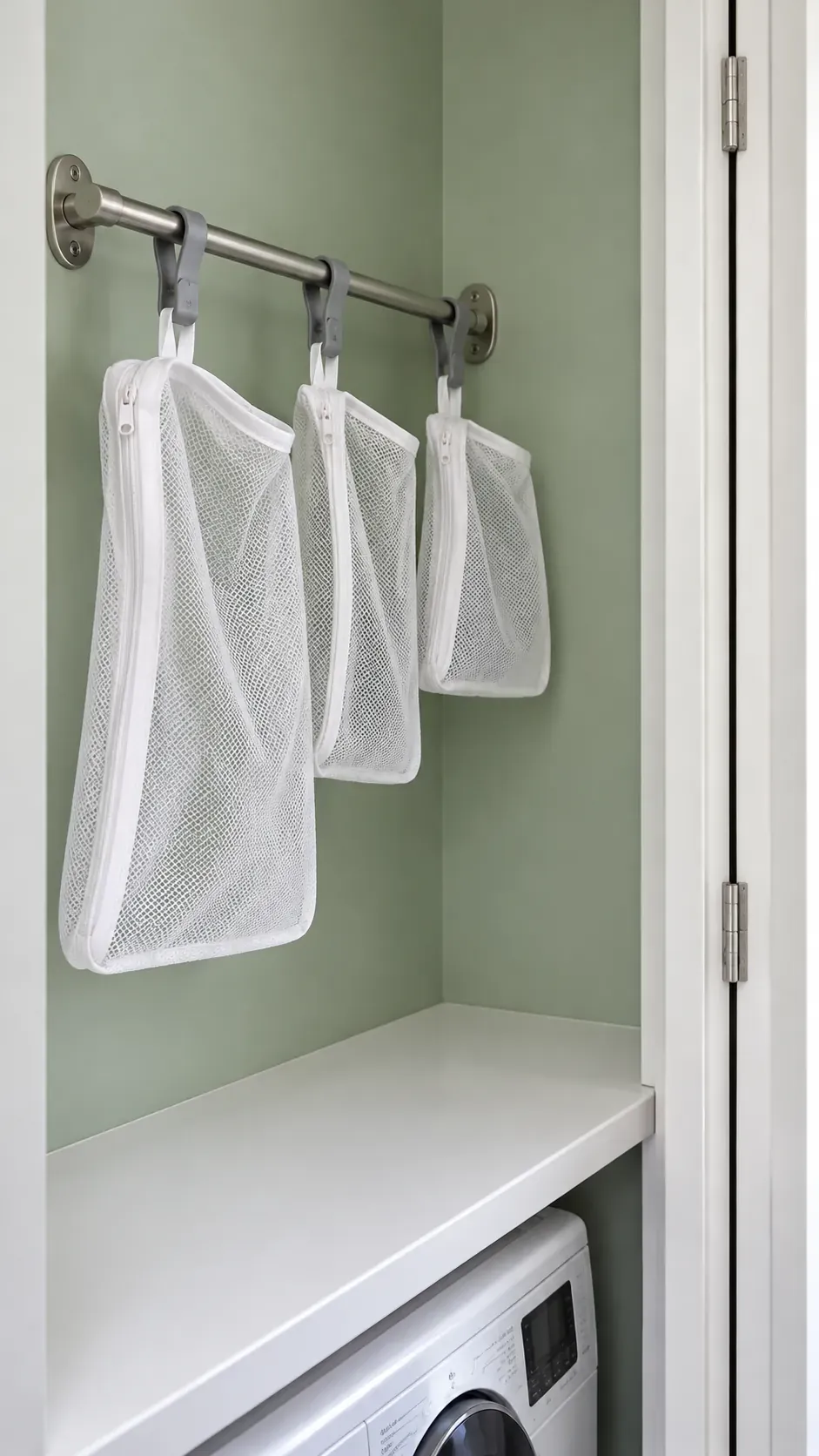
Hang empty mesh bags from a short rail
A short side rail can keep empty mesh washing bags visible and separate from bottles. Use small secure clips and place the rail where the folded panel cannot pinch a bag or catch its zip. Keep fabric clear of appliance heat, controls, and moving parts.
This is storage for dry empty accessories, not a drying station for wet laundry inside a closed closet. Close the bag zips before storing them so the pulls do not snag neighboring mesh. Check the clips when putting the bags away and replace any sharp damaged hardware.
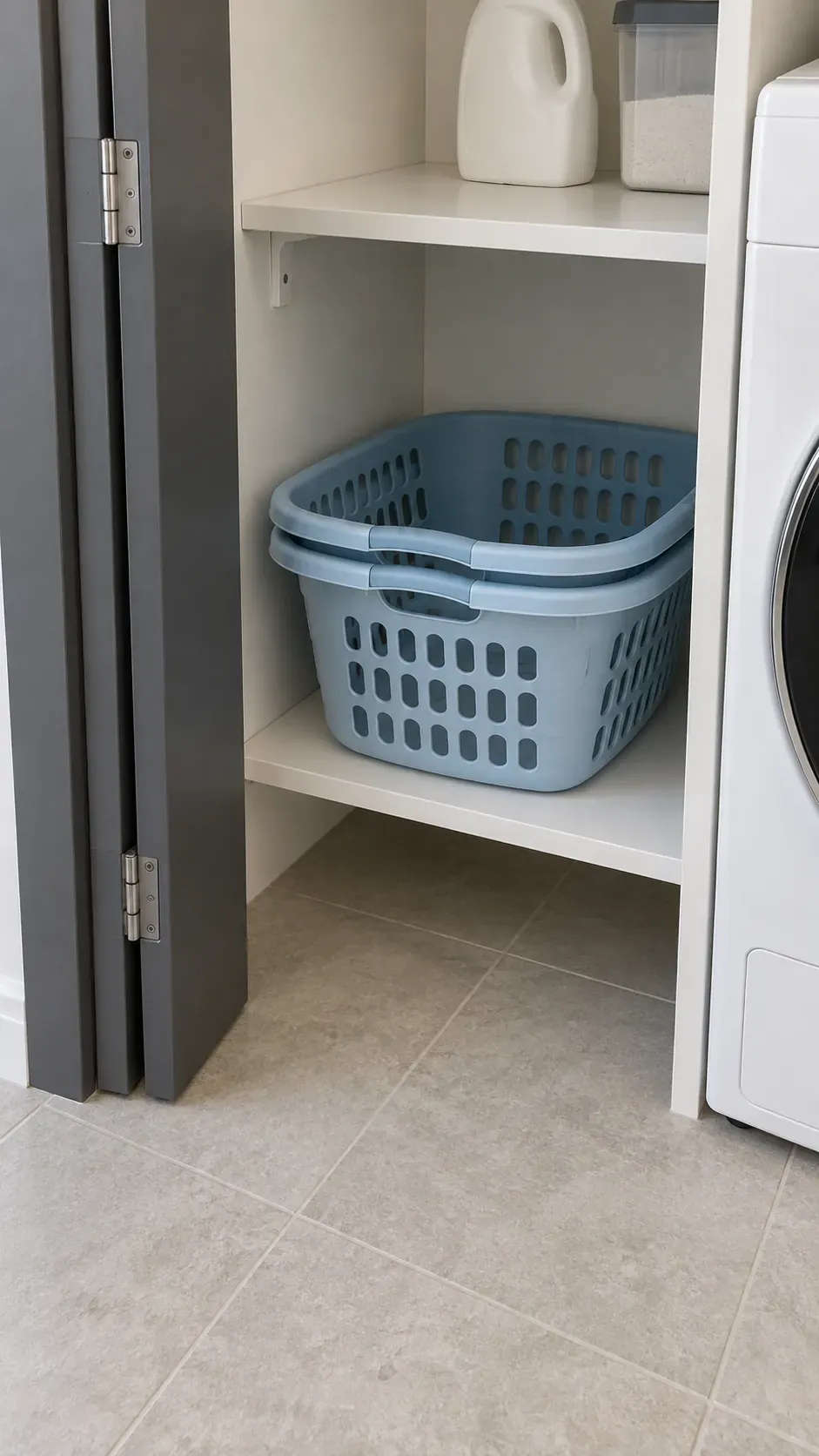
Nest spare carrying baskets outside the work zone
Nested empty baskets take less shelf room than several separate containers. Check the combined height and width so the nested set still passes through the open doorway. Keep the stack low enough to lift without tipping it toward your face, and store heavy laundry elsewhere until needed. If there is no accessible parking place inside the closet, a nearby utility cupboard may be a better home.
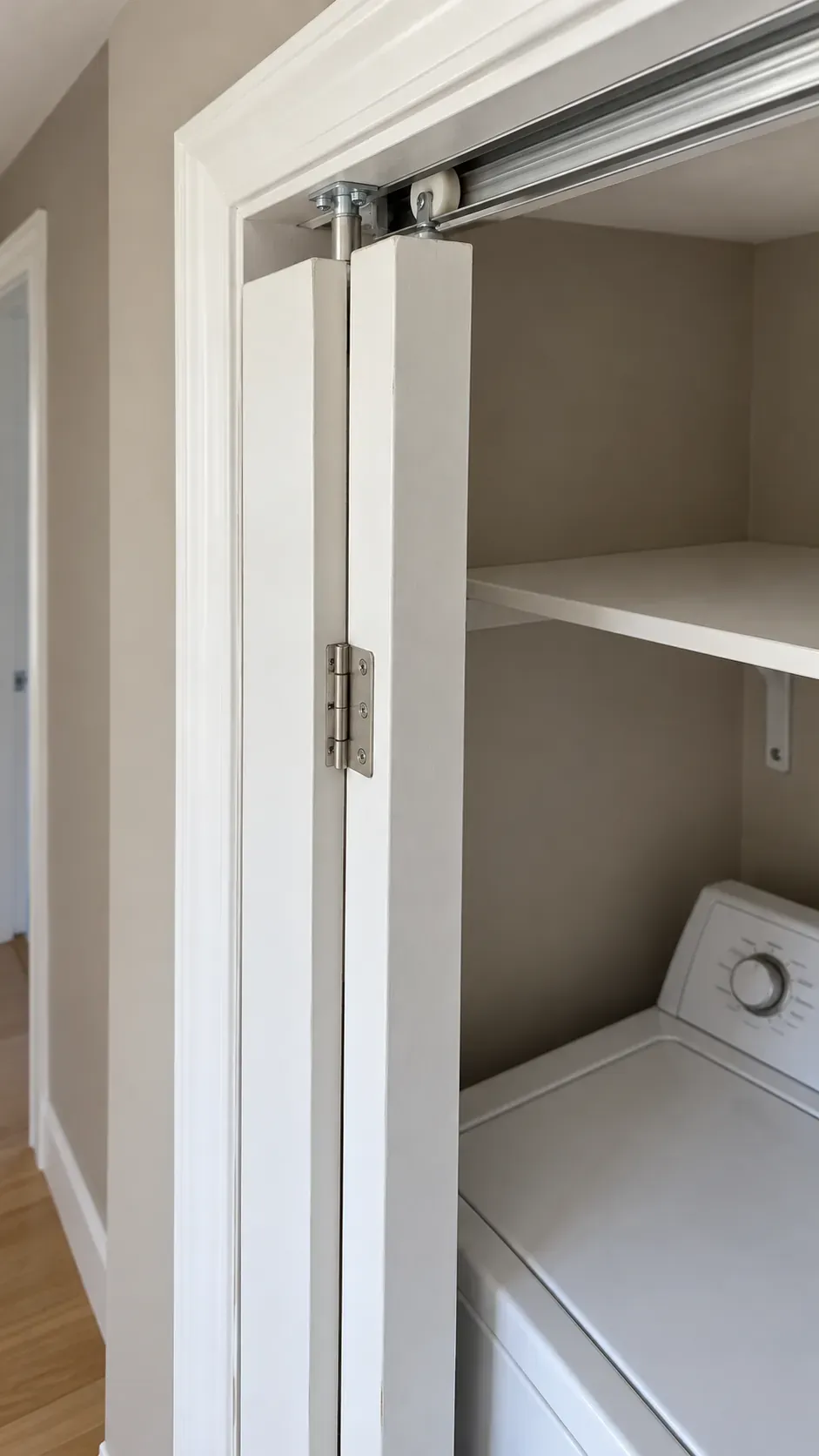
Restore the door’s full intended travel
A dropped pivot, loose guide, or obstruction in the track can leave a bifold panel covering more shelf than intended. Check the door maker’s adjustment instructions and repair worn hardware before redesigning the storage around it. Do not force a binding door or remove structural, ventilation, or safety features to gain a few inches. If the machine itself prevents correct travel, review the complete appliance and door fit with a qualified installer.
Keep one small reset tray for stray items
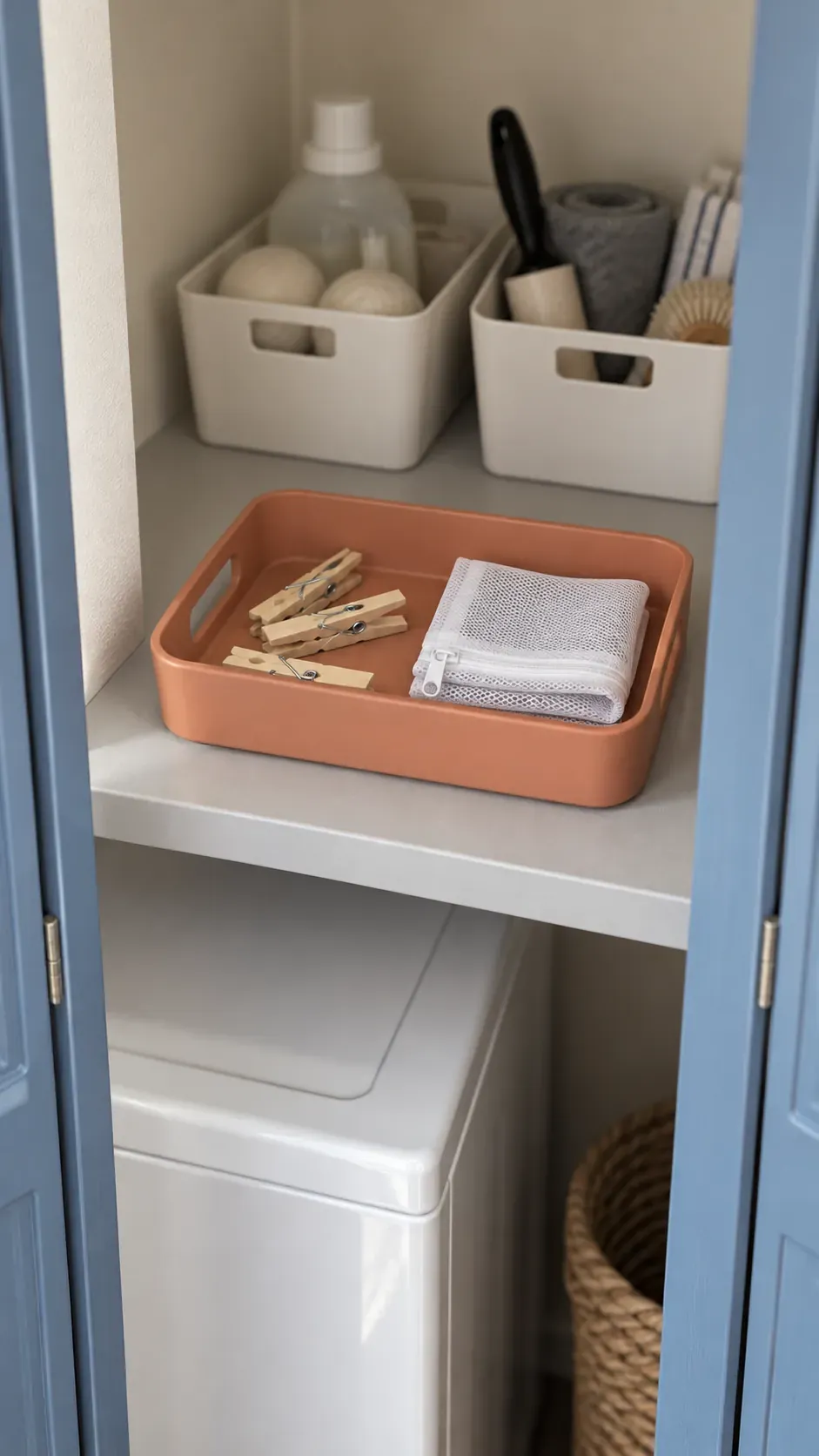
A small removable tray gives loose pegs and empty mesh bags a temporary landing place during washing. Empty it back into the proper bins after the load rather than letting it become another permanent mixed shelf. Put the tray in the exposed opening so it can be removed before closing the doors. If you still need to move several containers to reach one daily item, reduce the shelf contents before adding another organizer.