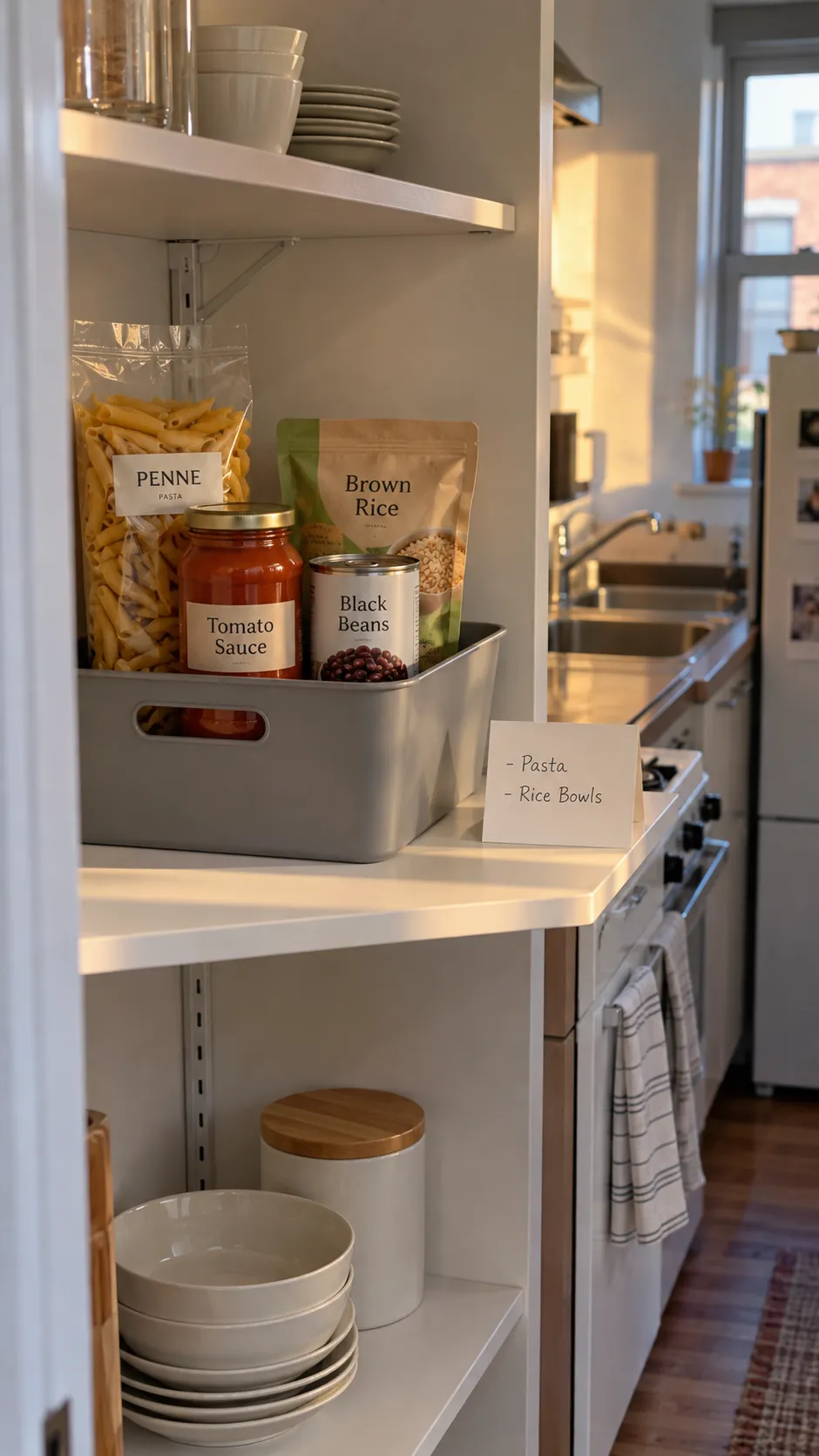
Groceries need a dependable home even when the kitchen has no dedicated food cupboard. The useful alternative is the one you can reach without sacrificing your cooking surface or blocking a door. Start with the space and furniture you already have, then add storage only where the room can support it.
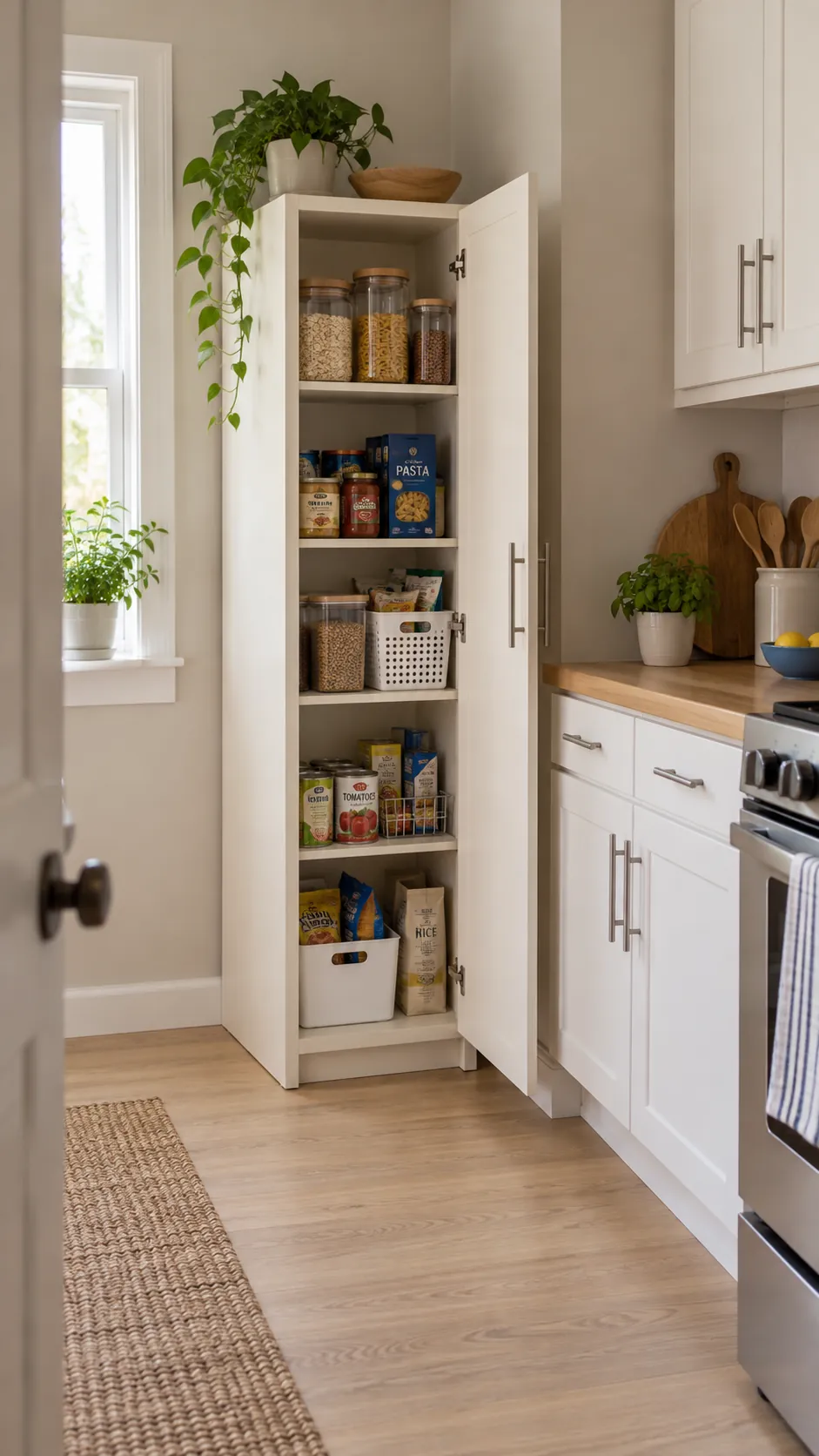
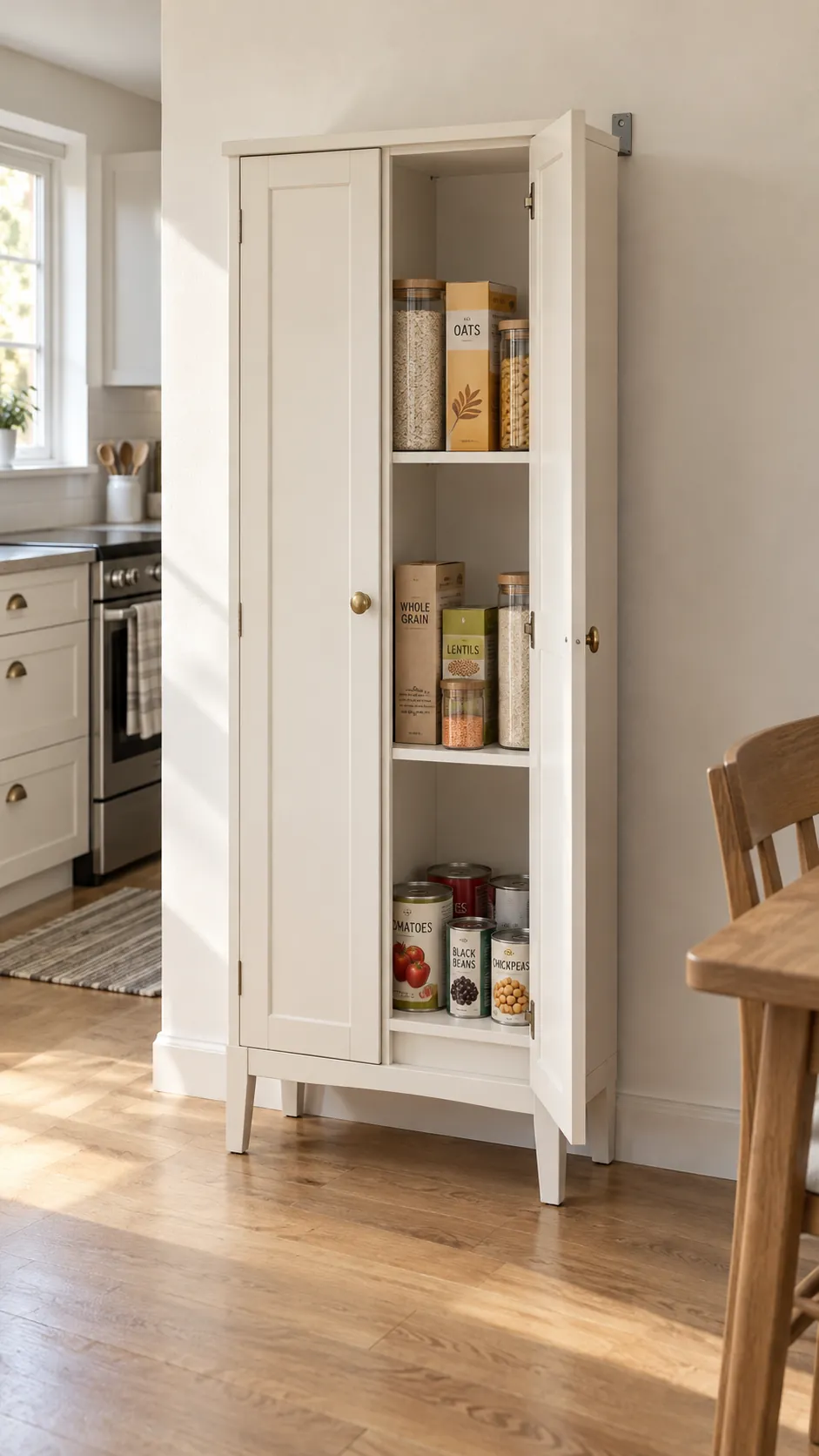
Add a slim freestanding food cabinet
A shallow freestanding cabinet can give dry groceries a dedicated home without building a pantry closet. Measure the footprint with its doors open, including the route to your kitchen and nearby appliances. Use the maker's required wall restraints and put heavier food on lower shelves. A cabinet that leaves the walkway usable is more valuable than a deeper one you cannot open comfortably.
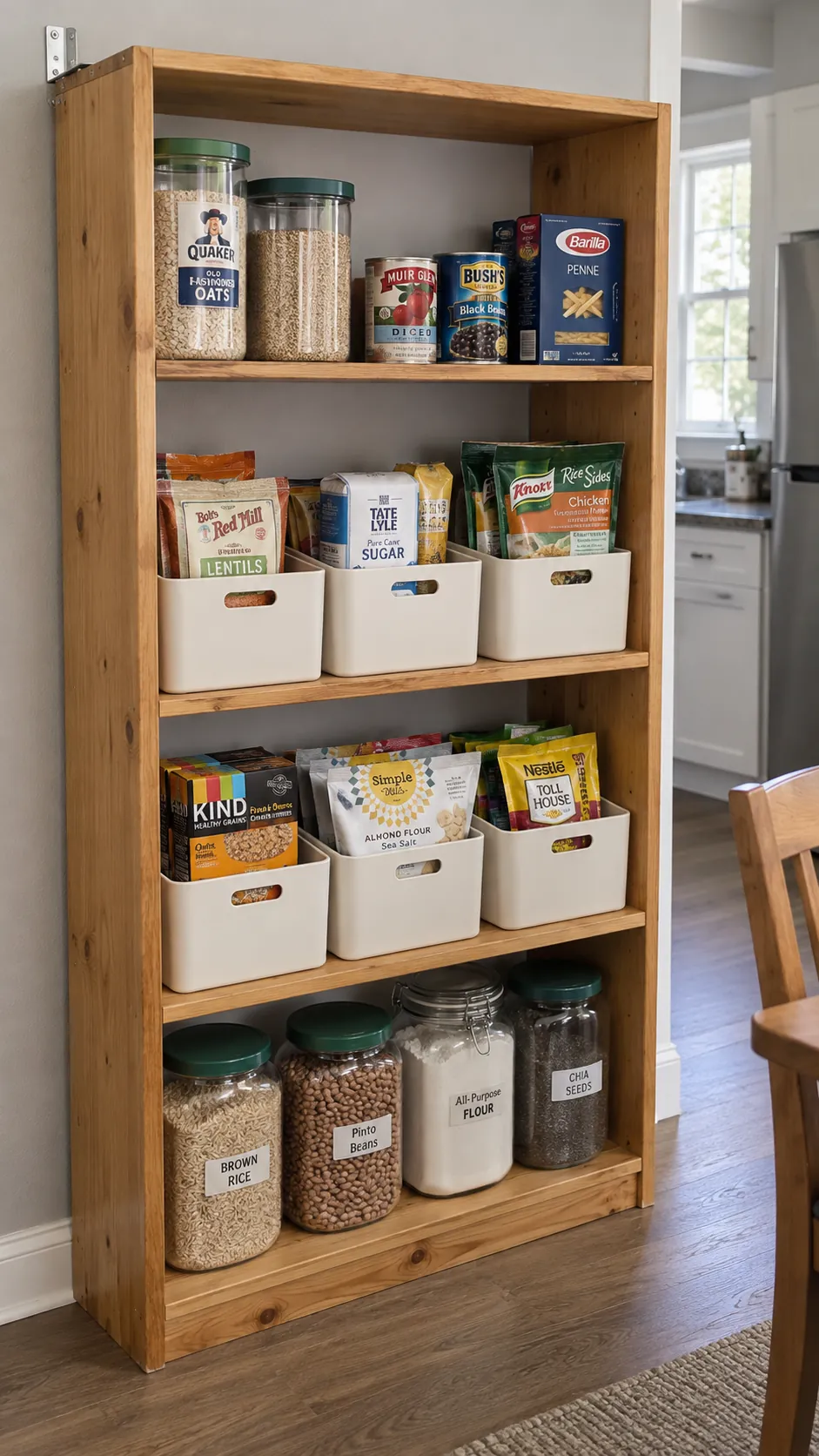
Convert a sturdy bookcase
A sound bookcase can hold sealed food containers and category bins if its shelves are rated for the load. Keep the most frequently used supplies between easy waist and shoulder reach. Follow the furniture anchoring instructions, especially where children could climb it. Open storage needs regular dusting, so choose a manageable food supply rather than displaying every bulk package.
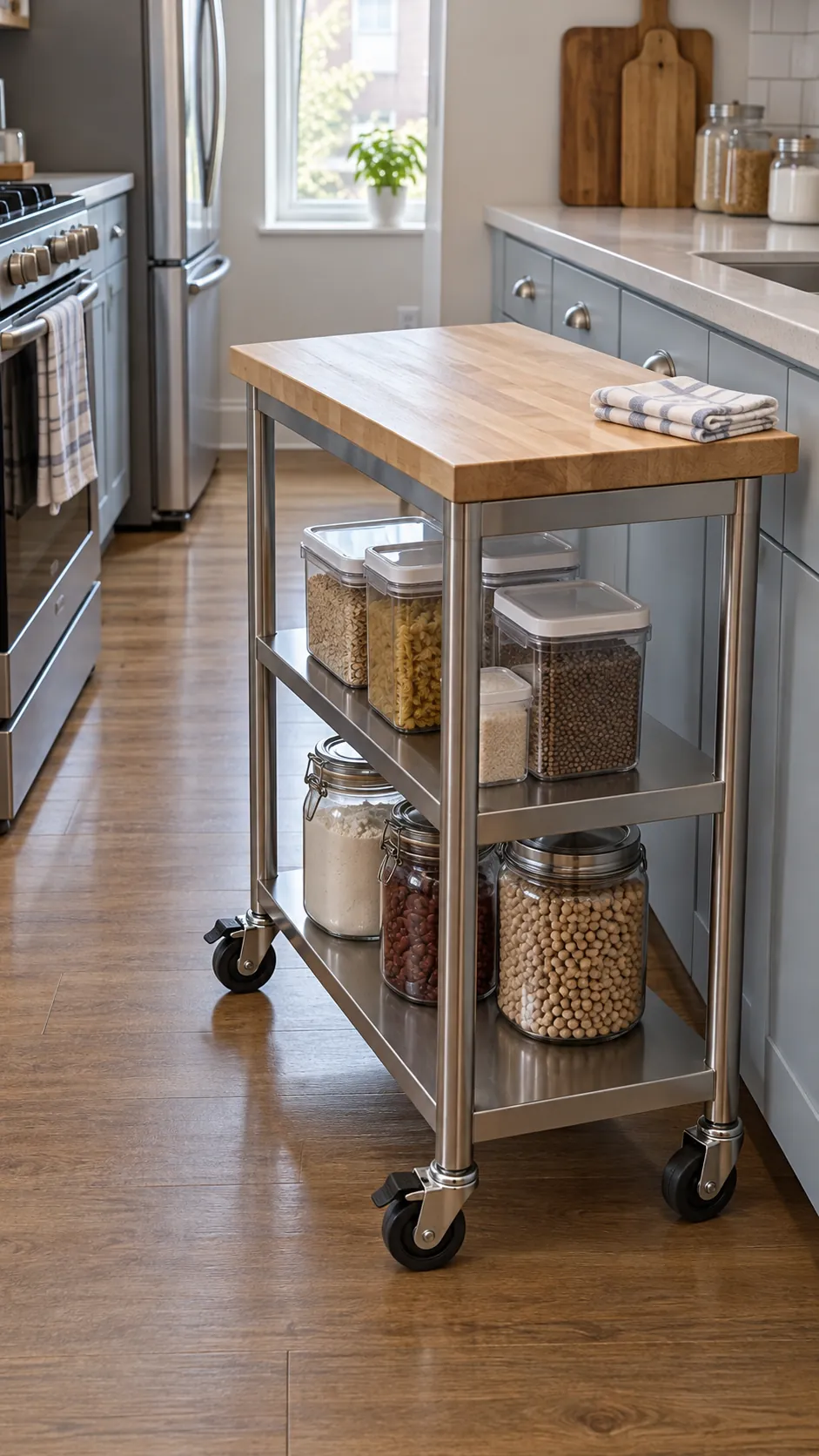
Use a rolling kitchen cart
A small cart can combine food storage with a movable work surface. Check the caster locks and the total load rating before adding jars or cans. Park it where it does not obstruct the cooker, refrigerator, or exit route. If the cart must move every time you cook, keep its contents low and stable enough for that routine.
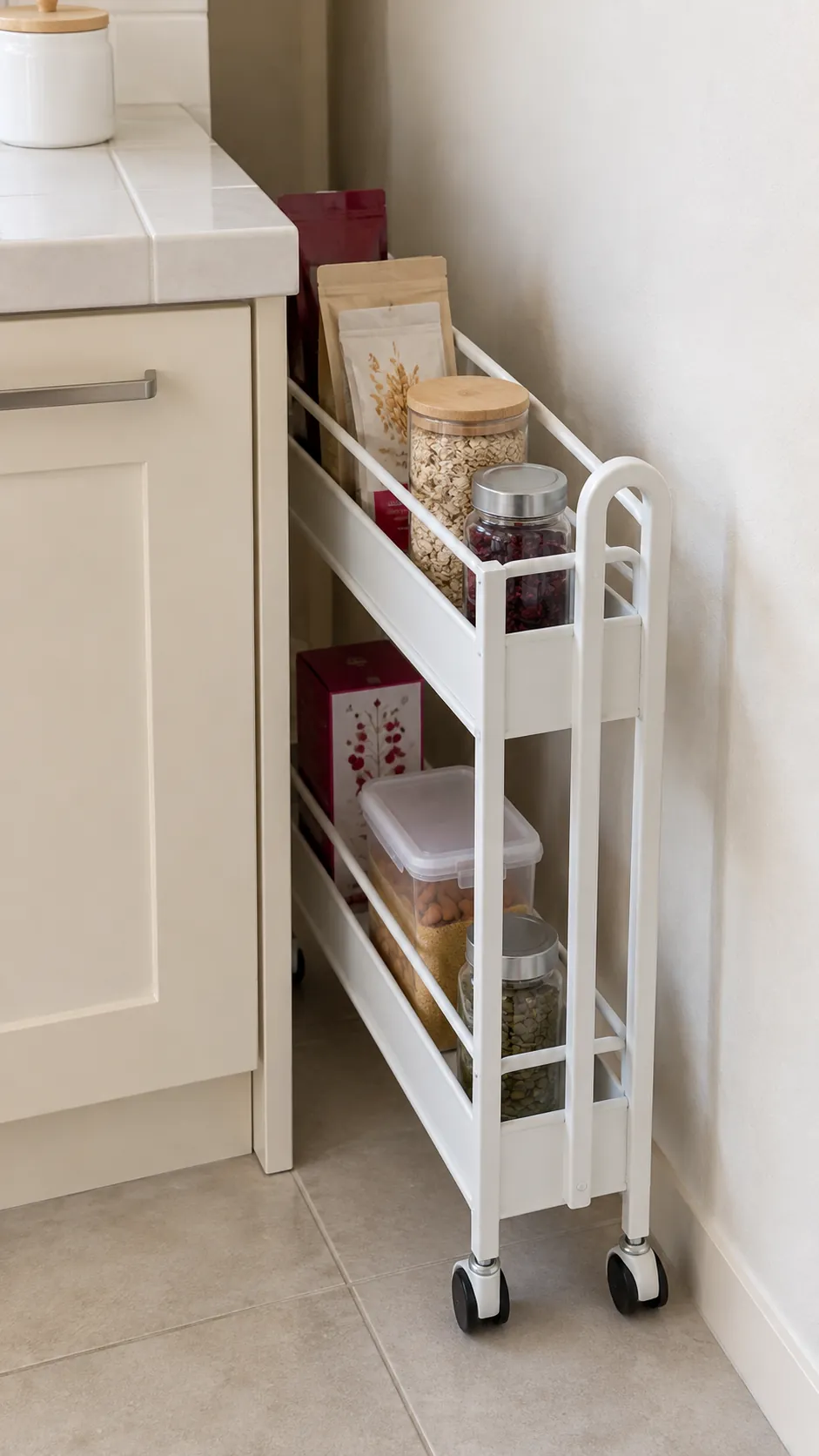
Fit a narrow cart into a safe gap
A slim gap cart can hold light packets and small containers in an otherwise unused space. Measure the full pullout path as well as the gap itself. Do not fill required appliance ventilation spaces or place heat sensitive food beside a hot appliance. This option works best when every shelf remains visible from the side as the cart comes out.
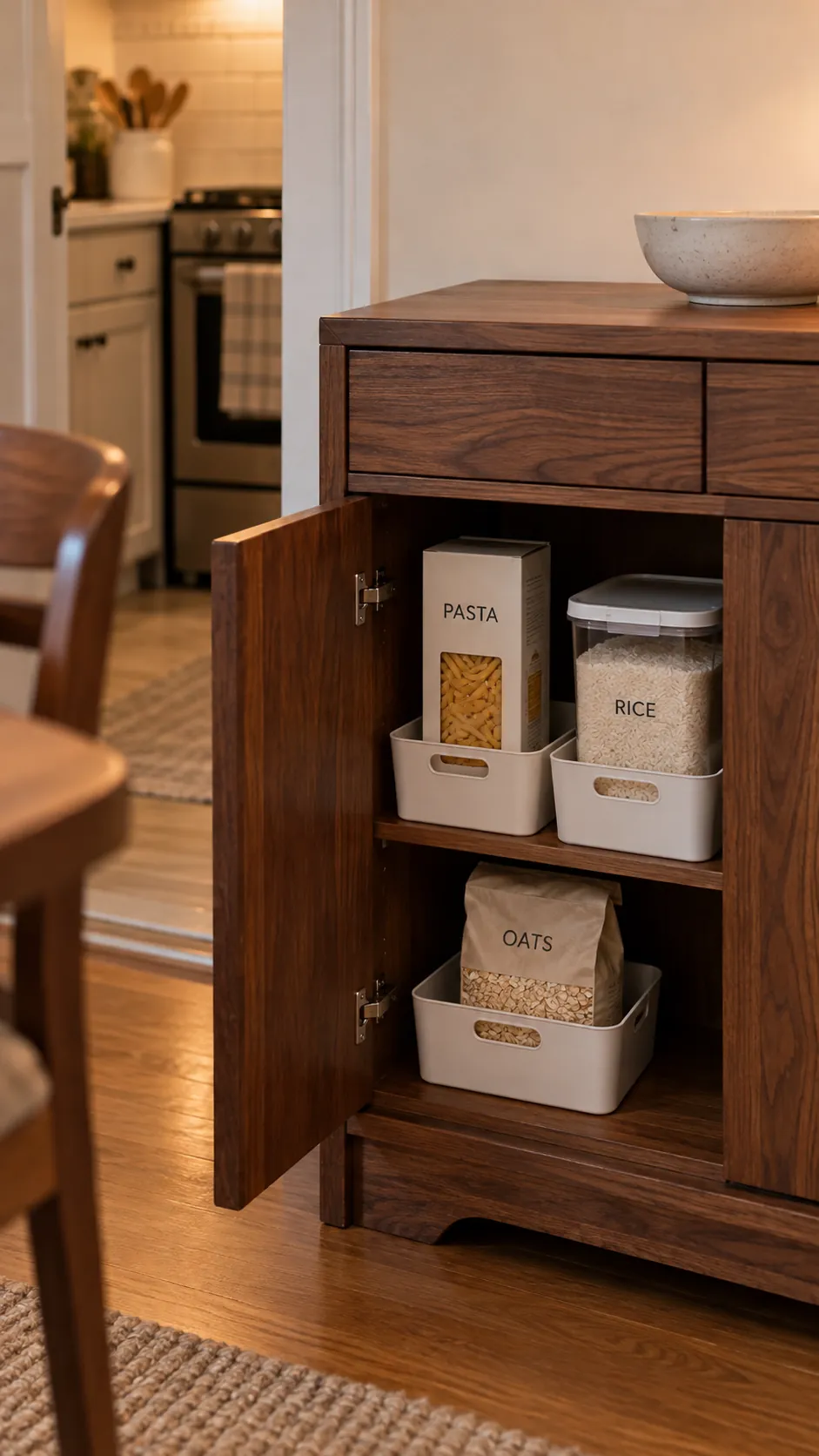
Turn a dining sideboard into dry food storage
A sideboard near the kitchen can take unopened reserves out of crowded cooking cabinets. Give food its own clean section, separate from candles, cleaning products, and table linens with strong scents. Store supplies in closed food suitable containers where needed and keep labels accessible. Use the sideboard's weight limits and anchoring requirements rather than assuming a dining cabinet can hold unlimited cans.
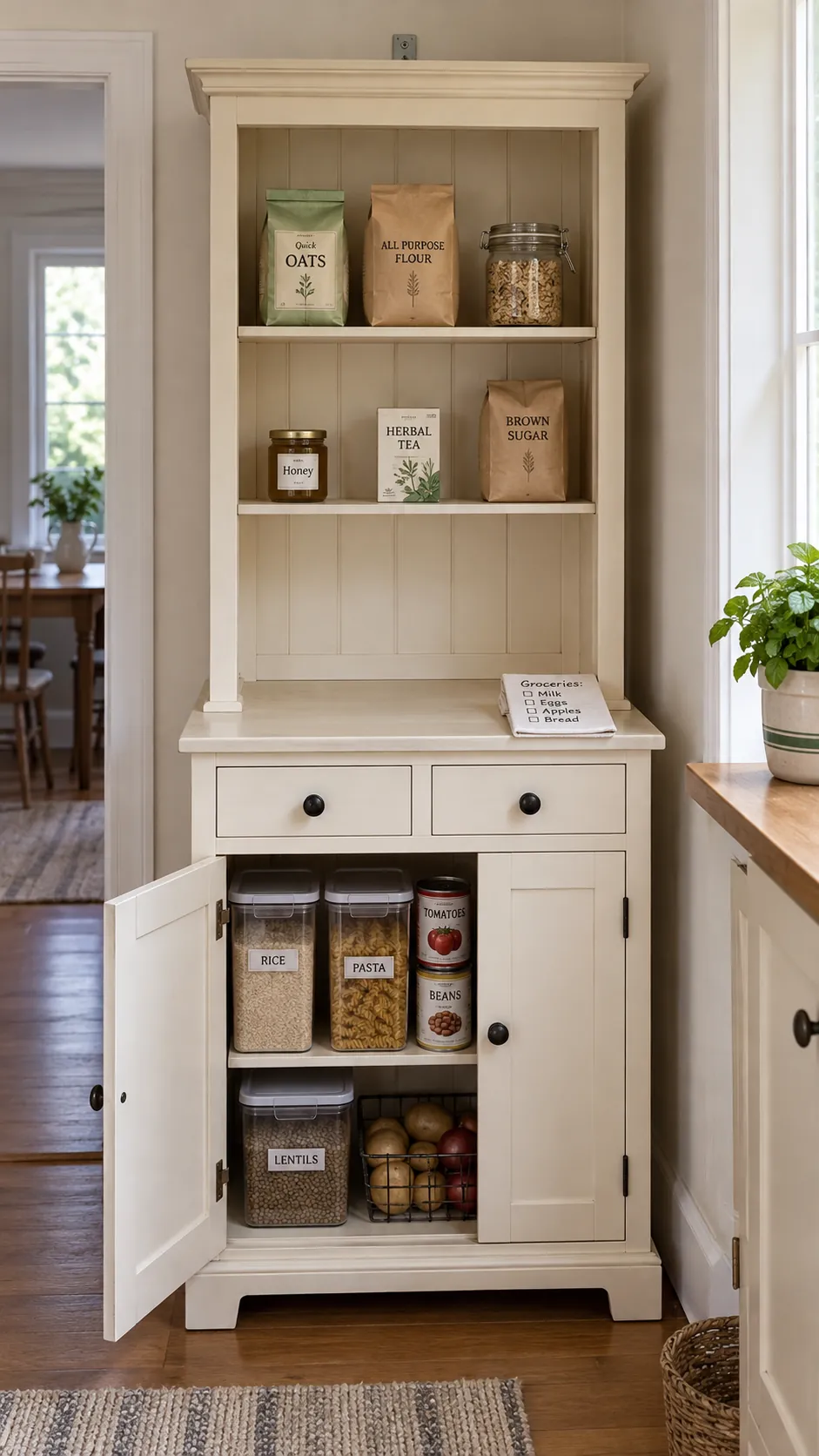
Repurpose a kitchen hutch
A hutch can combine closed lower food storage with a small upper daily supply. Keep heavy jars down below and use the upper section for lighter foods within safe reach. Check that the upper unit is secured according to its instructions. The work surface between the sections can become a grocery sorting spot instead of a permanent pile of packages.
Dedicate one upper cabinet to groceries
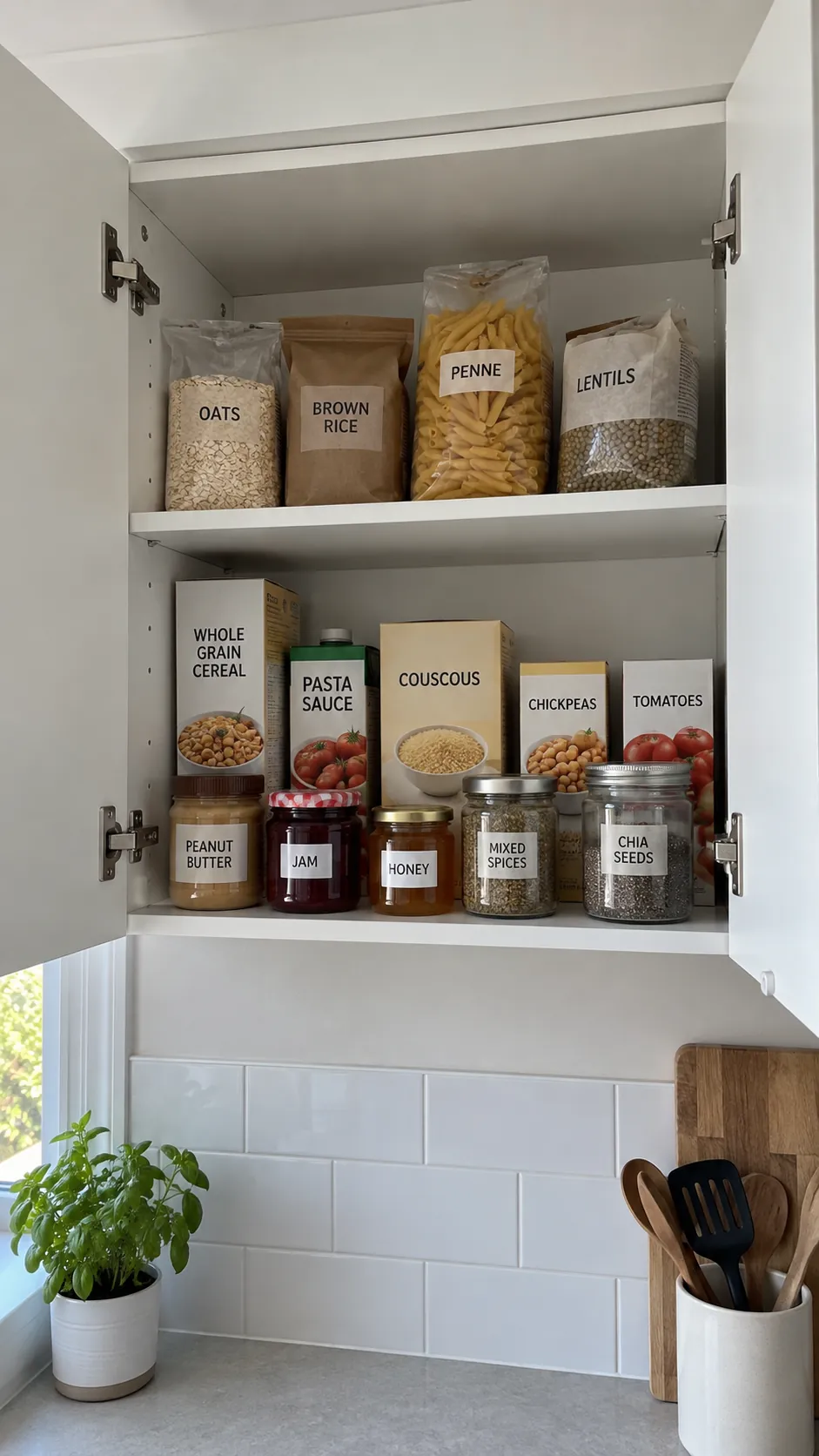
Move seldom used serving dishes to another suitable location so one reachable upper cabinet can hold everyday food. Arrange short packages in front of taller ones and avoid several hidden rows. Keep heavy bulk containers below shoulder height elsewhere. This kitchen cabinet food storage option adds no floor footprint, but it needs a clear boundary so dishes do not gradually reclaim the shelf.
Make a deep drawer your food drawer
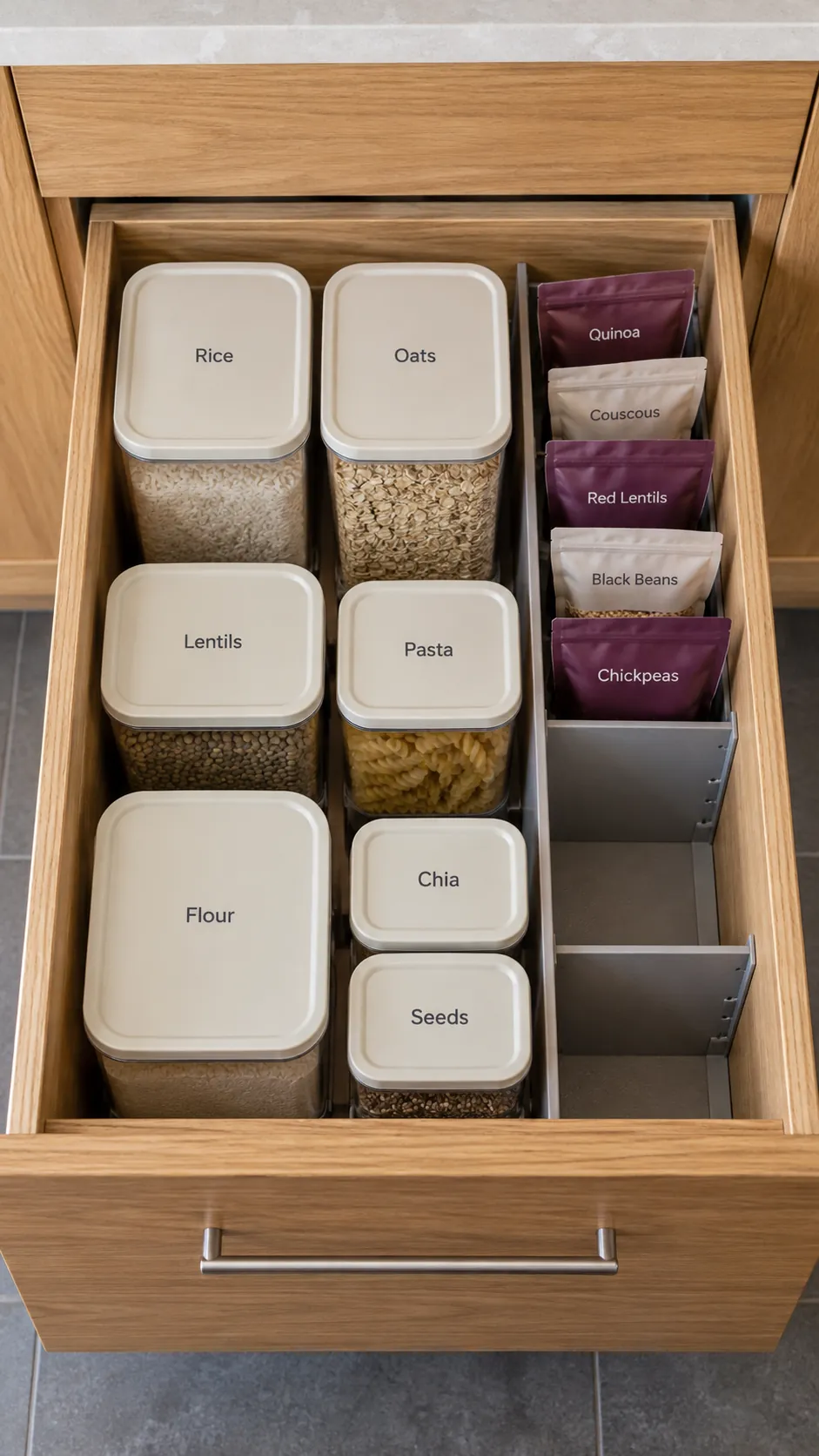
A deep kitchen drawer can store upright pouches and closed containers where their tops are easy to scan. Measure internal height before buying containers and check the drawer's load limit. Label lids when the front labels disappear from an overhead view. Keep packets supported with dividers so a partly empty drawer stays readable.
Install a base cabinet pullout
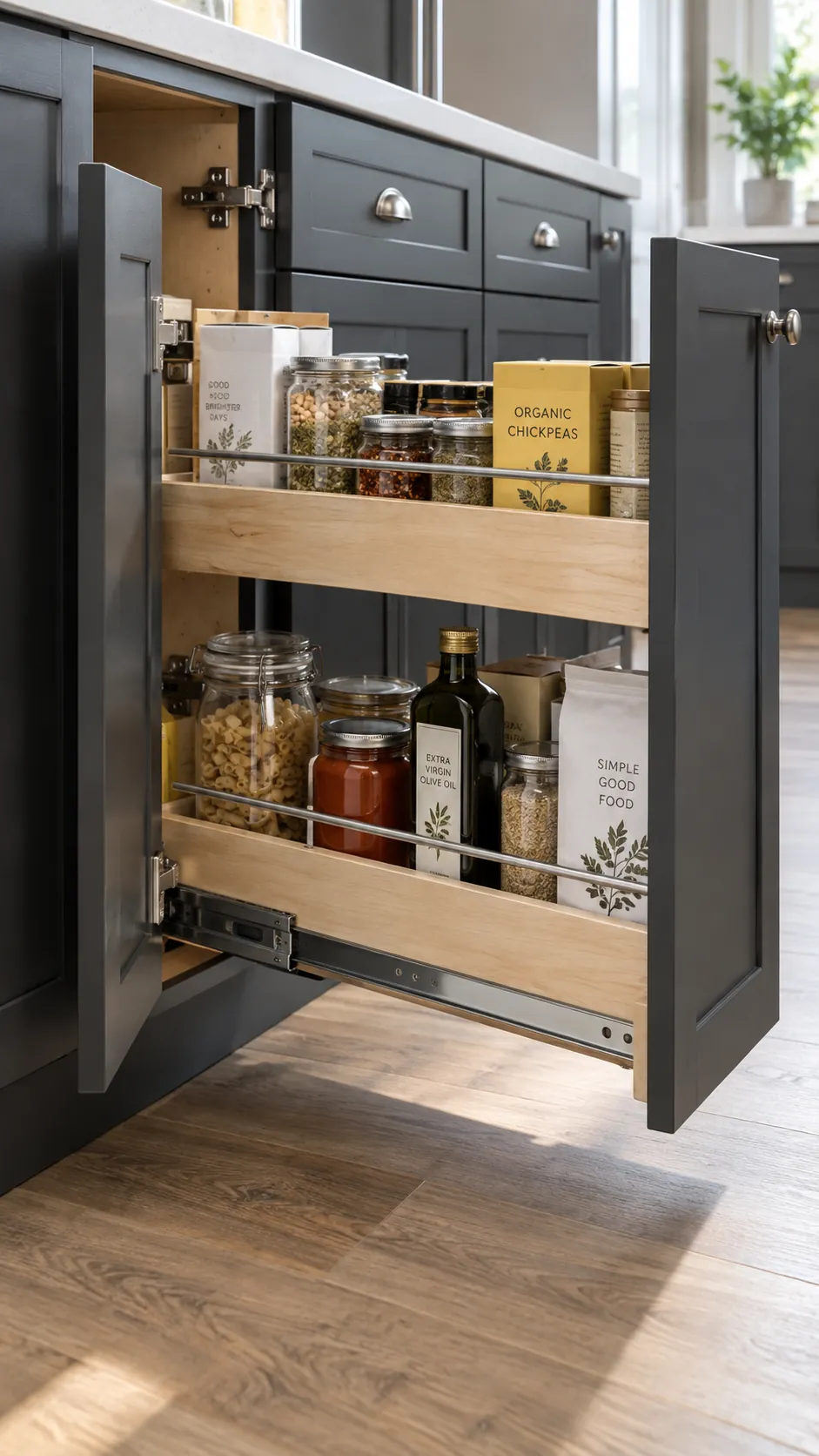
A fitted pullout can turn a deep lower cabinet into accessible pantry storage. Check the door opening, hinges, mounting surfaces, and full extension into the aisle before choosing hardware. Use a system designed for the intended load and follow its installation instructions. This costs more effort than loose bins, but it can make existing cabinet volume easier to use.
Build a compact counter breakfast station
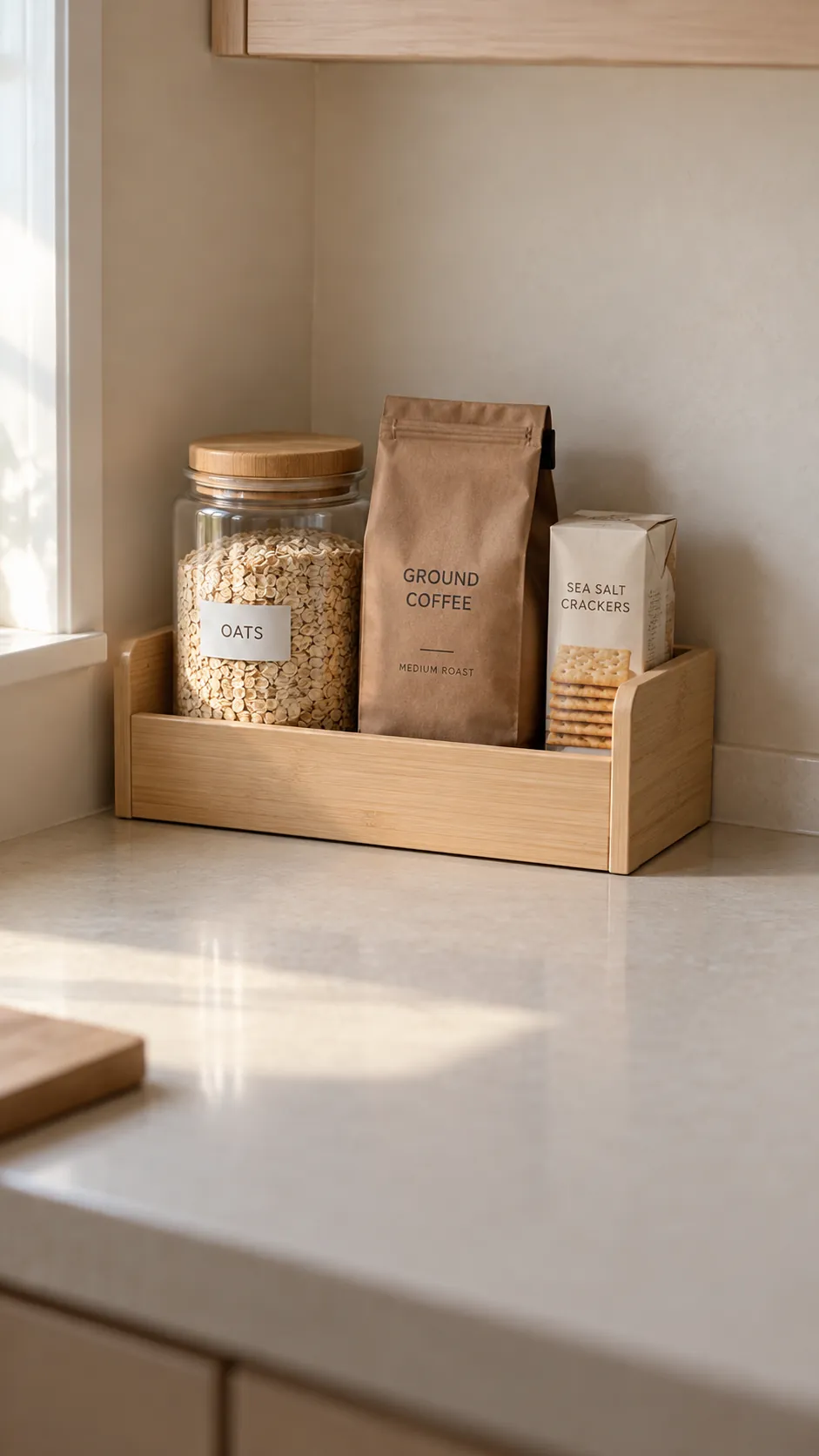
A small counter organizer can hold the few foods used every morning. Keep it away from heat, splashing water, and the work area you need for cooking. Use closed containers and preserve the original product information if you decant. Limit the station to an actual daily group rather than letting all pantry overflow spread across the counter.
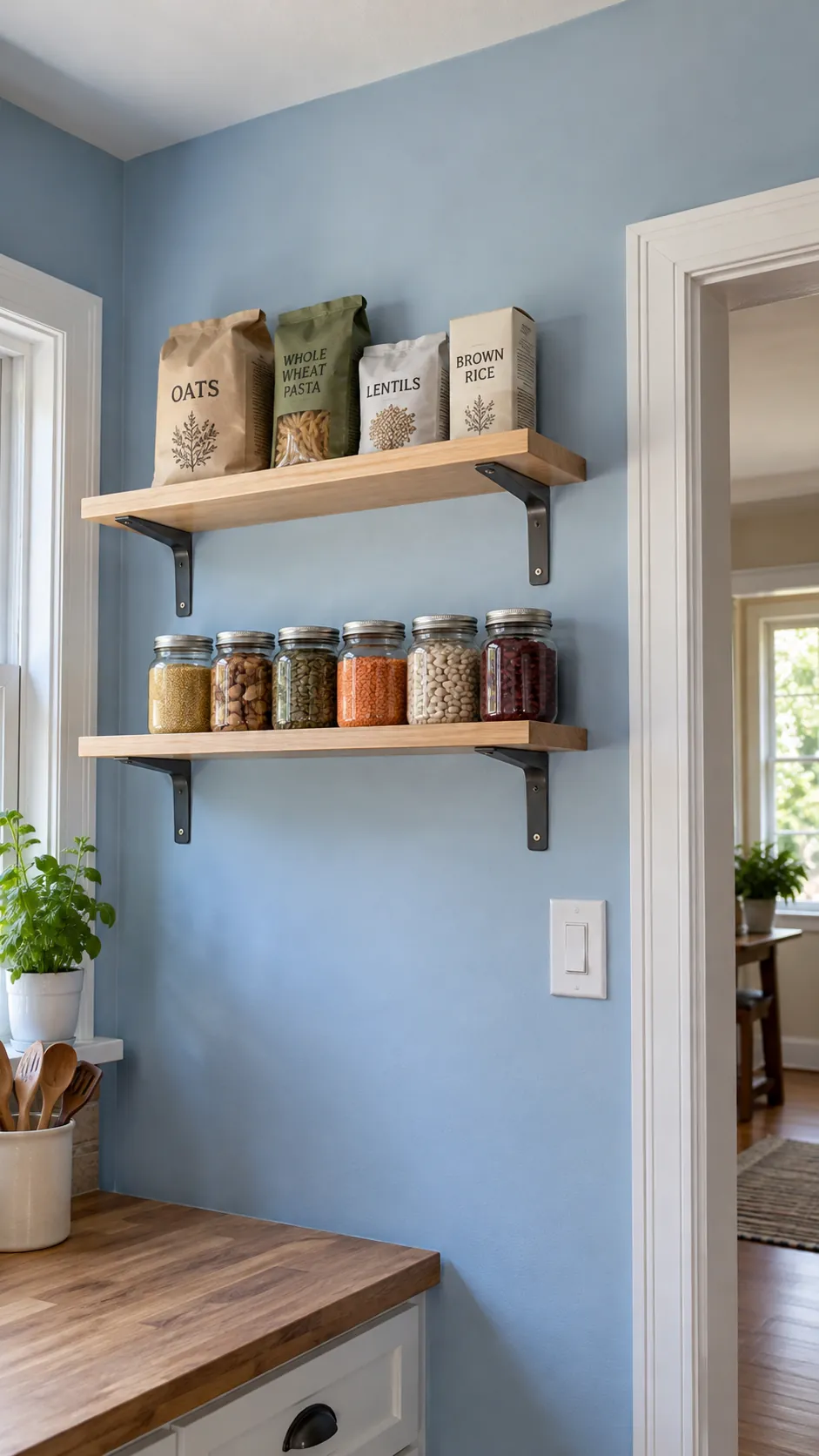
Add shallow wall shelves
A clear wall section can hold shallow shelves for sealed jars and lightweight food packages. Confirm suitable fixings and load limits for the wall and shelf system before installing them. Leave room for nearby doors, switches, and normal movement. In a rental, obtain permission for drilling and avoid treating adhesive hooks as structural shelf supports.
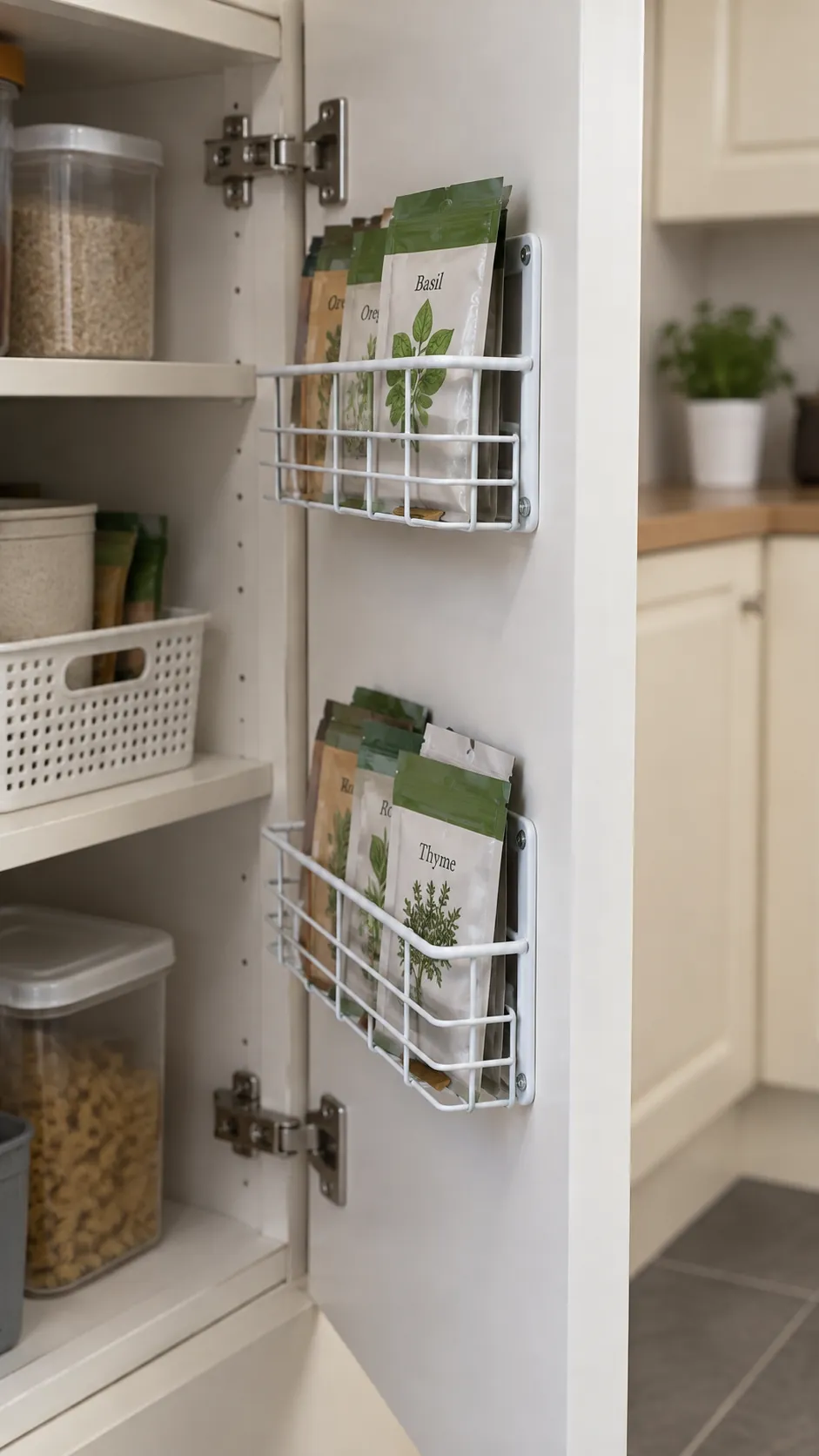
Use a door rack for lightweight packets
A shallow rack on a suitable kitchen or closet door can hold small food packets without taking floor space. Check the rack's load limit, door fit, and closing clearance with its contents in place. Keep heavy glass bottles elsewhere. The rack is useful only when it can open and close normally without striking shelves or trapping fingers.
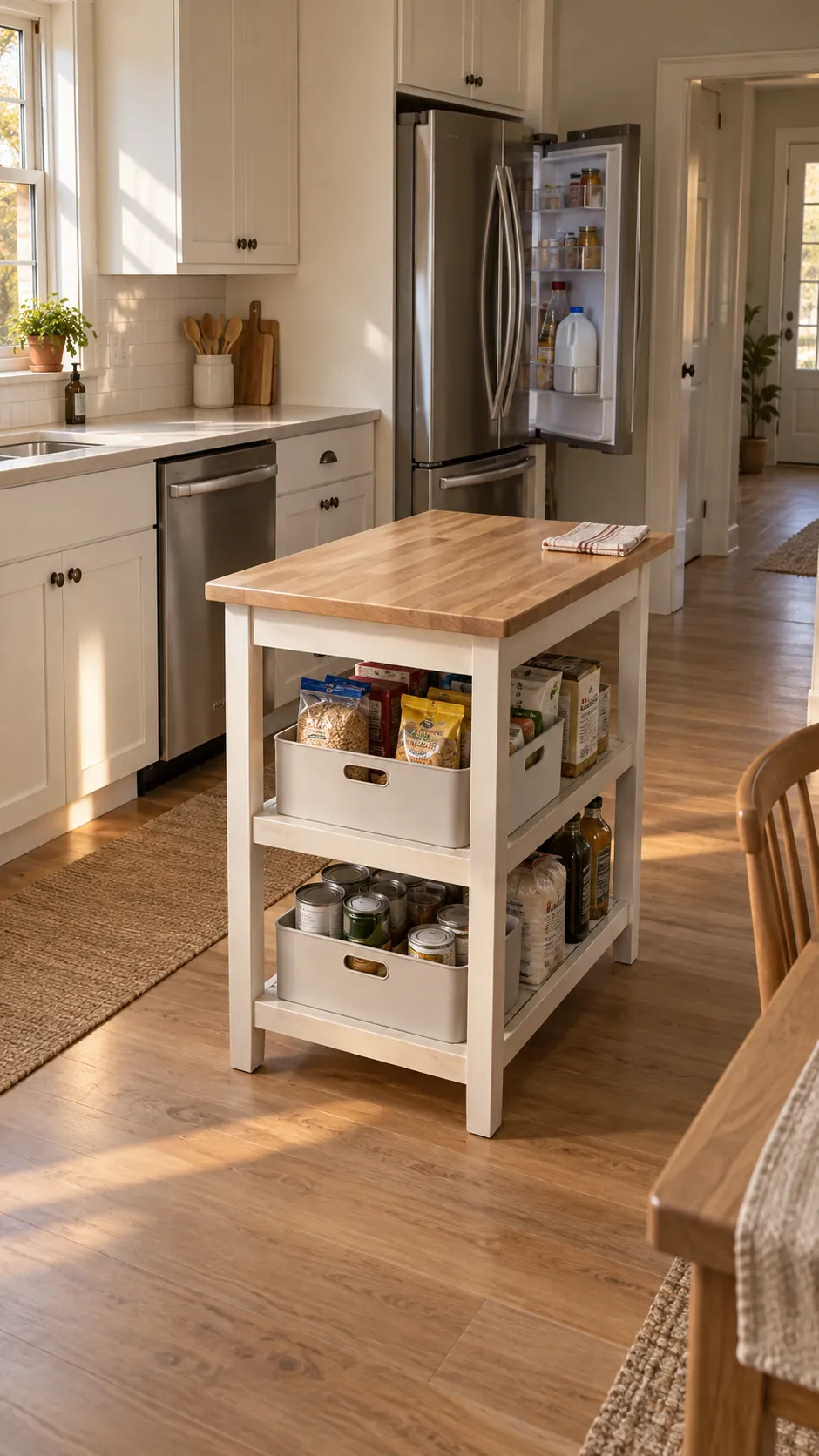
Choose a small island with storage below
A compact island can add food shelves when the kitchen genuinely has room around it. Test its footprint with tape and include drawer travel, appliance doors, and the route through the room. Use the lower area for contained groceries and keep the top available for preparation. Skip this option if the new surface makes the existing kitchen difficult to move through.
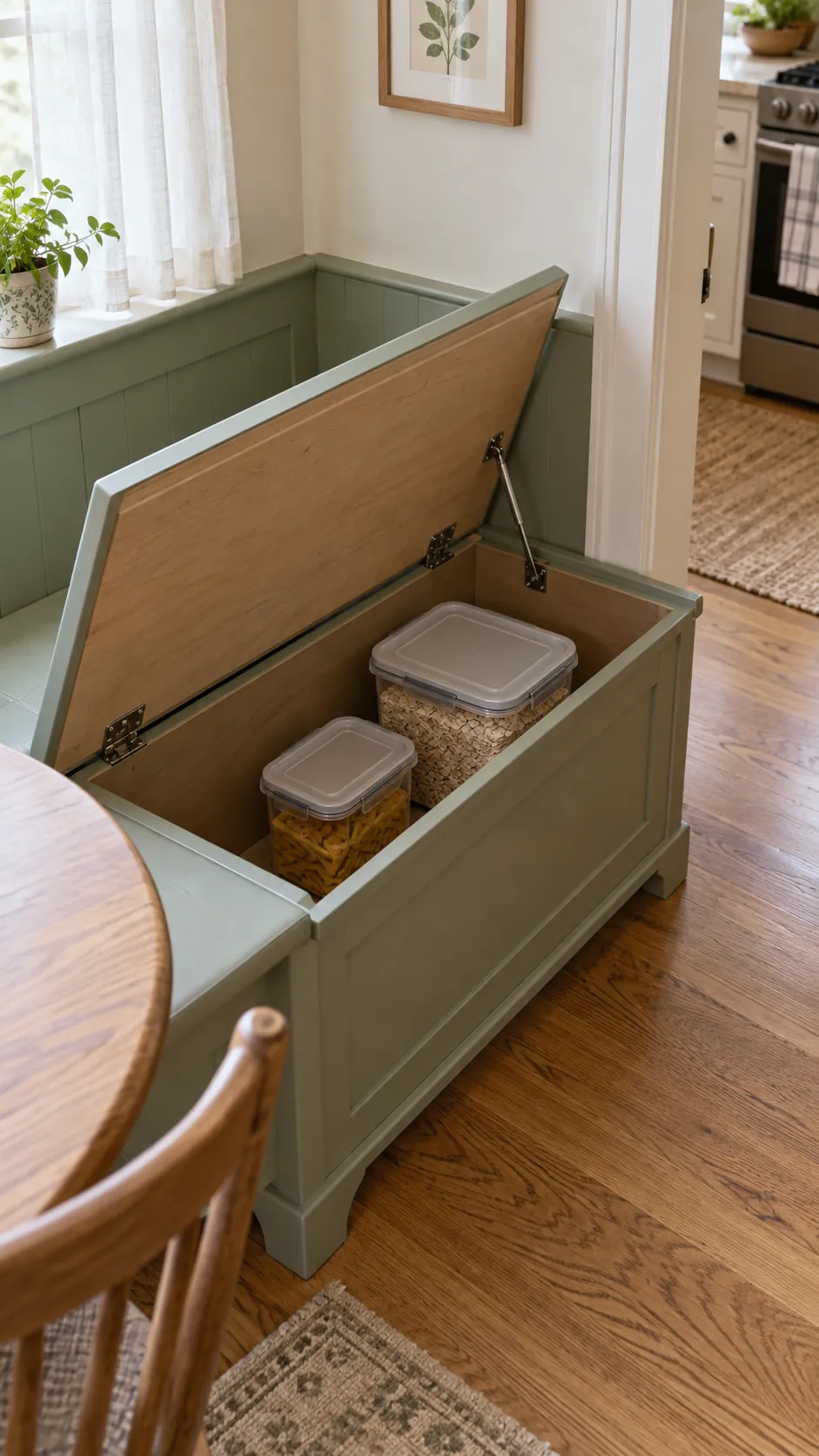
Use a dining bench with enclosed storage
An existing storage bench can hold a modest reserve of sealed dry food close to the kitchen. Keep food in clean closed containers and separate it from shoes, cleaning products, or damp textiles. Check the bench's intended use and avoid piling so much inside that the lid becomes awkward. This suits occasional refills better than ingredients you need to retrieve during every meal.
Give a console table a lower food shelf
A sturdy console beside the kitchen can hold matching category bins on its lower shelf. Choose bins that conceal packaging while keeping their handles and labels easy to reach. Follow the console's load and anchoring requirements and preserve the passage beside it. Keep the top relatively clear so the furniture does not become another crowded kitchen counter.
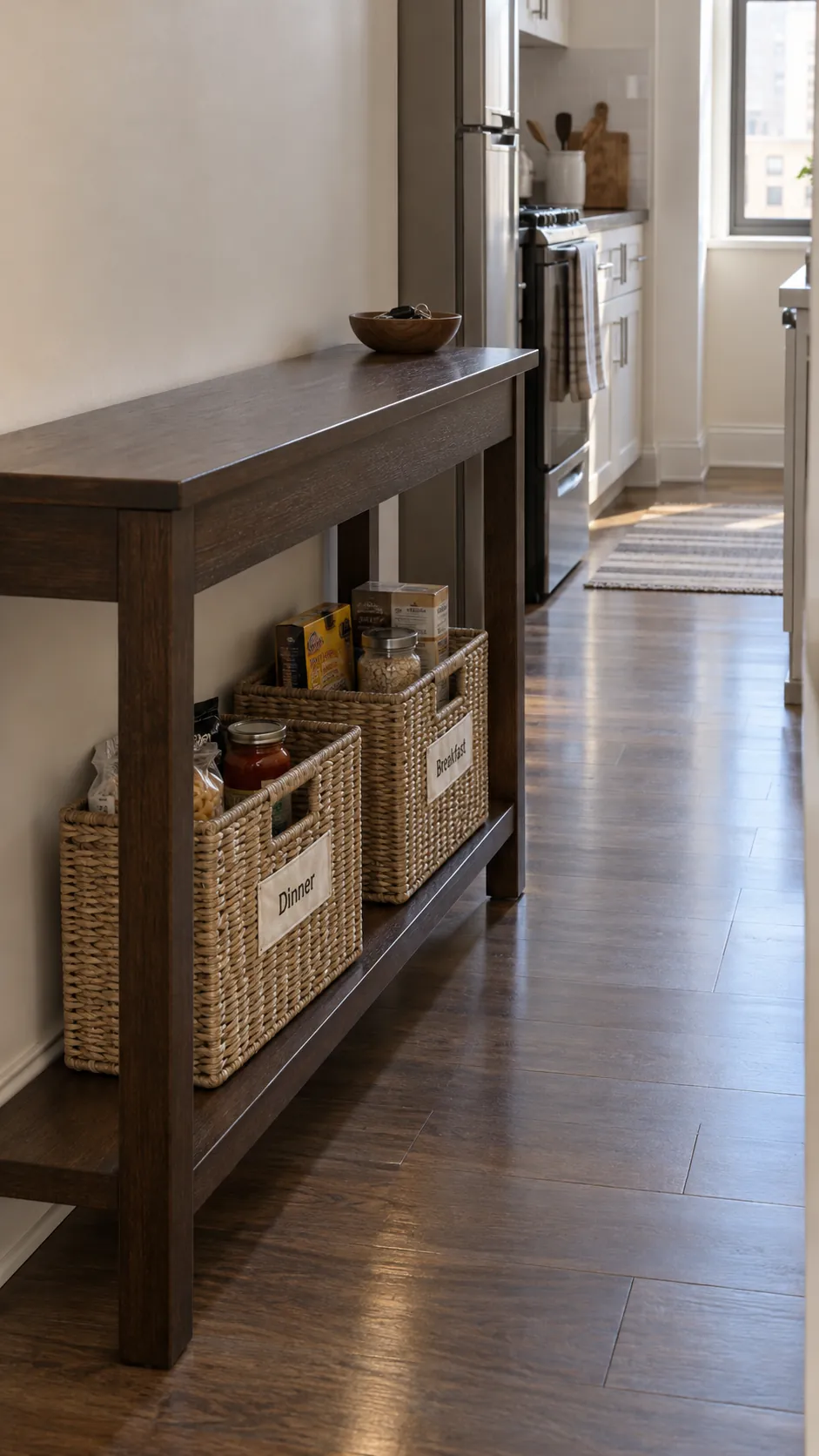
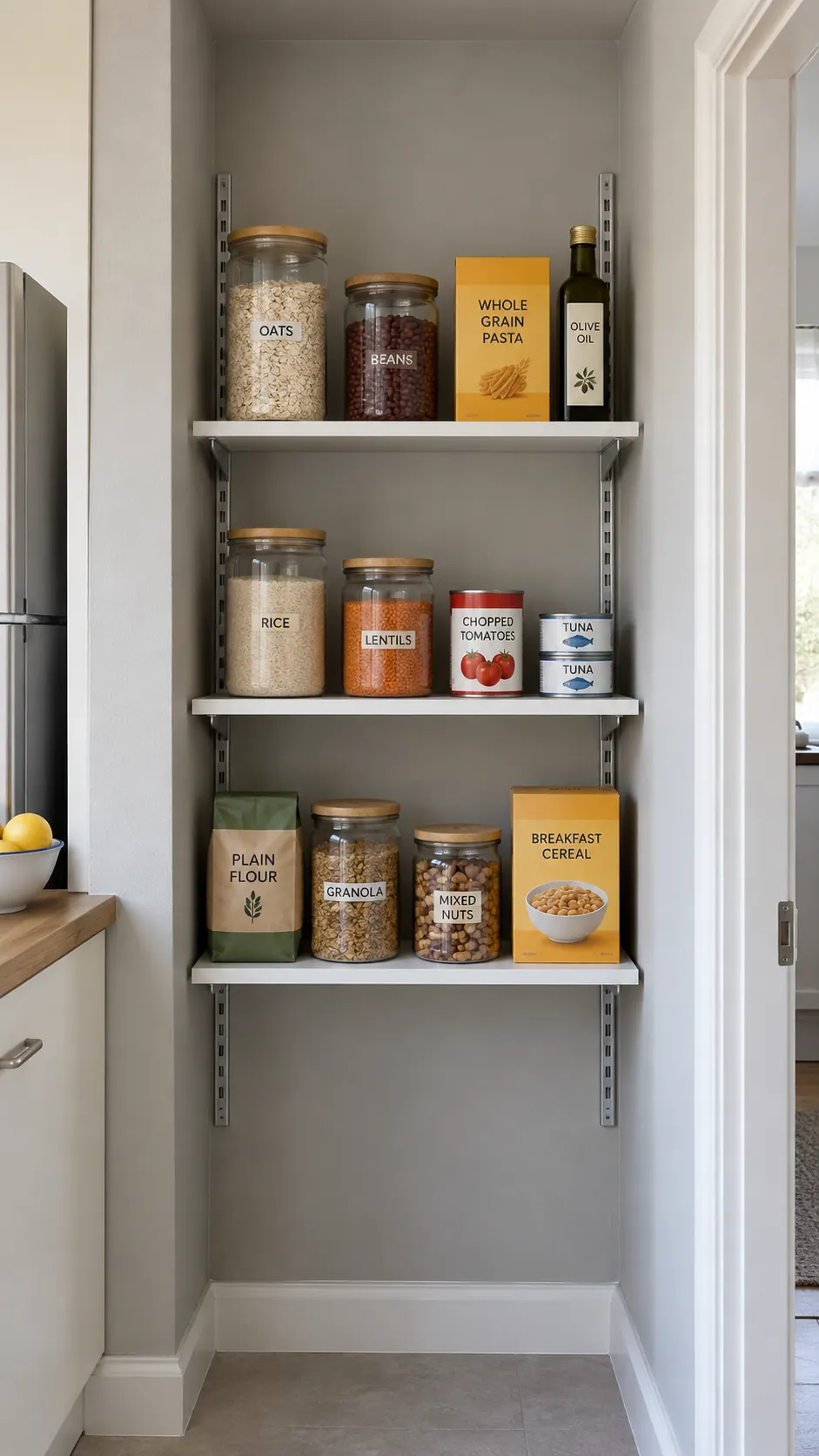
Fit an alcove with adjustable shelves
An unused alcove can become a small pantry zone with a properly supported shelving system. Measure the narrowest point, nearby trim, and the space in front before choosing shelf depth. Adjust the gaps around the foods you actually buy. A shallow reachable arrangement often works better than filling the entire recess with containers that block one another.
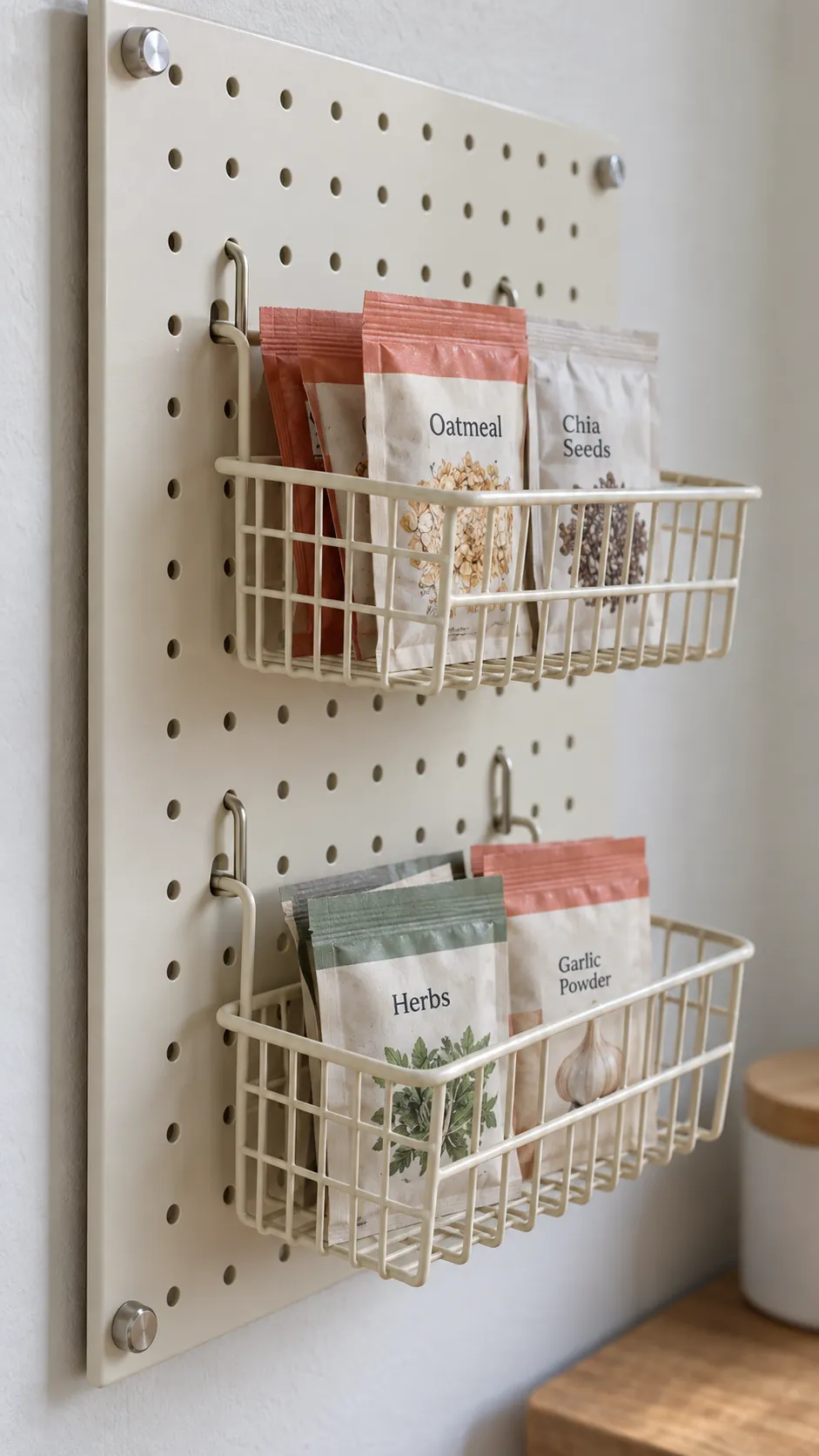
Use rated pegboard baskets for small supplies
A securely mounted pegboard system can support small baskets of lightweight food packets where its rating permits. Check the board, hooks, baskets, and wall fixings as one system rather than relying on the appearance of a strong hook. Keep the contents closed and away from the cooker or sink. This works for small daily categories, not heavy jars or a bulk food collection.
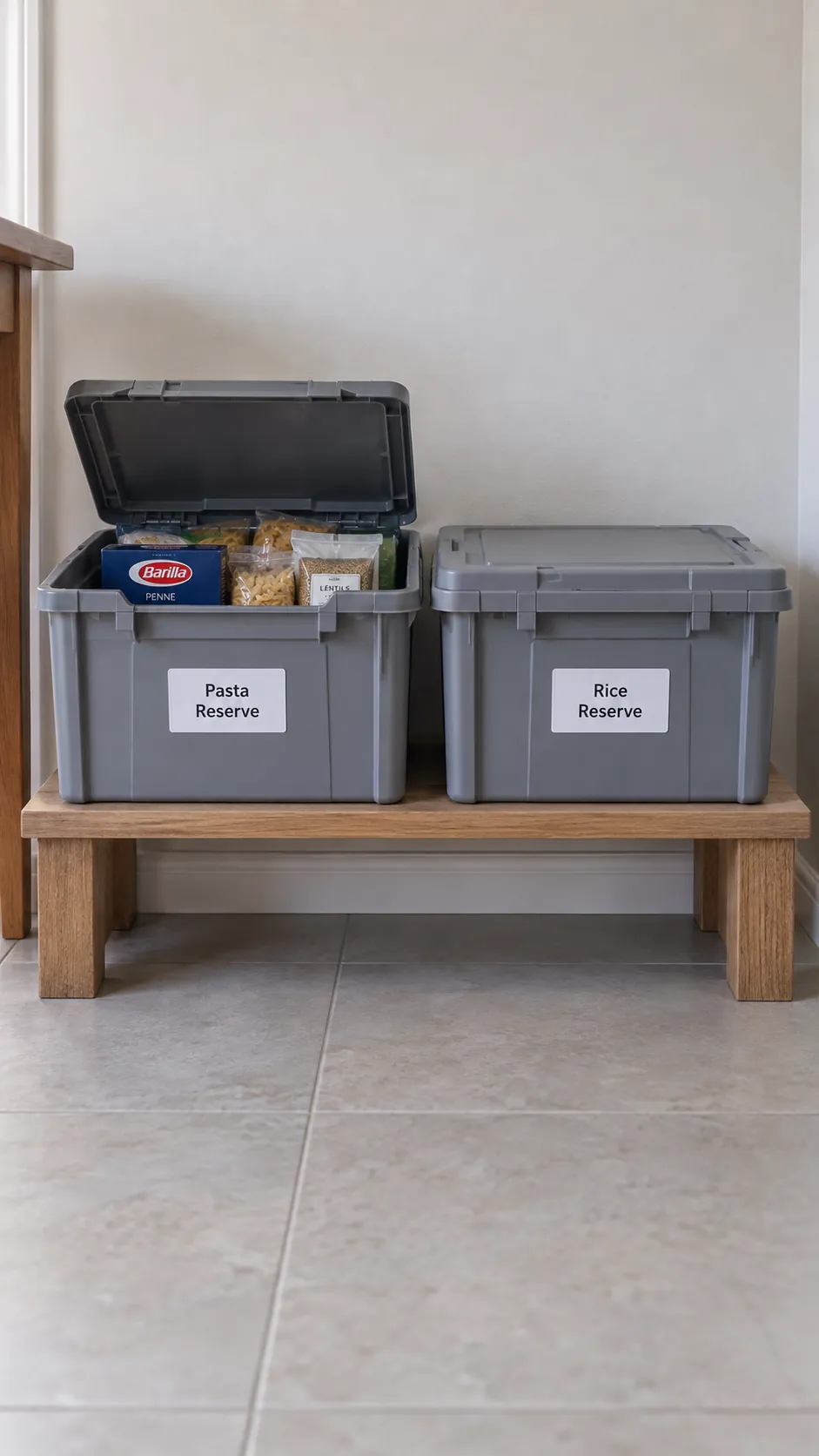
Store reserves in stable lidded crates
A few clean lidded crates can contain unopened dry food in a suitable cool, dry indoor spot. Keep them off damp floors and use only a stable arrangement within the container maker's stacking limits. Label the accessible side and avoid a tall pile that requires shifting heavy crates. Reserve storage should support the kitchen supply, not make every dinner depend on unpacking a stack.
Use a rated basket beneath a cabinet shelf
A basket designed to hang from a shelf can hold a few light packets in spare vertical space. Check the shelf thickness, mounting fit, and load limit before adding food. Make sure the basket does not stop the door closing or crush packages on the shelf below. A shallow basket that remains visible is easier to use than a deep pouch hidden behind other groceries.
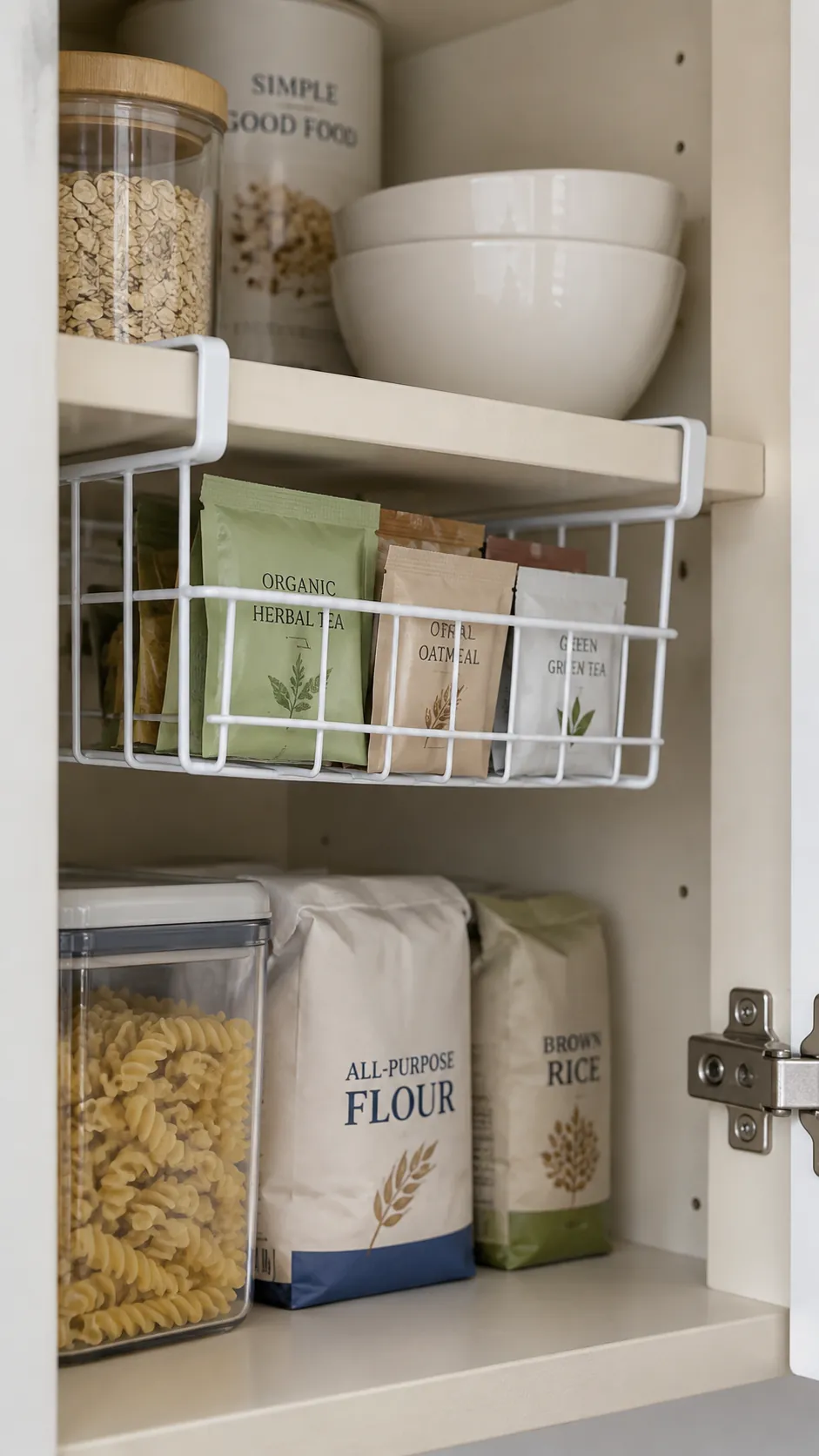
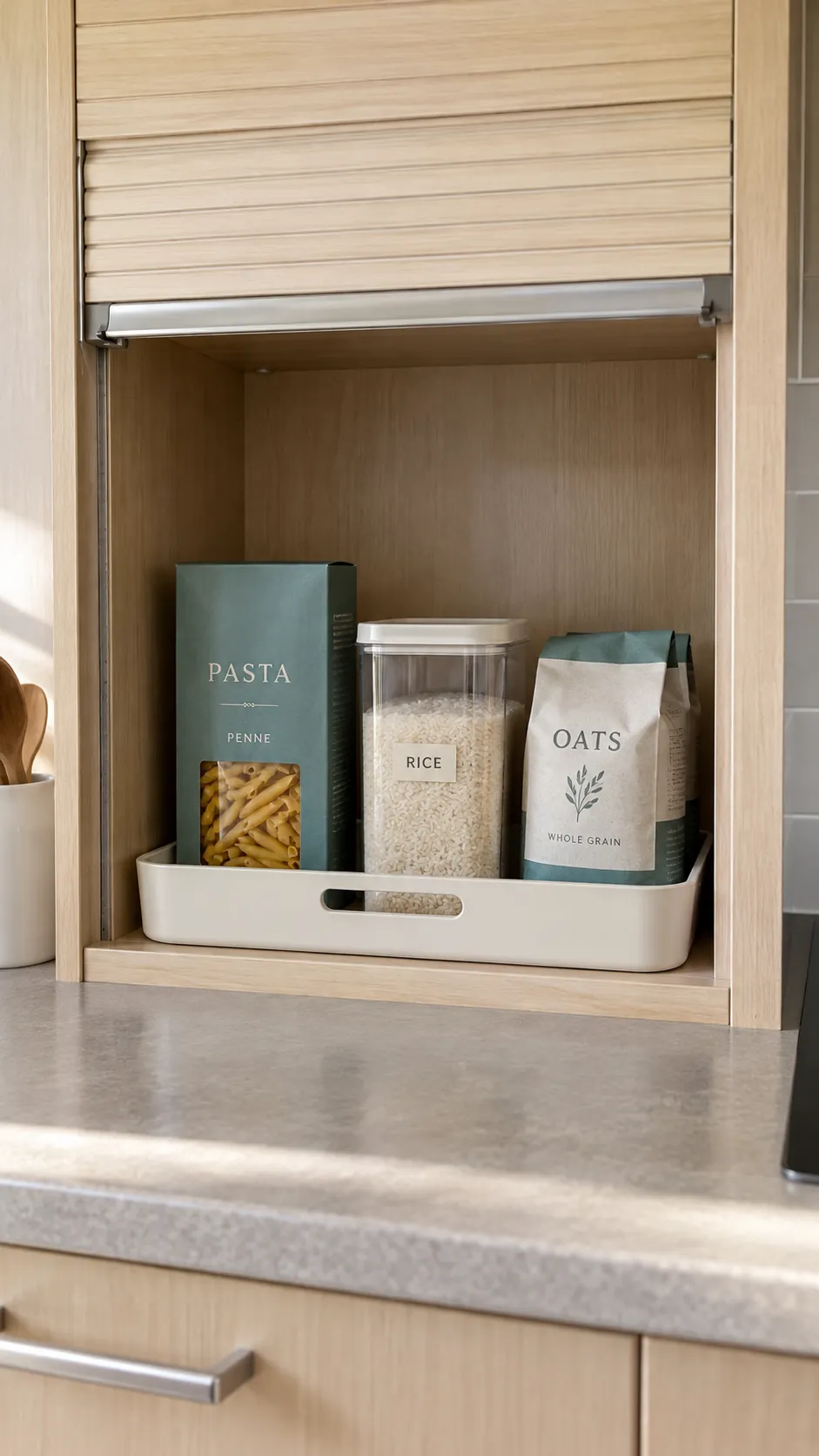
Reclaim an appliance cabinet you rarely use
An empty appliance cupboard can become food storage if you move seldom used equipment to another safe suitable location. Clean the interior and remove crumbs before assigning groceries to it. Keep heavy appliances secure in their new home and do not store food in an operating appliance or beside a heat source. A removable tray can define the new food zone while you test the change.
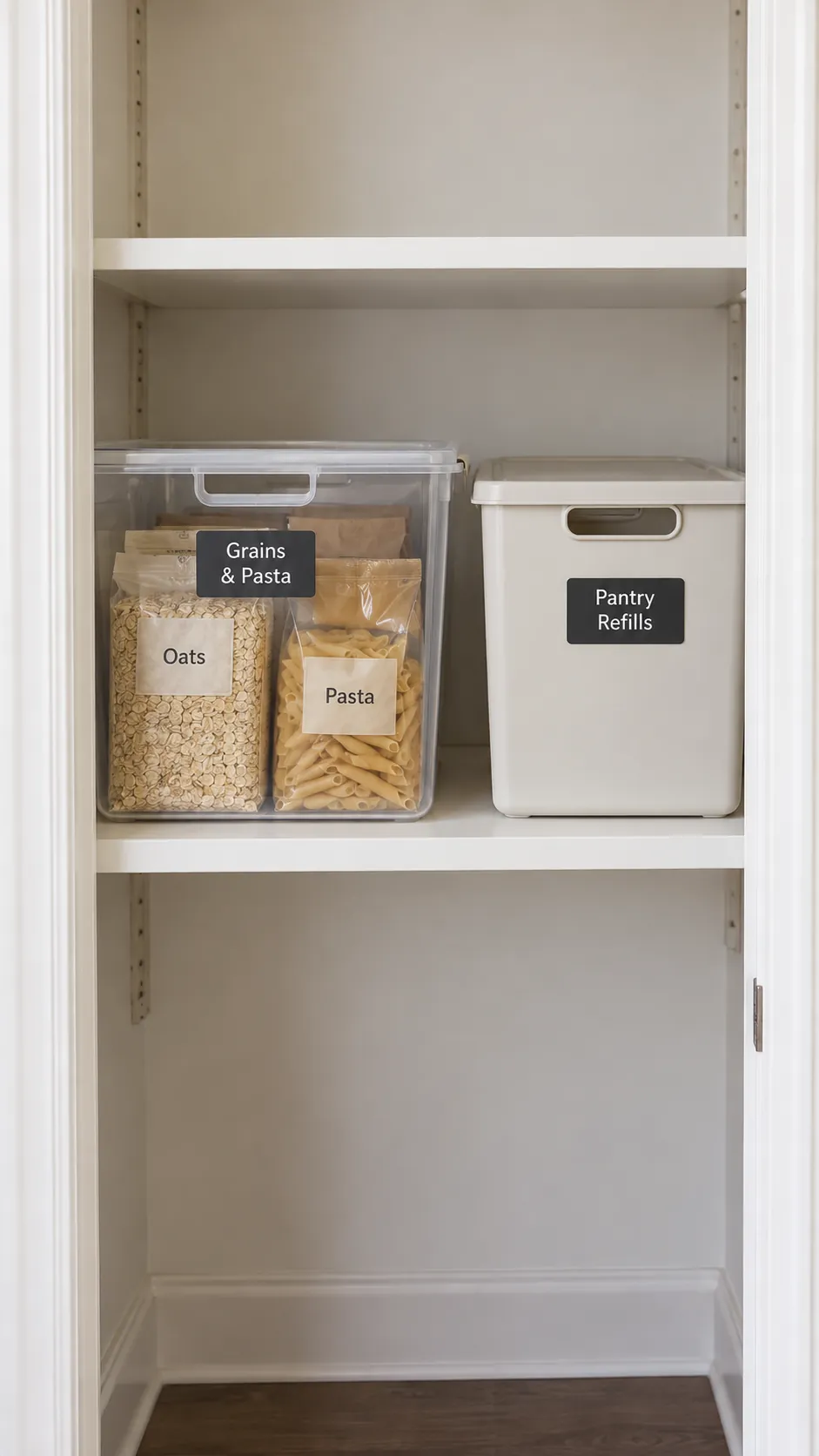
Assign a clean utility closet section to food
A nearby indoor closet can hold sealed pantry refills if the space is dry, suitable for the products, and fully separated from chemicals. Do not mix food with cleaners, fuels, pesticides, or strongly scented supplies. Use a dedicated clean shelf or cabinet and keep product storage directions in view. If the closet is hot, damp, or shared with hazardous materials, choose another alternative.
Create a small meal supply on one shelf
When no extra furniture will fit, dedicate one existing shelf to the ingredients for your next planned meals. Keep a short inventory and buy quantities that fit your available storage and shopping routine. Use one removable meal bin to gather compatible sealed foods without blocking the rest of the shelf. A kitchen without a pantry can work better with a visible supply you use than with a larger collection spread into every room.