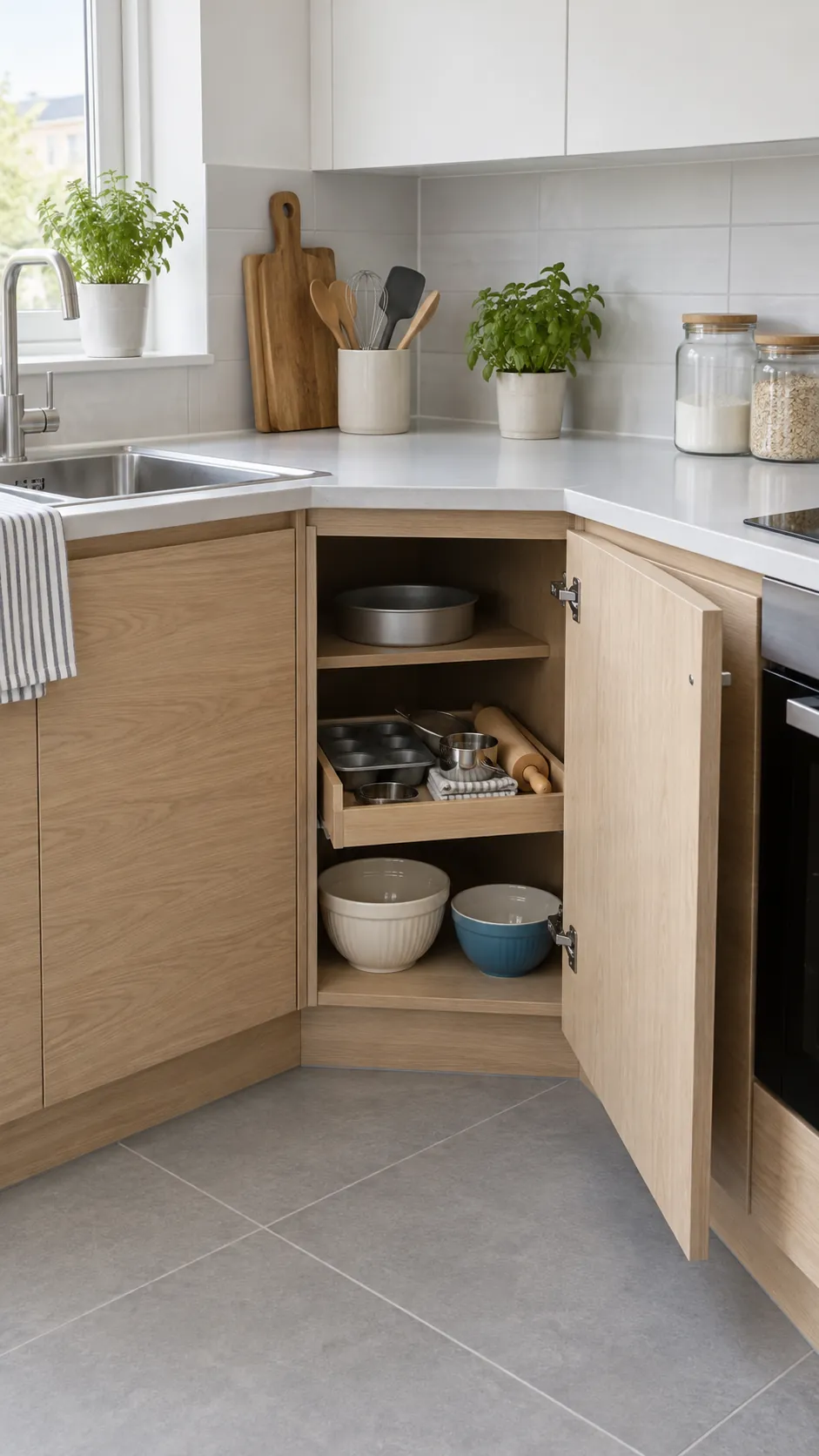
If reaching one mixing bowl means unloading half a shelf, the cabinet has an access problem. Start by giving each group a clear route to the door, then choose storage that fits that route. Filling every inch of a blind corner often makes the kitchen harder to use.
Find the opening that limits every organizer
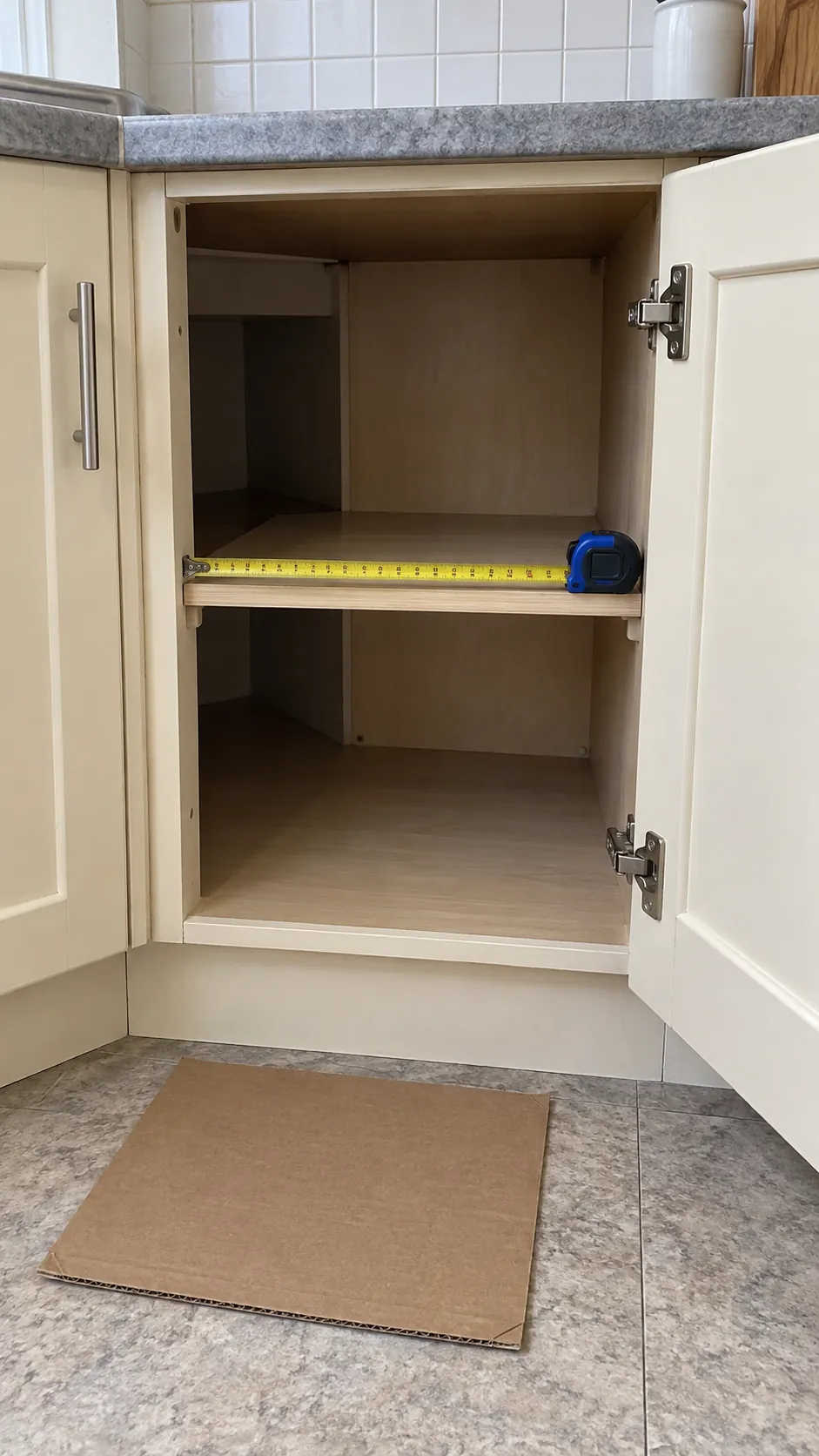
Before buying anything, identify whether you have a blind corner with one narrow entrance, a diagonal cabinet, or an opening with folding doors. Measure the clear opening with the doors fully open, including the space taken by hinges and the center post. Then measure the usable shelf depth and height; the inside box dimensions alone do not tell you whether an organizer can enter or move.
Set a cardboard rectangle the size of a proposed bin inside the cabinet and pull it all the way out. Watch for the adjacent door handle, an oven handle, or a nearby wall that interrupts the path. Photograph the empty interior so you can check obstructions while comparing products, and confirm any fitted hardware requirements with the maker before ordering.
Move everyday items into the first reach zone
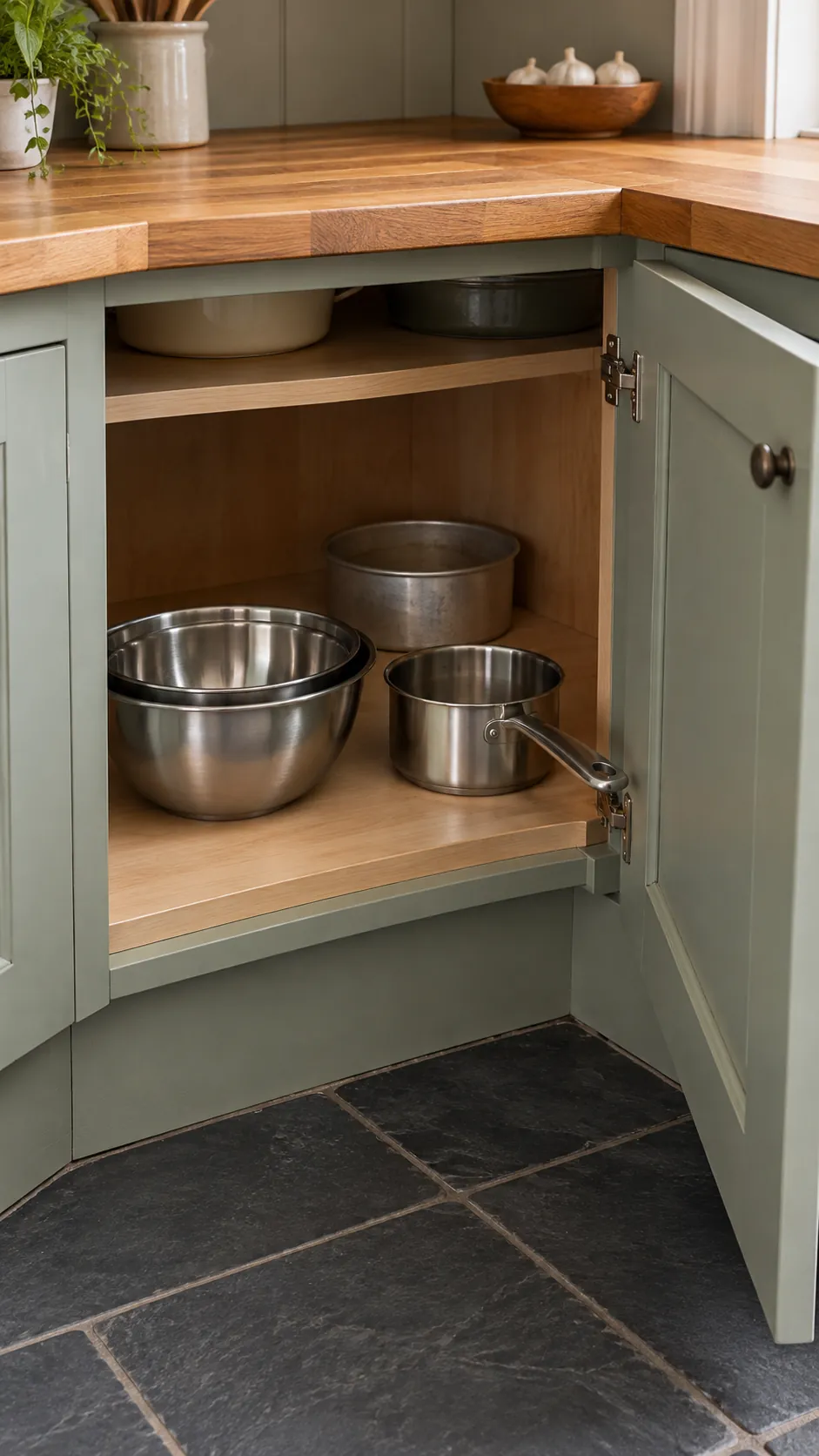
Empty the cabinet onto a table and sort its contents by how often you actually use them. Put everyday bowls, a frequently used saucepan, or lunch containers where you can see and lift them without first moving something else. Reserve the deepest area for light, occasional items, and move heavy appliances to a location where you can lift them without twisting. A corner cupboard organizer cannot compensate for storing too many unrelated categories together. Choose a small number of groups that fit your cooking routine, such as baking tools and mixing bowls. Keep food separate from cleaning supplies and avoid placing anything leak prone where a spill would remain hidden.
Bring small items forward in removable bins
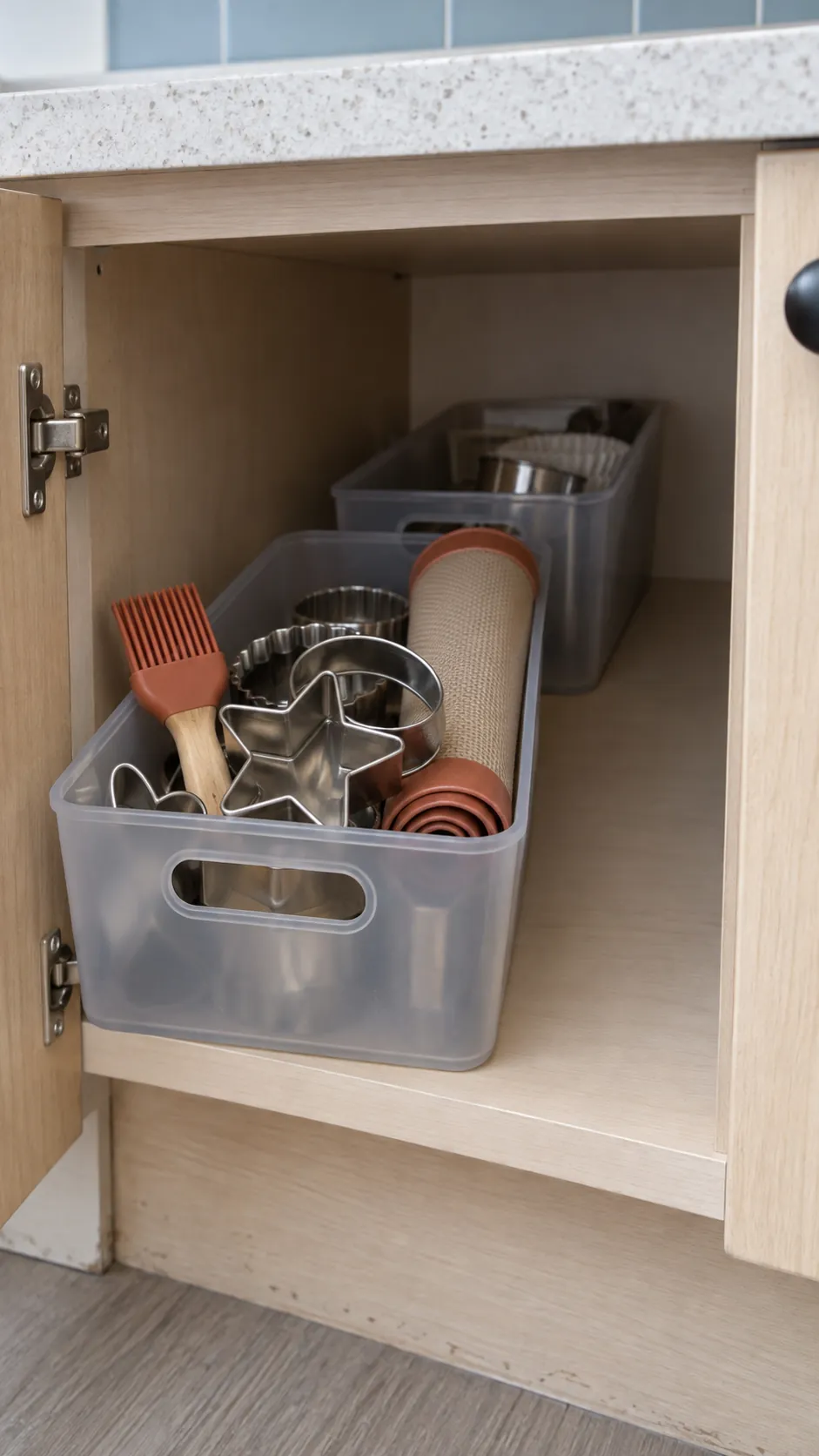
For a rental or a limited budget, start with shallow bins that fit through the opening while loaded. Give each bin one job, such as cookie cutters or spare food container lids, and turn its handle toward the door. A clear side or a short label helps identify the contents without emptying the shelf.
Keep enough space beside the front bin to pull the rear one forward; a tightly packed wall of containers simply hides the same problem. Test the weight with actual contents, and avoid turning one bin into a basket of heavy jars. If reaching the back still requires kneeling and twisting, relocate that category rather than buying a longer bin.
Use a turntable only where it can rotate freely
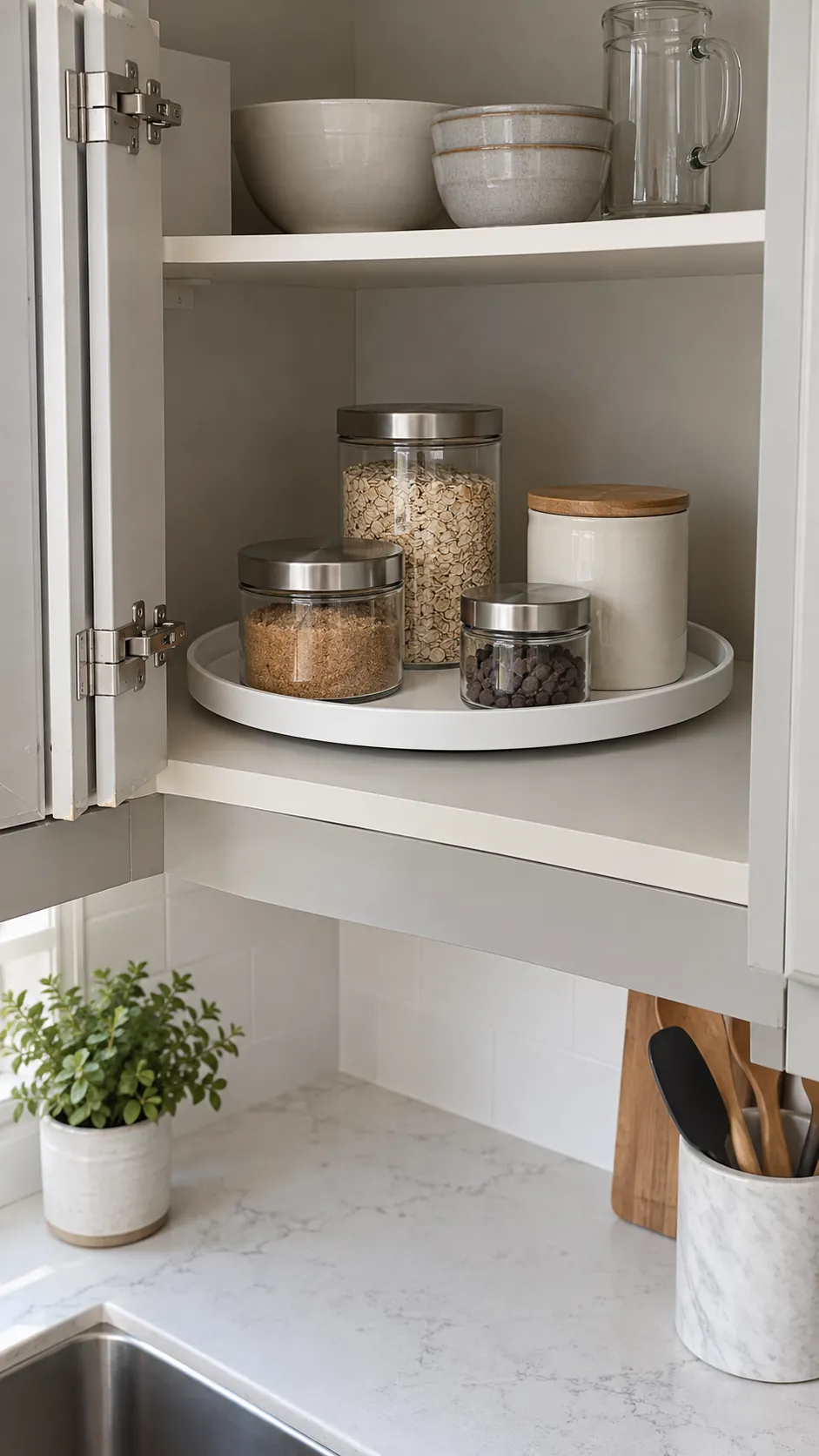
A turntable suits a reasonably open shelf where its full circular path stays clear of the door and neighboring objects. Measure that turning space and allow for handles or lids that extend beyond the tray edge. Low sides help contain small items, while tall bottles need enough clearance above them throughout the rotation. In a blind corner, a freestanding round tray can leave unused space behind it and may not bring the hidden section within reach. Do not fill that gap with loose items that can fall into the turning path. Try the motion with a few light containers first, then keep every item inside the rim and check the stated load limit.
Choose fitted pullouts by their full travel path
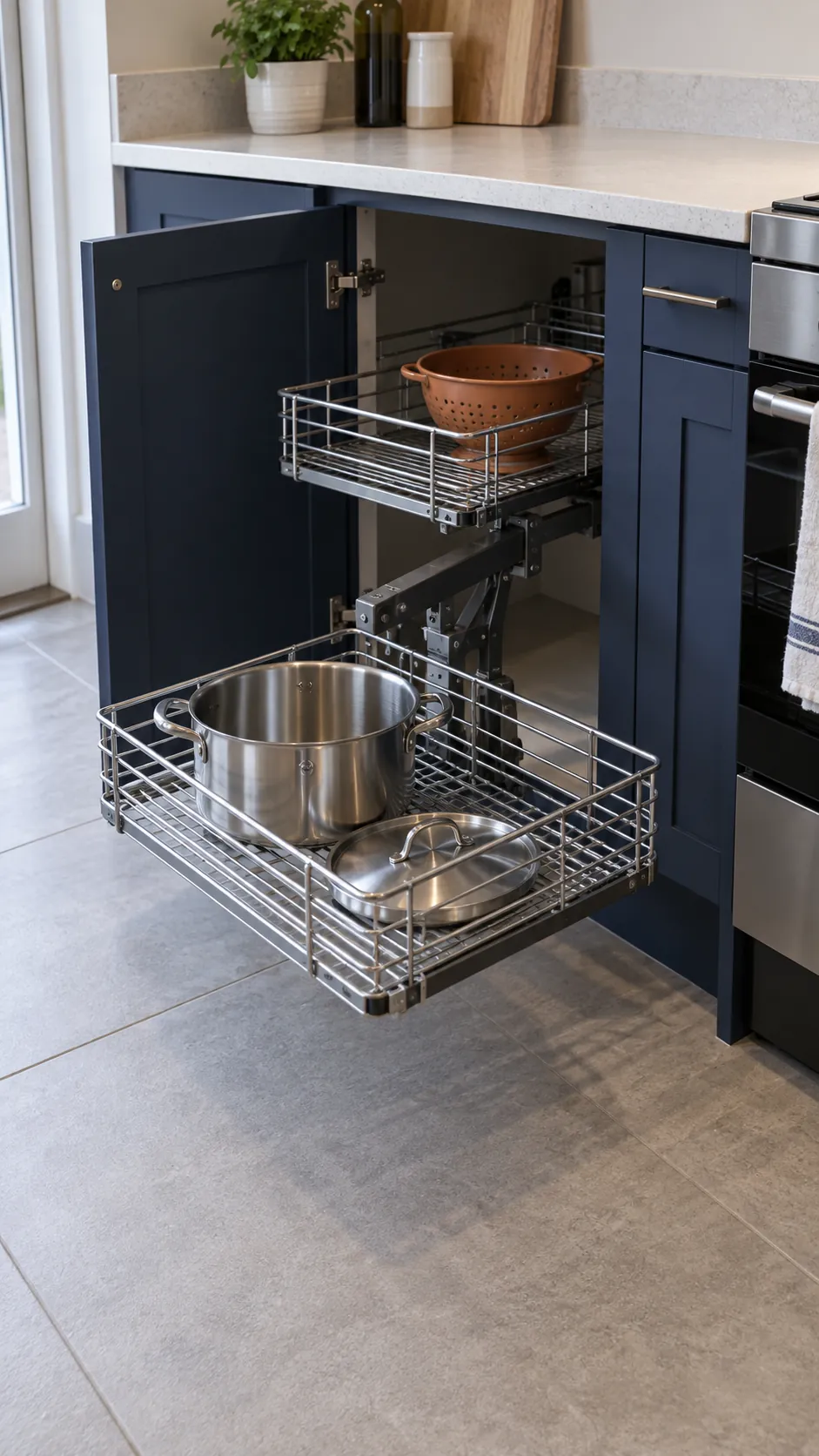
A fitted blind corner system can bring baskets out of the cabinet, but it needs a compatible opening, cabinet box, door arrangement, and installation surface. Compare the maker’s required clearances and weight limits with your measurements rather than choosing by cabinet width alone. Confirm that baskets can travel past neighboring handles and that you can reach the rear section in the extended position.
These mechanisms take some interior space and may require drilling, so a renter should get permission before installation. Plan where bulky pots will sit without handles catching the frame. If the cabinet is damaged or its construction is uncertain, ask a qualified installer to assess it before adding loaded moving hardware. Ask whether the mechanism can be serviced without removing the surrounding cabinet.
Make the back visible and keep one route clear
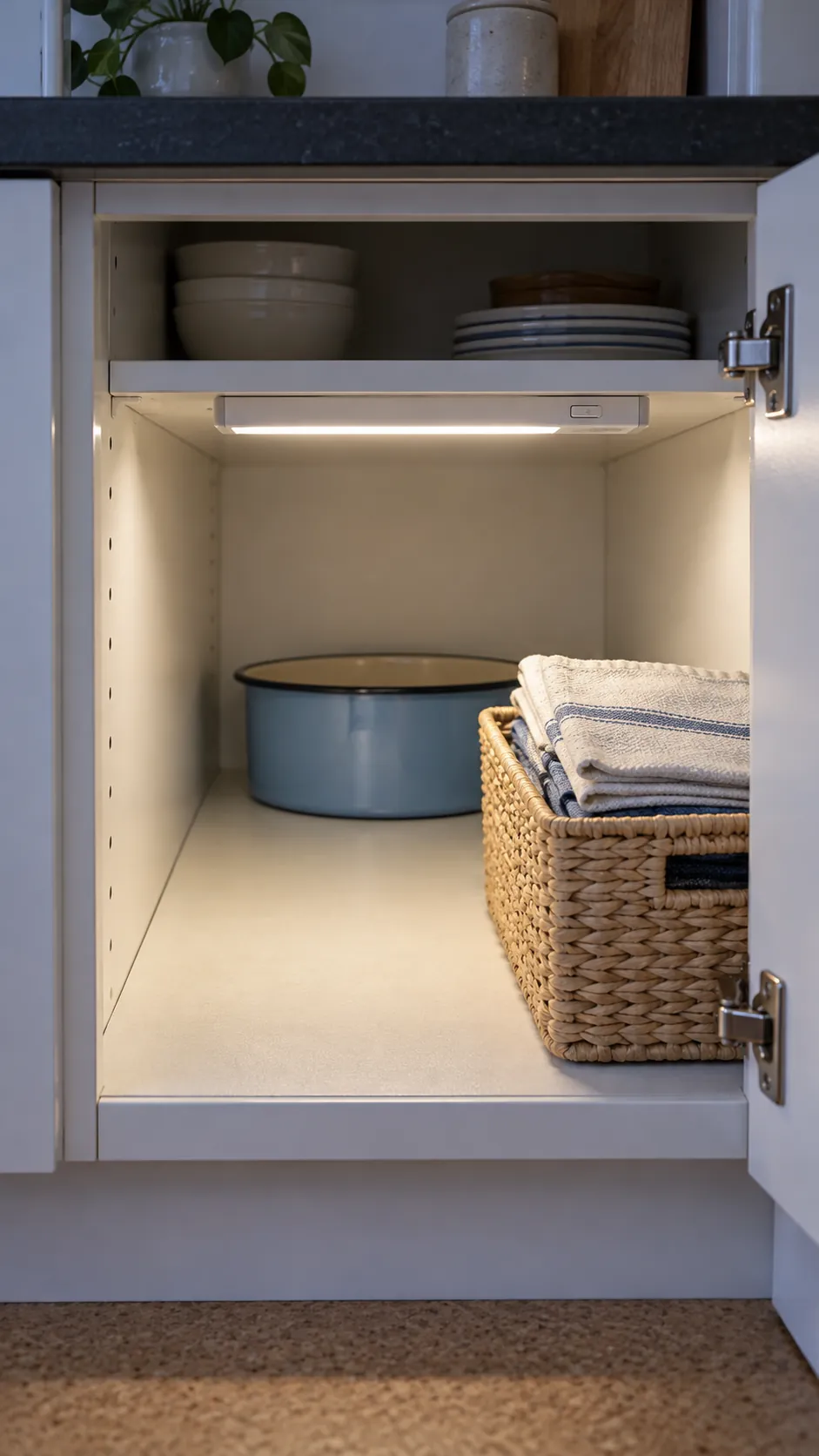
A removable light can improve kitchen cabinet visibility, but it should illuminate the shelf from the opening rather than hide behind the contents. Choose a product suited to the location, follow its mounting and battery instructions, and keep it away from heat, water, and anything that blocks door closure. A pale removable liner can also make dark objects easier to distinguish, provided it lies flat and does not obstruct movement.
After a week of normal cooking, retrieve the least accessible item and put it back again. If that task requires clearing several other objects, reduce the contents or change the grouping. The useful measure of compact kitchen storage is whether you can find and return an item, even if that means leaving the deepest patch empty.