The empty patch beside the mirror is not always the best place for a picture. Check the side walls and the reflection first. A good pairing gives the circle room to breathe and keeps the sink area useful.
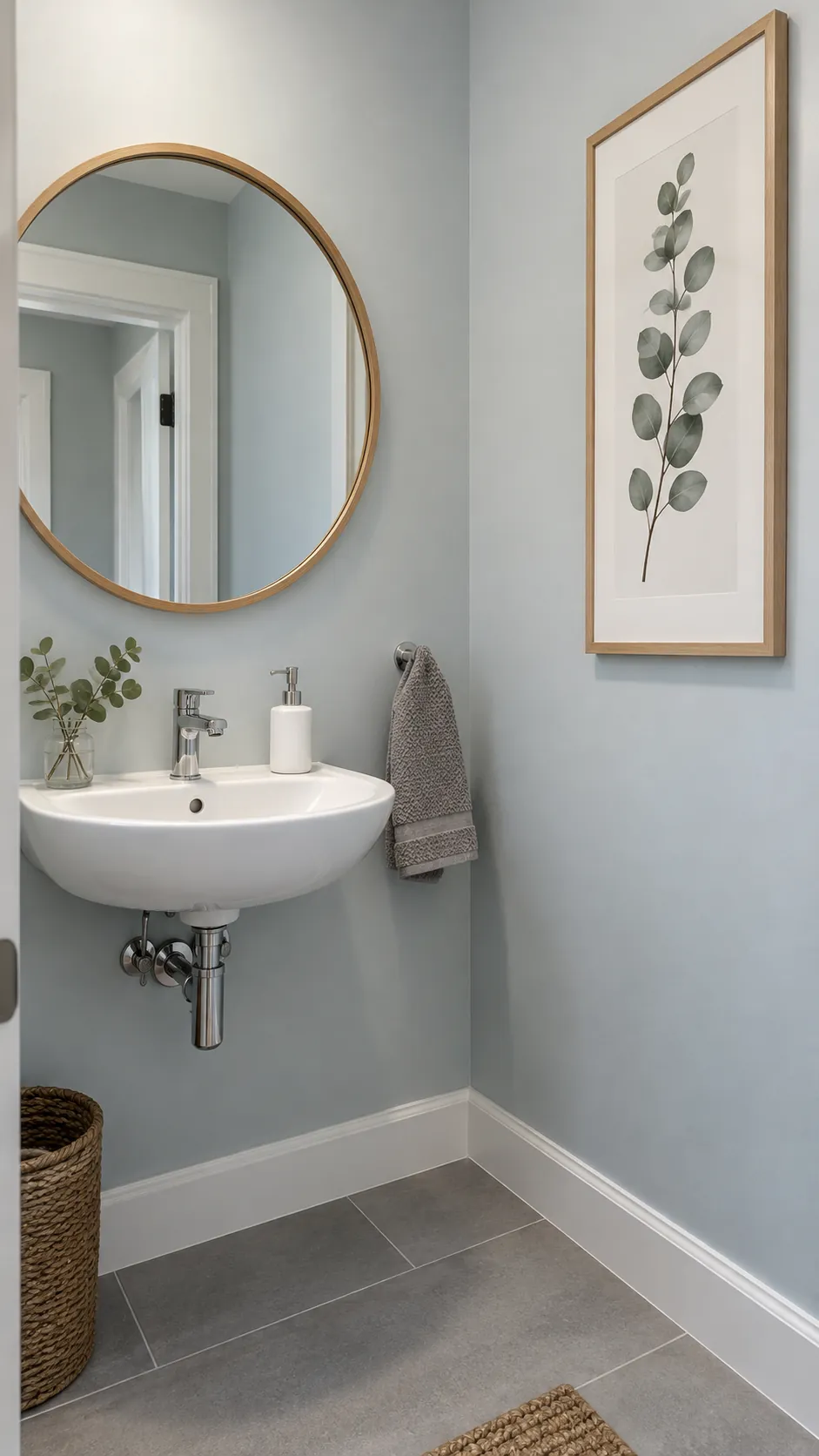
A tall botanical beside the curve
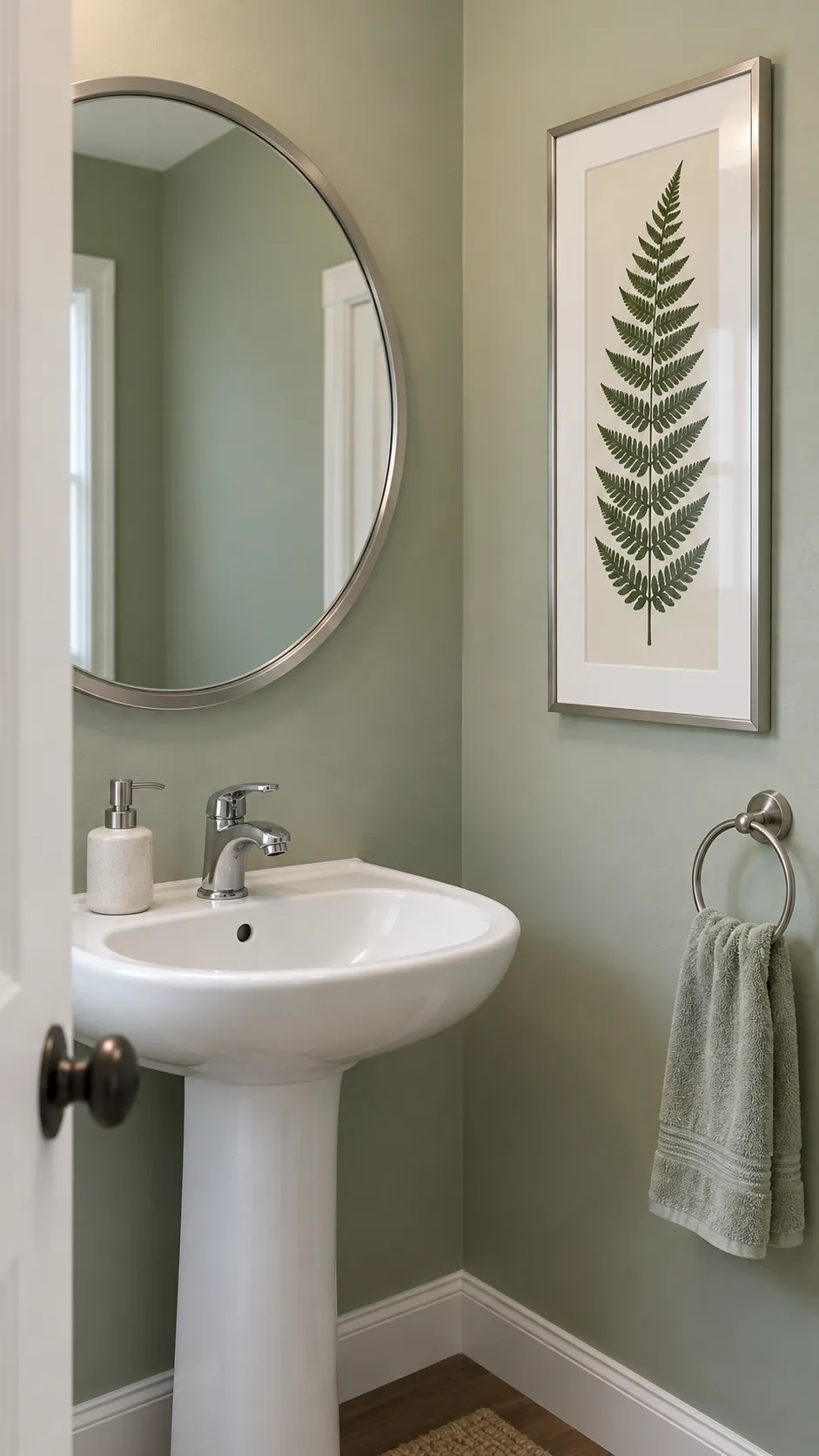
A narrow botanical print gives a round bathroom mirror a useful straight neighbor. Put it on the adjacent wall when the sink wall has little spare space. Match its frame to one existing finish, then leave enough open wall that the two shapes read separately.
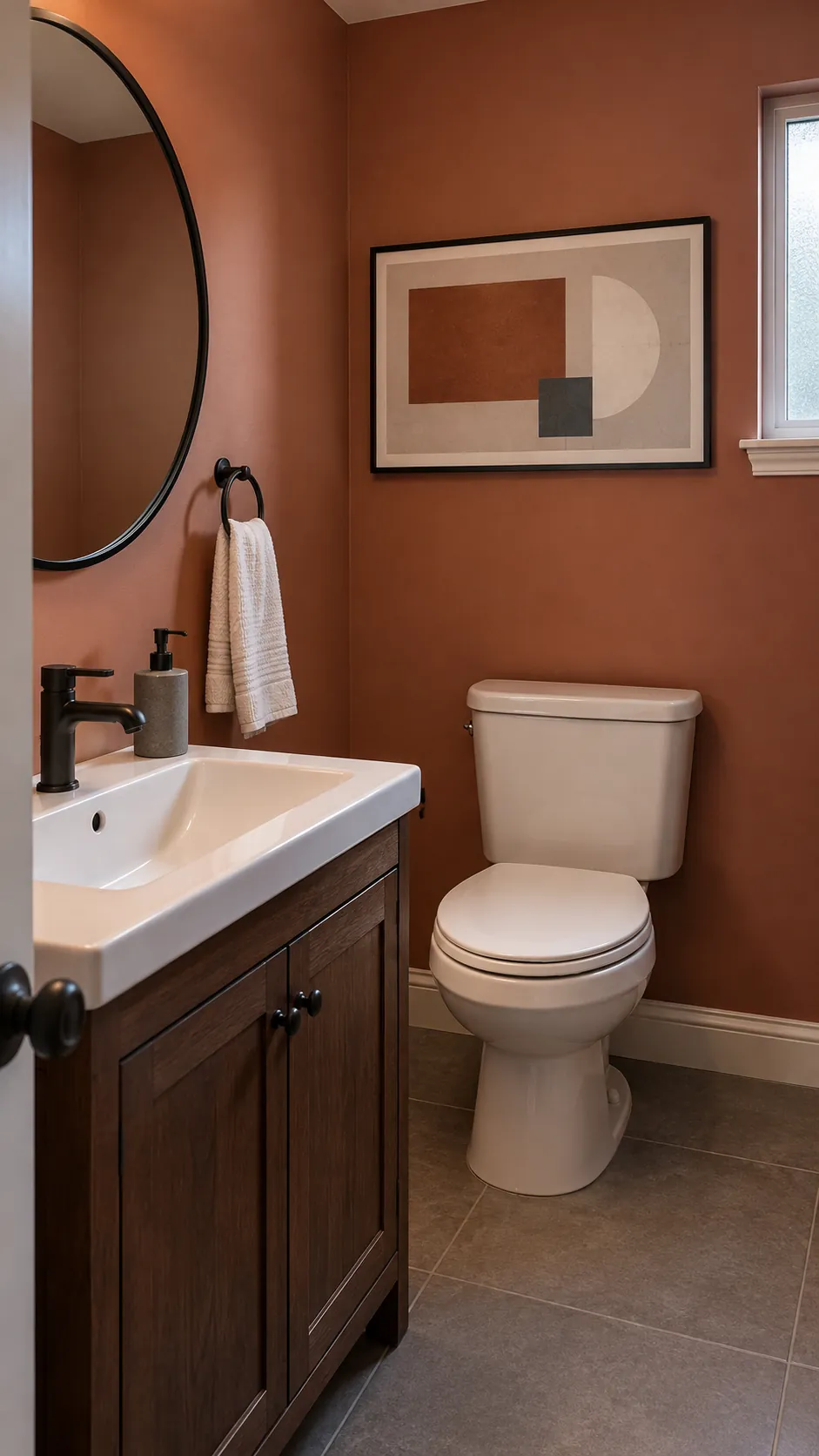
One wide geometric print above the toilet
A horizontal geometric composition can balance a circular mirror without adding another circle. Hang it over the toilet only where the frame clears the tank and remains secure during cleaning. Repeat a color from the print in a towel rather than adding several smaller pictures around it.
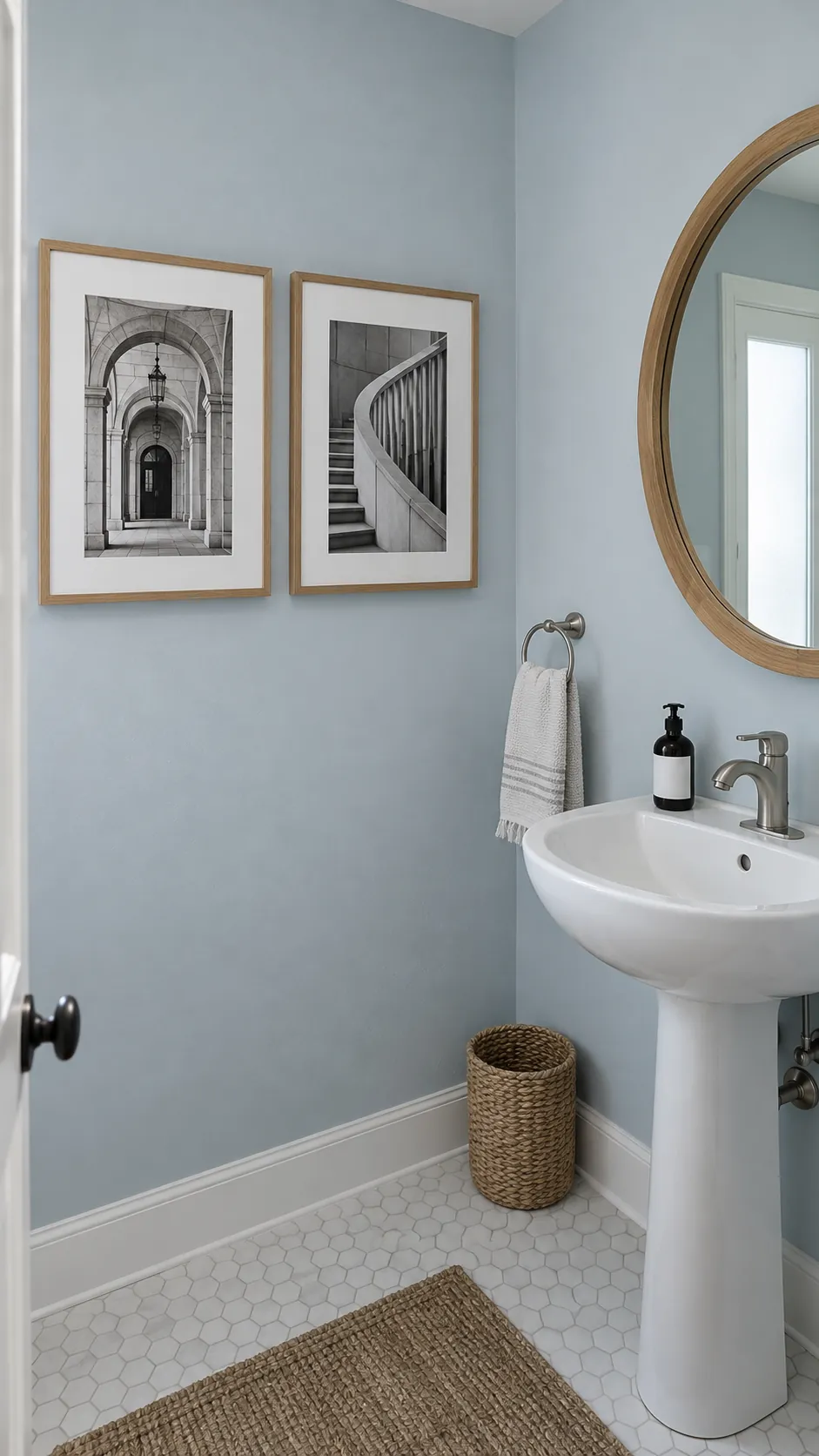
A pair of small architectural photographs
Two black and white building photographs introduce crisp lines beside a soft mirror shape. Keep their frames and outer dimensions alike so the pair reads as one calm arrangement. Check the reflection before fixing them, because a picture that looks balanced directly can feel crowded when doubled in the glass.
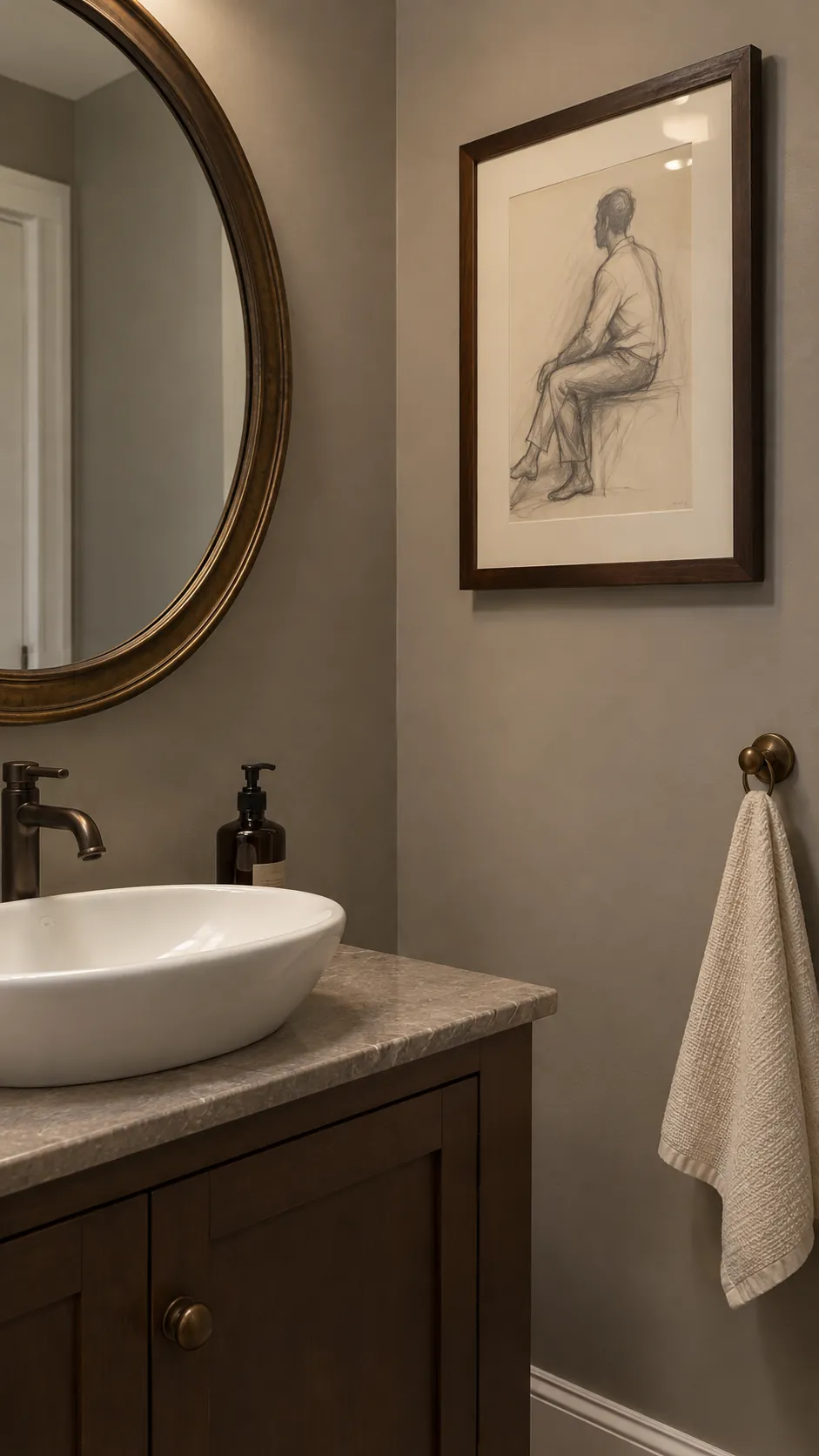
A single charcoal figure study
A restrained figure drawing can give a simple basin wall a personal focal point. Choose an original work or reproduction you enjoy seeing close up, with enough blank paper to keep the room quiet. A sealed frame offers more protection from splashes than an exposed paper edge, although valuable art is better kept away from moisture.
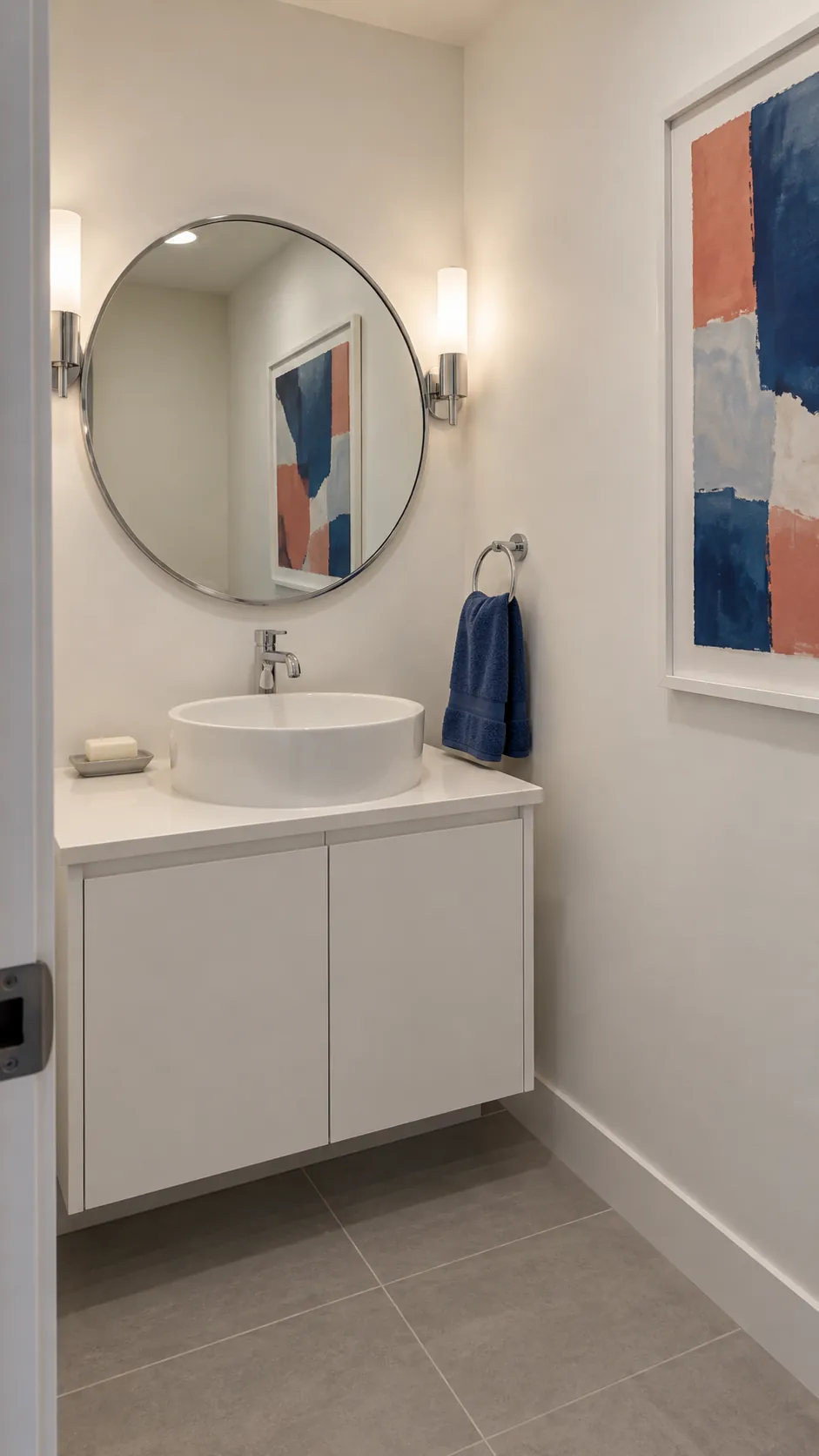
A colorful abstract on the opposite wall
The opposite wall offers space when sconces already fill both sides of the mirror. Use one abstract with a clear color family, and check how it appears in the round reflection. Keep the basin accessories simple so the reflected art adds interest without competing with soap and towels.
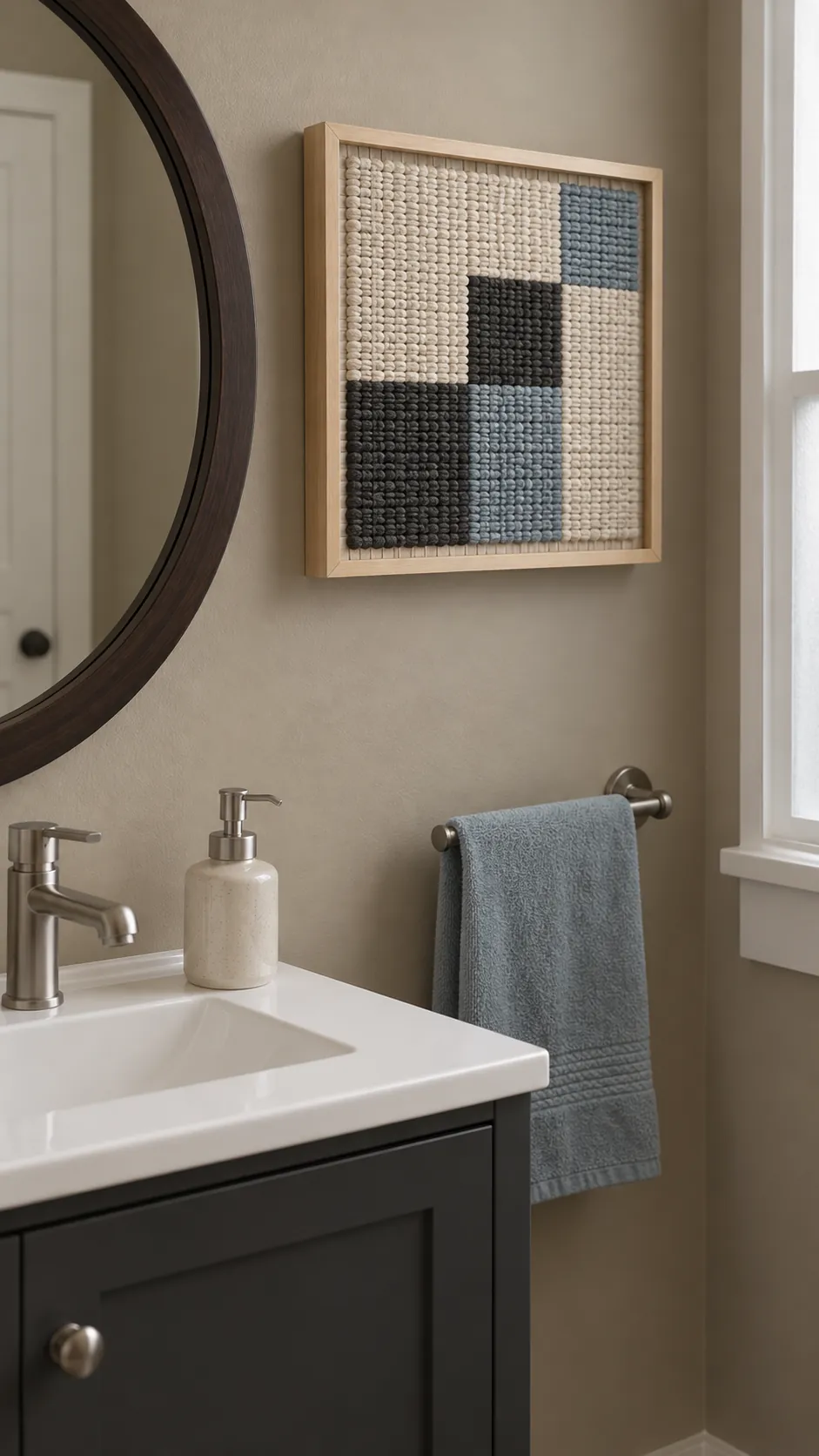
A small woven panel for softer texture
A tightly woven textile panel brings a different surface to a room full of glass and ceramic. Place it away from the sink splash zone and inspect it for dust as part of routine cleaning. A shallow frame can define its edges while protecting the weave from frequent contact.
A sculptural relief with a quiet shadow
A shallow plaster or ceramic relief offers dimension without another busy picture. Position it where side light reveals the raised pattern, and use fixings rated for its weight and wall type. Leave clear space around the piece so the round mirror still has a distinct outline.
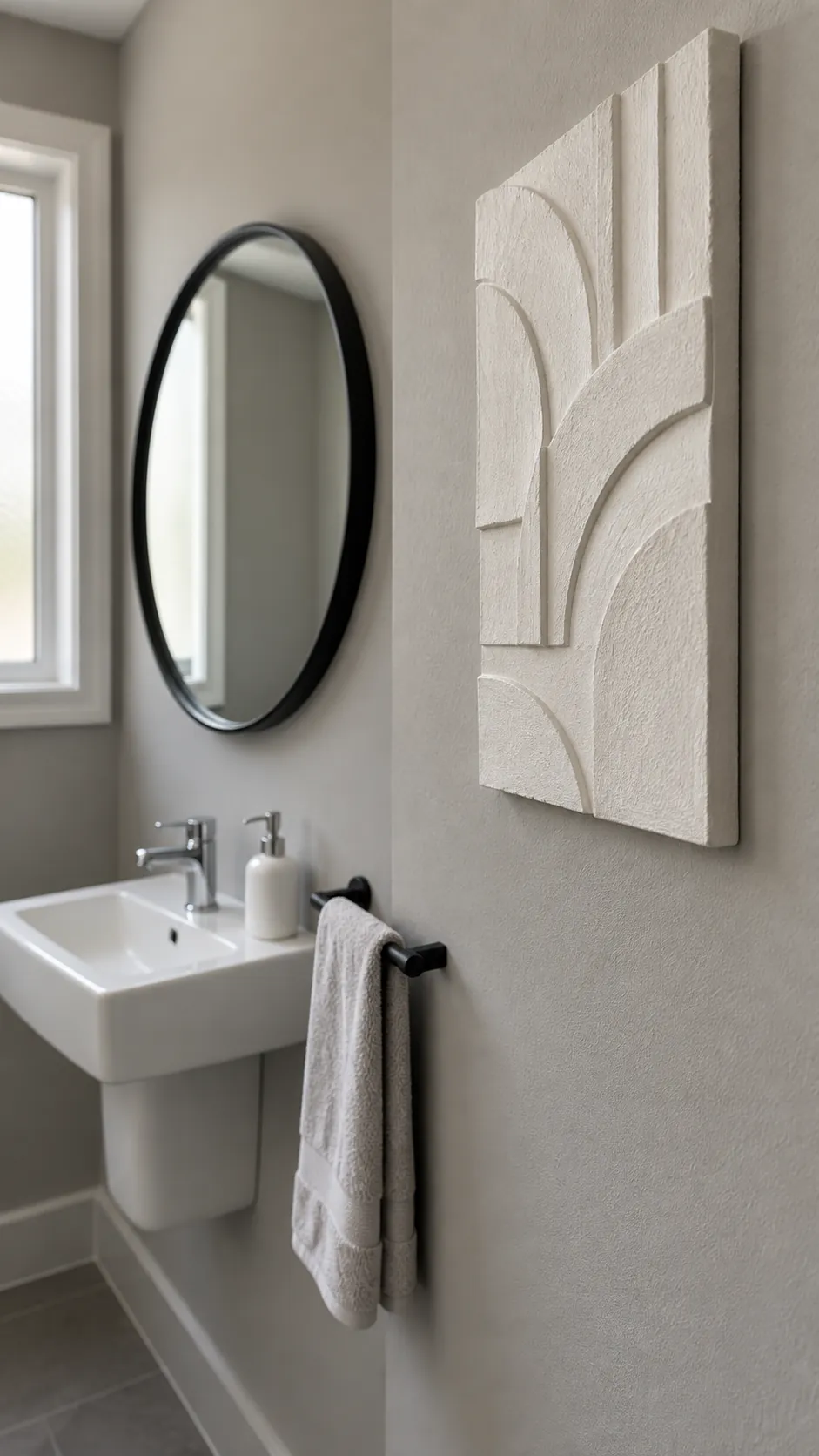
A modest landscape on a side wall
A small landscape can add depth without taking over the sink wall. A muted coastal or field scene works especially well when one color connects to the painted walls. Choose a frame size that fits the wall you have, rather than squeezing a wide picture into a narrow gap beside the mirror.
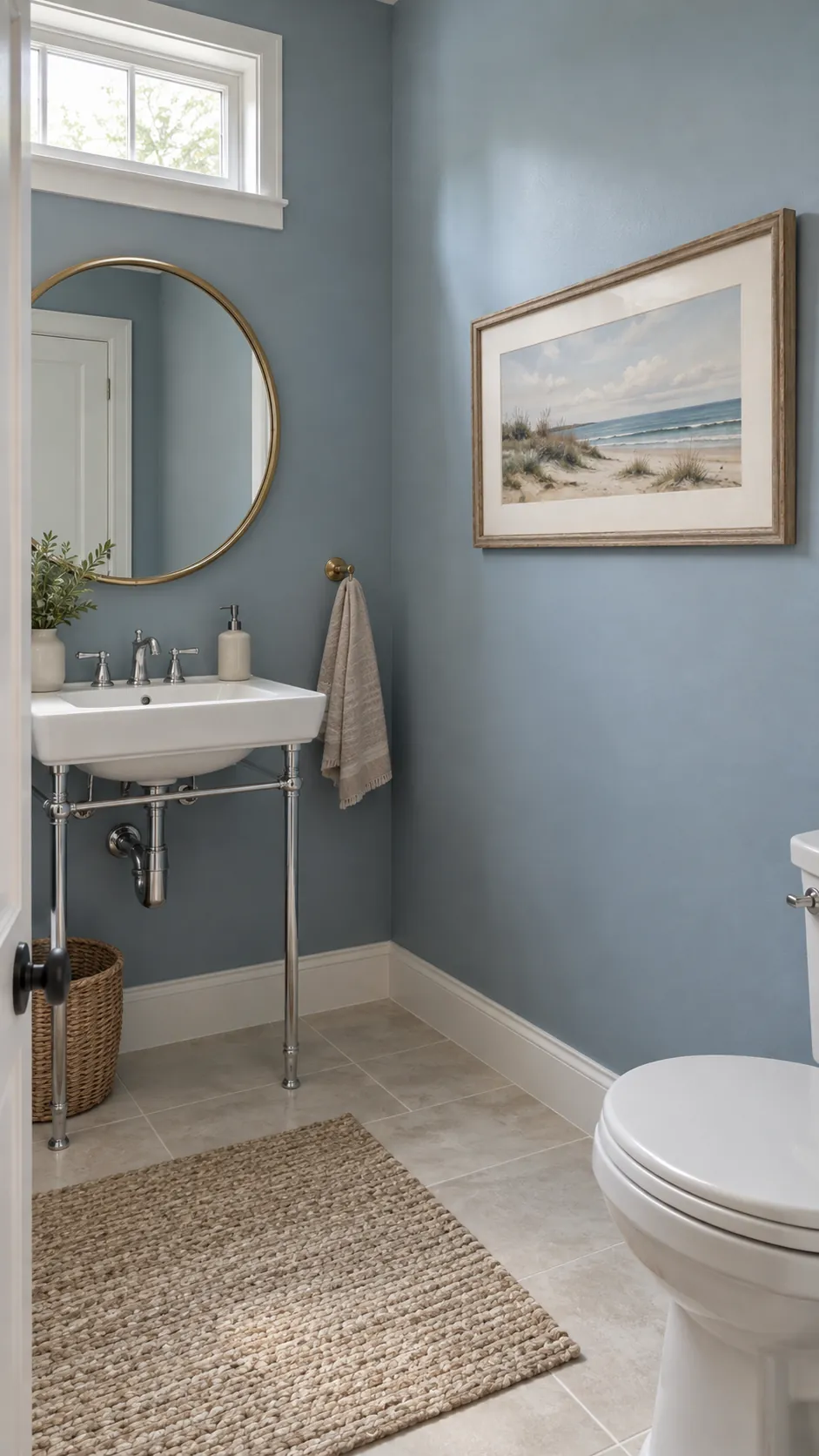
A two print stack with one shared edge
Stack two prints vertically where the mirror leaves a tall strip of wall. Align one outer edge and keep the gap between frames consistent to make the stack intentional. Use different but related subjects, such as a leaf study and a seed pod, instead of repeating the same image twice.
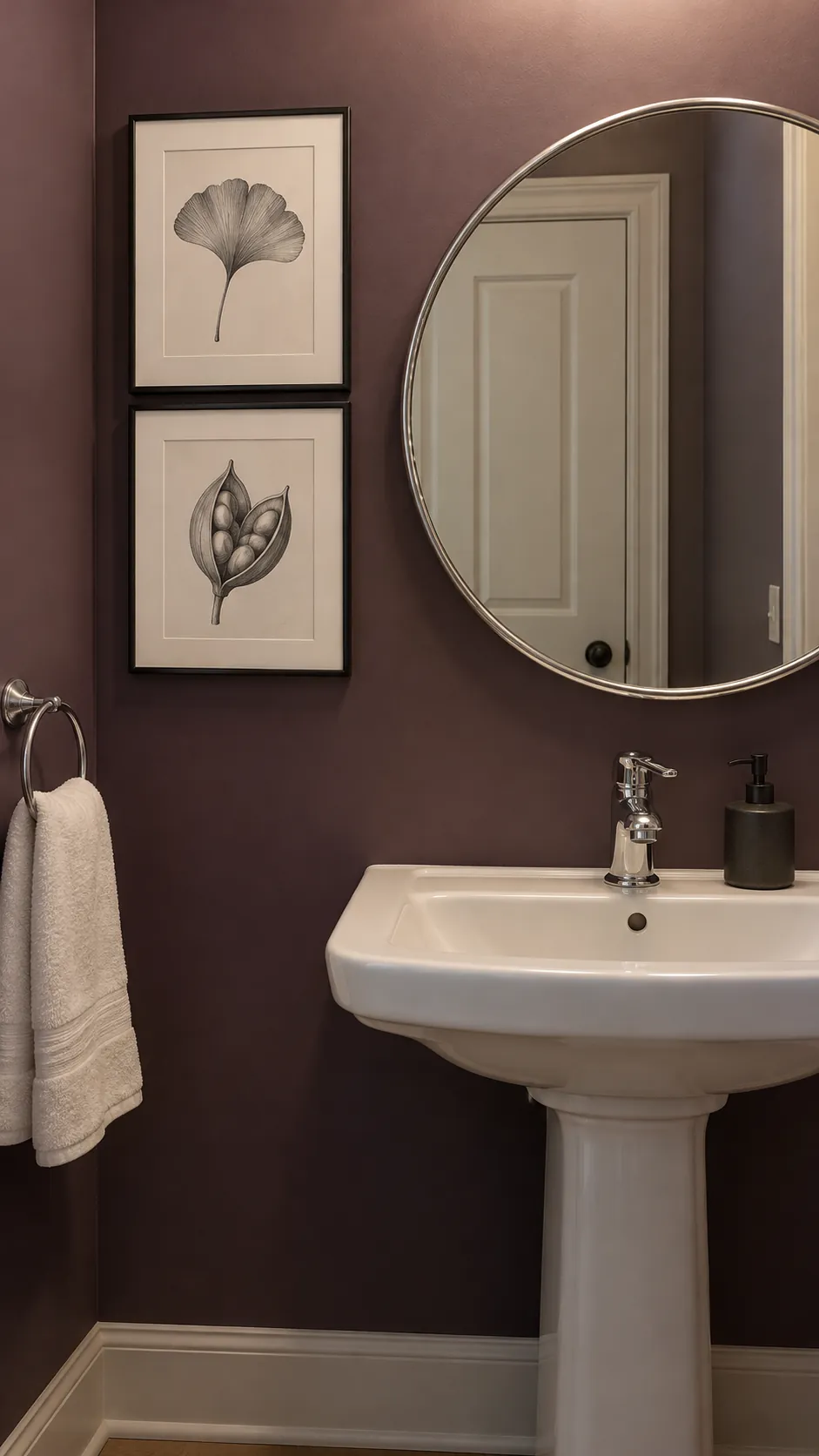
A small still life on a picture ledge
A shallow ledge lets a renter change a still life print without making new holes each time. Secure the ledge and leaning frame according to their hardware instructions, with room for the door to move fully. Keep the ledge out of reach of splashing water and avoid treating it as storage for loose toiletries.
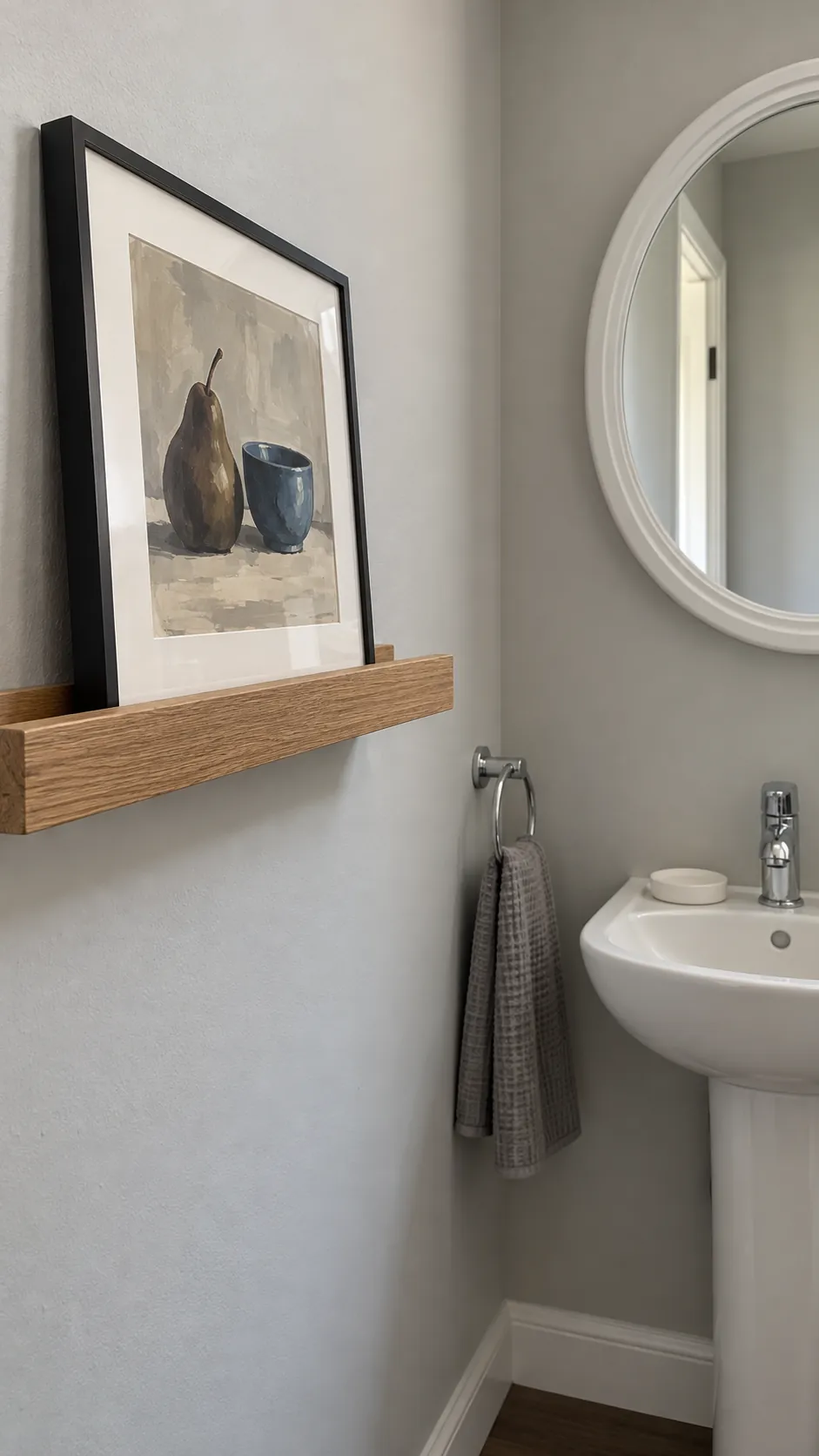
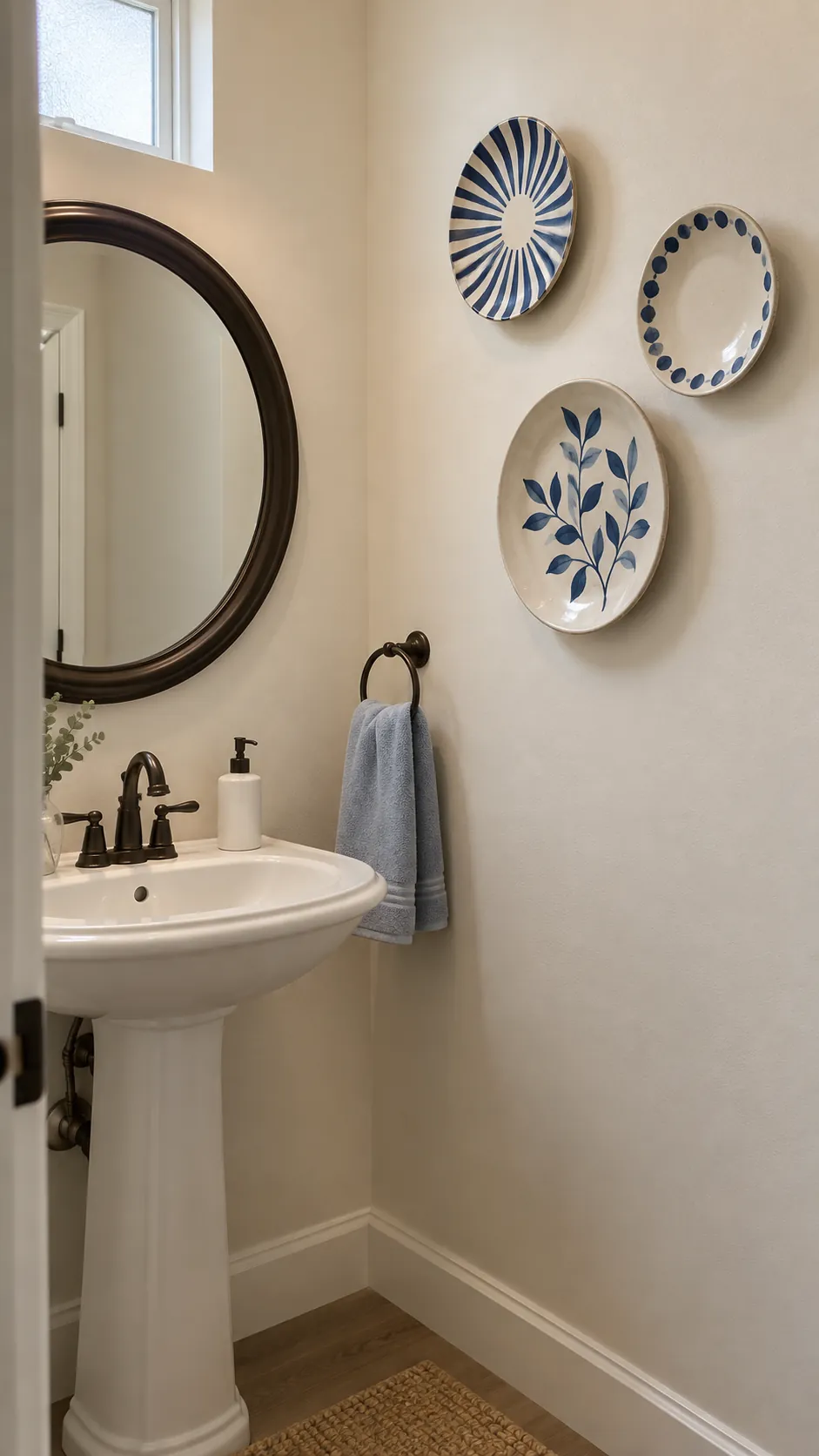
A restrained fan of decorative plates
A few decorative plates can echo the mirror curve while bringing pattern to an otherwise plain room. Use purpose made plate hangers suited to the plates, and check every attachment before hanging. Group them on a separate wall so the sink area keeps enough visual space for the mirror and lighting.
One framed block print on patterned walls
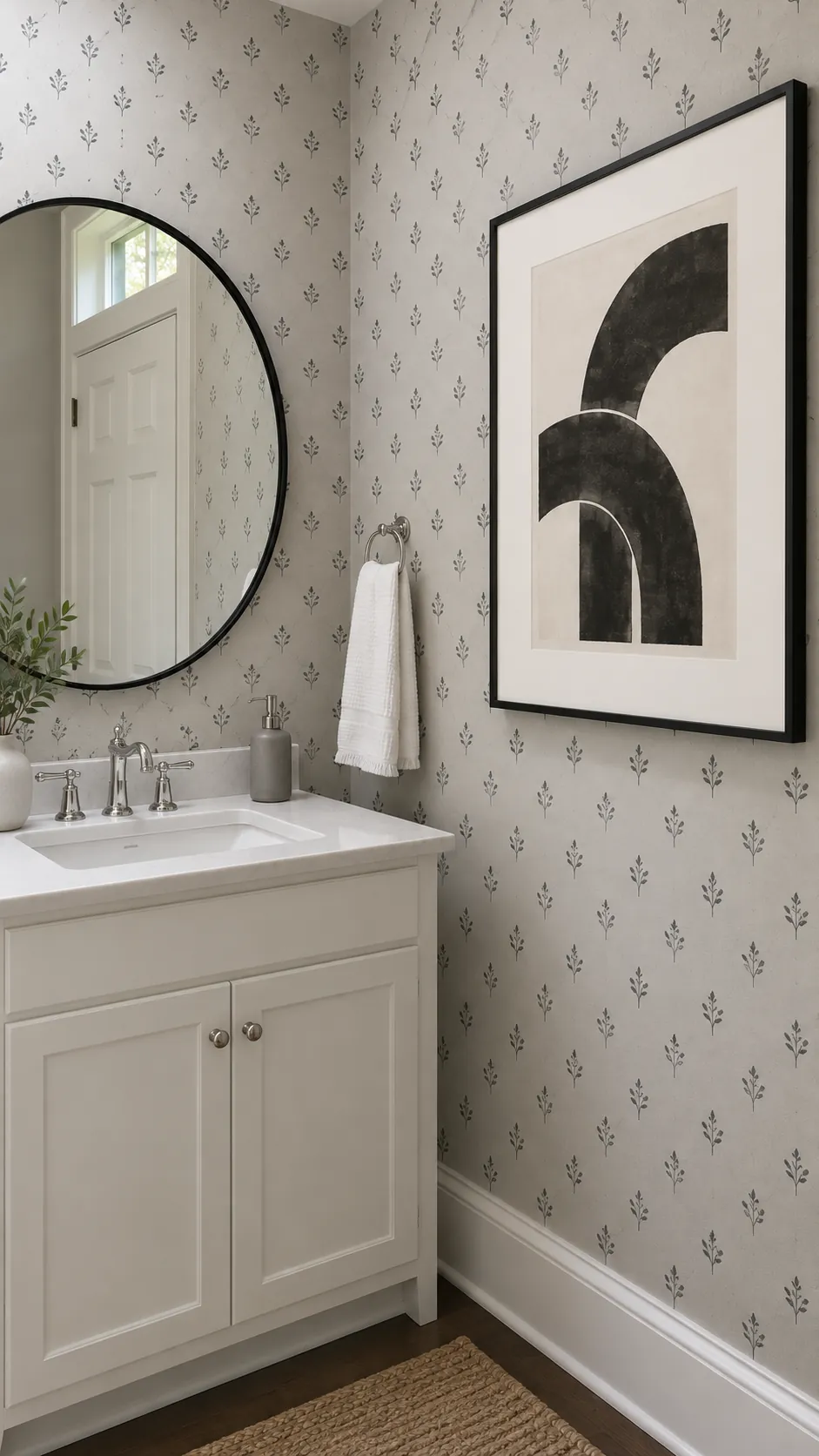
A bold block print can still work with patterned walls when its shapes remain simple. Give the image a generous plain mat and choose a frame that separates it from the wall pattern. Before making holes, tape up a paper outline and view it from both the doorway and mirror to judge the combined arrangement.