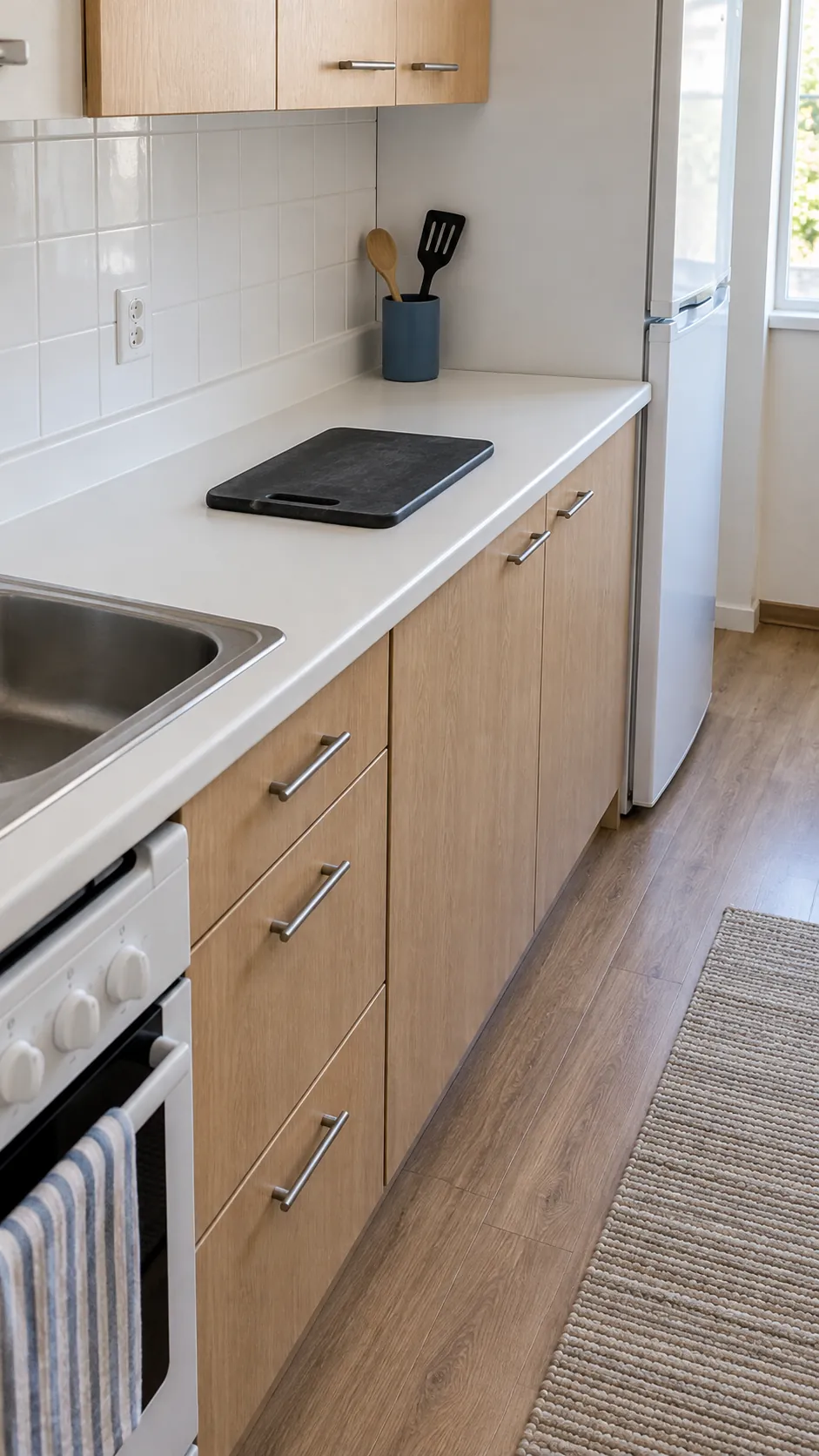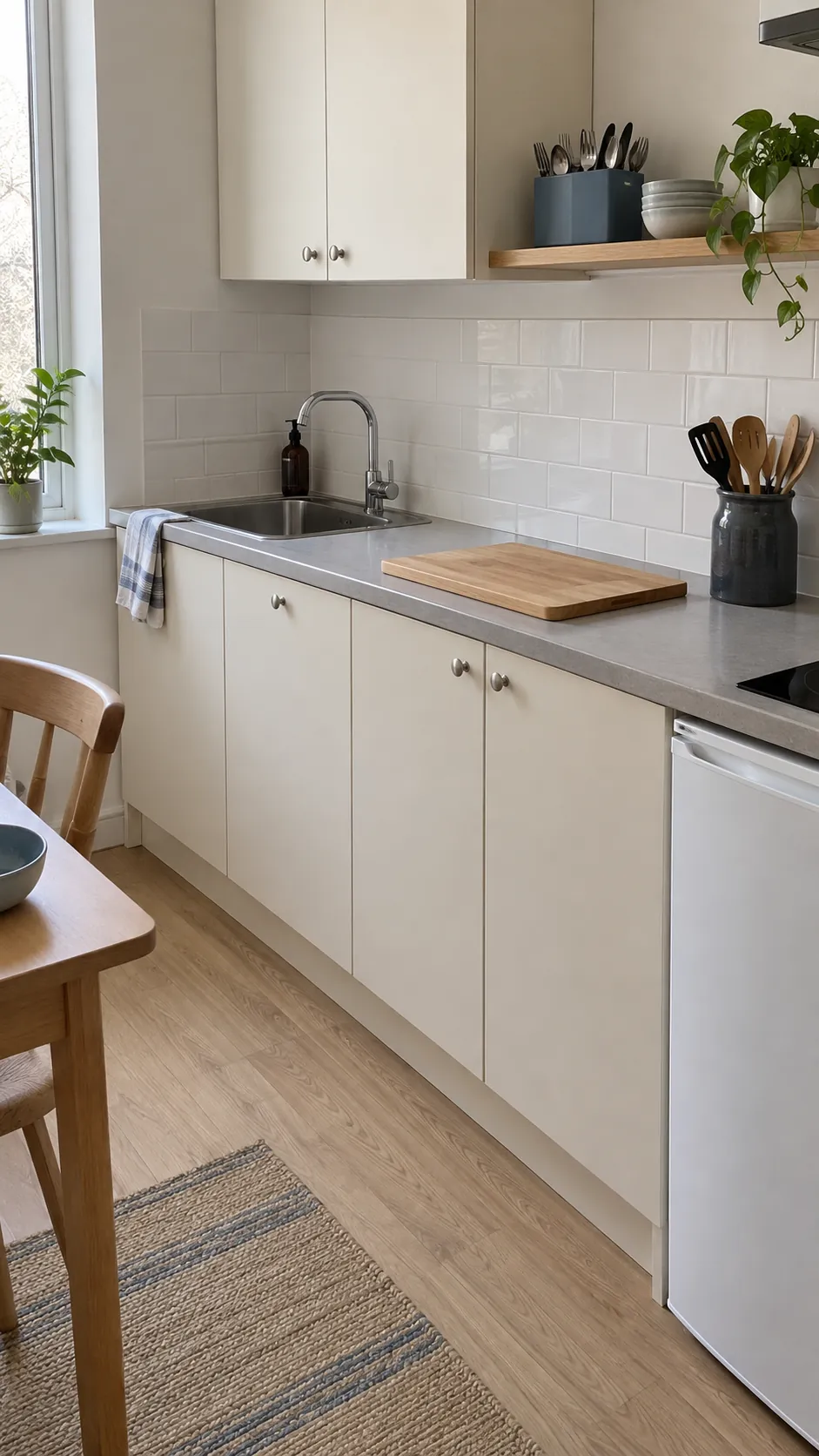
When the only drawer is a false front beneath the sink, forks and cooking tools still need a home. Start with portable storage for the things you use every day, then use existing shelves more carefully. Check your lease and product instructions before attaching anything, and keep door swings, walkways, heat sources, and preparation space clear.
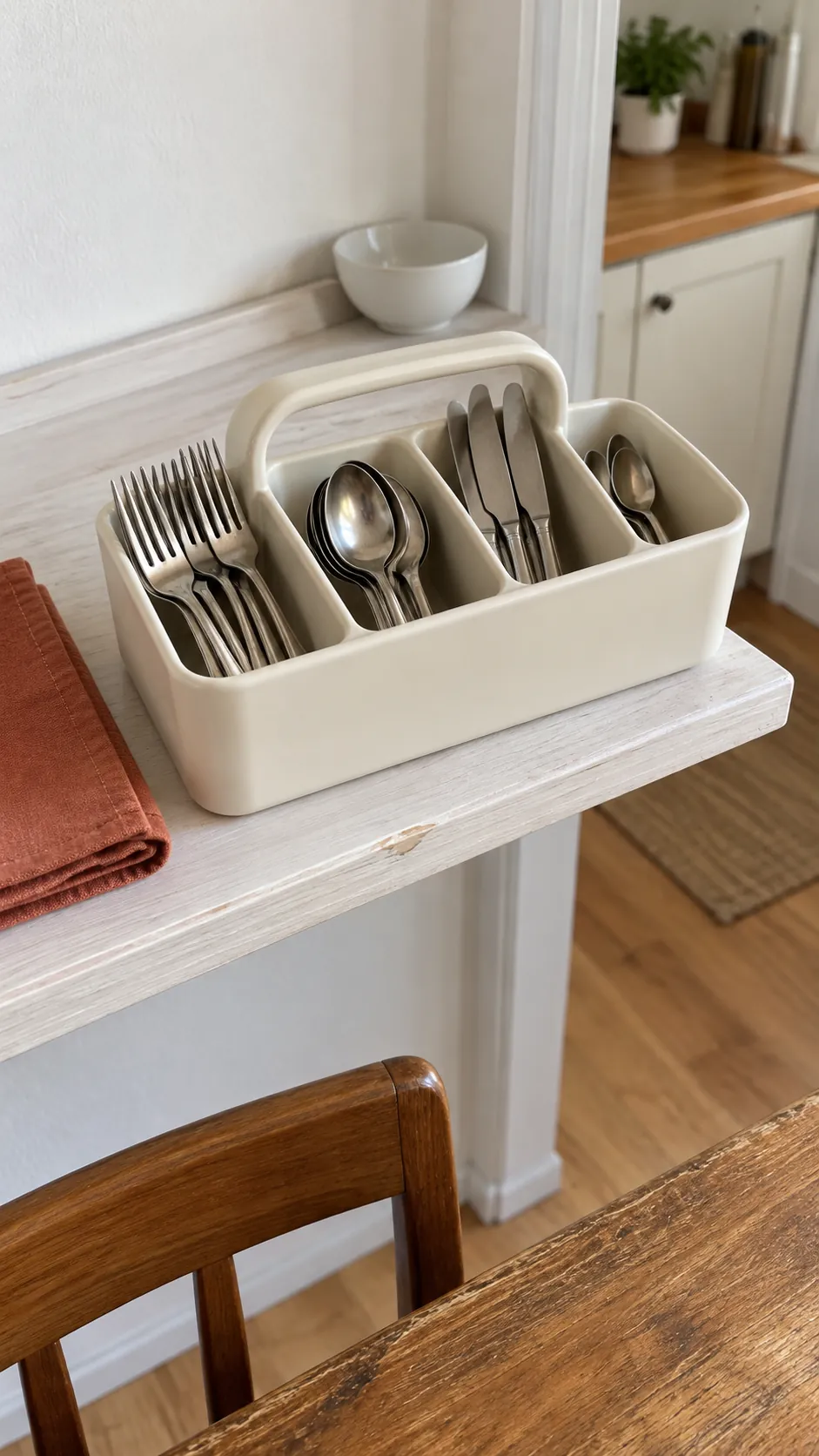
Put daily flatware in a divided carry caddy
A divided caddy gives forks, spoons, and table knives separate homes without a drawer. Choose a washable version with a stable base and a handle that leaves enough room to lift it from its shelf. Keep it inside a cupboard between meals if exposed flatware would collect dust.
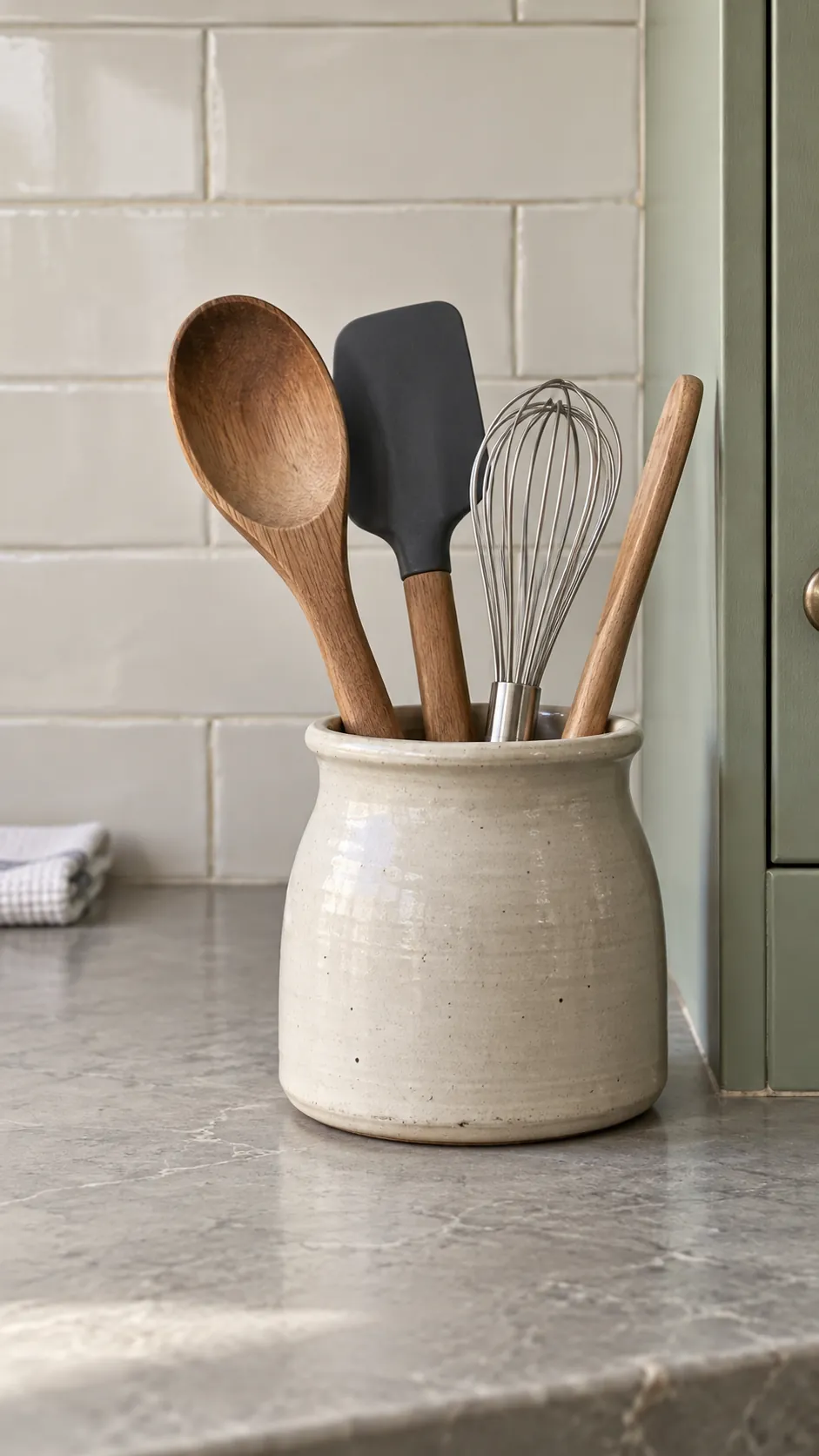
Keep cooking tools in a weighted crock
A broad, heavy utensil crock can hold the few tools you reach for while cooking. Place it outside the heat and splash zones, and leave the handles loose enough to grasp without pulling several tools out together. Store spare spatulas elsewhere so the crock does not become another crowded drawer.
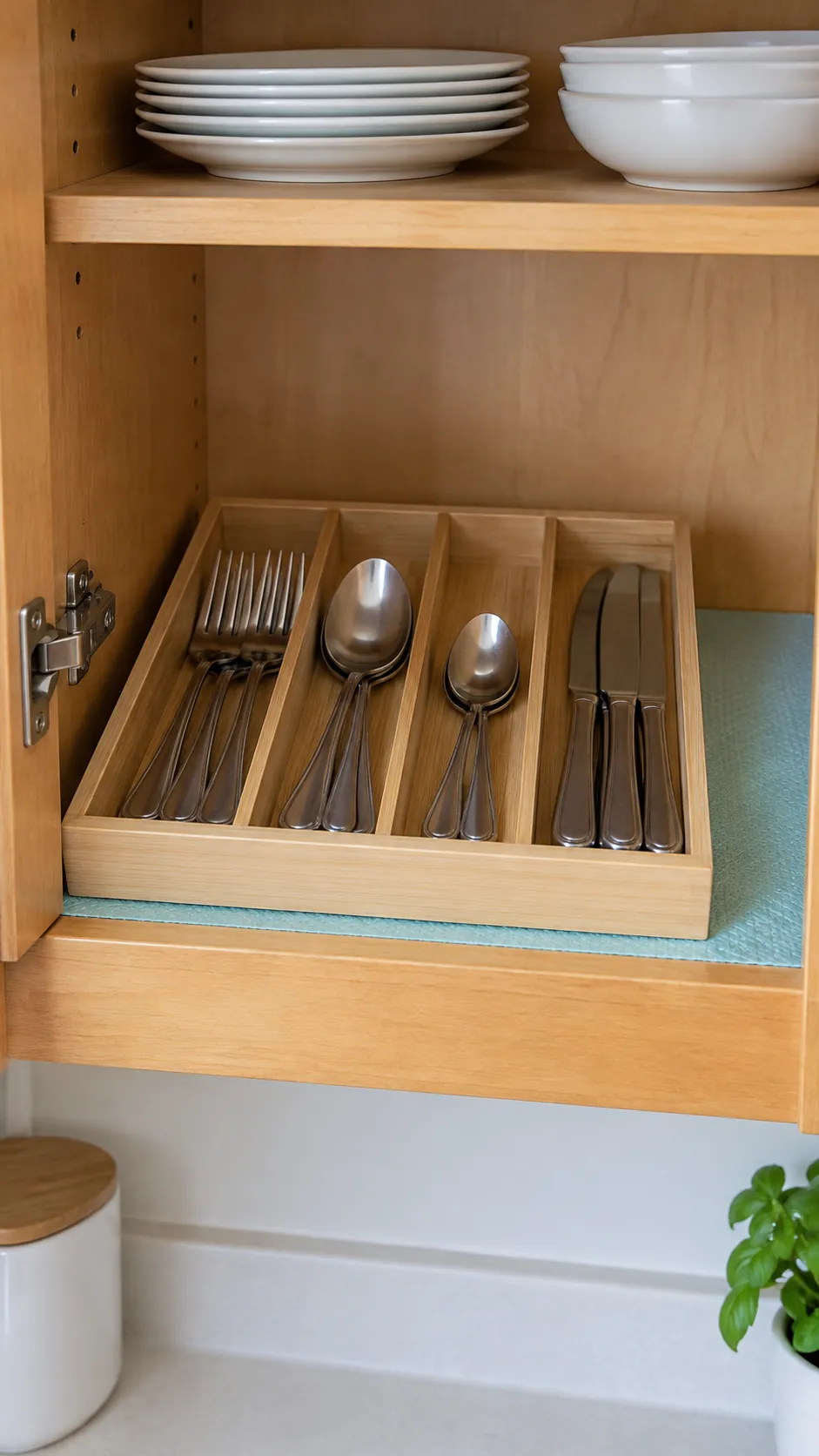
Slide a flatware tray onto a cupboard shelf
A shallow cutlery tray works on a shelf when its compartments remain visible from the opening. Measure both the tray and the clear doorway, then test whether you can lift it out without tilting the contents. A washable liner beneath it can reduce sliding without attaching anything to the cabinet.
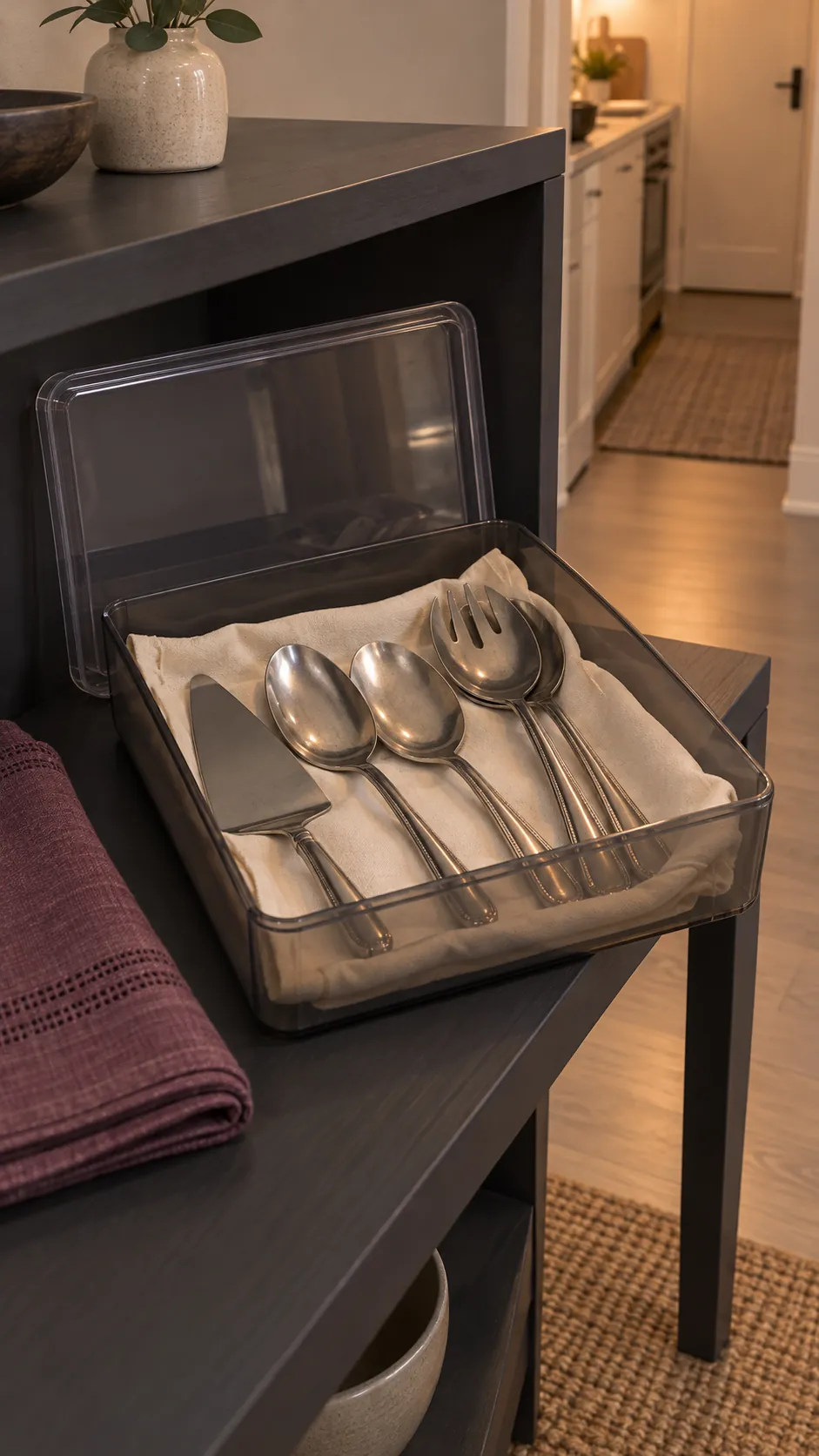
Use a lidded box for occasional serving pieces
Cake servers and extra teaspoons do not need the same access as everyday forks. Keep them in a shallow lidded container that protects them from dust and fits beneath a stack of dishes only if you can still remove it easily. Group pieces by purpose, and add a small removable label if several similar boxes share the shelf.
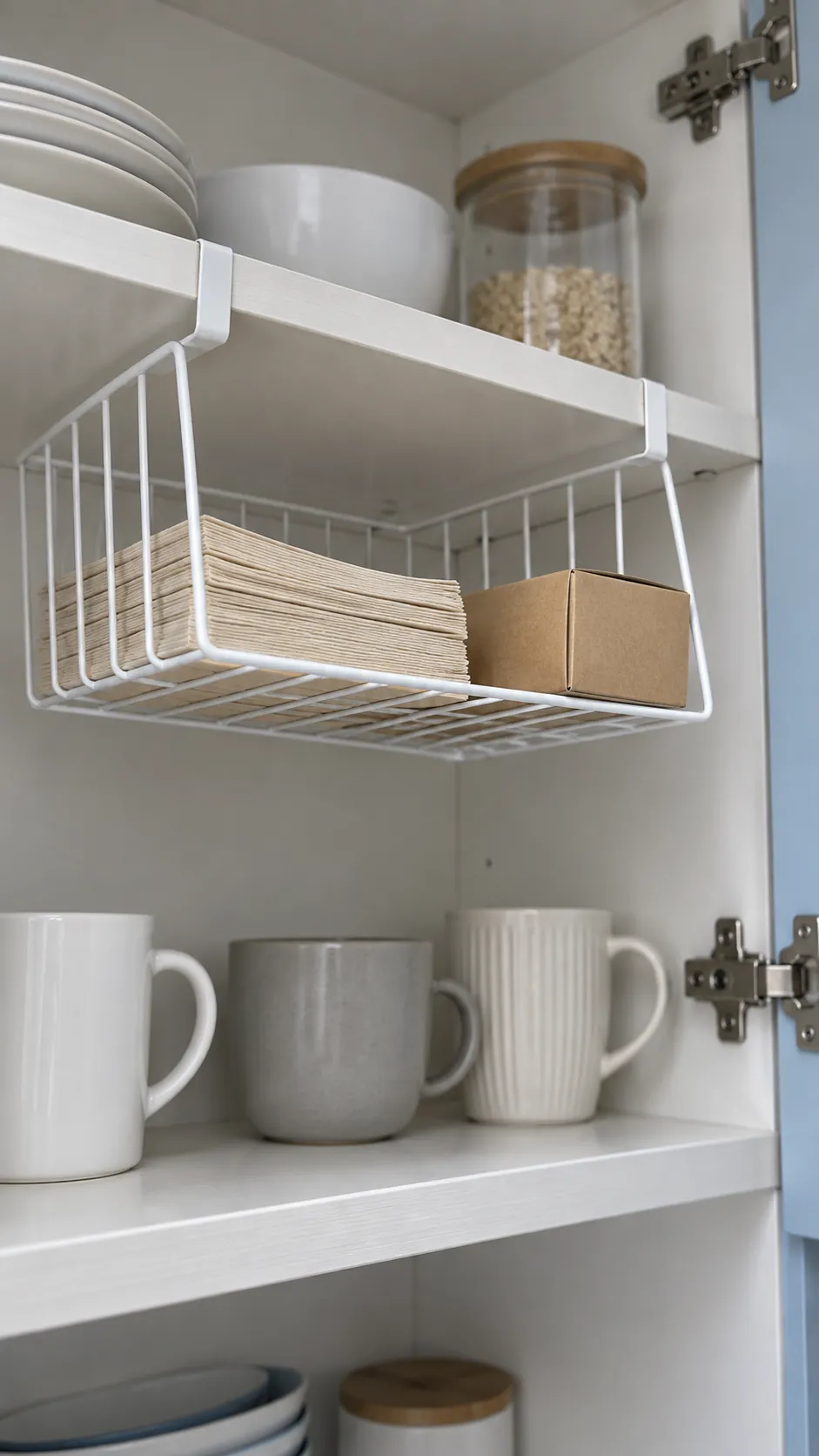
Add a removable undershelf basket
A basket that slips over an existing shelf can use the space beneath a tall opening. Check the shelf thickness, basket load rating, and clearance above the dishes below it before buying. Use it for light items such as napkins or wraps, and confirm that its upper hooks do not prevent the cabinet door from closing.
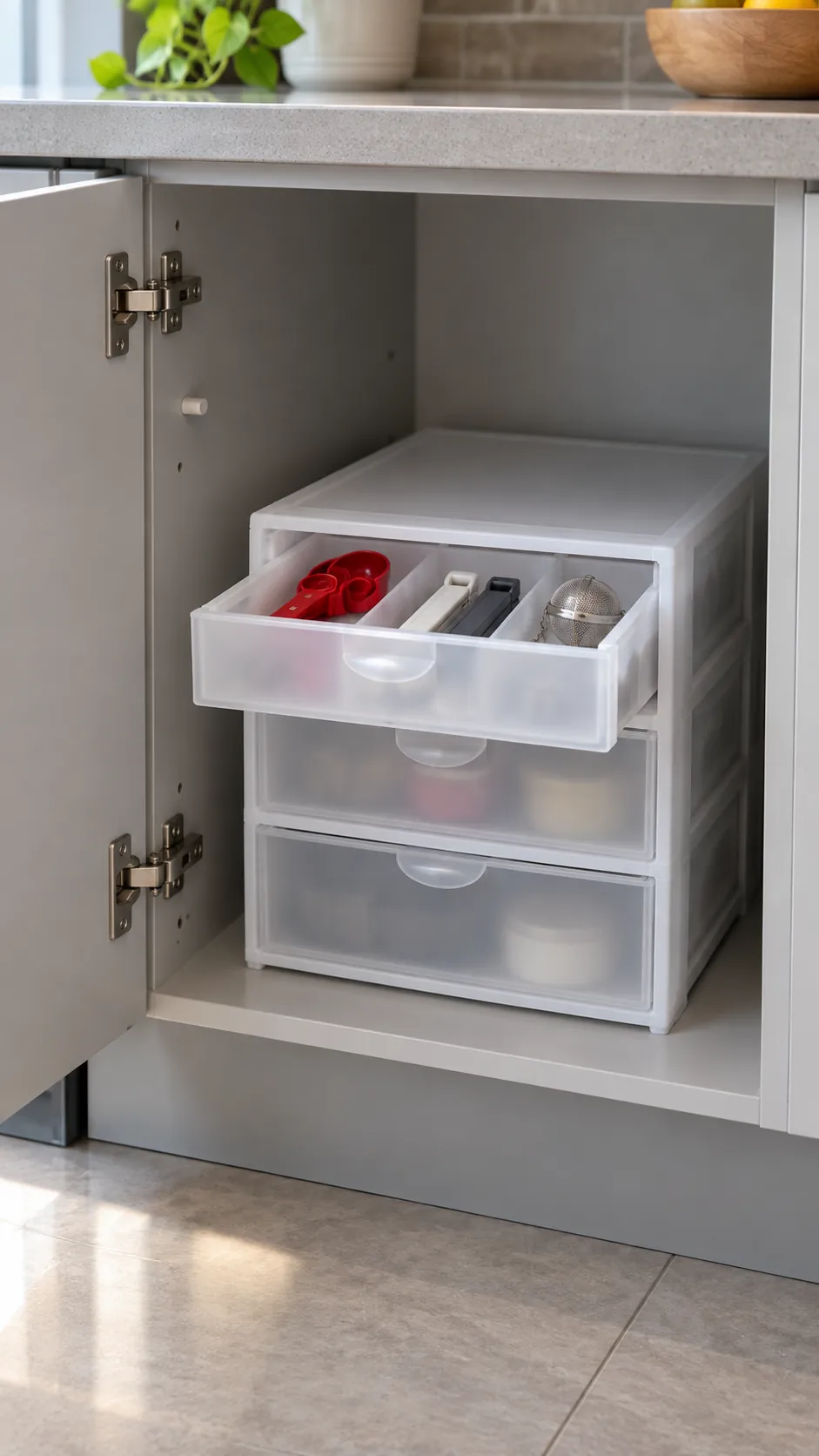
Stack small drawer units inside a cabinet
A freestanding organizer with shallow drawers can sort packet clips, measuring spoons, and other small pieces. Its footprint must sit fully on the shelf, and each drawer needs room to open past the hinge. Keep the unit low and stable, with heavier contents at the bottom and no tools protruding into the slide path.
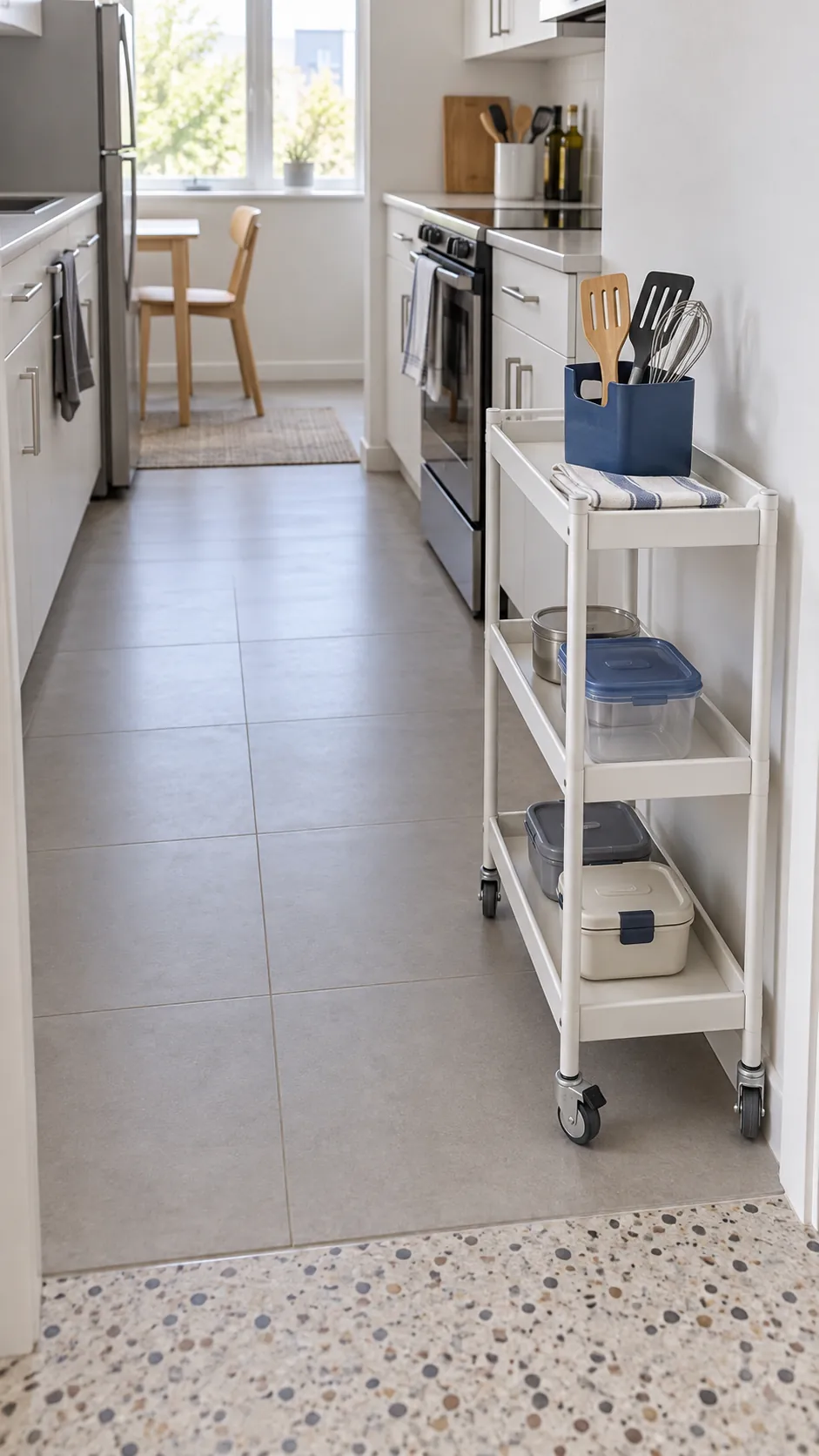
Make a narrow cart your portable tool station
A slim cart can replace several storage functions if the aisle is genuinely wide enough. Put frequently used tools in a top caddy, lighter supplies below, and lock the wheels whenever the cart is parked. Measure door swings and appliance openings first; a cart that must be moved every time you open the oven may create more work than it saves.
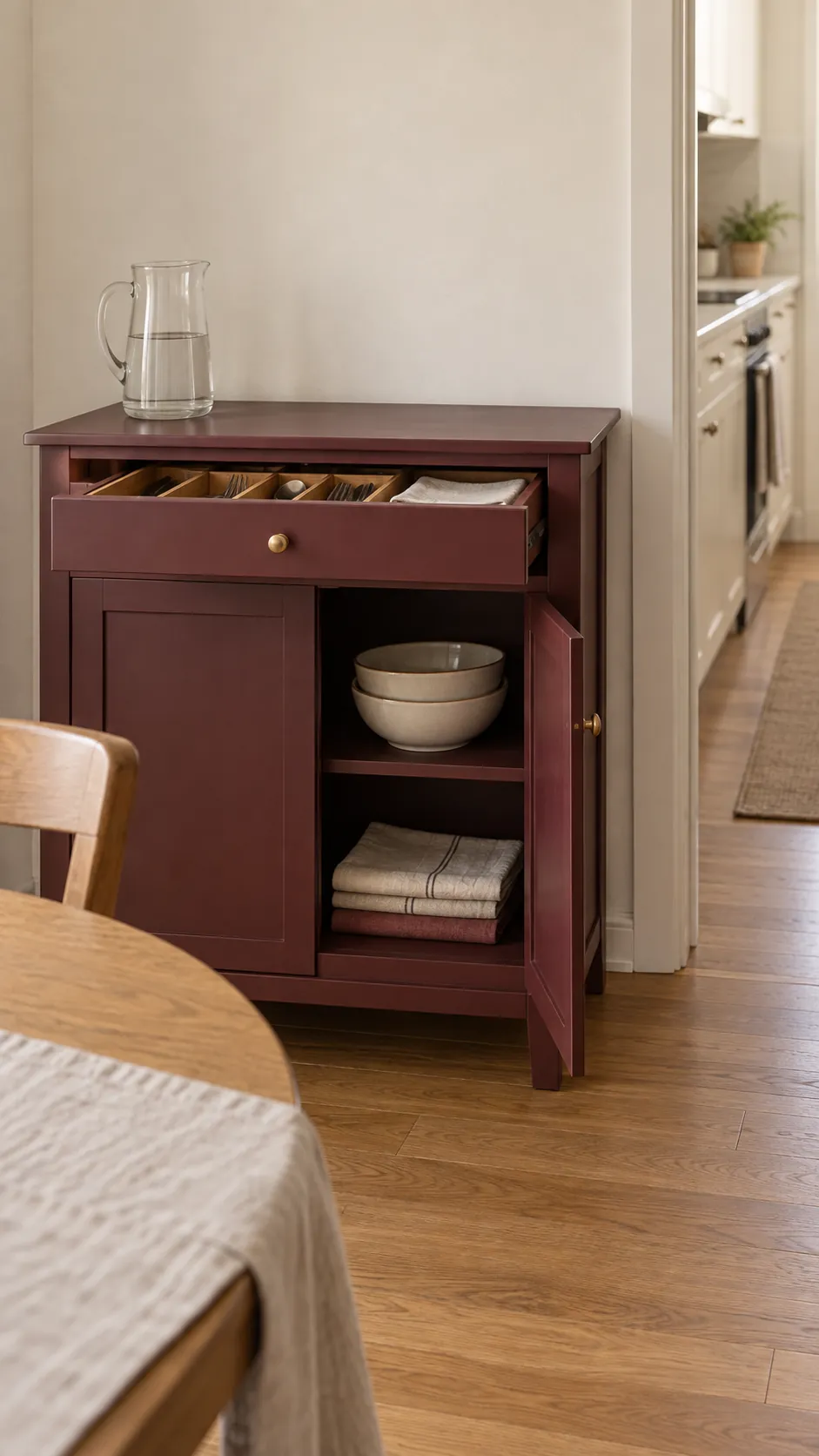
Use a small sideboard beyond the kitchen
A dining area sideboard can hold flatware, serving bowls, and table linens when kitchen cabinets are full. Choose a size that leaves the walkway clear and follow any required anchoring instructions, getting landlord permission where necessary. Move meal serving items there first so cooking tools can stay near the preparation area.
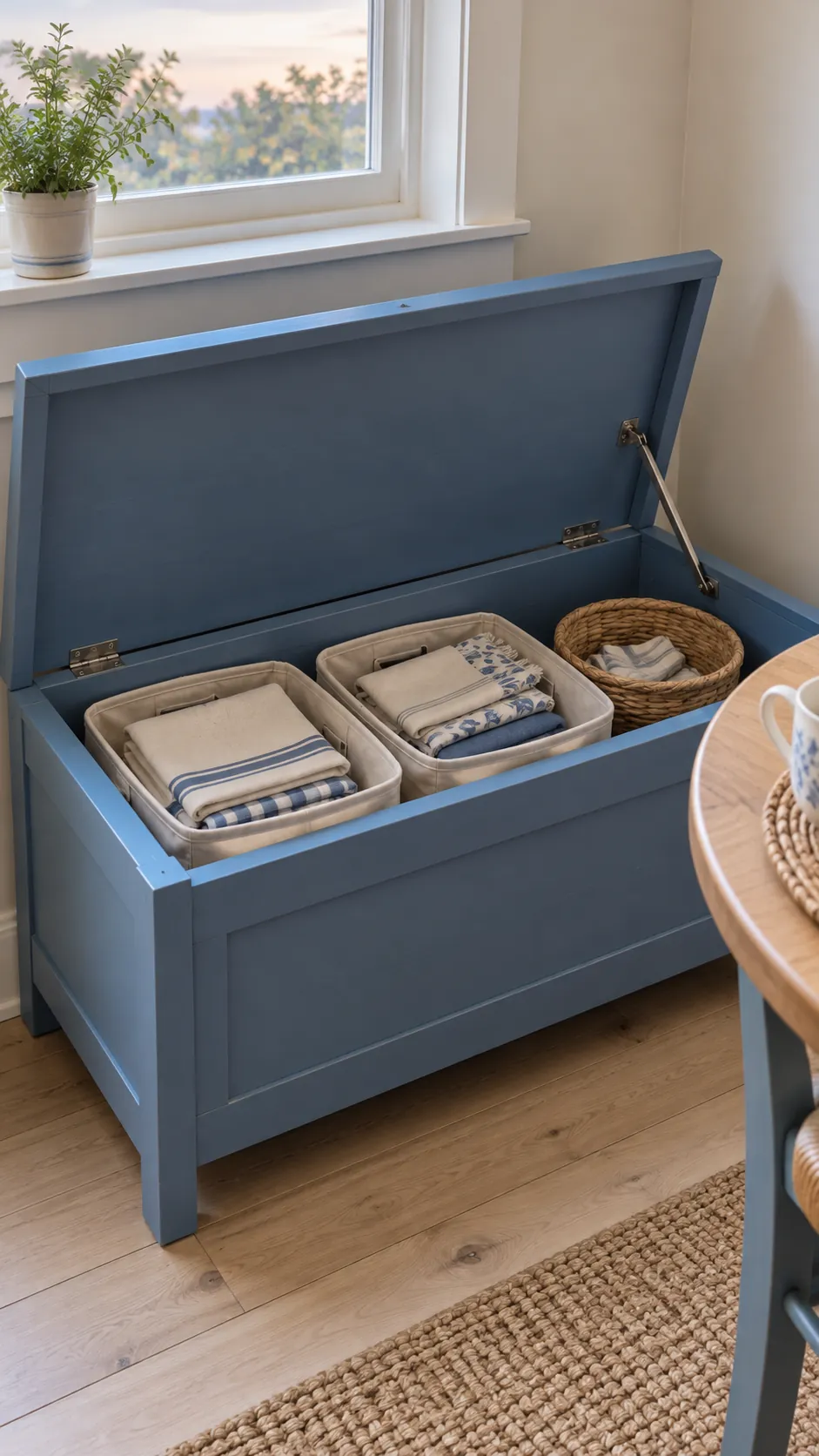
Give one dining bench a storage role
A storage bench can hold infrequently used table linens and lightweight serving accessories near the eating area. Use separate soft bags or shallow boxes so small pieces do not disappear beneath a loose pile. Keep its seat and lid movement clear, and choose a design suitable for the household rather than improvising a heavy hinged chest.
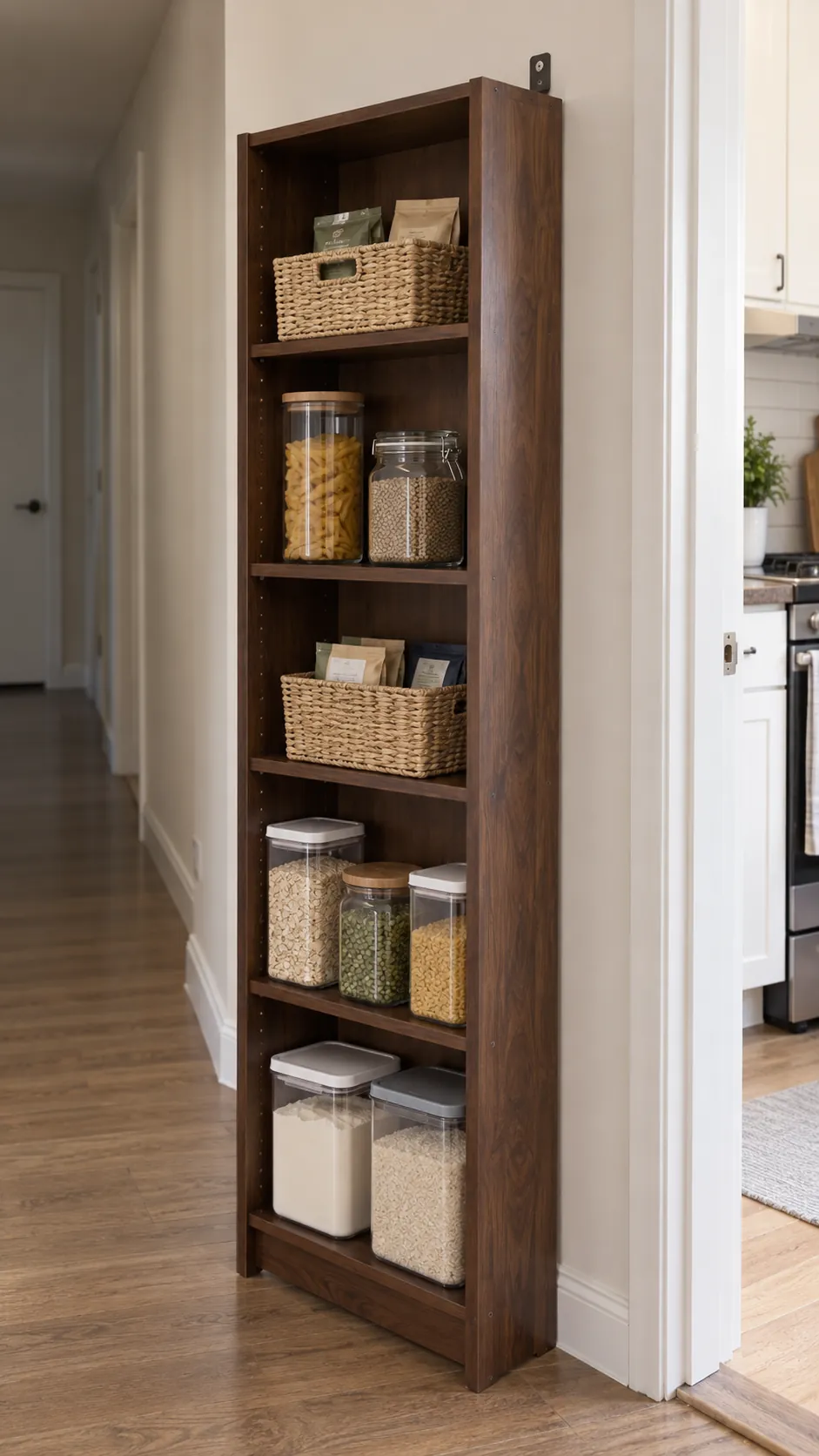
Turn a sturdy bookcase into a dry pantry
A shallow bookcase can hold food containers and baskets where a full pantry cabinet will not fit. Check shelf load limits, place dense goods low, and follow the maker’s stability and anchoring requirements. Keep food sealed and away from heat, moisture, and cleaning products, with enough access to inspect every shelf.
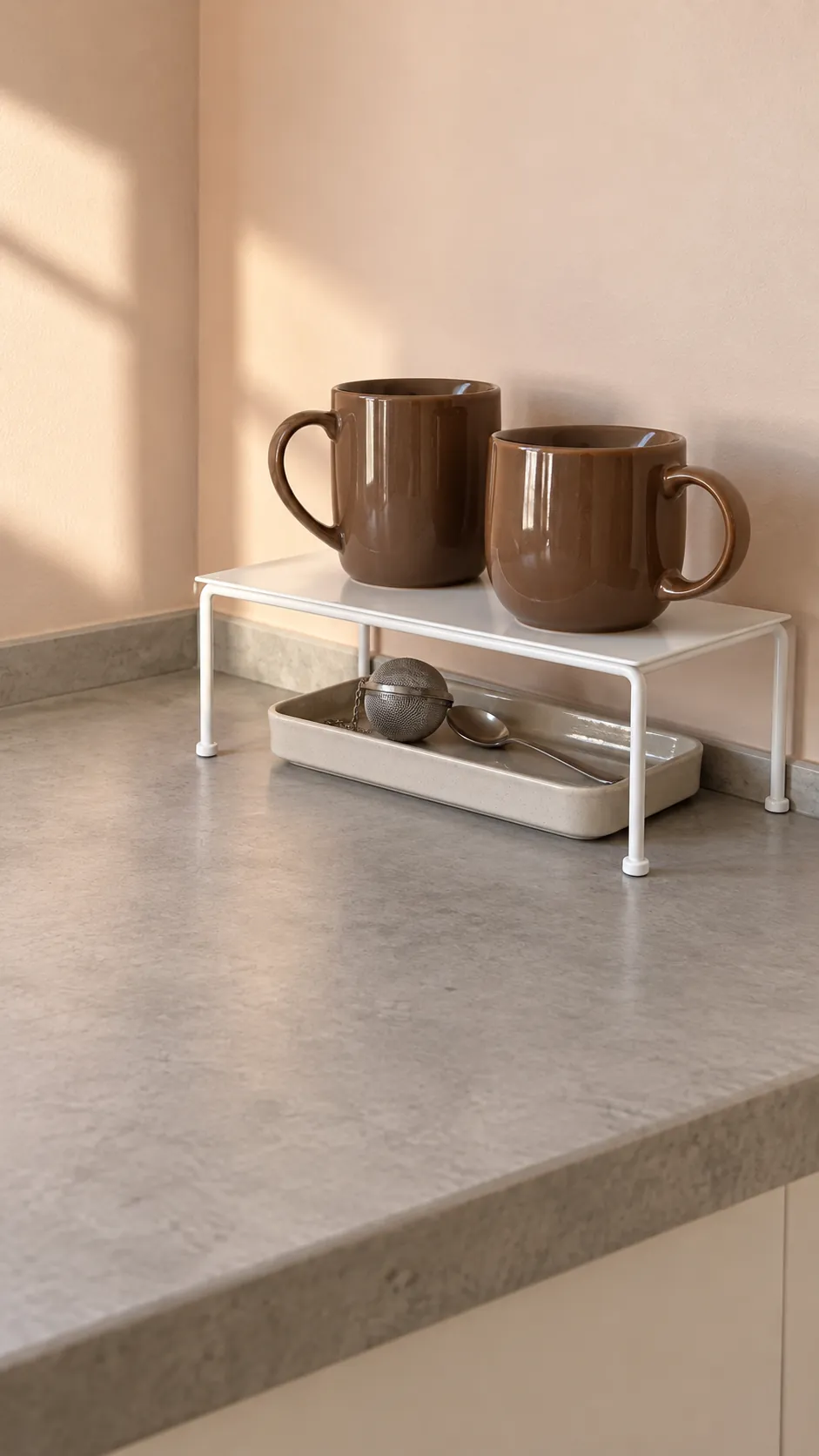
Add a compact countertop shelf riser
A freestanding riser can place mugs above a small tray without spreading them across the whole counter. Pick a stable model with a footprint that leaves a continuous preparation surface beside it. Avoid stacking risers or putting heavy appliances on a unit intended for light dishes.
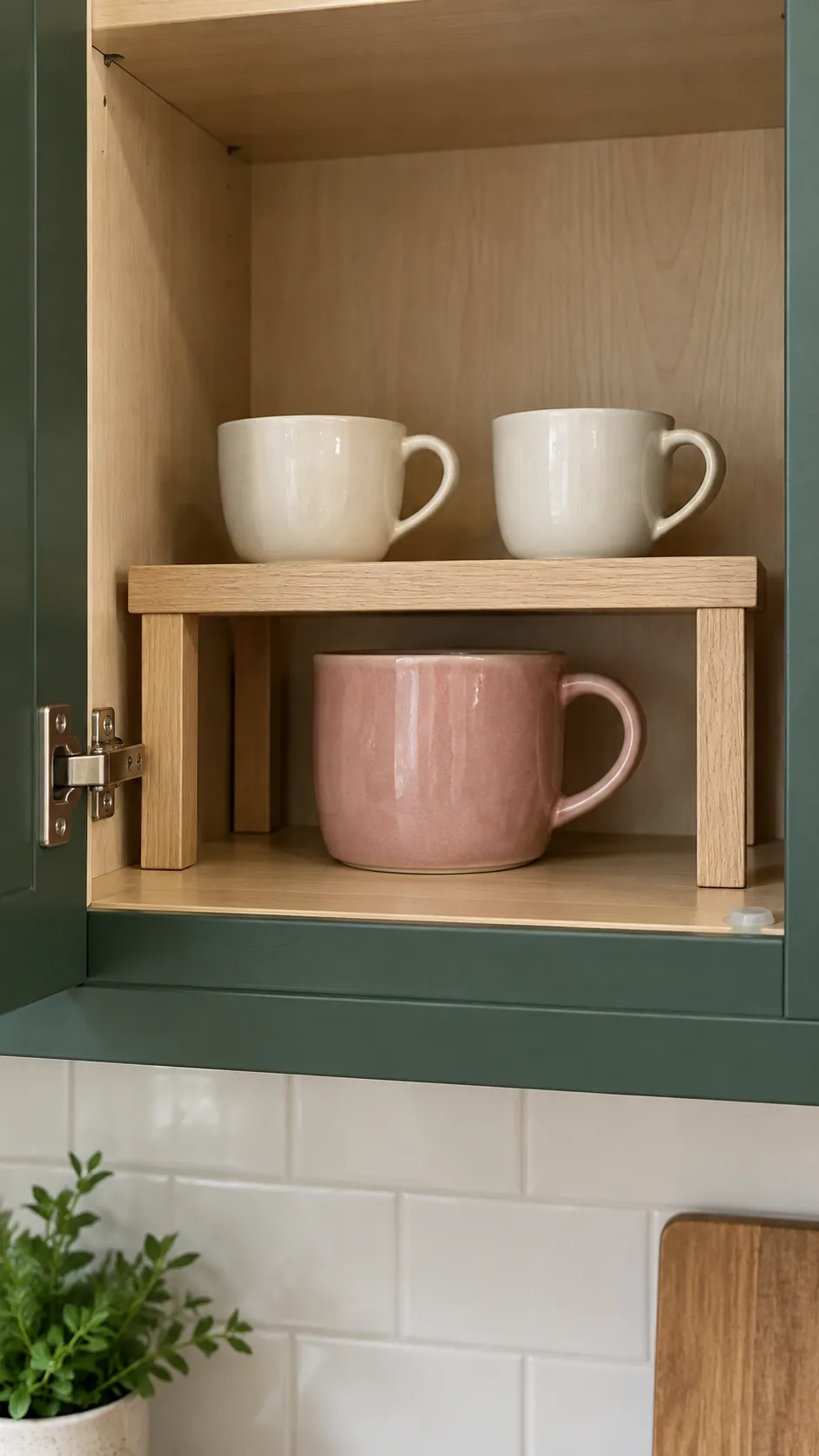
Separate mug layers inside an upper cabinet
A small cabinet shelf insert can make the space above short mugs useful. The insert needs to stand level, support its full load, and leave enough height to lift cups without scraping the shelf. Keep the mugs you use most on the easier layer rather than balancing them in unstable stacks.
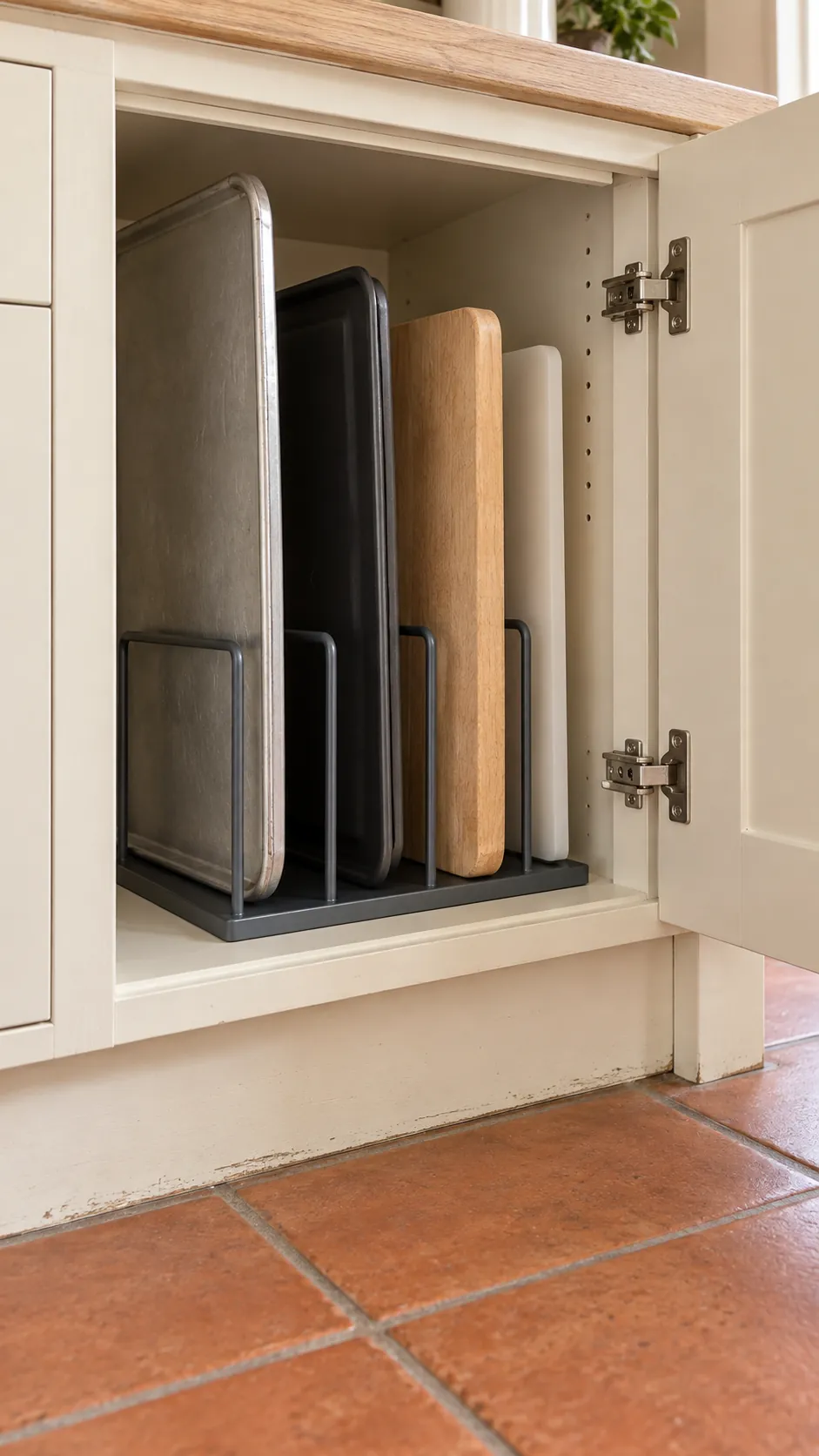
Store baking sheets in a freestanding divider
A vertical rack lets baking sheets and cutting boards stand separately inside a lower cupboard. Match its slots to the thickness of your pieces and leave enough headroom to lift them out. Set the rack where door hinges cannot catch the boards, and keep anything damp out until it has dried.
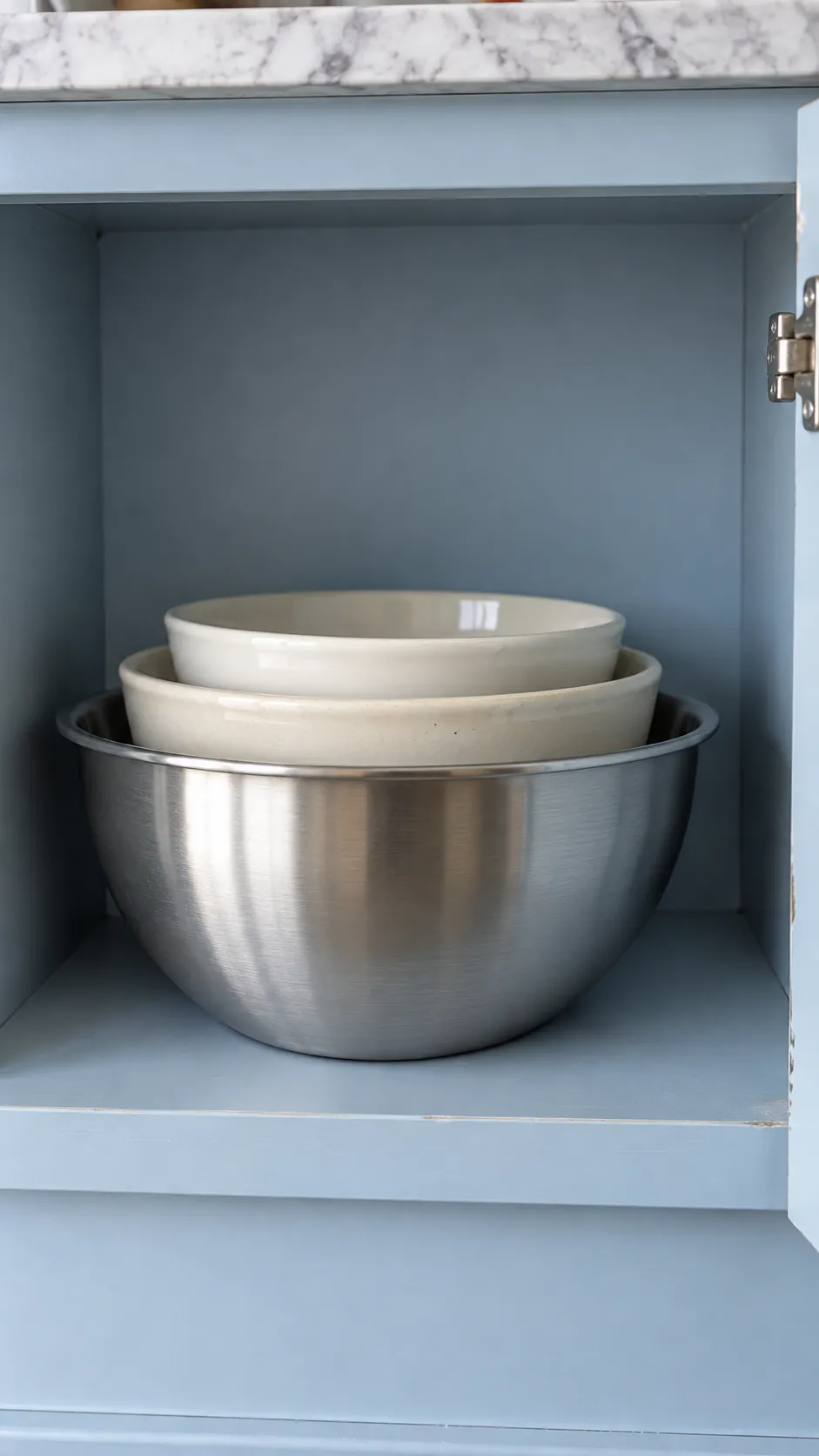
Nest bowls with a grip gap
Nest bowls that fit naturally, keeping the heaviest at the bottom. Leave enough space above the stack to grasp the largest bowl without dragging it against the shelf. Move an awkward piece to a separate position if it makes the whole stack unstable or traps everything beneath it.
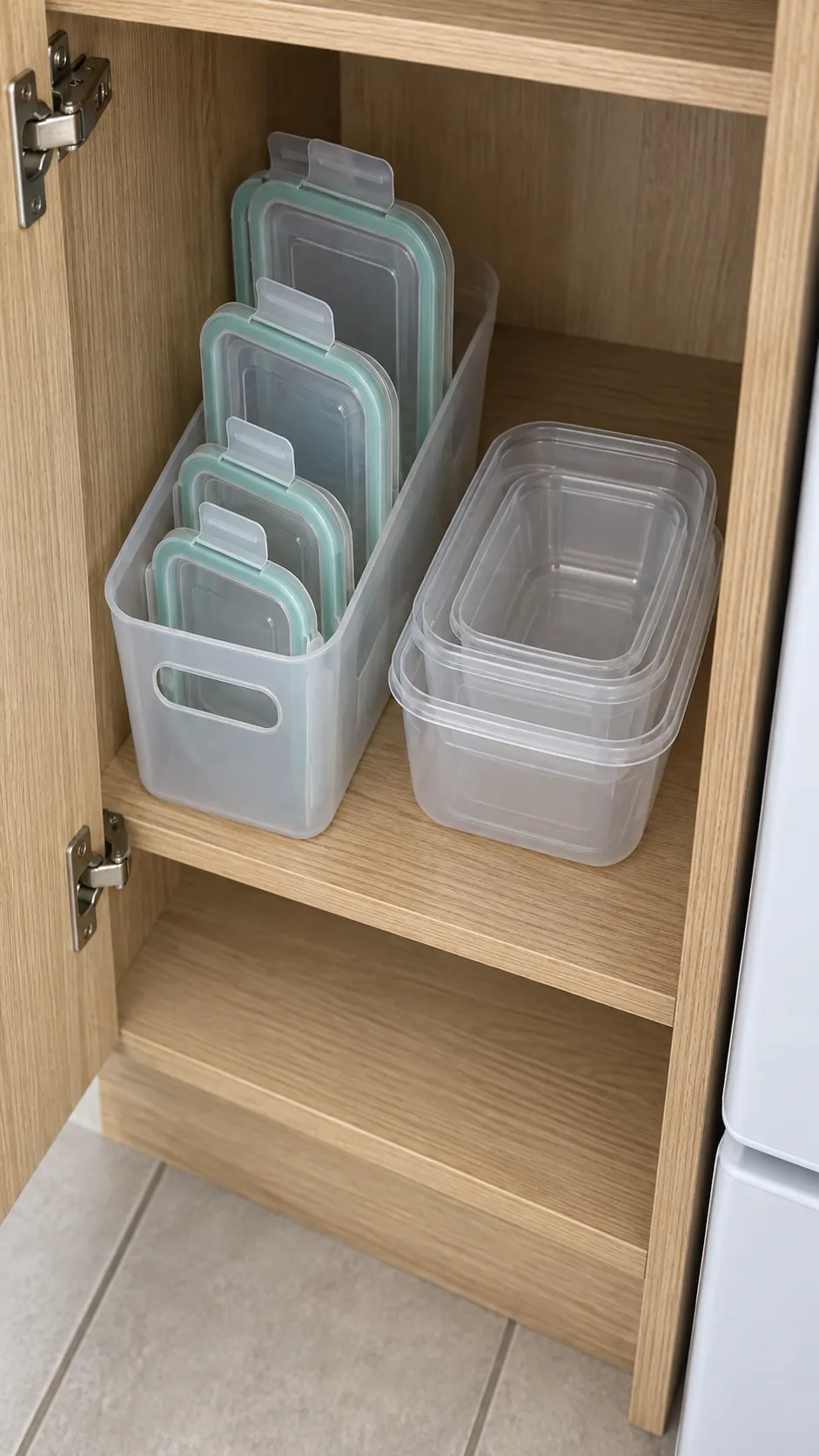
Give food container lids a slim bin
Stand matching lids in a narrow open bin so you can see their edges. Keep only lids that belong to containers you still use, and choose a bin short enough to remove from the shelf. Store the containers beside it rather than behind it, which keeps one lunch packing task in a single reachable zone.
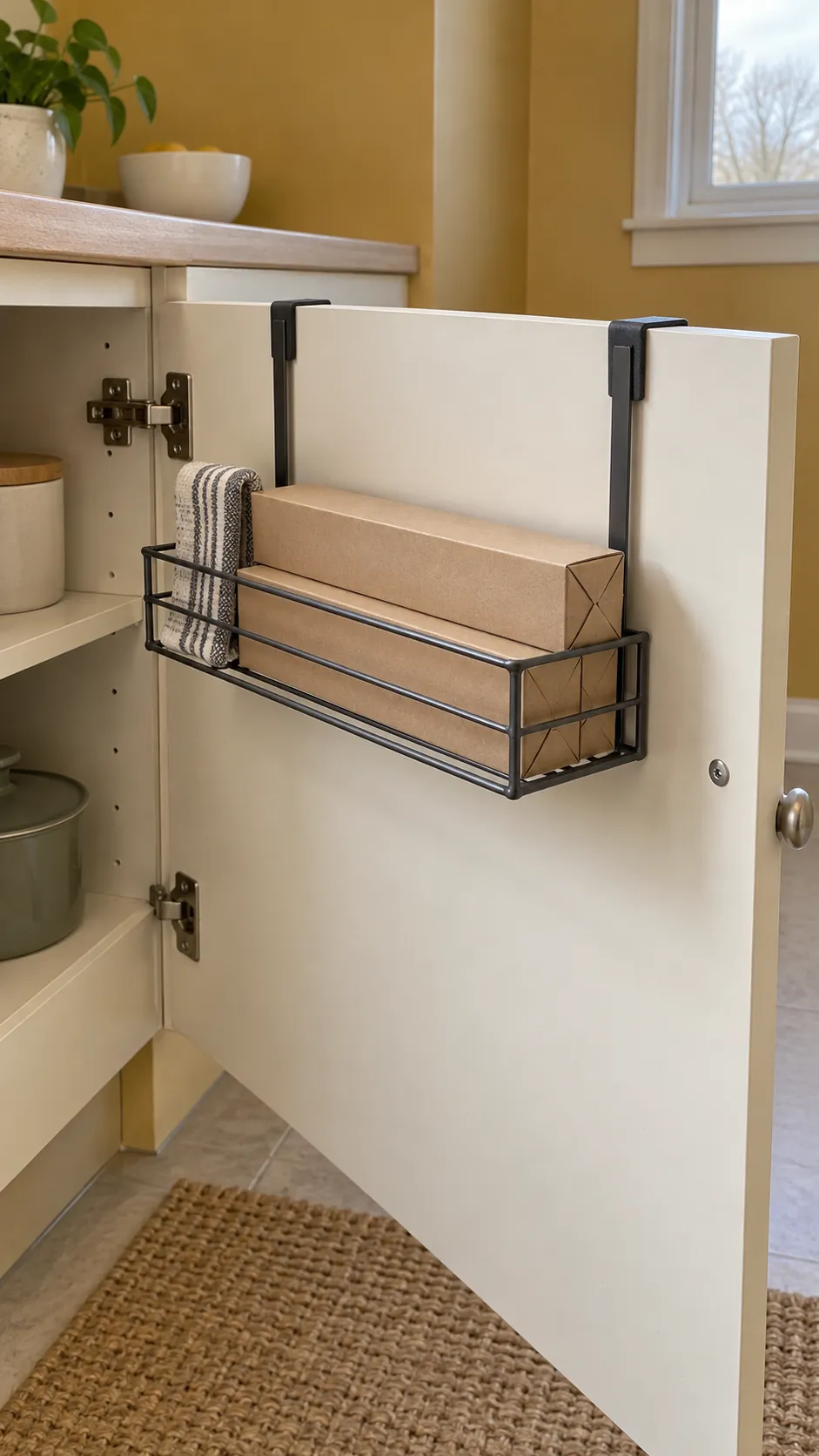
Hang light supplies on a cabinet door rack
A rack that hooks over a door can hold wraps or spare cloths without drilled fixings. Check the door thickness, hinge load guidance, and the clearance between the door and shelves. Add only the intended light load, and stop using the rack if it marks the finish or changes how the door closes.
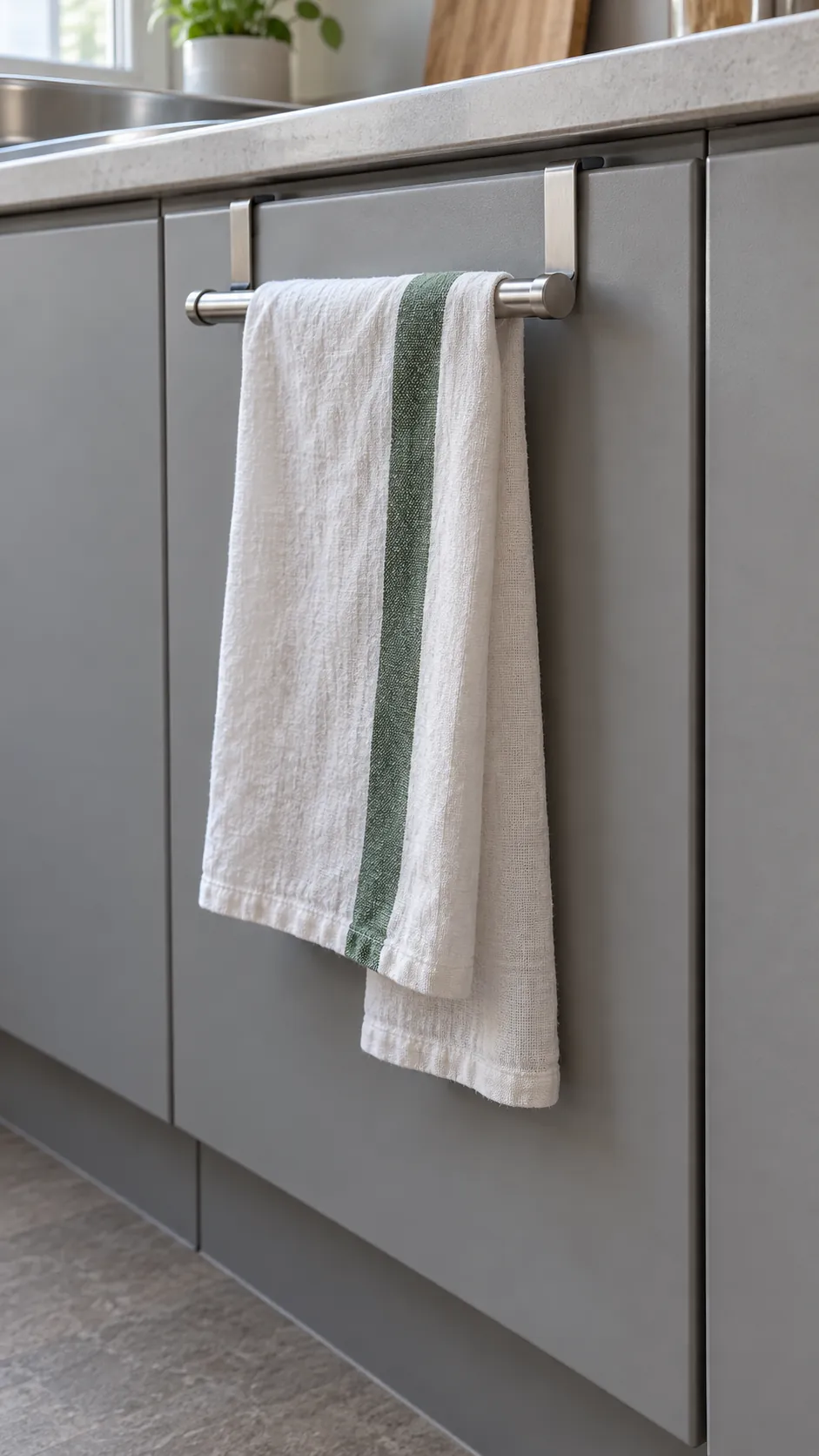
Clip a towel rail over a suitable door
An overdoor rail can hold a tea towel without using a drawer or permanent wall hook. Fit it on a door away from the stove, and make sure the towel cannot catch on an appliance handle. Let wet towels dry fully rather than folding several thick layers onto the same short rail.
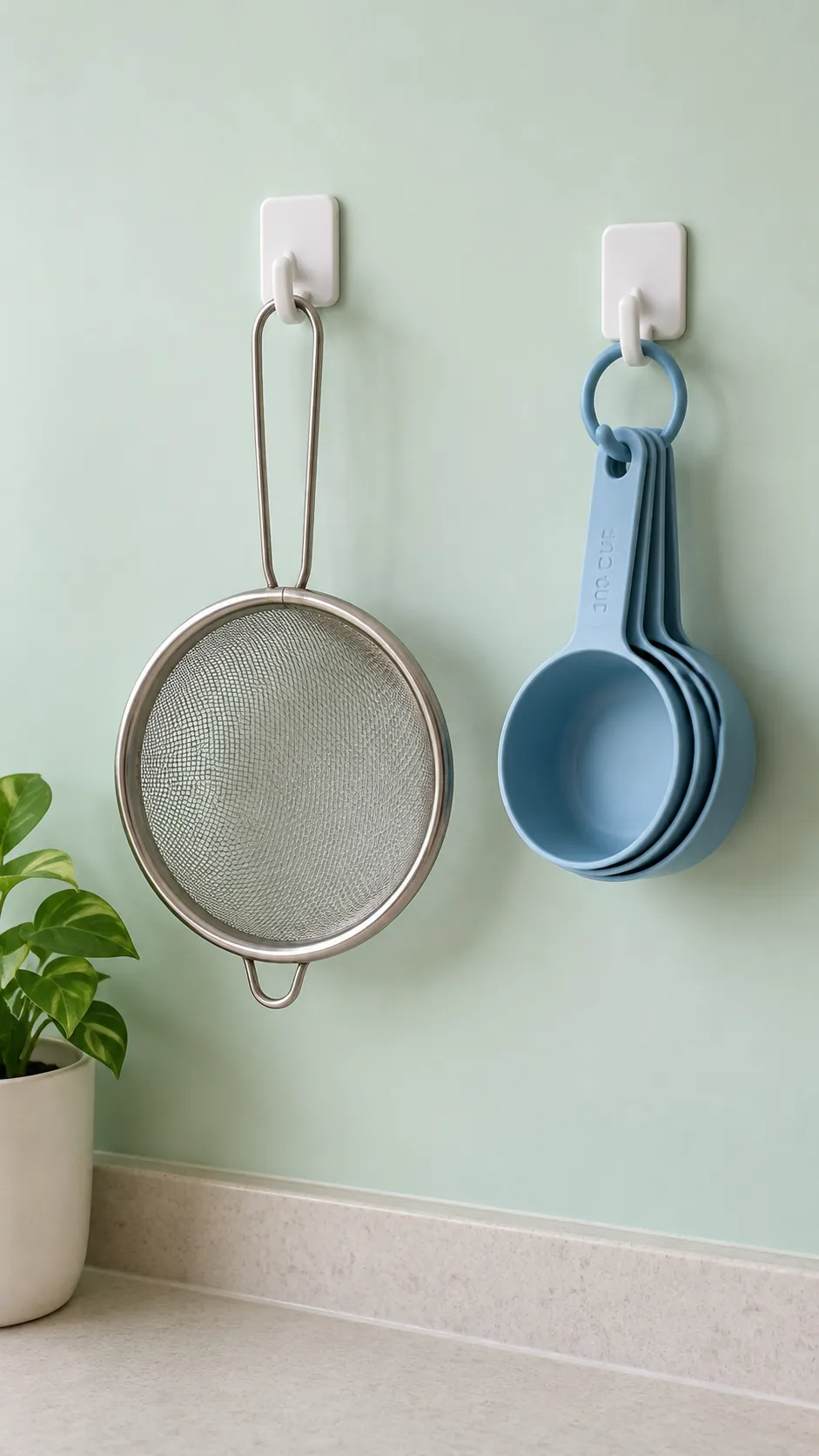
Use removable hooks for lightweight tools
Removable hooks may suit measuring cups or a light sieve when their maker approves the surface and location. Follow cleaning, curing, load, and removal instructions, and test an inconspicuous area because removable does not guarantee damage free. Keep breakable, sharp, hot, or heavy objects off adhesive hooks.
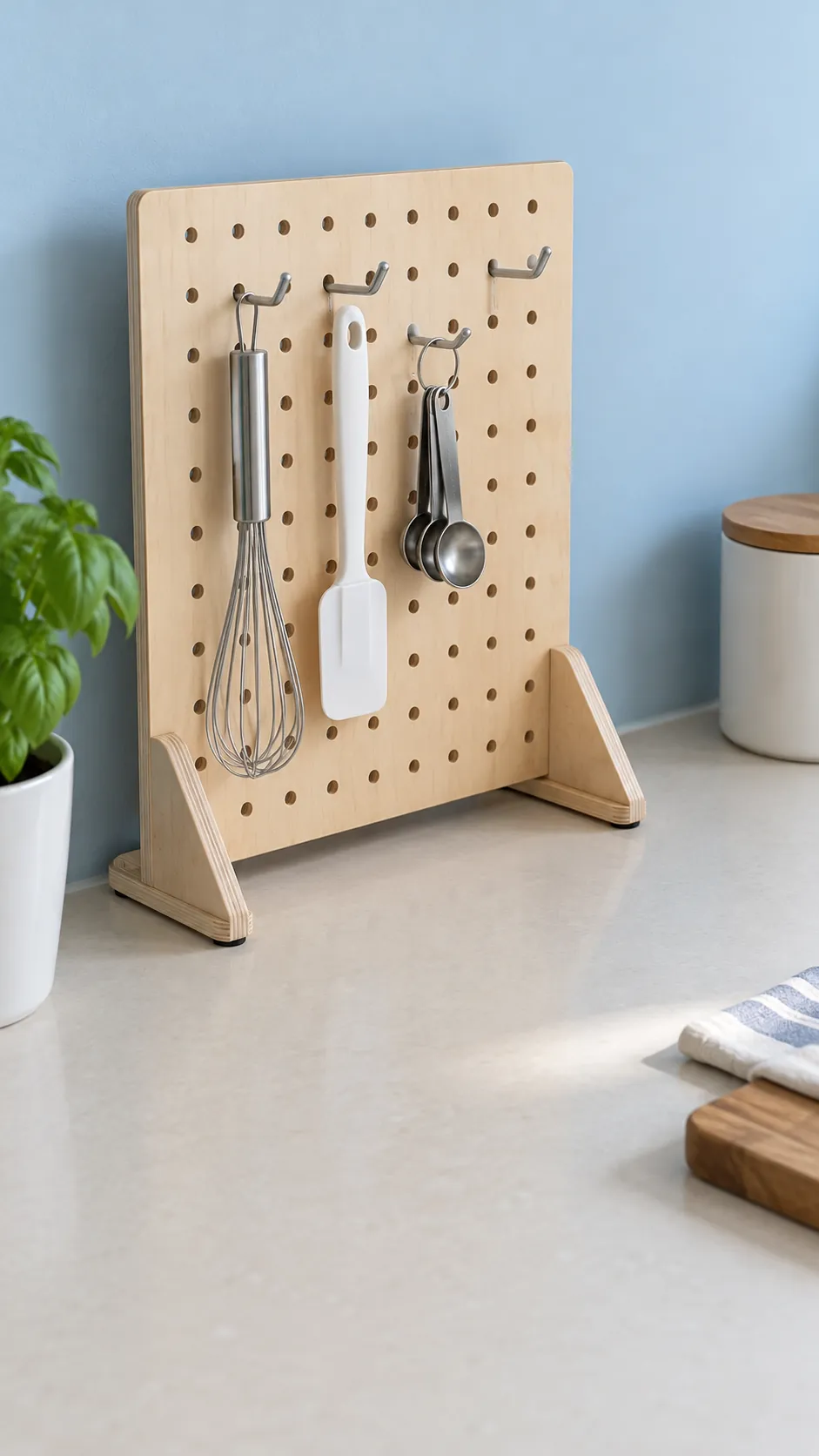
Choose a freestanding pegboard tool rack
A small tabletop pegboard can organize light tools without fixing a panel to the rental wall. Its base must be stable under the actual hanging load, with hooks arranged so handles do not overlap the preparation area. Place it against a quiet backsplash and remove rarely used pieces before adding another row.
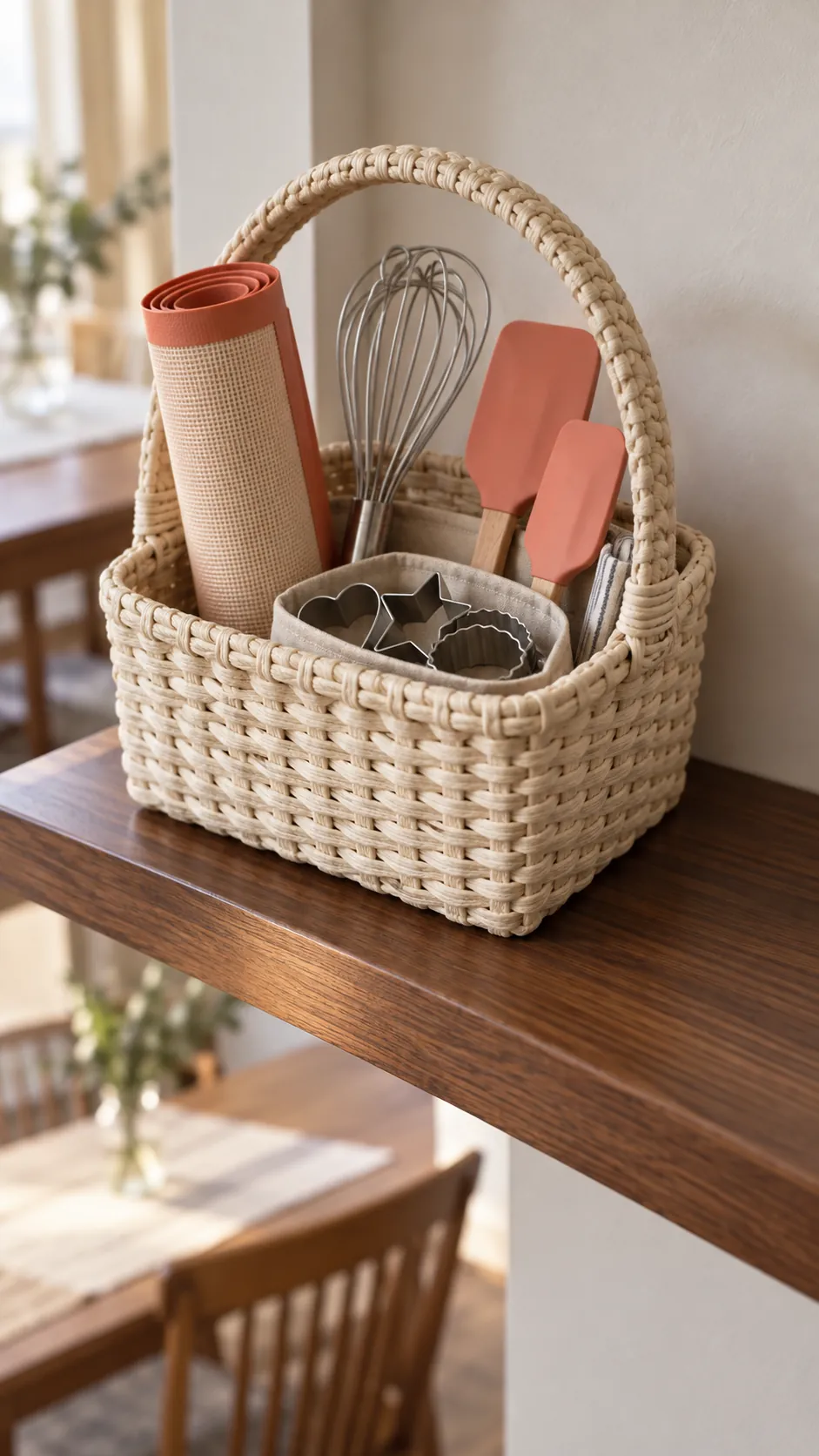
Put a carry basket on a nearby shelf
A portable basket can keep baking tools together on an existing shelf outside the immediate cooking zone. Bring the basket to the counter when needed, then return it after the tools are clean and dry. Choose a comfortable loaded weight and a base that will not scratch the surface beneath it.
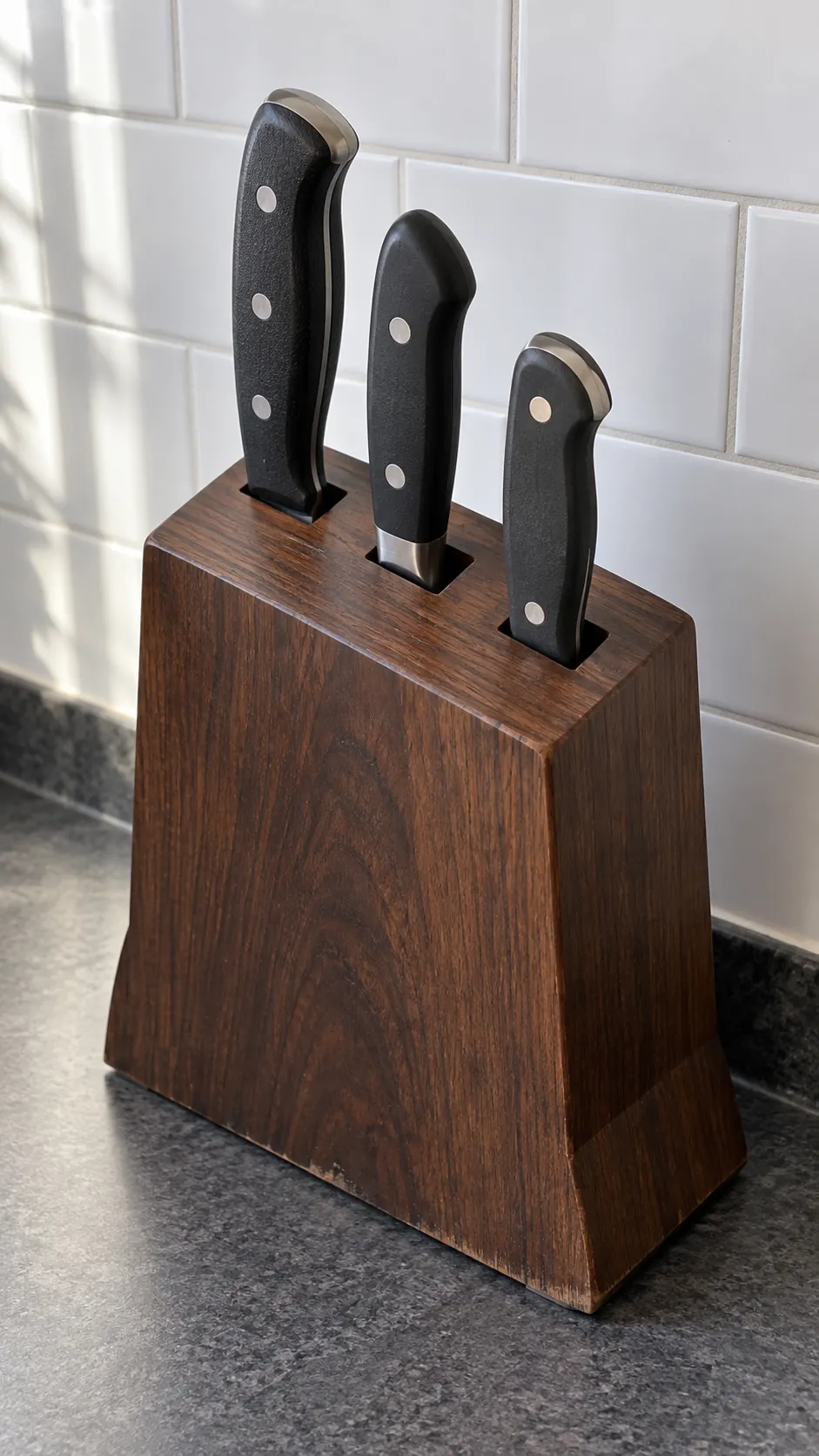
Keep knives in a stable protected holder
A compact knife block or a purpose made sheathed storage box can replace a knife drawer. Choose protection that covers the blades and suits the exact knife sizes, keeping it stable and inaccessible to children as needed. Avoid loose knives in a general utensil caddy or adhesive hanging arrangements that are not designed for them.
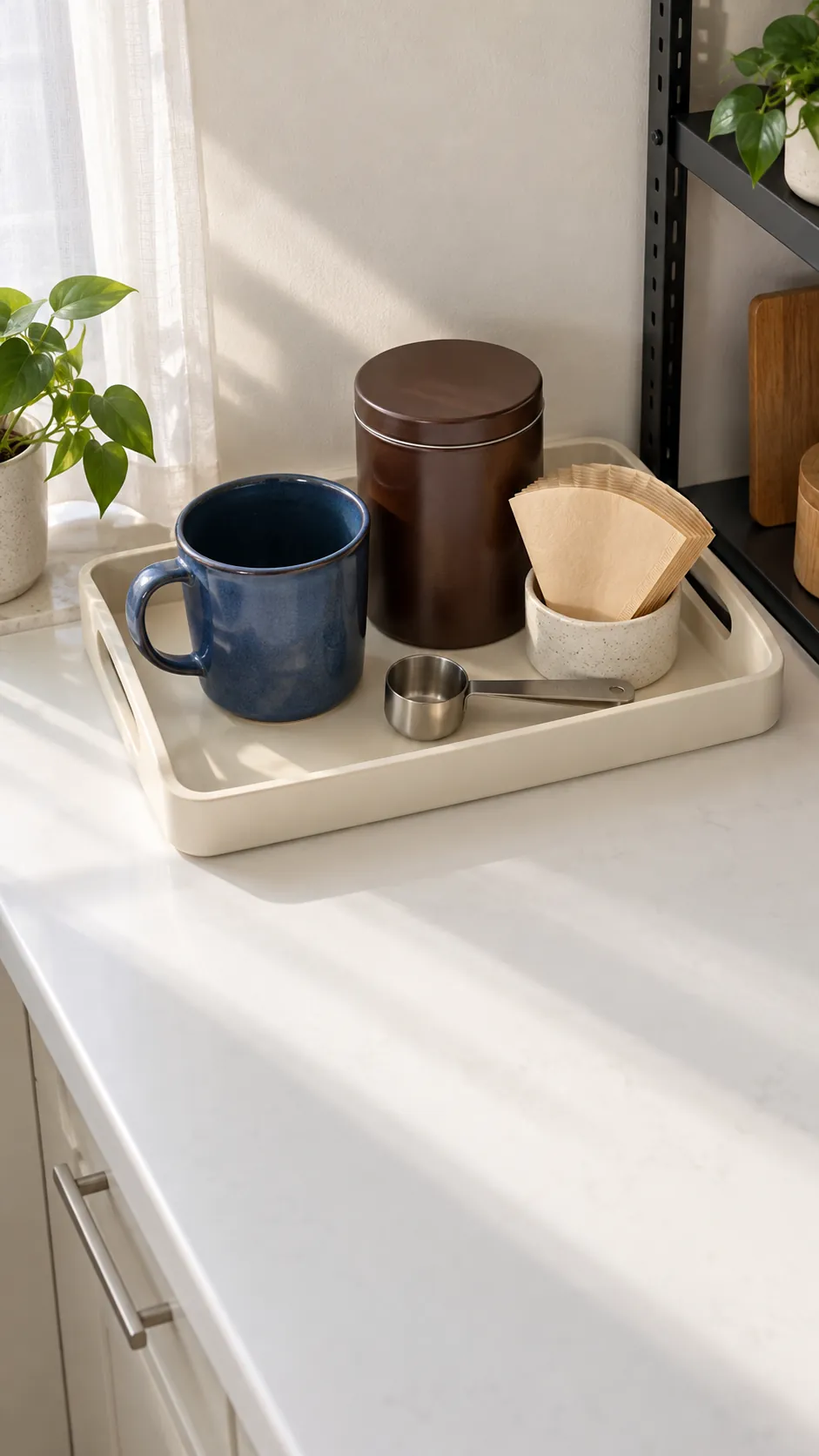
Use a tray to contain the coffee setup
A small tray can group coffee supplies so the whole set moves when you need preparation space. Keep only daily accessories there and position electrical equipment according to its instructions, away from water and loose cords. Leave room to lift the tray without knocking a mug off the edge.
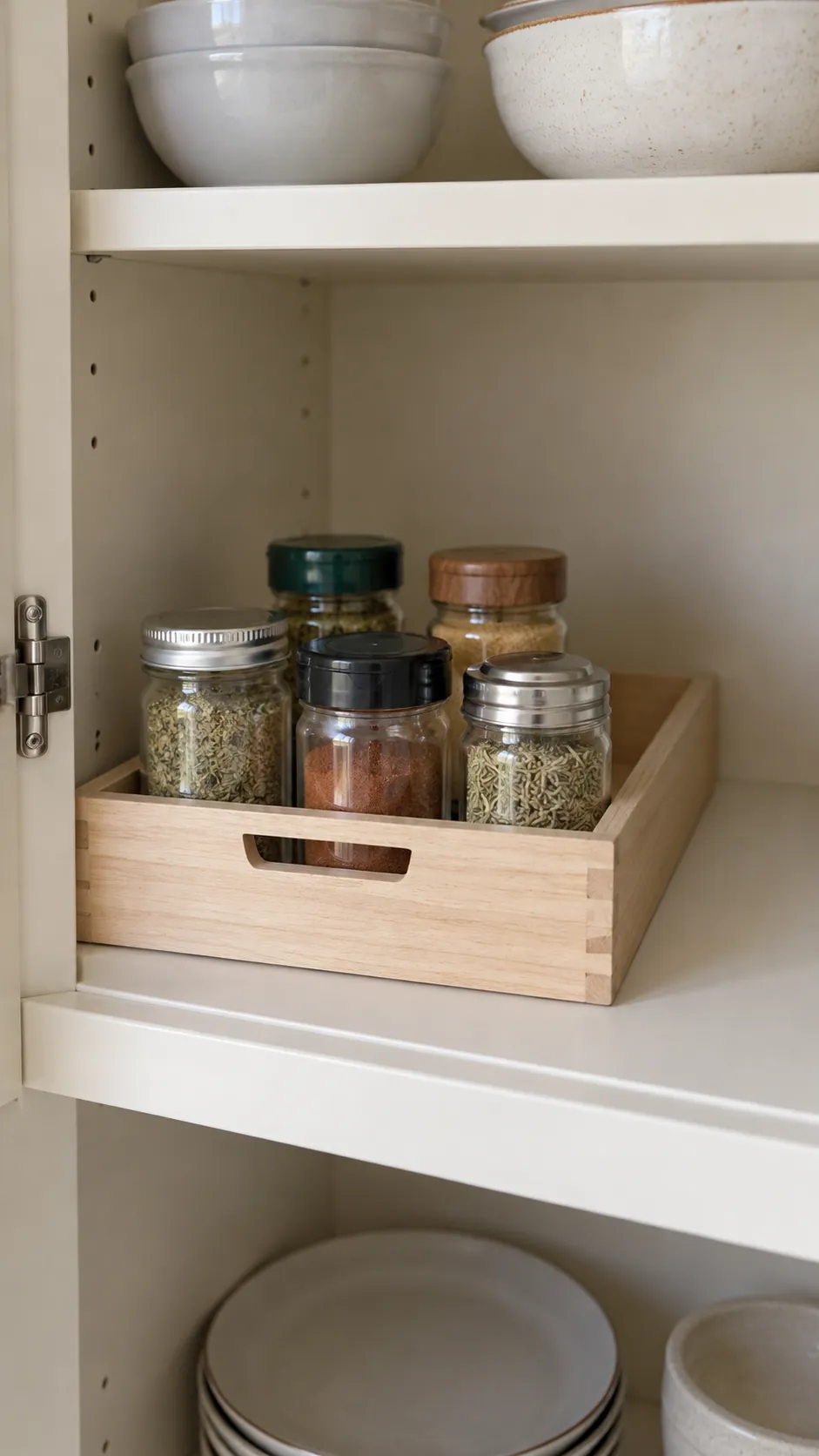
Corral spice jars in a shallow shelf bin
A low bin can hold the spices you cook with most and slide forward like a temporary drawer. Arrange jars so their names remain visible, and keep them away from stove heat and steam. A second occasional use group can sit elsewhere instead of crowding the front bin into a heavy box.
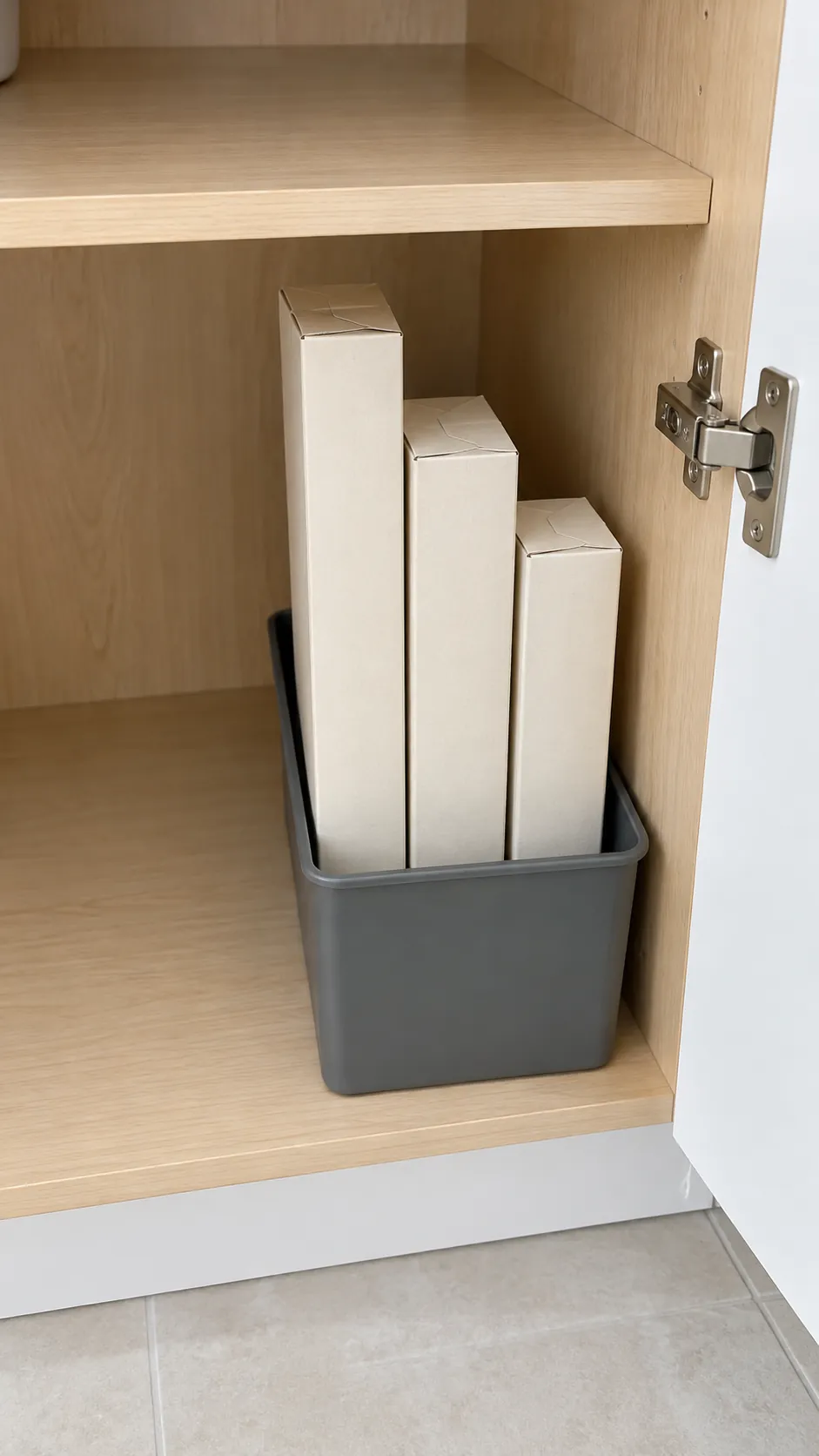
Stand wraps in a narrow container
Foil and baking paper boxes often fit upright in a sturdy narrow bin. Check that the boxes clear the shelf above and cannot tip forward when one is removed. Put sharp dispenser edges where they cannot scrape your hand as you reach into the cupboard.
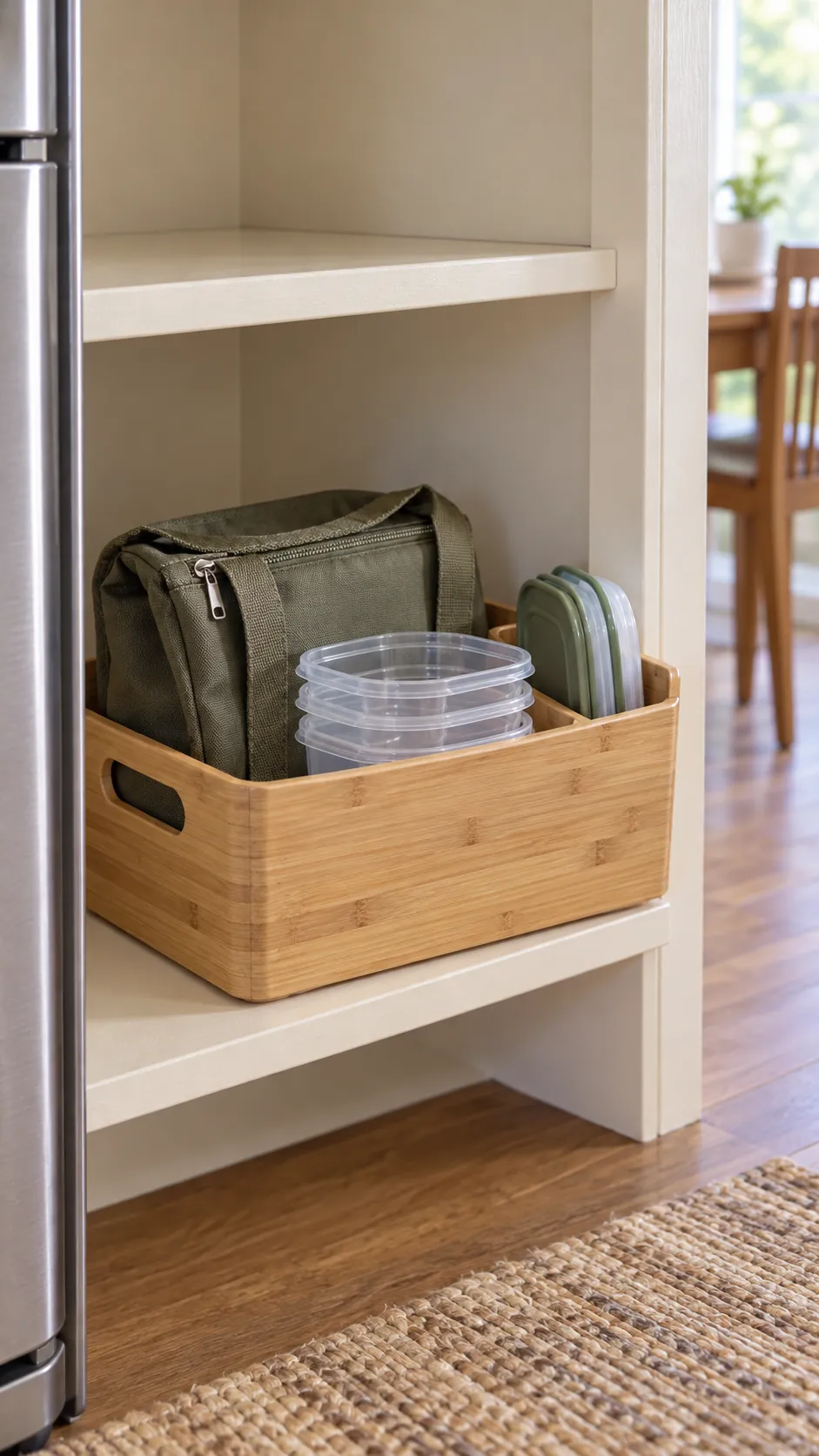
Make a lunch packing basket
Group reusable lunch bags, small snack tubs, and the matching lids in a removable basket. Store it near the containers rather than mixing it with baking accessories that serve a different task. Check the contents when packing lunch so unused duplicates do not quietly consume the whole shelf.
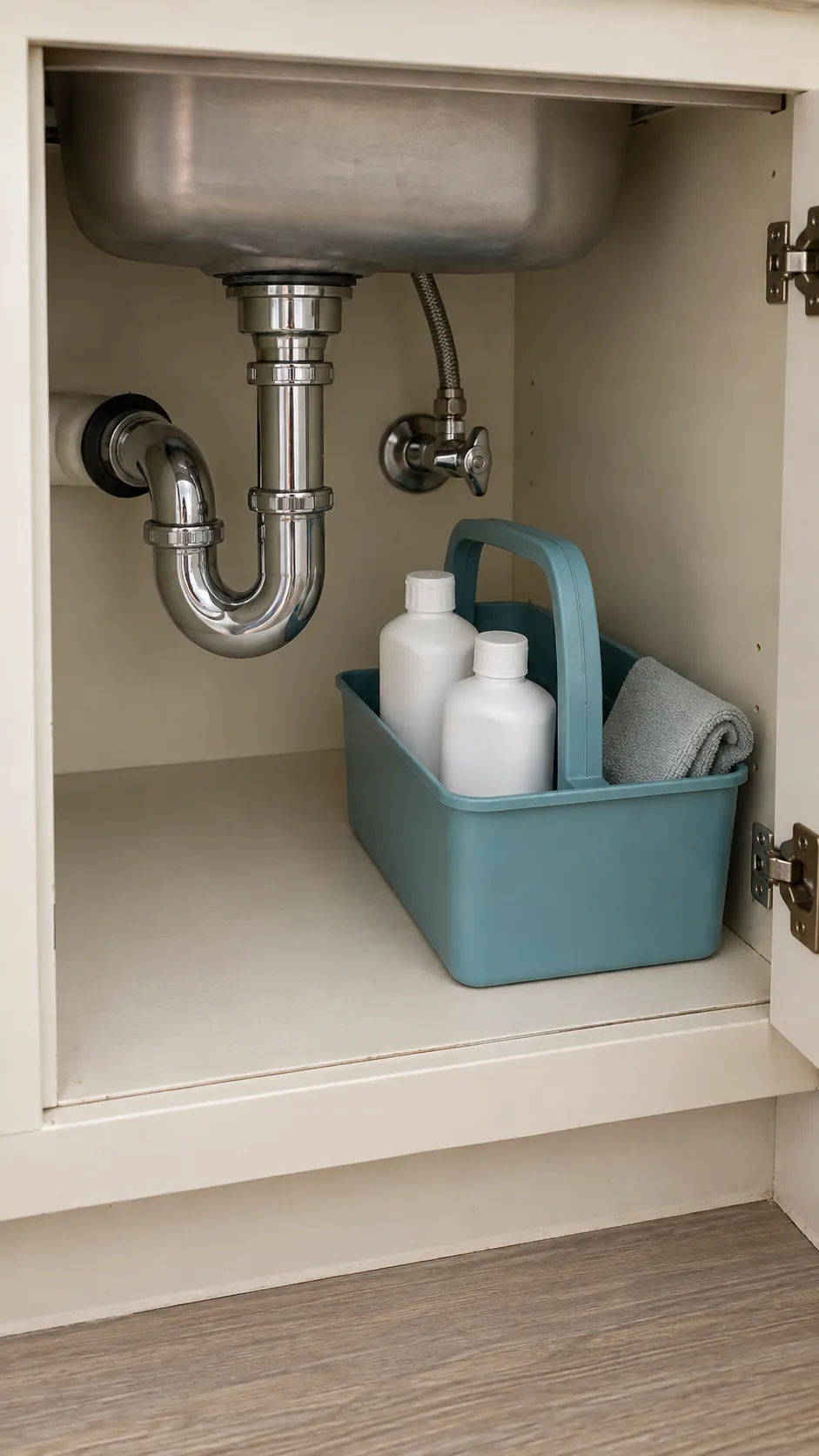
Keep cleaning supplies in a separate caddy
A handled cleaning caddy can organize the space beneath the sink while keeping it separate from food and tableware. Work around plumbing, leave shutoff valves reachable, and follow product storage directions, including child safety requirements. Remove the caddy periodically to check for leaks instead of lining the area with inaccessible stacks.
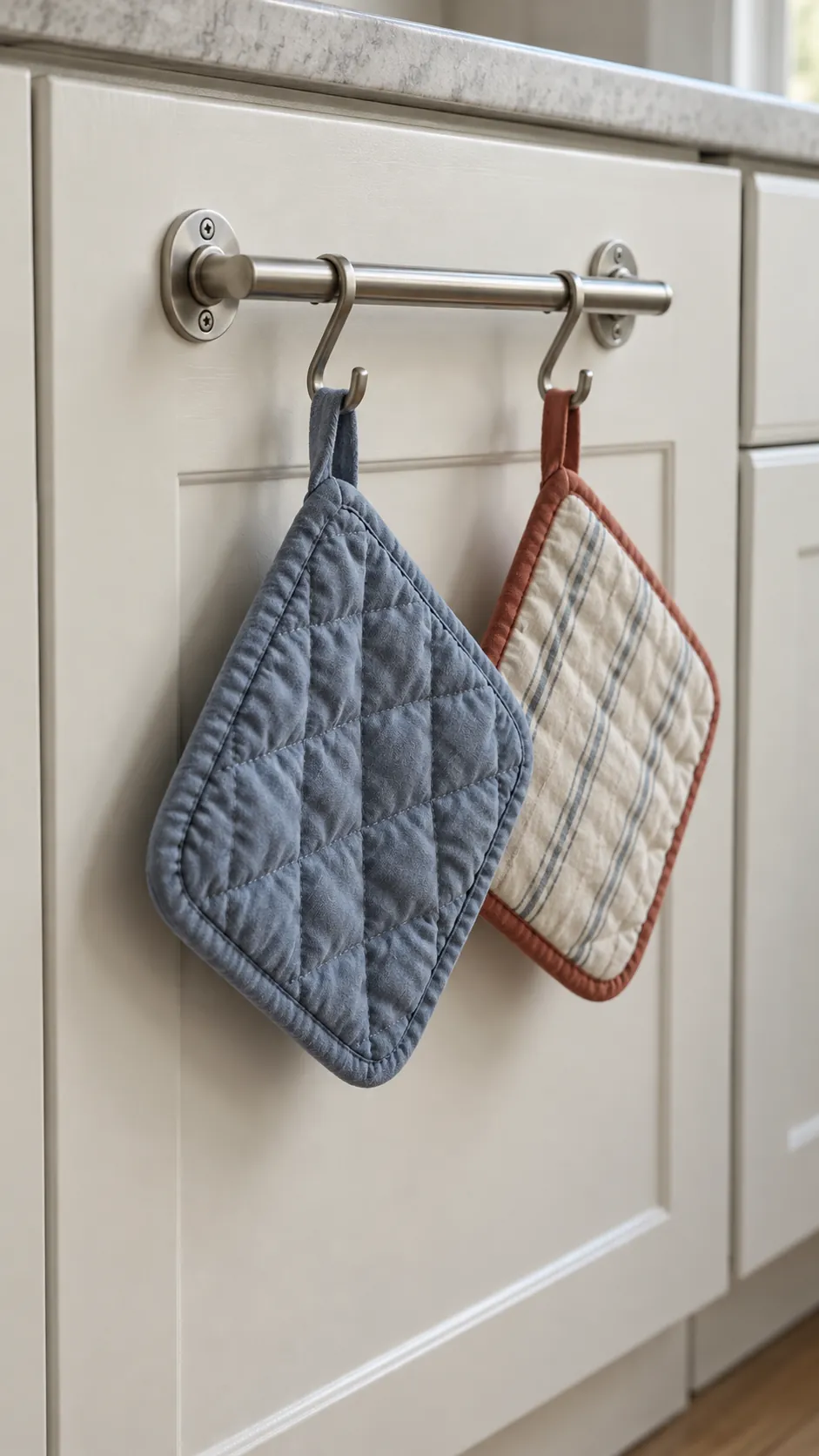
Use an existing bar for light hanging storage
A sturdy existing cabinet bar may accept a few removable hooks for lightweight potholders if its shape and load allow it. Test the door movement and make sure the hanging pieces cannot brush a burner or prevent an appliance from closing. Do not hang weight from decorative handles that were never designed to act as storage rails.
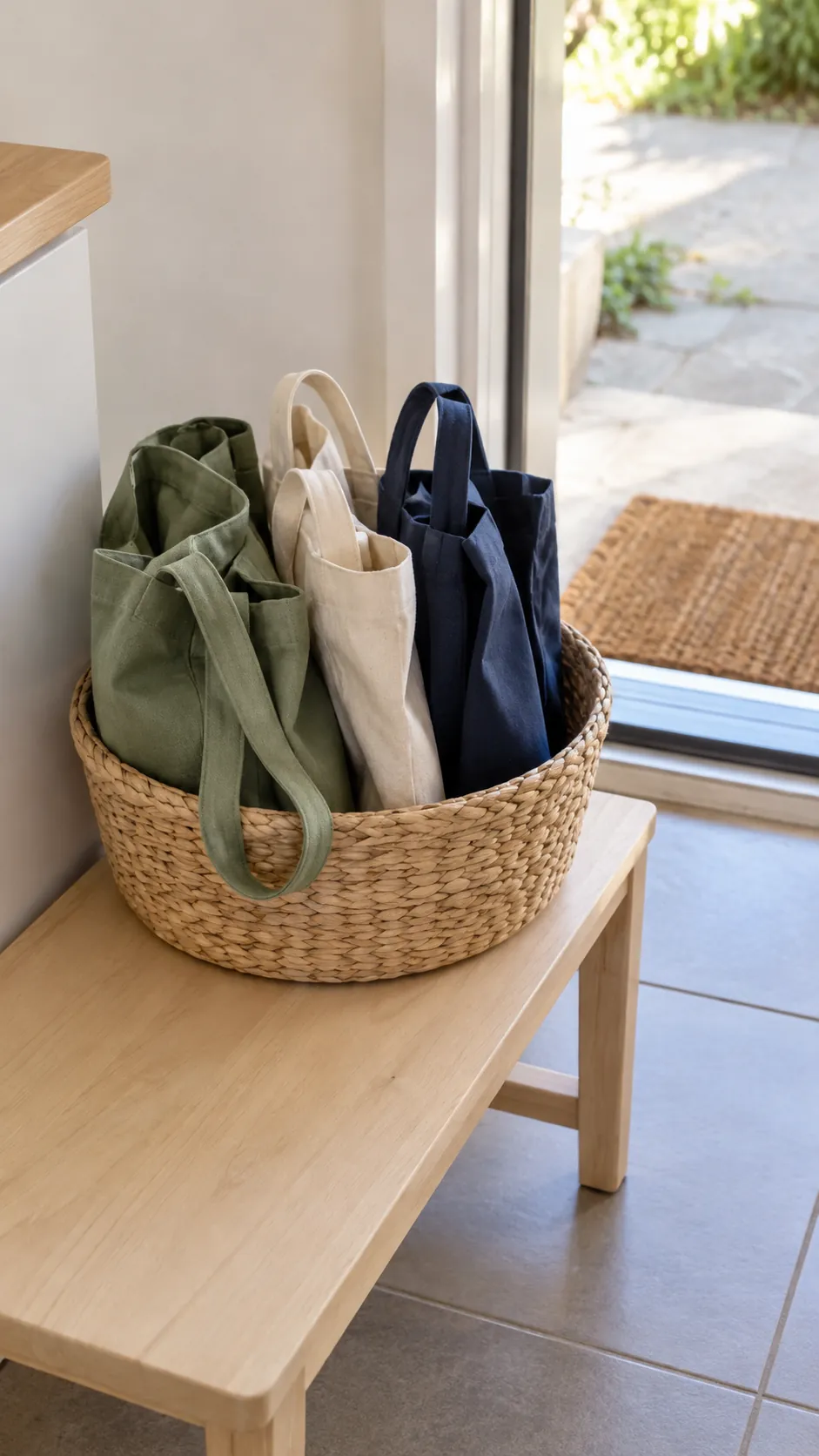
Store reusable bags upright in a basket
Fold shopping bags into a basket near the kitchen exit so they stop filling a precious cupboard. Stand them loosely enough to remove one without pulling the whole stack apart. Dry and clean reusable grocery bags as directed before returning them, especially after carrying food that could leak.
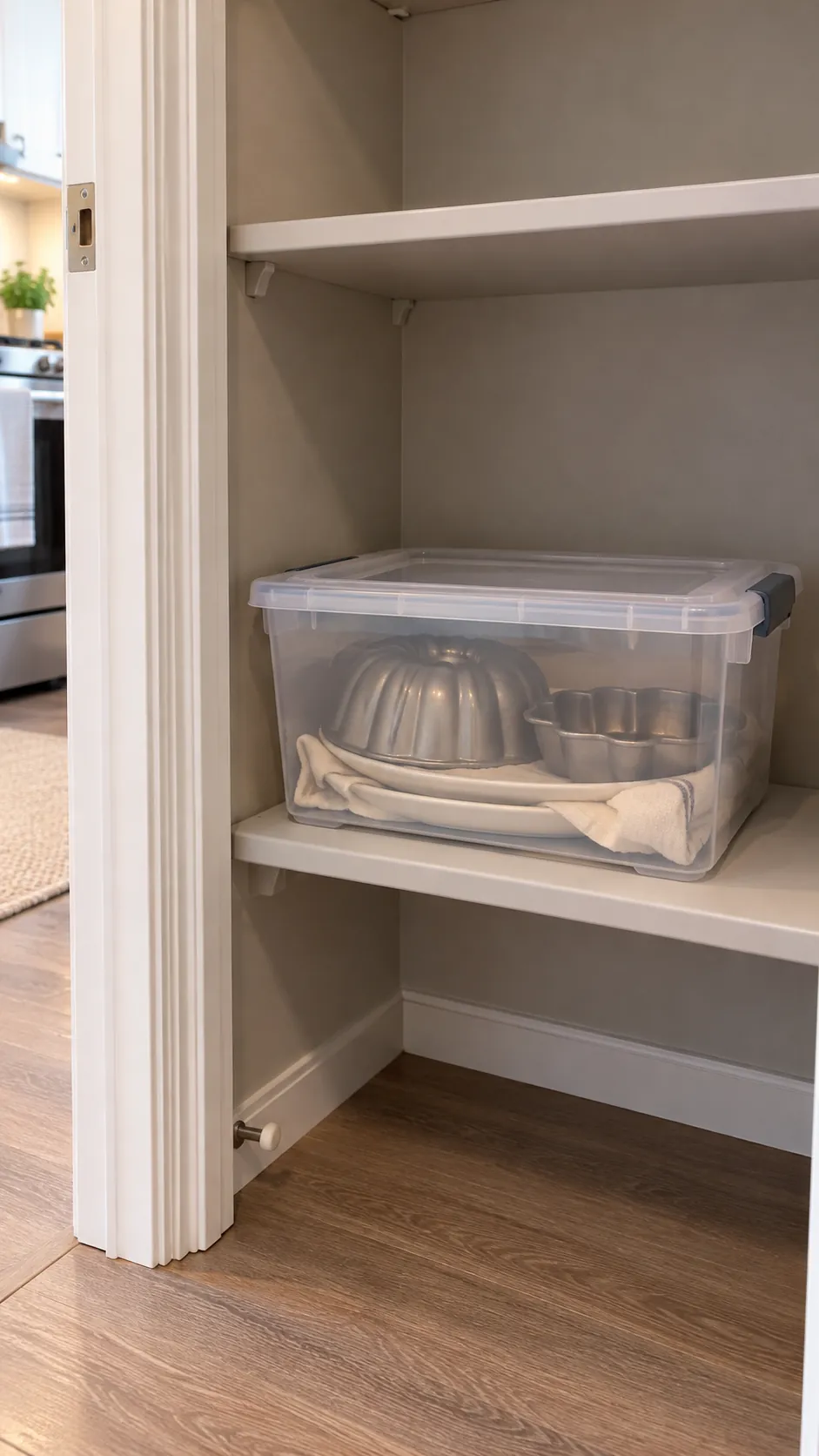
Give rarely used equipment a remote shelf
Seasonal baking molds and occasional serving pieces can live outside the main kitchen work area. Choose a dry accessible shelf and use covered containers where dust is a concern, with heavy pieces kept low. A simple inventory on the inside of the kitchen cabinet door can help you remember the location without buying duplicates.
Leave one clear landing space
Choose the smallest set of organizers that lets you retrieve tools and still set down a chopping board. Test the arrangement through an ordinary meal, including opening the refrigerator, loading dishes, and carrying hot food. If storage blocks those movements, remove or relocate one unit before buying another.