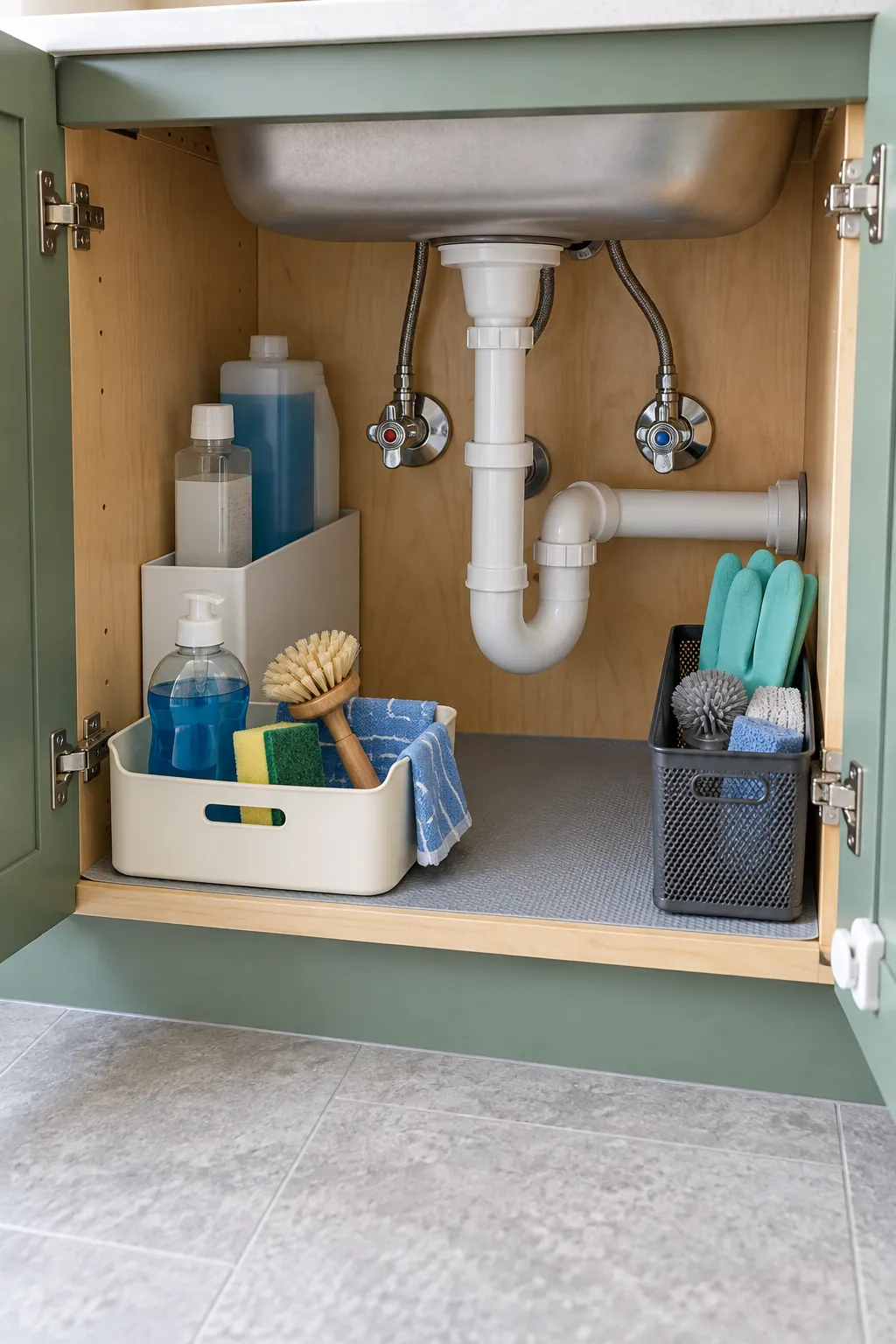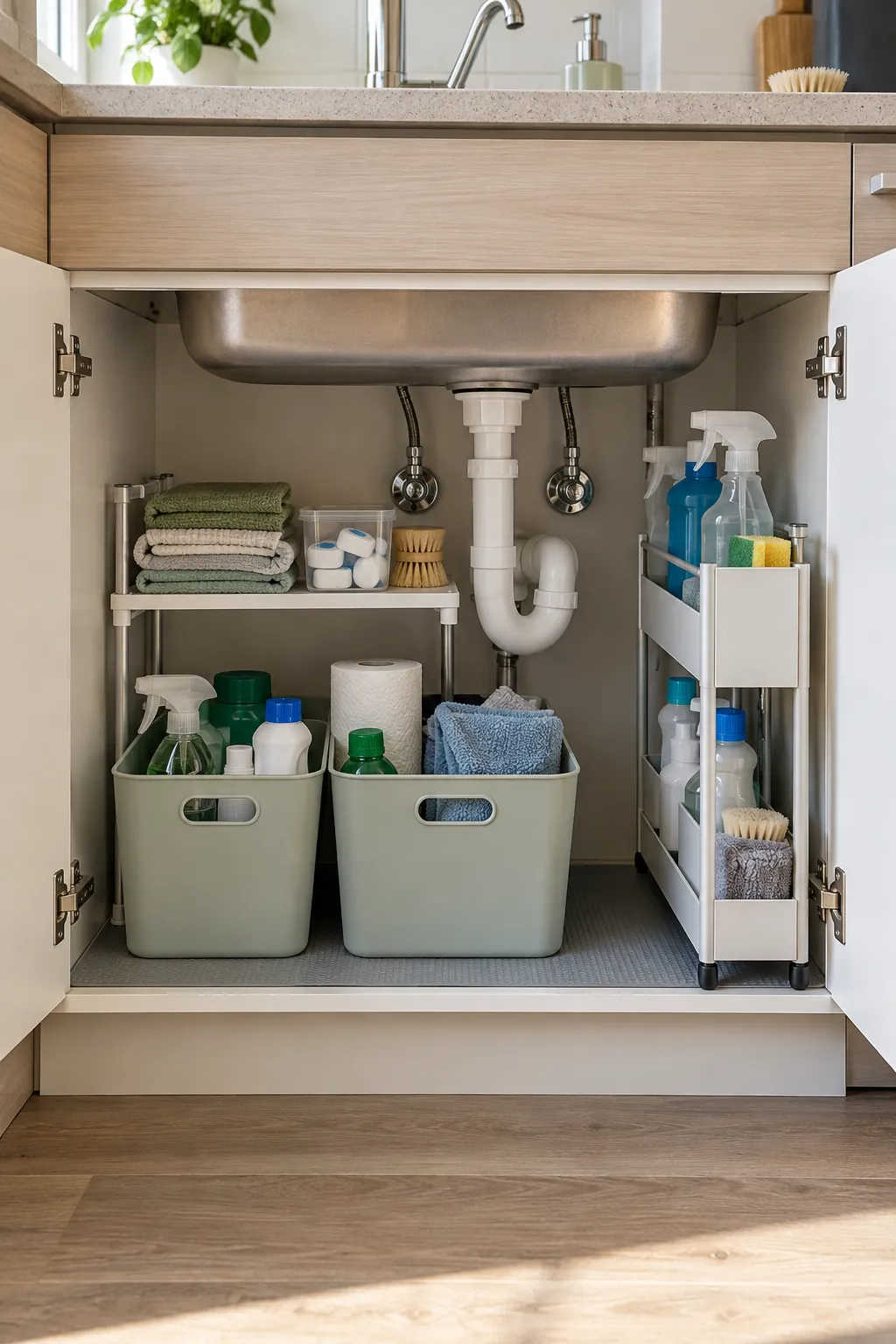
The space below a sink looks generous until pipes, valves, hinges, and the basin take away most of the useful volume. A good organizer works around those obstacles and still lets you reach a leak quickly. The best choice is the one that fits the clear zones in your own cabinet and stays stable without altering the rental.
Measure the usable zones before you shop
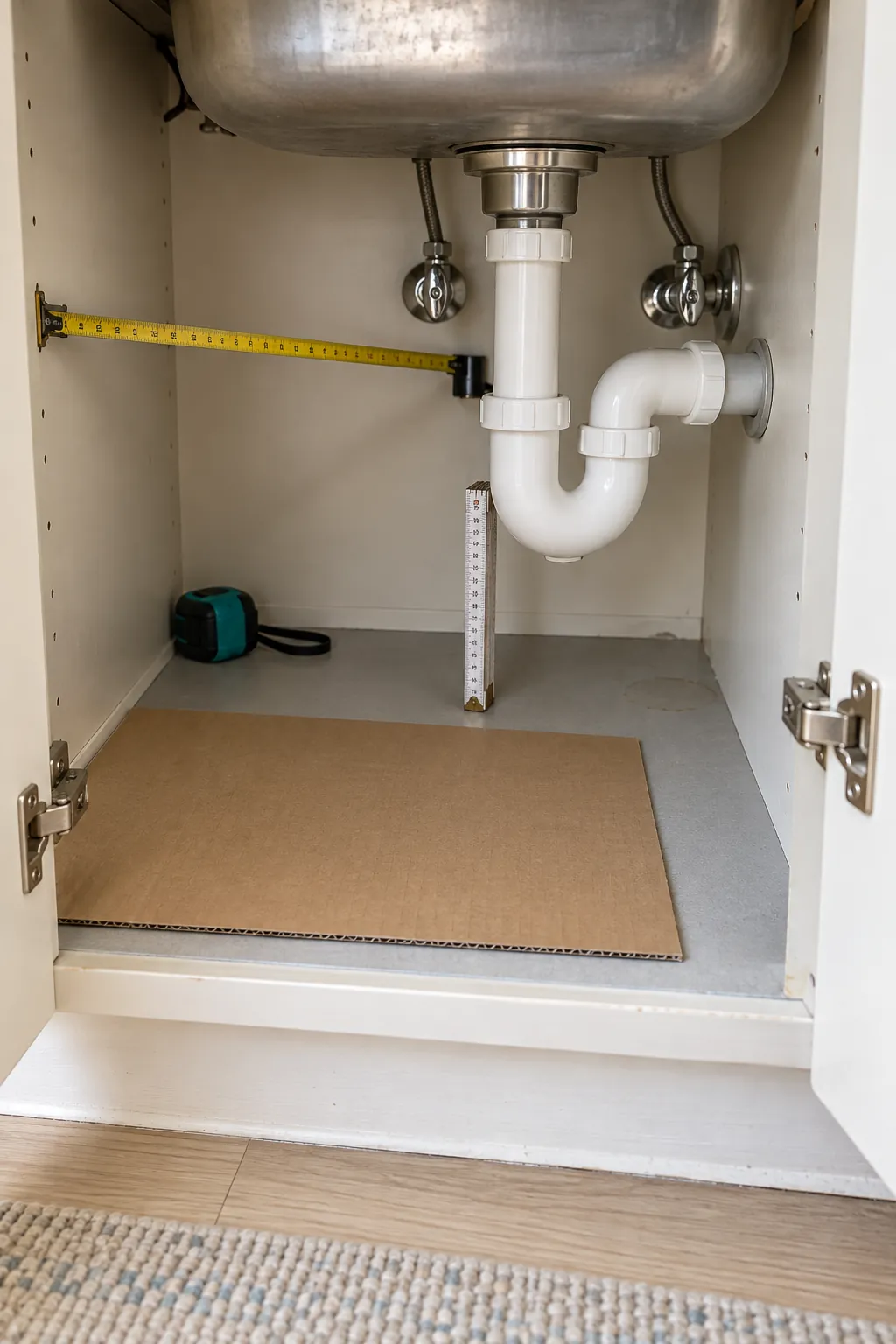
Empty the cabinet, then measure its inside width, depth, and height. Measure from each side wall to the drain pipe, from the floor to the lowest pipe bend, and from the front edge to the door hinges. These smaller clear zones matter more than the cabinet dimensions listed on a floor plan.
Mark valves as access areas that must stay open. Leave room to turn each shutoff by hand and to place a shallow leak tray below the plumbing. A cardboard footprint cut to the organizer dimensions reveals conflicts with hinges and door closure before you buy.
Choose a split shelf for awkward plumbing
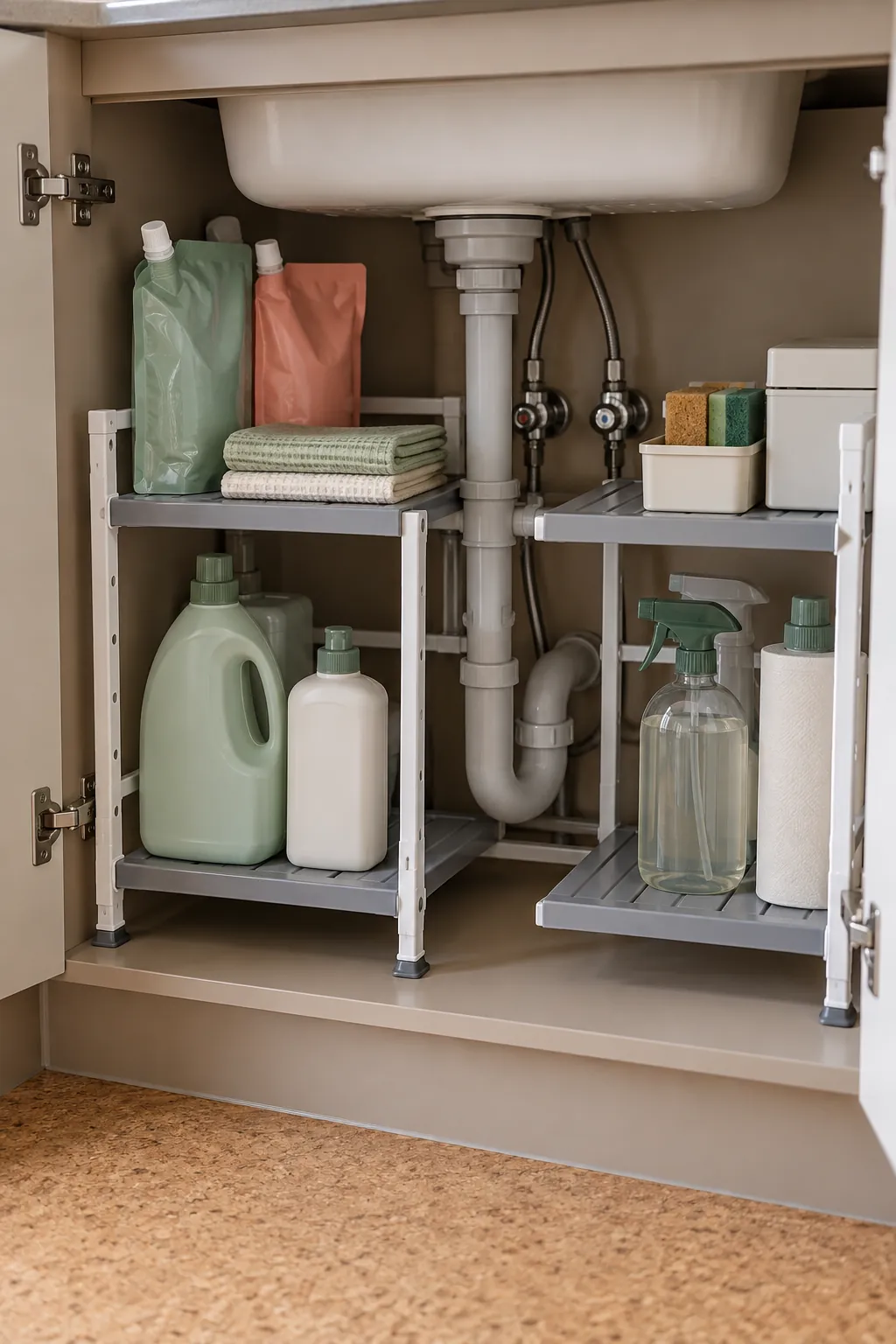
An adjustable under sink shelf is often the safest answer when the drain sits near the center. Models with movable shelf panels let the vertical supports stand on both sides while the middle remains open. This layout uses upper air space without forcing a rigid shelf against a pipe.
Check how the shelf locks after adjustment. A frame with firm clips or threaded joints is less likely to lean when bottles are removed from one side. Put light refills and cloths on the upper level, then keep heavier detergent low so the freestanding unit stays stable.
Use narrow pullout drawers beside the drain
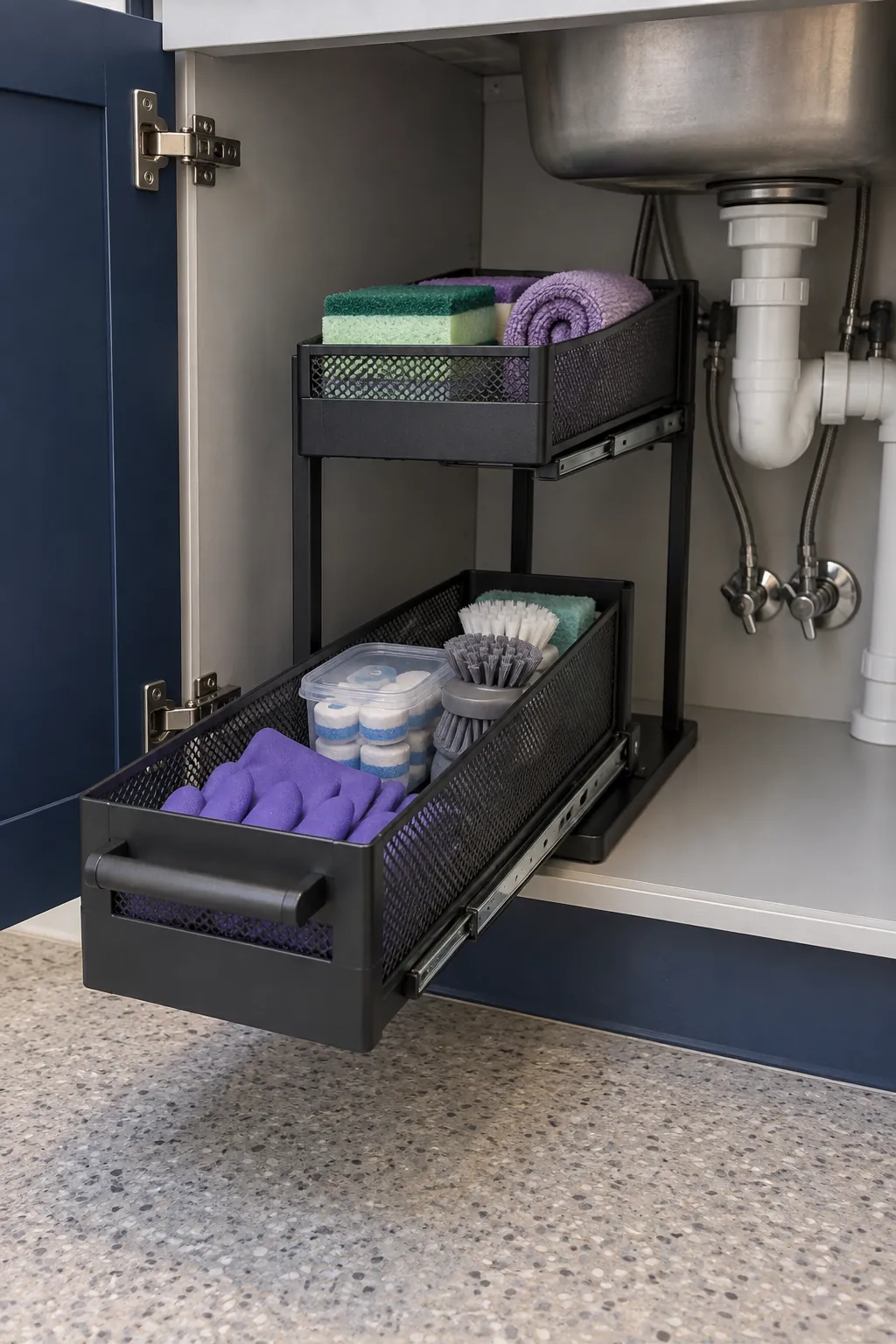
A pull out under sink organizer is useful when the cabinet is deep but has a narrow clear lane. Choose a freestanding drawer with a weighted base or wide feet that resist the forward force of opening. Test its handle path against the cabinet lip and confirm that the basket clears the door hinge through its full travel.
Drawers suit small items that disappear at the back, such as dishwasher tablets, sponges, gloves, and spare scrub heads. Do not place tall spray bottles in a low upper drawer unless the measured opening includes their triggers. A removable liner catches drips and makes the organizer easier to clean between moves.
Pick open bins for flexible budget storage
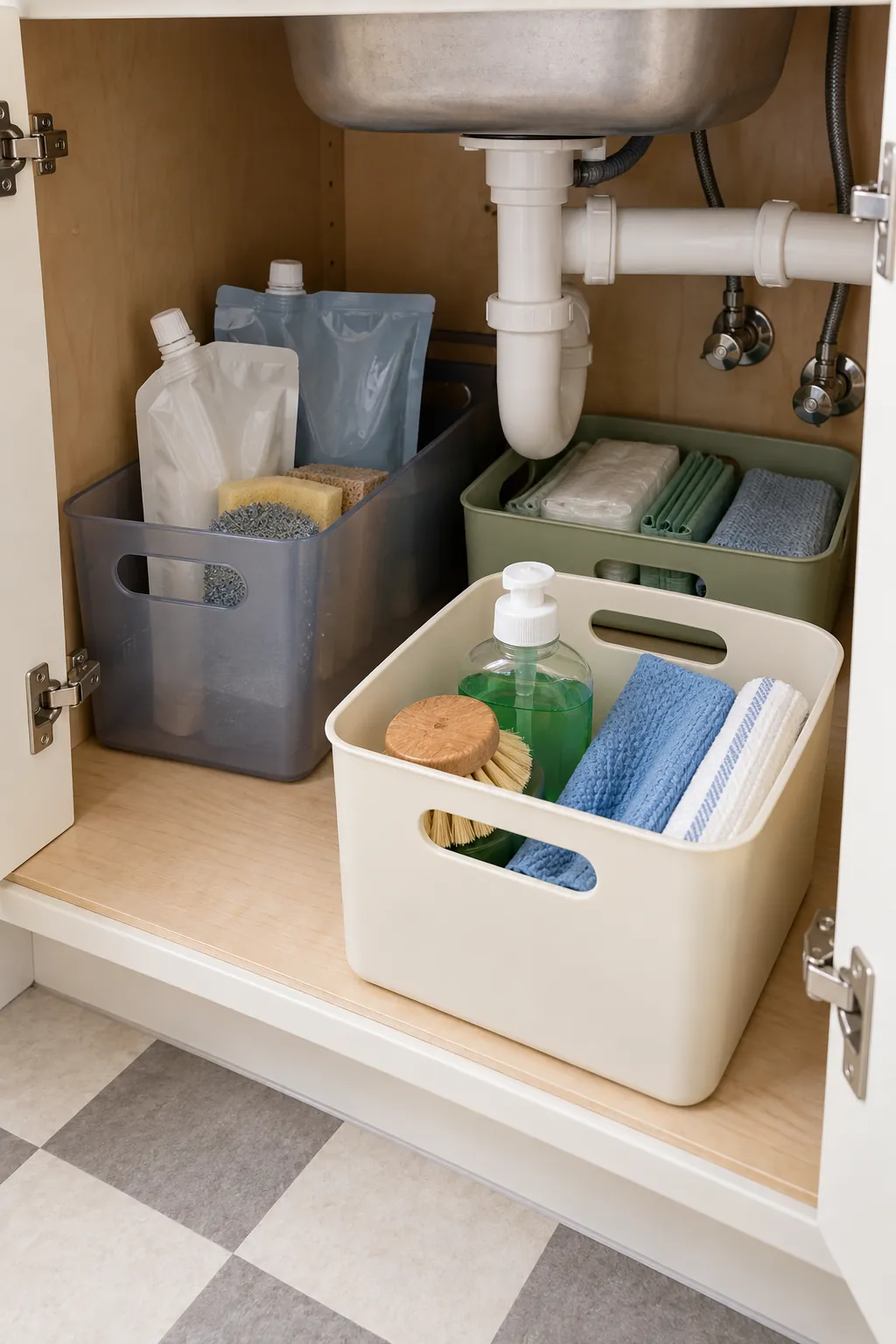
Simple handled bins are often better than a complex two tier under sink rack in a very irregular cabinet. Each bin can occupy a different clear zone, and you can lift it out without disturbing the plumbing. They also move easily to a new apartment where the cabinet shape may differ.
Group products by task rather than package size. One small caddy can hold daily dish care, while another holds occasional cleaning supplies. Keep bags and spare cloths in a low open bin, and avoid packing products so tightly that labels, leaks, or expired supplies become hard to notice.
Protect the cabinet without permanent adhesive
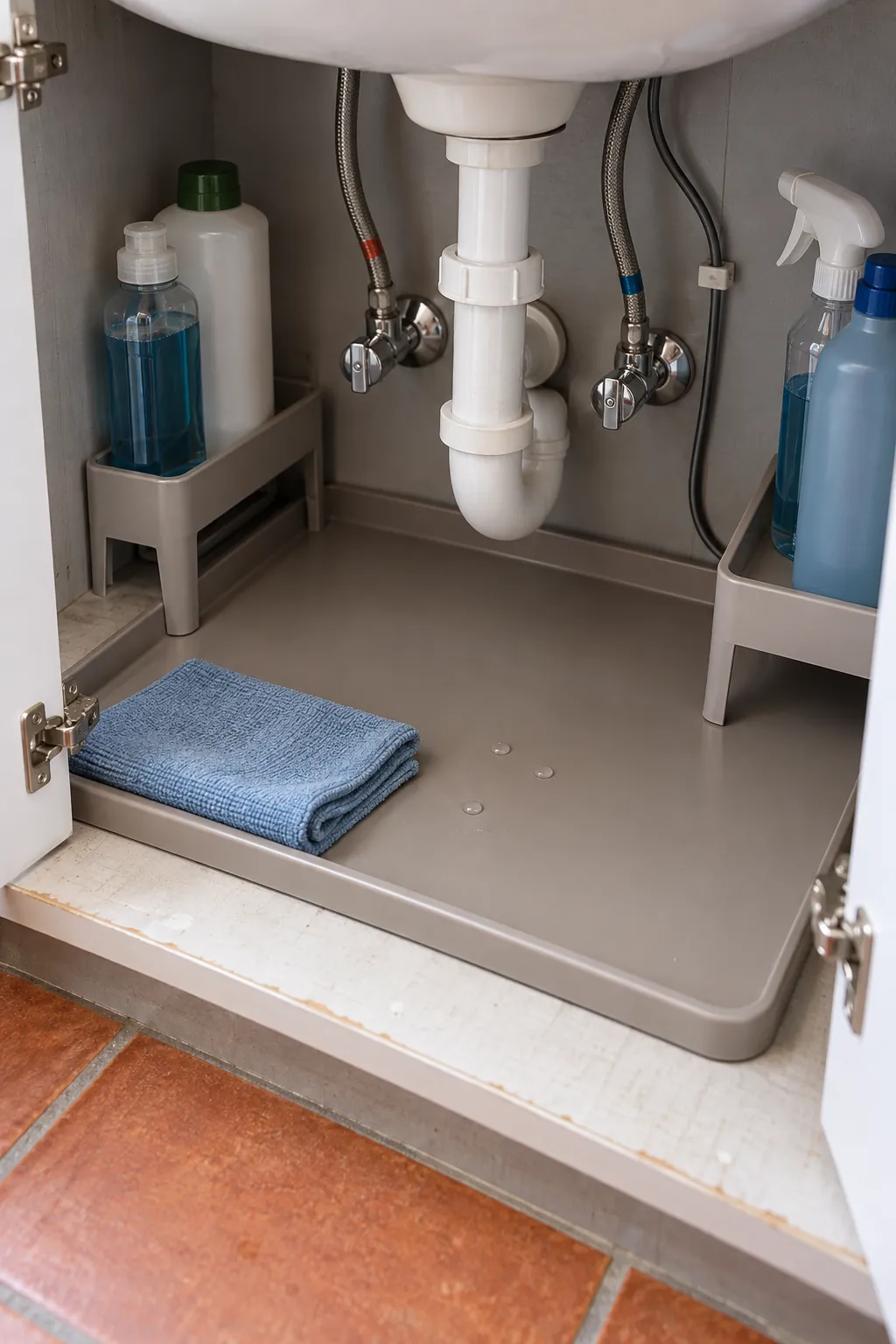
Freestanding cabinet organizers avoid screw holes, but they can still scrape a finish or trap moisture. Place a washable shelf liner or shallow waterproof tray below the storage zone. Use small removable grip pads only where the maker allows them, and test any adhesive in a hidden spot before it touches a rental surface.
Leave a visible gap around supply lines and the drain connection. This makes slow drips easier to see and prevents bottles from pressing against fittings. Never store paper goods directly beneath a joint because they can hide moisture until the cabinet base has swollen.
Match the organizer to what you reach most
Choose a split shelf when plumbing divides the cabinet, a narrow drawer when depth is wasted, or handled bins when flexibility and price matter most. Daily supplies belong at the front in one motion reach, while refills can sit higher or farther back. Keep dangerous cleaners secured according to their labels and away from children and pets.
After loading the organizer, open every drawer and both cabinet doors, then turn each valve without moving storage. Wipe the floor and inspect the pipes after a week because a new layout can expose a slow leak that clutter once concealed. A renter friendly system succeeds when it is easy to use, easy to inspect, and simple to lift out on moving day.