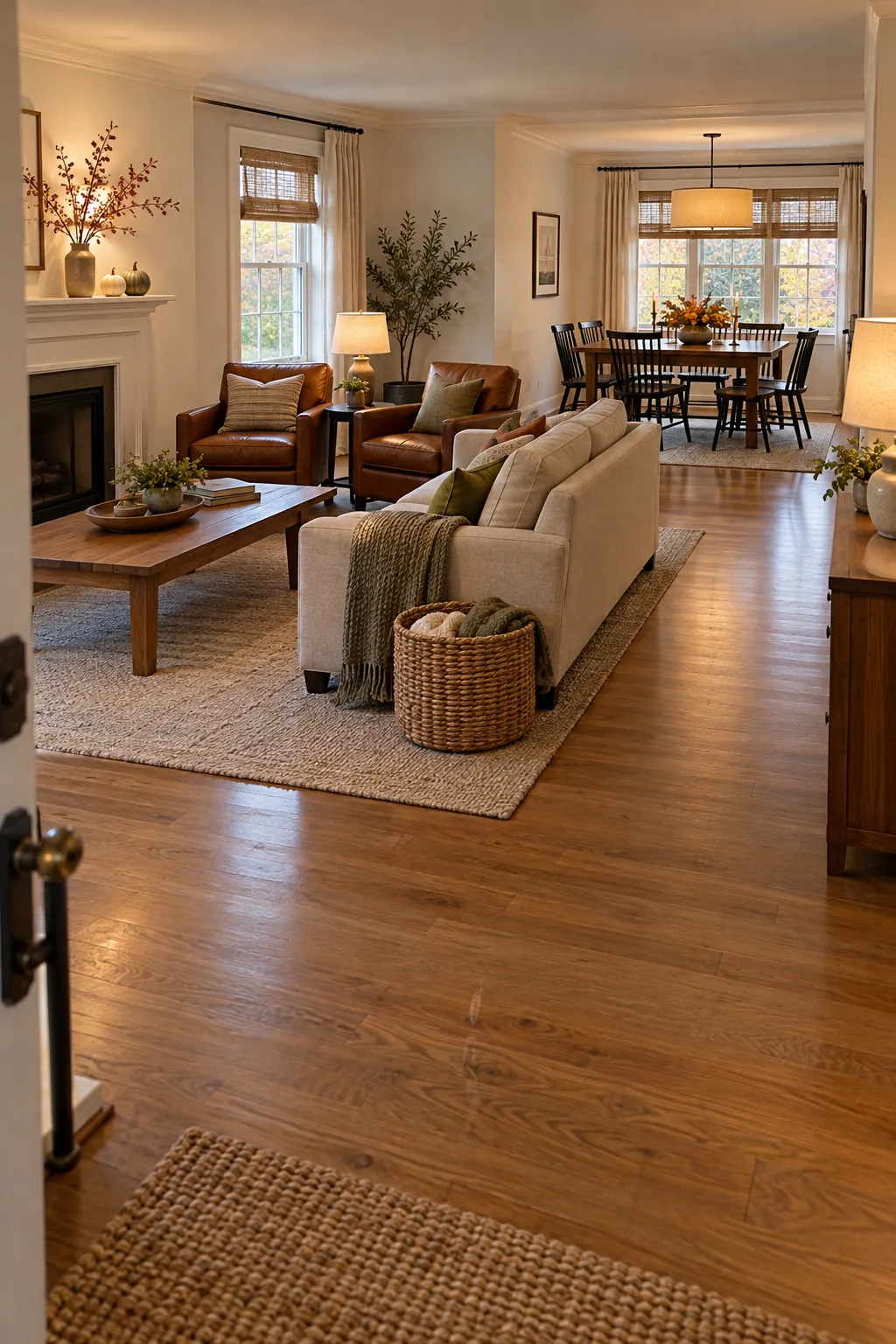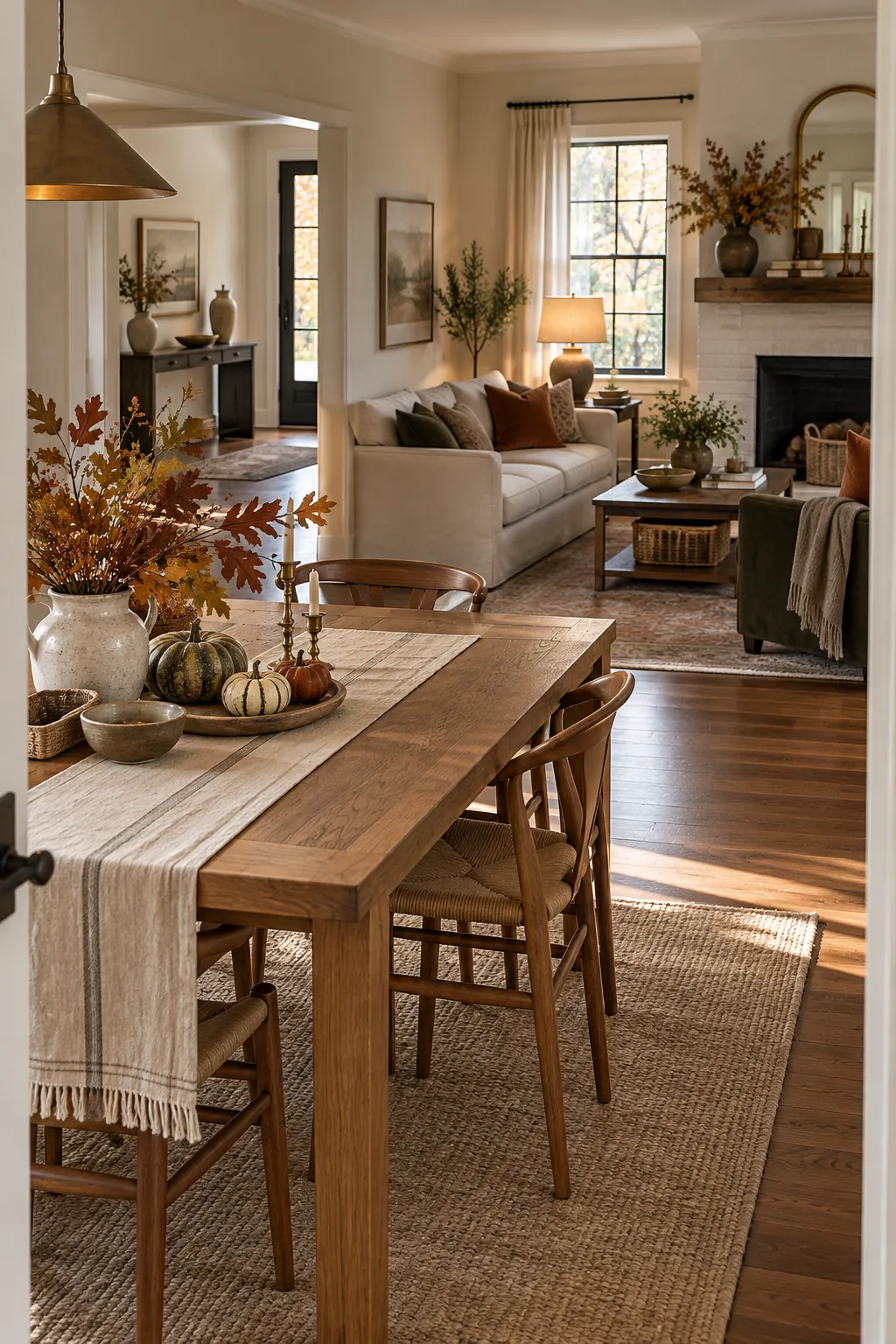
A home can feel festive without storing bins of themed objects or covering every table. The most convincing Thanksgiving decor often comes from familiar materials, useful serving pieces, and a few concentrated moments. Start by protecting the space needed for cooking, conversation, and guest belongings.
Choose a grounded natural palette
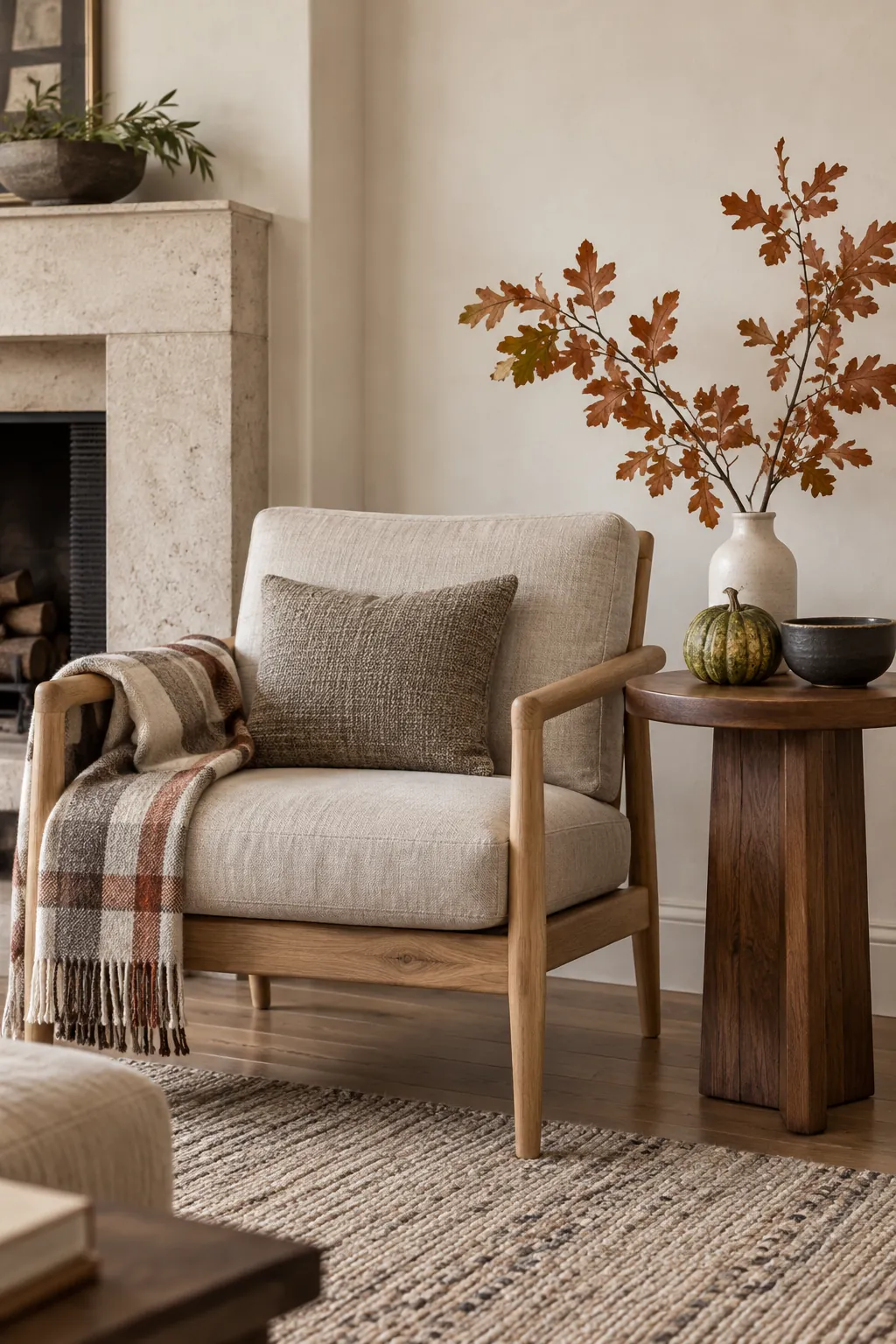
Look first at the wood, stone, fabric, and paint already in your rooms. Add two seasonal accents, such as muted rust and olive, rather than introducing every autumn color at once. Cream and charcoal can connect those warmer notes to the rest of the home.
Concentrate decor in three places
Choose three visible areas, perhaps the entry console, dining table, and living room mantel or shelf. A focused arrangement in each place creates a clear seasonal rhythm while the remaining surfaces stay useful. This approach also makes setup, cleaning, and storage much easier.
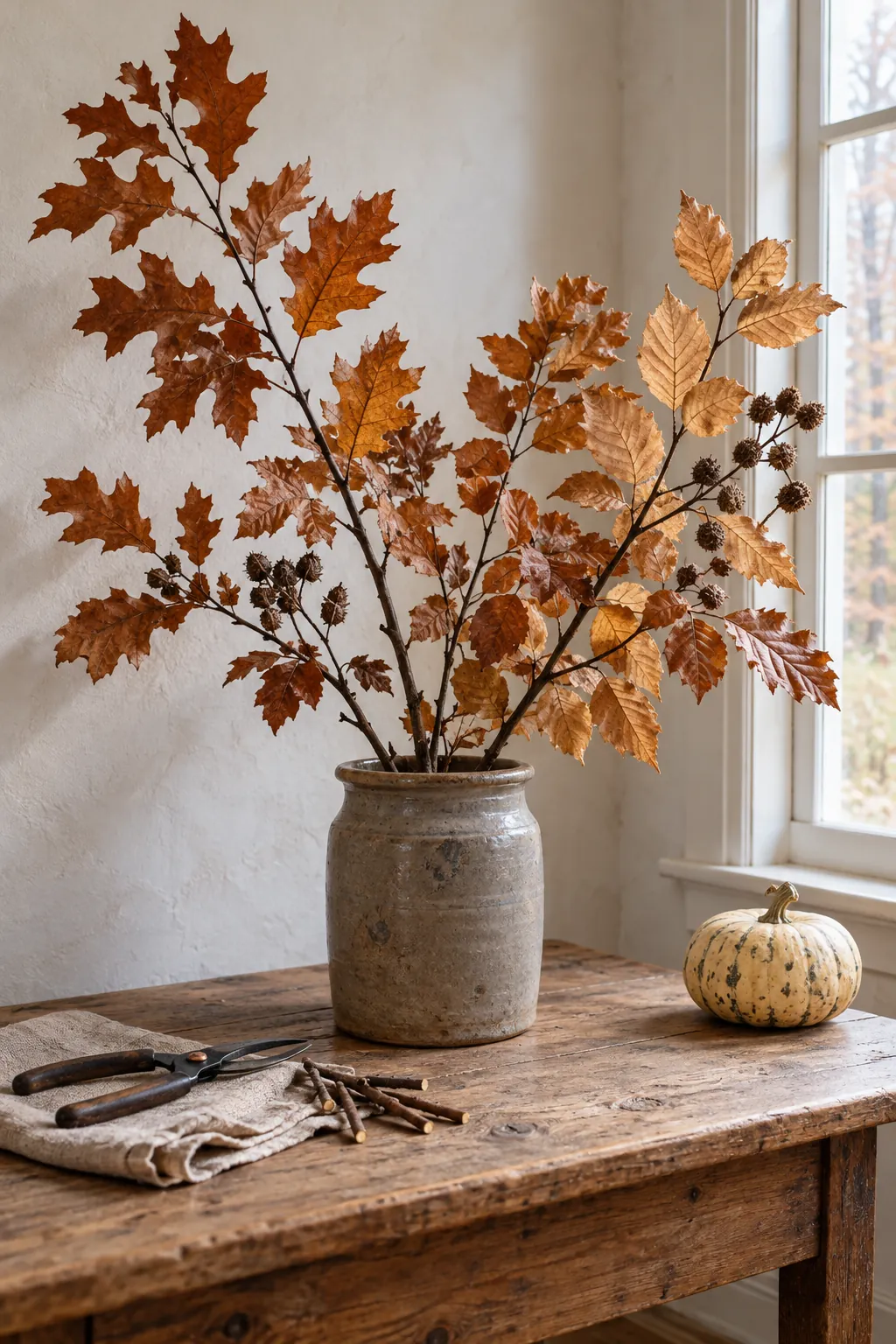
Gather branches with breathing room
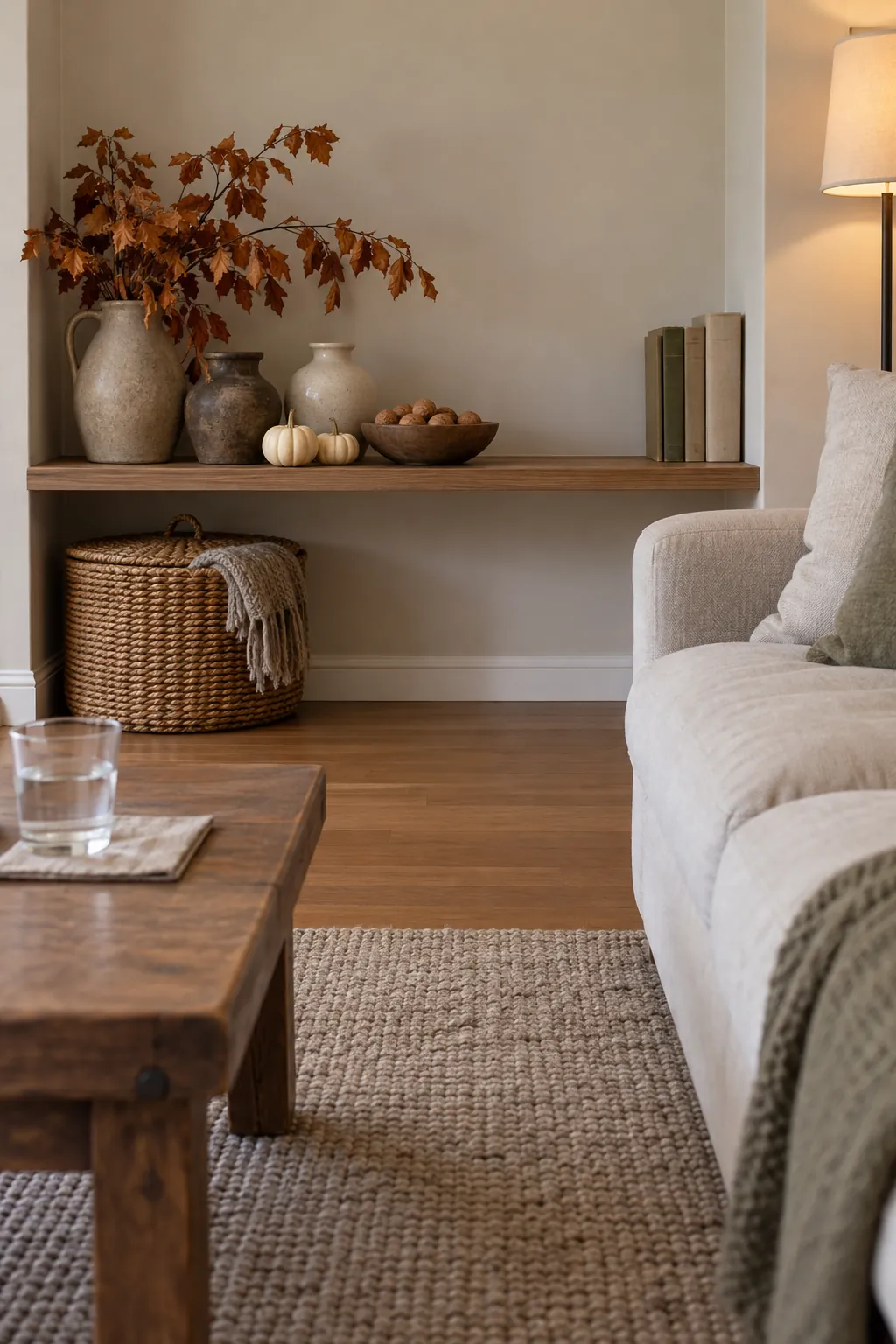
A few branches can add height and movement for very little cost. Use a stable vessel, trim the arrangement away from faces and walkways, and leave open space around its outline. Dried leaves are most effective when their shapes can be seen instead of packed into a dense bundle.
Let useful pieces carry the theme
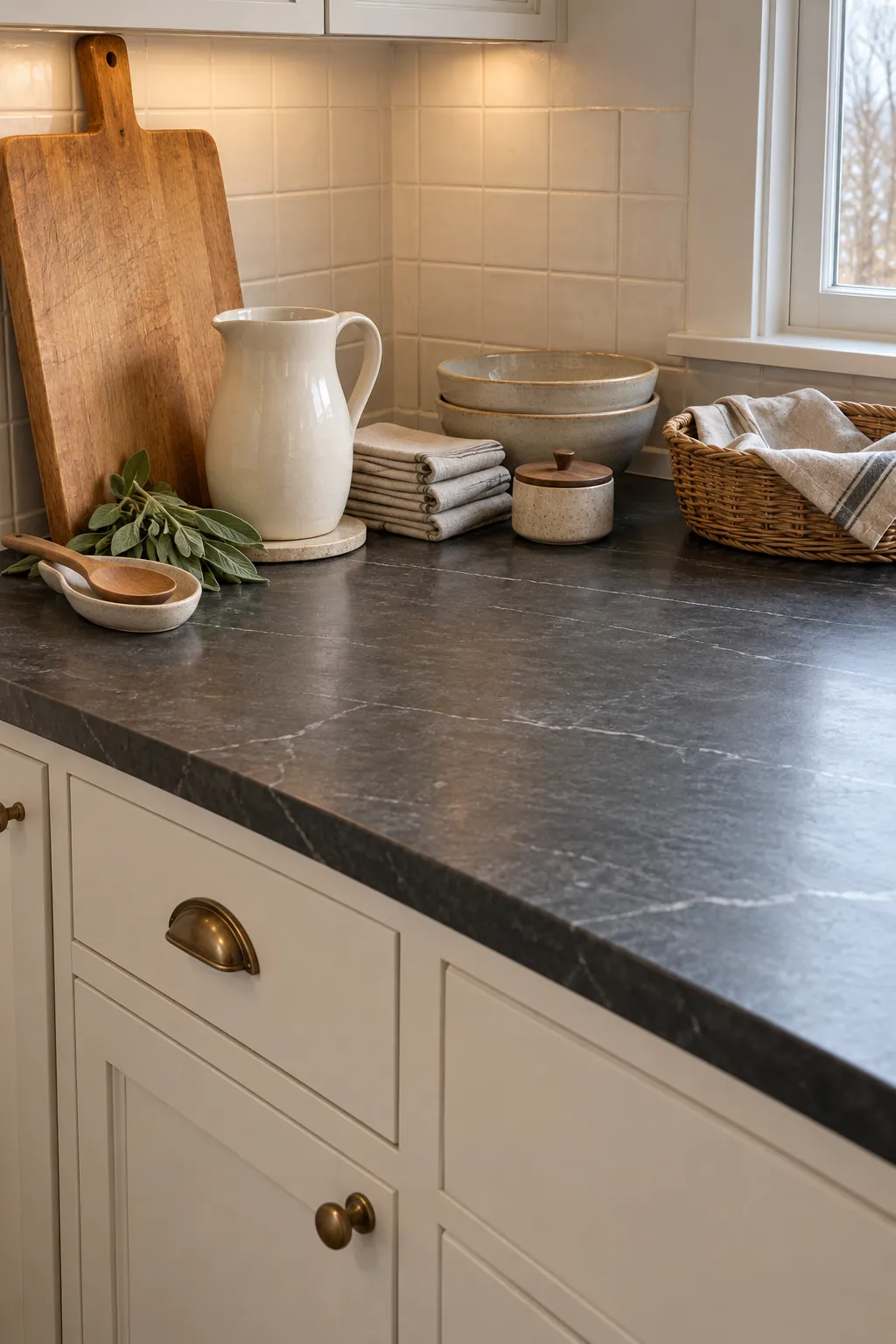
Wooden boards, ceramic pitchers, linen napkins, and woven baskets already belong in a natural home. Grouping these useful pieces by material makes the room feel warm before you add a single novelty decoration. Keep serving surfaces ready by using only what will help during the meal.
Build a low conversation friendly table
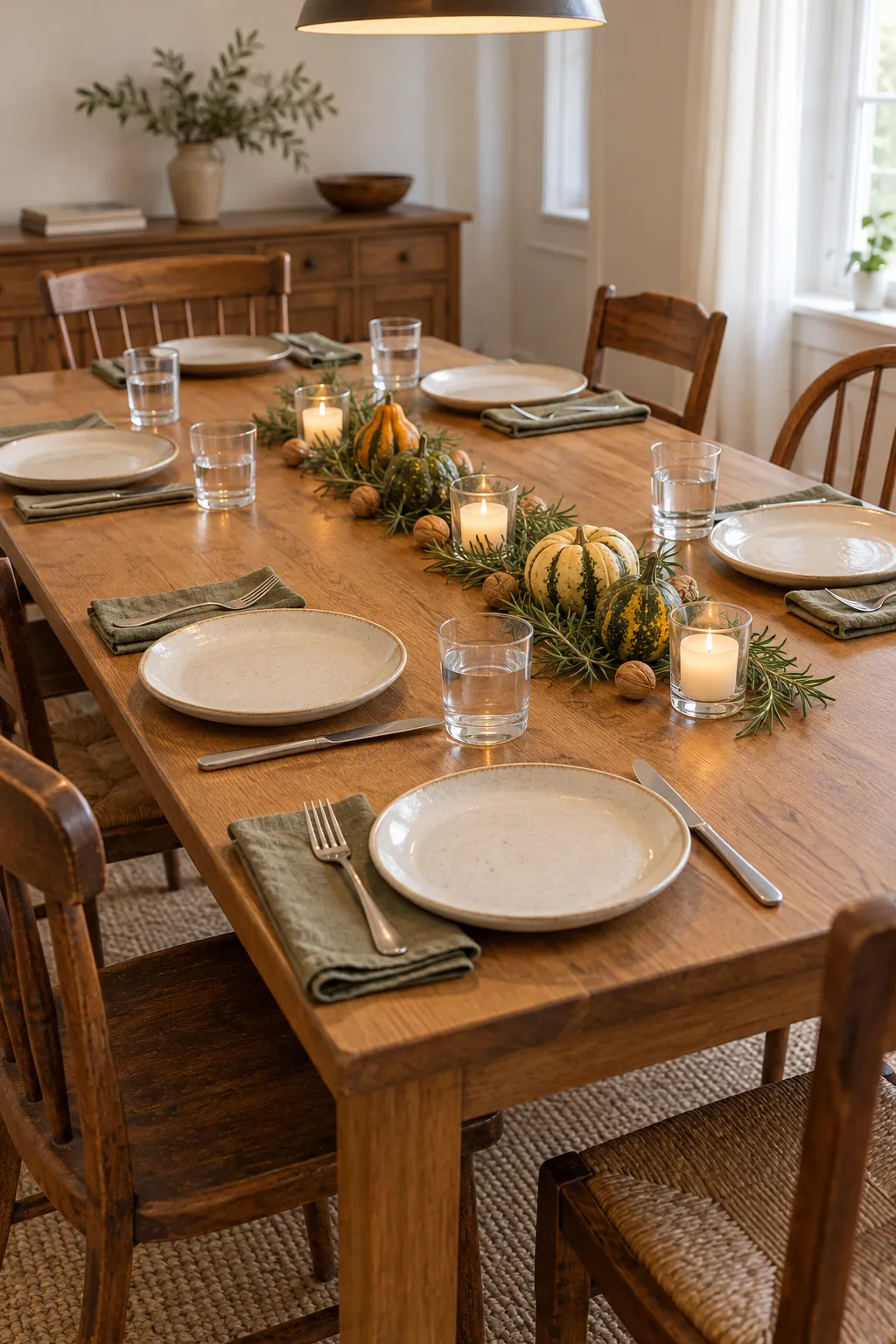
A centerpiece should sit below eye level or lift easily when food arrives. Try a loose line of small gourds, herbs, and battery candles instead of one tall arrangement. Leave clear landing space for hot dishes, water glasses, and serving utensils before deciding that the table needs more.
Edit the room before guests arrive
Take a final walk from the door to the dining area and remove anything that interrupts movement or conversation. Check that decorations do not block lamps, vents, switches, or useful surfaces. The room is finished when guests can settle in easily, not when every empty spot has been filled.