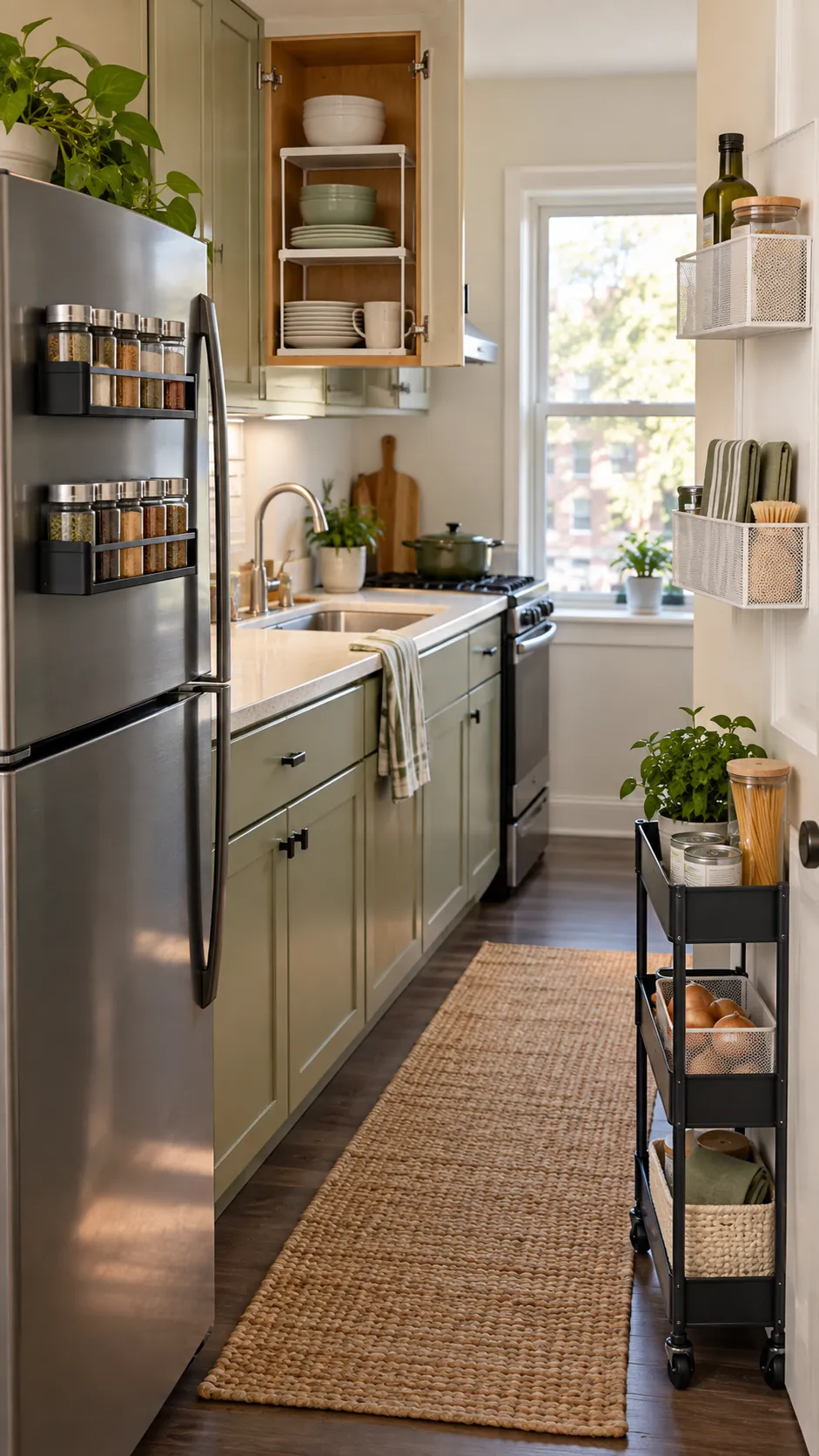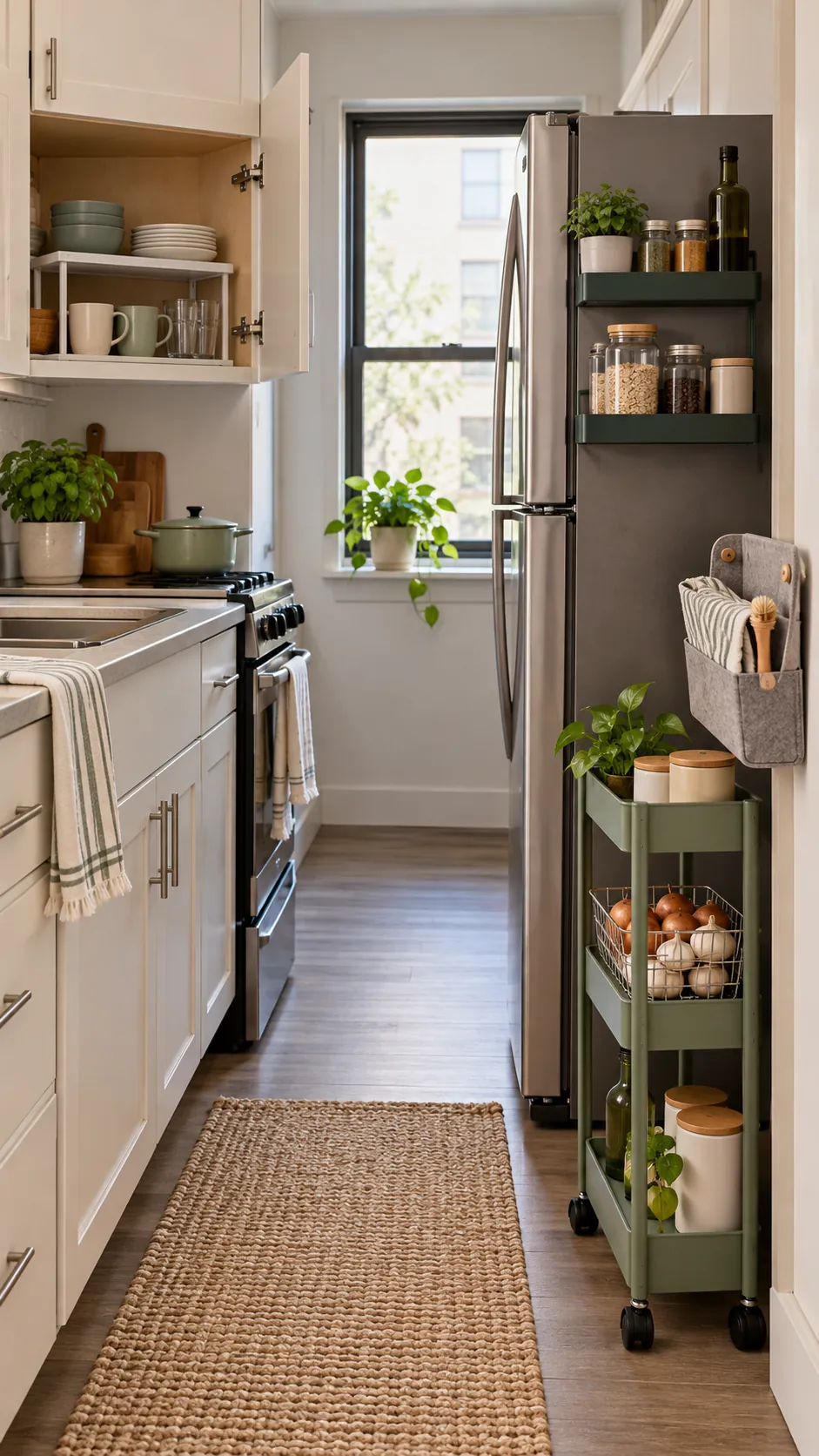
Buying every clever organizer at once often creates a second kind of clutter. The better shopping list starts with the storage failure that costs you time each day. Measure that zone, buy one product that solves it, and test the result before adding another.
Start with measurements and a storage audit
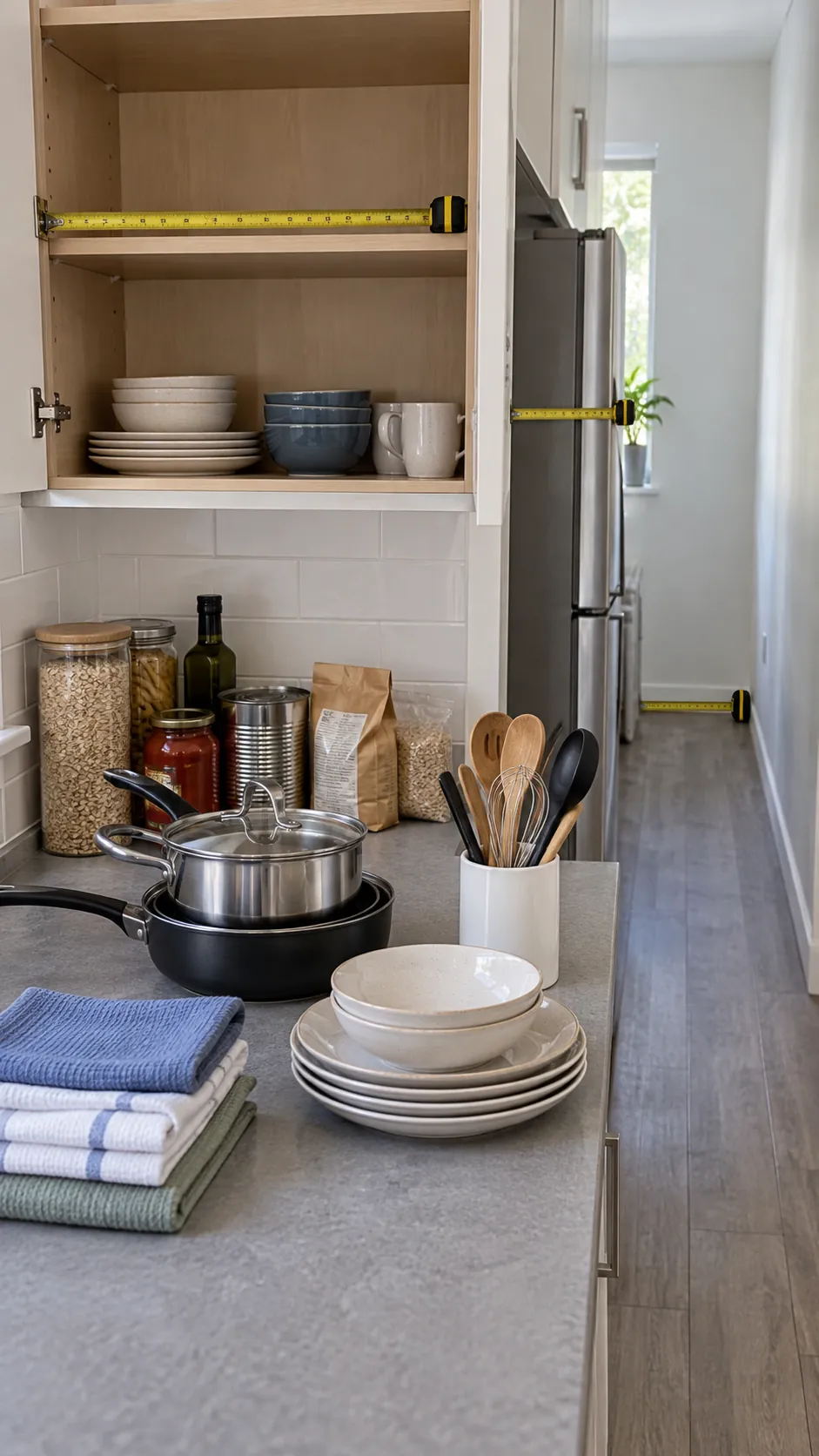
List what does not fit now: dishes, pantry food, cookware, cleaning supplies, or utensils. Measure cabinet interiors, shelf spacing, door thickness, refrigerator sides, floor gaps, and any clear wall free of heat or water. Record the largest item in each category.
Remove duplicates and expired food before buying containers. Mark daily items, weekly items, and rare items so the easiest spaces go to frequent use. Set a budget for the first problem only; this prevents a pile of products that do not fit the apartment.
Buy shelf risers for wasted cabinet height
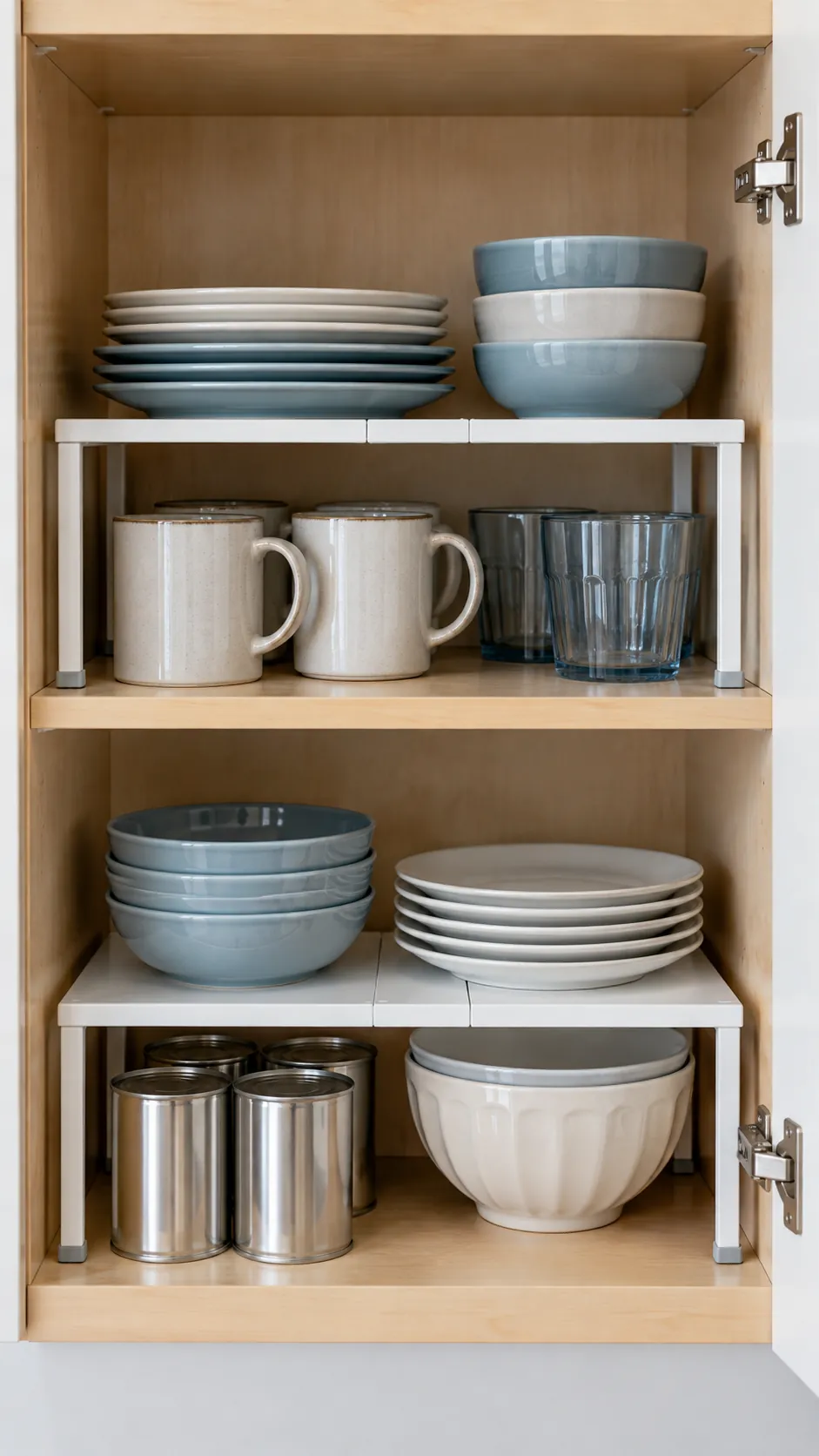
Stackable cabinet shelf risers help when plates, bowls, mugs, or cans occupy only the bottom half of a tall shelf. Choose a freestanding riser narrower than the cabinet opening and deep enough to support the load. Feet should sit flat without covering hinge hardware.
An expandable kitchen shelf adds width flexibility, but its overlap can create a raised seam. Use it for stable dishes rather than tiny jars that wobble. Buy one riser first and confirm that you can still lift items from both levels.
Add magnetic organizers where steel passes the test
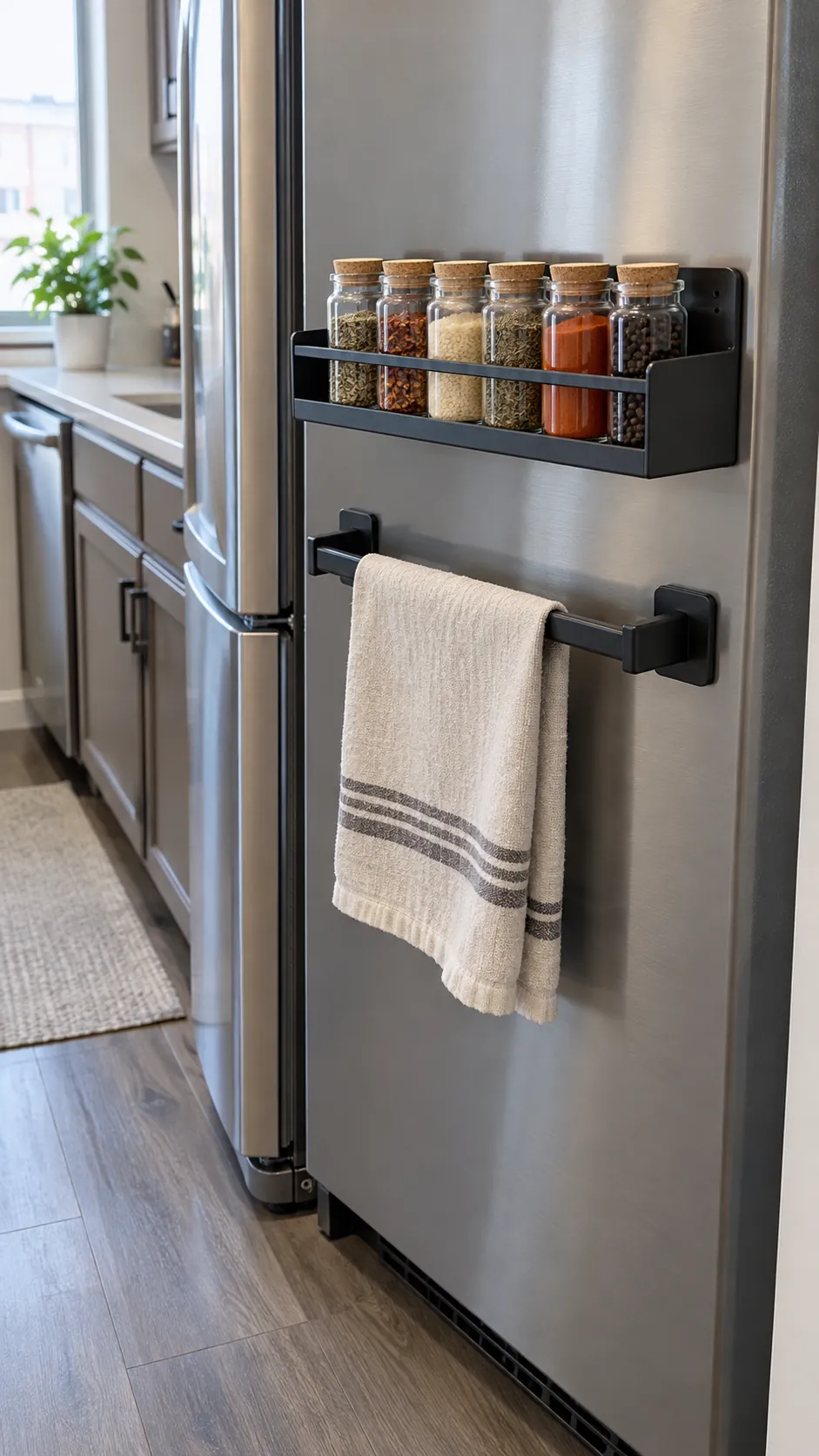
Magnetic kitchen organizers can hold spices, towels, or light tools on a flat steel refrigerator side. Test the exact panel because some stainless finishes are not magnetic. Keep shelves away from door seals, vents, hot appliance surfaces, and busy walking paths.
Calculate the loaded weight rather than the empty rack weight. Use rails that contain every jar and distribute the load across a broad magnetic back. Magnetic storage is valuable for renters because it moves without residue and can follow you to another home.
Use over door baskets for light supplies
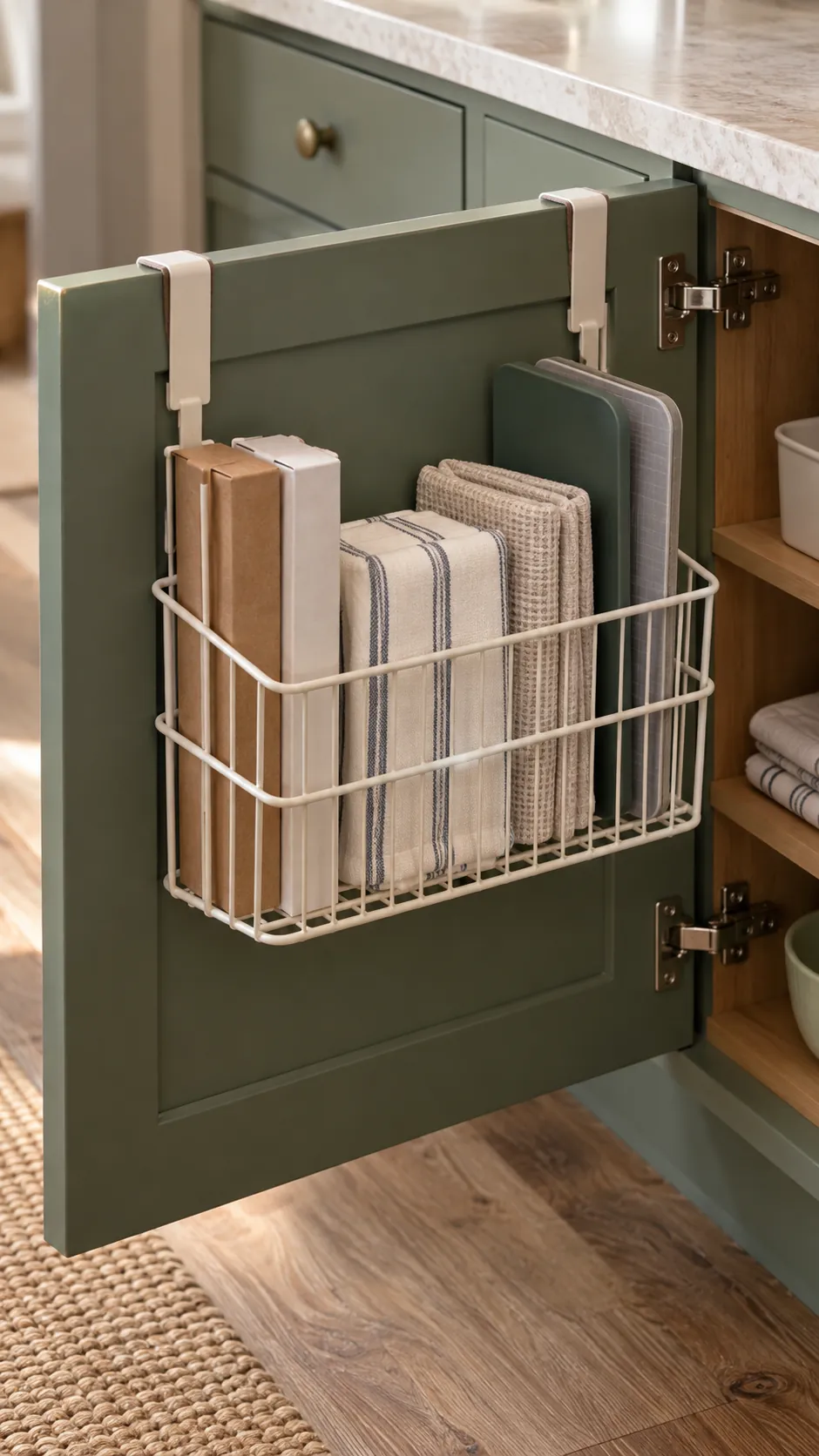
Over cabinet basket organizers work for towels, wraps, cutting mats, and other light items near the cabinet where they are used. Measure the door and frame gap before shopping. A padded thin hook should let the door close without force or rubbing.
Check the interior shelf setback and hinge path as well as the exterior basket depth. Avoid loading heavy cans or bottles onto a door. If the hinge begins to sag or the basket rattles, reduce the load immediately.
Choose a narrow cart for pantry overflow
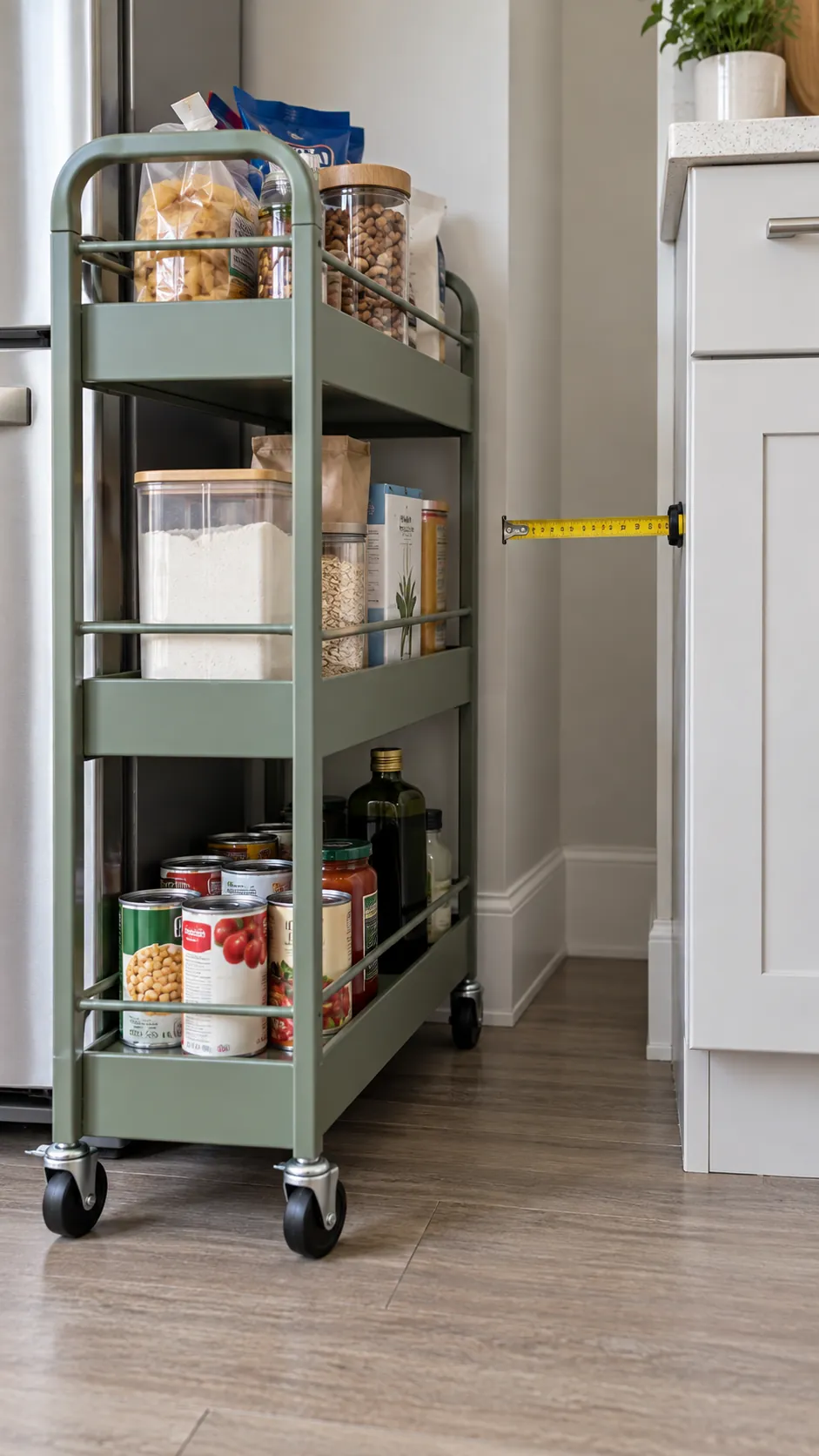
A narrow rolling pantry cart is the larger purchase on this list, so measure the gap at several heights and include baseboards. Check appliance ventilation guidance before using space beside a refrigerator. The cart also needs a clear pull path and a handle you can grip.
Look for rails, straight wheels, and shelf heights matched to real packages. Put cans and bottles low, baking goods in the middle, and light snacks high. A lock or stable parking stop keeps the cart out of the main kitchen lane.
Buy in the order that returns the most space
Begin with shelf risers when existing cabinets waste height. Choose magnetic storage when a tested steel panel is open. Add a padded door basket for light supplies, then consider a rolling cart only when pantry overflow still lacks a safe home.
Keep receipts and load each organizer gradually. Use it for a week before buying the next product. A useful renter kitchen storage checklist ends when daily items fit, movement stays clear, and every product can leave without repairs.