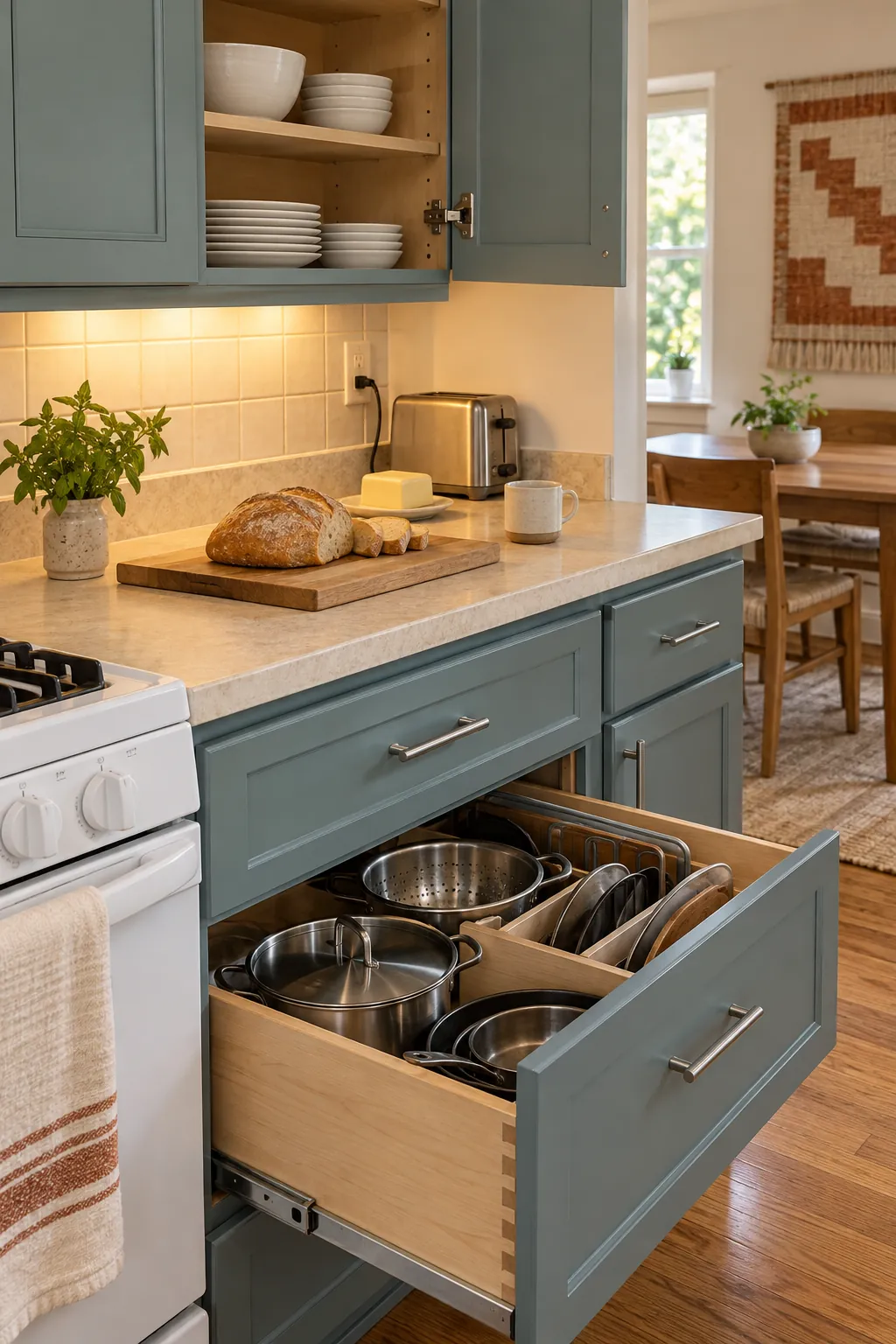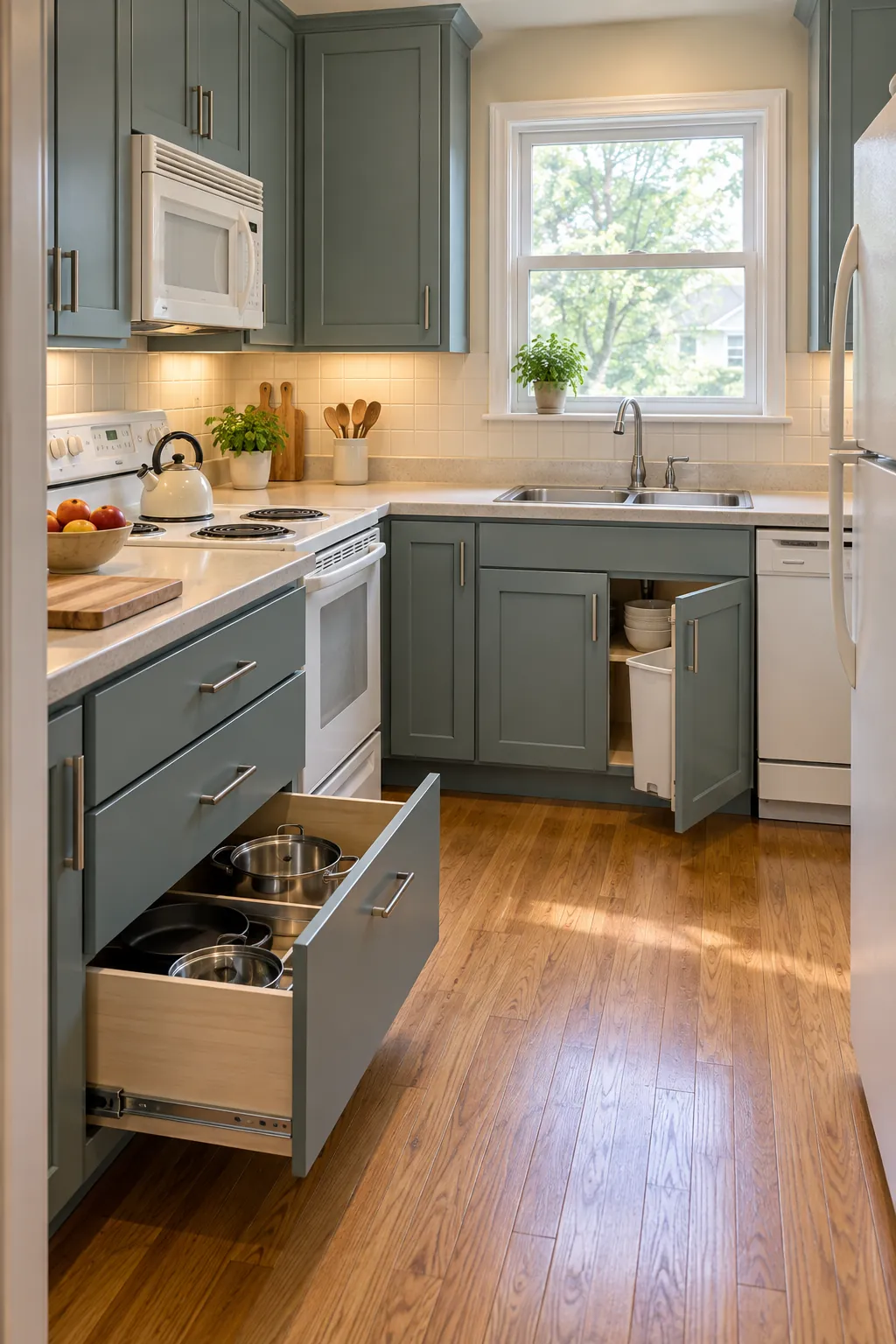
The cheapest cabinet update is not always the one with the lowest starting quote. Paint preserves every existing door and box. Refacing keeps the boxes but replaces visible parts. Replacement changes the complete system and can trigger work on counters, plumbing, walls, floors, and appliances.
Start with what the kitchen must fix. If storage, layout, cabinet heights, appliance clearances, or damaged boxes are the real problem, a new surface will not solve it. If the boxes are strong and the layout works, preserving them can protect both the budget and the rest of the room.
Inspect every cabinet box first
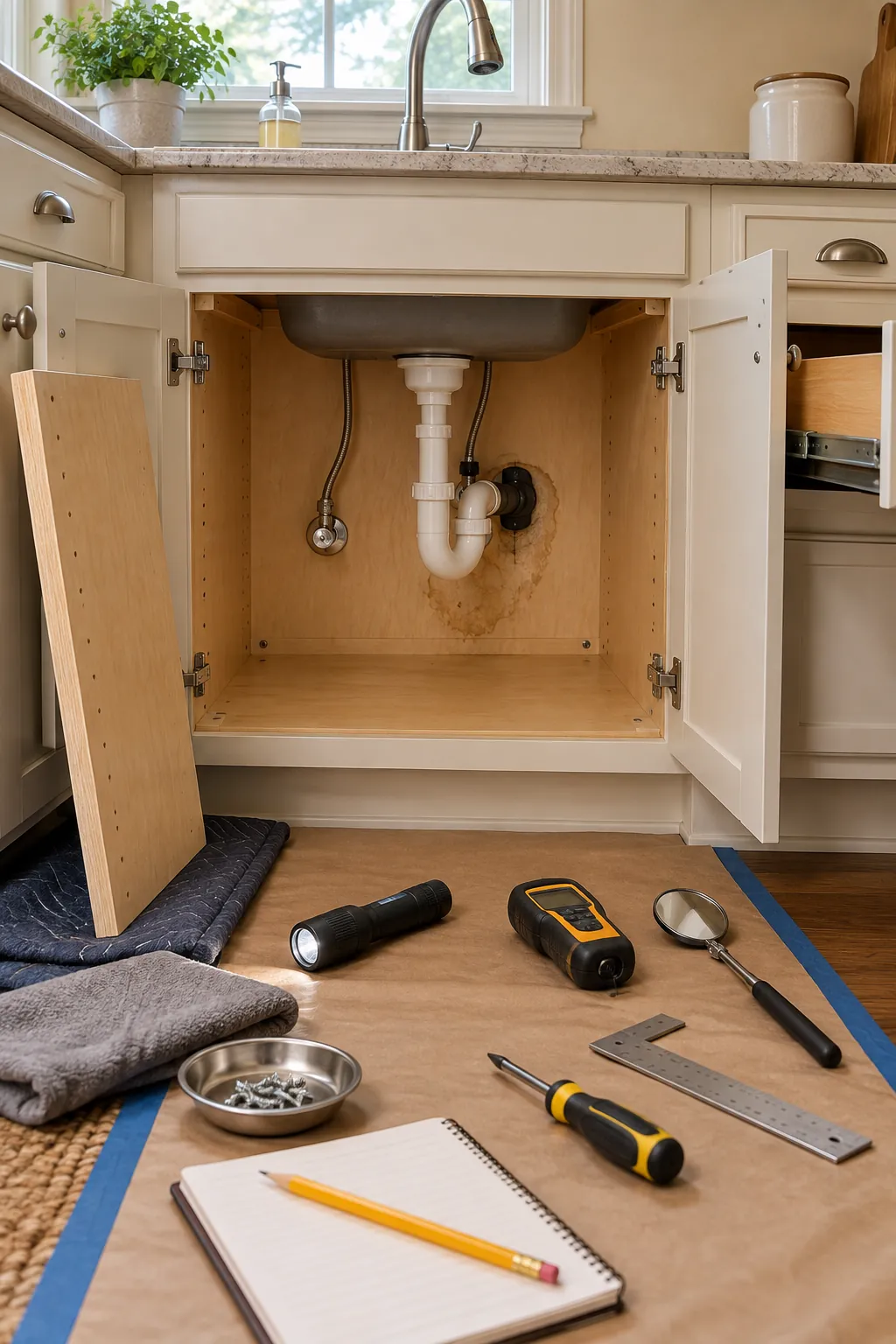
Empty the cabinets and inspect bottoms, backs, shelves, joints, hanging rails, face frames, and the areas beside the sink and dishwasher. Look for swelling, loose fasteners, sagging shelves, water stains, peeling surfaces, odors, and boxes that have pulled away from the wall. Test every drawer and door.
A useful cabinet boxes condition check also tests function. Measure openings, appliance gaps, counter height, reach, and aisle clearance. Strong boxes are not good candidates for preservation when the layout wastes corners, lacks drawers, blocks circulation, or cannot fit the appliances the household needs.
Choose painting for sound doors and the lowest cost
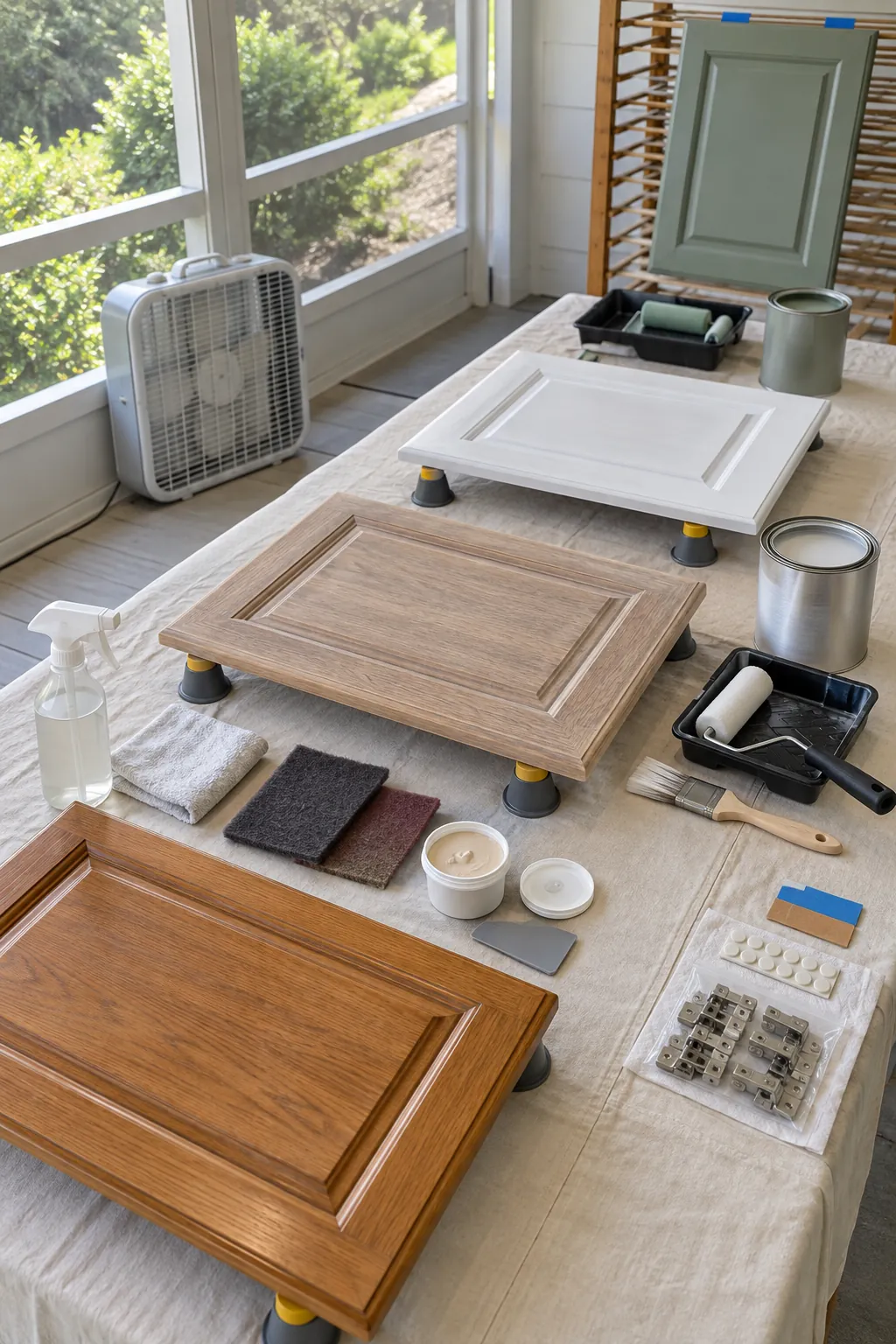
Painting keeps the box, door, drawer front, and layout. It is usually the lowest cost option when existing parts are sound and the desired change is color. Owner labor may reduce the cost to paint cabinets, but cleaning, abrasion, repair, primer, durable enamel, ventilation, labeling, and curing require time and space.
Professional painting adds controlled preparation and a consistent sprayed finish. Ask whether the quote includes removal, transport, box frames, both door sides, repairs, hinges, new bumpers, reinstalling, and touchups. Do not paint loose film, swollen fiberboard, failing laminate, or damaged joints and expect the coating to repair the substrate.
Use refacing when the boxes and layout deserve to stay
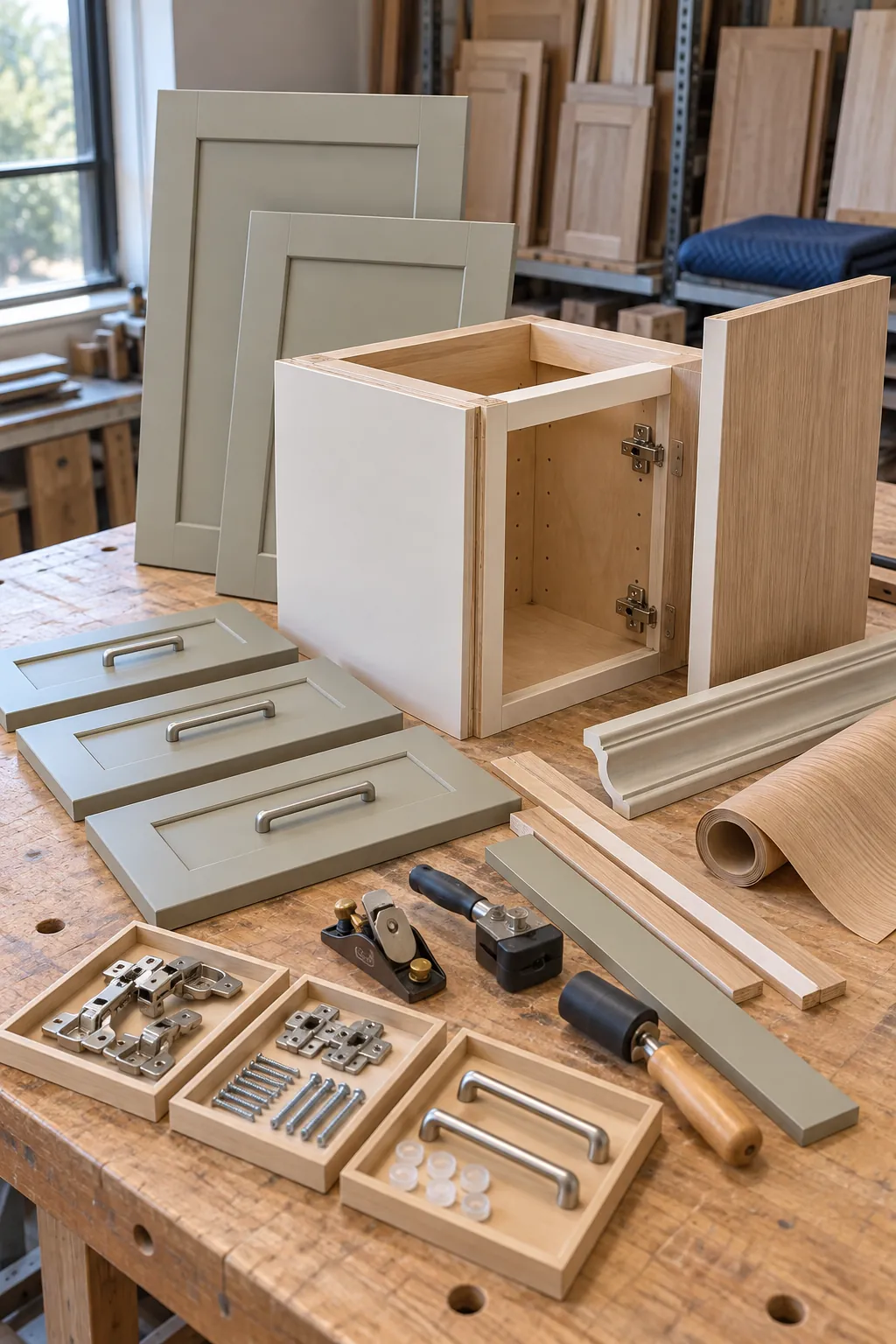
Refacing normally adds new doors and drawer fronts, covers exposed box faces and finished ends, and may replace hinges, pulls, trim, and molding. It can deliver a different door style while leaving counters and boxes in place. This is valuable when the layout fits well and avoiding broad demolition matters.
Cabinet refacing cost rises with door count, material, veneer or panel work, complex ends, tall units, glass doors, molding, hardware, drawer upgrades, and labor. Confirm whether old drawer boxes and slides remain. A fresh exterior does not improve shallow storage, weak shelves, awkward corners, or worn interior hardware unless those items are separately included.
Replace when function or structure must change
Replacement is the appropriate cabinet renovation option when boxes are damaged, the layout is poor, appliance sizes change, or better storage is a primary goal. It can add drawers, pantry storage, accessible hardware, stronger shelving, and corrected clearances. The kitchen cabinet replacement cost must include more than the cabinet order.
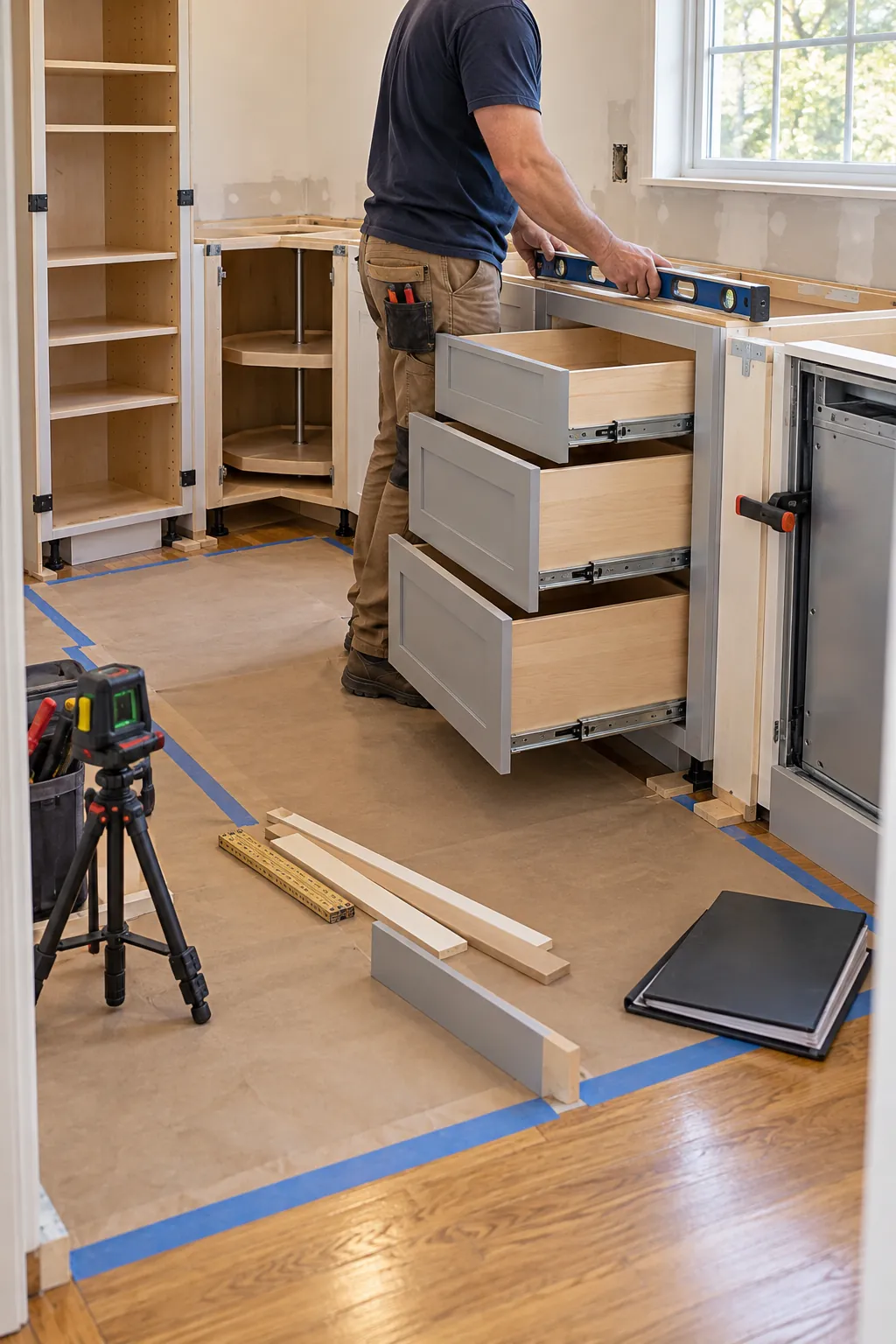
Budget removal, disposal, delivery, assembly, installation, fillers, panels, trim, hardware, wall repair, counter removal, new counters, sink connections, appliance fitting, and possible floor repair. Keeping the same footprint can control connected work, but box dimensions and finished heights still need coordinated measurements.
Compare complete scopes instead of percentages
Request written painting, refacing, and replacement quotes for the same kitchen. Count every door, drawer front, finished end, panel, filler, molding, pull, hinge, organizer, and repair. Separate what remains from what becomes new, and ask how each finish is applied and warranted.
Add connected work that one option creates outside the cabinet contract. A replacement quote that includes better drawers and layout changes cannot be compared directly with refacing that leaves both unchanged. When the prices are close, choose the result that fixes the real problem and provides the clearer responsibility for fitting and finish.
Make the decision with a ten year view
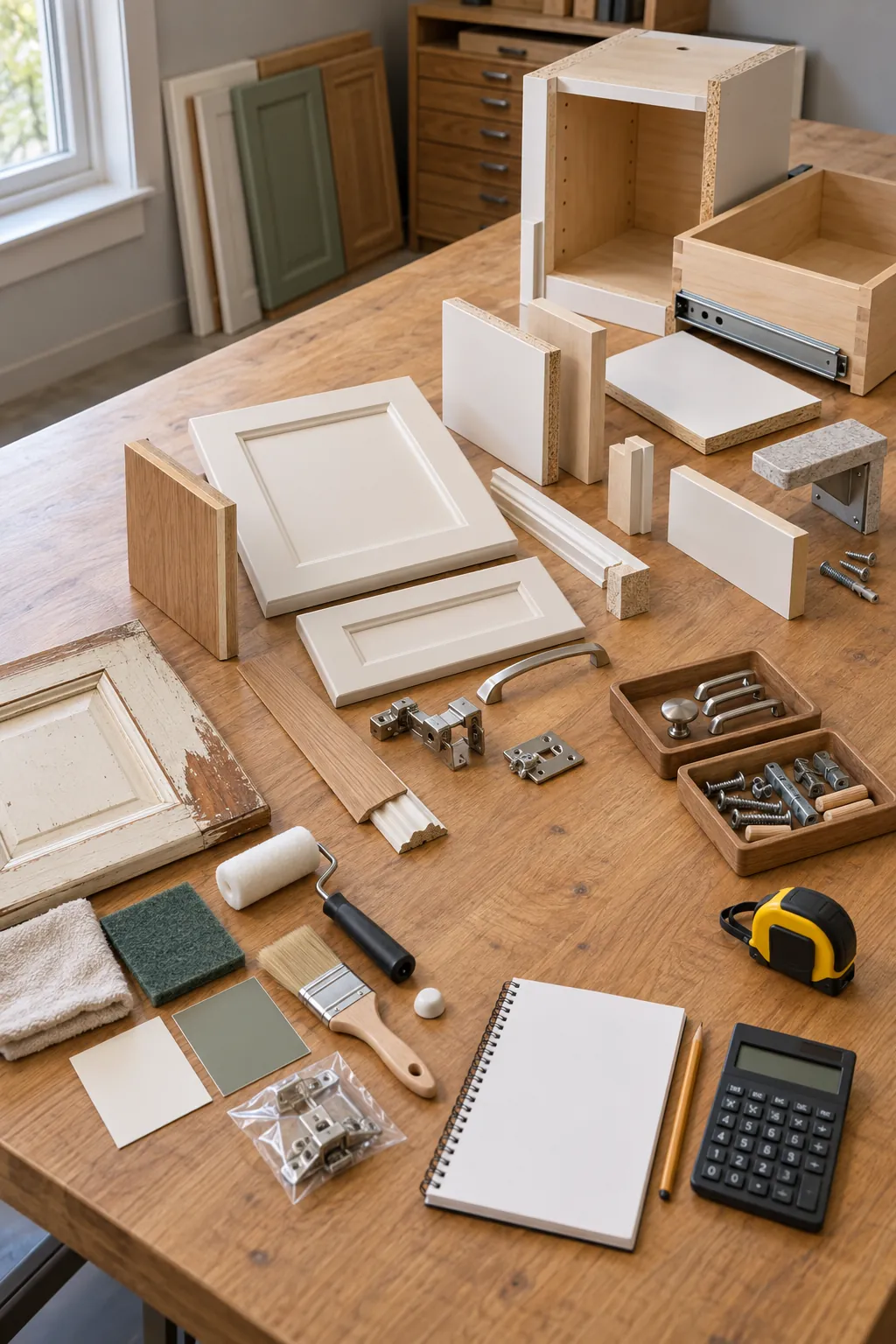
Paint when the cabinet system works, the surface accepts coating, and color is the main goal. Reface when strong boxes and a good layout deserve to stay but the door style needs a major change. Replace when structure, storage, dimensions, or circulation needs correction.
Divide the complete installed cost by the years you reasonably expect to use the result. Add a contingency for repair discoveries and keep samples from the chosen finish. A budget cabinet update succeeds when it preserves valuable parts without paying new surface prices to keep problems that the household already dislikes.