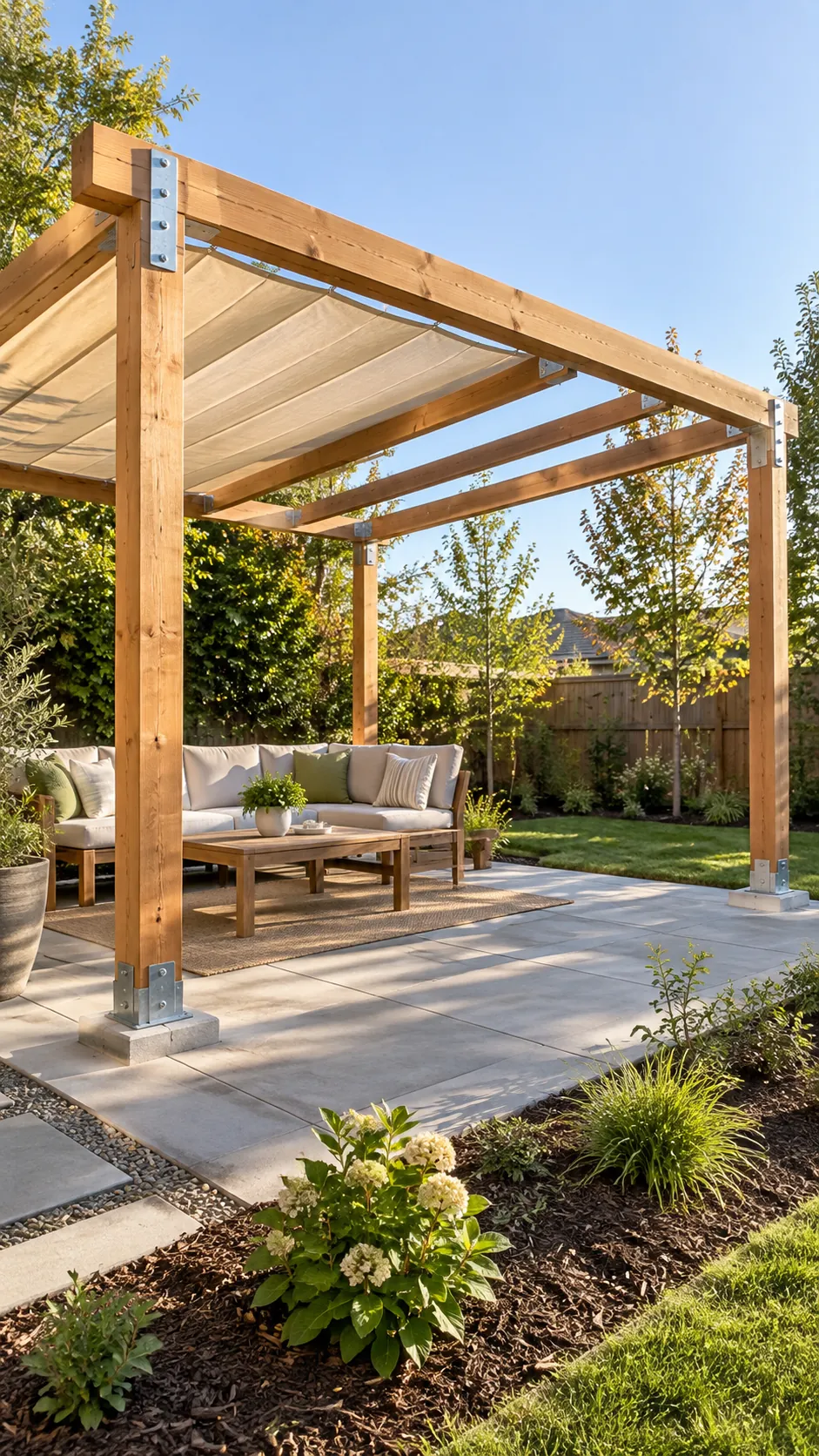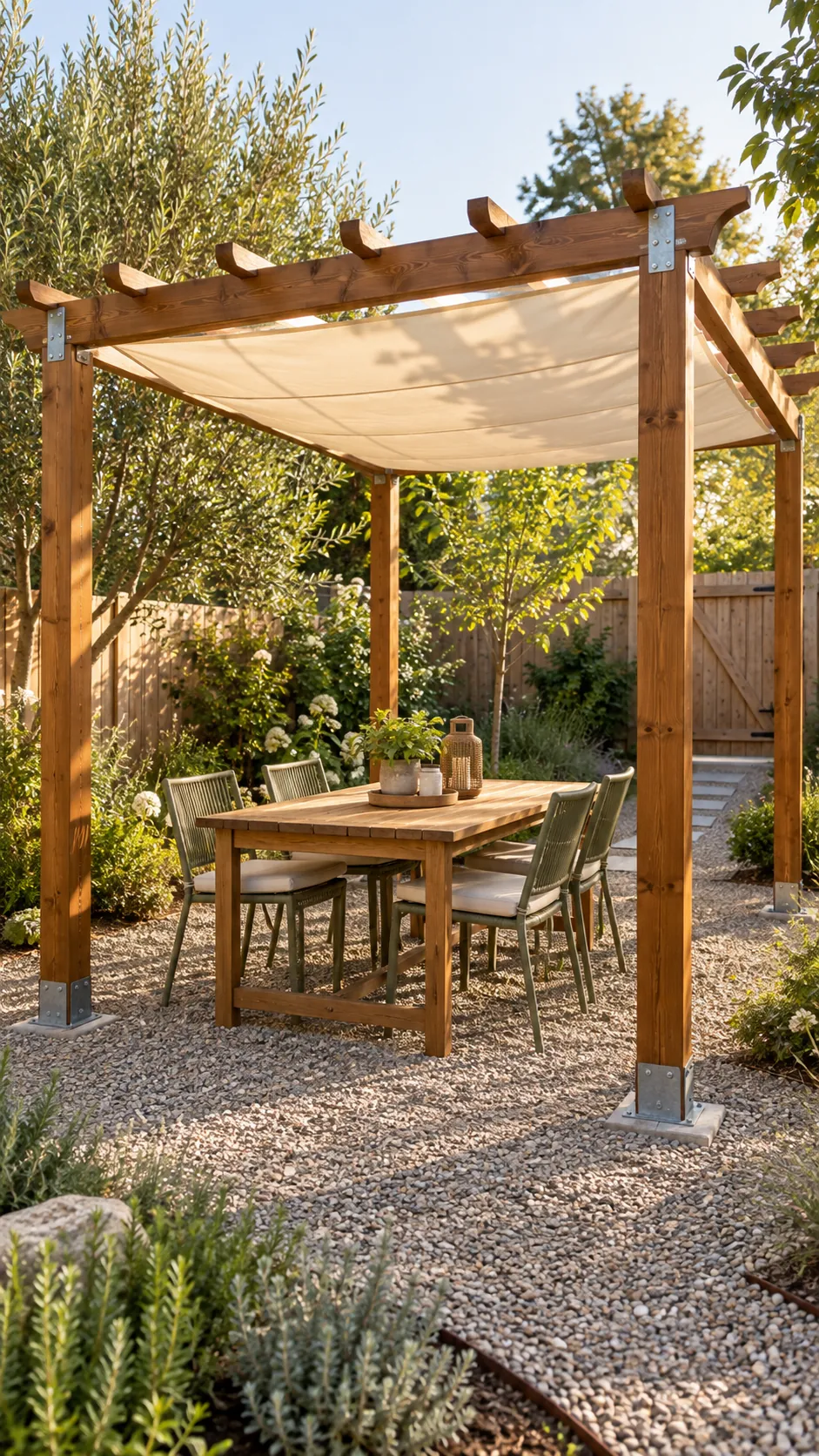
A limited budget works best when it controls the footprint and protects the parts that keep a structure safe. Posts, footings, beams, connectors, permits, and wind resistance deserve priority. Shade fabric, lights, screens, stain, and planting can follow when money allows.
Simple Four Post Pine Frame
Use a compact rectangle and standard pressure treated lumber to reduce cuts and waste. Spend first on correctly sized posts, footings, and exterior hardware. Add stain later after the structure has dried.
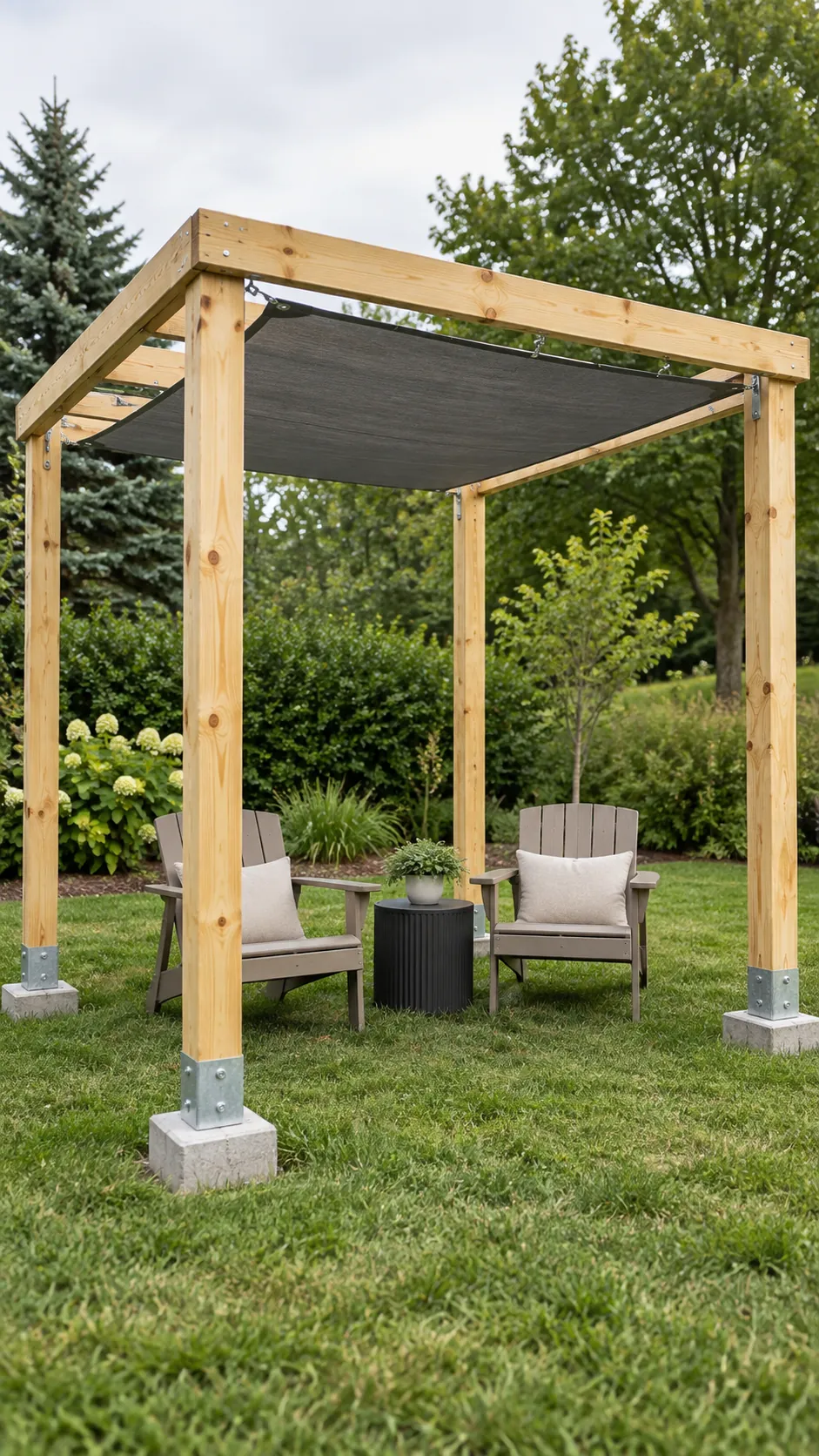
Pergola Built Over an Existing Patio
An existing sound patio can save the cost of new paving. A professional should confirm where footings can go without damaging slabs or utilities. Keep the frame aligned with the patio edges for a tidy result.
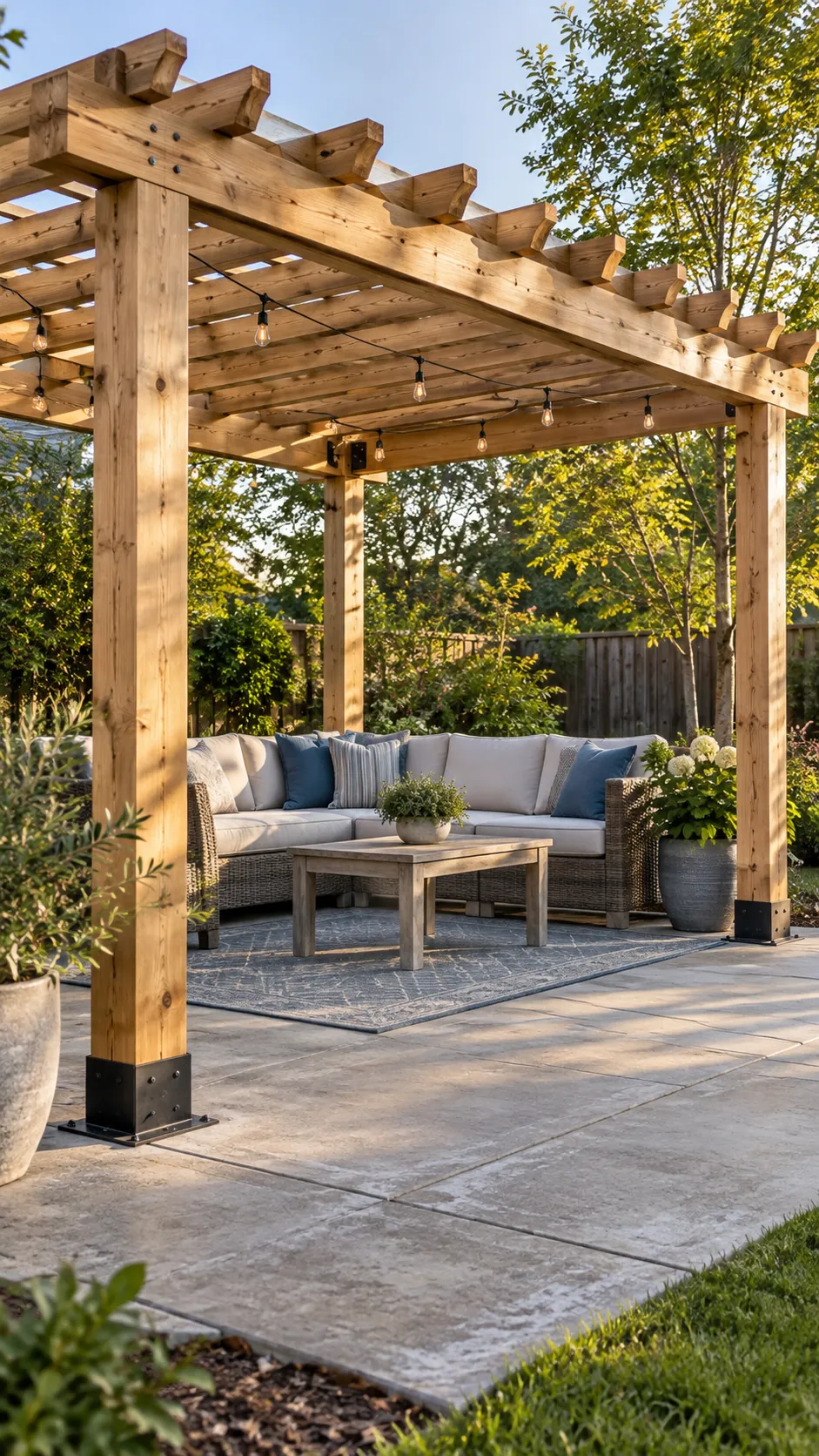
Compact Corner Pergola
Covering one useful corner costs less than spanning the whole yard. Place two chairs and a small table inside the shaded footprint before fixing post locations. Leave the main path and gate completely open.
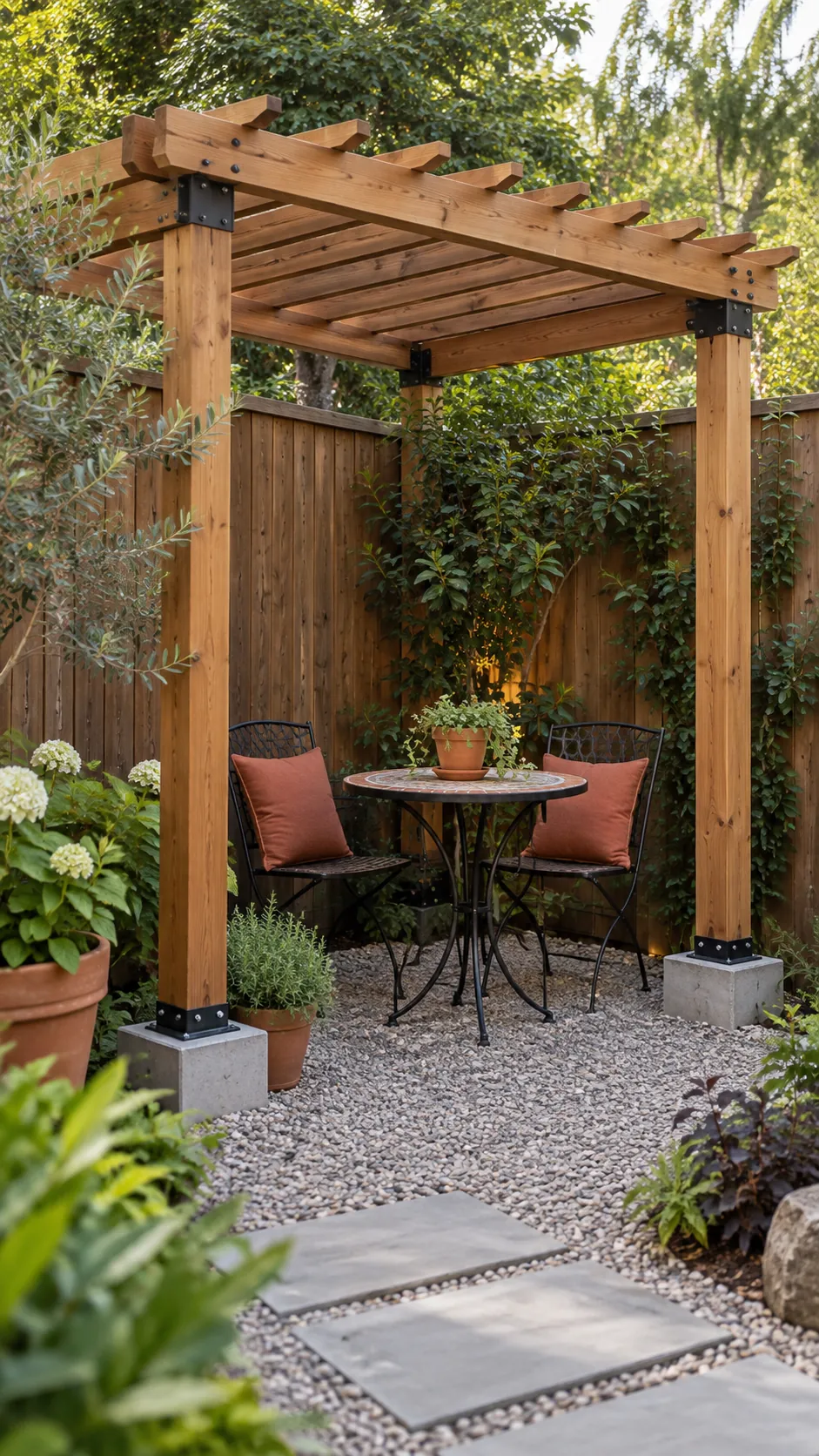
Wall Side Leaning Pergola
A narrow frame beside a wall can define a dining strip with fewer long beams. Do not attach it to the house unless the connection and waterproofing are designed correctly. A freestanding version placed close to the wall can be simpler.
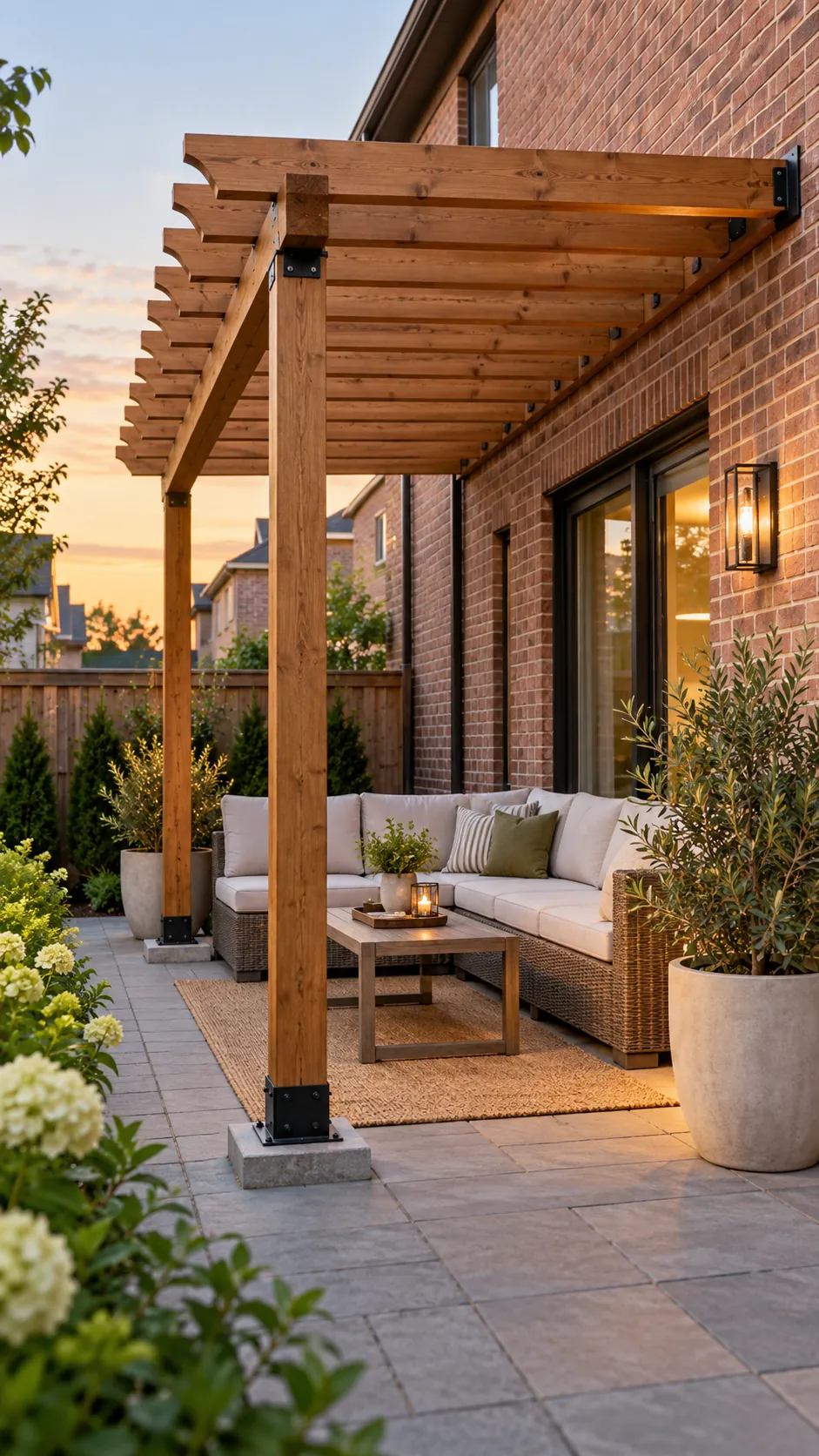
Stock Lumber Grid
Designing around locally available board lengths can reduce offcuts and special orders. Ask the supplier which treated sizes are stocked consistently before finalizing plans. Keep spans conservative and follow approved structural guidance.
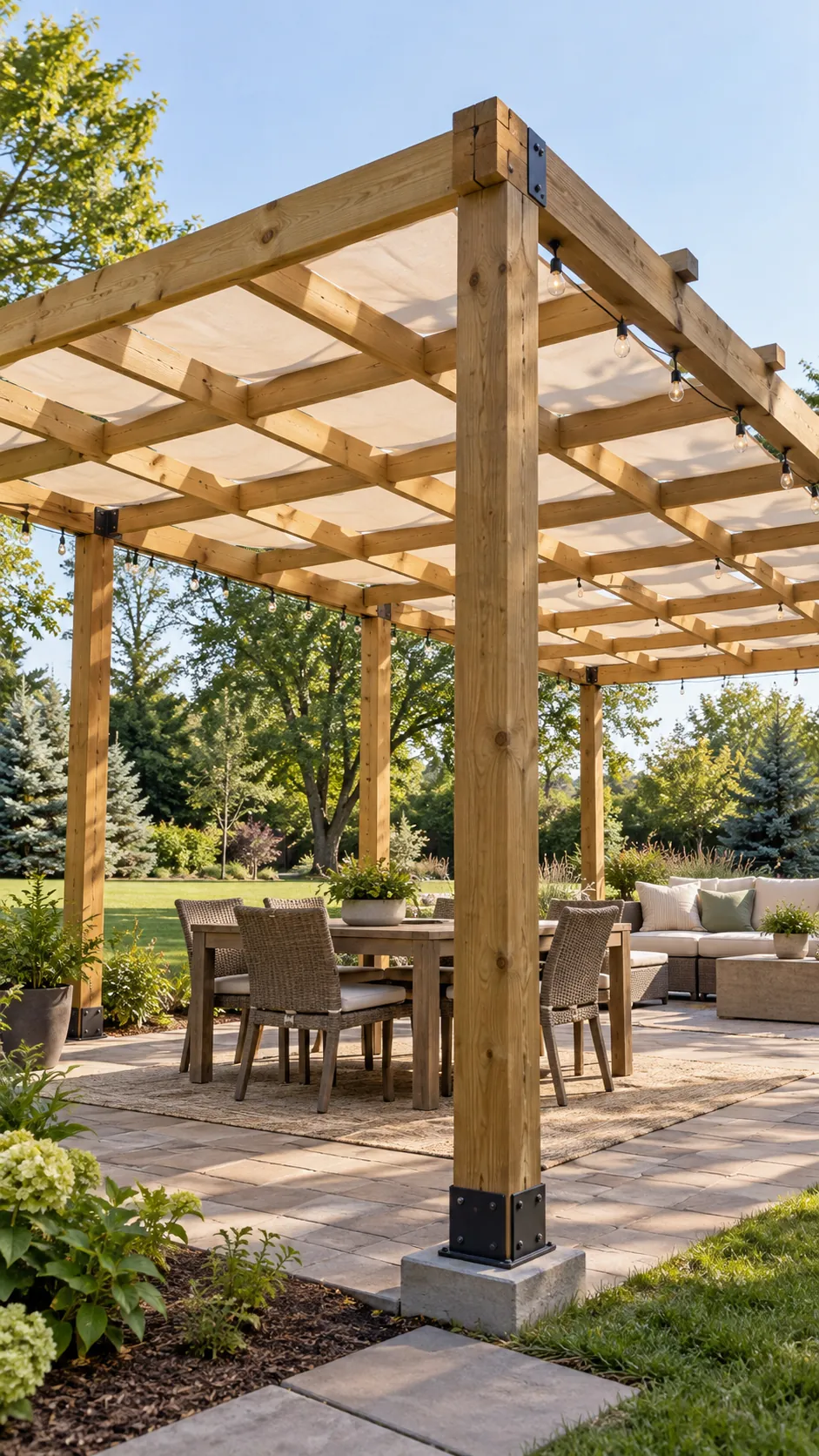
Reclaimed Timber Accent Beams
Sound reclaimed wood can add character as noncritical accent pieces. Structural posts and primary beams should still be graded and suitable for exterior use. Remove old nails and seal rough surfaces before installation.
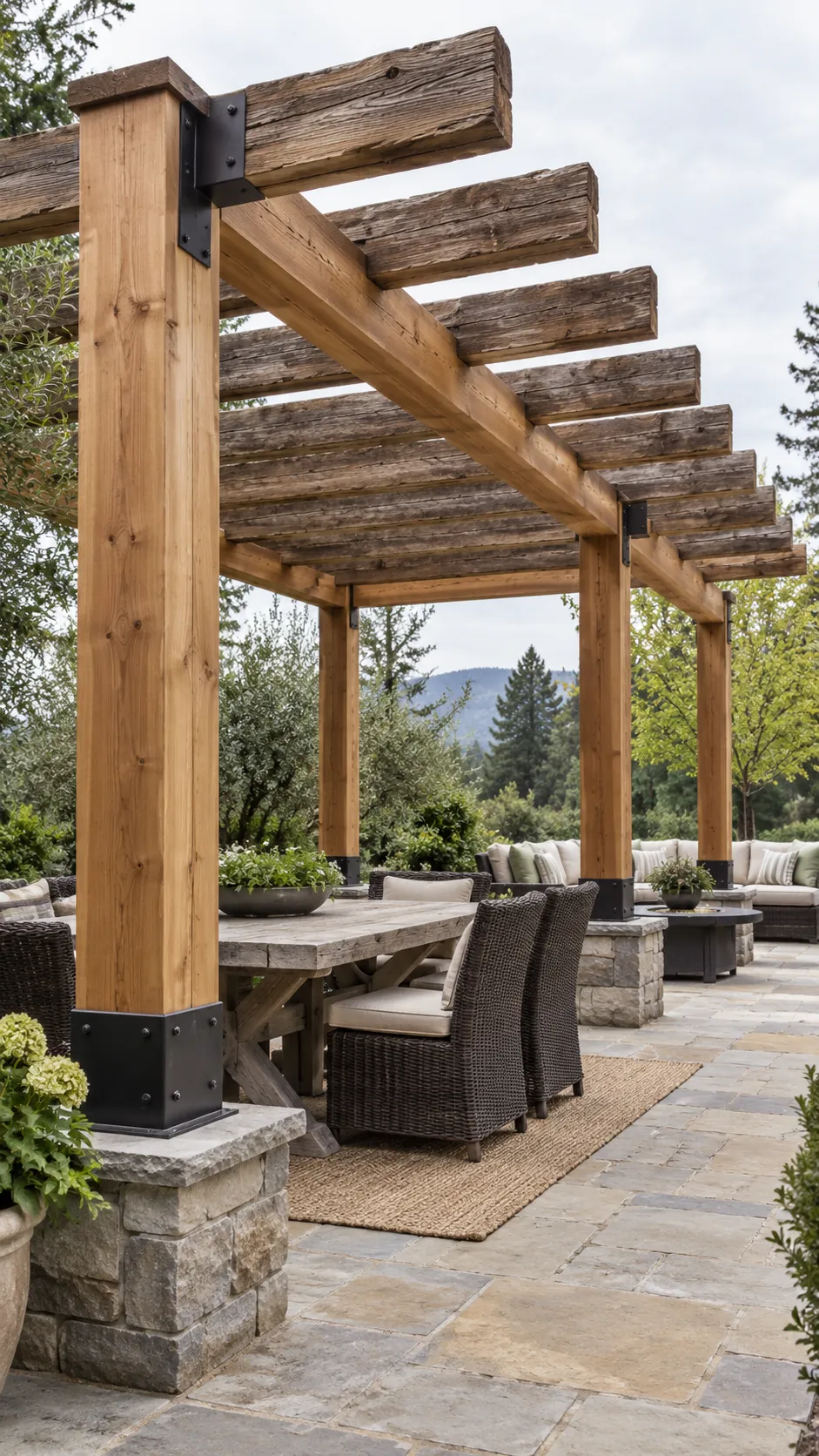
Painted Budget Lumber
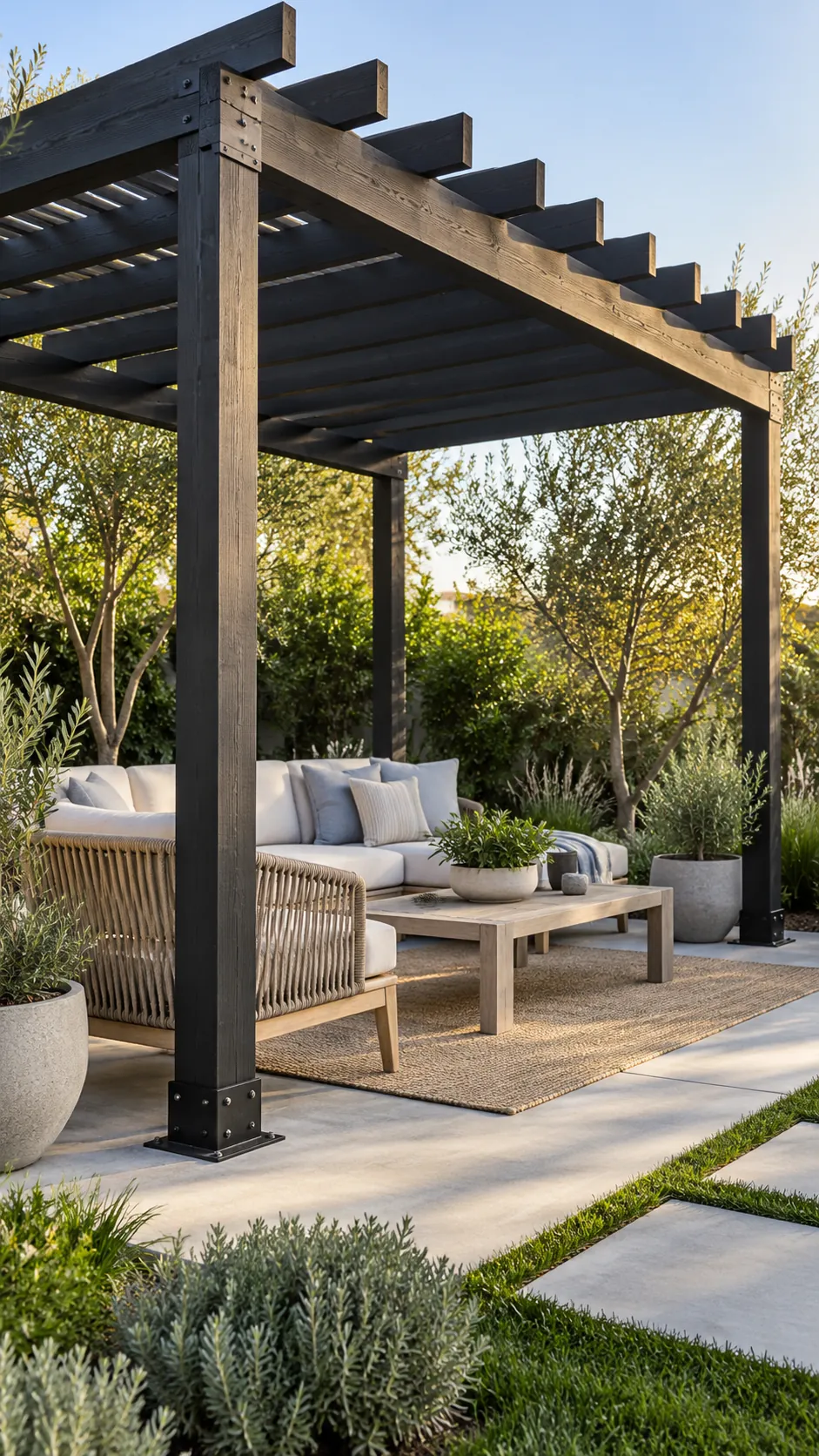
Opaque exterior paint can unify affordable treated lumber and mixed compatible components. Let wet lumber dry enough for the selected coating and prepare every surface carefully. A dark color gives simple construction a deliberate look.
Natural Clear Finish
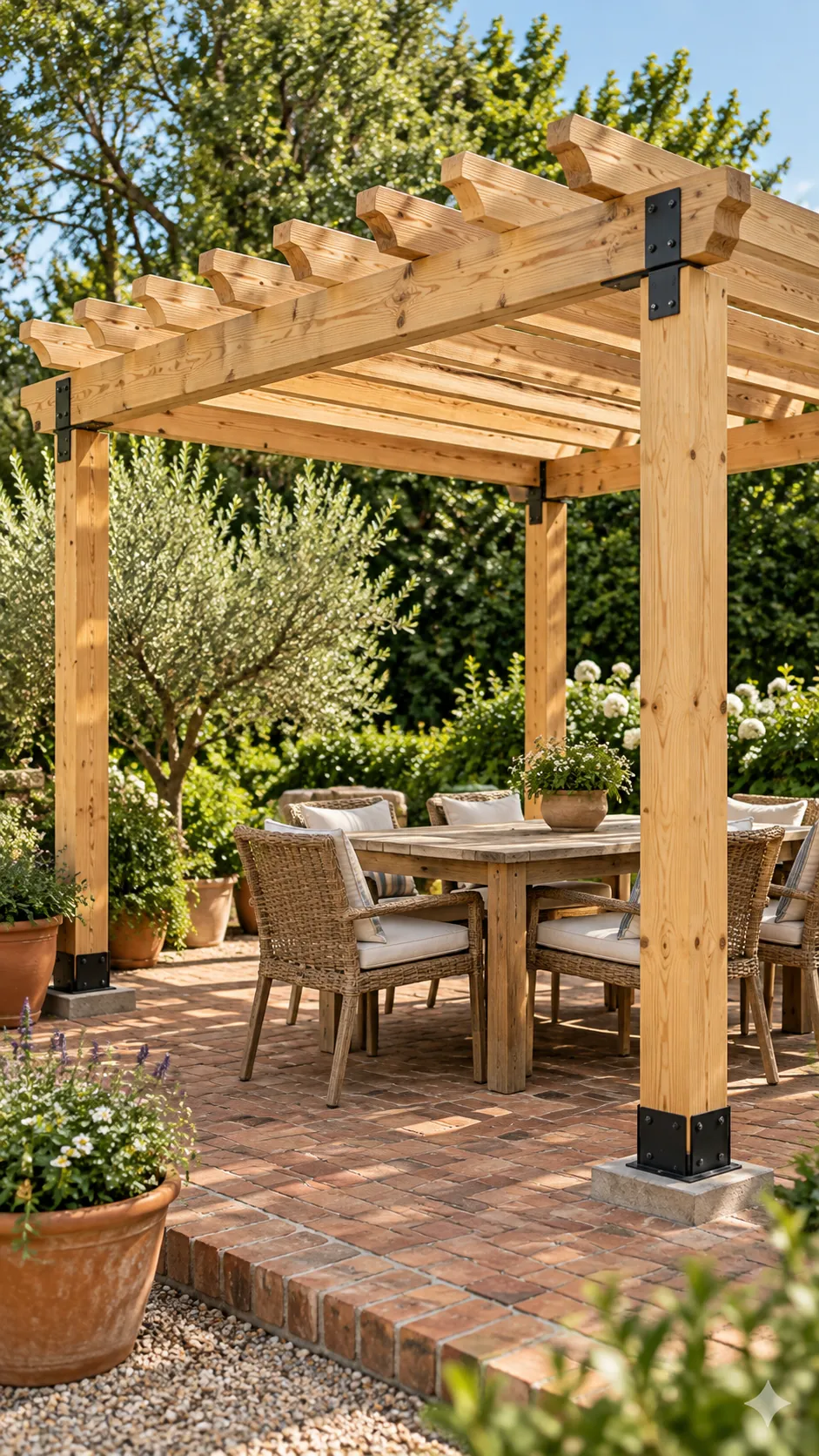
A clear exterior finish preserves the light color of budget softwood. It will need inspection and renewal more often than a maintenance free material. Use end grain treatment and keep wood away from standing water.
Shade Cloth Roof
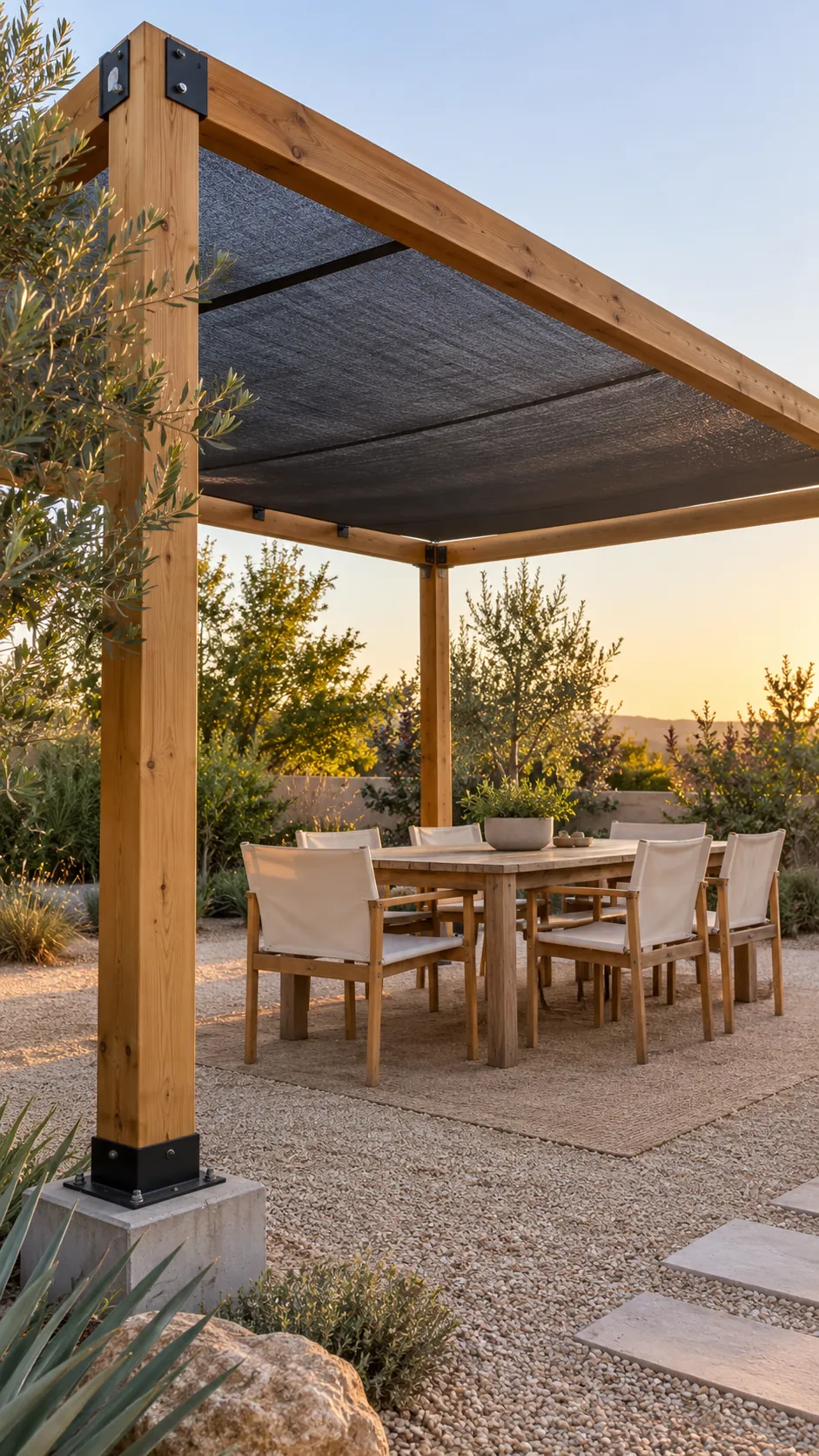
Exterior shade cloth offers meaningful sun control at modest cost. Tension it with proper edge hardware and remove it before severe wind if the system requires that. Treat it as shade, not guaranteed rain protection.
Removable Canvas Panels
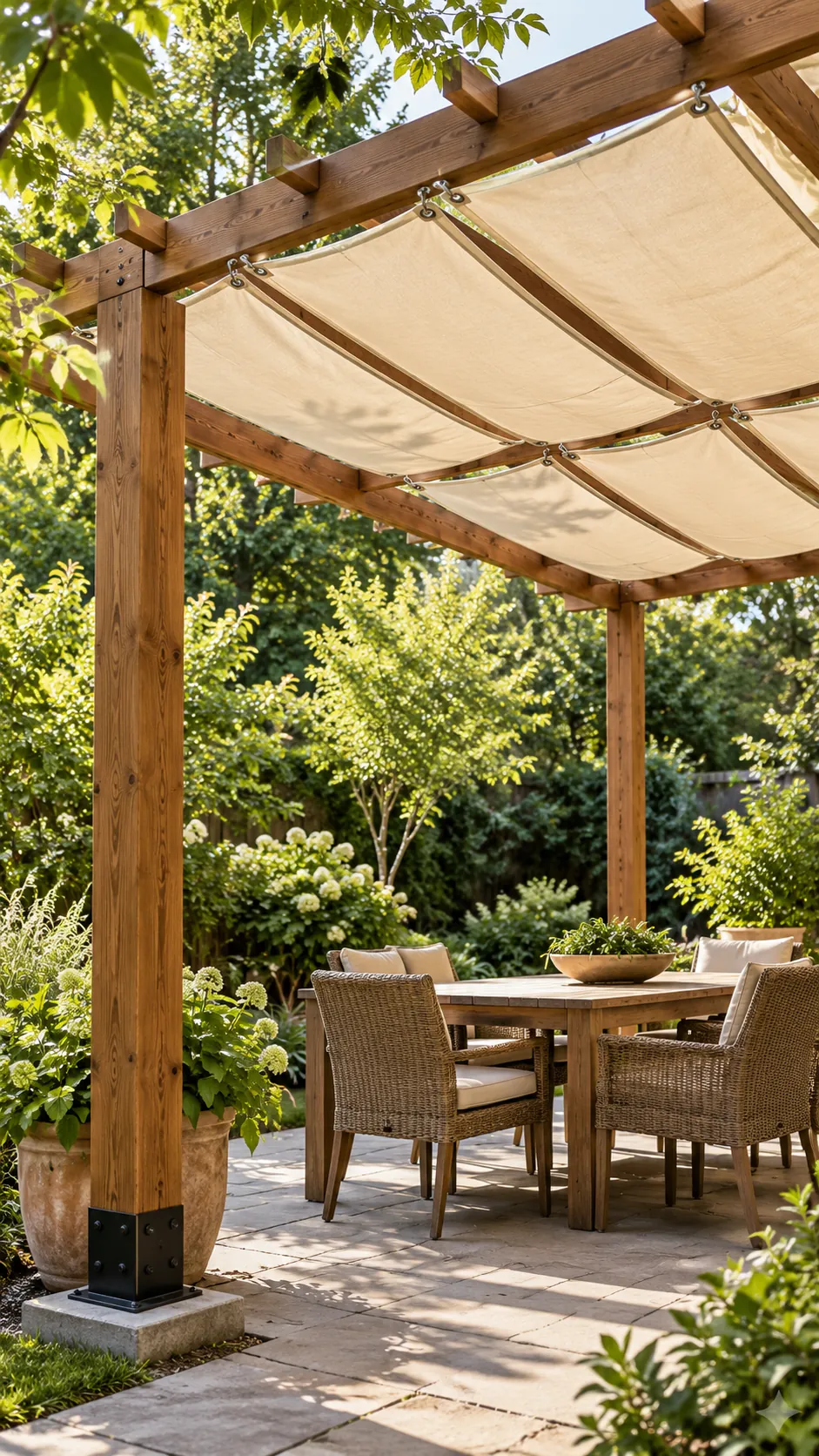
Separate canvas panels are easier to wash and replace than one large canopy. Space them between rafters so air can move and water cannot pool. Store the panels during storms and winter.
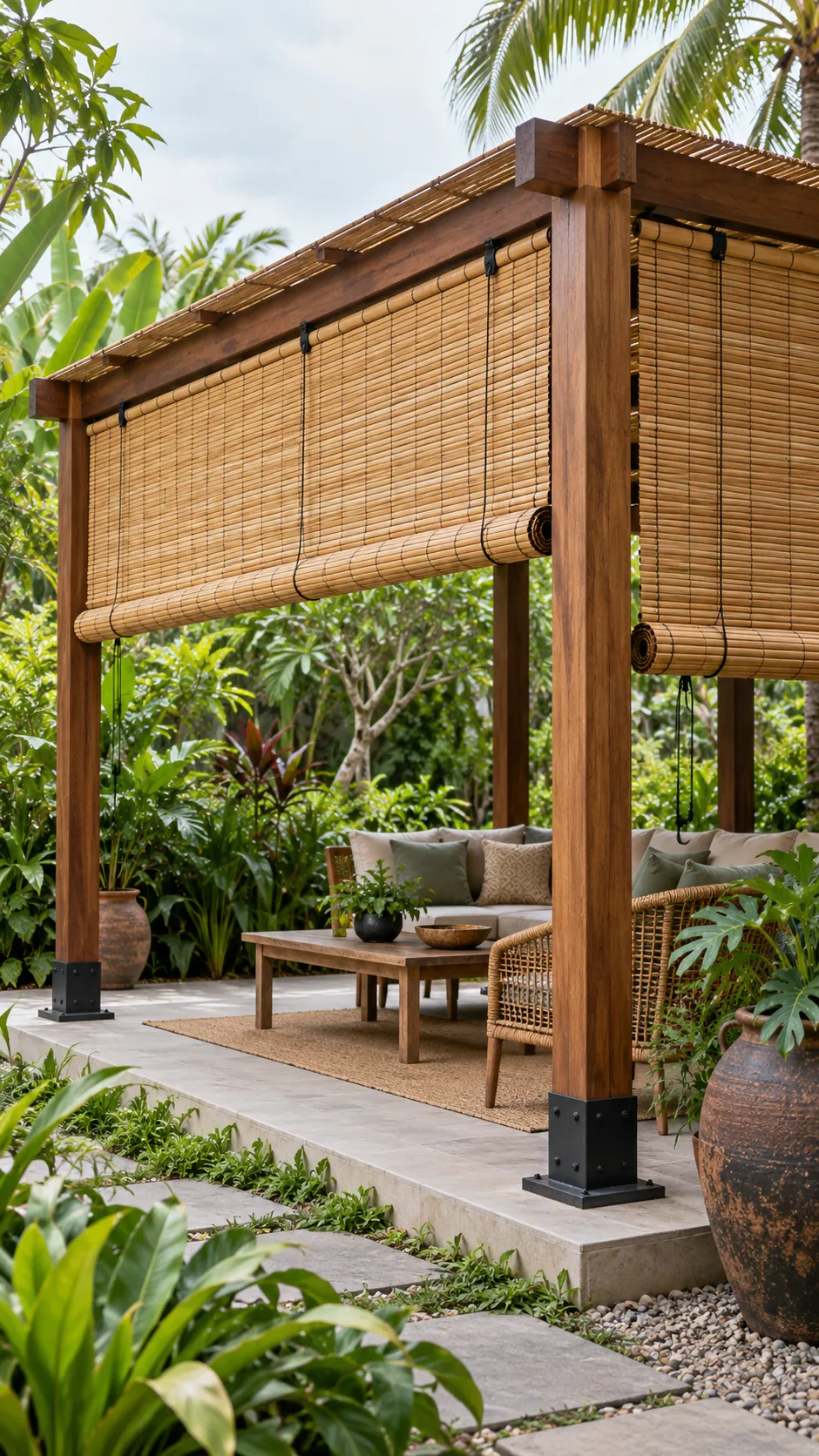
Bamboo Roll Shade
Bamboo roll screening creates broken shade with a warm natural texture. Fasten it securely to close support points so wind cannot lift wide loose areas. Expect gradual weathering and plan for inexpensive replacement.
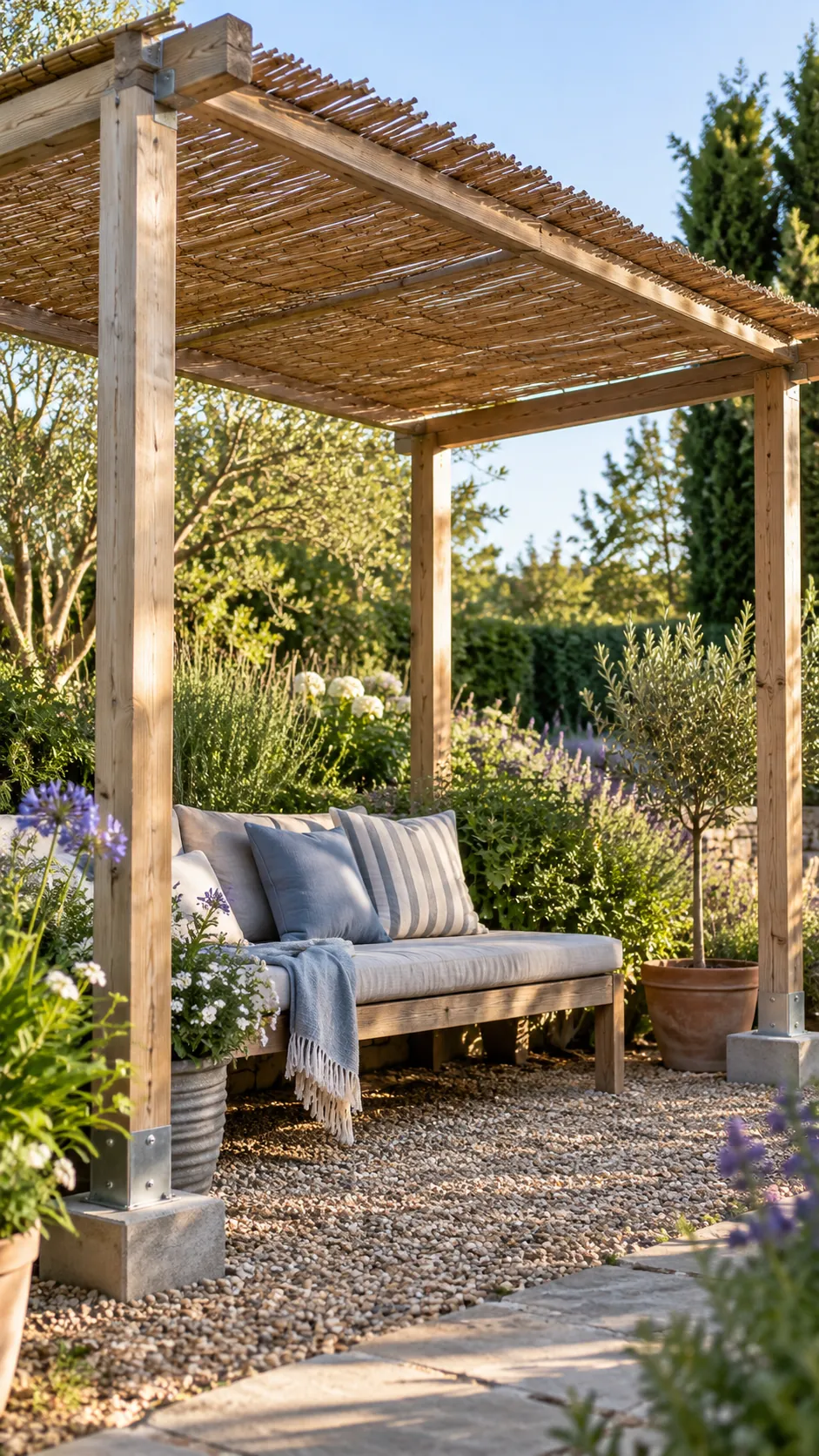
Reed Screen Canopy
Reed fencing can soften harsh overhead sun for a seasonal seating area. Use many attachment points and take it down when strong wind is expected. This is a shade layer rather than a structural roof.
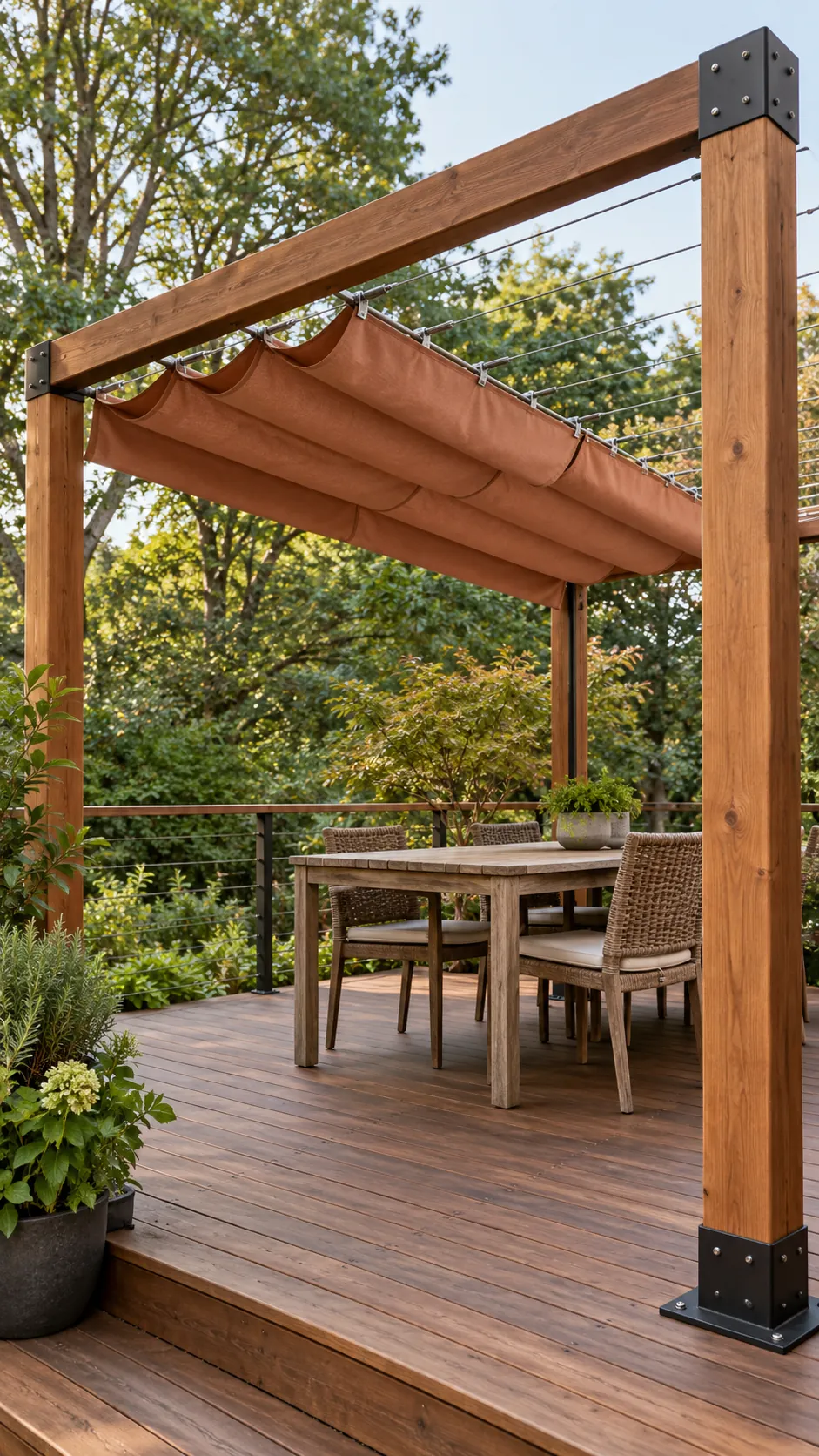
Retractable Wire Canopy
A simple fabric canopy on exterior cables can open when shade is needed. Use durable hardware, hemmed fabric, and a reliable way to secure the folds. Retract it before rain if the fabric is not designed for water.
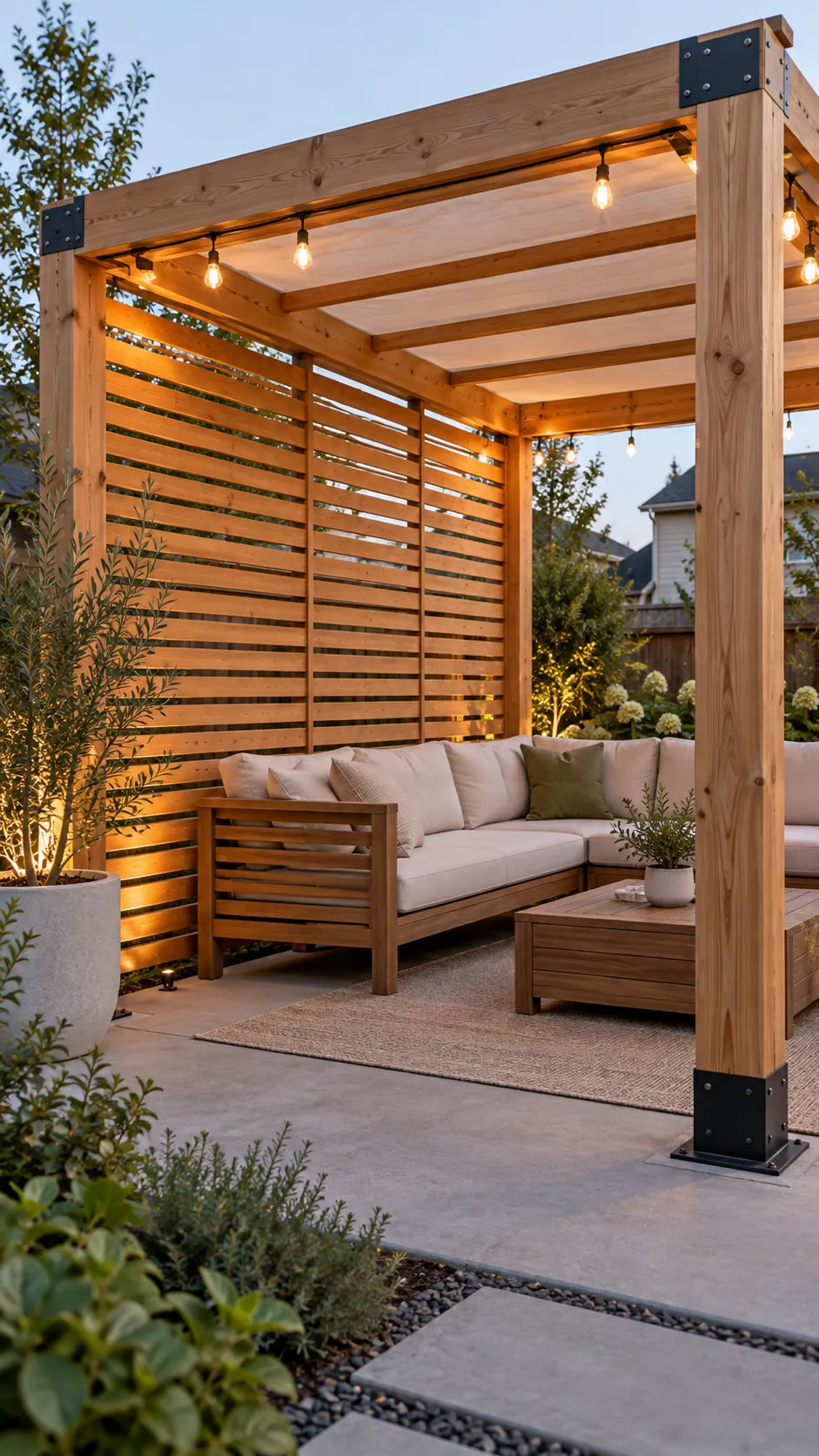
One Side Privacy Slats
Adding slats to only the exposed side saves material and preserves airflow. Test the view from seated height before choosing the screen height and spacing. Strong top and bottom rails keep the slats aligned.
Lattice End Panel
A single lattice panel can support a climber and screen a service view. Frame the panel firmly so it does not act like a loose sail. Keep plant growth away from gutters, lights, and structural connections.
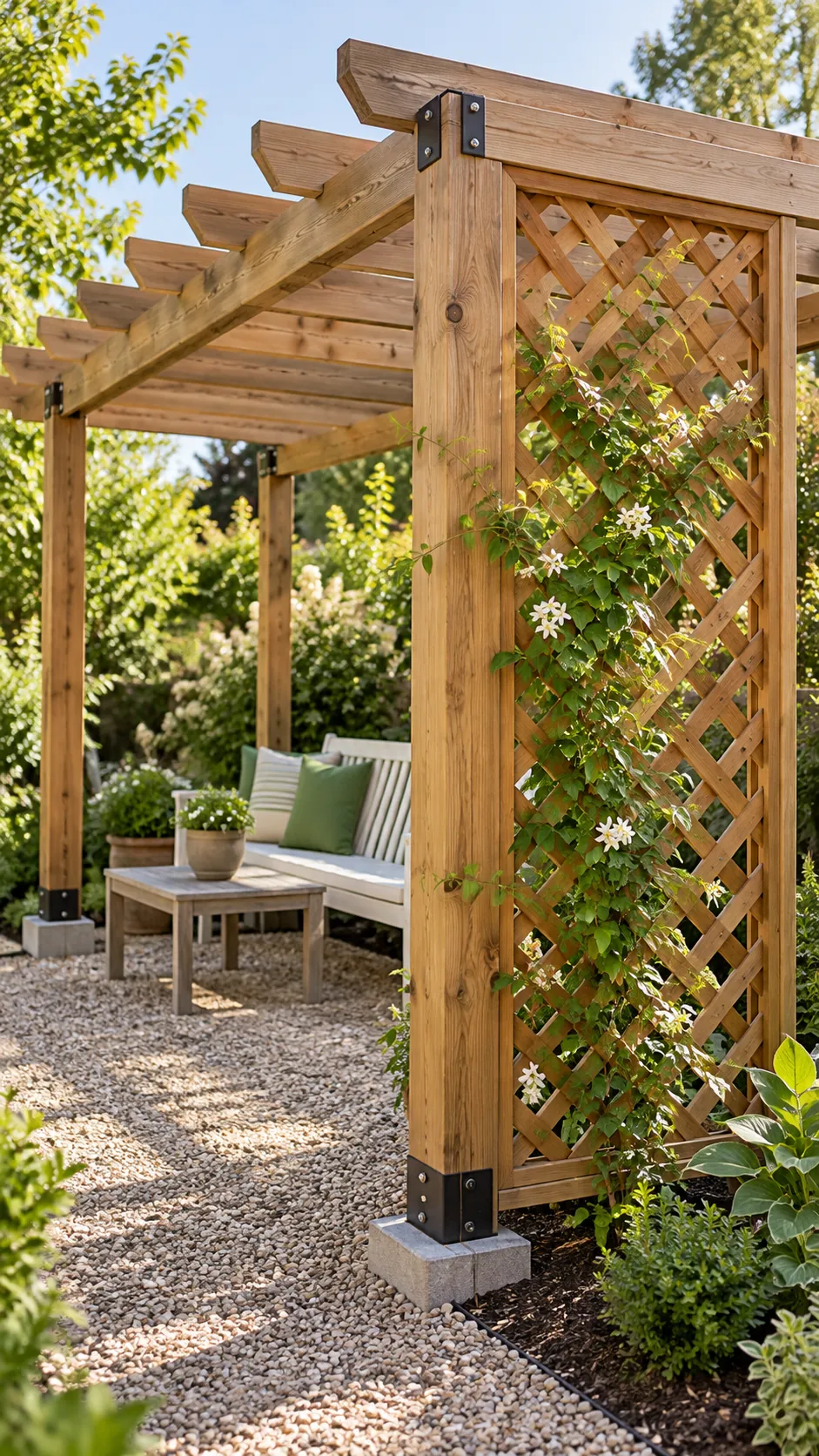
Young Climbing Vine
A young deciduous vine can build shade gradually without a costly roof. Choose a species suited to the climate and provide a strong, accessible support pattern. Prune it so the frame can still be inspected.
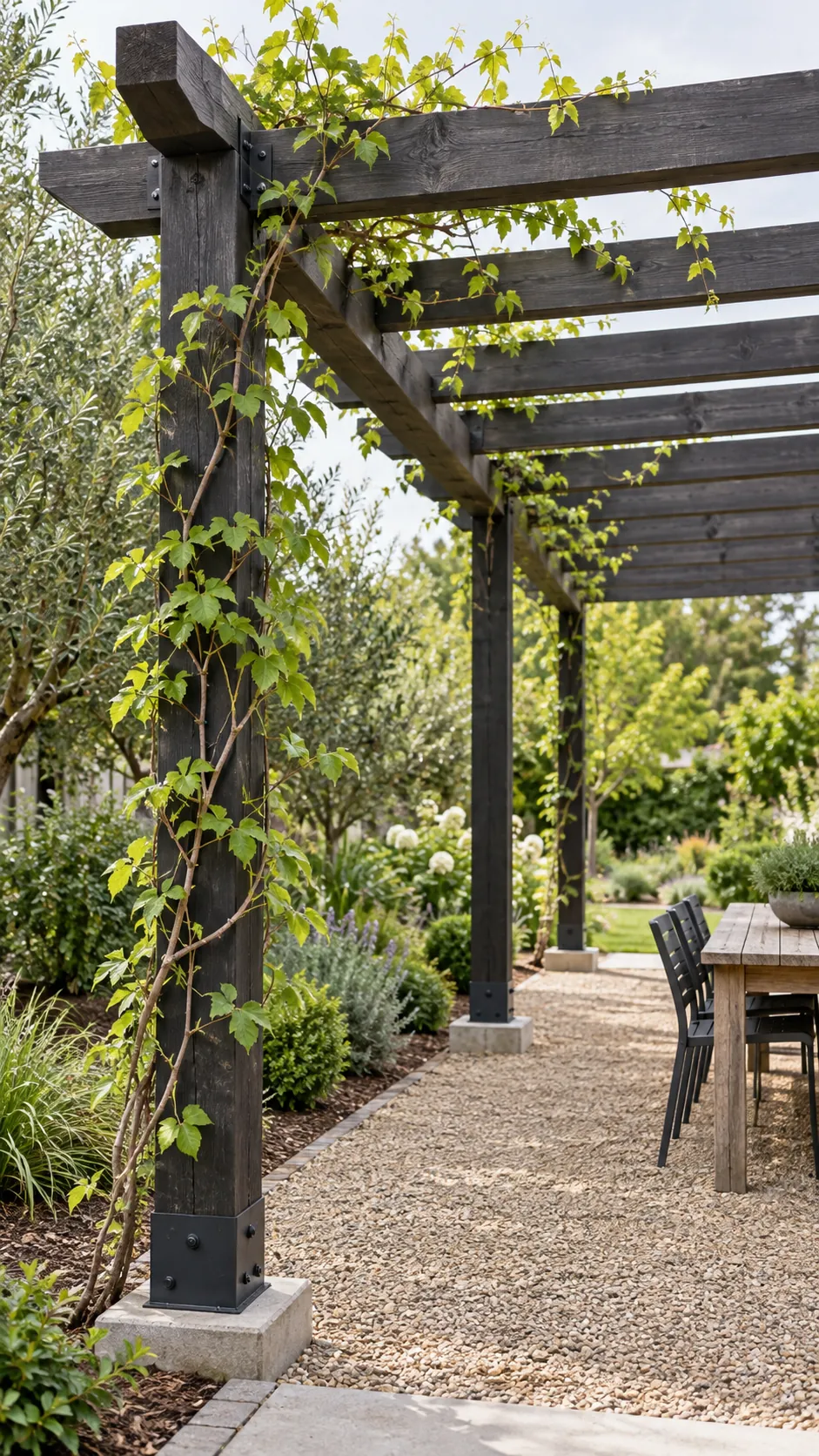
String Light Dining Zone
Outdoor rated string lights make a basic frame useful after sunset. Support the cable independently and connect it to protected power using approved exterior equipment. Keep bulbs high enough above the table and away from fabric.
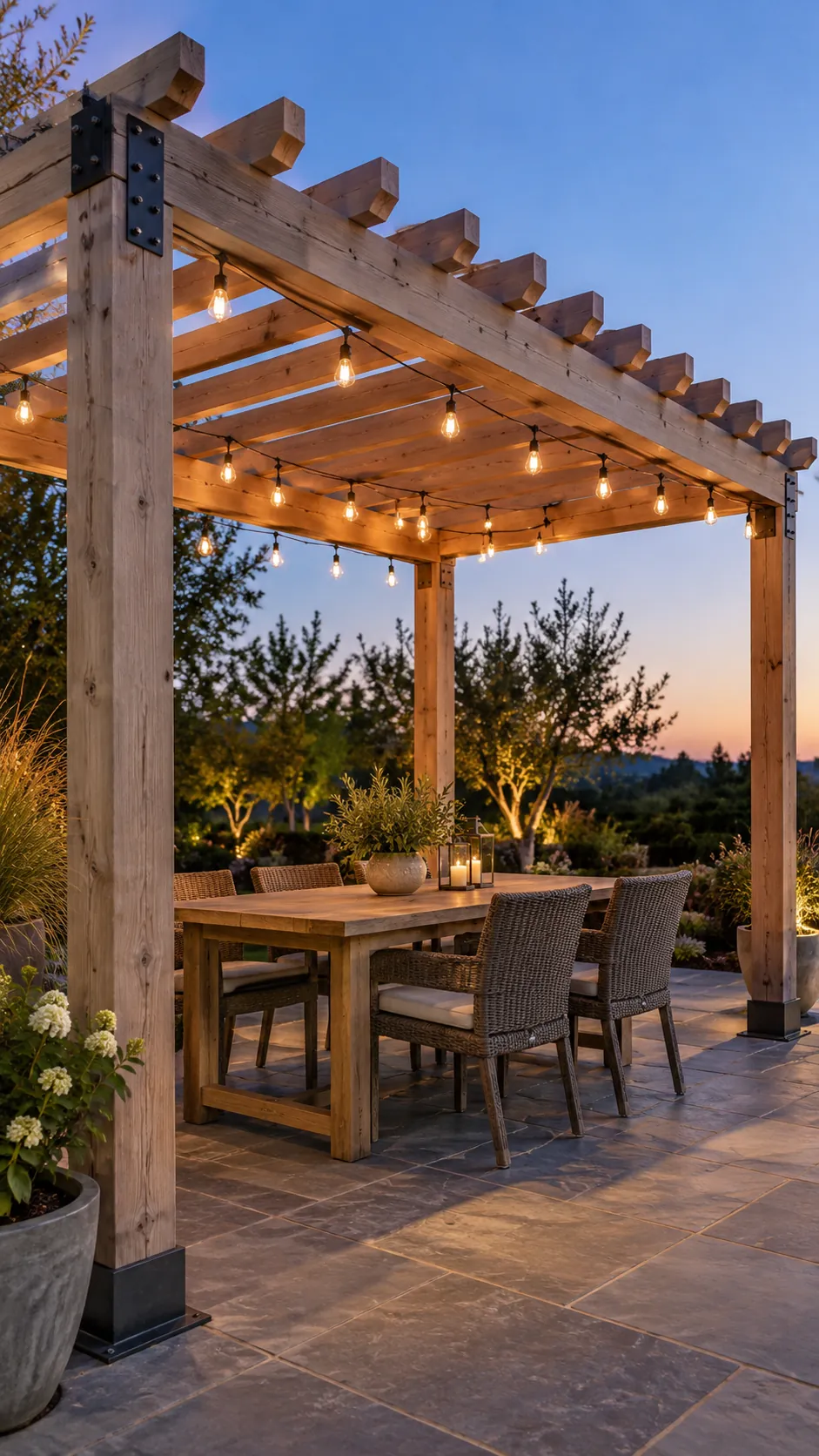
Solar Lantern Pergola
Hanging solar lanterns avoid a permanent wiring project for gentle ambient light. Mount each light where it receives sun and cannot strike a person in wind. Use several low output lanterns instead of one harsh fixture.
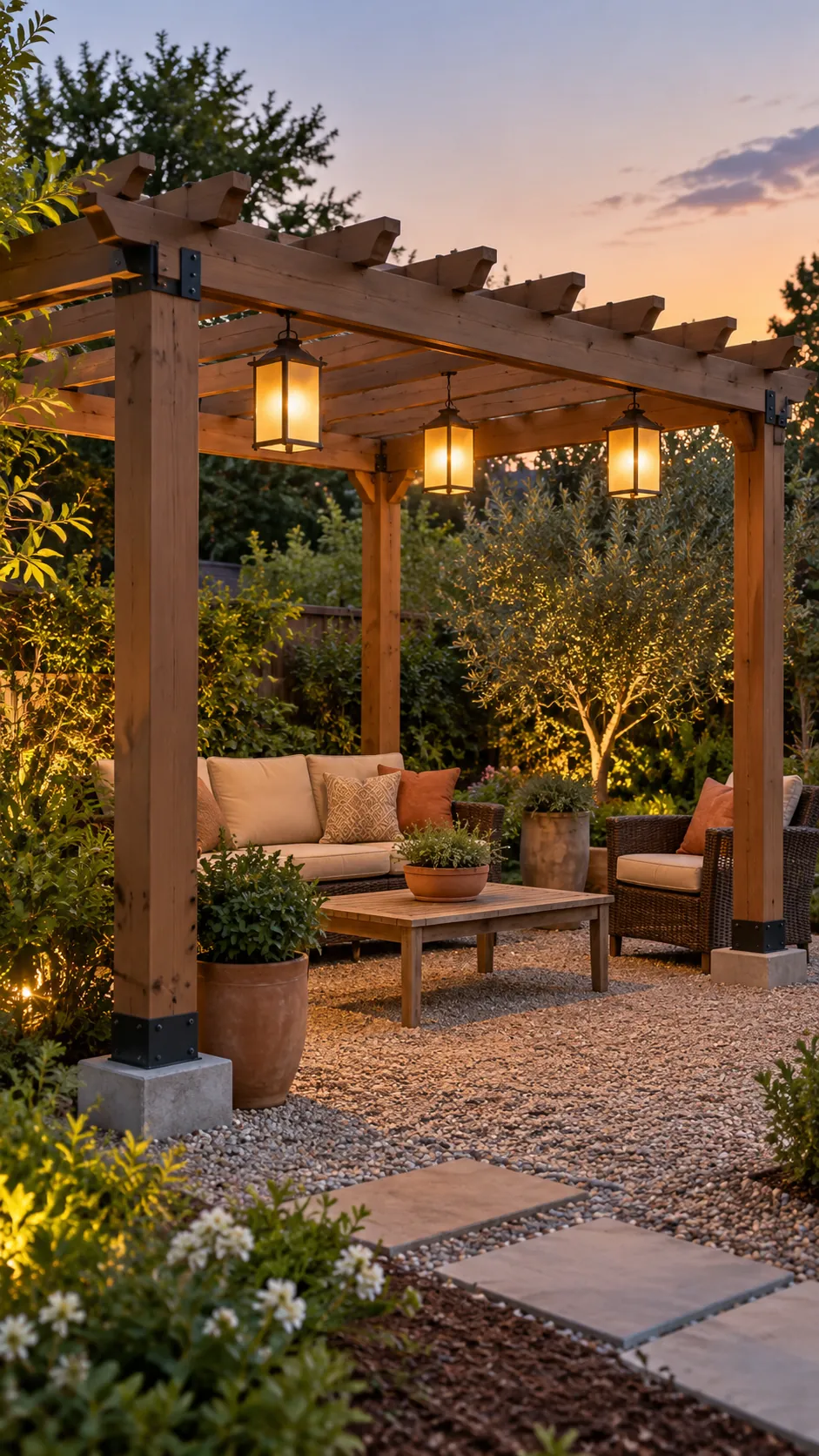
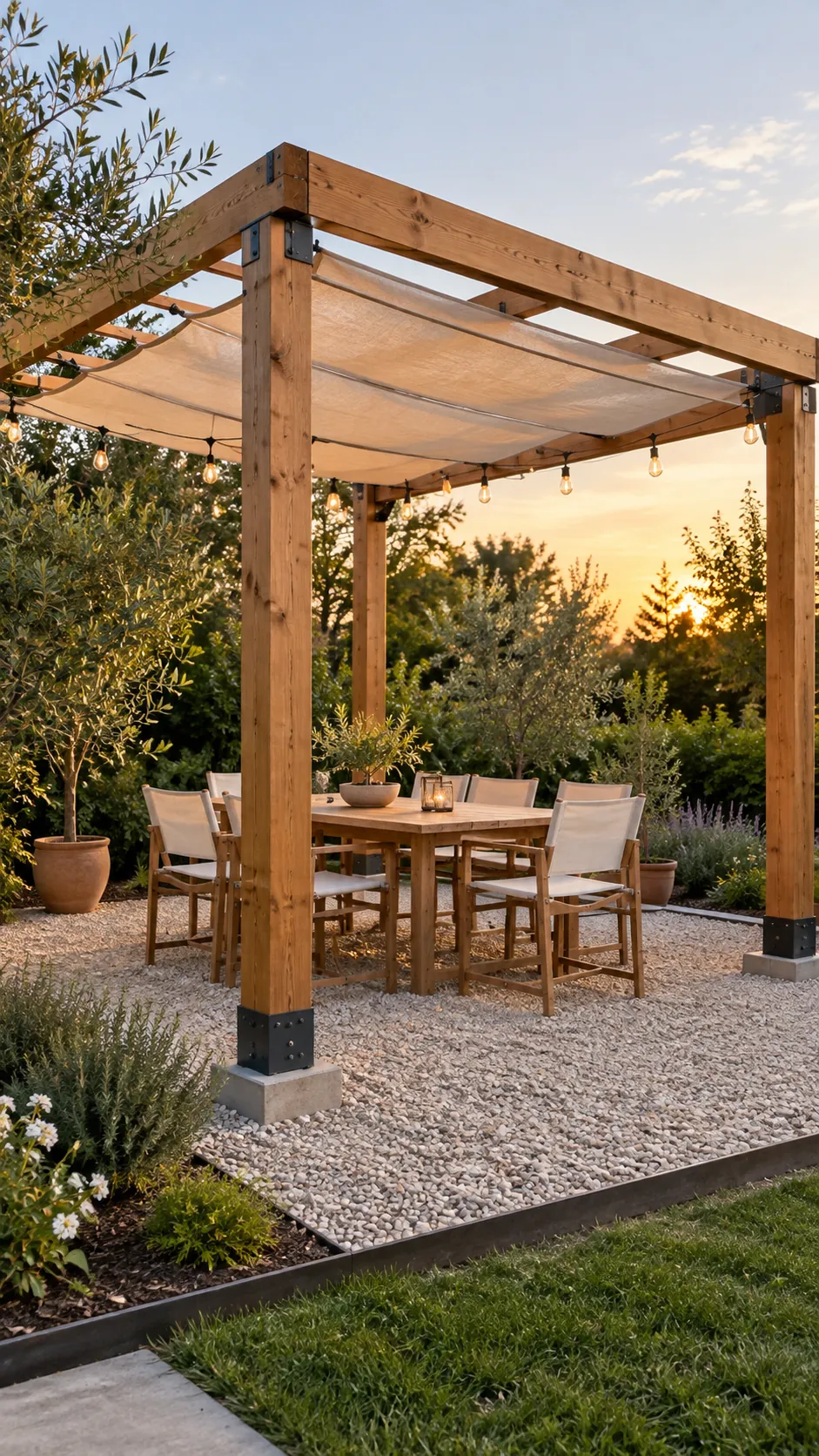
Gravel Floor Pergola
Compacted gravel can define the room for less than a new deck. Install a stable base, edging, and a surface that chairs can use comfortably. Keep finished levels below timber post connections and direct water away.
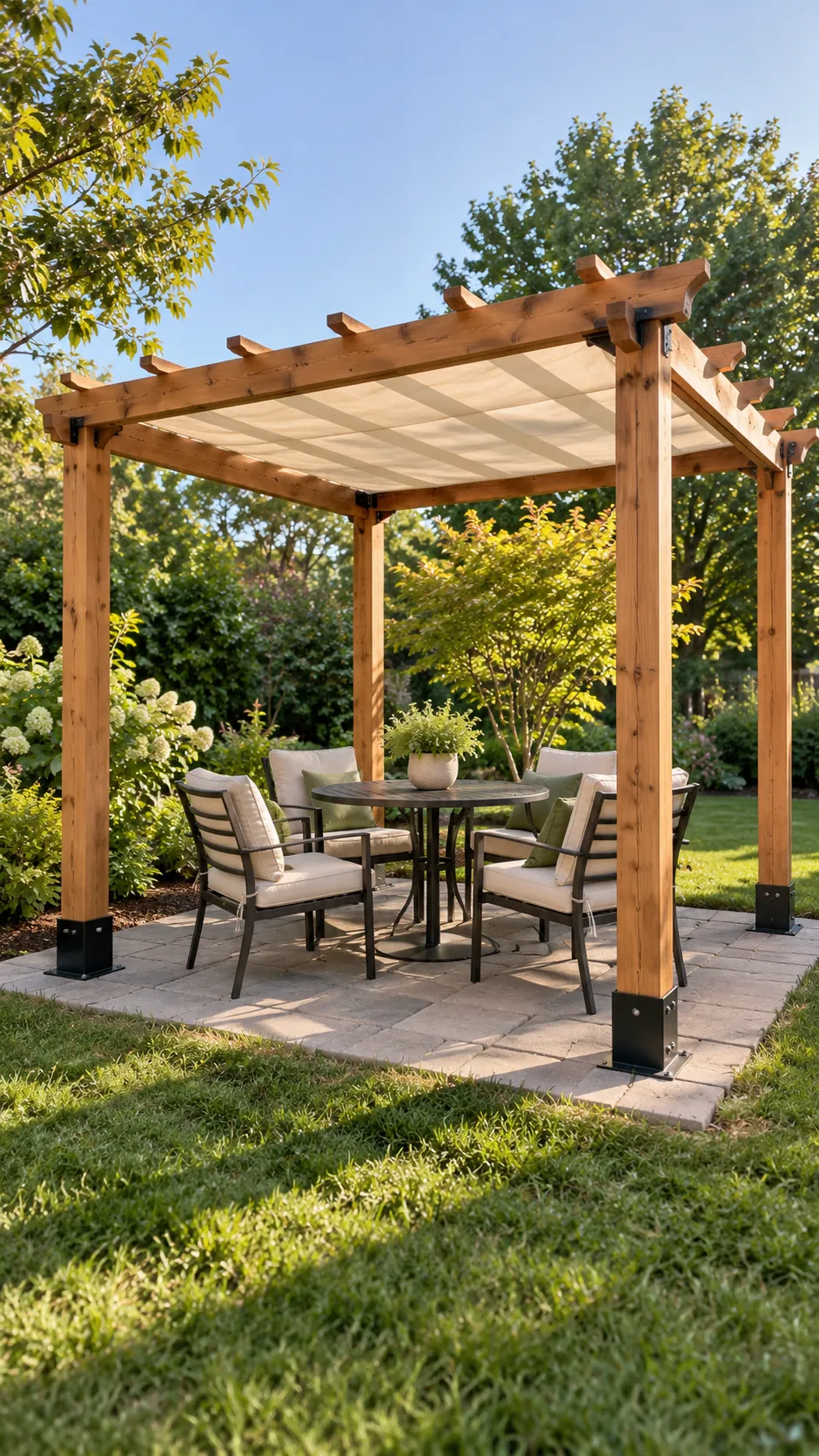
Paver Pad Using a Small Footprint
A modest paver pad concentrates the budget beneath the furniture. Lay it on a prepared base rather than placing pavers directly on soft soil. Size the pergola around the finished pad while leaving safe edge clearance.
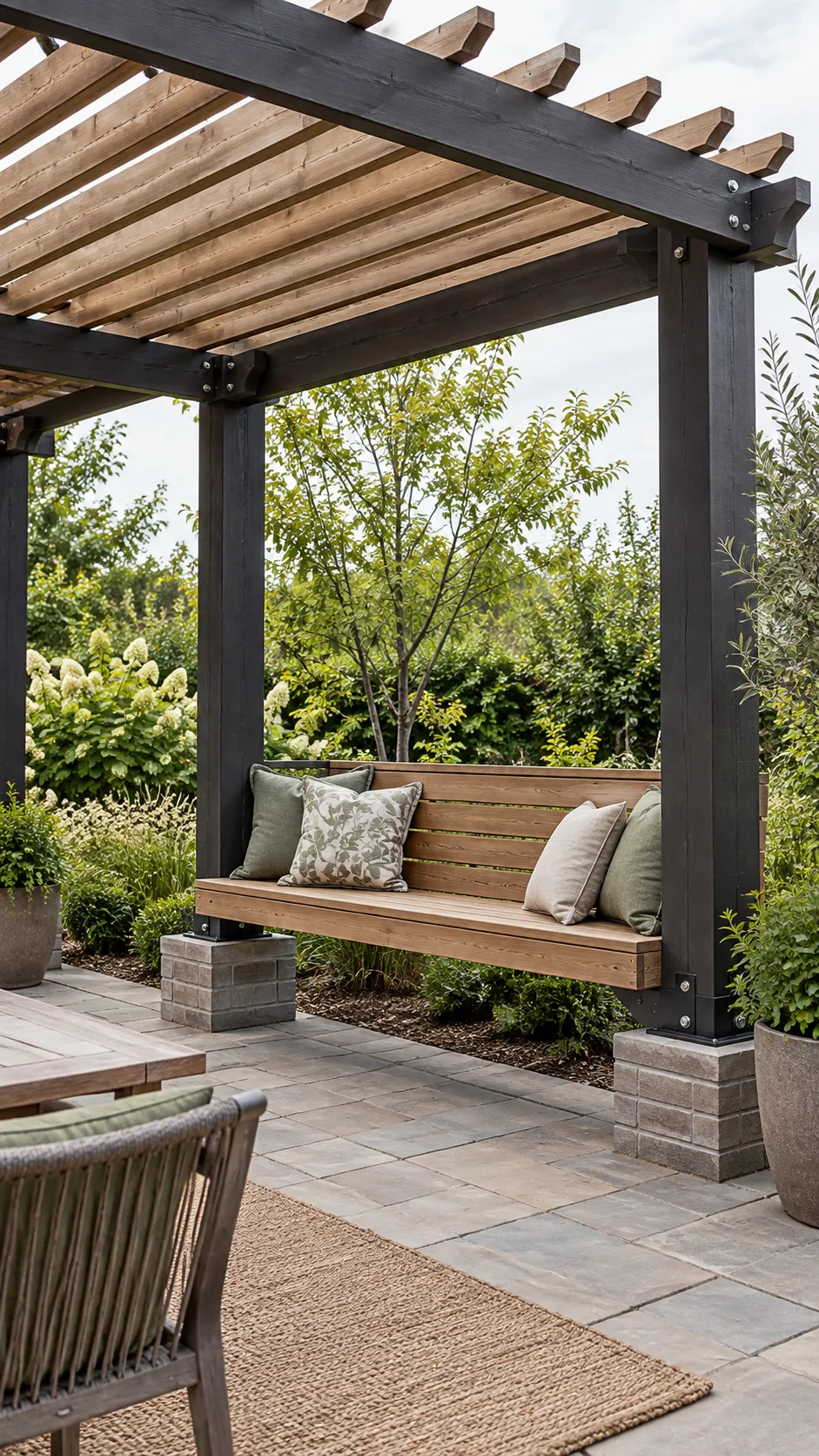
Bench Integrated Between Posts
A fixed bench can replace several separate chairs and make use of the frame edge. Keep the seat independent of structural bracing unless the design allows both functions. Provide comfortable depth and leave the main entrance open.
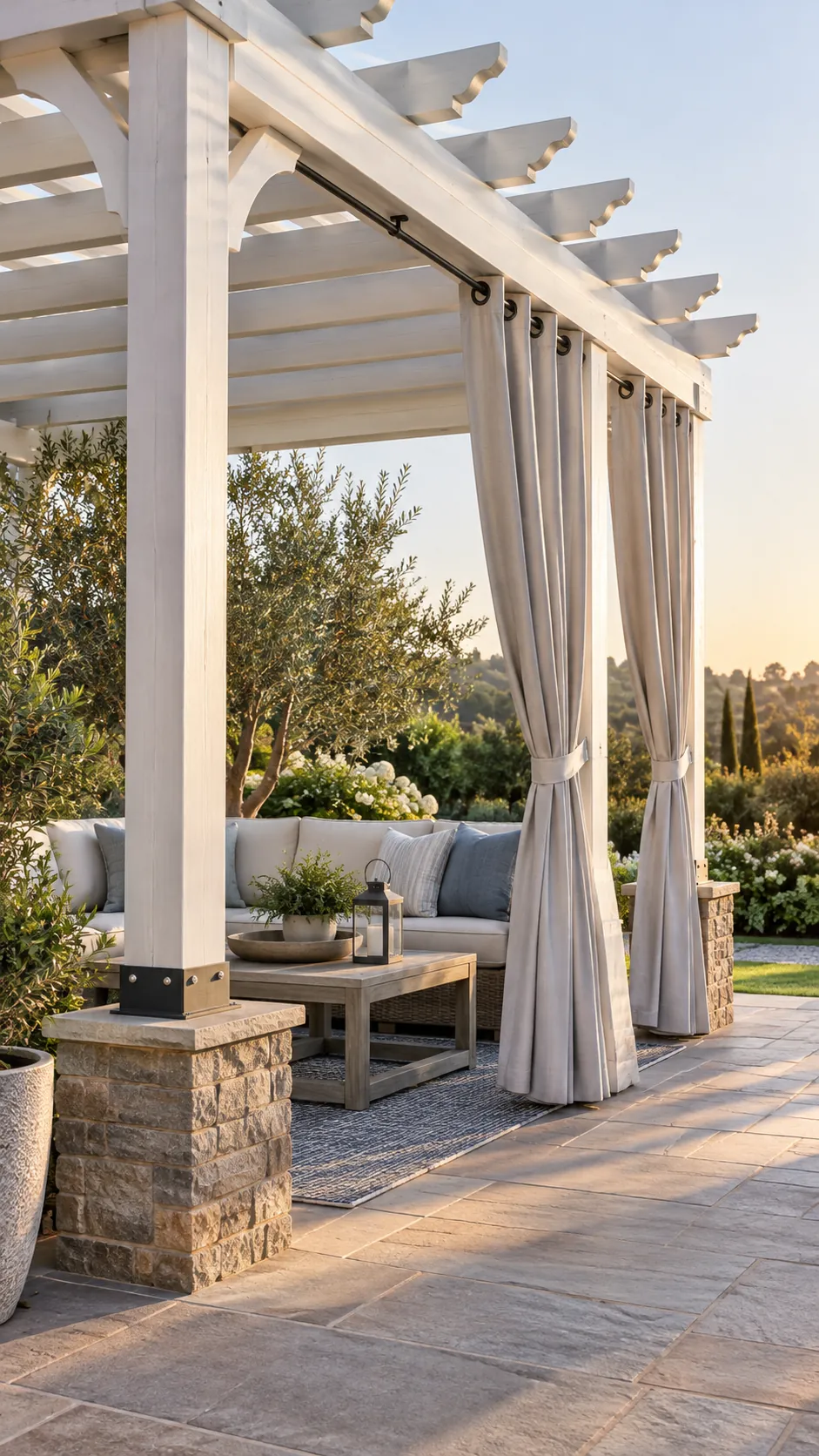
Curtain Panels on One Side
One or two exterior curtain panels can block low sun for less than a full screen wall. Anchor the lower corners when in use and tie panels back in wind. Choose washable fabric and hardware that will not rust.
Planter Anchored Visual Base
Large planters beside the posts can make a simple frame feel established without decorative trim. They are not substitutes for structural footings or wind anchors. Select pots with drainage and plants that fit the available light.
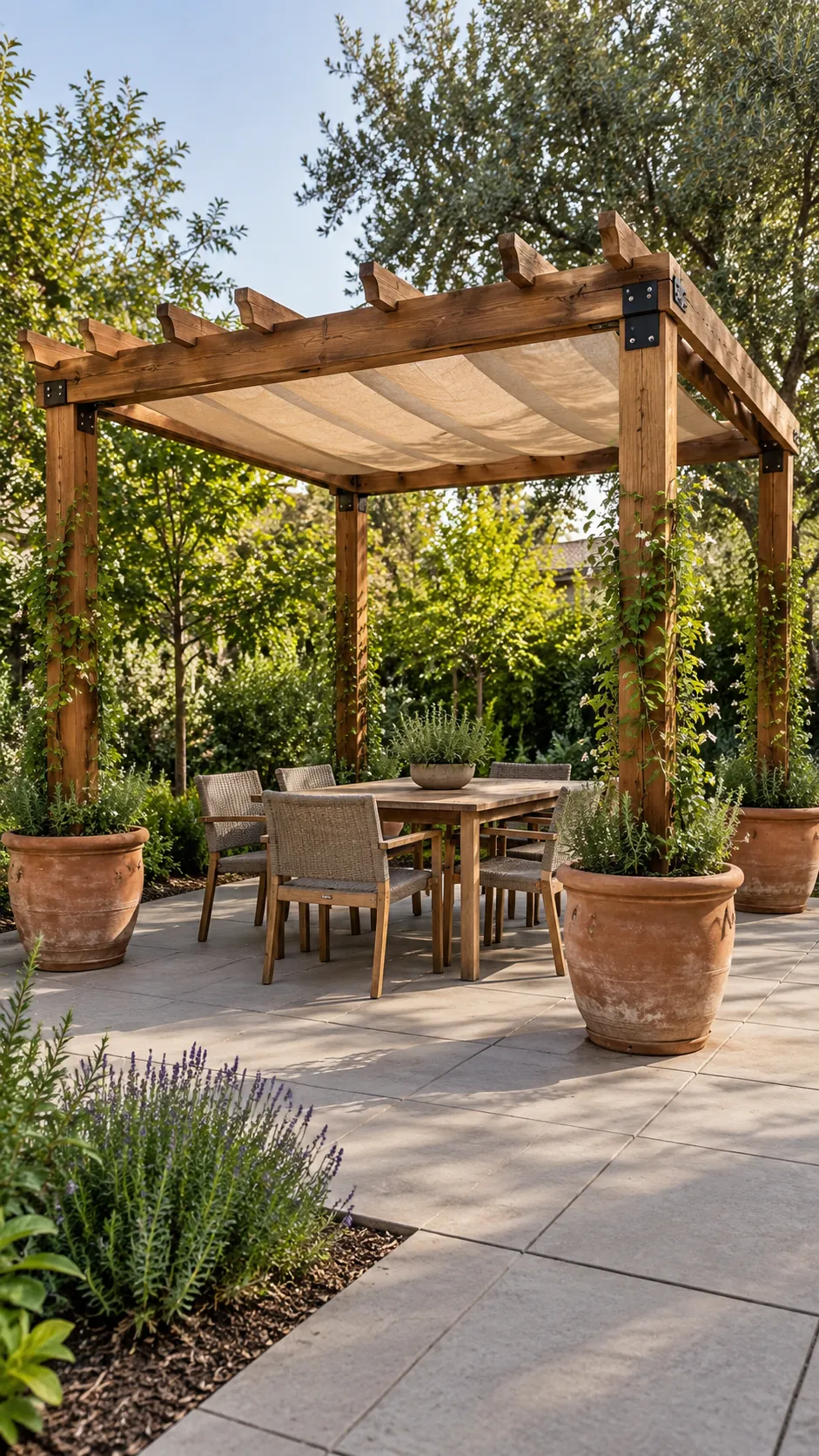
Small Deck Pergola
A short pergola can shade just the seating area on an existing deck. The deck framing must be checked before any posts are attached, since surface boards alone are not support. Keep rails, stairs, and doors unobstructed.
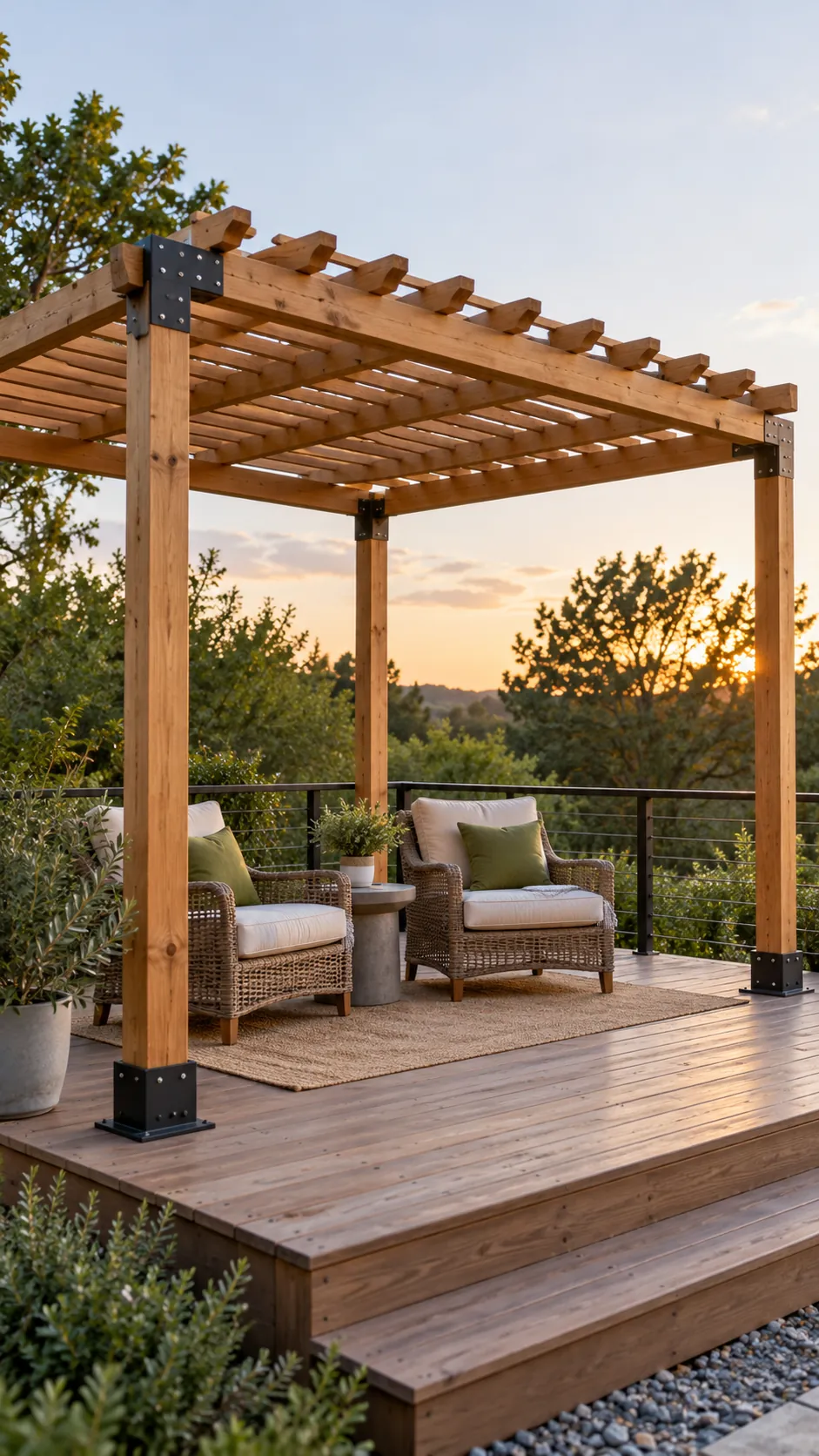
Phased Pergola Project
Build the safe structural frame first and add shade, lighting, and planting in later seasons. This protects the budget without compromising posts, footings, beams, or connectors. Use a complete plan from the start so later additions fit cleanly.