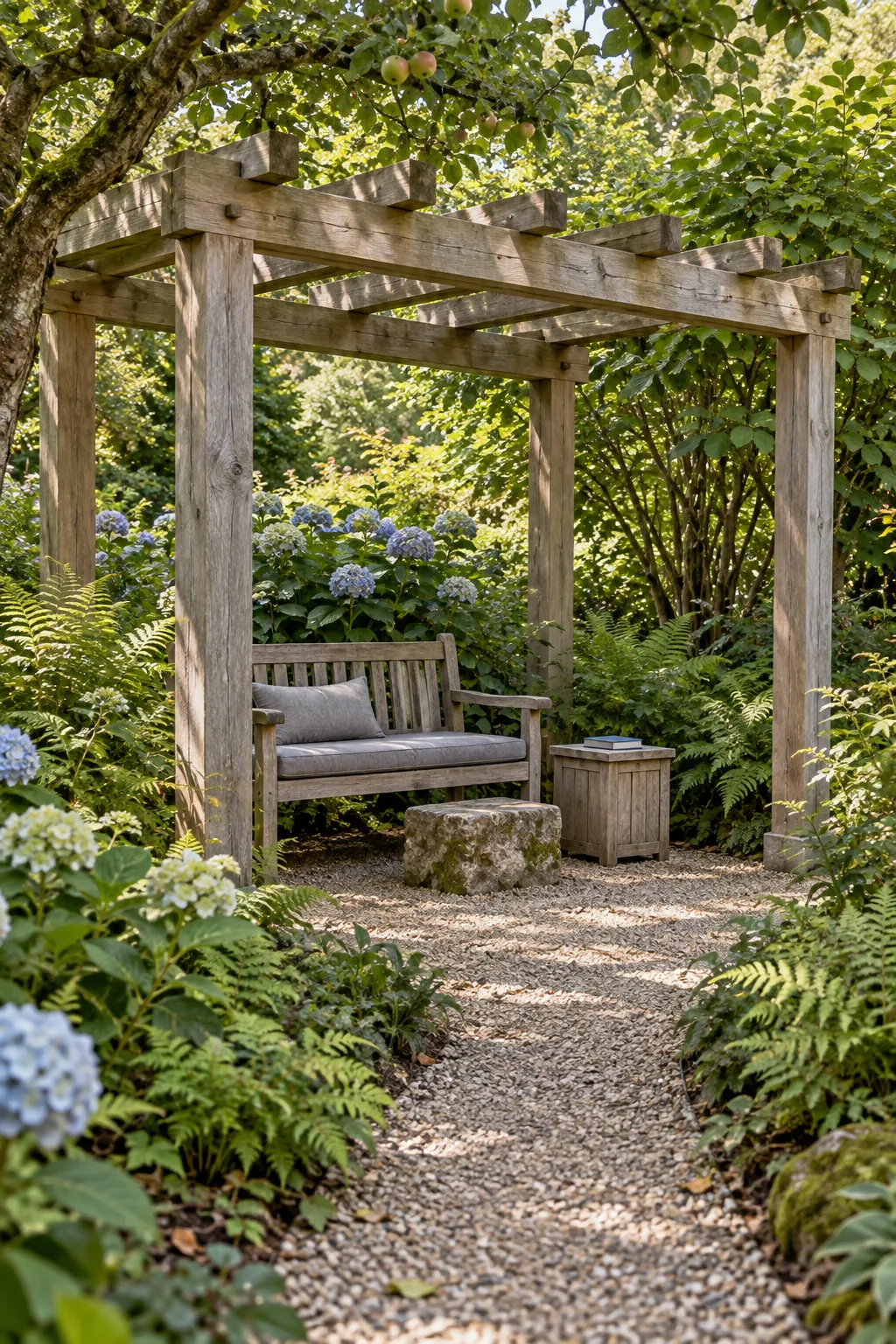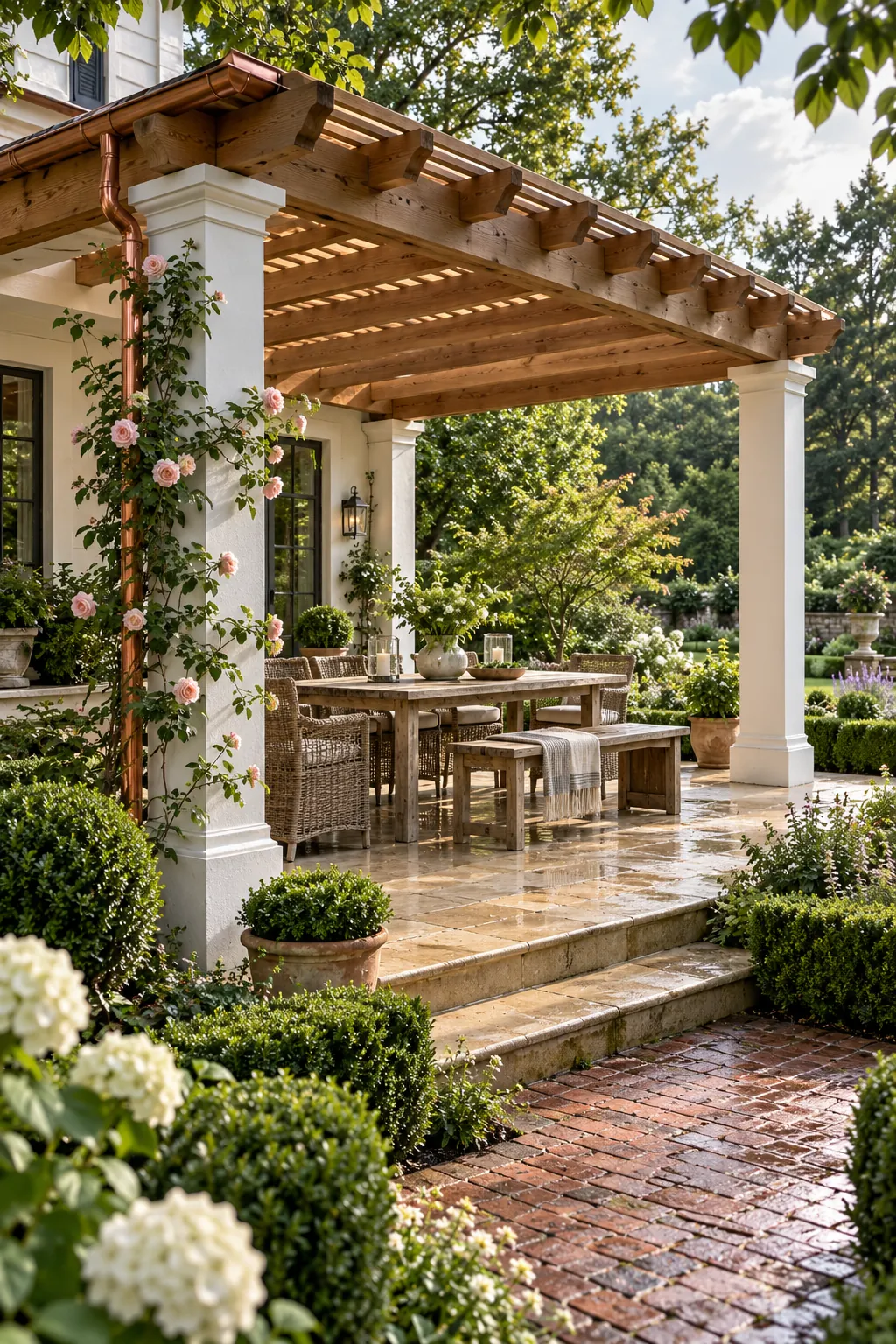
Traditional character comes from proportion, material honesty, and details that age well. A convincing structure must still handle sun, water, plant weight, and everyday movement around furniture. Each example below pairs a familiar garden language with a practical reason for choosing it.
White Columned Garden Pergola
Square white columns give a pergola a formal rhythm that suits symmetrical gardens and traditional homes. Use exterior grade trim with drainage gaps so the column bases do not trap water. A simple beam profile usually looks more authentic than layers of oversized molding.
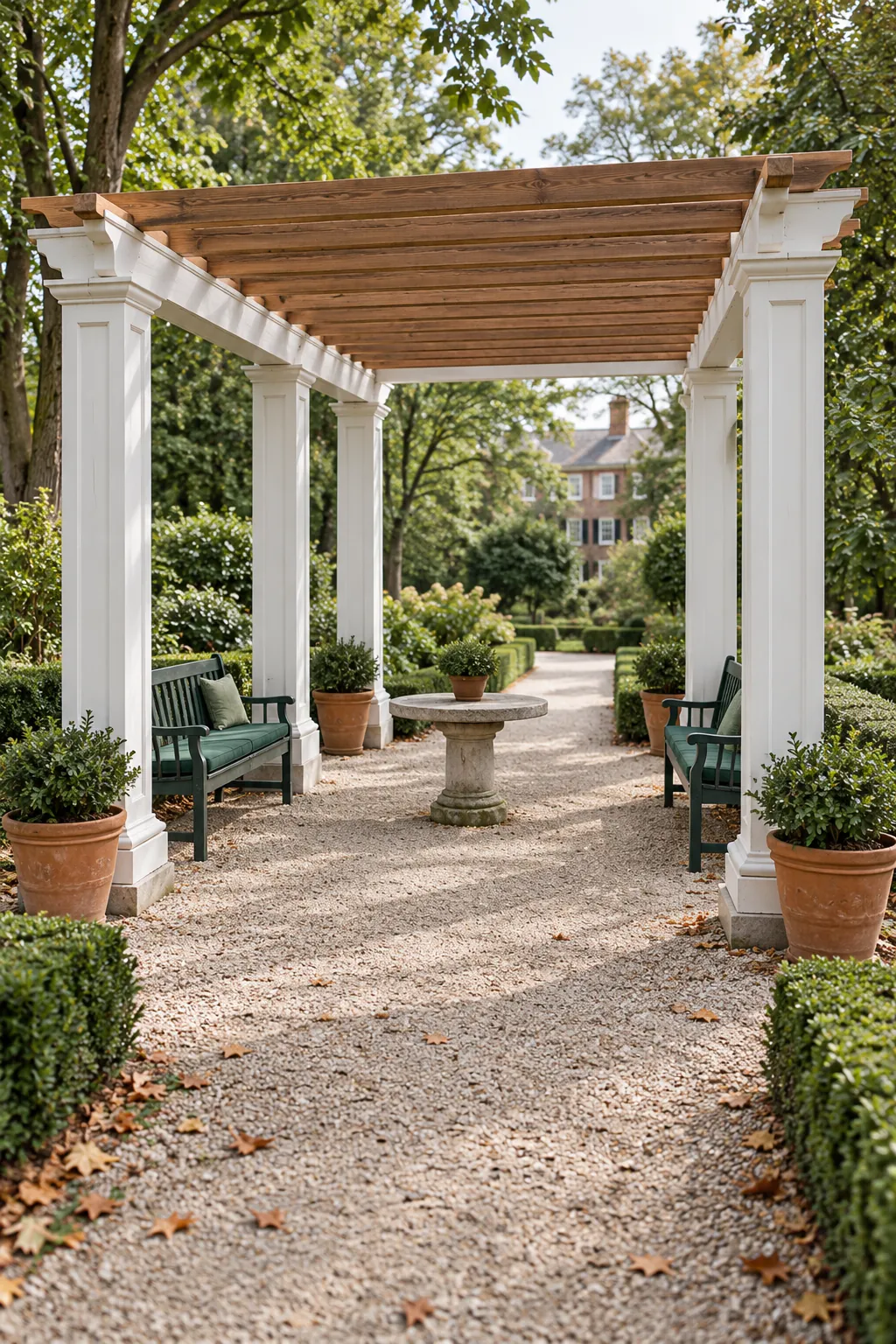
Mediterranean Timber and Tile
Heavy timber beams and a narrow clay tile edge connect a pergola to Mediterranean architecture without turning it into a solid porch. Keep tile weight over properly sized members and leave the central slats open for ventilation. Lime walls, terracotta paving, and drought tolerant planting complete the setting with fewer decorative objects.
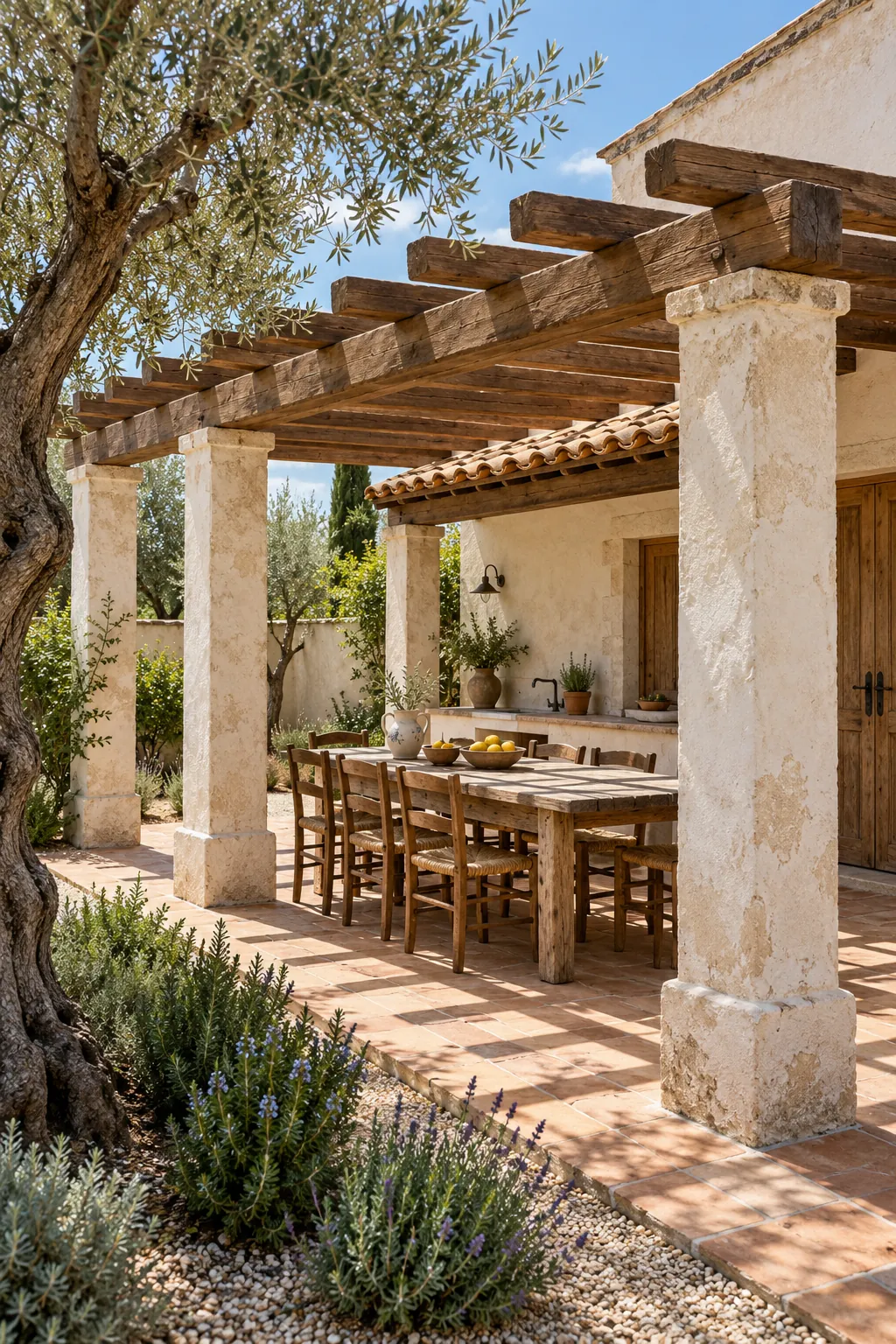
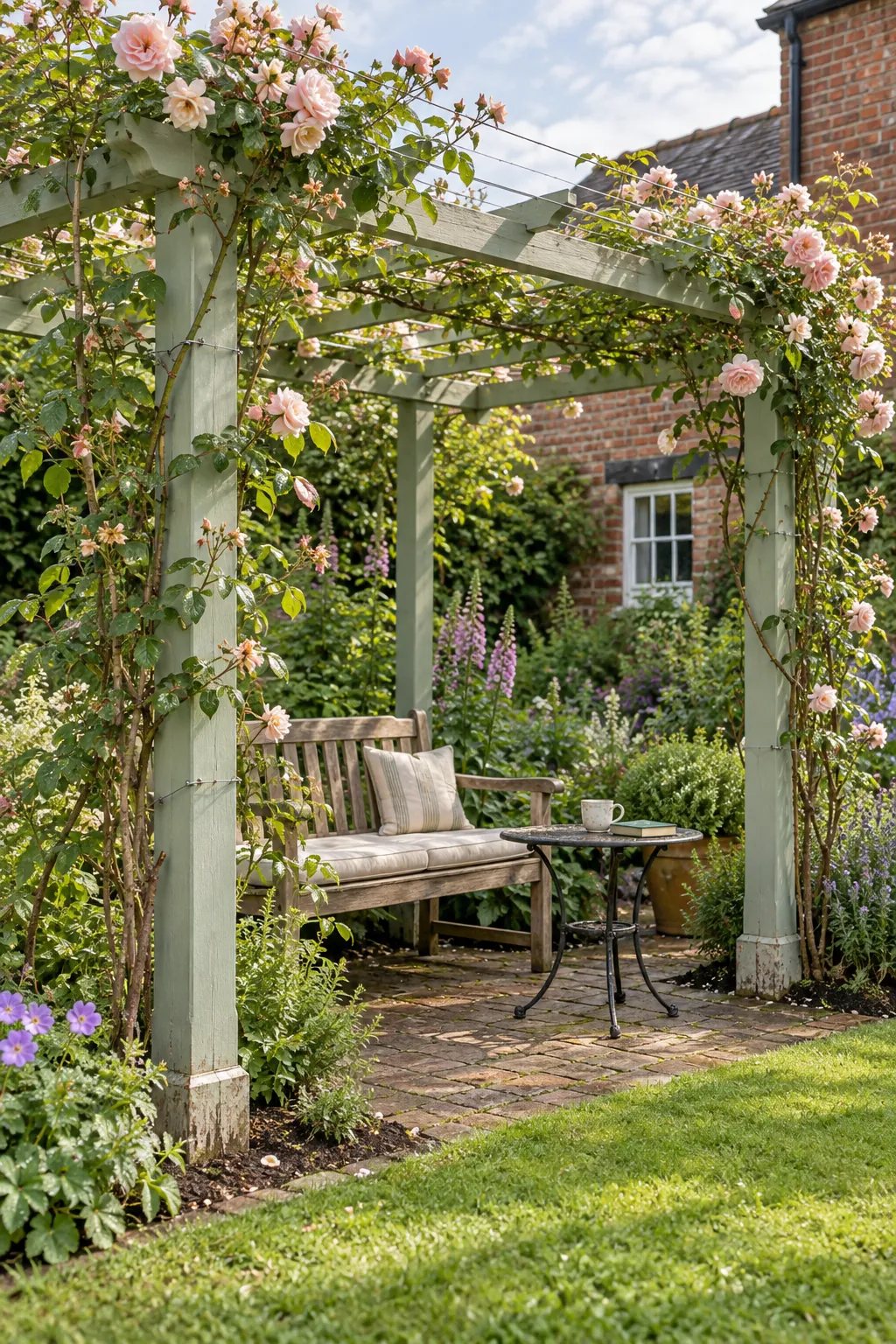
Rose Covered Cottage Frame
Climbing roses bring scent and seasonal color to a light painted wood frame. Provide training wires and enough access to prune thorny growth away from chairs and walking paths. The roof should retain open areas so air reaches leaves and rain does not hold damp debris against the timber.
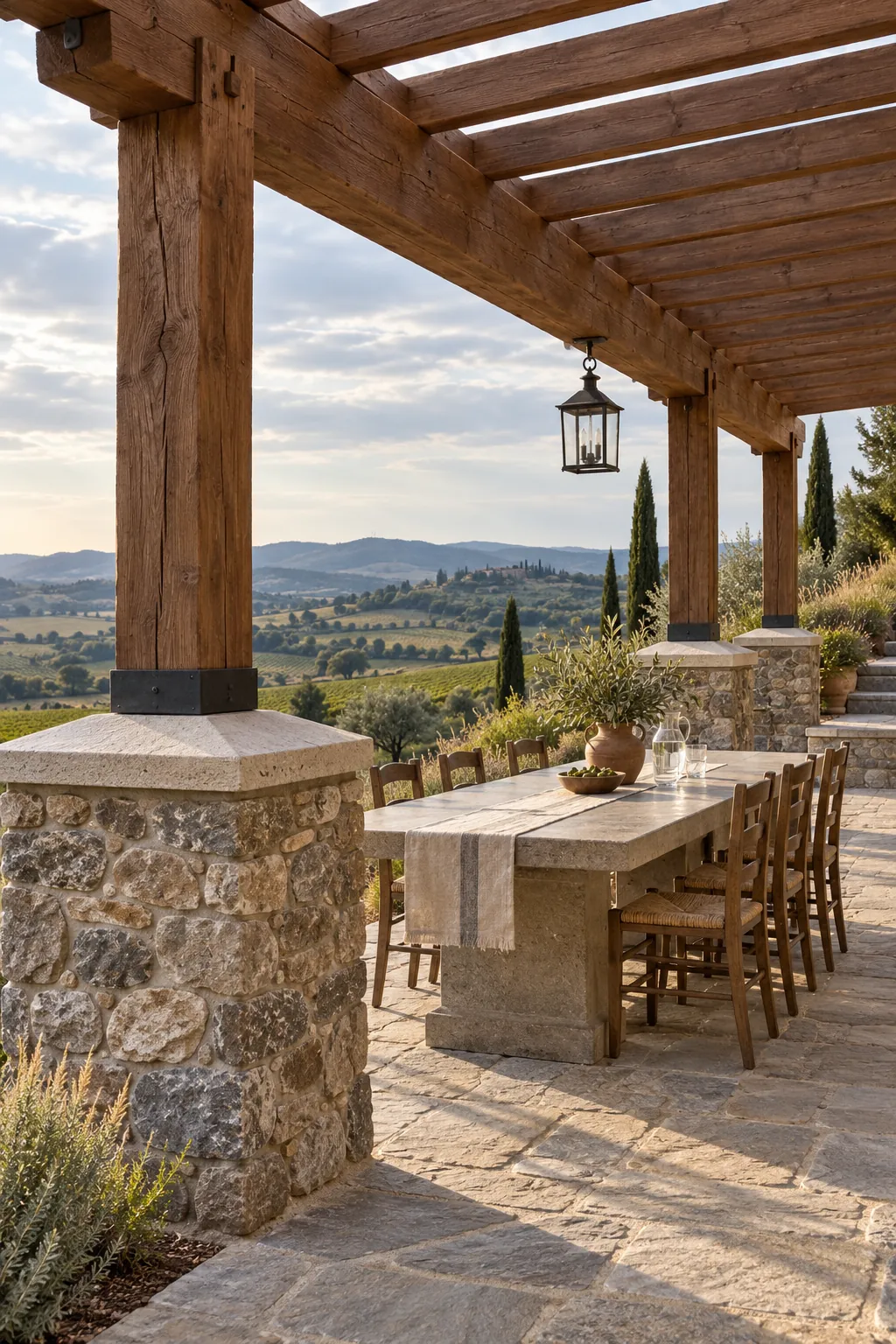
Tuscan Stone Pier Pergola
Stone piers can visually ground broad timber spans on an exposed terrace. The masonry needs a cap that sheds water and a concealed structural core rather than acting as loose decorative cladding. Match the stone to local walls or paving so the pergola belongs to the landscape.
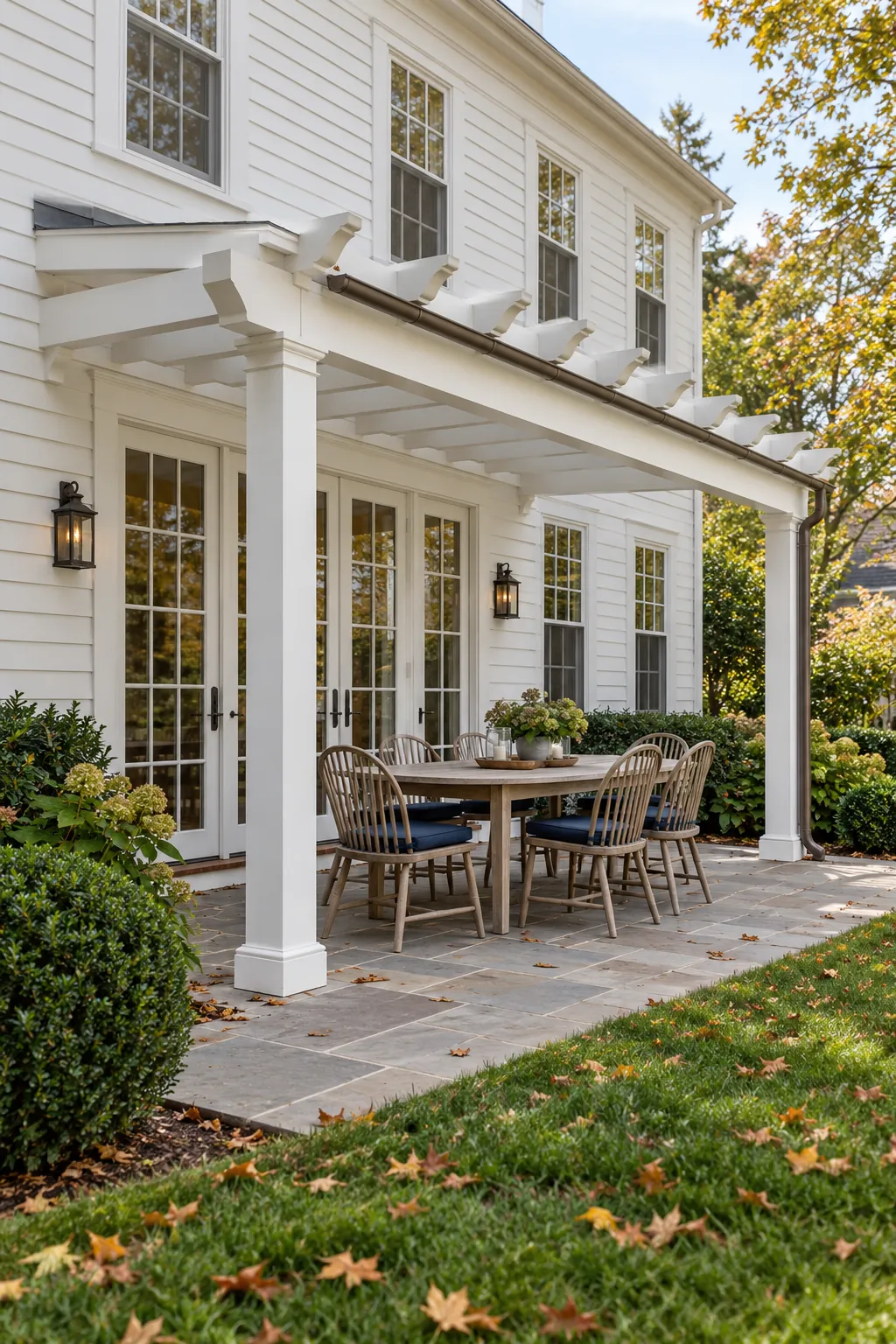
Colonial Attached Veranda
An attached white pergola can extend the ordered bays of a colonial facade over an outdoor table. Align posts with windows and doors, then detail flashing before adding trim. The repeated spacing creates the classic effect, while a clear route from the kitchen makes the area useful.
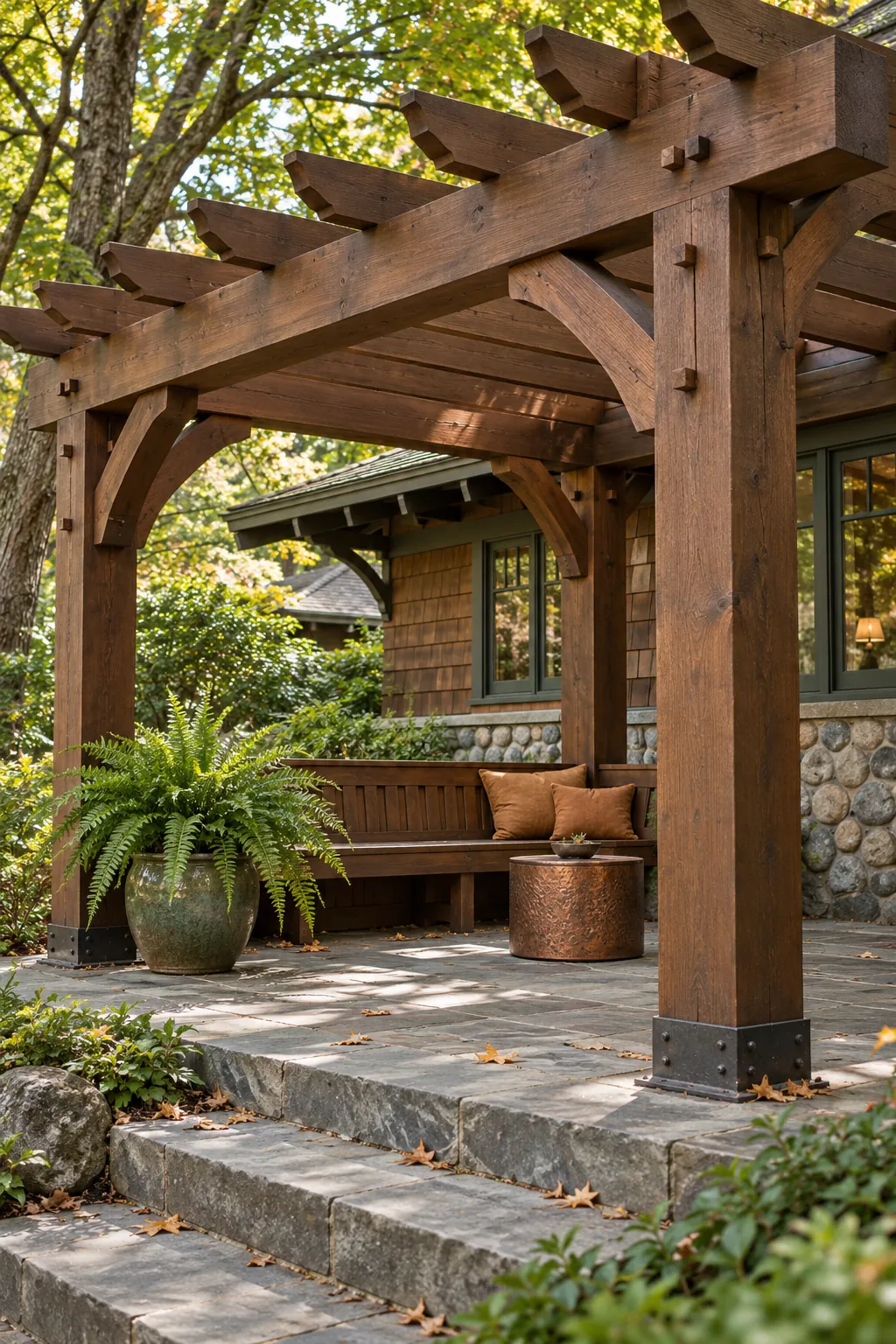
Craftsman Bracketed Timber
Exposed brackets and substantial wood posts fit a Craftsman home when they reflect its existing joinery. Brackets should support a real load or clearly reinforce a connection instead of becoming surface decoration. A muted stain lets the grain remain visible and reduces contrast with the garden.
Wisteria Walkway
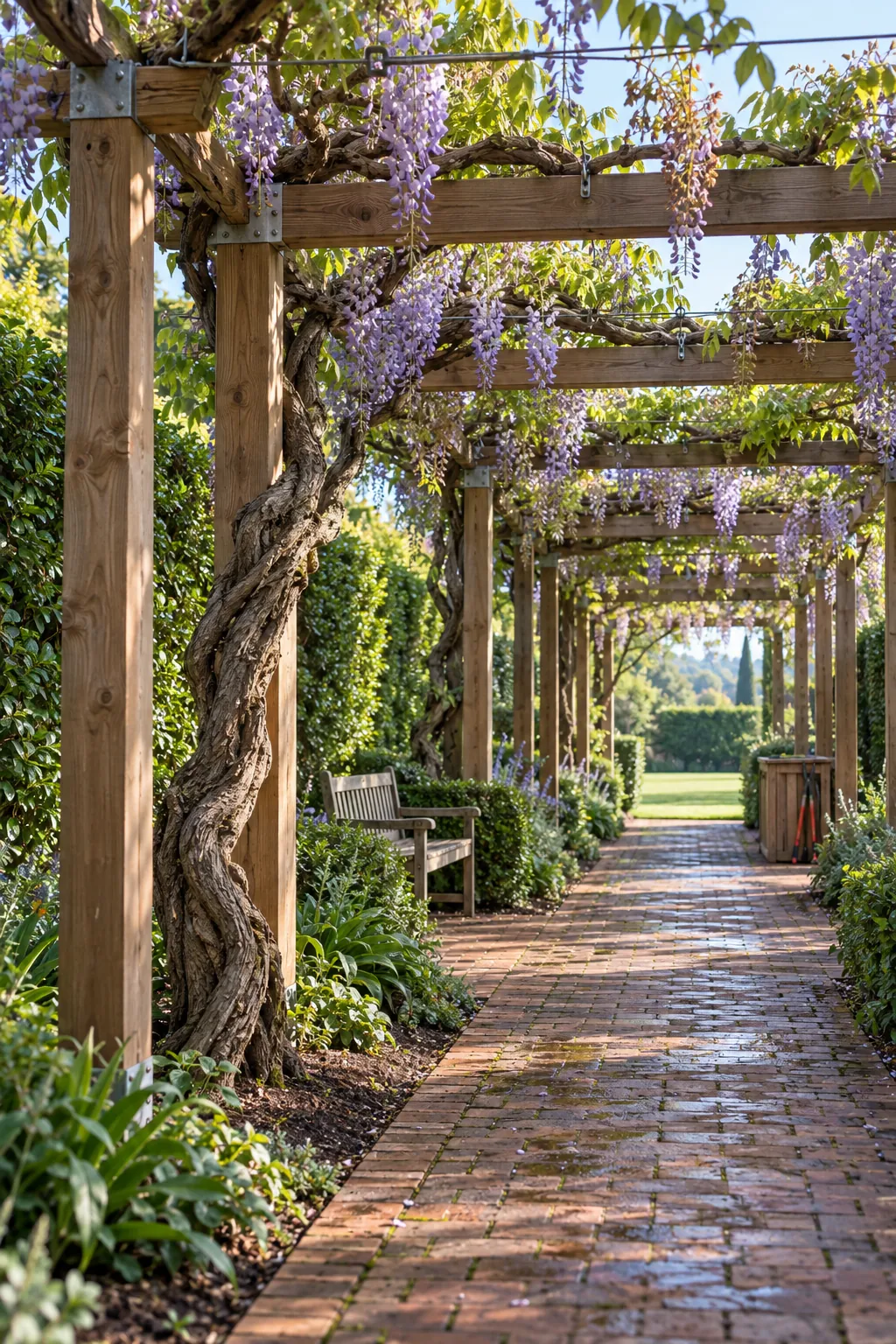
A long pergola can turn a garden path into a shaded seasonal walk. Wisteria needs a strong frame and regular pruning because mature stems become heavy and vigorous. Keep growth clear of gutters, roofs, and neighboring trees, then leave one side open for maintenance access.
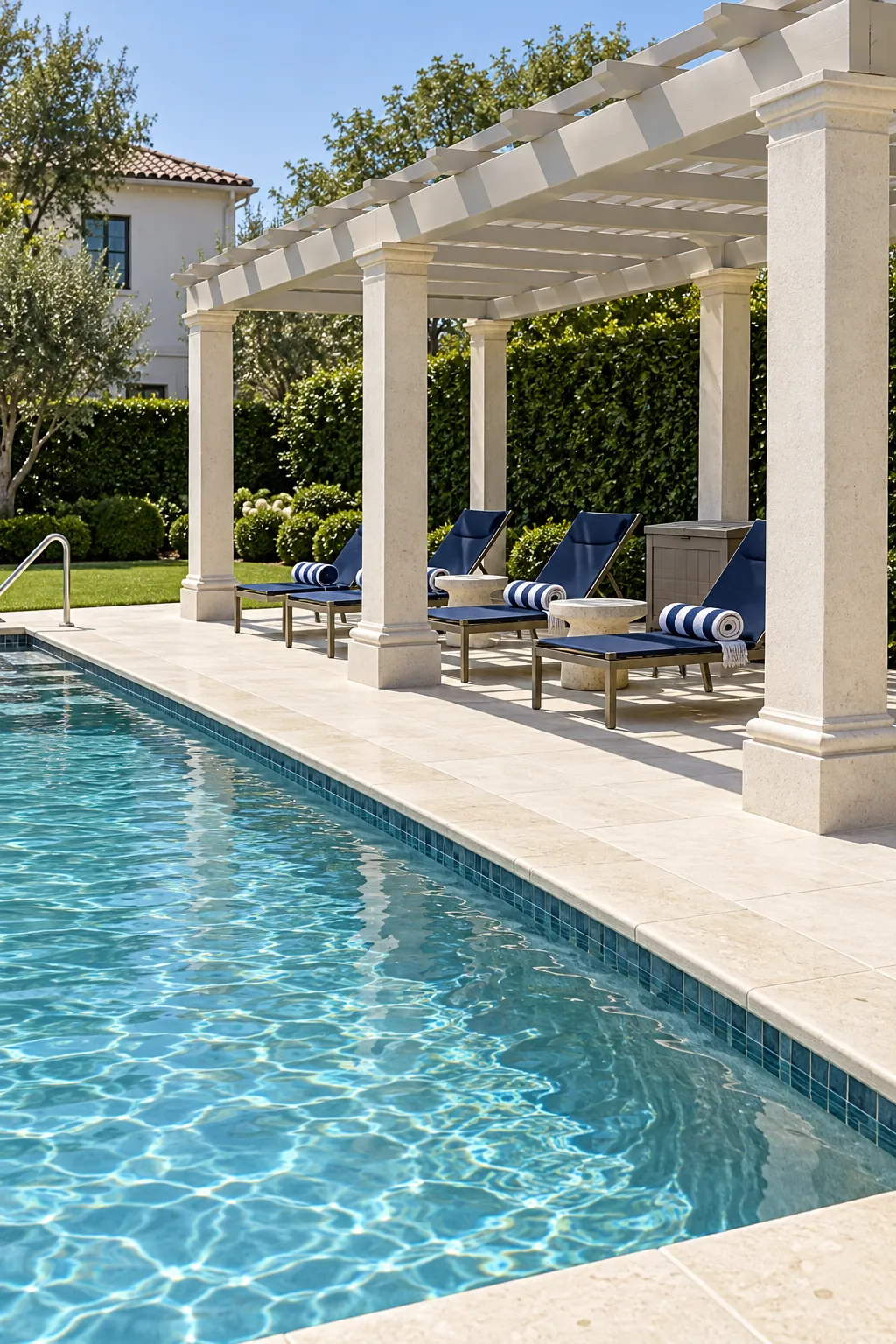
Classic Poolside Colonnade
A row of pale columns can define a poolside shade zone while preserving views across the water. Place the structure beyond the main wet circulation path and choose finishes that tolerate chlorine and constant sun. Washable cushions and nonslip paving keep the elegant arrangement practical.
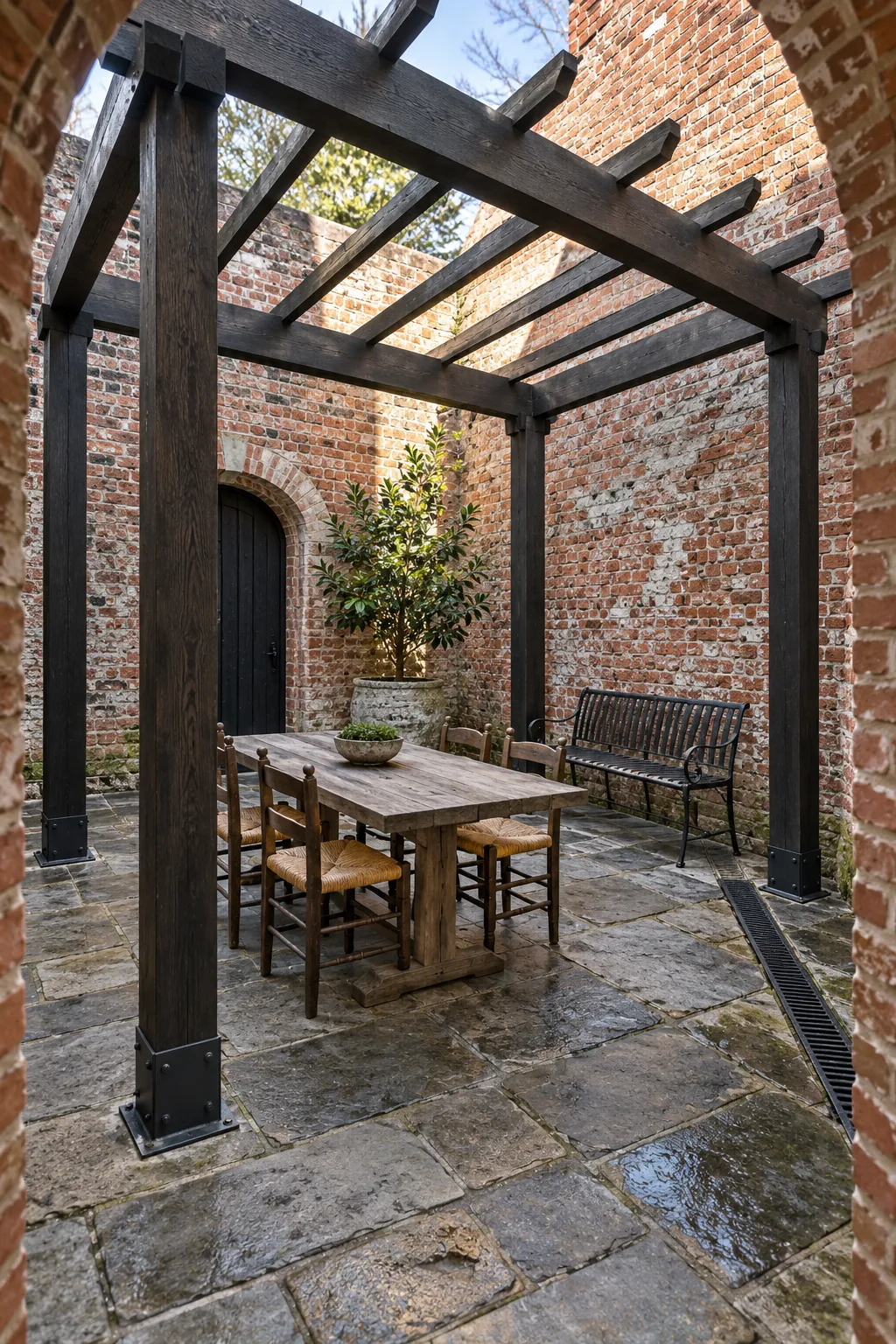
Brick Courtyard Pergola
A dark timber pergola adds scale to a brick courtyard without hiding its established texture. Independent posts avoid uncertain loads on old masonry, while the roof rhythm softens the tall enclosing walls. Keep planting and furniture simple so brick, timber, and shadow do the visual work.
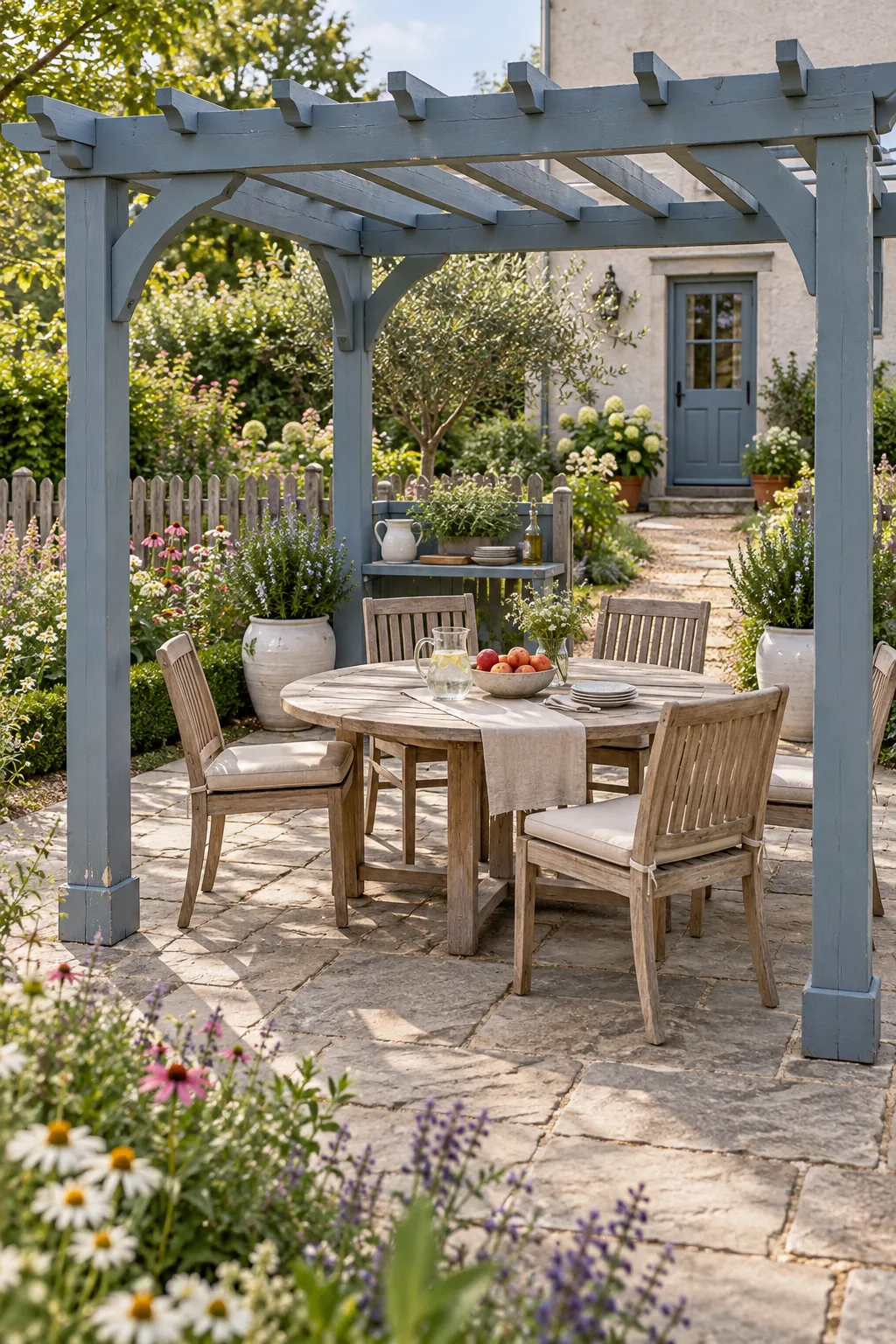
Painted Wood Dining Arbor
A painted wood arbor can make a small dining terrace feel like a distinct garden room. Choose a restrained color that relates to doors or trim, and leave enough clearance for chairs on every side. Inspect horizontal joints regularly because paint alone cannot protect places where water sits.
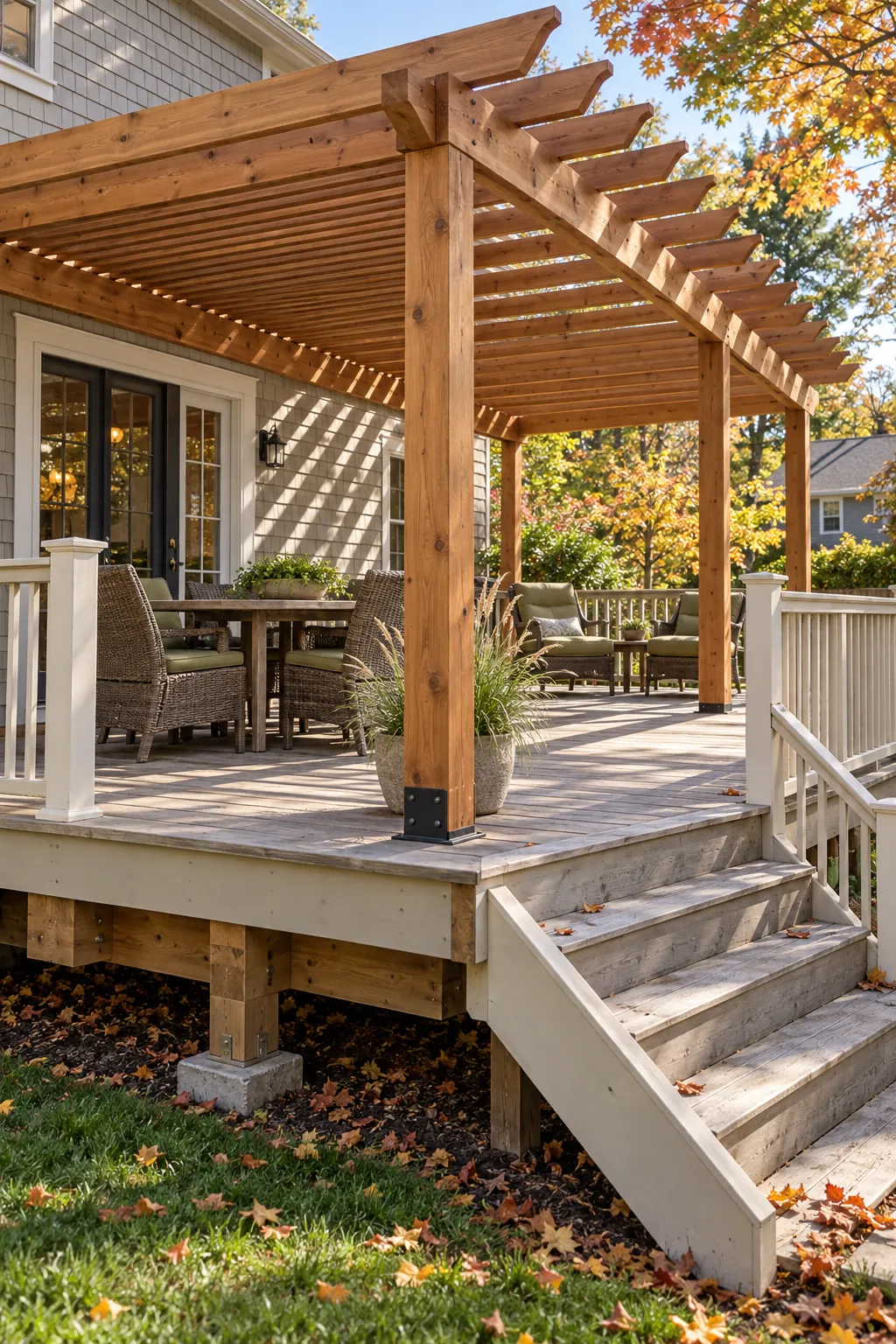
Traditional Cedar Deck Cover
Cedar beams bring familiar warmth to a raised deck and can echo nearby fencing or shingles. Posts must transfer loads through the deck framing to proper support below. Open slats at the outer edge preserve daylight, while denser spacing near the house gives the table more shade.
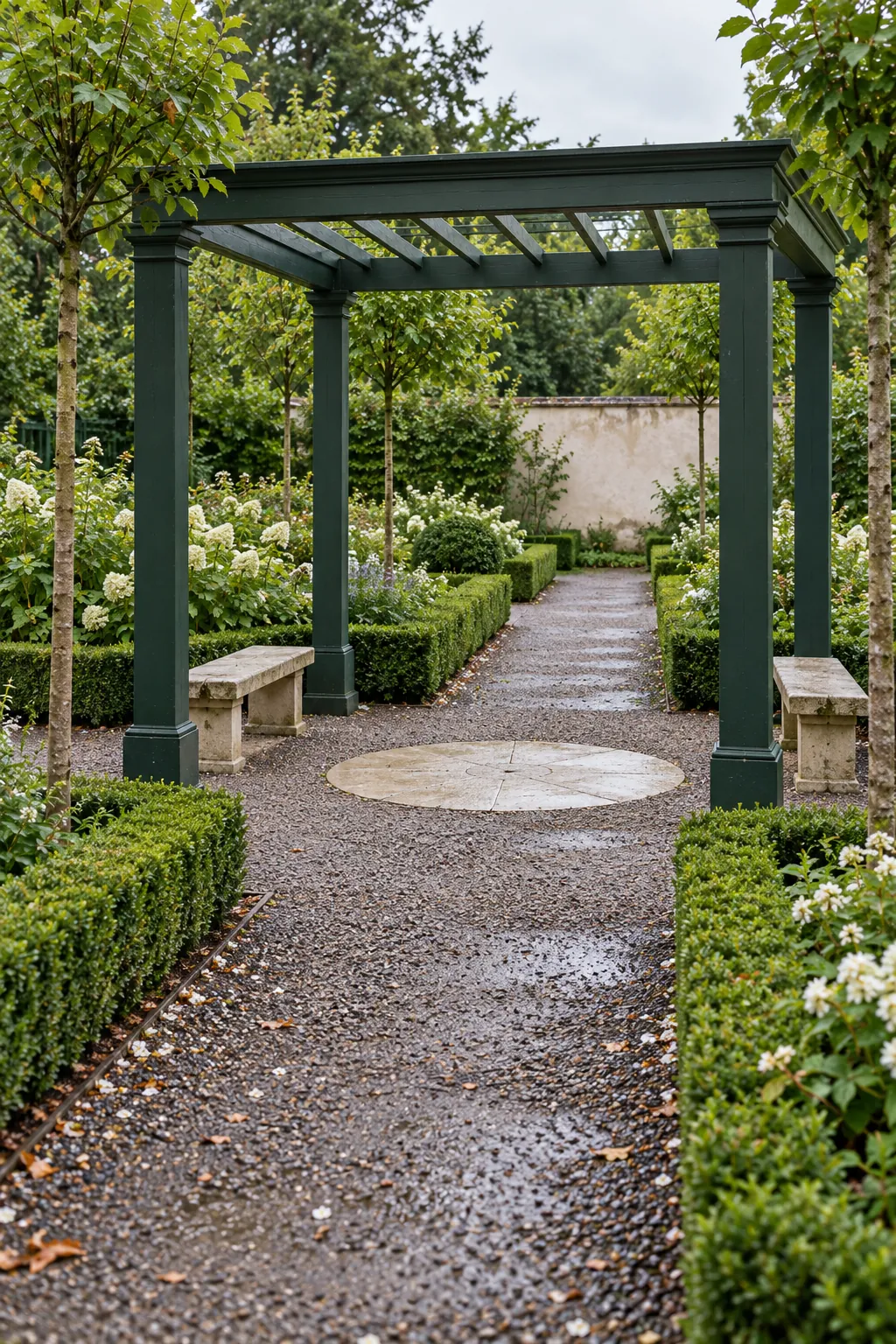
Formal Garden Cross Axis
A pergola placed where two paths meet creates a natural pause in a formal garden. Center the openings on the paths, but allow benches and planting to soften the strict geometry. Durable gravel or stone beneath the structure prevents the crossing from becoming muddy during wet seasons.
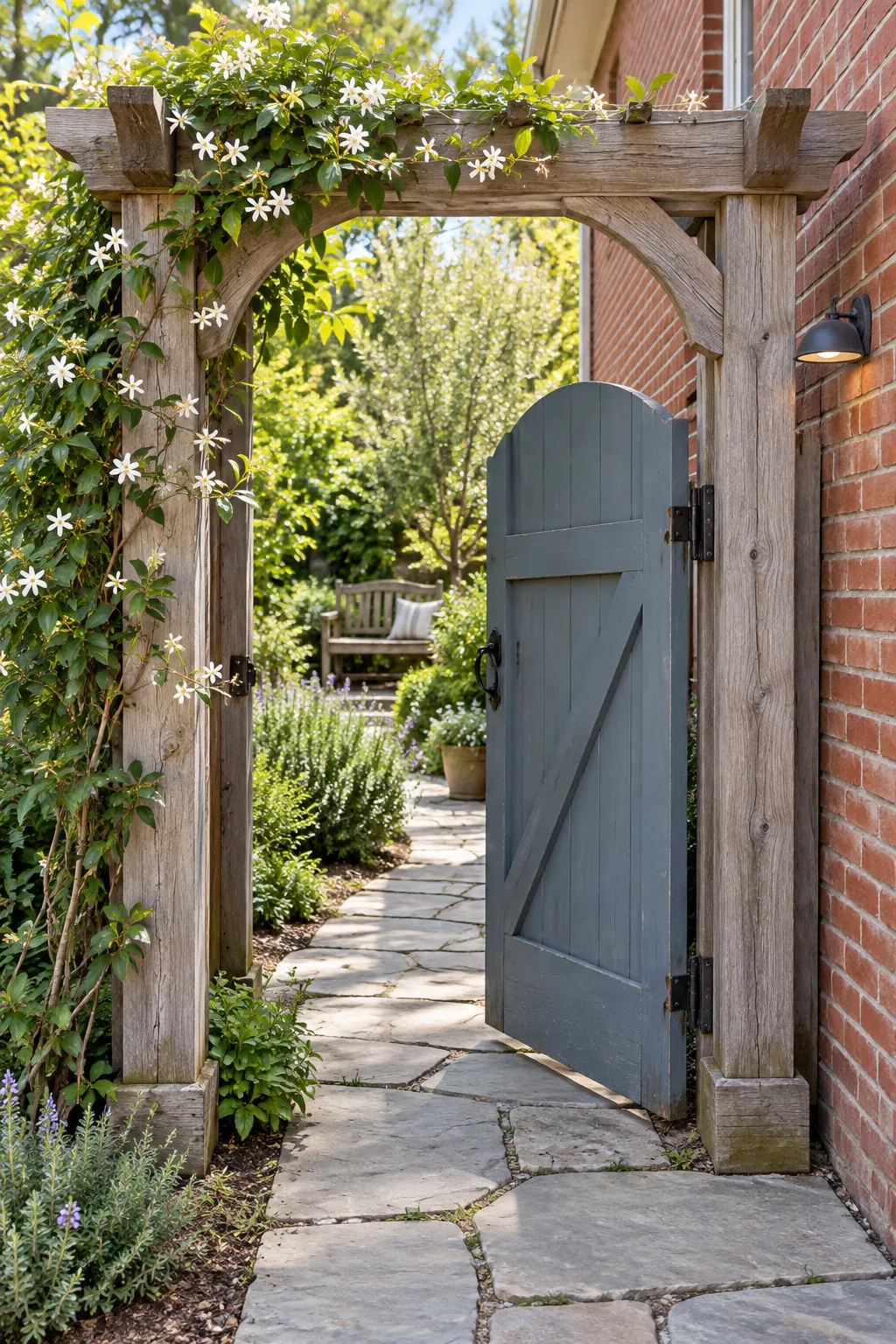
Vine Covered Entrance
A short pergola can make a side gate or garden entrance feel generous and intentional. Train one manageable vine across the top and keep stems away from latches, lights, and address details. The structure should frame the destination beyond instead of becoming a crowded tunnel.
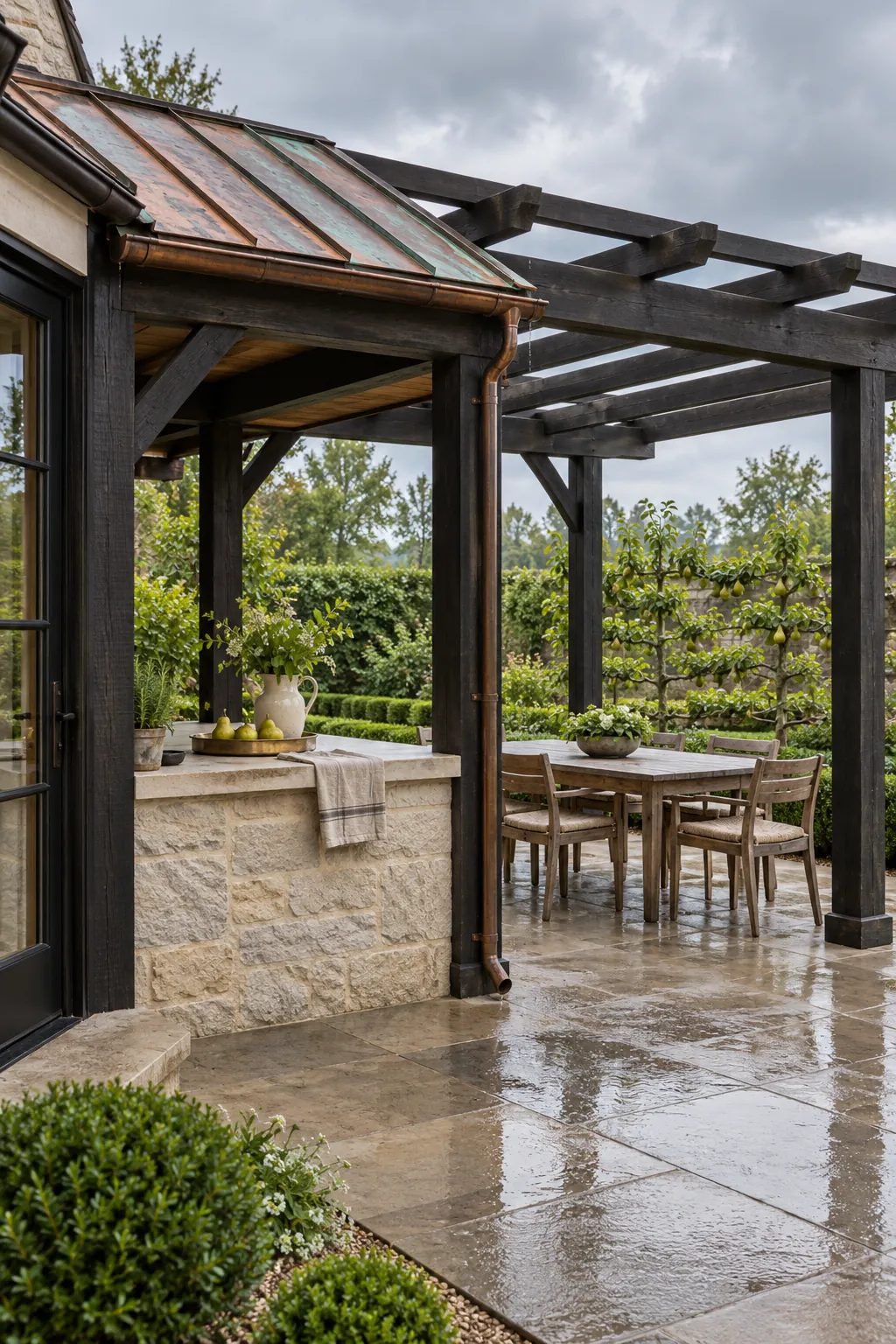
Copper Roof Accent
A narrow copper cap over one pergola bay can protect a serving counter or doorway while the remaining roof stays open. Proper seams and a deliberate drainage edge matter more than immediate shine. The metal will change color over time, so pair it with materials that suit both new copper and an eventual patina.
Classical Lattice Privacy
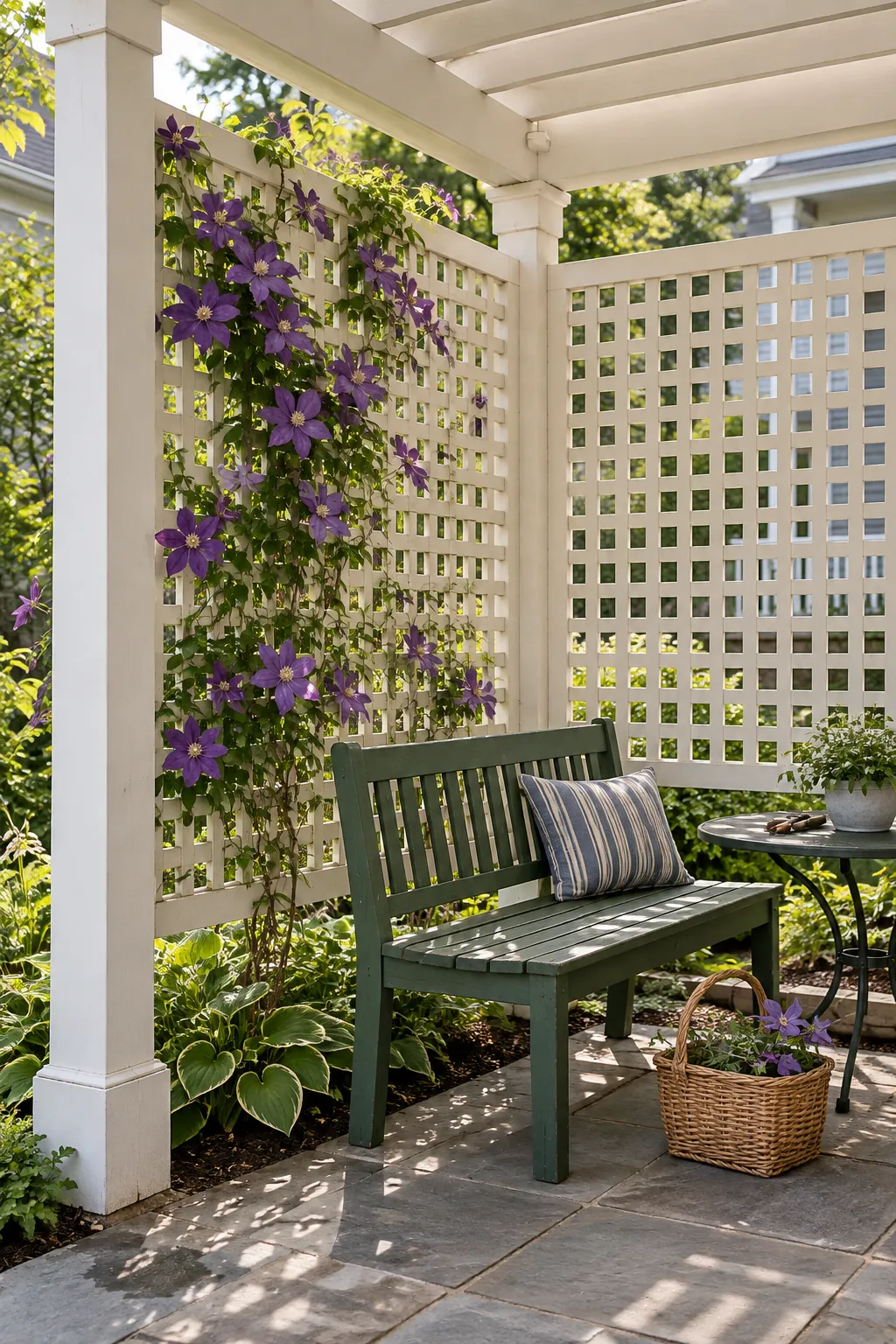
Square lattice provides familiar garden privacy while allowing air and filtered views. Use it on the exposed side only, then lift the bottom above damp soil or paving. A climbing clematis can soften the grid if its stems remain accessible for pruning.
Rustic Oak Farmhouse Pergola
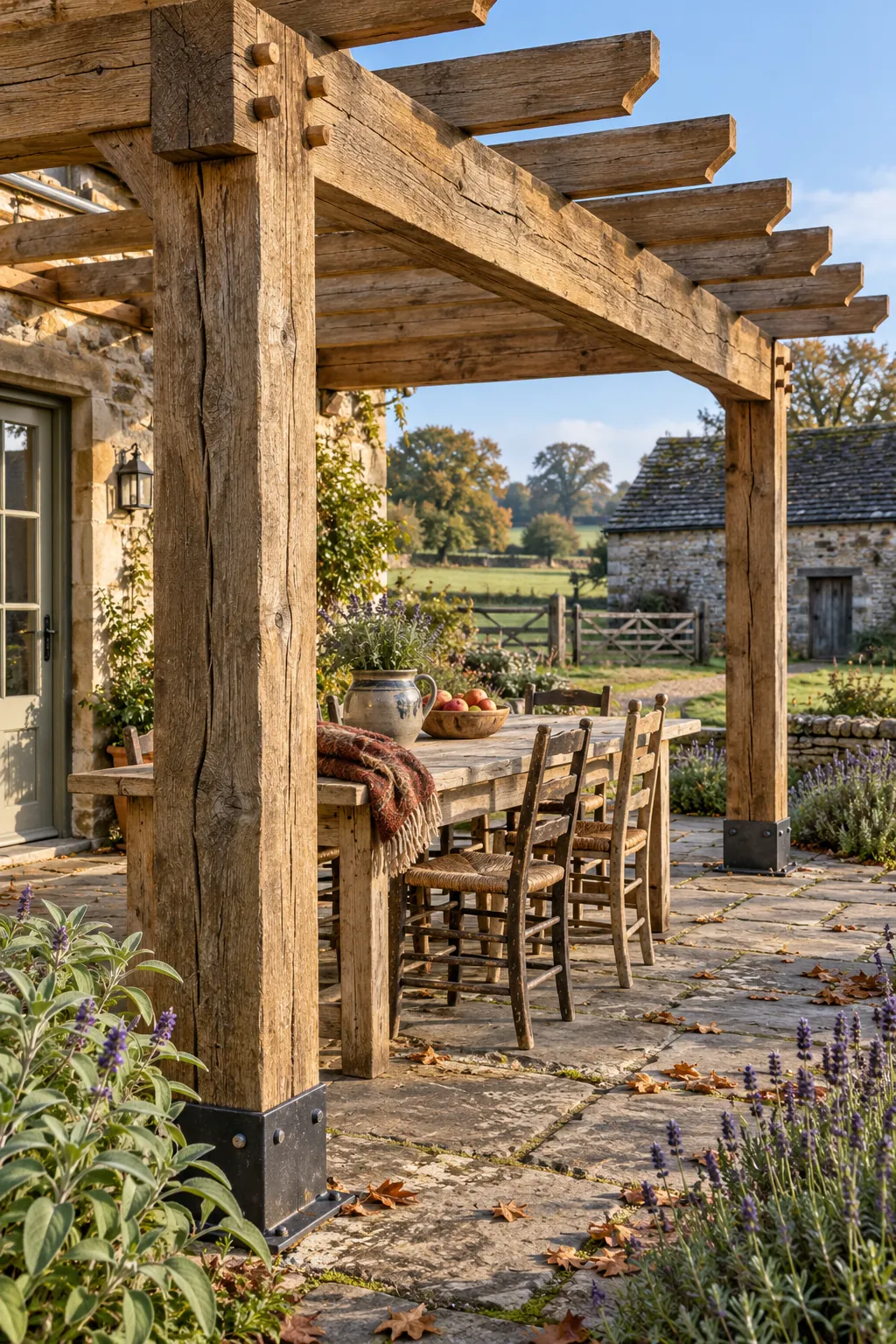
Chunky oak posts and pegged joints suit a farmhouse terrace when the proportions remain simple. Natural checking and color change are part of the material, but standing water at feet and beam tops still needs prevention. Pair the frame with a plain table and hardy planting rather than themed accessories.
Black Iron Garden Frame
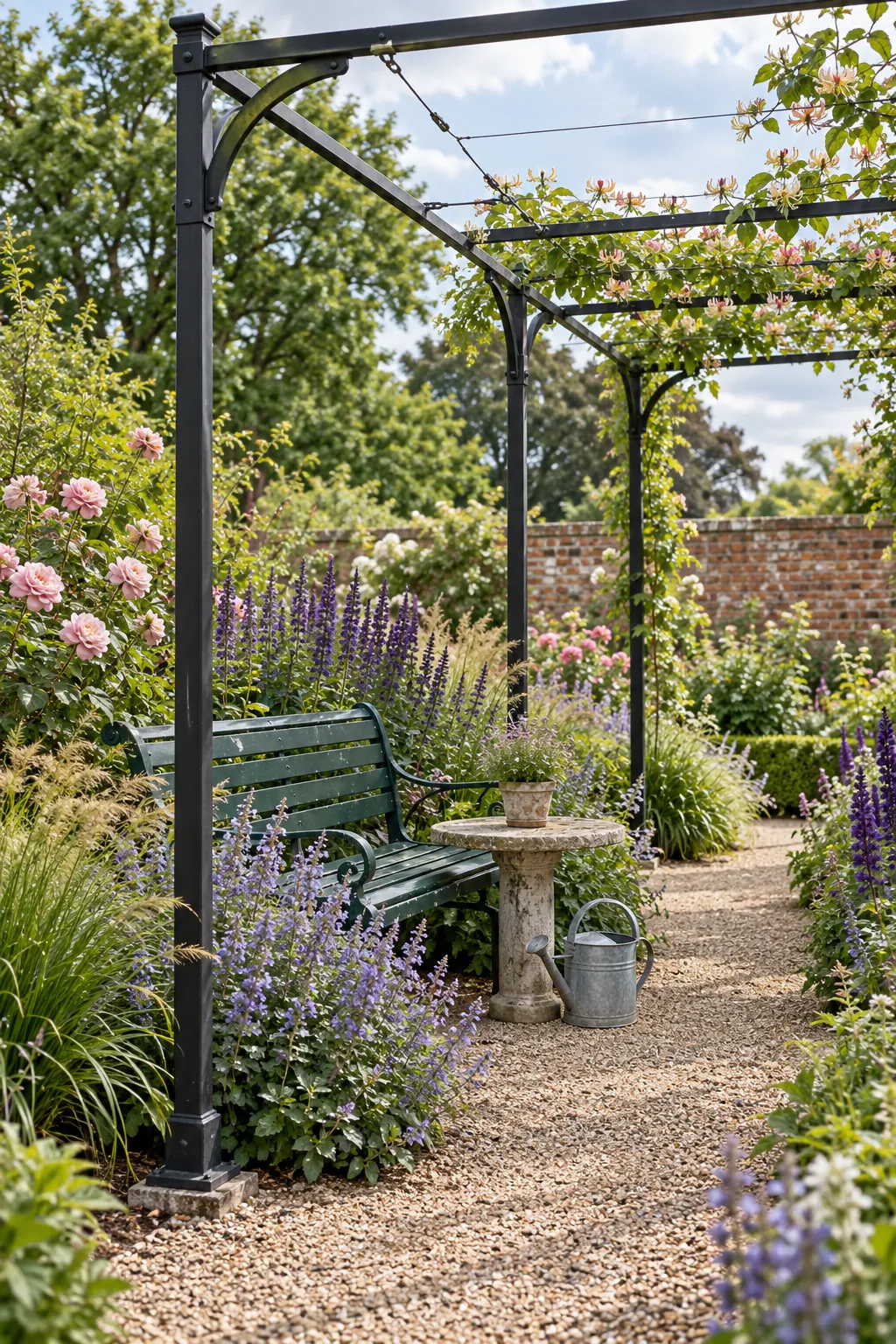
A slender black iron frame can bring classic structure to a flower garden without dominating it. Curved corner braces add character, but the main lines should remain calm and consistent. Protect cut edges from rust and keep climbing plants loose enough that painted surfaces can be inspected.
Canvas Draped Terrace
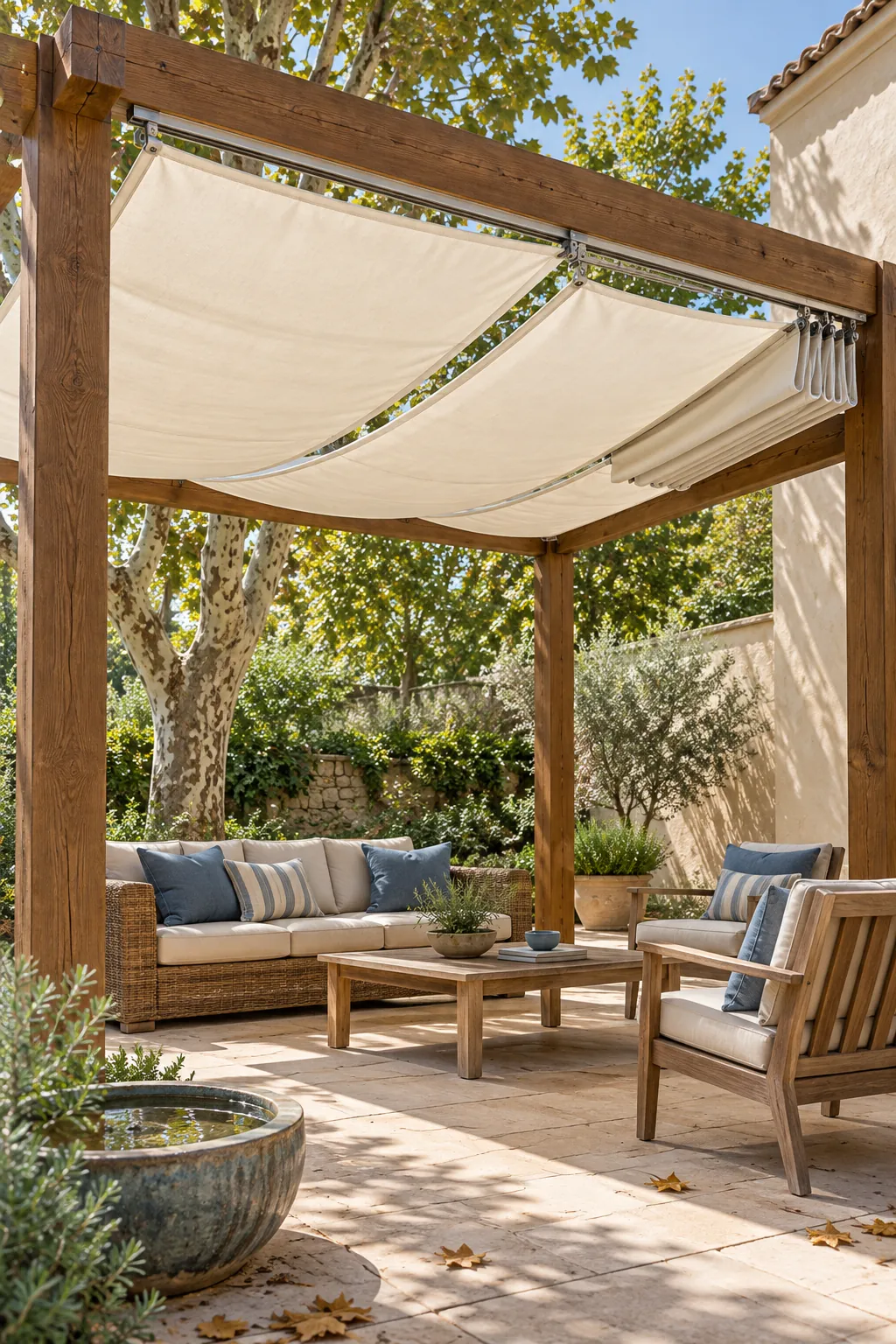
Outdoor canvas panels bring soft shade to a traditional timber pergola during the brightest months. Hang them from tracks that allow easy removal before storms or winter storage. Use only a few broad panels so the roof retains airflow and the cloth does not become fussy.
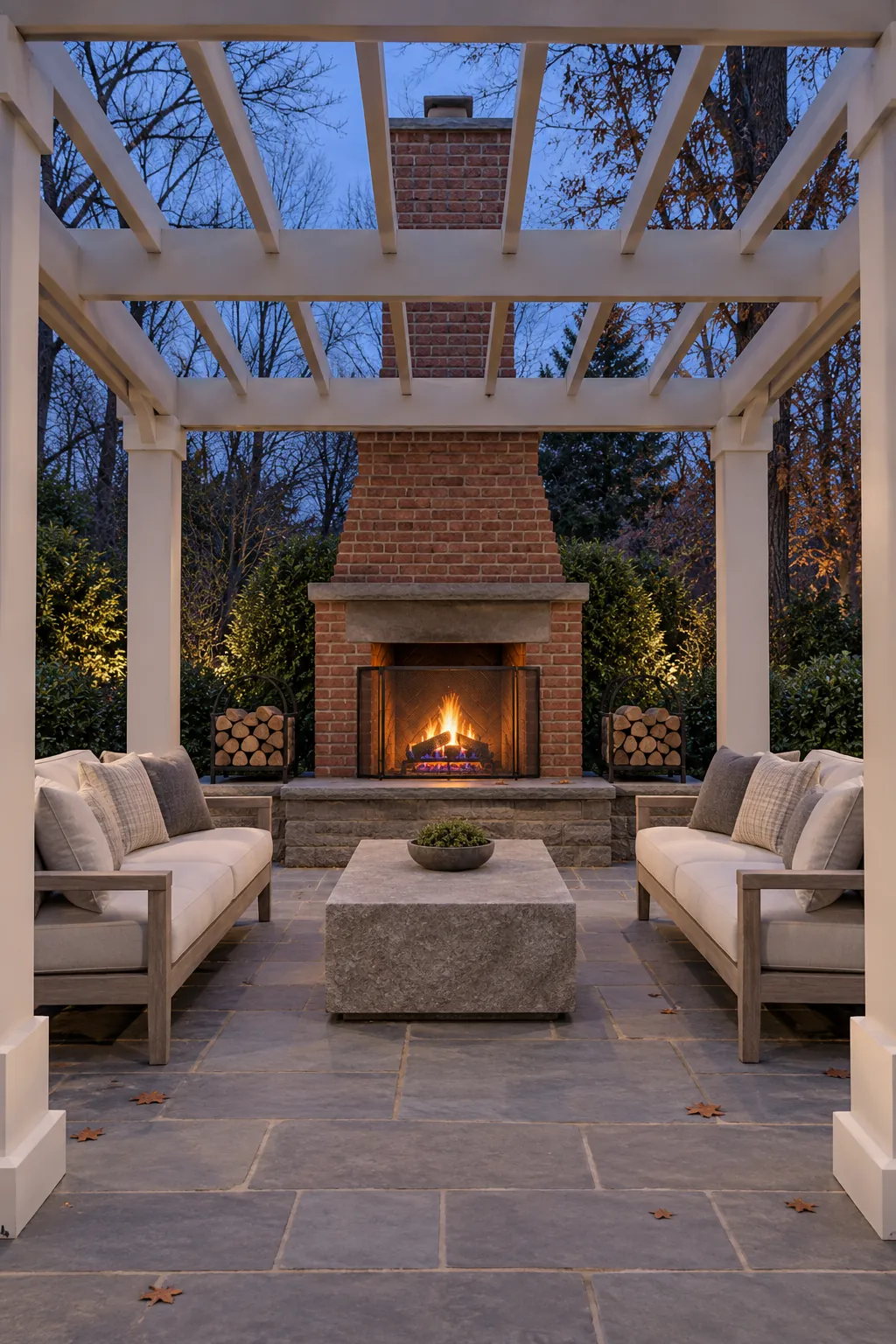
Symmetrical Fireplace Pergola
An outdoor fireplace can anchor a classic pergola when the seating and posts follow its central axis. Keep combustible beams and furnishings at the clearances required by the exact fireplace design. An open roof and side gaps let heat and smoke escape while preserving the formal arrangement.
Heritage Garden Retreat
A small unpainted wood pergola at the quiet end of a garden can feel timeless without elaborate ornament. Orient the bench toward the best planted view and keep a stable path to the entrance. Simple construction, good proportions, and materials that weather honestly will outlast decorative trends.