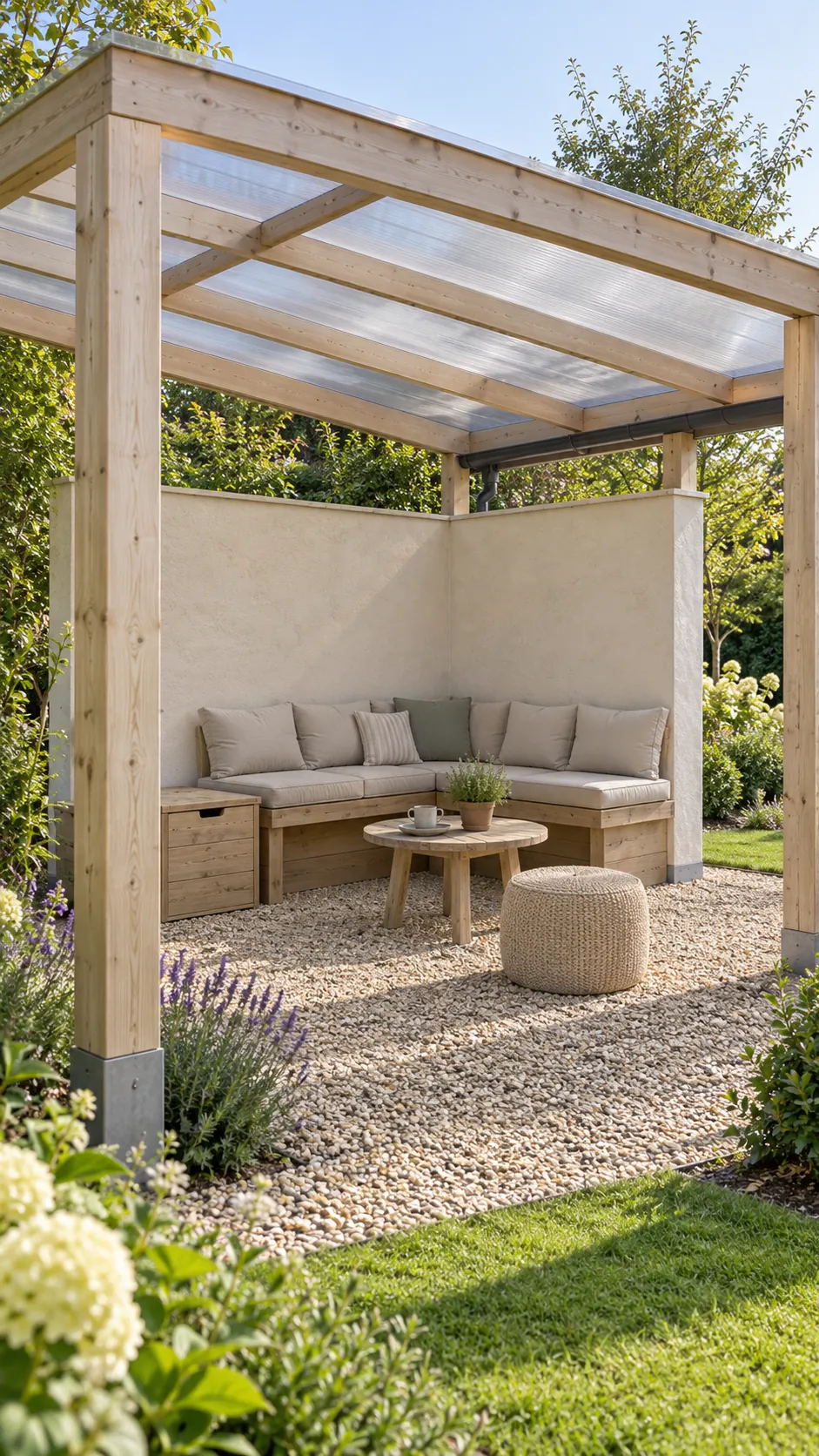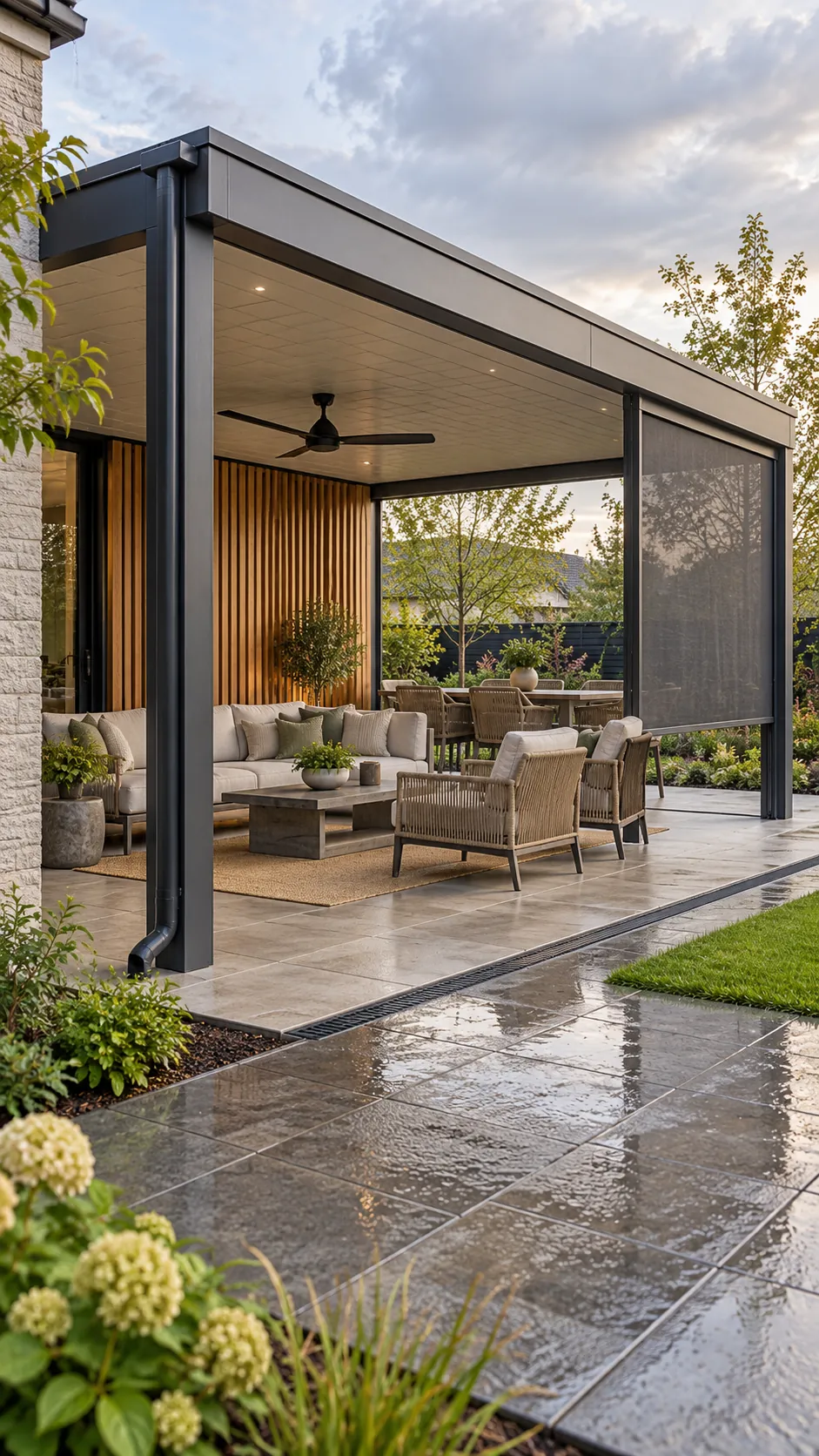
A roof and side protection can make a patio more useful, but every added surface changes airflow, wind pressure, drainage, and daylight. The best design blocks the exposure that causes a real problem while keeping at least one generous opening. These examples show how to gain shelter without accidentally building a dark, damp outdoor room.
Louvered Roof With Sliding Screens
Rotating roof louvers handle changing sun and light rain, while sliding side screens control low glare and privacy. Put screens only on the exposed sides so cross ventilation remains available. Keep tracks, motors, gutters, and manual controls accessible for regular cleaning.
Clear Roof With Timber Slat Wall
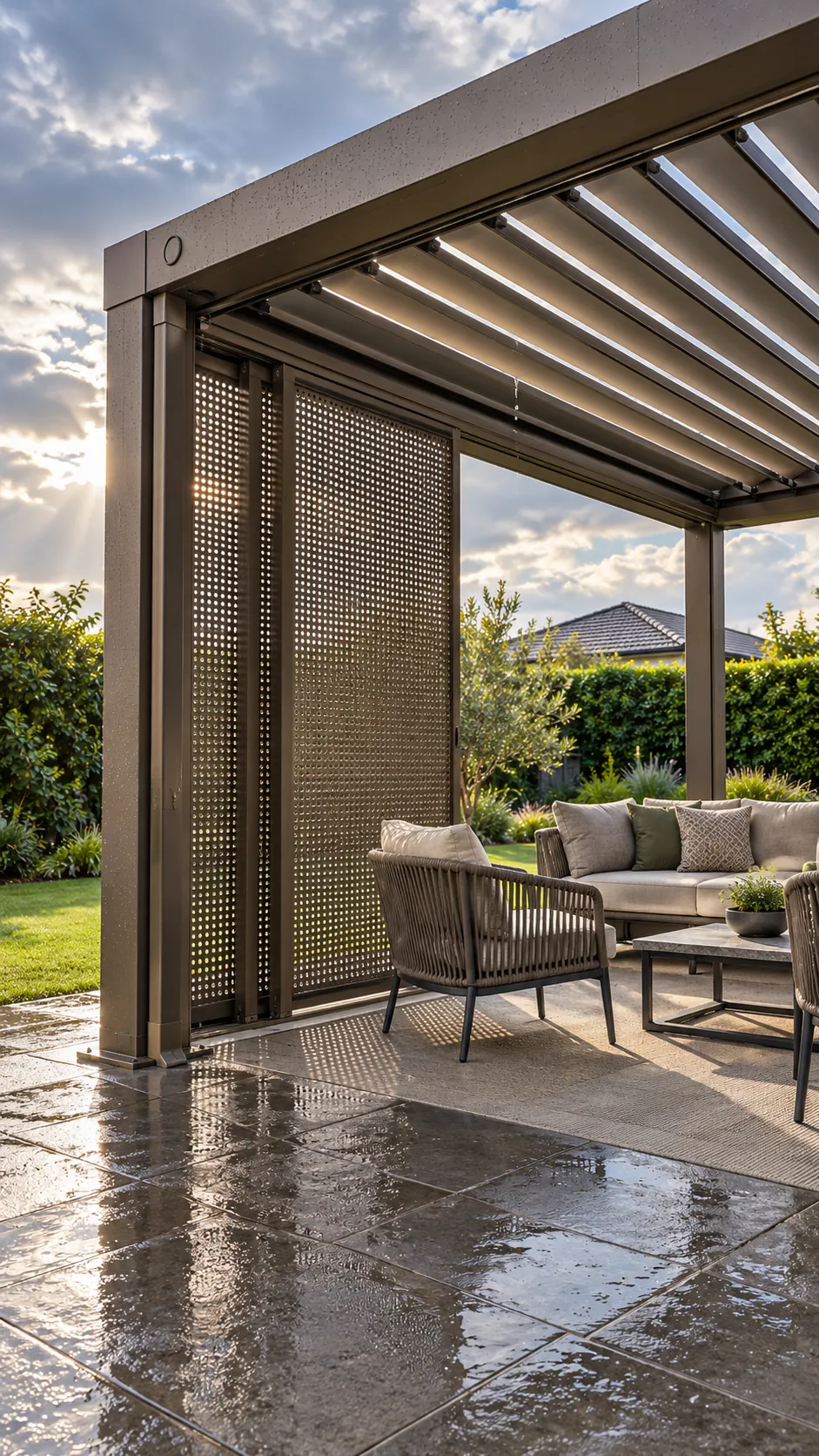
A clear roof preserves daylight near the house, and a timber slat wall softens one neighboring view. Use safety glazing or a rated roof panel with a visible fall toward the gutter. Space the wall slats for airflow and lift them above wet paving.
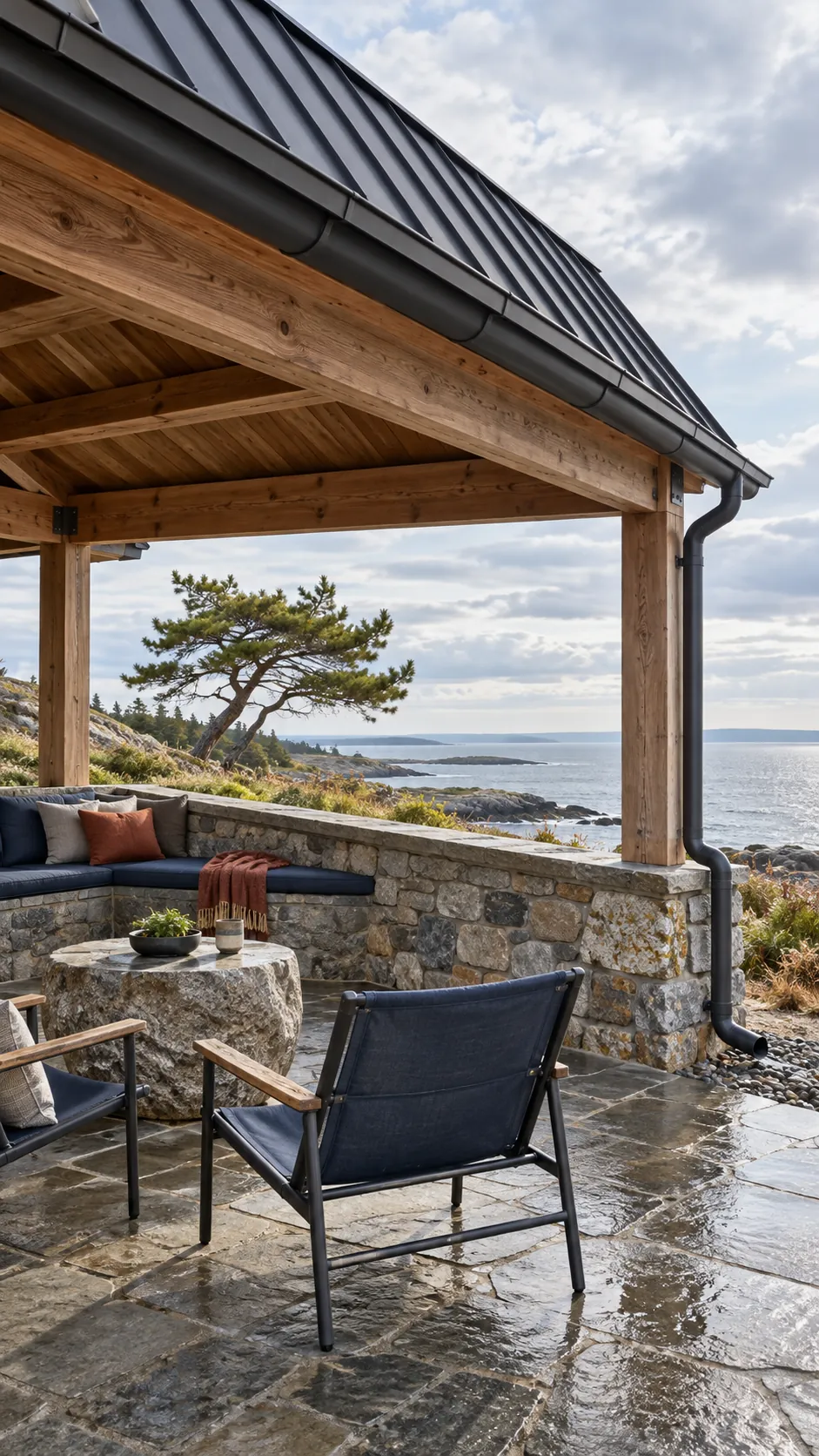
Metal Roof With Stone Wind Wall
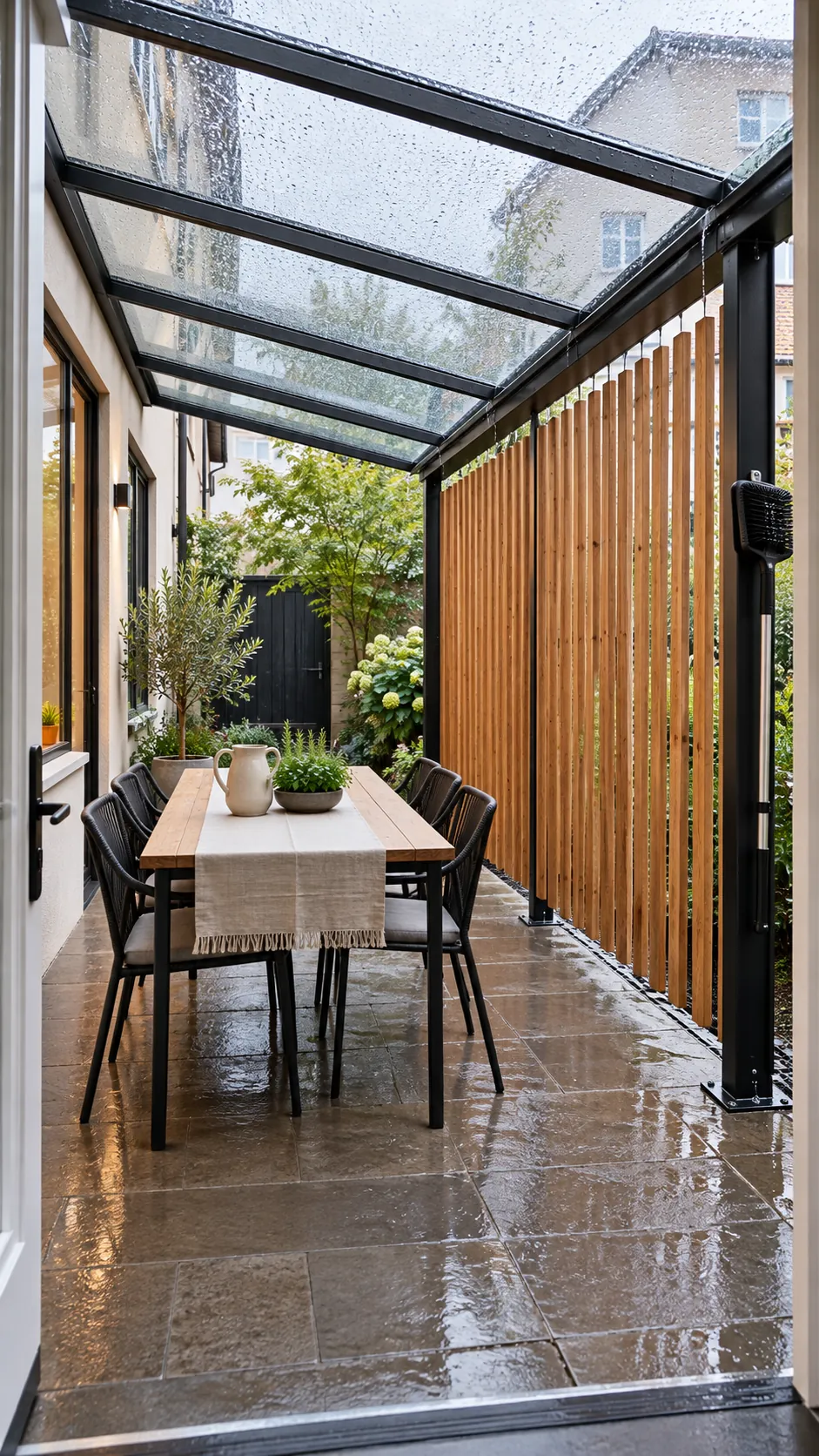
A solid metal roof and a low stone wall suit an exposed terrace where wind and rain arrive from one direction. Stop the wall below eye level to preserve views and allow warm air to escape. Direct roof water beyond the masonry footing so both structures can dry.
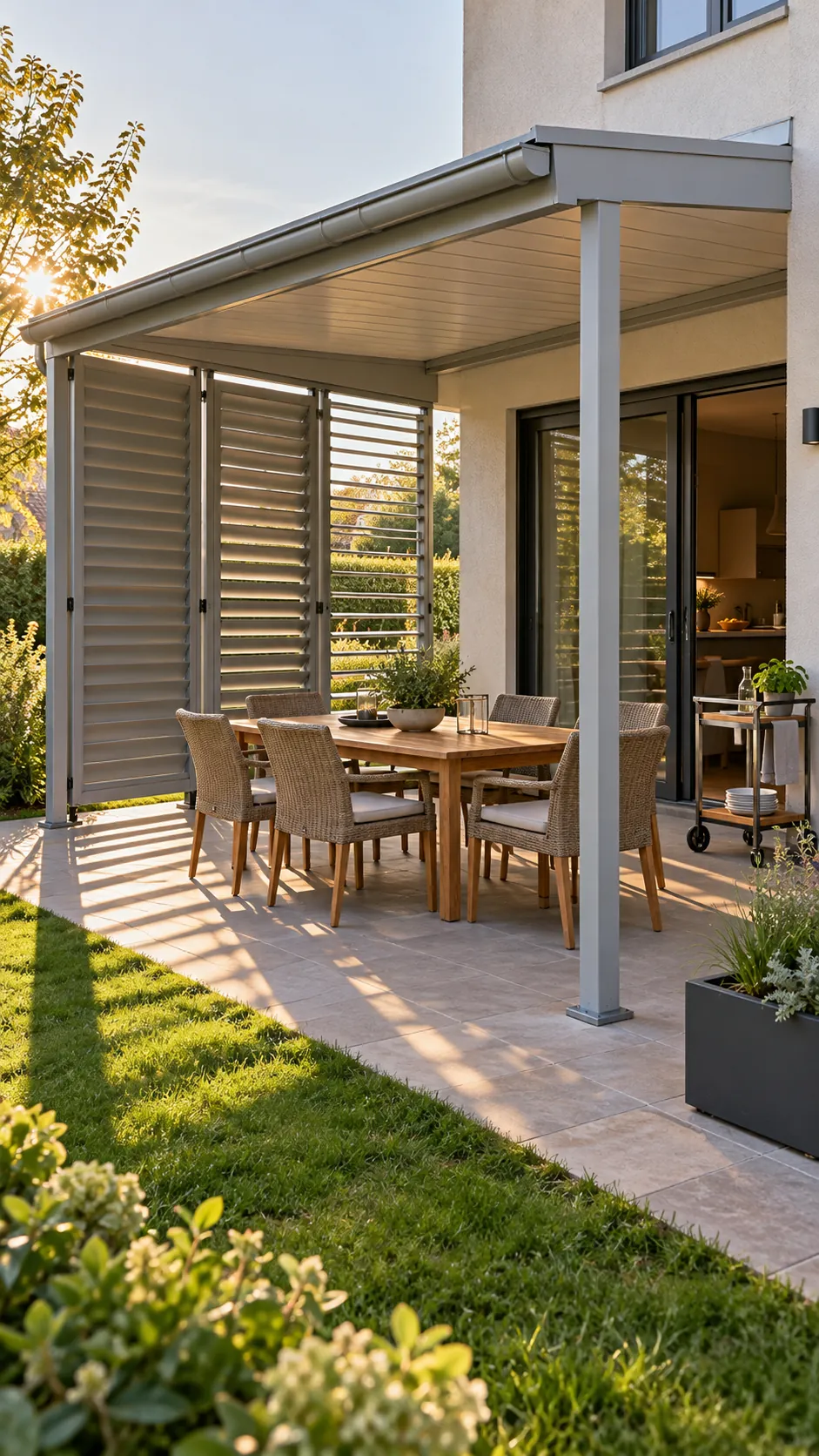
Attached Roof With Adjustable Shutters
An attached patio roof creates a dry route from the house, and adjustable shutters can block afternoon sun without sealing the space. Wall flashing and ledger attachment need careful design before decorative details are added. Make sure every shutter can swing or slide without hitting chairs.
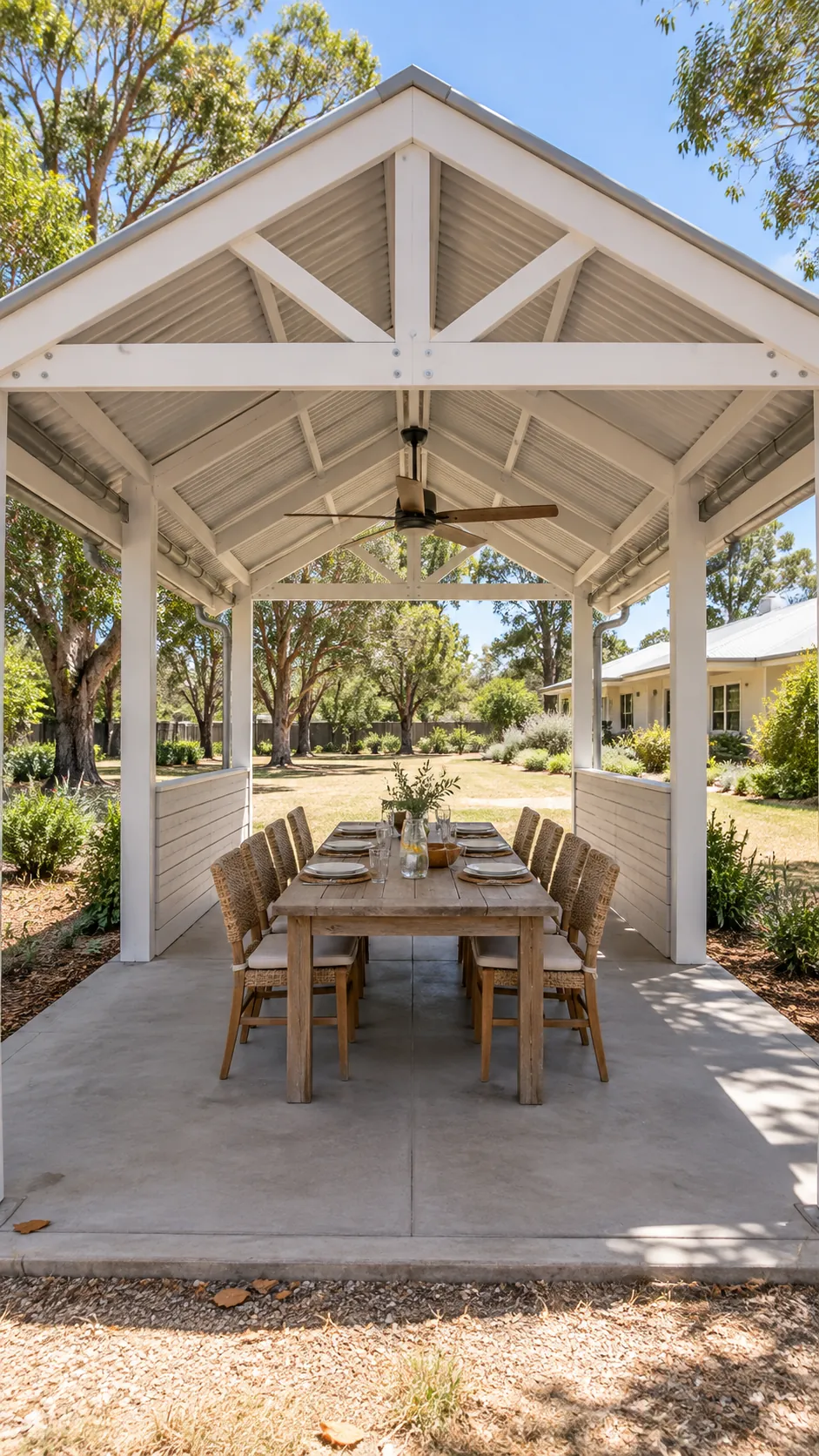
Gabled Roof With Open End Walls
A shallow gable adds height and can move hot air upward above a dining area. Partial end walls provide weather protection at seated level while leaving the gable and entrances open. Include gutters on both eaves and avoid putting a grill beneath a low enclosed roof.
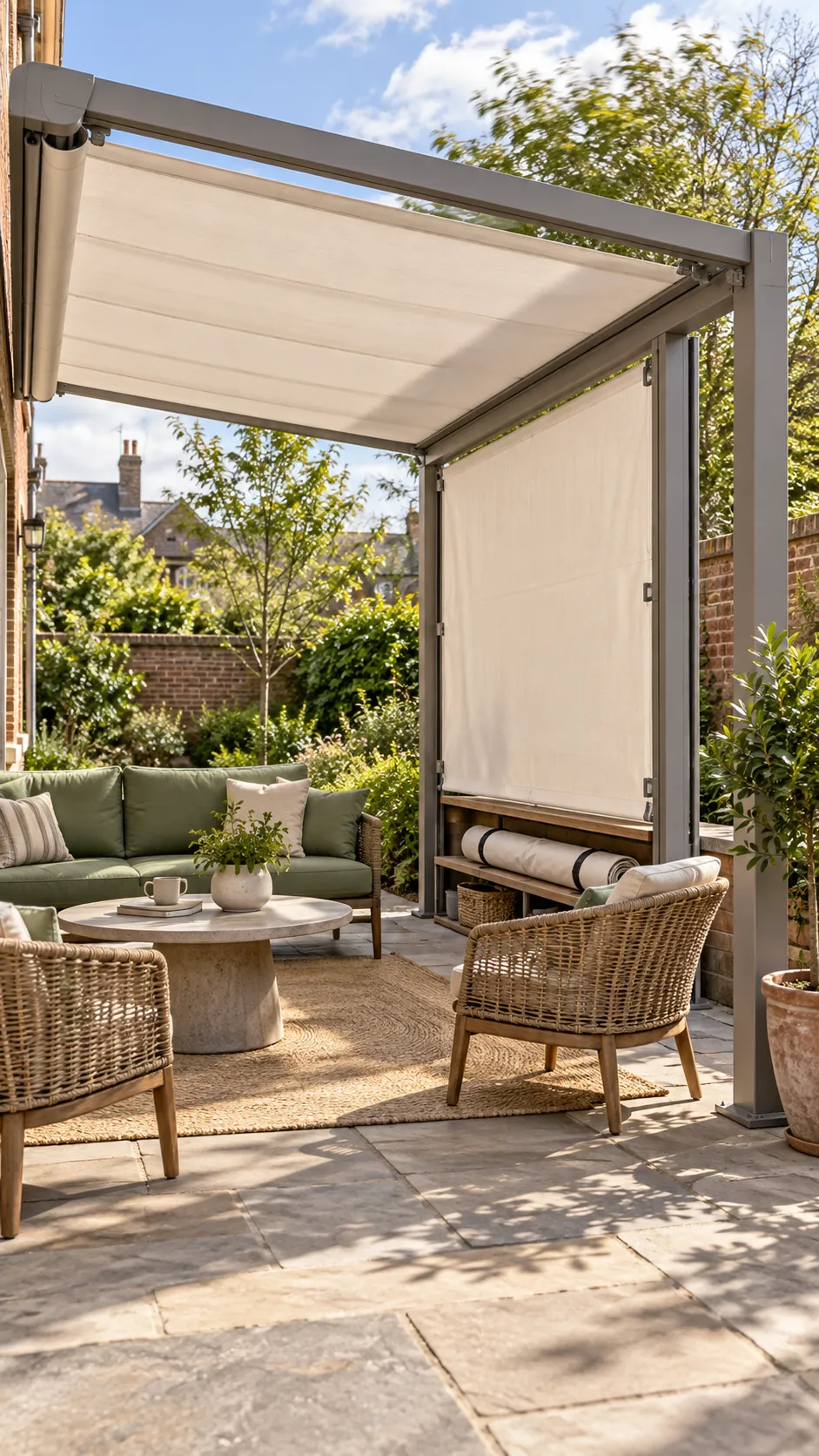
Retractable Roof With Fabric Side Panels
A retractable roof and removable fabric sides give flexible seasonal protection. Use tensioned panels rather than loose curtains, and remove them before severe wind unless the system is rated for it. Keep the storage cassette and track ends easy to inspect.
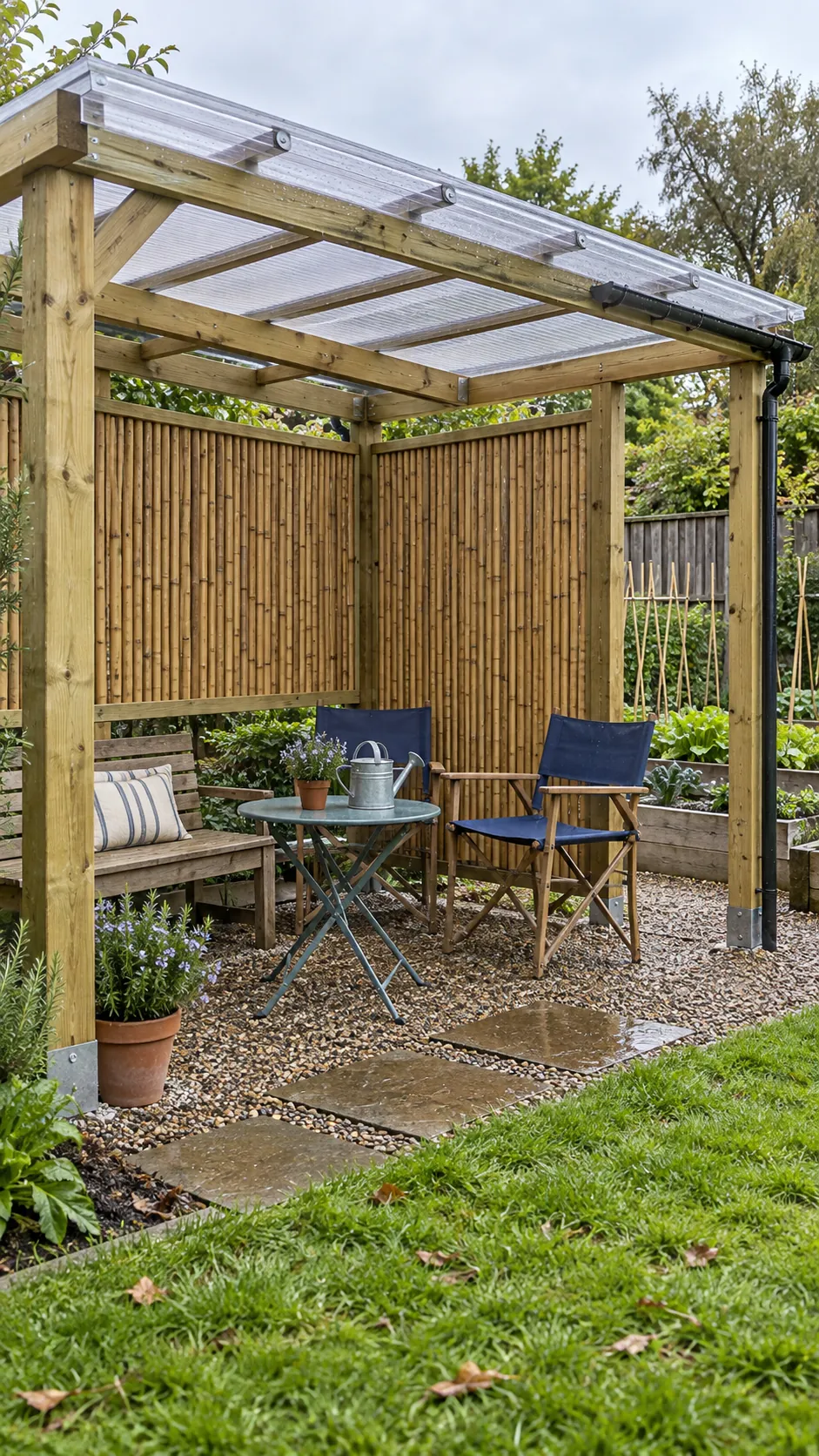
Polycarbonate Roof With Bamboo Screens
A light polycarbonate roof and bamboo screens can shelter a budget friendly garden seating area. Choose panels rated for roofing, allow thermal movement, and use proper closure strips. Raise bamboo above the ground and leave open corners so moisture does not remain trapped.
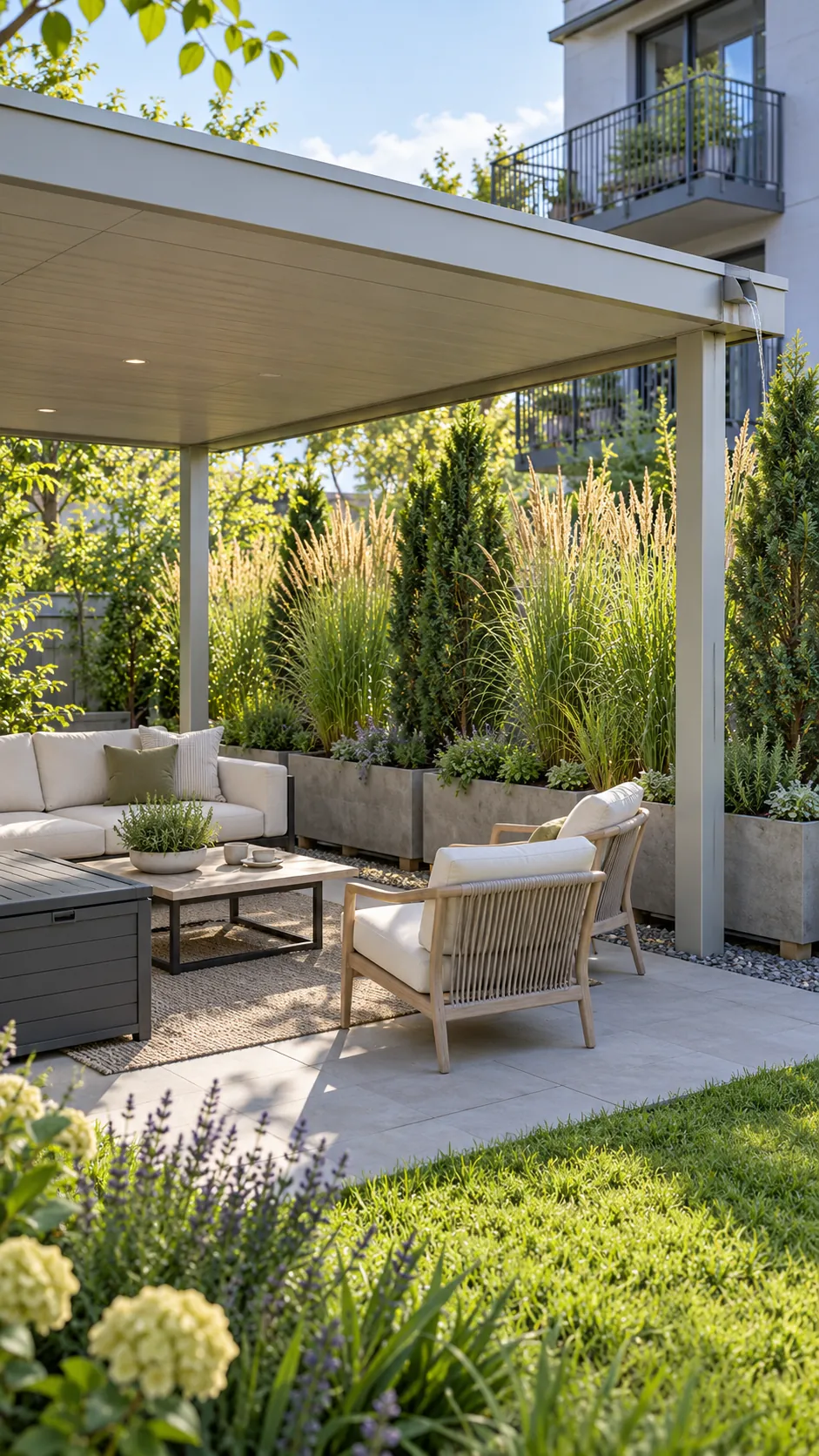
Flat Roof With Planted Privacy Edge
A thin flat roof can pair with a planted edge instead of a solid wall. Tall grasses and narrow evergreens filter views while allowing air to move between stems. Keep planters separate from posts, provide drainage, and select roots that fit the available soil volume.
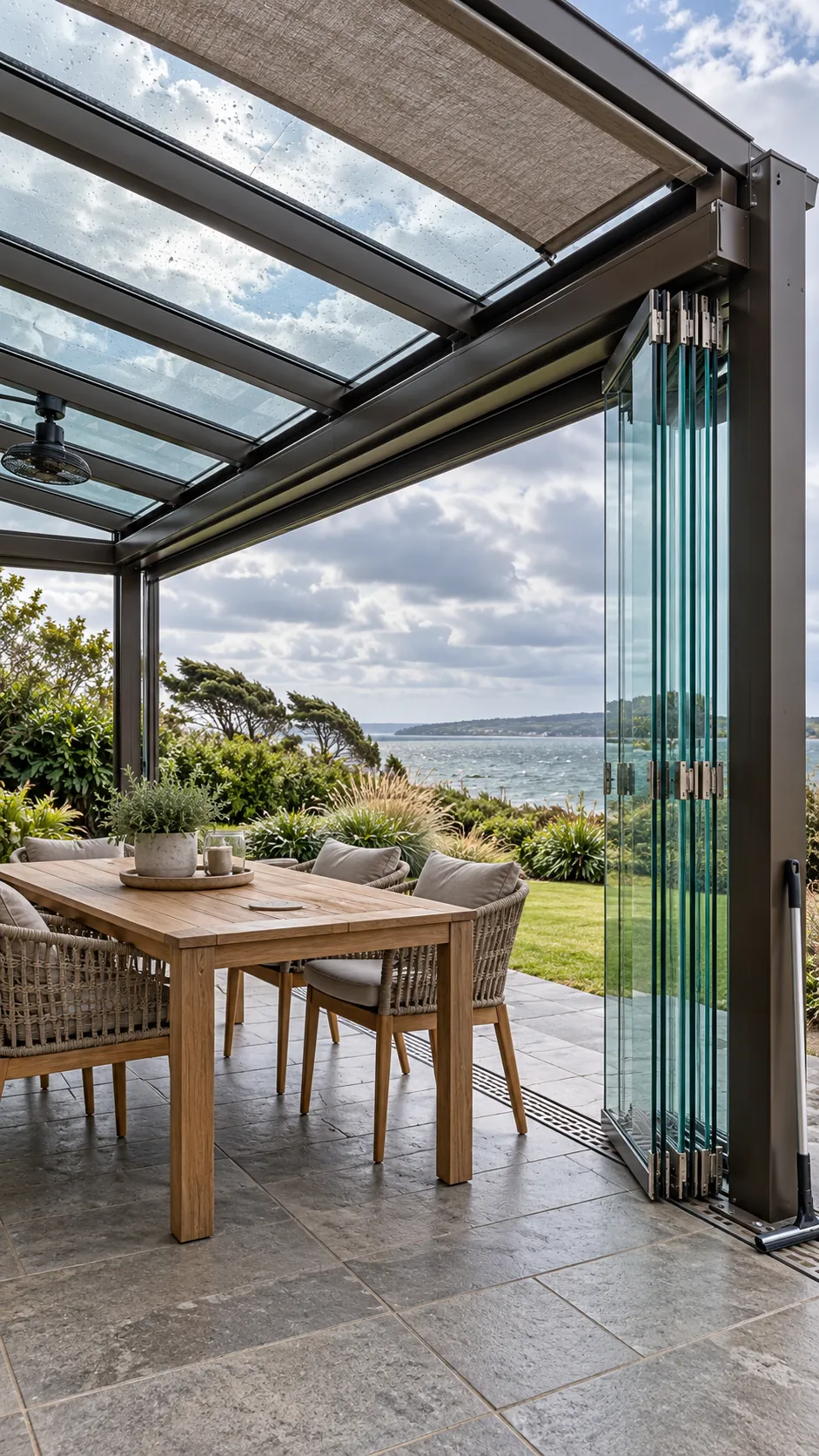
Glass Roof With Folding Doors
Folding glass doors can close one side during wind and stack away in mild weather. A transparent roof needs shade control and accessible cleaning to prevent heat and dirt from becoming larger problems. Treat the system as a ventilated outdoor enclosure, not an insulated room.
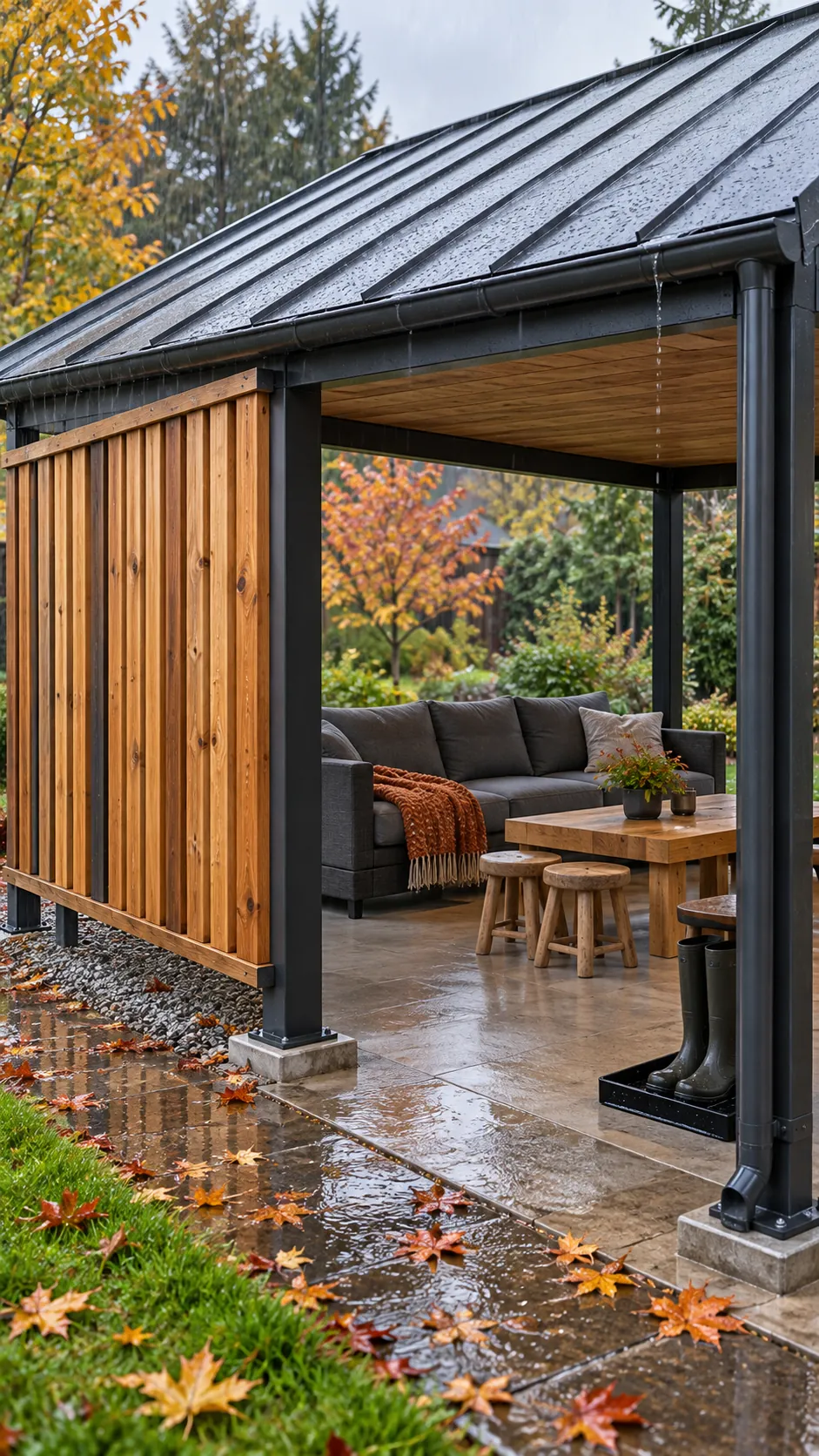
Standing Seam Roof With Cedar Sides
A standing seam roof gives dependable rain protection, while cedar side boards bring warmth to the seating zone. Use spaced vertical boards rather than a continuous box so damp air can escape. Protect end grain and keep the lowest boards clear of splash.
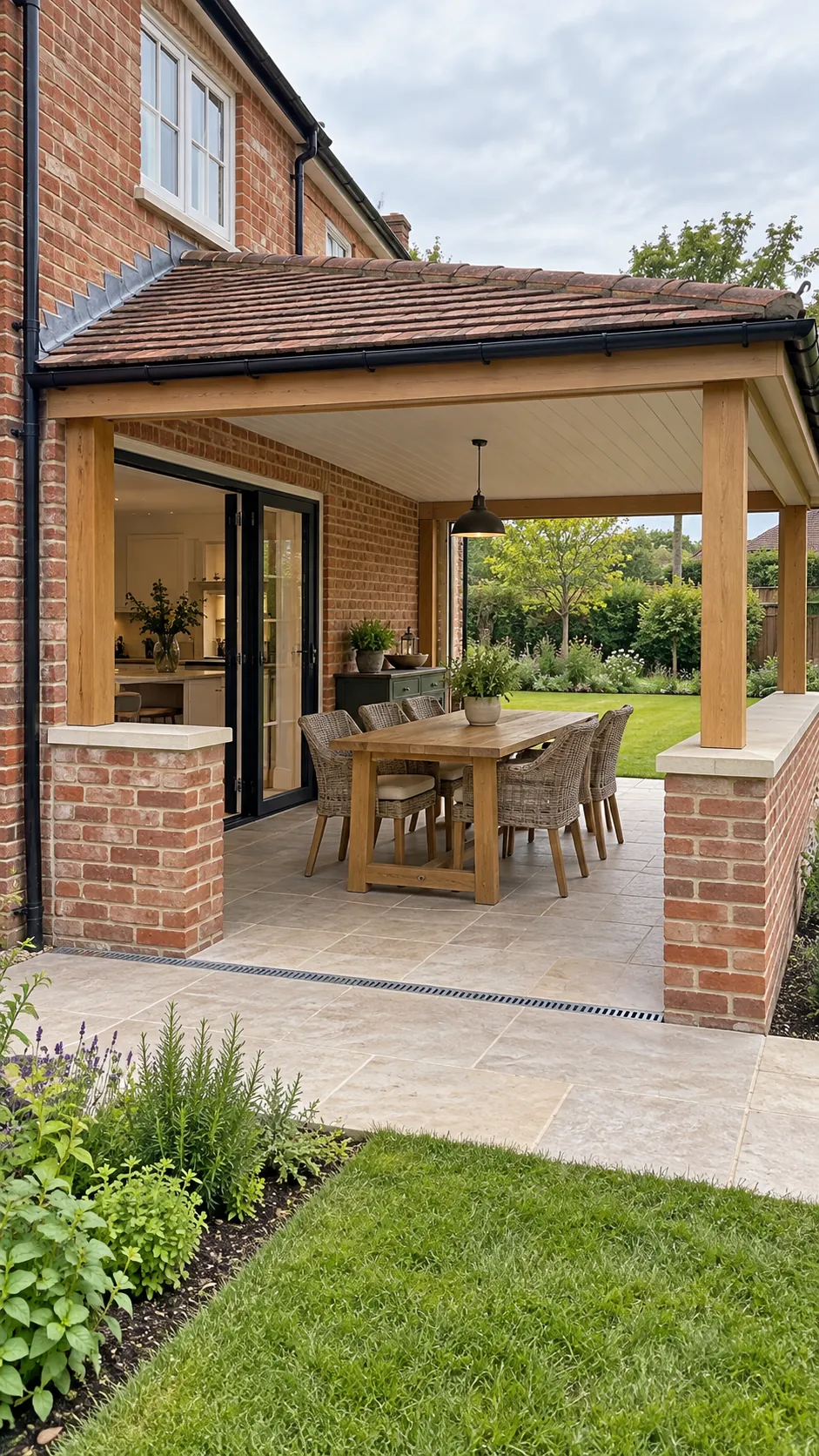
Roof Extension With Brick Half Walls
A roof extension and brick half walls can make a patio feel connected to an existing house. Match the brick carefully, but keep movement joints where new masonry meets old construction. Broad openings on two sides preserve light, views, and a direct garden route.
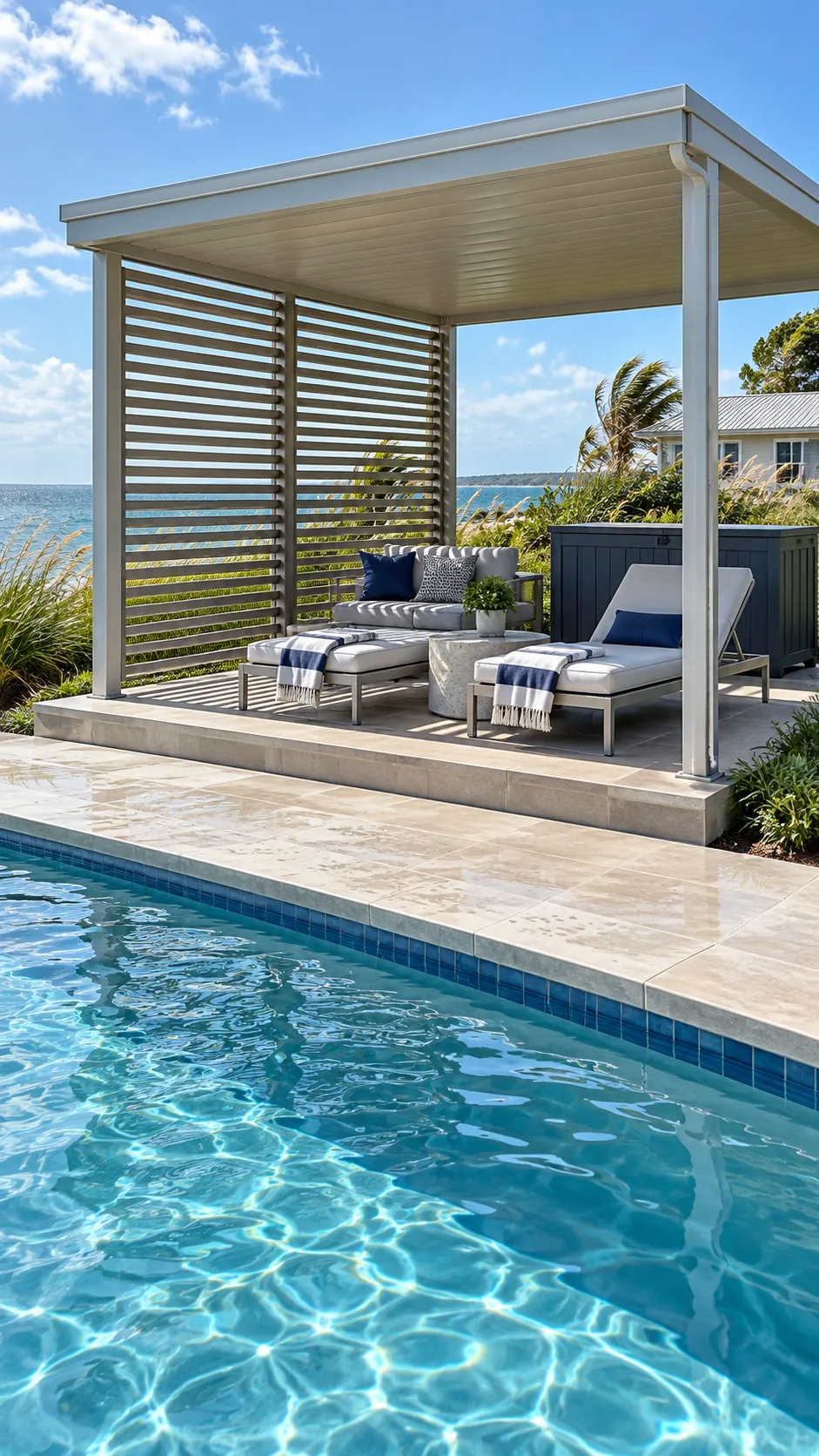
Pool Pergola With Slatted Wind Screens
Slatted screens can reduce wind across a poolside lounge without creating a sealed cabana. Set the structure beyond the wet circulation path and use corrosion resistant fasteners. Keep screen gaps wide enough to relieve pressure and maintain views toward the water.
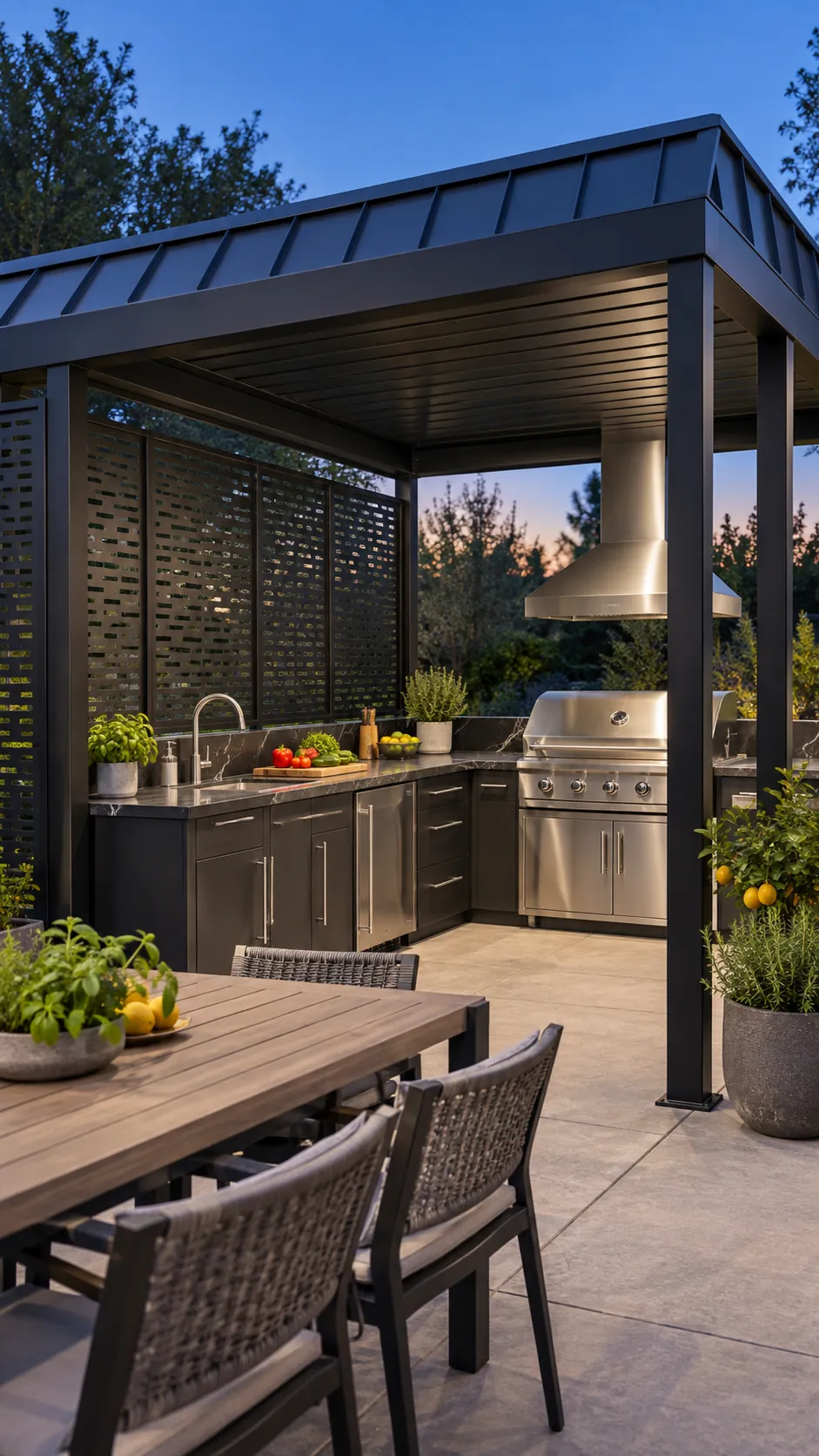
Outdoor Kitchen With Ventilated Sides
A roofed outdoor kitchen needs weather protection without trapping cooking heat or smoke. Keep the grill at an open edge, use noncombustible surfaces, and follow the appliance clearances. Side panels work best around preparation and storage zones rather than around the heat source.
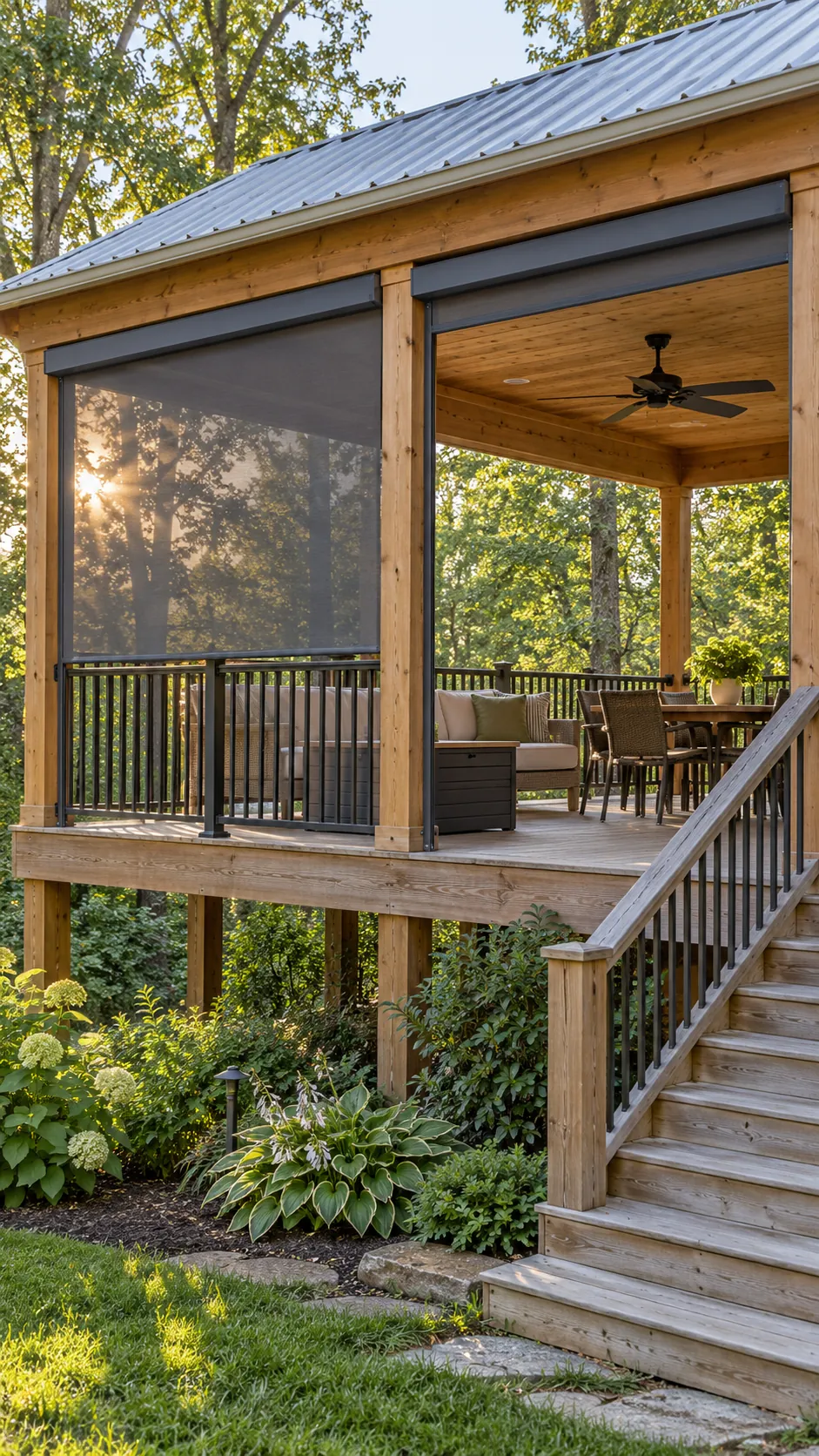
Deck Roof With Roll Down Shades
Roll down mesh shades can make a covered deck more comfortable when glare or insects are seasonal problems. Each shade needs secure guides and a protected cassette, especially on an elevated platform. Raise the panels when wind increases and keep railing safety unchanged.
Garden Roof With Corner Privacy Walls
Two short privacy walls can create a sheltered corner without enclosing a garden pergola. Place them against the prevailing weather and keep the opposite corners open for entry and ventilation. A bench fitted into the protected corner makes the walls useful while preserving the center.