Fabric can cool a pergola without the weight of a solid roof, but cloth only works when tension, drainage, wind, and removal are planned together. A loose panel may look soft at first and then collect water or pull hard on its anchors. These designs show different ways to gain shade while keeping the system stable and serviceable.
Retractable Track Canopy
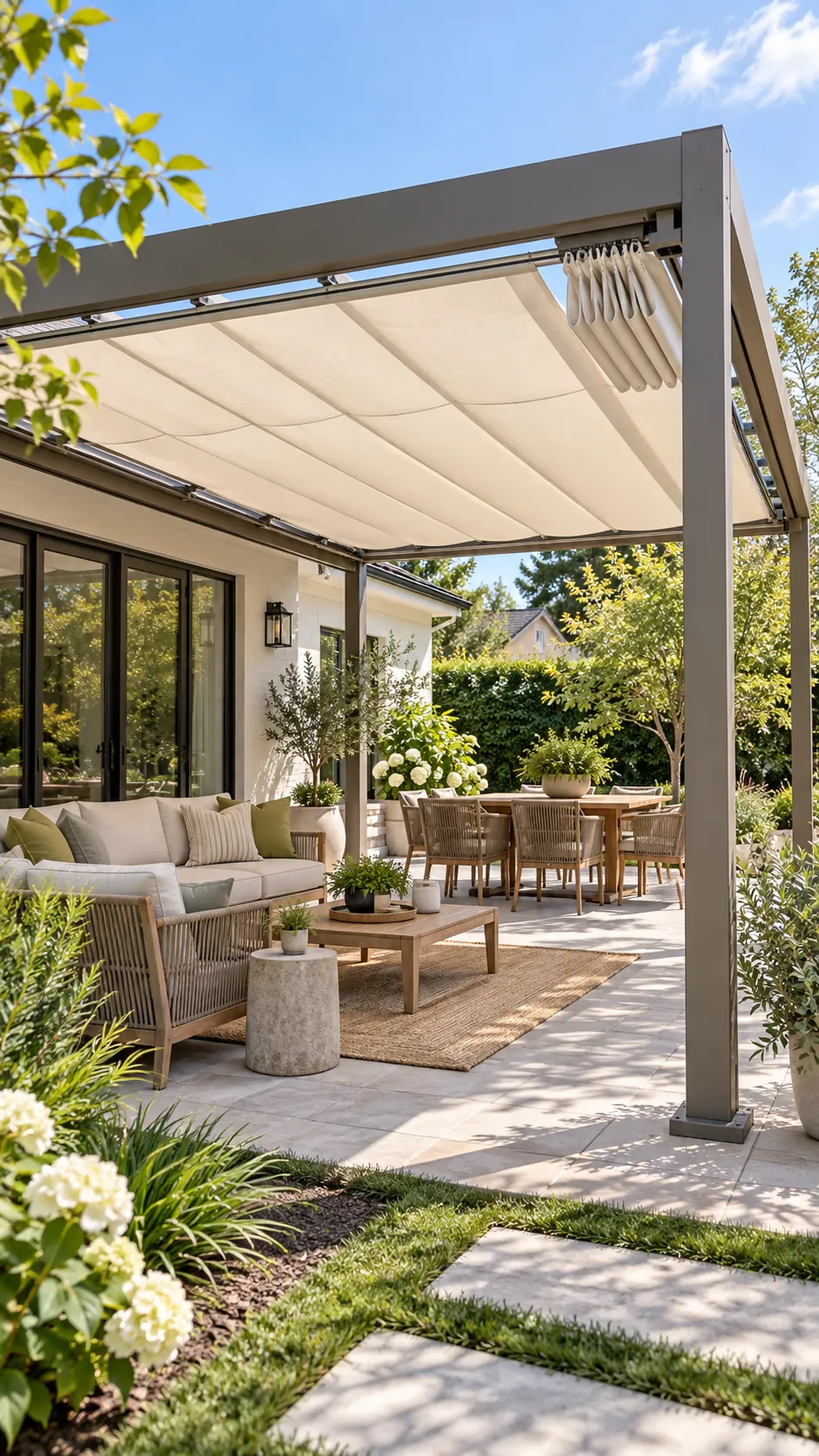
A retractable canopy moves along parallel tracks and gathers inside a protected cassette. Broad shallow folds look relaxed without hanging low enough to trap water. Keep the leading edge square, clean the tracks, and close the cloth before severe wind.
Tensioned Sail Above the Frame
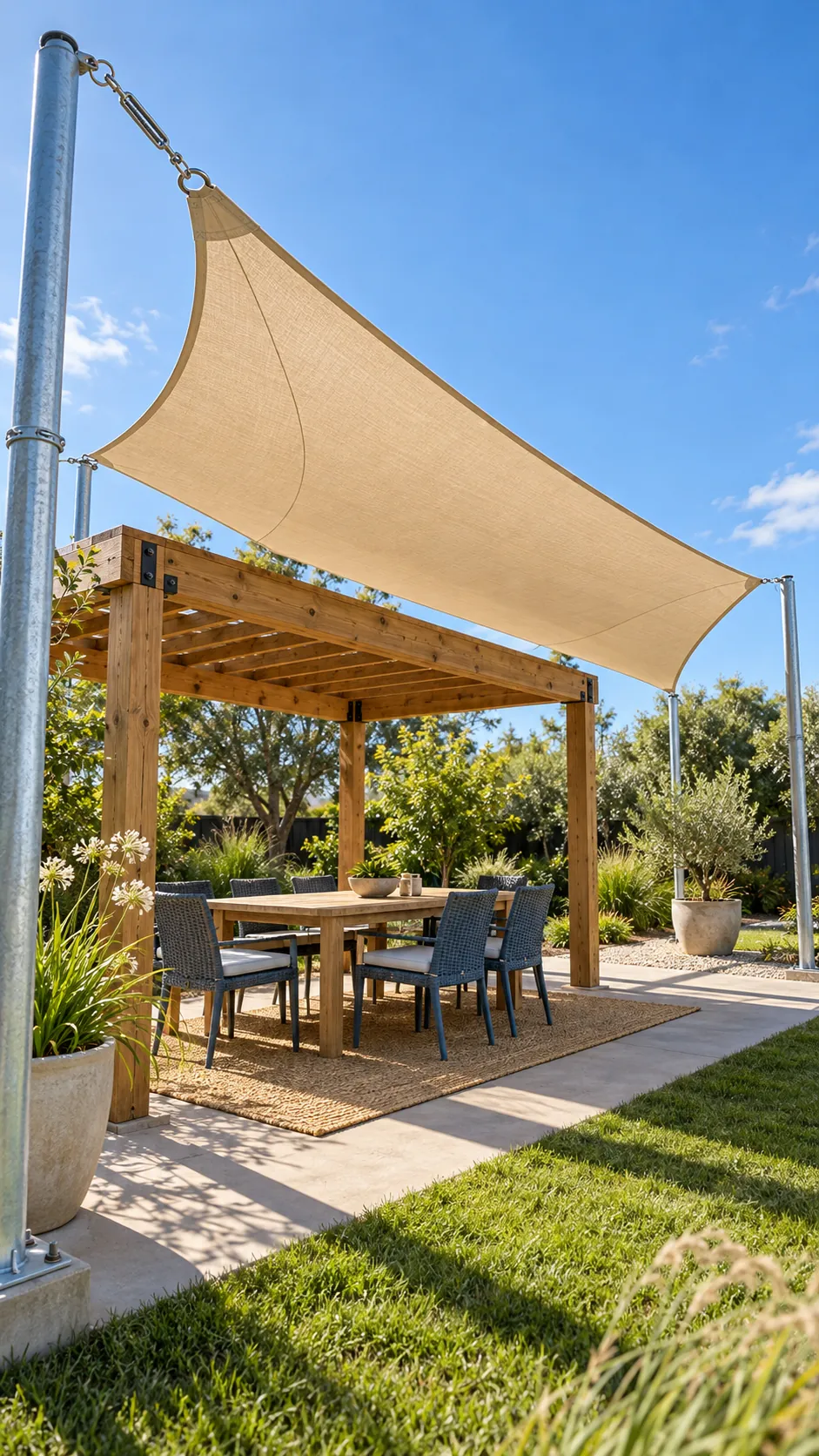
A shade sail mounted above the pergola can cover a wide area with fewer seams. Each corner must pull outward in the correct direction or the center will sag. Give one corner a clear fall when rain exposure is expected, and use anchors designed for the real wind load.
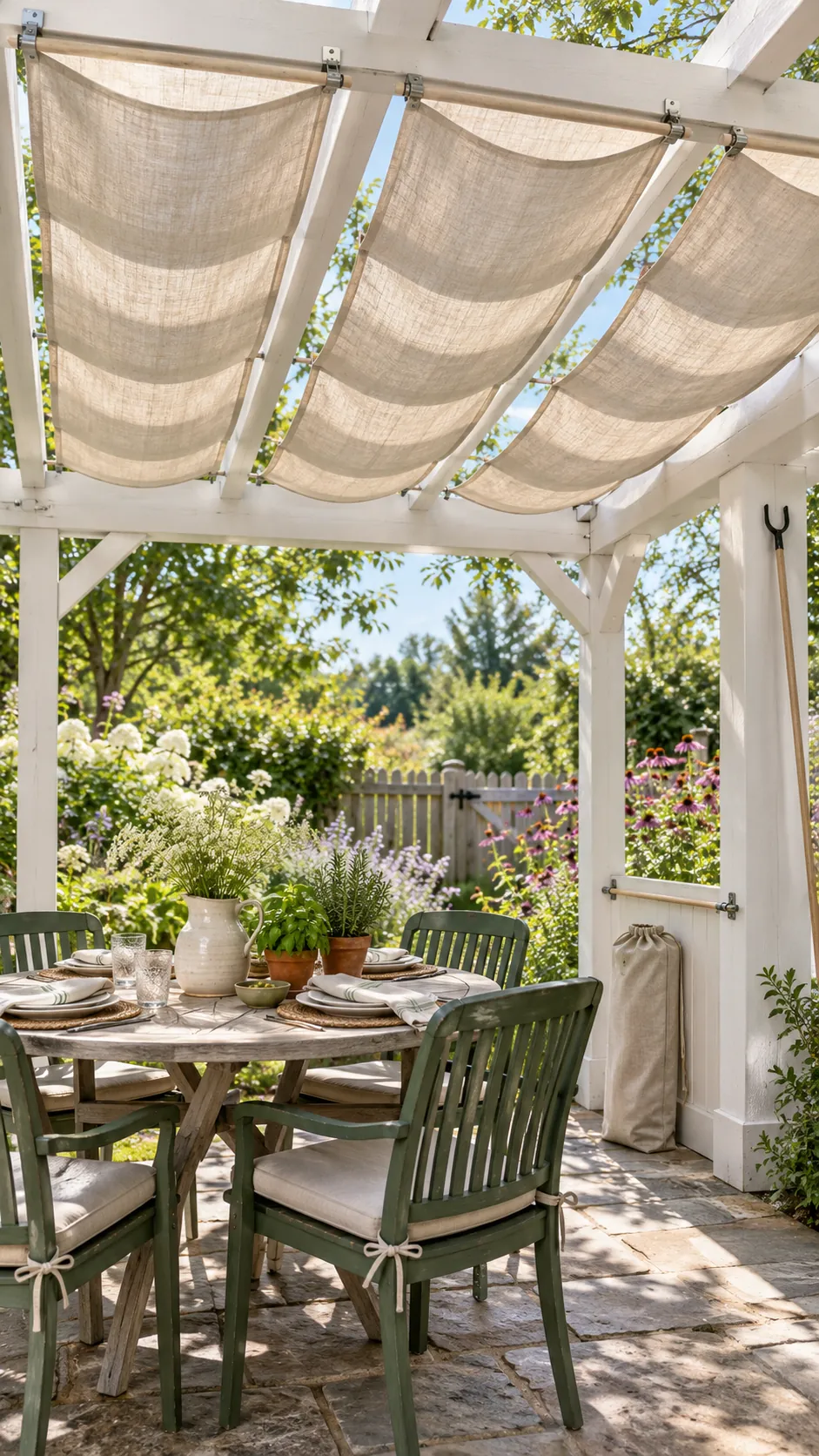
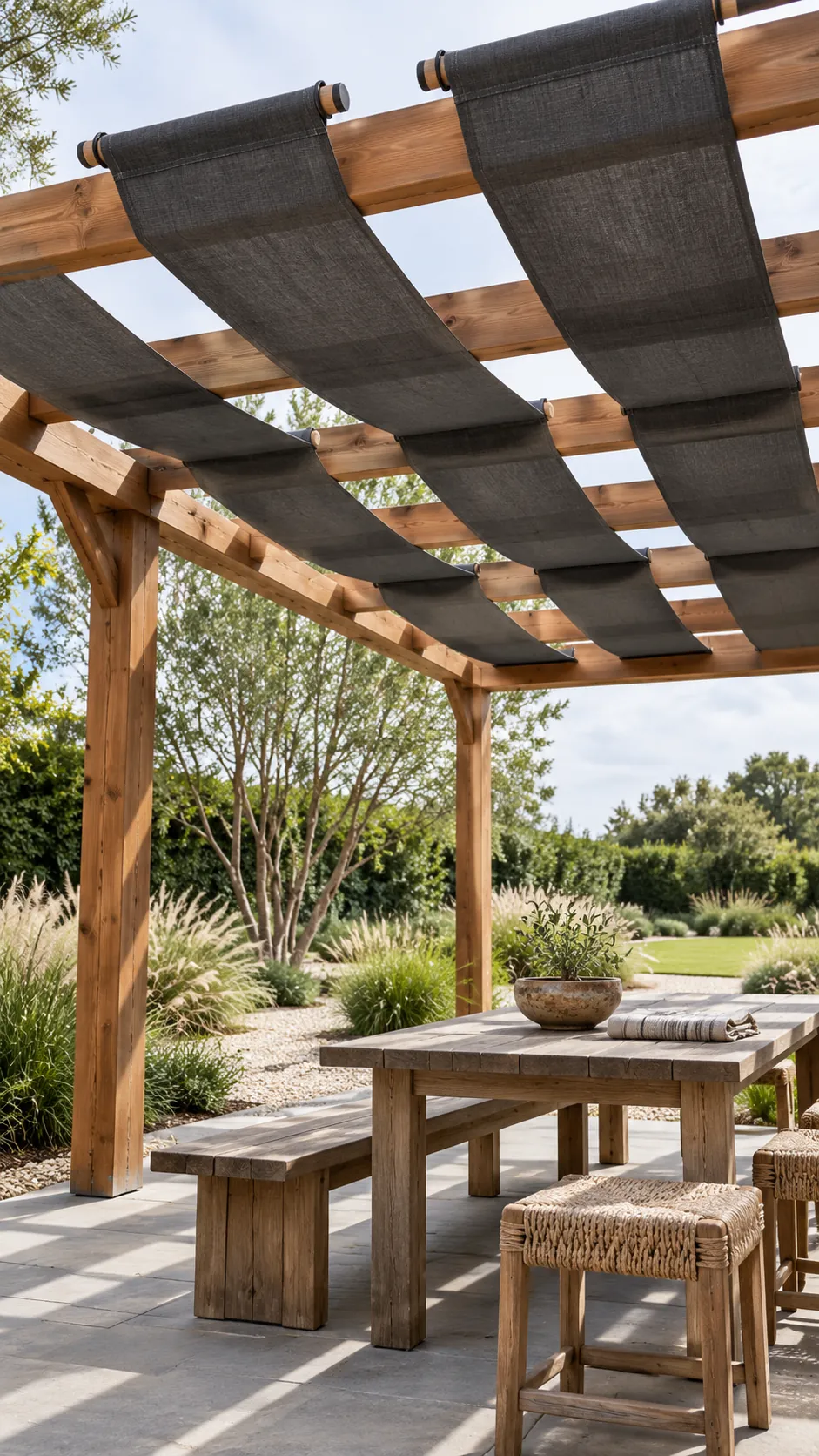
Roman Wave Panels
Roman style panels create repeated fabric waves between pergola beams. The curves should stay broad and consistent rather than droop deeply over the table. Choose removable rods or clips so each panel can be washed, dried, and stored at the end of the season.
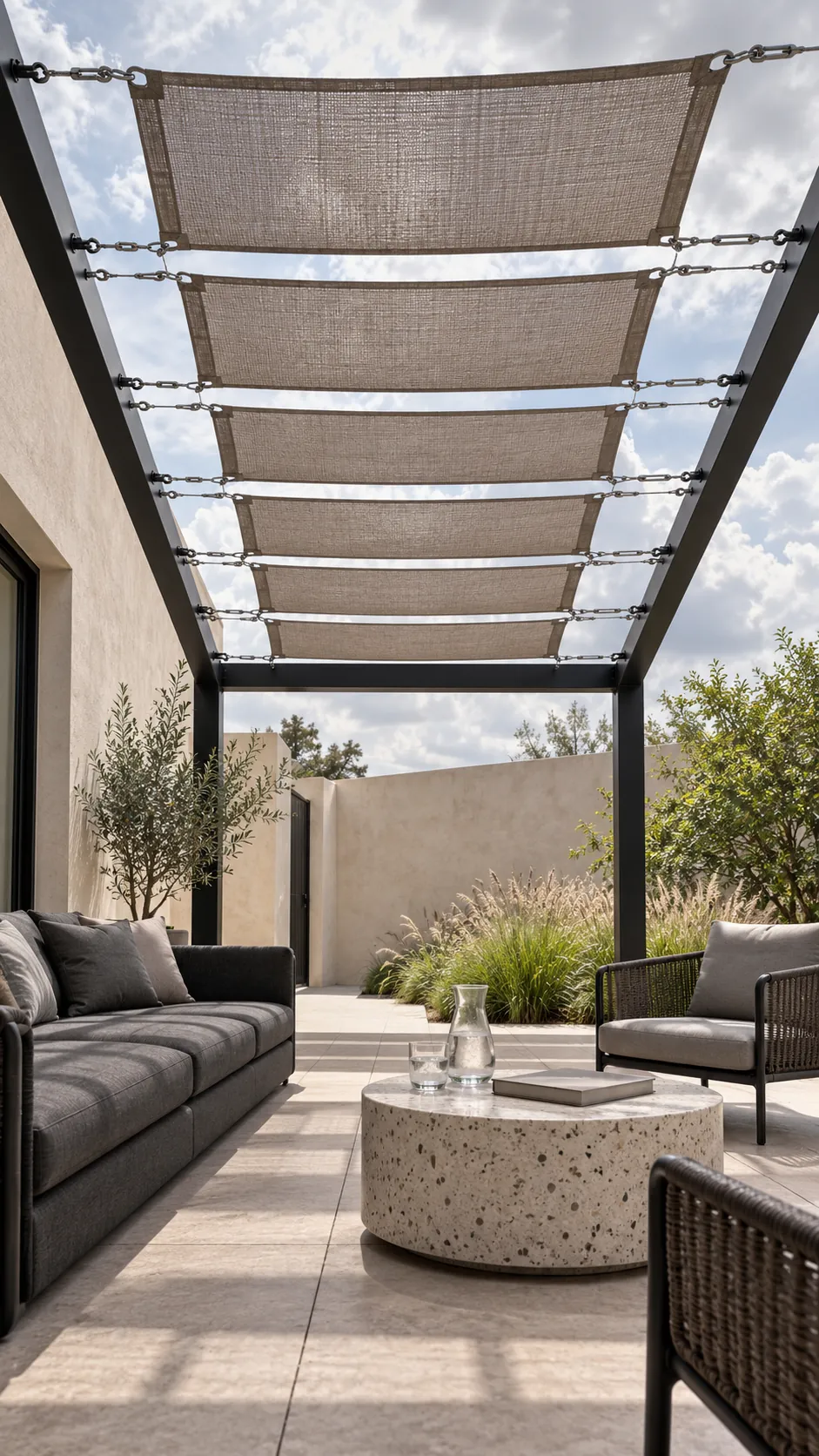
Cable Supported Flat Cloth
Flat fabric sections supported by stainless cables give a pergola a clean contemporary ceiling. Short spans reduce flutter and make it easier to replace one damaged section. Use reinforced hems and enough slope or permeability to prevent rain from sitting on the cloth.
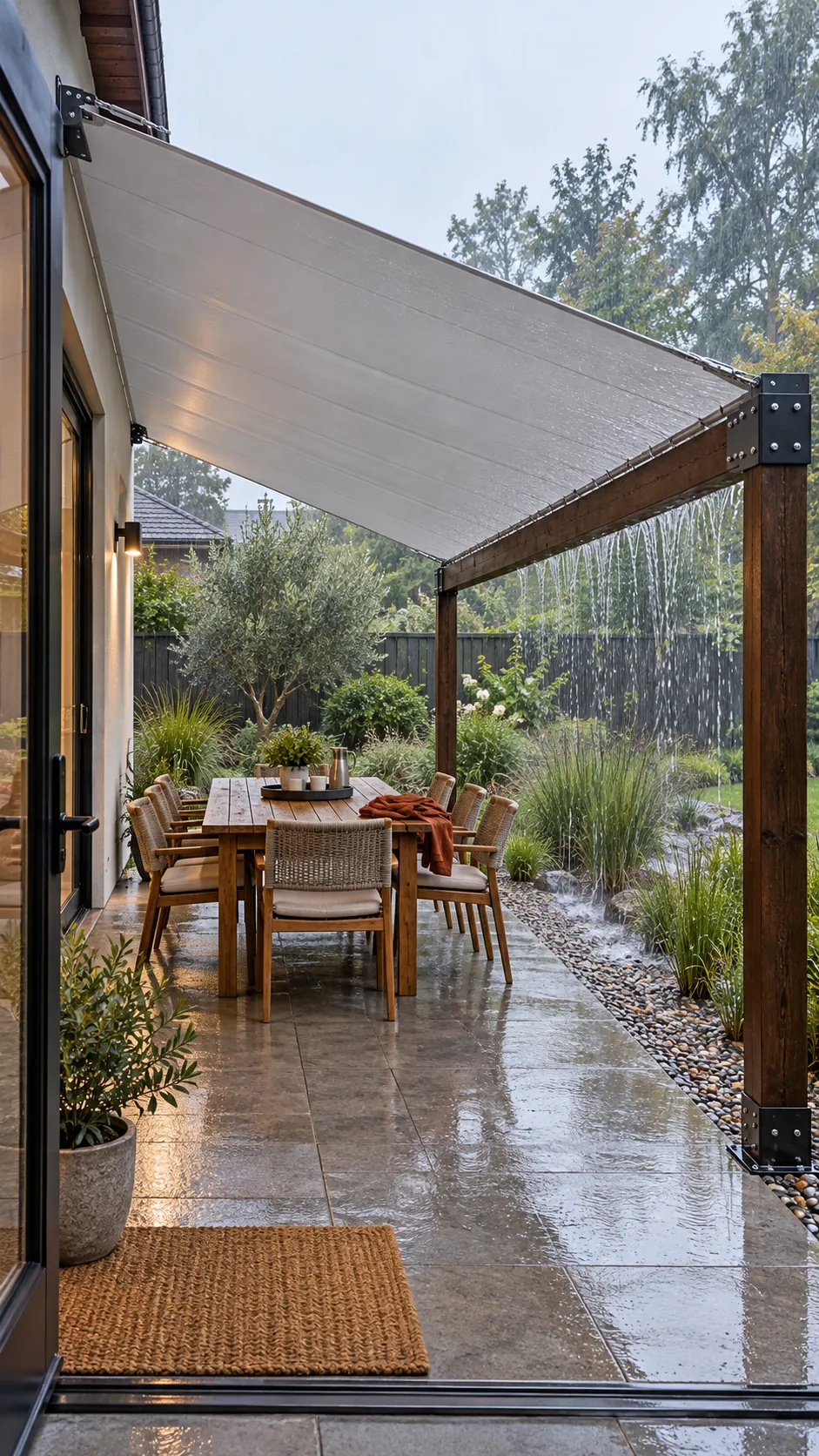
Sloped Waterproof Canopy
A waterproof canopy needs a clear pitch and a low edge that sends rain to a planned collection point. Tension must remain even across the full sheet so small pockets cannot form. Keep the lowest edge away from doors and walking routes where runoff would cause a problem.
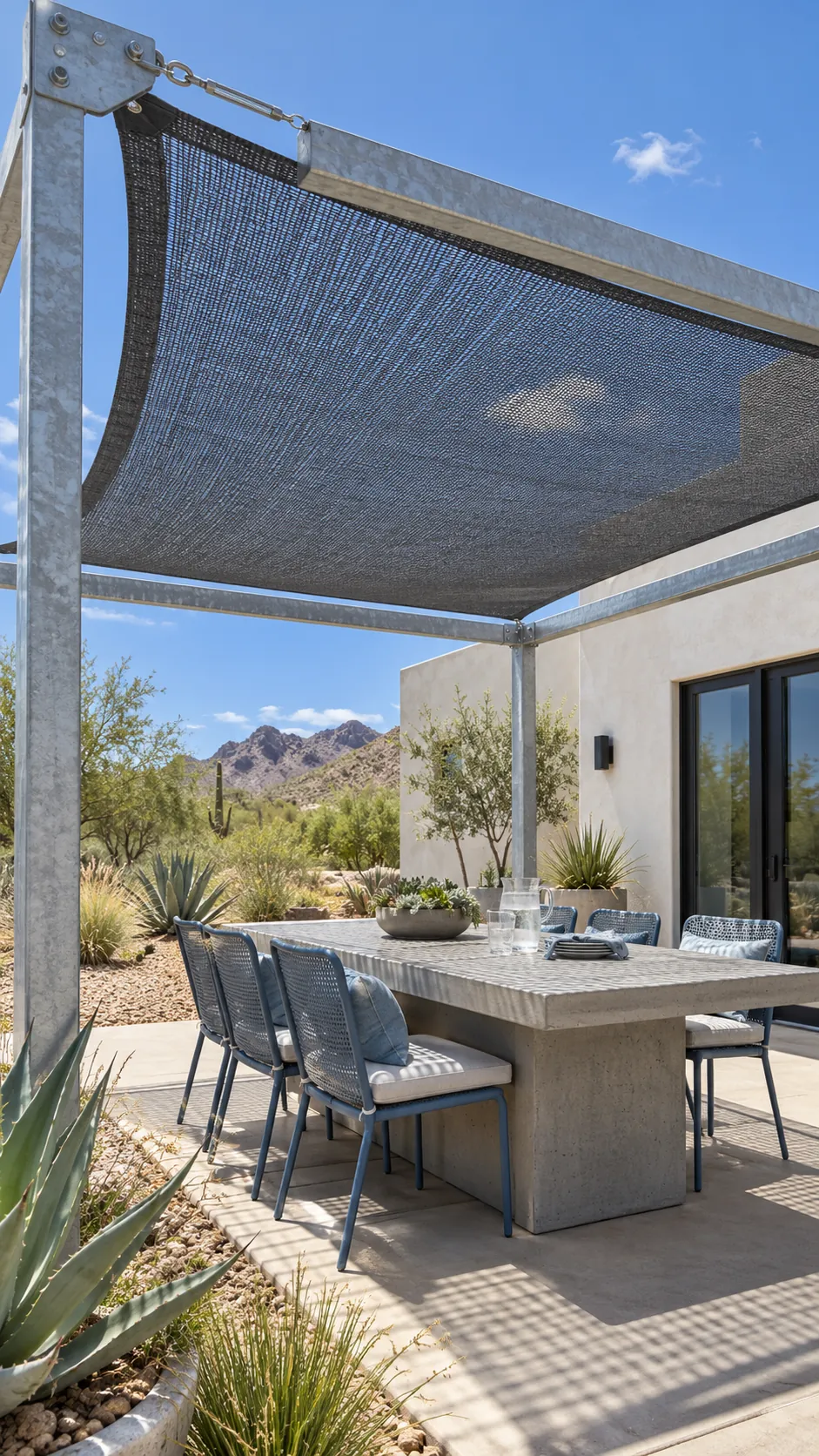
Breathable Mesh Shade
Open mesh fabric cuts glare while allowing heat and some rain to pass through. It suits hot dry climates where ventilation matters more than staying completely dry. Keep furniture rated for outdoor use and expect patterned light beneath the weave.
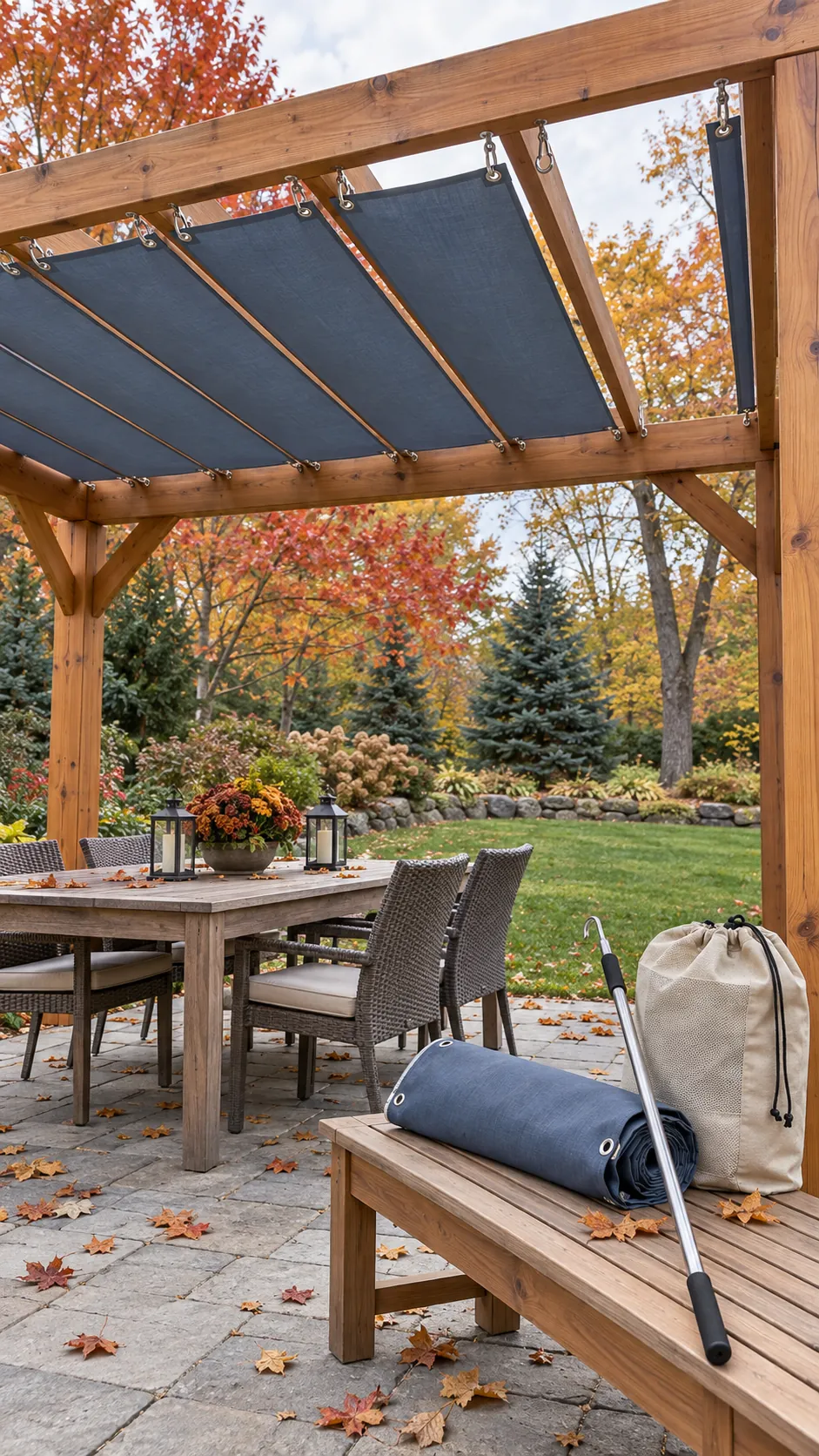
Removable Winter Panels
Individual clipped panels make seasonal removal easier in snowy or windy regions. Label the storage positions outside the visible fabric and dry every panel fully before folding. Simple reachable hardware often provides more value than a complex system that owners avoid using.
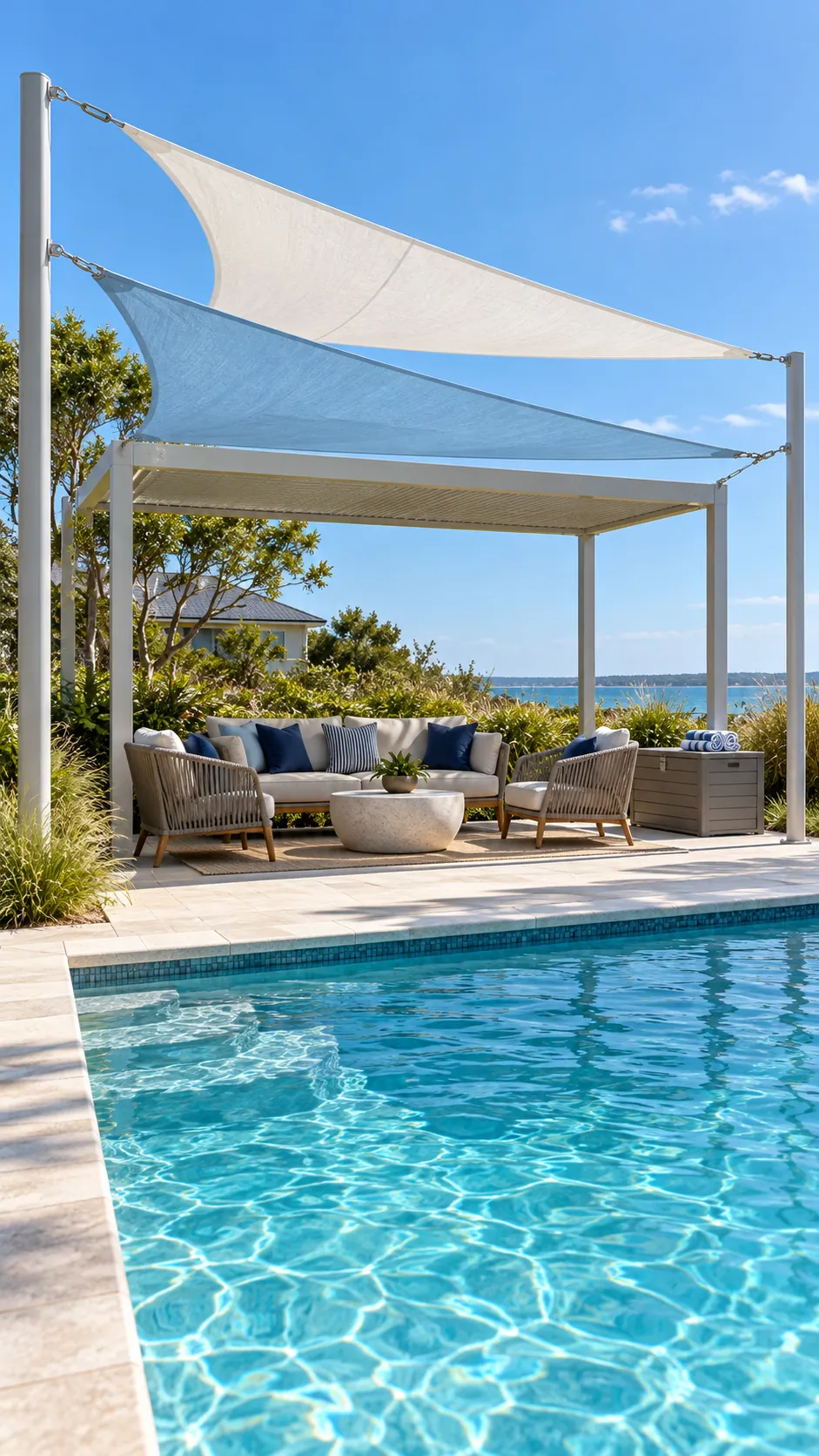
Poolside Offset Sails
Two offset sails can shade poolside seating without covering the wet circulation edge. Different heights create drainage and keep the composition from becoming a flat sheet. Use corrosion resistant fittings and leave enough space between sails to reduce wind pressure.
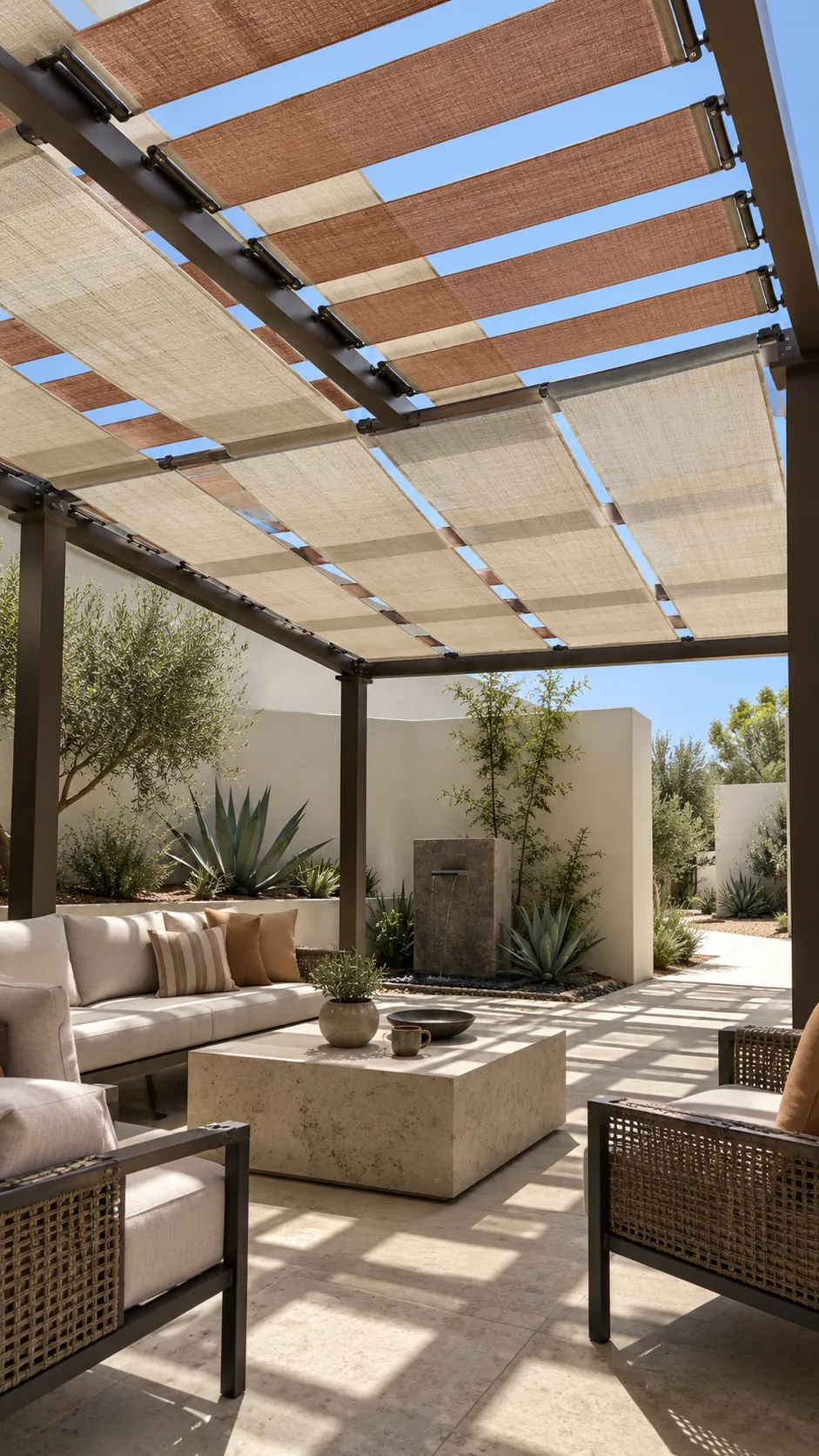
Dual Layer Filtered Shade
Two narrow fabric layers at different heights can soften intense sun while leaving air between them. Offset the strips so gaps in one layer fall beneath cloth in the other. Keep the layers far enough apart that wind does not make them rub or tangle.
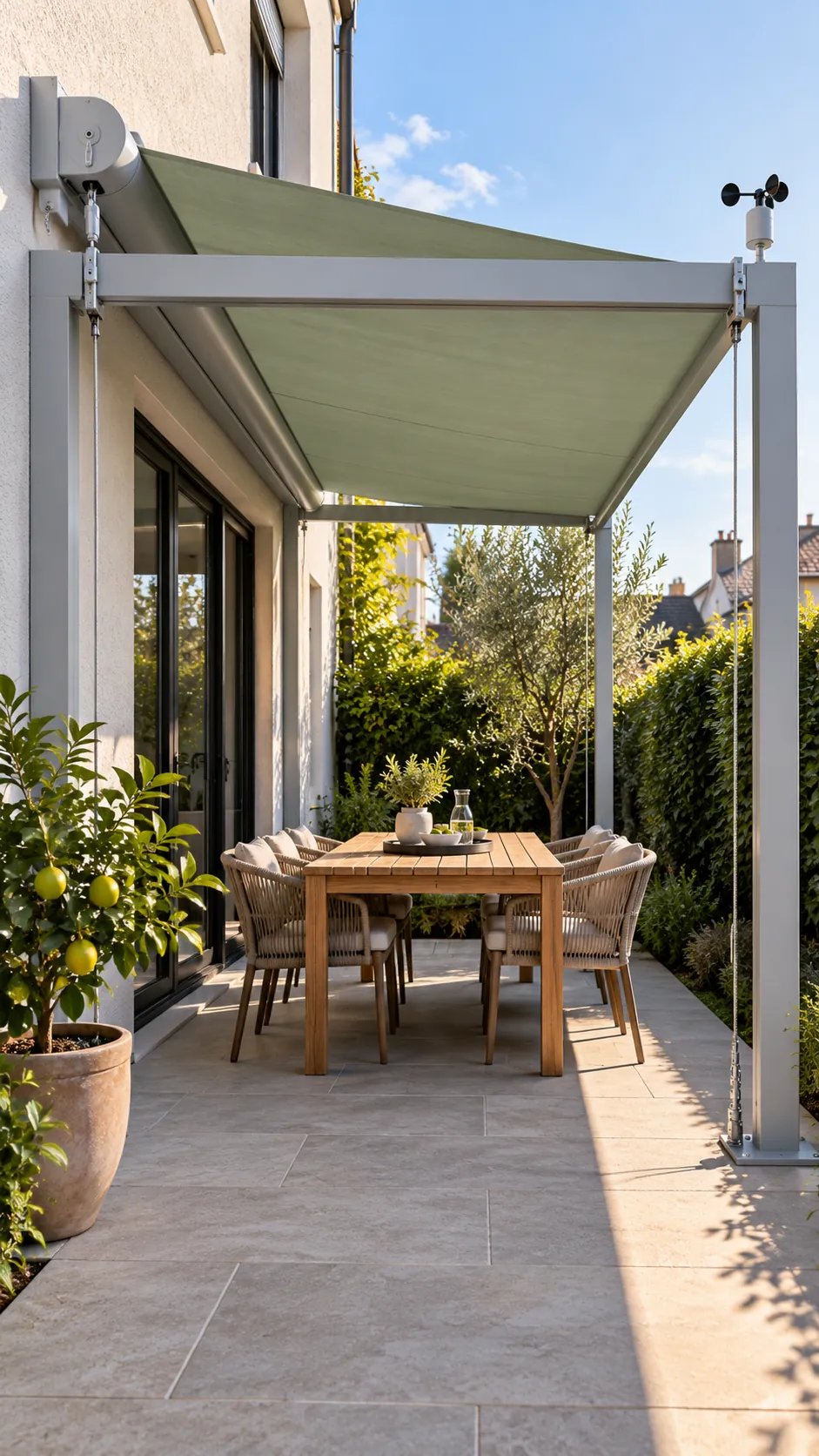
Edge Roller Canopy
A roller canopy extends from one side beam and locks into a tensioned leading bar. It creates a flat ceiling when open and disappears into a compact cassette when closed. The frame must resist the pull, and the cloth should retract whenever weather exceeds its rating.
Alternating Fabric Strips
Narrow fabric strips woven over and under pergola beams make a graphic shade pattern. Use a limited number of wide bands so the result stays calm and can be removed for cleaning. Reinforce every end and avoid knots that hold water against the wood.
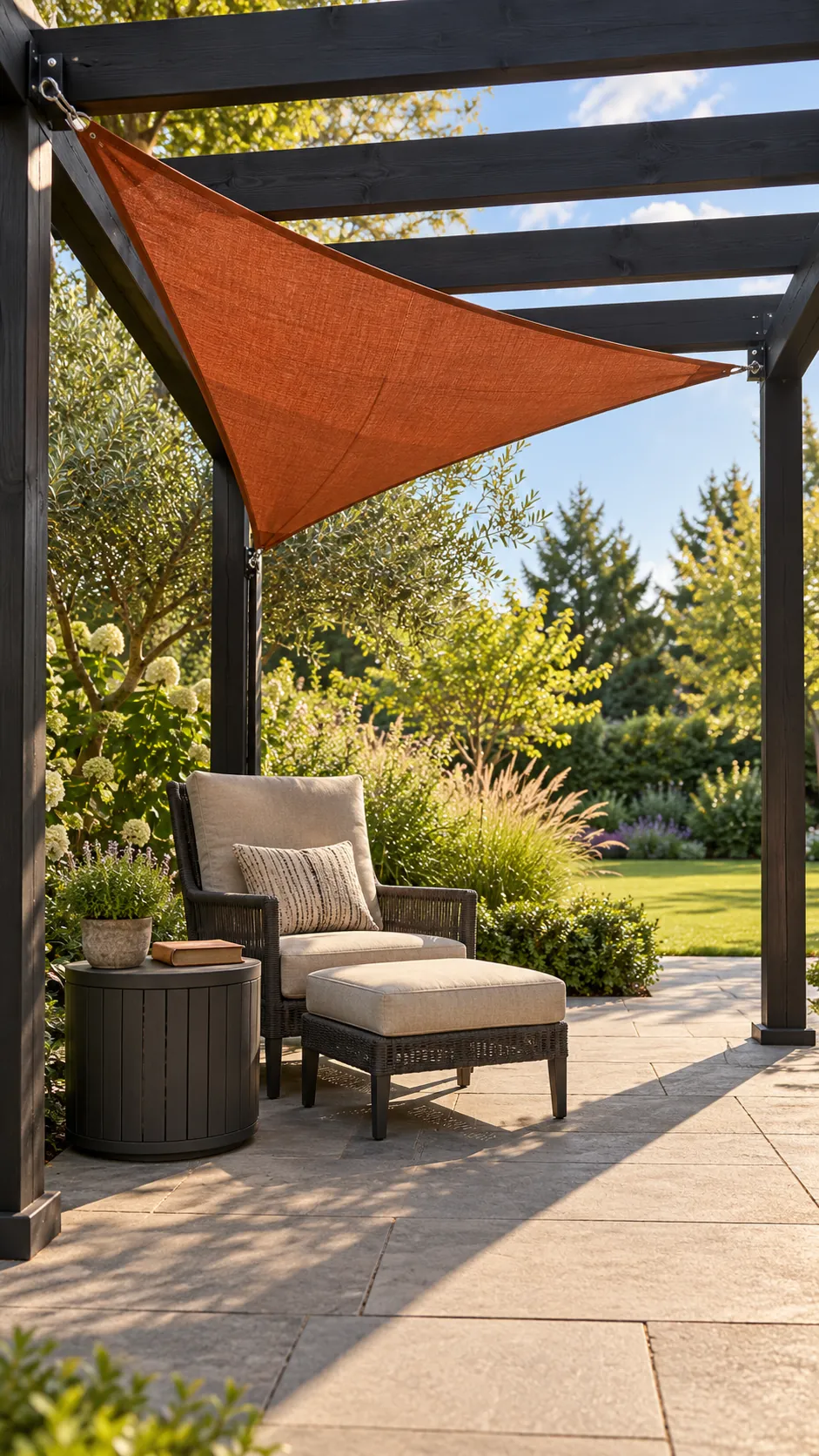
Triangular Corner Sail
A small triangular sail can shade one reading corner without covering the whole pergola. Three distinct anchor directions create better tension than three points placed on nearly the same line. Position the low corner away from heads and furniture.
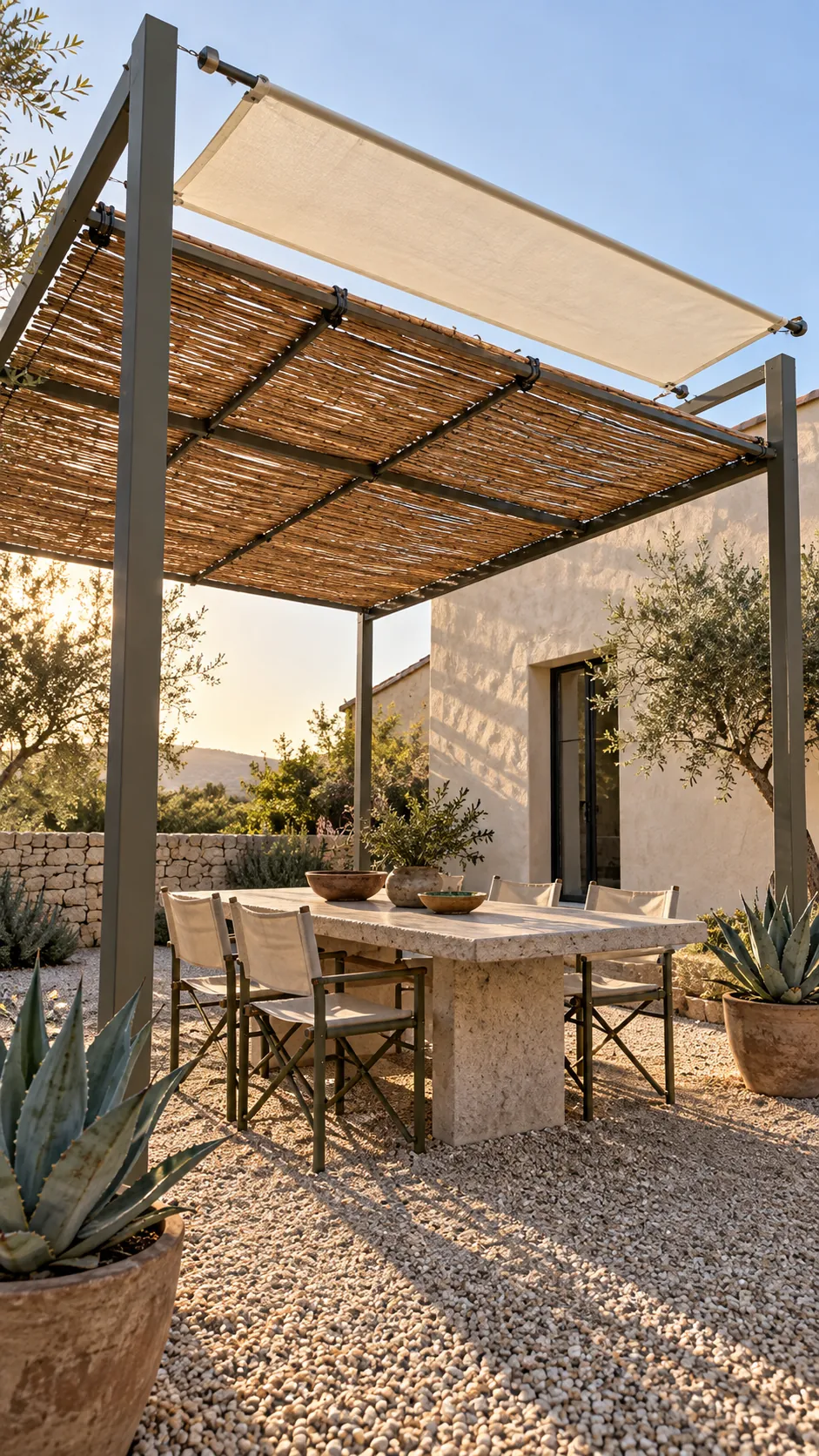
Reed and Fabric Combination
Fixed reed panels can provide base shade while a removable fabric strip covers the brightest seasonal angle. The two materials need separate supports so fabric tension does not disturb the reed. Leave open gaps for airflow and plan how both layers will be cleaned.
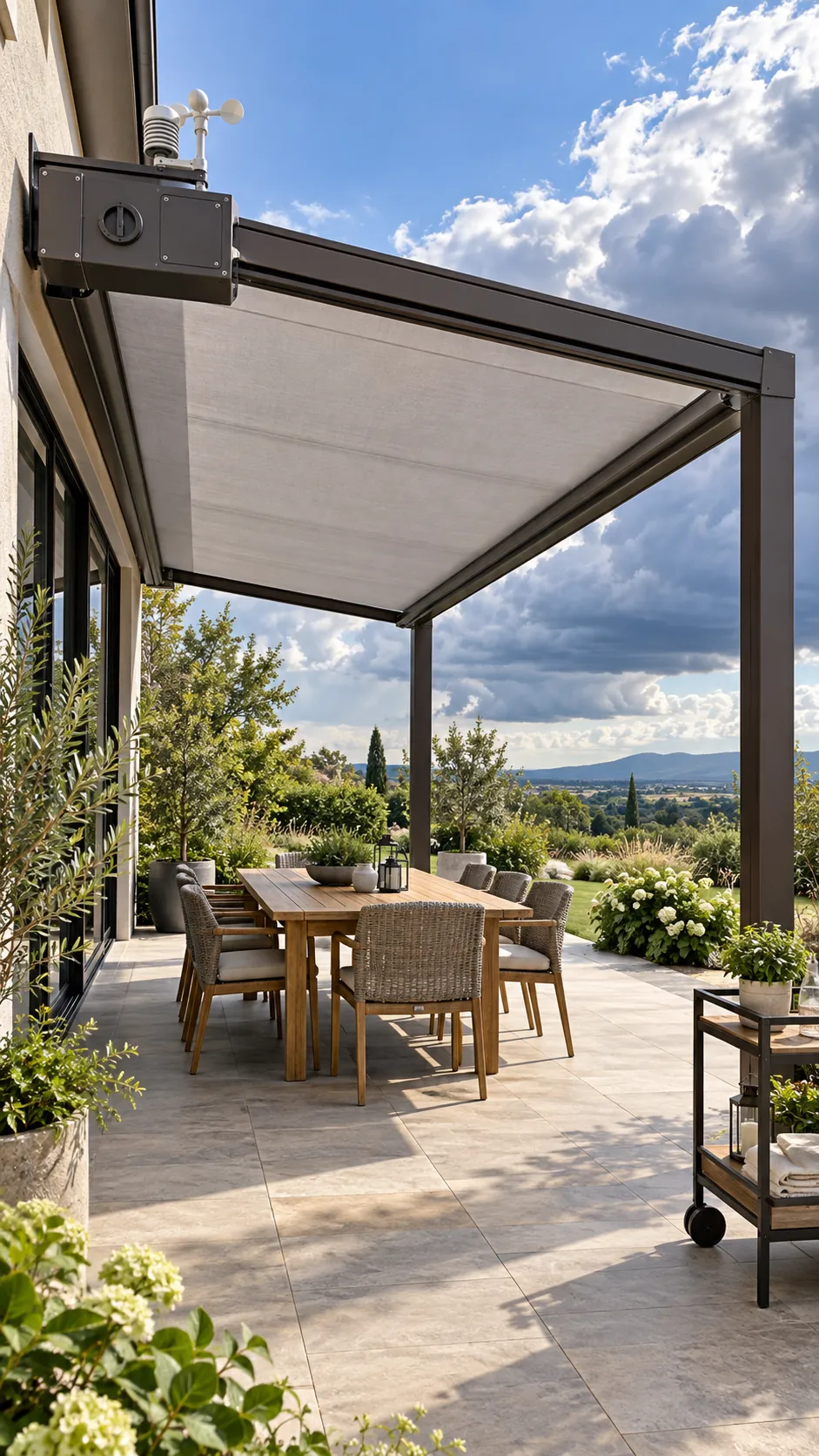
Motorized Cassette Shade
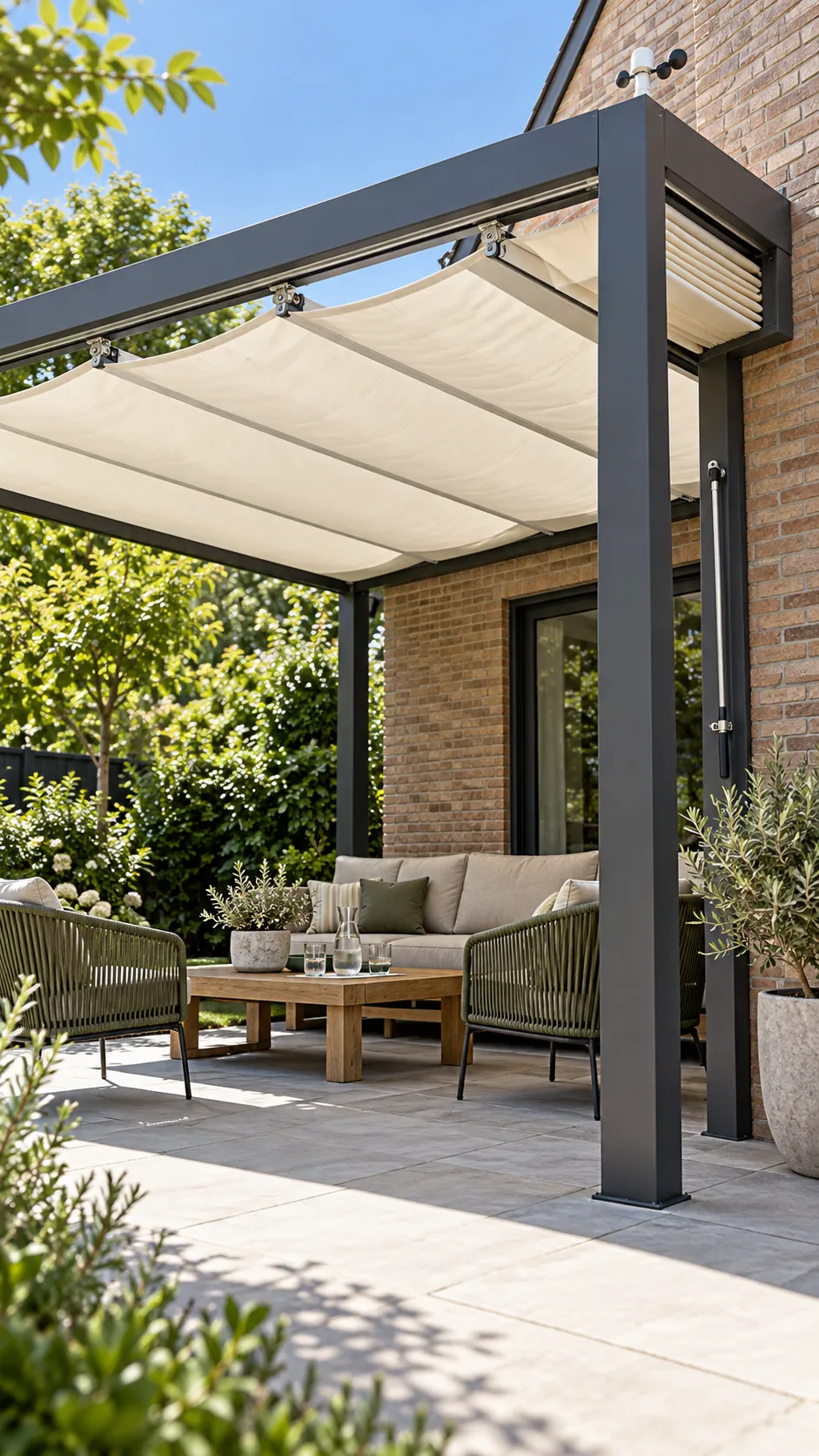
A motorized cassette makes a large canopy easier to retract before changing weather. Add a manual override and place the motor where it can be serviced without dismantling the pergola. Automation helps only when the fabric still has the correct tension and drainage.
Clip On Small Patio Panels
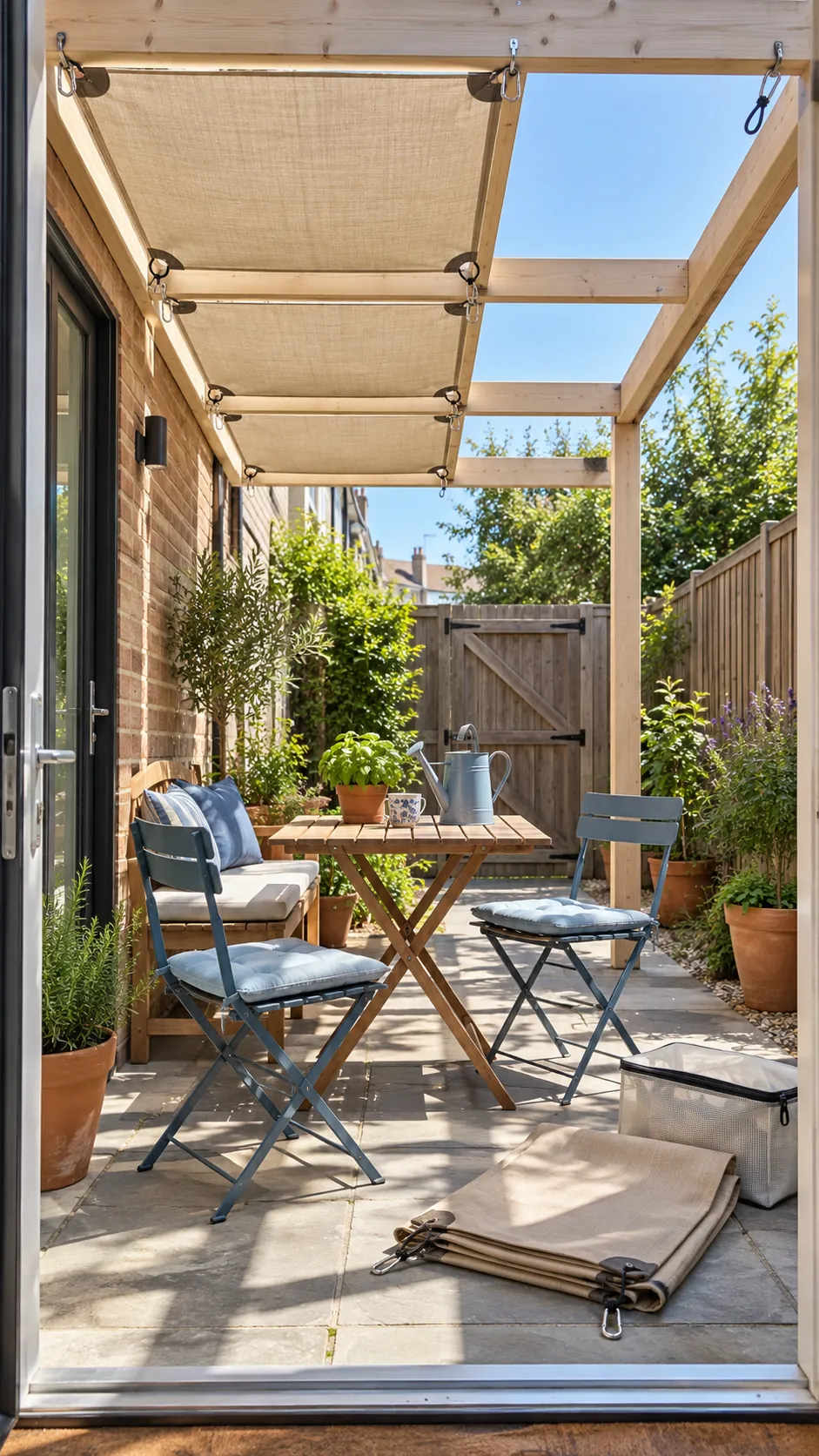
Small clip on panels can cool a compact pergola without permanent tracks or motors. Keep each section light enough for one adult to handle safely from the ground. Reinforced corners, consistent spacing, and a dry storage bag make the simple approach last longer.