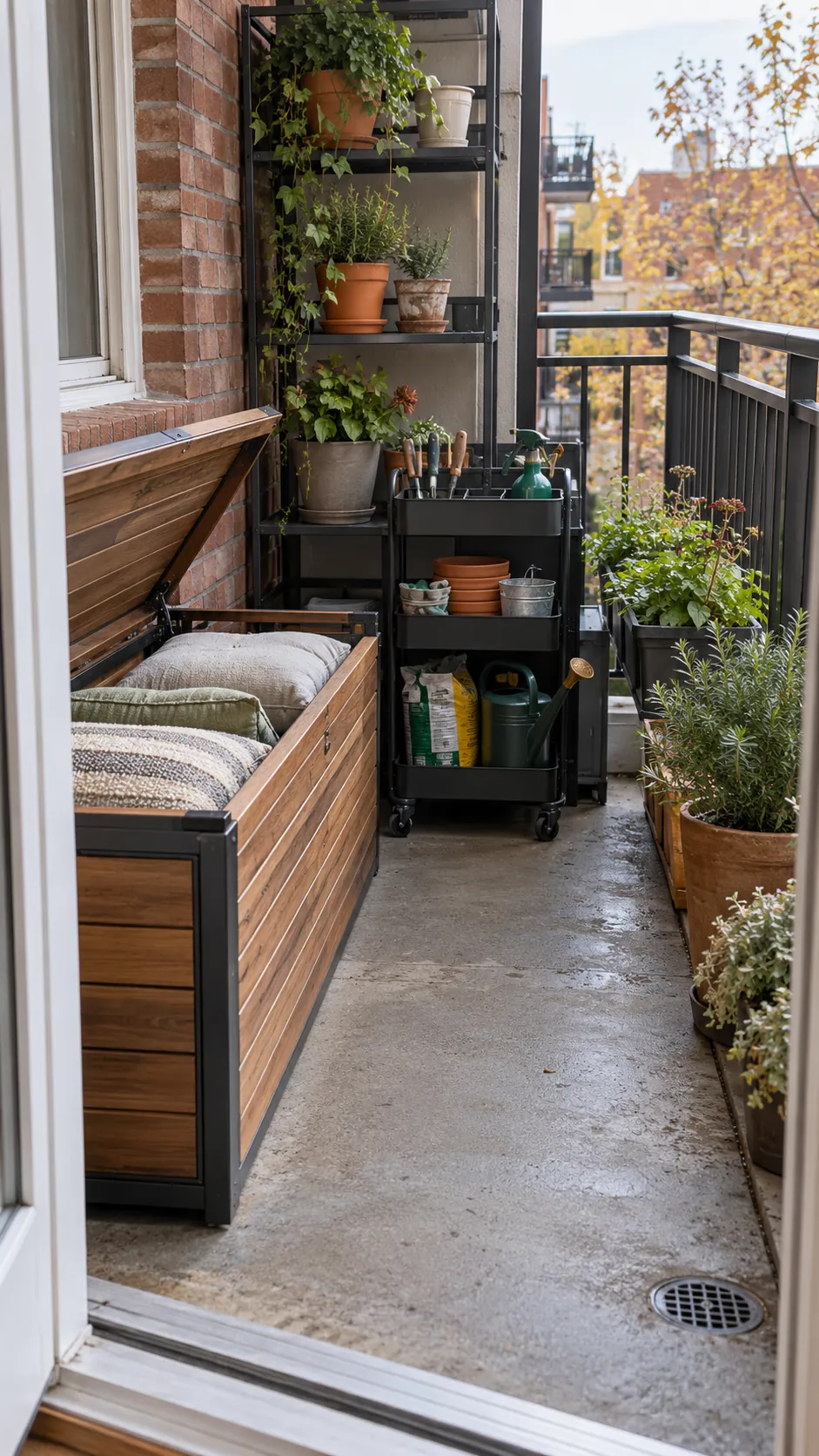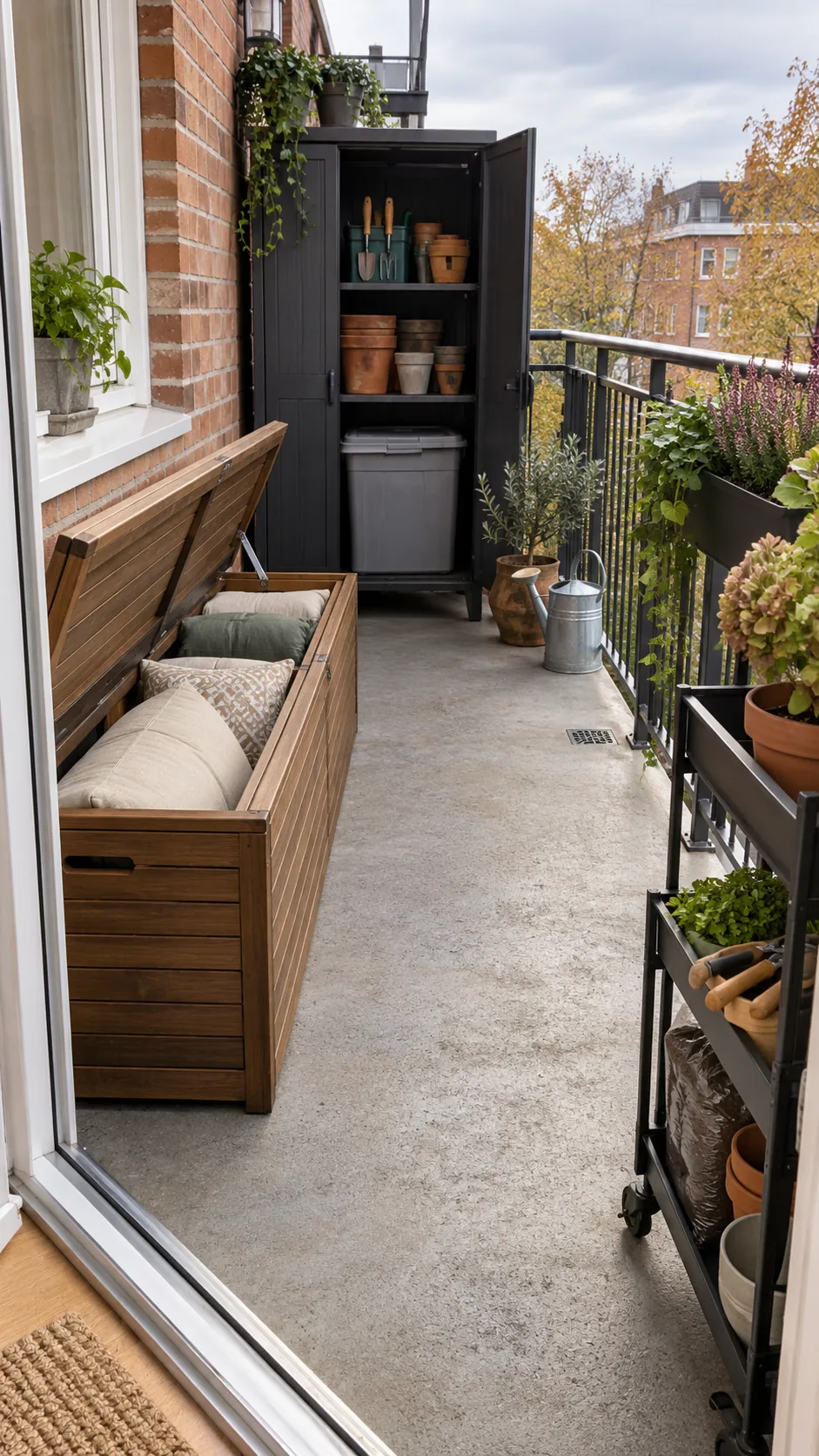
A small balcony needs storage that respects weather, drainage, wind, and the path back through the apartment. The best system gives dry cushions, spare pots, soil, and hand tools distinct homes without narrowing the only walkway. Start with the building rules and severe-weather plan, then use these 26 ideas to fit storage around the way you garden.
1. Measure the Door and Drainage Path
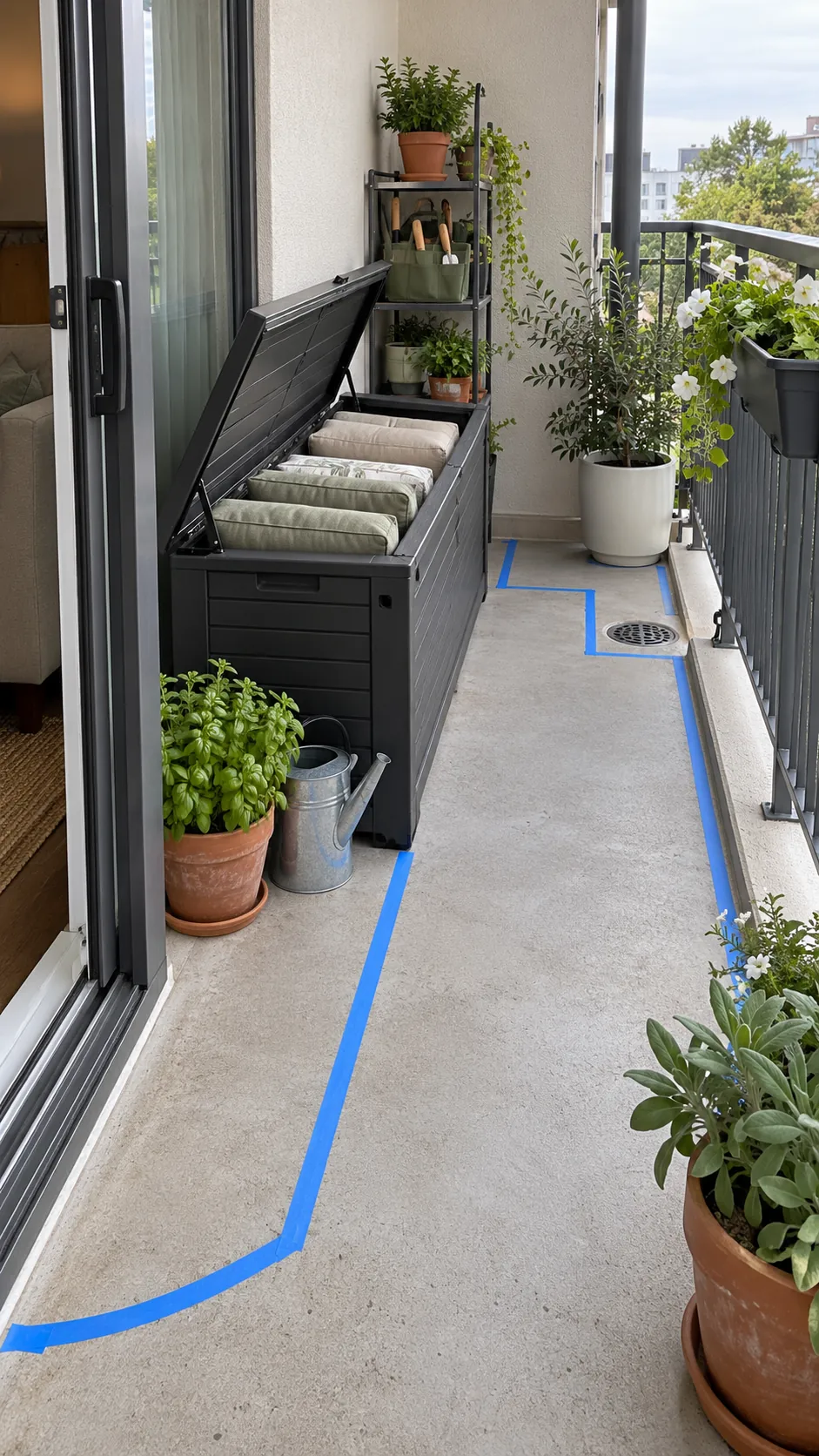
Mark the full door swing and keep a clear route to the balcony drain before adding storage. Use painter’s tape to reserve the walking strip and the space needed to lift the drain cover. This boundary prevents a narrow balcony organization project from blocking everyday access or storm-water flow.
2. Choose a Weather-Ready Storage Bench
Use a compact outdoor storage bench to combine seating with a protected cushion compartment. Check the lid arc, interior ventilation, and water-shedding design before buying. Leave enough room to open it without moving every pot.
3. Bag Cushions Inside the Bench
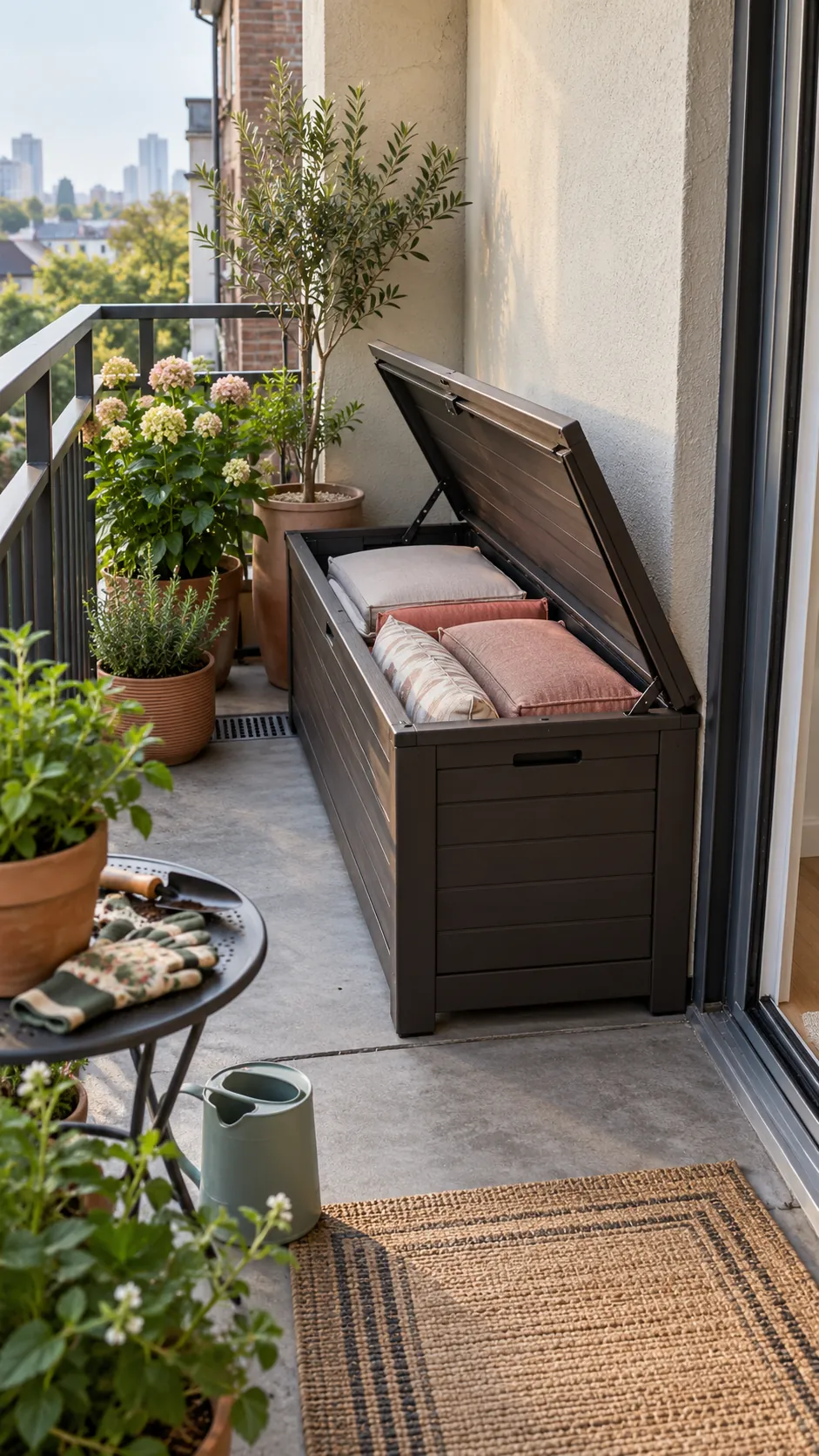
Place dry balcony cushions in a breathable storage bag before they go into the bench. The inner bag keeps fabric together and makes the whole set easier to lift indoors during severe weather. Never seal damp cushions where mildew can develop unseen.
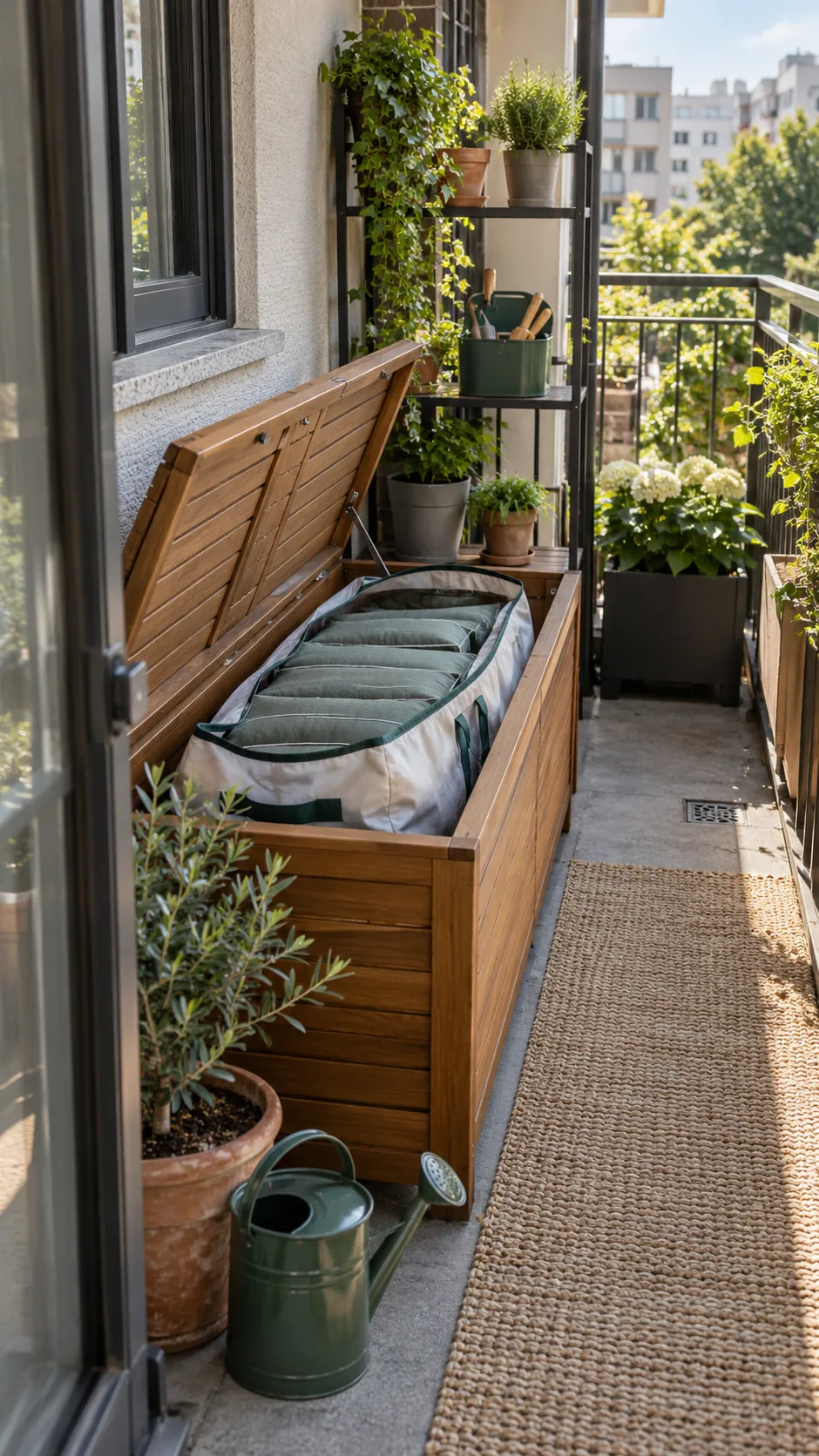
4. Add a Slim Deck Box at the End Wall
Fit a narrow deck box against the short end wall instead of consuming the long walking edge. Select a size that holds soft goods without rising above a safe railing height. Confirm that the lid and hinges tolerate the balcony’s rain and sun exposure.
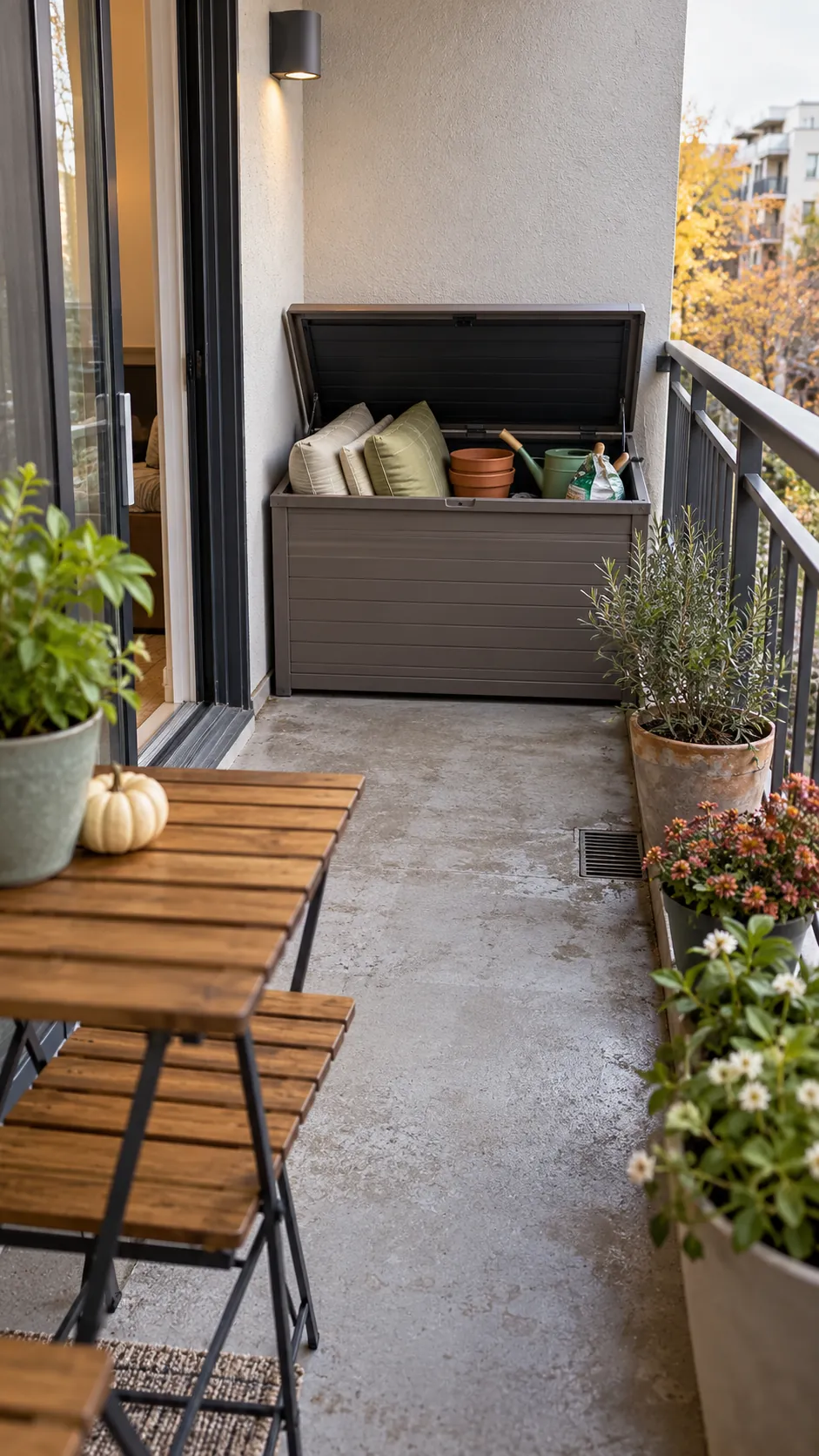
5. Turn a Tall Cabinet Into a Tool Zone
A shallow weather-resistant cabinet can hold hand tools, gloves, ties, and small supplies vertically. Use internal hooks and bins so nothing falls forward when the door opens. Anchor only in ways permitted by the building and keep the cabinet below any required railing sightline.
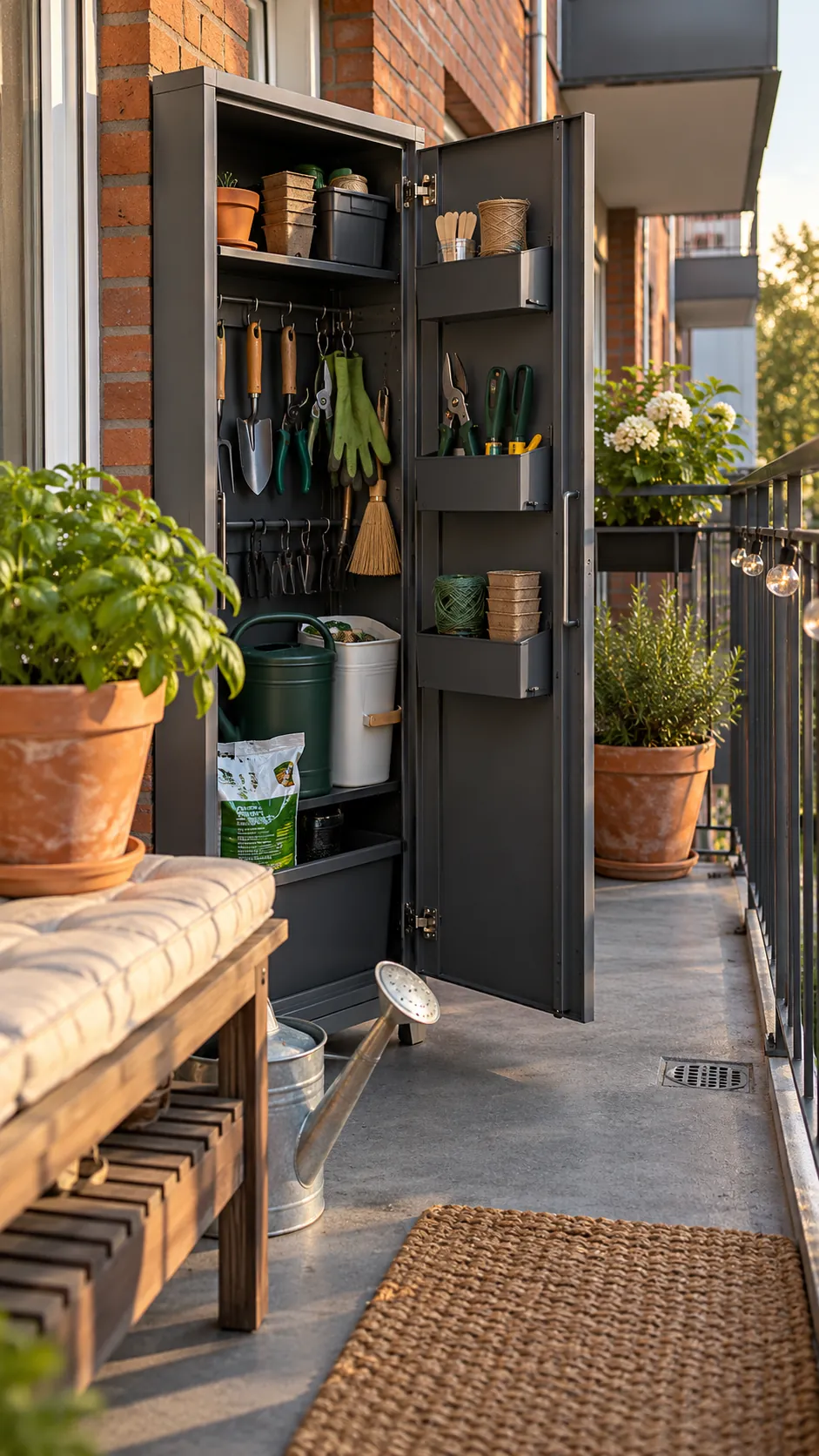
6. Use a Rolling Potting Cart
Keep soil, a scoop, pruners, and a wiping cloth on a compact cart with locking outdoor-rated casters. Roll it beside the plants for maintenance, then park it under cover without blocking the door. Choose lipped shelves so tools do not slide in wind.
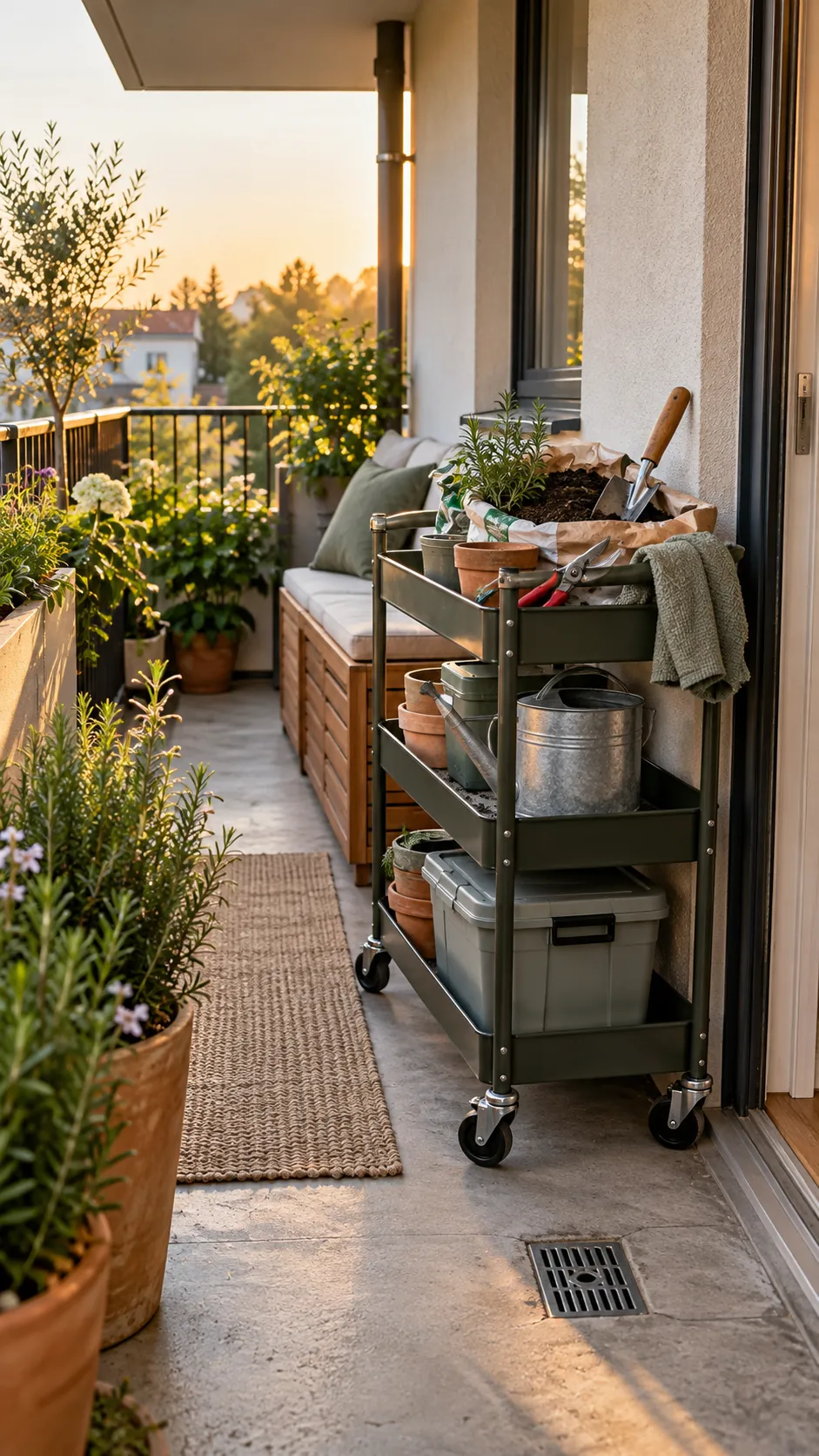
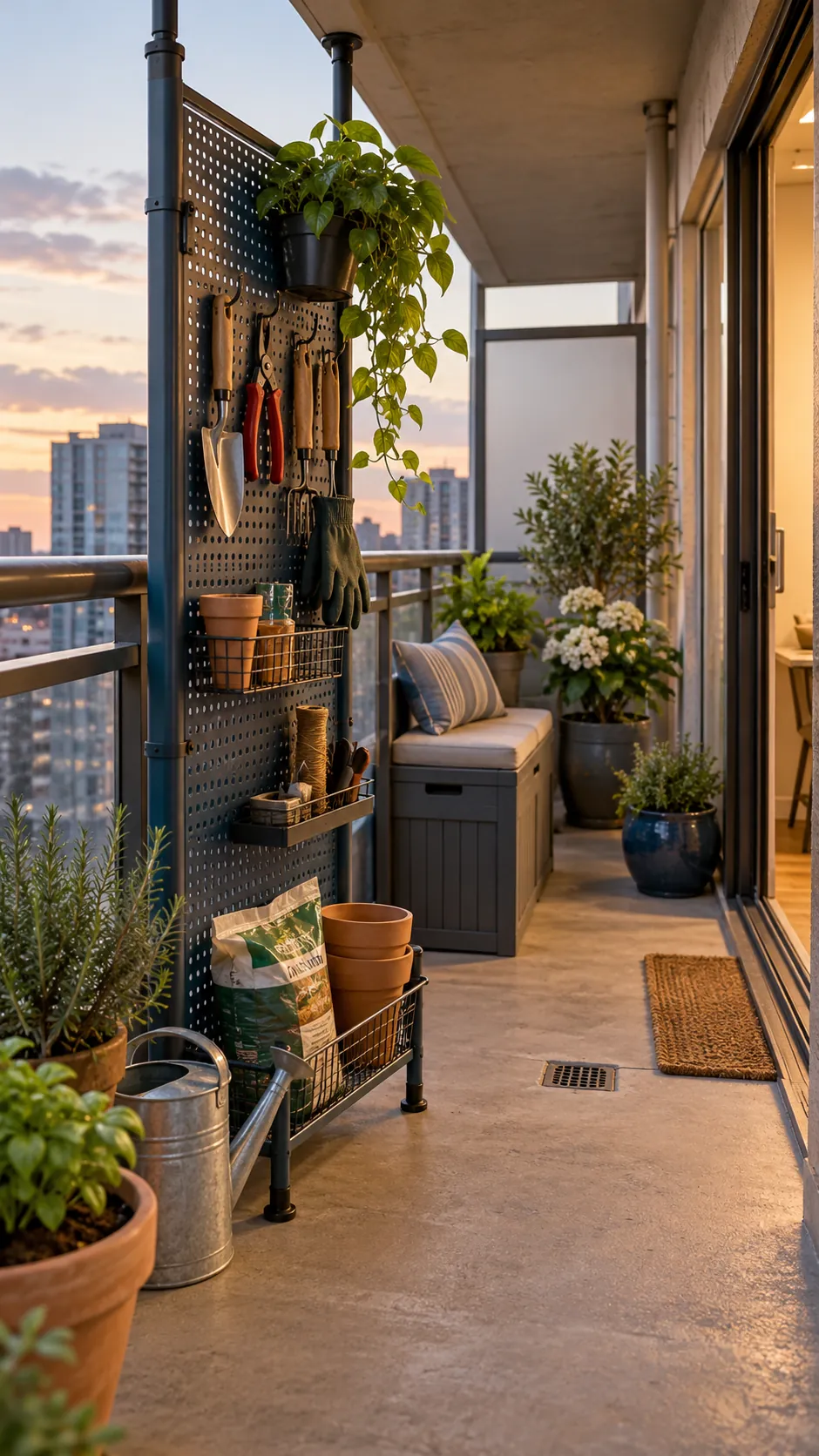
7. Mount a Renter-Friendly Tool Panel
Use a freestanding or tension-supported panel when drilling the exterior wall is not allowed. Add short hooks for trowels and pruners, keeping sharp edges turned inward. Test stability in gusts and follow lease and building rules before leaving it outdoors.
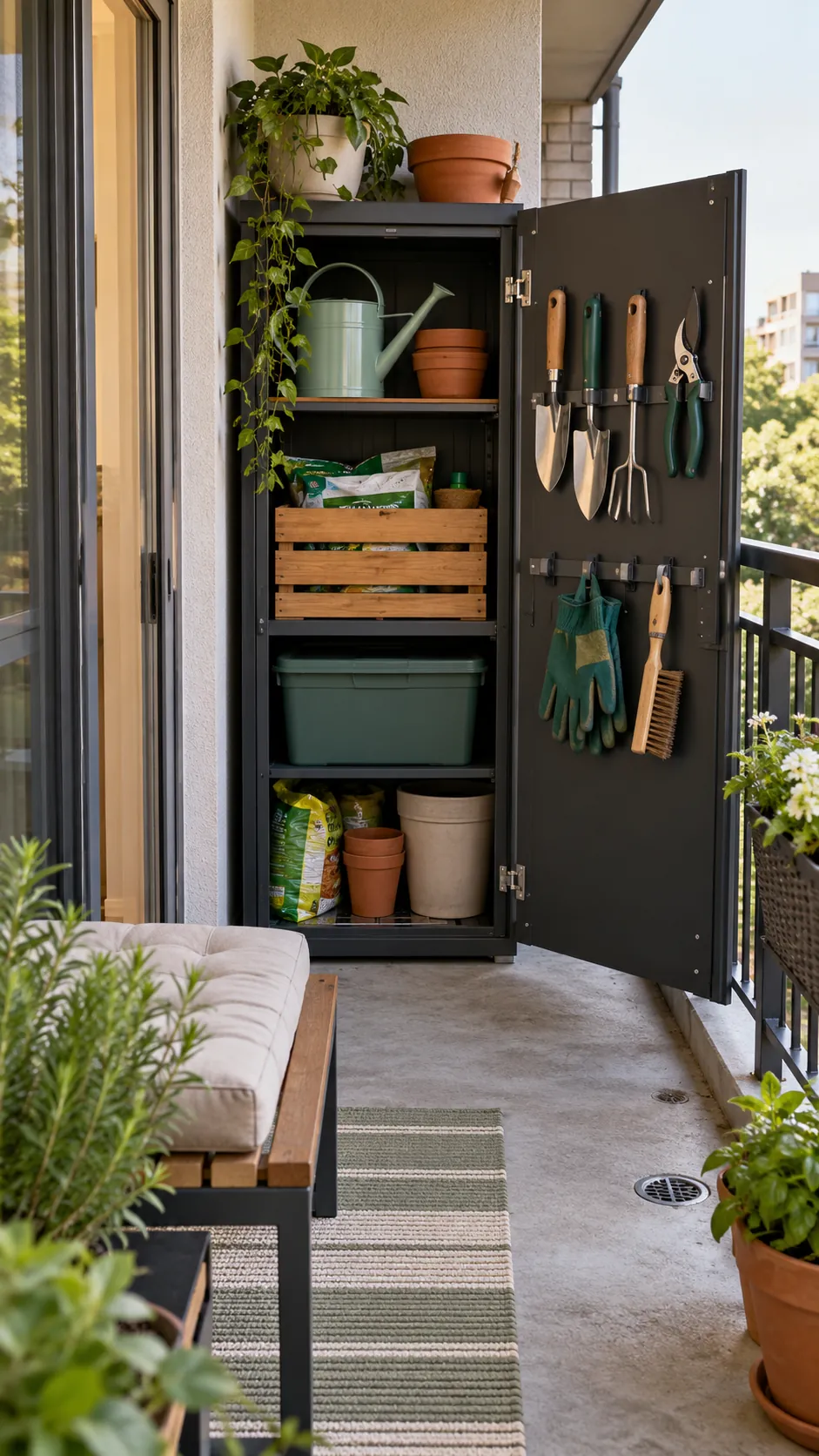
8. Hang Tools Inside a Cabinet Door
Use the unused inner face of a storage cabinet door for light hand tools. Low-profile clips keep each item visible without reducing shelf depth. Check that tool handles do not strike stored bottles when the door closes.
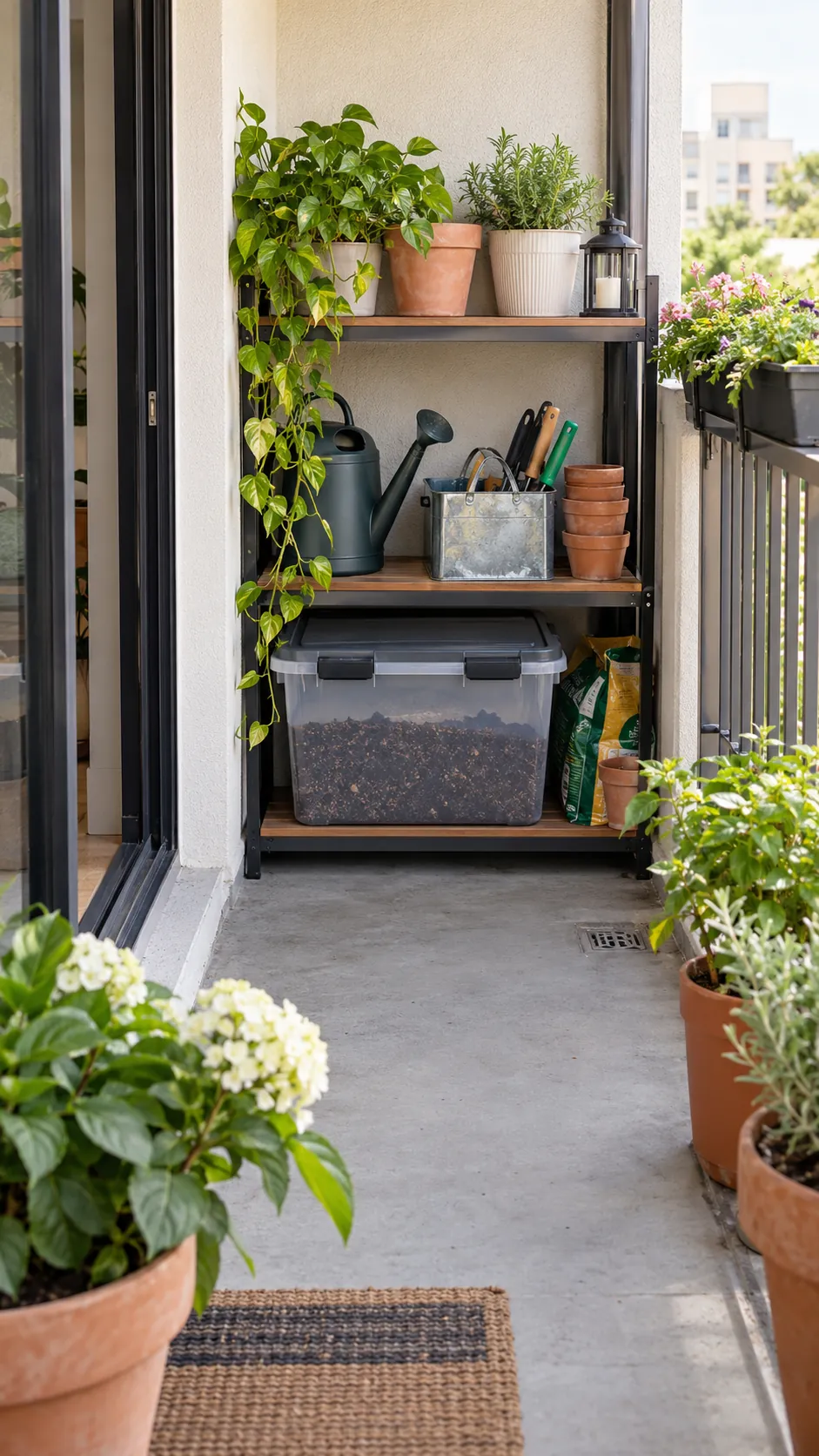
9. Store Soil in a Sealed Small Bin
Transfer opened potting mix into a modest lidded container that fits beneath a shelf. A sealed bin limits spills and keeps rain from turning the mix into a heavy mess. Label it indoors with the product details and keep fertilizers in their original containers.
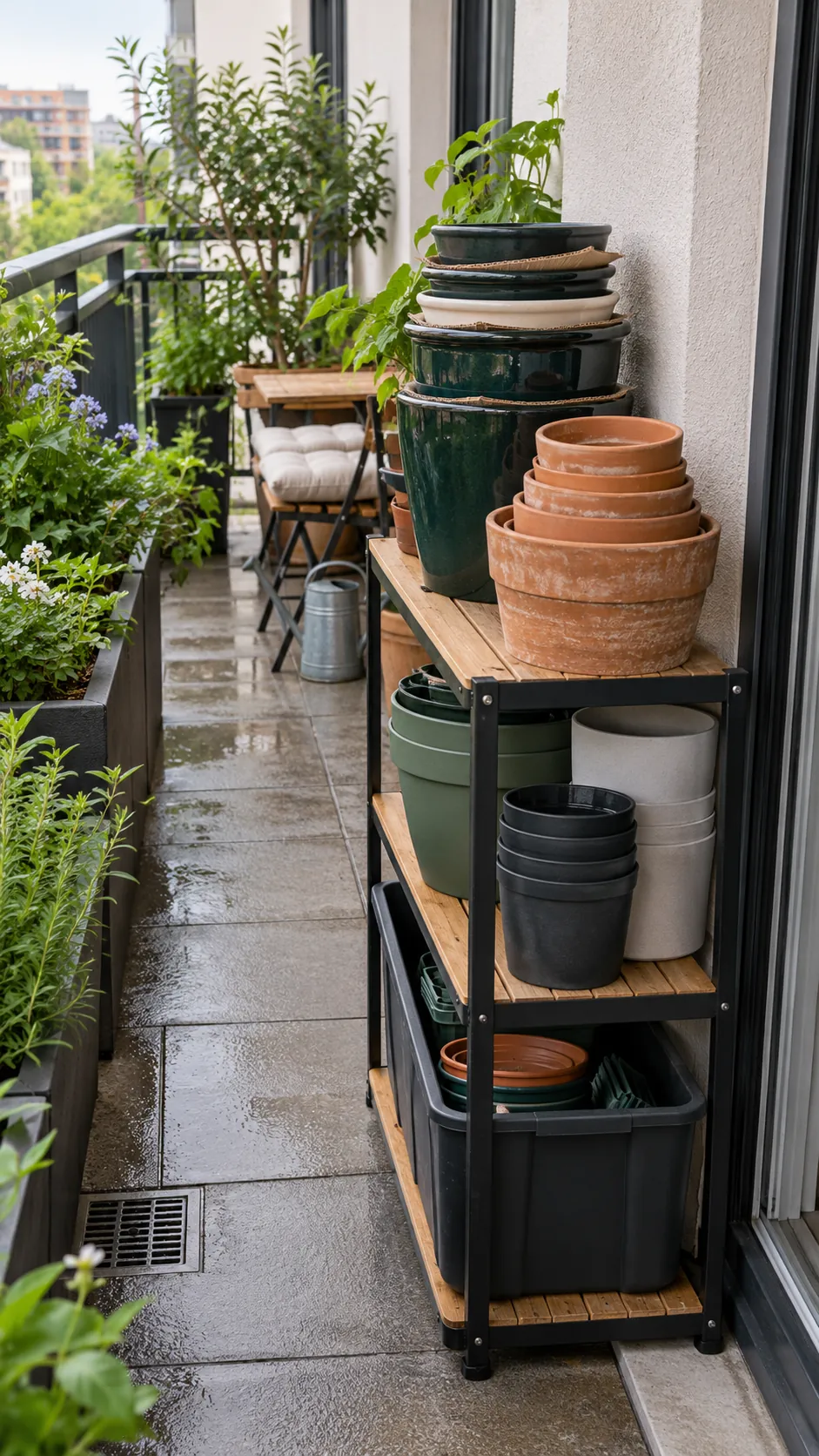
10. Nest Empty Pots by Material
Stack clean empty pots only when their shapes and materials allow safe nesting. Place a scrap of cardboard or fabric between glazed pots so rims do not chip. Keep heavy terracotta low and avoid building a tall unstable tower.
11. Use a Vertical Pot Rack
Give frequently used planters individual positions on a narrow vertical rack. Choose shelves with lips or retainers so a gust cannot push a pot over the edge. Put the largest pieces at the bottom to keep the rack stable.
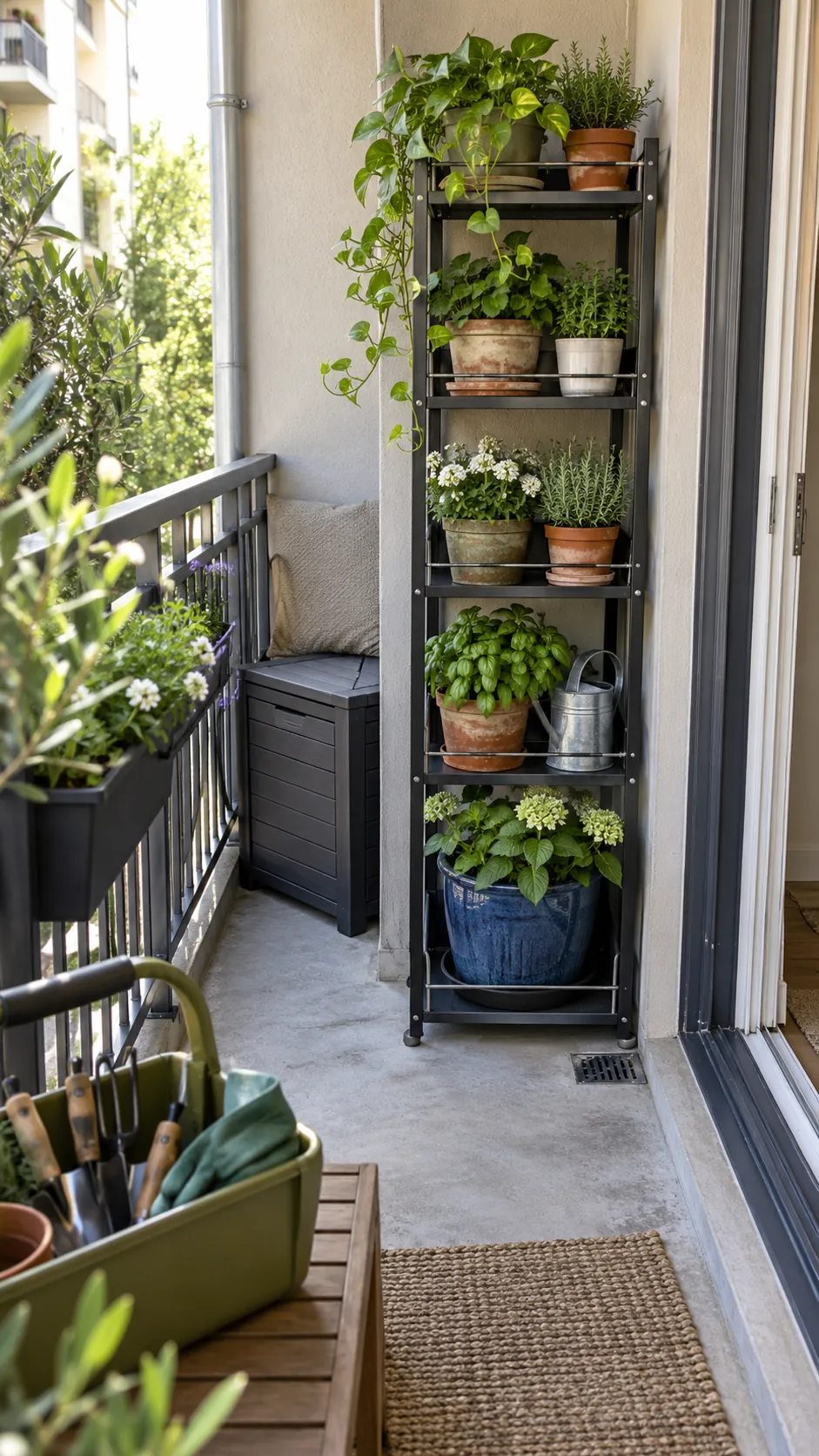
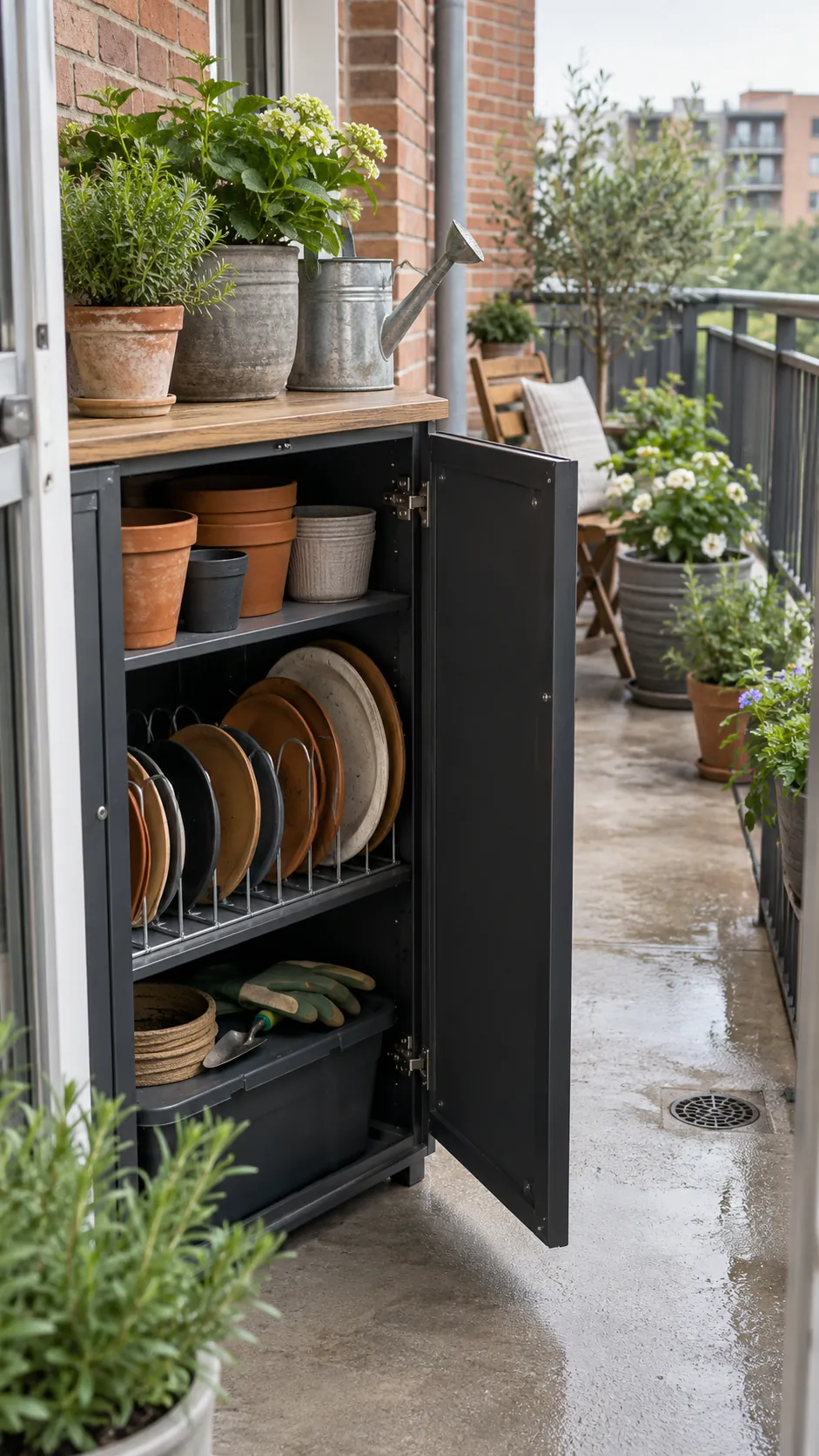
12. Slide Saucer Trays Into a Divider
Store plant saucers on edge in a plate-style divider or file rack inside a cabinet. Sorting by diameter makes the right tray easy to retrieve without unstacking everything. Dry each saucer first so trapped water does not attract pests or stain shelves.
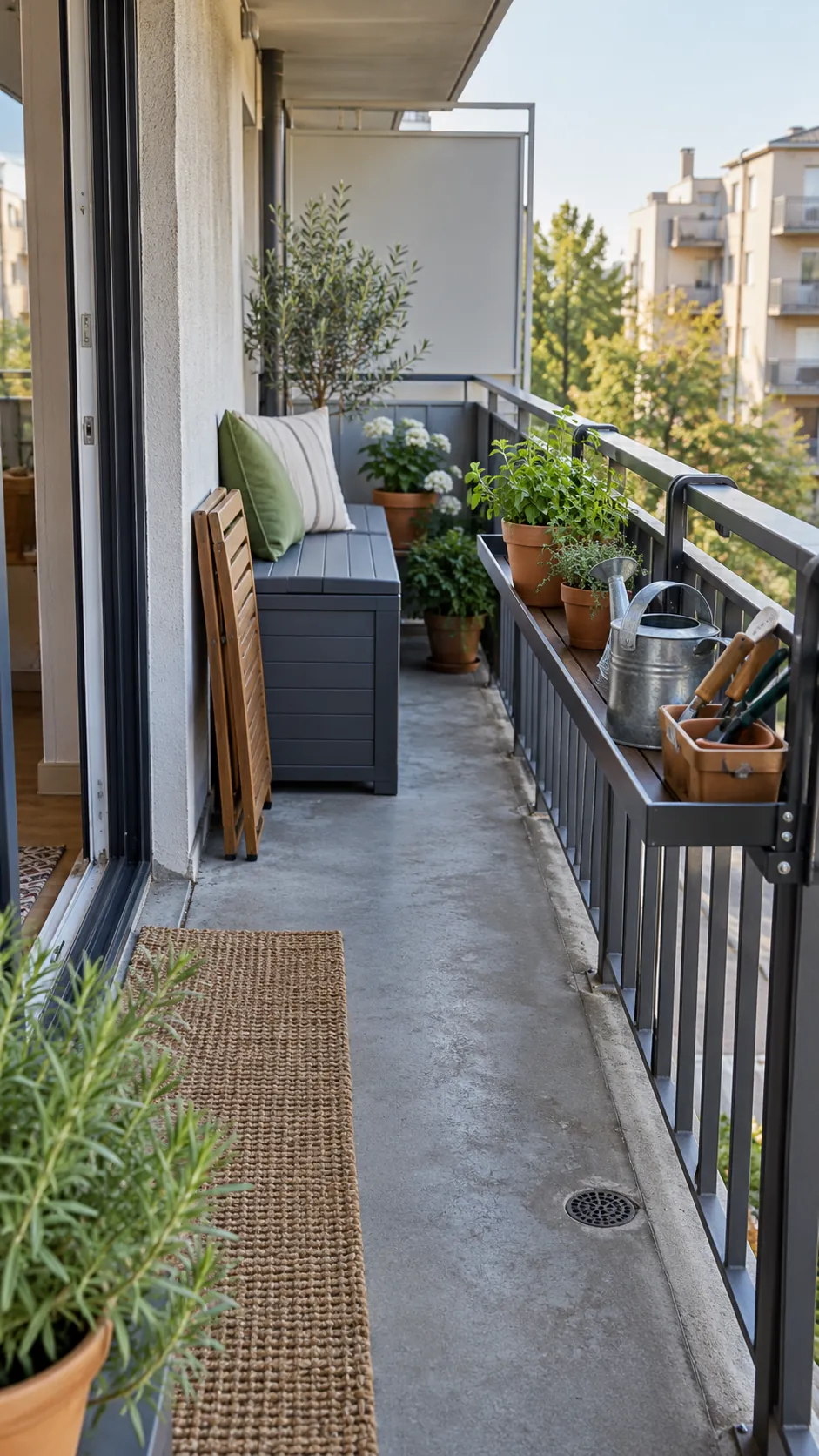
13. Add a Rail Shelf Without Crowding the Railing
A narrow inward-facing rail shelf can hold a few light supplies where building rules permit it. Use a purpose-made secure mounting system and keep every object below the top rail. Never place loose pots or tools where they could fall outside the balcony.
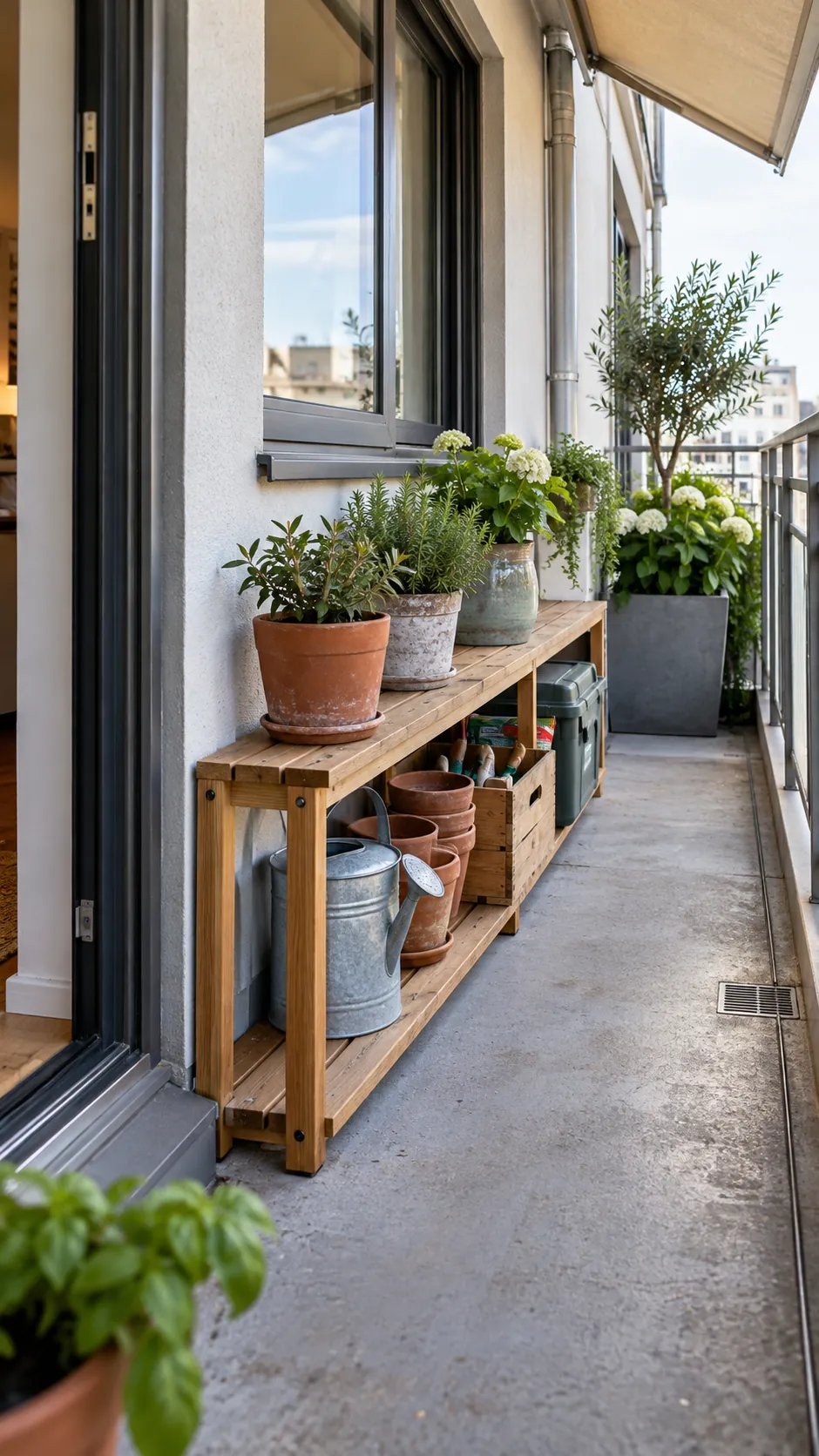
14. Build a Low Shelf Under the Window
Use the shallow zone beneath a window for a low shelf that does not interfere with ventilation or cleaning. Match its depth to the smallest remaining walkway measurement. Store watering cans and sturdy pots there rather than soft cushions exposed to splashback.
15. Choose a Folding Potting Shelf
A wall-approved folding shelf creates a temporary work surface for repotting without occupying floor space all week. Fold it only after soil and water are cleaned away. Confirm the support rating and exterior wall restrictions before installation.
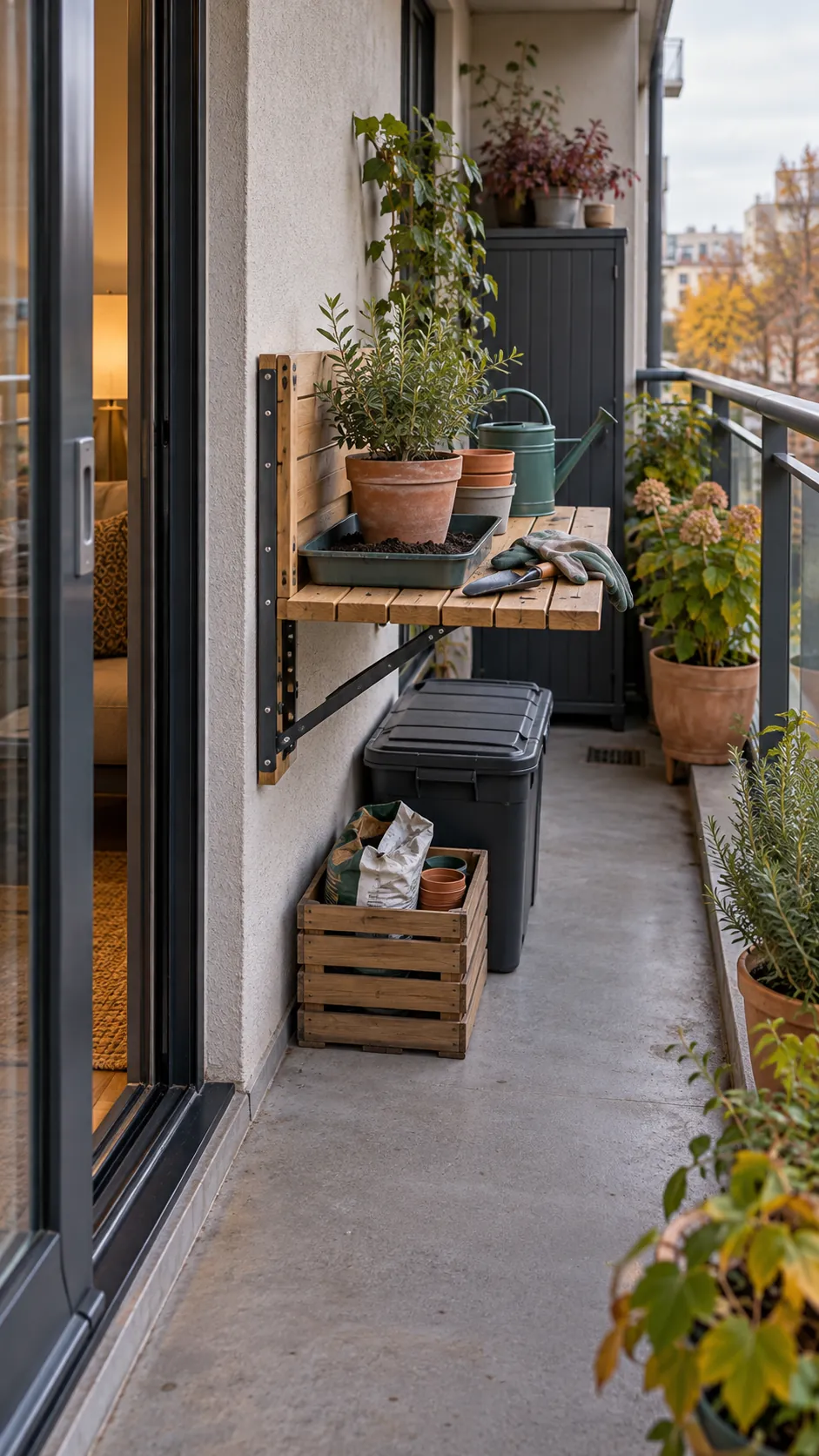
16. Give the Watering Can a Corner Dock
Assign the watering can one corner position beside the plants it serves. A shallow tray catches drips and protects the balcony finish. Keep the handle turned toward the walkway so it can be lifted without shifting pots.
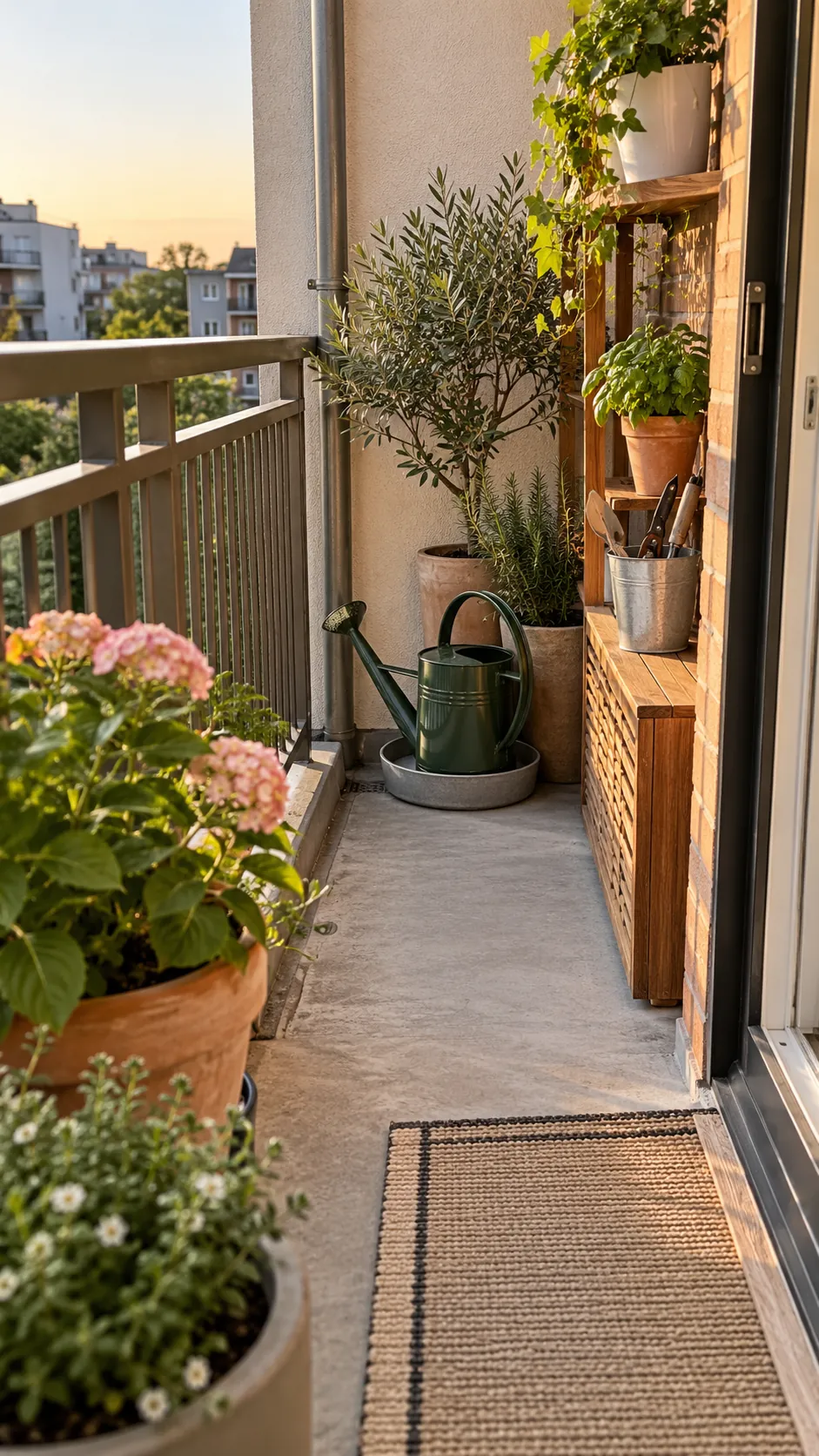
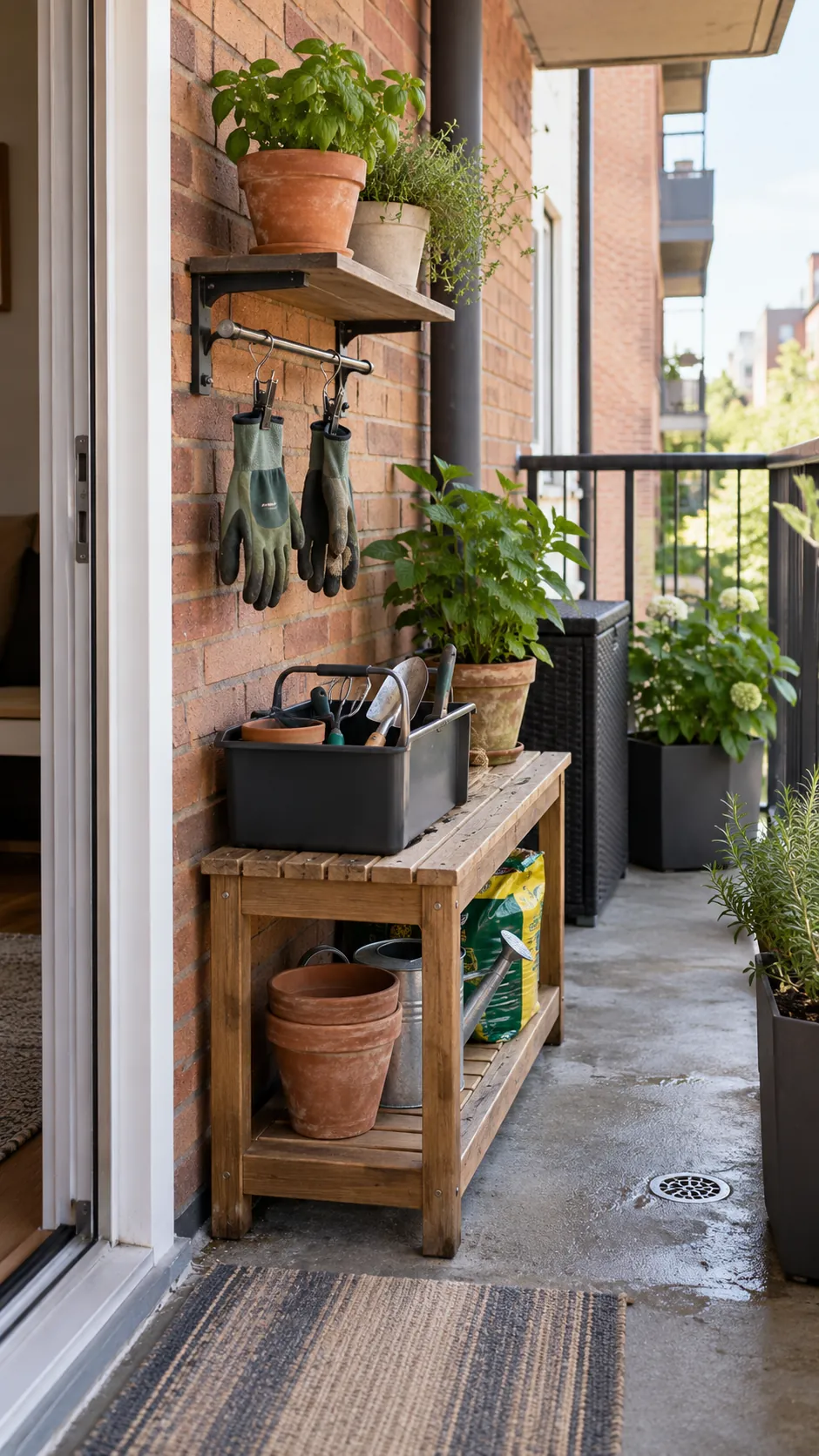
17. Corral Small Supplies in a Handled Caddy
Group plant ties, labels, a moisture meter, and gloves in one handled caddy. Carry it to the work spot and return it to a protected shelf after use. Small compartments prevent narrow balcony clutter from spreading across tables and window ledges.
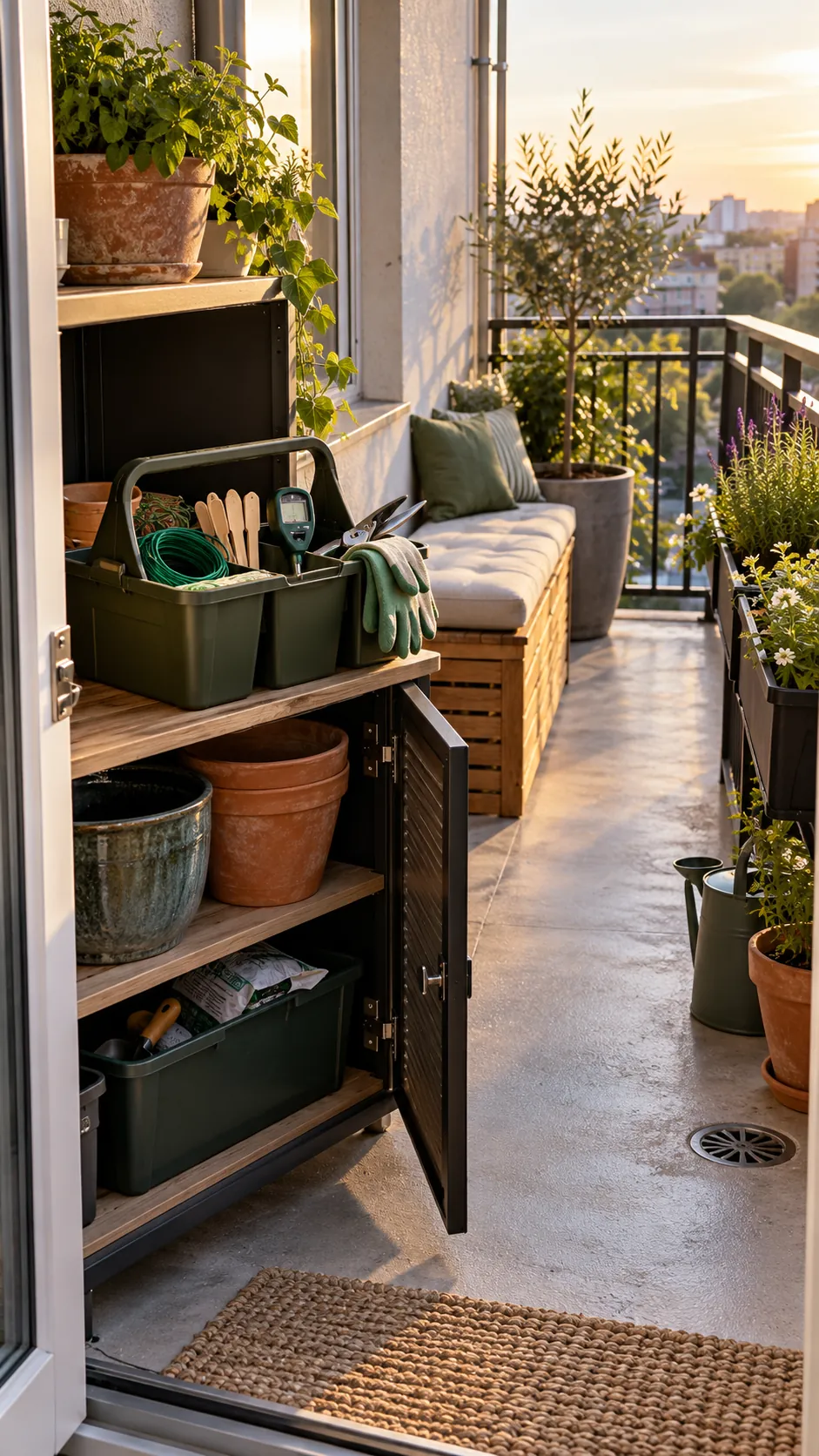
18. Use Lidded Bins on the Lowest Shelf
Place squat weather-resistant bins on the bottom shelf for durable supplies such as empty nursery pots and clean trays. Their low position improves stability and keeps visual clutter below the plant canopy. Use only bins that leave the drainage path open.
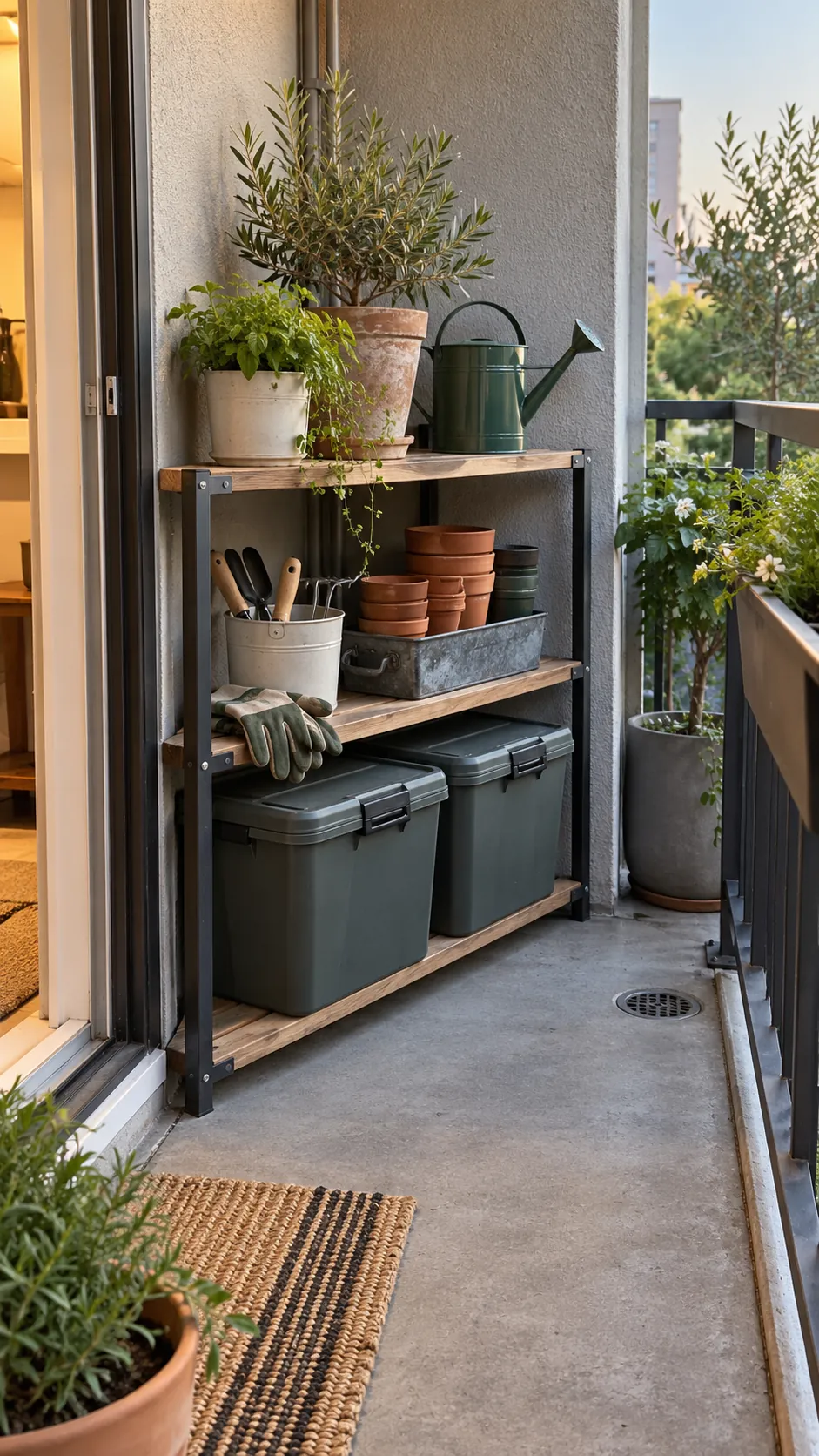
19. Hang Gloves to Dry Before Storing
Clip damp gardening gloves to a small drying rail under cover. Move them into the tool caddy only after both sides are dry. This simple pause prevents odor and keeps wet fabric away from metal tools.
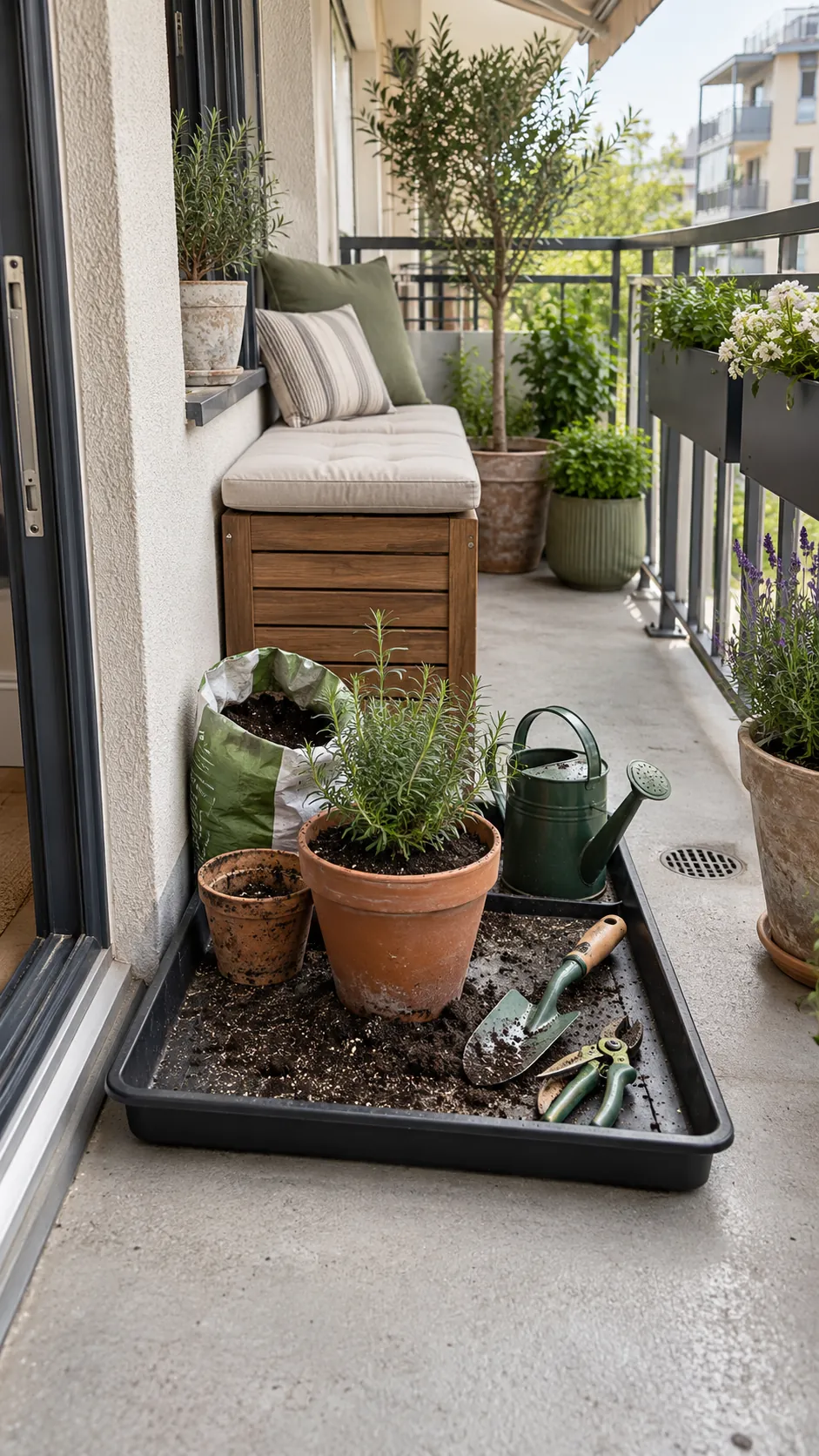
20. Add a Boot Tray for Messy Work
Use a rigid boot tray as a contained surface for potting and temporary dirty tools. The raised edge catches loose mix before it reaches neighboring balconies or the drain. Sweep the debris into waste rather than washing soil into the drainage system.
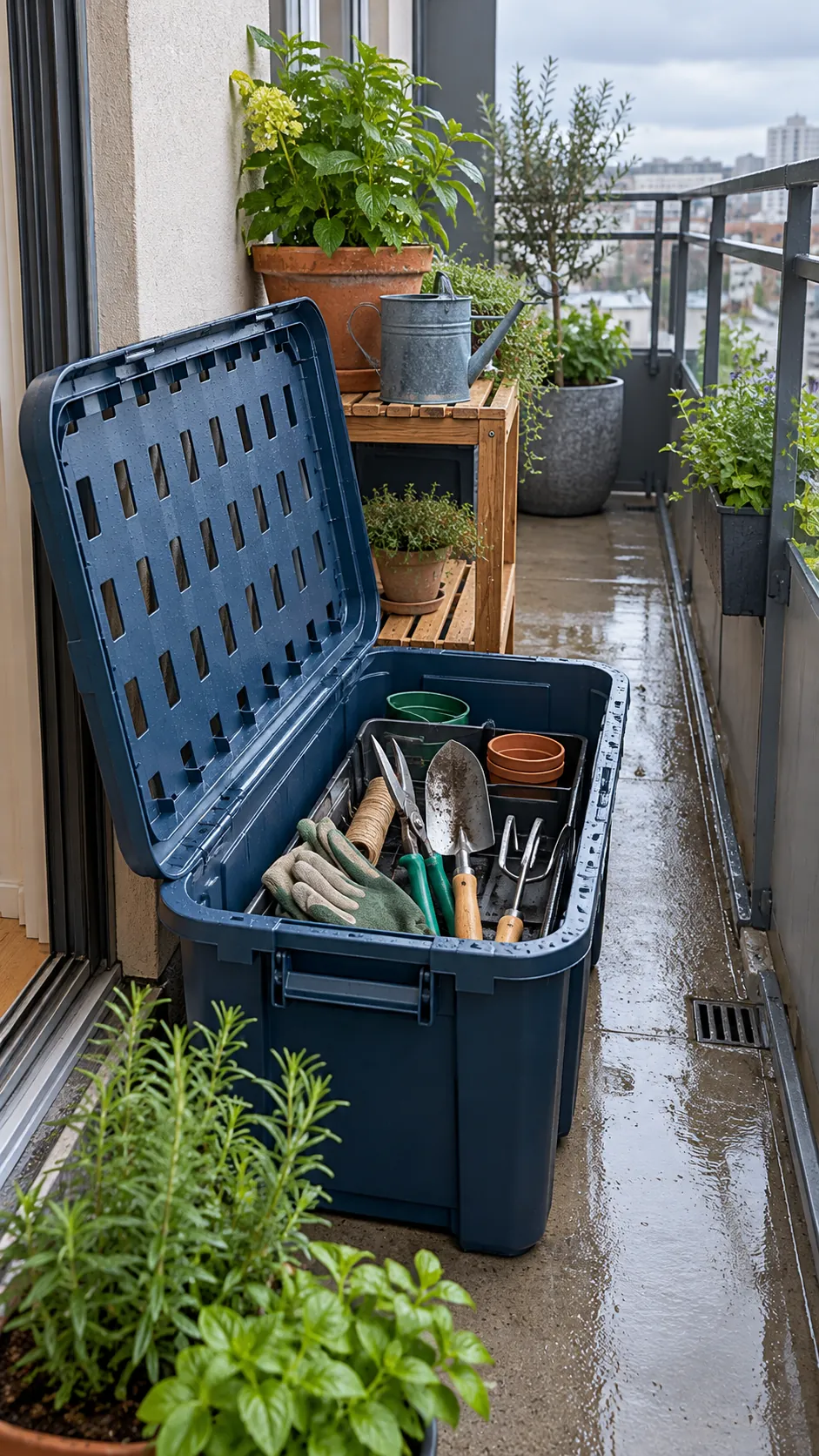
21. Protect Tools in a Ventilated Tote
A lidded tote with sheltered ventilation can protect tools from direct rain while allowing residual moisture to escape. Wipe soil from blades and dry them before closing the lid. Store the tote out of standing water and inspect metal parts for corrosion.
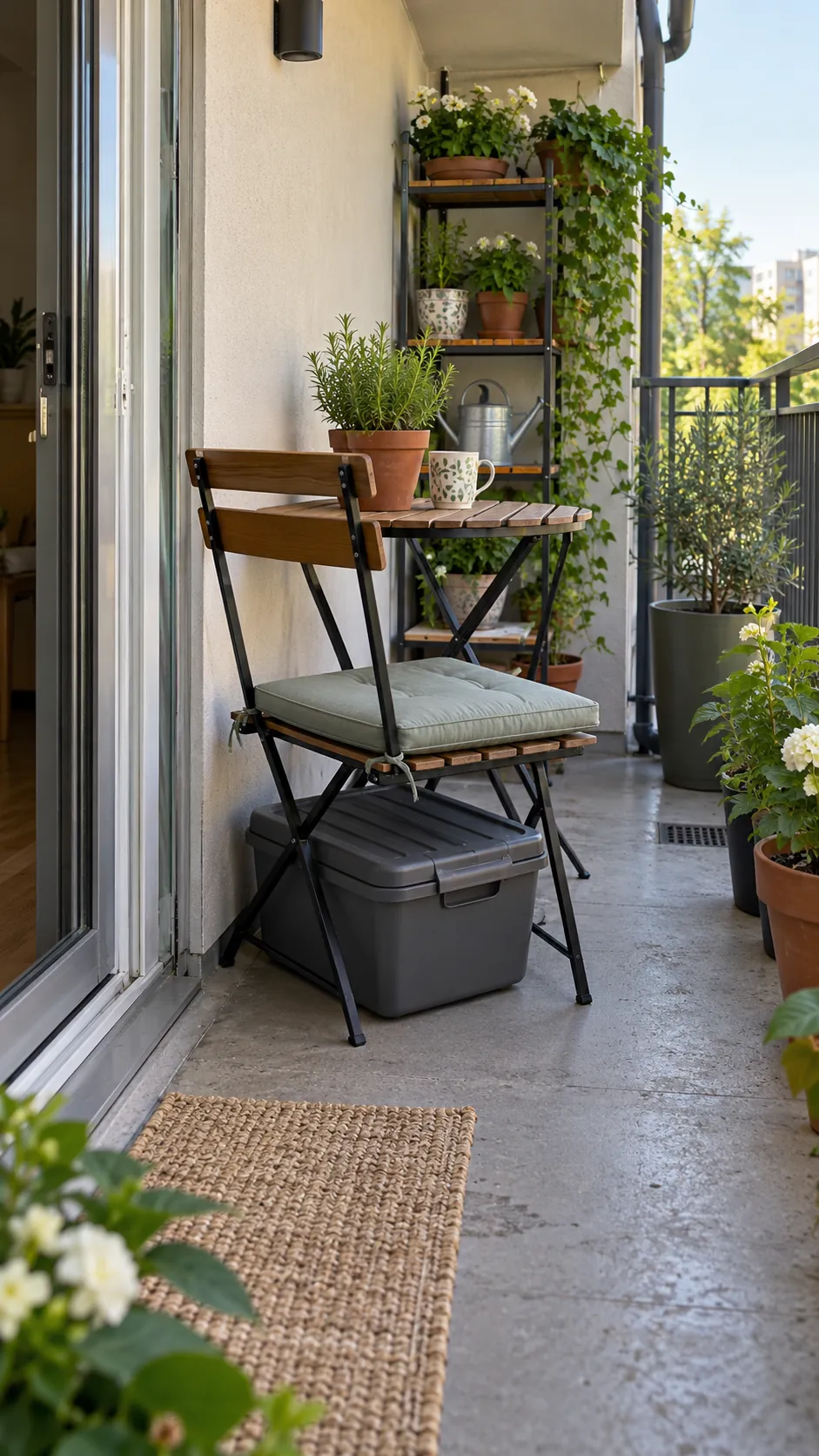
22. Use the Space Beneath a Bistro Chair
Slide one low, lidded cushion or tool bin beneath a chair when the leg geometry leaves safe clearance. The bin must pull out without lifting furniture or scraping the floor. Avoid stuffing loose items there, which makes cleaning and inspection difficult.
23. Stack Folding Furniture Beside a Stop
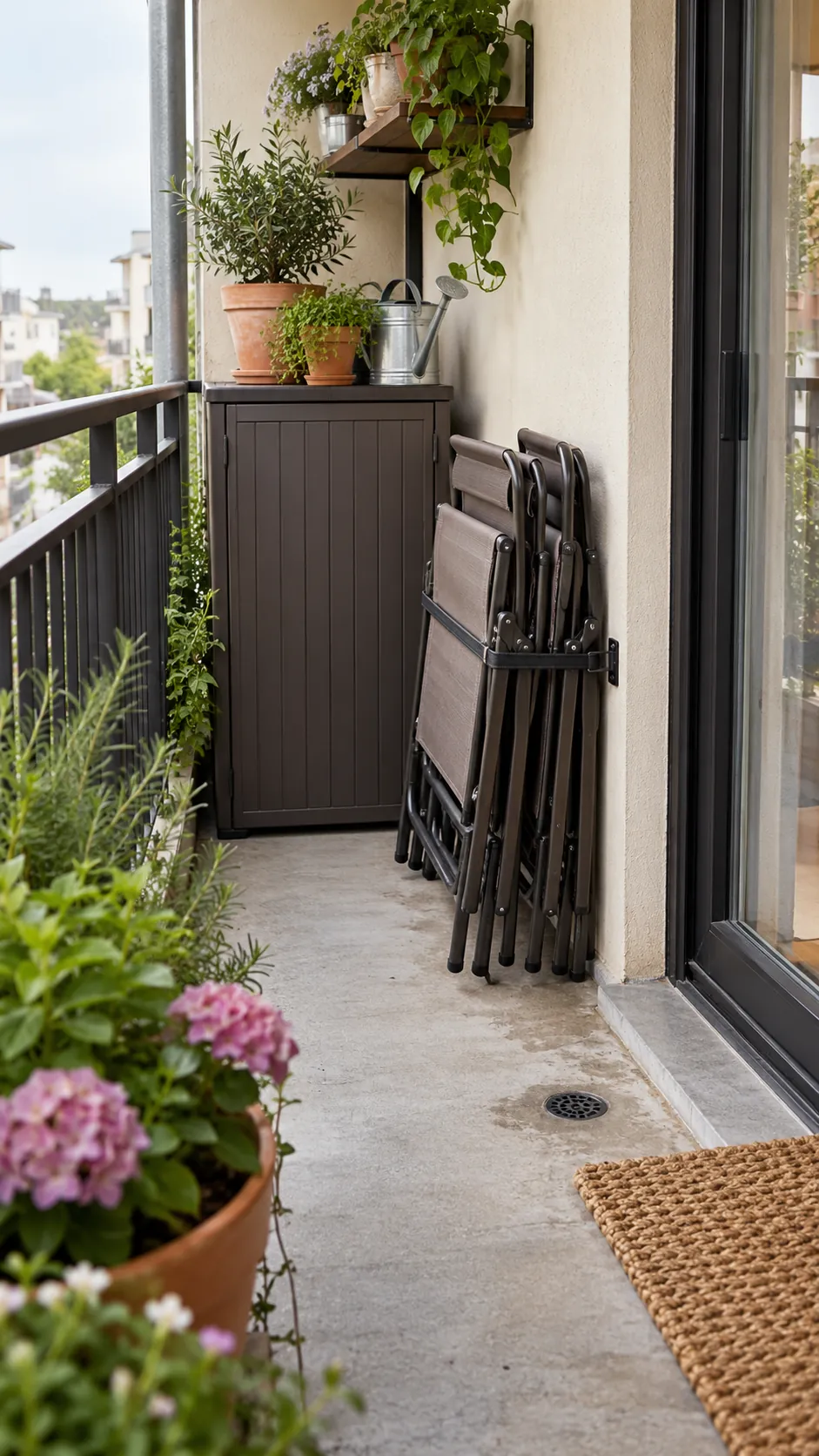
Fold spare balcony chairs and secure them upright against an interior wall with an approved freestanding stop or cabinet bay. Keep the stack out of the door and railing zones. Tie or latch it so wind cannot unfold or topple the furniture.
24. Rotate Seasonal Pots Into One Crate
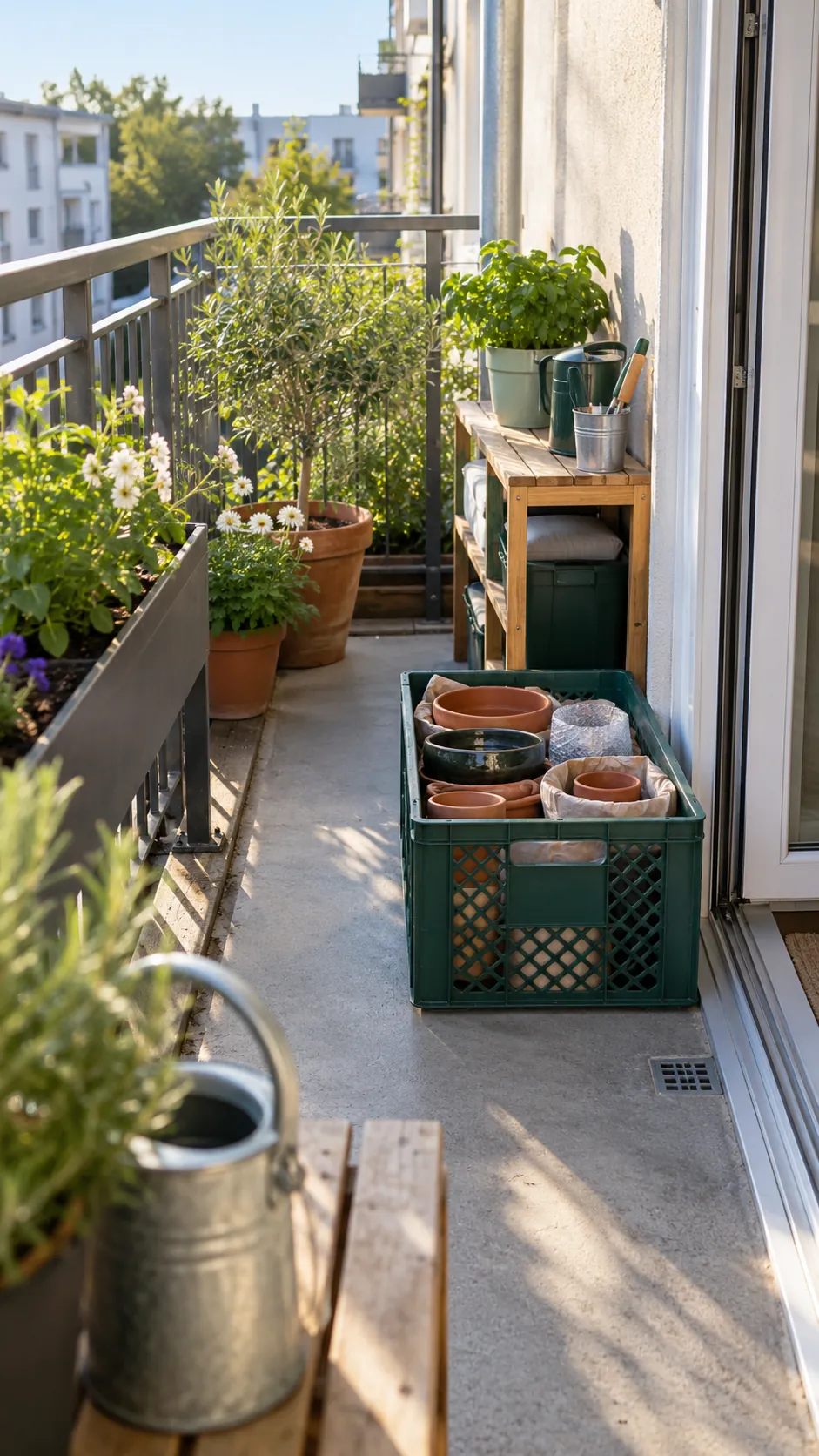
Collect off-season lightweight pots in a ventilated crate instead of scattering them around active plants. Store them clean and dry, with fragile pieces wrapped rather than tightly nested. The crate can move indoors quickly before high winds or freezing weather.
25. Create a Severe-Weather Grab Plan
Keep cushion bags, a clear indoor destination, and enough free floor space to move vulnerable items quickly. Do not rely on ordinary storage furniture to secure objects during extreme wind. Follow building alerts and bring loose pots, tools, and textiles inside early.
26. Reset the Balcony After Each Gardening Session
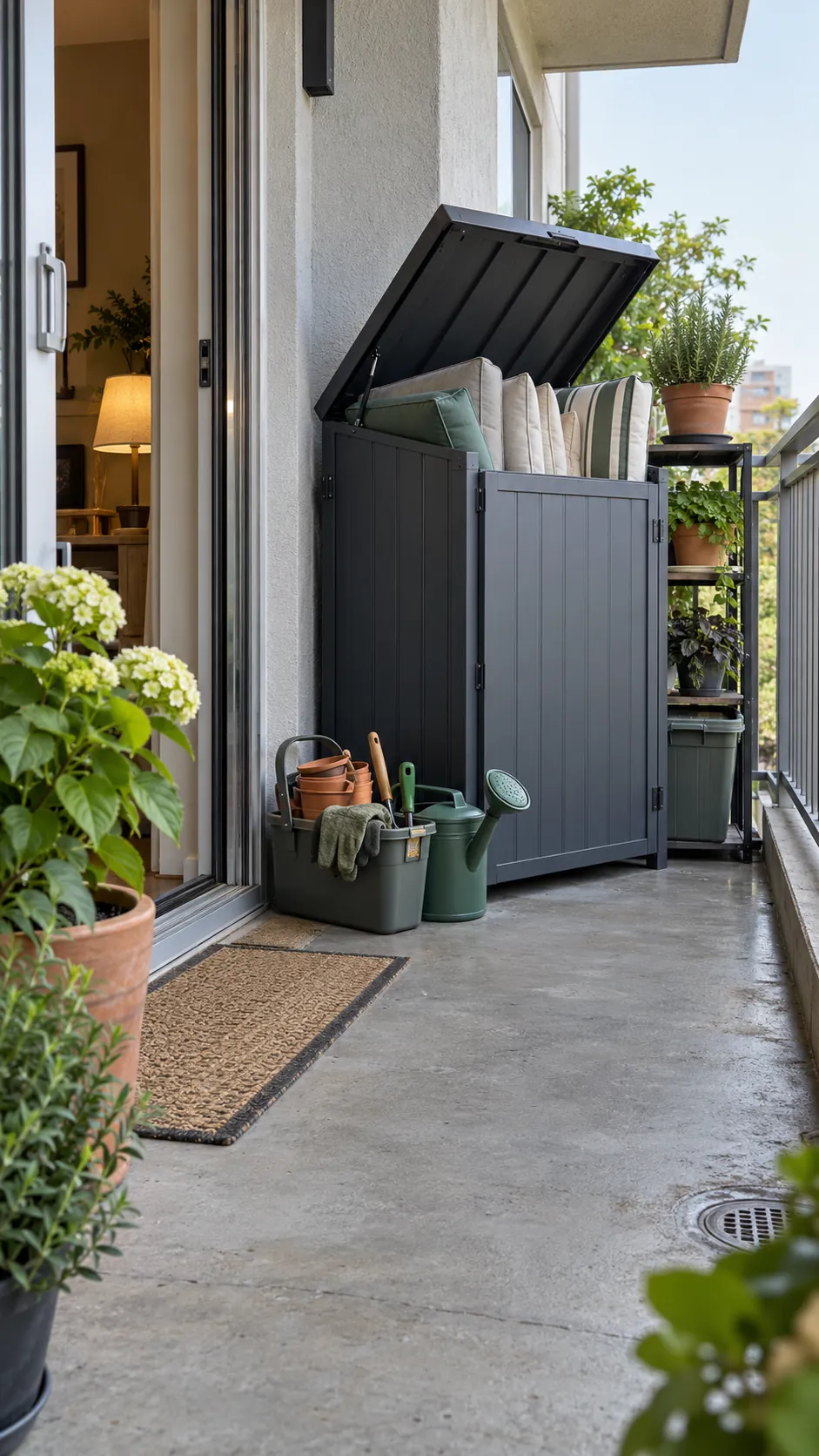
Return soil, tools, saucers, and cushions to their assigned positions before leaving the balcony. Sweep loose mix, empty standing water, and confirm that the door and drain remain clear. A five-minute reset keeps a small outdoor storage system safer than adding another container.