
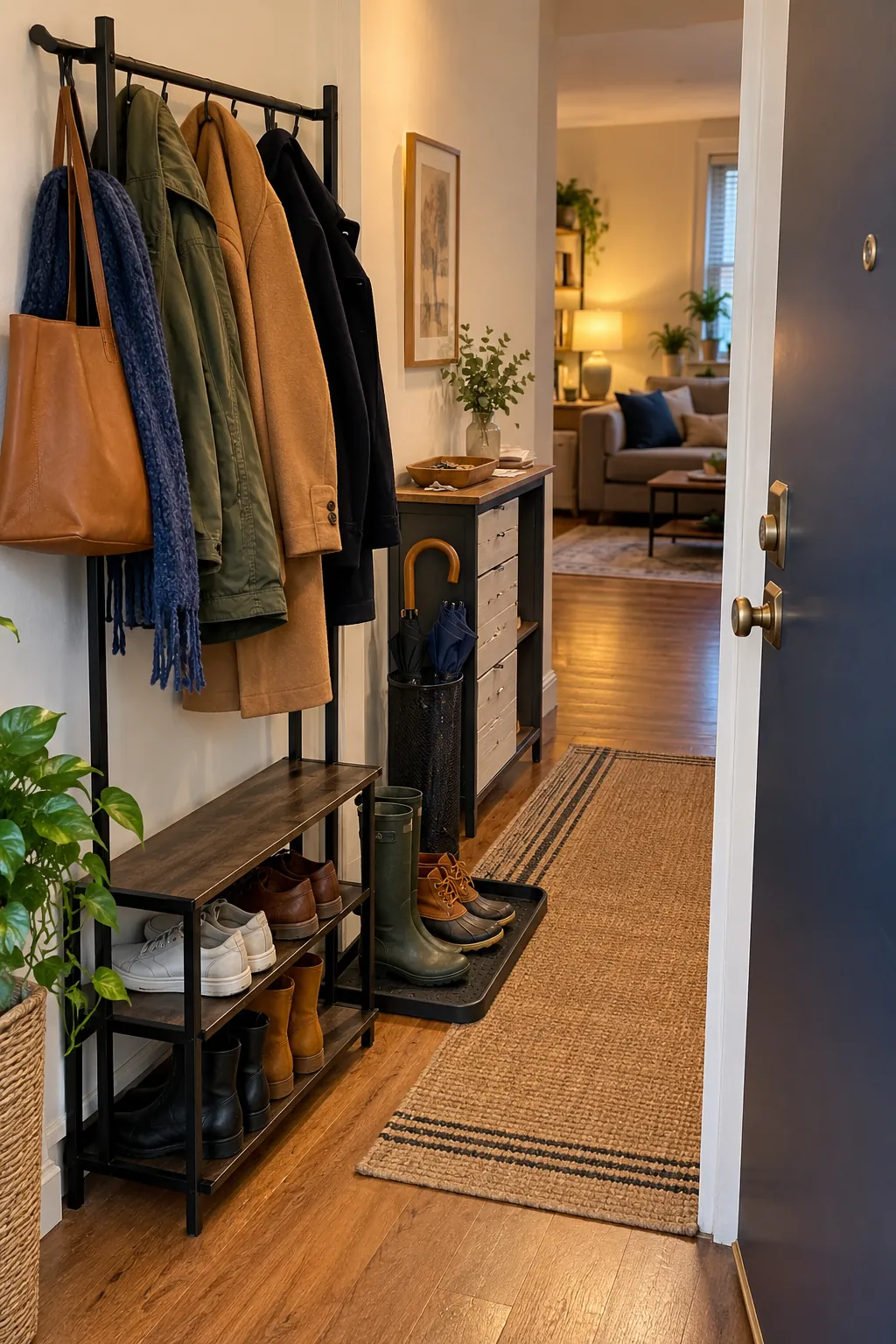
An apartment without an entry closet needs a short shopping list, not a pile of small organizers. Buy only enough capacity for the items used at the door each week, keep the exit path clear, and move seasonal overflow deeper into the home. This plan prioritizes stable freestanding pieces and treats adhesive or over-door products as light-duty options that require a real clearance test.
Measure Before You Shop
Start with the closed and fully open front door, then mark the clear walking route into the apartment. Measure the usable wall length, maximum furniture depth, baseboard projection, door hardware, and any radiator or electrical panel that must remain accessible. Count only the coats, daily shoes, bags, keys, umbrellas, and pet items that truly need to live near the door; overflow belongs elsewhere.
Buy One Stable Coat Solution
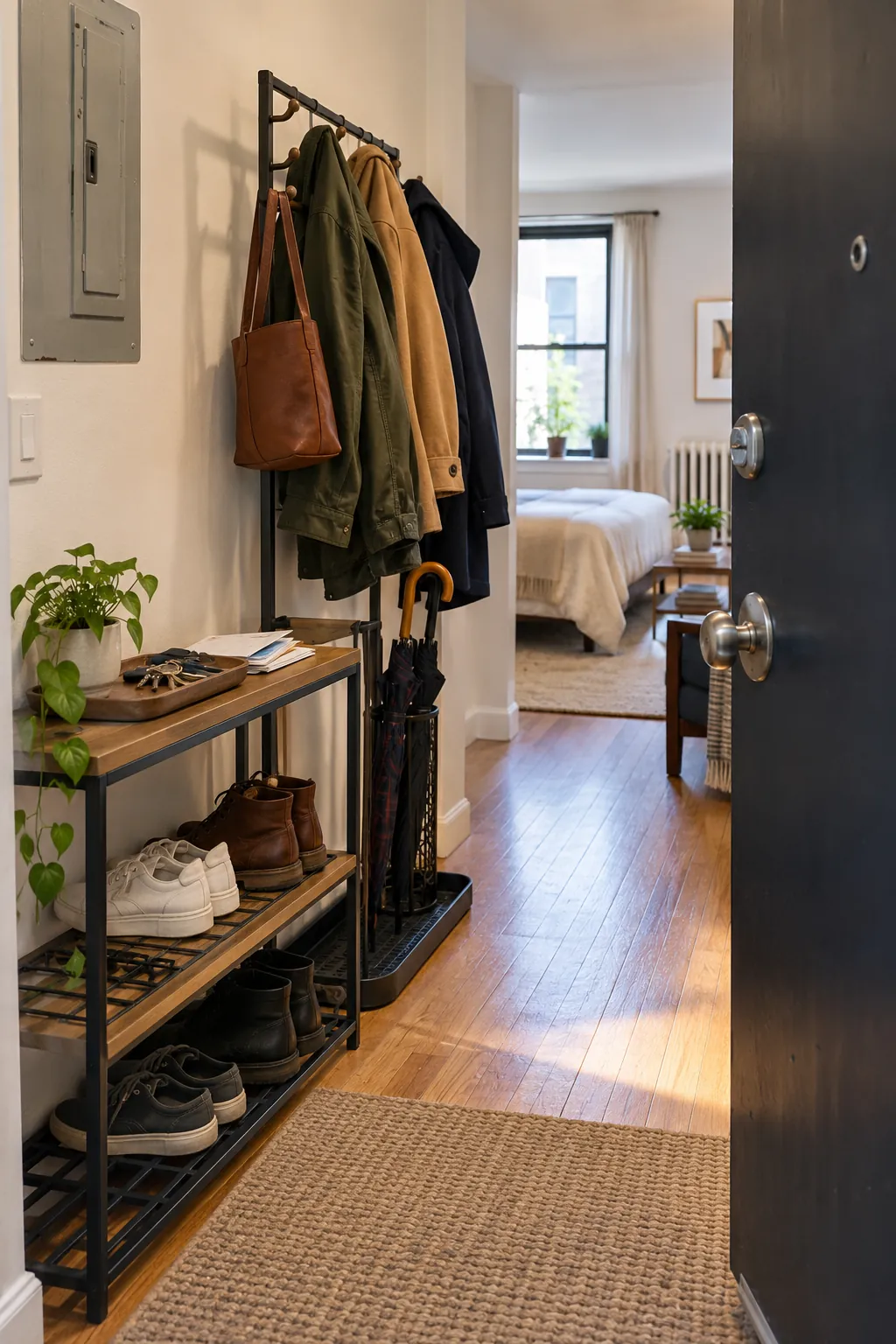
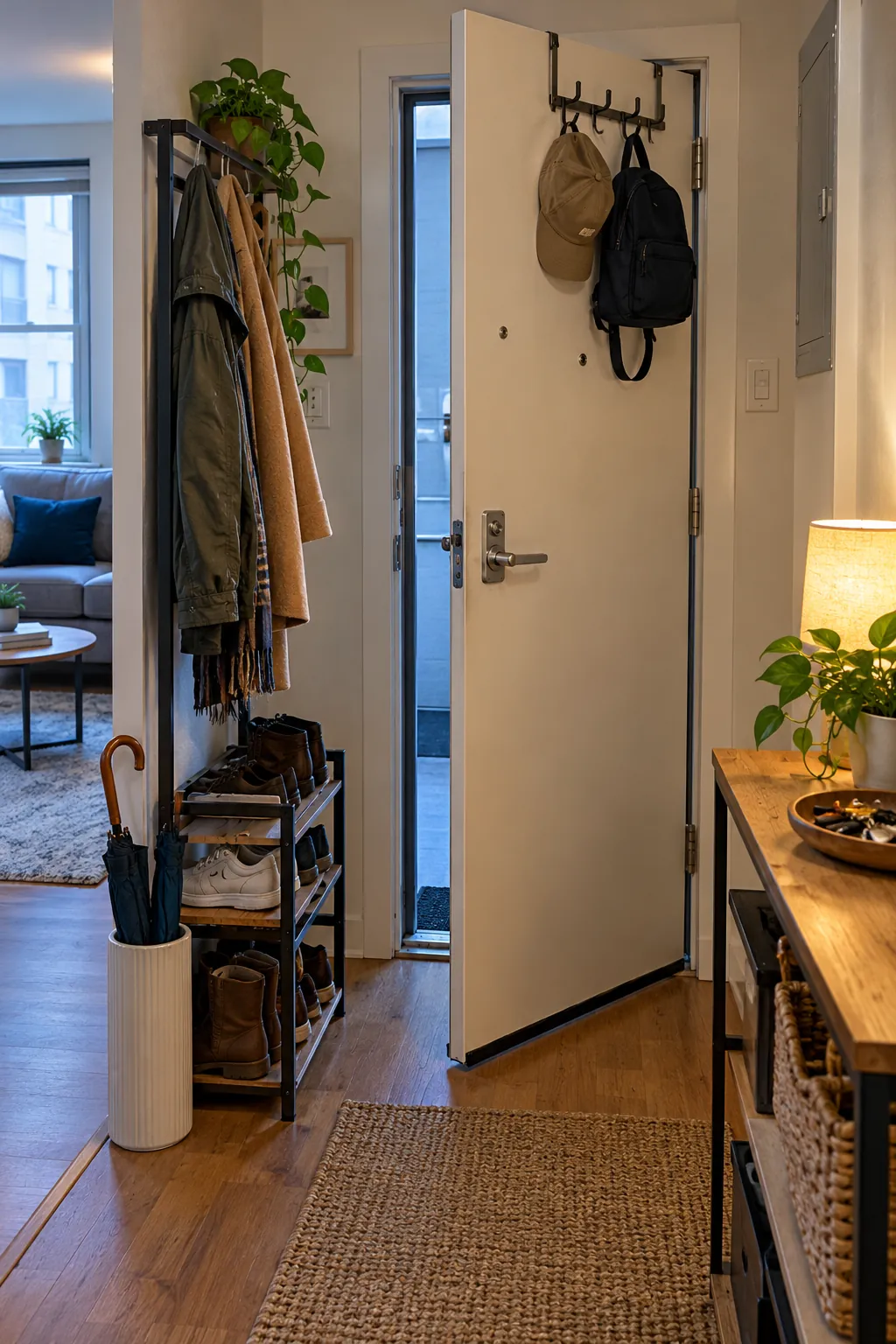
Choose either a broad-based freestanding coat rack or a self-supporting garment rack sized for the measured zone. A garment rack spreads heavy winter coats better, while a tree rack consumes less floor but becomes unstable when loaded on one side. Check the rated load, foot geometry, tip resistance, and space needed to remove a coat without striking the door.
Choose Shoe Storage for Daily Pairs
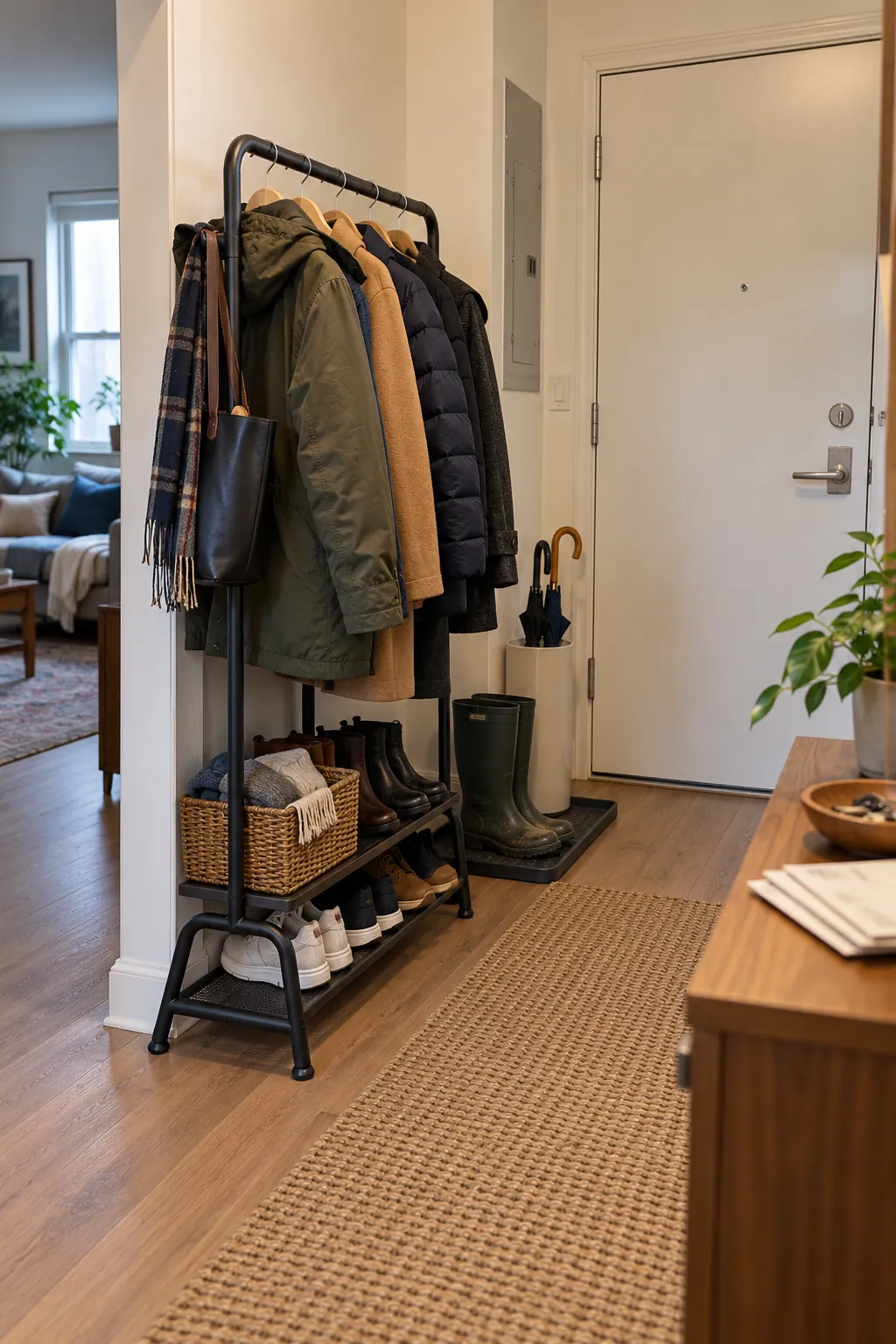
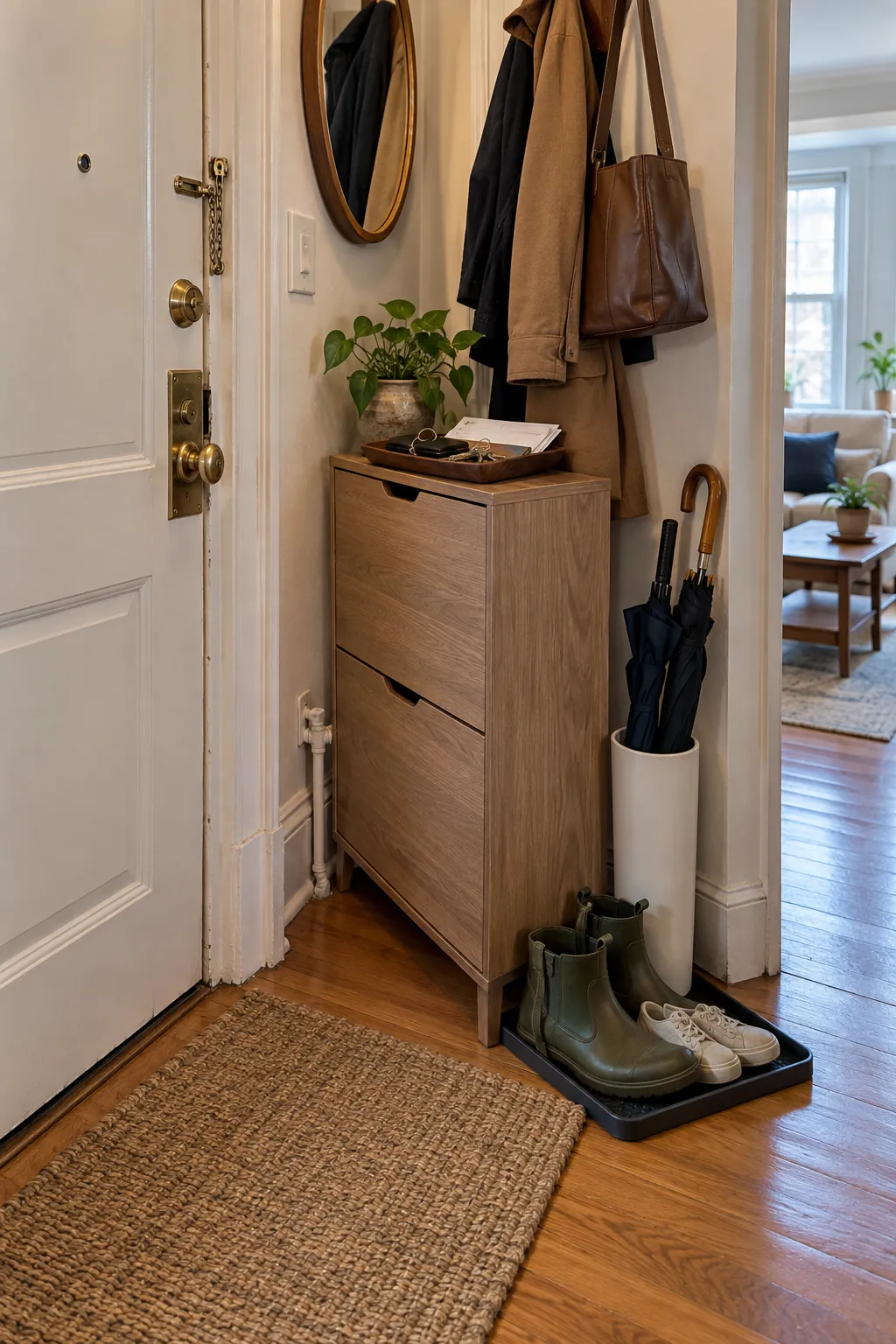
Buy a narrow ventilated shoe bench, tilt-front freestanding cabinet, or low rack for the pairs used this week. Test the real shoe sizes because tall boots and large trainers consume more space than product photos suggest. A seat helps with laces only when the bench has an appropriate sitting load rating and does not narrow the escape route.
Add a Small Drop Zone
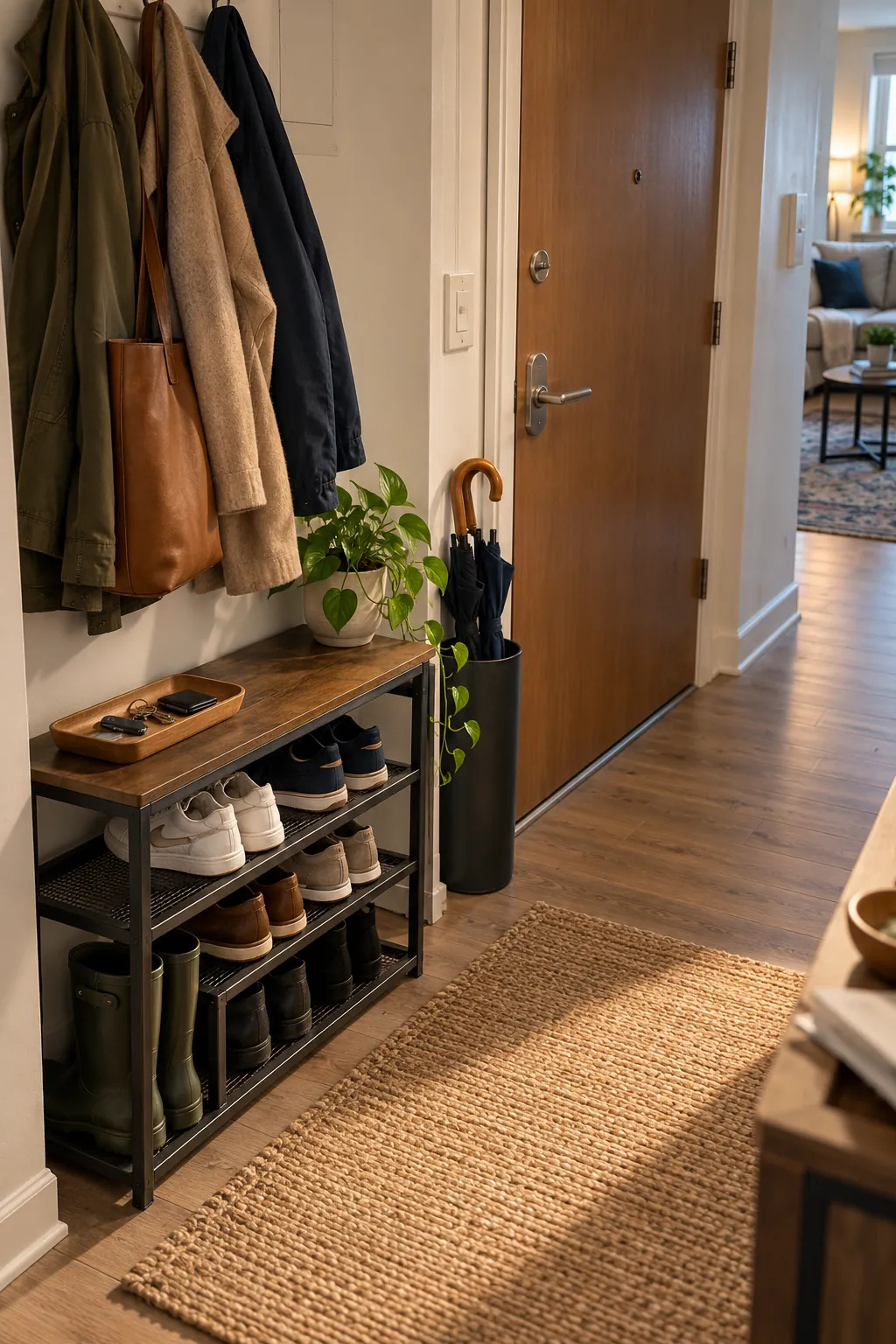
Use the top of a stable shoe cabinet or a slim freestanding console for keys, mail, and one everyday bag. Add a shallow tray so small items have a visible boundary instead of spreading across the surface. If there is no safe console depth, place the tray farther inside the apartment rather than relying on an adhesive shelf beside the door.
Use the Door Only After a Clearance Test
An over-door hook rail can hold light hats or a small bag when its bracket thickness still allows the door to close correctly. Verify weather stripping, frame clearance, hinge load, door swing, and lease or fire-door restrictions before buying. Avoid long organizers that scrape paint, block the peephole, strike the wall, or turn a required exit door into overloaded storage.
Finish With Moisture and Reset Supplies
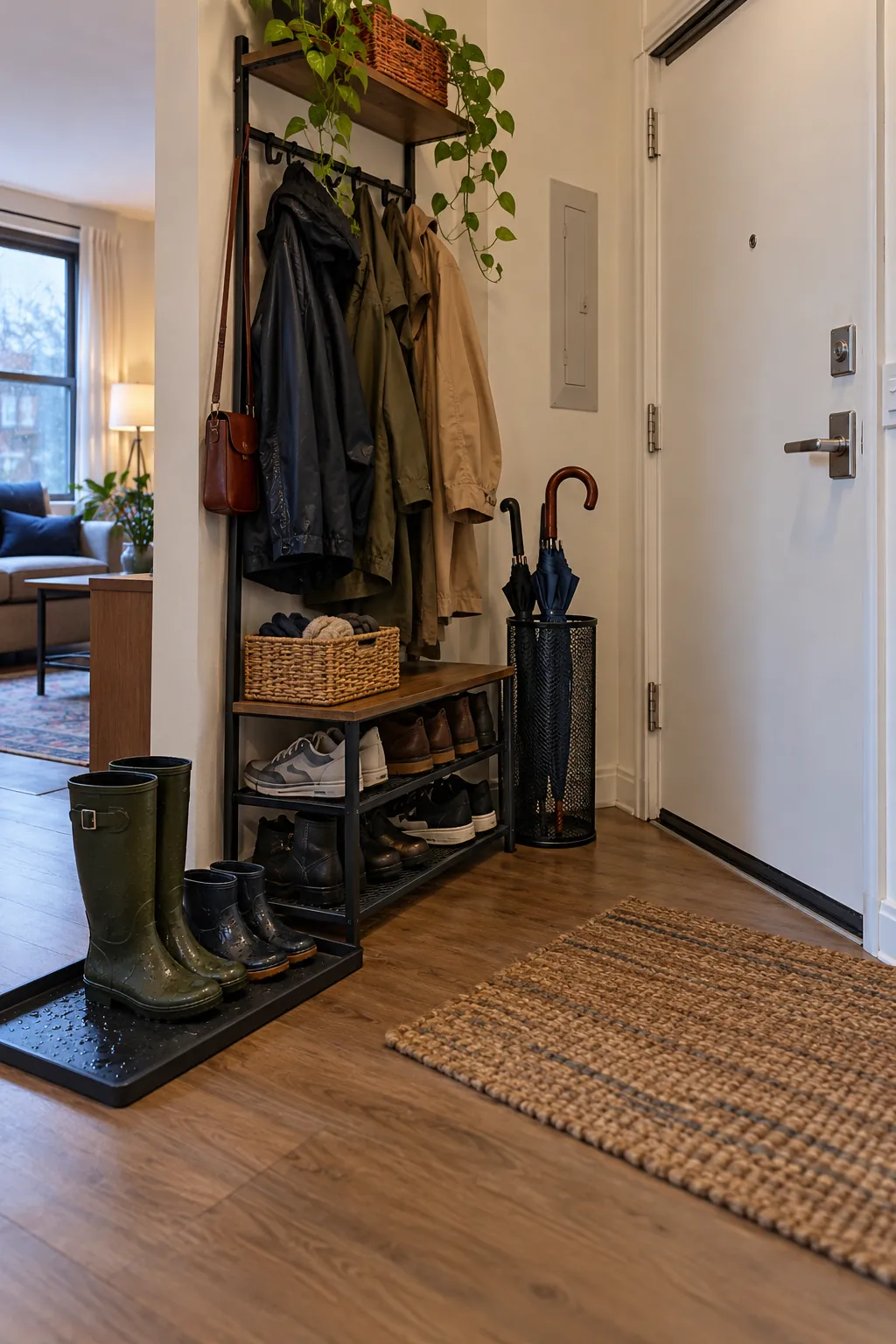
Add one washable boot tray, an umbrella stand that cannot tip, and a small basket for gloves or pet gear. Wet coats need air around them, so do not pack them tightly against a wall or inside an unventilated bench. Keep a cloth nearby and schedule a weekly reset that returns off-season footwear and excess bags to deeper storage.
The Short Shopping List
- One stable freestanding coat or garment rack
- One narrow ventilated shoe bench, cabinet, or rack
- One shallow key and mail tray on a safe surface
- Optional light-duty over-door rail after a door test
- One washable boot tray and stable umbrella stand
- One small basket for gloves, pet gear, or reusable bags
Shop in this order and stop when the measured capacity is covered. A simple apartment drop zone stays usable when every category has a limit and the floor does not become backup storage.