
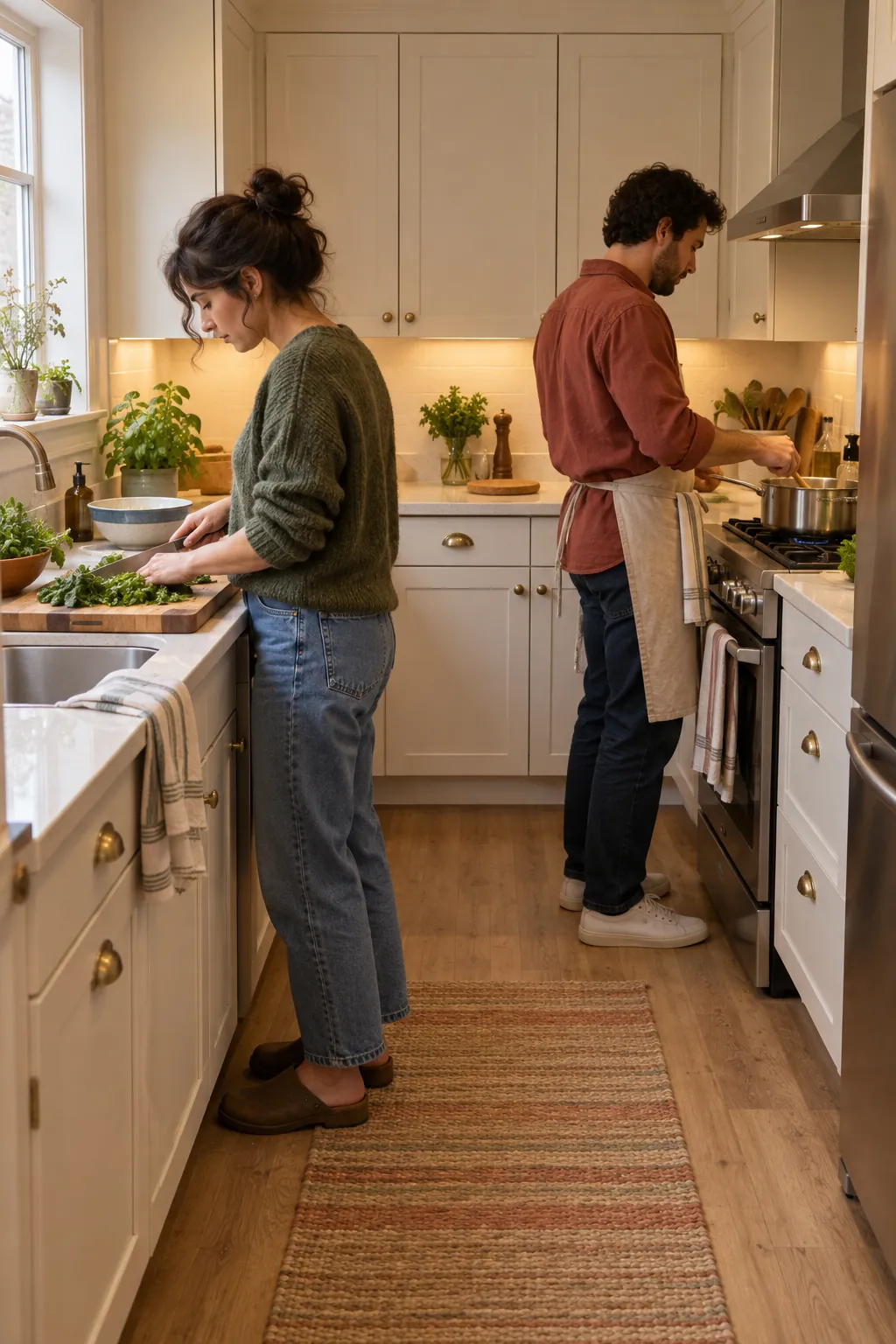
Two cooks usually collide because the room asks both people to reach the same sink, drawer, and clear counter. The fix is not perfect choreography. It is a compact kitchen workflow that gives each person a useful place, a clear route, and an agreed moment to share the busiest tools.
Start by watching one ordinary dinner from groceries to cleanup. Notice where a person waits, turns back, opens a door into the other person, or sets a hot pan in the only prep space. Those small interruptions reveal what the shared cooking space needs more clearly than a general decluttering session.
Give Each Cook a Primary Work Zone
Divide the available counter into two primary kitchen prep zones before cooking starts. One person can work near the sink with produce, bowls, and cold ingredients, while the other works near the range with pans, seasonings, and heat safe utensils. The zones do not need equal space, but each one needs a cutting surface and a place to set active ingredients.
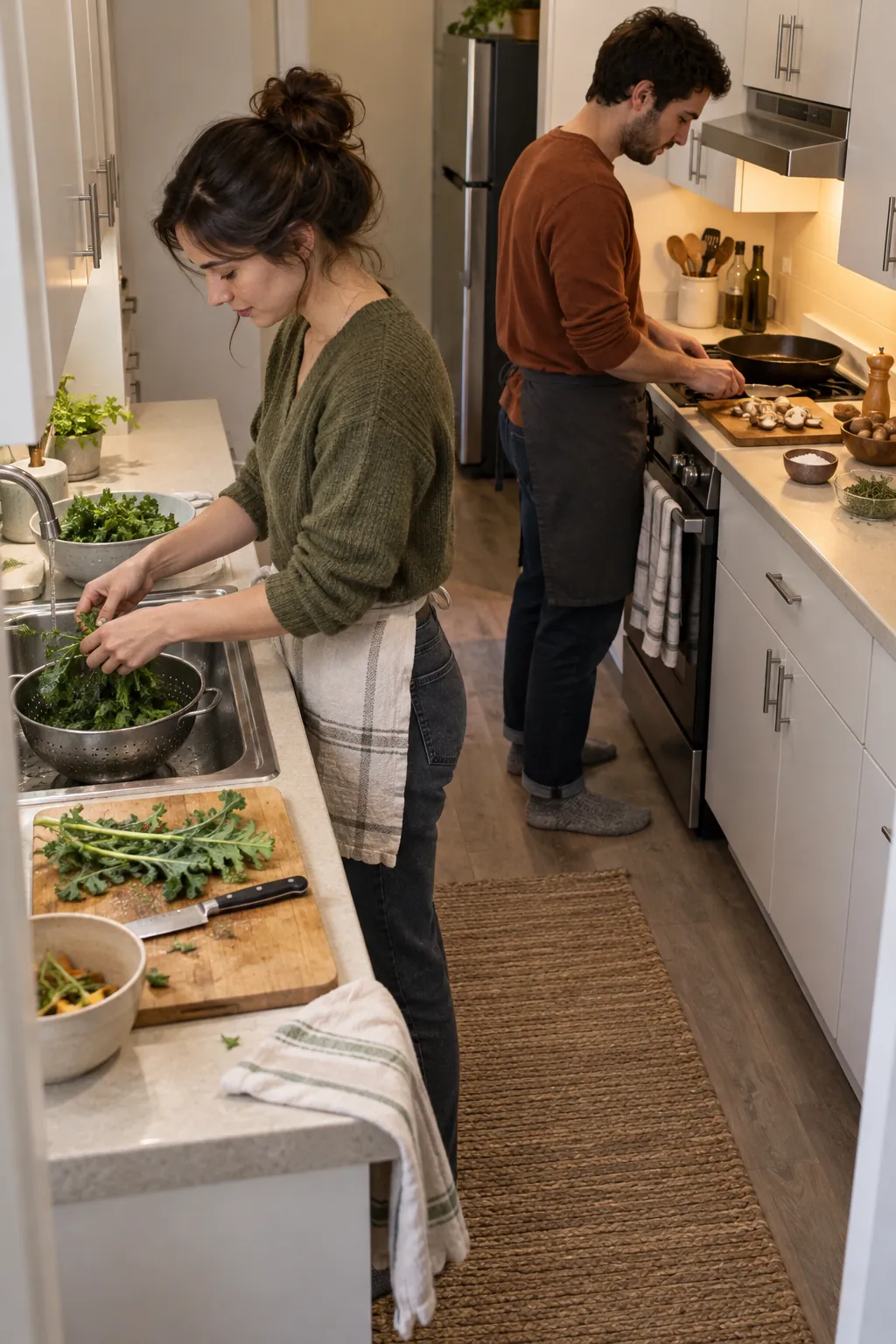
Assign tasks by zone instead of by recipe. The sink side cook can wash, trim, and portion several ingredients, while the range side cook manages heat and finishing. This prevents both people from crossing the room for every small step.
Protect One Shared Landing Space
Keep one small section of countertop empty for items that must move between cooks. A board about the size of a sheet pan can receive a washed vegetable, a finished sauce, or a hot dish on a trivet. Nothing lives there between meals, so it remains available when the compact kitchen workflow becomes busy.
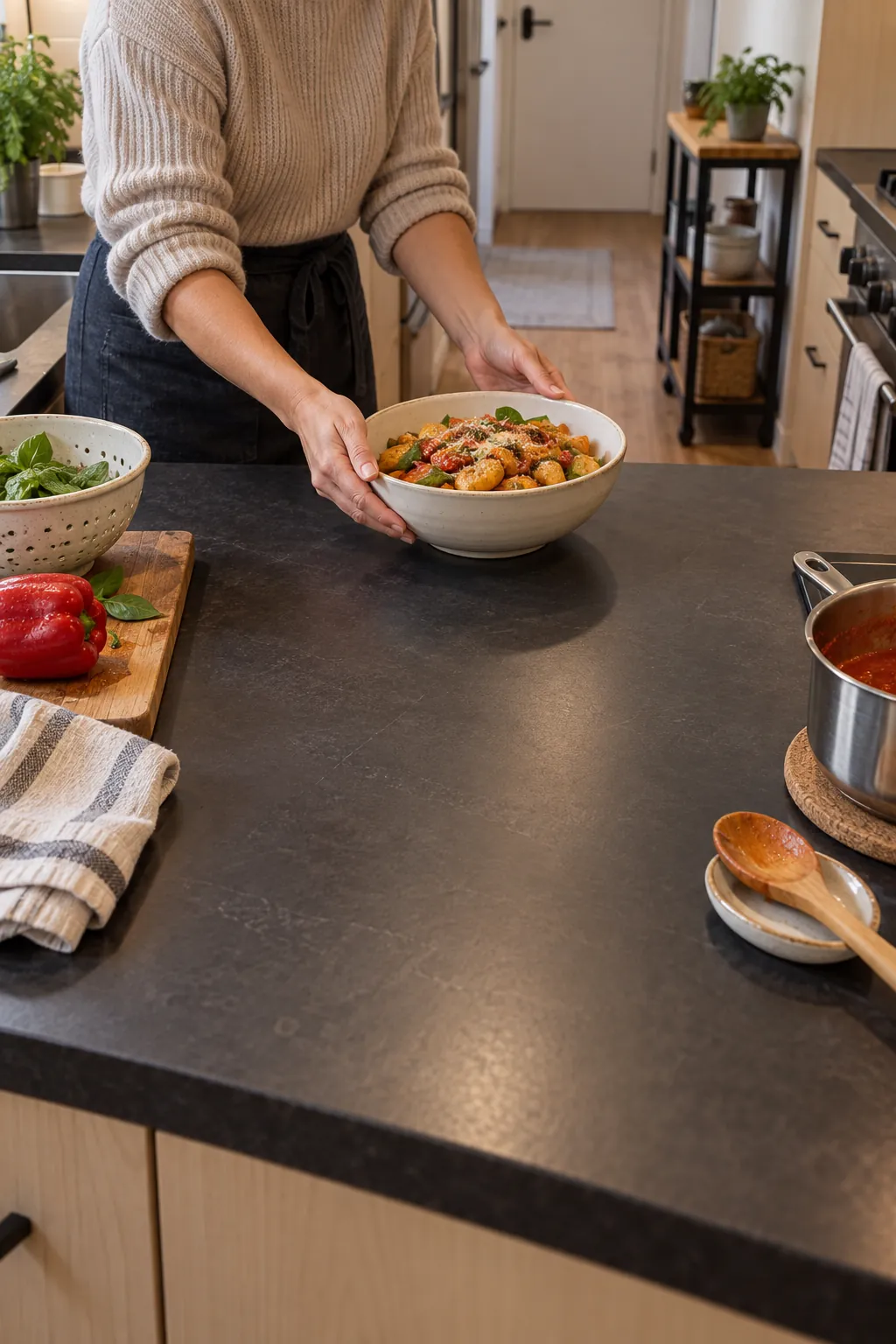
Move the toaster, drying rack, and rarely used appliances away from this area. A rolling cart can help when the floor plan allows it, but it should park outside the main kitchen traffic flow. Extra surface area only helps when doors and bodies can still pass safely.
Arrange Tools Around the Person Who Uses Them
Store tools at their point of use so neither cook has to enter the other zone for routine actions. Keep knives, boards, bowls, and a compost container near the prep surface. Place spatulas, pot holders, oil, salt, and trivets close to the range without crowding the cooking surface.
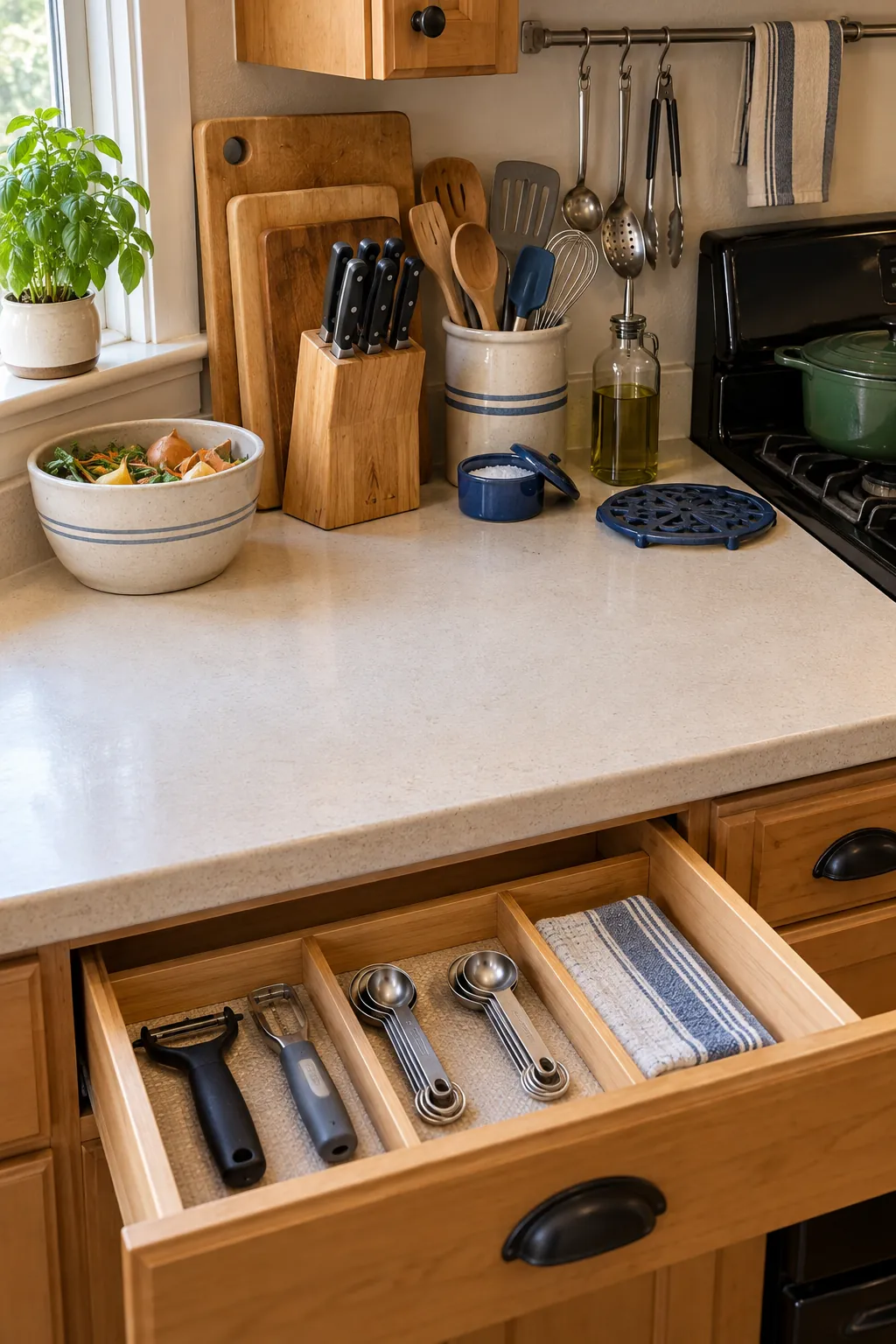
Duplicate only the inexpensive tools that repeatedly cause conflict, such as a peeler, measuring spoon set, or small cutting board. Do not duplicate bulky appliances just because two people cook. A second gadget can remove more working room than it saves.
Create a Safe Passing Rule
Choose one direction for movement through a galley kitchen or narrow aisle whenever possible. The cook carrying a hot pan has priority, and the other person pauses in a safe recess instead of squeezing past. Short spoken cues such as behind you, hot pan, and opening oven make movement predictable without turning dinner into a meeting.
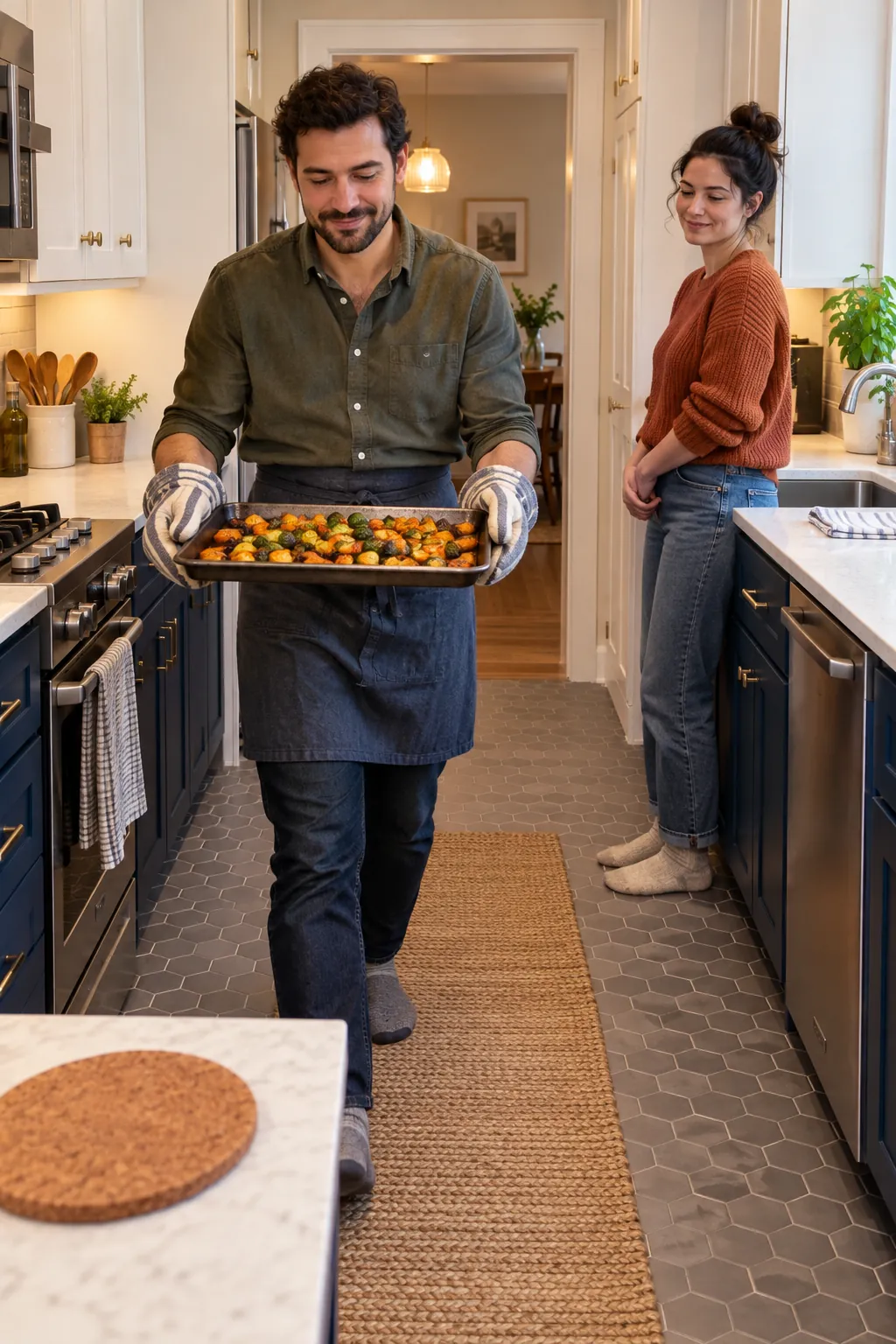
Keep cabinet doors and the dishwasher closed unless someone is actively loading or unloading them. Put trash and recycling where one person can reach them without blocking the sink. These simple rules matter more than decorative small kitchen layout changes because they reduce surprise.
Sequence the Bottleneck Tasks
Some resources cannot be divided, so schedule them instead. Wash all produce before both cutting boards become active, or let one cook finish at the sink while the other gathers pans and seasonings. When the oven must open, clear the aisle and landing space first.
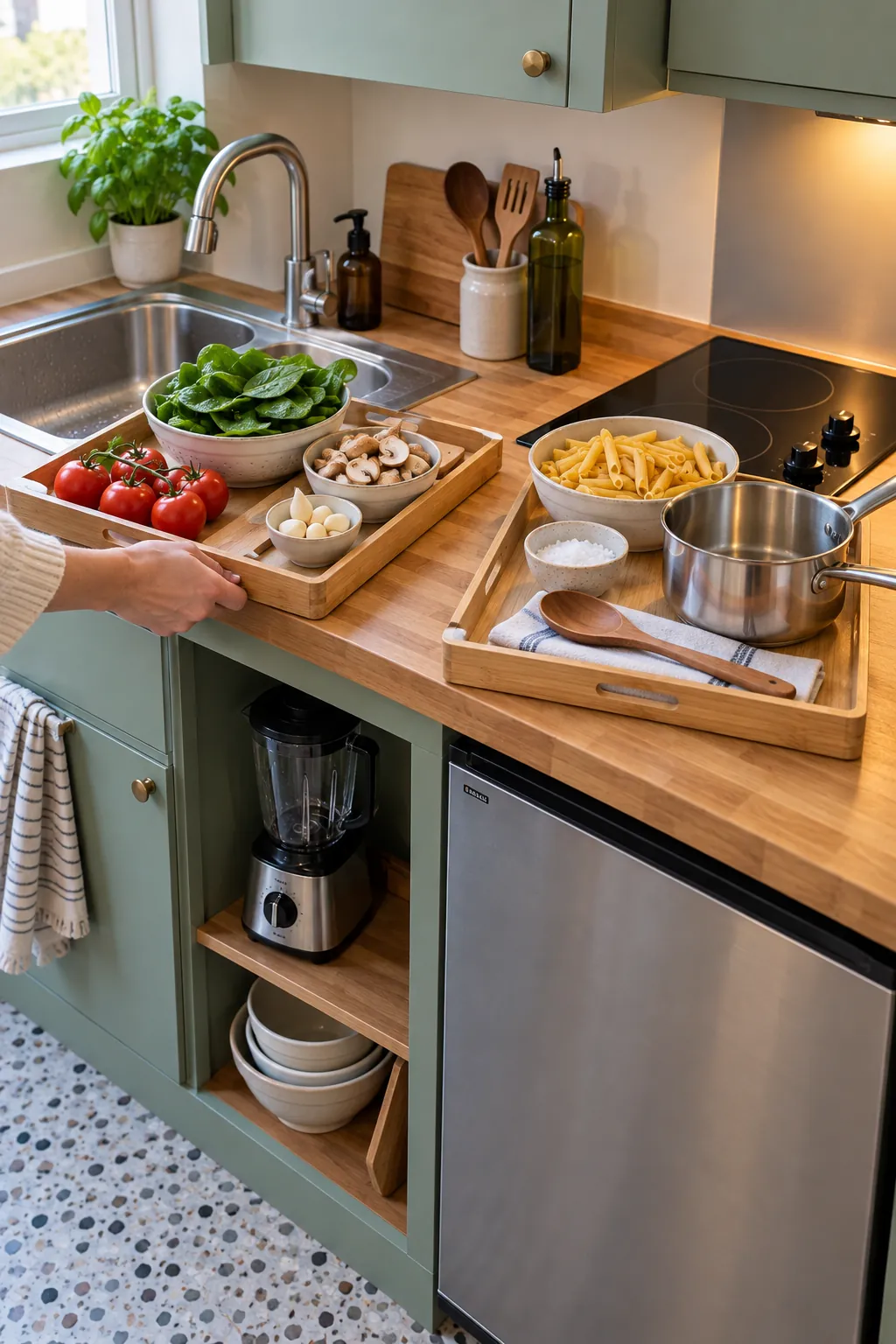
A quick plan can be as simple as naming the order of the sink, oven, and blender. Place every ingredient in its starting zone before heat begins. Fewer mid recipe searches mean fewer crossings and fewer open drawers.
Reset While the Other Cook Finishes
Use natural waiting time to restore working space. The person whose task is simmering can wash a board, return cold ingredients, and clear packaging while the other finishes at the range. A shallow bus tub near the dining area can hold dirty items when the sink must stay open for cooking.
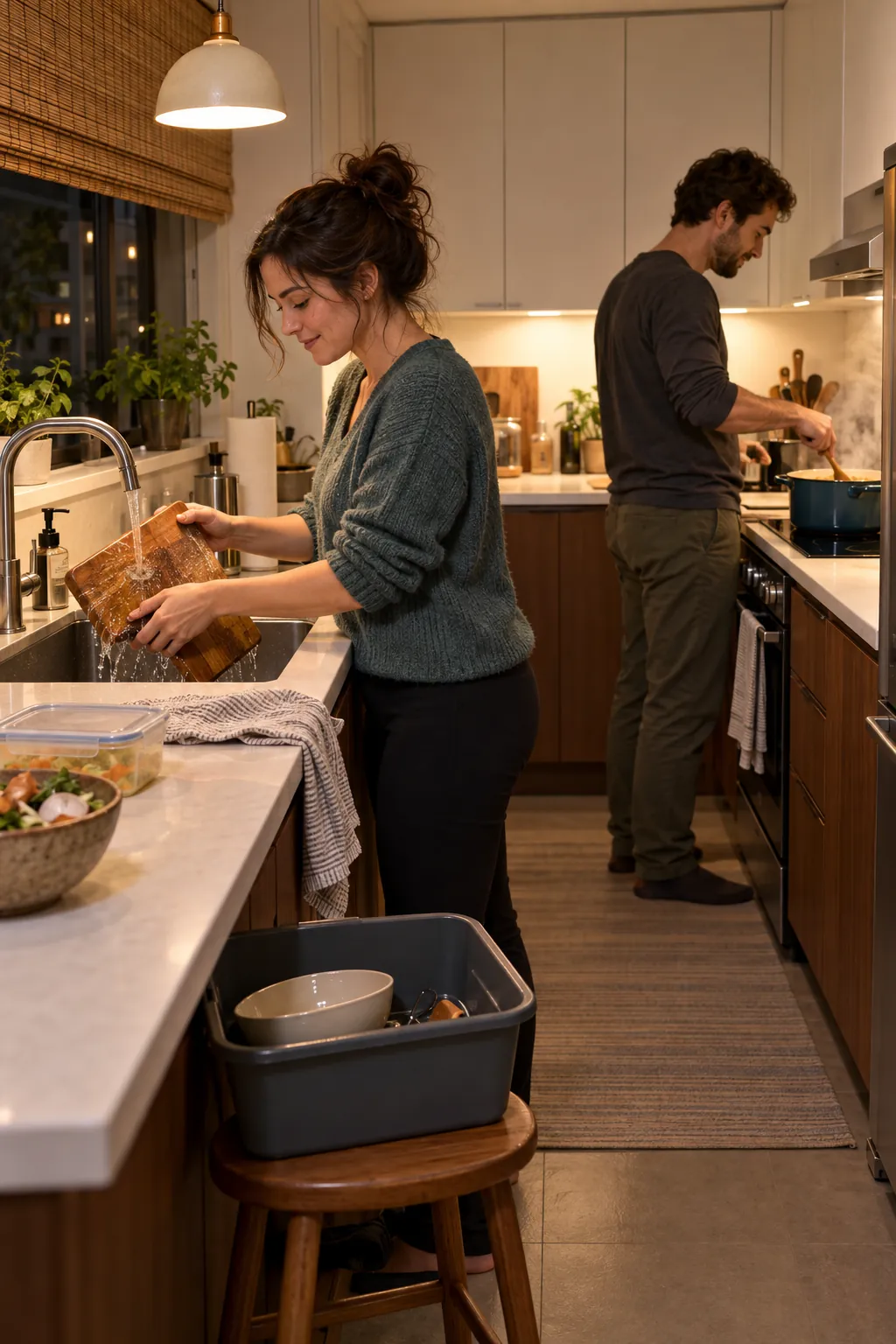
End by checking which collision happened more than once. Move one tool, change one task assignment, or protect one more section of counter for the next meal. A two person small kitchen works best when the system improves through small observed changes rather than a single expensive remodel.