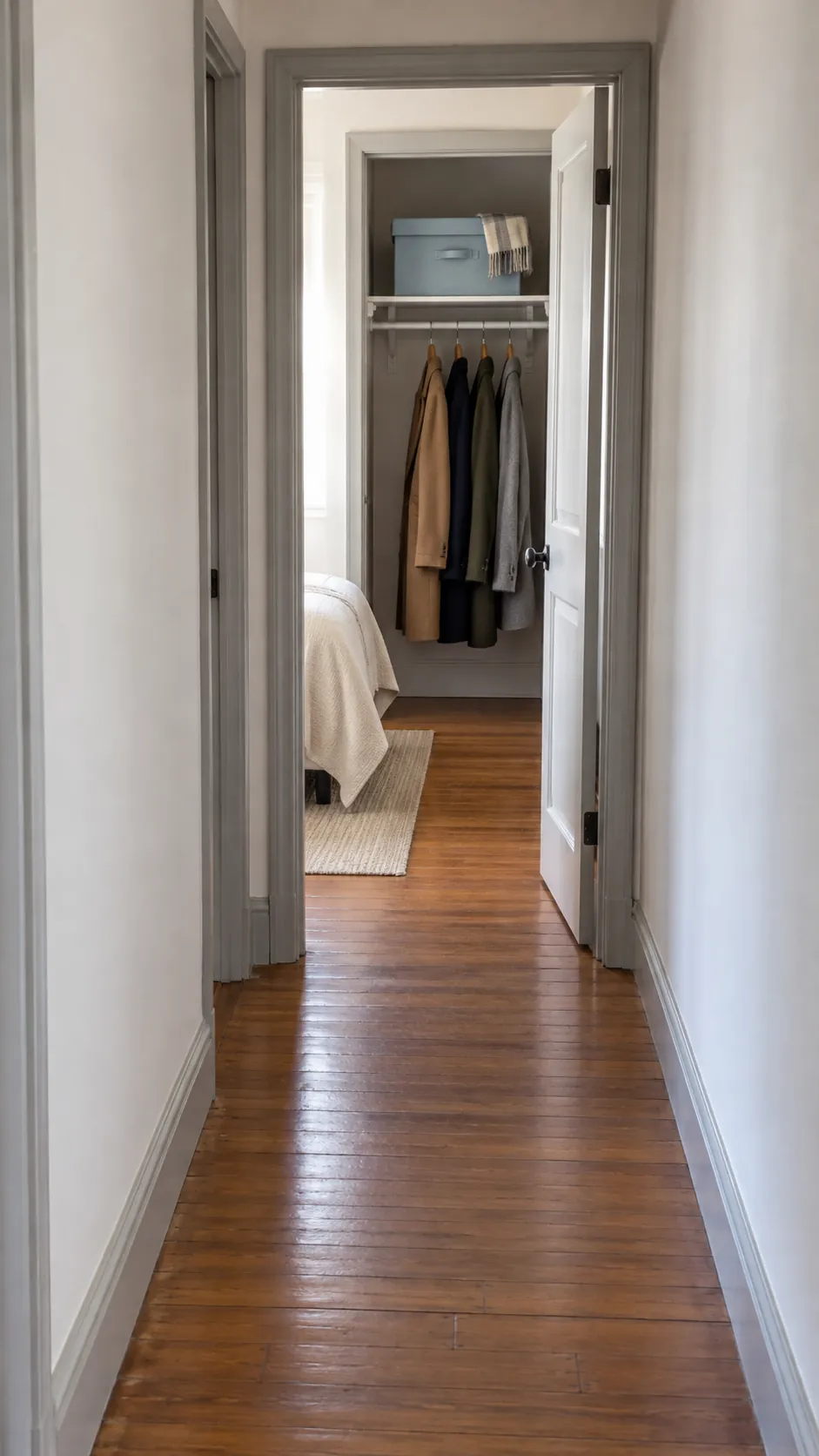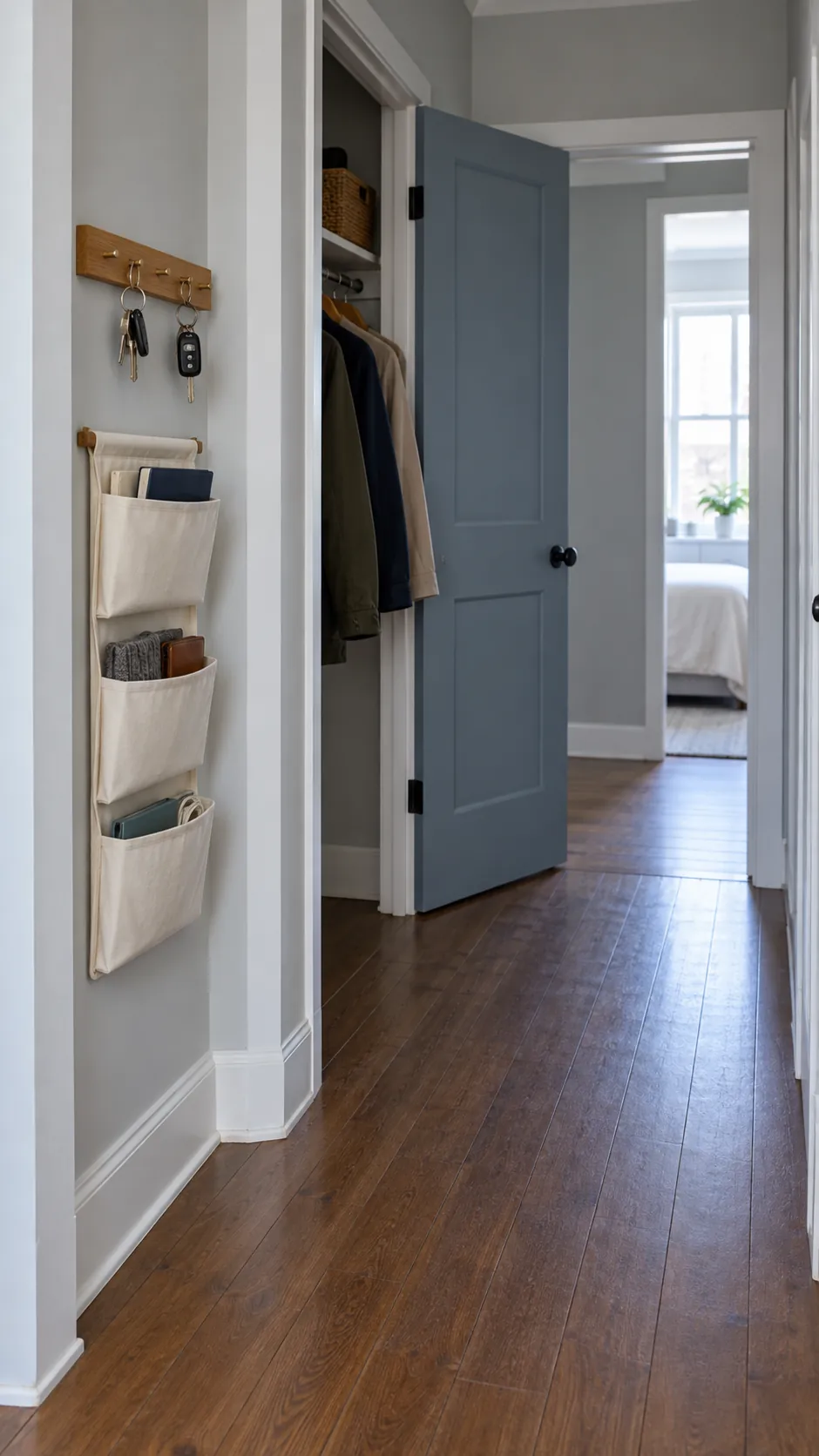
Getting storage off the floor does not automatically make a hallway easier to use. A coat, a loaded pocket, or an open cabinet can project into the space your shoulders need. Measure the passage with items in place, then keep the required exit route and every door movement clear.
Rental hallway storage also depends on what your lease permits and what the surface can support. Ask for written permission before drilling, follow the organizer's mounting and load instructions, and check for hidden services before any approved fixing work. Adhesive products can damage paint and cannot replace structural anchors for heavy shelves or cabinets.
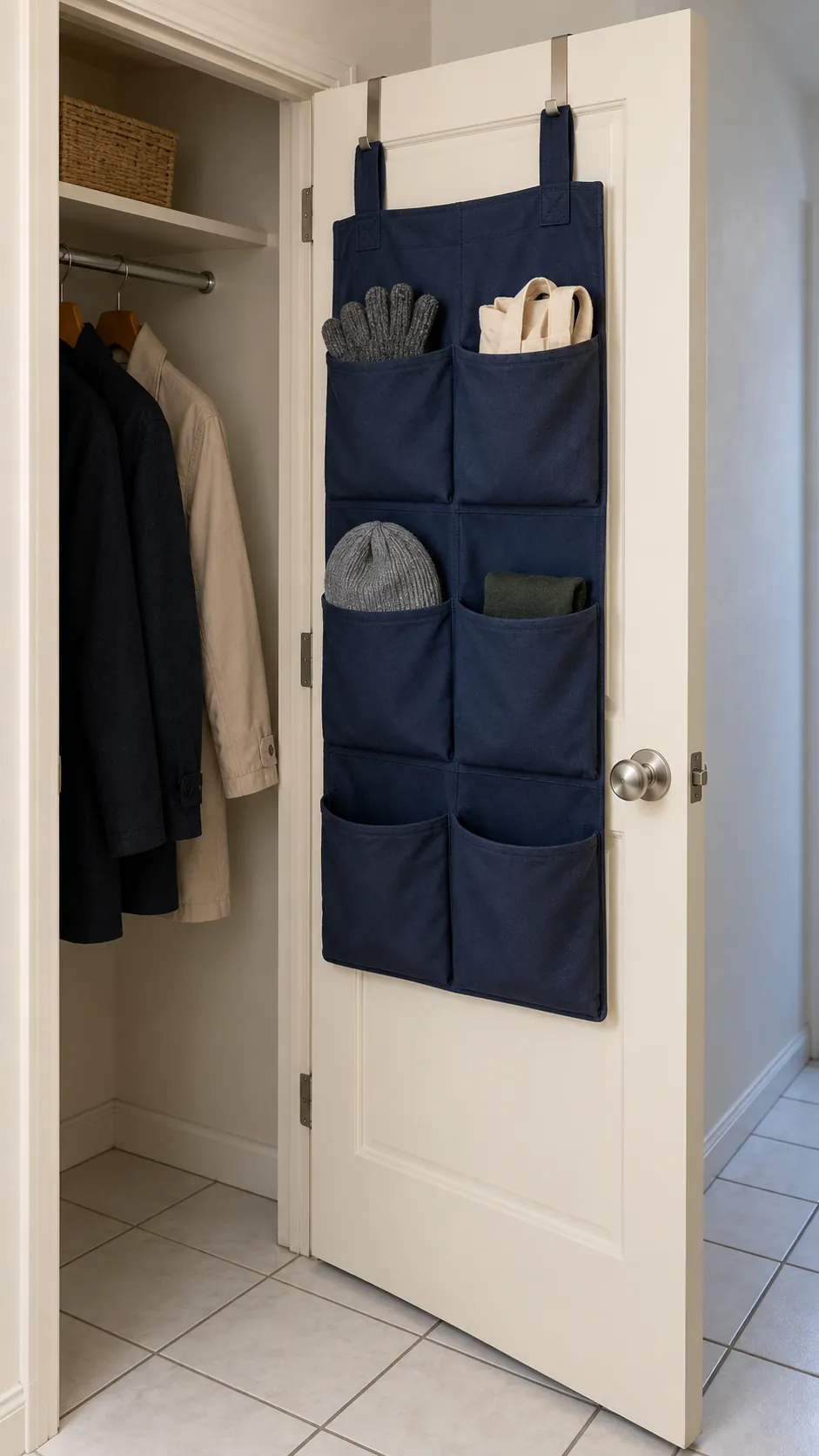
Fabric pockets on an interior closet door
A fabric pocket organizer turns the inside face of a closet door into storage for gloves, folded shopping bags, and other light items. Check both the filled pocket depth and the thickness of its hanging hooks before buying. The door must close and latch normally without scraping the frame. Avoid using an organizer on a fire door or entrance door where it could affect required operation.
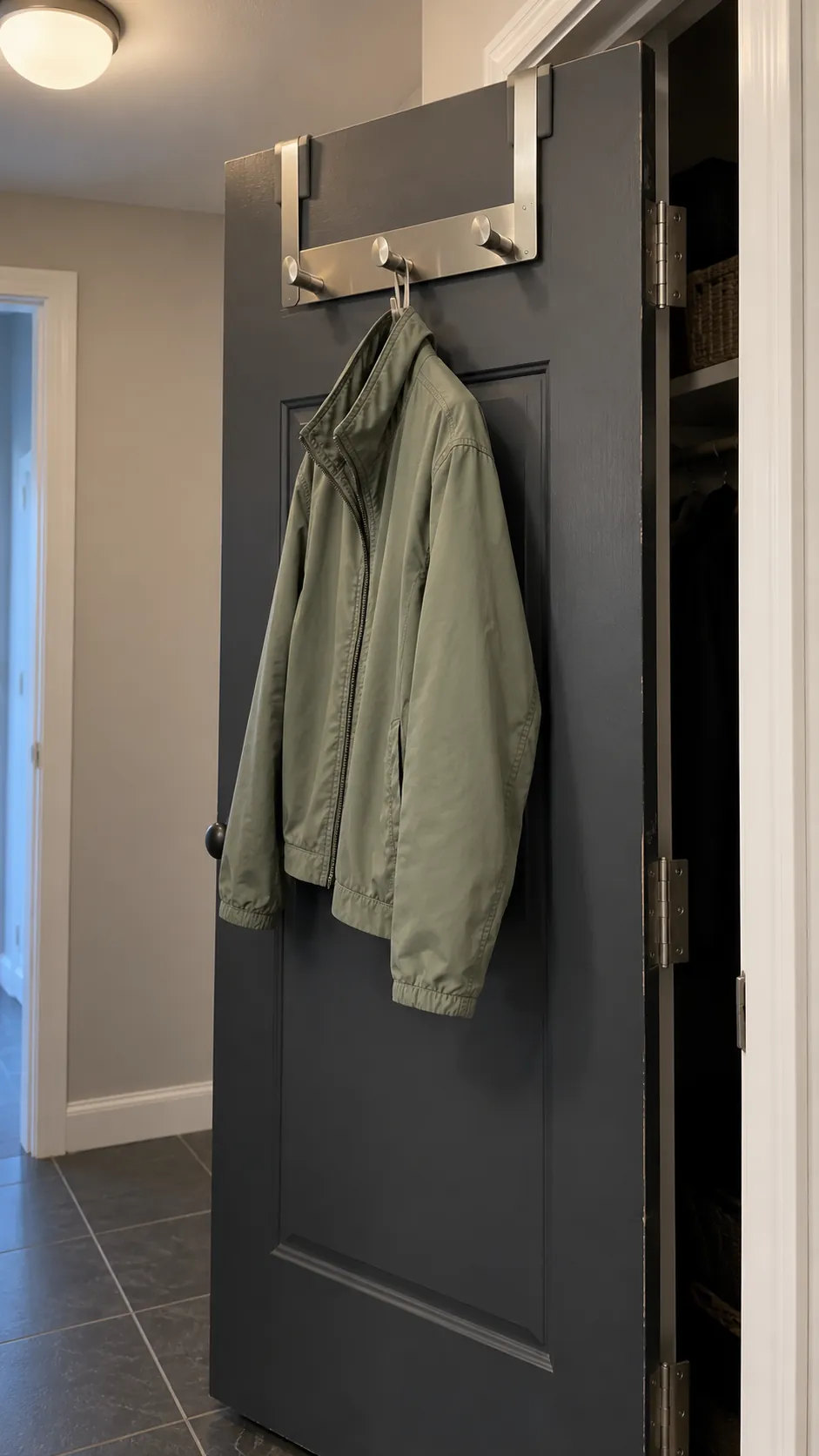
A slim rack over a suitable interior door
An overdoor rack can hold a daily jacket without adding a coat stand. Choose a rack designed for your door thickness, with protective contact pads that suit the finish. Test the door gently with the rack empty before adding clothing.
Keep the load within the manufacturer's limit and spread it across the intended hooks. A bulky winter coat may consume more hallway width than the rack itself. Use the inside of a closet door when the outside would catch passing shoulders.
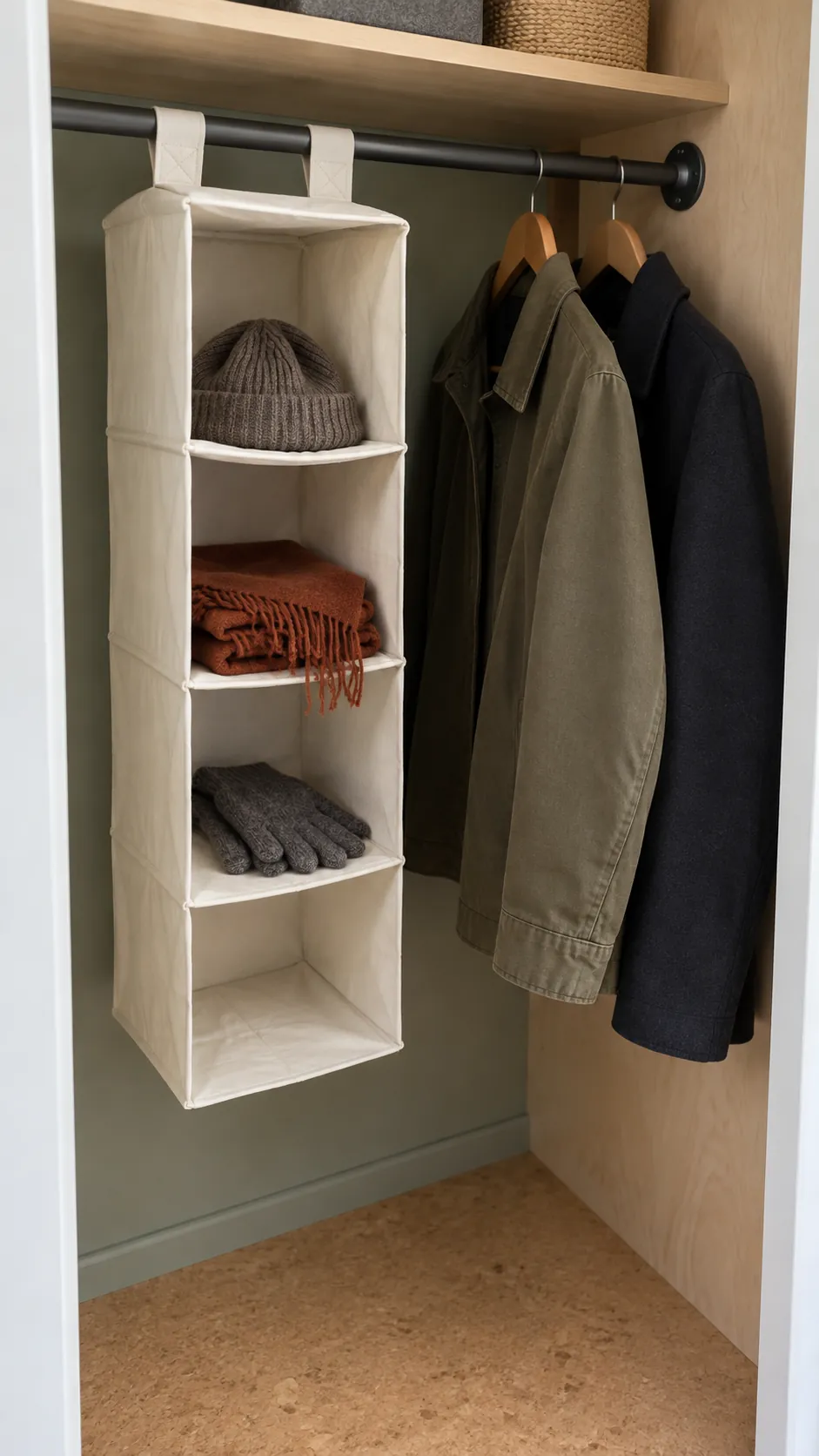
Hanging cubbies on an existing closet rail
A narrow fabric cubby organizer can collect hats and scarves inside an entry closet. Confirm that the existing rail and its brackets can carry the combined load of the organizer and your coats. Choose short cubbies that leave the floor available for whatever already belongs there. Put soft accessories in the upper compartments and reserve the easiest level for the items you use daily. This keeps compact entry organization inside existing storage rather than spreading it along the passage.
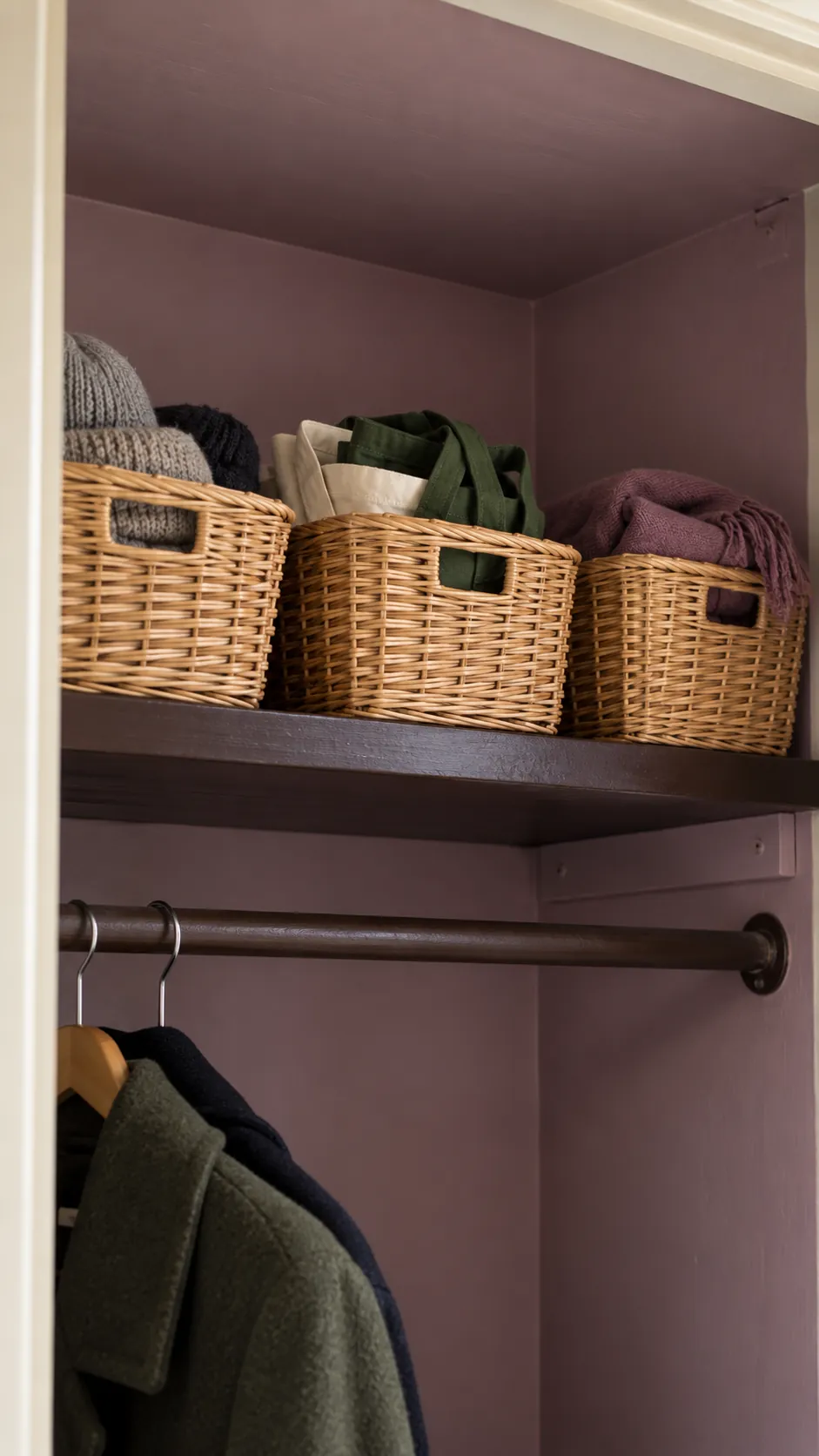
Small baskets on a shelf you already have
An existing closet shelf often works better with several manageable baskets than one deep box. Group accessories by use, such as cold weather items or reusable shopping bags, so a whole category comes down together. Measure the shelf depth and leave enough clearance above each basket to lift it safely.
Use light containers on high shelves and keep heavy items lower. Avoid stacking loose objects where opening the door could dislodge them. A basket you can reach comfortably is more useful than capacity you need a precarious stretch to access.
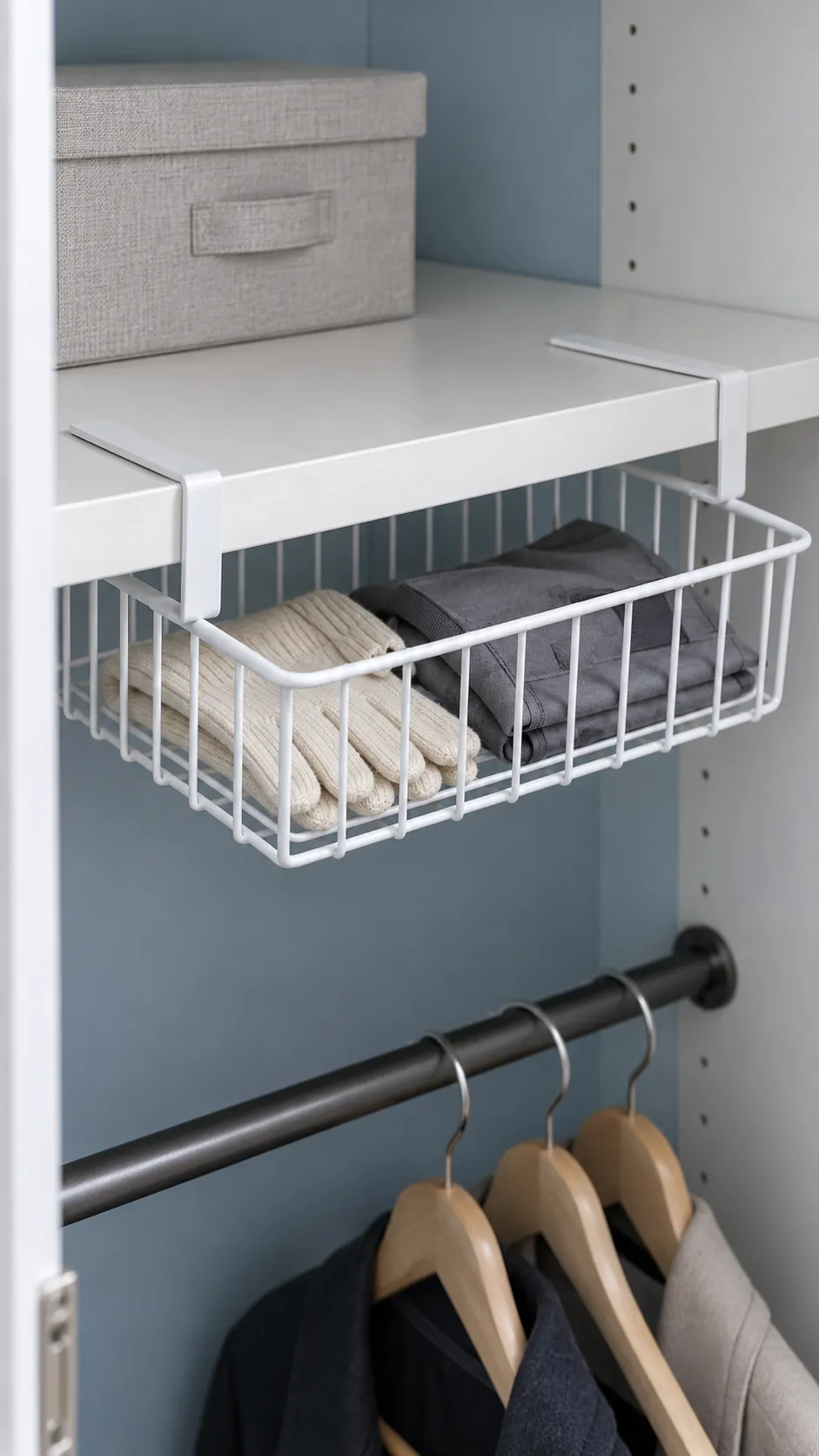
A basket clipped beneath a sturdy shelf
A shallow basket that slides over a shelf edge can use the empty band below it. Match the clip opening to the shelf thickness and check that the shelf can support the added load. Leave room for coats and other stored items beneath the basket. Fill it with light accessories rather than shoes or tools that could overload the clips.
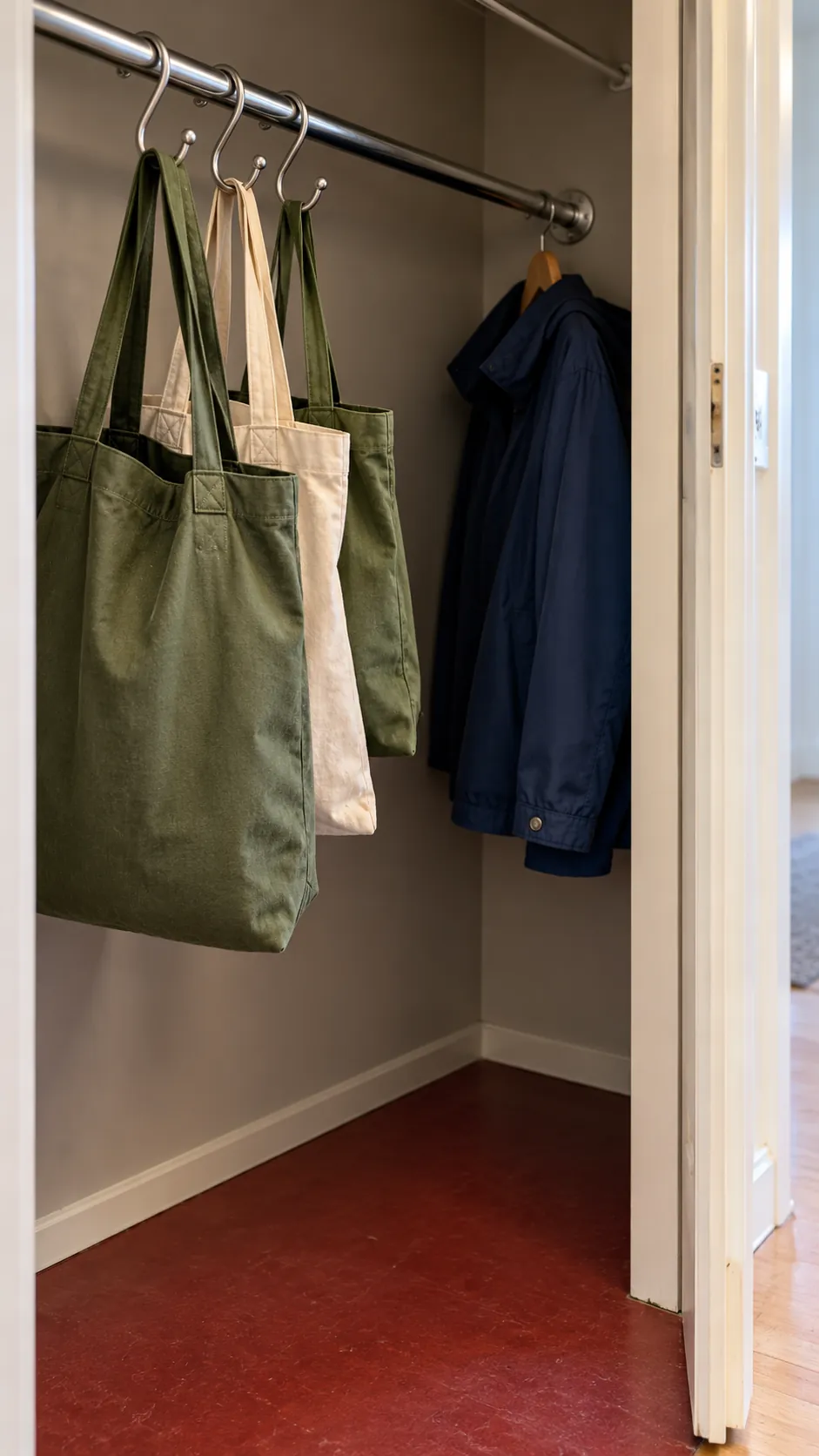
Bag hooks on an existing closet rail
Compatible hooks on a closet rail can gather reusable bags in a space that already supports hanging storage. Nest the bags loosely by size so the largest one does not hide everything else. Keep handles from trailing onto the floor or tangling around nearby hangers.
The rail's total load still matters, even if each bag is light. Store empty shopping bags here rather than bags filled with purchases. Leave a clear hand space to lift a hook off when you need the full set.
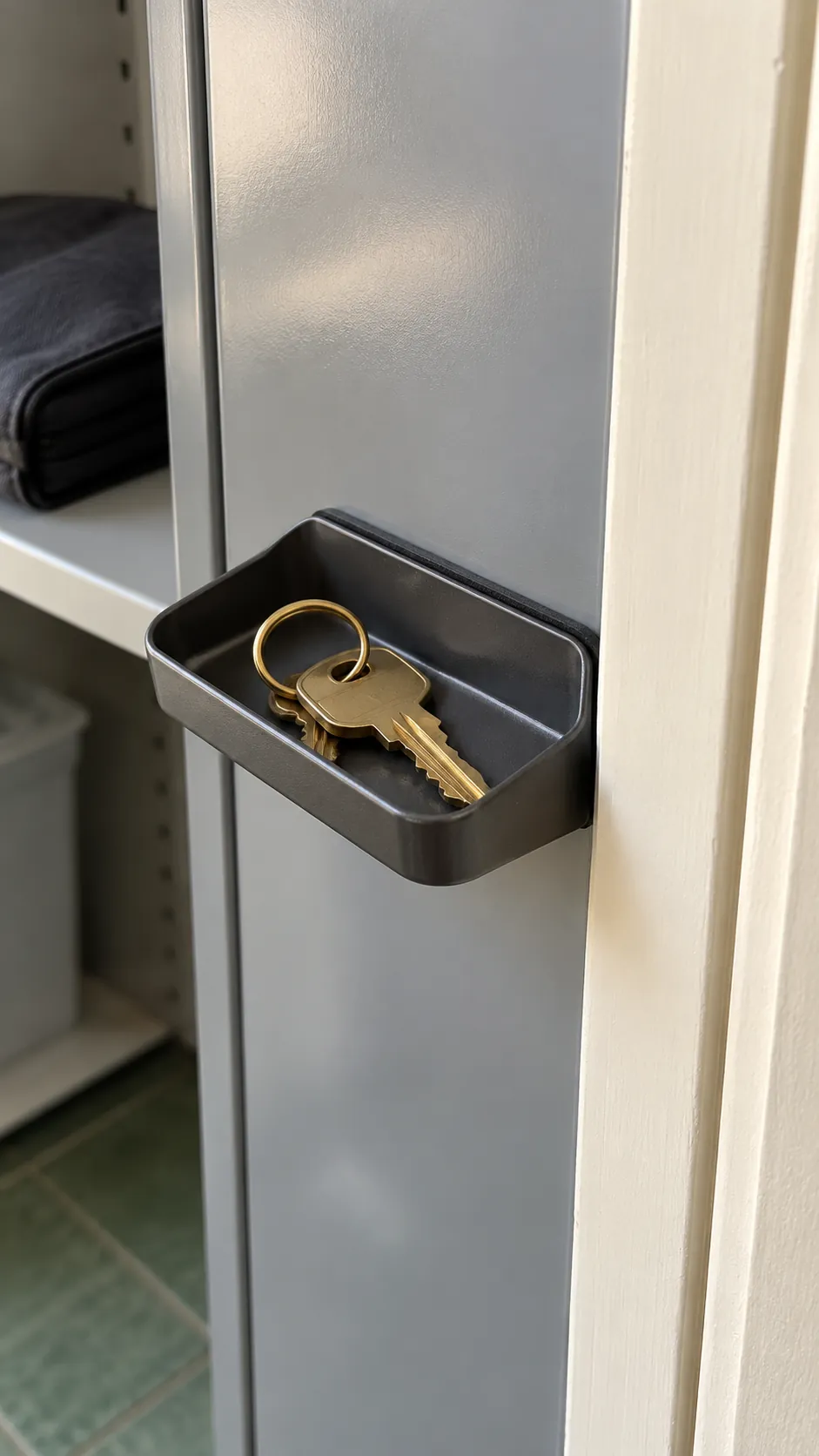
A magnetic key tray on suitable steel
A magnetic tray can hold a key ring on a suitable steel surface inside the apartment. Test the surface first, because aluminum, wood, and many stainless finishes will not hold a magnet reliably. Choose a padded product with a stated load limit and check whether it can mark the finish. Keep it clear of locks, seals, door mechanisms, and any building equipment. A steel closet side panel is often a better location than the entrance door itself.
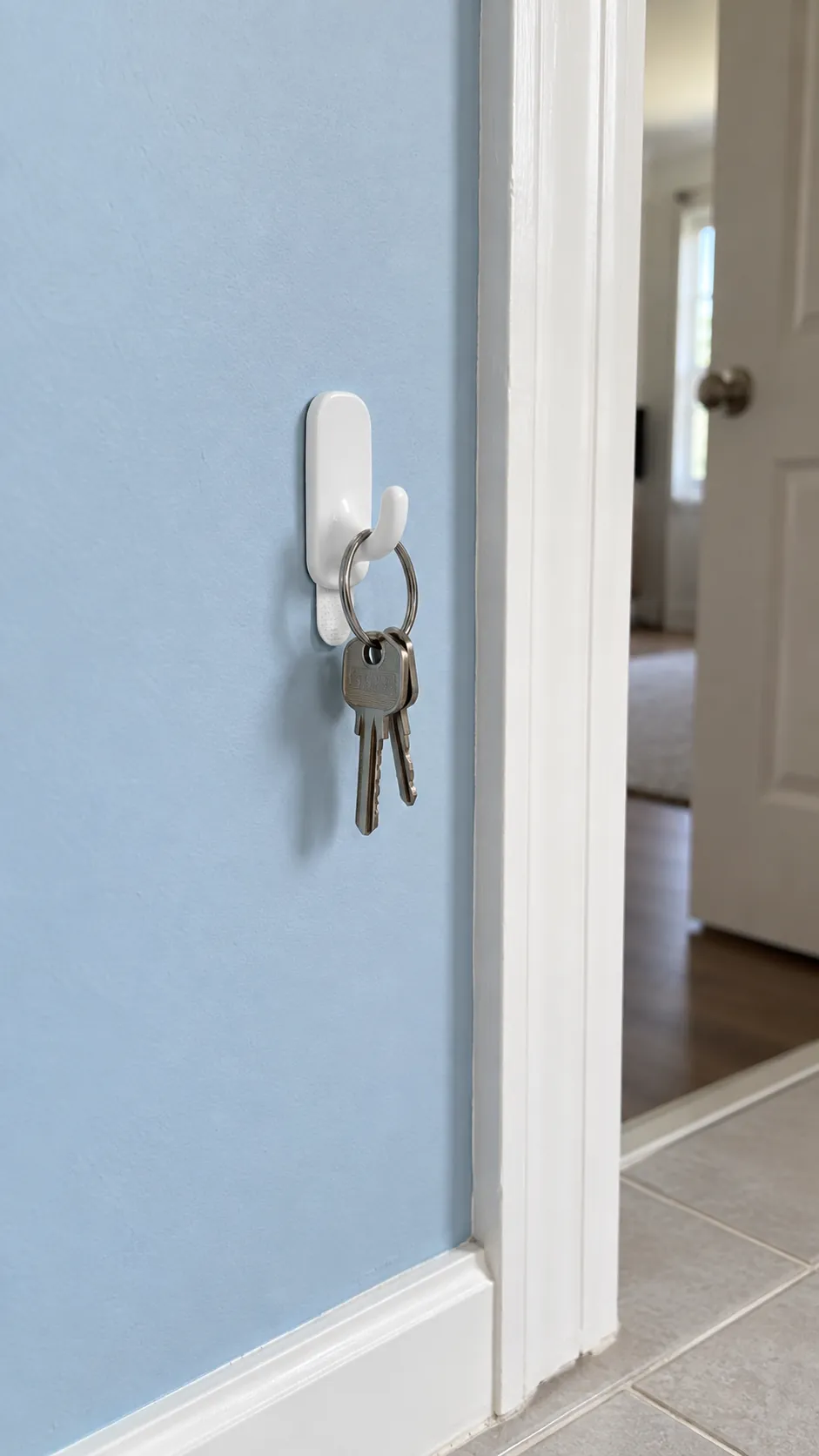
A removable hook for one light daily item
A purpose made removable hook can be useful for a light key ring when its instructions allow your wall surface. Follow the cleaning method, curing time, weight limit, and removal direction exactly. Fresh paint, textured walls, moisture, and weak finishes can change how the adhesive performs.
Try an inconspicuous area if the product maker recommends it and the lease allows adhesive fixtures. Do not treat the printed load limit as permission to hang a heavy shelf from several unrelated strips. Choose another location if you cannot accept the possibility of paint damage.
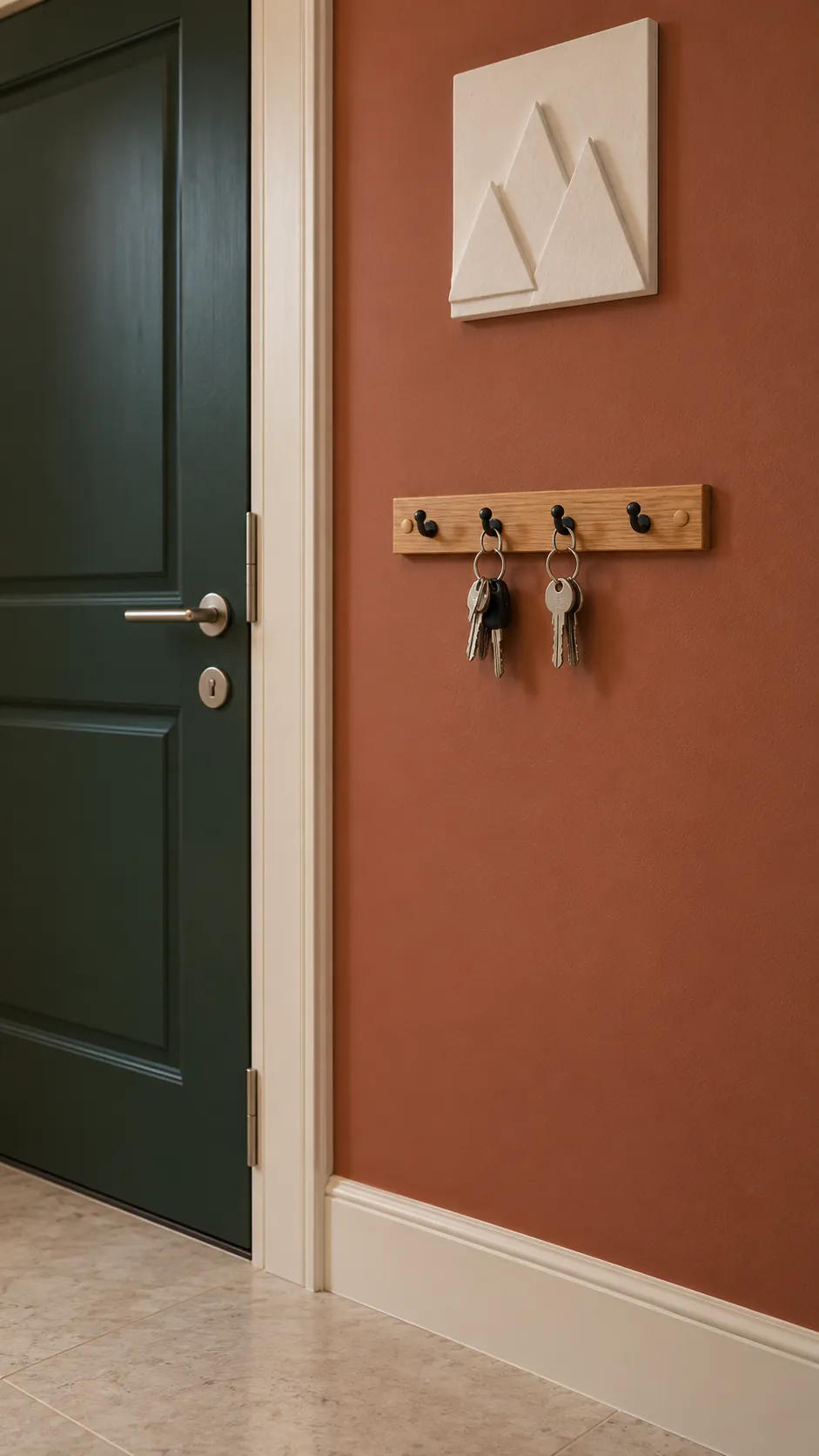
A key rail installed with permission
A short key rail can make the daily handoff more predictable without needing a console. With permission, install it using fixings suited to the wall and the rail's instructions. Position it where keys will not strike the door or hang at a passing person's face level. Keep spare keys and bulky lanyards elsewhere so this small rail remains easy to scan.
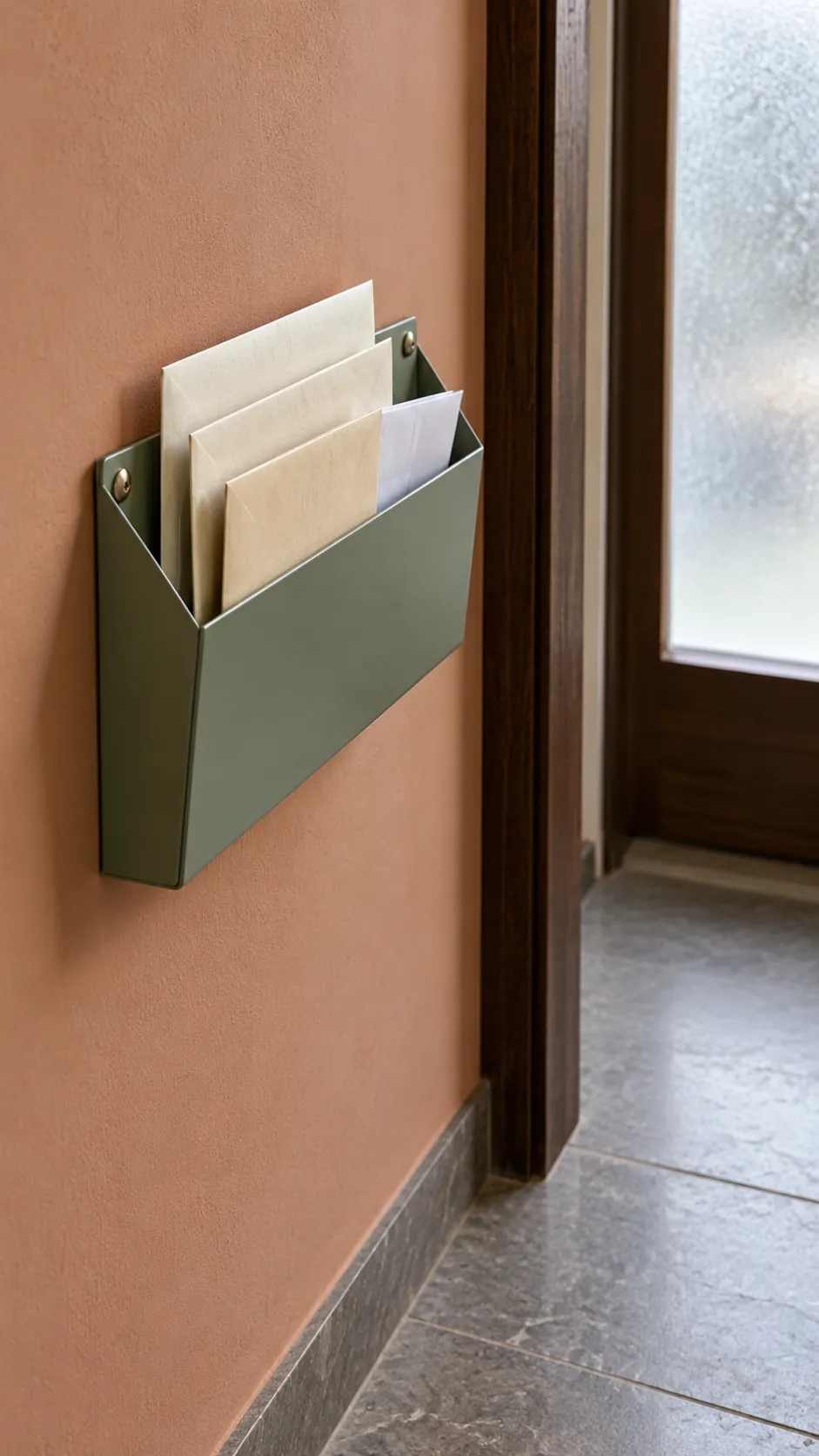
A shallow wall pocket for incoming mail
A slim mail pocket gives incoming paper a temporary home instead of letting it collect on the floor. Choose a depth that remains clear of shoulders when the pocket contains envelopes. Install it only with a mounting method approved for the product, surface, and tenancy.
Empty the pocket regularly so it does not become a permanent archive. Separate documents that need action from packaging you can discard. A narrow hallway organizer works best when its contents have a clear next destination.
A small pegboard within a permitted recess
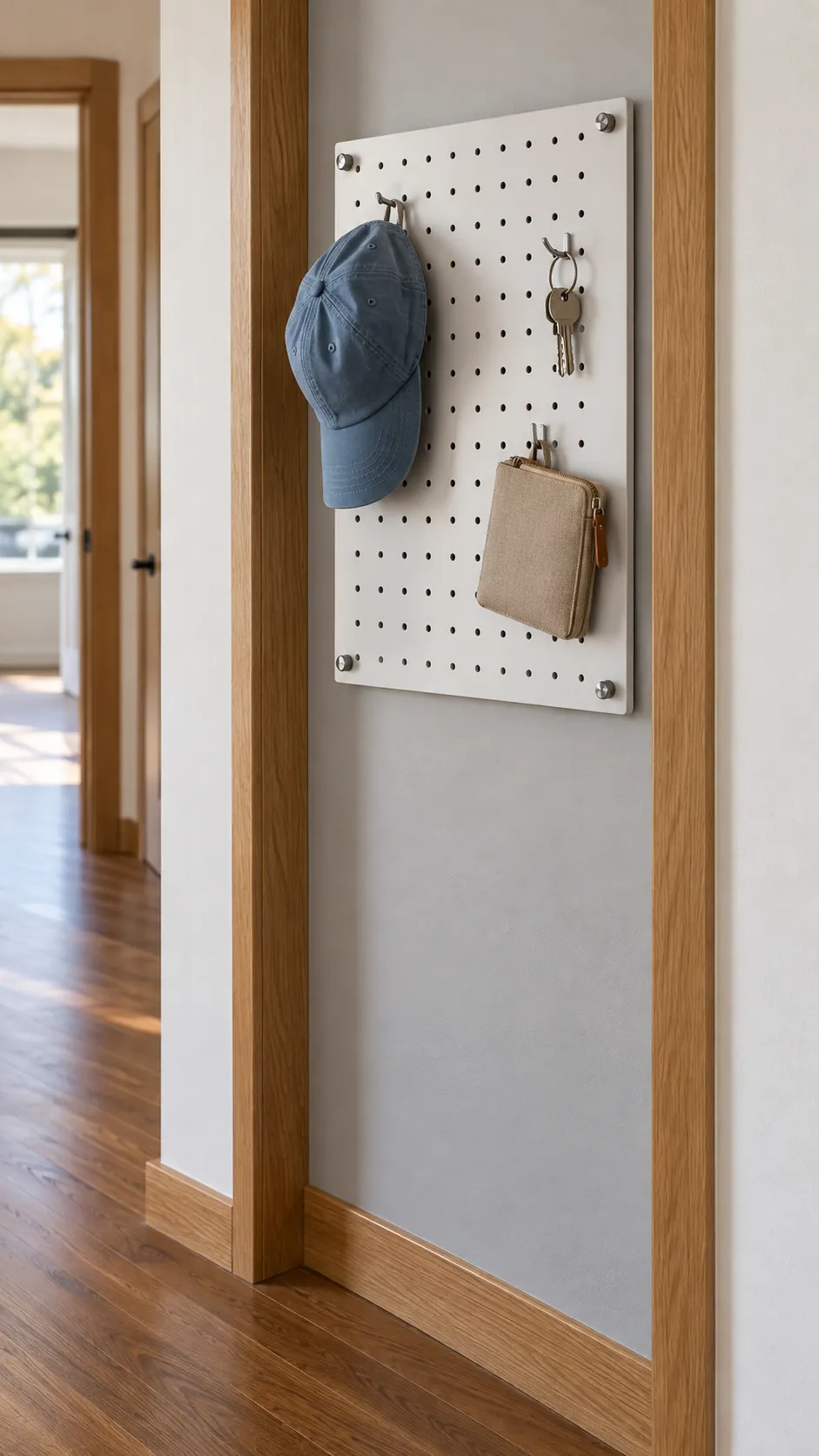
A small pegboard can organize a cap, lightweight pouch, and keys inside a recess. Measure the full depth of the board, hooks, and loaded items rather than the board alone. Ask permission for the required fixings and use the manufacturer's mounting system. Keep hooks within the recess so they do not become projecting obstacles. Leave some holes empty to prevent the board from becoming a dense layer of overlapping belongings.
Wall shoe pockets for the pairs used most
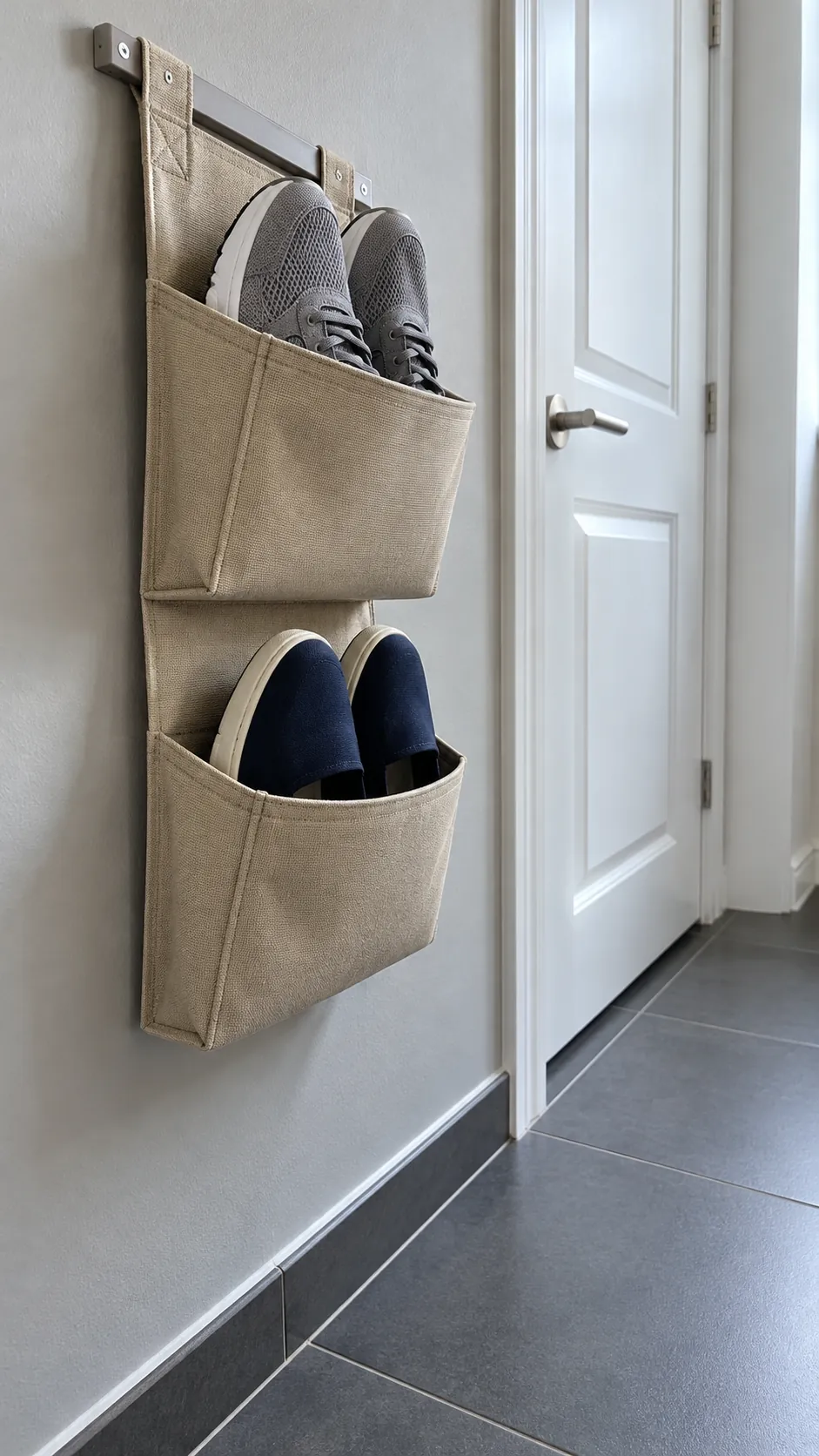
A purpose built shoe pocket system can lift a few daily pairs off the floor. Check the largest shoe size against each pocket and include any toe projection in your hallway measurement. Fix the organizer as instructed, with permission for any wall holes.
Let damp footwear dry before putting it into enclosed pockets. Limit the wall to the pairs that actually return there every day. Move occasional shoes to bedroom or closet storage instead of extending the organizer along the whole corridor.
A shallow shoe cabinet fixed to the wall
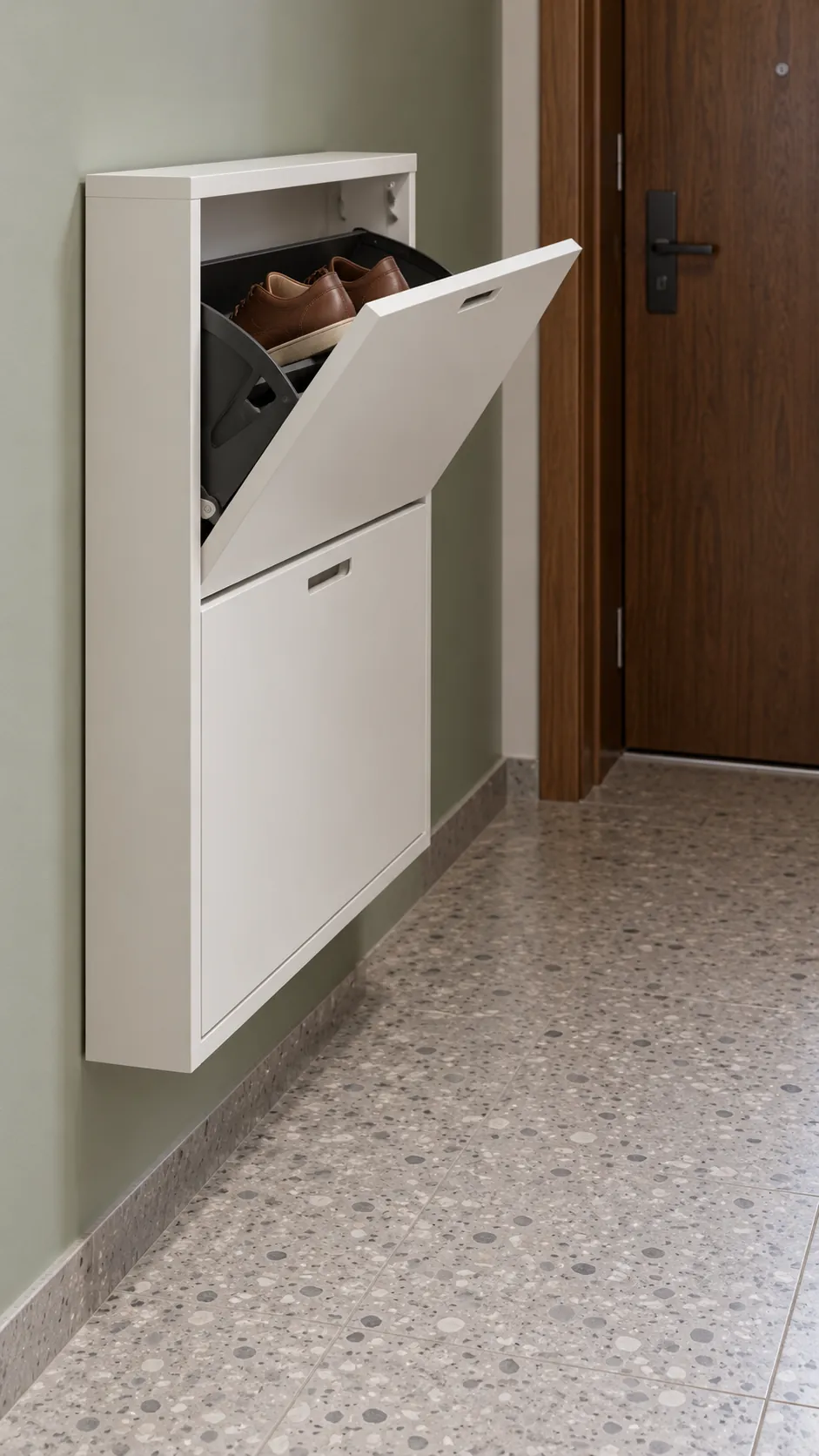
A wall fixed shoe cabinet can clear the floor where permission and suitable structural support are available. Choose a model intended for this installation, not a freestanding cabinet with its legs removed. Measure the cabinet with every compartment open, because a tilt door may occupy the walking route during use. Proper anchors and the specified installation matter more than the cabinet's slim appearance. If the open cabinet cannot coexist with safe movement, use a different storage position.
Hooks that fold flat when empty
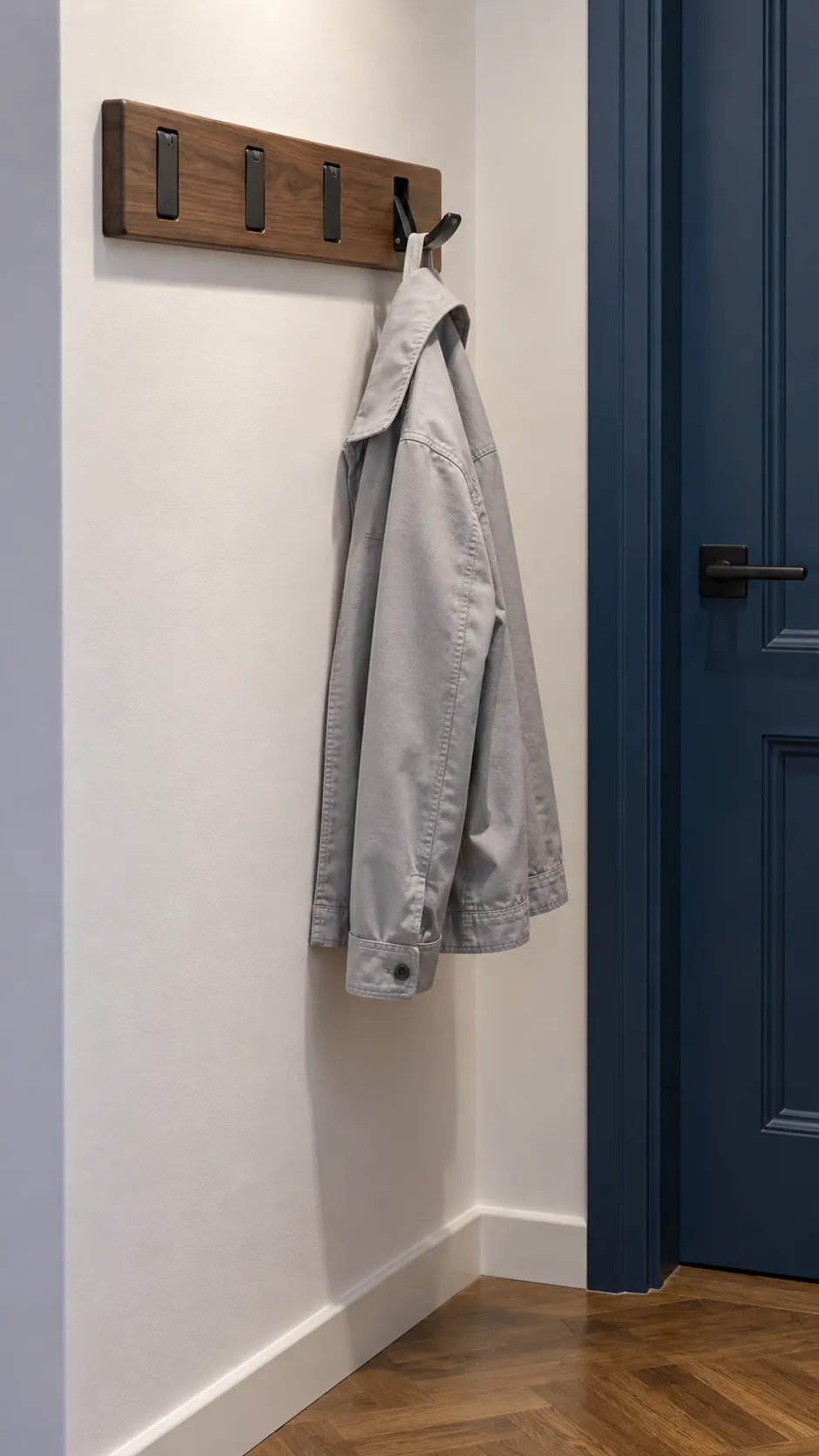
Folding hooks reduce their projection when there is nothing hanging on them. Place them in a permitted location that remains safe with clothing attached, not just when the hooks are closed. Use the specified fixings and keep each hook within its rated load.
Reserve these hooks for current outerwear rather than a whole coat collection. Fold unused hooks away after removing the last item. Check that their edges and hinges will not catch a bag strap as somebody passes.
Tool grips inside the hall cupboard
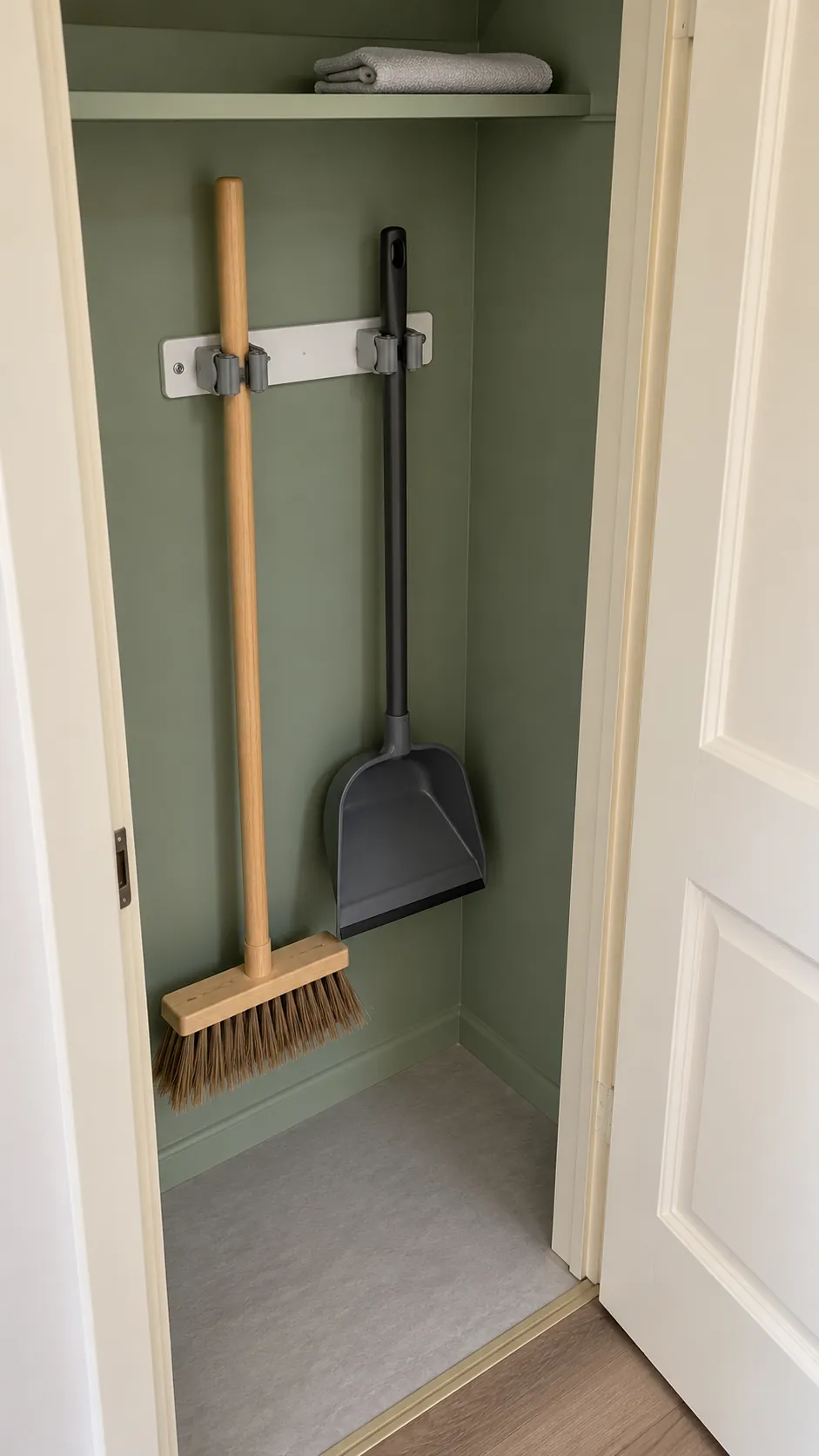
Broom grips can keep cleaning tools upright inside a hall cupboard instead of leaning in the passage. Select grips that match the handle diameter and the product's mounting requirements. Position the broom head above the floor without letting it press against the door. Keep cleaning products in appropriate secure storage rather than hanging bottles from the same grips.
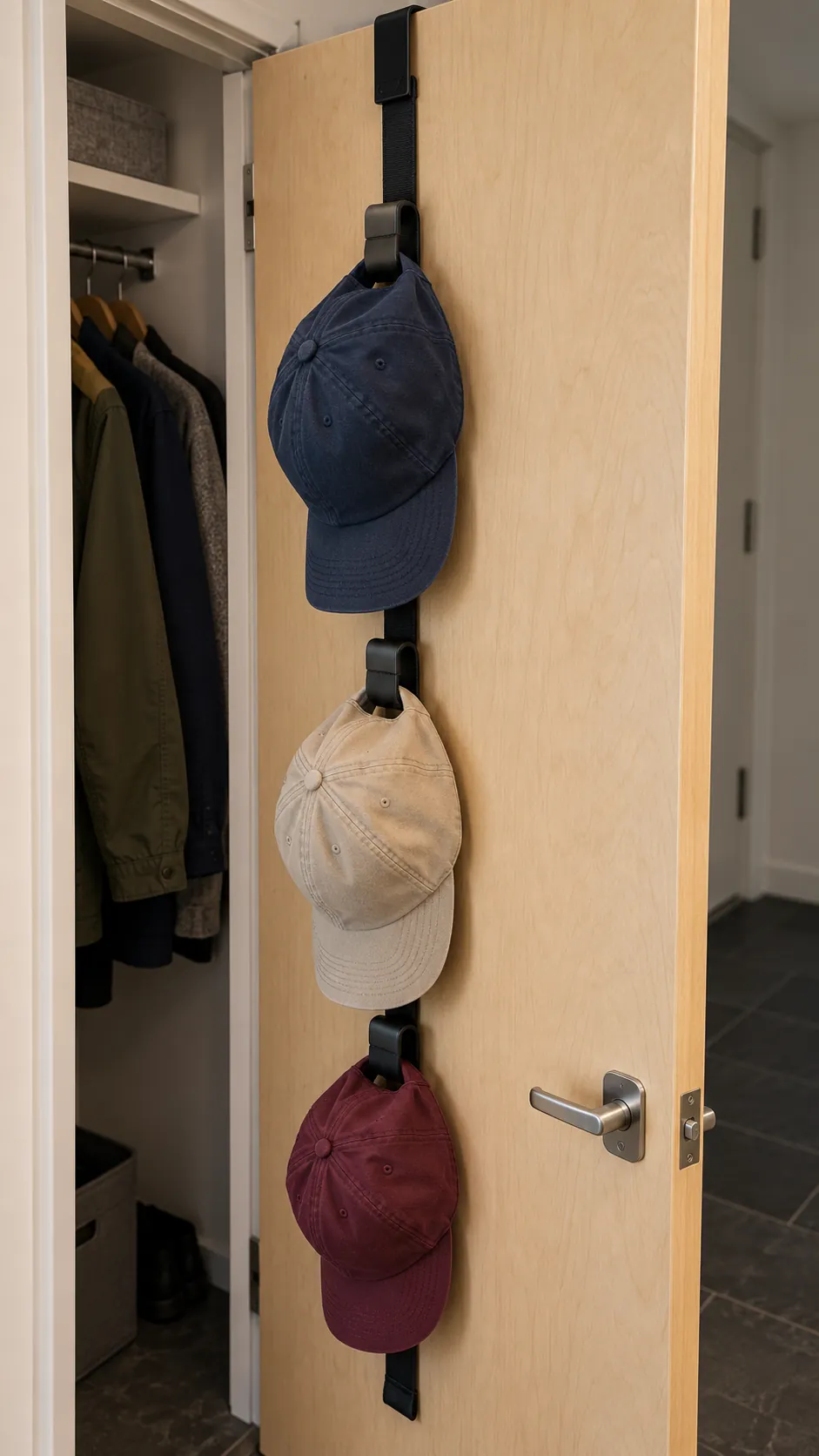
A cap organizer on the back of a closet door
A dedicated cap organizer keeps brims from being crushed beneath coats. Choose a door compatible design that does not prevent normal closing, and load only the number of caps it is made to hold. Give each brim enough space so taking one cap does not pull the rest down.
This is most useful when caps are part of the daily routine. Store rarely worn hats elsewhere rather than filling every available door surface. Check the organizer's contact points periodically for rubbing or looseness.
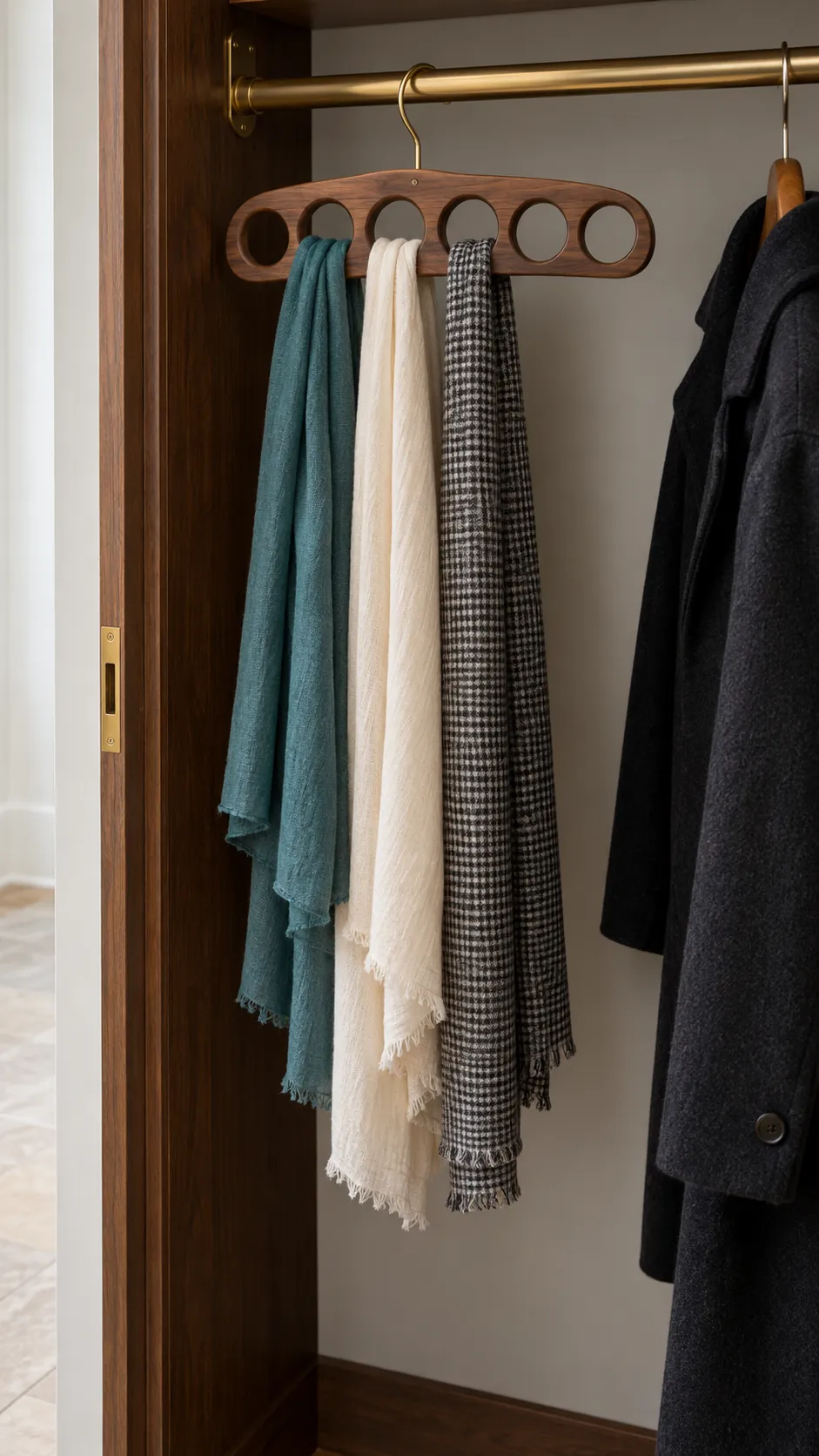
A scarf hanger in the entry closet
A multi opening scarf hanger can replace a pile of scarves on a chair or shelf. Thread each scarf loosely so it can be removed without untying a tight knot. Keep the longest ends above the closet floor and away from door hinges. Leave a little room between the hanger and coats so delicate fabrics do not snag. A small selection makes this arrangement easier to use than trying to display every scarf at once.
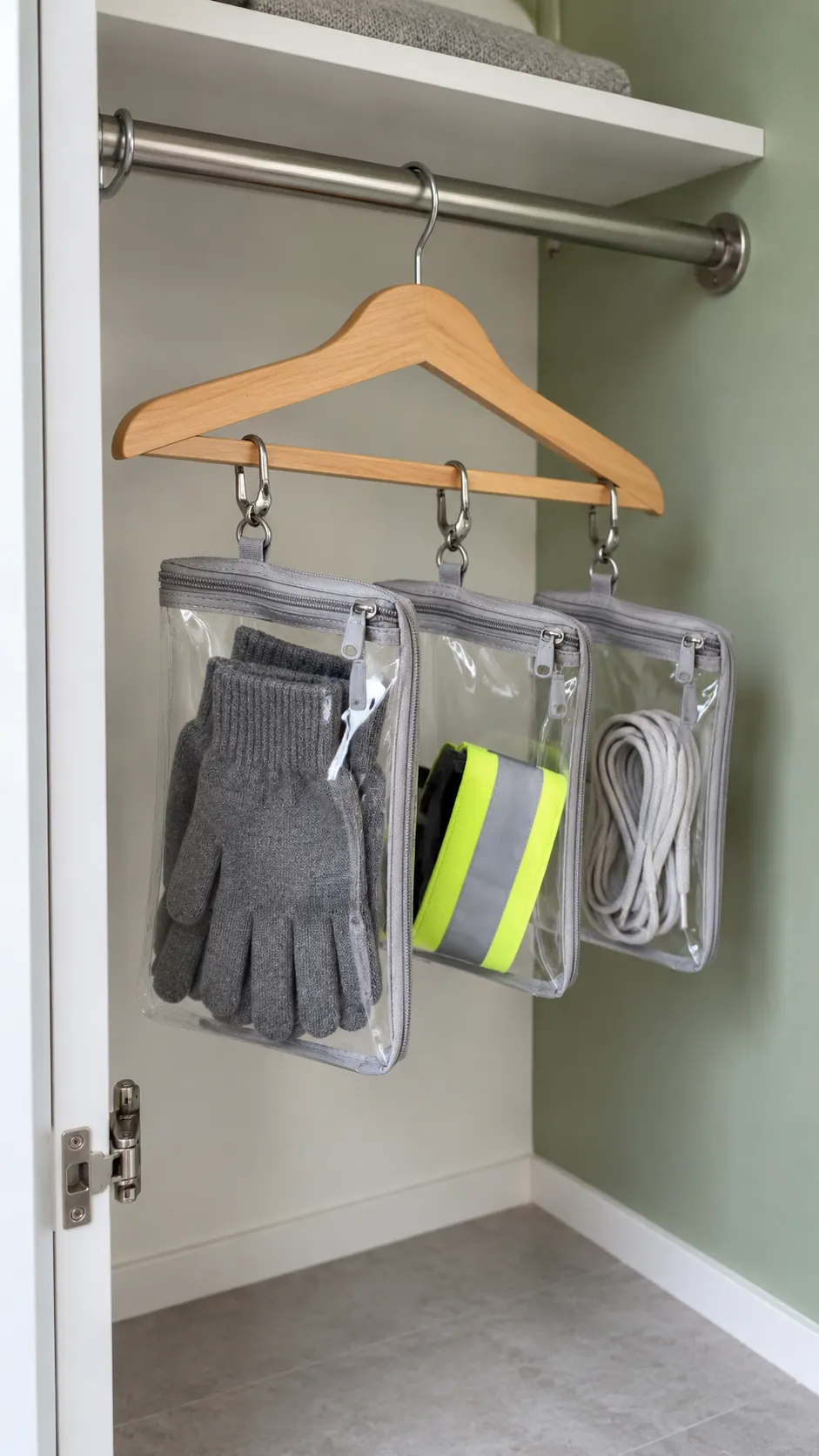
Clear pouches for small seasonal accessories
Clear zip pouches can group gloves, reflective bands, or spare laces without using a hallway drawer. Attach compatible pouches to a sturdy hanger or place them in an existing organizer, keeping the total load modest. Choose pouches that open easily without scattering their contents.
Dry items completely before closing the pouches. Keep small parts and cords away from children, and place the hanger at a reachable adult height. Seeing the contents reduces the need for labels that can become outdated as seasons change.
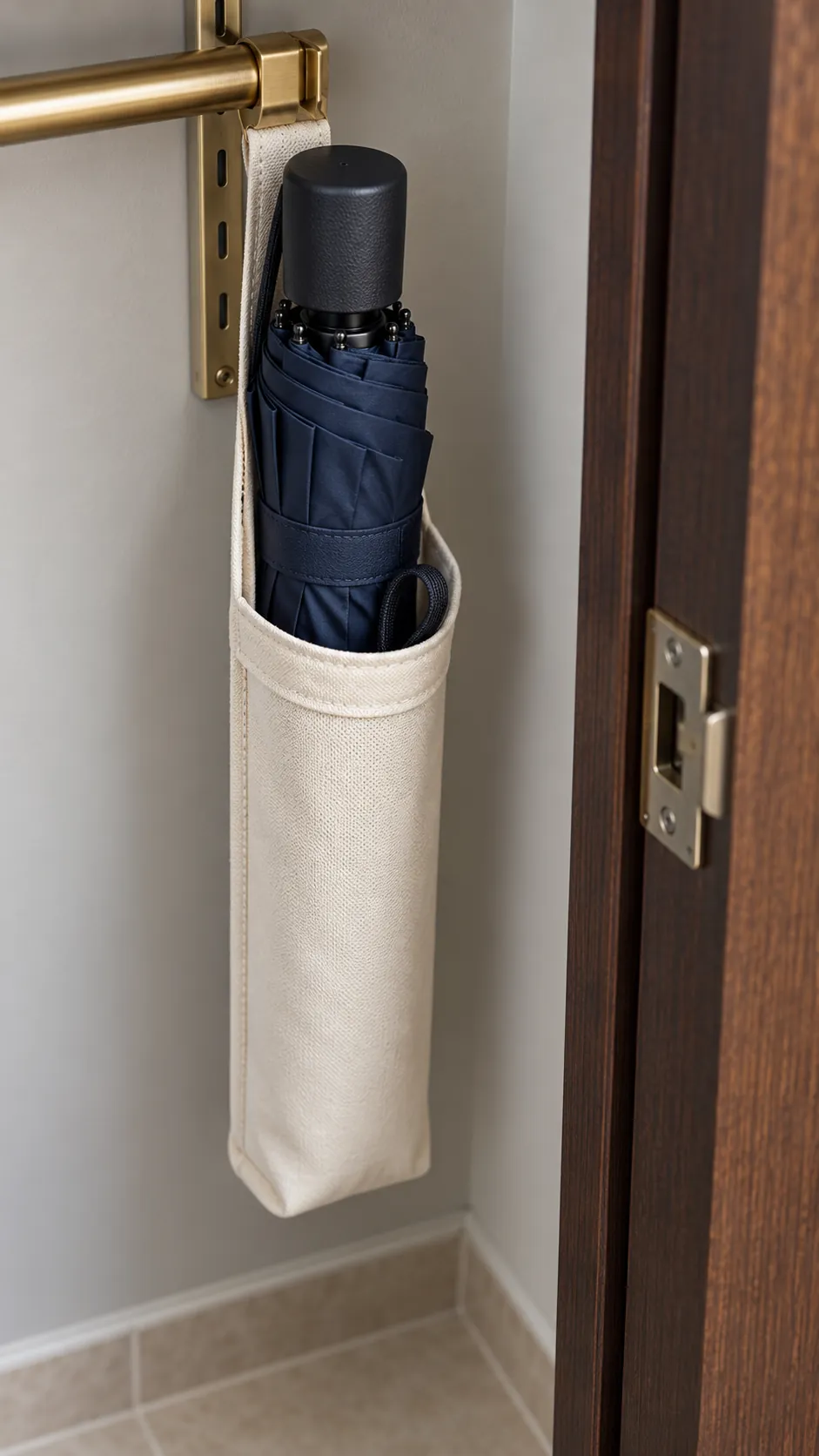
A sleeve for a dry compact umbrella
A narrow sleeve inside a closet can hold a dry folding umbrella without a floor standing umbrella stand. Use a suitable existing organizer pocket or an approved mounting system rather than improvising a heavy load on a weak hook. Let the umbrella dry open in a safe location before storing it. Keep its strap contained so it cannot catch in the closet door.
Seasonal storage moved beyond the passage
When even shallow storage crowds the passage, move seasonal items into an existing closet in the nearest room. Keep only the current jacket, shoes, and daily essentials close to the entrance. A lightweight lidded bin can gather the next season's accessories on an appropriate shelf, with heavy items kept lower. Revisit the contents when the weather changes instead of adding another organizer to the hall. The most useful no floor space storage plan may be the one that gives the hallway less to hold.