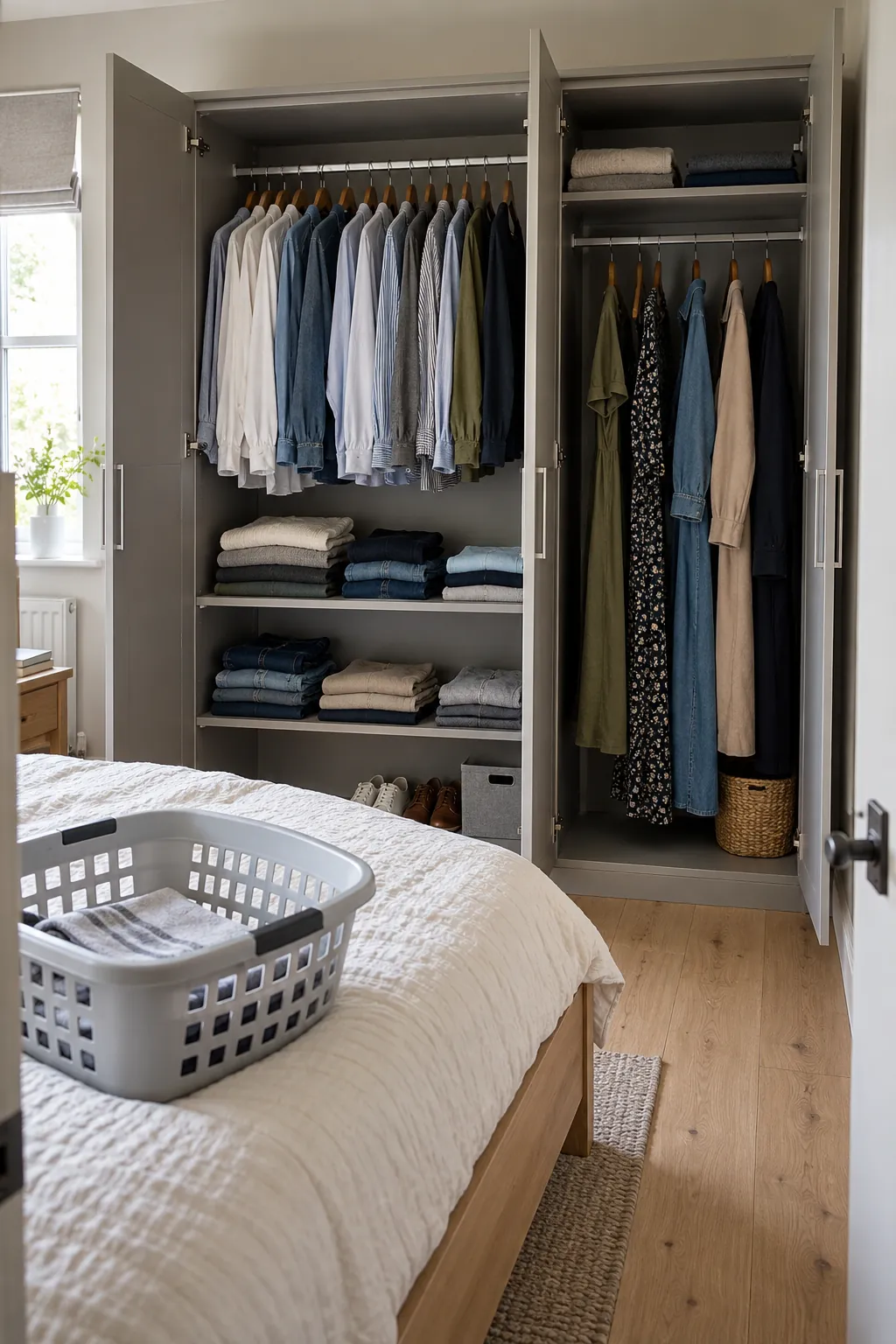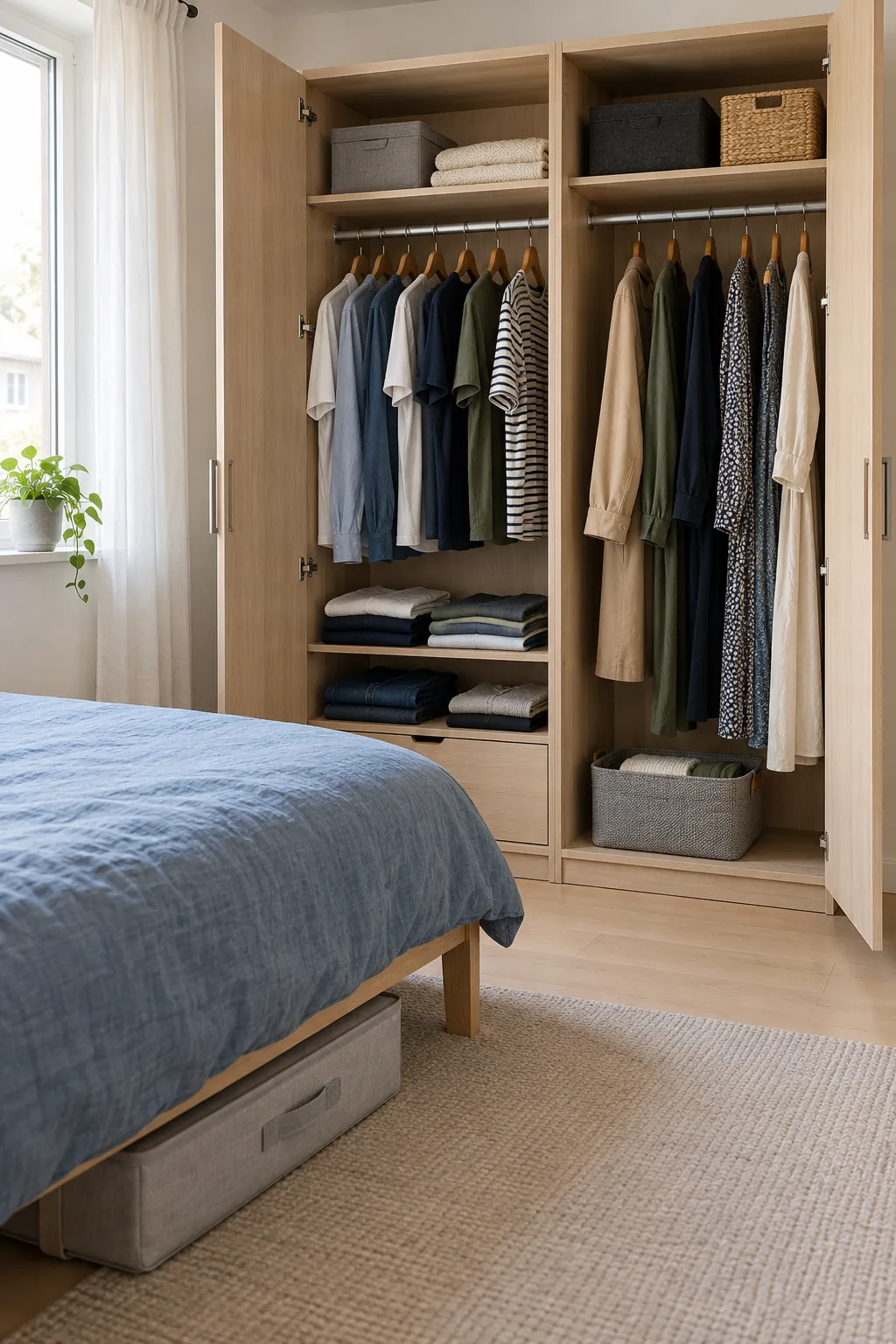
The wardrobe door closes, but only while half the clothes are in the wash. When two people share a small bedroom, the useful question is not who gets more shelves; it is which storage jobs need hanging space, drawers, or somewhere outside the wardrobe. Start with each person’s daily clothing, then choose the ideas below that fit your room and your routines.
Allocate rail space by clothing type
An equal split down the middle can still leave one person without room for long garments. Count what each of you actually hangs, then allocate rail length for those categories before dividing the remaining space. Give both people a clearly defined section that they can reach without moving the other person’s clothes.
Neither person’s useful space has to match the other’s shape. Someone with more folded clothes may need fewer inches of rail but more drawer volume. Review the split after a normal laundry cycle rather than judging it while half the clothes are elsewhere.
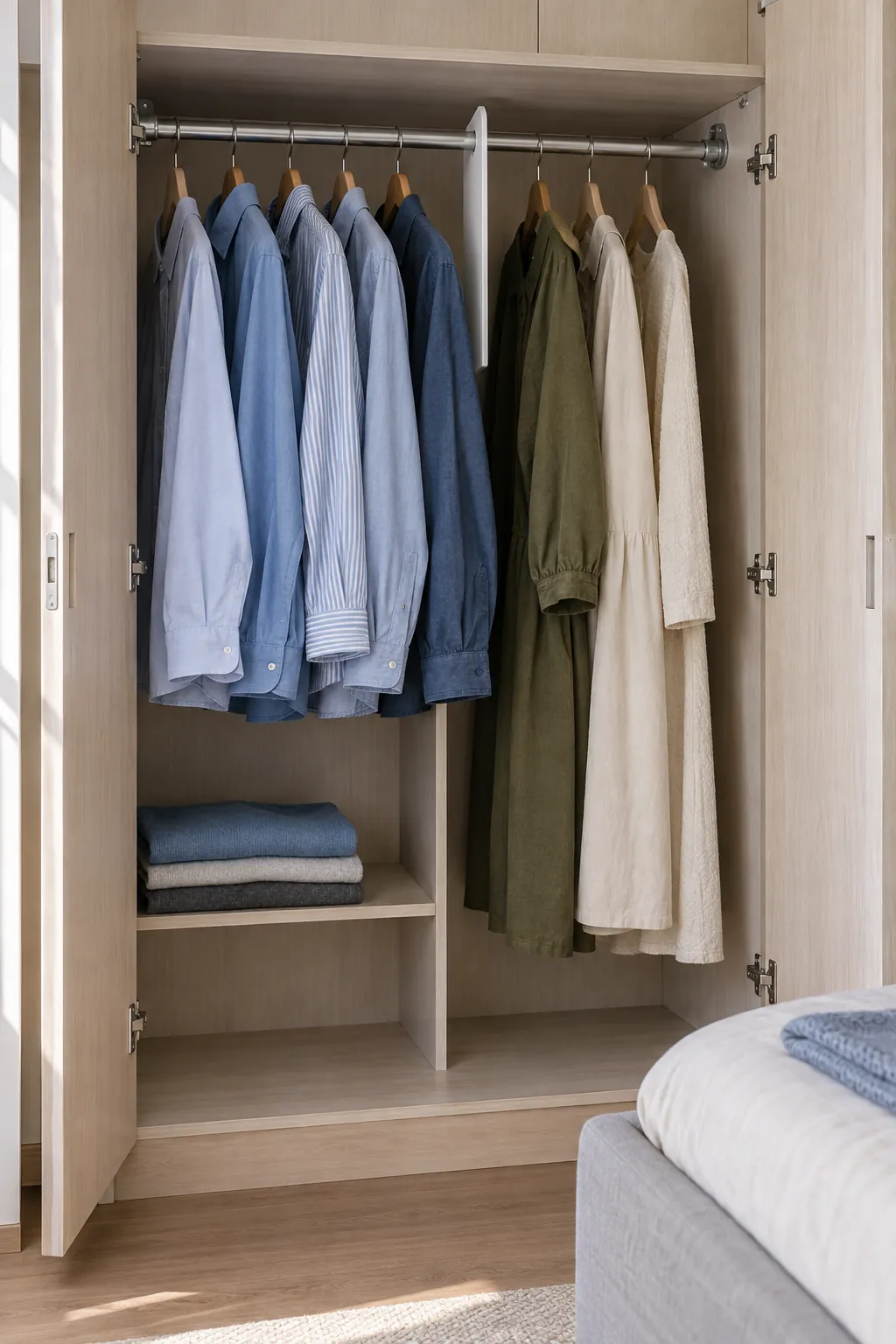
Keep one full height hanging bay
Reserve a narrow uninterrupted bay for dresses, long coats, or robes instead of adding shelves across the whole wardrobe. Measure your longest regularly worn garment on its hanger before setting the lower boundary. A full height bay prevents hems from sitting on shoes and keeps long clothing from consuming several folded storage compartments.
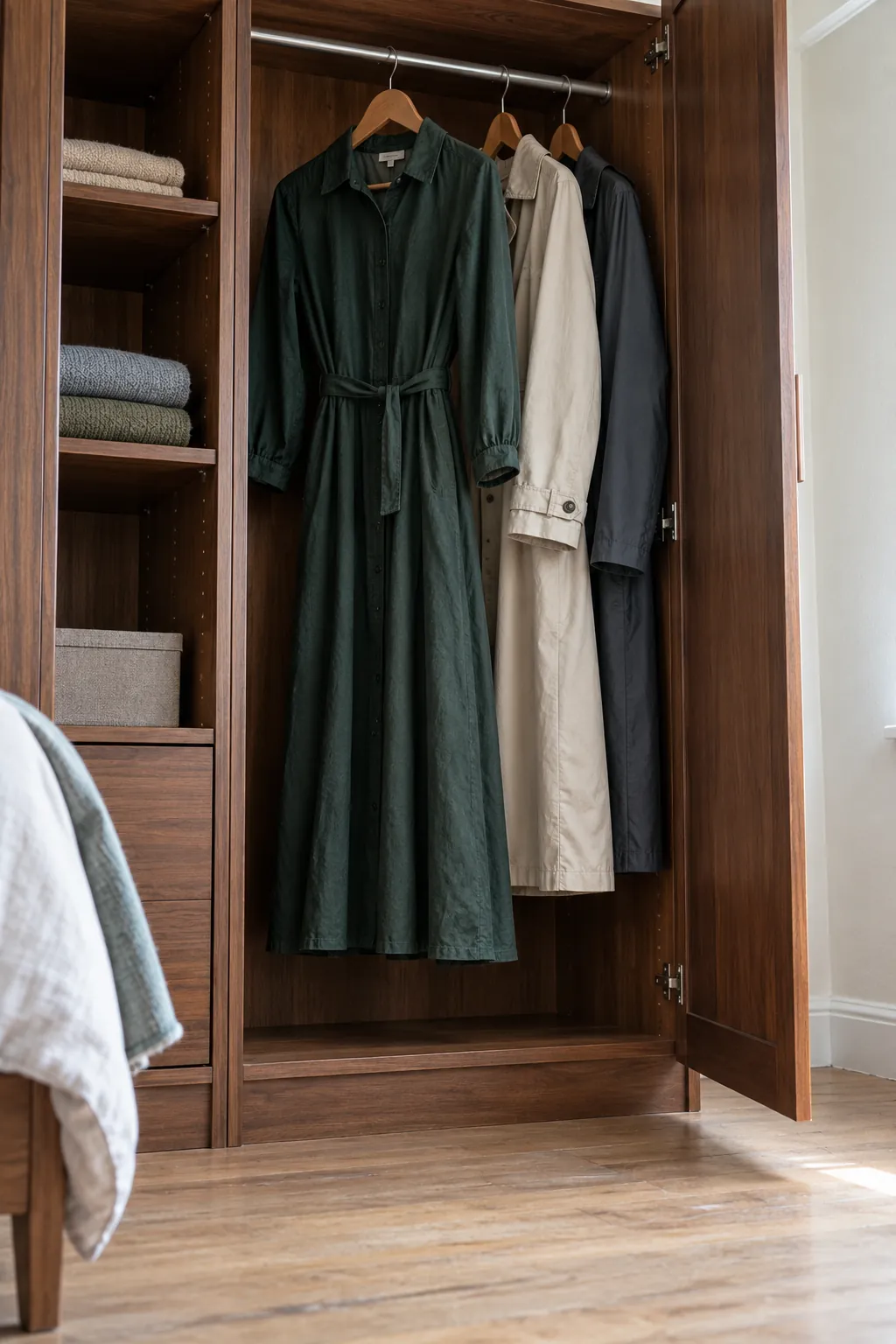
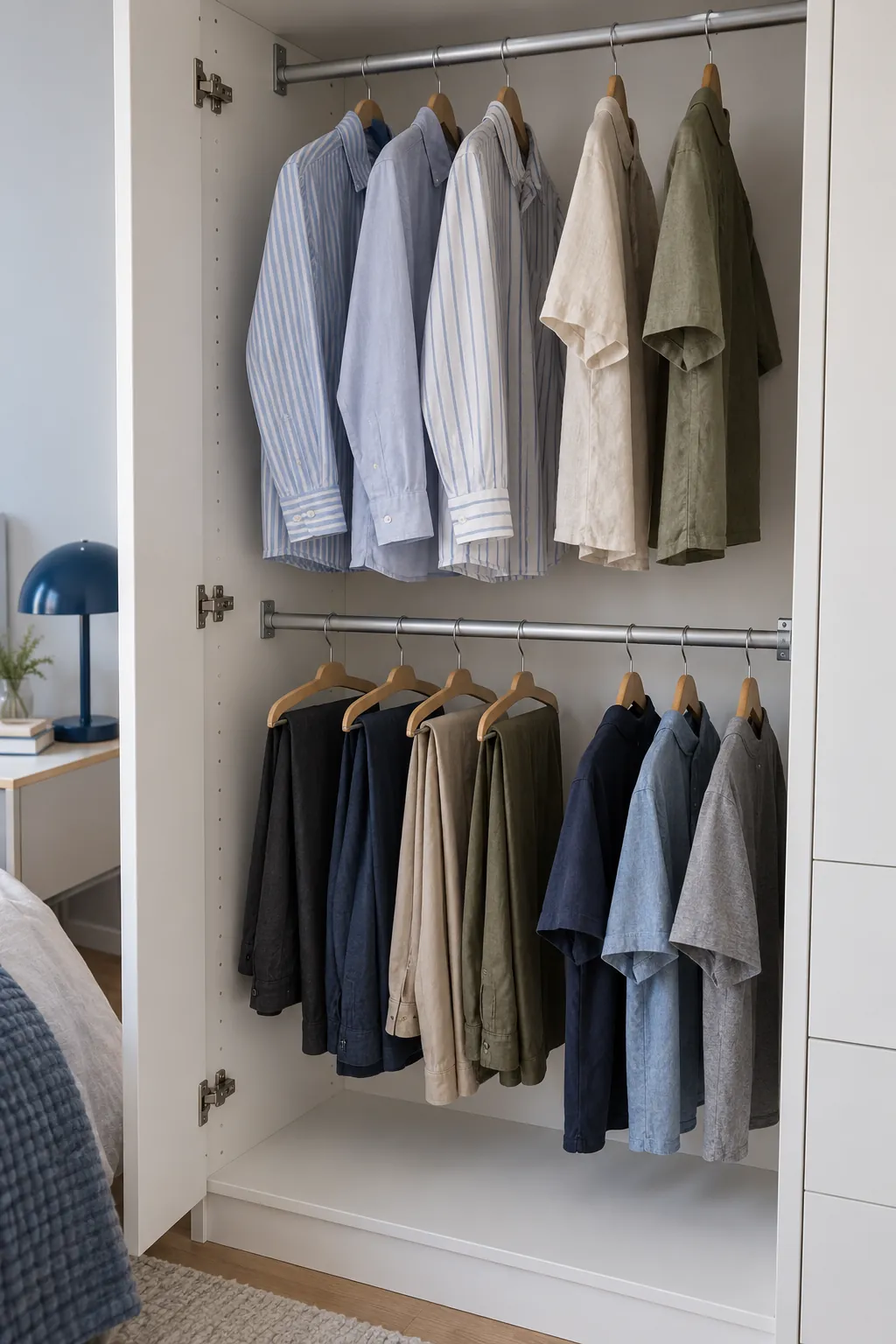
Add a second rail beneath short garments
Shirts and folded trousers often leave useful space below their hems. A compatible second rail can turn that gap into another hanging level, provided both rows clear each other. Check the wardrobe and rail load limits, and leave the lower rail at a height that its regular user can reach comfortably. Try the layout with your actual shirts before fixing the rail height.
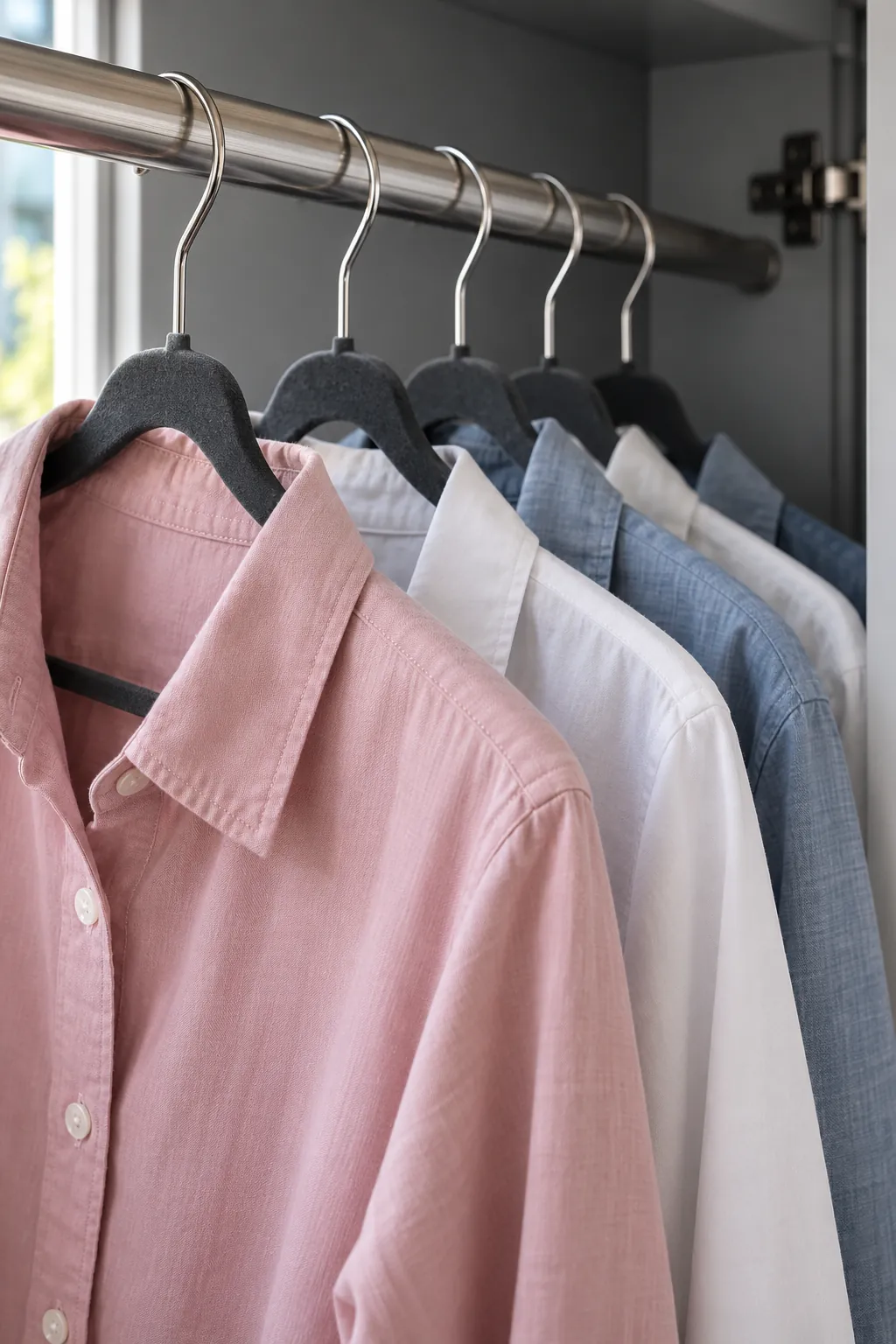
Use slim hangers for everyday shirts
Replacing mixed bulky hangers with slim ones can make a crowded rail easier to scan. Keep enough room to slide garments apart without pulling several out together. Retain shaped supportive hangers for tailored jackets rather than squeezing every garment onto the thinnest possible option.
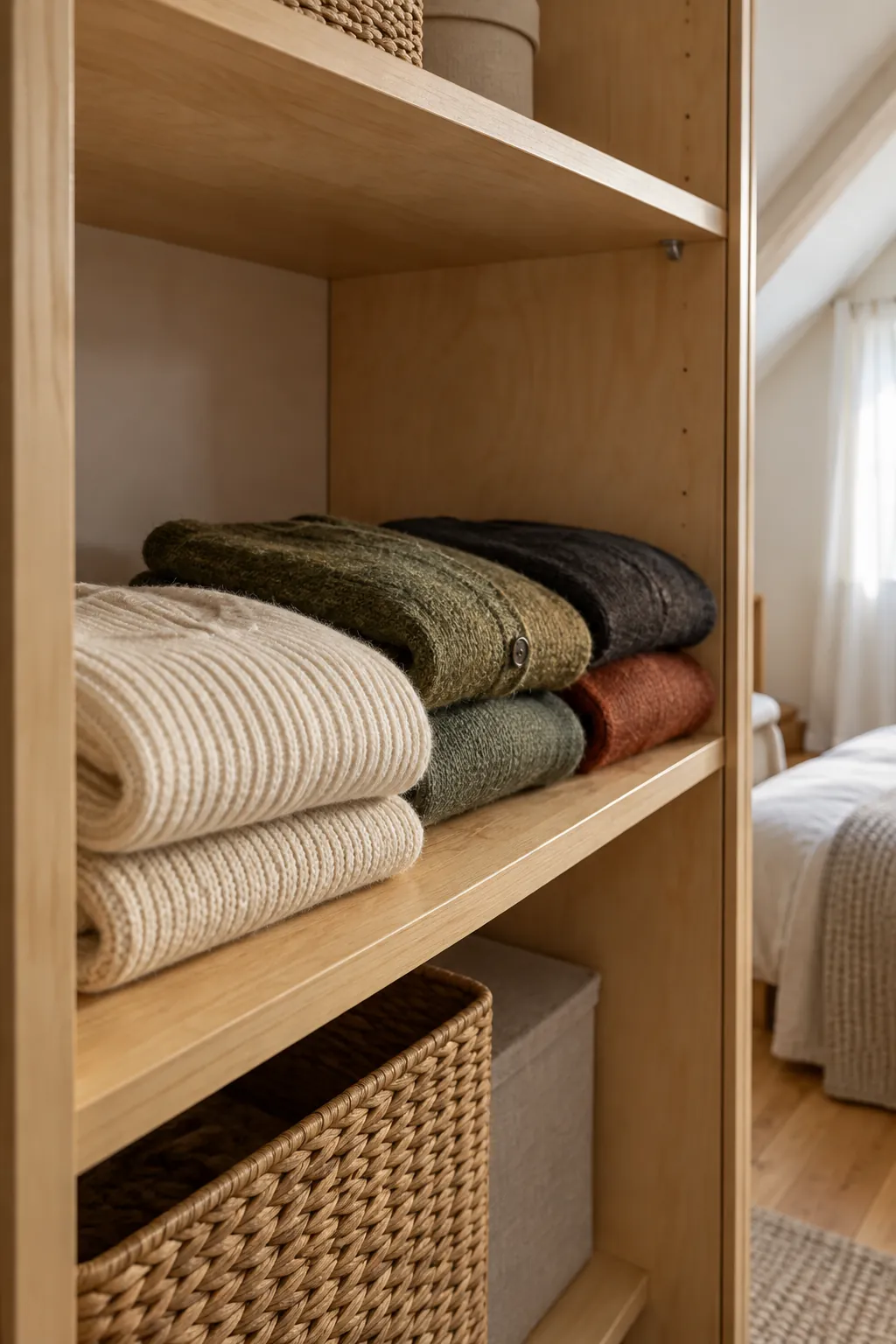
Fold knitwear onto short shelf stacks
Heavy sweaters can stretch when left on hangers. Fold them into low stacks with the most frequently worn pieces on an accessible shelf. Avoid building a tall pile that collapses whenever either of you removes the bottom sweater.
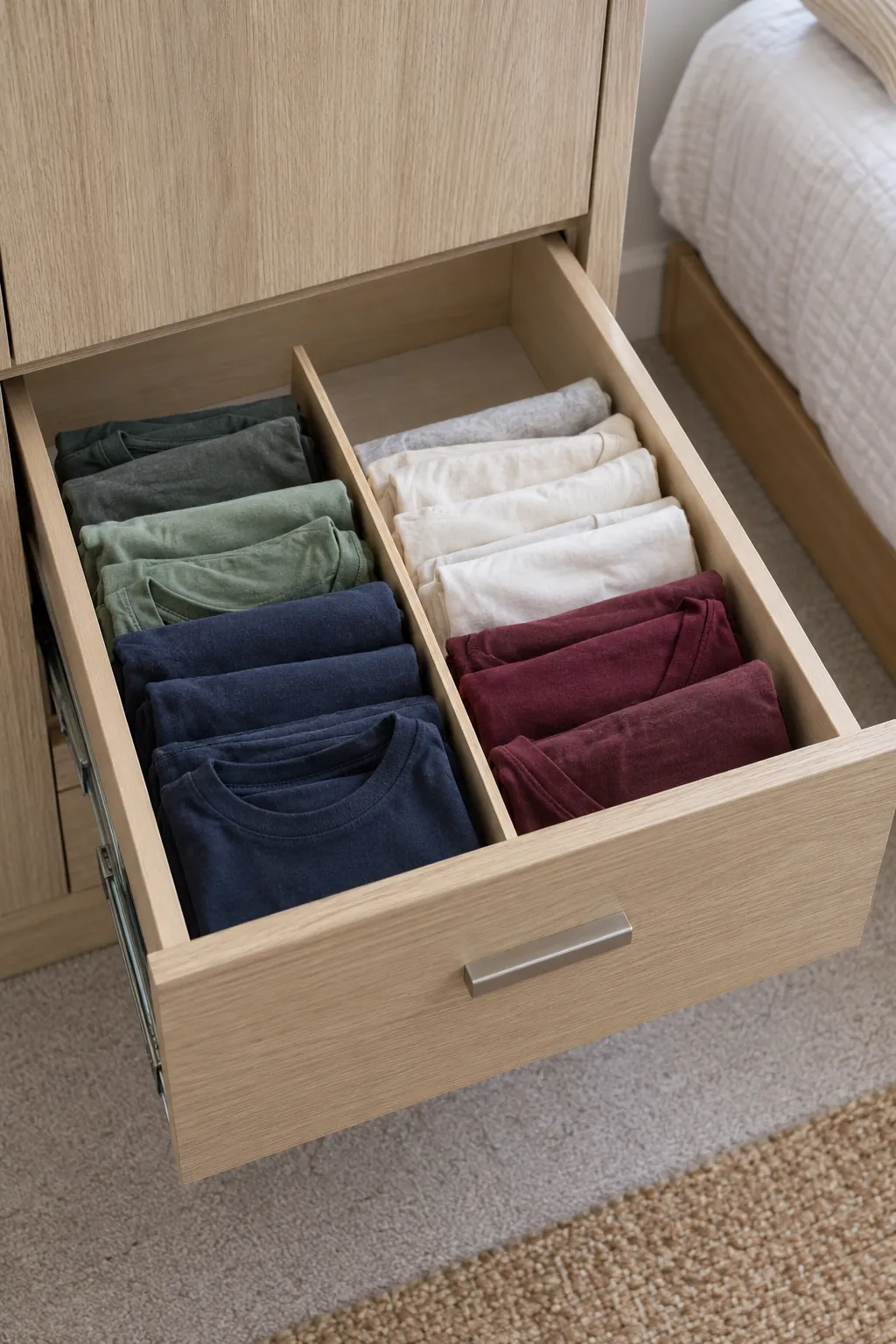
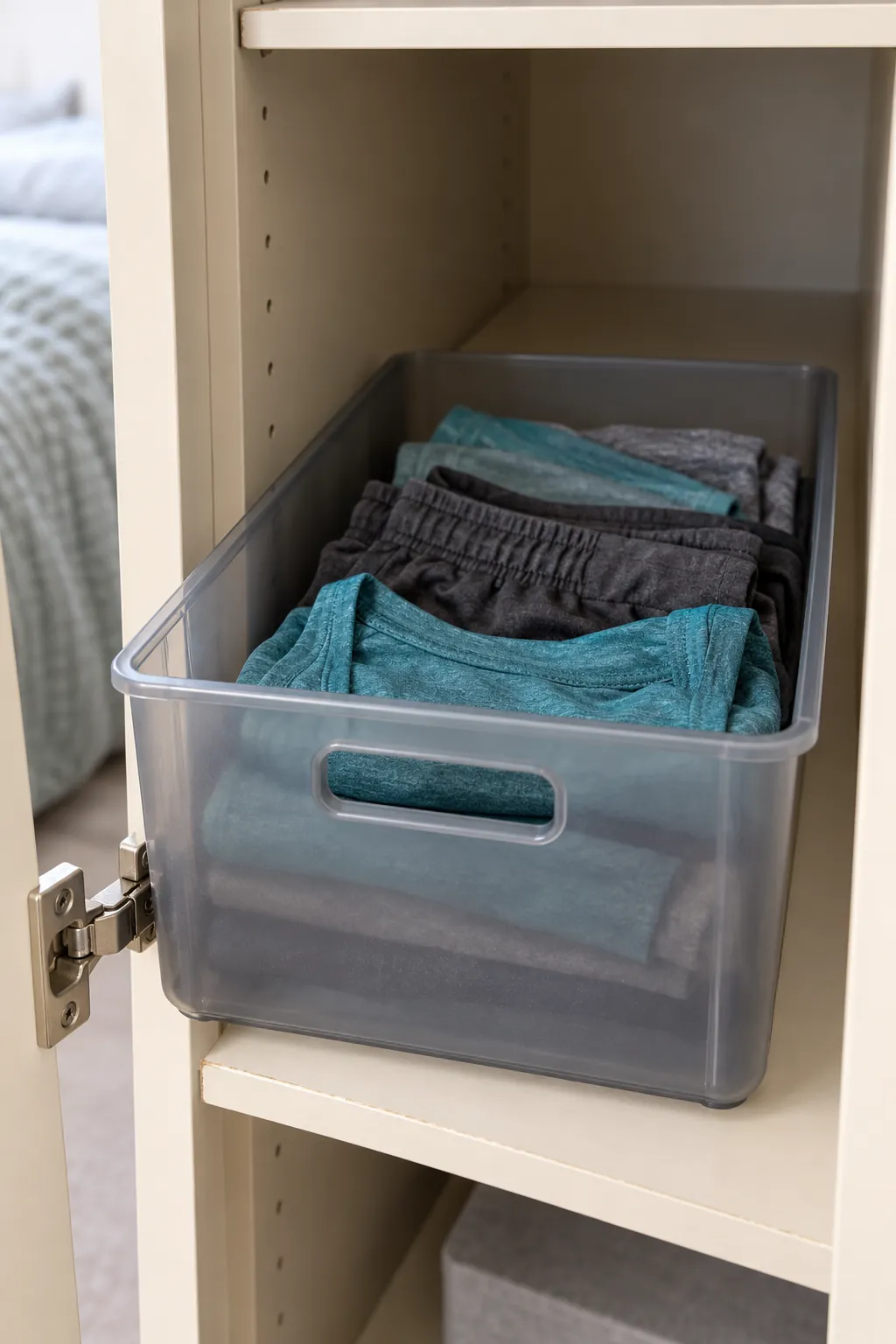
Stand tees upright in a shallow drawer
Fold tees to the drawer’s height so their folded edges remain visible from above. This lets each person select a shirt without lifting an entire stack. Use separate rows for each owner, and leave a small amount of slack so clean laundry can go back without being forced. A drawer that closes only when you press the clothing down needs fewer items, not tighter folds.
Divide underwear drawers into personal sections
A shared drawer works better when the boundary stays put. Fit removable dividers or small open boxes around each person’s actual clothing sizes. Keep bras in a shape that supports their cups, and avoid forcing them into compartments designed for socks.
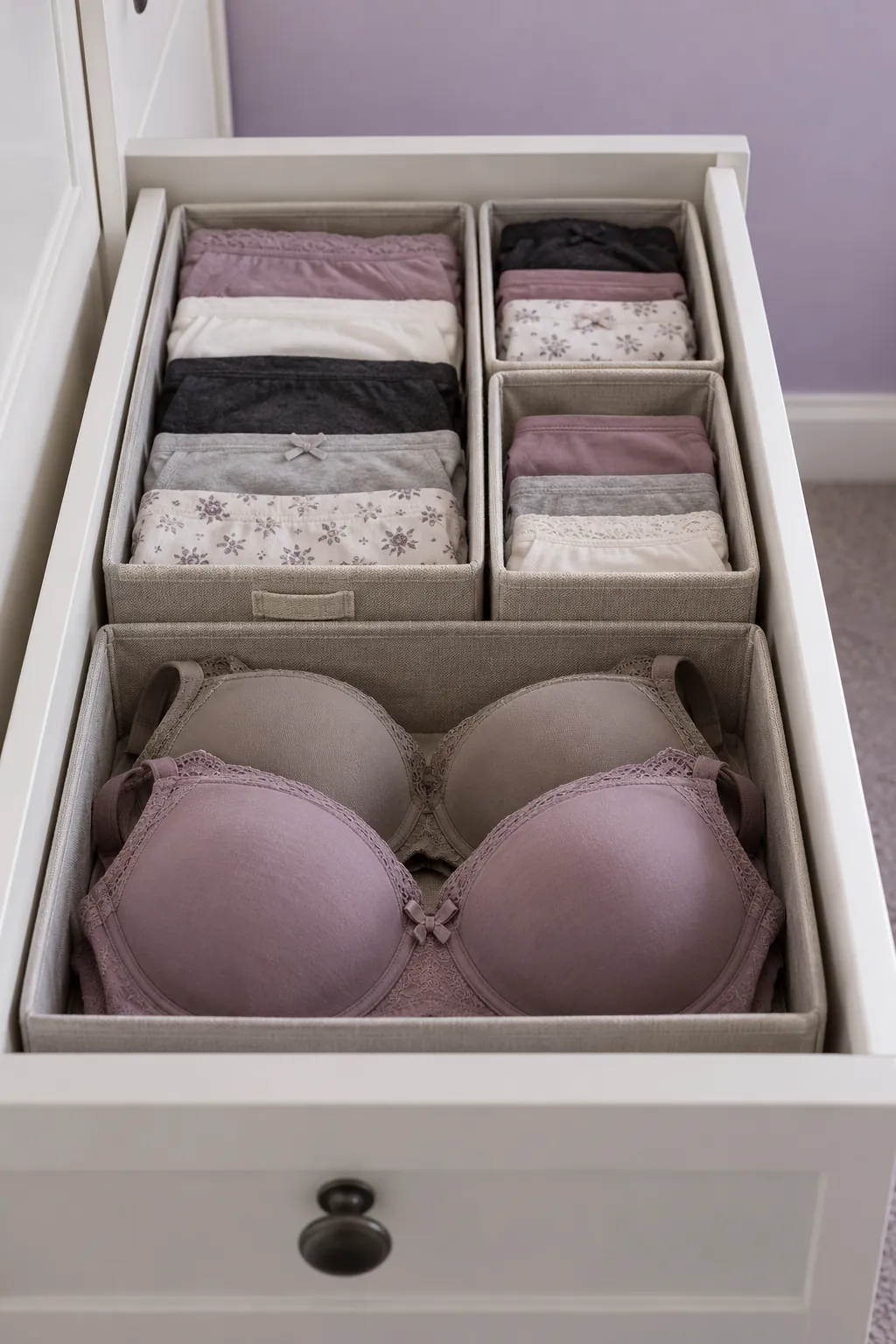
Put socks in removable fabric trays
Small trays stop loose pairs from spreading into adjacent clothes storage zones. Assign each person a tray that can come out during laundry sorting. Choose a tray low enough to see across it, because a deep basket simply hides the pairs at the bottom.
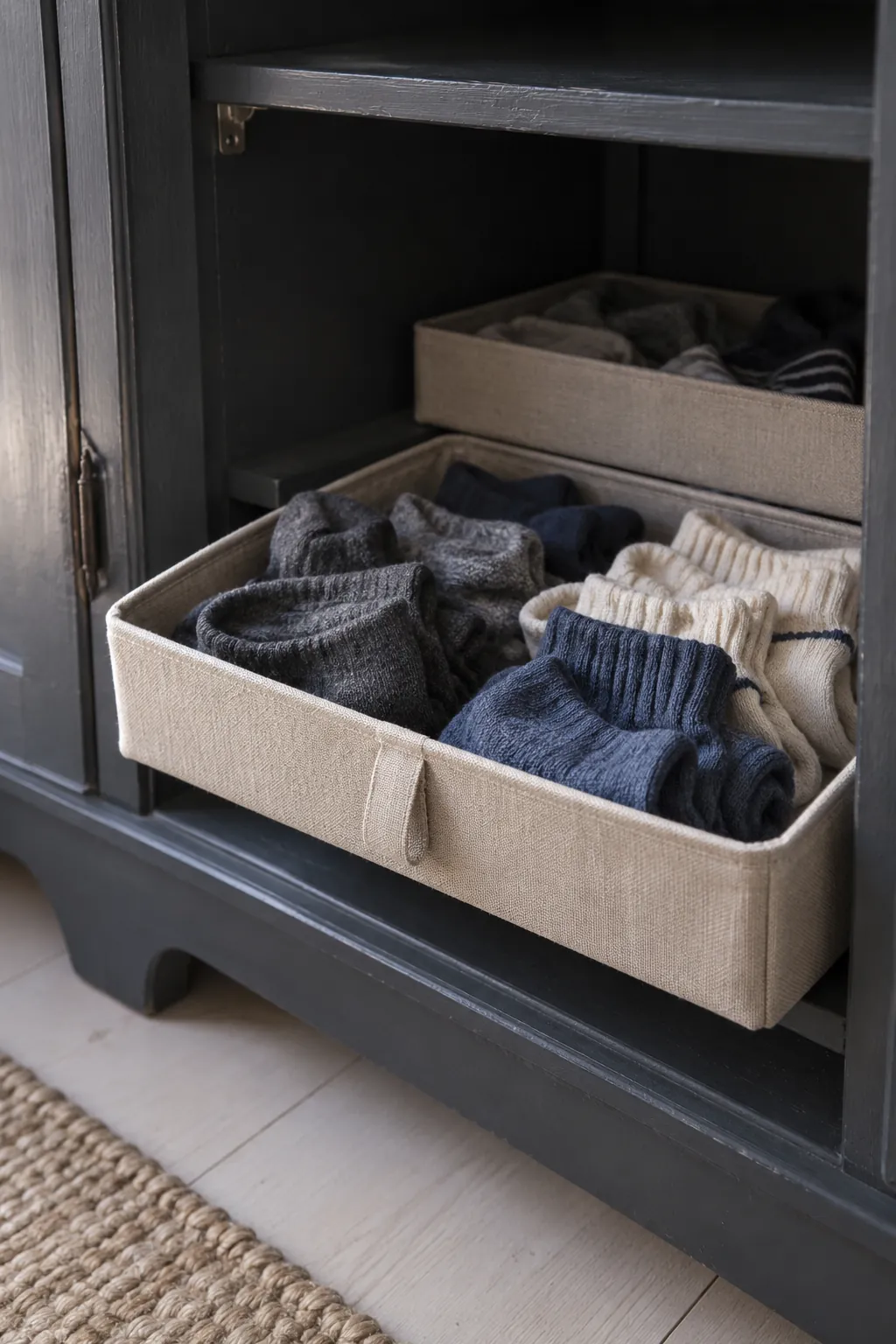
Bring deep shelf contents forward in bins
A deep wardrobe shelf is difficult to use when the back half disappears behind folded clothing. Place one category in a bin that slides forward far enough to reveal its contents. Measure the shelf opening and hinge clearance before buying, and avoid a loaded container that is awkward to lift.
For frequently used clothes, a light open bin is usually easier to handle than a deep box with a separate lid. Leave the handle facing forward. Put the heaviest categories on a lower shelf where you can move them without lifting above shoulder level.
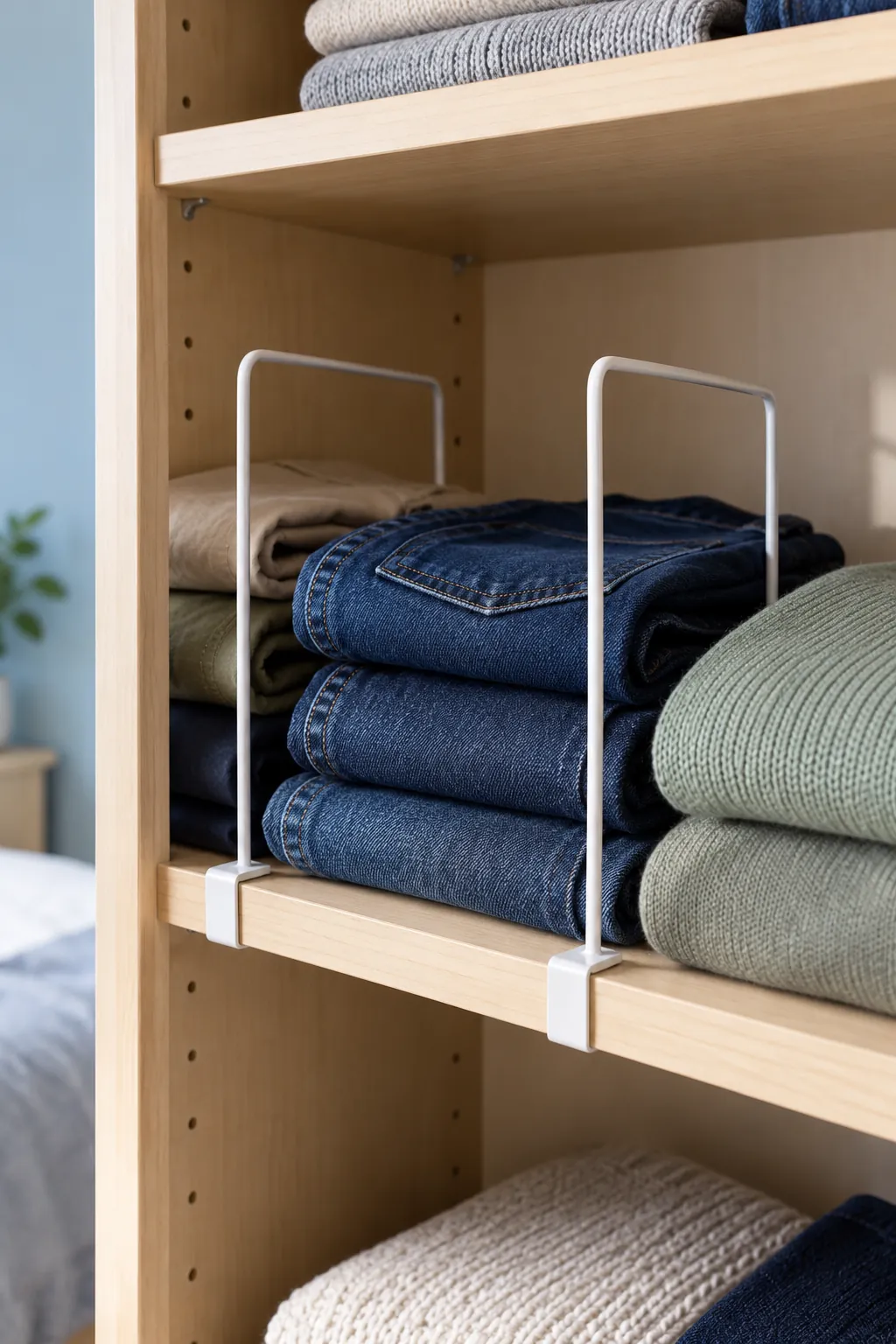
Separate folded stacks with shelf dividers
A divider gives trousers or sweaters a stable edge without adding another bulky box. Use a model that fits the shelf thickness and does not scratch its surface. Space the dividers around realistic folded widths so the arrangement survives normal laundry days.
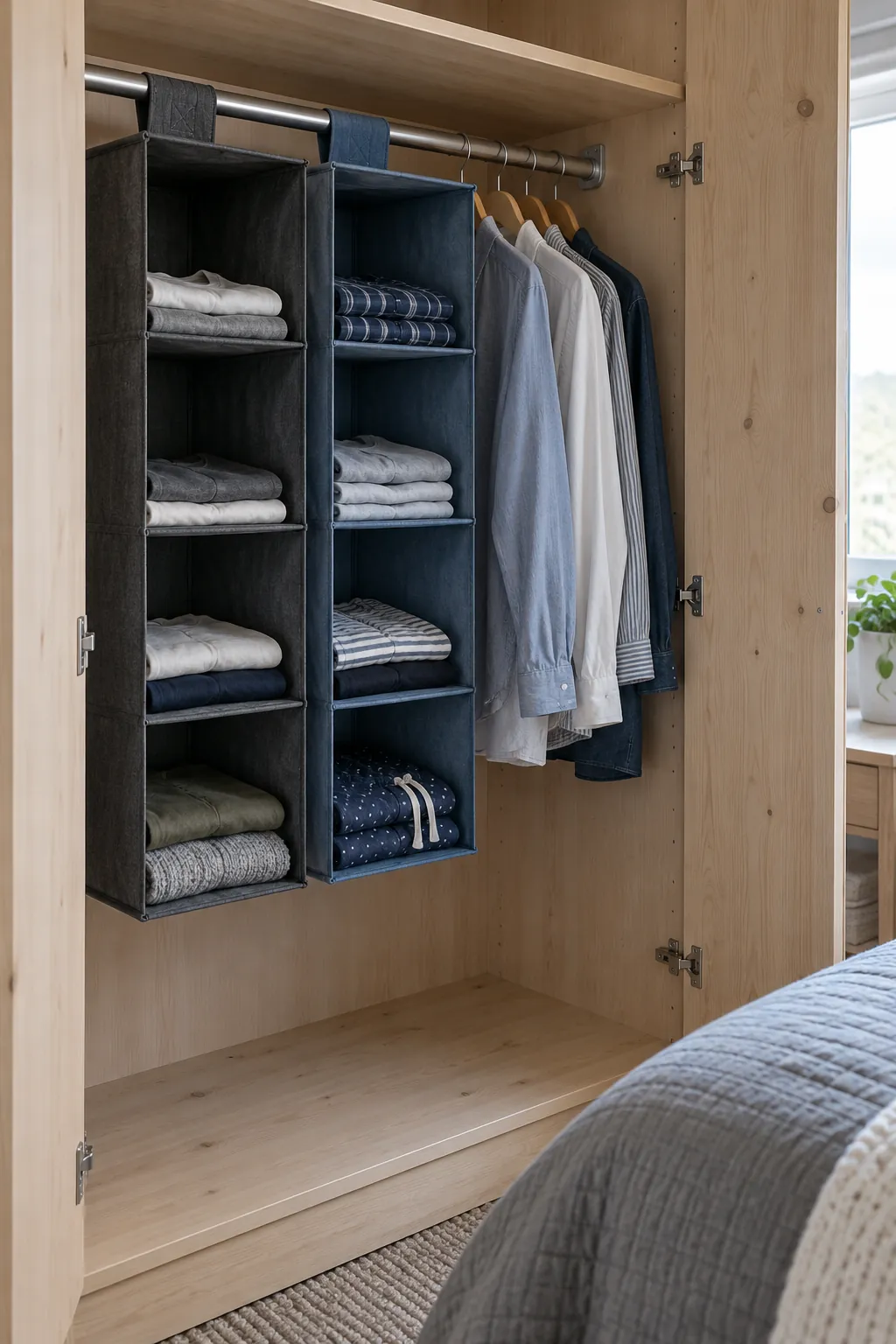
Give each person a hanging fabric cubby
A hanging organizer creates folded storage when a wardrobe has a rail but few shelves. Choose a narrow unit only after checking that the remaining hanging space is sufficient. Keep its contents light, distribute weight evenly, and inspect the attachment instead of treating soft fabric shelves like a dresser. Measure the organizer’s loaded width as well as its empty width.
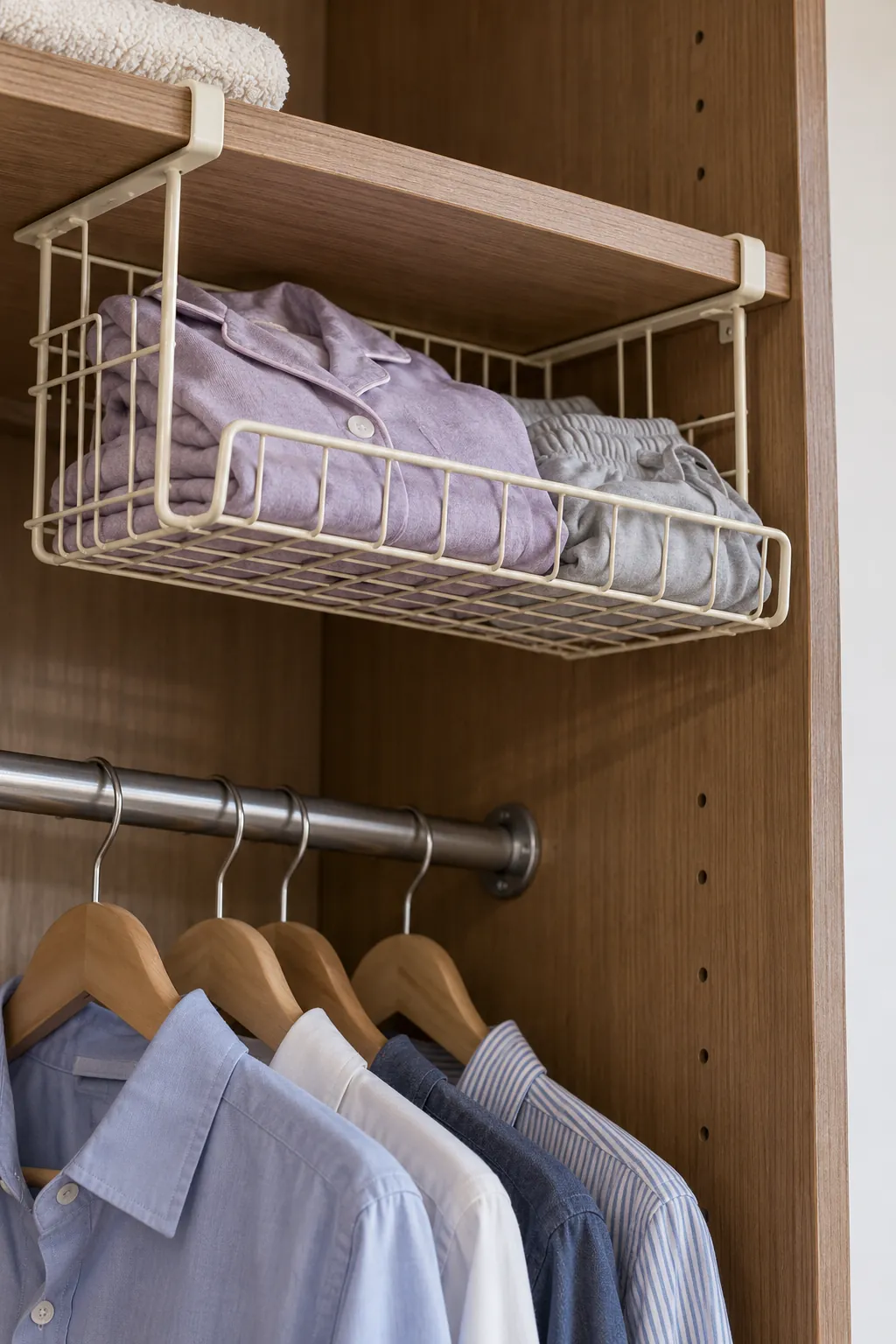
Use a removable basket beneath a shelf
A shallow basket clipped beneath an existing shelf can hold scarves or light sleepwear. Confirm that the clips fit and that the basket leaves clearance above the clothing rail. This is most useful for soft items that do not need a rigid drawer or a tall compartment.
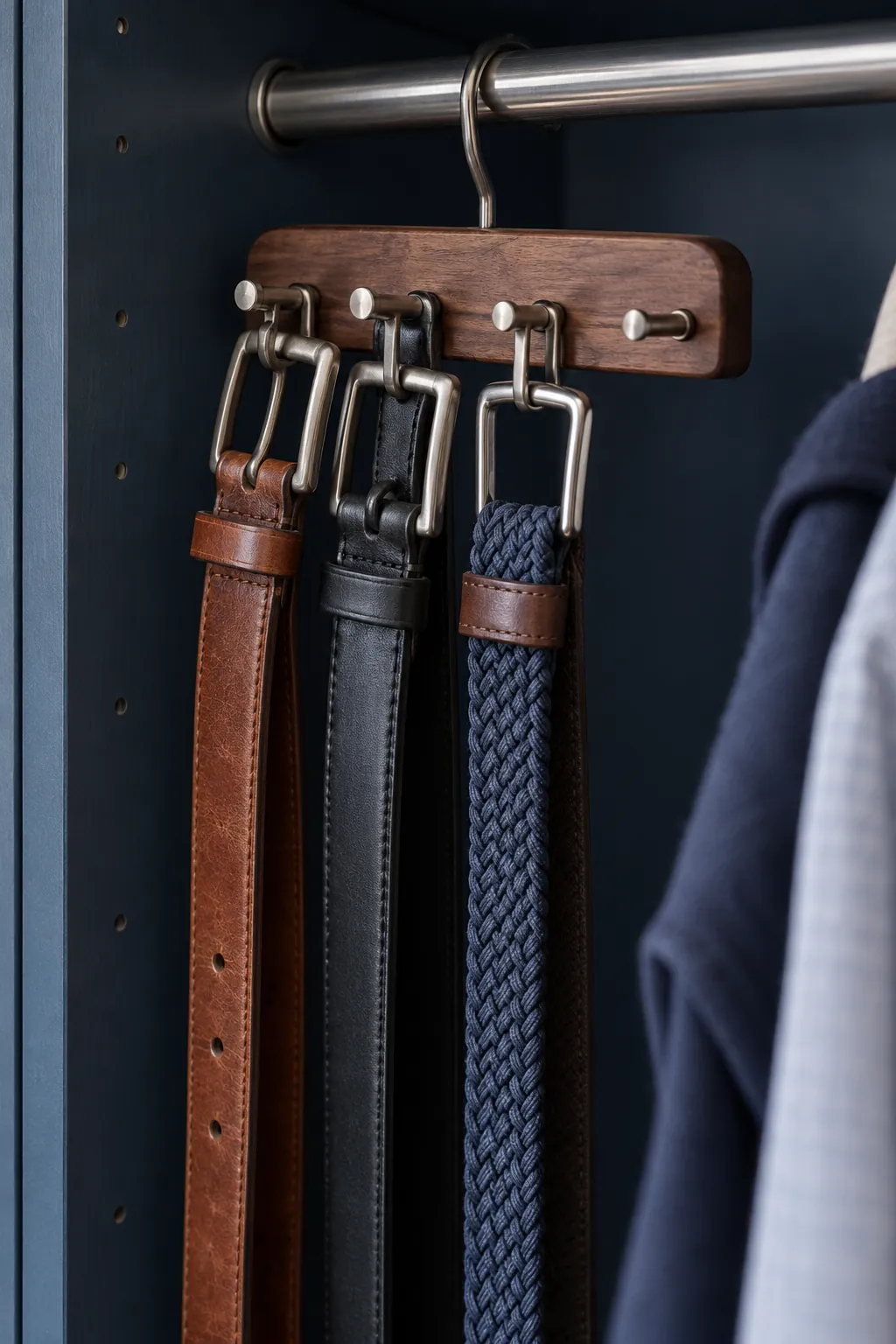
Hang belts from a compact accessory hanger
A dedicated belt hanger gathers loose straps into one visible place. Select a design that lets you remove one belt without taking the whole collection off the rail. Keep long ends inside the wardrobe so they cannot catch in a door or tangle with shoes.
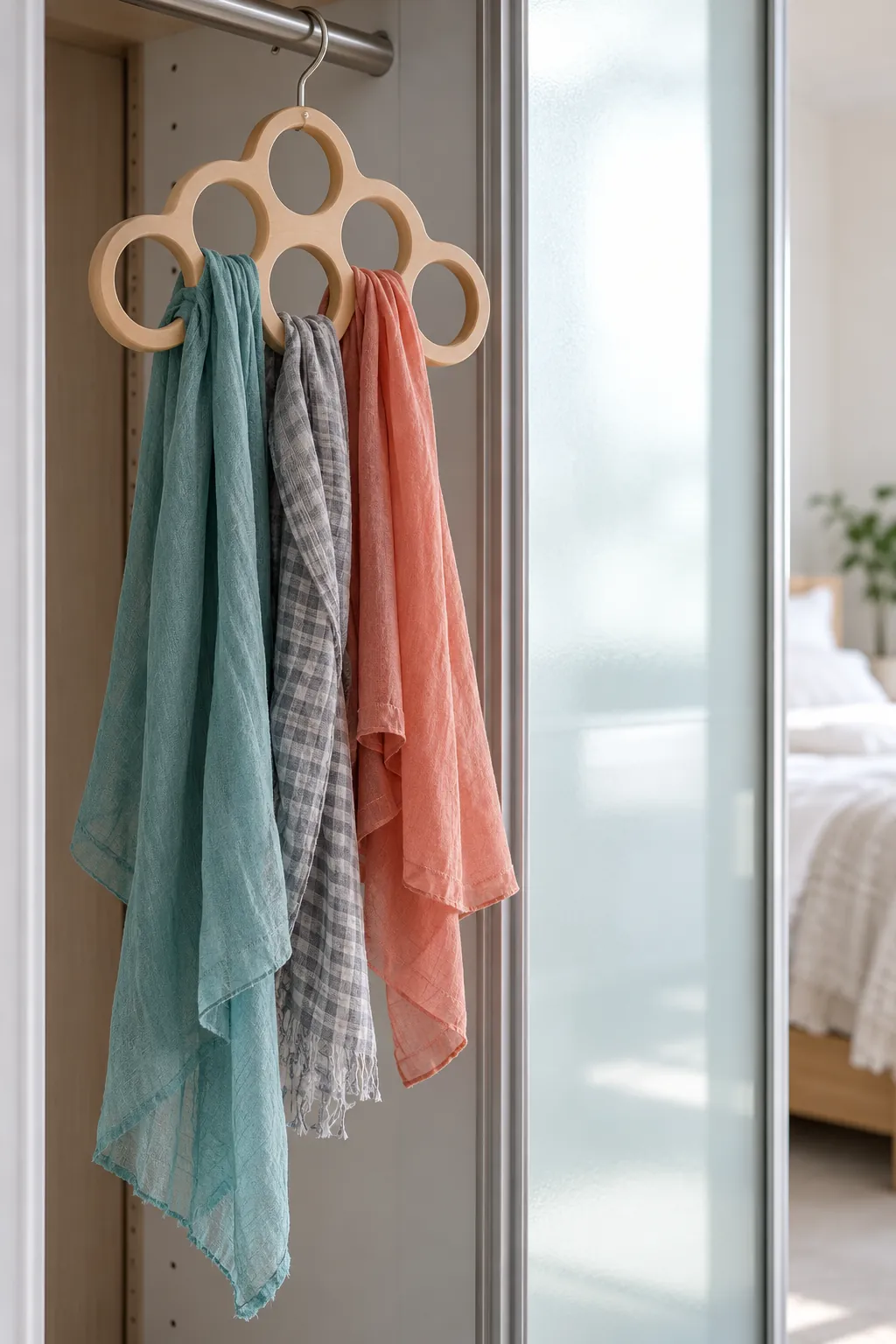
Loop scarves through a ring hanger
A ring hanger keeps lightweight scarves visible without occupying a whole shelf. Drape each loosely enough to remove it without dragging neighboring pieces along. Store delicate fabrics according to their care needs, and move thick winter scarves to folded storage if the hanger becomes crowded.
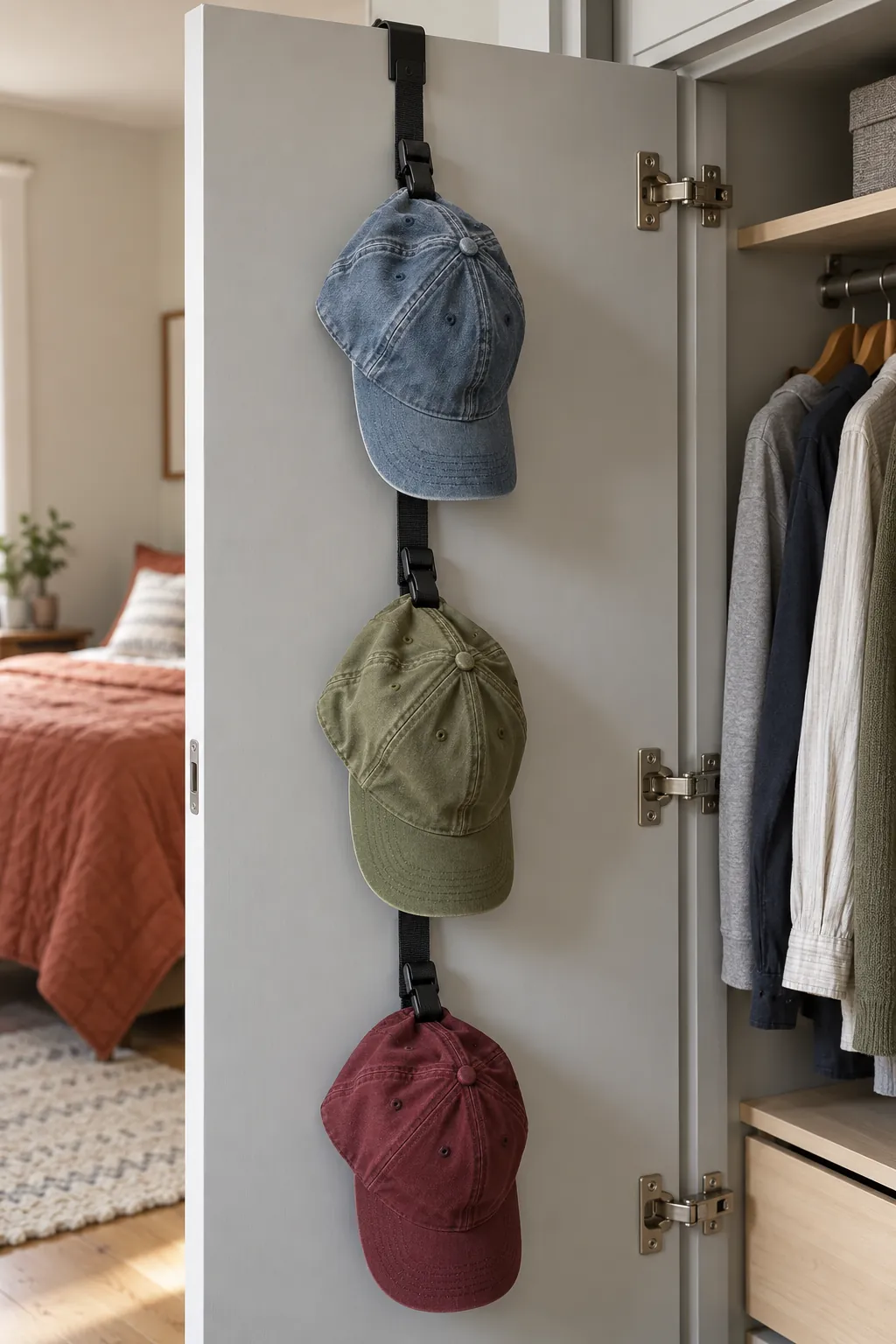
Clip hats inside a wardrobe door
A slim strap with clips can use the interior of a hinged door for soft caps. Test the closed door with the caps attached before filling every clip. Do not place the organizer where it interferes with hinges, catches sleeves, or presses against hanging clothing.
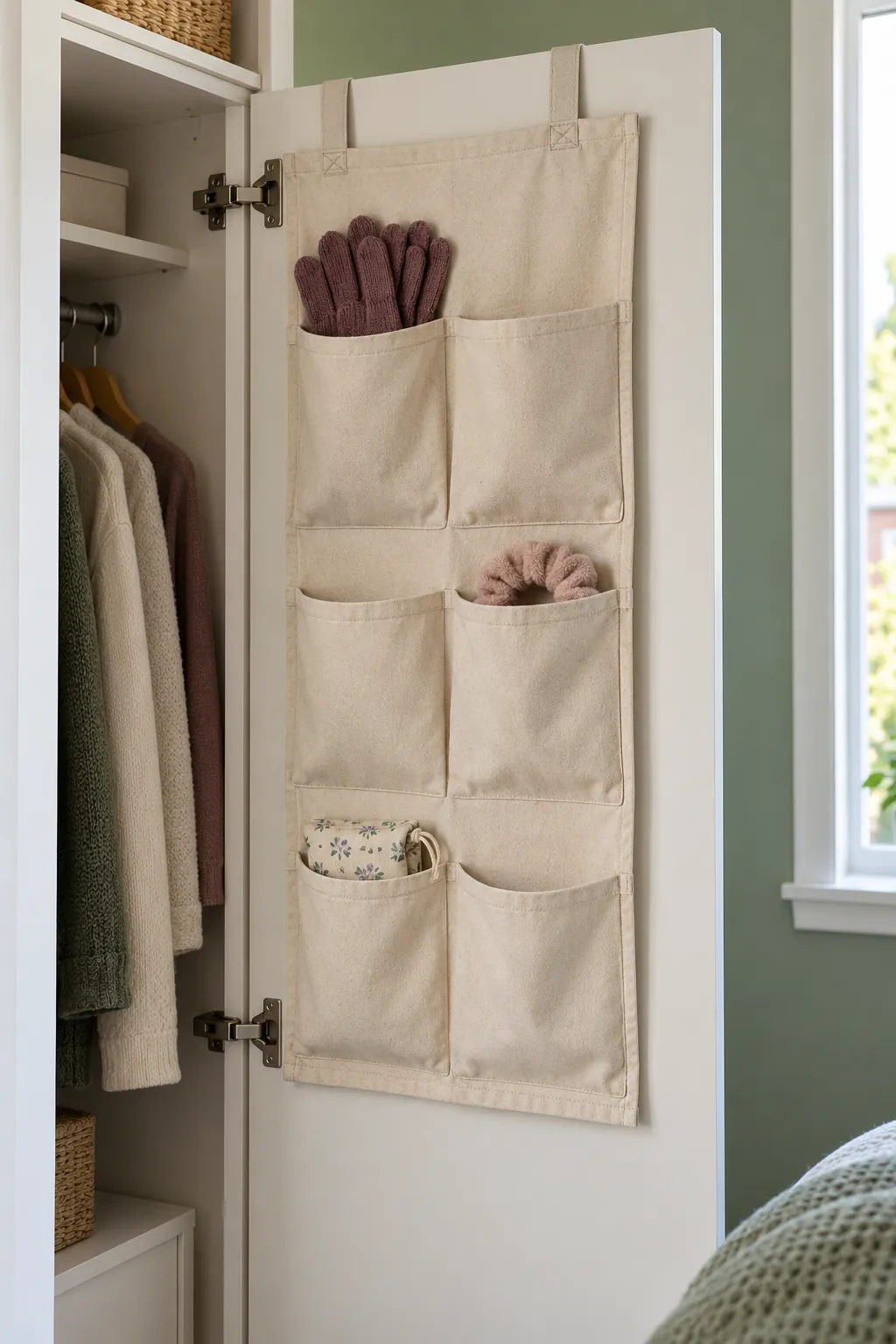
Use shallow door pockets for small accessories
Fabric door pockets can gather gloves, hair accessories, and other light items that otherwise occupy drawers. Measure the usable door area and the gap behind it, including the space needed for the door to close. Keep heavy or bulky items elsewhere so the pockets remain shallow and easy to use.
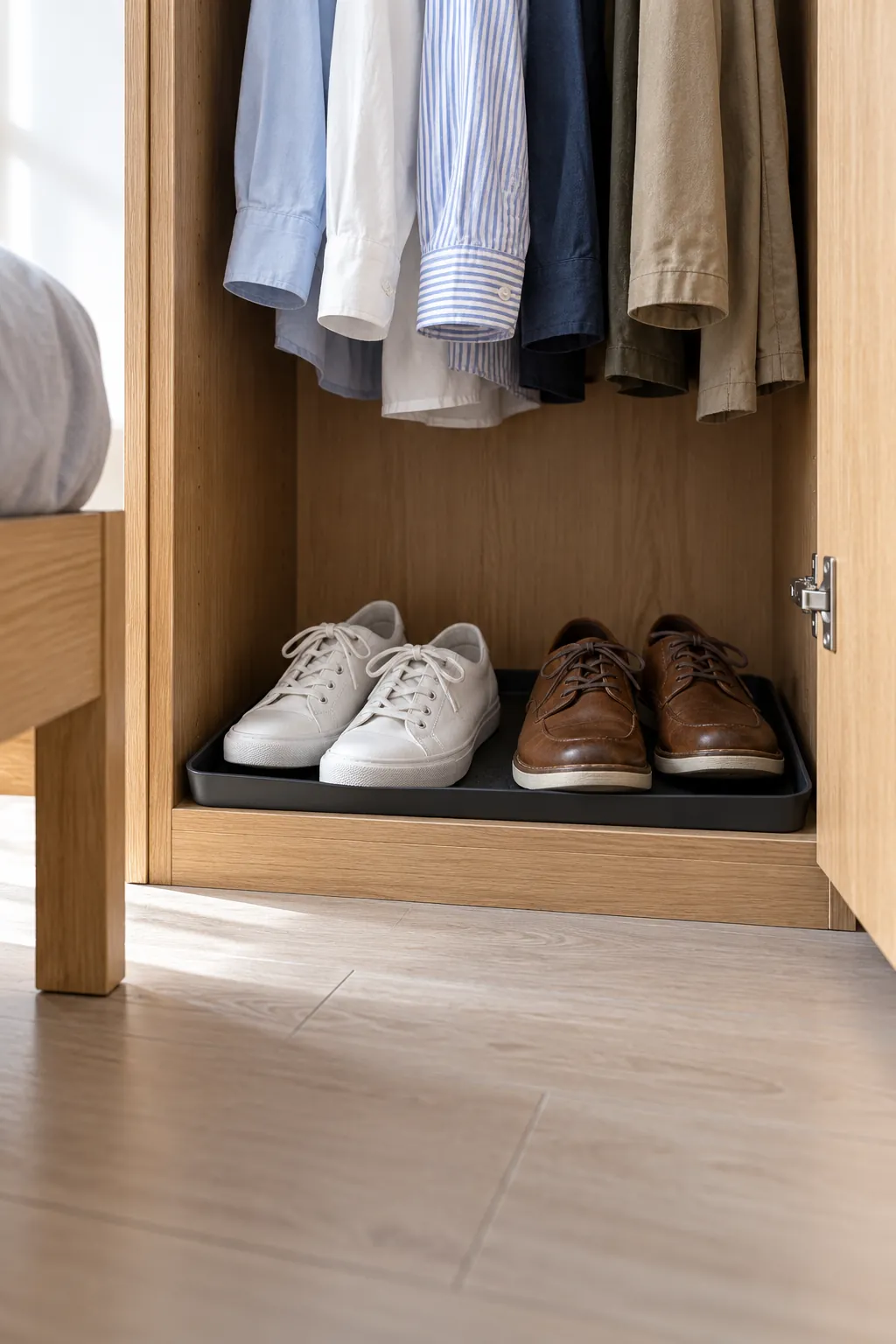
Store everyday shoes beneath the shortest clothes
The floor below short hanging items can hold a modest shoe row without adding bedroom furniture. Use a washable tray to separate soles from the wardrobe base. Keep footwear dry before putting it away, and leave enough air and garment clearance to avoid damp fabric and dirty hems. If the wardrobe is humid or poorly ventilated, choose another shoe location.
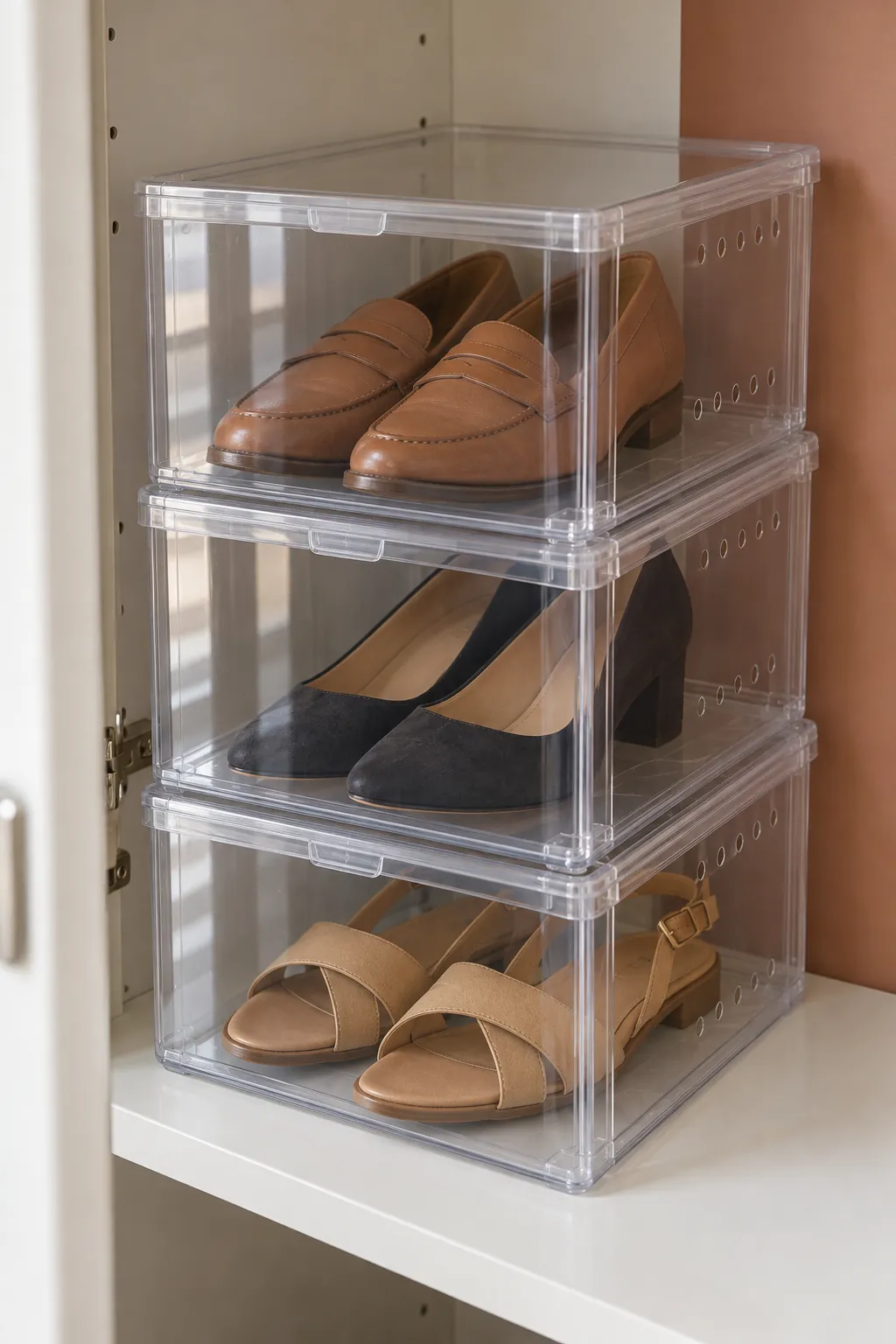
Stack less used shoes in clear boxes
Transparent boxes make occasional footwear identifiable without opening every container. Check that the shoes are clean and fully dry, and choose suitable ventilation for the storage conditions. Stack only to a height you can handle safely, with the pairs you use most nearest the opening.
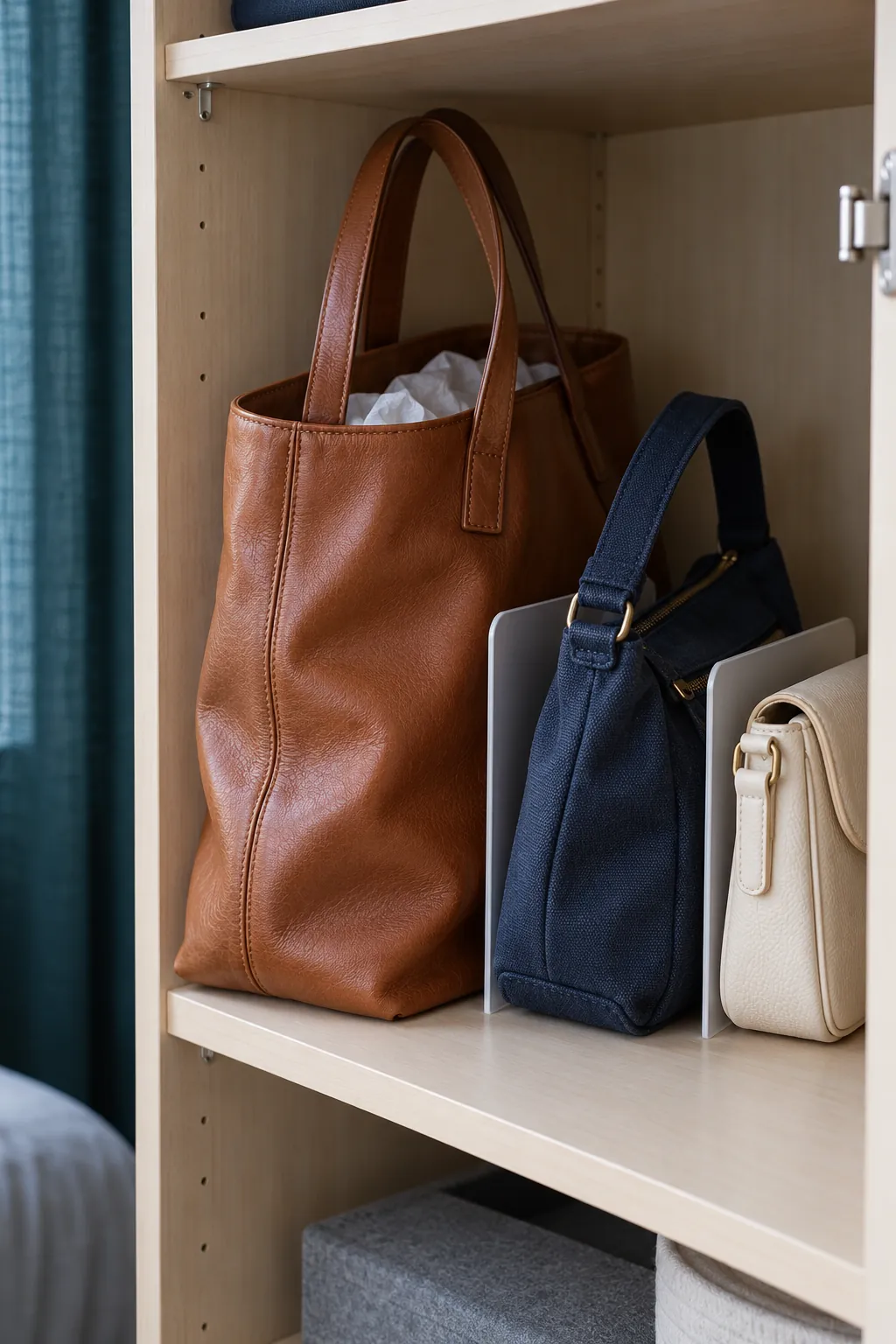
Keep bags upright with soft supports
Bags that slump across a shelf can consume more space than their actual width. Use shelf dividers or appropriate soft inserts to hold them upright without stretching handles. Put smaller empty bags inside larger ones only when you can still find them and the materials tolerate contact.
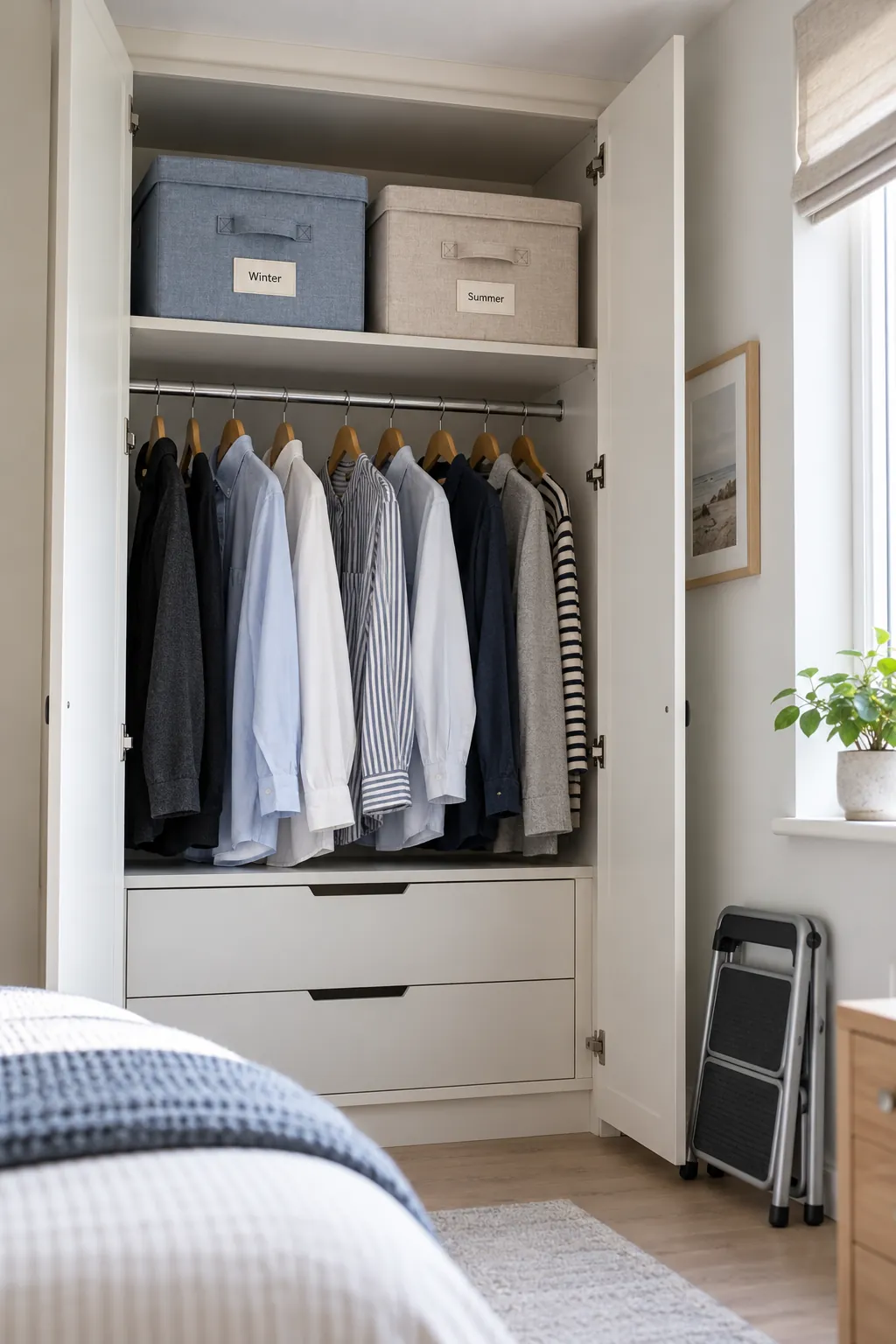
Move seasonal clothing into labeled top boxes
The highest wardrobe shelf is a useful place for light items you seldom need. Separate warm and cool weather clothing into manageable boxes and label the front with the actual contents. Use a stable step stool when needed, and keep heavy containers lower rather than lifting them overhead.
Seasonal rotation works only when you can identify the box without unpacking it. Use specific categories if one broad label hides too much. Check stored clothing when the season changes rather than leaving forgotten items above daily reach.
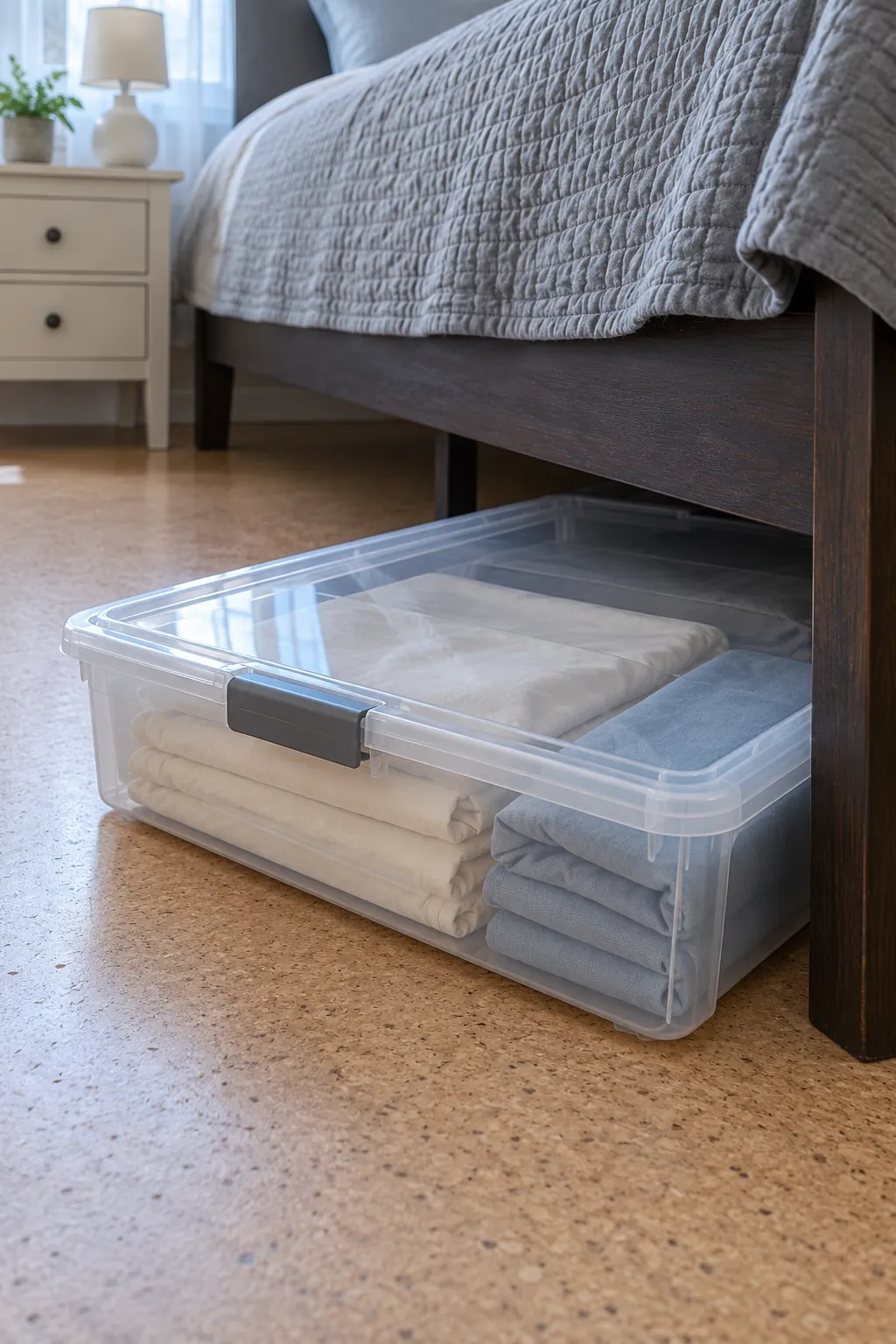
Reserve under bed space for spare bedding
Moving spare sheets out of the wardrobe can release space without reducing either person’s clothing allocation. Put clean, dry bedding in a covered container that fits the bed’s usable clearance. Measure around legs and center supports, then confirm you can pull the container out without moving other furniture.
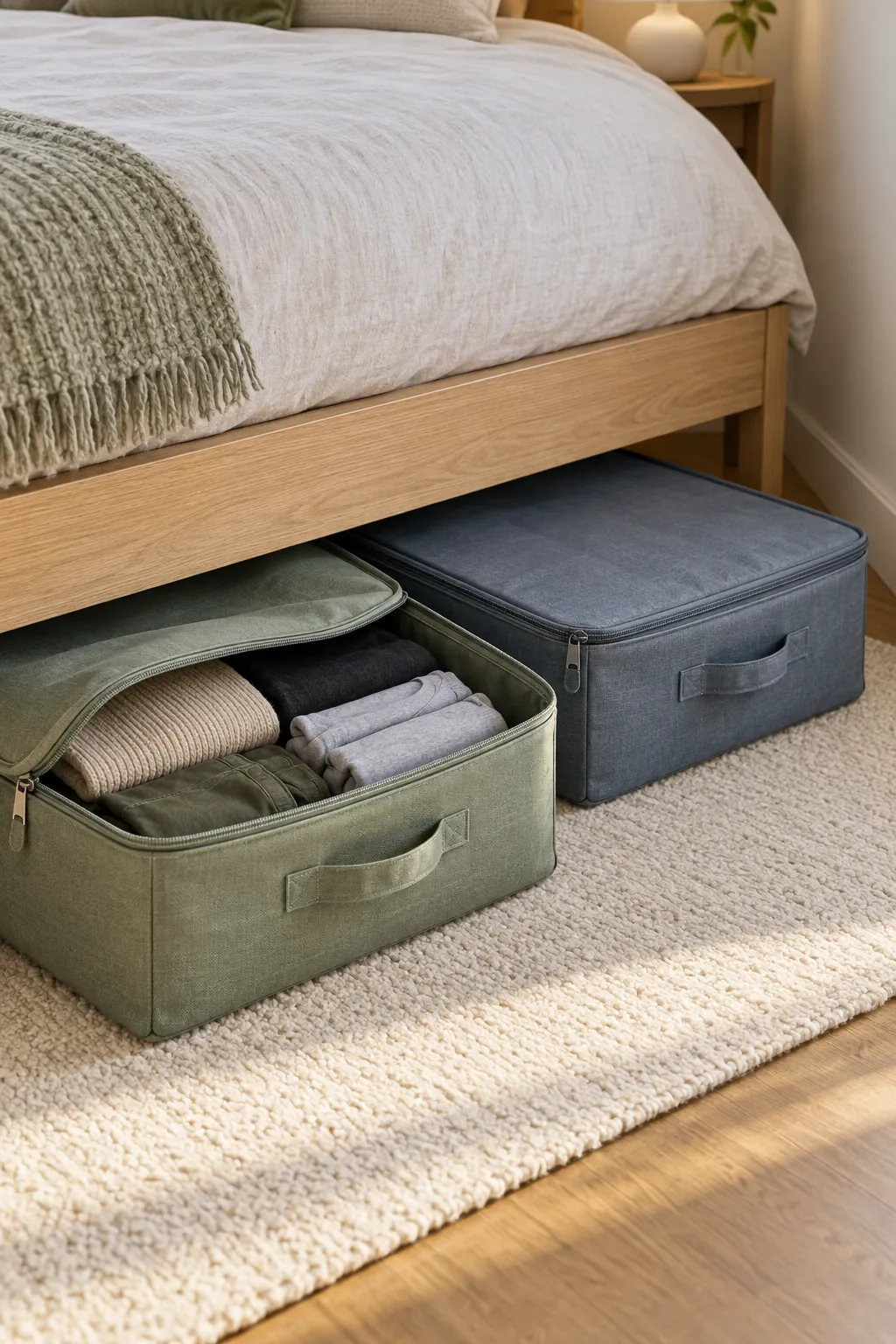
Choose one under bed clothes bin per person
Separate bins make overflow easier to manage than a shared container full of mixed clothing. Give each bin a specific purpose, such as seasonal sportswear or rarely worn trousers. Keep daily essentials in the wardrobe so getting dressed does not require kneeling beside the bed every morning.
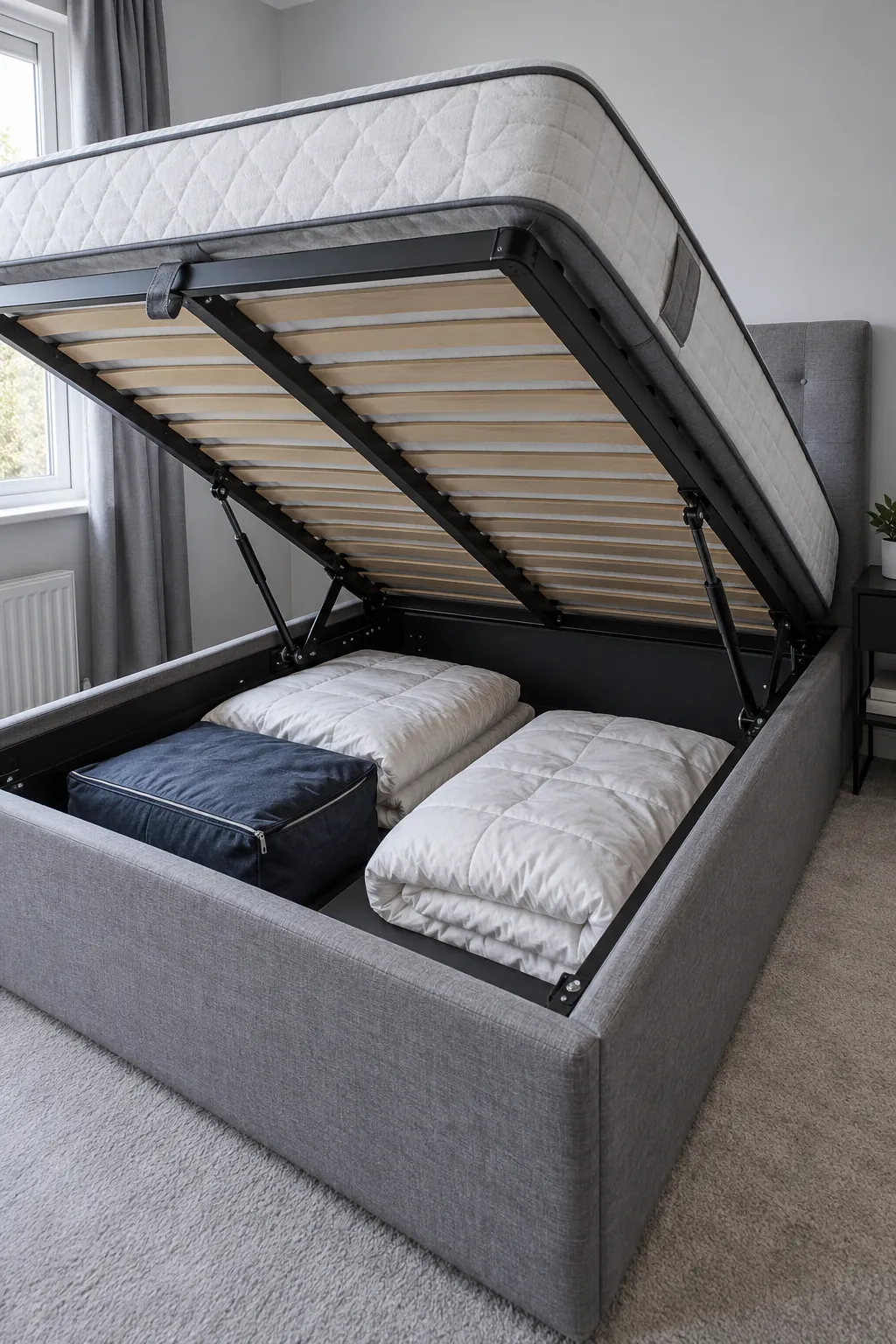
Use a lifting storage bed for bulky soft items
A bed with an integrated lifting base can hold bulky bedding when side access is tight. Follow its loading and operating instructions, and ensure the mattress and lift mechanism are compatible. Keep stored objects below the mechanism and never work beneath an unsupported raised base. Measure the room with the base raised as well as closed.
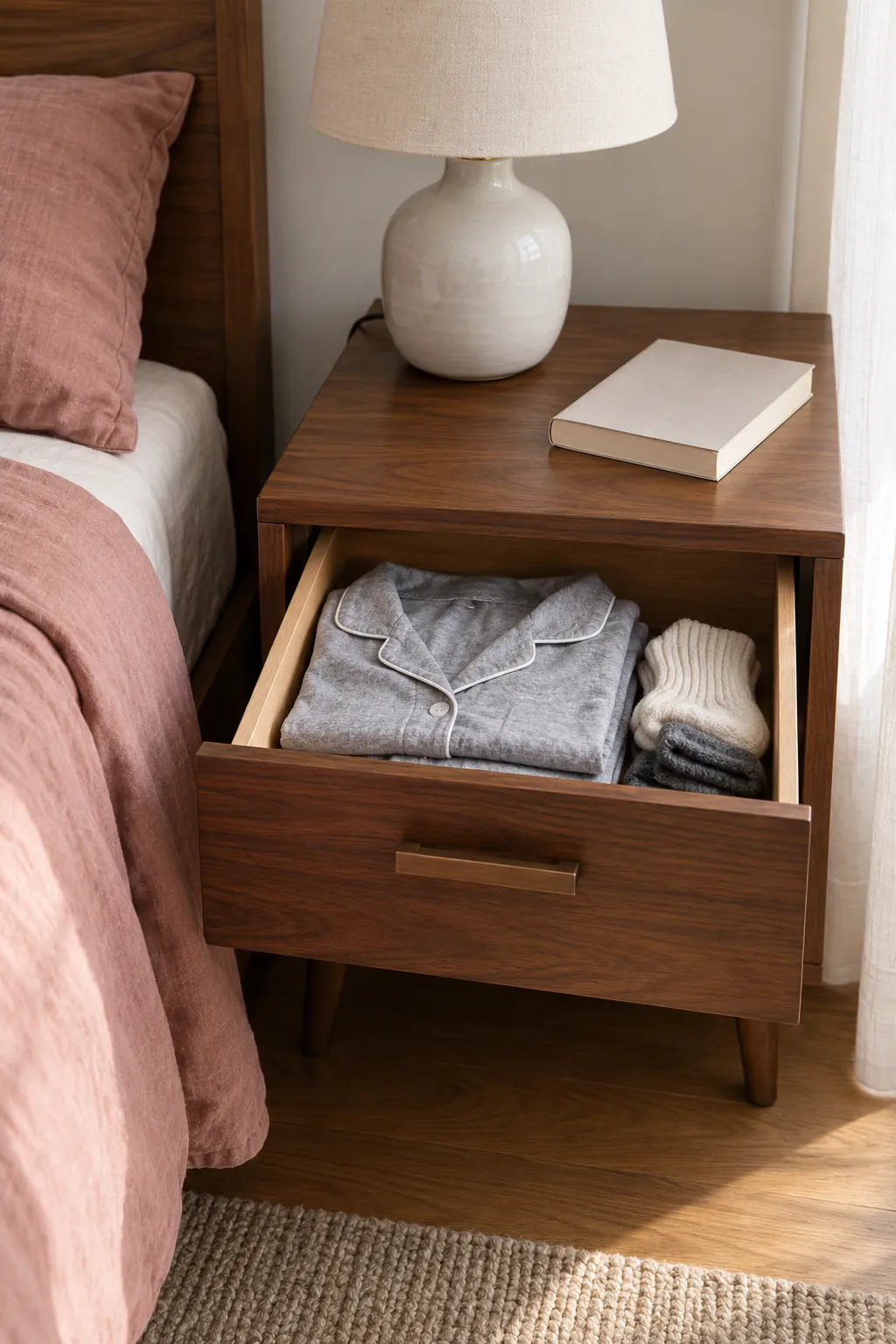
Make bedside drawers hold personal basics
A bedside drawer can take pajamas or a few everyday clothing items out of the shared wardrobe. Assign a clear category instead of allowing it to become a second miscellaneous drawer. Leave room for the bedside objects you genuinely use, and check that the drawer can open beside the bed.
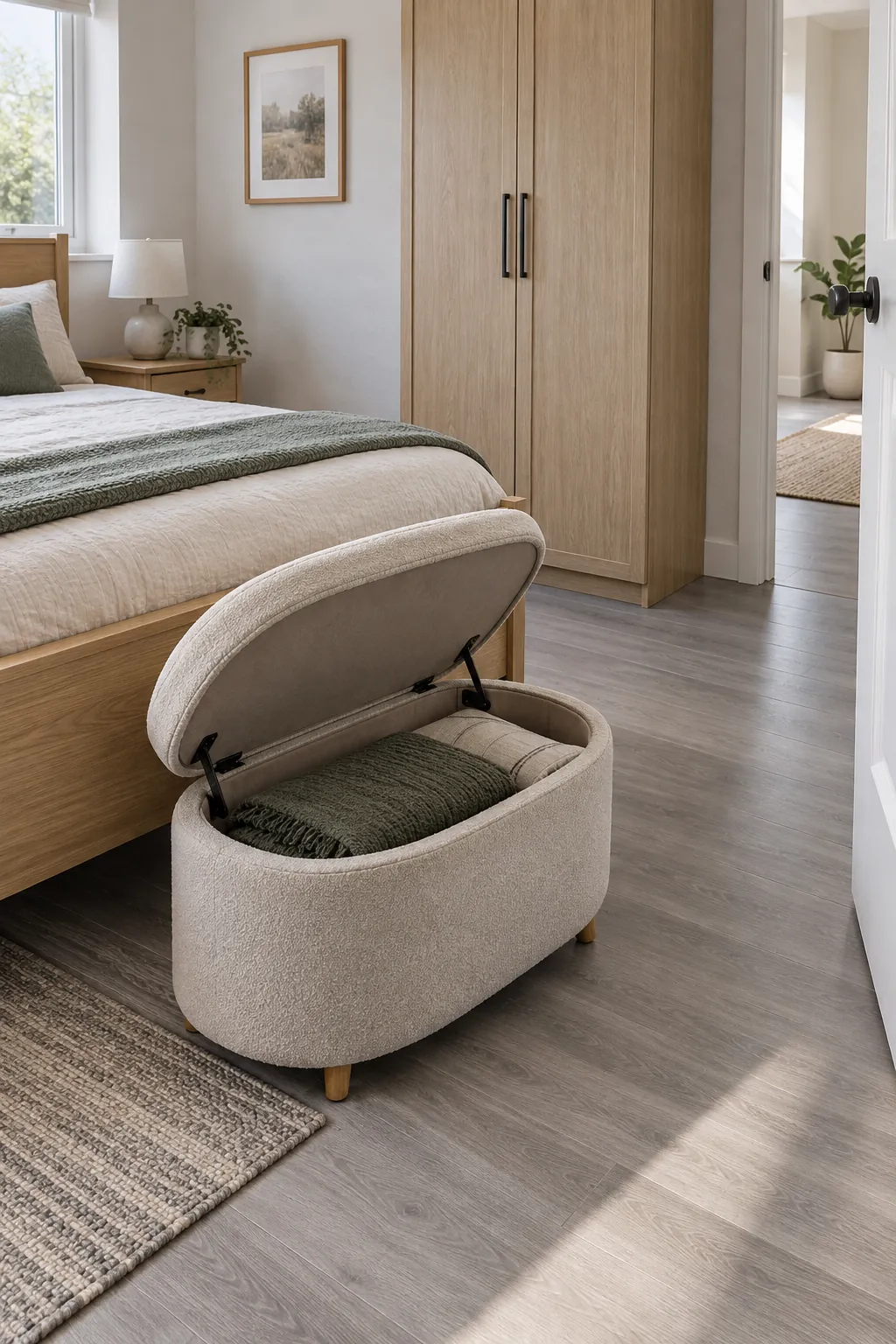
Choose a storage ottoman only where it clears the route
A small ottoman can hold spare blankets and provide a place to sit, but only if the room has space for both functions. Tape its footprint on the floor before buying and test the bed, wardrobe doors, and walking route. A storage piece that blocks the wardrobe makes compact bedroom organization harder rather than better.
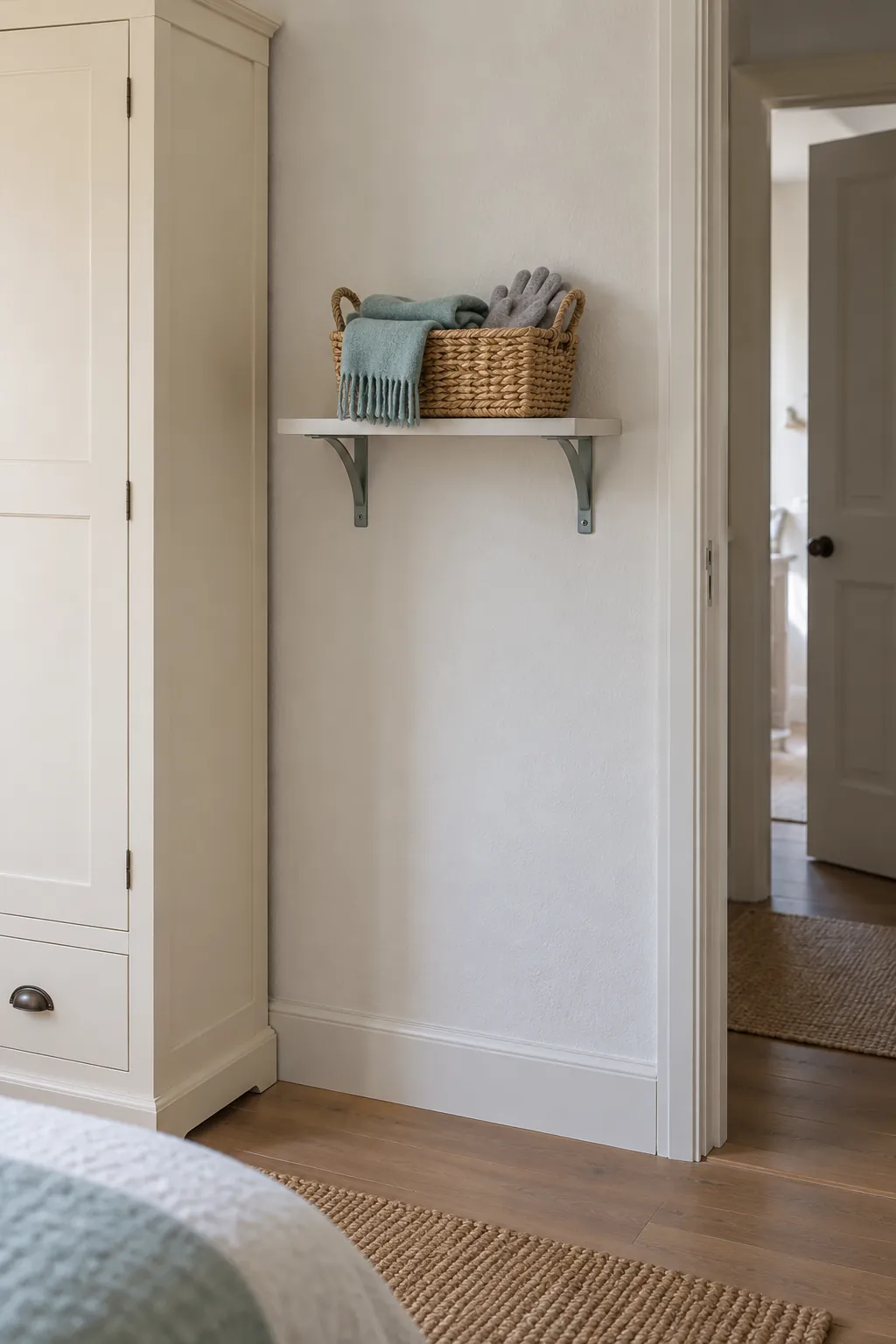
Use wall shelving for light folded items
A shallow shelf can hold a small basket of light accessories above an otherwise unused area. Check wall construction, permitted fixings, and the manufacturer’s load guidance before installing it. Keep it away from places where someone could strike their head, and do not position heavy storage over the bed. In a rental, get permission before making holes where your agreement requires it.
Keep tomorrow’s outfits on a narrow valet hook
One temporary outfit position can prevent clean clothing from spreading across the bed or chair. Limit the hook to the next outfit rather than letting it become permanent overflow. Use a suitable existing or permitted fixing, and keep the hanging clothes away from the door swing and the route out of the room.
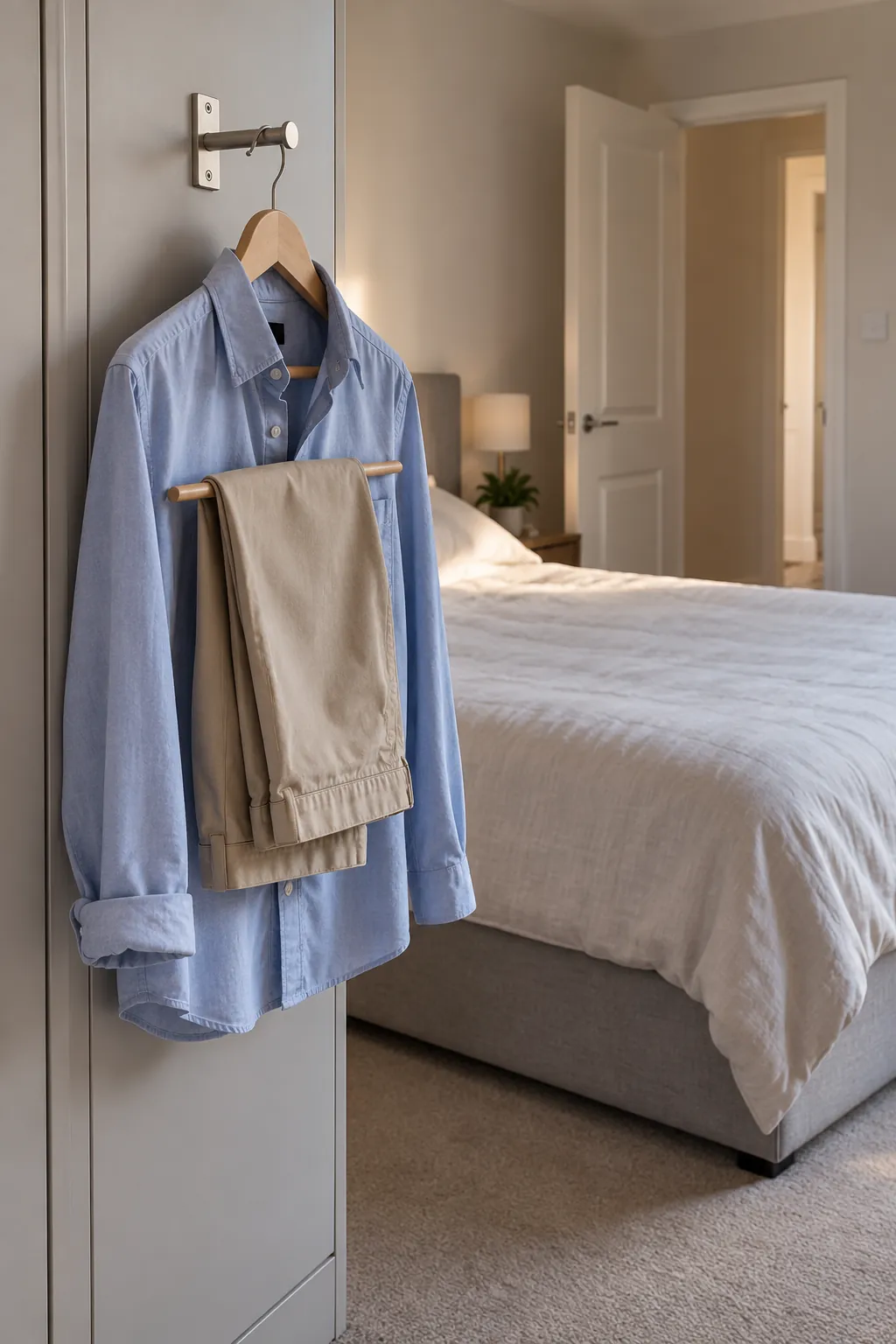
Create a small place for clothes worn once
Clothes that can be worn again need a place separate from fresh laundry and dirty washing. A short rail or a few hooks can hold this limited category while garments air. Set a clear capacity, because a second crowded rail recreates the wardrobe problem in the bedroom.
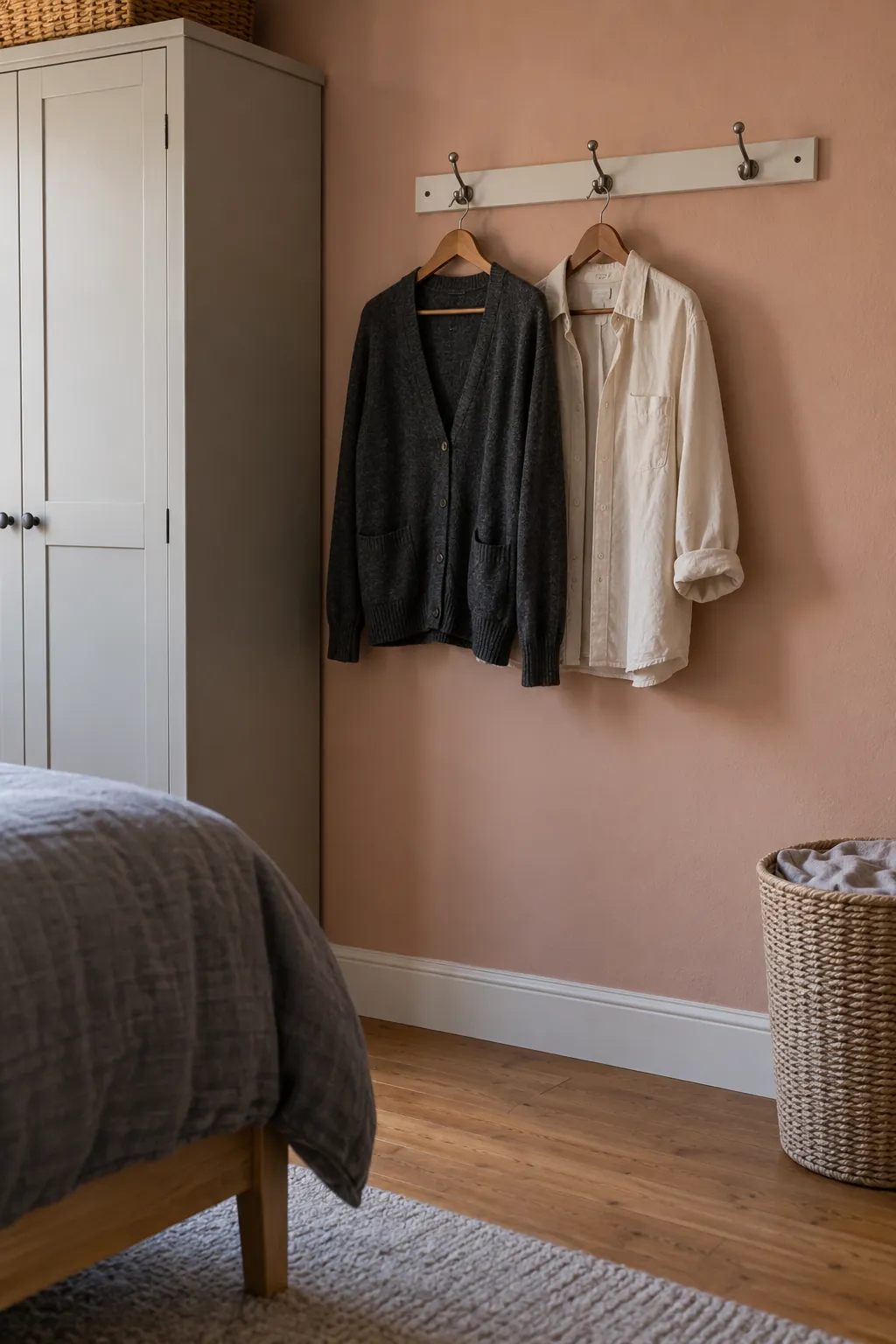
Split laundry with a narrow two compartment hamper
A divided hamper can separate loads or personal laundry without two baskets spreading across the floor. Choose its position before choosing its size, and keep access to the wardrobe clear. Avoid compressing damp garments into a closed compartment, and empty the hamper often enough that sorting remains practical.
The best division might be by wash type rather than by person. Agree on the sorting rule before buying the hamper. If one compartment always fills first, adjust the arrangement instead of letting laundry spill beside it.
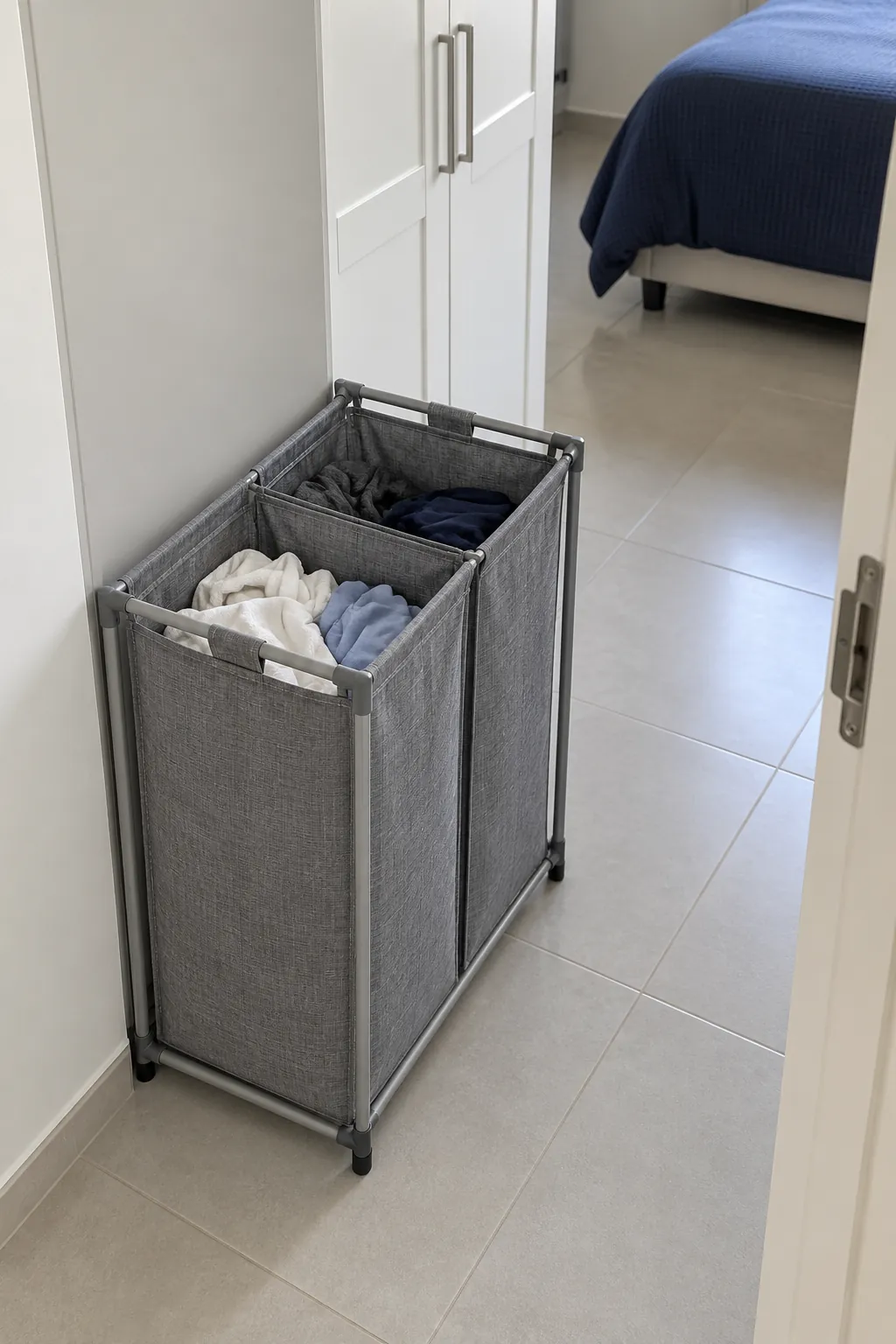
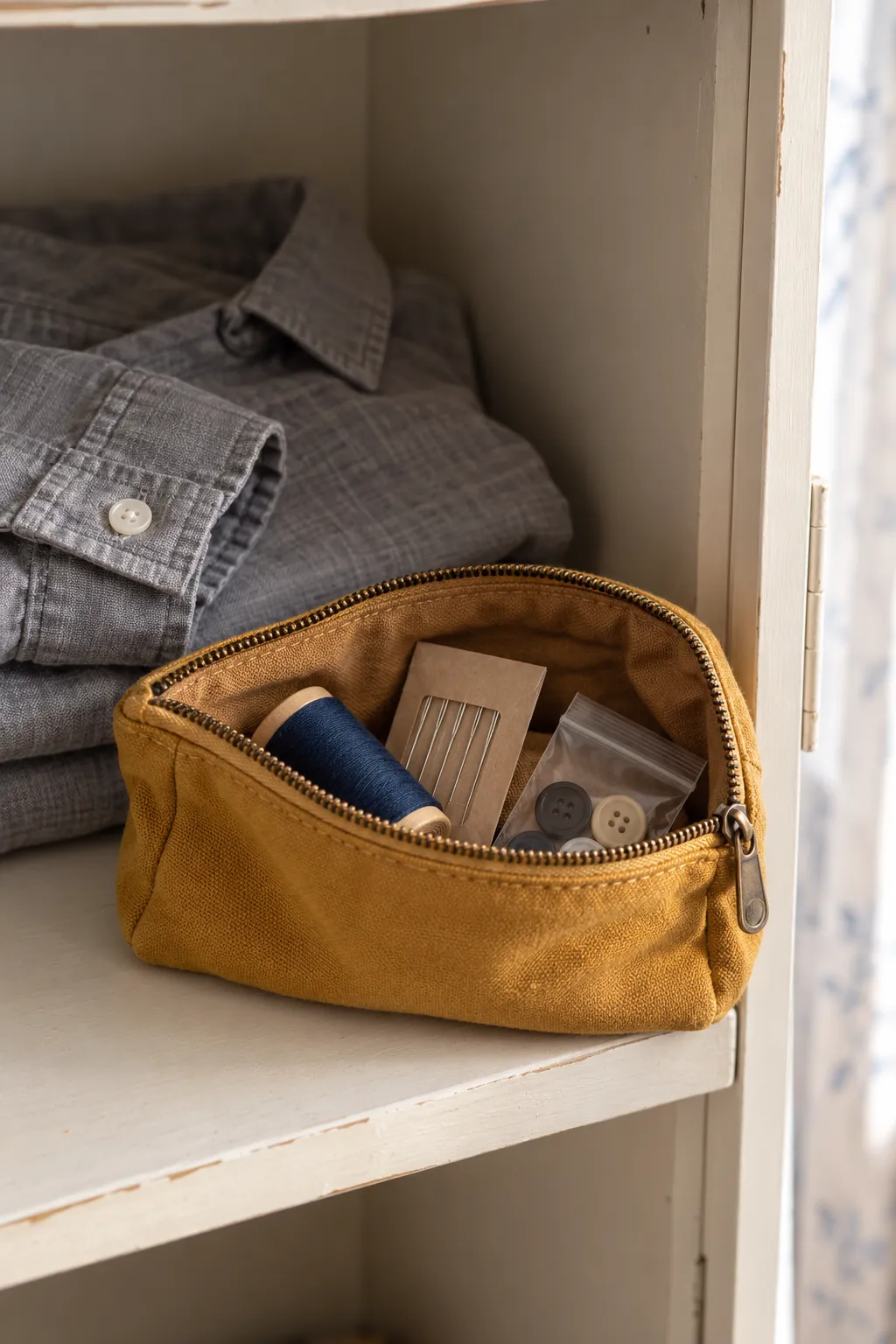
Keep a small repair pouch near the wardrobe
Loose buttons and clothing awaiting a minor repair can occupy useful shelves indefinitely. Gather the repair supplies in one small pouch and place the affected garment where you will see it. Give the repair a date or decision so the pouch supports maintenance instead of becoming a permanent holding zone.
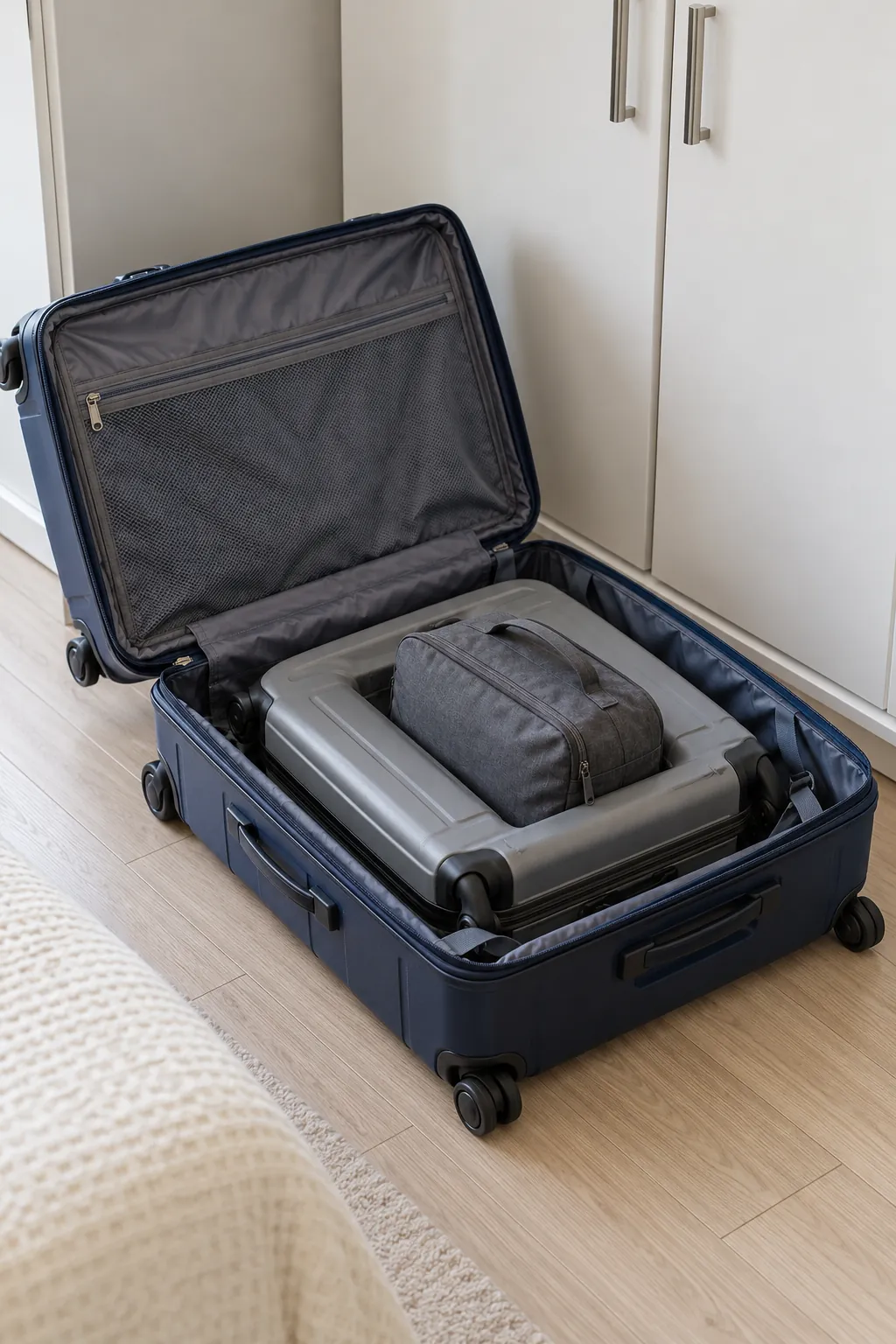
Store empty luggage inside one larger case
Nested luggage can reclaim a wardrobe corner without adding storage furniture. Clean and dry every case before nesting, and protect surfaces where wheels or fittings touch. Keep the outer case accessible enough that preparing for a trip does not require dismantling the whole wardrobe.
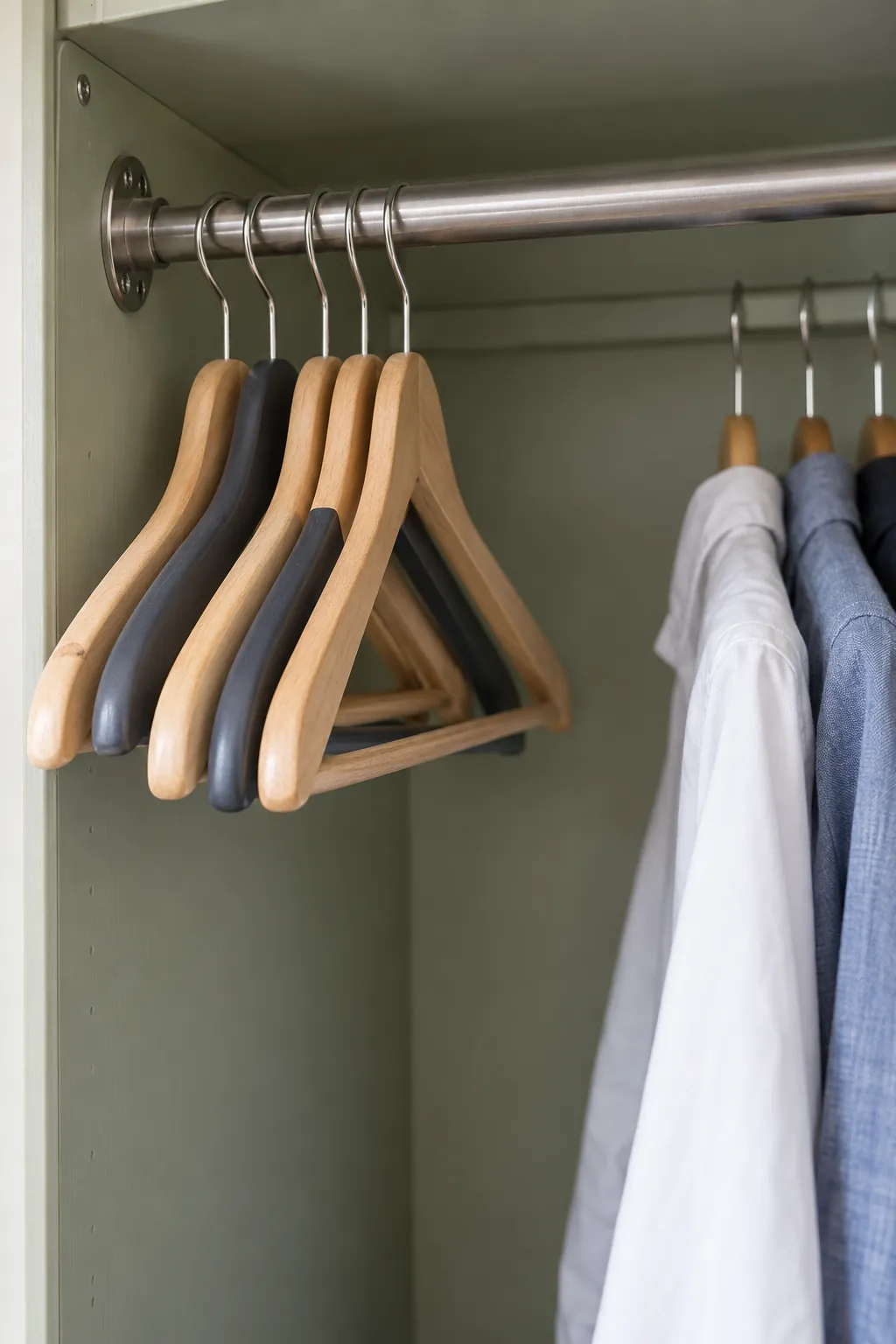
Give spare hangers a small parking rail
Empty hangers mixed throughout a crowded wardrobe make the rail look fuller than it is. Gather them at one end or on a small compatible hanger holder. Keep only the number you need for laundry and regular clothing changes, then remove the extras that have no clear job.
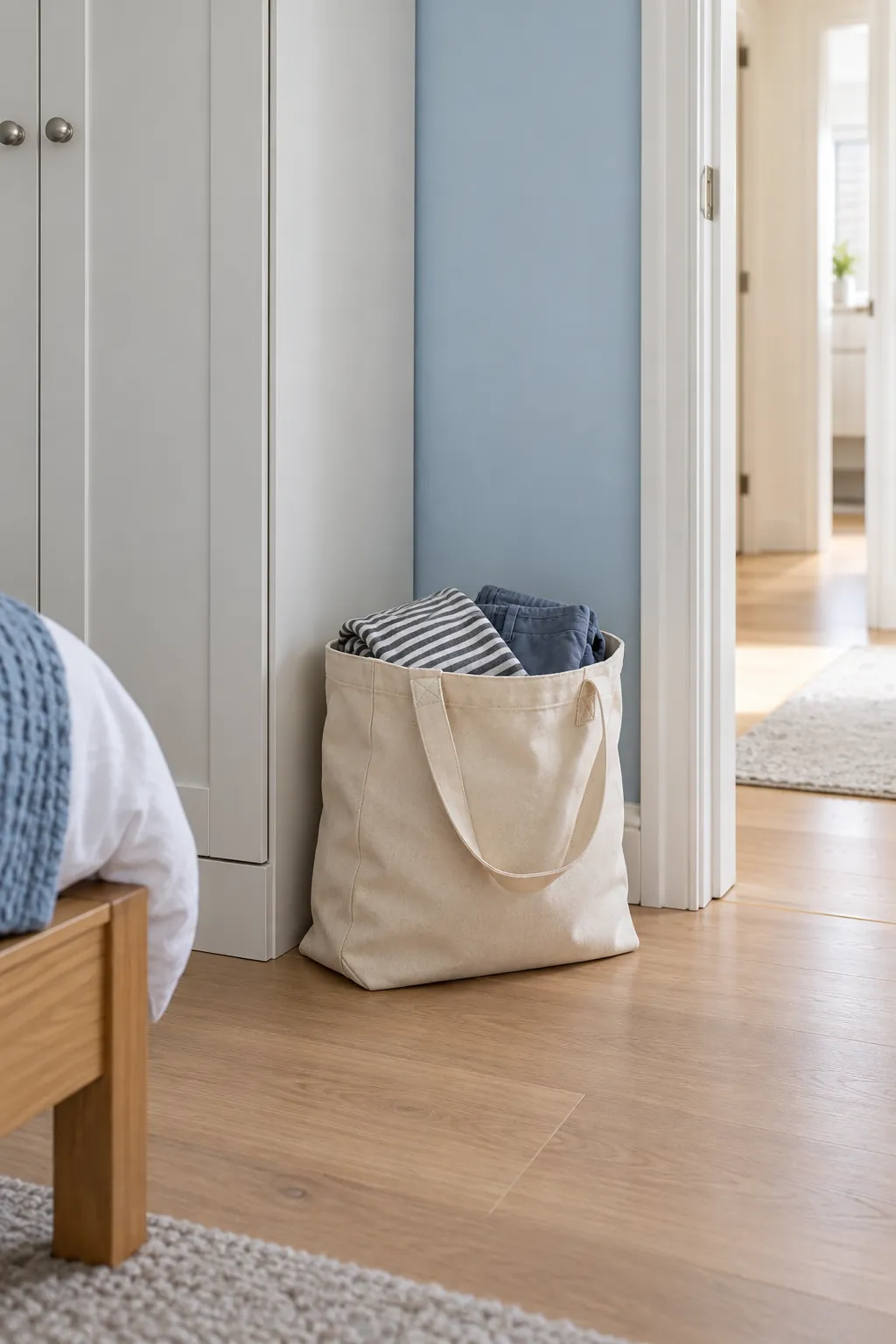
Keep a donation bag outside daily clothing zones
A small bag for items each person has chosen to release prevents rejected clothing from returning to the rail. Place it where it can leave the room easily, without blocking a doorway or becoming another permanent pile. Make decisions about your own belongings and agree on a collection day rather than clearing your partner’s clothes without consent.
Leave room for the next laundry load
A wardrobe that fits only when some clothes are in the wash is already over capacity. Put away a full clean load together and note where clothing has to be squeezed or stacked too high. Adjust that specific category, then protect a little working room so both people can keep using the system.
Choose the smallest change that removes the actual bottleneck. One overcrowded drawer may need a different fold, while a full hanging rail may need fewer seldom worn garments. The test is whether both people can put clothes away without rebuilding the arrangement.