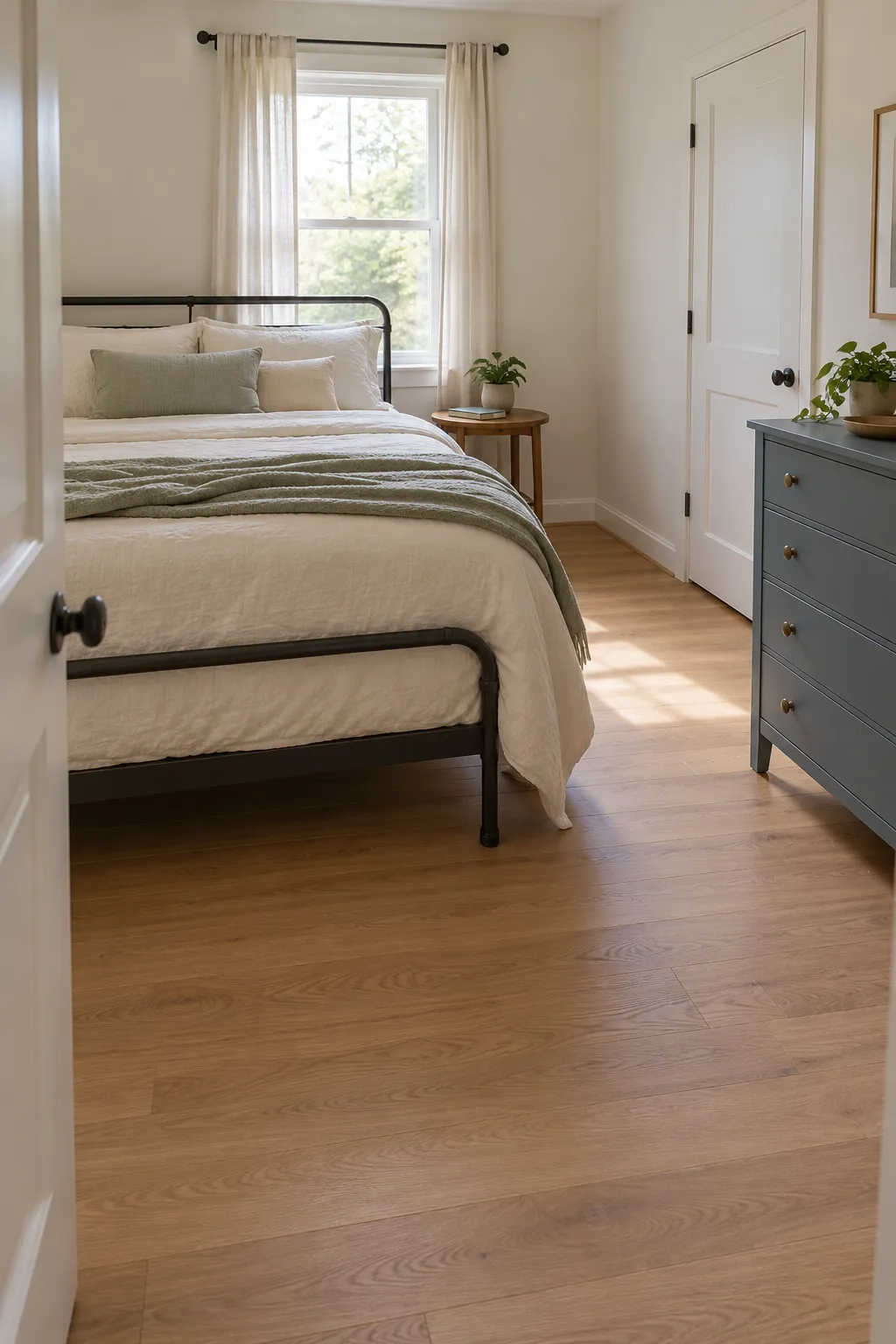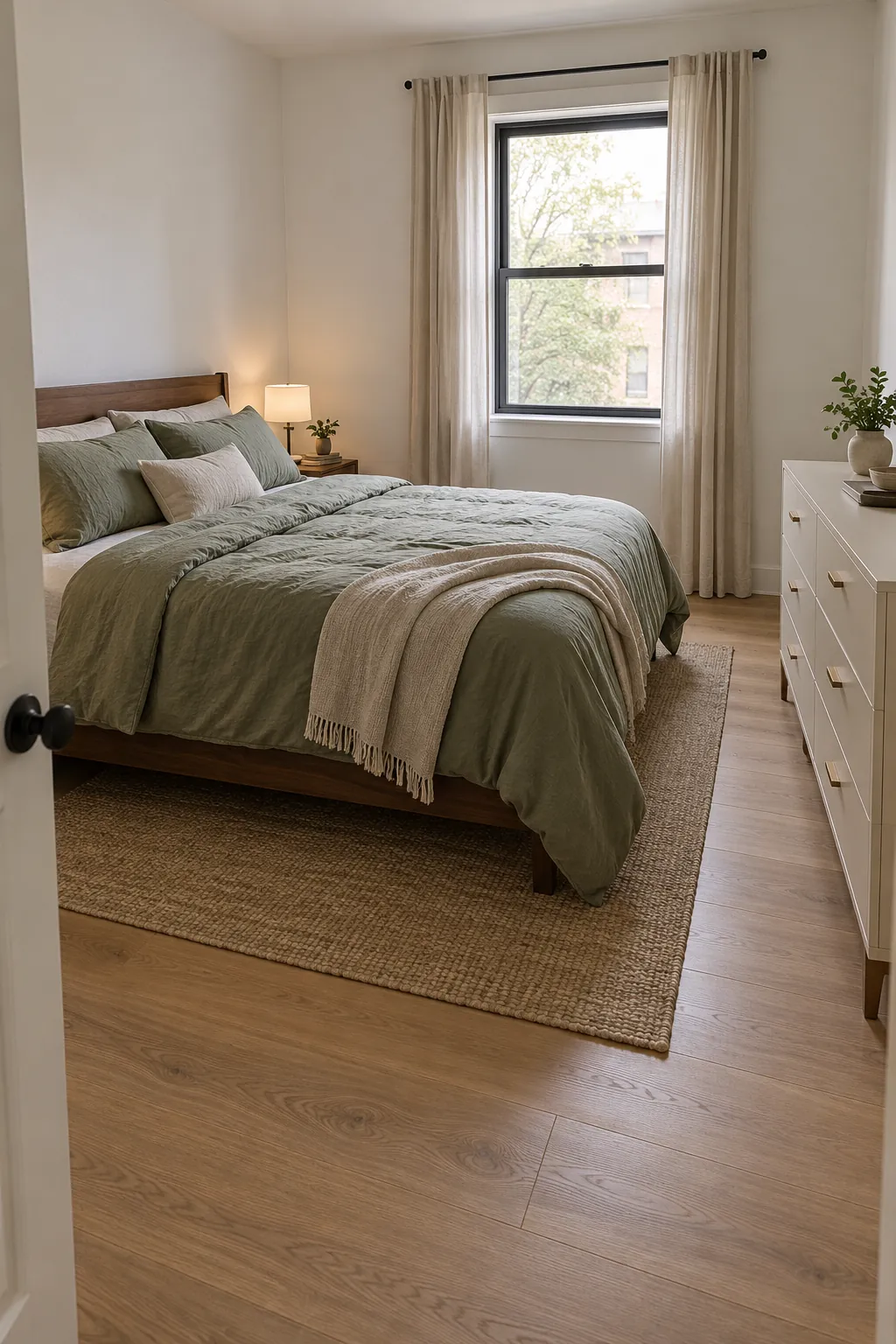
Yes, both pieces can fit, but a drawer that hits the bed is not useful storage. The deciding measurements are the bed frame’s outside size, the dresser’s depth, and the space you need while a drawer is open. A narrow dresser beside an offset bed often works better than a deep dresser directly opposite its foot.
Measure the frame before you plan the room
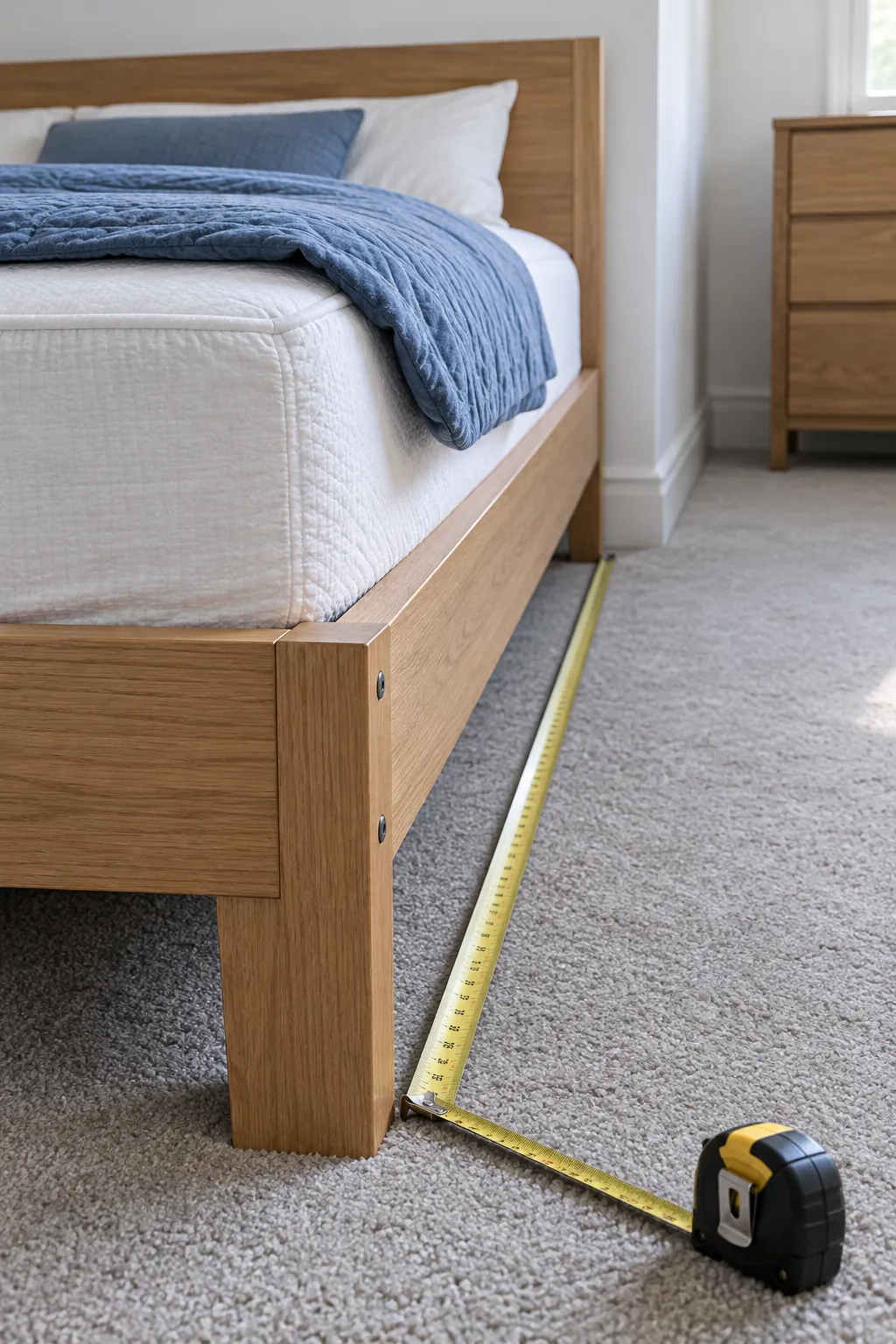
A standard US queen mattress is 60 inches wide and 80 inches long, but the frame around it can be larger. Measure the actual bed from its widest side to side and from the back of the headboard to the front of the footboard. Include projecting legs, upholstery, and any gap the headboard needs behind it.
A room measuring exactly 10 feet by 10 feet has 120 inches in each direction. For the examples here, assume a bed frame that is 64 inches wide and 84 inches long; these are example dimensions, not a universal queen frame size. Centered across the room, that frame leaves 28 inches at each side and 36 inches beyond its foot before you add any other furniture.
Measure the room at the floor and mark baseboards, radiators, closet openings, and the bedroom door swing. A nominal room size on a listing may include a recess or differ from the clear usable dimensions. These examples are planning comparisons, and the photographs illustrate furniture relationships rather than serving as measured floor plans.
Compare a dresser at the foot of the bed
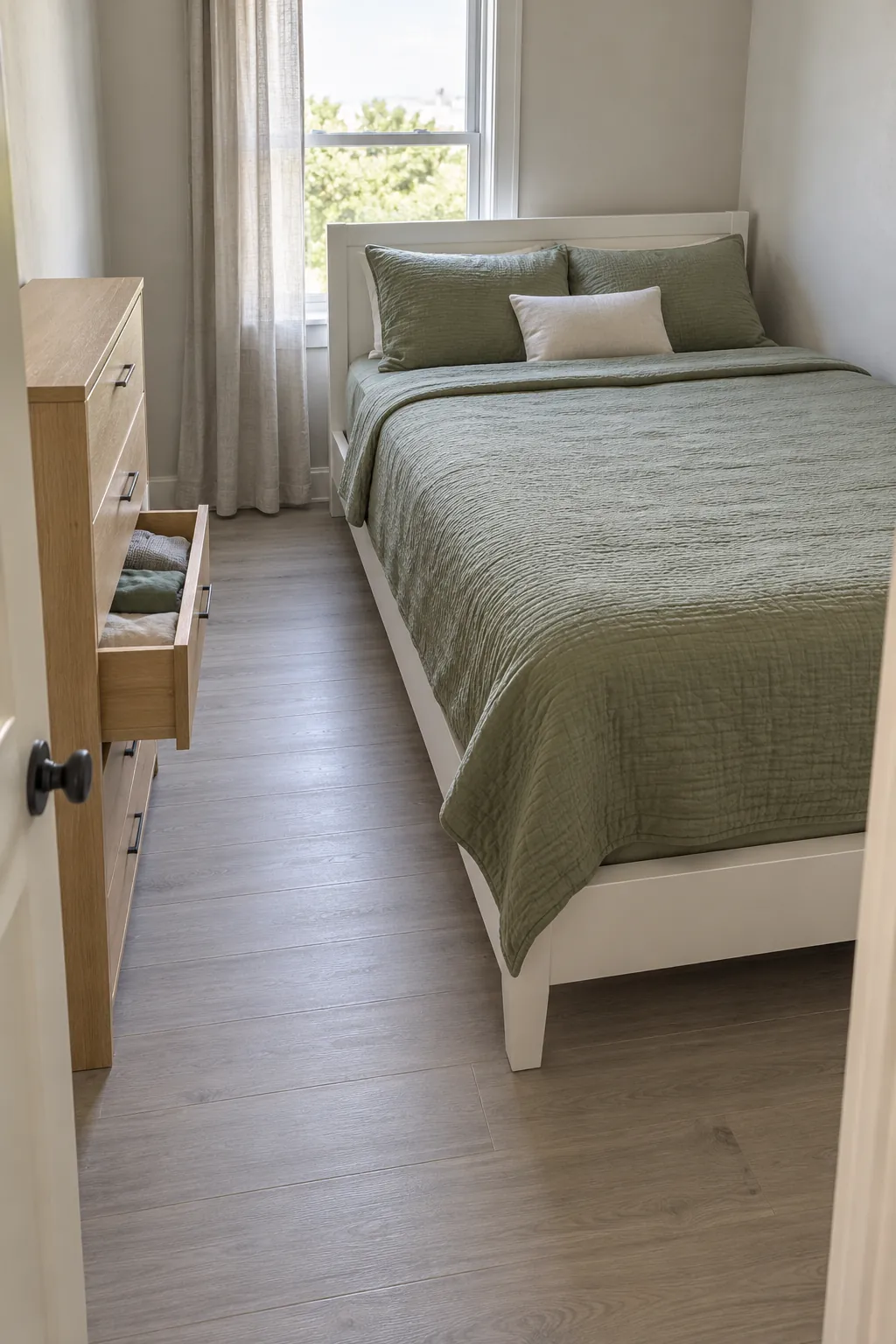
Putting the dresser opposite the foot is visually simple, but it consumes the room’s shortest remaining clearance. With the example 84 inch frame, the 120 inch room leaves 36 inches from the bed foot to the opposite wall. A dresser 18 inches deep reduces that gap to 18 inches before its drawers open.
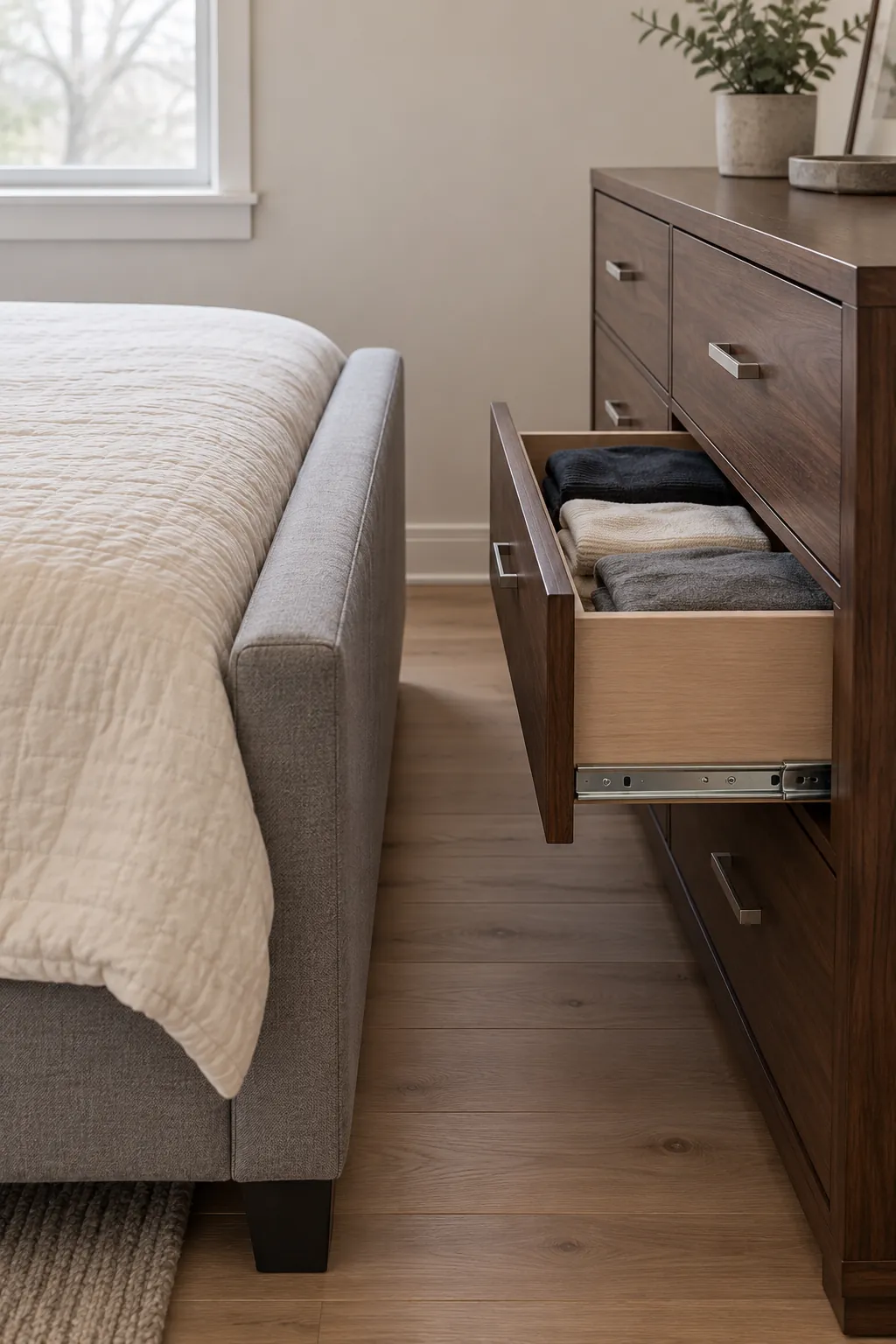
If a drawer projects another 14 inches, only 4 inches remain between its front and the bed in this example. The drawer may technically open, yet there is no useful standing space directly in front of it. A shallower dresser improves the calculation, but you still need to test where your body goes while using the bottom drawer.
A dresser 14 inches deep would leave 22 inches with its drawers closed, which is still a tight passage for many people. Do not treat that number as a recommended clearance or an accessibility standard. If the foot passage is your main route to the closet or exit, moving the dresser to another wall is often the better choice.
Try a narrow dresser on a side wall
Moving the dresser alongside the bed changes the calculation from room length to room width. The example room is 120 inches wide, the bed frame uses 64 inches, and an 18 inch deep dresser uses another 18 inches. That leaves 38 inches to divide between the wall side of the bed and the aisle in front of the dresser.
Putting the bed close to one wall gives most of that remaining width to the dresser aisle. This can make the drawers more usable, but the person sleeping against the wall loses direct side access. Making the bed also becomes harder, so this layout usually suits a solo sleeper more readily than two people who both need an easy route out.
For a shared bed, try an offset position rather than assuming the wall side can disappear. An 18 inch wall side gap would leave a 20 inch dresser aisle in the same example, which may still be too tight once a drawer opens. Use your own movements and needs to judge the result; splitting a narrow remainder into two gaps does not automatically make either gap comfortable.
A tall narrow chest reduces the length of wall it occupies, but its depth still subtracts from the aisle. Measure all three dimensions and secure the furniture according to its instructions. Keep drawers closed except when in use, and do not rely on a narrow chest standing safely without any required anchoring.
Use the closet or a short wall when it actually fits
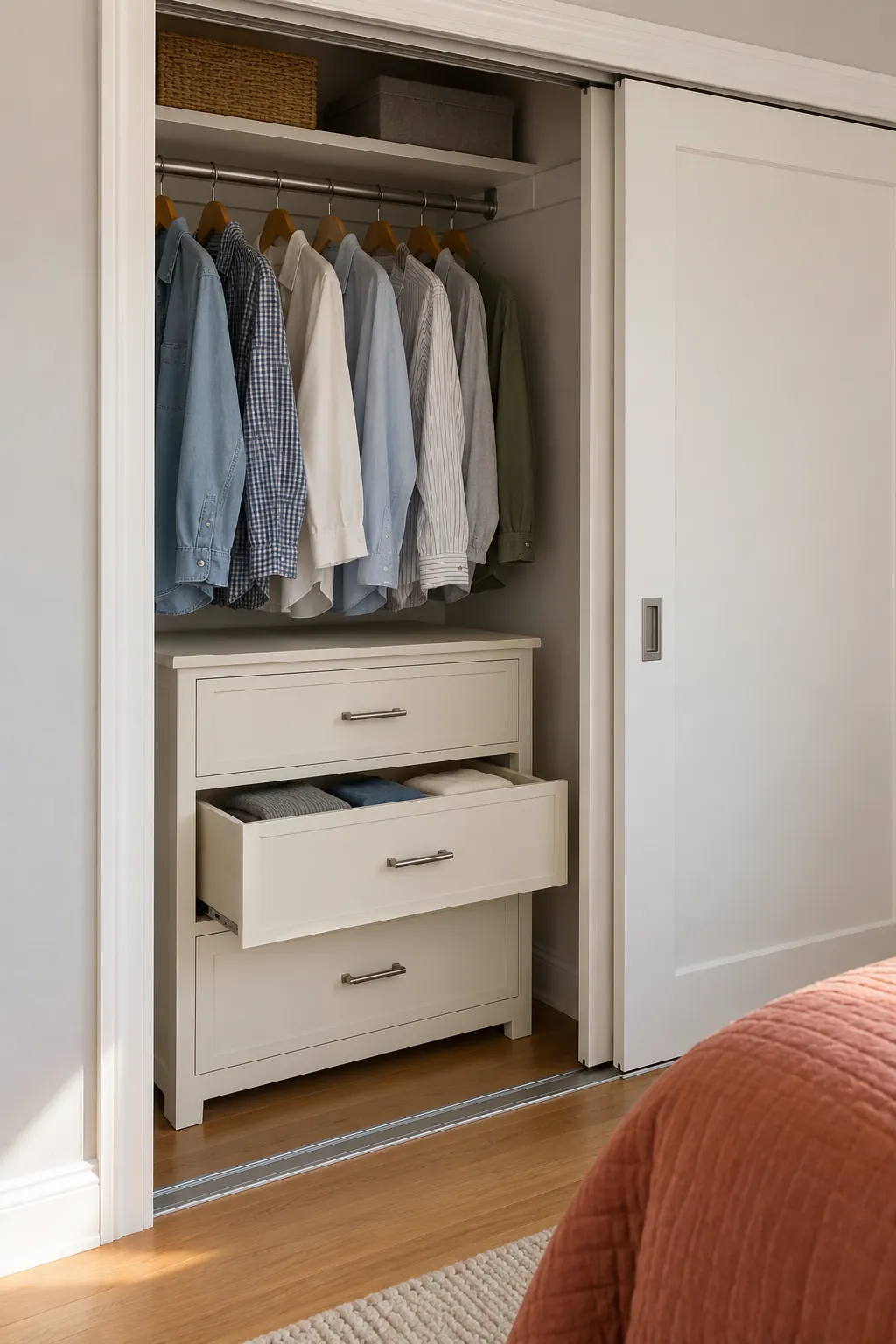
A dresser inside an existing closet can preserve the bedroom’s open floor, provided the closet is outside the measured clear room area and the dresser fits through its opening. Check the door track, hinges, hanging clothes, and the full drawer extension. A closet opening that is narrower than the dresser front can prevent the outer drawers from being usable even when the cabinet fits inside.
A short chest may also fit beside the head of the bed where you would otherwise use a nightstand. Its width must fit that wall segment, and its drawers must open toward a clear route. Treat this as a measured alternative rather than assuming every tall narrow piece will fit beside a queen bed.
Test the layout with every moving part open
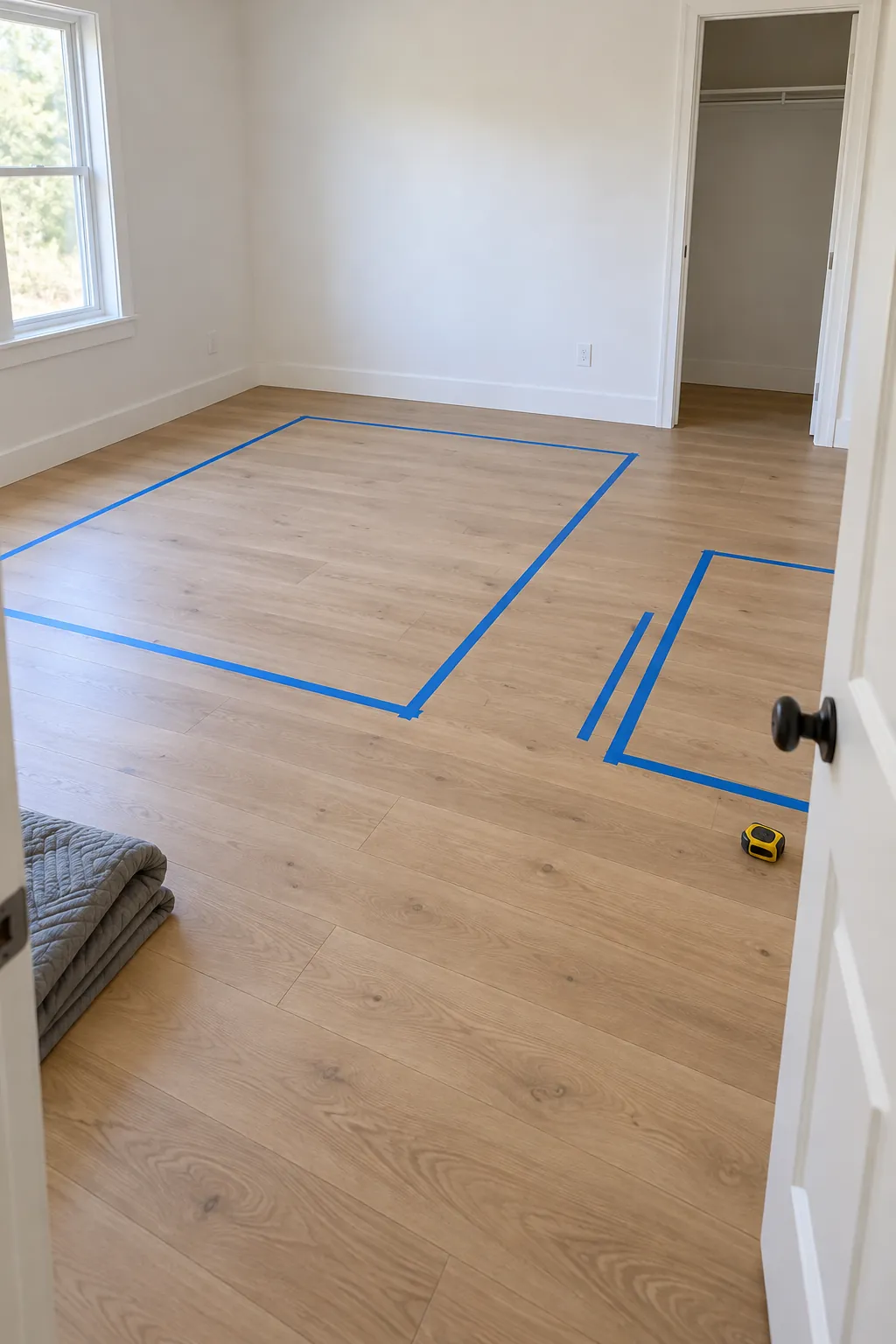
Use removable tape on a suitable floor surface to mark the bed frame and dresser footprints before moving heavy furniture. Add a second line for the dresser’s full drawer extension, including handles. Walk through the proposed route and stand where you would retrieve clothes, especially from the lowest drawer.
Open the bedroom door and closet doors through their normal travel. Check that curtains, windows, heating equipment, and any required escape opening remain usable. If two people share the room, test the routes each person uses at night rather than judging only how the room looks from the doorway.
Do not assume a general furniture clearance is enough for a mobility aid or a particular access need. Use the actual equipment and the relevant requirements for your home when planning. A layout that forces sideways shuffling may fit on paper while failing the person who needs to use it.
Choose which compromise you can live with
Keep a centered queen bed when access on both sides matters most, and look first for dresser space in a suitable closet or an unused wall segment. Consider a side wall dresser with an offset bed when one wider working aisle matters more than equal gaps. Treat a dresser at the foot as a measurement problem to solve, not the default just because it looks balanced.
Before buying, write down the actual bed footprint, dresser depth, drawer projection, and narrowest remaining route. If the arrangement works only with drawers shut or a door partly blocked, choose a shallower storage piece, reduce other furniture, or reconsider the bed size. The right layout is the one you can use on an ordinary morning without moving something else first.