
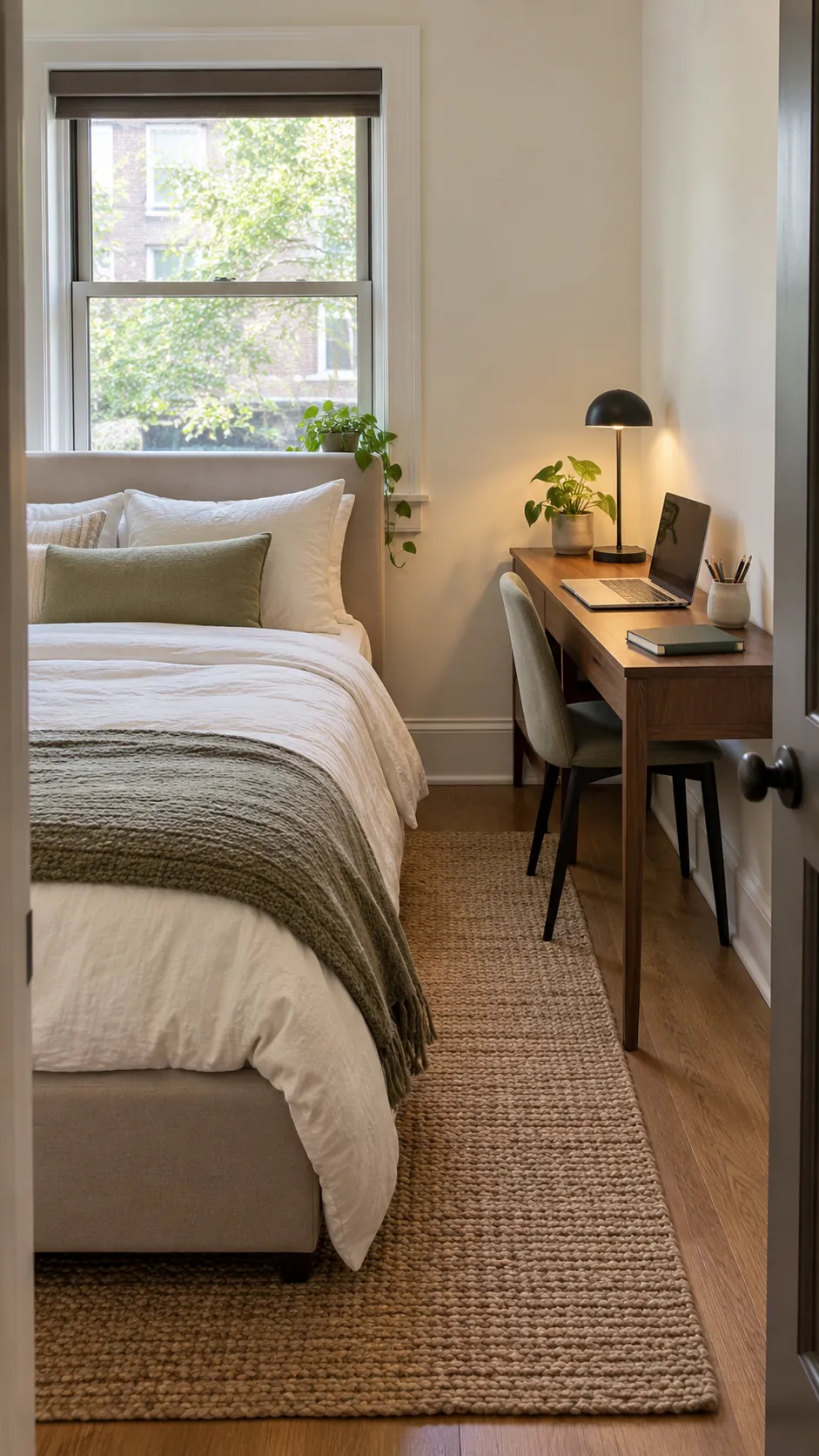
A bedroom can hold a useful work surface without turning the route to the door into an obstacle course. The decisive measurement is usually desk depth, not desk width. Start by protecting the path you use every day, then fit the work zone into the wall space that remains.
A Shallow Desk Beside the Bed
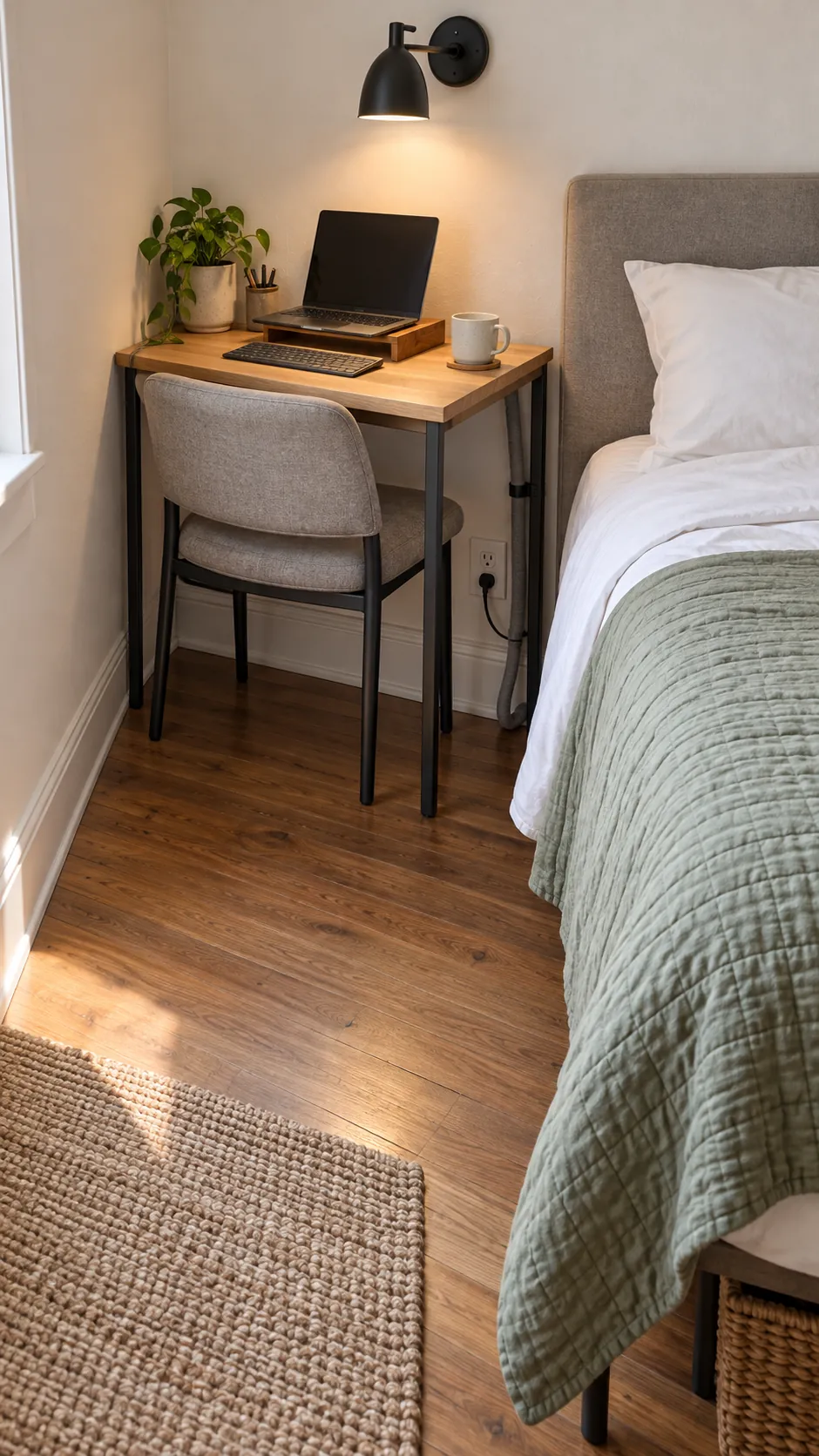
A shallow desk can use the narrow strip beside the mattress that would otherwise hold a bulky nightstand. Keep the surface deep enough for the keyboard and monitor stand, but let the chair tuck fully underneath. A wall light frees the last useful corner of the top.
A Floating Shelf Work Surface
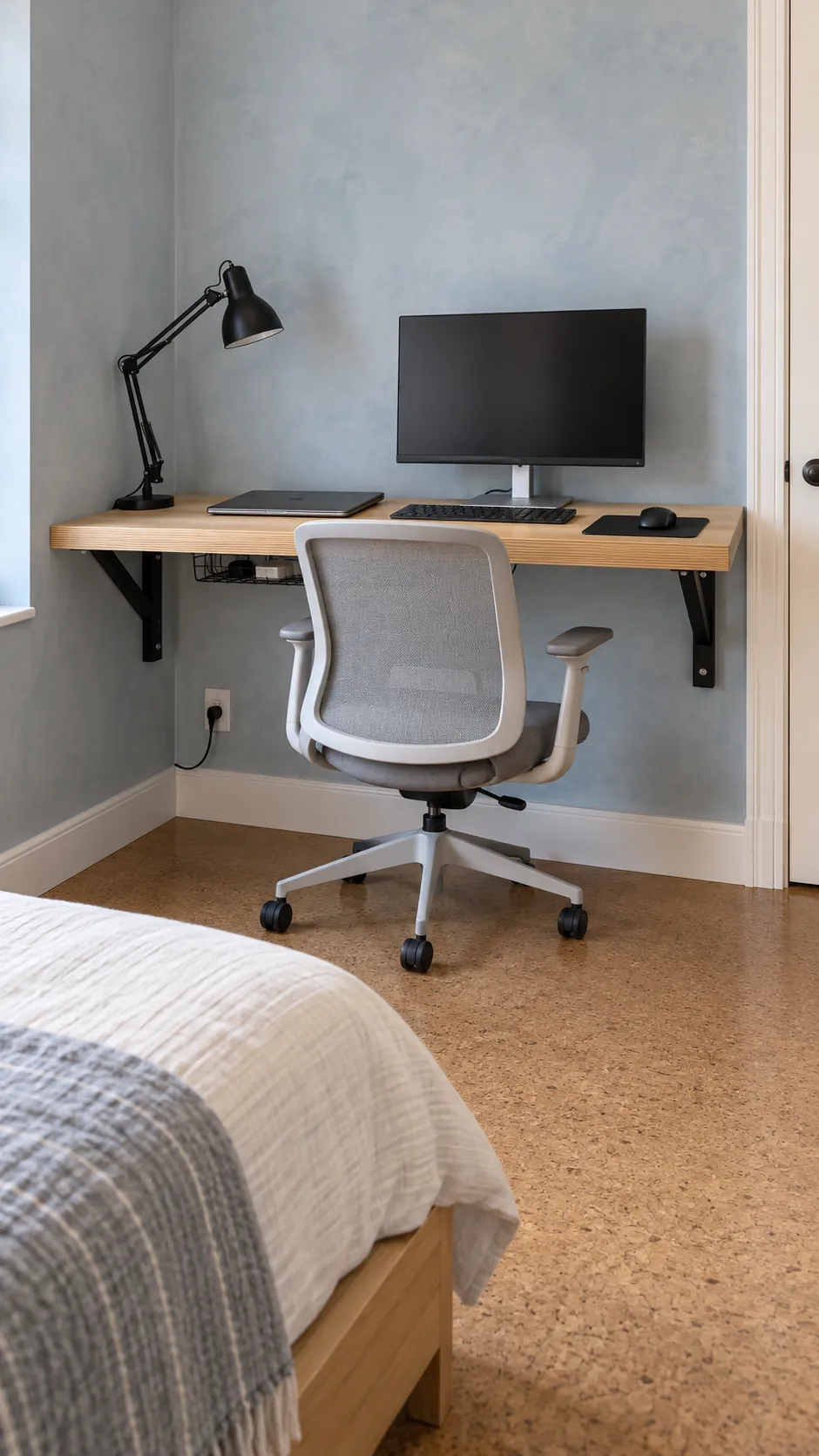
A securely mounted shelf removes desk legs from an already tight floor plan. This makes cleaning easier and gives your knees more freedom when the bed sits close by. Confirm the wall construction and choose brackets rated for the full working load before installation.
A Corner Desk at the Foot
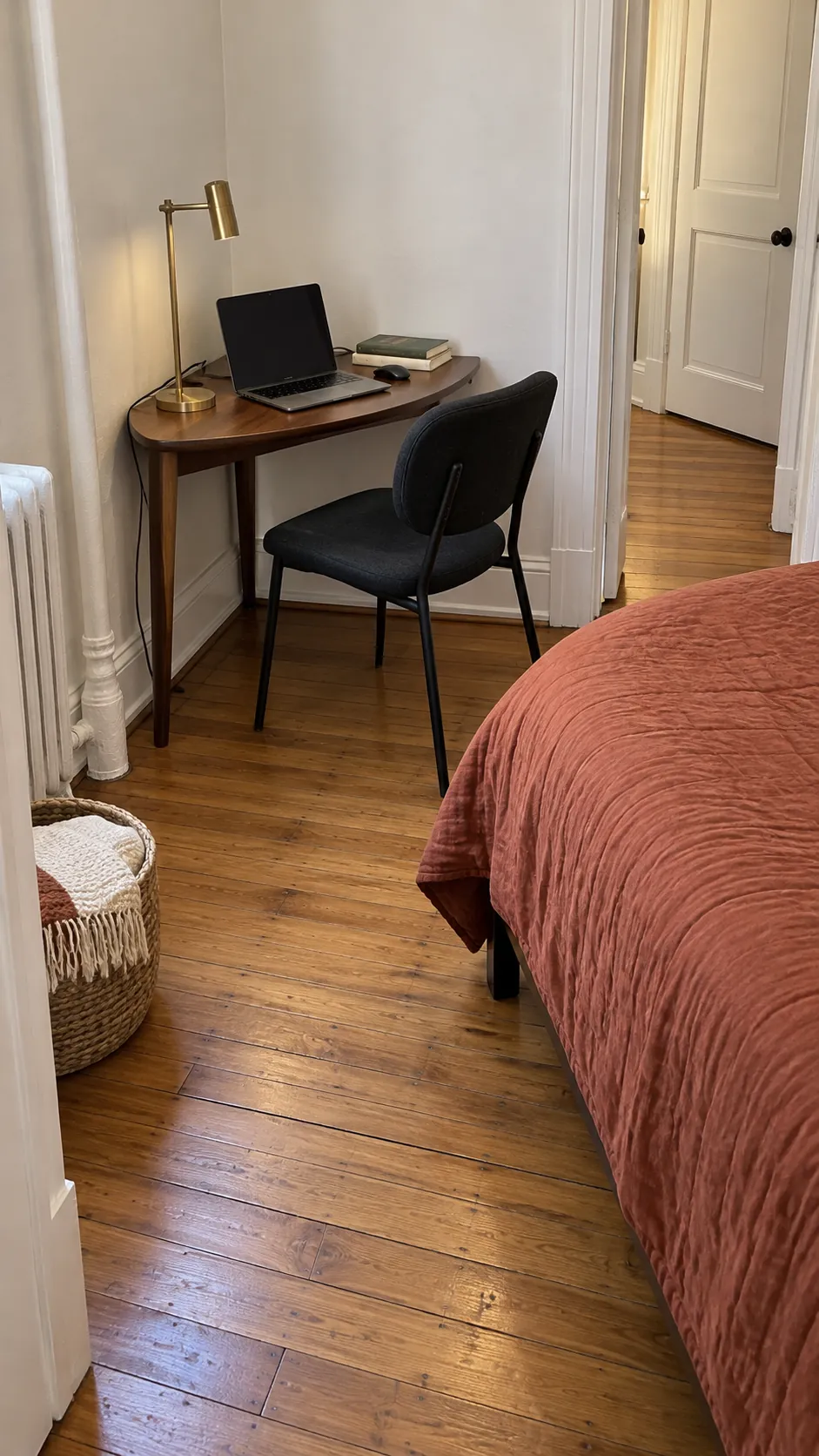
An unused corner near the foot of the bed can support a compact triangular or gently curved desk. Angle the chair toward the open part of the room so you do not scrape the bed when sitting down. Check that the remaining passage still feels comfortable when bedding hangs over the mattress edge.
A Window Ledge Desk
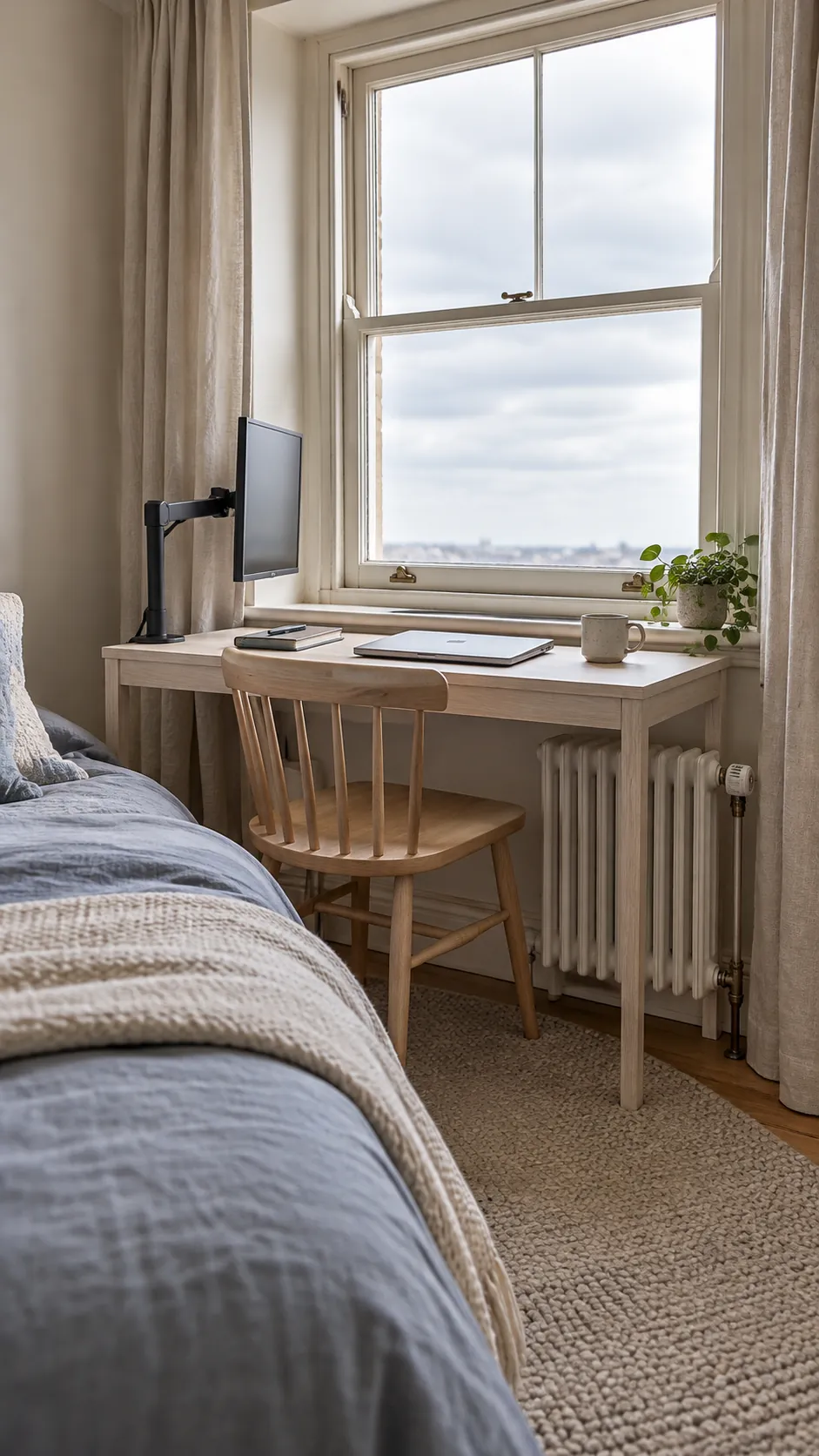
A slim surface under a window uses natural light and keeps the largest wall open for the bed. Match the desk height to the sill so the two horizontal lines look intentional. Leave room for curtains, a radiator, and the full swing of any window hardware.
A Foldaway Wall Desk
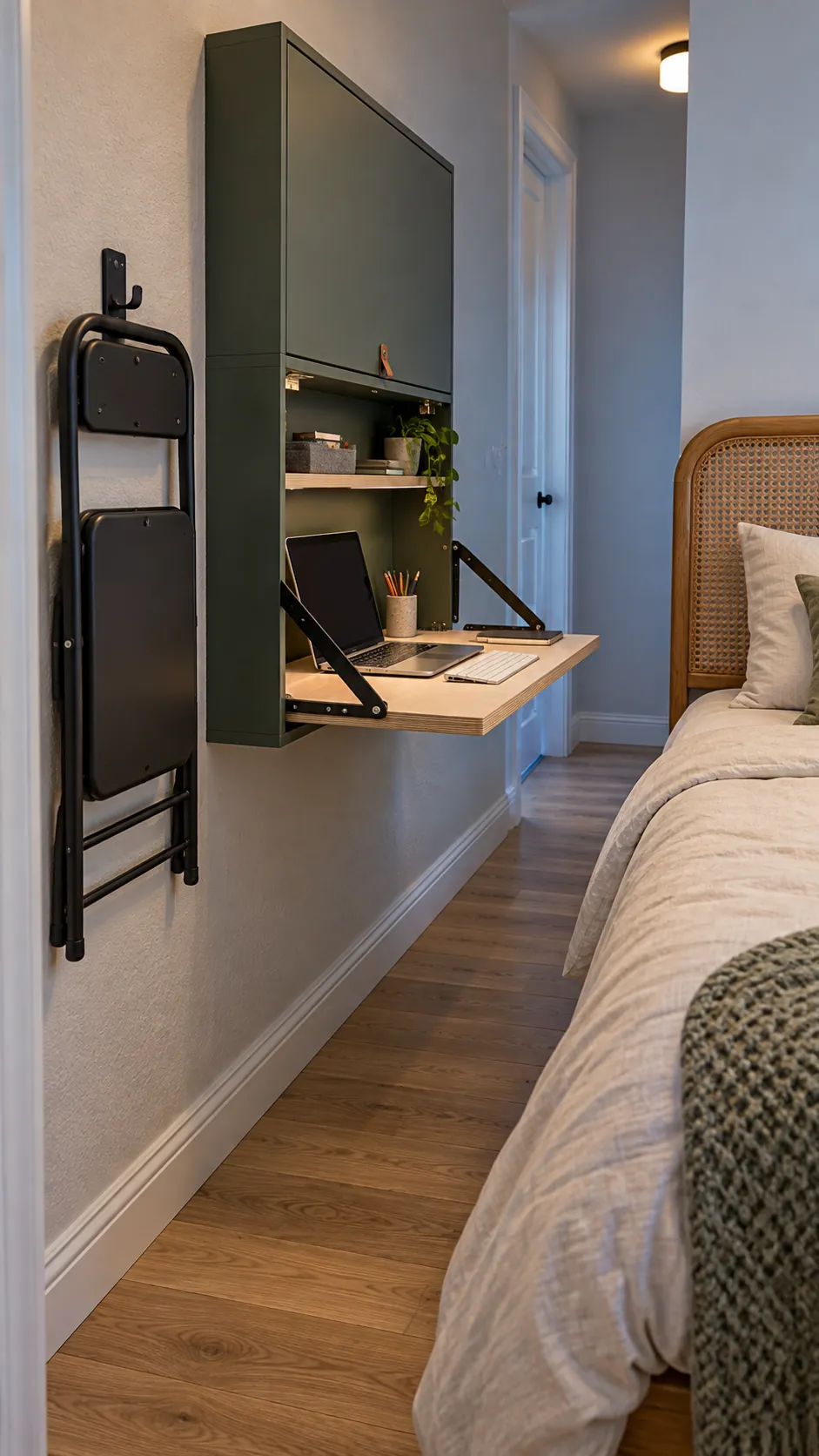
A foldaway desk returns floor space as soon as work ends. Choose a model with a shallow closed profile and a latch that cannot release unexpectedly. Before buying, mark both the open surface and the chair position on the floor so you can test the working clearance.
A Console That Works as a Desk
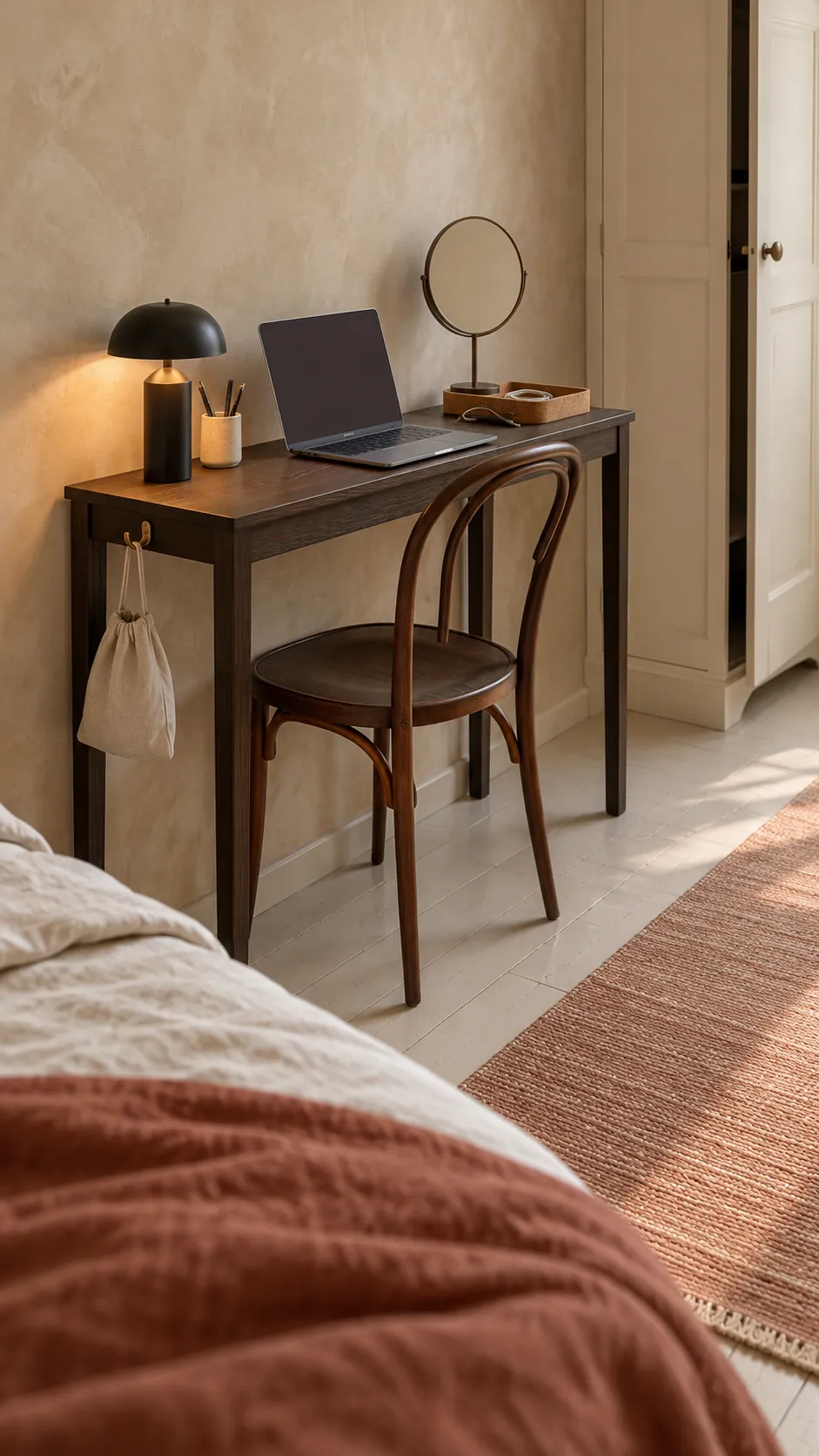
A narrow console looks lighter than a conventional office desk and can serve as a dressing surface after work. Select one with an open underside and a stable top rather than decorative cross braces that block your knees. A small tray can collect work items when you want the bedroom to feel calm again.
A Desk Behind the Headboard
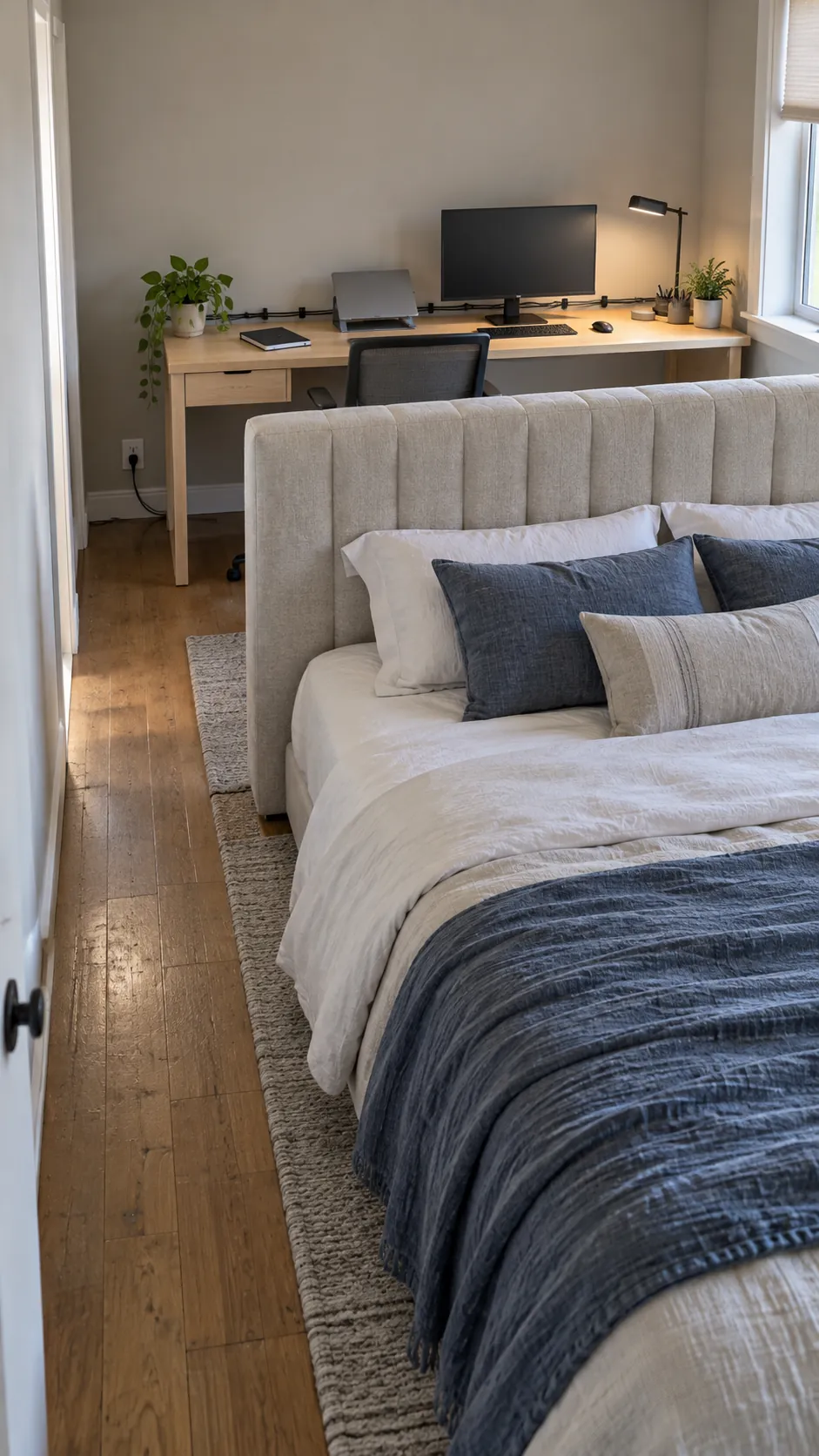
Placing a desk behind the headboard can divide sleep and work zones without adding a screen. This arrangement works best when the headboard is firm and the desk remains reachable from a clear side passage. Keep cables fixed to the desk so they cannot fall into the bedding.
A Desk Facing the Side Wall
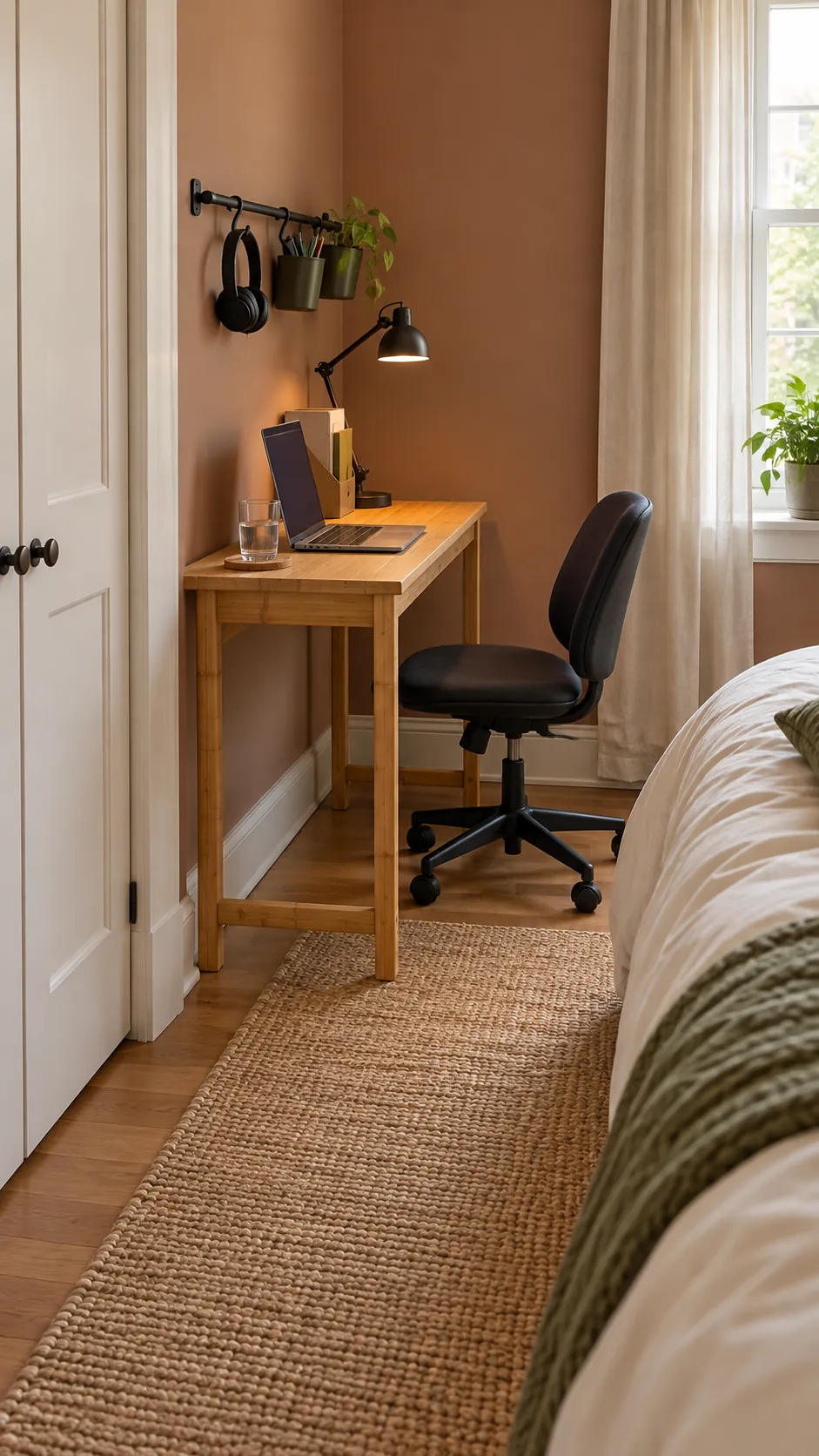
A side wall position keeps the screen out of your direct view when you are in bed. It also lets the chair move into the room instead of toward the mattress. Use a compact task light and one shallow shelf so the setup does not project farther than necessary.
A Desk Inside an Open Wardrobe
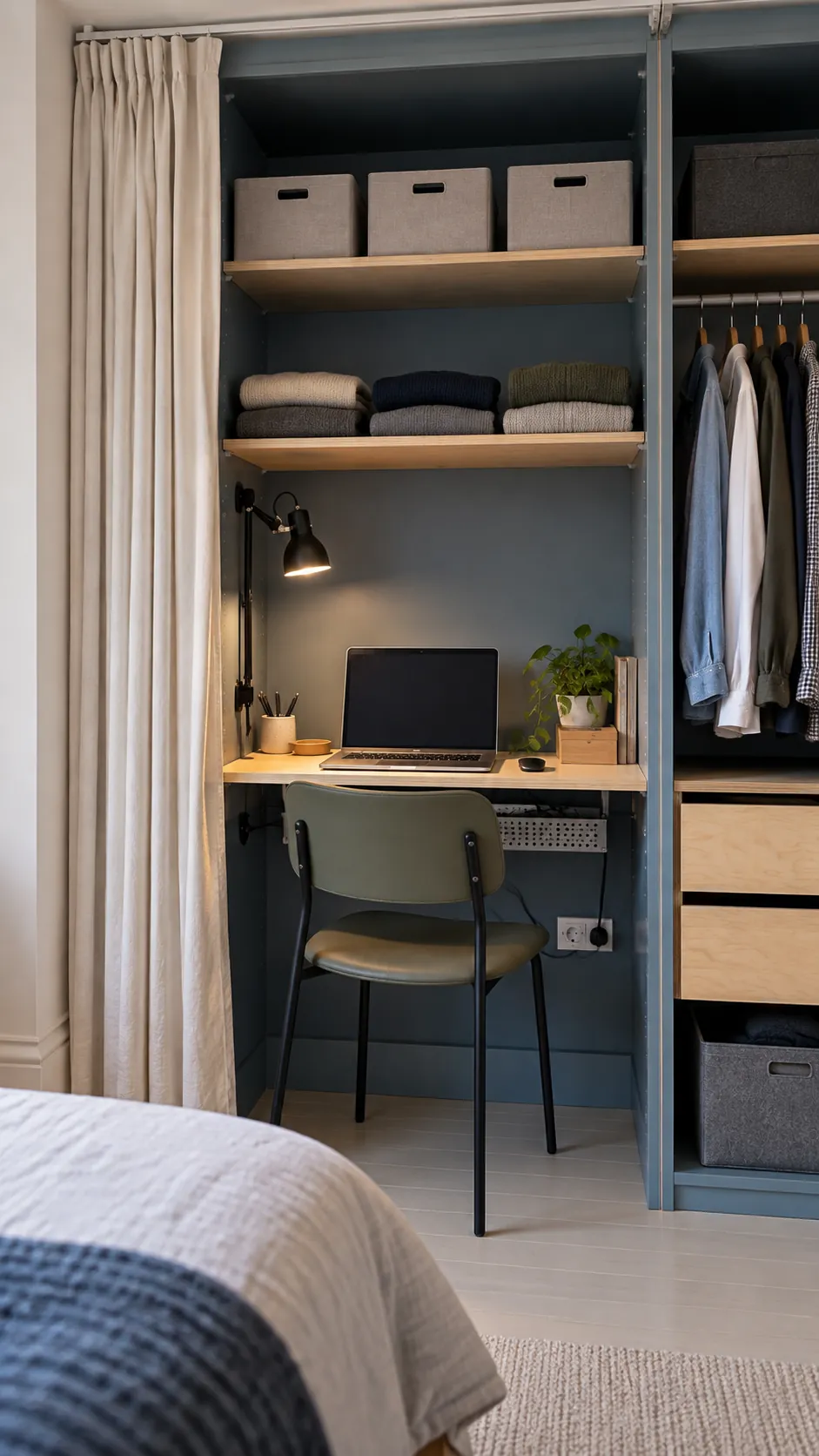
An underused wardrobe bay can become a compact home office bedroom zone. Remove only adjustable parts, keep ventilation around electronics, and preserve enough storage for daily clothes. A curtain can hide the work surface without requiring clearance for a hinged door.
A Rolling Desk That Parks Away
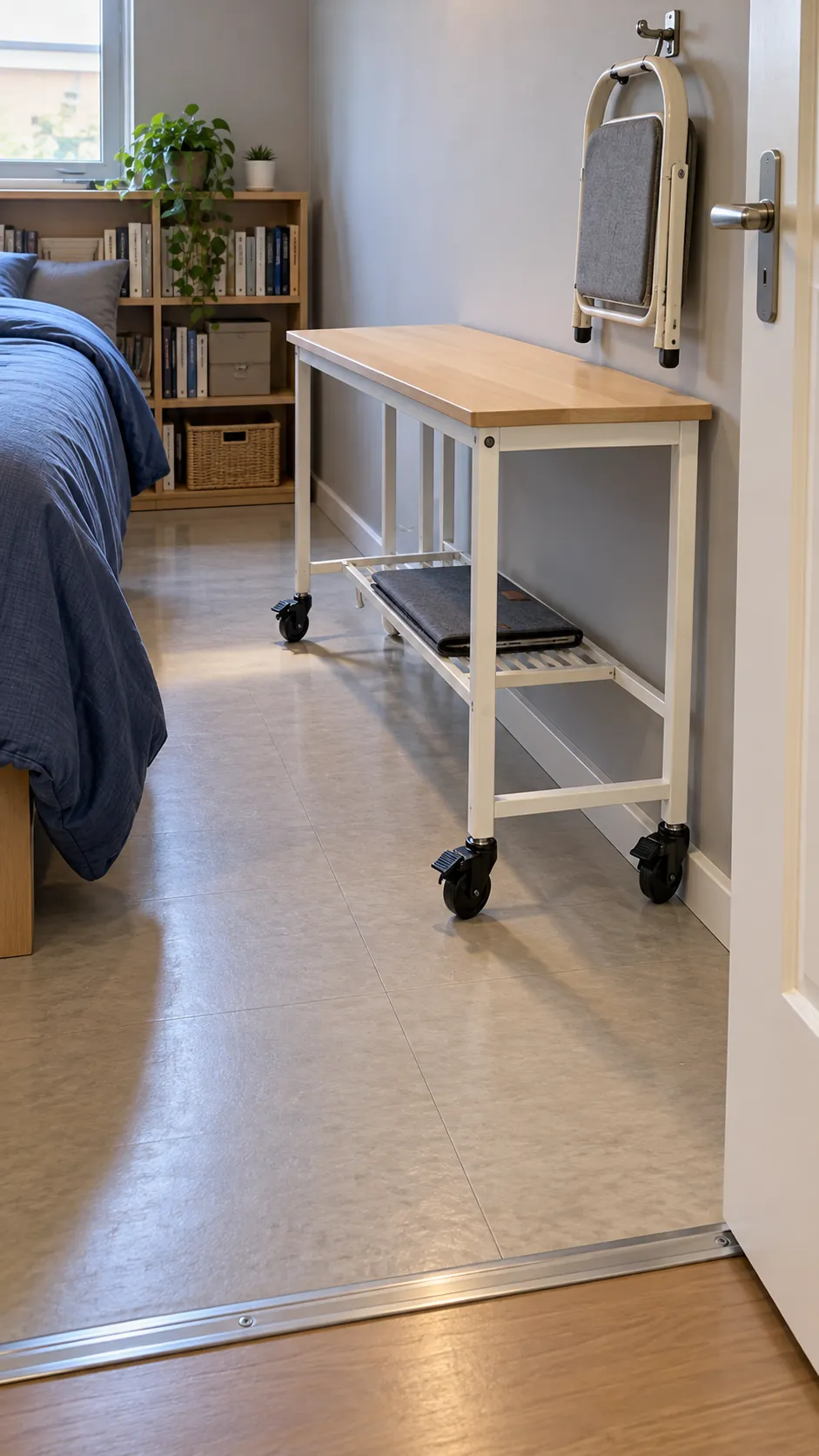
A light rolling desk can move into a comfortable position for work and park against the wall later. Locking casters matter because even a small movement becomes distracting while typing. Measure the parked footprint with the chair included, not just the top.
A Clear Acrylic Desk
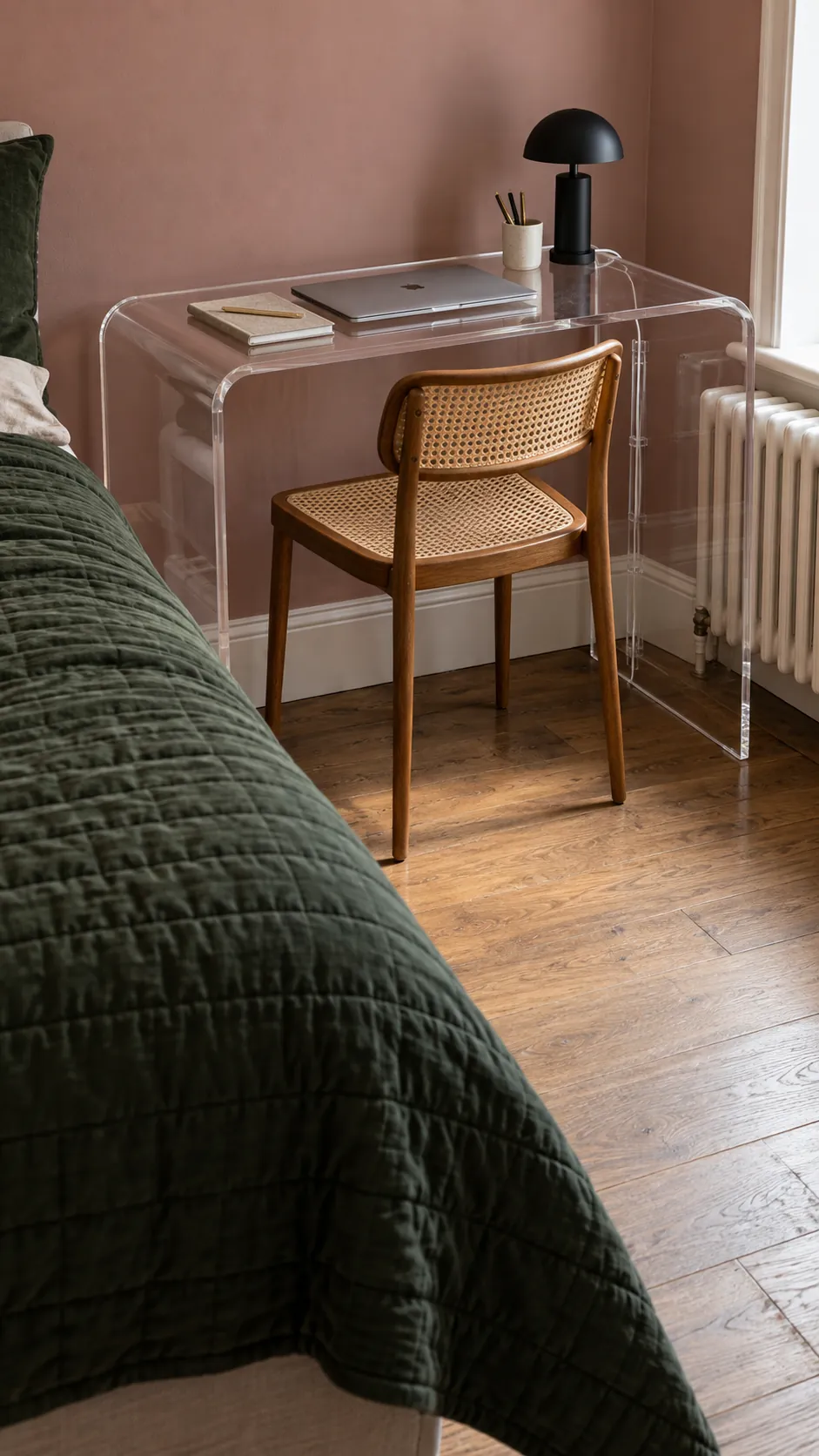
A clear acrylic desk does not reduce the physical footprint, but it can reduce visual weight. It suits a room where a solid desk would make the remaining floor feel boxed in. Keep the cable route neat because every cord remains visible through the material.
A Desk Paired With a Stool
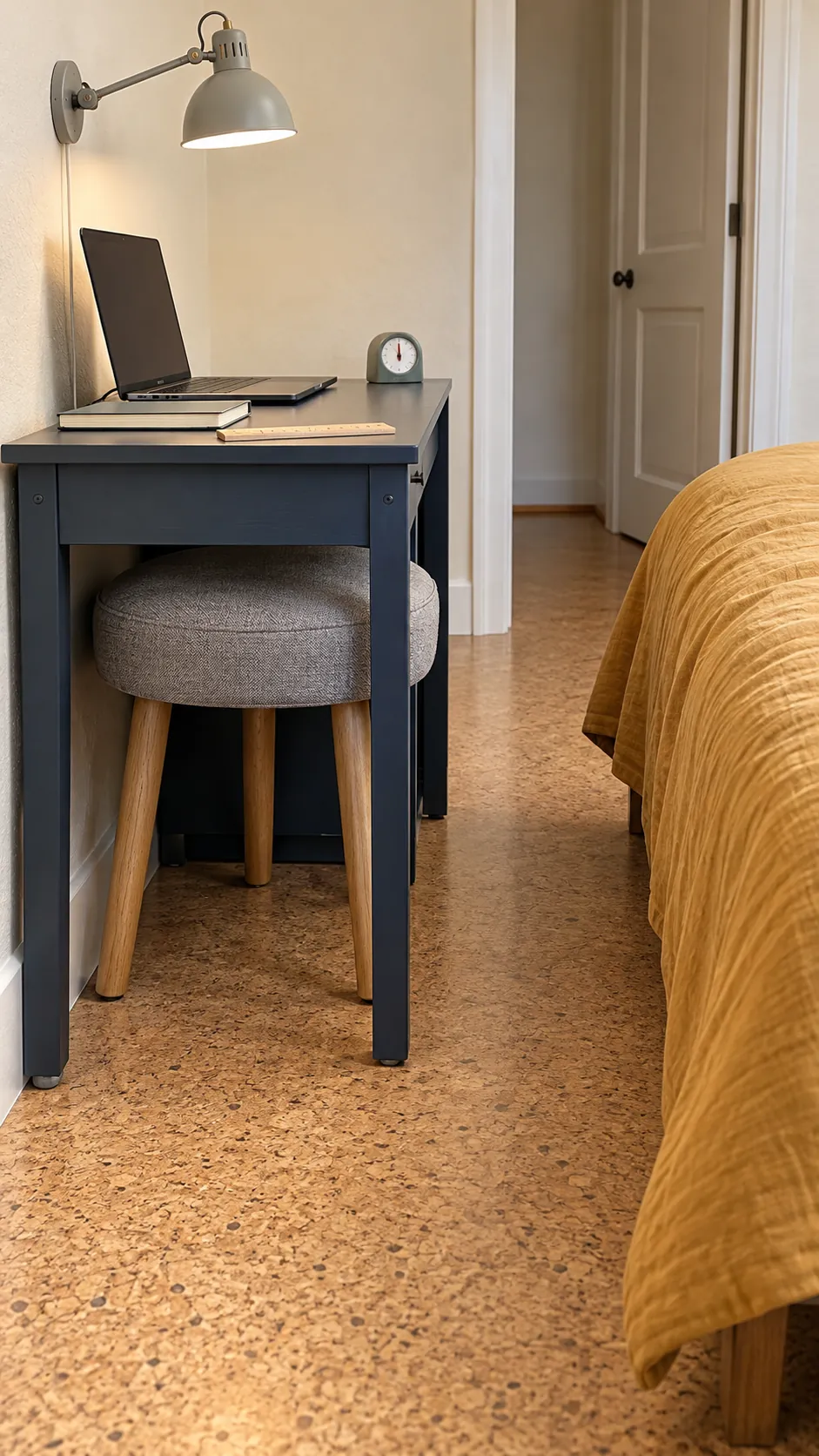
A stool that disappears under the surface can keep the walking lane open. This is best for shorter work sessions because most stools offer less back support than a task chair. Choose a height that lets your shoulders stay relaxed and your elbows sit near the work surface.
A Desk With Vertical Storage
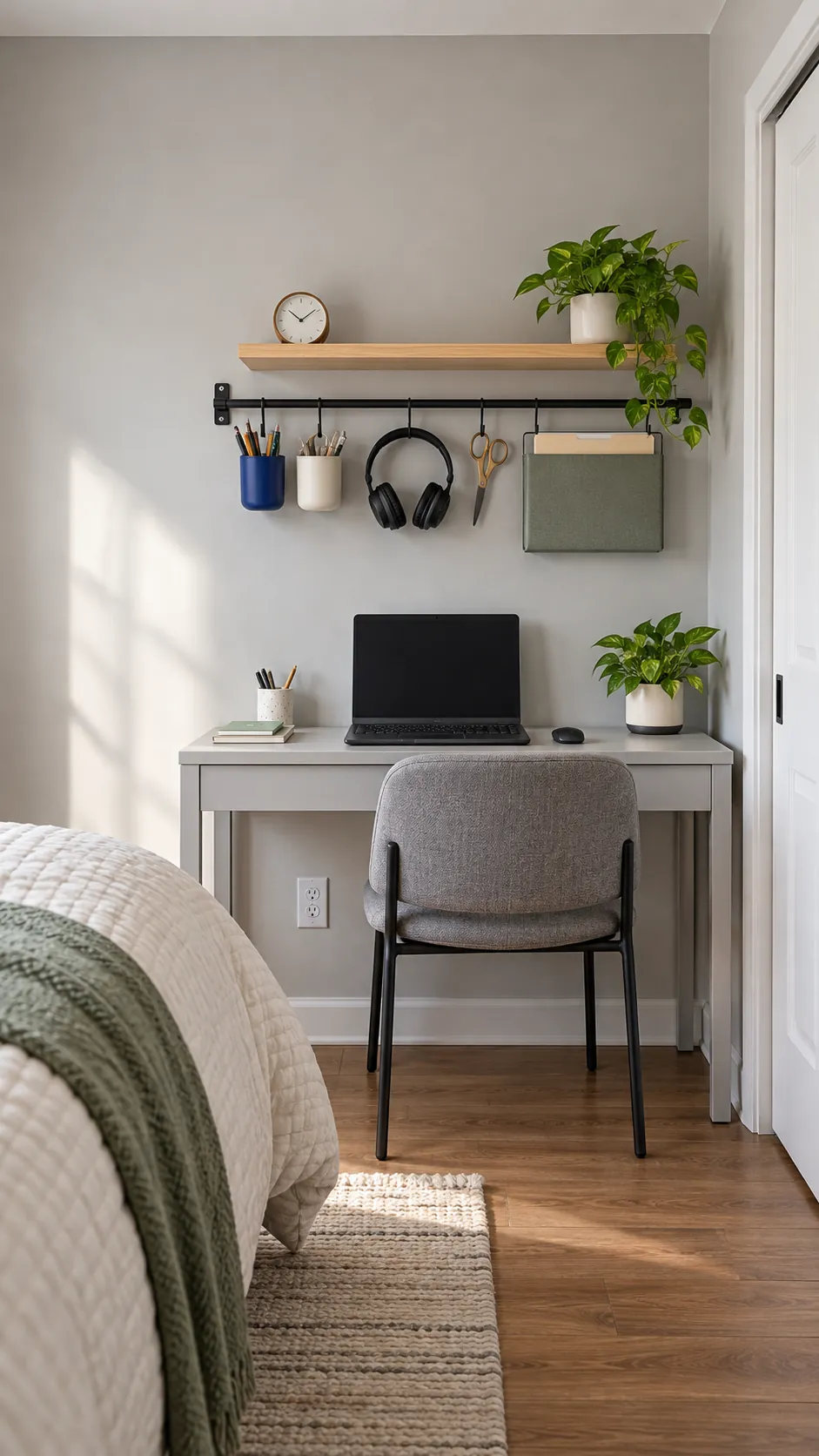
A shallow desk can gain capacity from a narrow rail, pegboard, or shelf above it. Place frequently used items within easy reach and reserve the upper level for light supplies. Avoid deep cabinets above the chair because they make the work area feel compressed and create a head bump risk.
A Desk Joined to a Low Dresser
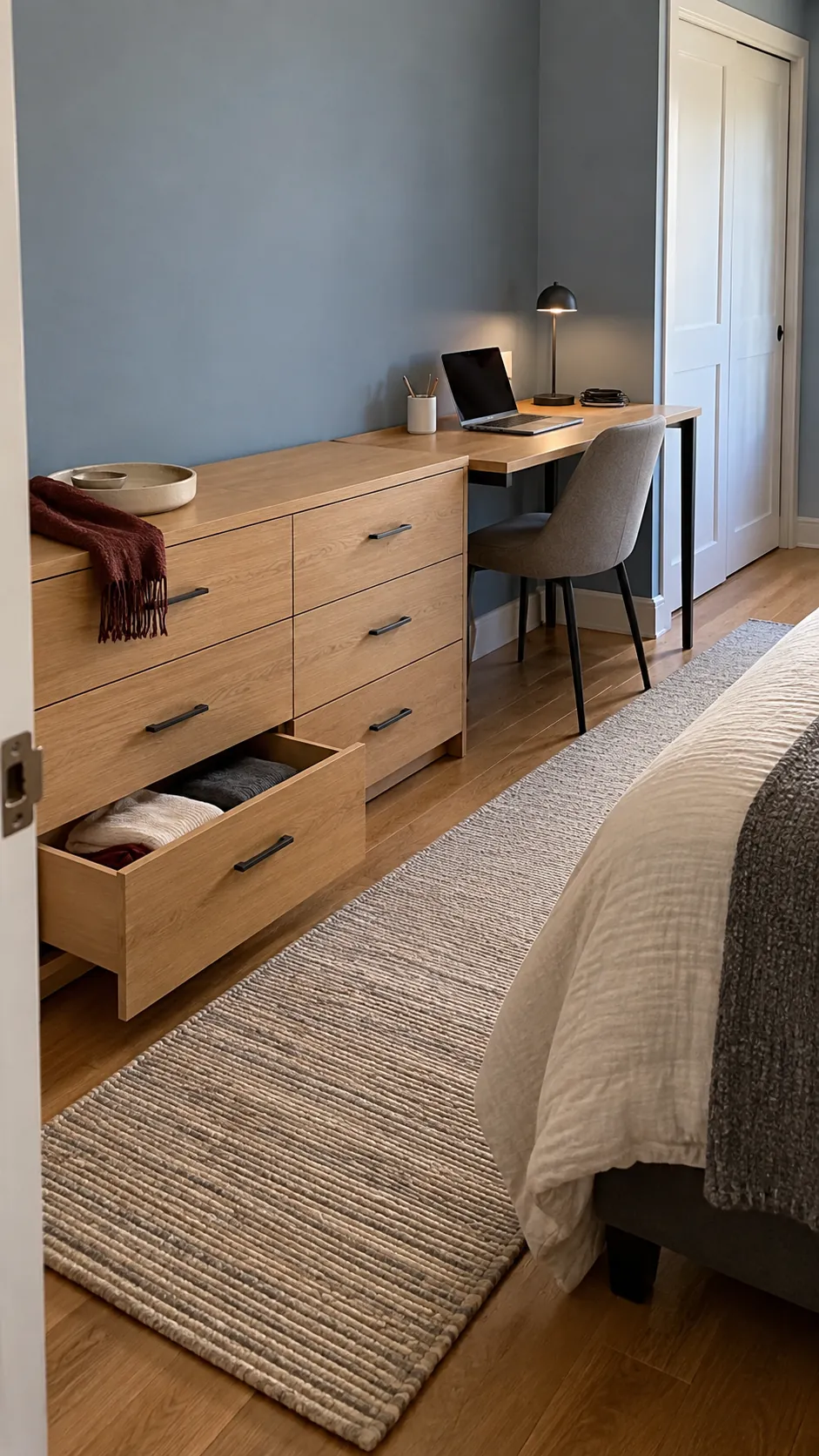
A desktop joined to a low dresser combines clothing storage and work space along one wall. The shared line looks calmer than two unrelated pieces competing for room. Make sure drawers can open while the chair is occupied and that the support points carry the top safely.
A Laptop Shelf Near the Door
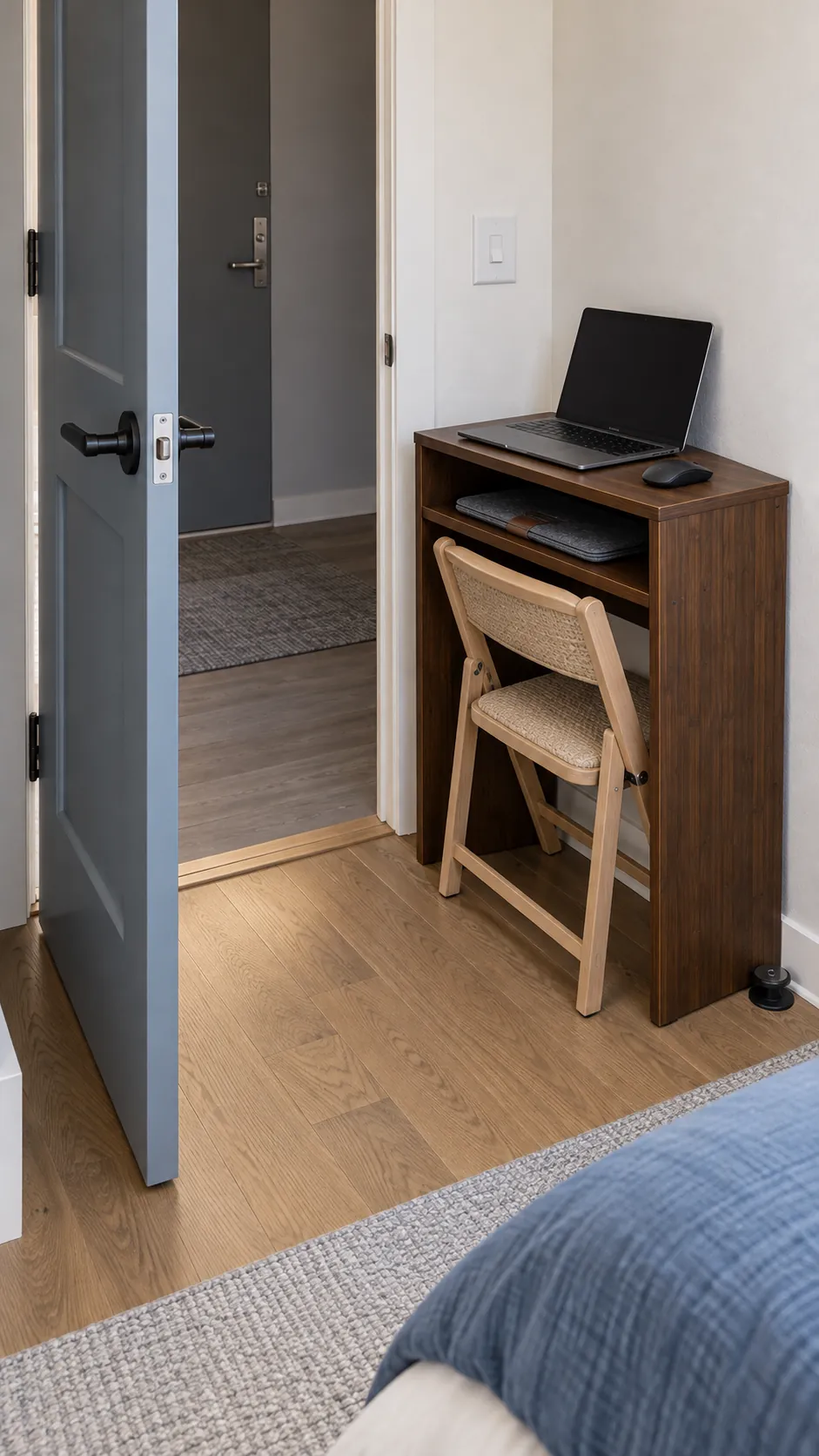
A slim laptop shelf can fit on a short wall near the entrance when the door swing leaves that area untouched. Test the full door movement and keep the chair outside the main route. This spot works best when your equipment can be stored quickly after each session.
A Wall Desk With a Curtain
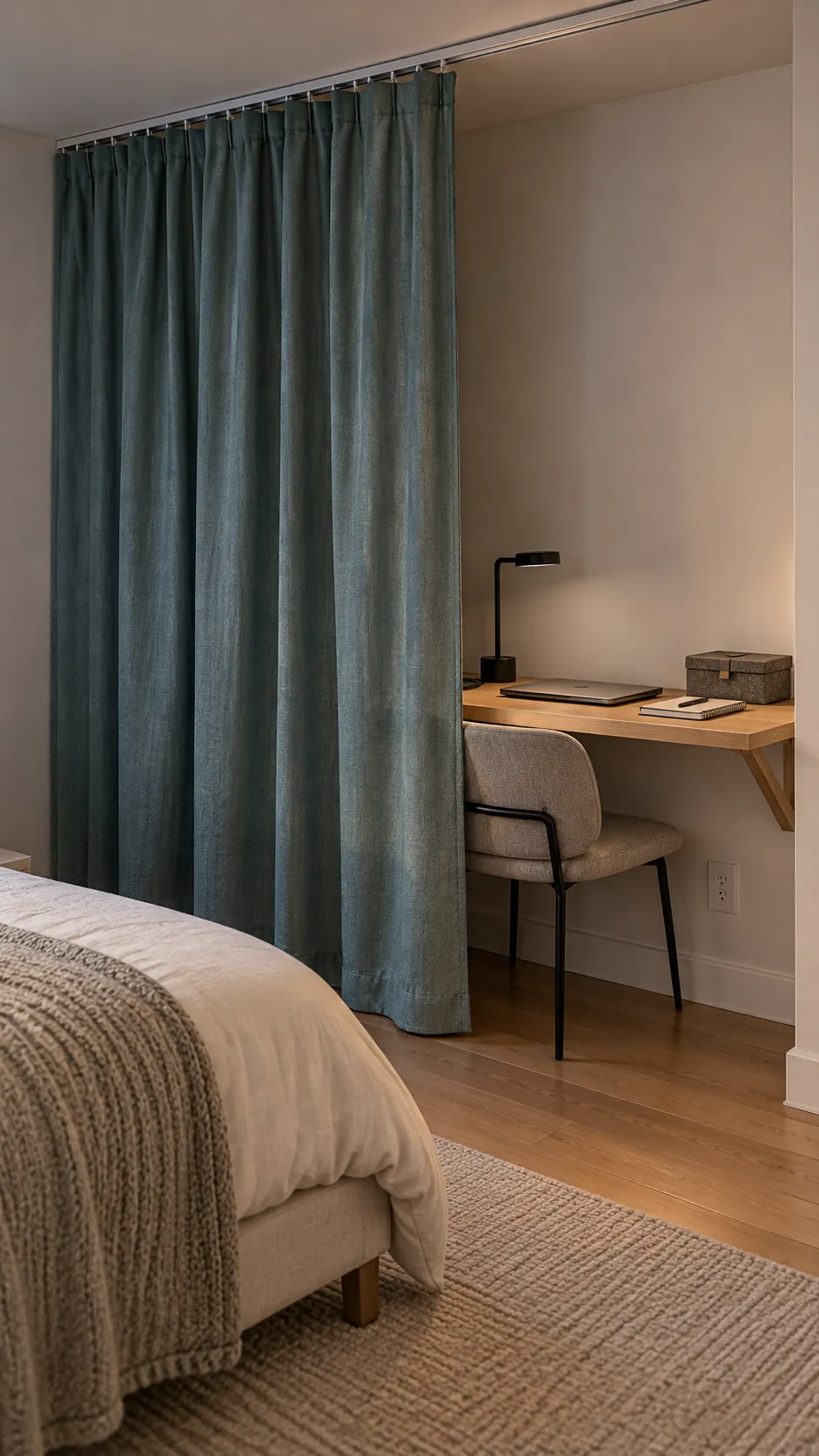
A ceiling mounted curtain can conceal a shallow work wall at night and soften the office equipment visually. Keep the fabric clear of warm electronics, plugs, and the task lamp. Measure the arrangement with the chair pulled out, then protect a direct route from the bed to the doorway.
The right setup is the one that still works on a rushed morning. Sit down, open drawers, walk around the bed, and operate every door before committing to the layout.