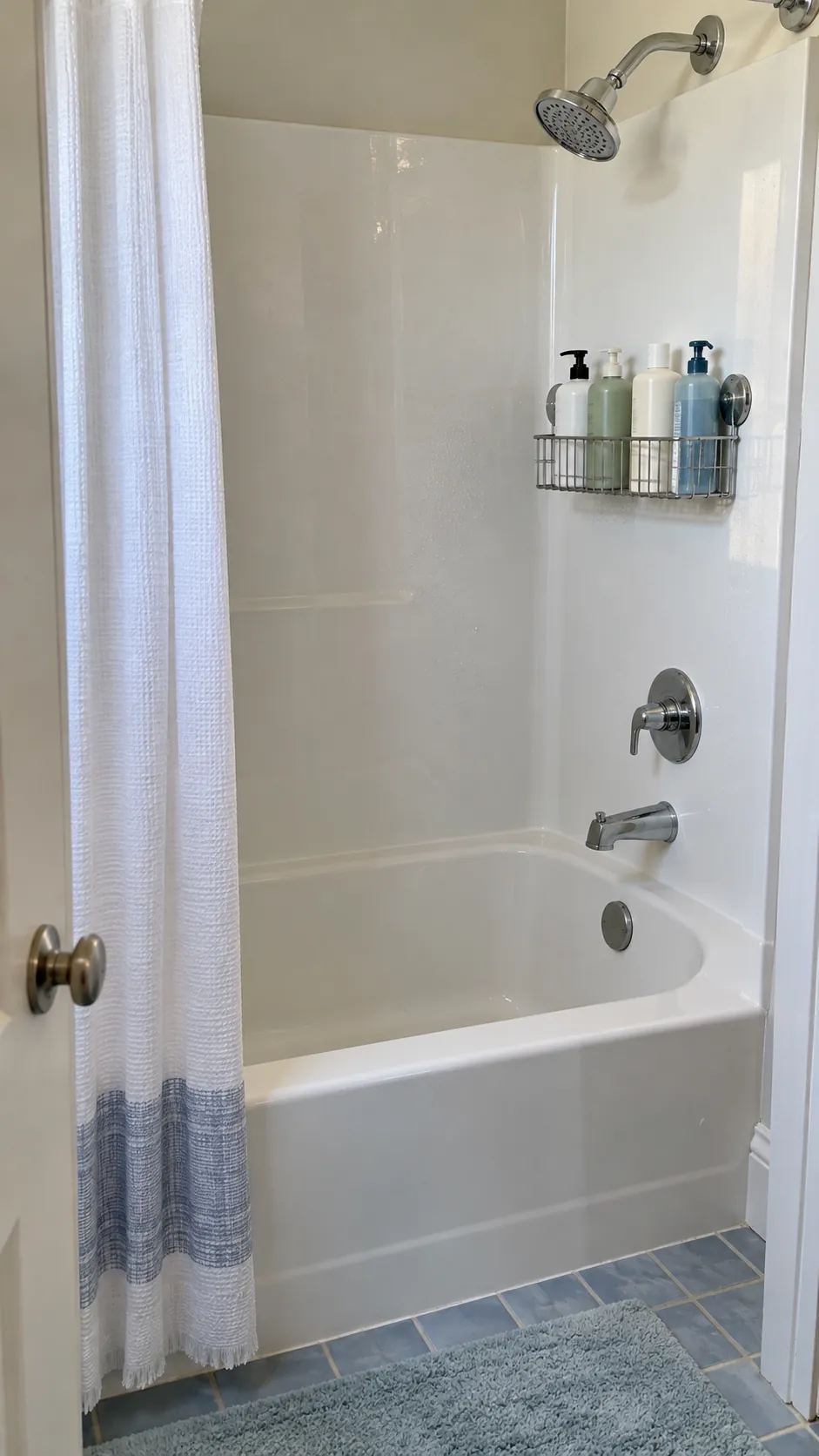
When every bottle balances on a narrow tub rim, a simple shower can become harder to clean and less safe to use. The best fix is not always the organizer with the most baskets. It is the one that fits the surround, stays stable when wet, drains well, and leaves room to enter the bath.
Before choosing, measure the tub, wall height, curtain path, showerhead, and any sliding door track. Decide which products truly need to stay in the wet zone, then match their weight to a support method your wall and lease can accept.
A Slim Tension Pole in the Back Corner
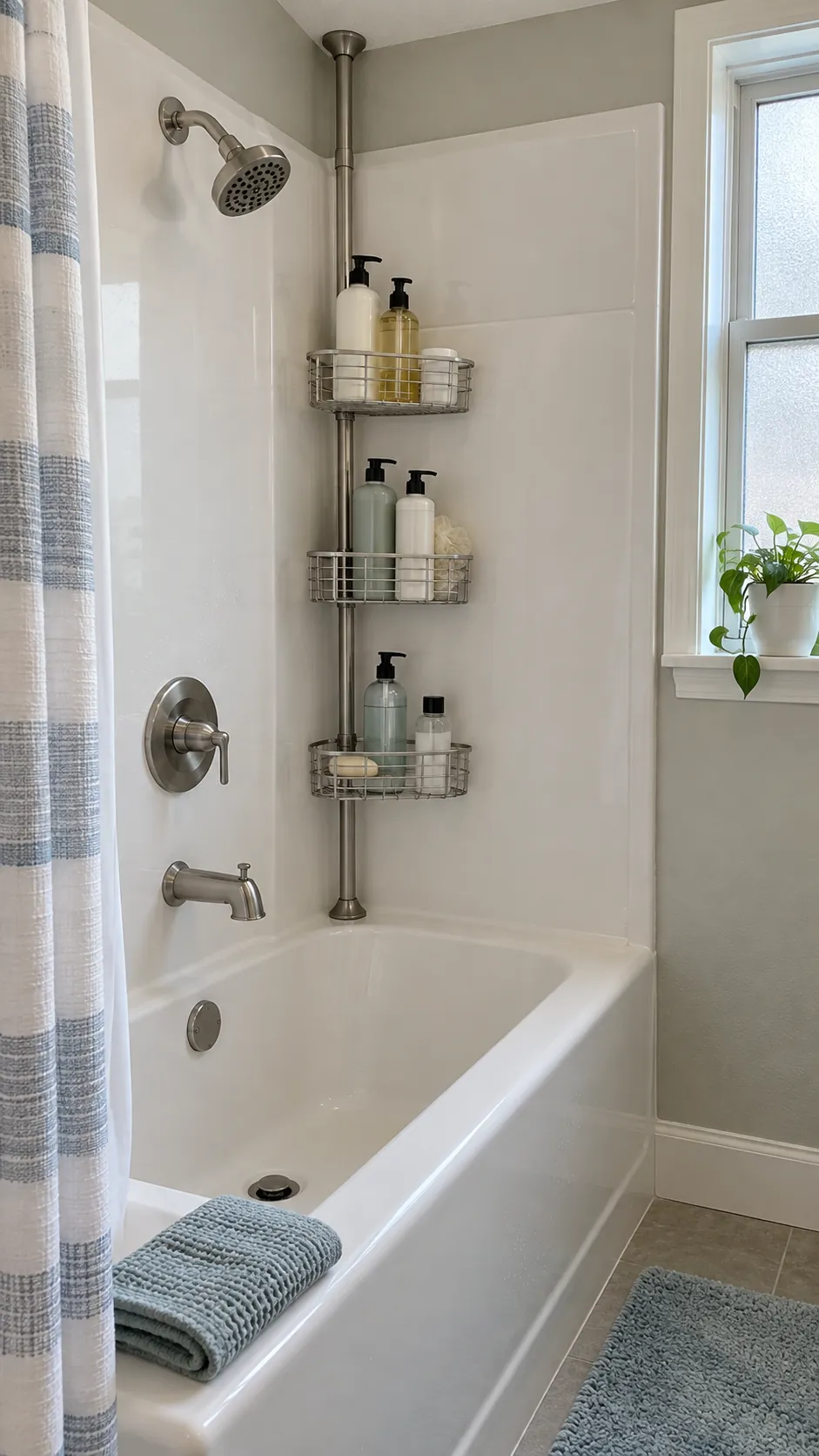
A slim tension pole uses vertical space without drilling into tile or a fiberglass surround. Choose open wire baskets so water drains quickly, then position the pole outside the strongest spray. Measure floor to ceiling before buying because a compressed pole that is too short will wobble.
A Curtain Rod Pocket Organizer
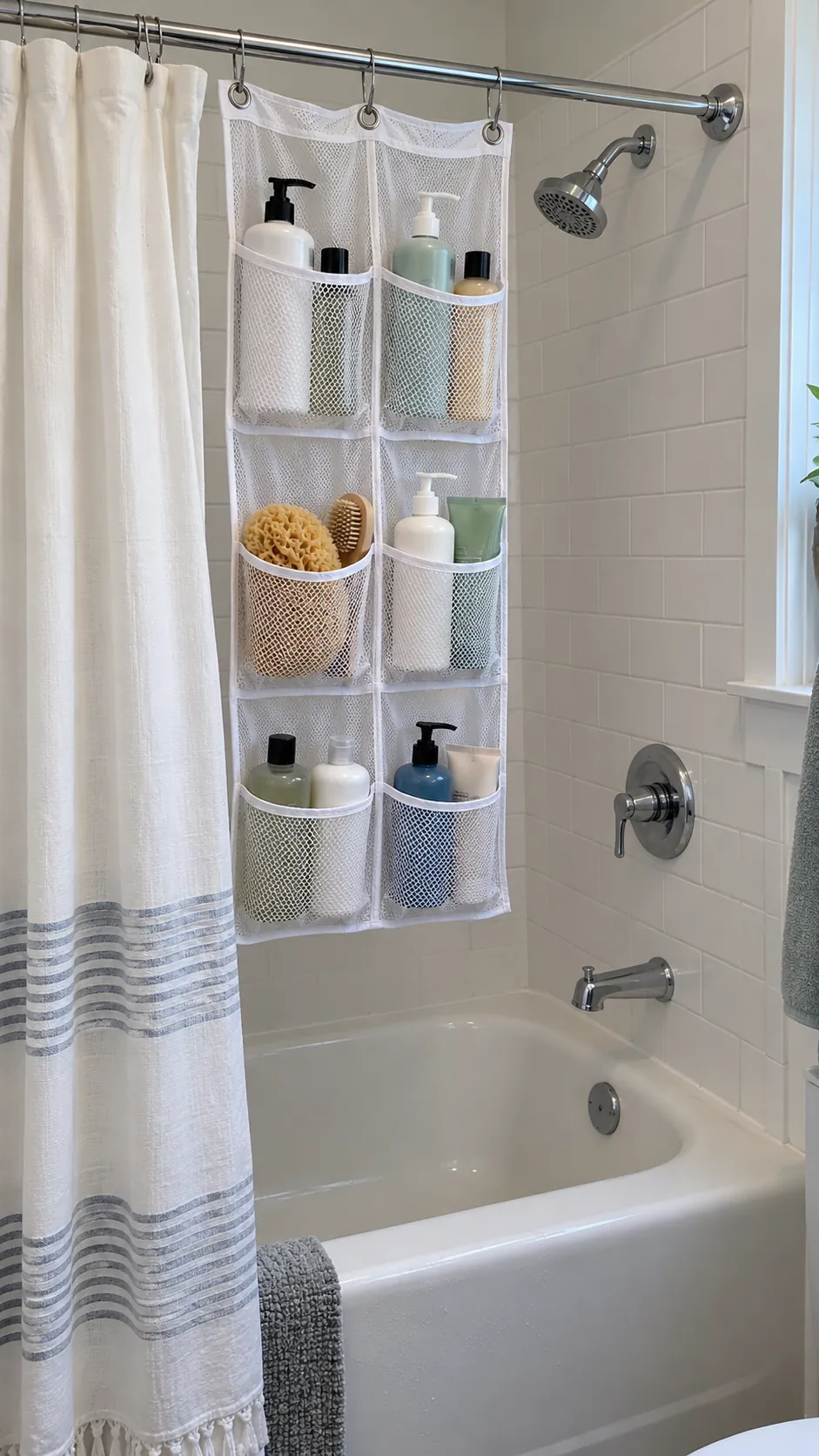
A mesh pocket organizer shifts bottles away from the narrow tub rim and keeps them visible. Hang it from sturdy curtain rings and place heavier bottles in the lowest pockets to reduce swing. Rinse the organizer weekly and let it dry fully so soap residue does not build up.
An Overhead Caddy With a Locking Collar
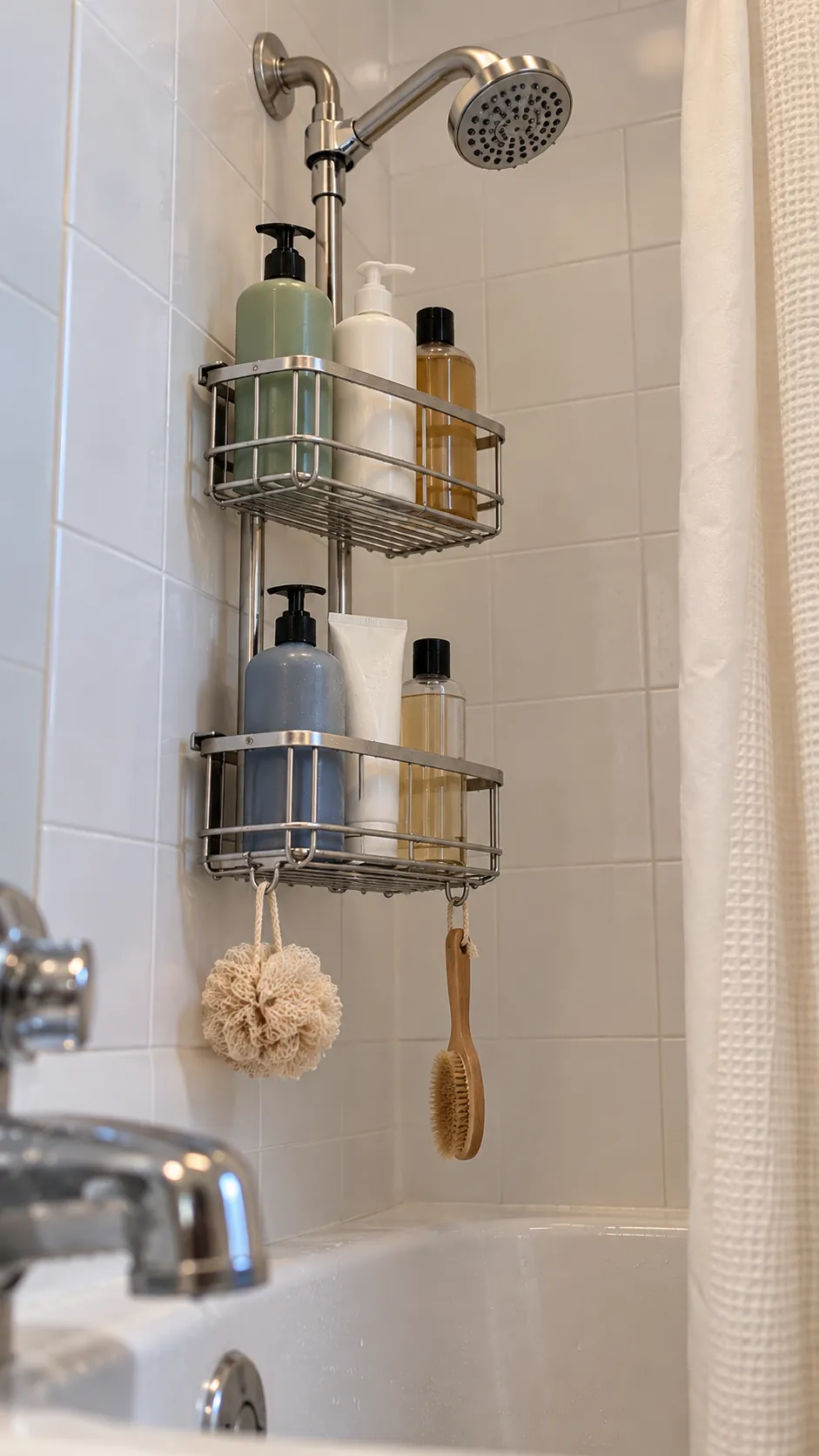
A showerhead caddy works best when a locking collar prevents it from sliding down the pipe. Select deep baskets with bottle guards instead of shallow trays that tip when a pump is pressed. Add one small suction stabilizer only when it can grip a smooth clean surface safely.
Adhesive Shelves on Smooth Tile
Quality adhesive shelves can create narrow shower storage without holes when the wall is truly smooth and sound. Clean the tile with alcohol, let it dry, and respect the adhesive cure time before adding bottles. Avoid placing adhesive mounts across grout lines because gaps allow moisture and movement to weaken the bond.
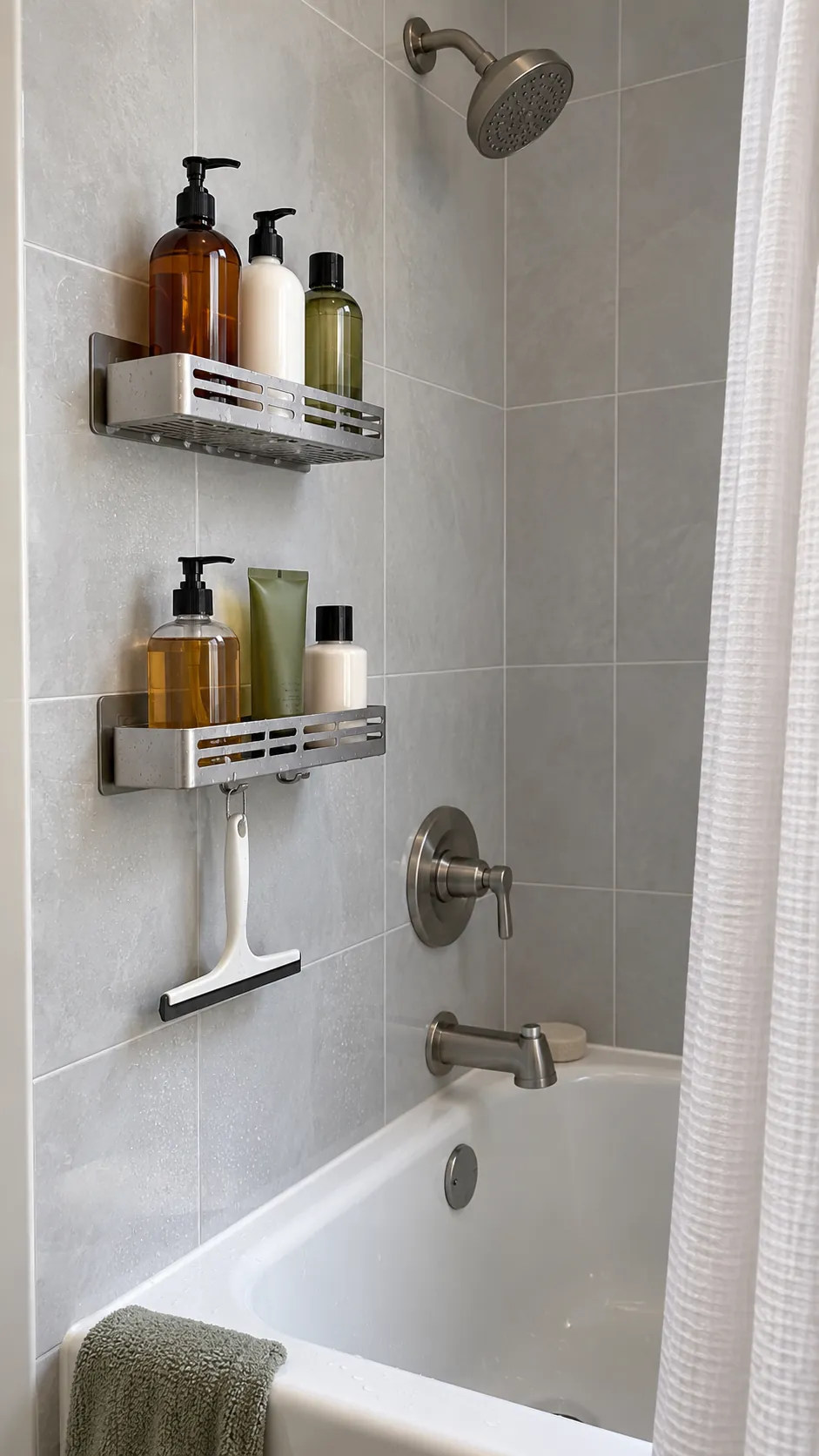
A Freestanding Tub Corner Tower
A compact freestanding tower avoids wall attachment and can move when the tub needs cleaning. Pick a weighted base that fits completely on a flat tub deck or floor area without blocking feet. Keep the tallest bottle low so the center of gravity stays stable when wet hands reach for it.
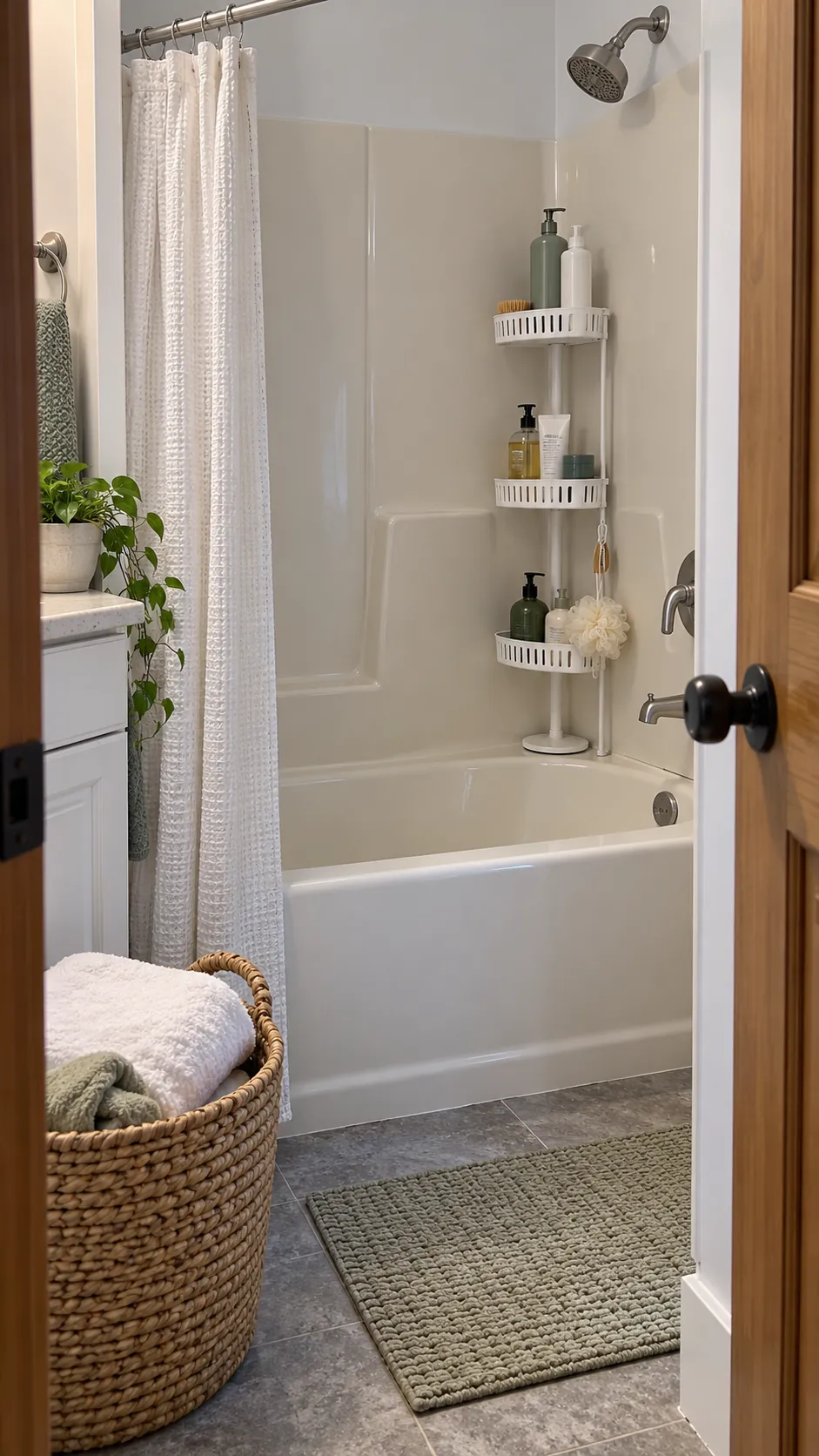
A Tub Rim Tray With Drainage
A narrow tray can tame a wide tub rim when it has enough flat surface to sit securely. Look for raised feet and drainage slots, since a solid tray traps water under every bottle. Limit the tray to daily products and store backups elsewhere to keep the bathing edge clear.
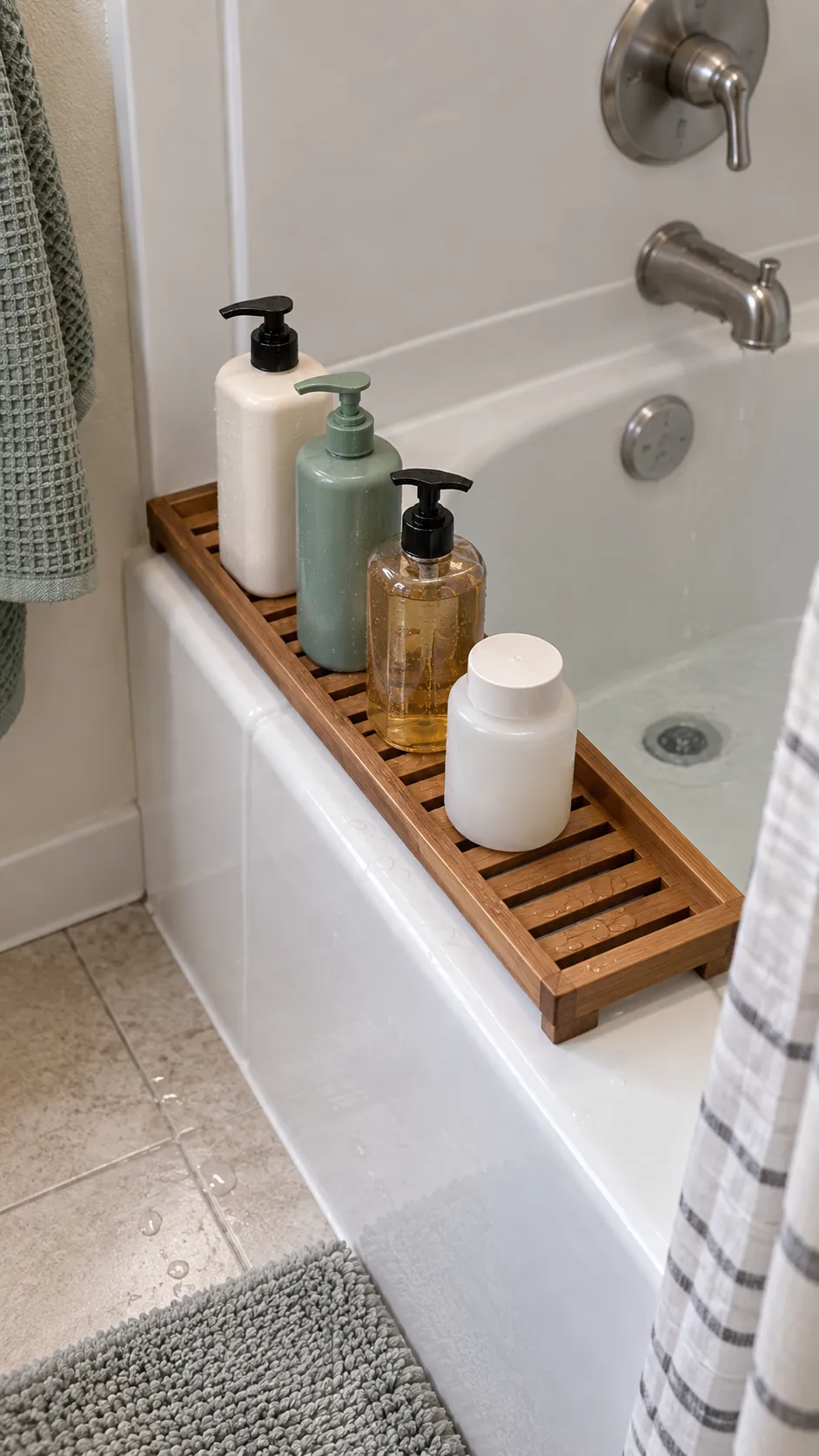
A Bottle Rail Above the Tub Apron
A shallow rail mounted outside the wet zone keeps backup products close without crowding the shower. Place it where knees and elbows will not strike it while entering the tub. Use the rail for sealed containers only, since open soap dishes still belong where they can drain.
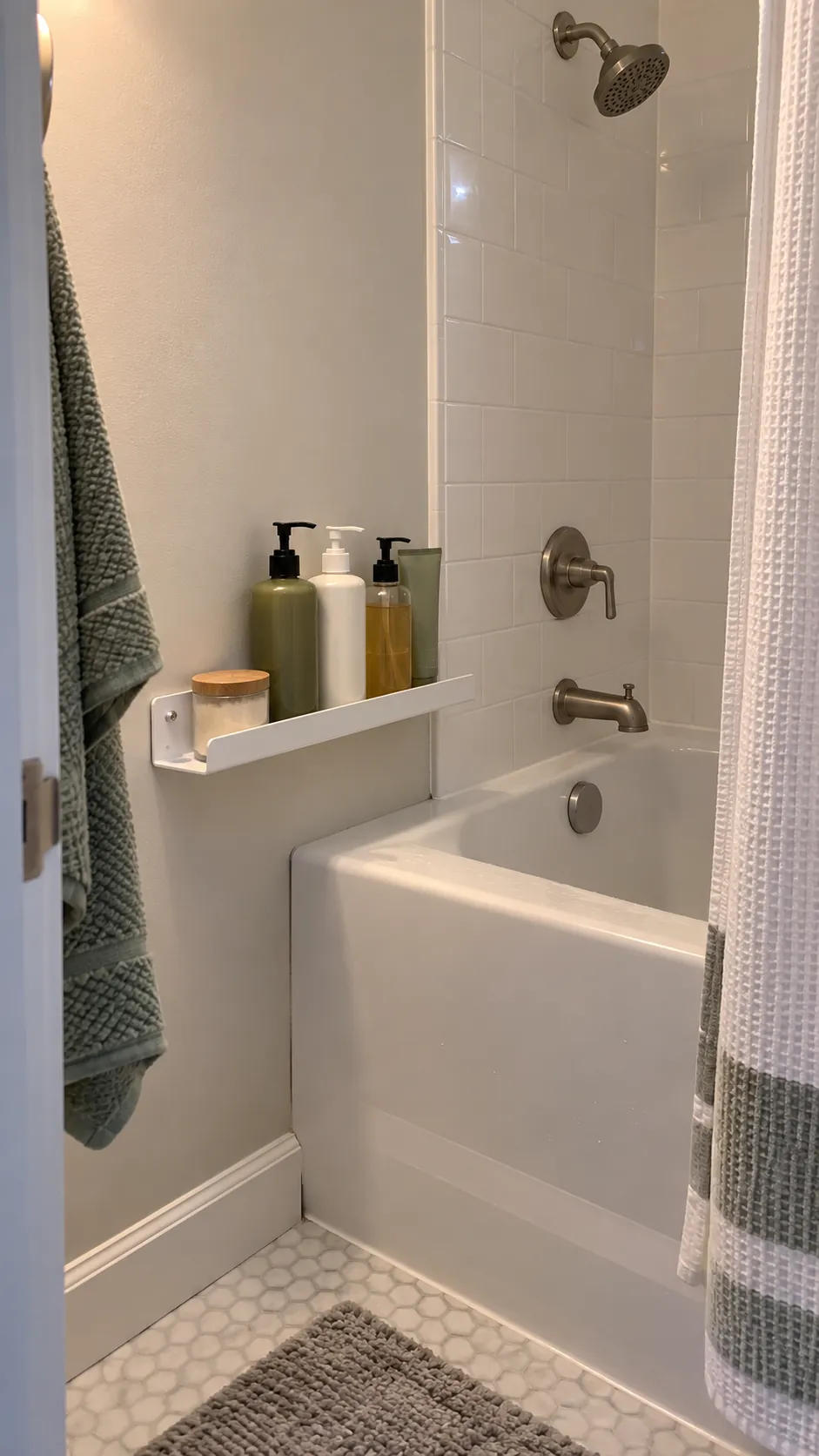
A Rolling Cart Beside the Curtain
A narrow rolling cart can hold family supplies beside the tub and roll away for cleaning. Choose a cart that clears the curtain path and has locking casters, then reserve the top tier for current shower products. Dry any splashes promptly because even rust resistant carts last longer outside constant spray.
A Removable Suction Shelf
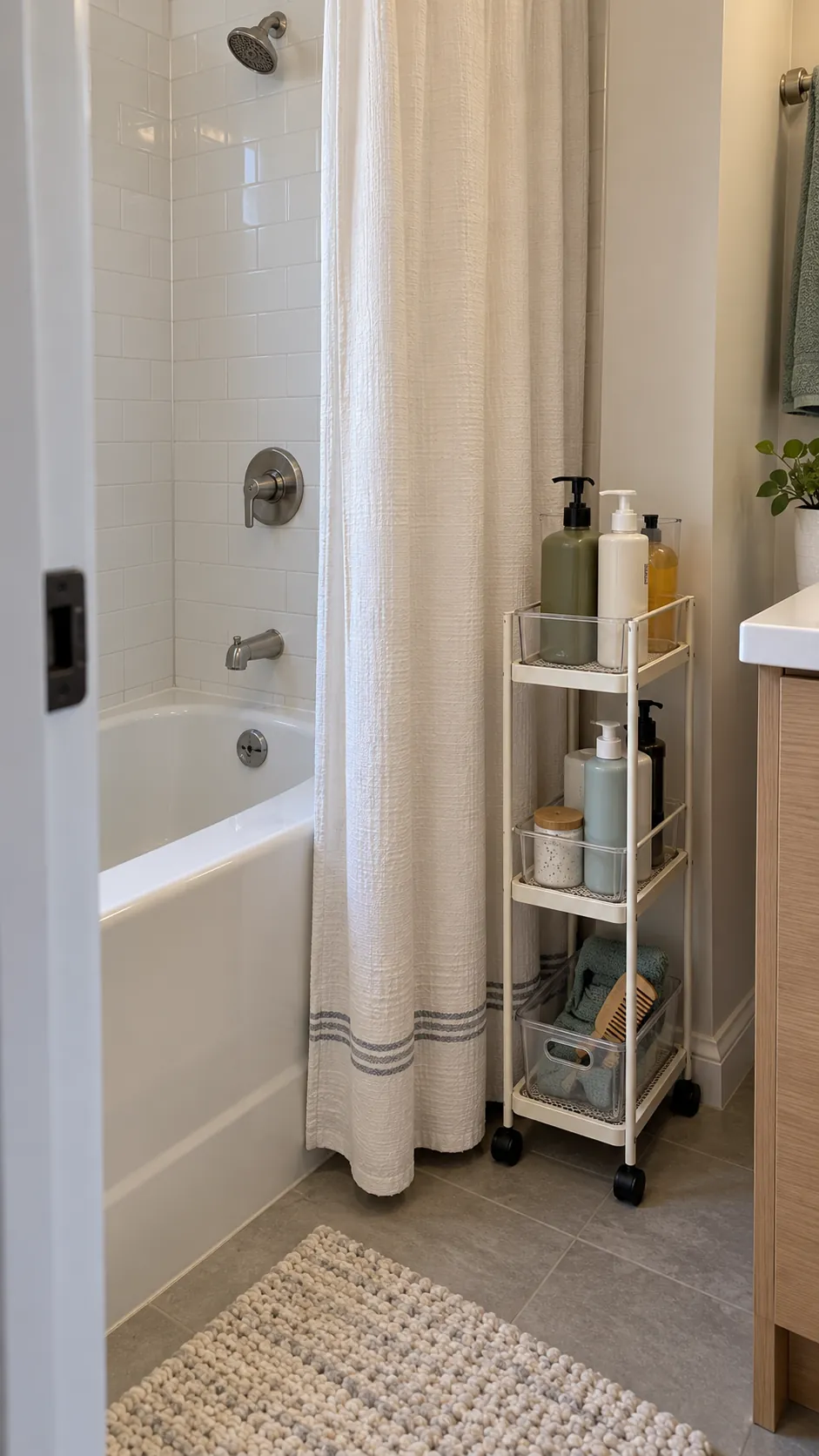
A removable suction shelf can work on glass or glossy tile when the cups are large and the load is light. Test the grip with an unbreakable bottle before trusting the shelf during a shower. Remove, wash, and reseat the cups whenever the edges collect residue or begin to lift.
A Clamp Shelf on a Glass Partition
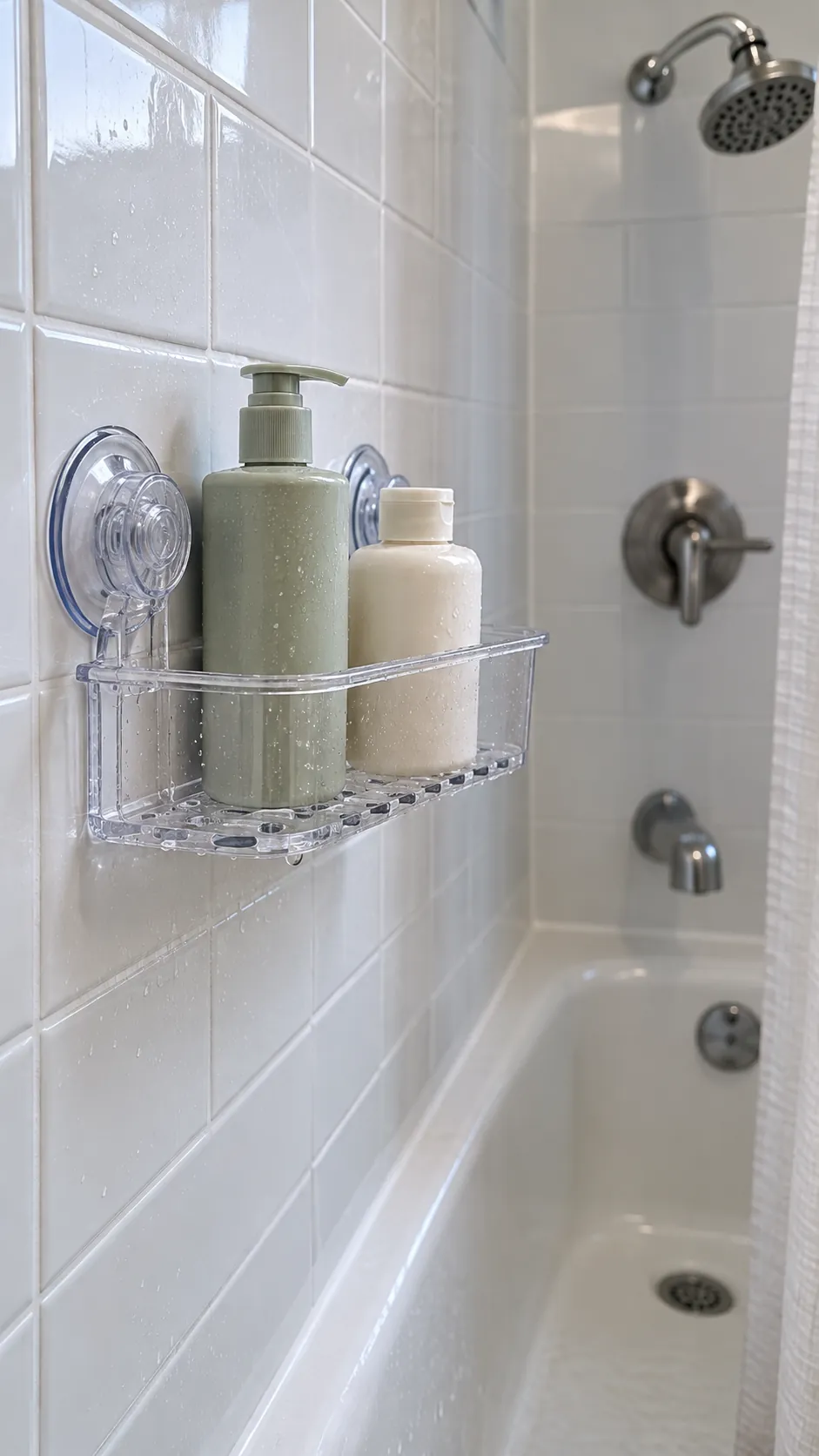
A padded clamp shelf can use the top of a fixed glass partition without adhesive or drilling. Match the clamp to the exact glass thickness and protect both faces with rubber pads. Keep weight modest and never attach it to a moving door or a loose panel.
A Corner Basket on Grout Line Hooks
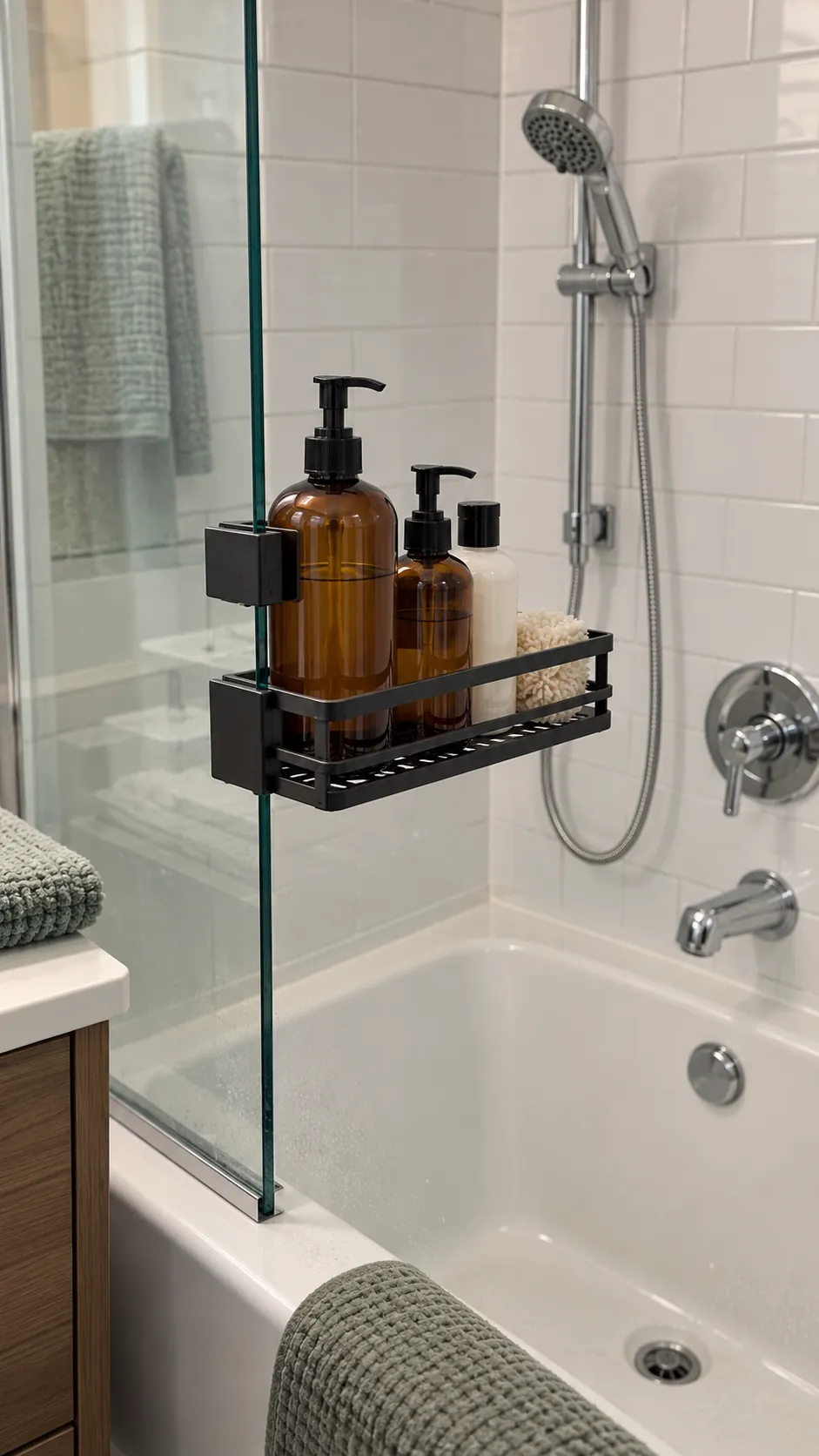
Removable hooks placed on sound grout lines can support a very light corner basket when the manufacturer allows wet use. Space the hooks so the basket cannot twist when a bottle is lifted. Check the grout for cracks first and stop if the attachment could pull out a weak repair.
A Shower Stool With a Lower Shelf
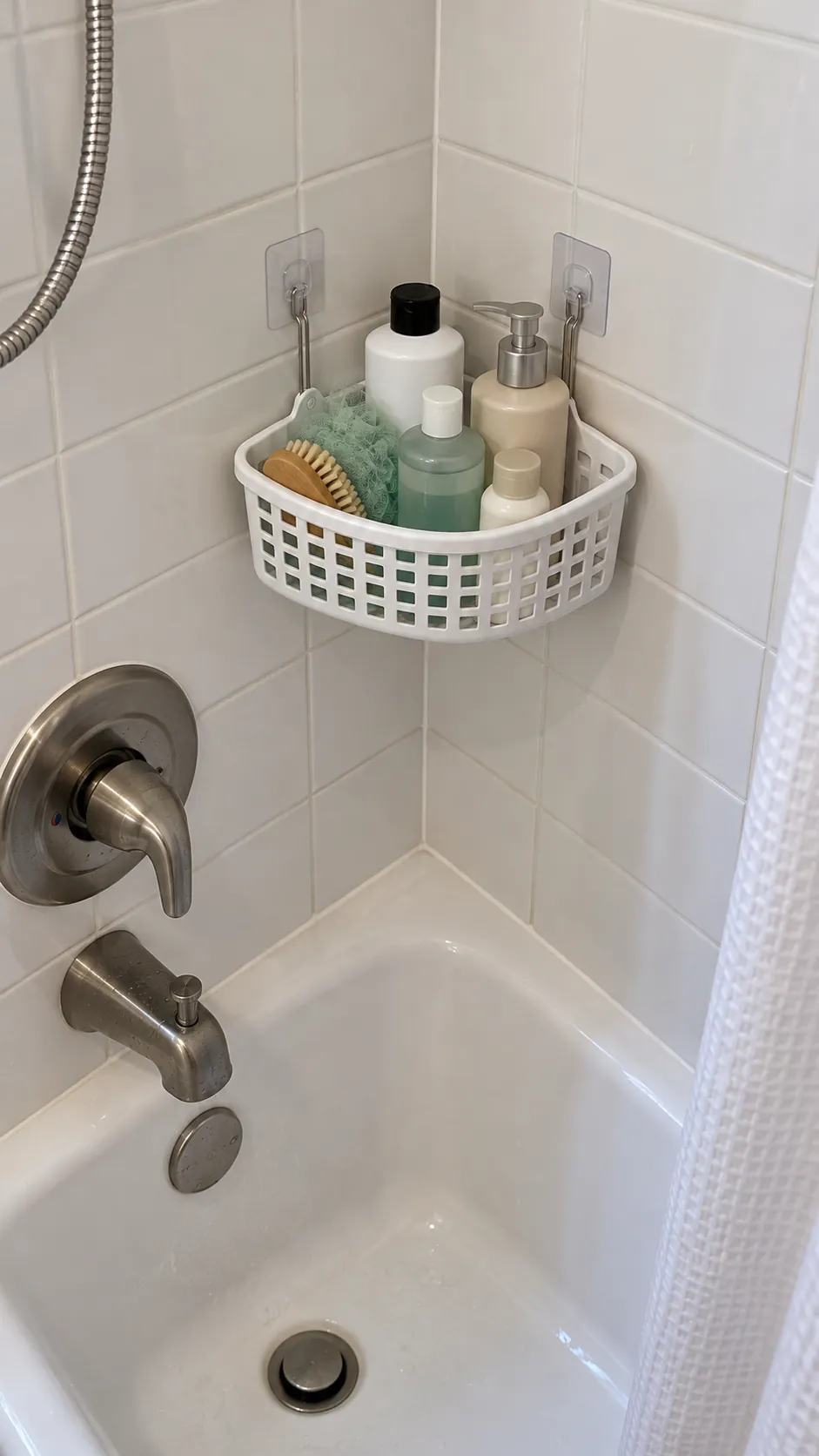
A compact shower stool gives seated bathers accessible storage and can support safer routines when it is rated for wet use. Choose nonslip feet and a lower shelf that drains freely. Place it where it does not narrow the standing area or block entry into the tub.
A Handheld Shower Rail Basket
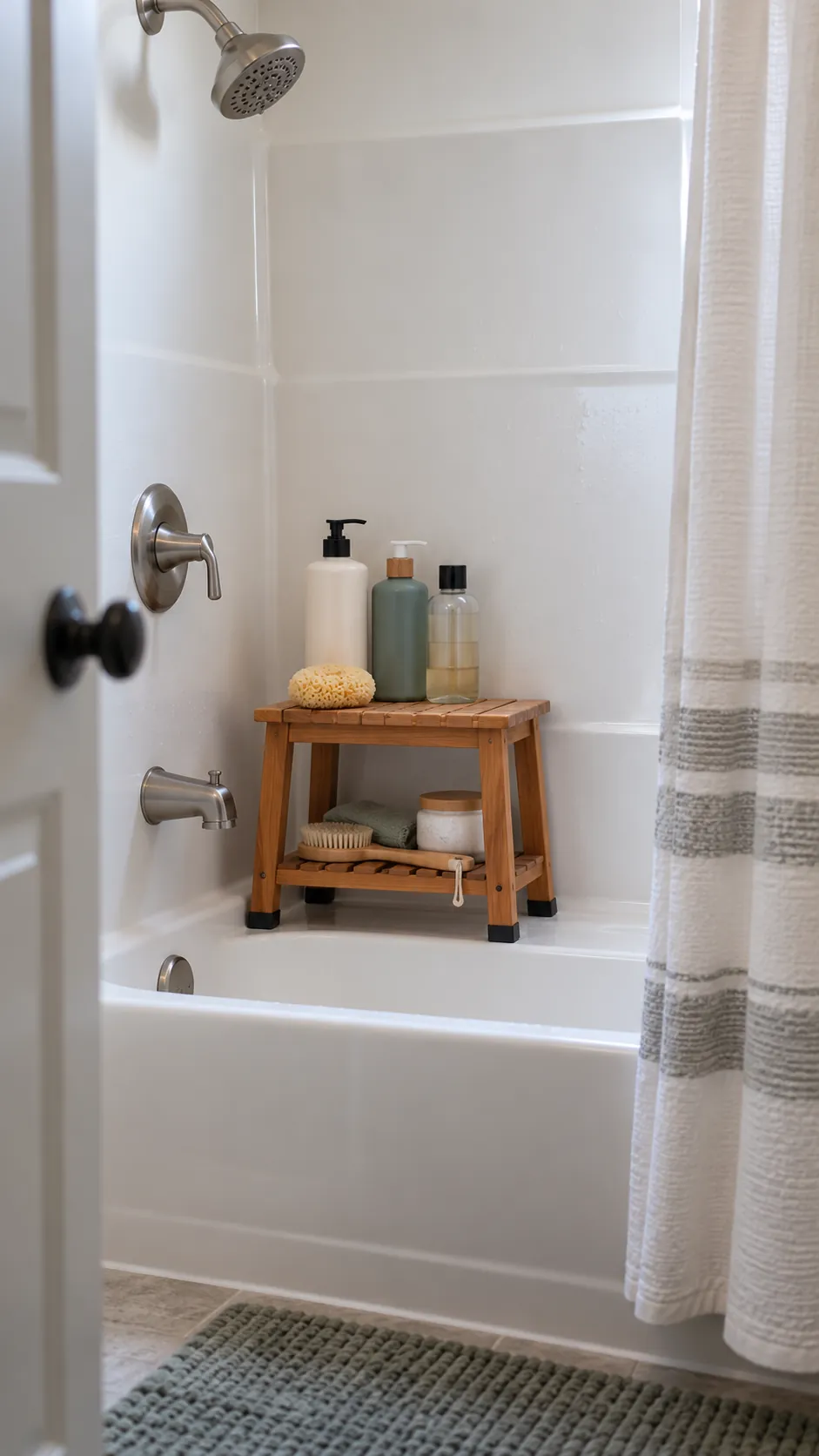
A purpose built rail basket can slide onto a compatible handheld shower bar and keep products at a useful height. Verify that the basket does not interfere with the showerhead holder or hose movement. Tighten the fitting according to its instructions so the basket does not rotate under load.
A Silicone Bottle Sleeve System
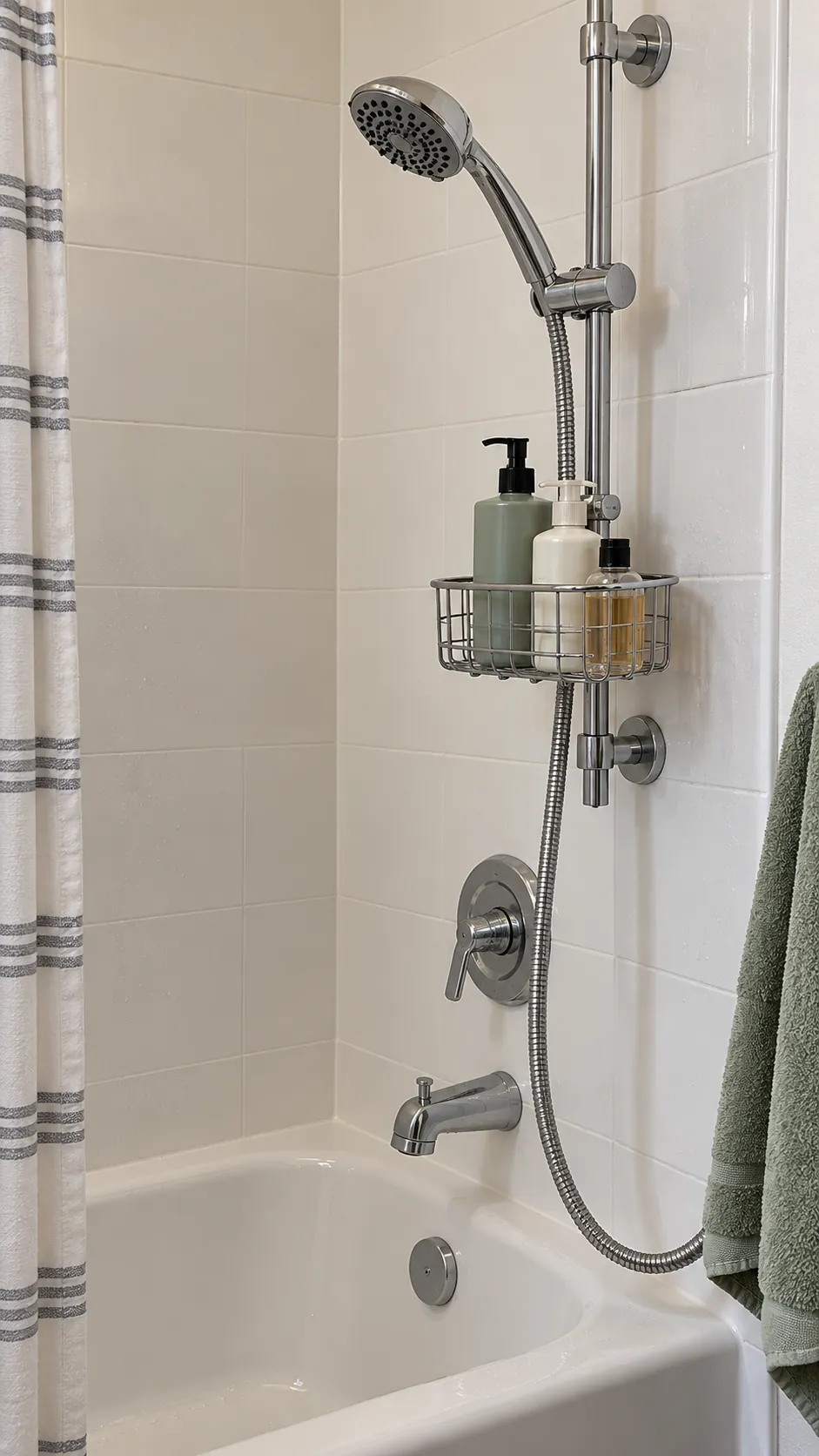
Silicone sleeves with hanging loops keep a few soft bottles off every horizontal surface. Hang each loop from a separate rated hook so weight stays balanced and labels remain visible. This works best after decanting only products that can be identified clearly and used safely.
A Door Side Basket for Sliding Glass
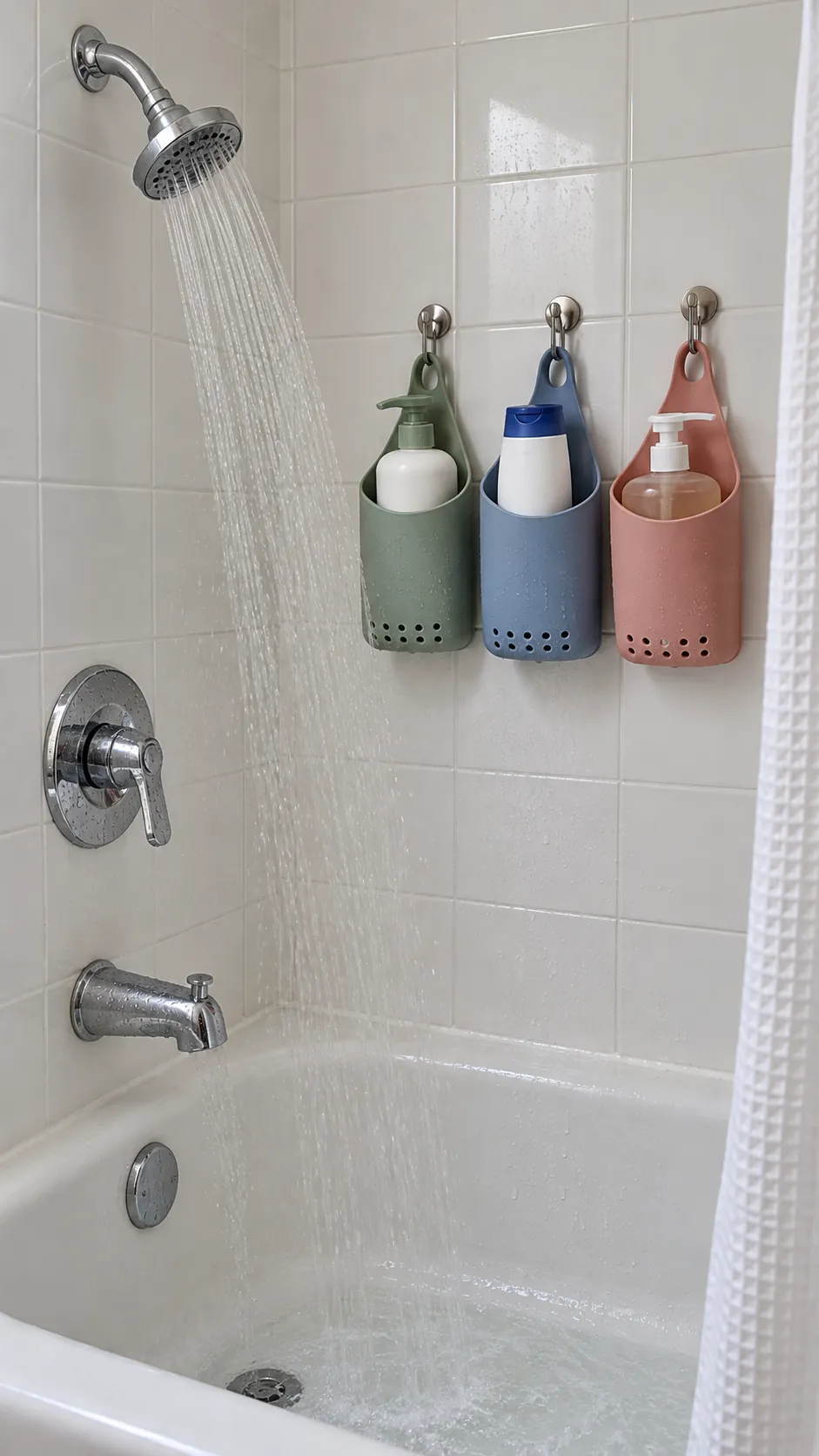
Some sliding tub doors accept a purpose made basket that hooks over the stationary panel rather than the moving door. Measure the top rail and confirm that the basket cannot obstruct either panel. Add protective pads wherever metal touches glass or the painted frame.
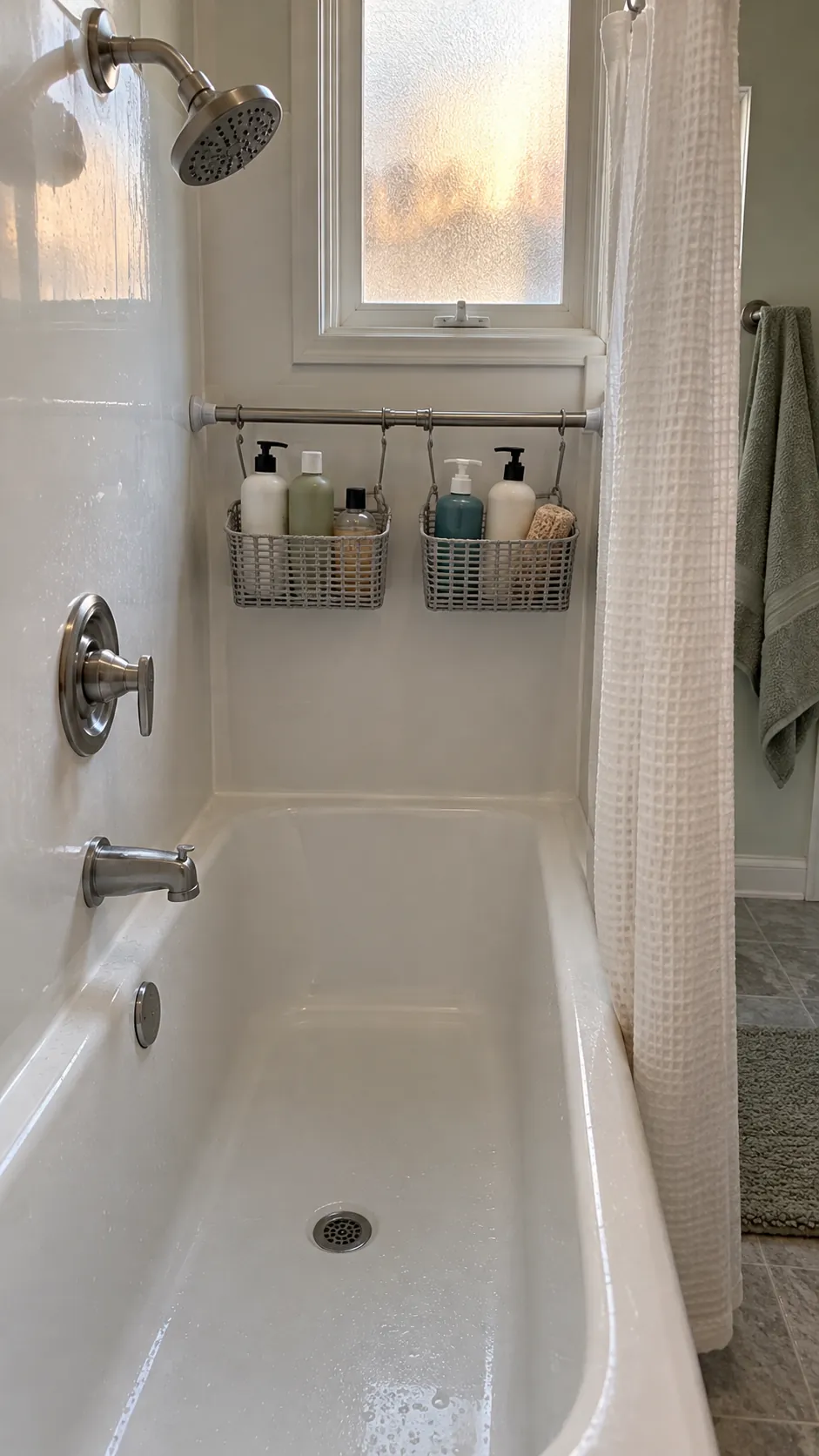
A Tension Rod With Hanging Baskets
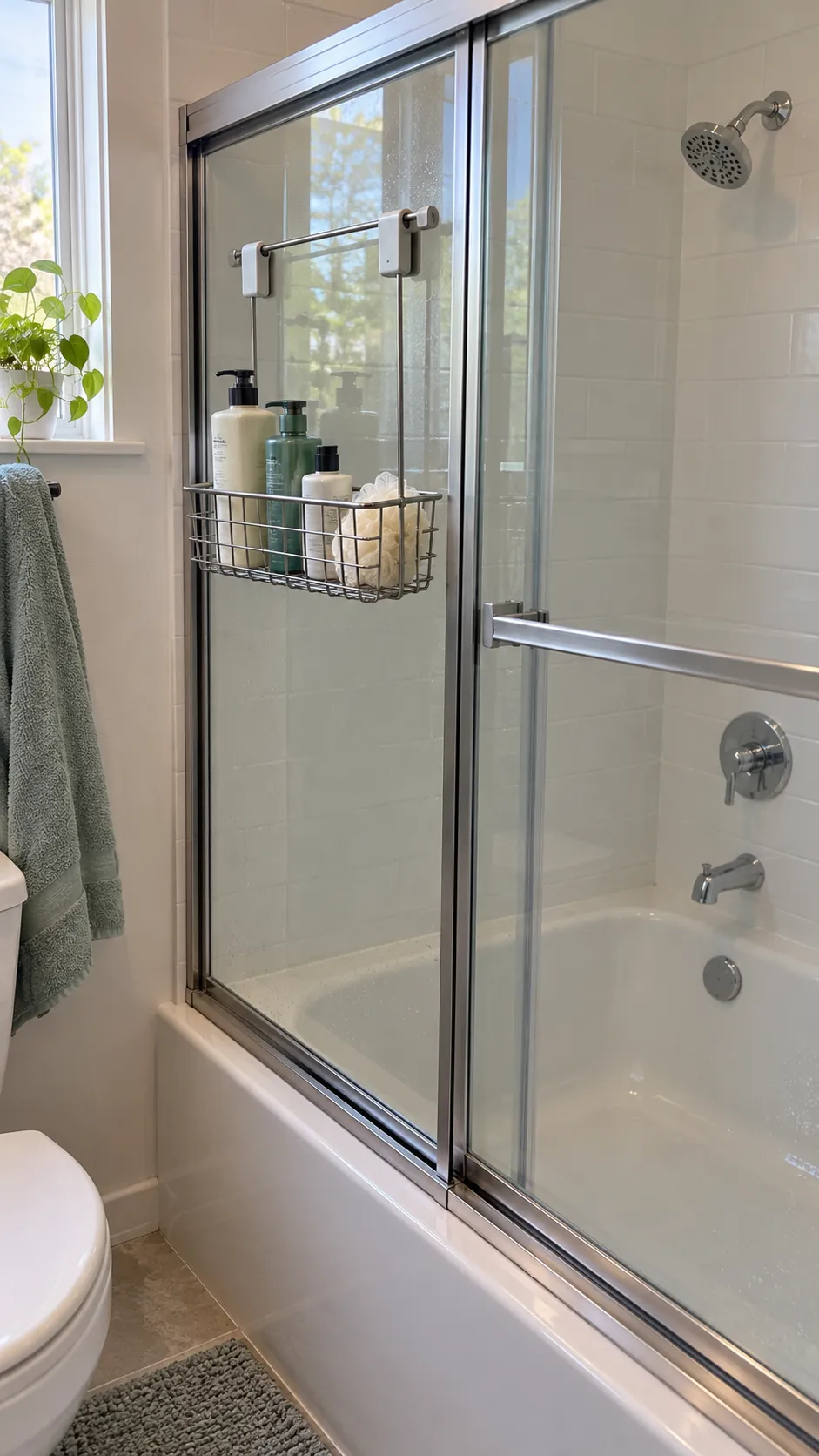
A short secondary tension rod can span a dry end wall and carry lightweight hanging baskets. Mount it well above head level only when both contact points are solid and the rod cannot fall into the tub. Distribute weight evenly and use rust resistant hooks that close around the rod.
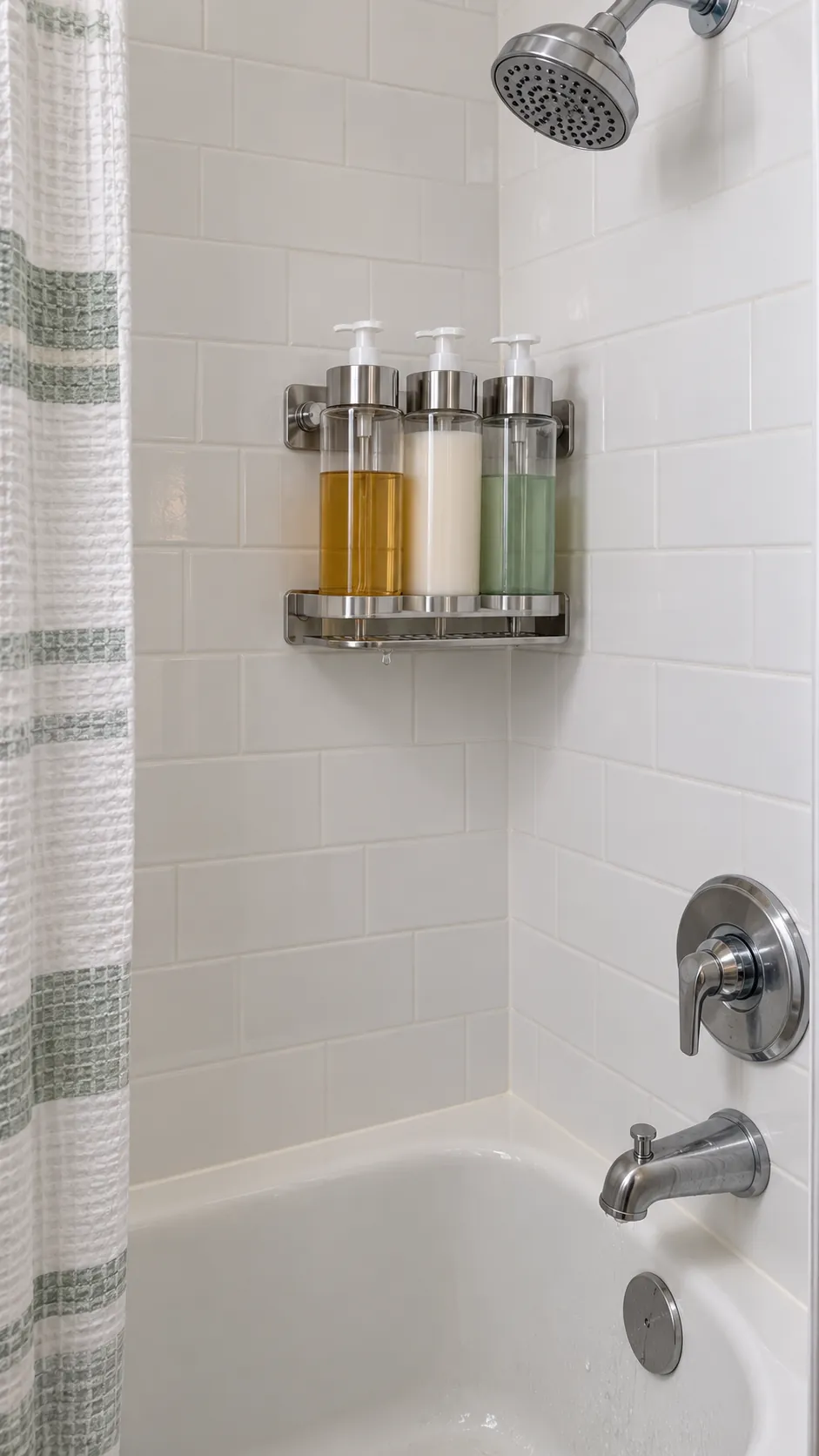
A Refillable Wall Dispenser
A well mounted refillable dispenser reduces the number of loose shampoo and soap bottles. Choose simple chambers that open fully for cleaning and label each product clearly. Renters should use only a mounting method approved for their wall and lease, then keep original ingredient labels elsewhere.
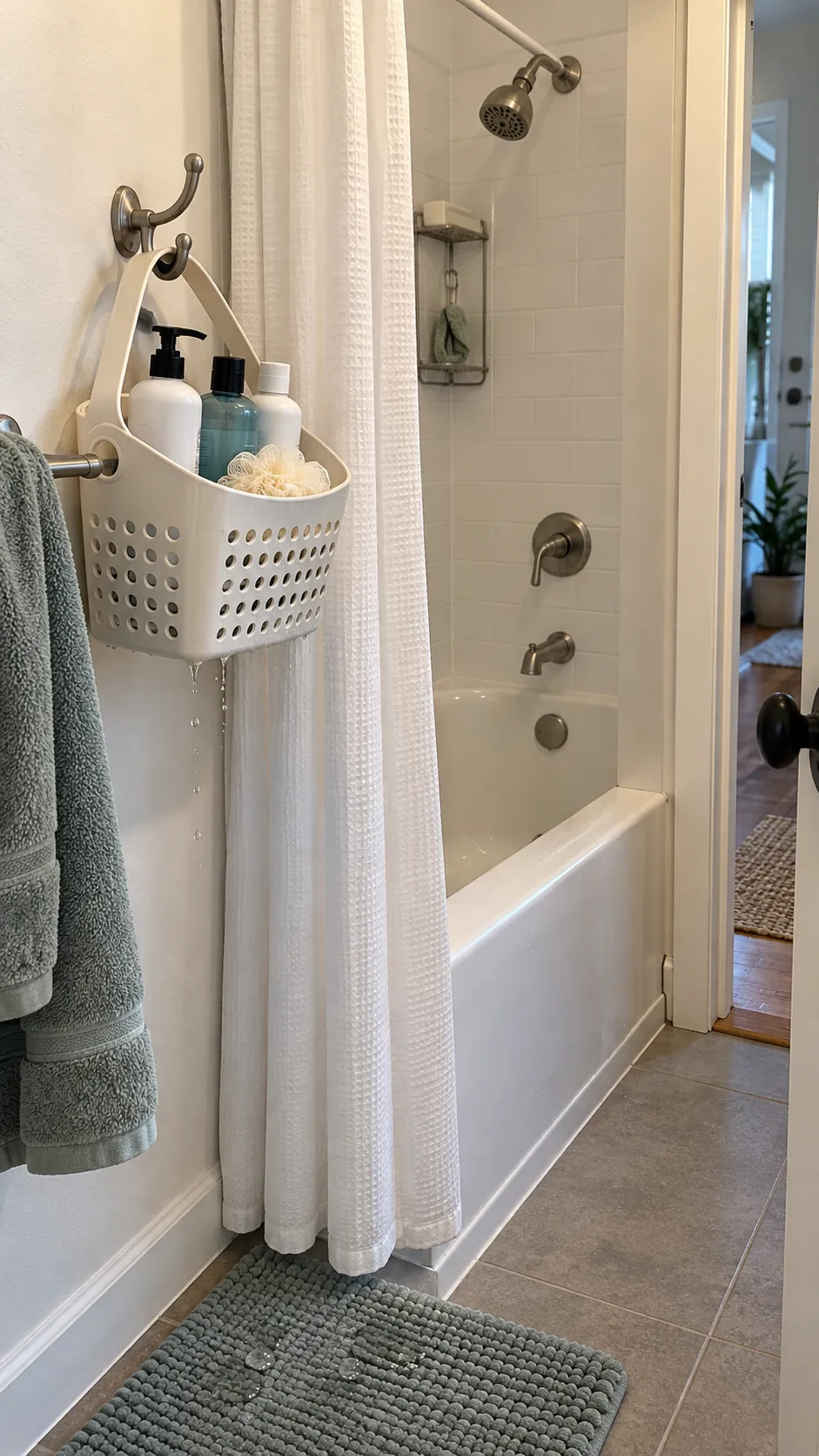
A Carry In Shower Tote
A handled tote keeps personal products together and leaves the tub empty between showers. Select rigid drainage holes or quick dry mesh, then store the tote on a hook outside the wet zone. This is especially useful for shared bathrooms because each person can keep a separate kit.
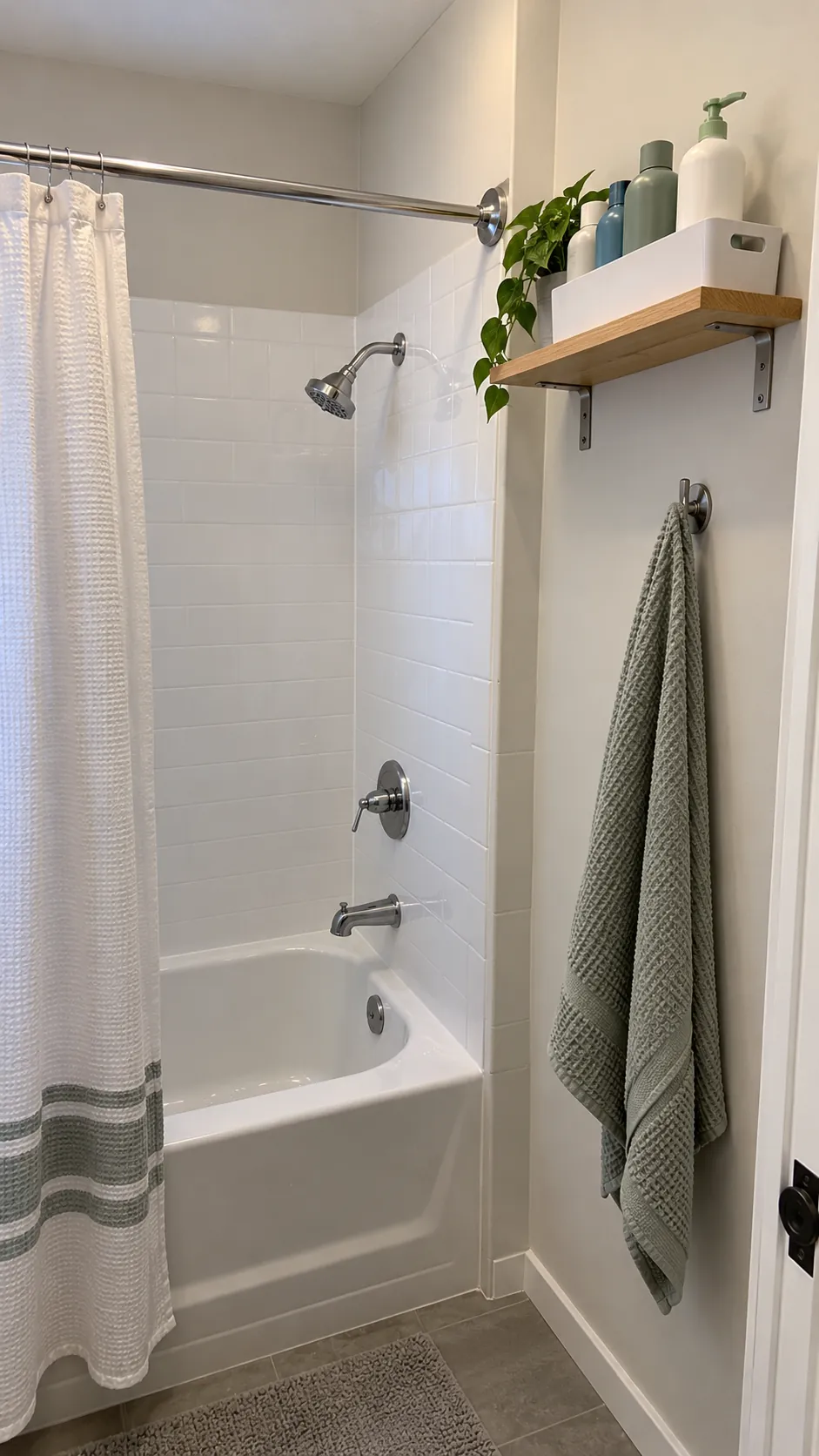
A High Shelf Outside the Splash Zone
A high shallow shelf can hold backup bottles above the tub when it sits beyond direct spray and remains reachable. Anchor it into suitable structure and leave enough clearance for heads, curtains, and shower hardware. Decant daily products below so nobody stretches for a heavy container while standing in water.
A Custom Narrow Ledge on the Dry End
A carpenter built ledge on the dry end can add permanent storage without opening the wet surround. Its top should slope slightly away from the wall and use a water resistant finish. Confirm that the ledge does not reduce entry space or create a sharp edge near the tub.
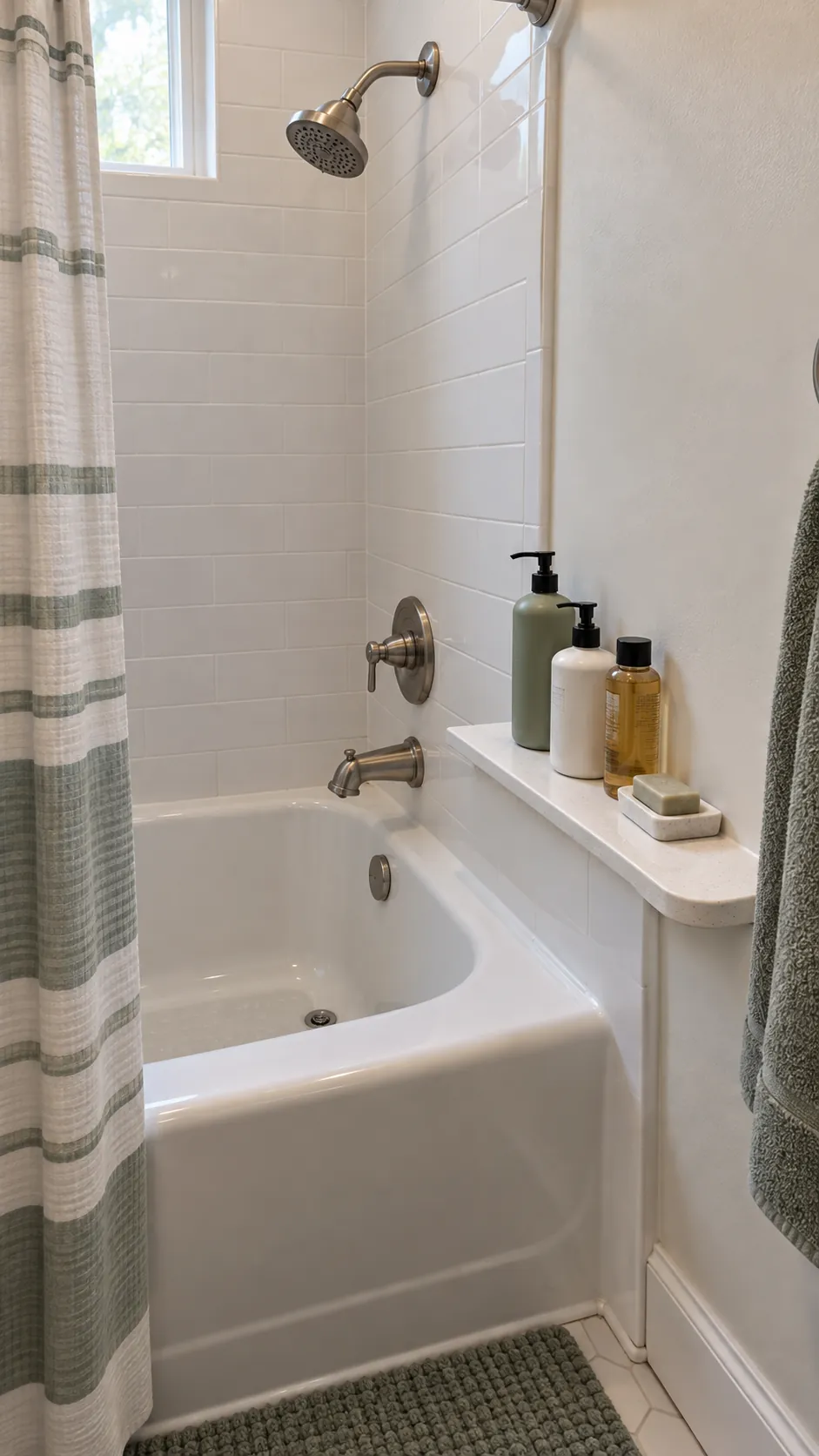
A Daily Bottle Limit With Backup Storage
The smallest shower often works better when storage begins with fewer bottles rather than another organizer. Keep one product per routine in the wet zone and move refills, duplicates, and occasional treatments to a dry cabinet or closet. A quick monthly reset prevents empty containers from reclaiming the tub rim.