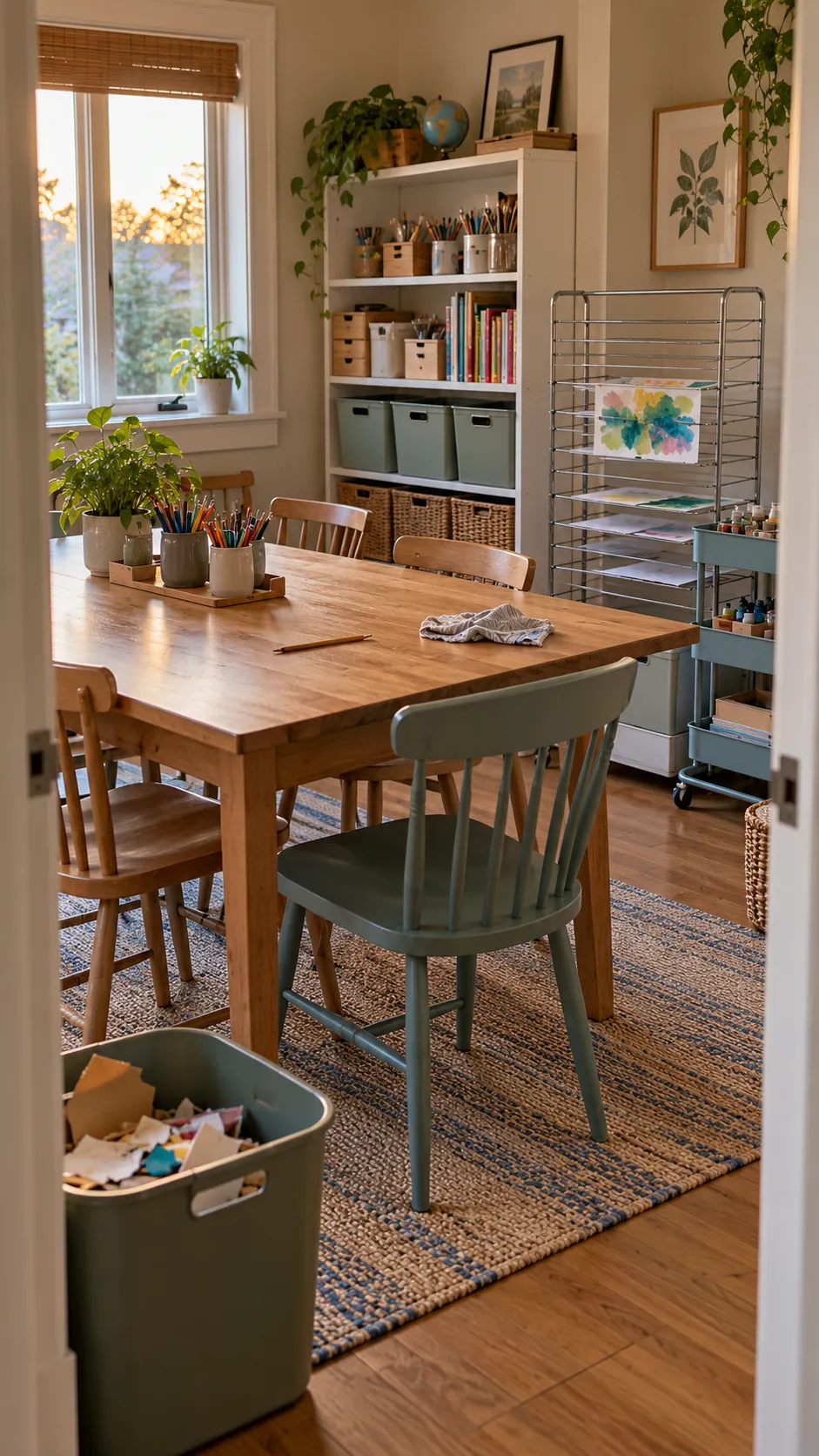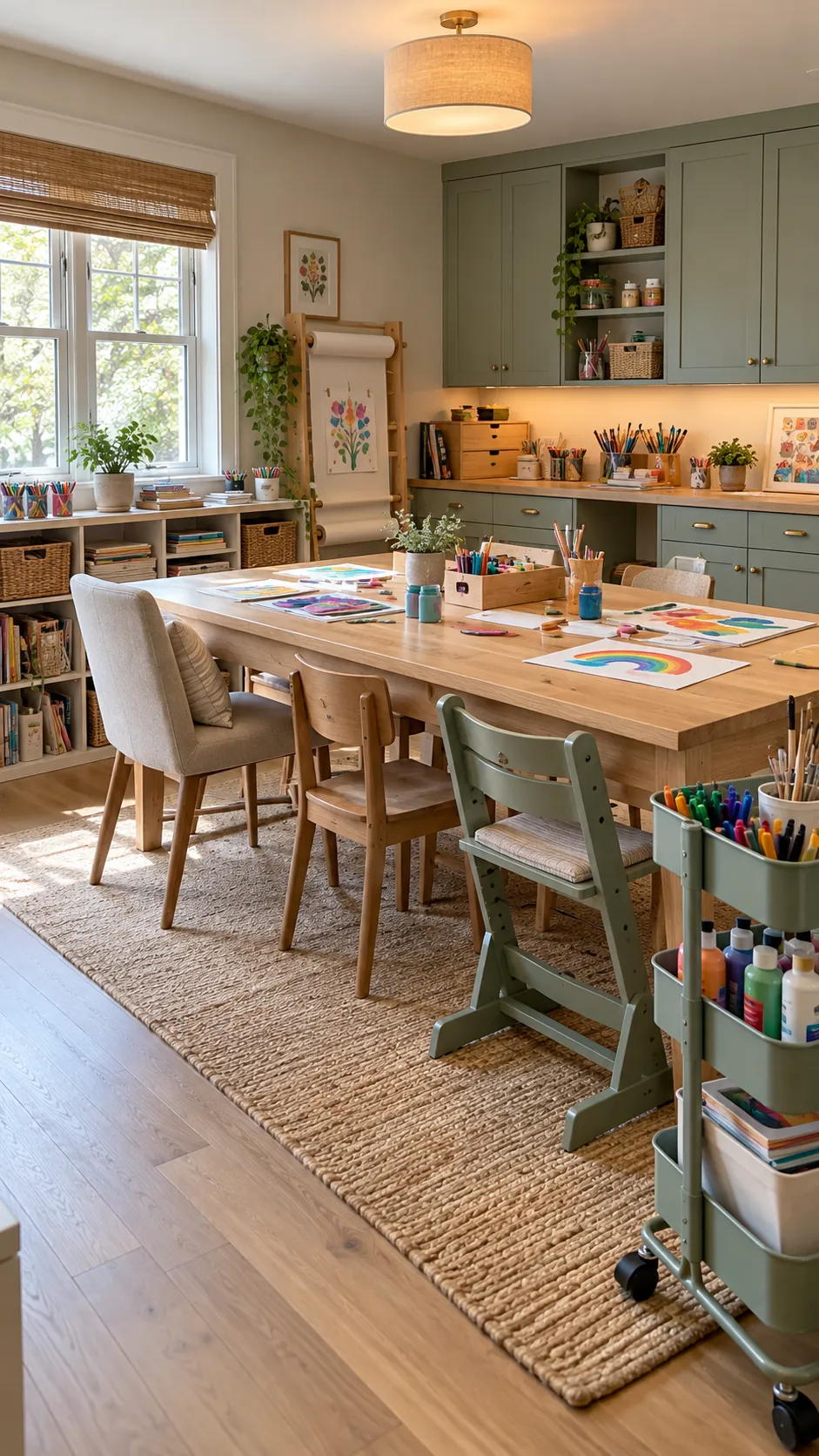
A family craft room fails when everyone must clear somebody else’s project before beginning. It also fails when children need help to reach every basic supply, while sharp or fragile tools remain too easy to grab. A better room makes creative independence visible through clear zones, simple storage, and a short reset routine.
Build One Long Shared Worktable
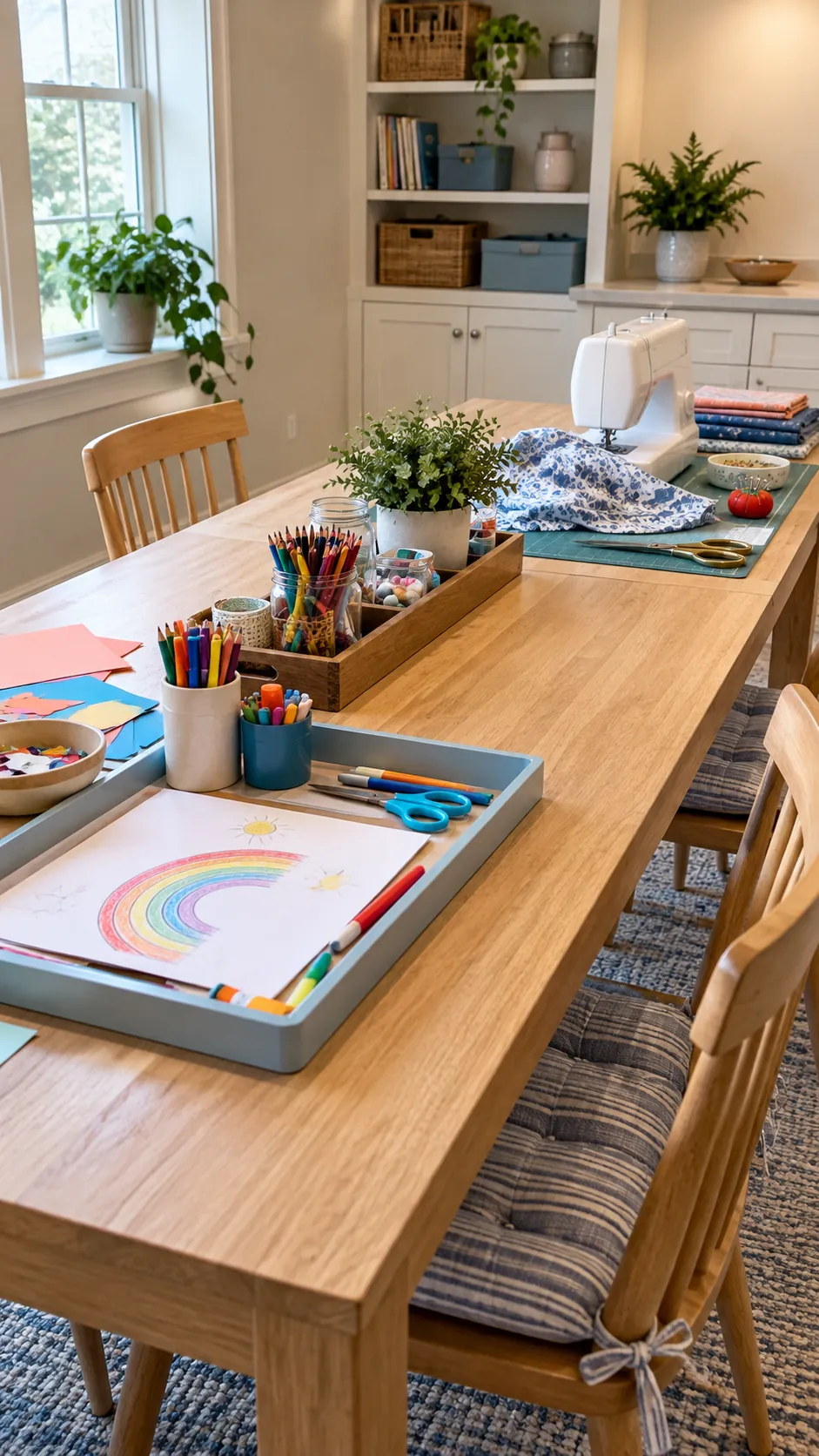
A long table lets adults and children work together without combining every project. Give each seat a shallow tray and enough elbow room for paper or fabric. A wipeable top makes paint, glue, and crumbs less stressful.
Give Everyone a Personal Supply Bin
Personal bins prevent arguments about special markers, kits, and collected treasures. Use a clear name card or one color for each family member. Keep communal basics elsewhere so private supplies do not slowly become shared supplies.
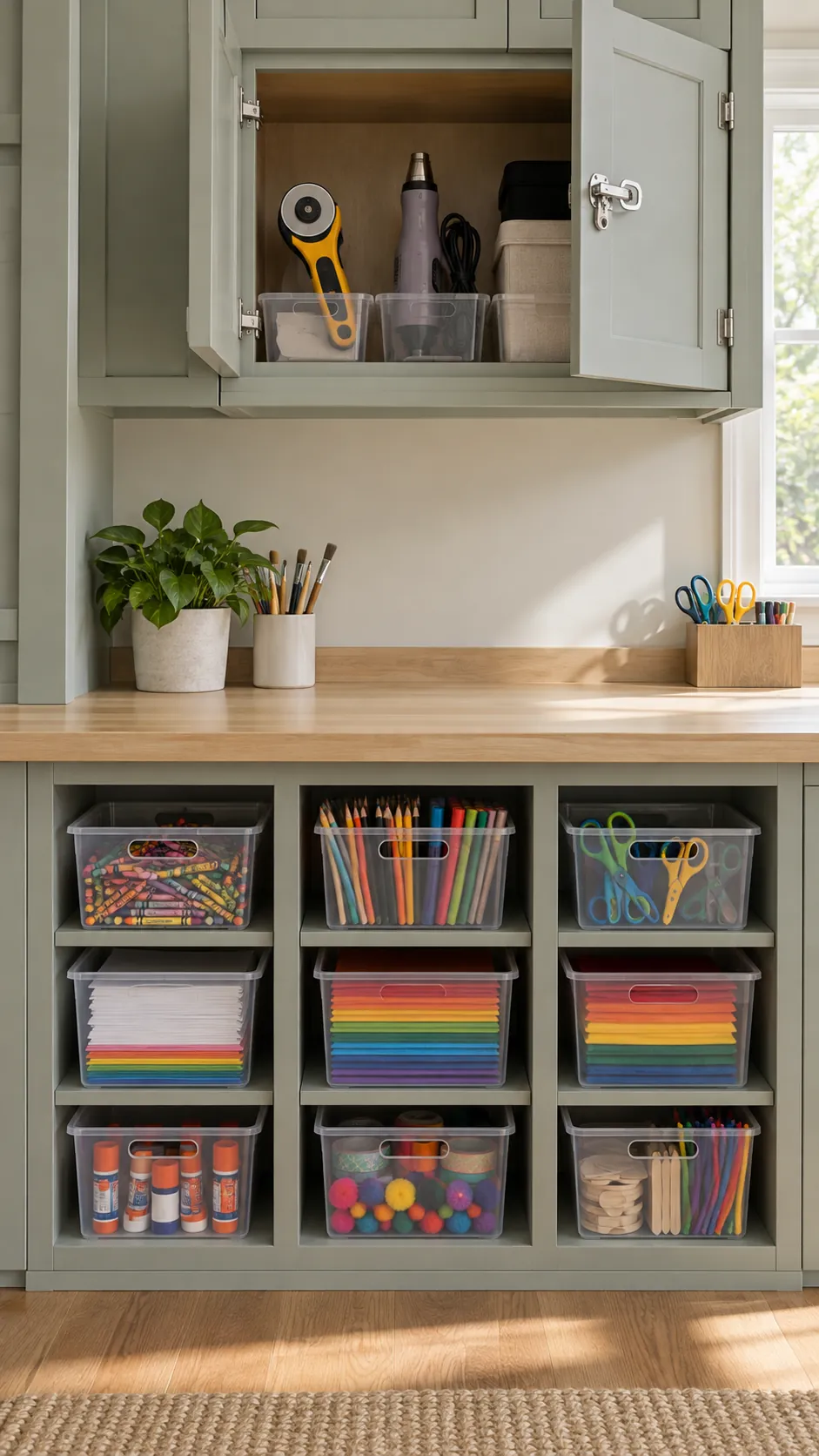
Separate Open Supplies From Adult Tools
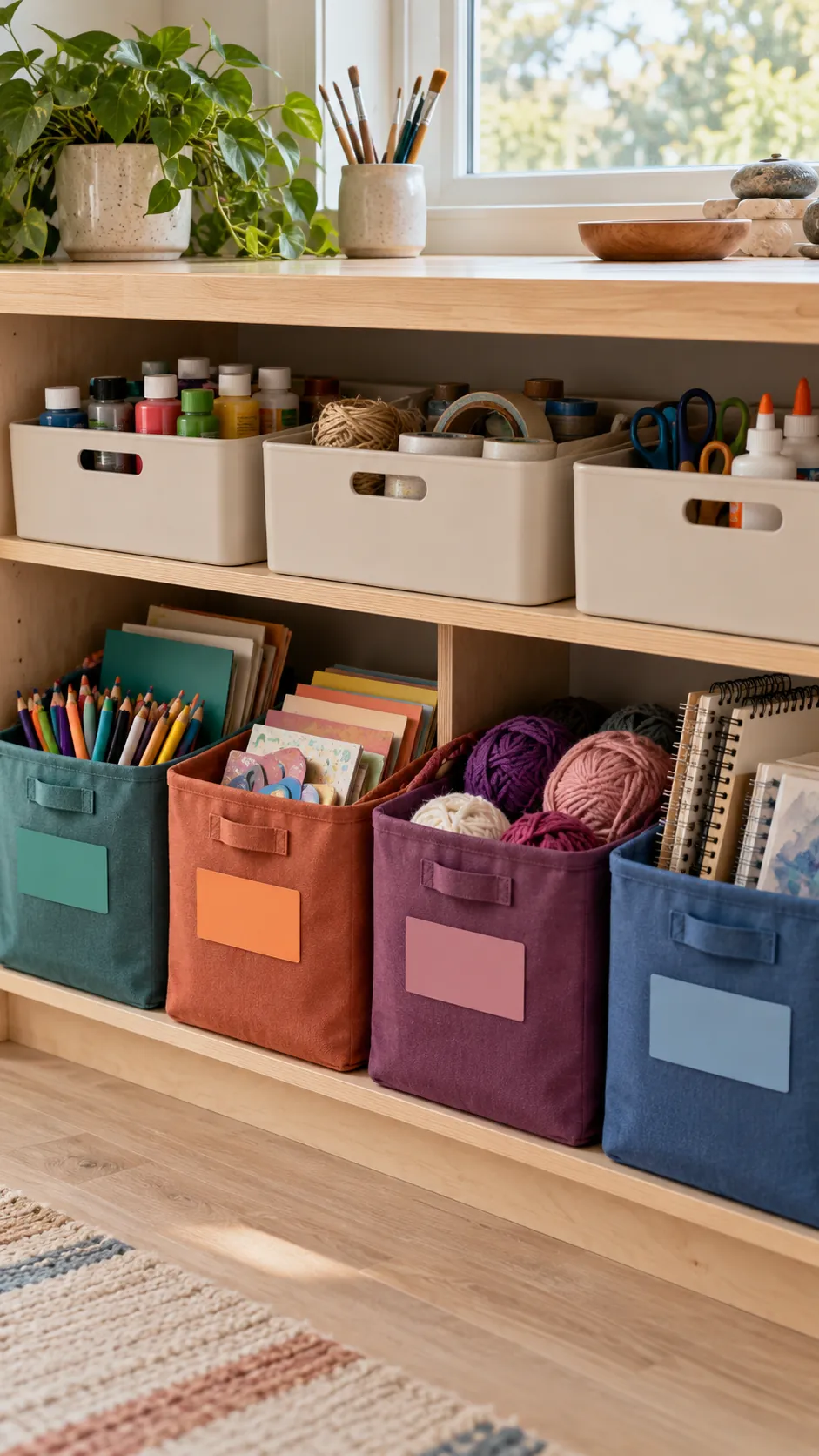
Children should reach paper, crayons, glue sticks, and safe scissors without climbing. Rotary cutters, hot tools, solvents, and delicate equipment belong in secured storage. This split encourages independence without pretending that every object is child safe.
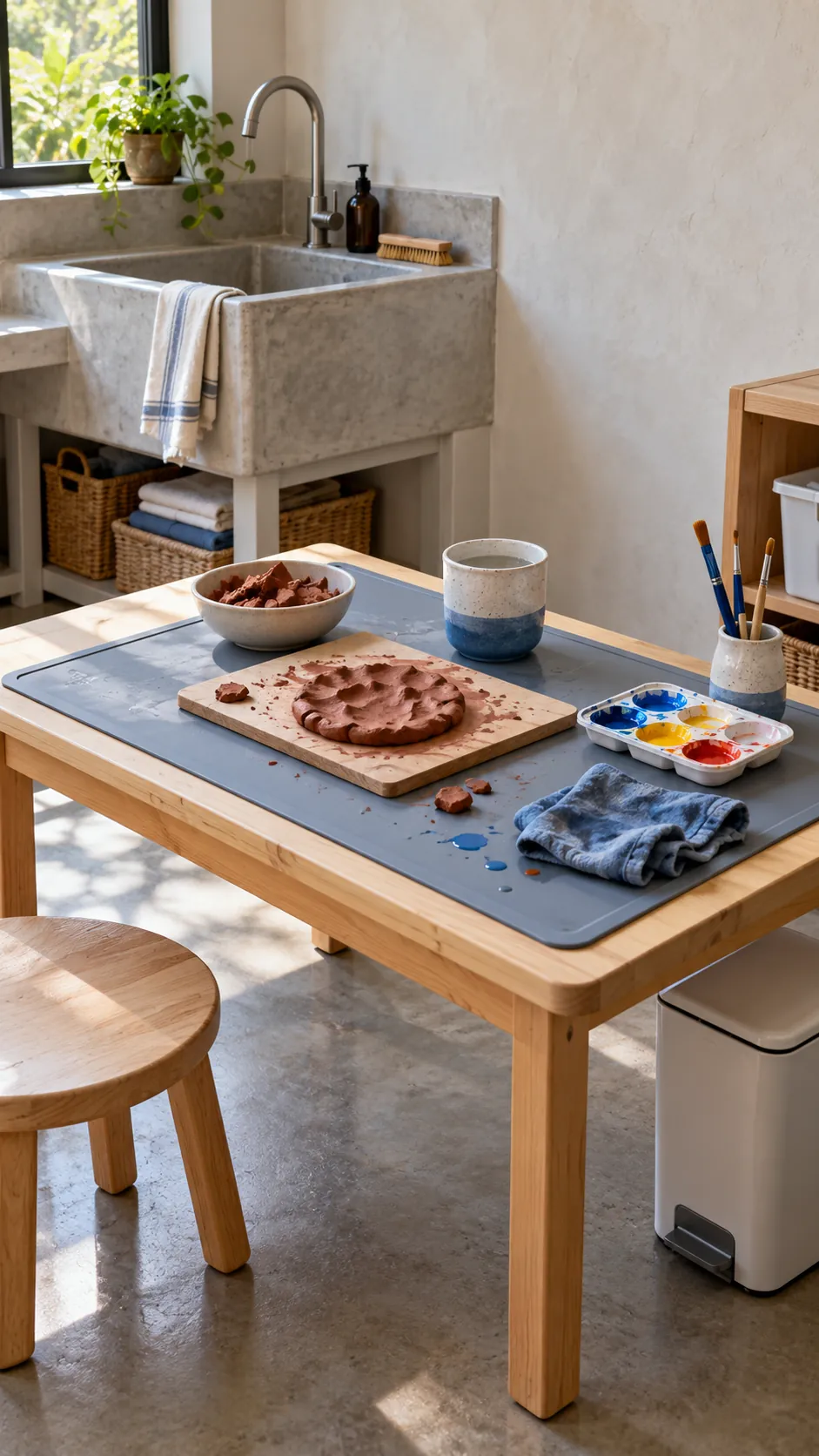
Create a Washable Mess Zone
Paint, clay, ink, and glue are easier to welcome when spills have a planned place. Put a washable mat under a sturdy table and keep cloths, a scrap bowl, and a bin nearby. The rest of the creative family space stays calmer because messy work has a clear home.
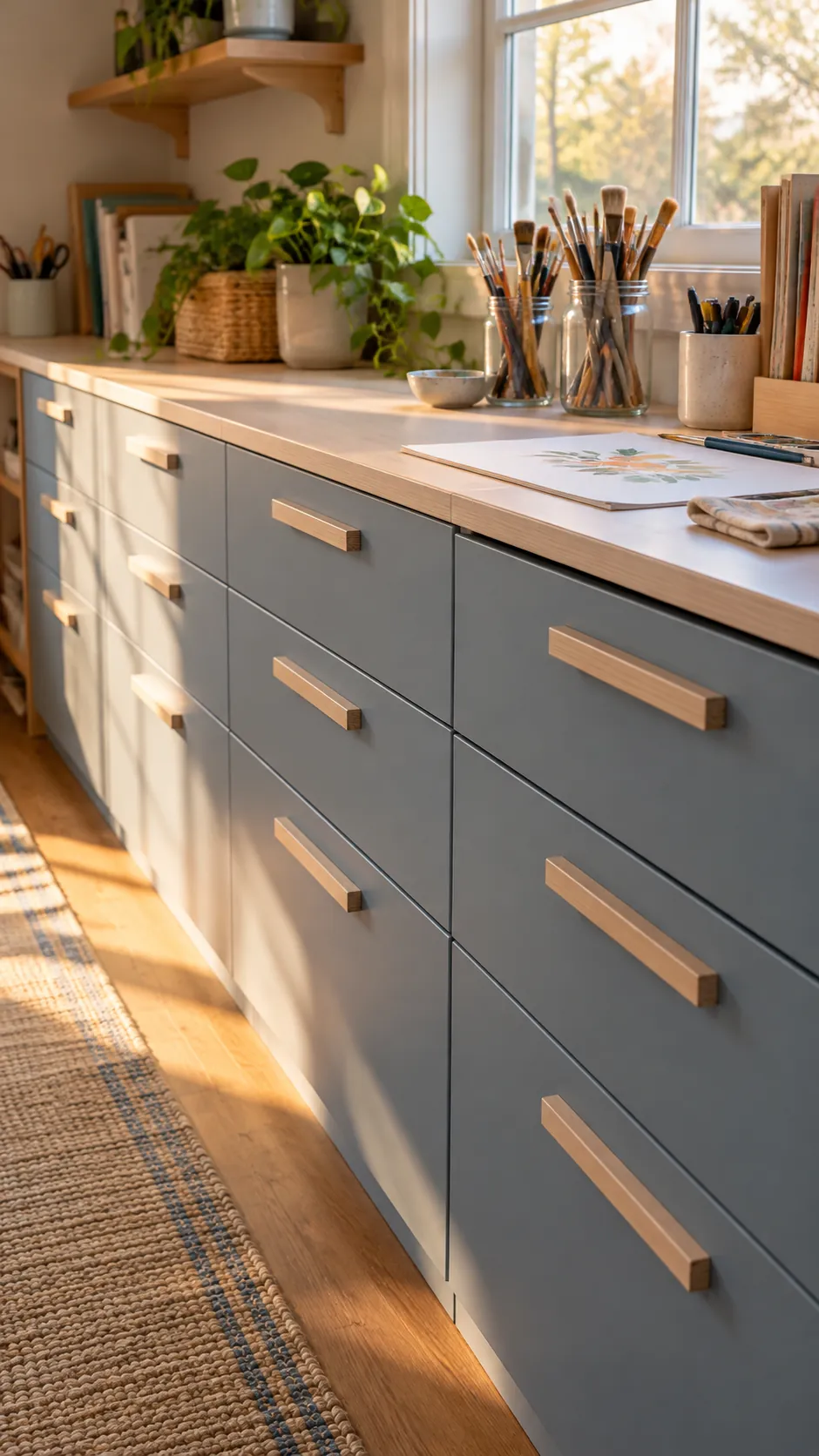
Use Drawers to Hide Visual Clutter
Open shelves can make a varied craft collection feel chaotic. Wide labeled drawers hold mixed supplies while giving the room a quieter surface. Reserve a few shelves for attractive jars and materials that the family uses every week.
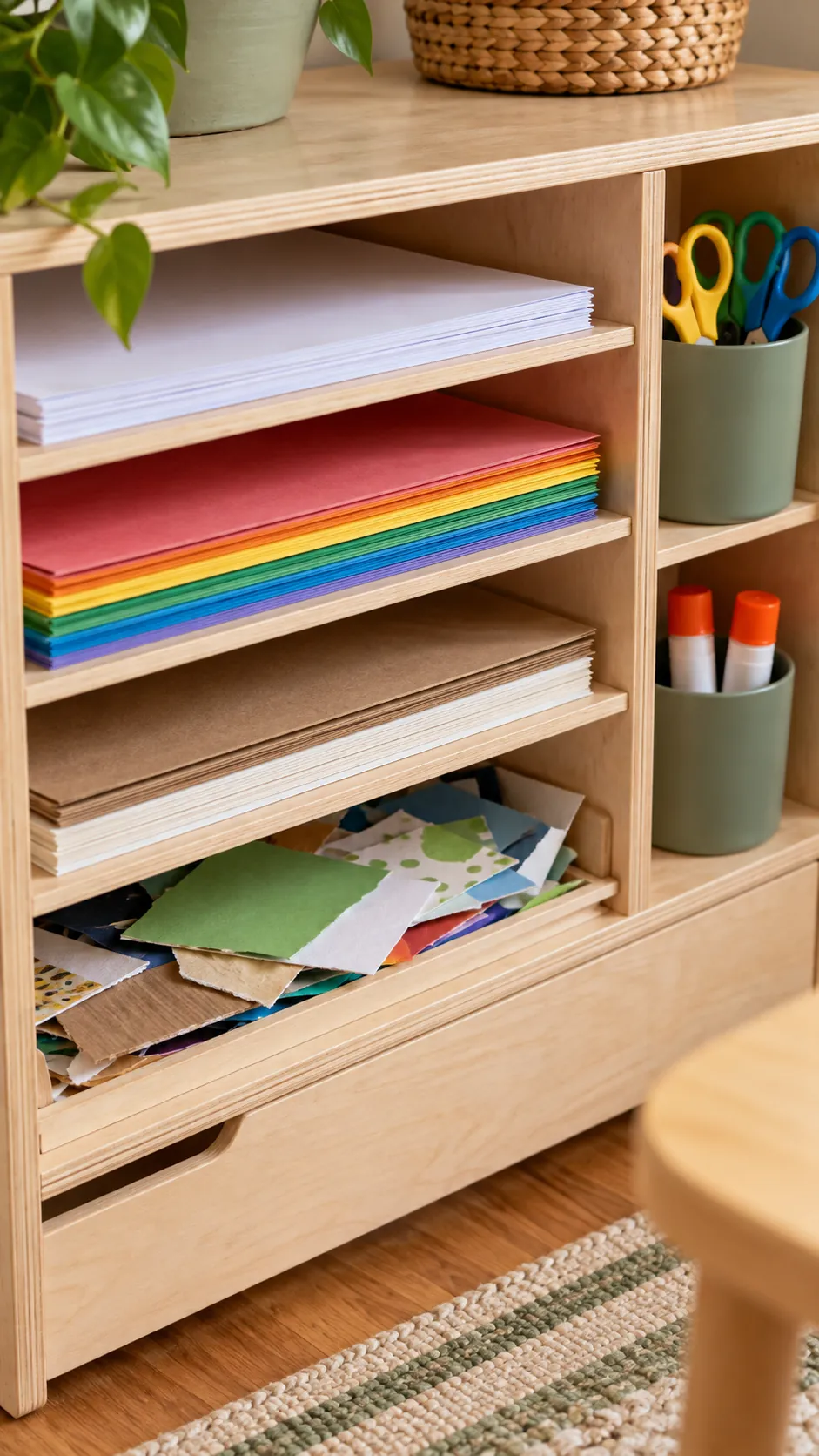
Add a Low Paper Station
A low paper station lets children choose materials without pulling down a heavy stack. Sort drawing paper, colored sheets, card, and reusable scraps in shallow horizontal slots. Limit the categories so returning paper stays easy.
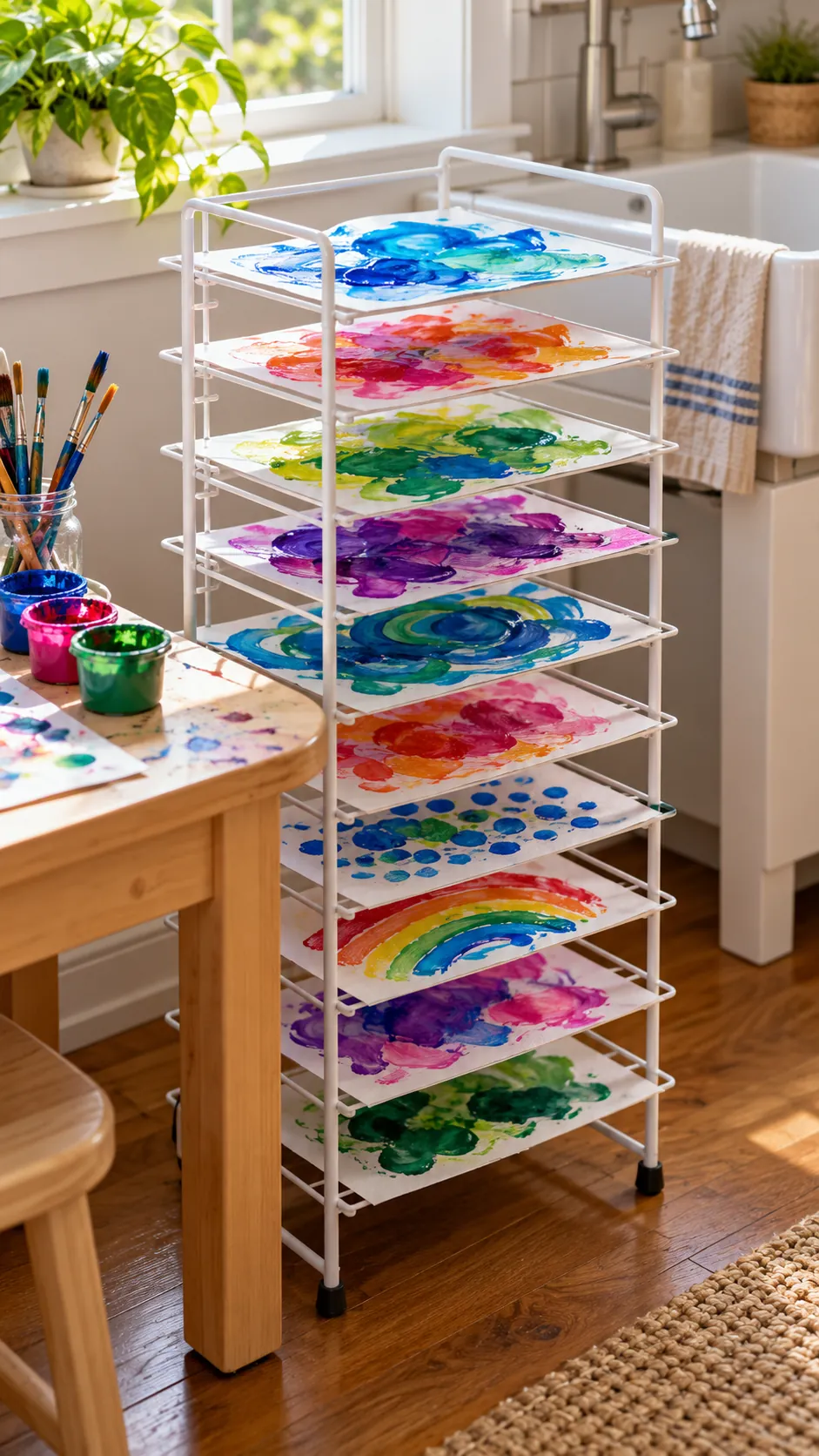
Install a Drying Rack for Wet Art
Wet paintings often spread across every available surface and block the next activity. A wall rack or narrow tiered shelf keeps pages flat and protected. Place it near the mess zone so dripping work does not travel across the room.
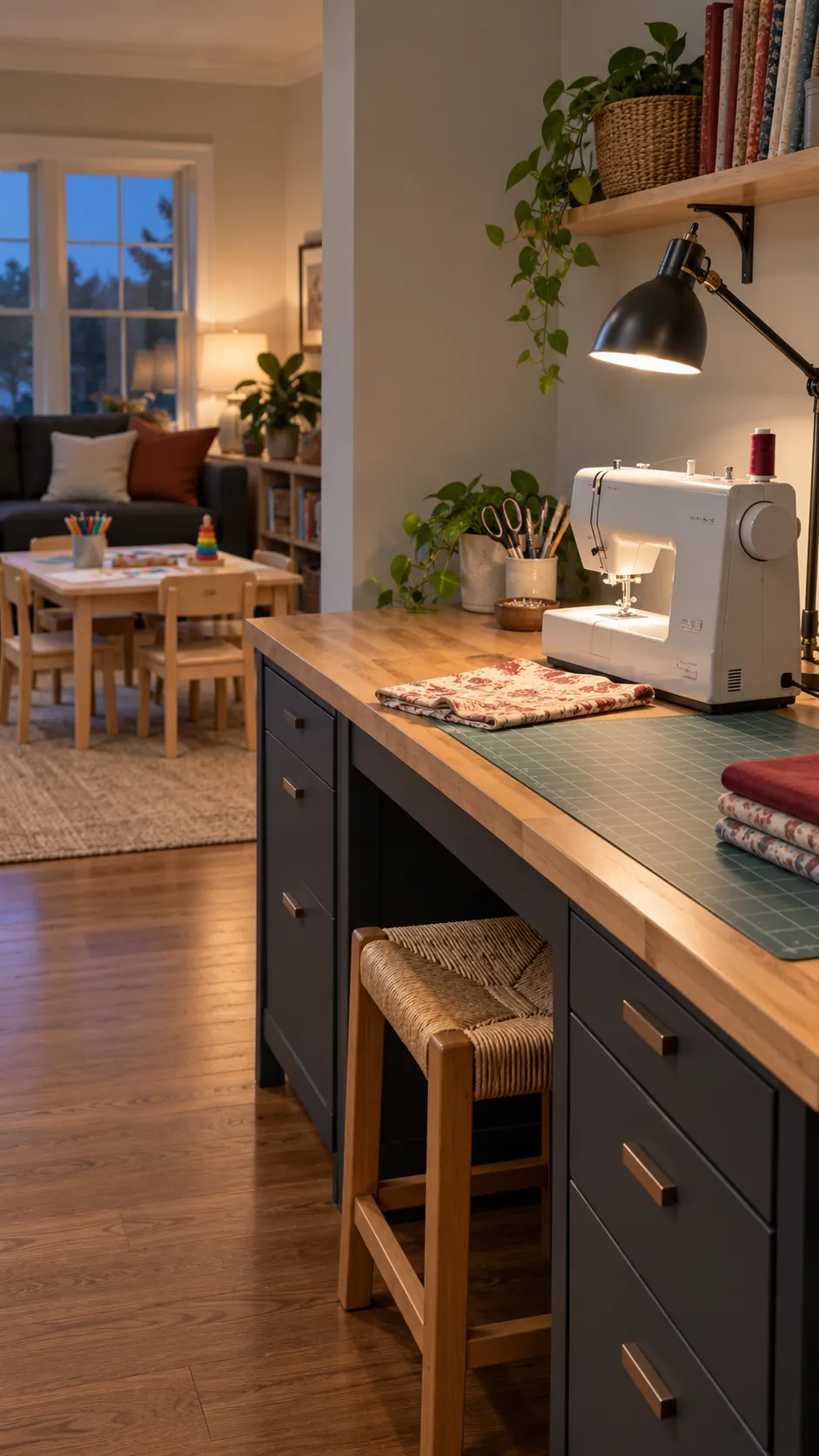
Reserve a Counter for Adult Projects
An adult height counter protects precise work from accidental bumps. It can support a sewing machine, cutting mat, or detailed model without dominating the room. Add a stool that tucks underneath so the counter works for sitting or standing.
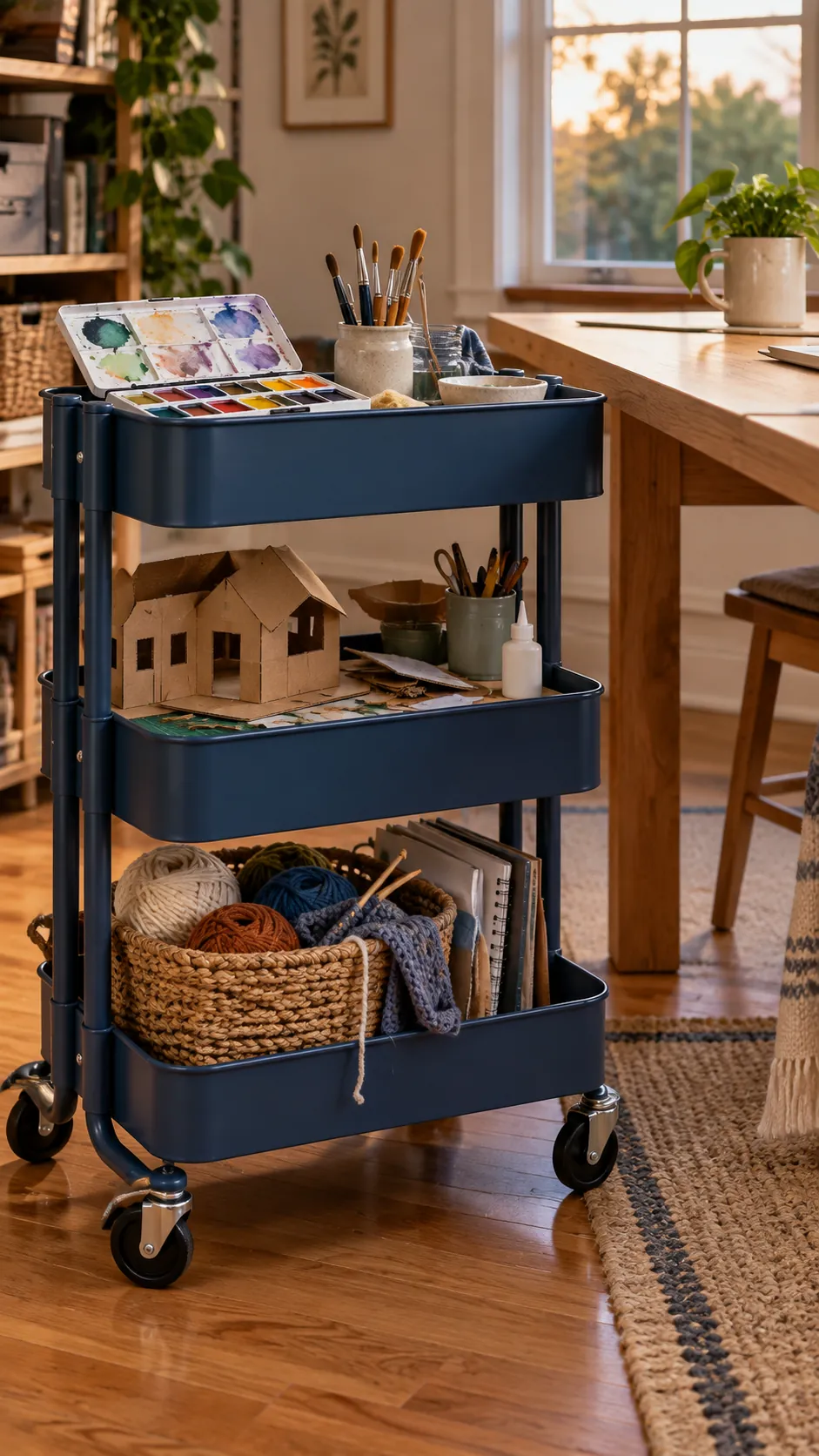
Keep a Cart Ready for Current Projects
A rolling cart helps when a project needs several sessions but the table must be cleared. Assign each tier to one active project and include a container for loose parts. Roll it beside the maker during use, then park it in a defined corner.
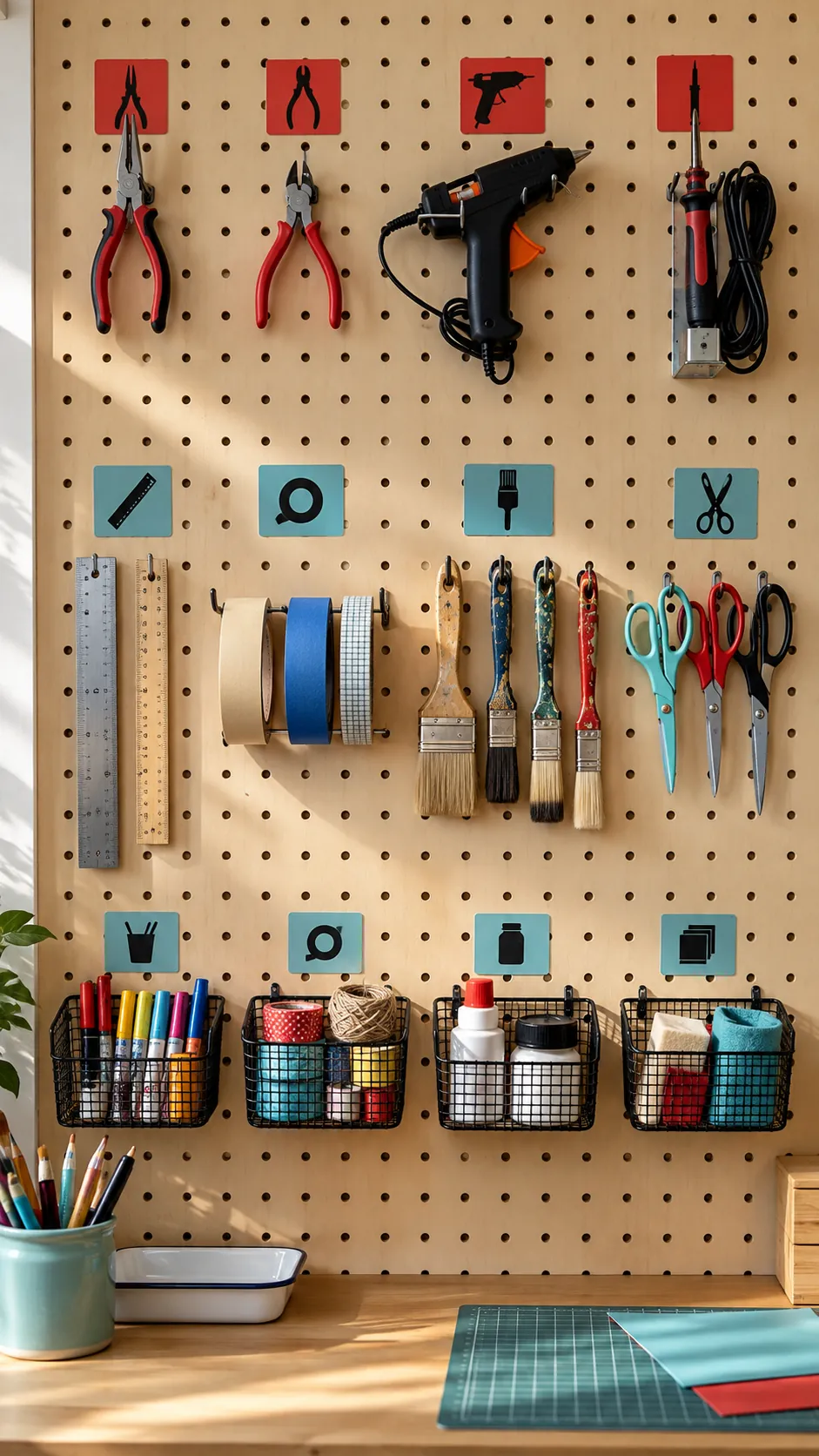
Mount Everyday Tools on a Pegboard
A pegboard keeps rulers, tape, brushes, and baskets visible without covering the work surface. Place safe tools at child height and adult tools higher up. Picture labels show where every item should return.
Choose Chairs for Different Bodies
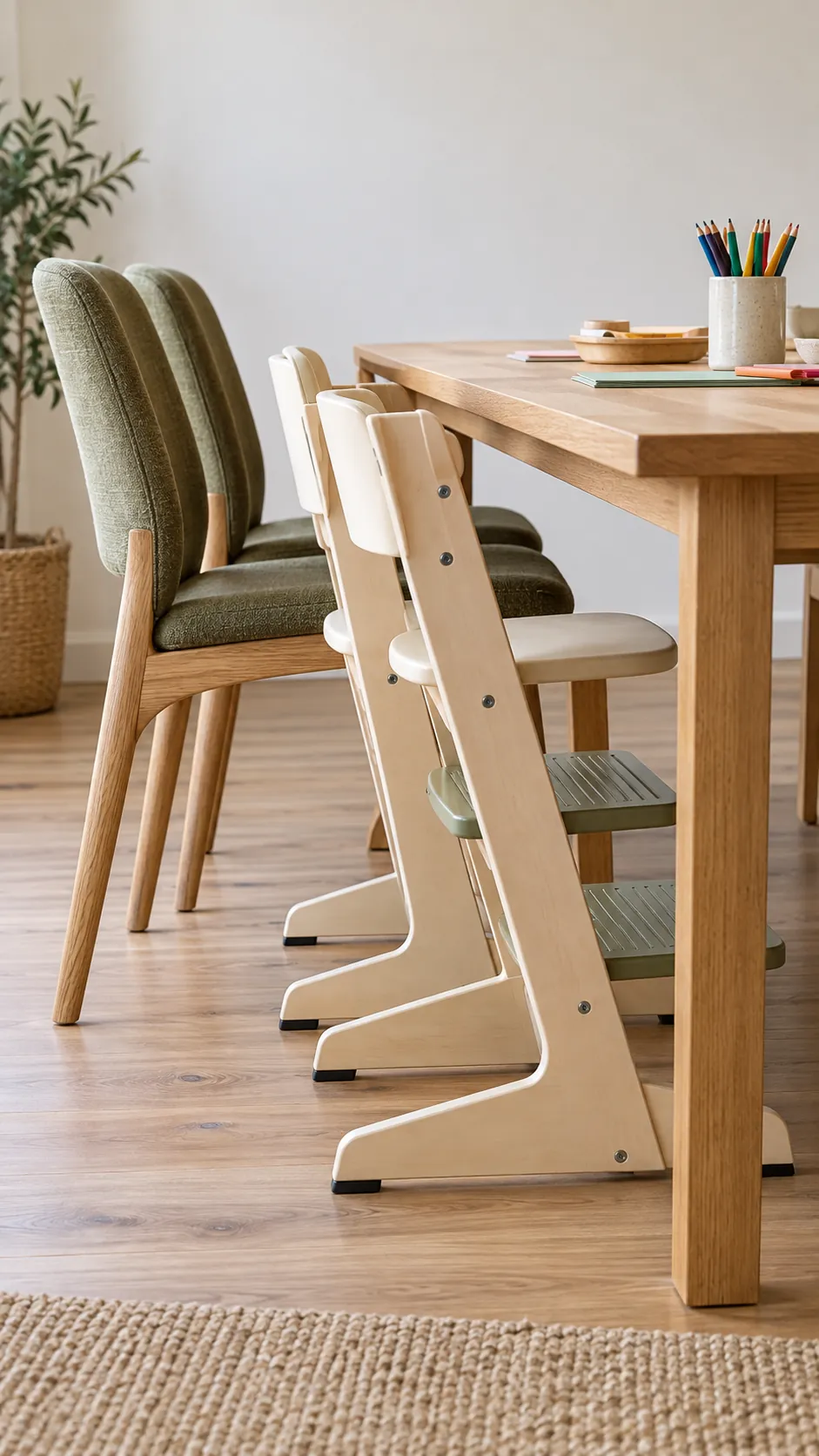
One table can serve several ages when the seating does more work. Pair supportive adult chairs with adjustable child chairs or firm footrests. Avoid bulky arms that stop a chair from sliding close to the edge.
Aim Task Lights at Every Seat
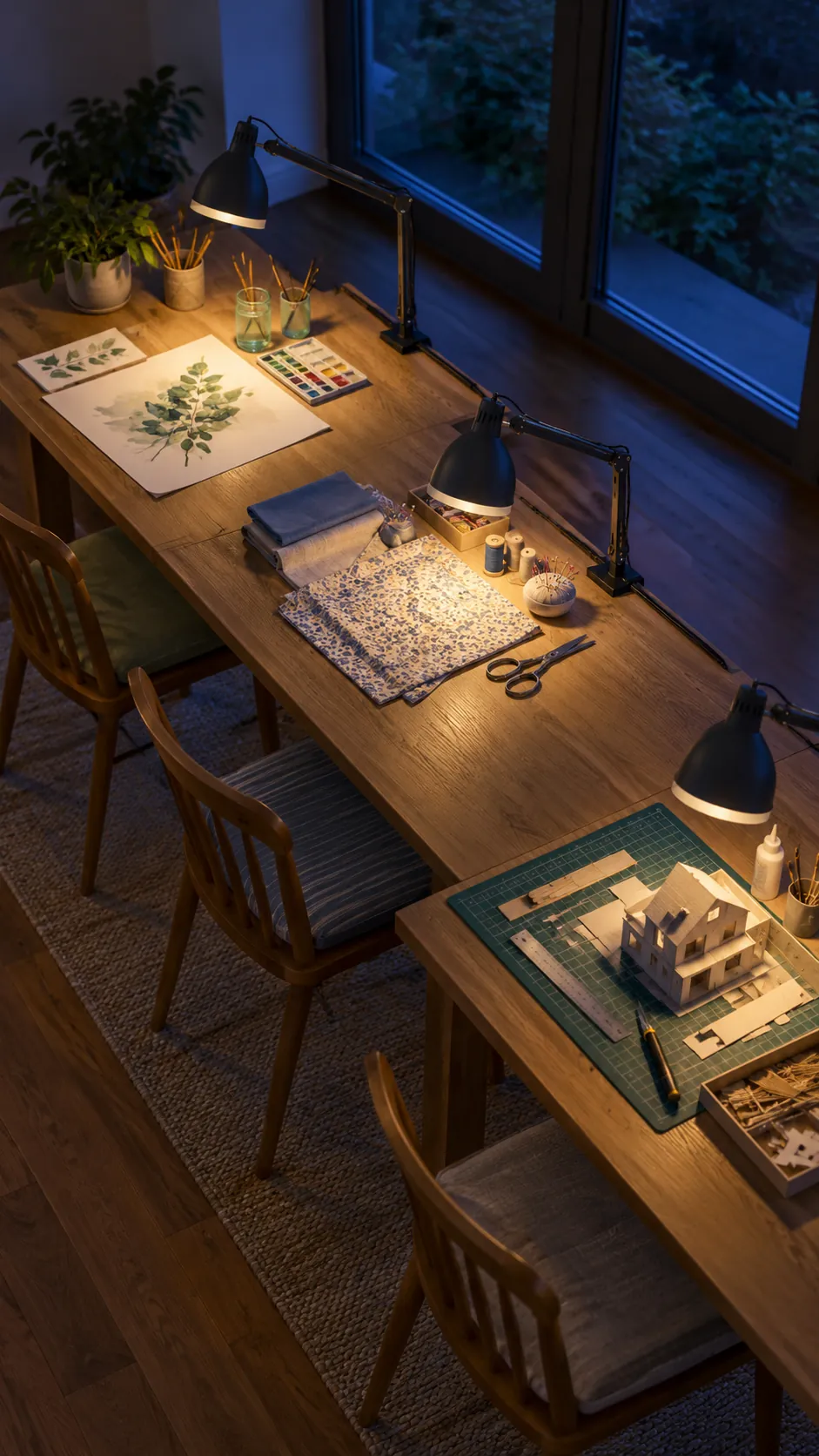
Ceiling light rarely reaches every hand once people lean over a project. Use shielded adjustable lamps that direct light onto each work area without shining into nearby eyes. Secure cords along the back of the shared crafting table.
Display Art Without Filling Every Wall
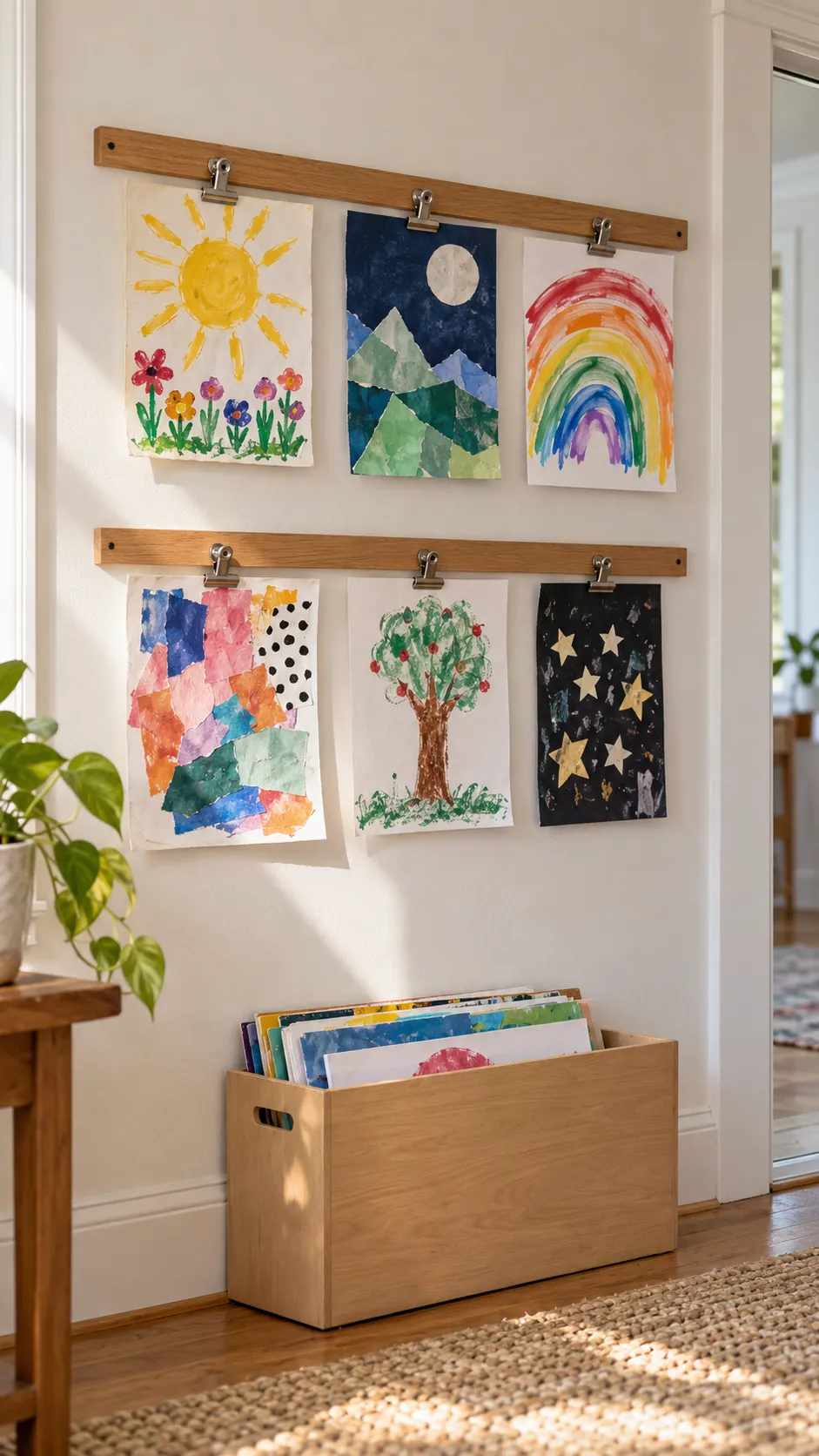
A rotating display gives finished work attention without creating permanent visual overload. Use picture ledges or clip rails and set a simple limit for each person. Store selected older work in portfolios, then recycle or photograph the rest.
Make a Quiet Creative Corner
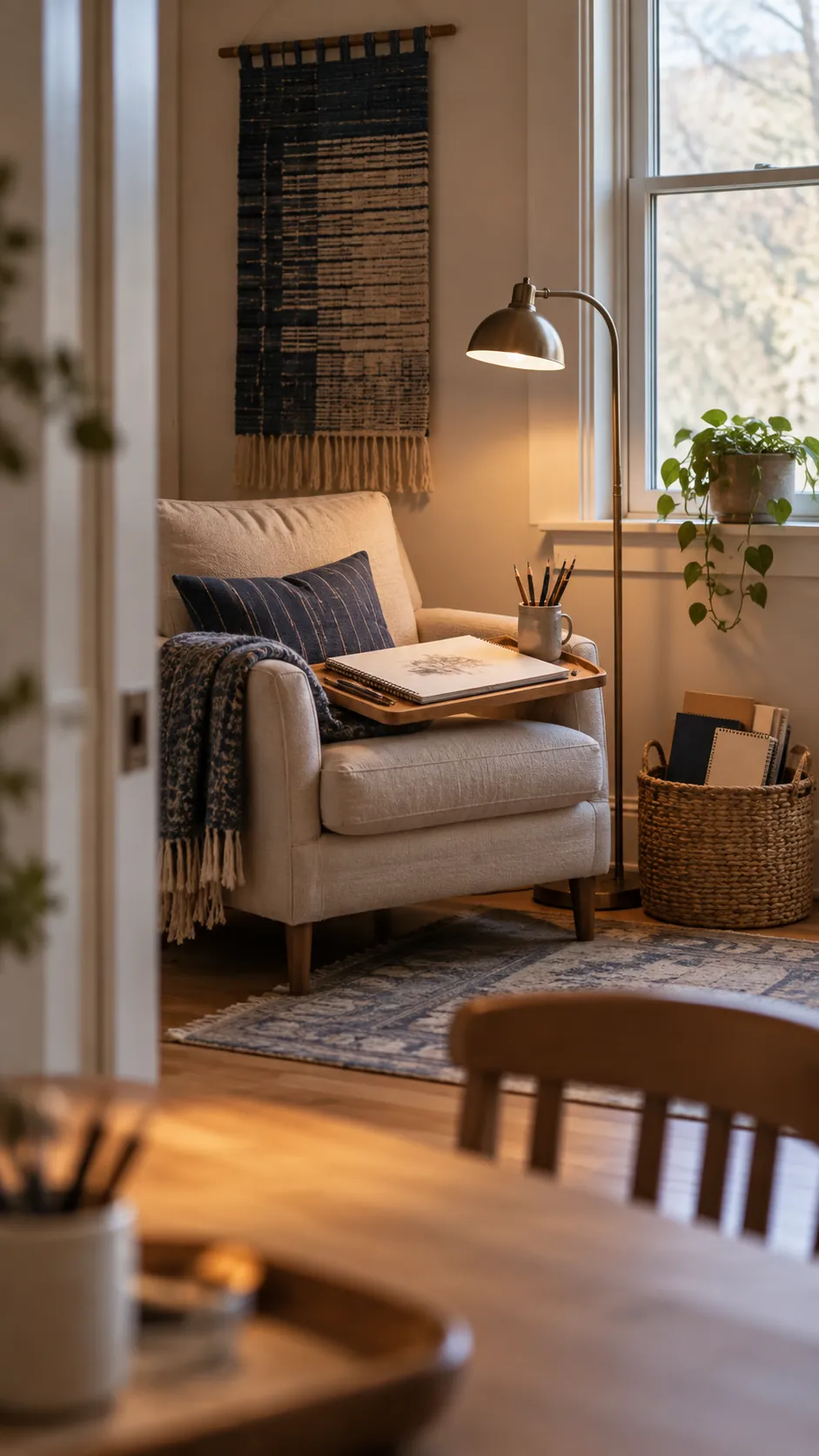
Not every creative activity benefits from a busy central table. A chair, lap desk, and sketchbook basket creates a calmer place to draw, stitch, or plan. Position it within sight of the main zone but away from noisy equipment.
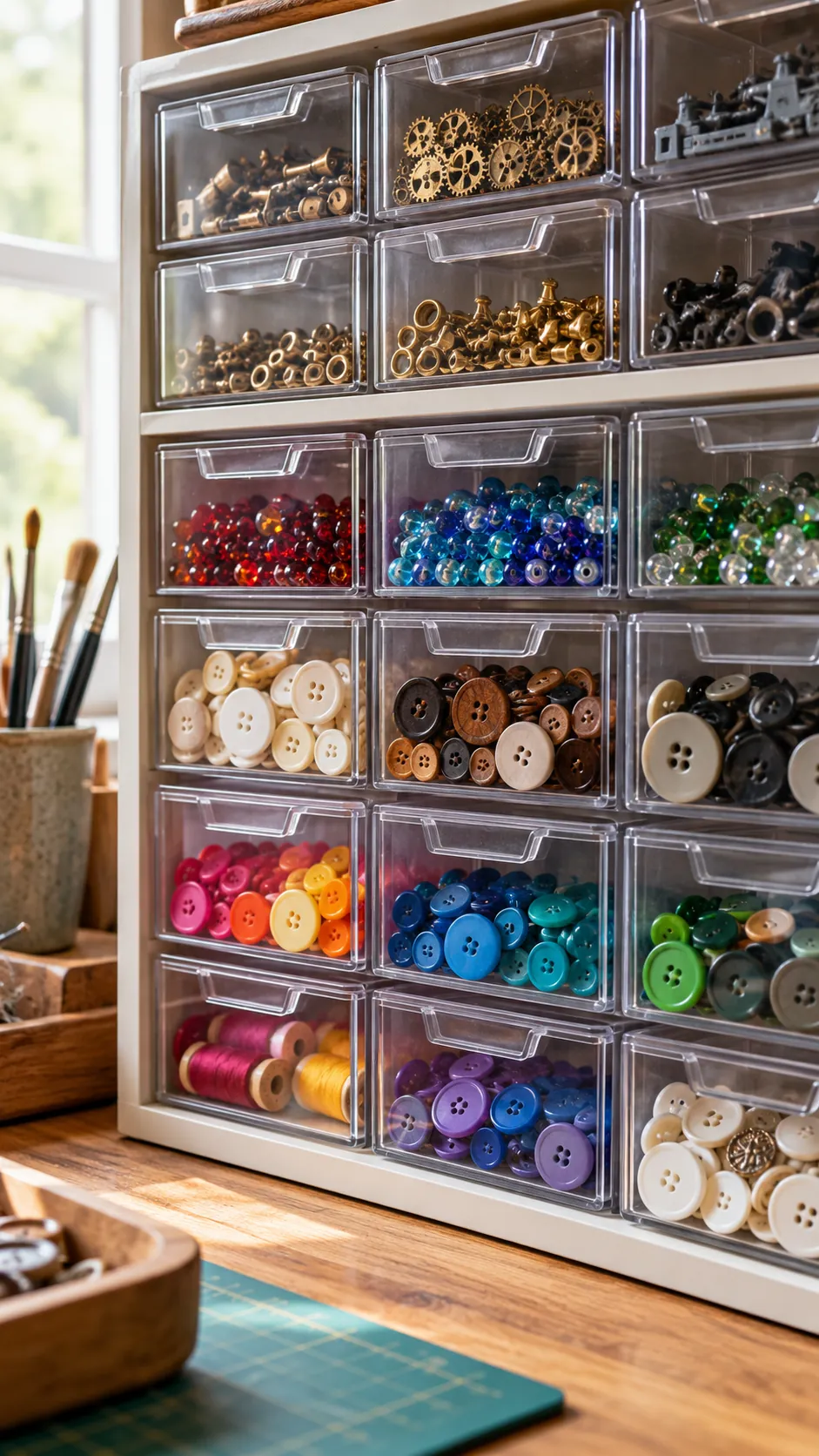
Sort Tiny Pieces in Clear Drawers
Beads, buttons, fasteners, and model parts disappear inside deep boxes. Clear shallow drawers reveal what is available and simplify cleanup. Place age restricted pieces in the upper rows of a stable cabinet.
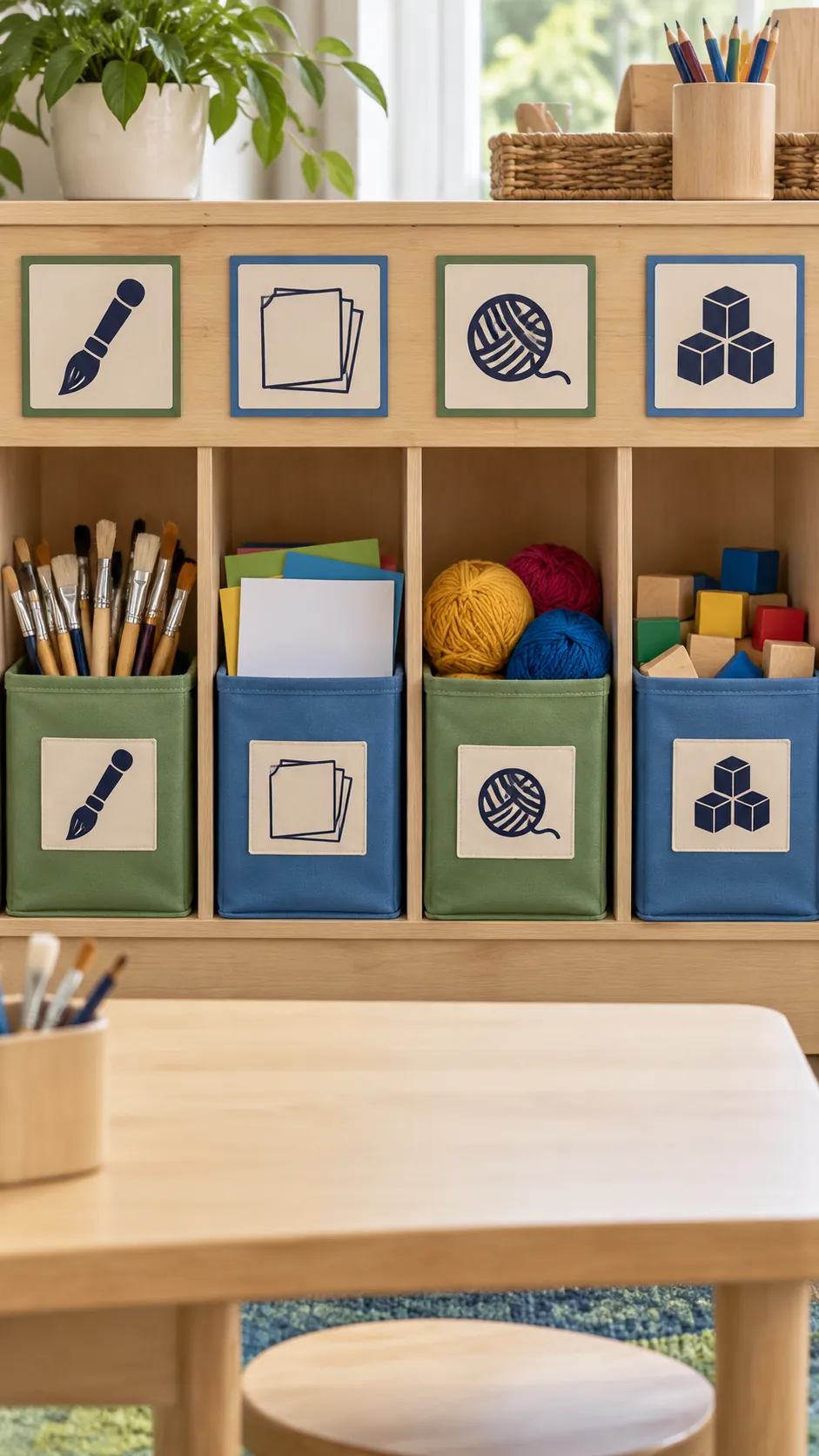
Use Picture Labels for Cleanup
Words alone do not help every child return materials correctly. Combine a short name with a clear photo or simple symbol on both the container and shelf. Cleanup then becomes a matching task instead of a series of adult instructions.
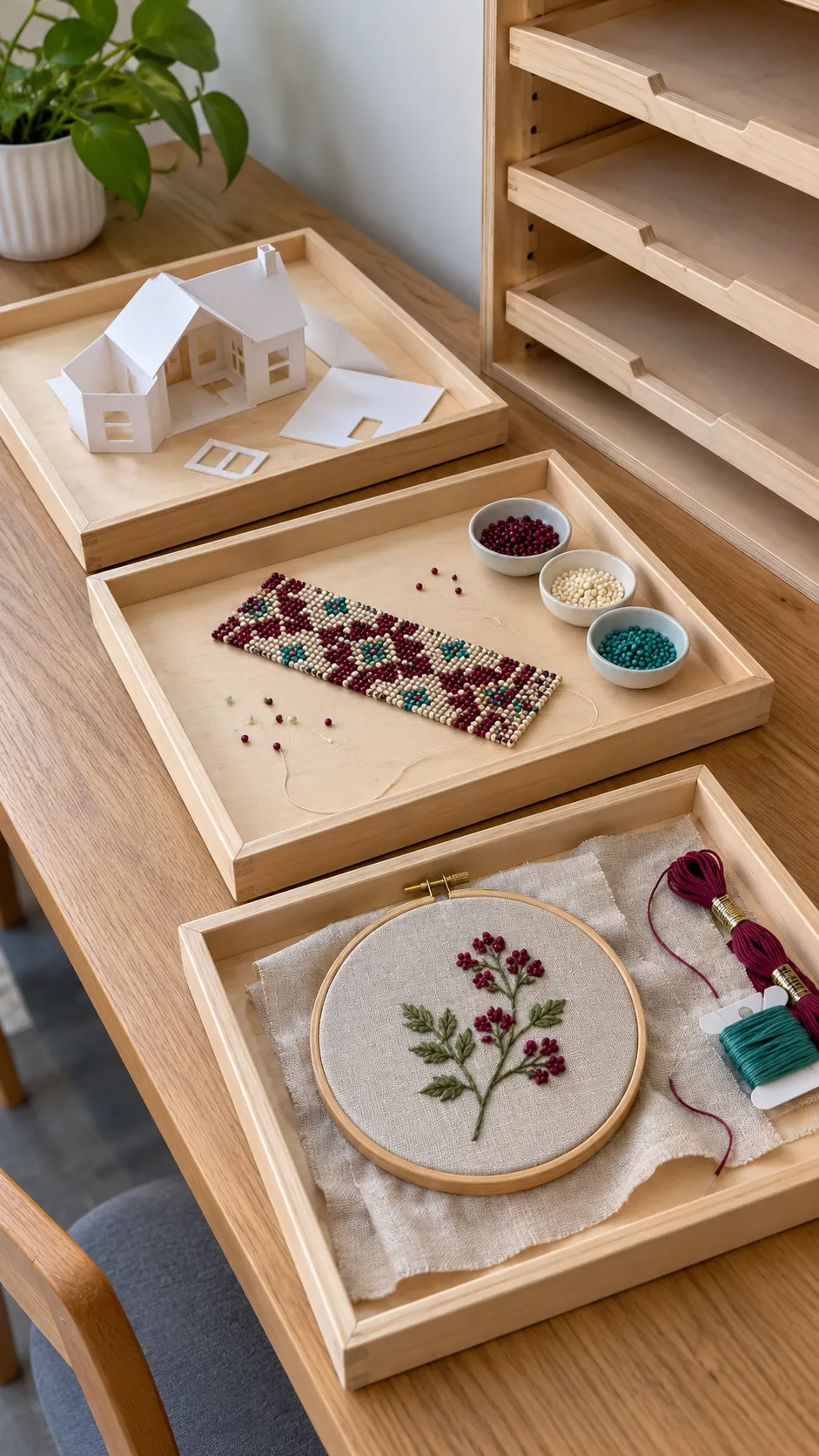
Protect Projects With Rimmed Trays
A rimmed tray defines a project and keeps its pieces together between sessions. Choose trays that slide into a cabinet without tilting. Each maker can lift an entire activity away when somebody else needs the table.
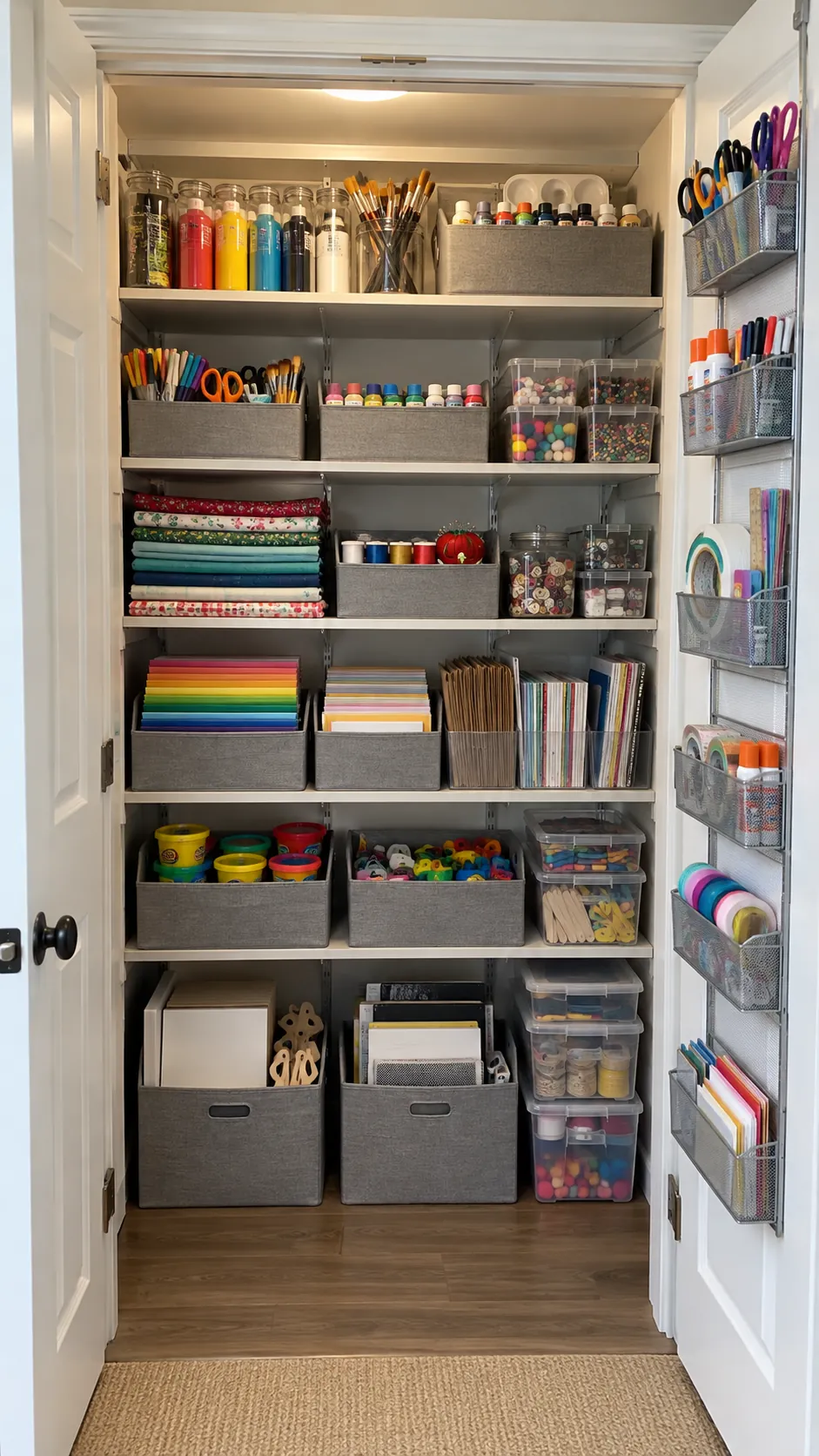
Turn a Closet Into a Supply Library
A closet can hold a varied collection while leaving the family art room visually calm. Fit it with adjustable shelves, shallow bins, and an inside door organizer. Group supplies by activity so a person can take one useful container.
Keep a Cleanup Caddy Nearby
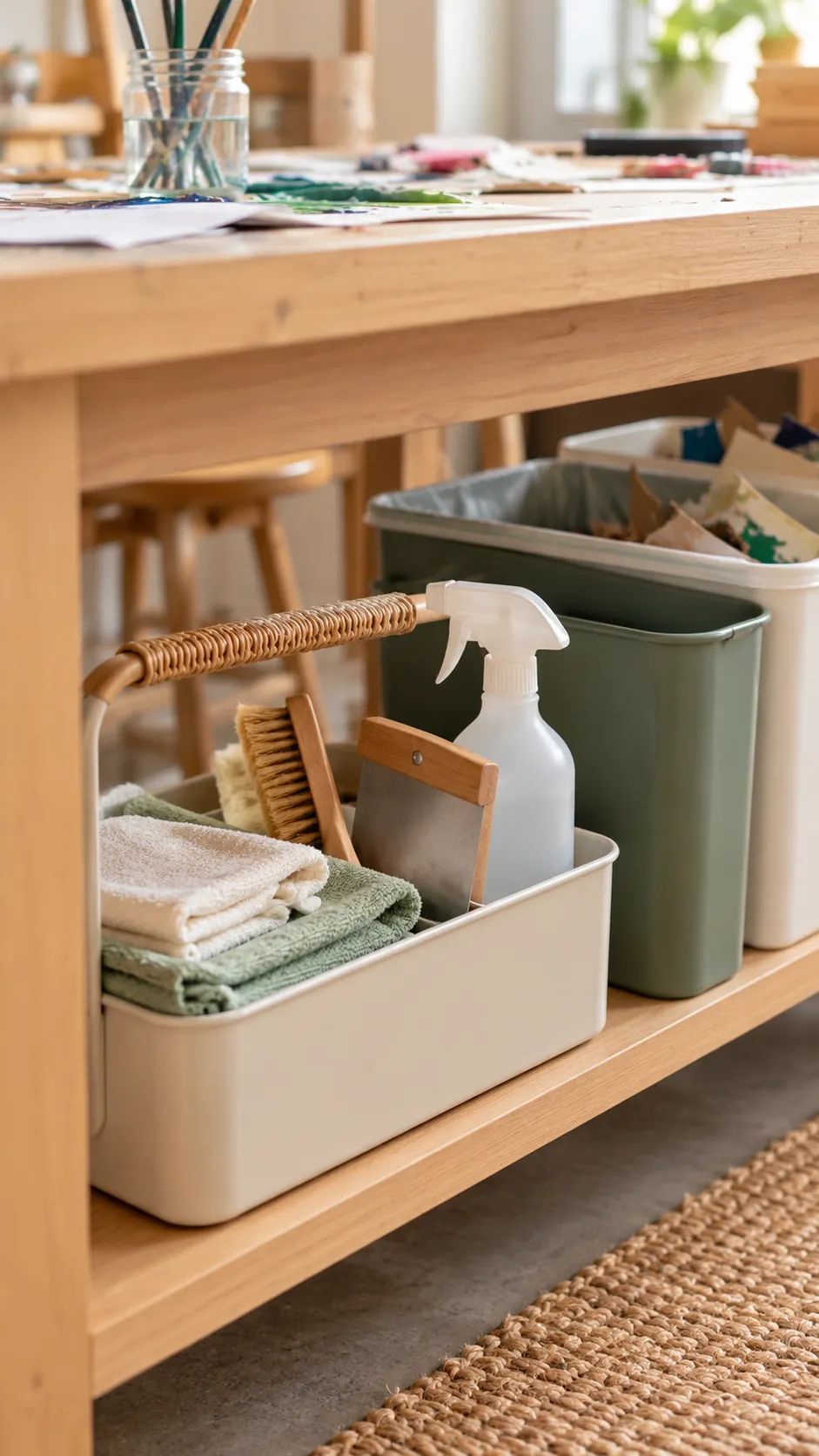
Cleanup is easier when the right tools are visible before a spill happens. Fill a handled caddy with cloths, a table scraper, a small brush, and safe surface care supplies. Separate any product that needs adult handling.
Plan a Flexible Floor Area
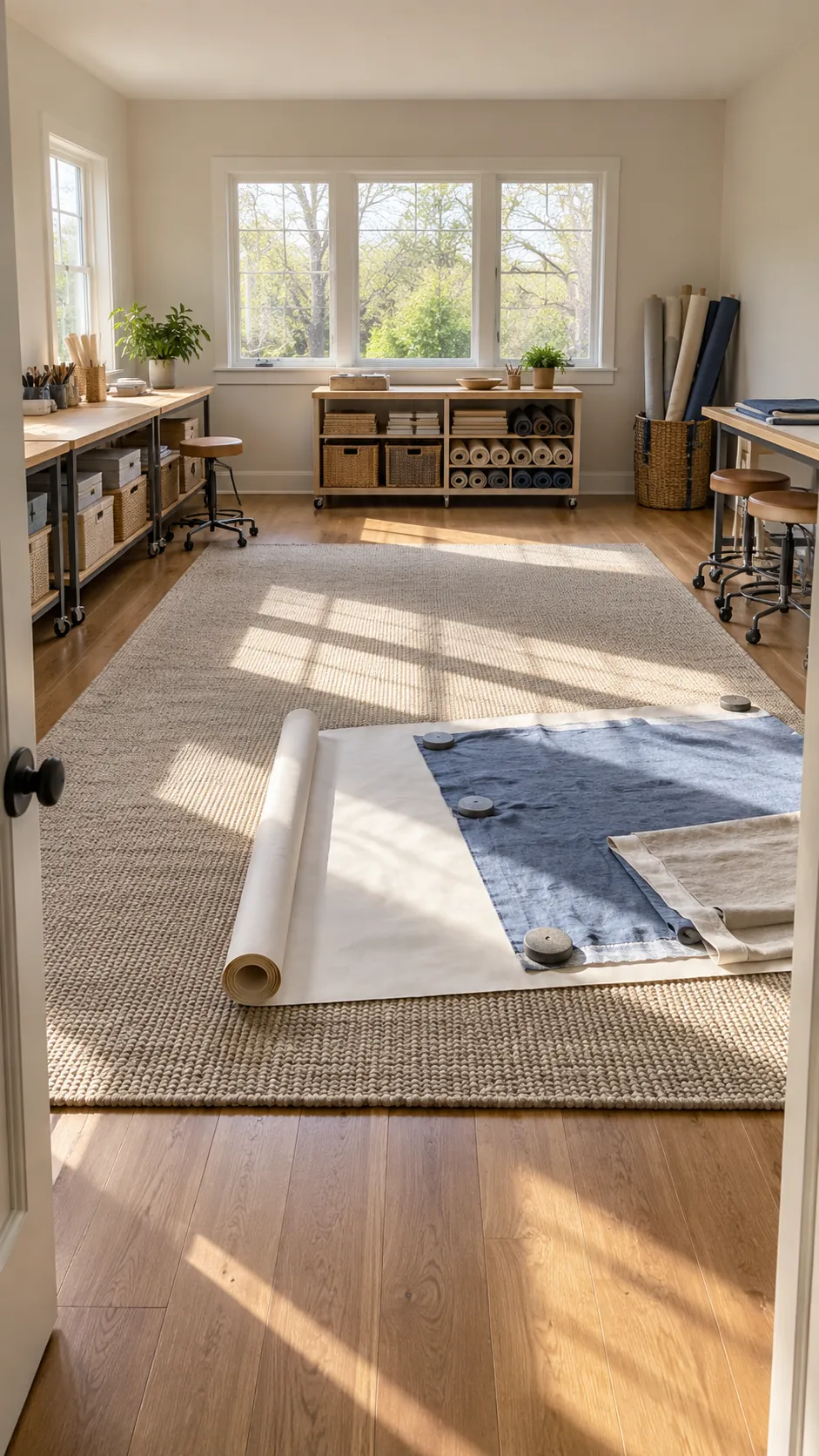
Large paper, fabric, building sets, and group activities need open floor space. Use a washable rug that can be rolled away when necessary. Mobile furniture lets the craft room change without a complete reset.
Let a Calm Palette Balance the Supplies
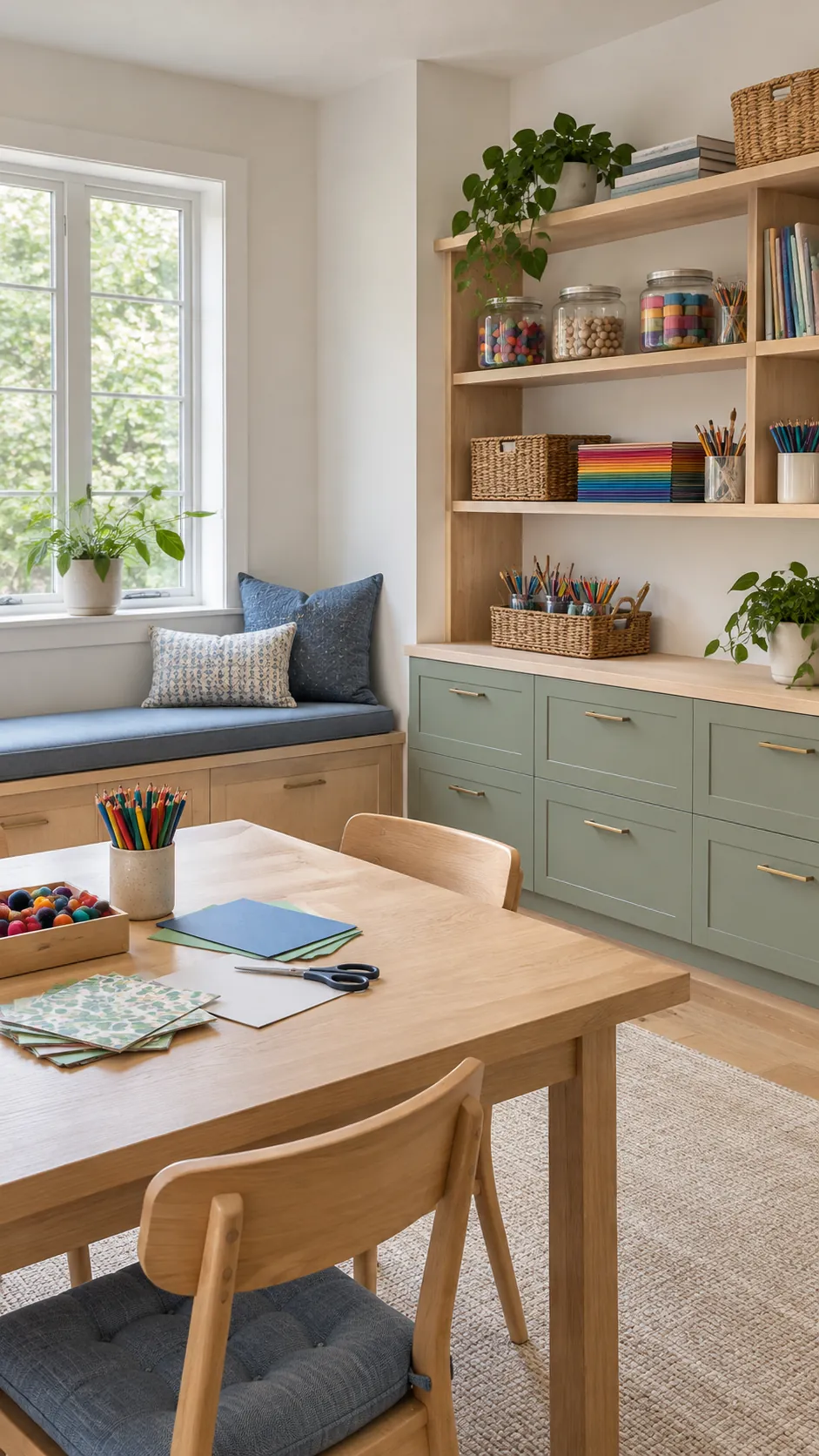
Craft materials already bring many bright colors into the room. Warm white, pale wood, soft green, or muted blue gives them a quieter background. Repeat one accent color on bins and cushions so mismatched storage feels intentional.
Finish With a Five Minute Reset
A beautiful craft room will fail if putting things away takes longer than starting. Give every person one closing task, such as returning tools, clearing scraps, or moving wet work. A dependable small reset protects creative energy better than an occasional perfect cleanup.