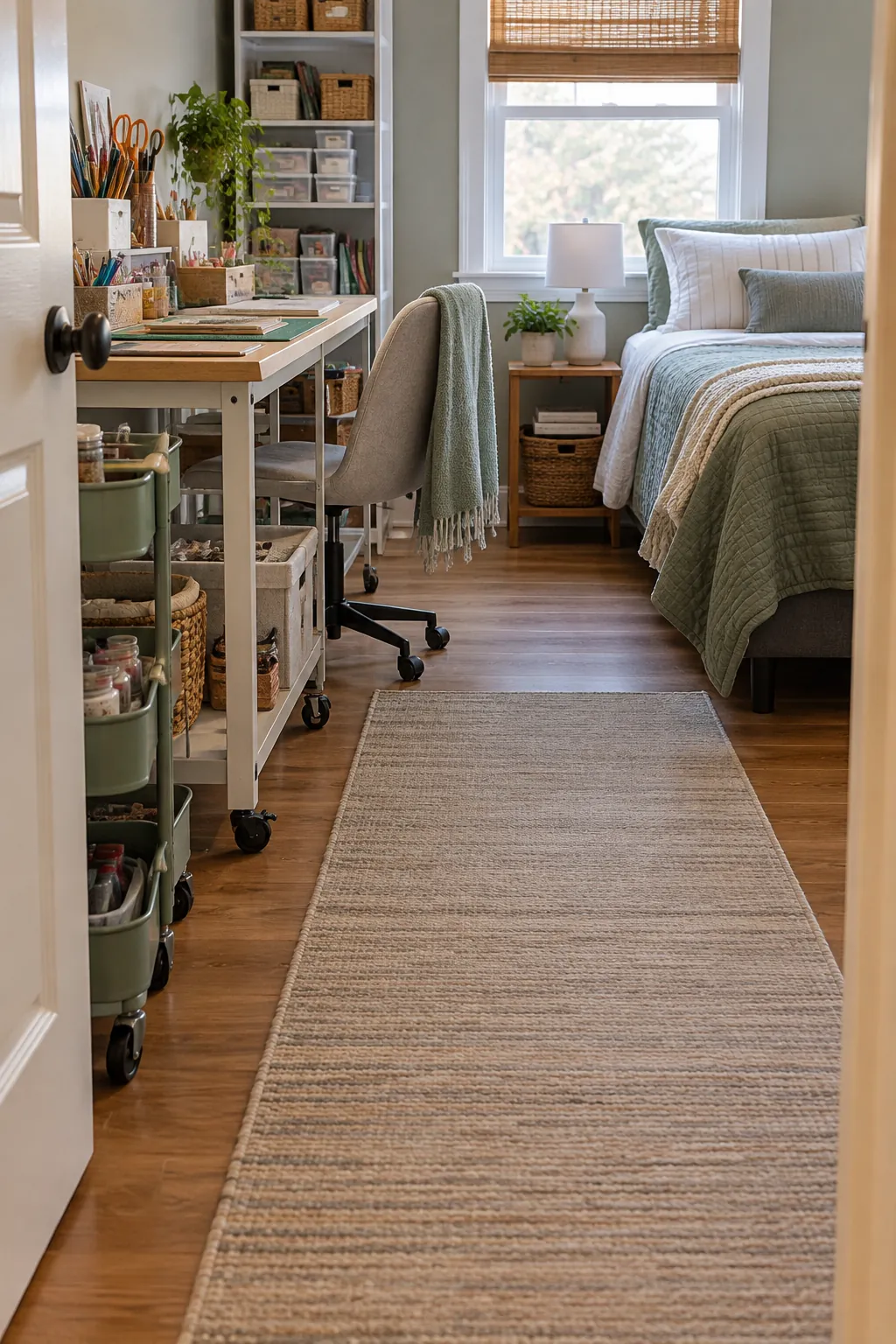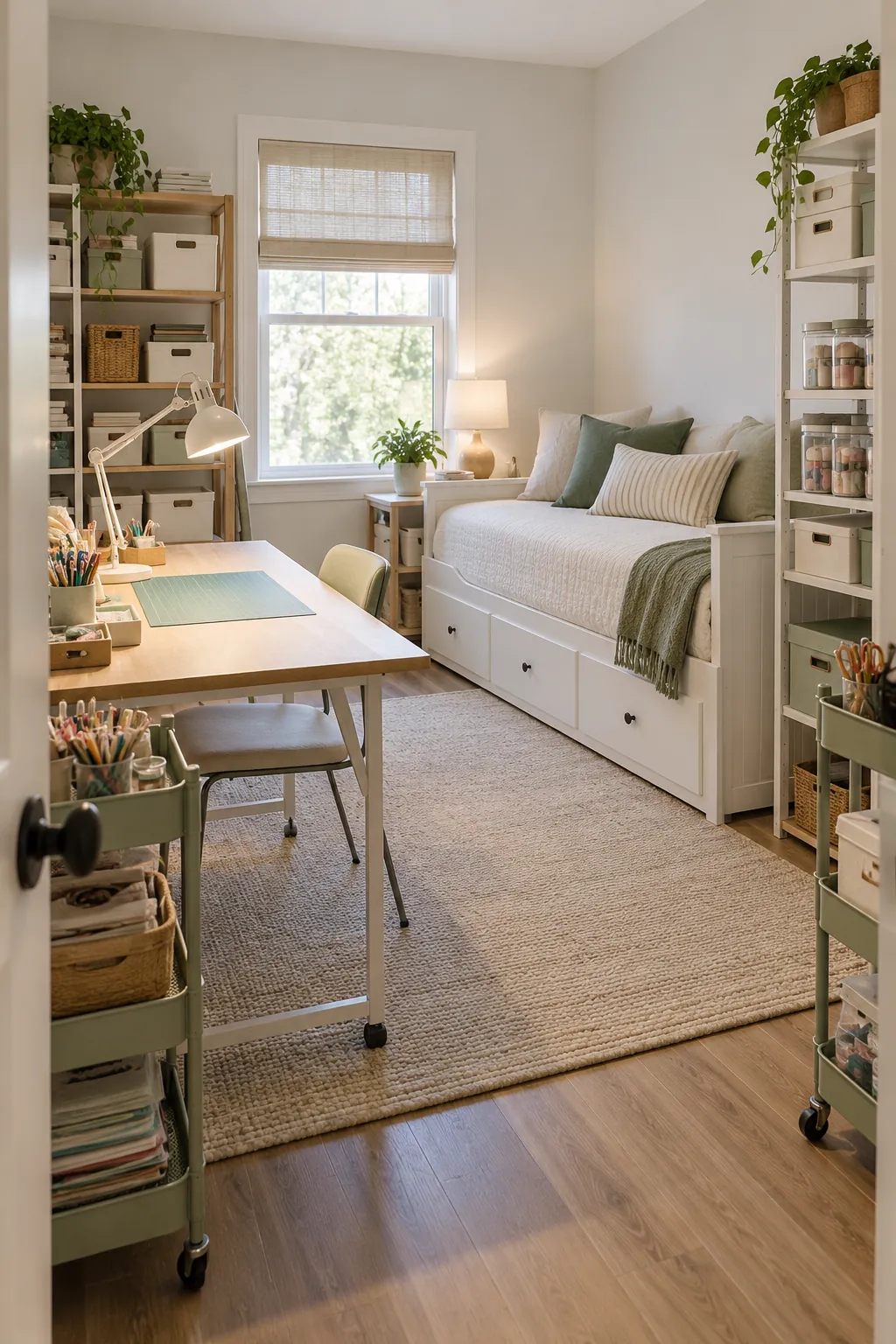
A spare bedroom can become a useful home creative studio without paint, built ins, or a permanent change of purpose. The strongest plan treats every large piece as movable and gives active work a place to disappear. That restraint protects the room for guests while making everyday crafting easier.
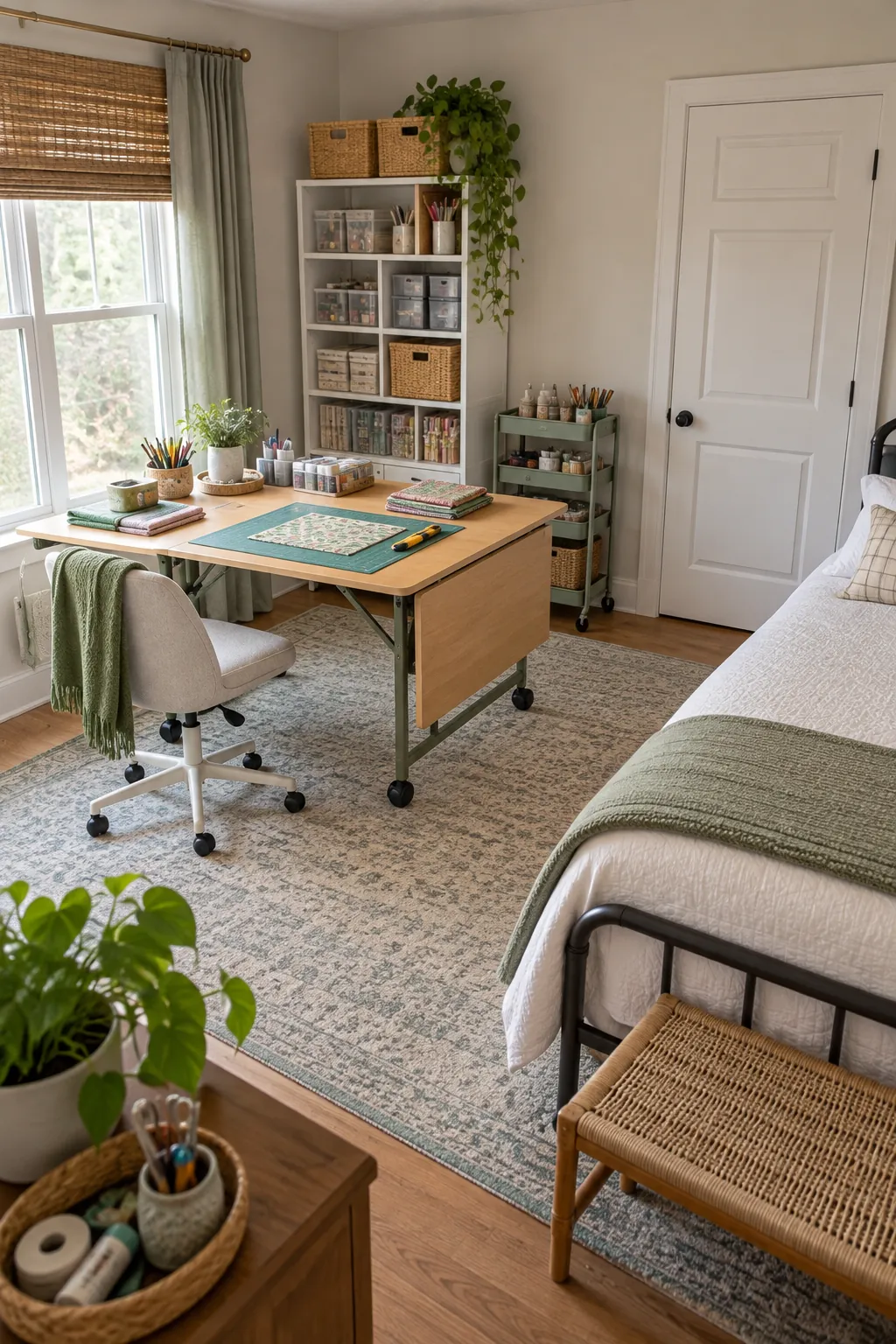
Float a Folding Worktable
A folding table creates a large project surface without claiming the room every day. Open it in the center when you need access from several sides. Fold it against the wall before guests arrive or when floor space matters more.
Run a Desk Across the Window
A simple desk below the window uses natural light without changing the room structure. Keep the surface shallow enough that curtains and handles still work. Add a lamp for evening projects because daylight alone cannot support every task.
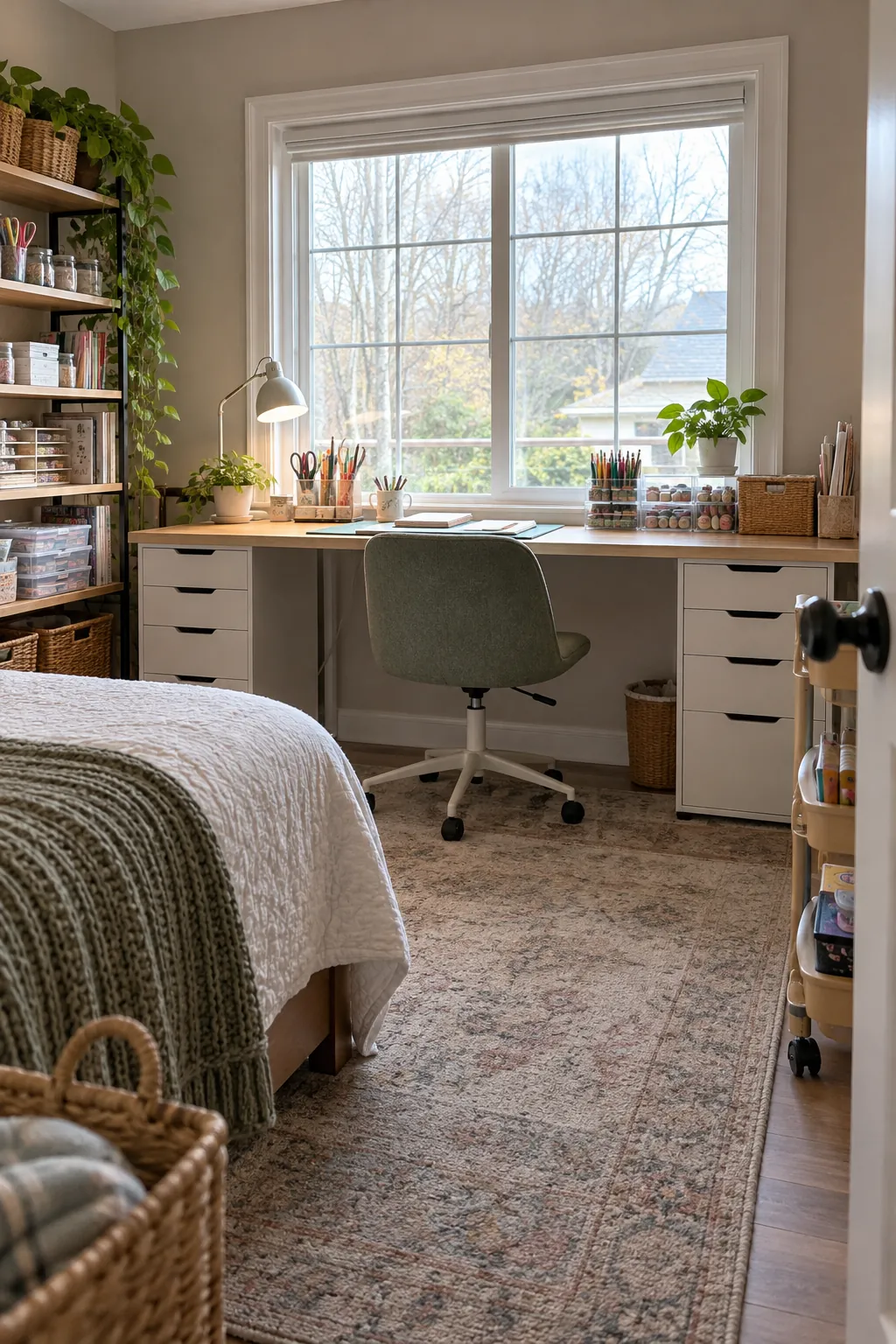
Use Freestanding Shelves as the Main Storage
Tall freestanding shelves can hold far more than scattered wall units. Anchor them safely with removable hardware appropriate for the wall and load heavy materials near the bottom. Matching bins calm the view while a few open sections keep common supplies easy to reach.
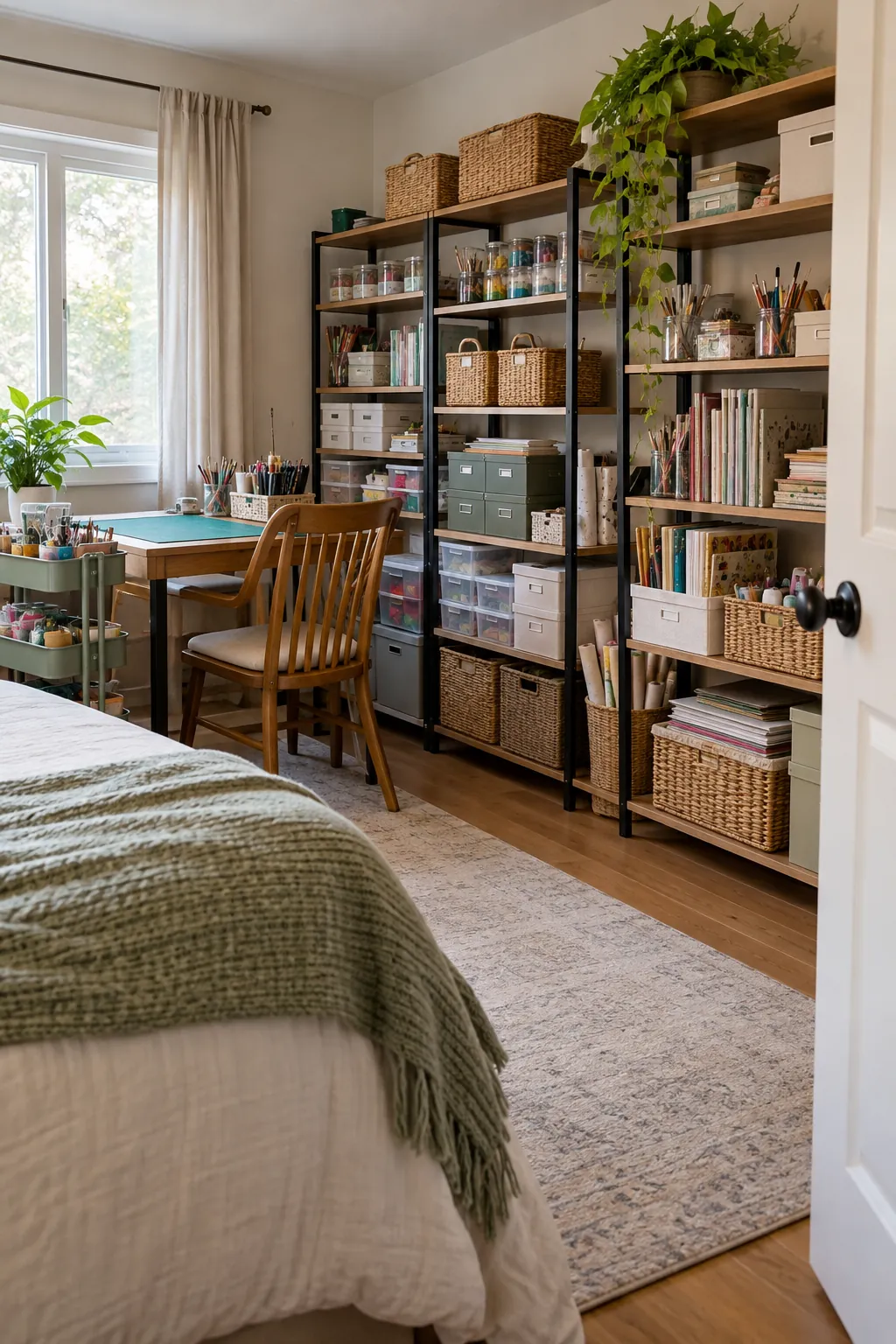
Give Every Project a Rolling Cart
A cart keeps one active project together and moves beside whichever surface is free. Choose wheels that lock and shelves with raised edges. Park the cart in a measured gap beside a dresser or desk rather than letting it wander.
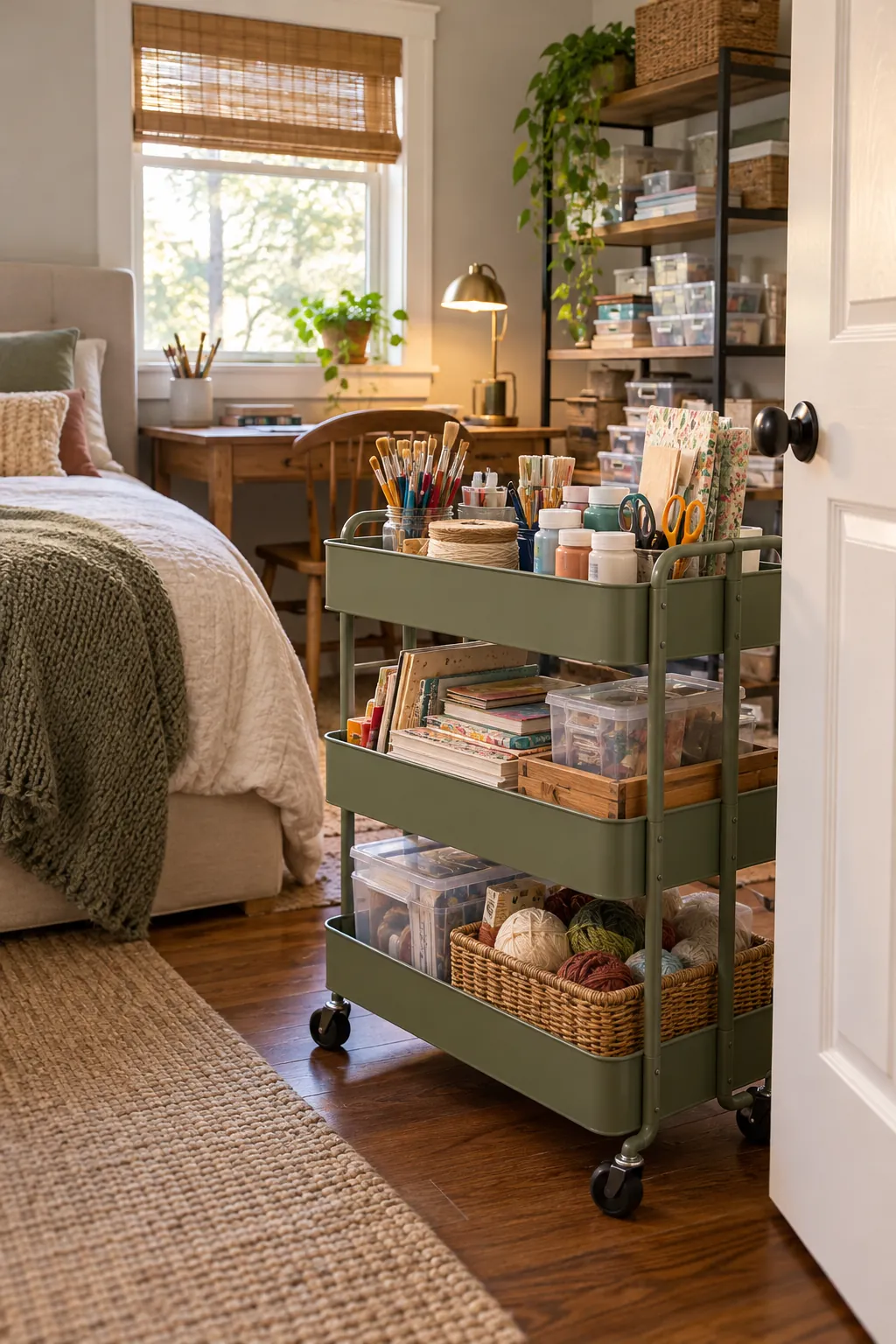
Turn the Existing Closet Into Zones
The closet can become a supply library without new built ins. Group shelves by activity and place the most used containers between knee and shoulder height. Preserve one empty section for bulky works in progress.
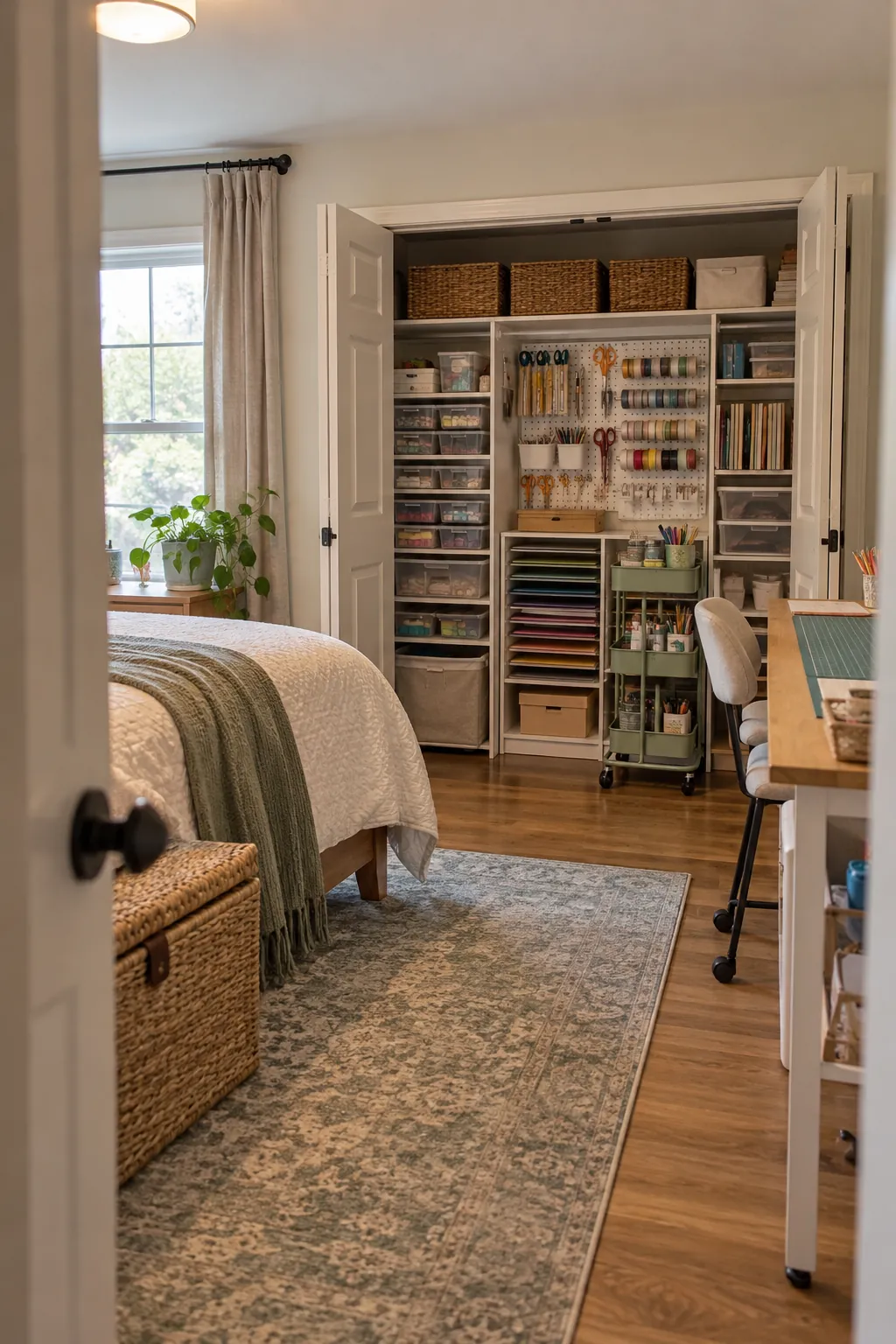
Add Storage Behind the Door
An over door rack uses space that furniture cannot occupy. Keep light tools, ribbon, paper rolls, or cleaning cloths there so the door still swings easily. Test the top clearance before filling every pocket.
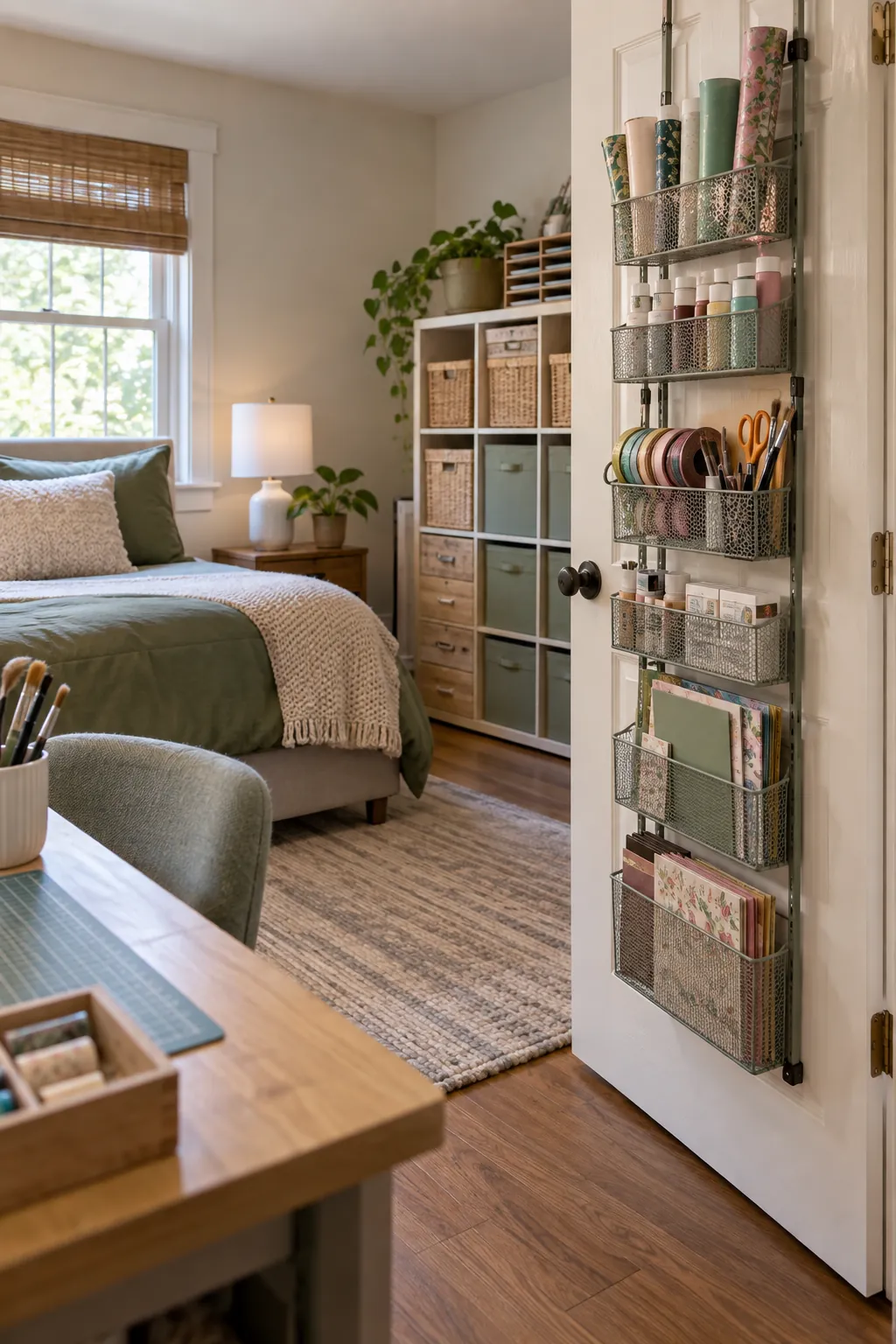
Repurpose a Dresser for Deep Supplies
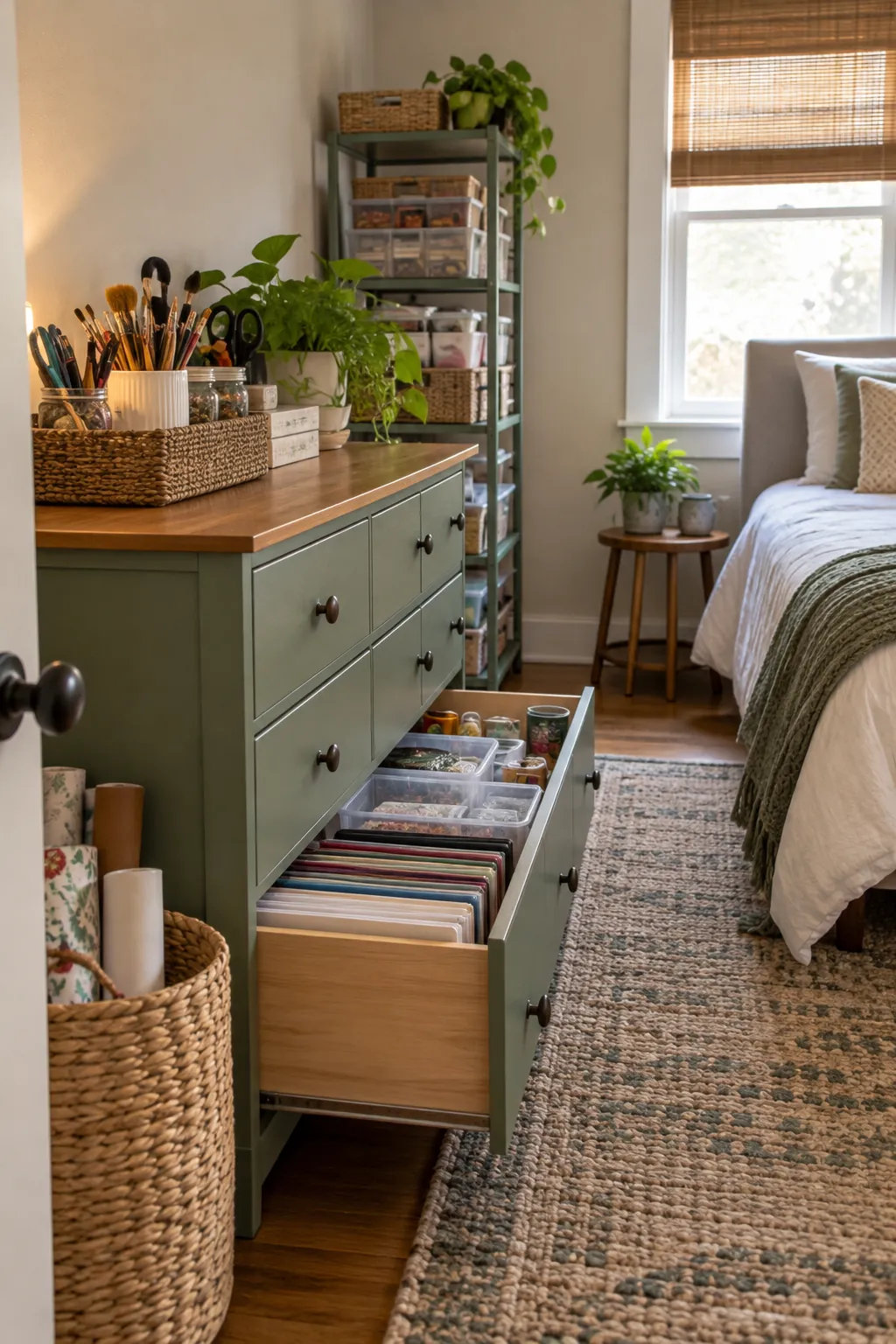
A spare bedroom dresser already offers closed storage and a useful top. Assign each drawer to a material family and use shallow boxes inside to stop small items mixing. The top can hold a printer, cutting machine, or project tray.
Choose a Daybed With Drawers
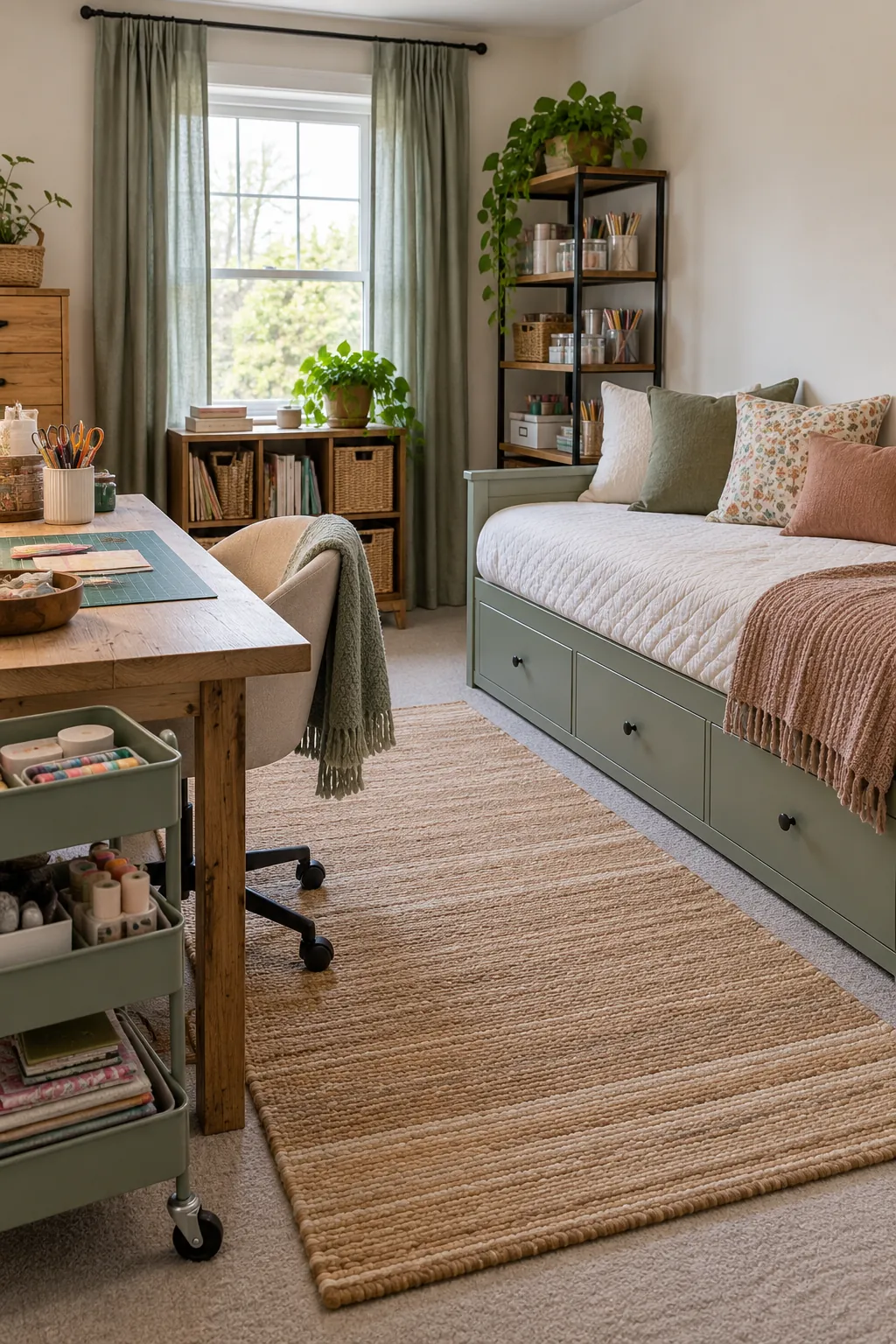
A daybed keeps the room available for guests while providing long hidden drawers below. Store fabric, paper pads, or seasonal kits in containers that slide smoothly. Keep the craft table far enough away for the bed to open and for linens to be changed.
Place a Narrow Console Behind the Daybed
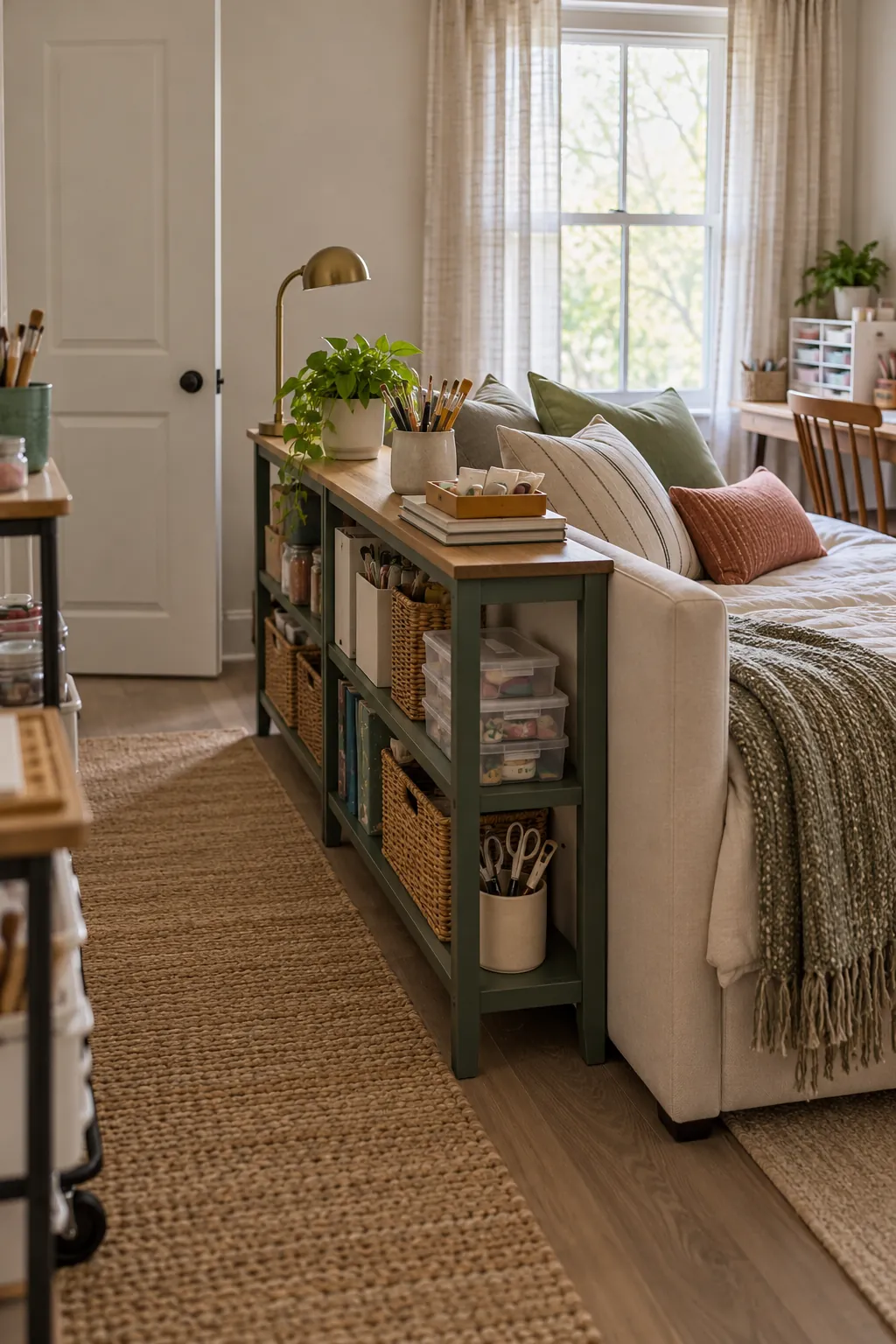
A slim console can serve as a cutting ledge, display surface, or charging point. Its depth should not interfere with sleeping space or the route around the bed. Use baskets below for projects that need to disappear quickly.
Build a Table From Two Drawer Units
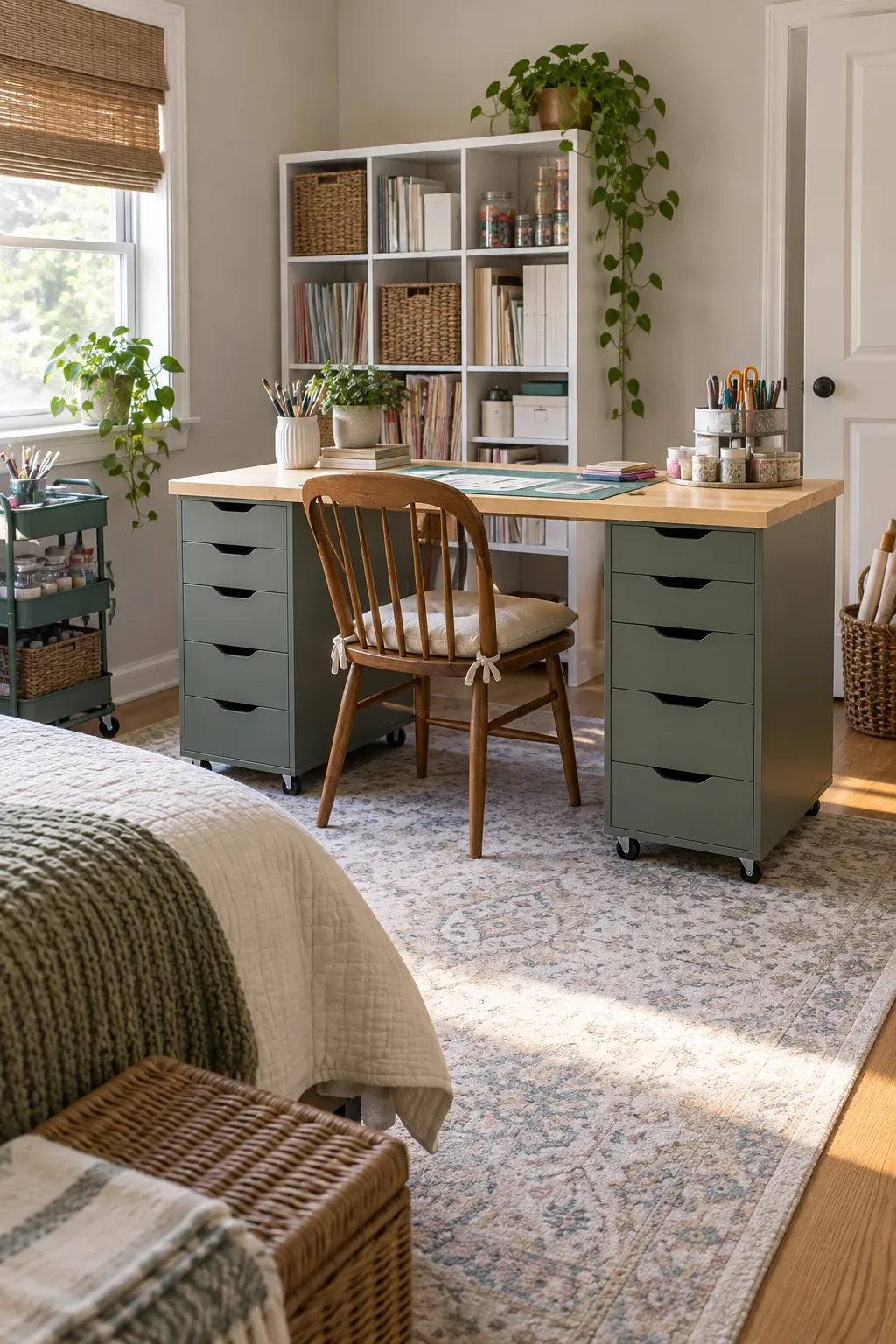
Two matching drawer units and a removable top create a stable desk without carpentry. Check that the top cannot slide and leave enough knee space between the bases. This arrangement combines work surface and storage in one reversible piece.
Use Clear Boxes Only for Tiny Supplies
Clear containers help with beads, buttons, and fasteners because the contents matter more than the visual calm. Larger mixed materials look better in opaque bins with simple labels. Limit clear storage to items that benefit from instant identification.
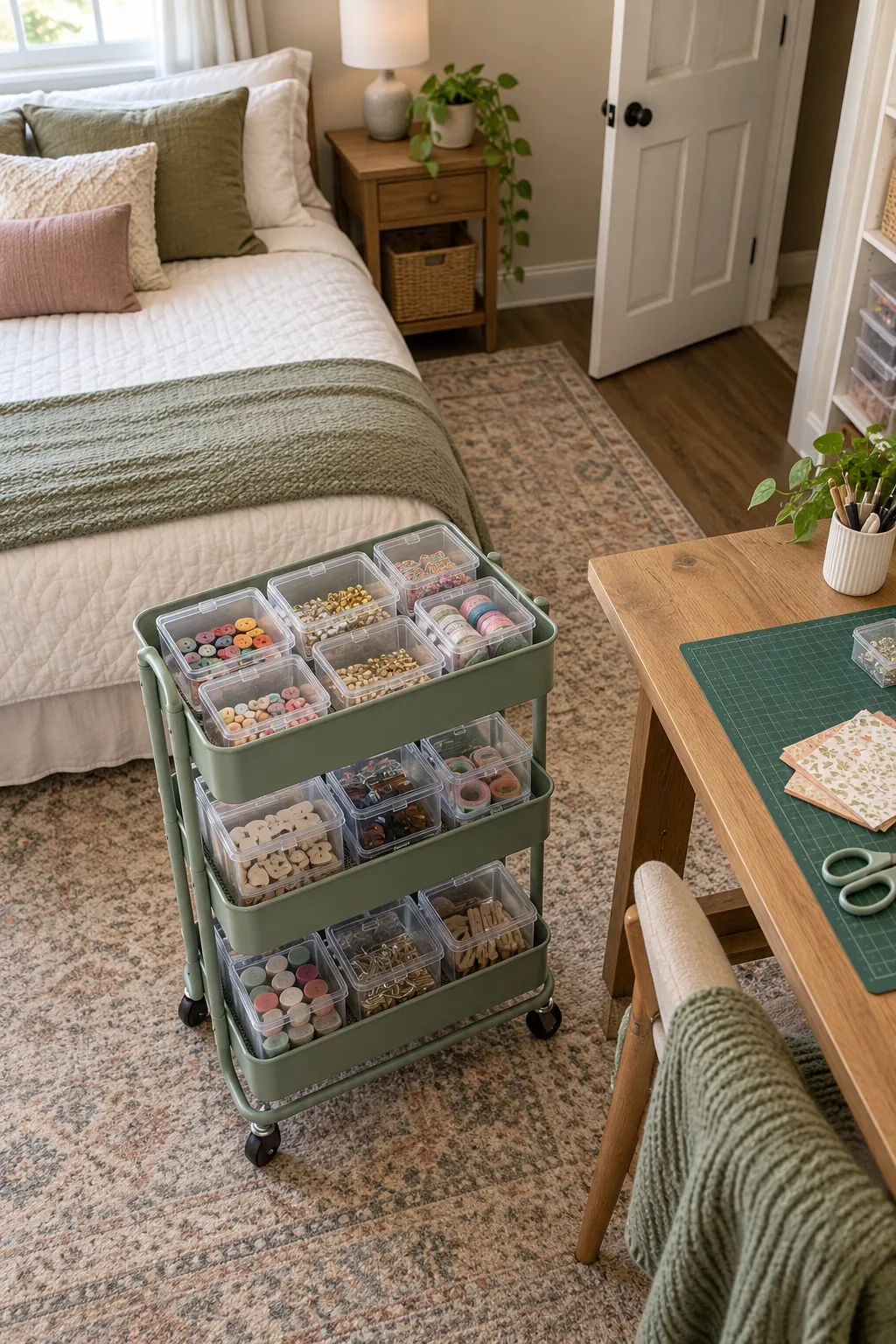
Hide Bulk Materials in Matching Bins
Fabric scraps, foam, yarn, and packaging create visual noise even when sorted. Opaque bins in one size turn a crowded shelf into a quieter wall. Leave a little empty space in each bin so materials can return without force.
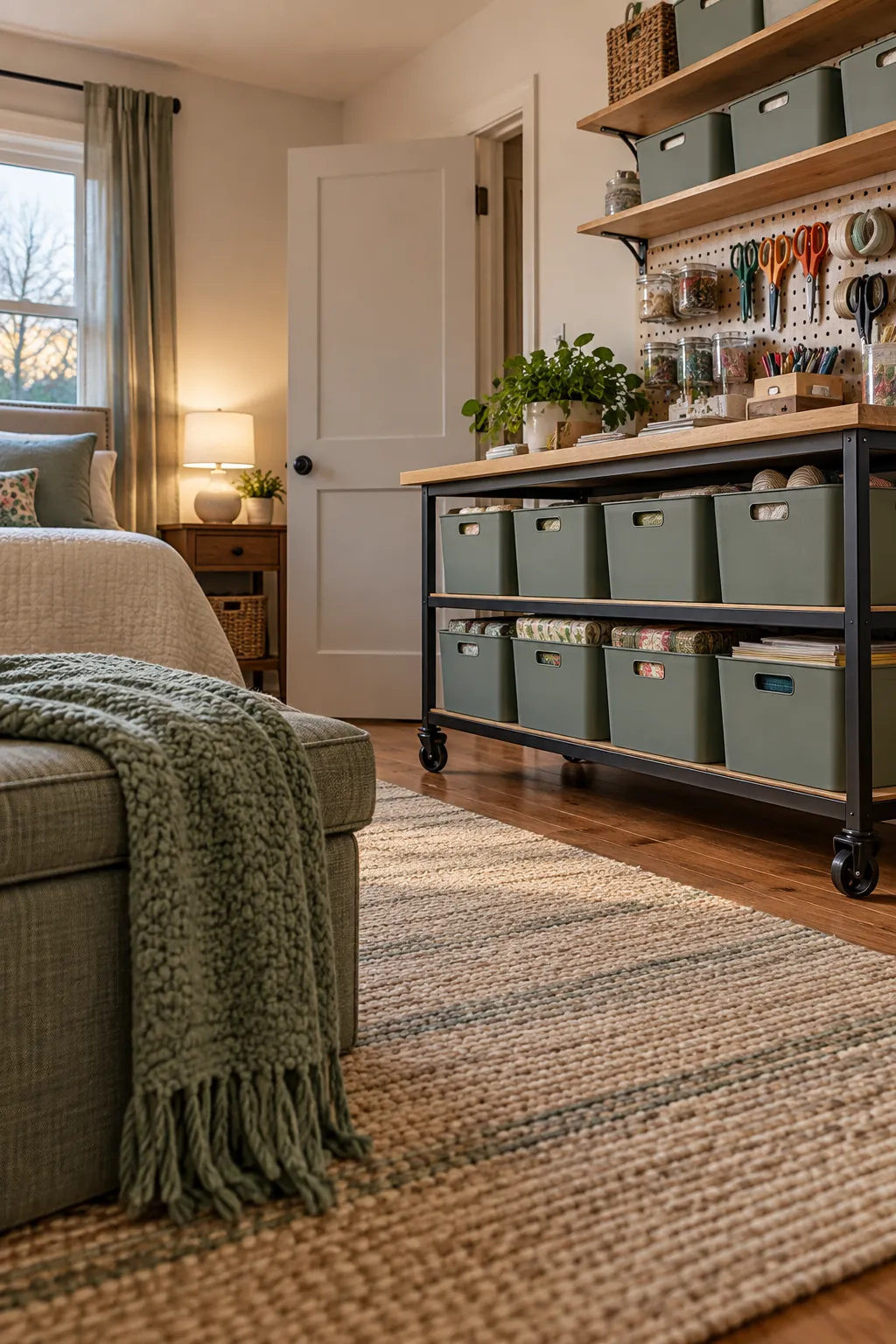
Create a Portable Paint Station
A handled caddy can hold paints, brushes, water cups, and a protective mat. Carry the entire station to the desk, then return it when the work dries. Separate wet tools from paper supplies to prevent accidental damage.
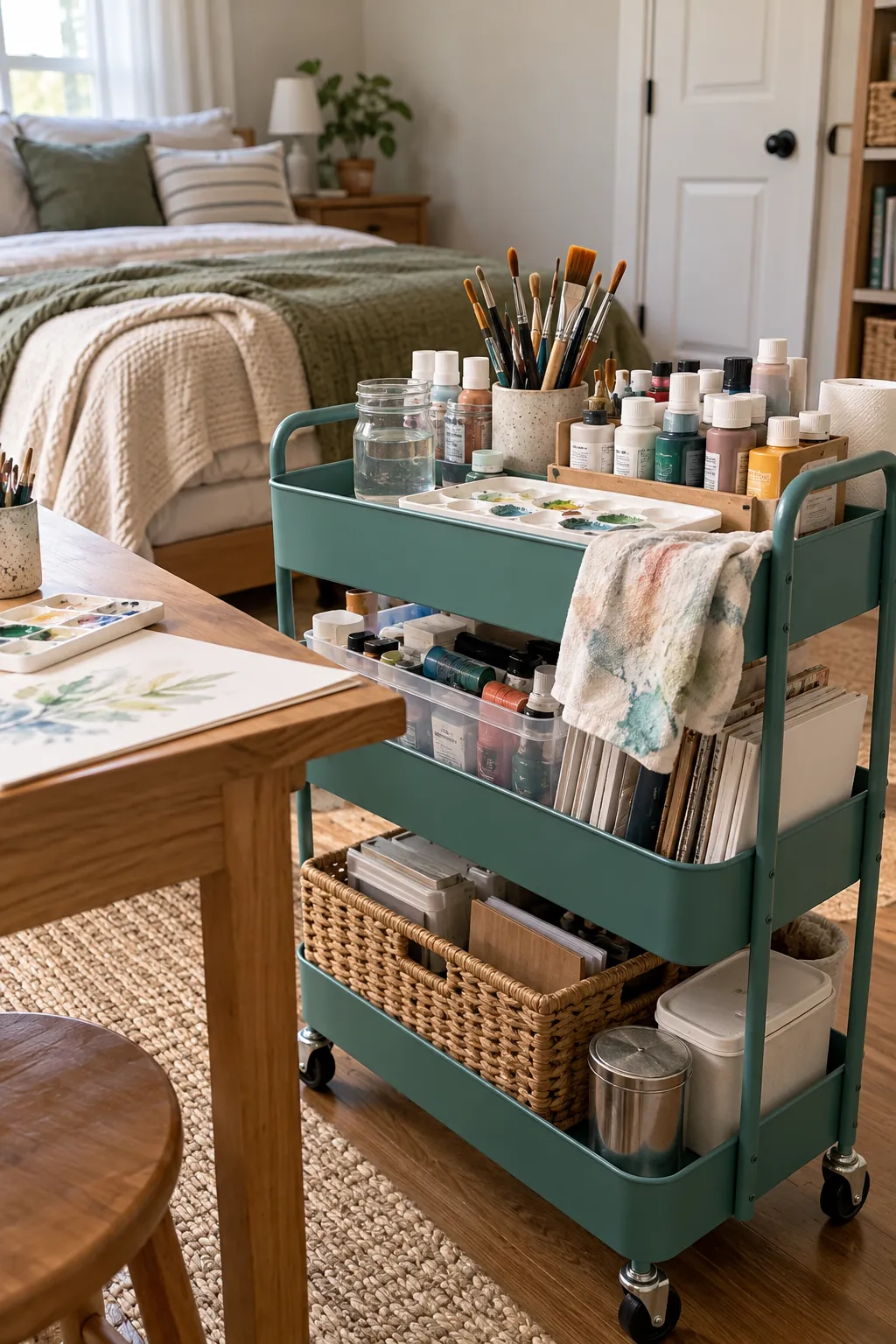
Make a Foldaway Pressing Spot
A tabletop ironing board or thick pressing mat supports sewing without taking permanent floor space. Store it vertically beside the dresser when cool. Keep the iron on a heat safe surface and route its cord away from the doorway.
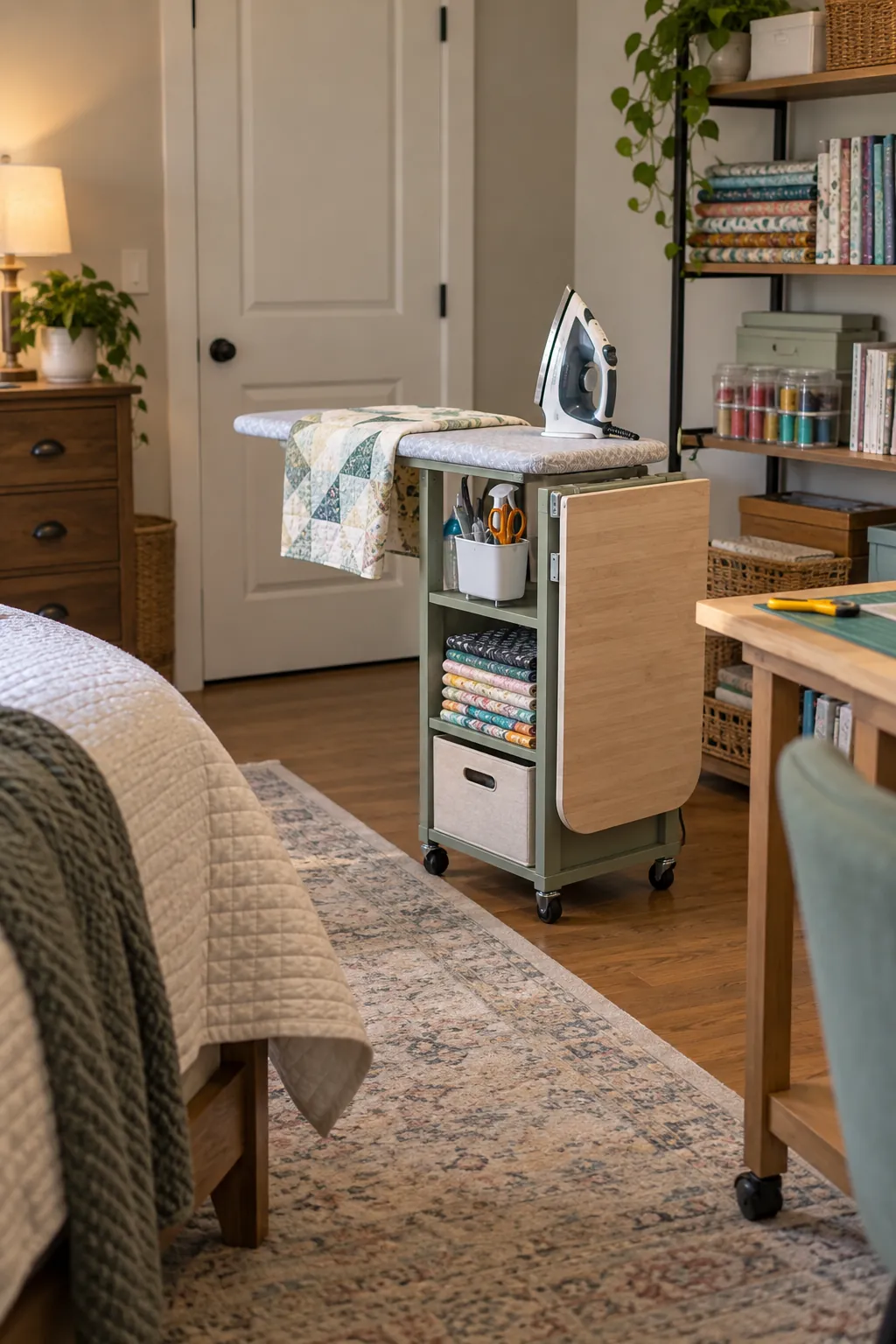
Set Up a Small Machine Desk
A compact desk can support a sewing or cutting machine while preserving room for a guest bed. Give fabric a landing surface on the left and behind the machine. Store accessories in the nearest drawer so the main surface stays clear.
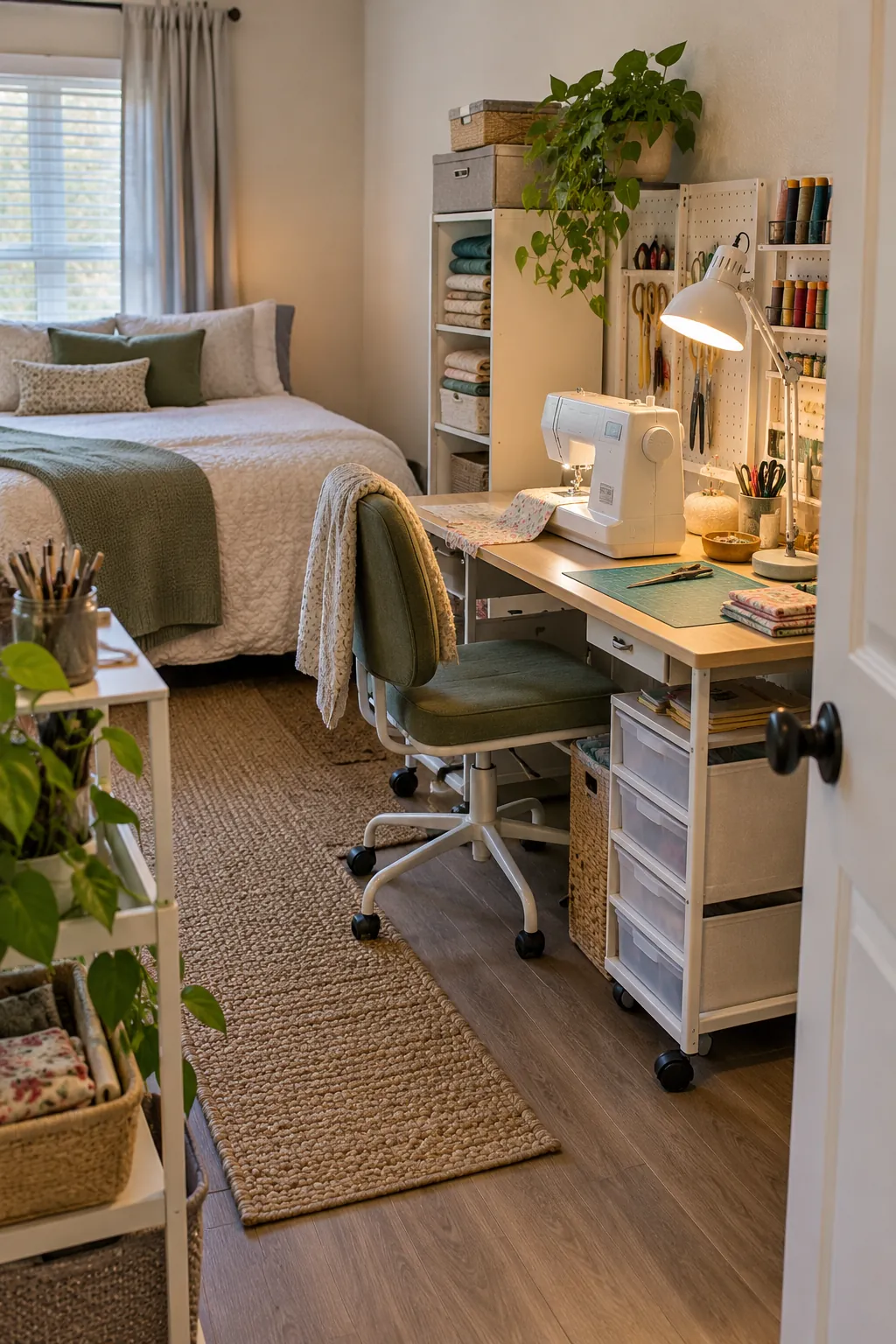
Keep Paper Flat in Horizontal Slots
Paper stays usable when it lies flat and does not carry the weight of deep stacks. A freestanding slot unit can sit on a dresser or shelf without being fixed to the wall. Sort only the paper types you use enough to recognize quickly.
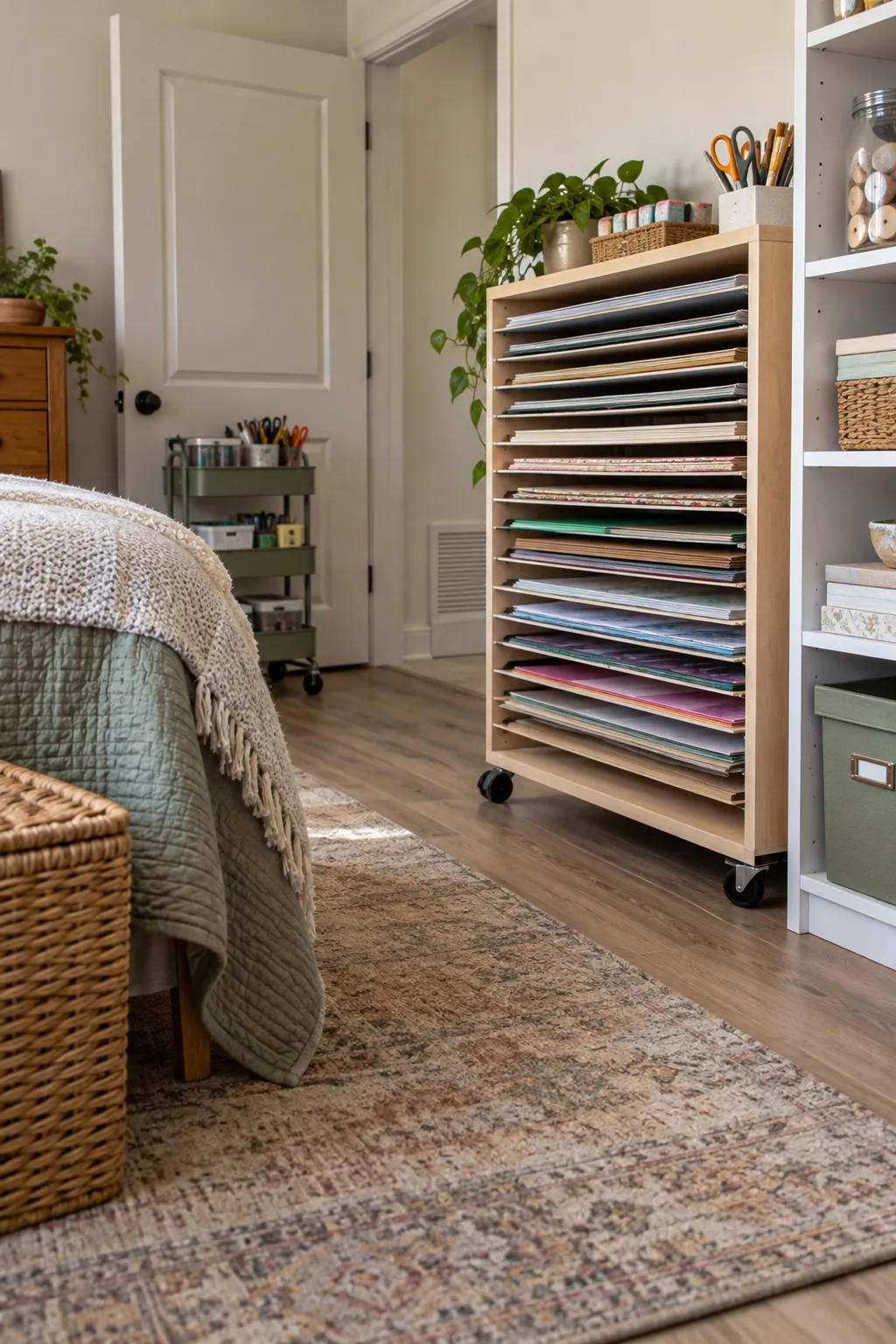
Stand Rulers and Mats Vertically
Large rulers and cutting mats waste surface space when they lie flat between sessions. A stable floor rack or narrow gap beside a cabinet keeps them upright and visible. Protect their edges so they stay accurate.
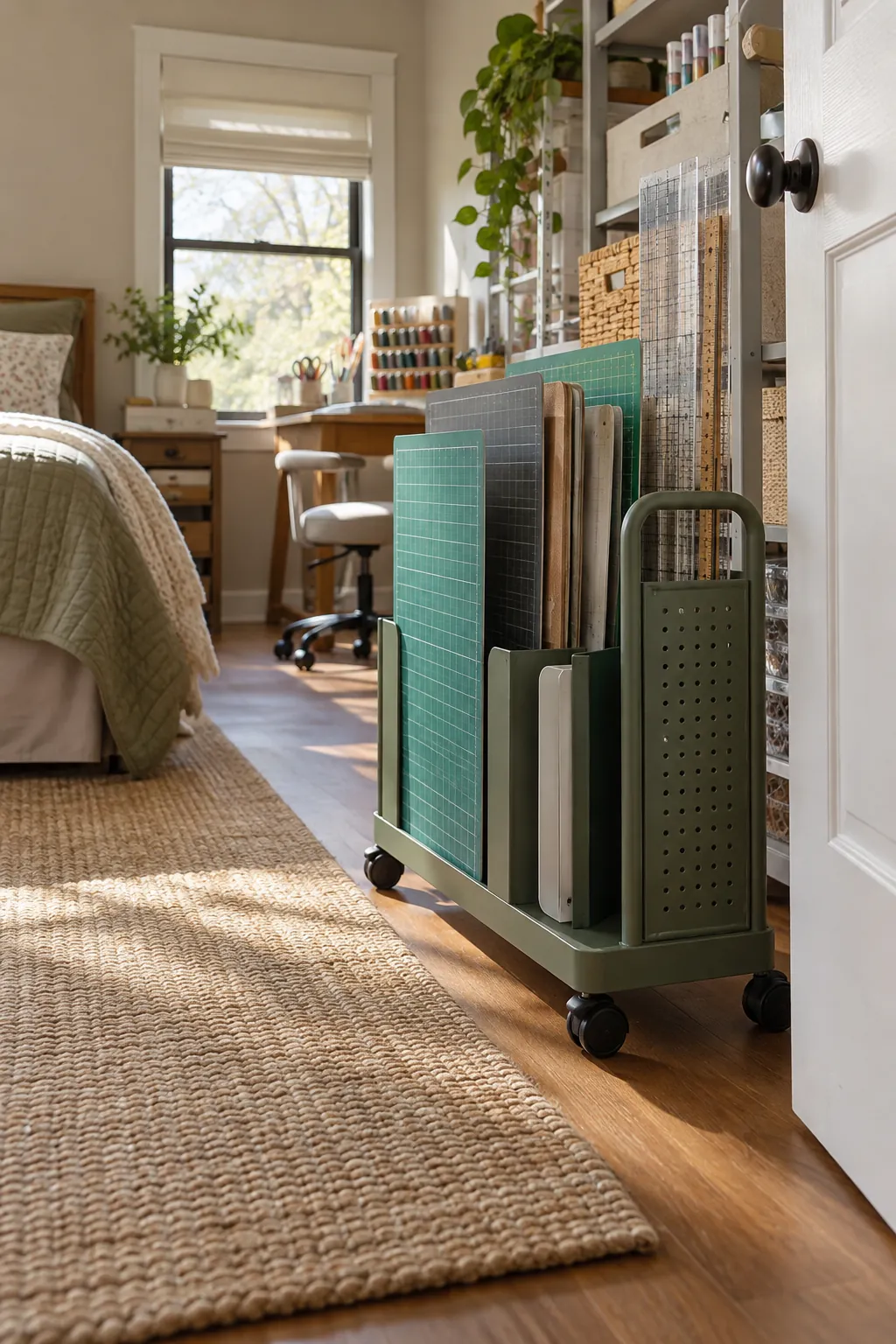
Use Tension Rods for Ribbon
A tension rod inside a shelf bay can hold ribbon rolls without screws. Leave room for each roll to turn and avoid overloading the rod. Loose ends can tuck into a small clip so they do not unravel.
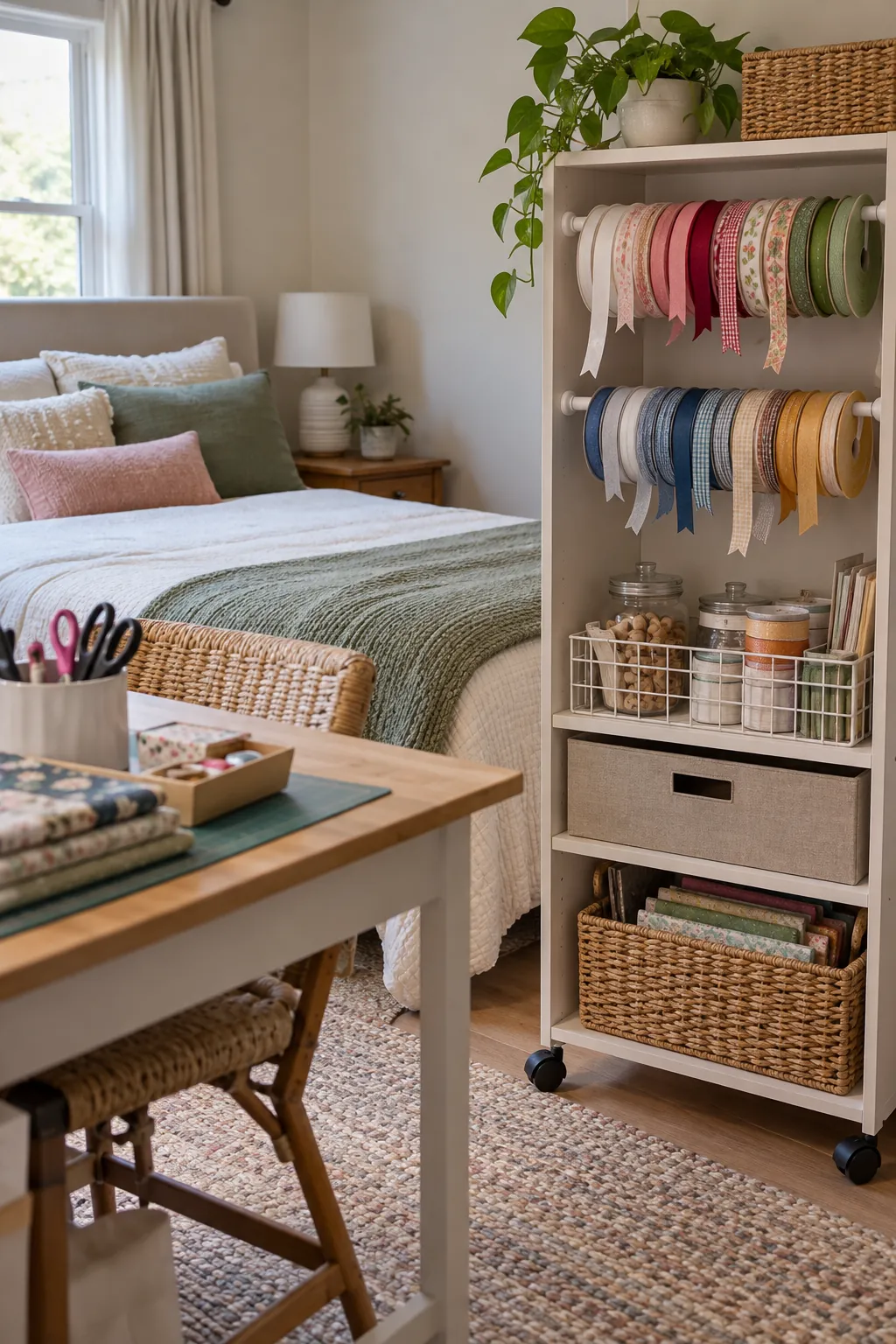
Clamp Task Lights to Furniture
Clamp lamps add useful light without drilling holes or taking desk space. Attach them to sturdy shelves or table edges and aim them across the work rather than into your eyes. Secure the cord so it cannot catch on a rolling chair.
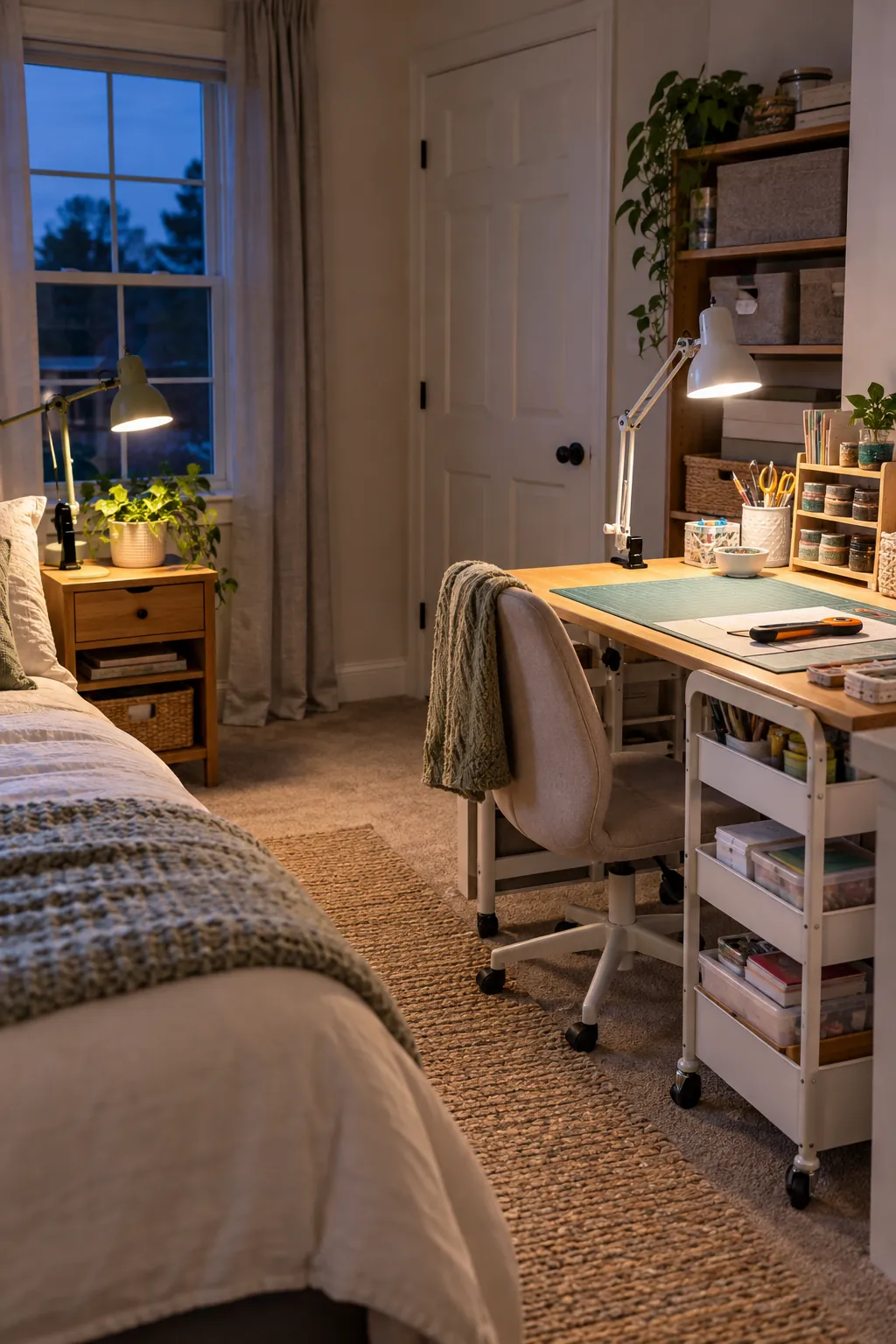
Hang a Removable Curtain Over Storage
A curtain on a tension rod can hide mixed supplies inside an open closet or shelf niche. Choose a washable solid fabric that does not compete with the materials in the room. Keep the hem above the floor so carts and feet do not catch it.
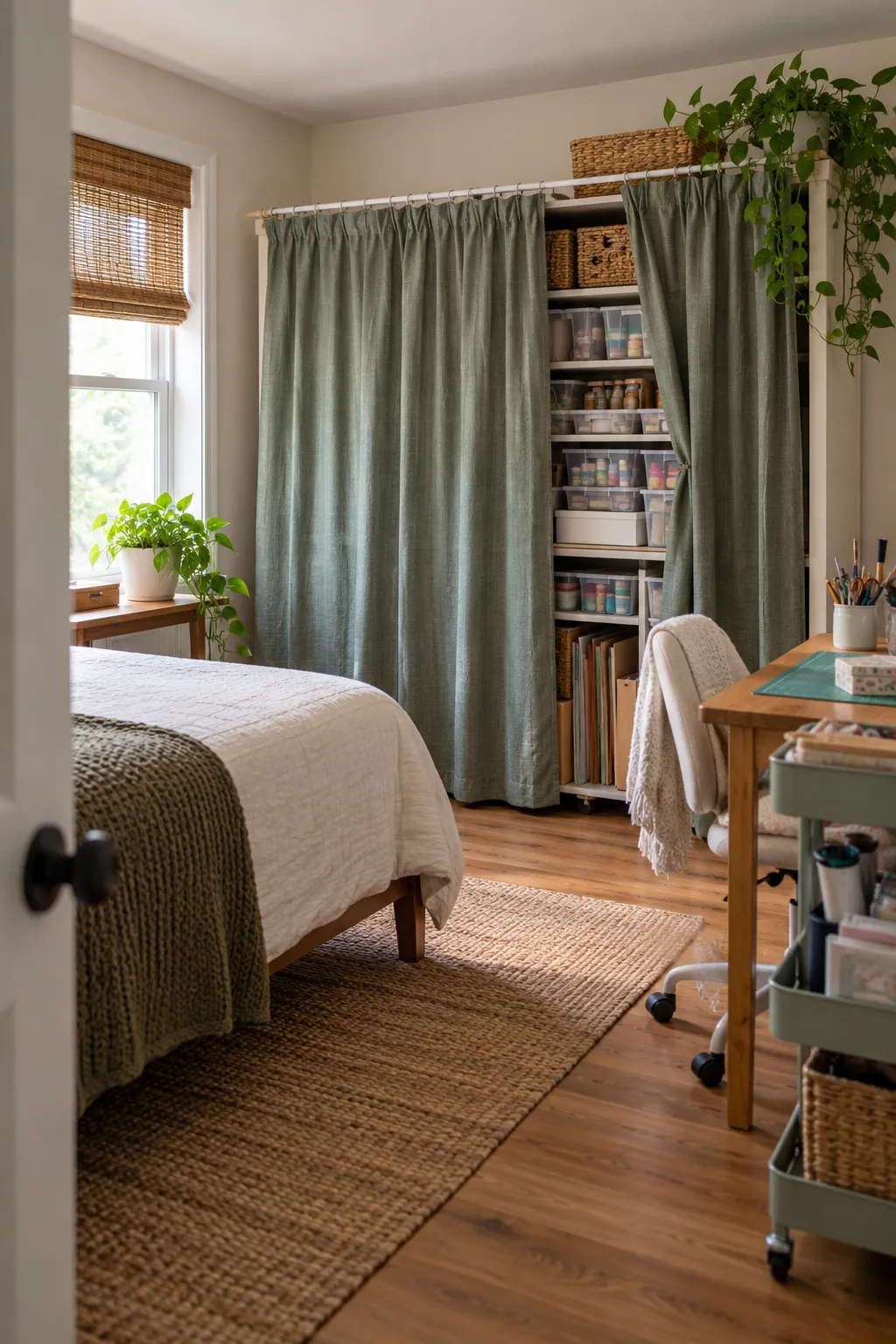
Create a Photo Backdrop With Paper
A roll of plain paper clipped to a portable stand gives finished projects a clean background. Store the stand flat when it is not in use. Position it near the window and turn off mixed color lamps while taking photographs.
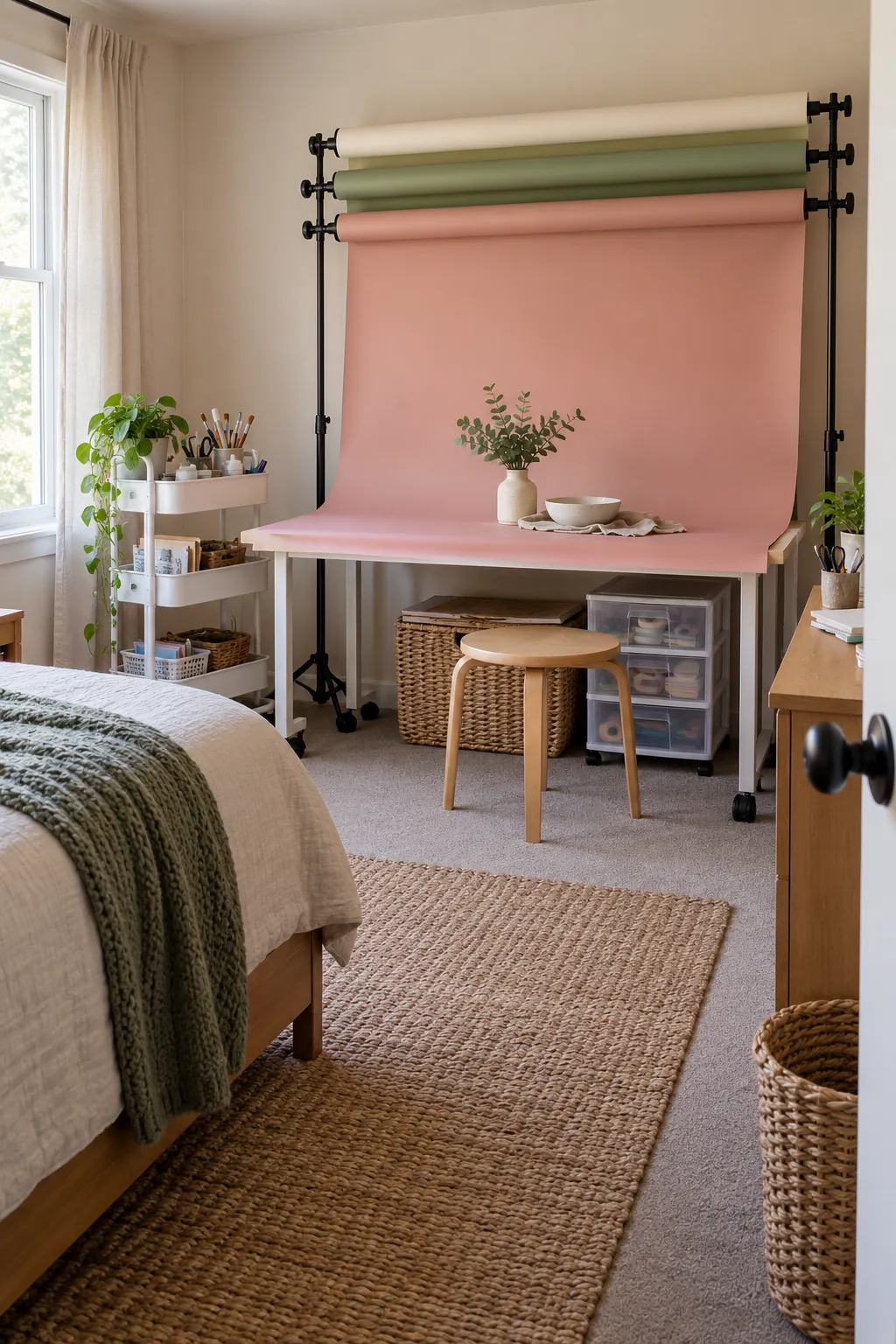
Use a Mirror to Check the Room
A full length mirror helps a spare bedroom continue serving guests and reflects useful light into dark work areas. Lean or secure it according to safety needs rather than adding permanent trim. Keep it away from direct glare at the main desk.
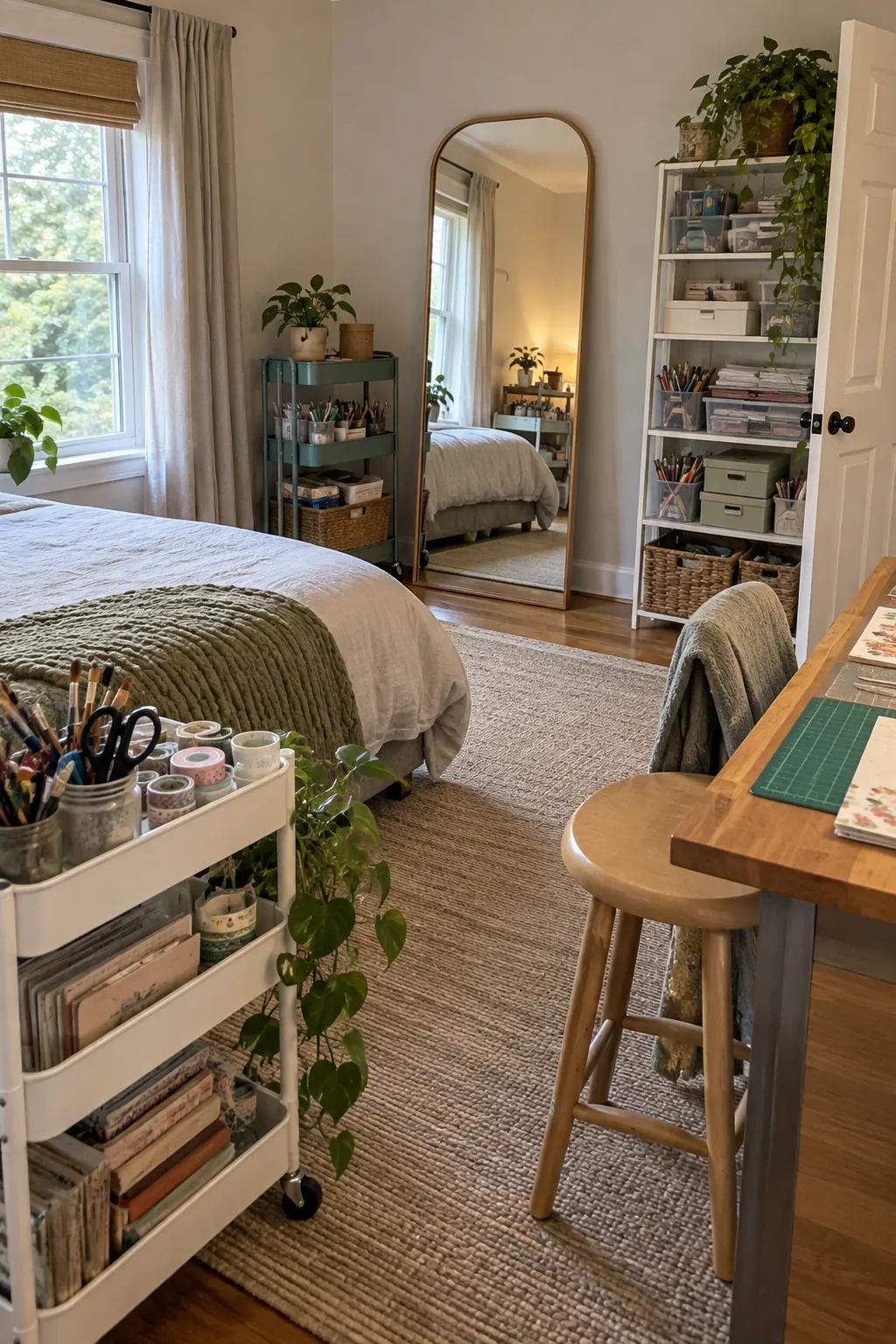
Protect the Floor With a Rollable Mat
A washable mat catches paint, thread, and paper dust without replacing the existing floor. Choose one that lies flat and fits completely beneath the messy work zone. Roll it only after it is clean and dry.
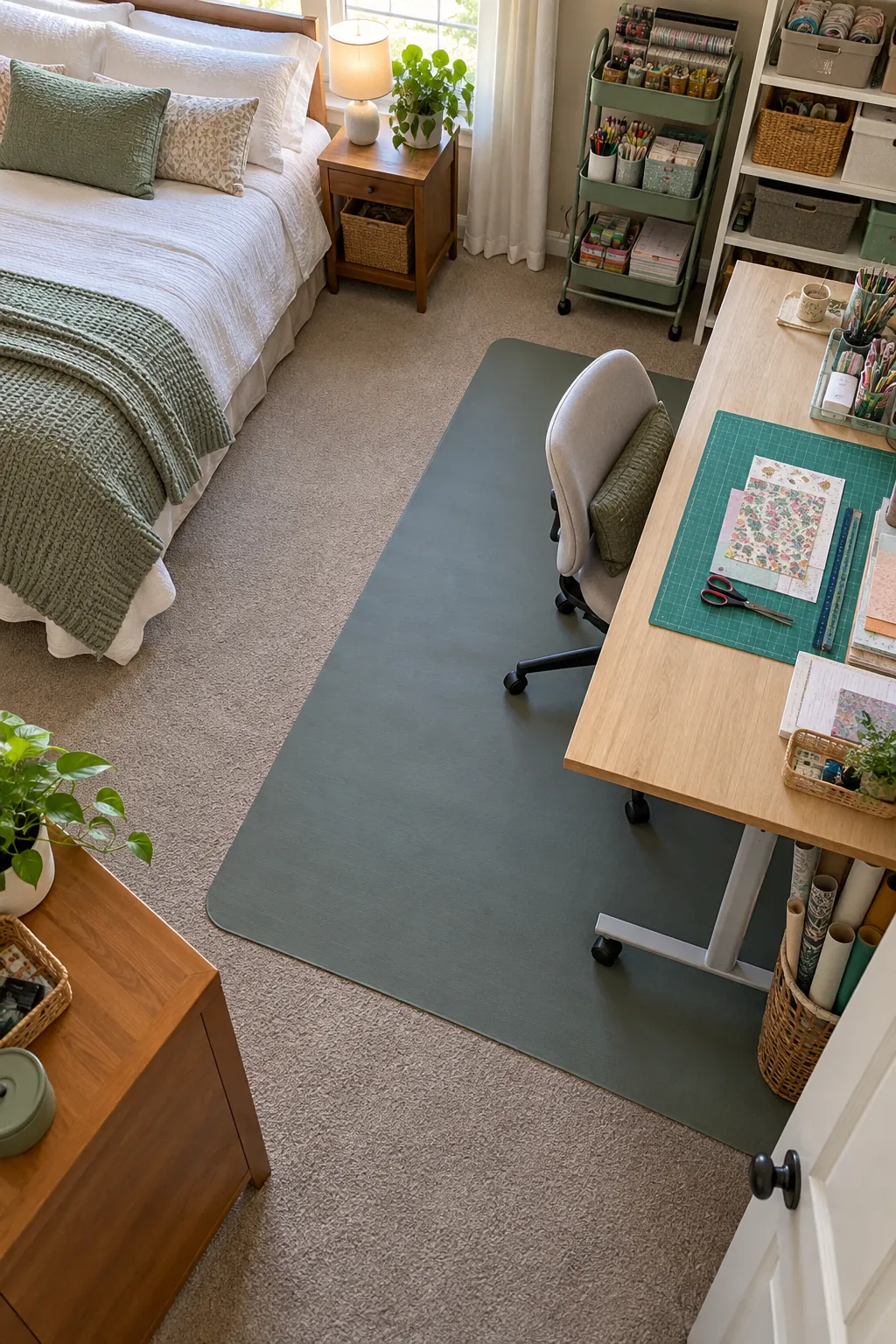
Use the Bed as a Temporary Design Wall
A clean bedspread can hold quilt blocks, paper layouts, or color options for a short planning session. Place a separate clean sheet over the bedding before spreading materials. Clear the arrangement into a project tray rather than leaving it in place overnight.
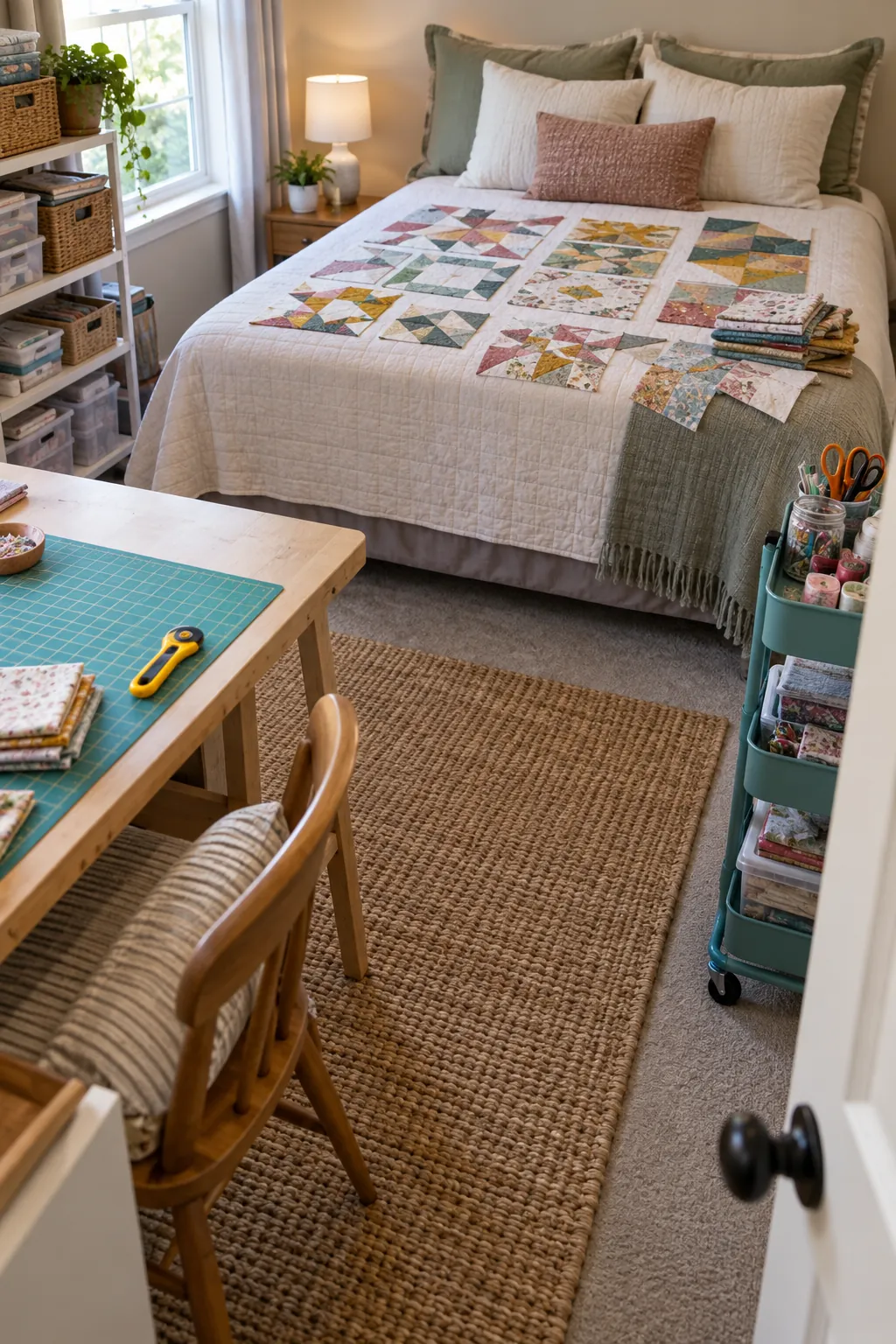
Add a Freestanding Pegboard
A pegboard panel on feet creates vertical tool storage without attaching anything to the wall. Put heavier objects low and keep the base outside chair routes. The panel can move when the room changes purpose.
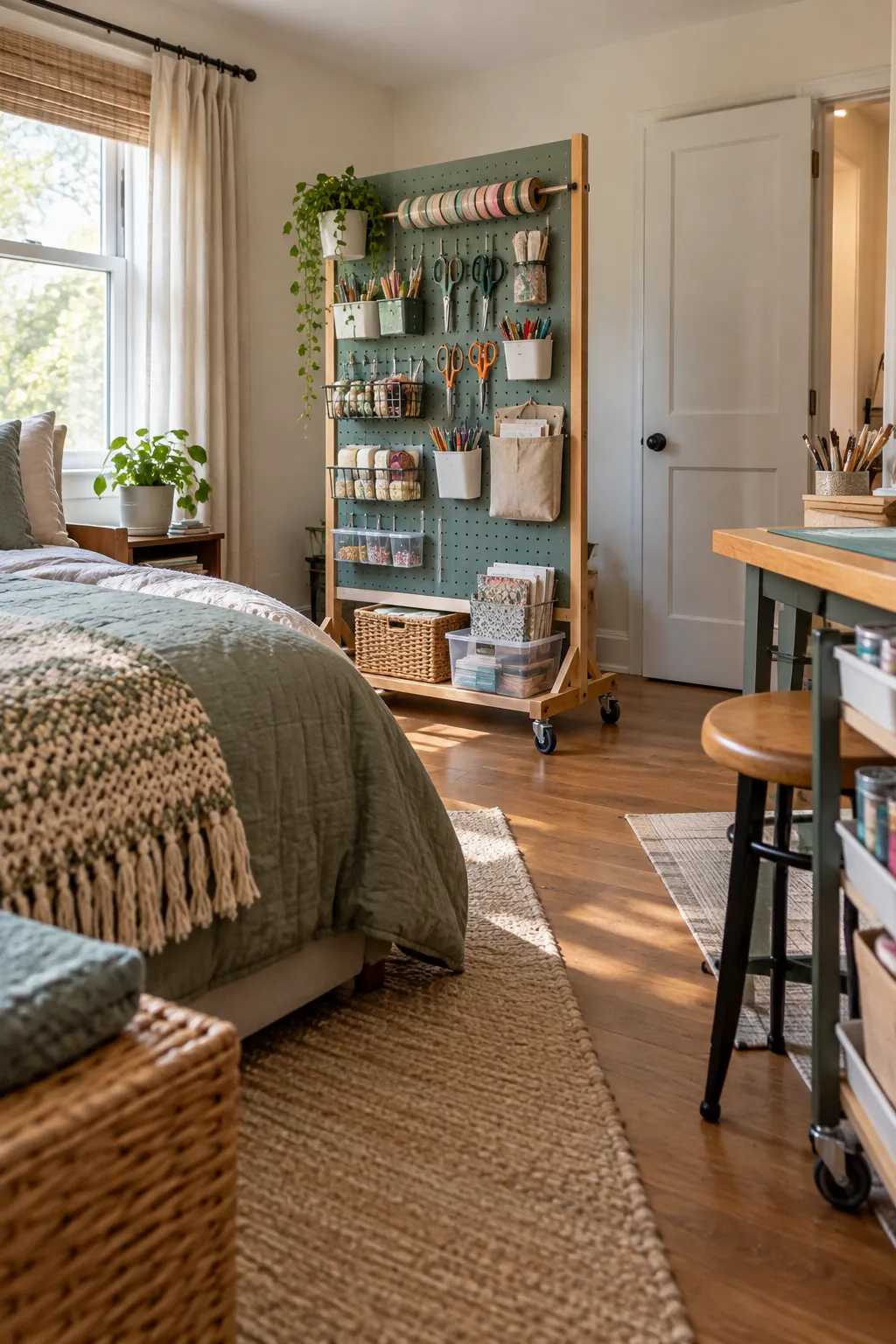
Keep One Empty Guest Drawer
A flexible craft studio works better when guests do not have to live from a suitcase. Reserve one clean drawer and a section of hanging space even when the room is used every day. This limit also prevents supplies from expanding into every available cavity.
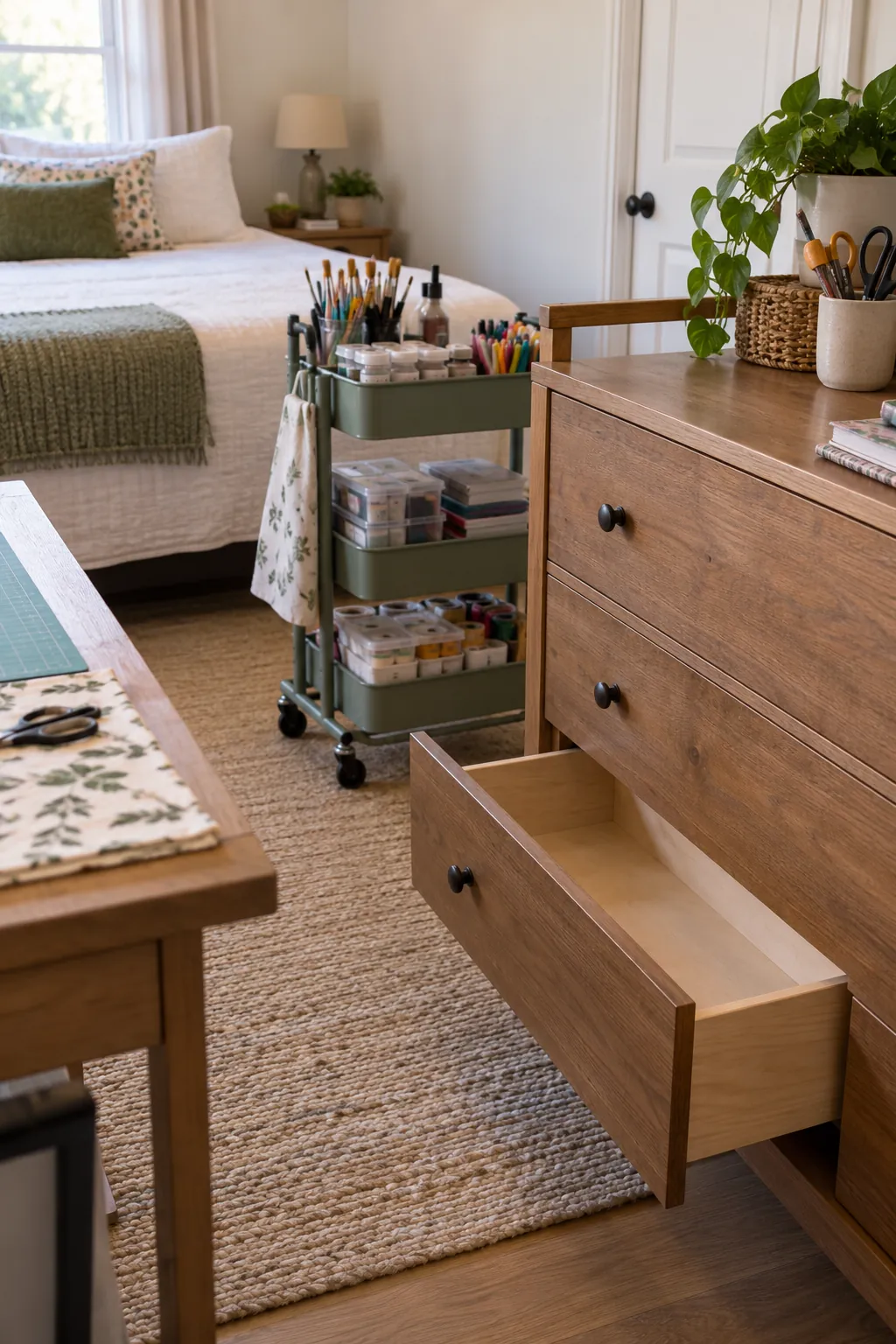
Make the Nightstand Work Twice
A compact nightstand can hold guest essentials while its lower shelf stores a current project basket. Keep the top mostly clear and avoid sharp tools in bedside storage. A small reading lamp can also light hand stitching in the chair nearby.
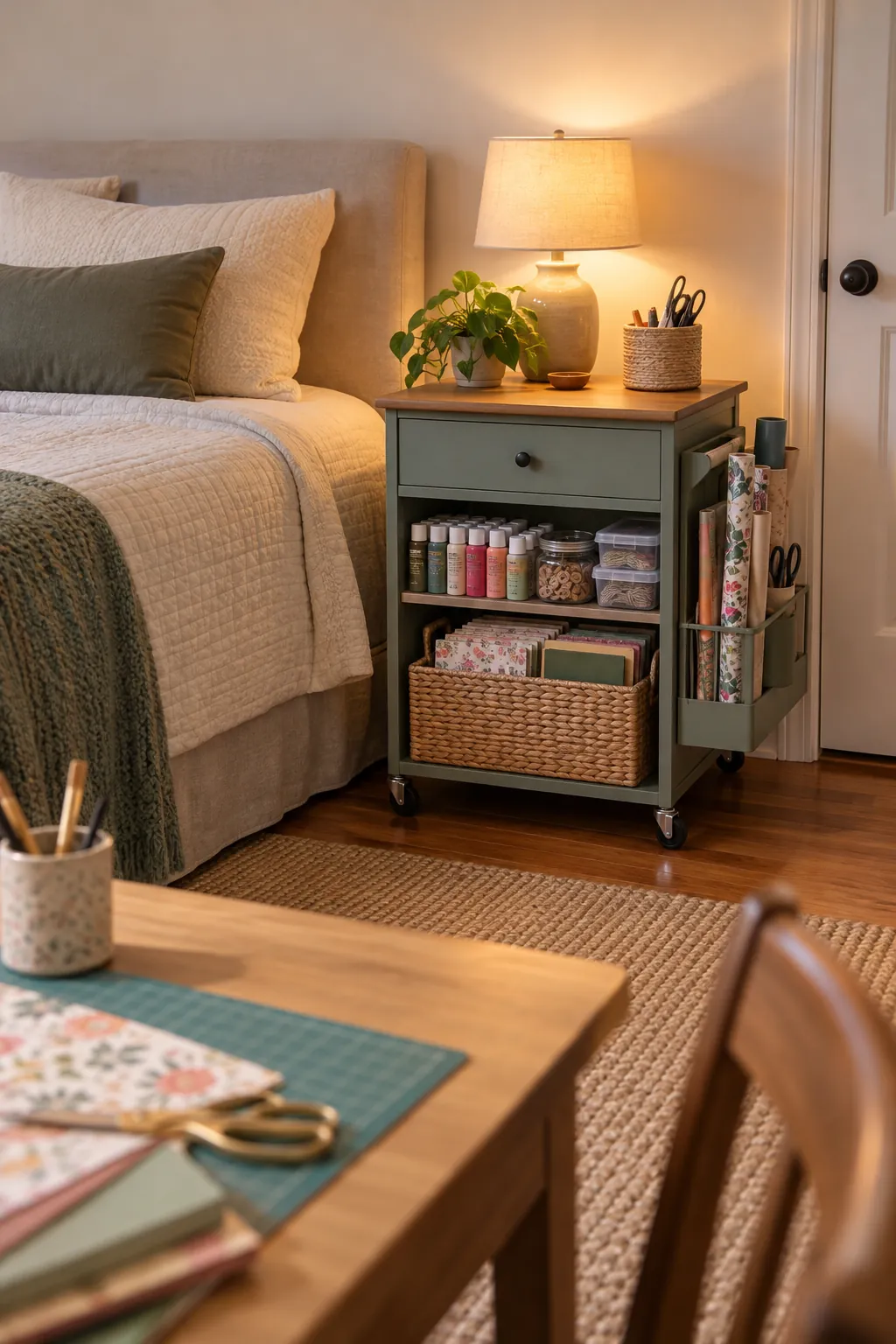
Park Bulky Tools on a Low Cart
A low heavy duty cart can hold a cutting machine, printer, or boxed loom. Roll it under a table when the tool is idle and lock the wheels during use. Confirm that cables remain long enough without crossing the walkway.
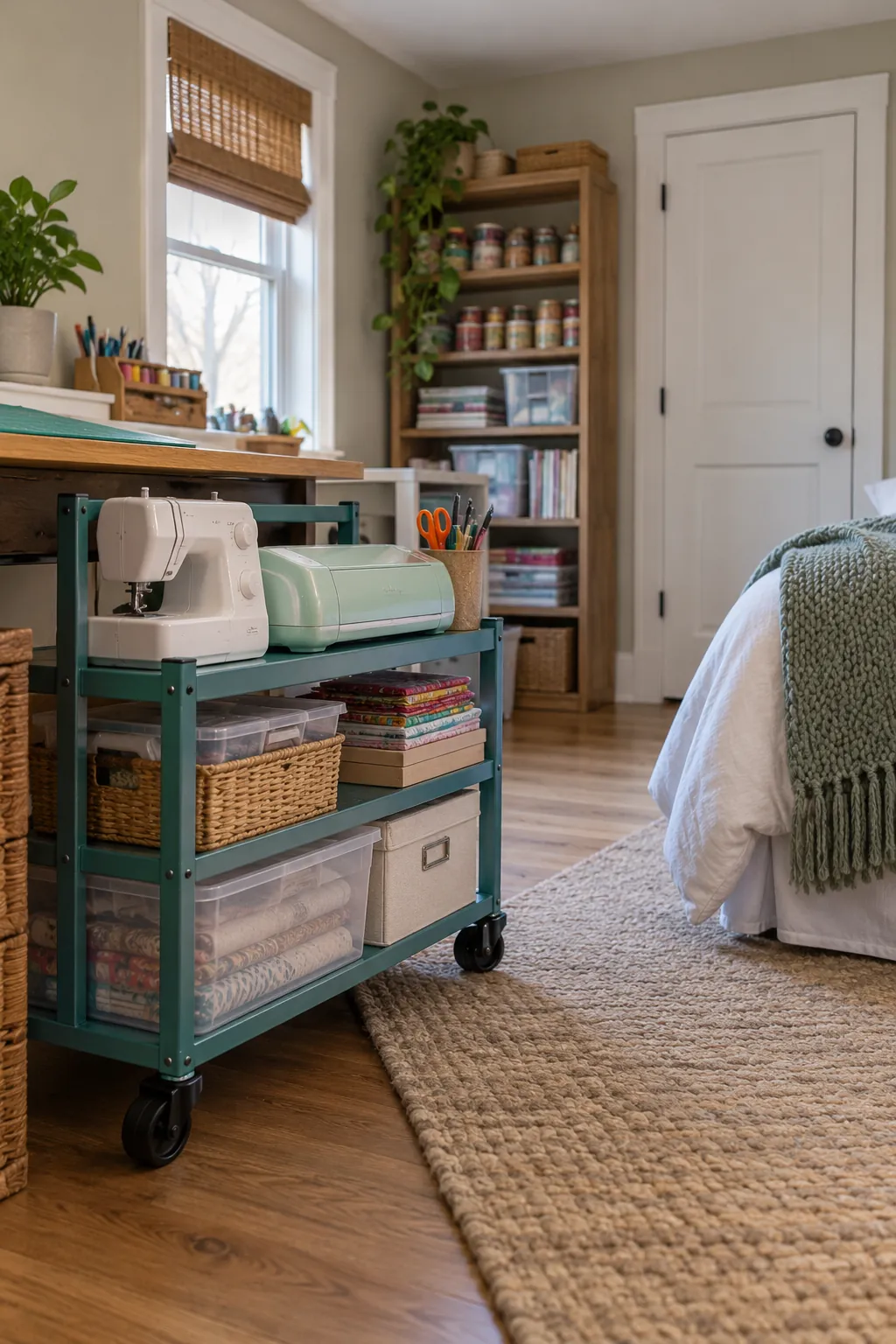
Limit the Palette on Large Surfaces
Craft supplies already contribute many colors and patterns. Keeping walls, curtains, bedding, and major furniture quiet helps the room feel cohesive without painting. Repeat one accent color on portable pieces to connect the setup.
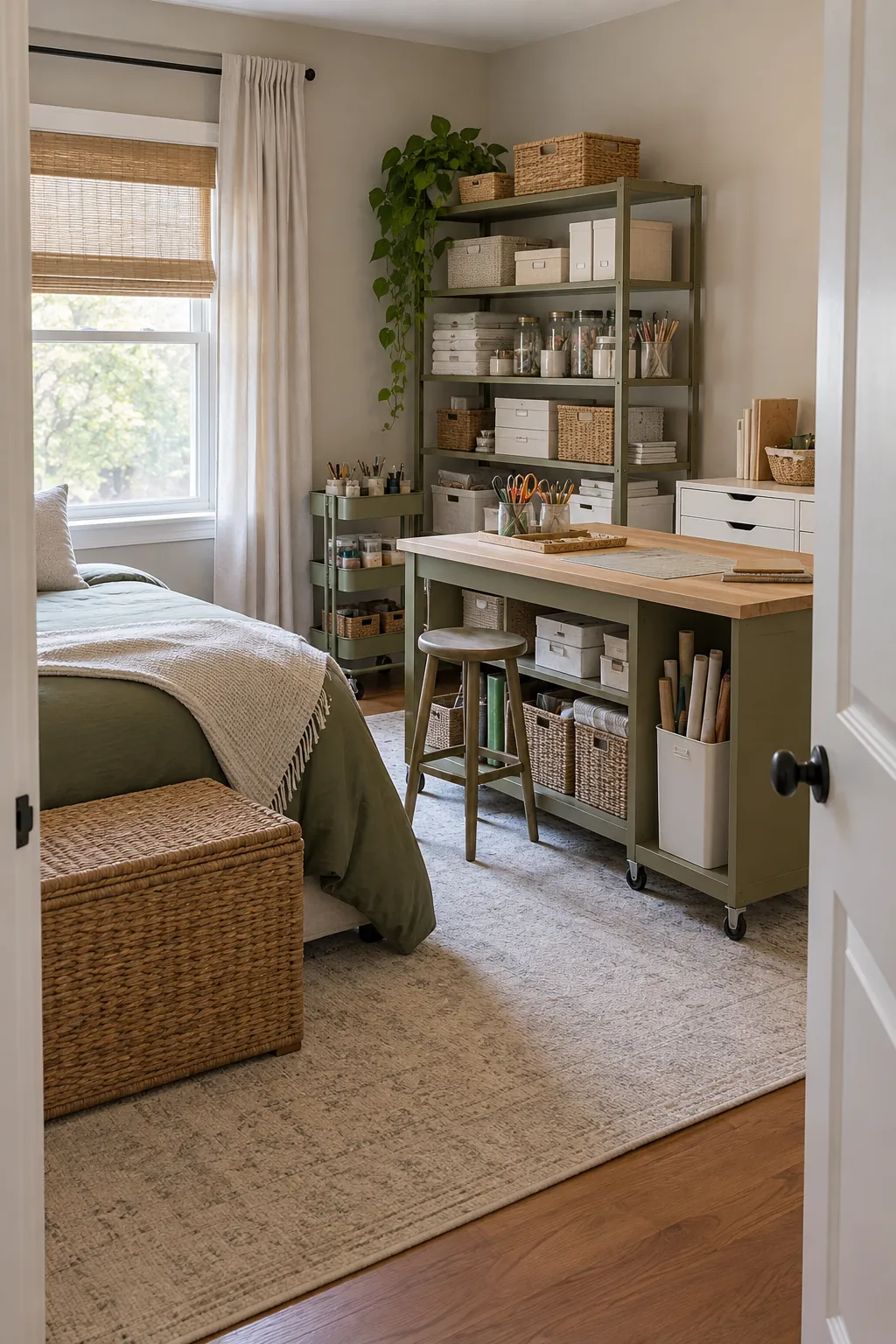
Create a Five Minute Guest Reset
Decide where the active project, chair, and loose supplies will go before a guest visit. One lidded project box and one parking zone make the conversion fast enough to repeat. Do not plan a transformation that depends on moving every shelf out of the room.
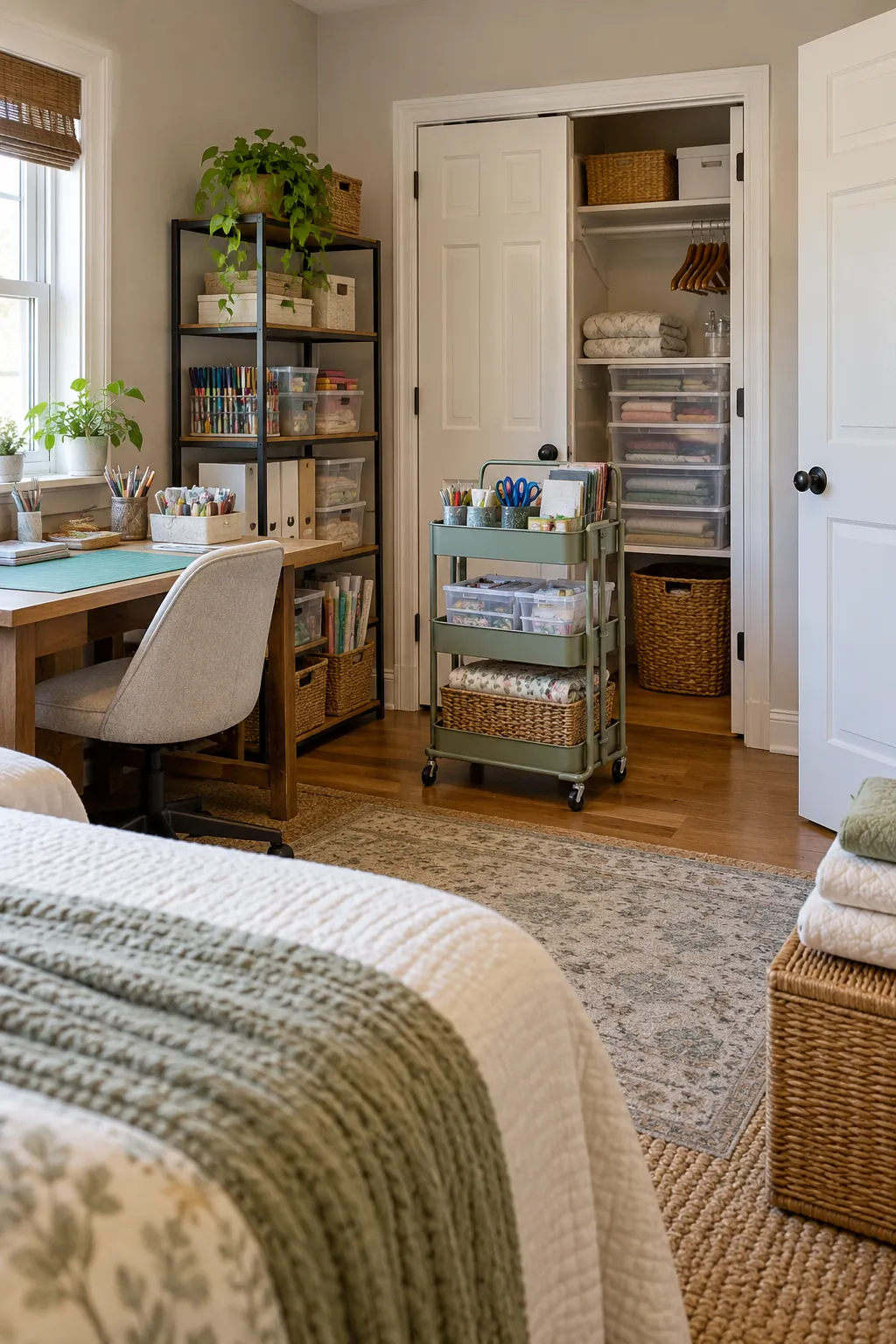
Leave a Clear Path From Door to Bed
A spare bedroom is still successful only when someone can enter, set down a bag, and reach the bed easily. Keep carts, chair backs, and table corners outside that direct route. The clear path also makes daily crafting safer and stops the room from feeling like a storage unit.