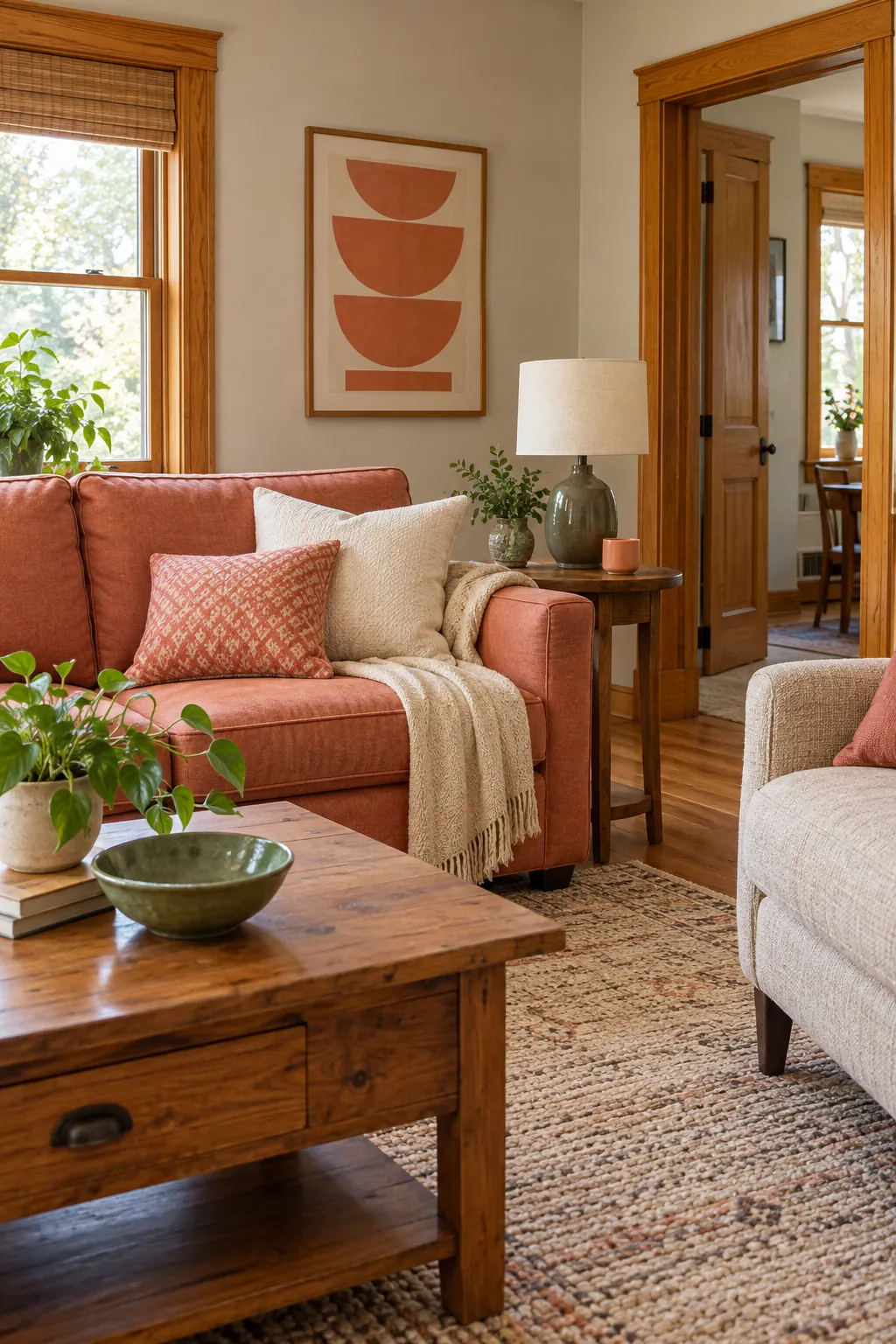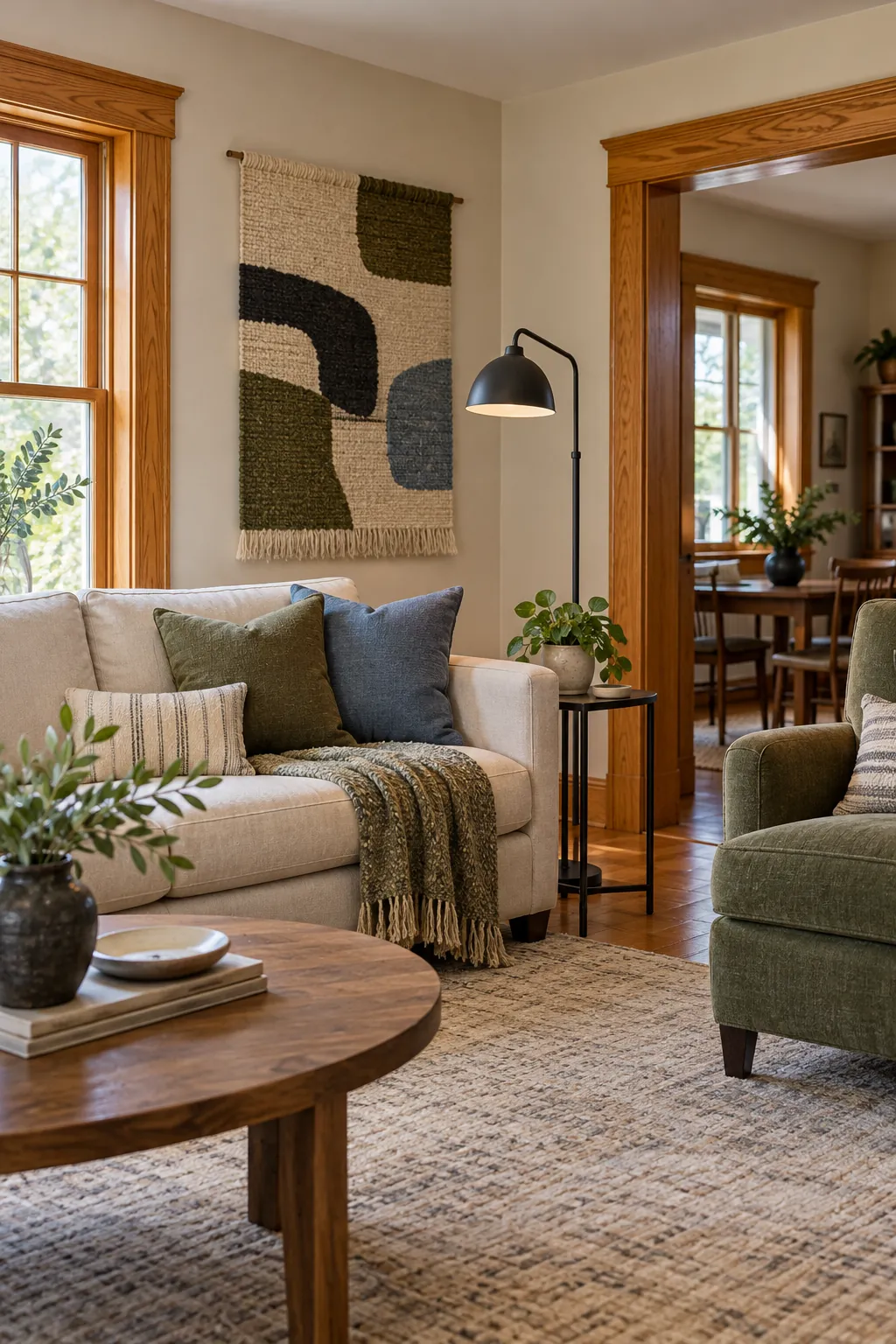
Honey oak trim is not a neutral afterthought. Its yellow and orange undertones affect every nearby fabric, rug, and painted surface, which is why a color that looked calm in a shop can feel harsh at home. The useful question is whether you want to soften that warmth, repeat it, or frame it with deliberate contrast.
Olive Green
Olive repeats the earthy warmth in honey oak without matching its orange cast. Use it on cushions, a ceramic lamp, or a wool throw so the wood remains the permanent base and green acts as a soft counterweight. A muted olive with gray in it feels calmer than a sharp yellow green.
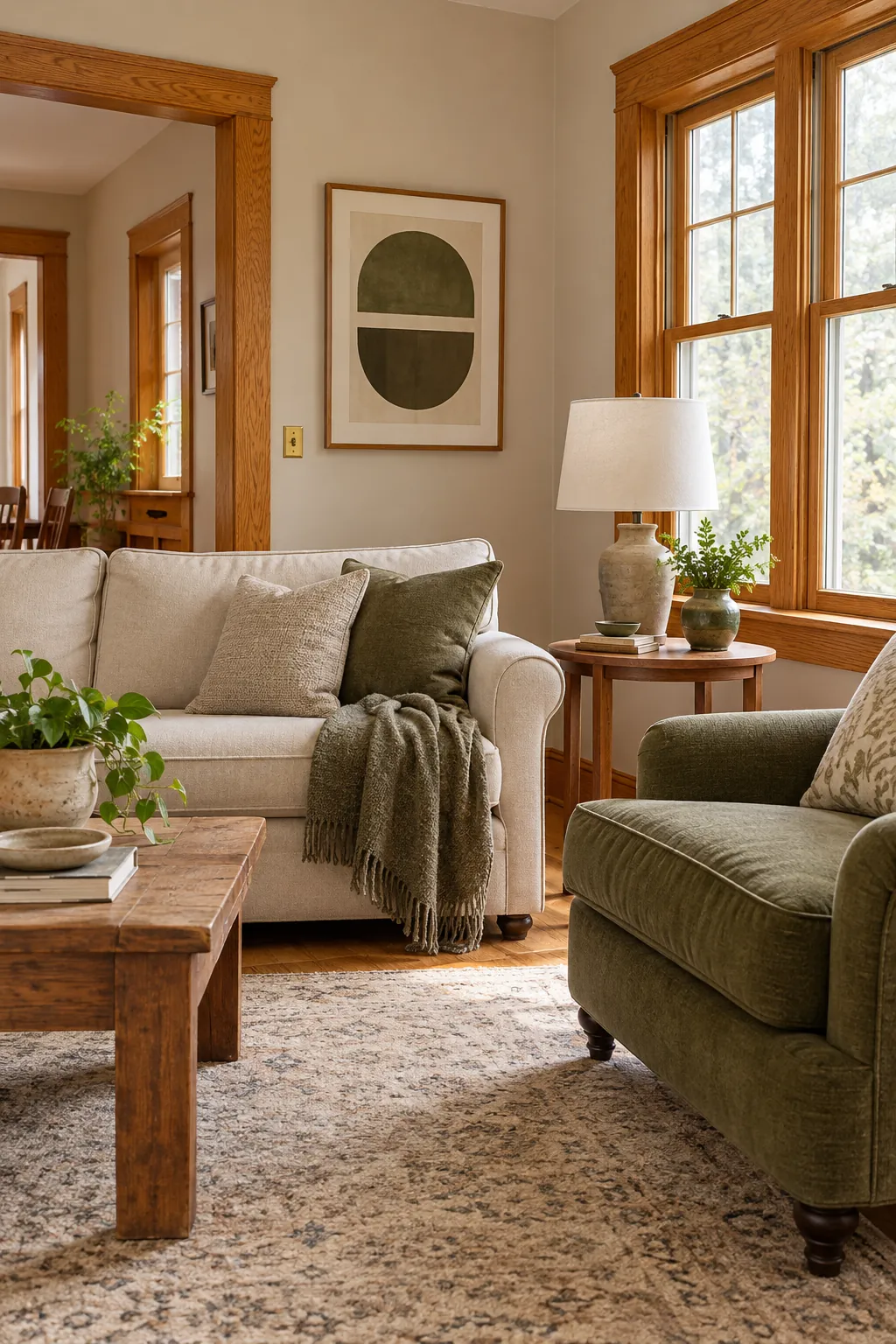
Forest Green
Forest green gives broad oak trim enough visual weight on the opposite side of the room. Place it in one substantial chair or full curtain panel rather than many tiny objects. The dark value makes the wood look brighter, so keep walls and the largest upholstery light.
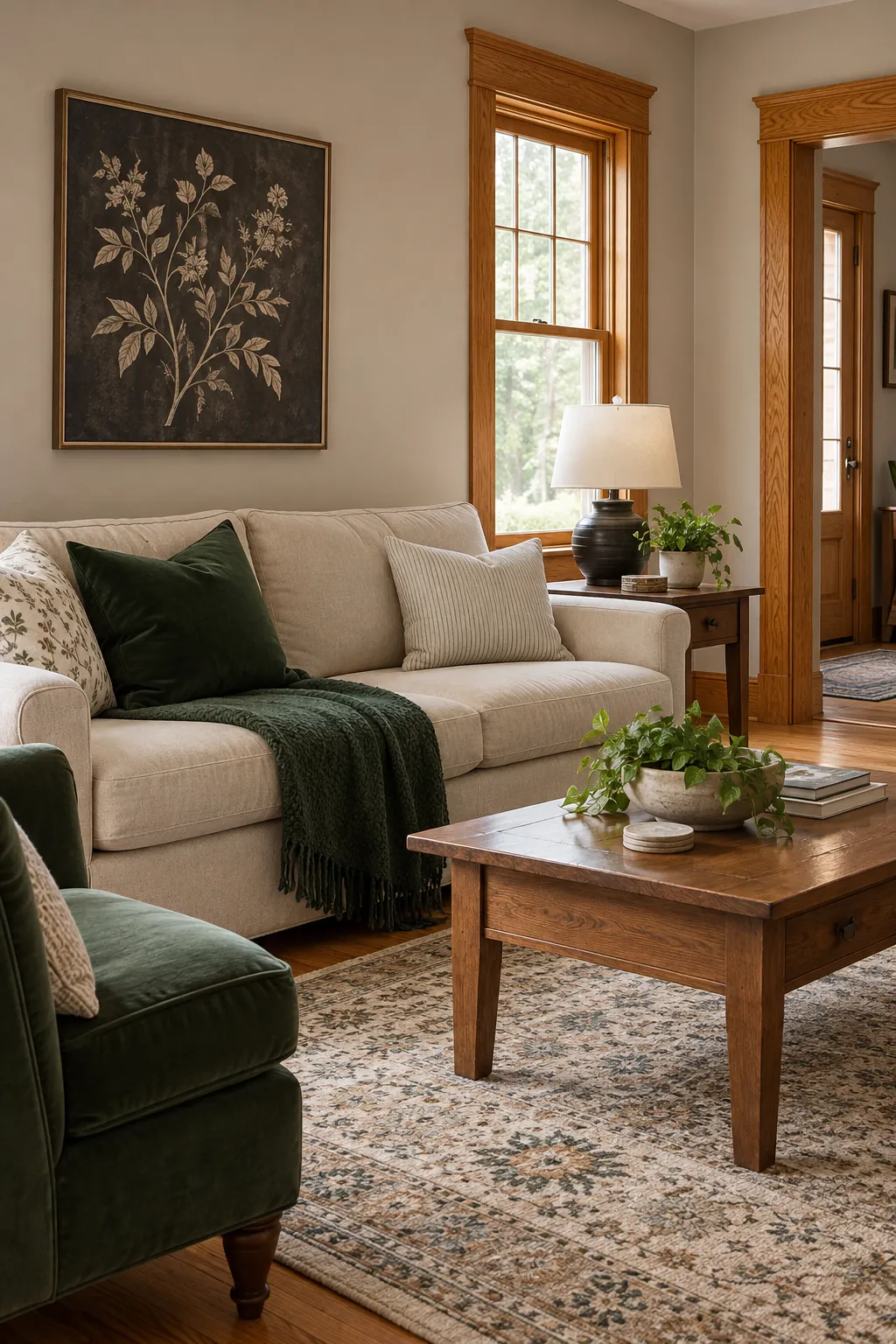
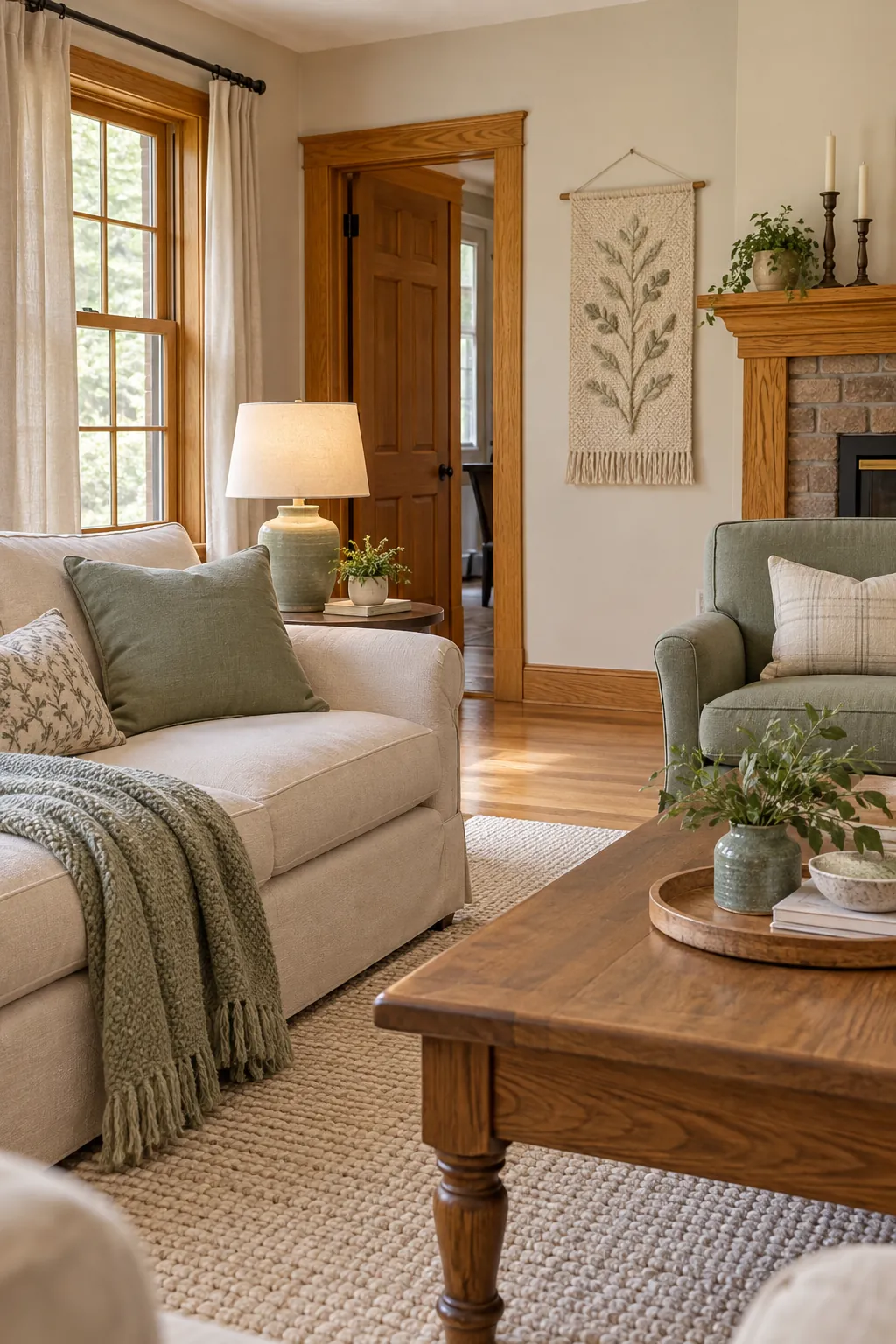
Soft Sage
Sage is useful when the room needs freshness but not strong contrast. Its quiet green undertone can temper yellow wood while still belonging to a warm natural palette. Repeat sage in two different materials, such as linen and glazed pottery, to avoid a flat matching set.
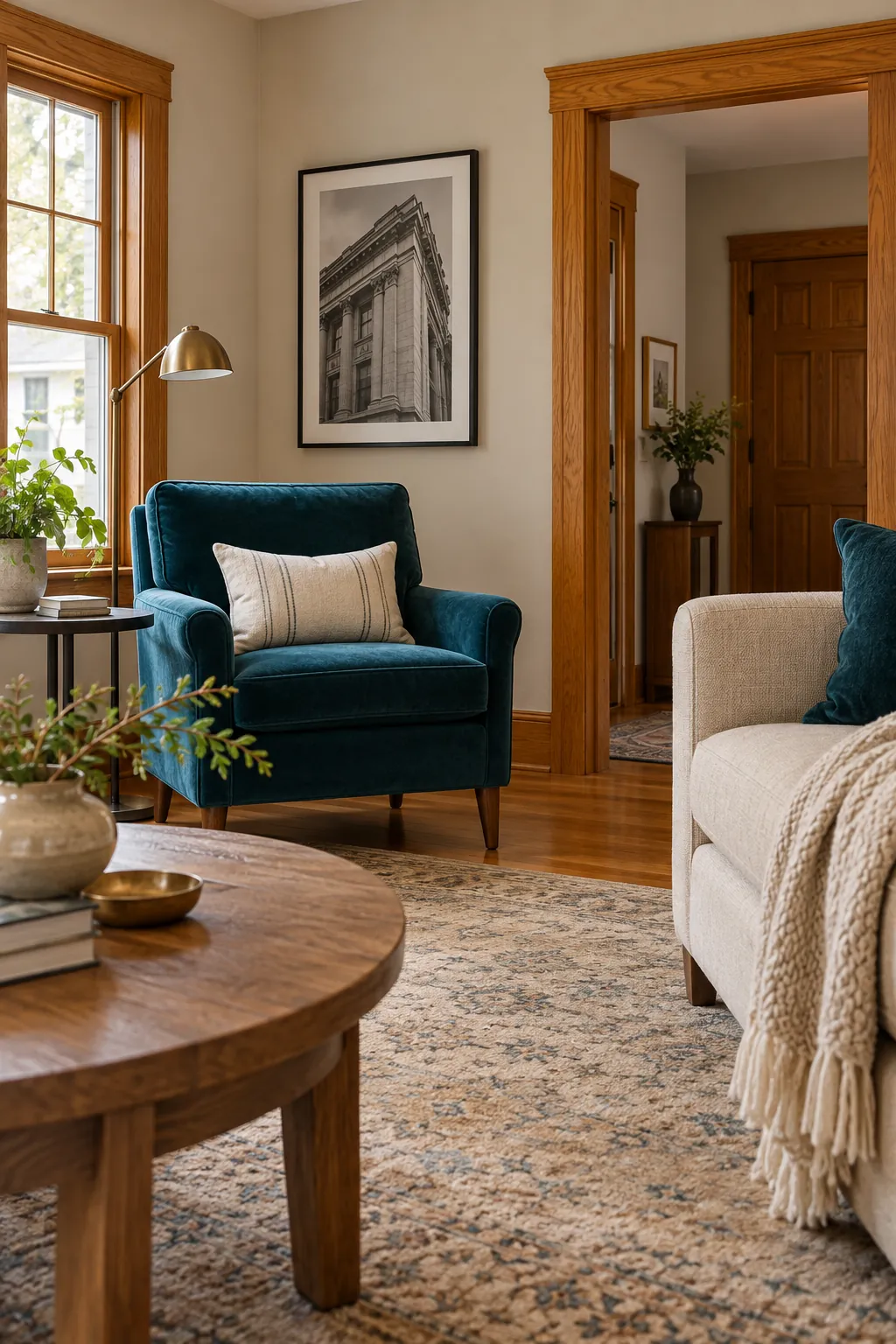
Deep Teal
Deep teal creates a rich complement to orange leaning oak and makes the grain stand out. Choose this effect when you want to celebrate the trim rather than make it disappear. Limit teal to a rug detail, one chair, or a pair of curtains so the combination stays controlled.
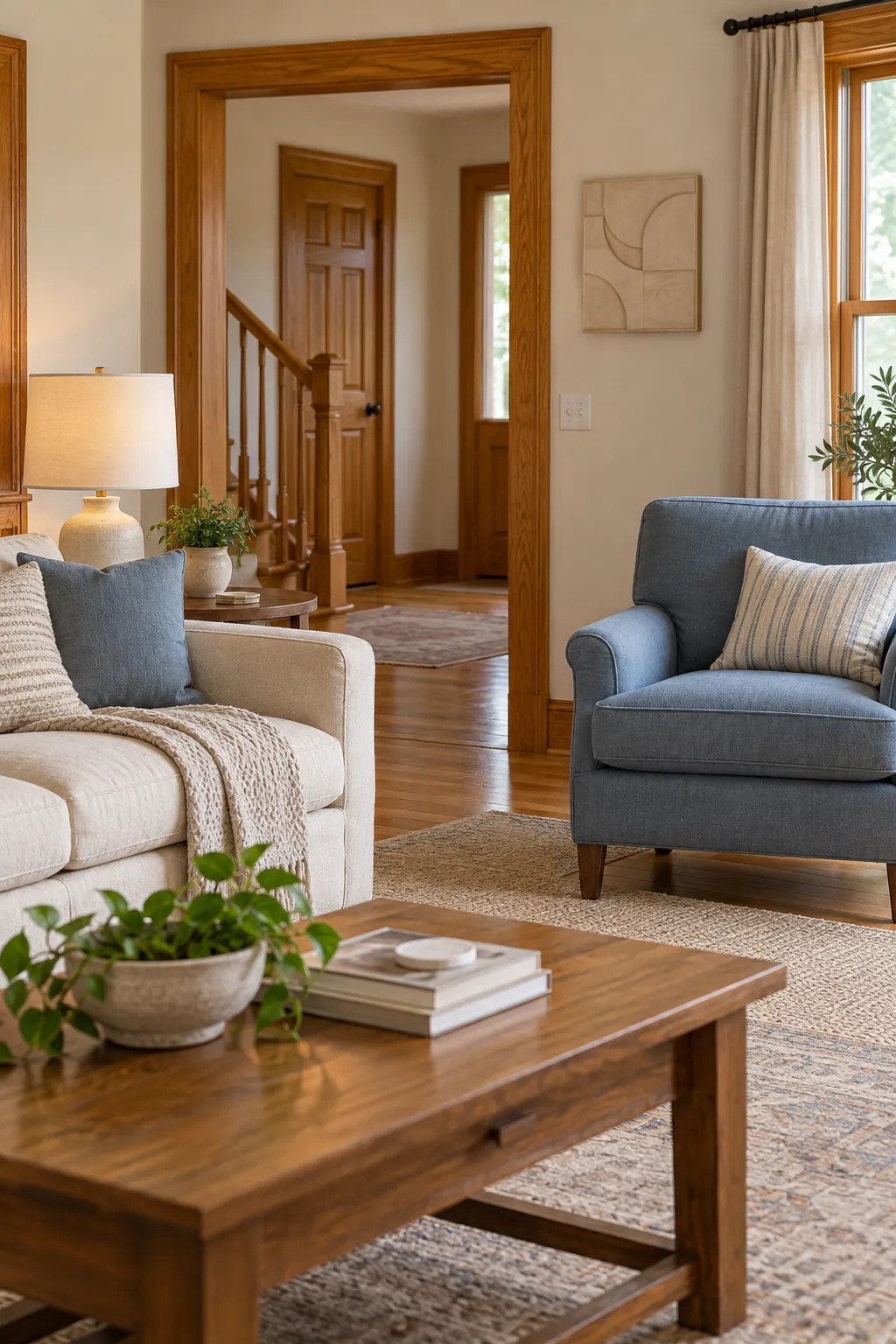
Dusty Blue
Dusty blue works best when it contains enough gray to soften its contrast with the wood. A faded blue rug or washed linen cushion looks collected beside honey oak, while a clear icy blue can exaggerate orange. Check the fabric in daytime and lamplight before committing to large curtains.
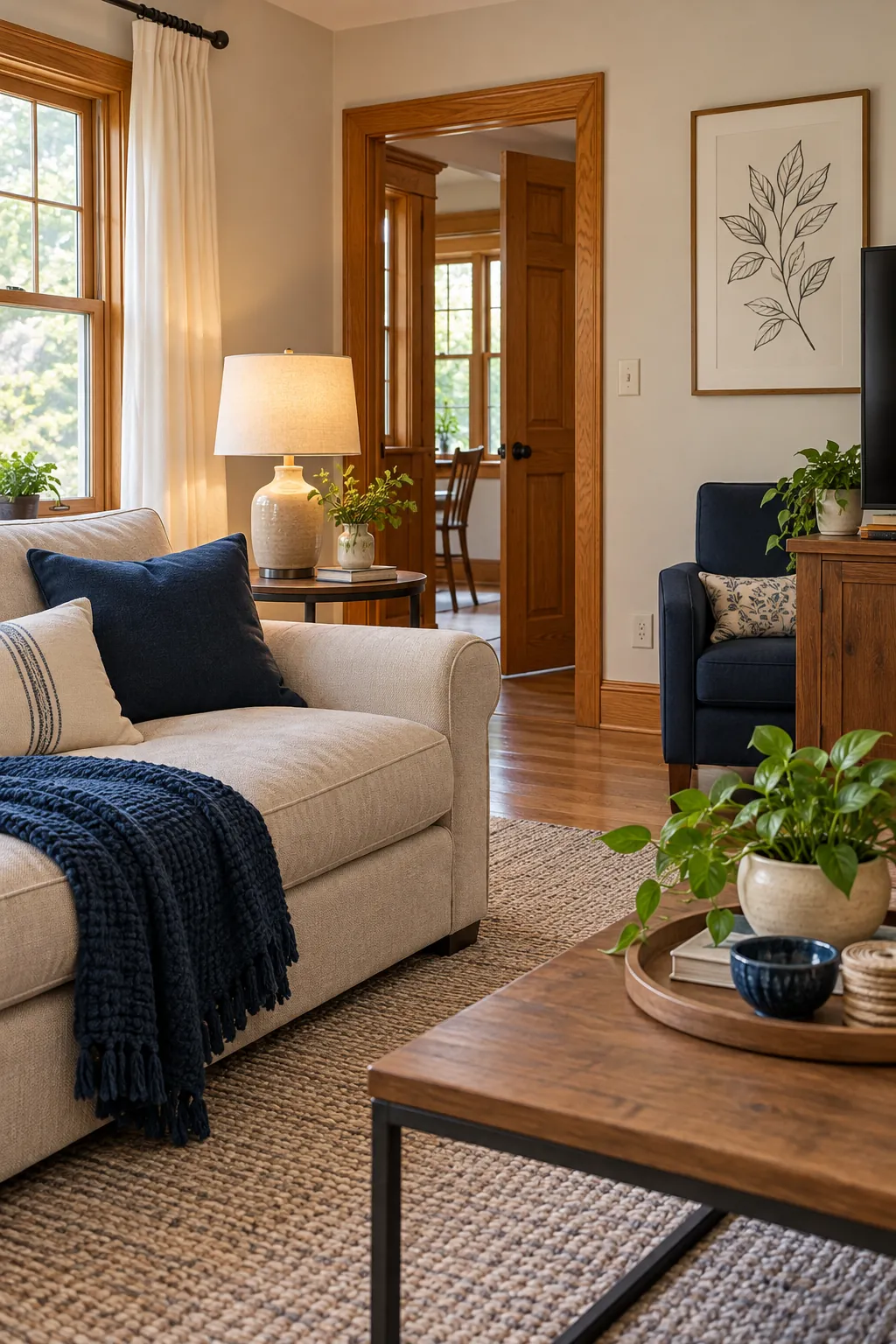
Inky Navy
Inky navy adds structure and can make a room with extensive oak feel more deliberate. Use it low in the room on a sofa, ottoman, or rug border so the wood trim continues to frame the space. Add cream nearby to prevent the navy and oak pairing from becoming visually dense.
Warm Ivory
Warm ivory gives honey oak a quiet background and increases reflected light. Pick an ivory that looks creamy rather than yellow beside the wood, since two strong golden tones can merge. This color is especially effective on curtains, large upholstery, and textured rugs.
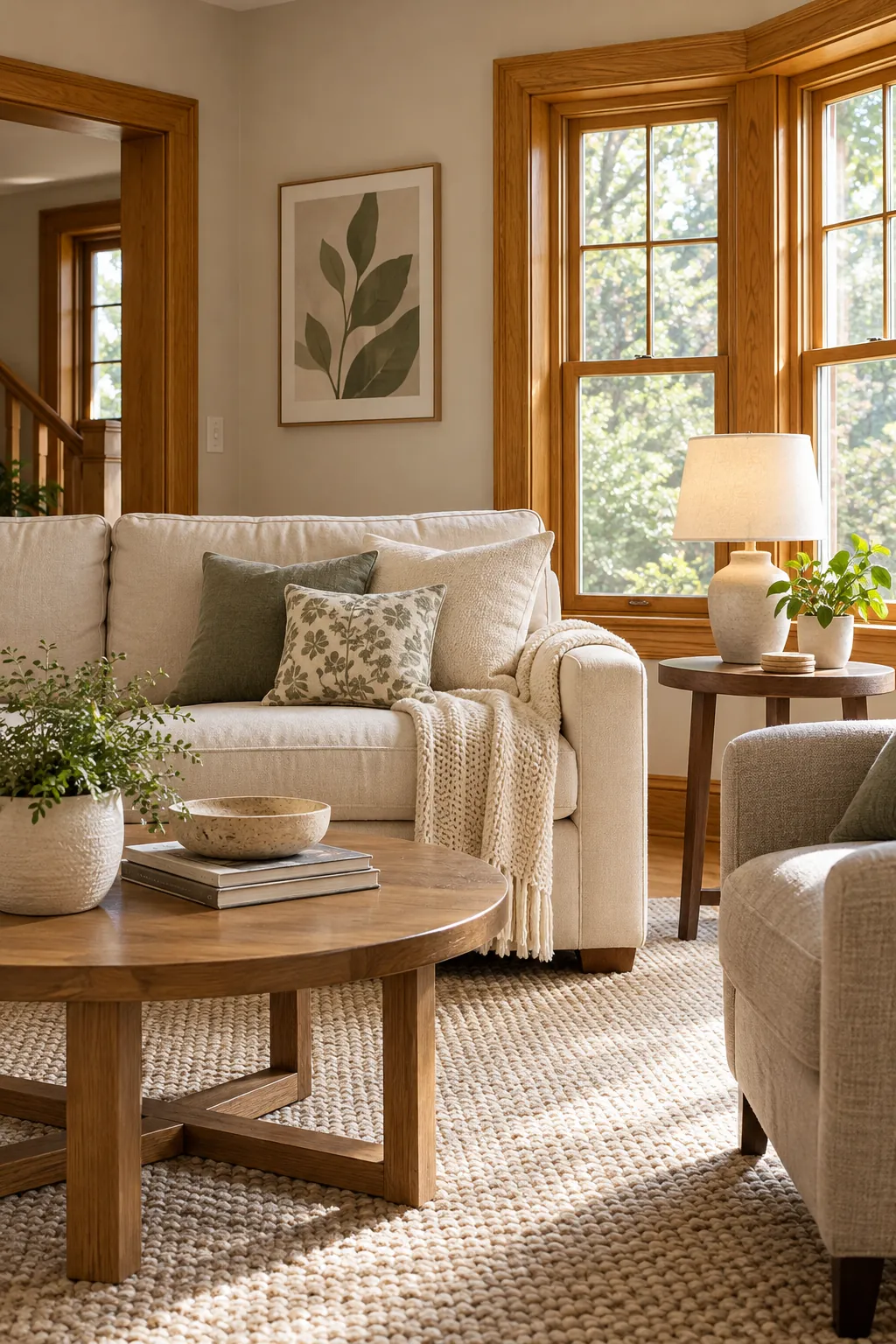
Mushroom Taupe
Mushroom taupe bridges warm oak and cooler modern furnishings because it combines brown and gray. It can calm the room without the stark boundary that pure gray sometimes creates. Use varied textures so the neutral accent still has depth.
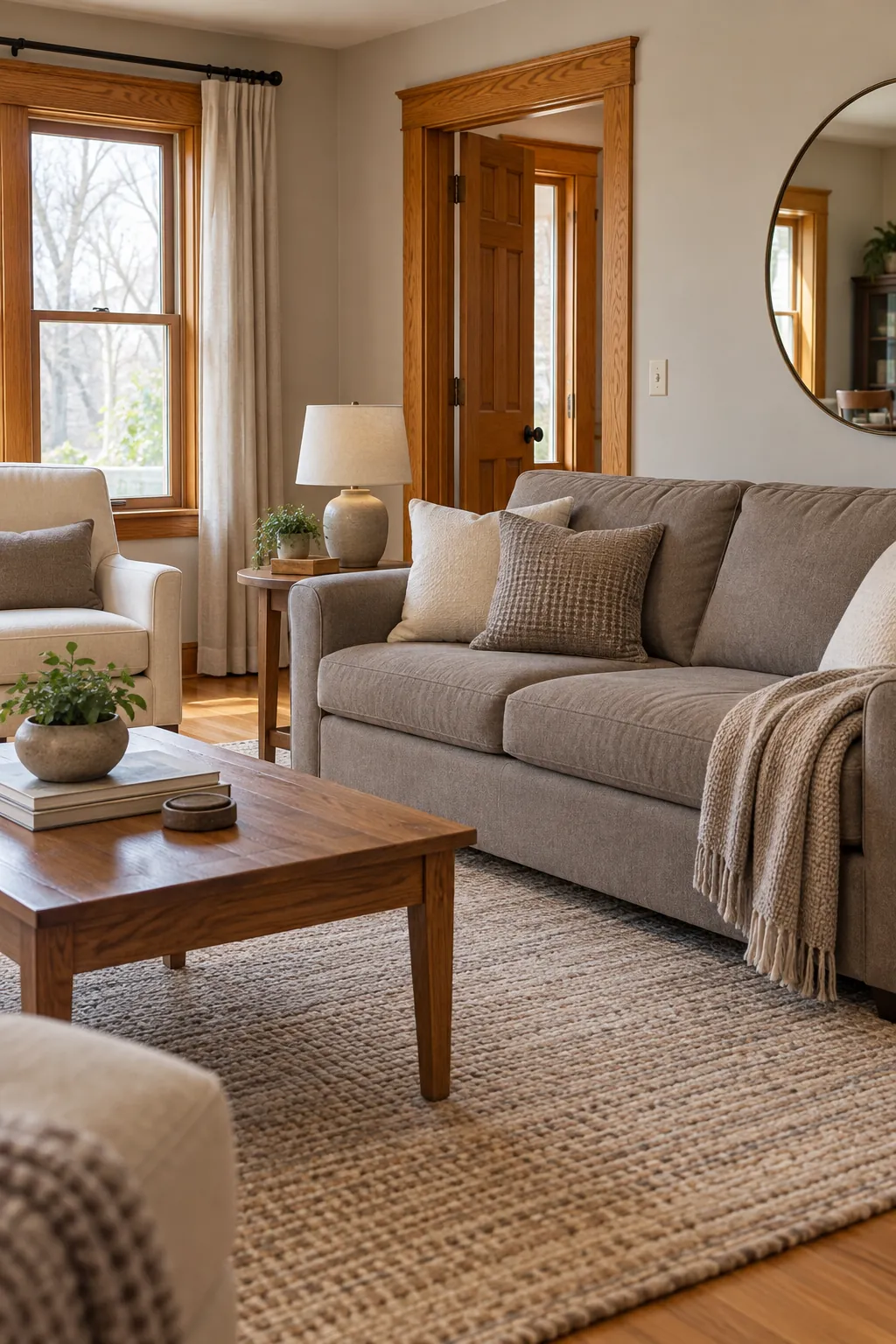
Soft Charcoal
Soft charcoal supplies contrast without the severity of solid black. A charcoal lamp, side table, or woven rug line can sharpen the outline of oak doors and windows. Keep the finish matte, since glossy dark surfaces may feel disconnected from the natural grain.
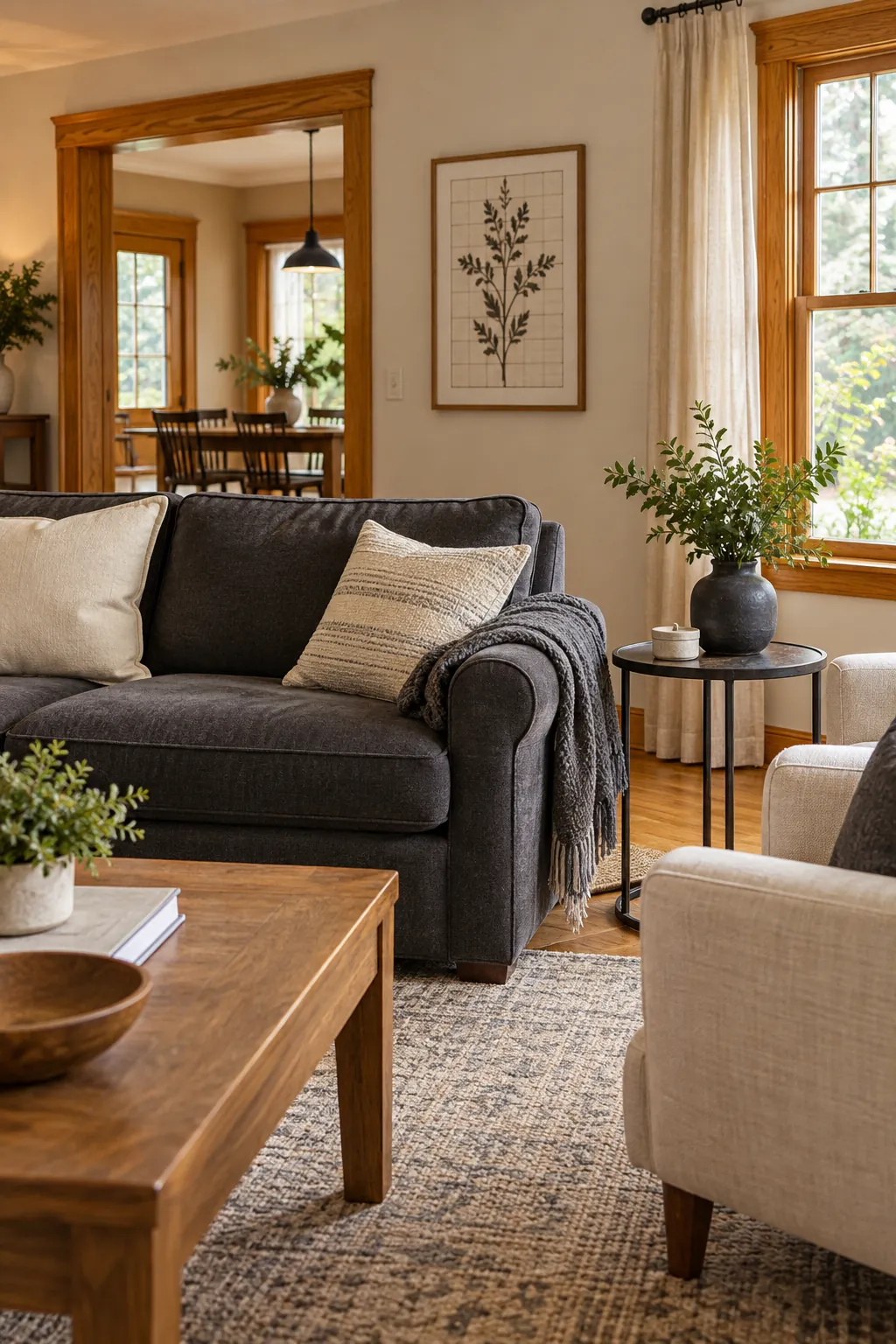
Rust
Rust works with honey oak through shared warmth, but it needs a pale buffer to keep the palette from turning uniformly orange. Place a rust throw on a cream sofa or use rust in a rug that also contains beige and muted green. Choose a brown leaning rust instead of a vivid pumpkin tone.
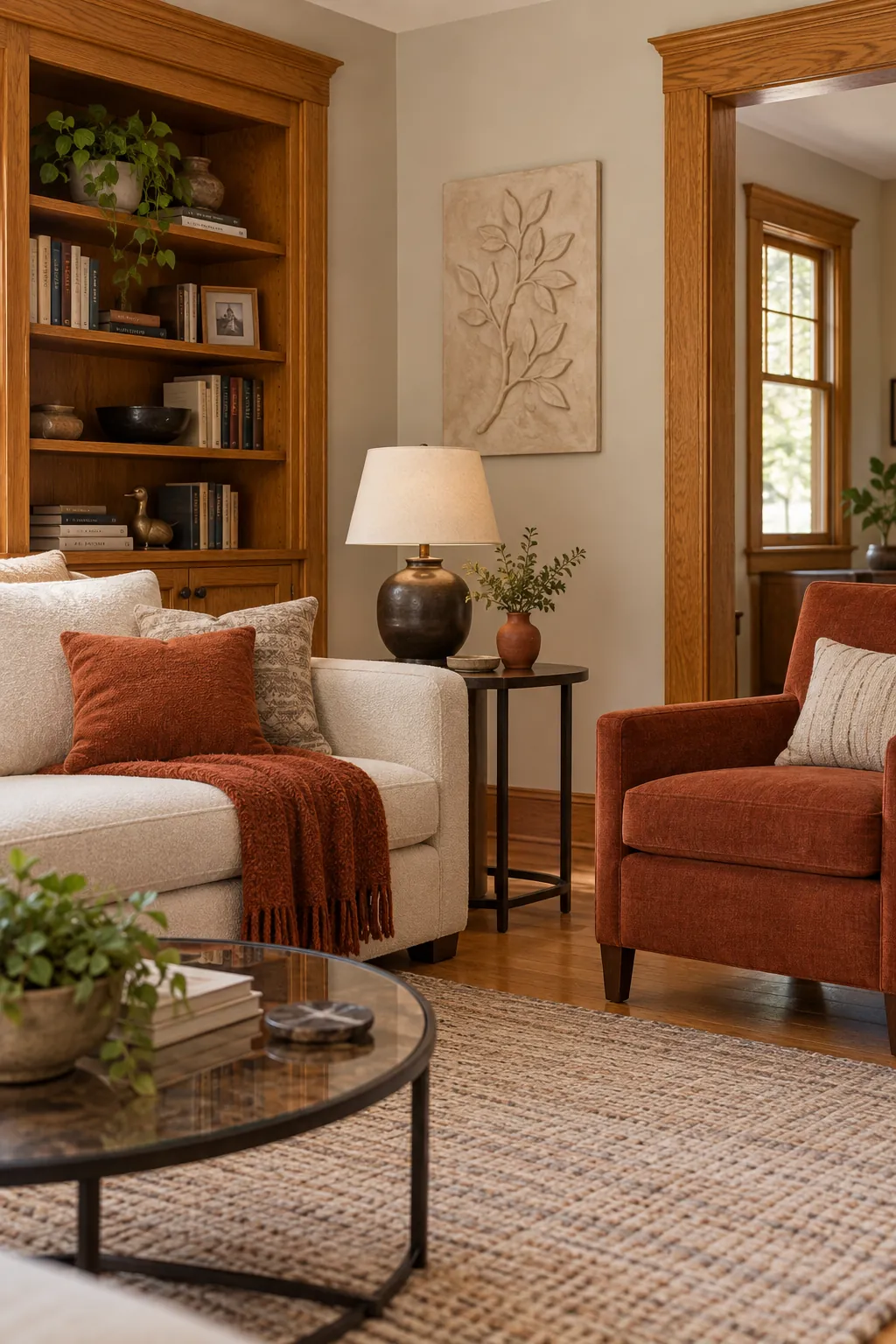
Terracotta
Terracotta connects the trim to handmade clay and gives the room an earthy direction. One large planter and a few textile details are enough because the material already has strong color presence. Add olive or ivory around it to separate the clay from the oak.
Burgundy
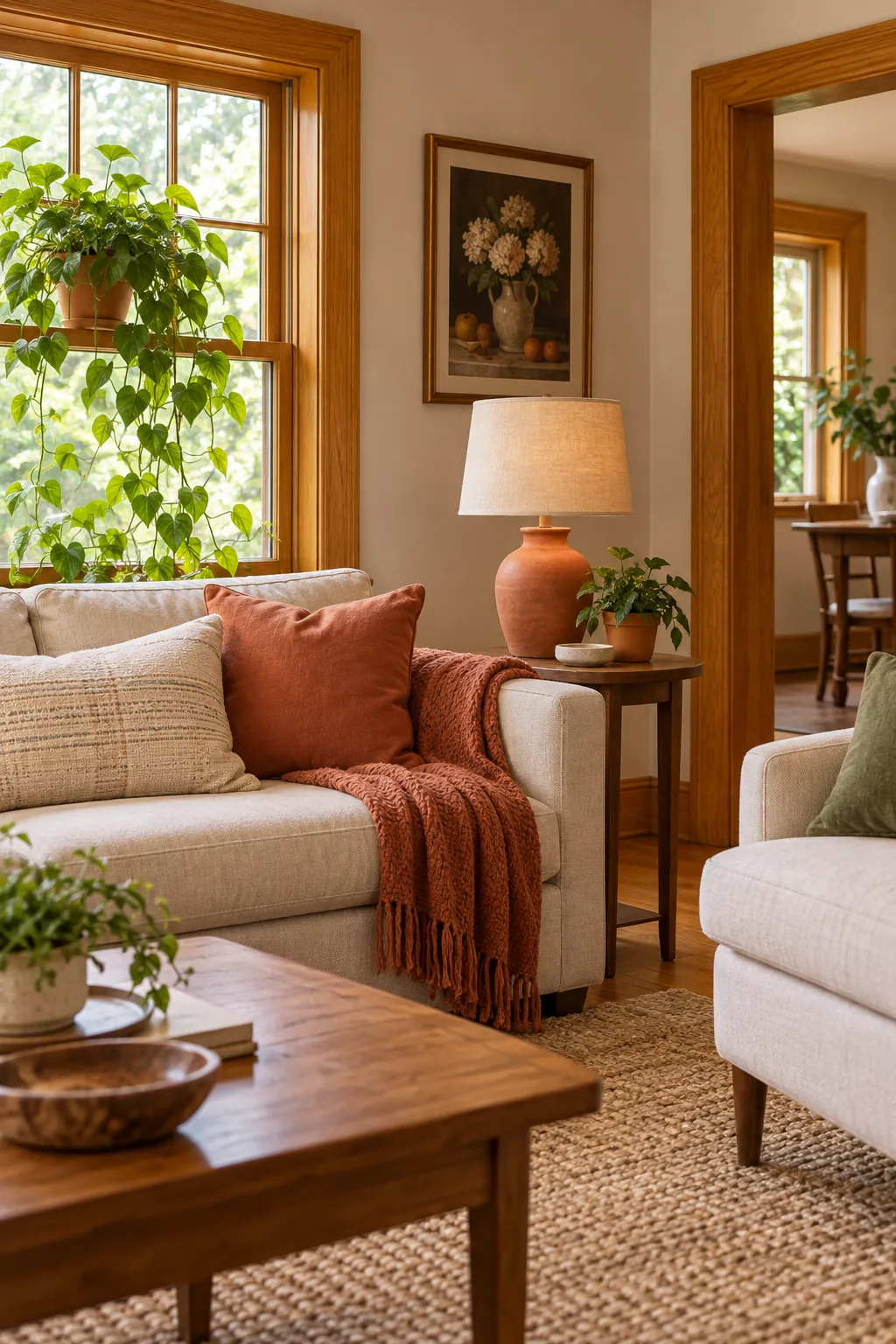
Burgundy introduces a deep red accent that feels grounded beside golden wood. It works well in velvet cushions, a patterned rug, or a shaded table lamp where the color gains dimension. Keep other reds out of the room so burgundy remains a clear intentional note.
Muted Plum
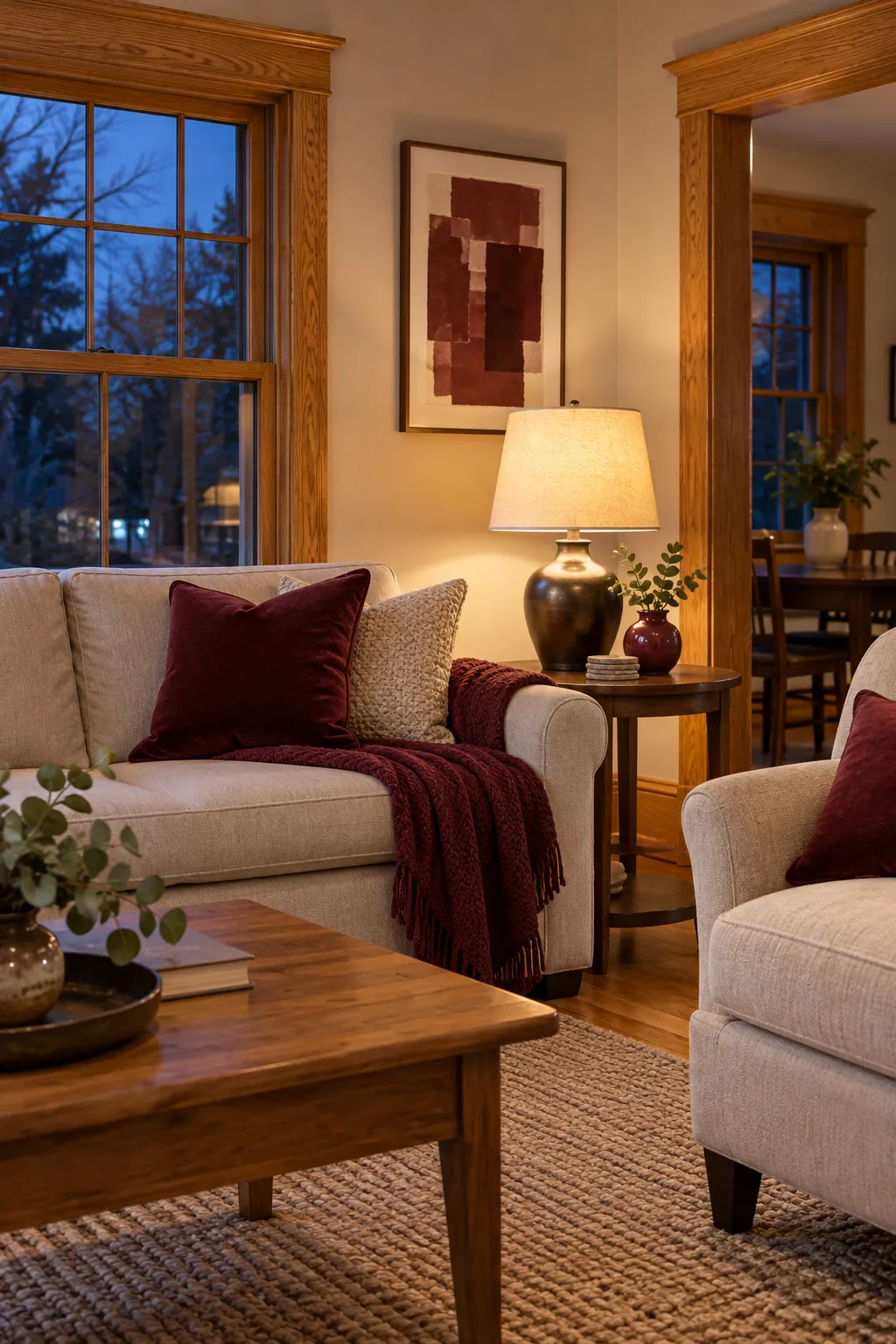
Muted plum brings a subtle violet undertone that can visually reduce excessive yellow in honey oak. A dusty version feels more natural than a jewel bright purple and pairs well with oatmeal upholstery. Try it in art, one throw, or a small chair before choosing large drapery.
Ochre Mustard
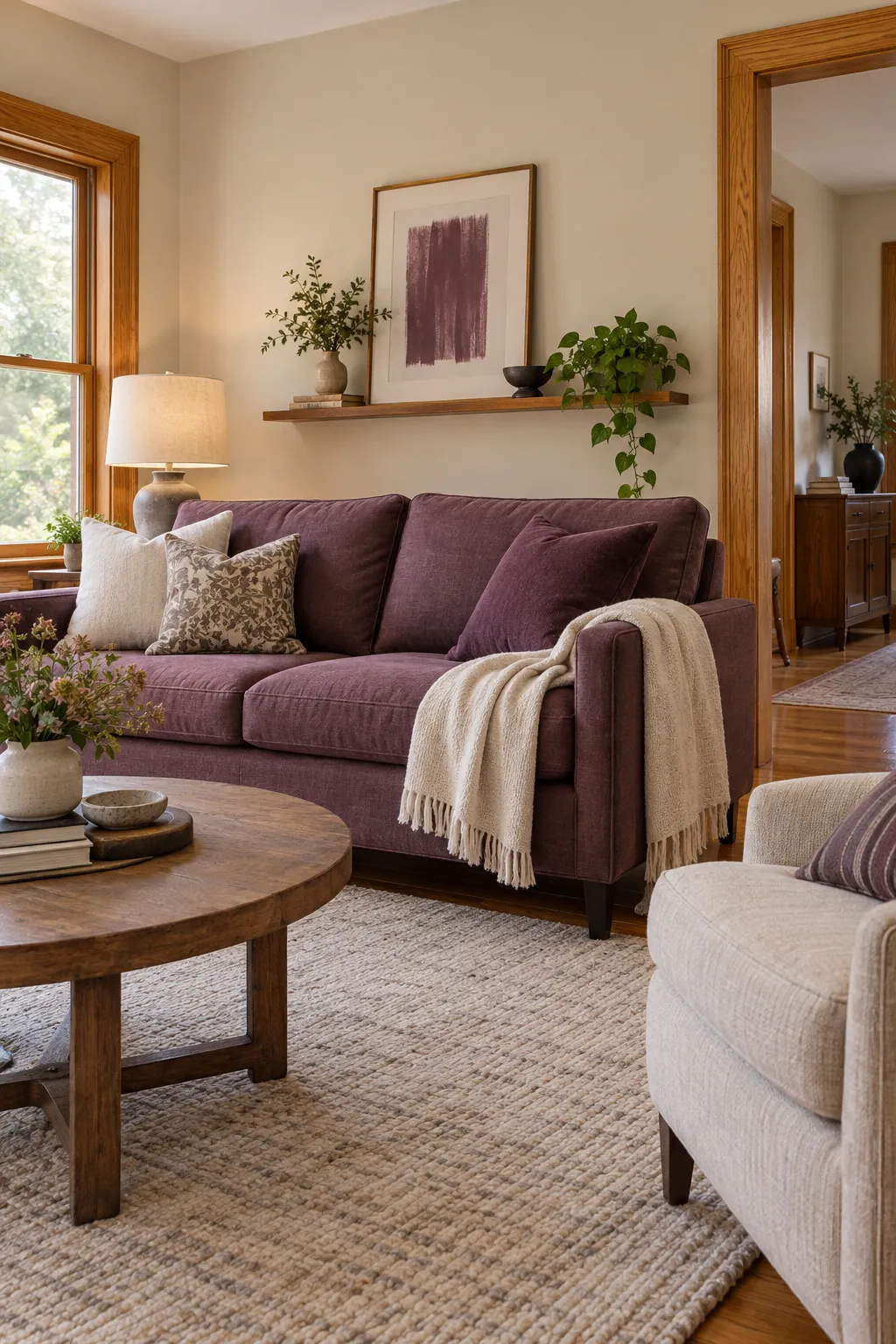
Ochre mustard creates a tonal scheme that leans into the warmth of oak rather than fighting it. The combination needs contrast from charcoal, cream, or deep green so individual surfaces remain visible. Use mustard on one tactile piece, such as a boucle cushion or wool blanket.
Matte Black
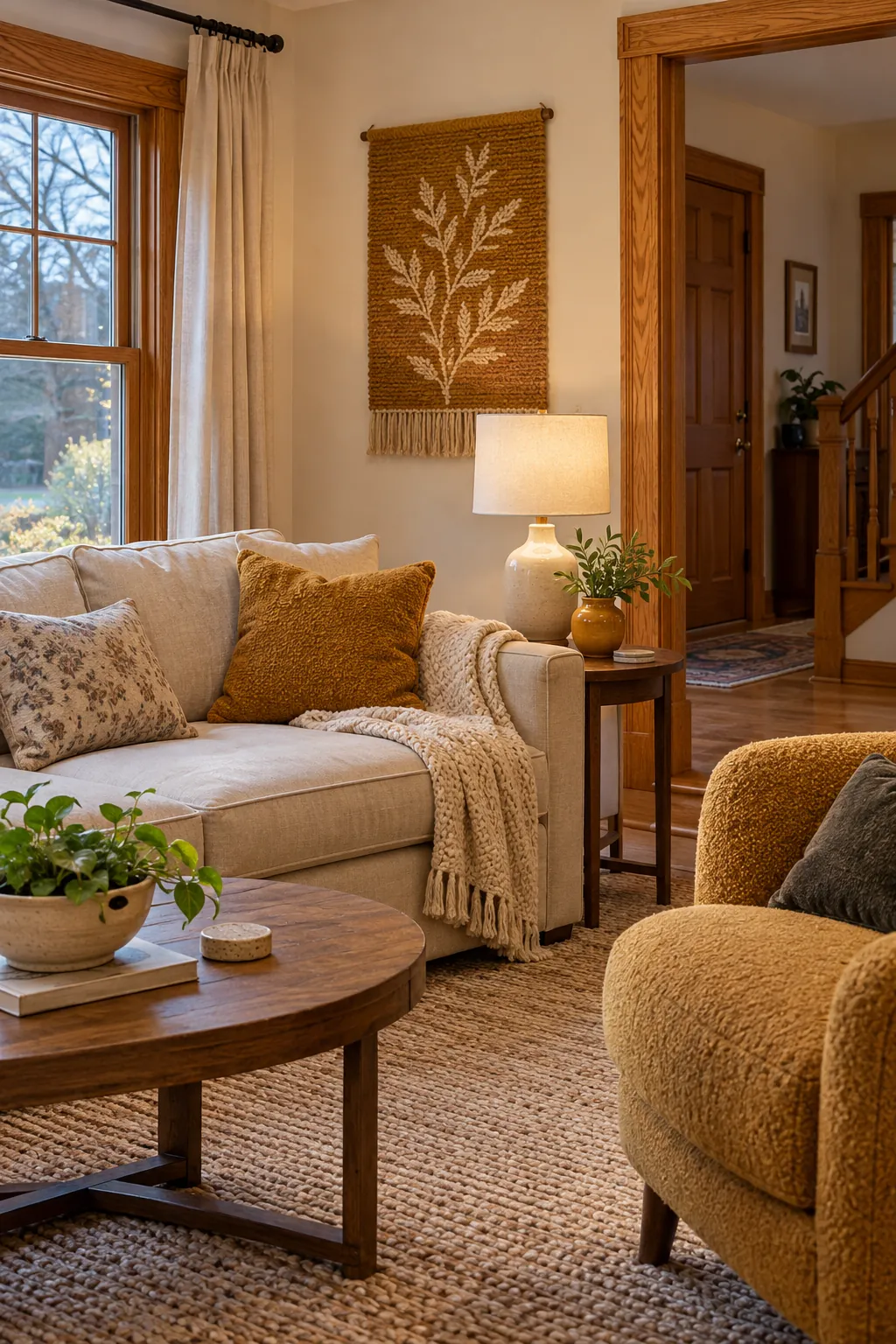
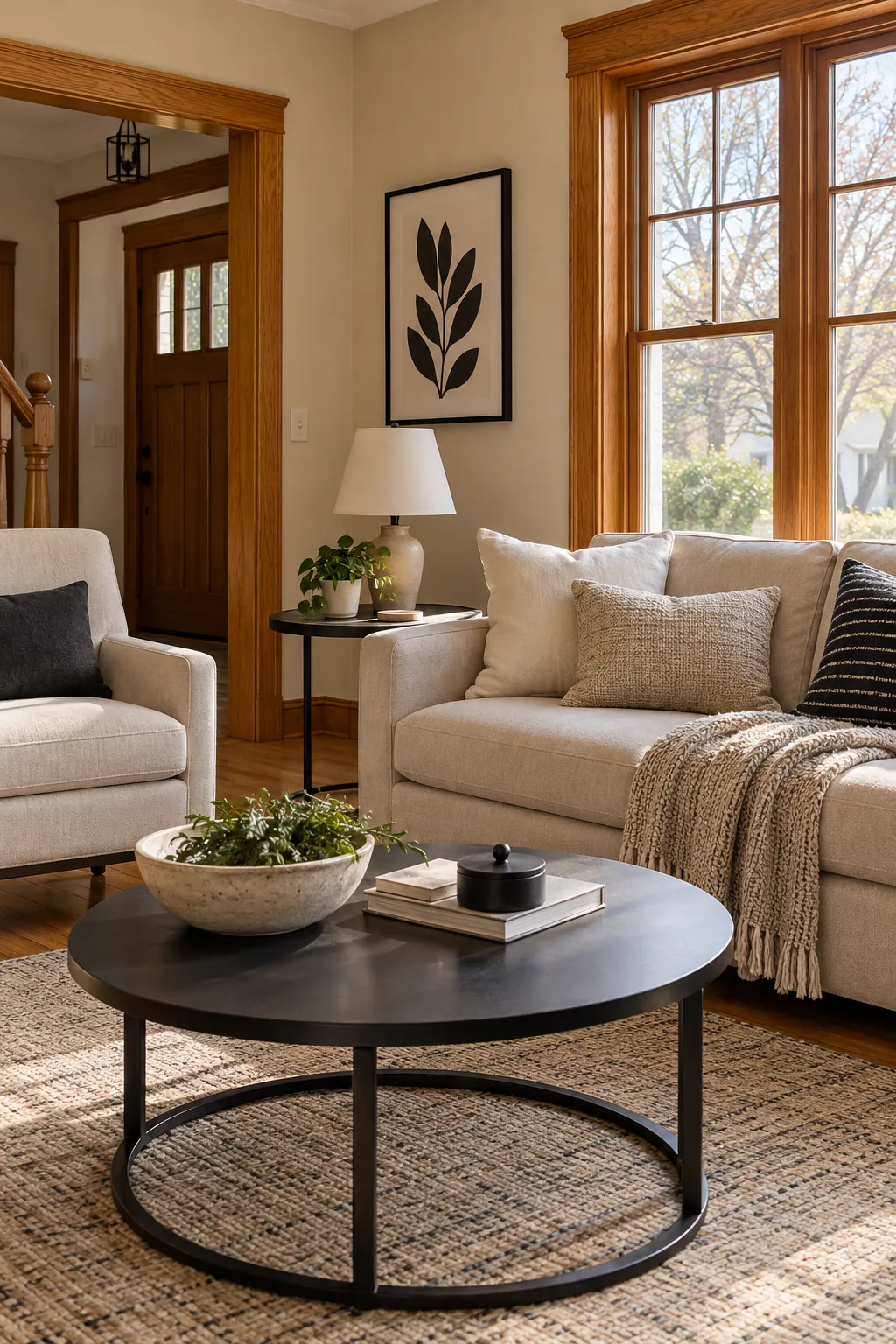
Matte black gives traditional honey oak a clean contemporary outline. Repeat it in two or three slim elements, such as a floor lamp, curtain rod, and picture frame, instead of adding one heavy black cabinet. The repetition makes existing wood look intentional and keeps the room visually connected.
Muted Coral
Muted coral adds warmth with a softer, pinker direction than rust or terracotta. It suits small accents near cream fabric, pale stone, and leafy green plants. Select a chalky coral with low saturation so it does not compete with the trim.