
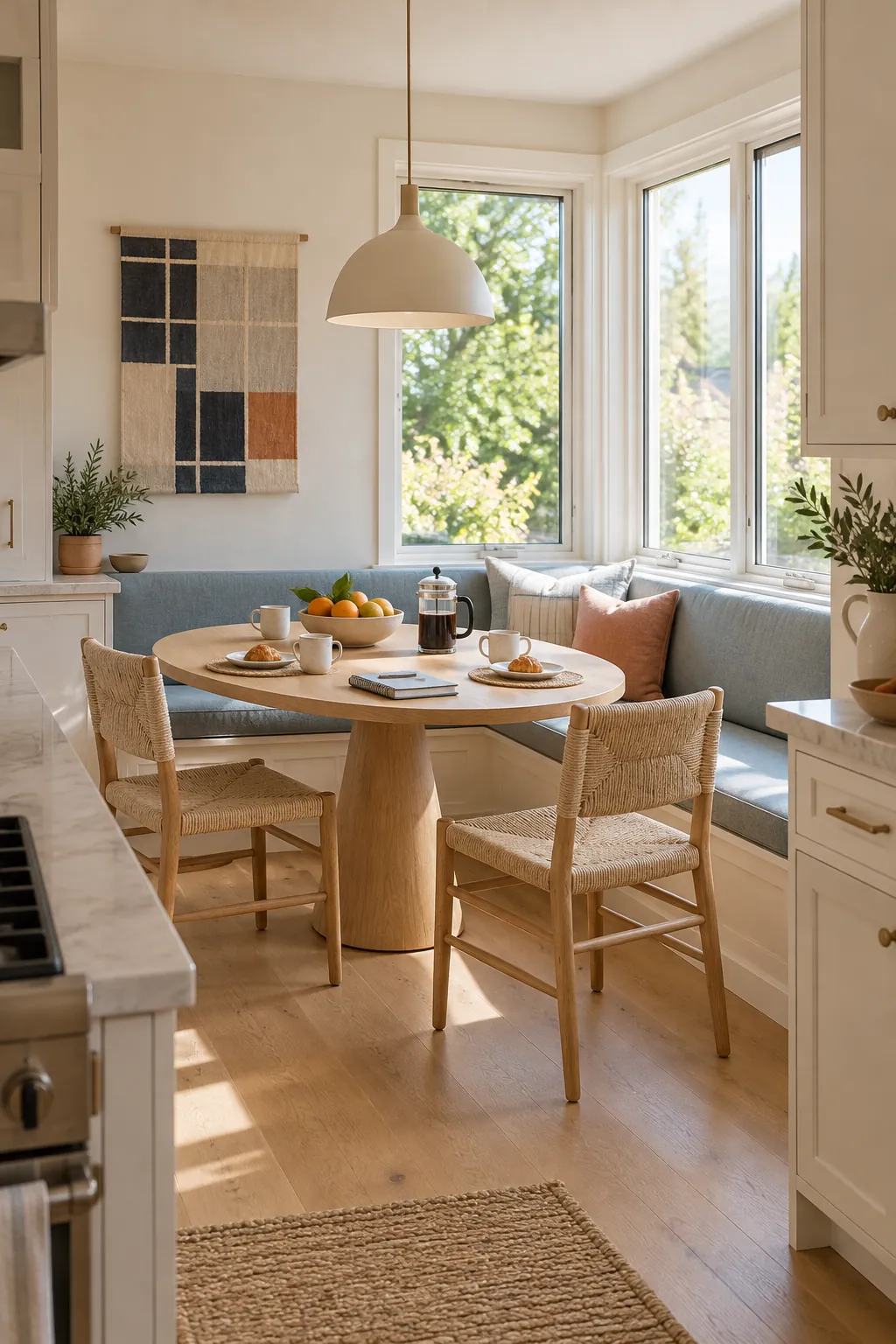
A breakfast nook earns its space when it supports the first hour of the day without creating a new obstacle in the kitchen. The right setup is not simply a bench beside a small table. It is a measured arrangement where every regular diner can sit, stand, reach the table, and move toward the coffee maker while someone else remains seated.
Decide what the nook must support
List the activities that will happen here before choosing furniture. Daily breakfast may need two comfortable places, while homework needs a flat surface, a nearby outlet, and stronger light. Board games require elbow room. A guest who talks with the cook needs a seat that does not enter the work aisle.
Plan for the regular routine first. Occasional capacity can come from one lightweight chair stored nearby. This keeps a small kitchen dining nook easy to use instead of crowding it with seats that remain empty most days.
Map the breakfast nook layout on the floor
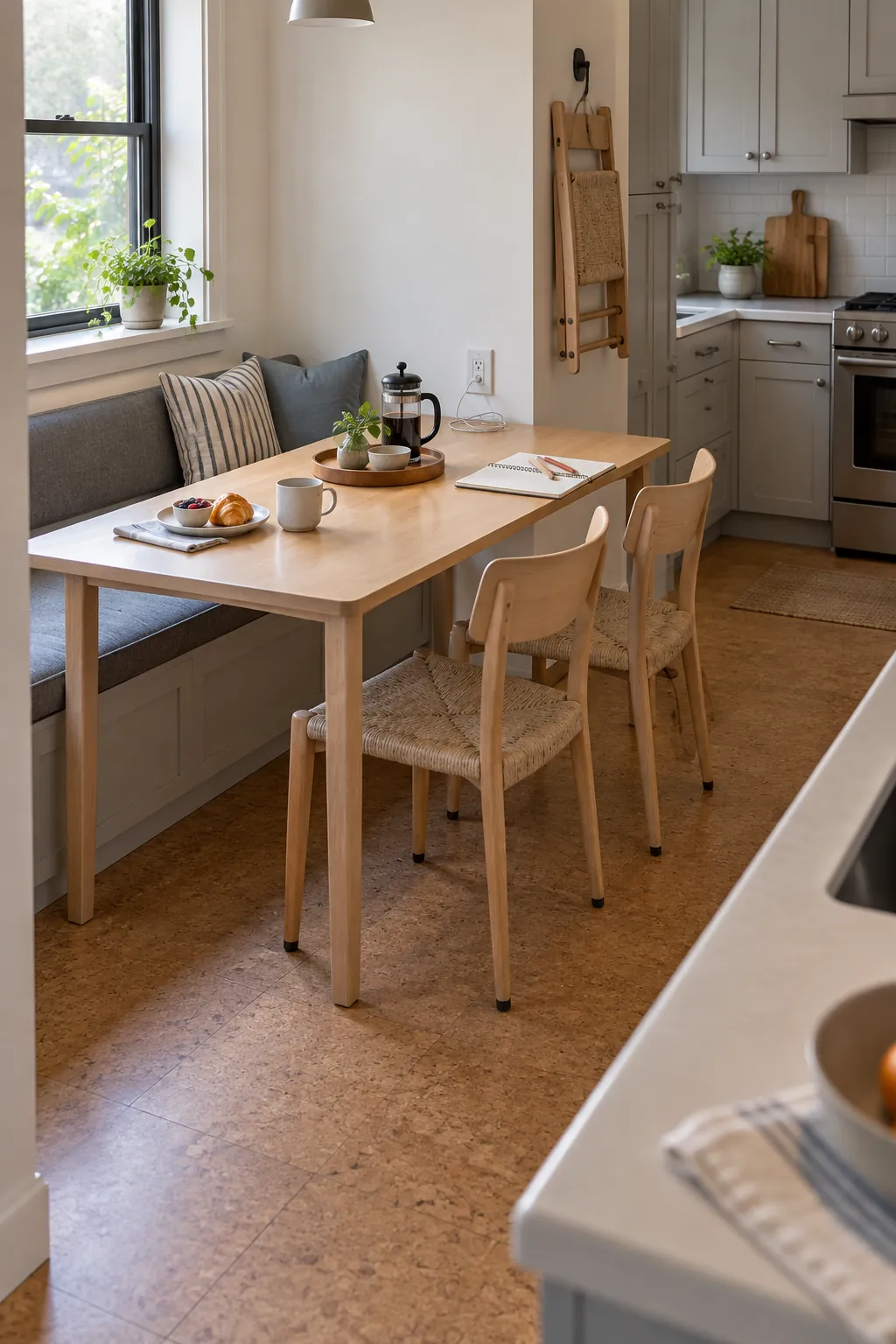
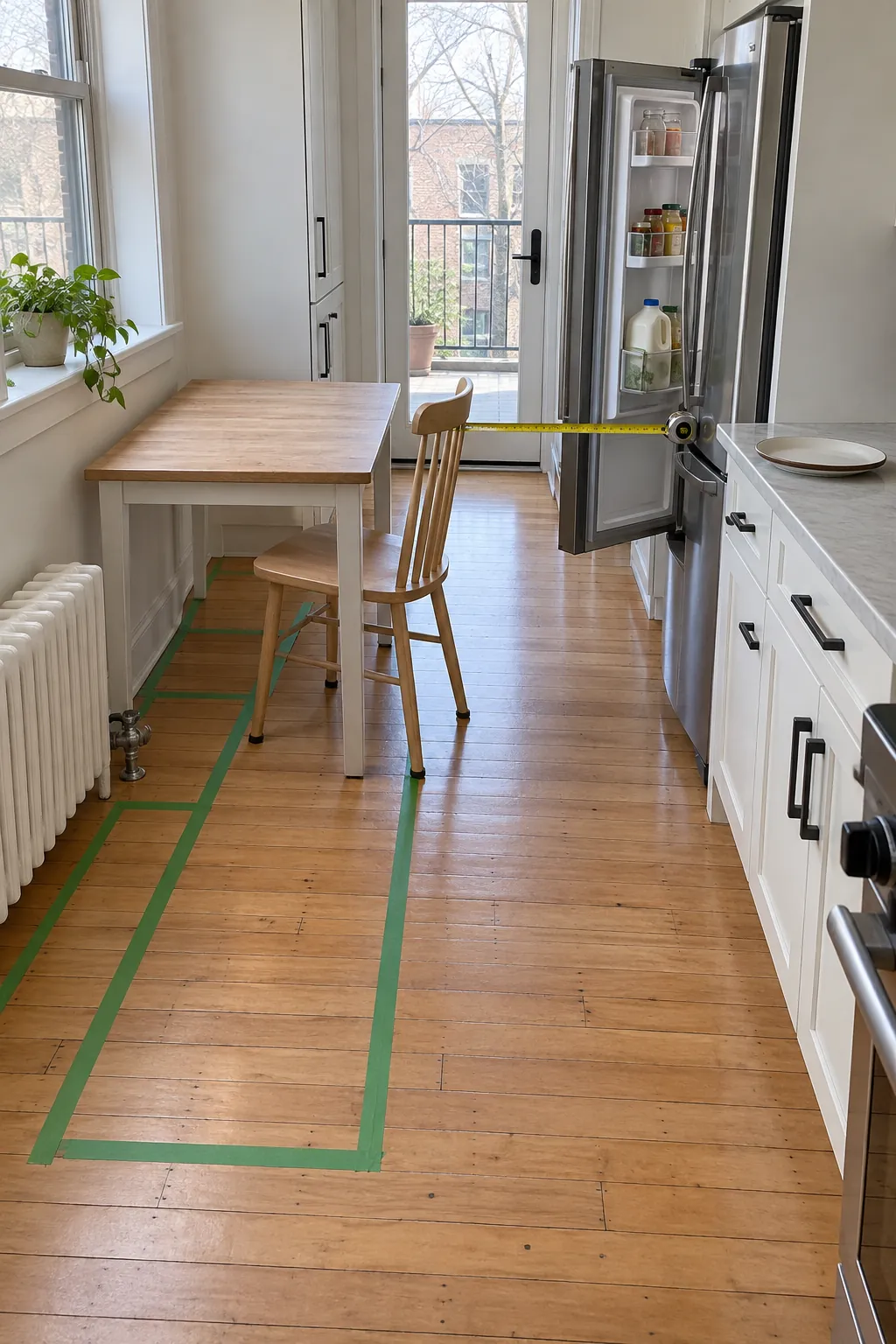
Measure the alcove at several heights because window trim, baseboards, radiators, and sloped walls can reduce usable space. Mark the proposed table and seat edges with removable tape. Pull a chair back, open every nearby door, and carry a plate through the kitchen. The test should include another person sitting at the table.
Protect the busiest route even if that means a smaller table. A compact dining corner feels generous when movement is easy. It feels cramped when every trip to the refrigerator requires a seated person to move.
Match the table to the seating geometry
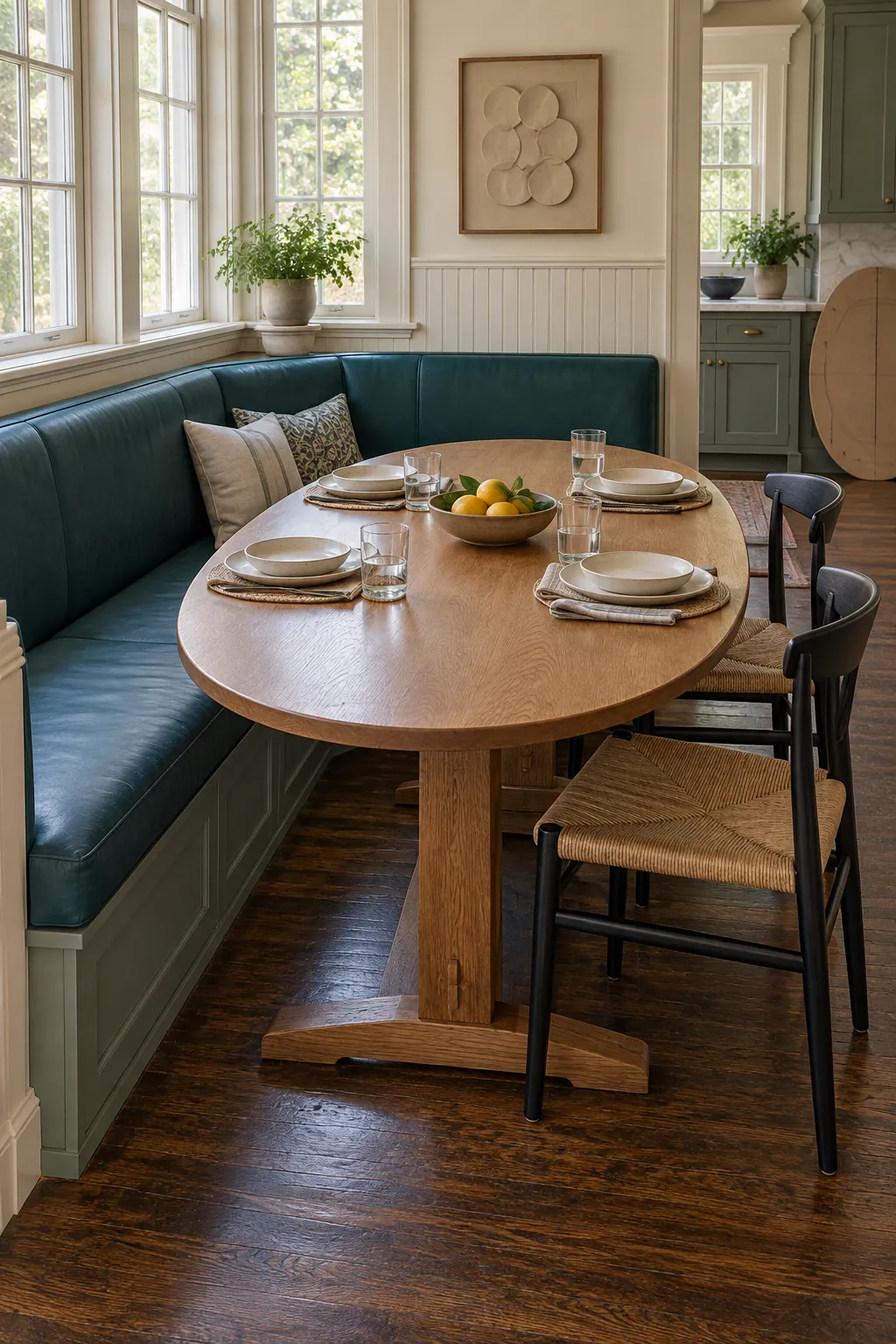
A round pedestal table works well with a short straight bench and two chairs because its edge gives people several approach angles. It may waste seats inside a long rectangular corner banquette. In that layout, a narrow rectangular or oval table often places more usable edge in front of each diner.
Make a cardboard outline of the tabletop and set plates at every intended place. Check that each person has a clear section of table and room for knees. A pedestal or trestle base can improve access, but its foot must not extend into the most useful standing area. Choose shape from the actual seating plan, not from a general small space rule.
Make a banquette comfortable and useful
Corner banquette seating needs enough seat depth for an upright posture after cushions are installed. A thick breakfast cushion changes the final seat height, so test it with the table before construction ends. A gently angled back or a slim firm back cushion is more comfortable than a vertical wall with loose pillows.
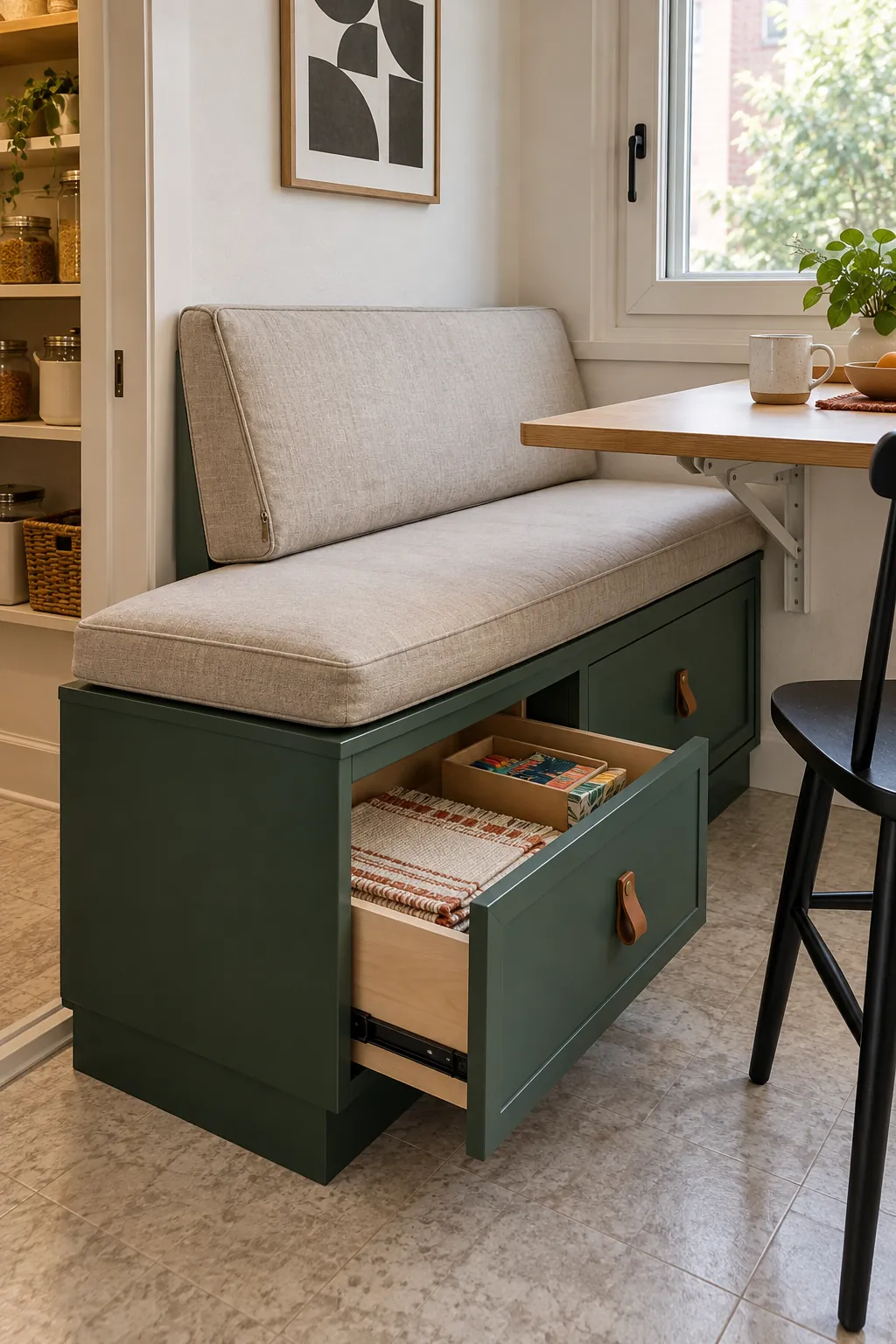
Built in bench storage should open without clearing the whole nook. Front drawers are convenient for place mats, art supplies, and chargers. A lift top is better for items used less often. In a rental, a freestanding bench with drawers provides useful storage without changing the building.
Use removable covers and durable fabric. Breakfast brings crumbs, fruit, and coffee close to every surface. Washable upholstery makes the nook easier to enjoy because small spills do not become a permanent concern.
Use the window without blocking it
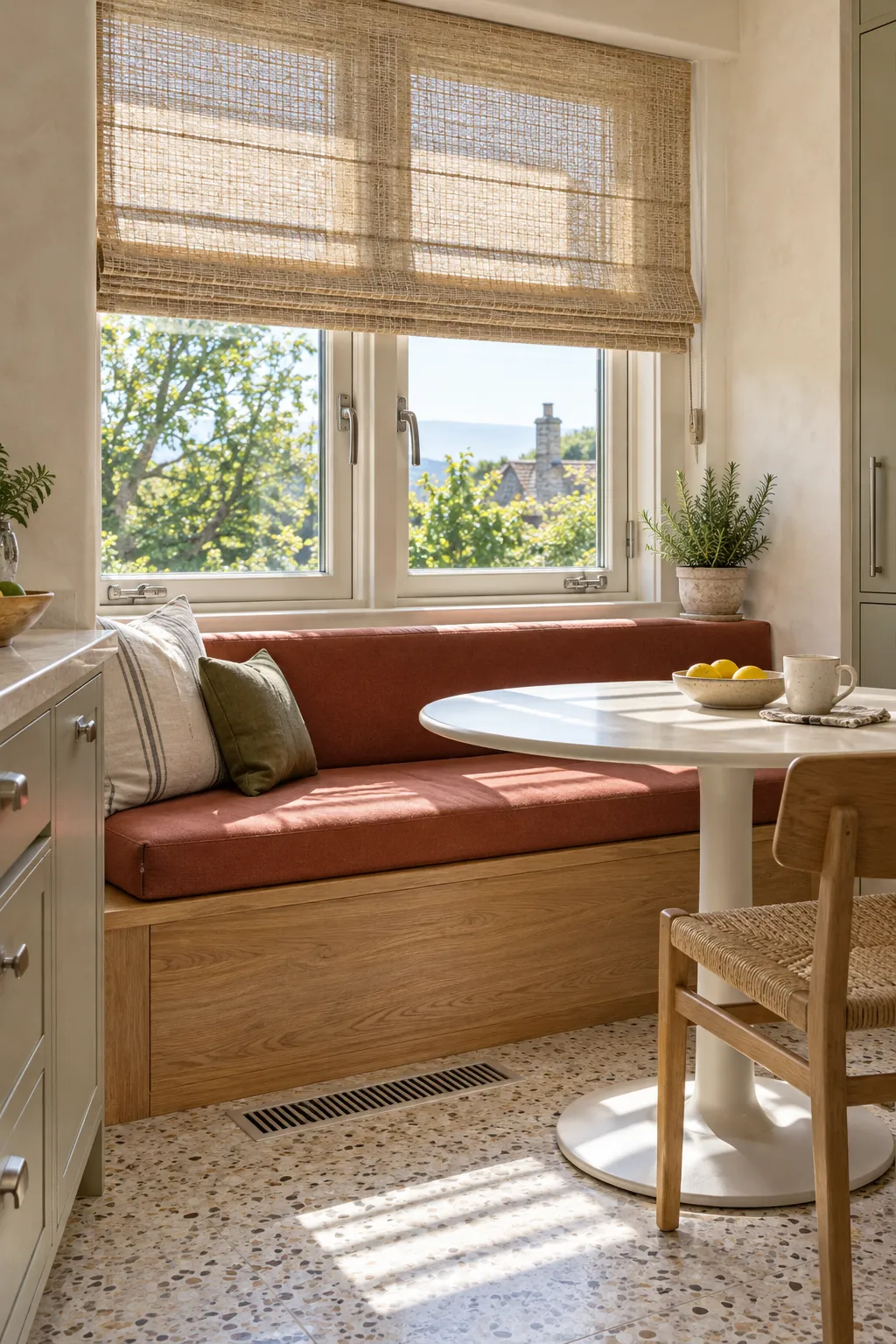
A cozy window seat can make morning light the best feature of the nook, but the layout must respect how the window opens. Keep cushion backs below handles and leave room for curtains or shades. Check for cold glass, strong afternoon sun, and a radiator beneath the sill before fixing a bench in place.
Use a washable shade to control glare during homework or summer meals. If the glass feels cold in winter, a lined curtain can improve comfort as long as it remains safely clear of heat sources. A small plant can soften the sill, but it should not compete with plates for table space.
Layer light for breakfast and evening use
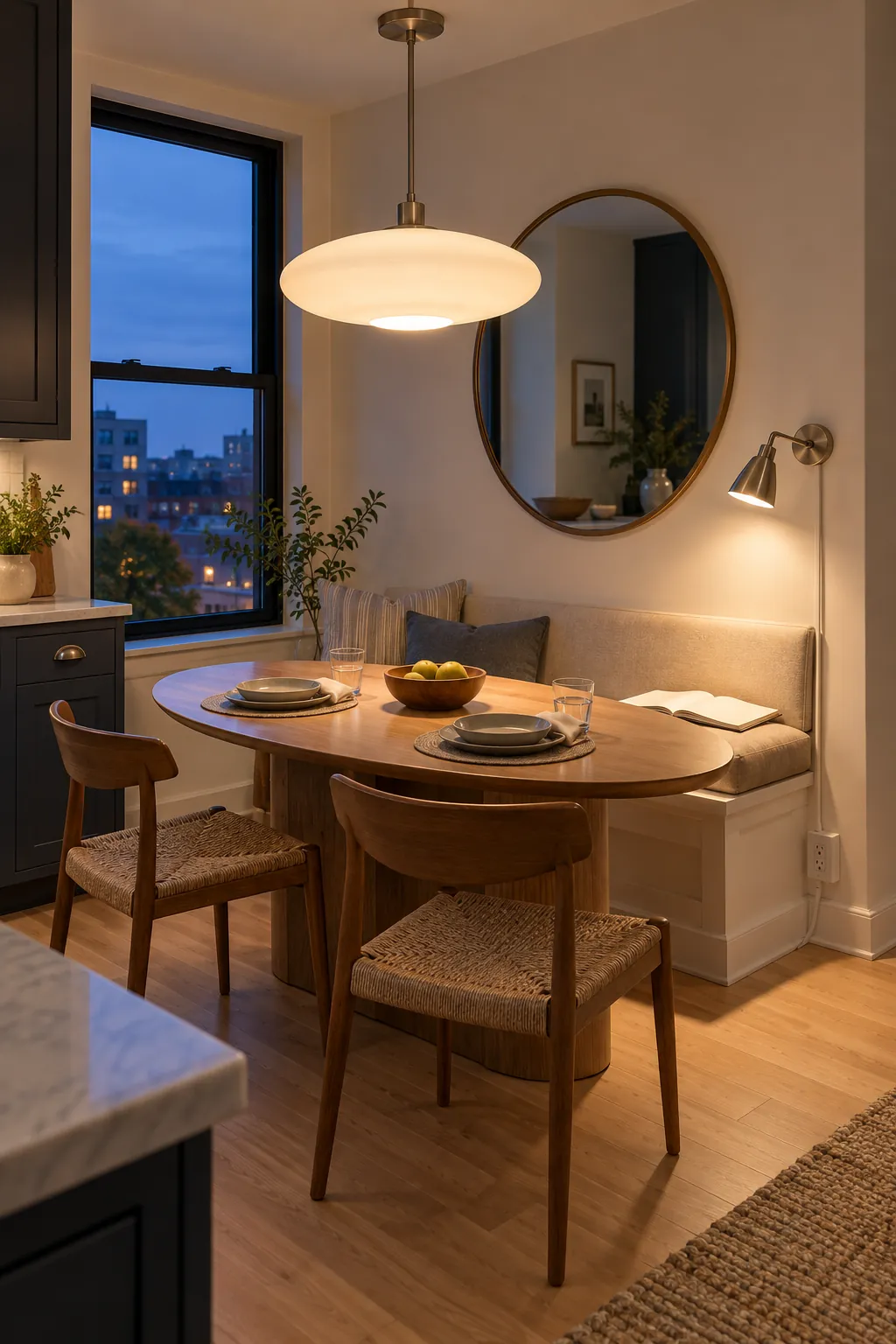
Breakfast nook lighting should make food, faces, and schoolwork easy to see. Center a pendant over the table rather than over the entire alcove. Choose a shade that controls glare while spreading enough light across the surface. A dimmable bulb lets the same fixture move from bright morning use to a softer evening meal.
Add a small wall light or nearby lamp if the corner remains dark after sunset. Keep cords away from the bench and walking route. Daylight, direct table light, and gentle ambient light create a more useful nook than one dramatic fixture alone.
Run a week of ordinary mornings
Use the setup for a full week before adding more decor. Notice where mail gathers, whether a school bag blocks a chair, and which items need nearby storage. Move the table a few inches if it improves the route. Keep only a low bowl or small vase on the surface so breakfast can arrive without a clearing ritual.
The final test is simple: one person should be able to make coffee while another remains comfortably seated. When that works, the breakfast nook has become part of the kitchen routine instead of a picture that must be protected.