
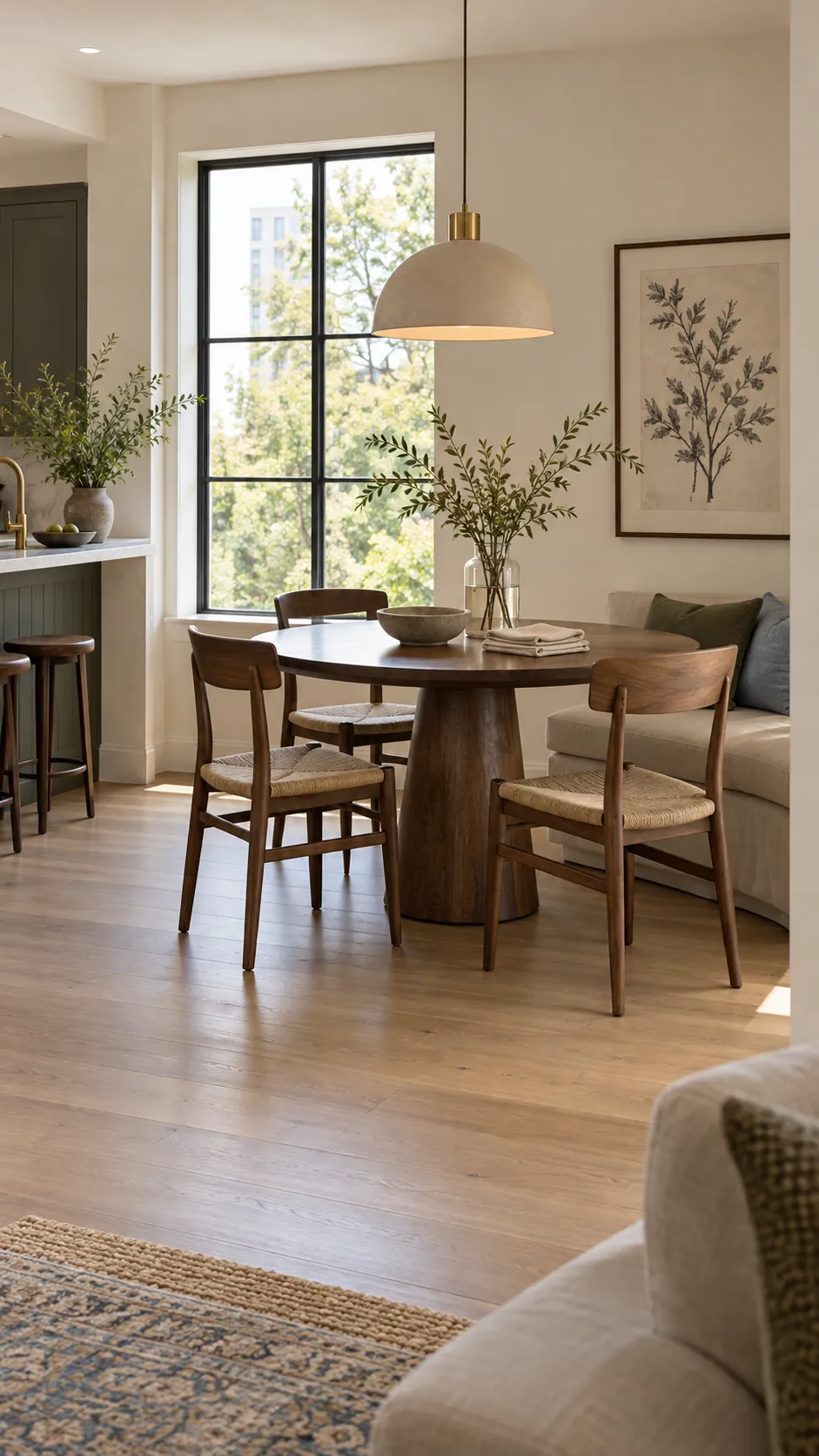
A small dining area can hold beautiful objects and still remain unused. If a chair is hard to reach or the table interrupts the route between rooms, styling becomes decoration around a daily frustration. Start with the space people need to move and eat. Then use color, light, and a few well placed objects to make that working layout feel intentional.
Protect the path through the room
Watch how people move between the kitchen, living room, stairs, and entry. Mark the route that must stay open, including space for a chair when someone is seated. In a narrow apartment dining area, shifting the table away from the exact center can create a much easier passage.
Keep the clearest side visually quiet. A slim bench against the wall can reduce chair pullback needs, while lightweight chairs on the open side remain easy to move. The arrangement should work during an ordinary meal before any rug, plant, or console is added.
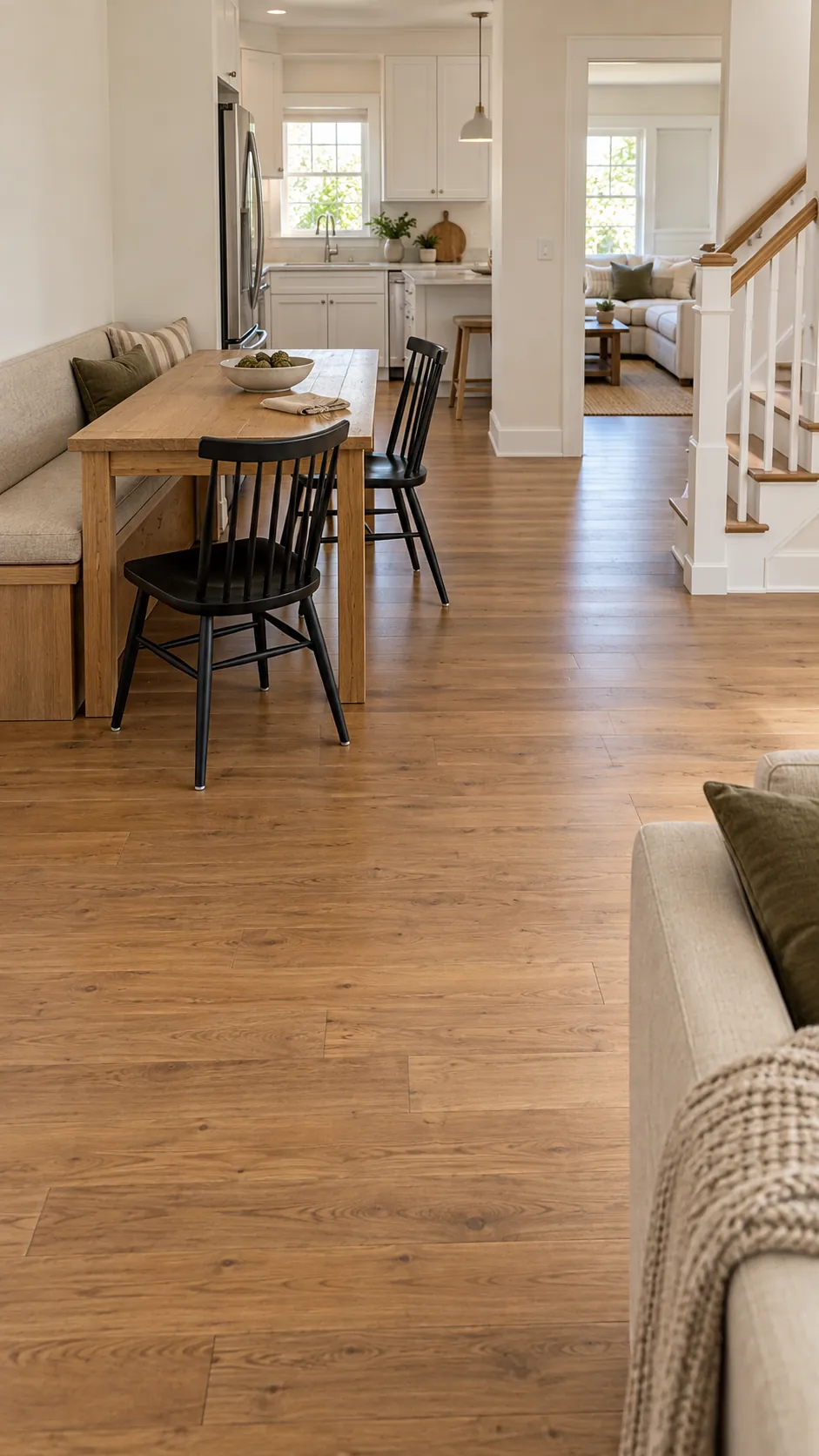
Choose a table with the right visual weight
A compact dining table should leave room to move without looking temporary or lost. A round table for a small space softens a busy route and removes sharp corners. A narrow oval table can serve more people along a wall. A square table suits a balanced corner where all four sides remain usable.
Pay attention to the base as well as the top. A pedestal opens knee space and makes chairs easier to place. Slender legs feel light, but they still need enough distance from seat positions. Repeat one material elsewhere in the room, such as the table wood in a frame or bowl, so the compact piece feels connected to the larger space.
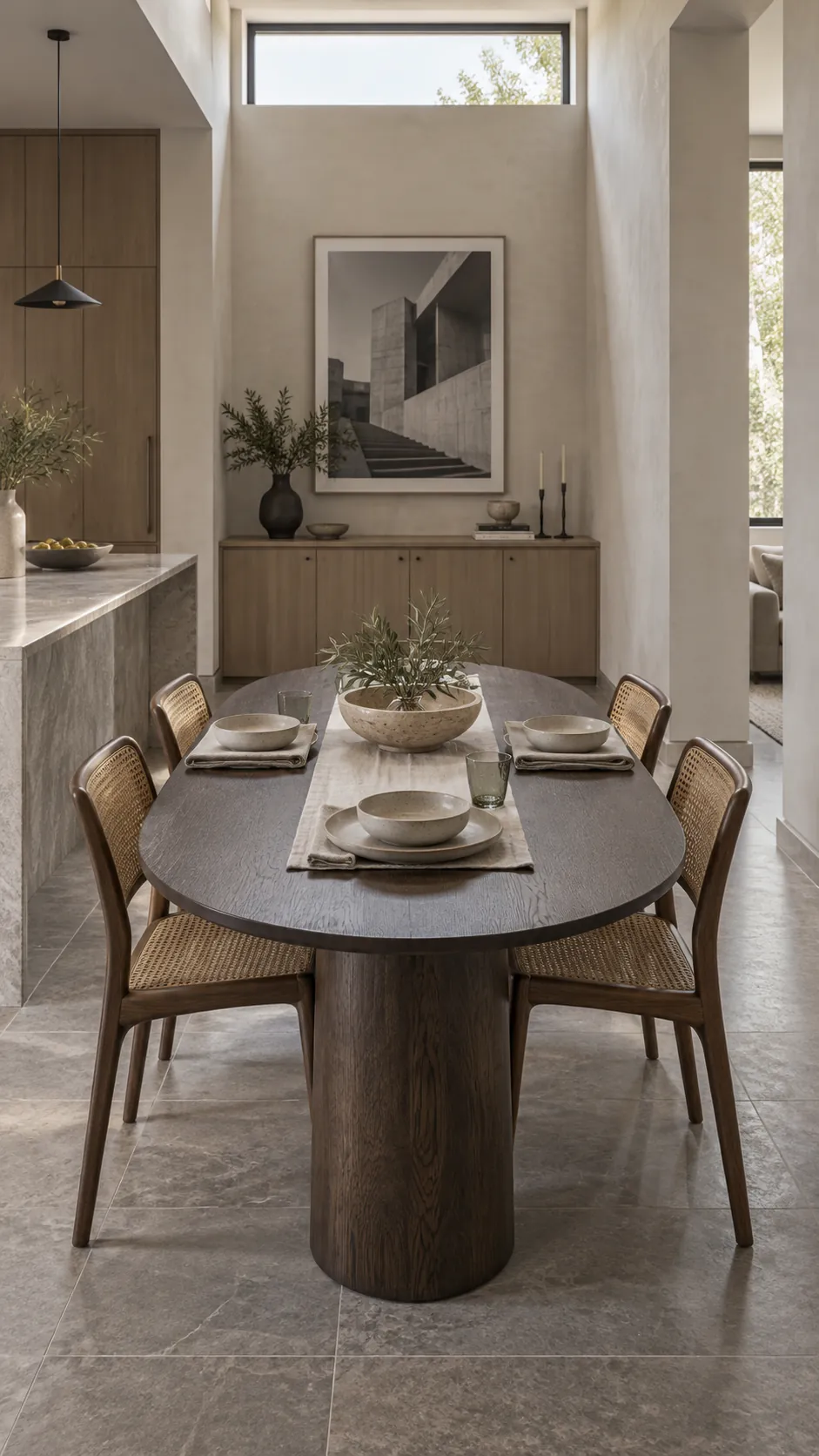
Use seating to reduce visual noise
Dining chairs do not need to match perfectly, but they should share a visual rhythm. Similar wood tones, repeated curves, or one upholstery color can unite different pieces. Open backs and visible floor make a tight area feel lighter than heavy solid chairs on every side.
Bench seating in a dining area can calm one edge because it creates a continuous line against the wall. Choose a shallow back and a fitted cushion rather than many loose pillows. Keep the opposite chairs slim enough to pull out without entering the main path.
Test comfort before choosing by appearance alone. A delicate chair that pinches or a deep bench that forces people to lean forward will make the dining area feel smaller every time it is used.
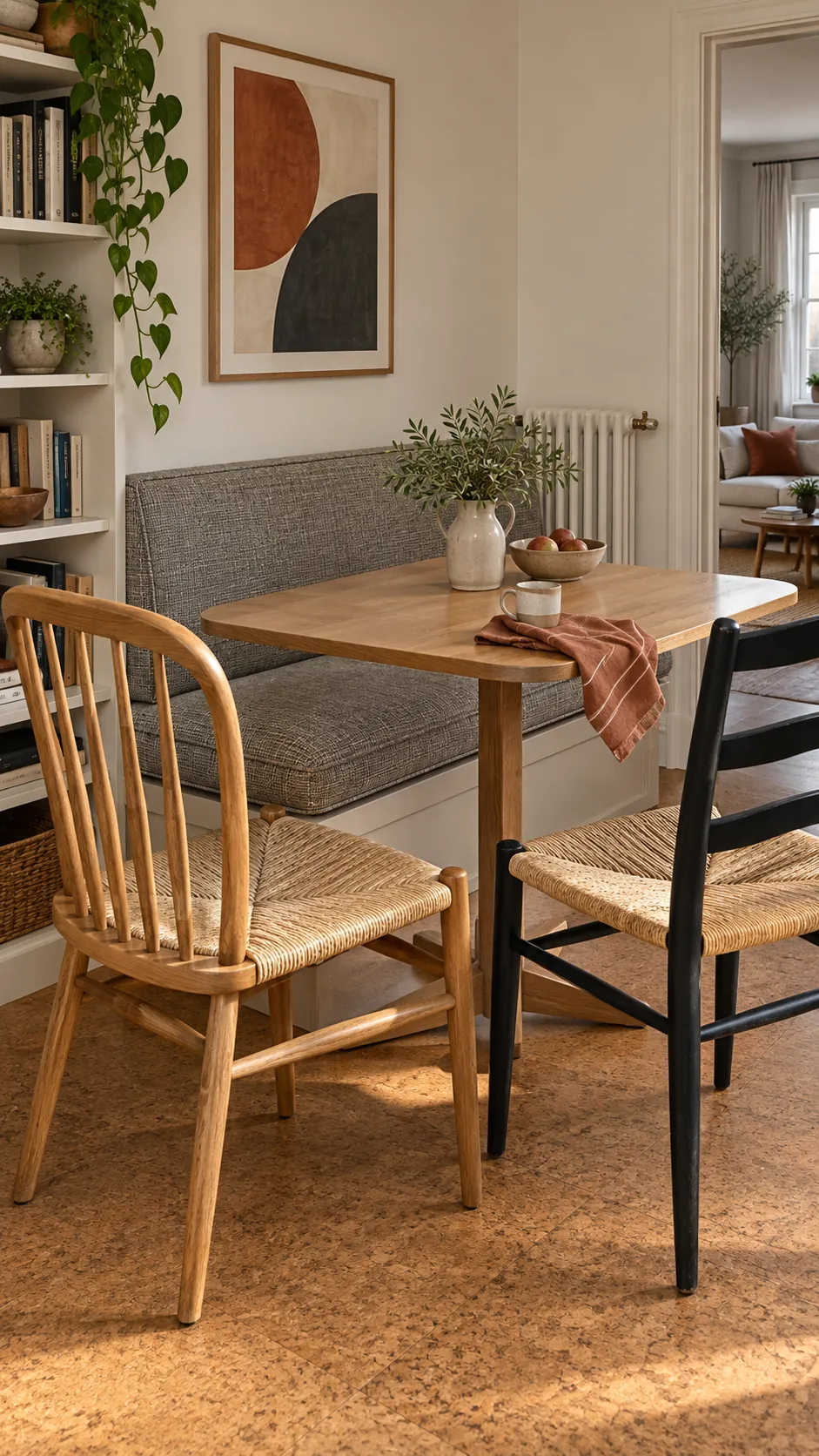
Give one wall a clear focal point
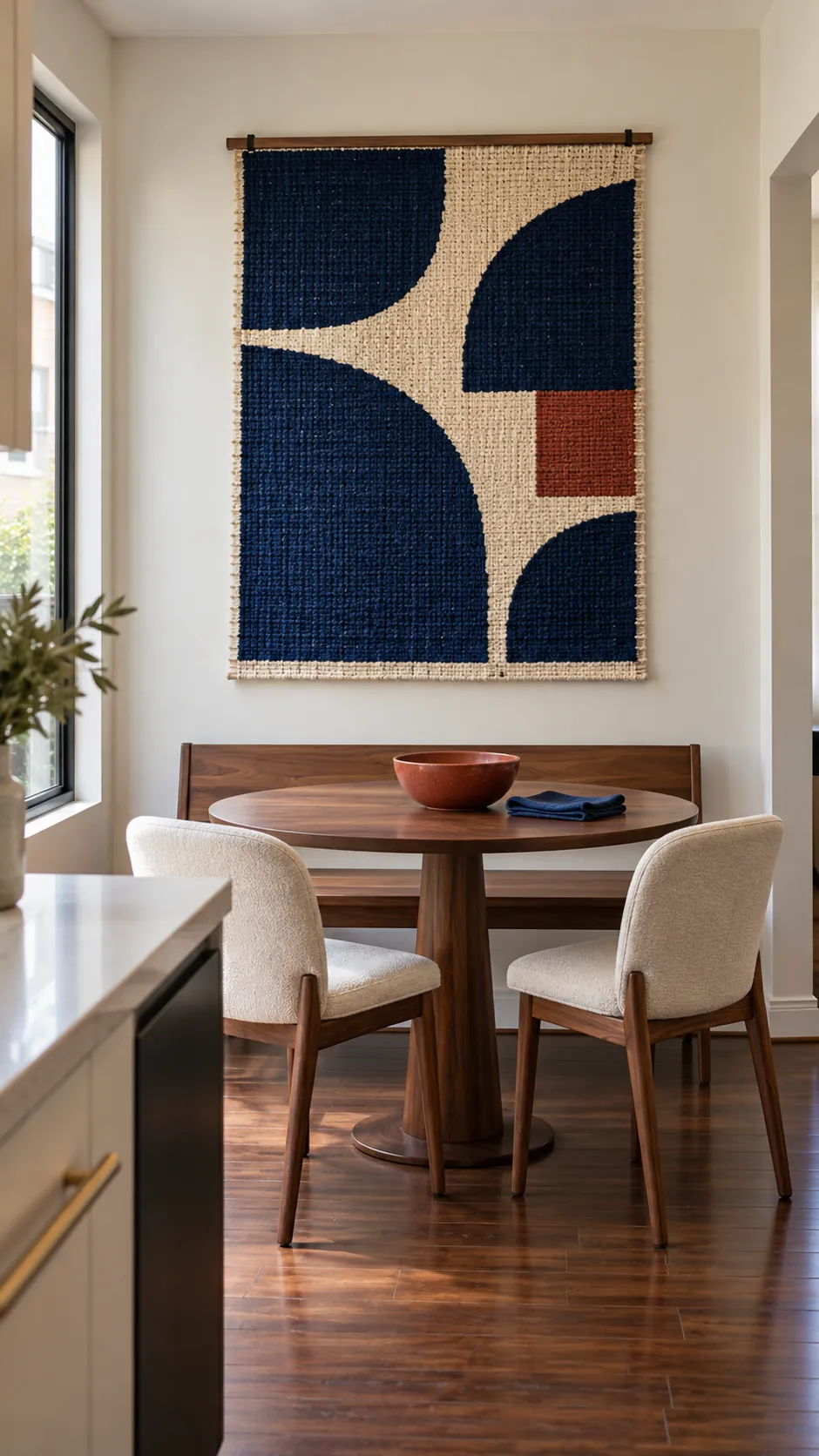
Small dining room decor becomes calmer when one wall carries the visual emphasis. Choose one substantial print, a sculptural textile, or a shallow display ledge with very few pieces. Let the other walls support it with quiet color and open space.
Relate the focal piece to the table rather than the entire room. Its width should feel stable above the dining group, and its lower edge should remain safely above seated shoulders. Pull one accent color from the artwork into a cushion or napkin, then stop. Repetition creates cohesion more effectively than adding more themes.
Place a mirror for light and a calm reflection
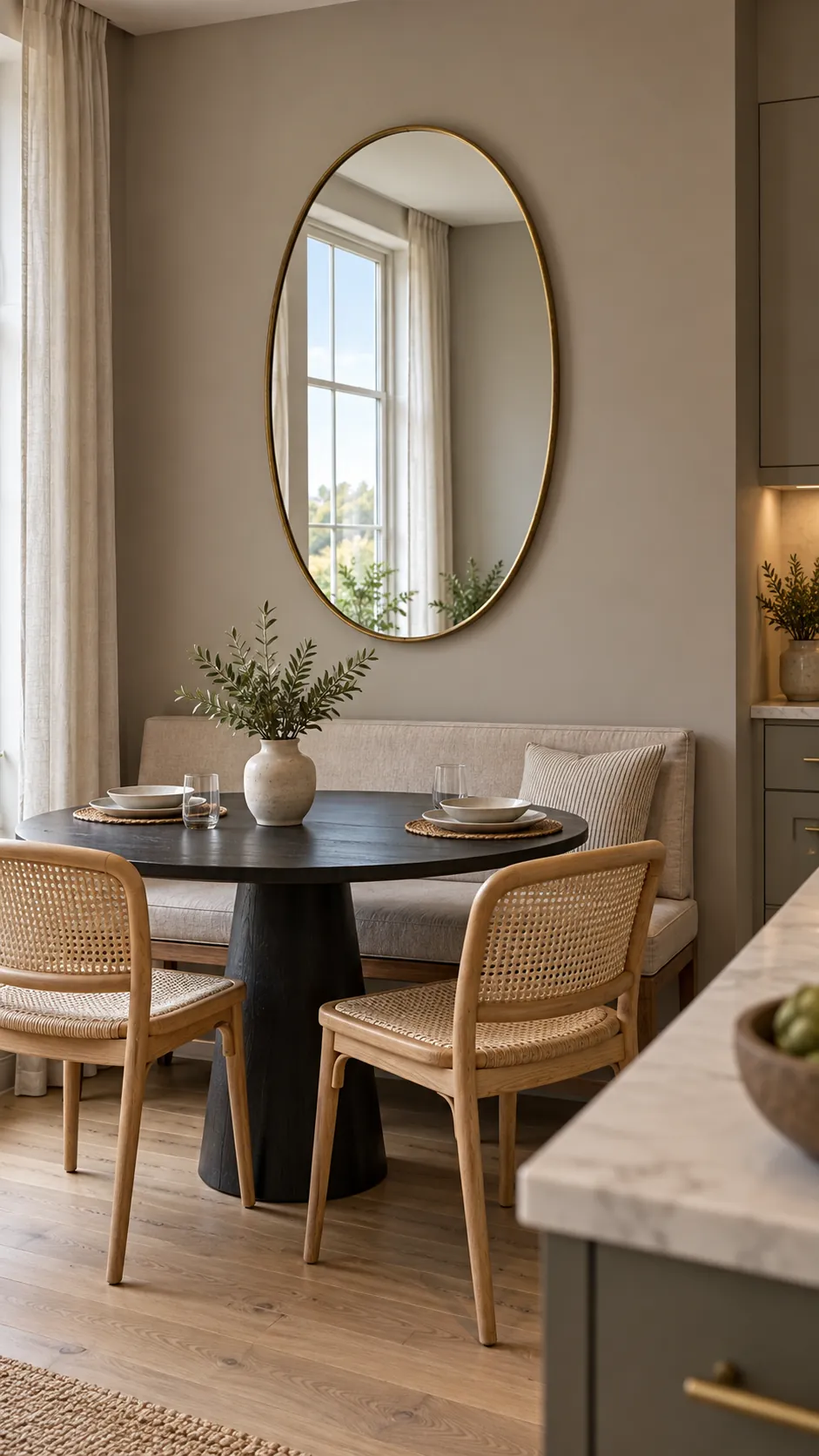
A dining room mirror can brighten a dim area, but it also repeats whatever faces it. Position it to reflect a window, pendant, or quiet wall instead of a crowded counter or busy doorway. Check the view from both standing and seated height before hanging it.
One medium or large mirror usually reads more clearly than several small mirrors. A simple frame keeps the reflected image as the main feature. If the room already has many visible objects, reduce them before adding a mirror so the space does not gain twice the visual clutter.
Center light on the table
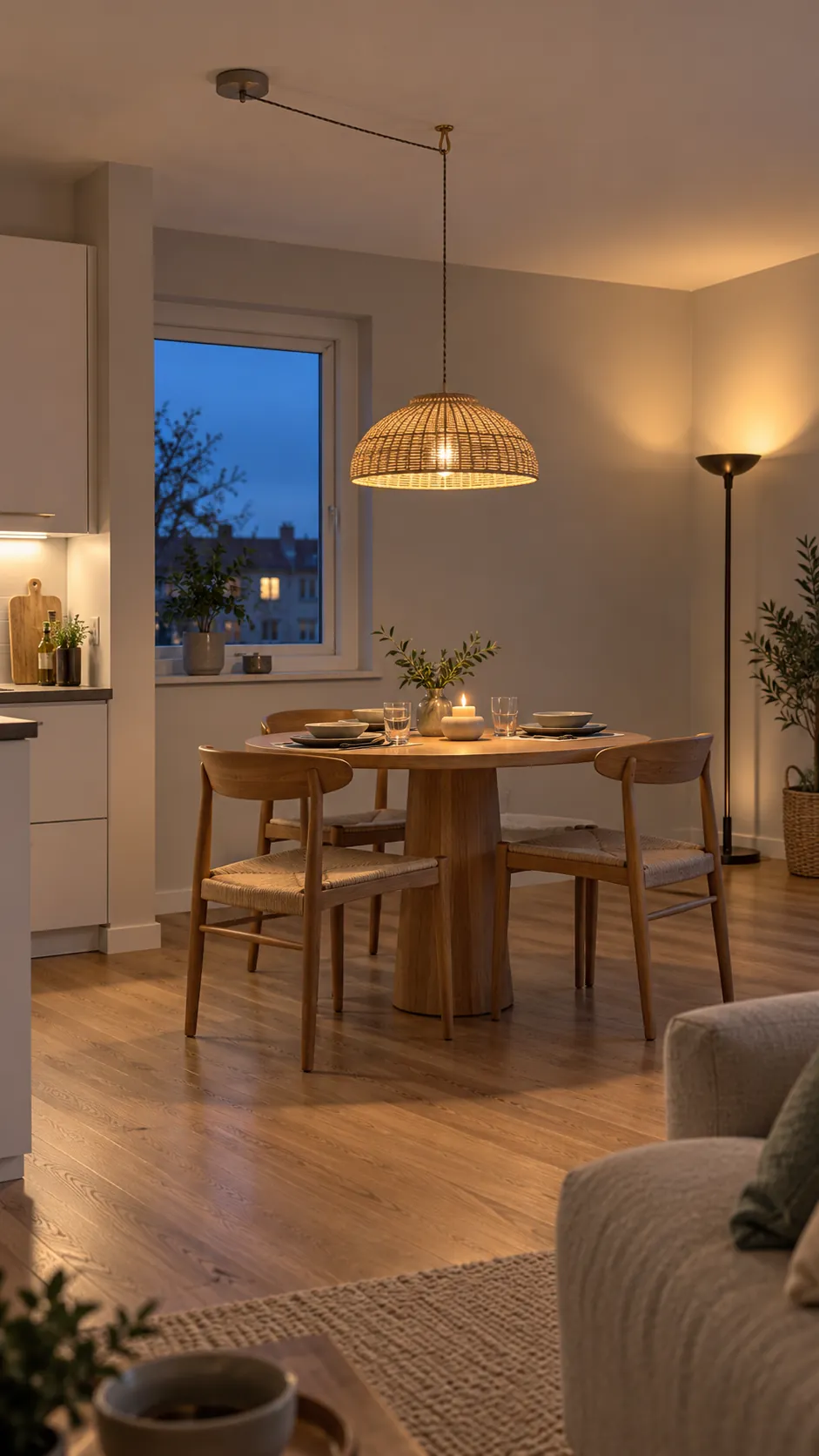
A pendant light over a small table defines the dining zone even when the room is open to other areas. Align it with the tabletop, not automatically with the ceiling or room. If the ceiling point is off center, a secure hook can shift a corded fixture, while a plug in wall light or slim floor lamp can support a rental.
Use a shade that lights the whole surface without blocking sightlines. Add soft ambient light nearby so the pendant is not a bright island in a dark room. Warm neutral bulbs flatter food and wood while keeping wall colors accurate.
Keep the final styling useful
Minimal dining room styling does not mean an empty or cold table. Choose one low object that can remain during a meal, such as a ceramic bowl, a small vase, or a pair of candle holders. Leave enough clear surface for plates and serving dishes.
Add texture where it is easy to clean: a washable cushion, linen napkins, or a curtain that softens the window. Use a rug only when every chair stays on it while pulled back. If the room cannot fit that size, a bare floor will look more intentional than a small rug that catches chair legs.
Remove one object whenever the space begins to feel busy. The best styled small dining area is not the one with the most ideas. It is the one where the path is clear, the chairs are inviting, and dinner can begin without moving the decor.