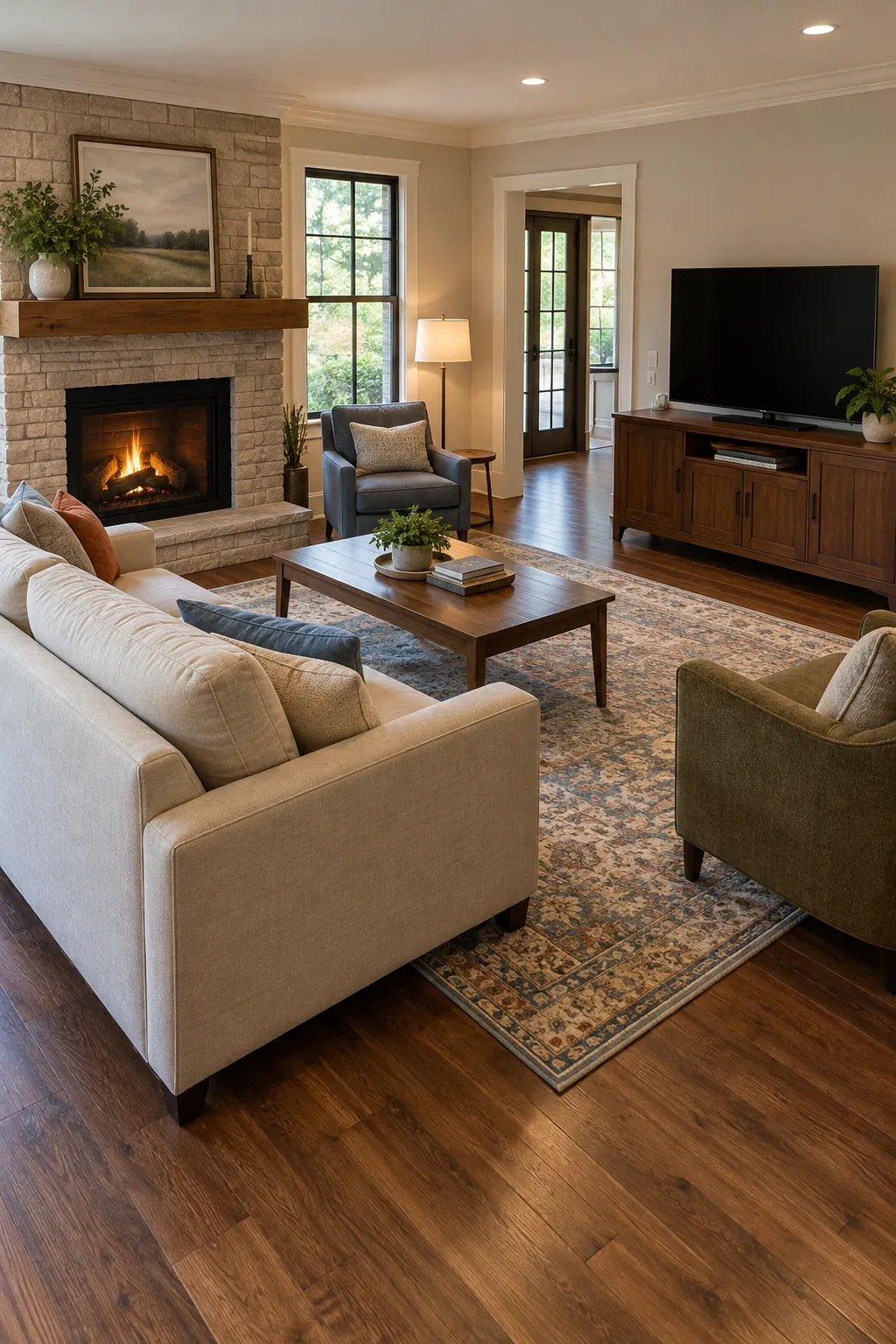
A fireplace and television on different walls do not create a design failure. They create two activities that need a shared seating plan. The best layout protects comfortable screen height, makes conversation natural, and keeps the route through the room outside the main viewing line.
Indexed Reddit discussions show why homeowners resist placing a television over the fireplace: the screen often sits too high, the room can feel devoted to television, and ordinary movement becomes awkward. Floating furniture, movable chairs, and a clear walkway solve more than forced symmetry. Measure the room and choose the activity that happens most often before selecting a plan.
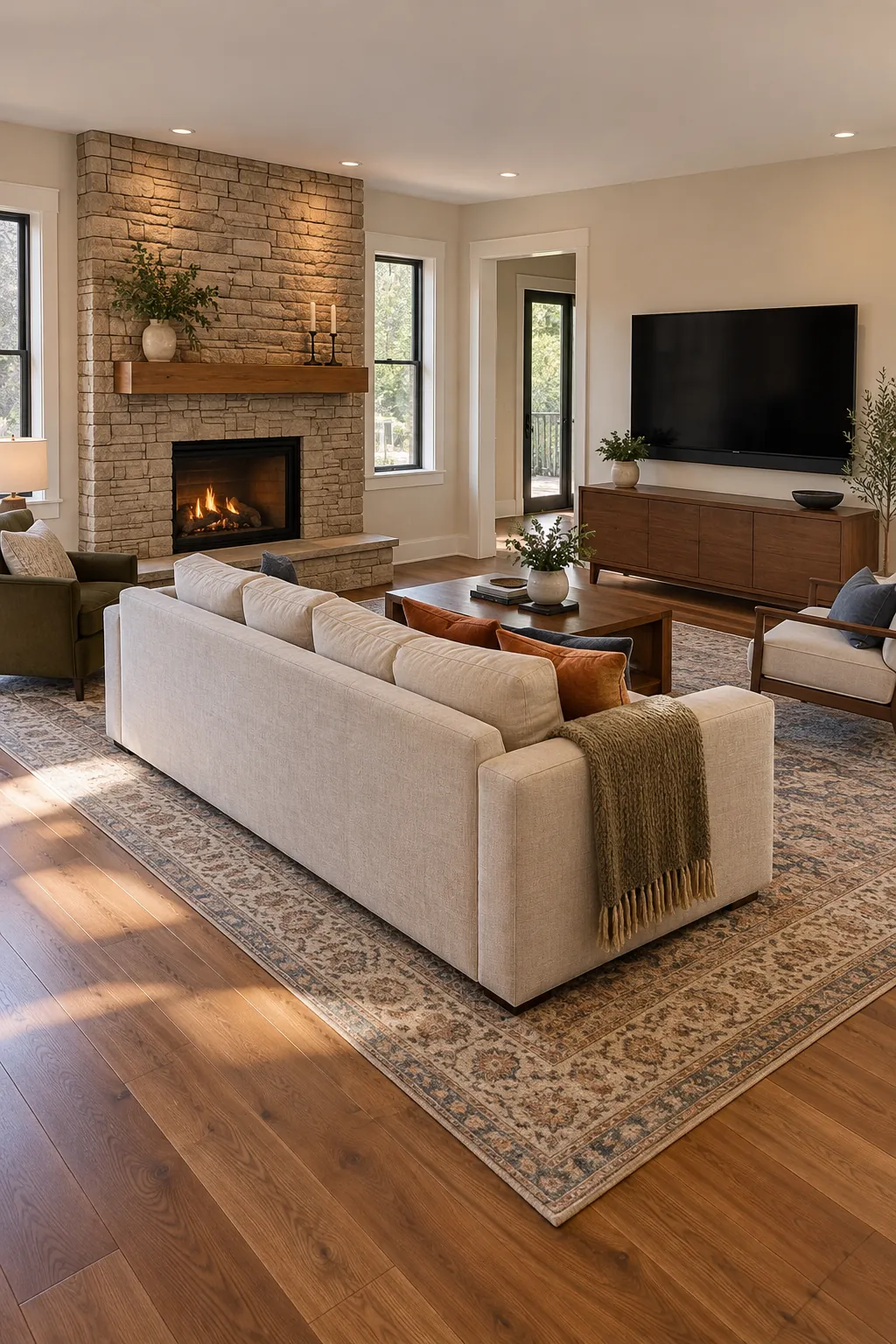
Float the Sofa Between Both Focal Walls
A floating sofa can divide the room without declaring either wall the only focal point. Aim one end toward the fireplace and keep a comfortable viewing line to the television. Leave a clear path behind the sofa so circulation does not cut through the seating group.
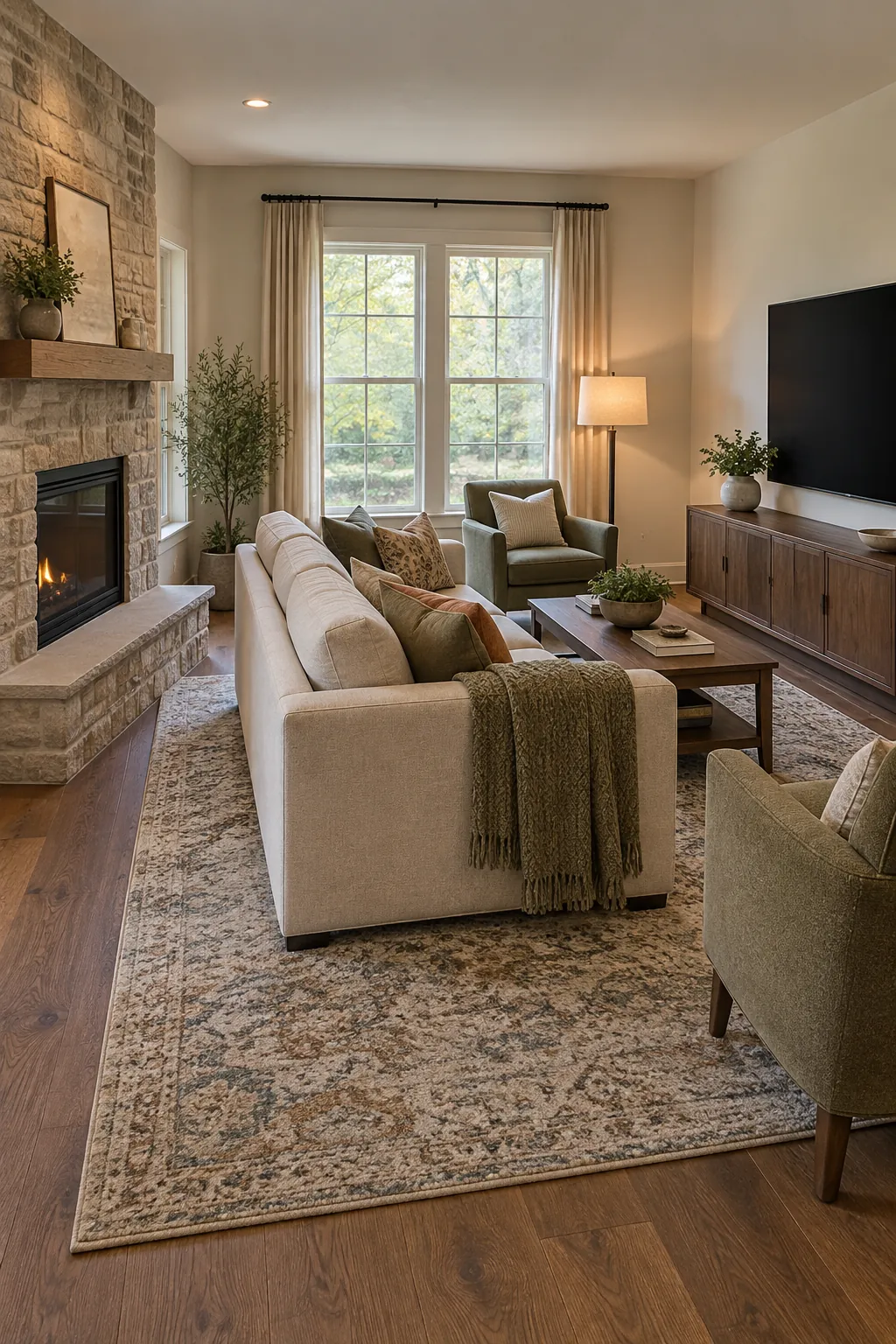
Angle the Sofa Toward the Room Corner
A slight sofa angle can reduce the hard ninety degree conflict between two walls. Align the coffee table with the sofa so the arrangement reads as deliberate. Check that the angled corners do not pinch the route to a doorway or dining area.
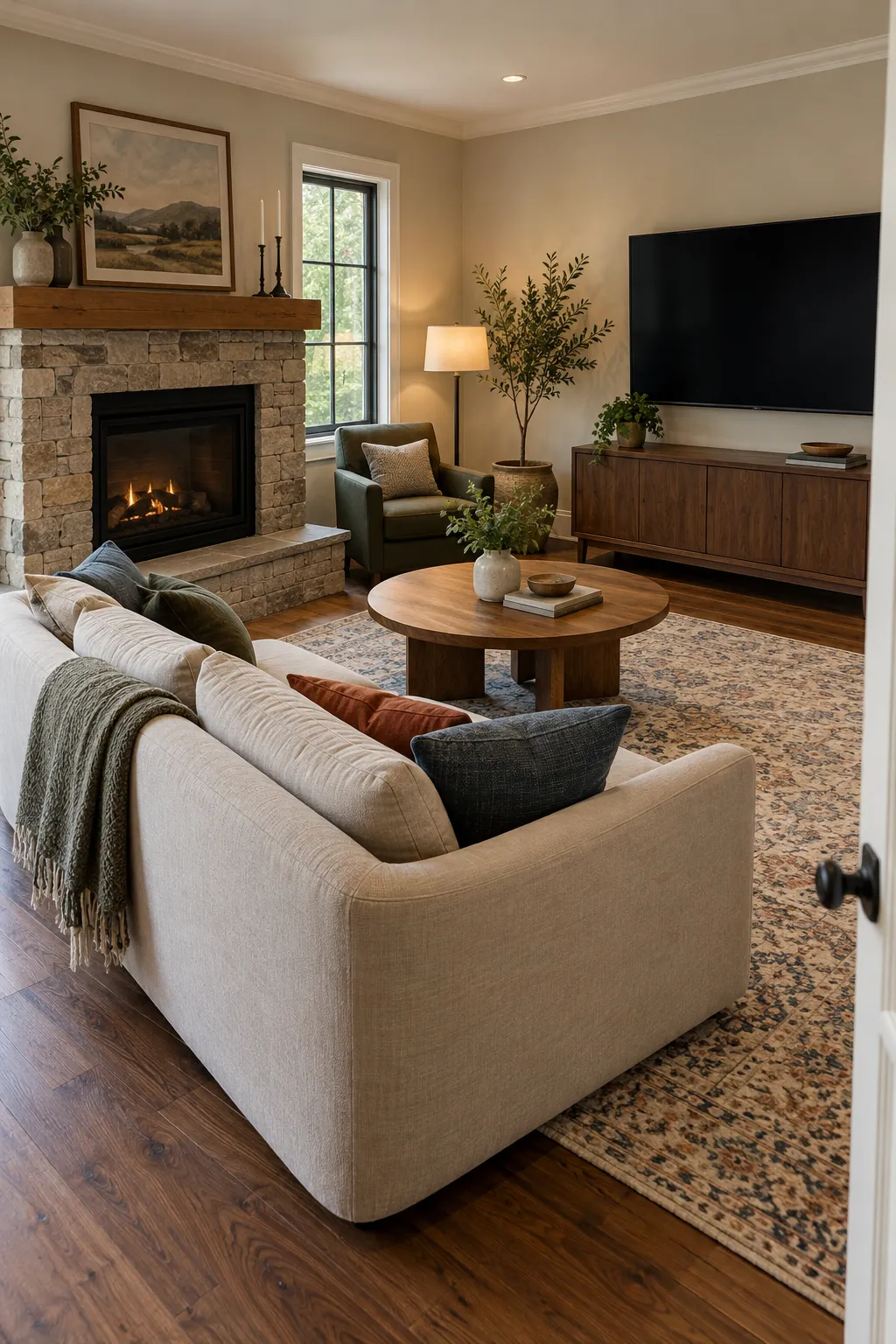
Place a Sofa Facing the TV With Chairs by the Fire
Facing the sofa toward the television supports regular viewing while two light chairs near the hearth preserve conversation. Choose chairs that move easily and keep their backs low enough to leave the fireplace visible. This gives each focal point a natural activity instead of forcing both into one straight axis.
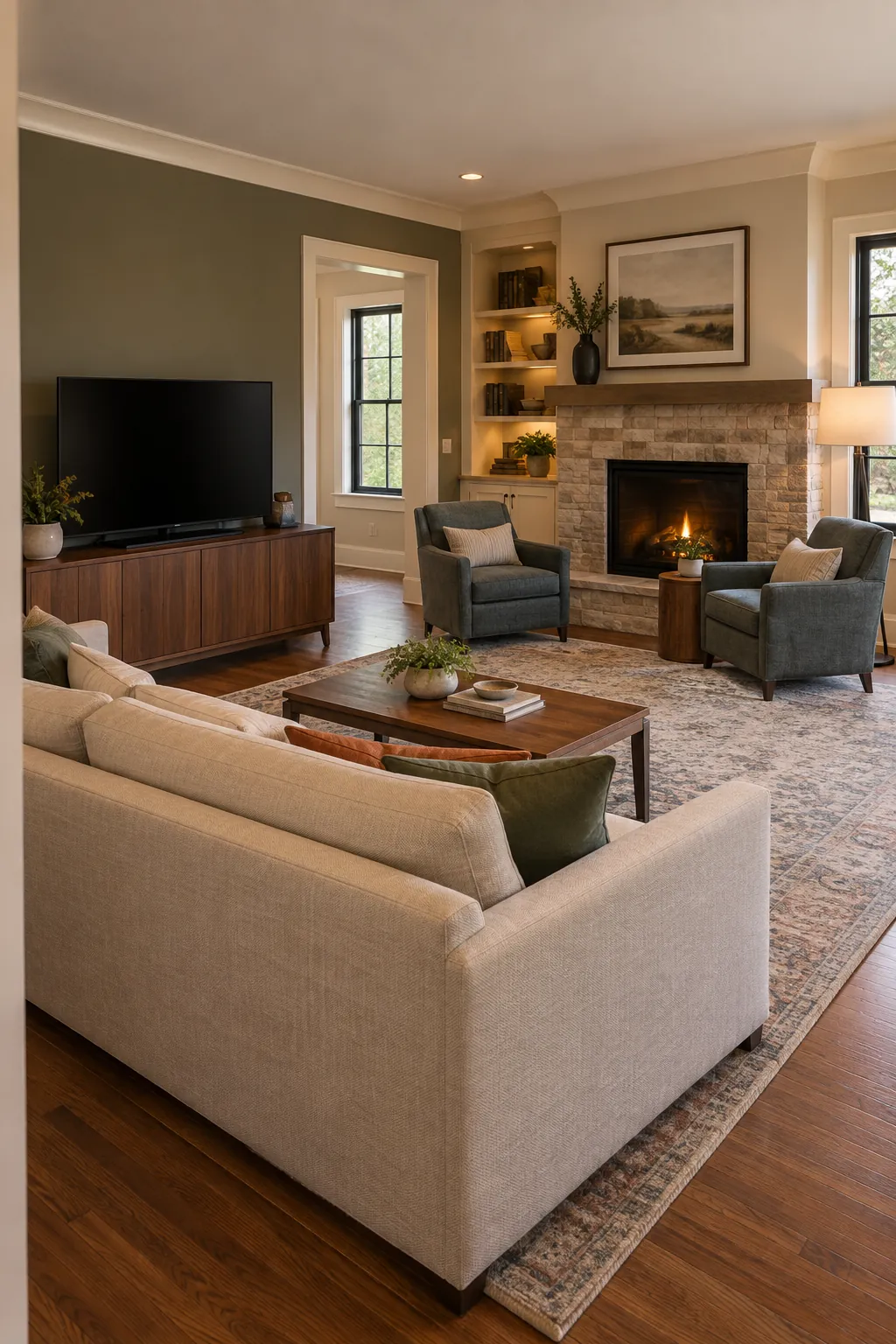
Use a Sectional to Define the Viewing Zone
A sectional can create a boundary in an open family room and give several seats usable screen angles. Put the longer side where it does not block the fireplace or primary walkway. Measure the chaise depth carefully because a large projection can turn a balanced plan into a bottleneck.
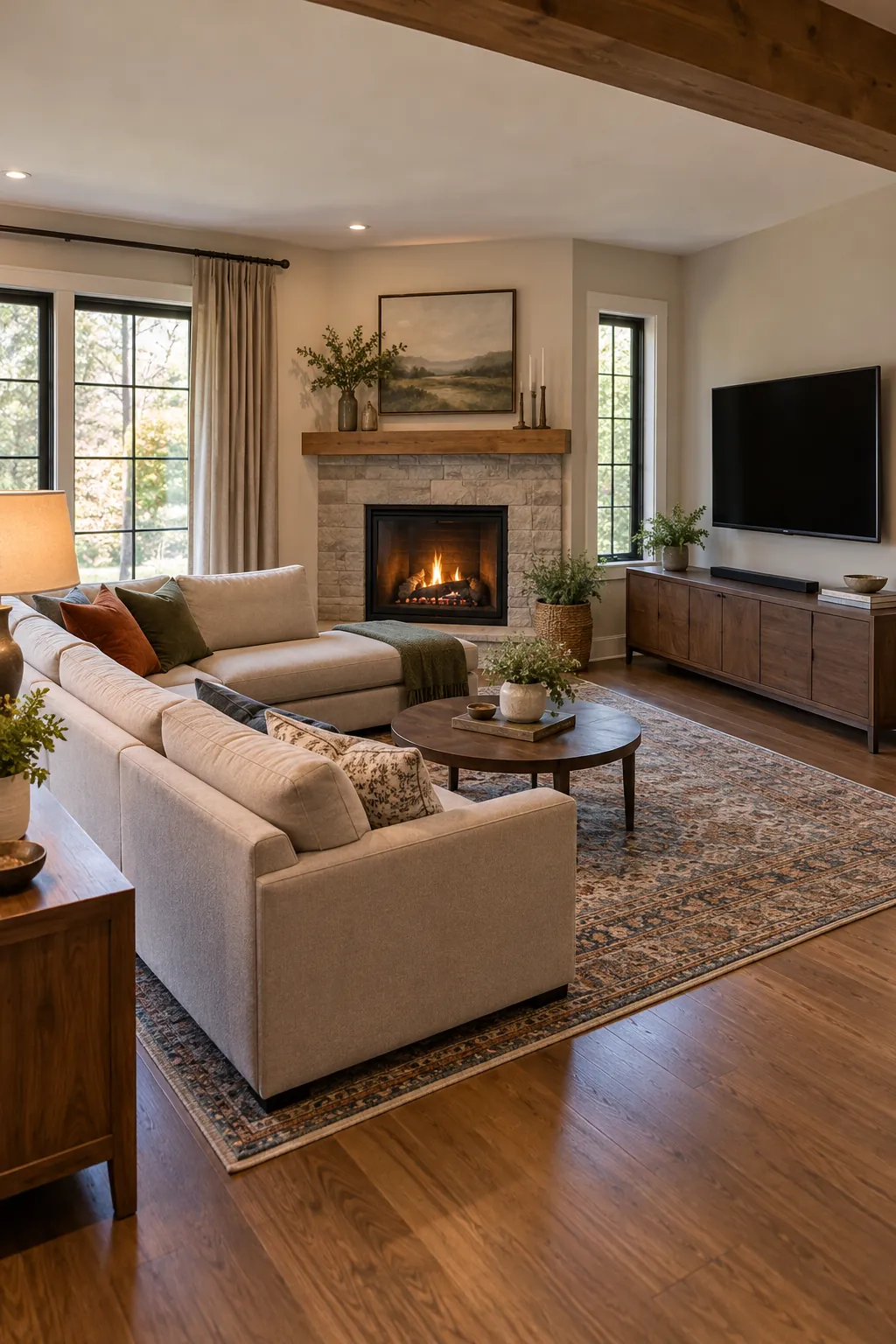
Center Two Sofas Across From Each Other
Facing sofas make conversation the center of the room while each long seat receives a side view of both focal walls. Keep the television at a comfortable height and use a broad rug to join the pair. This plan works best when the room has enough width for circulation outside the seating.
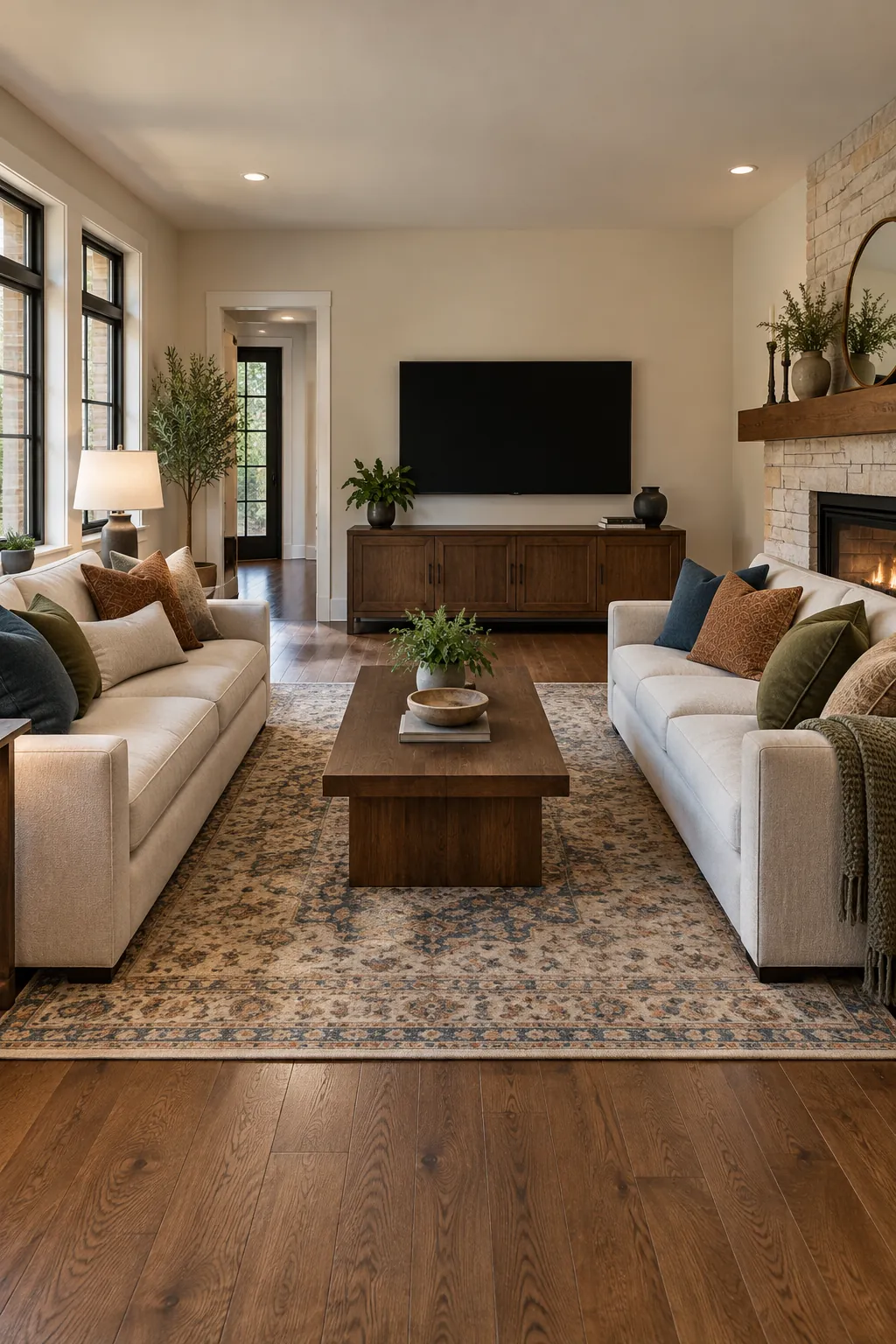
Put Swivel Chairs Between the Focal Points
Swivel chairs solve the last small adjustment between a fire and a screen. Place them where turning does not hit a table, sofa, or hearth. Their flexibility helps the room shift from film night to conversation without moving heavy furniture.
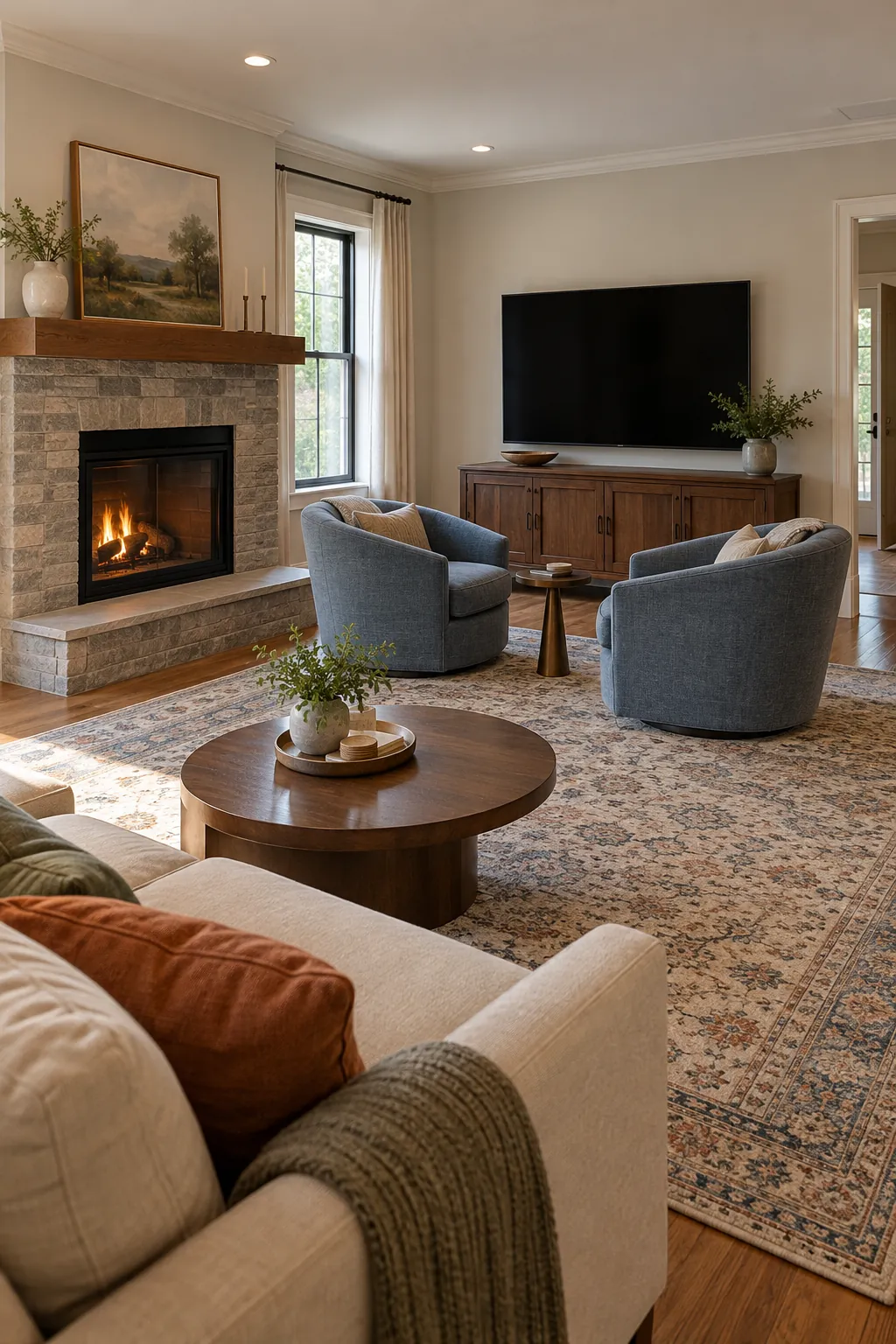
Create an L Shape With Sofa and Loveseat
A sofa and loveseat can form an L that opens toward both walls. Put the longer piece where it supports the main viewing distance, then use the shorter piece to face the fireplace more directly. A round table softens the inside corner and improves movement.
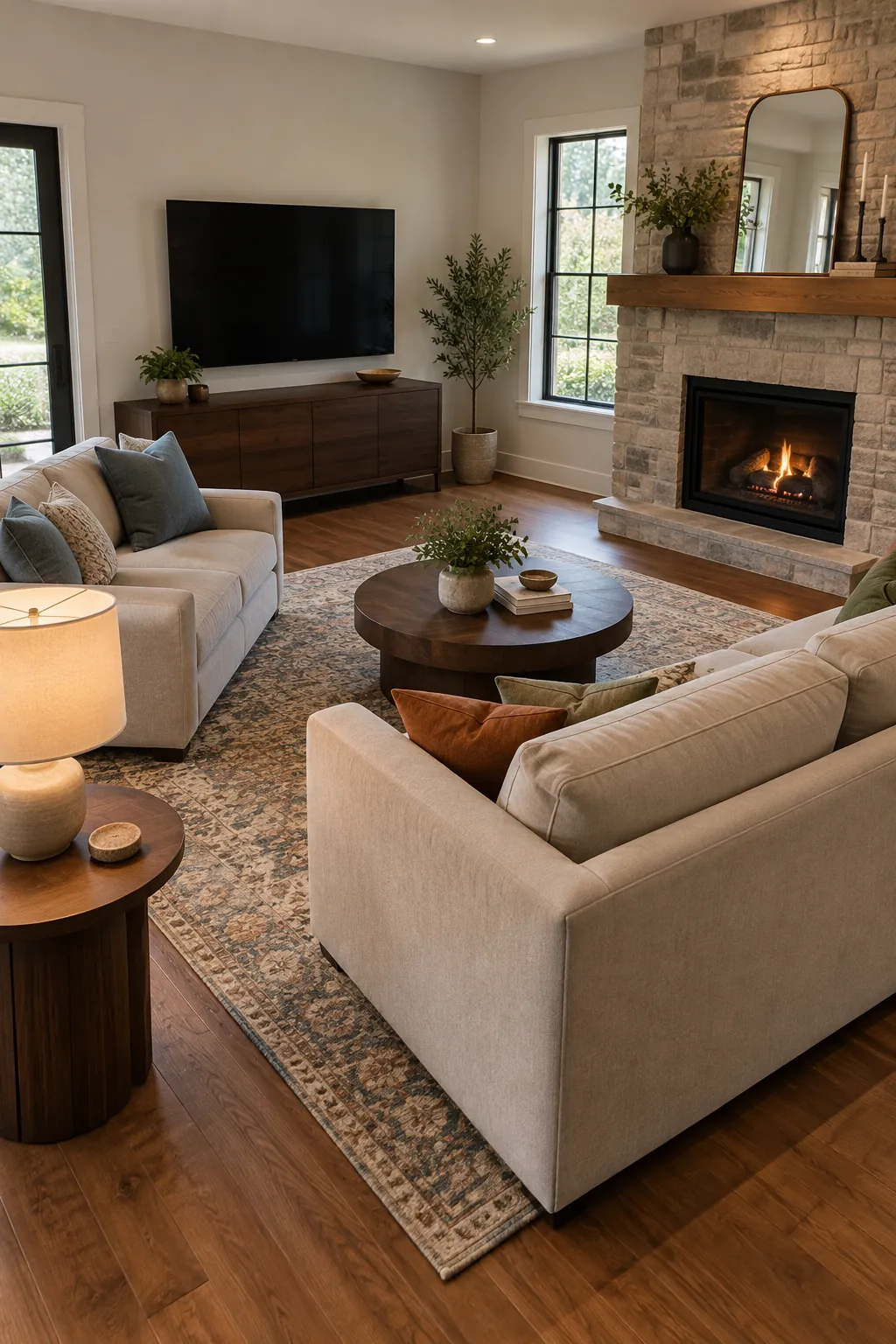
Keep a Walkway Behind the Main Sofa
Routing traffic behind the sofa prevents people from crossing the screen during viewing. Leave enough width for an easy passage and keep lamps or cords out of it. The sofa back then becomes a useful edge between circulation and rest.
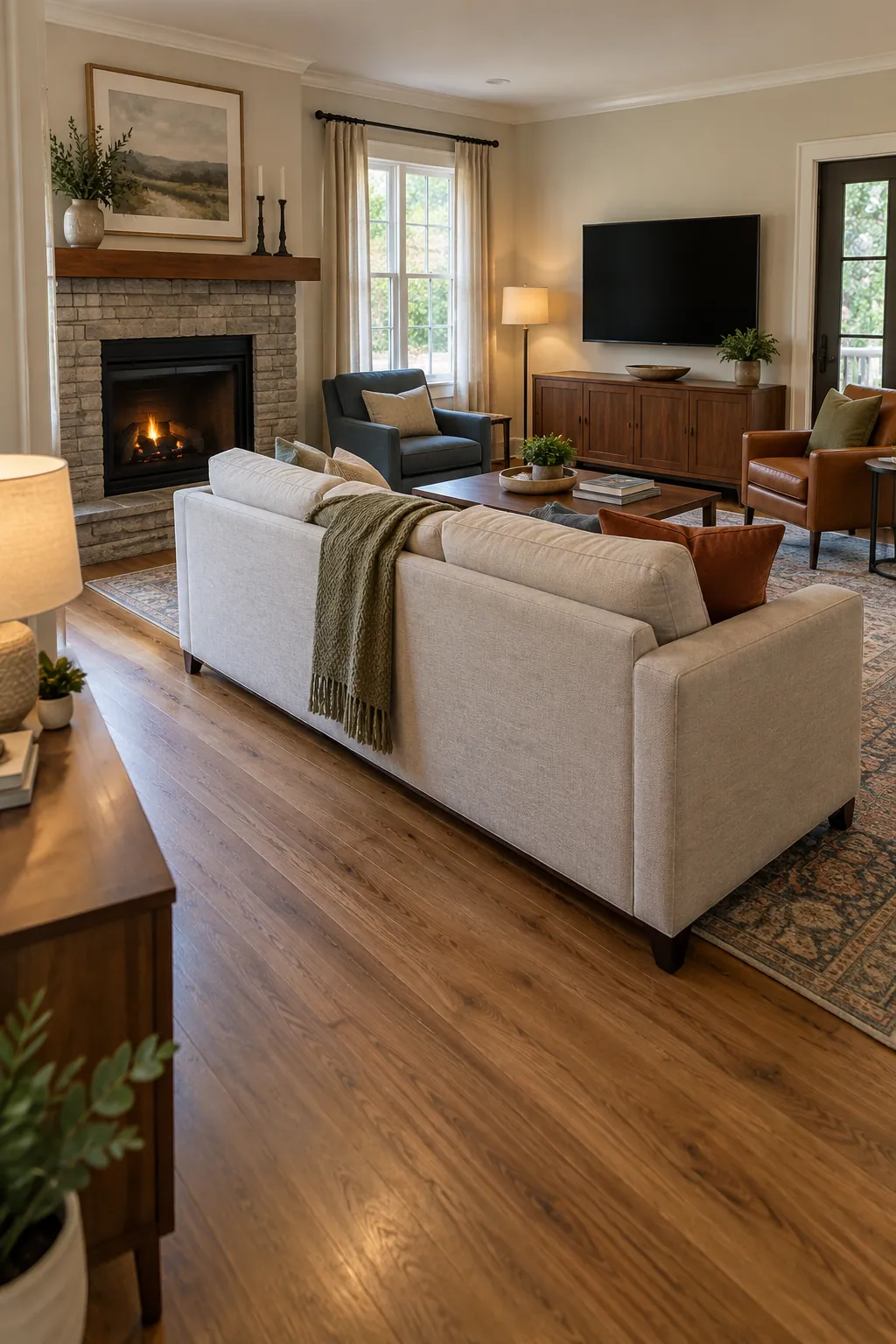
Use a Console to Finish the Floating Sofa
A slim console gives a floating sofa a finished back and a place for low lighting. Keep it slightly shorter than the sofa and avoid tall objects that interrupt the room. The console can also guide the walkway without acting as a barrier.
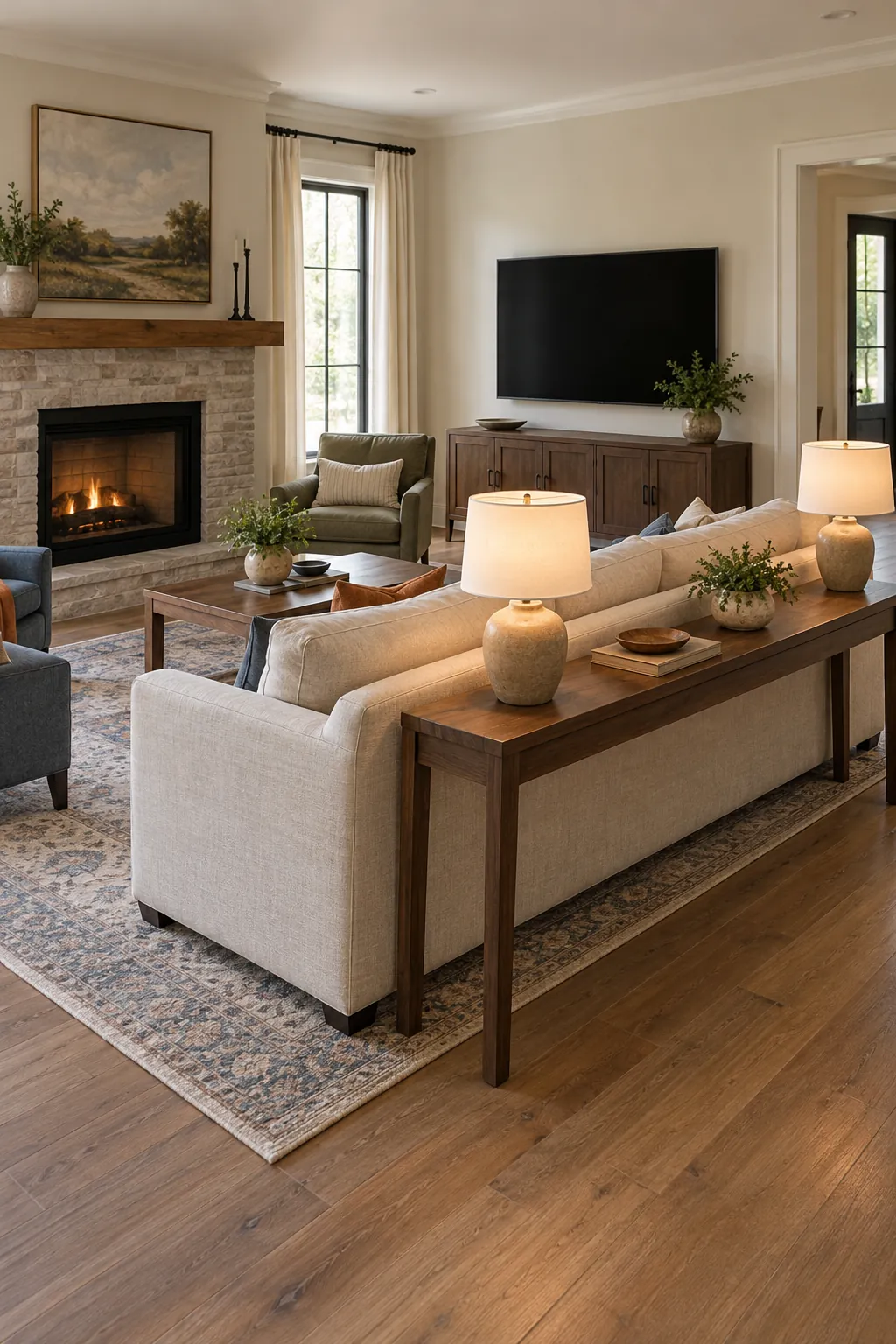
Let the Fireplace Anchor a Conversation Pair
Two chairs angled toward the hearth create a conversation pocket within the larger layout. They can share the main coffee table or use a smaller table between them. Keep their position connected to the sofa so the room does not split into isolated islands.
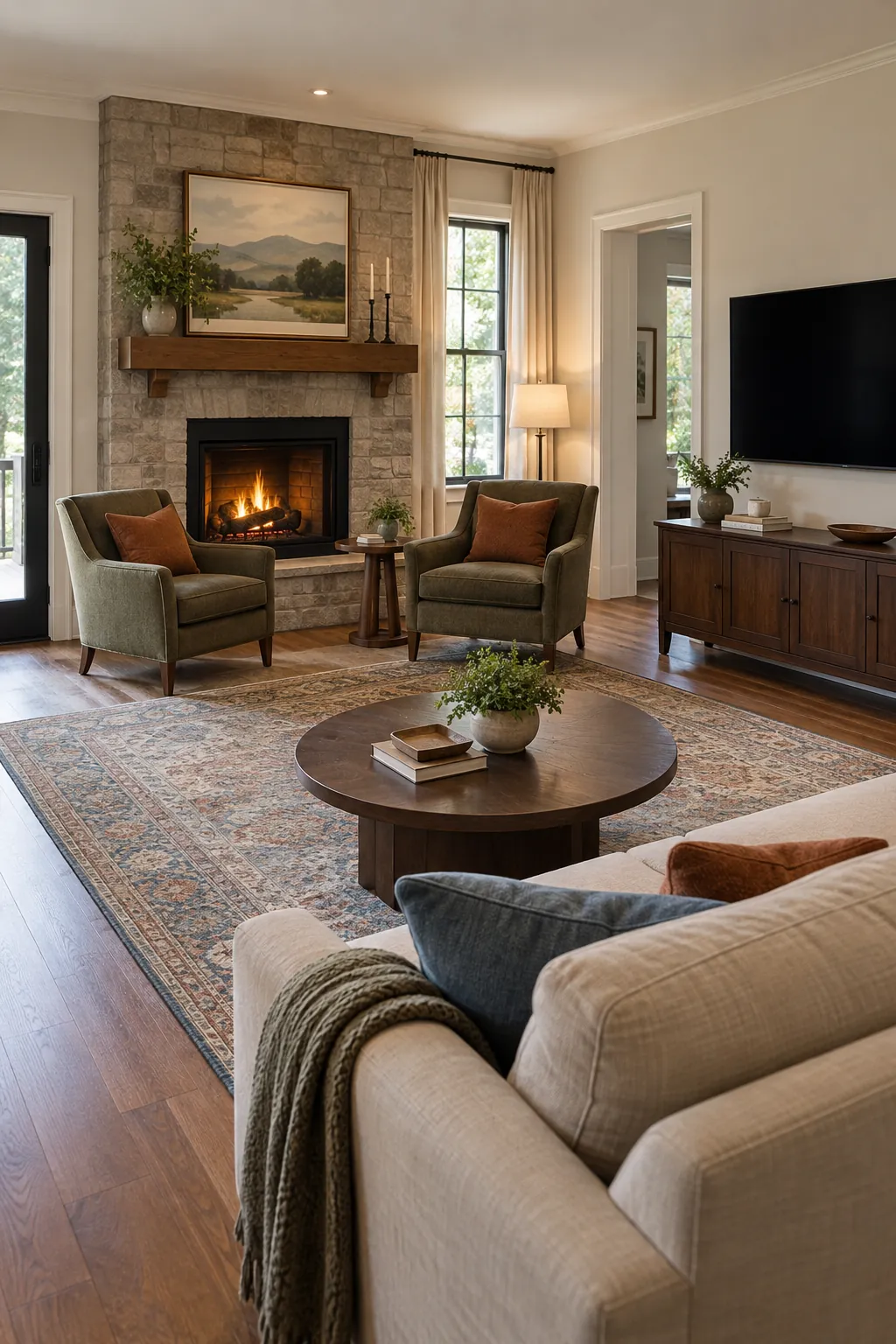
Choose a Low Media Unit on the TV Wall
A low media unit lets the television sit at a comfortable viewing height and reduces competition with the fireplace. Choose a width that relates to the wall without filling every inch. Closed storage keeps cables and devices from becoming a third focal point.
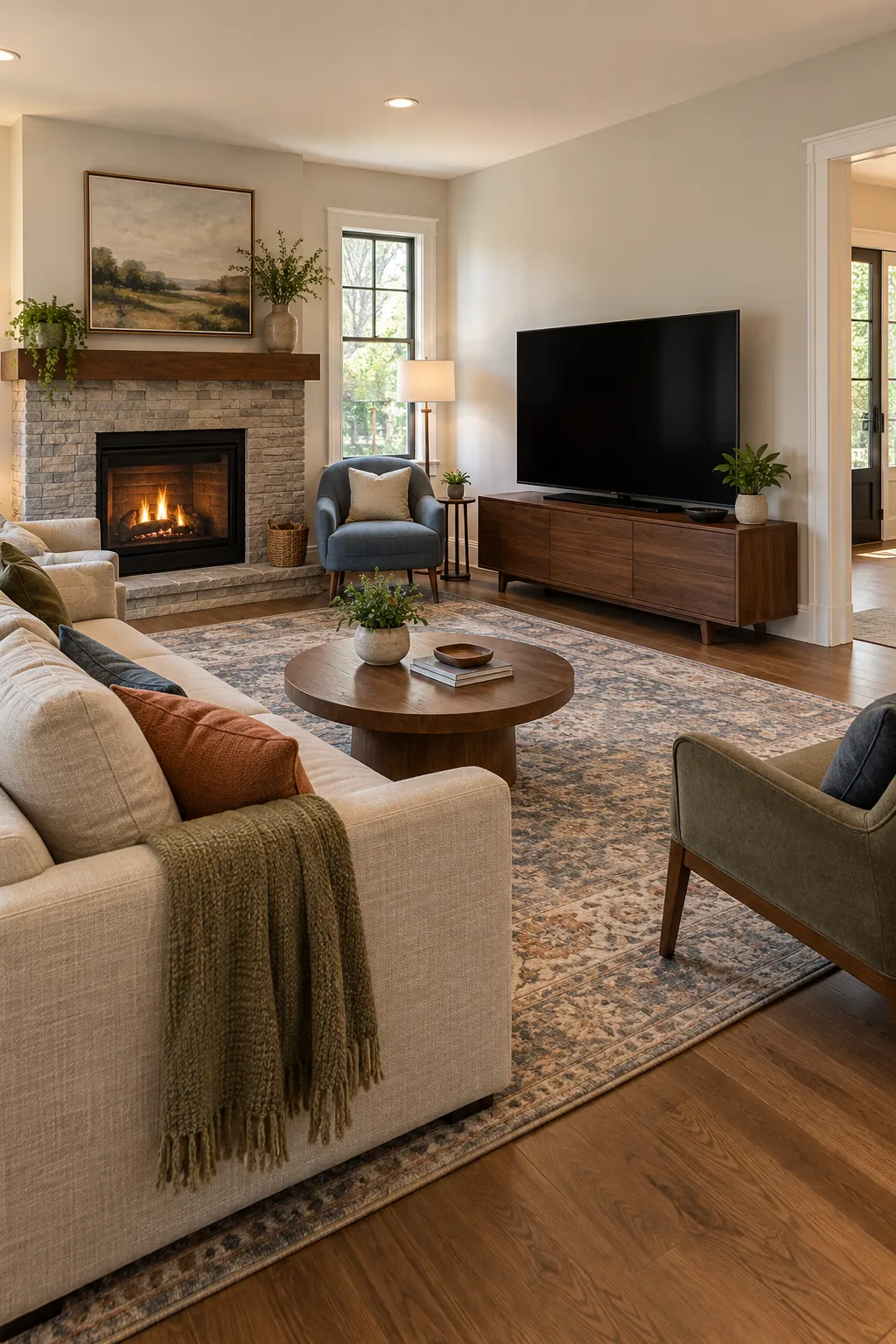
Turn a Narrow Room Into Two Linked Zones
A long room can support a television zone at one end and a fireplace conversation zone at the other. Overlap the rugs or furniture edges slightly so the areas still feel connected. Do not place the boundary in a doorway or narrow passage.
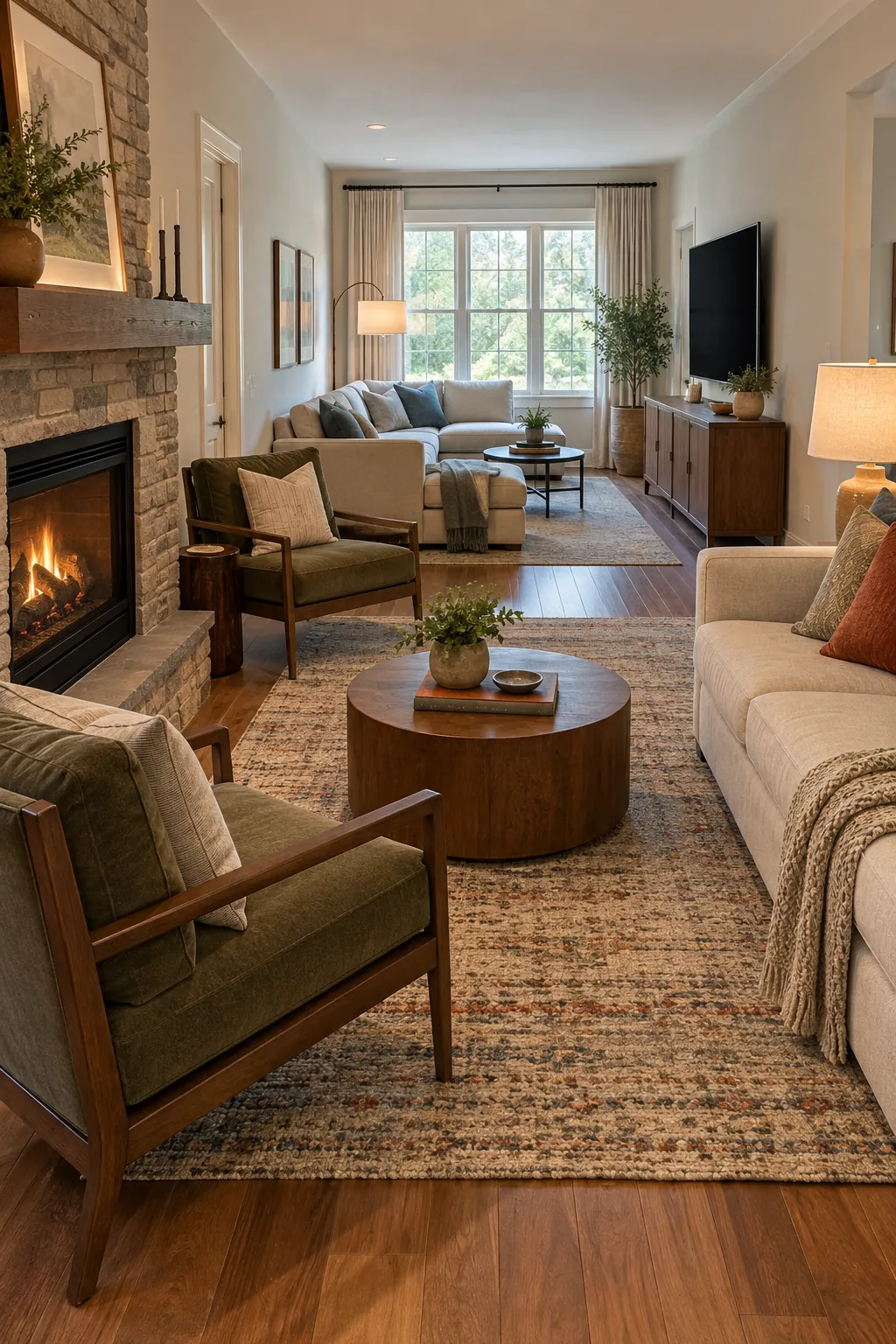
Use Four Chairs Around a Central Table
Four comfortable chairs around a central table make conversation primary while allowing several angled views of the television. Use compact chairs with supportive backs and enough swivel or lightness to adjust. This arrangement leaves the fireplace visible from the center.
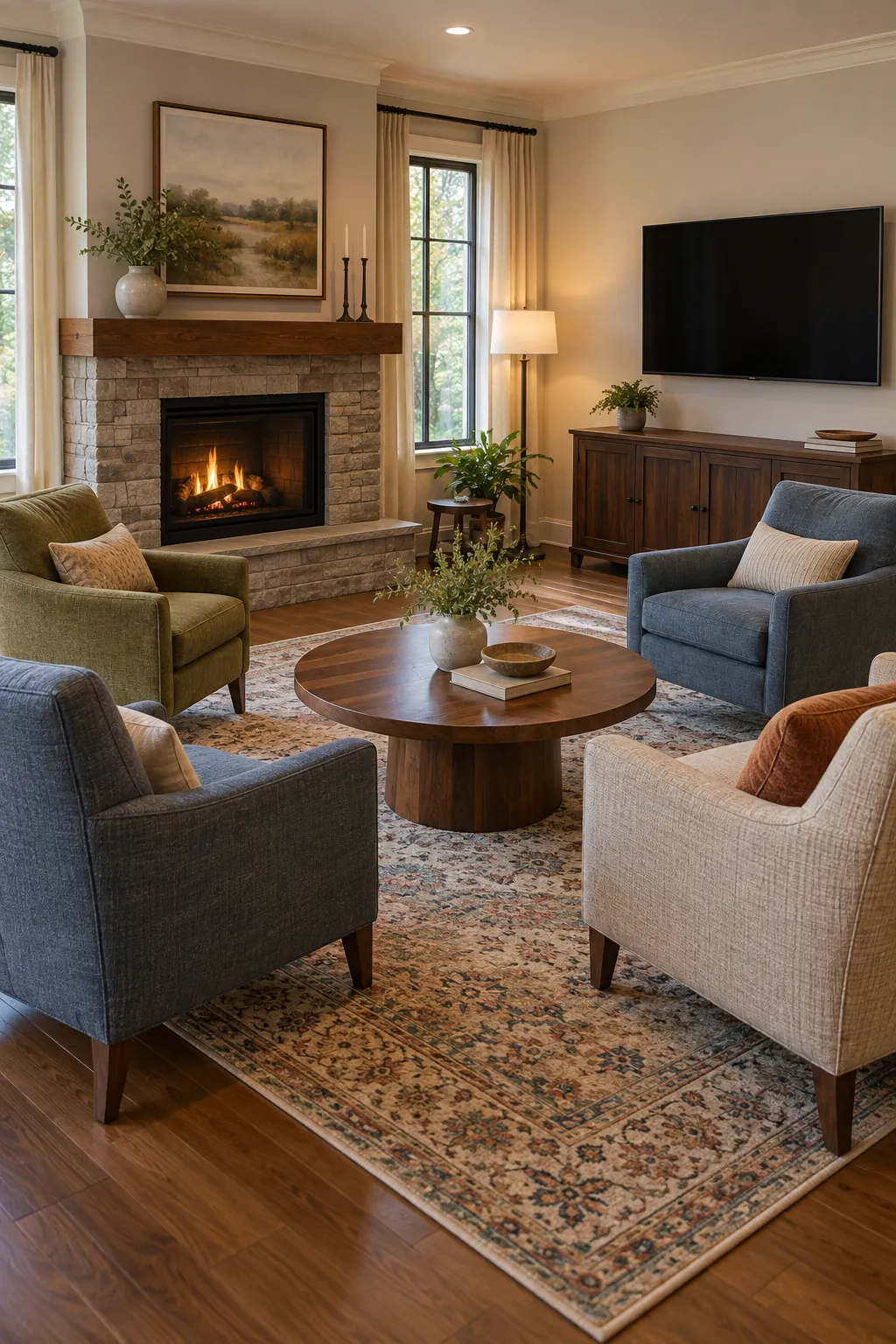
Place the TV Beside a Window With Controlled Glare
A television beside a window can work when glare is managed with layered shades. Keep the screen perpendicular to the strongest daylight when possible and test reflections at the time you usually watch. Do not solve glare by making the whole room permanently dark.
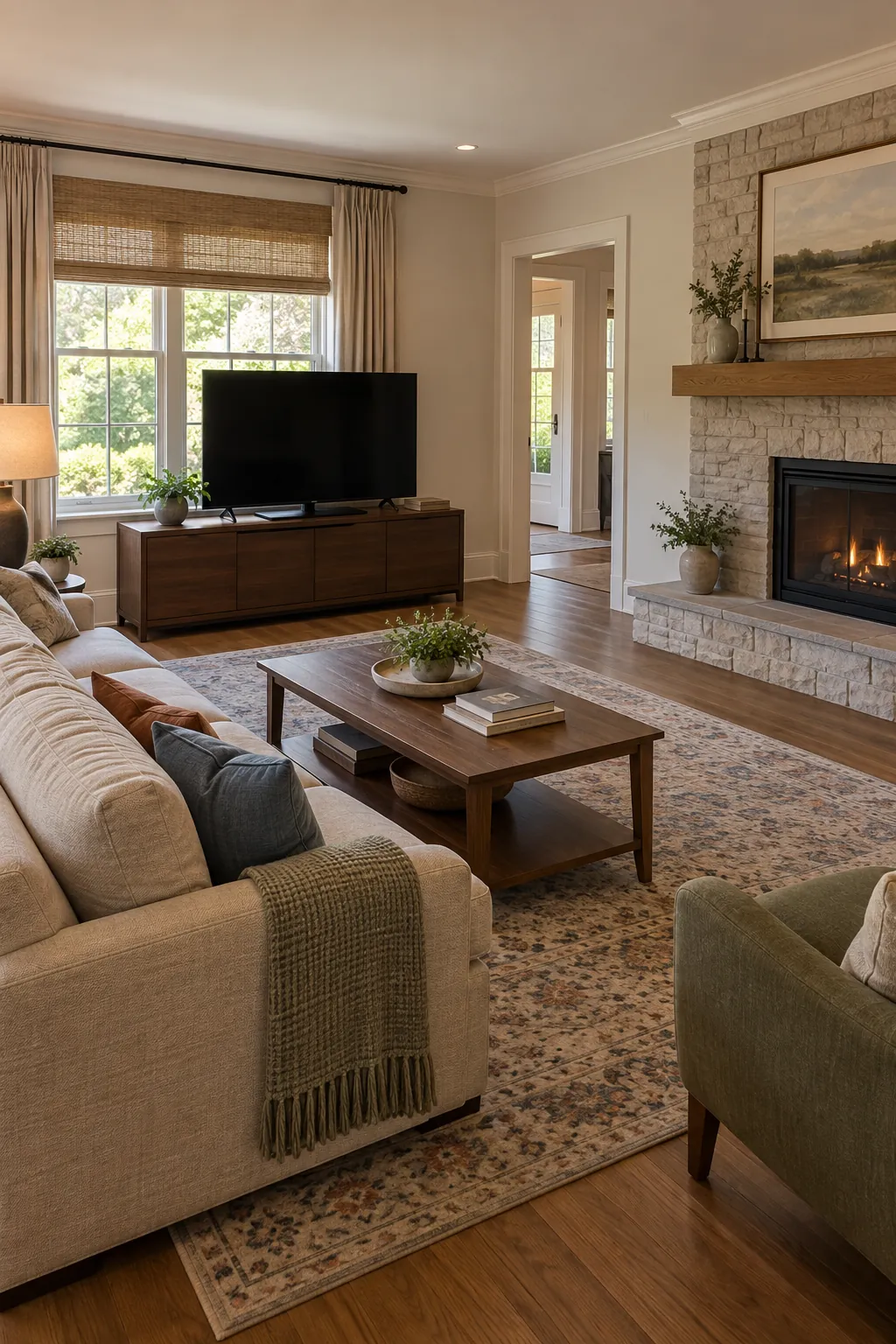
Make a Corner Fireplace Part of the Seating Arc
A corner fireplace works best when the furniture forms a gentle arc rather than trying to square up to it. Angle one chair toward the hearth and let the main sofa hold the television view. A round rug or table can reinforce the shared center.
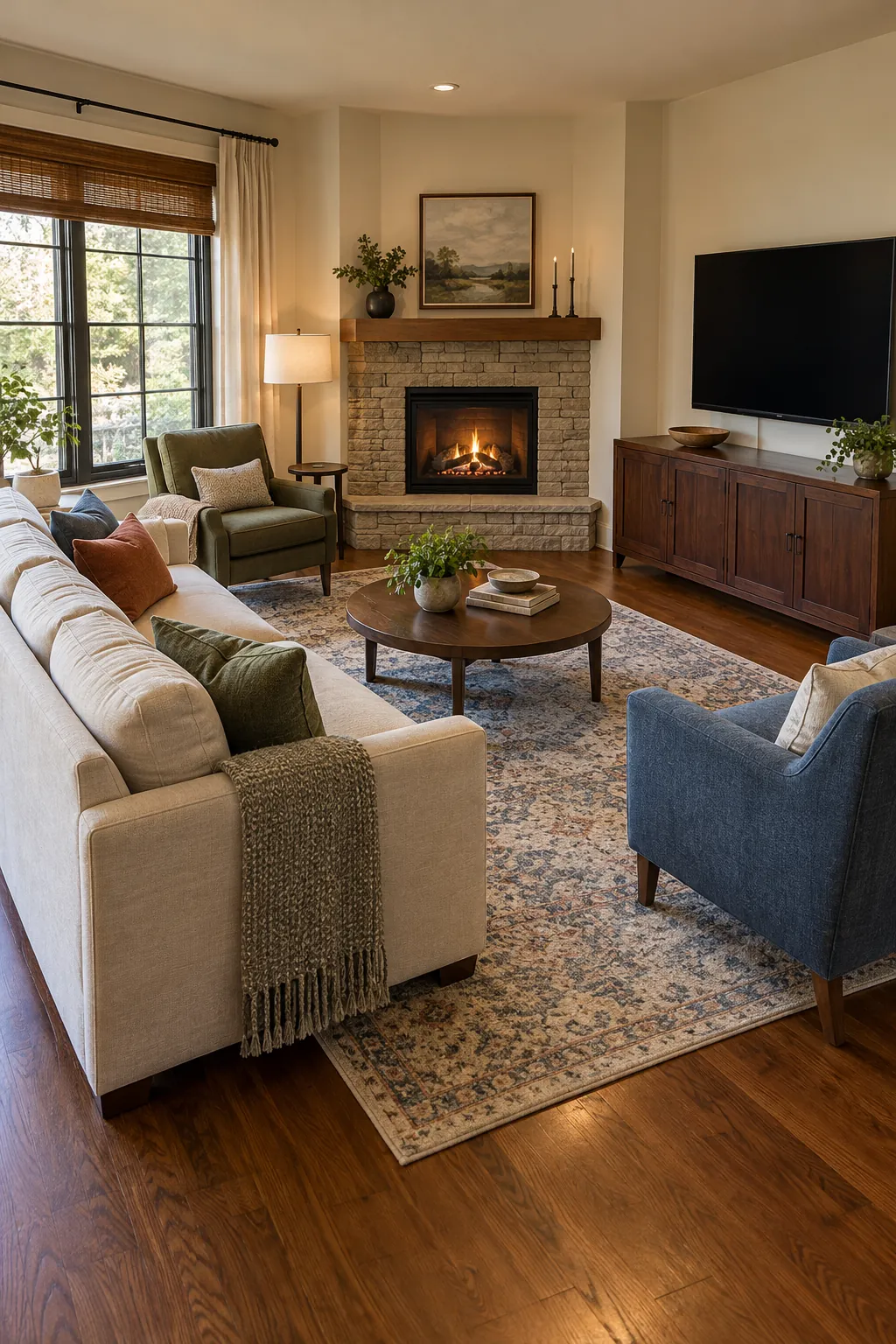
Use an Ottoman Instead of a Fixed Coffee Table
An ottoman can shift for lounging, extra seating, or a clearer path, which helps a room with competing focal points. Choose a firm top or add a tray for drinks. Its softer edges also improve circulation around angled furniture.
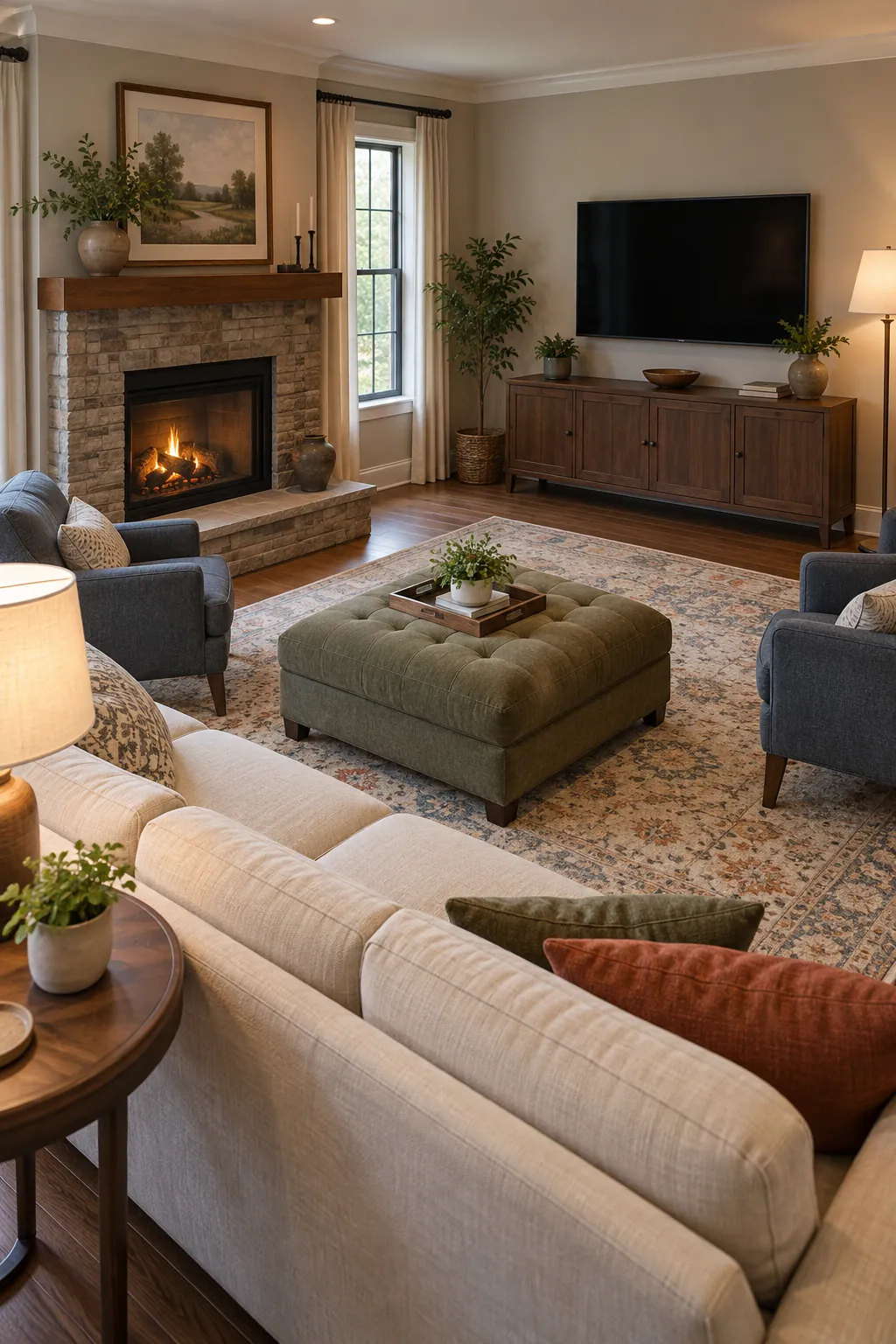
Test Sight Lines Before Buying Furniture
Use painter tape or cardboard to mark every furniture footprint before purchasing. Sit at likely seat positions to check screen height, fireplace visibility, conversation distance, and the main route. A layout succeeds when ordinary movement works, not when the plan looks symmetrical on paper.