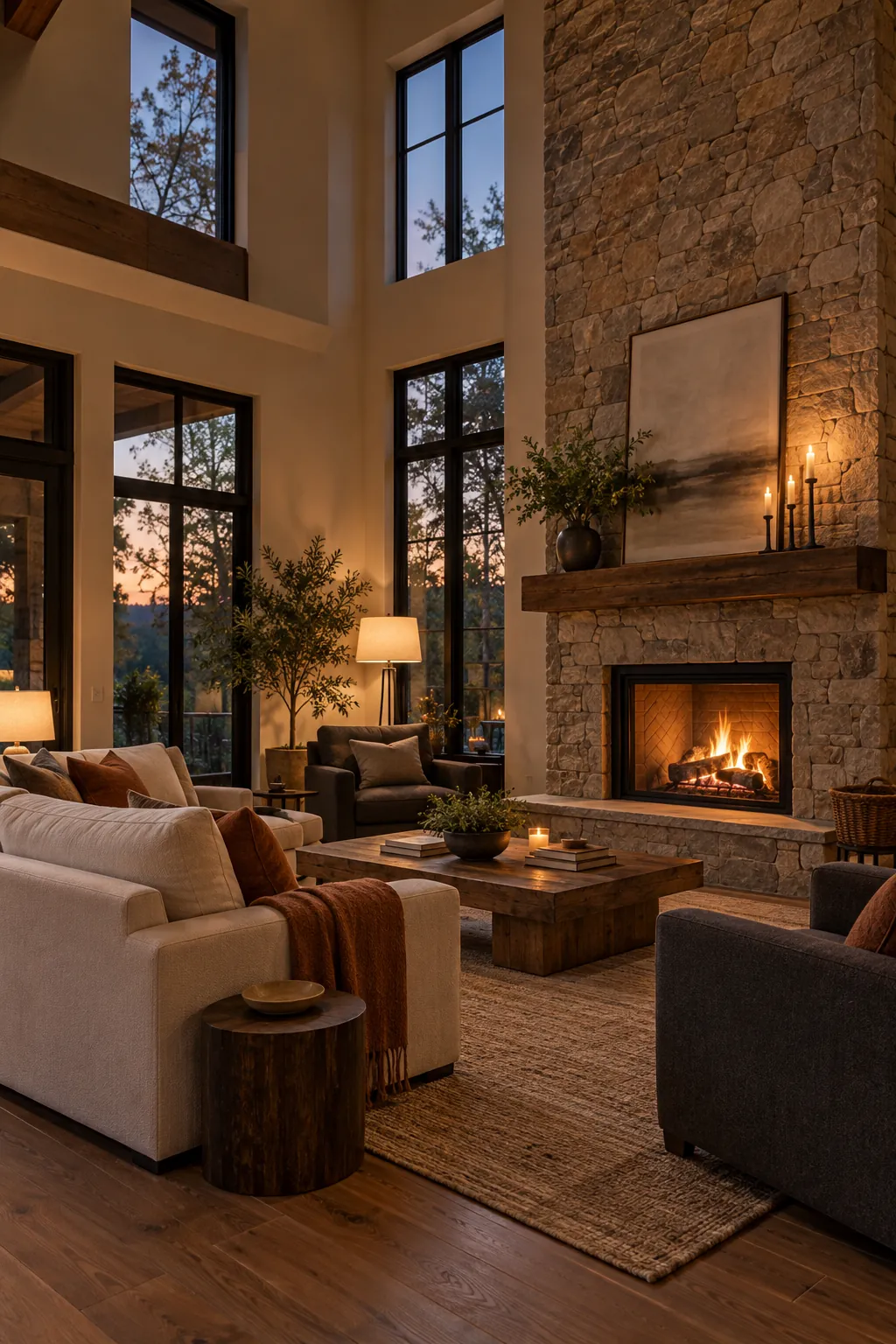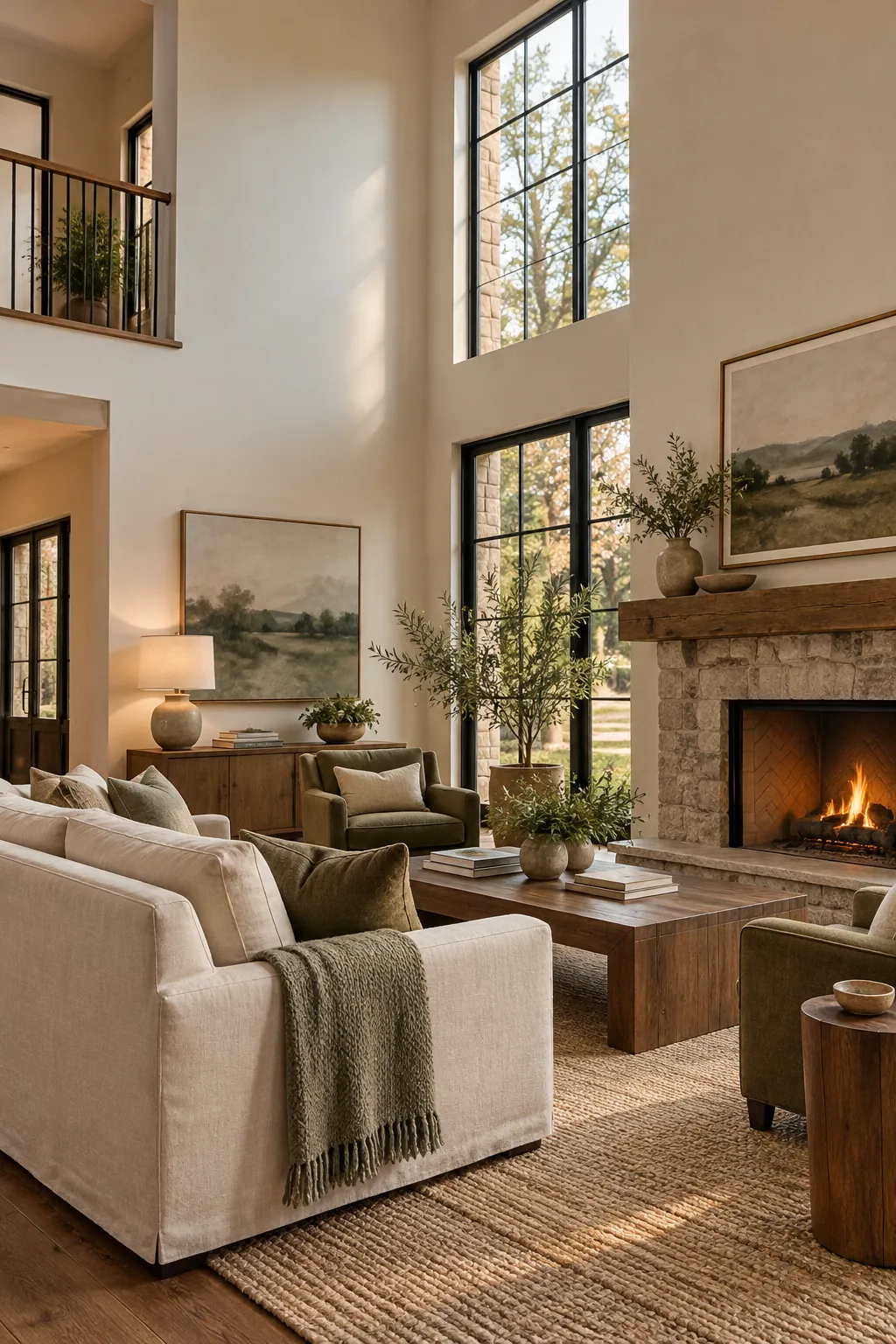
A tall living room does not feel cold because the ceiling is wrong. It feels cold when every useful detail is too small, too scattered, or too far from the people using the room. Build comfort at seated height first, then add only enough vertical scale to connect that zone to the architecture.
Indexed Reddit discussions repeatedly describe echo, blank upper walls, undersized furniture, harsh chandeliers, and uncertainty about artwork. The most useful advice is surprisingly restrained: decorate at human height, use a few properly scaled pieces, and let the remaining volume stay quiet. These approaches follow that principle while solving light, sound, furniture, and wall balance.
Keep the Main Decor at Human Height
People experience the room from the seating zone, so concentrate useful objects and visual detail there. Hang art for seated and standing eyes rather than chasing the ceiling line. The open volume can remain calm once the lower room feels complete.
Lower an Oversized Pendant
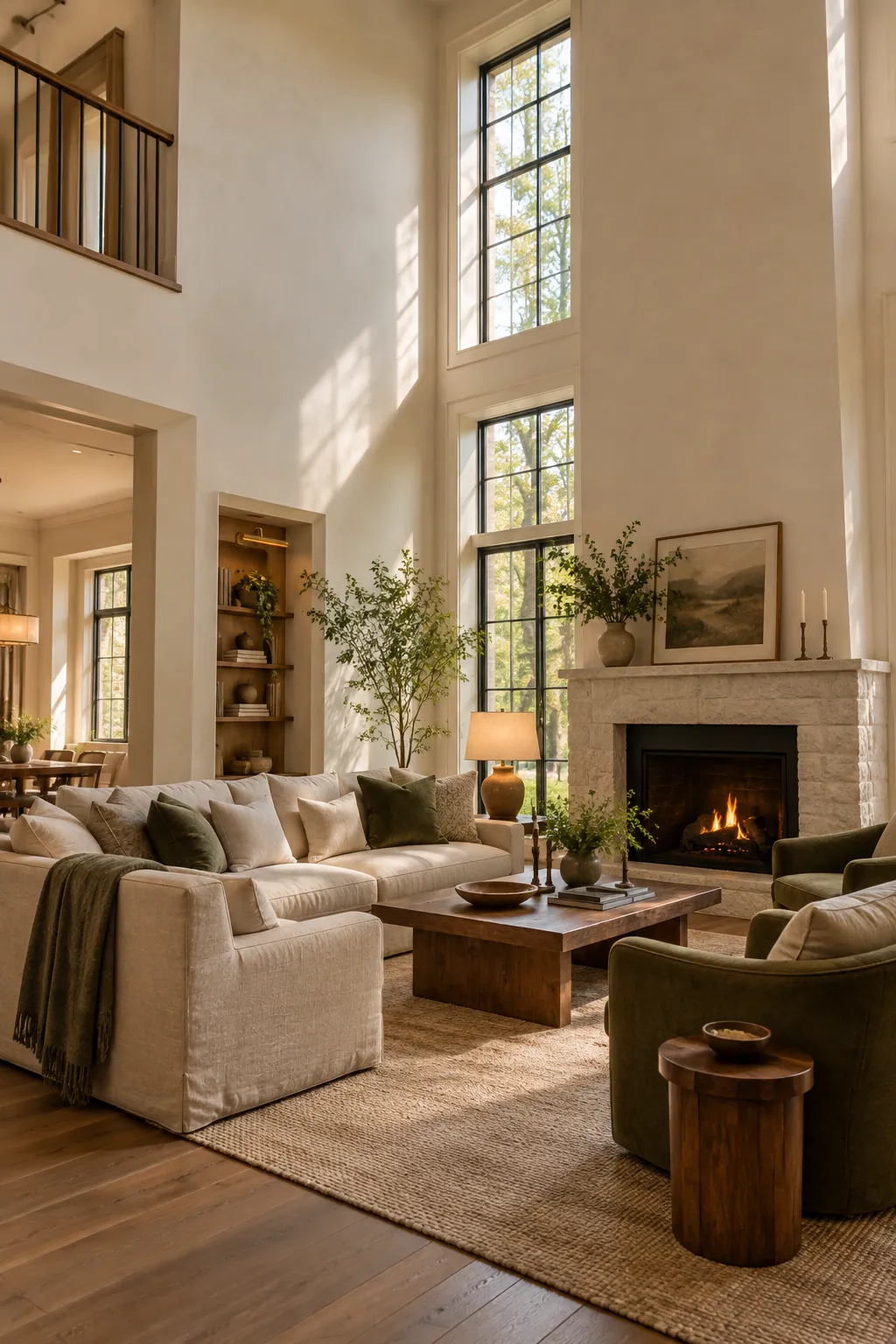
A pendant with enough width gives the ceiling a clear purpose, but its lower edge should relate to the furniture below. Suspend it at a safe height that creates intimacy without blocking views. Use a dimmer so the fixture supports both conversation and quiet evenings.
Build a Close Conversation Group
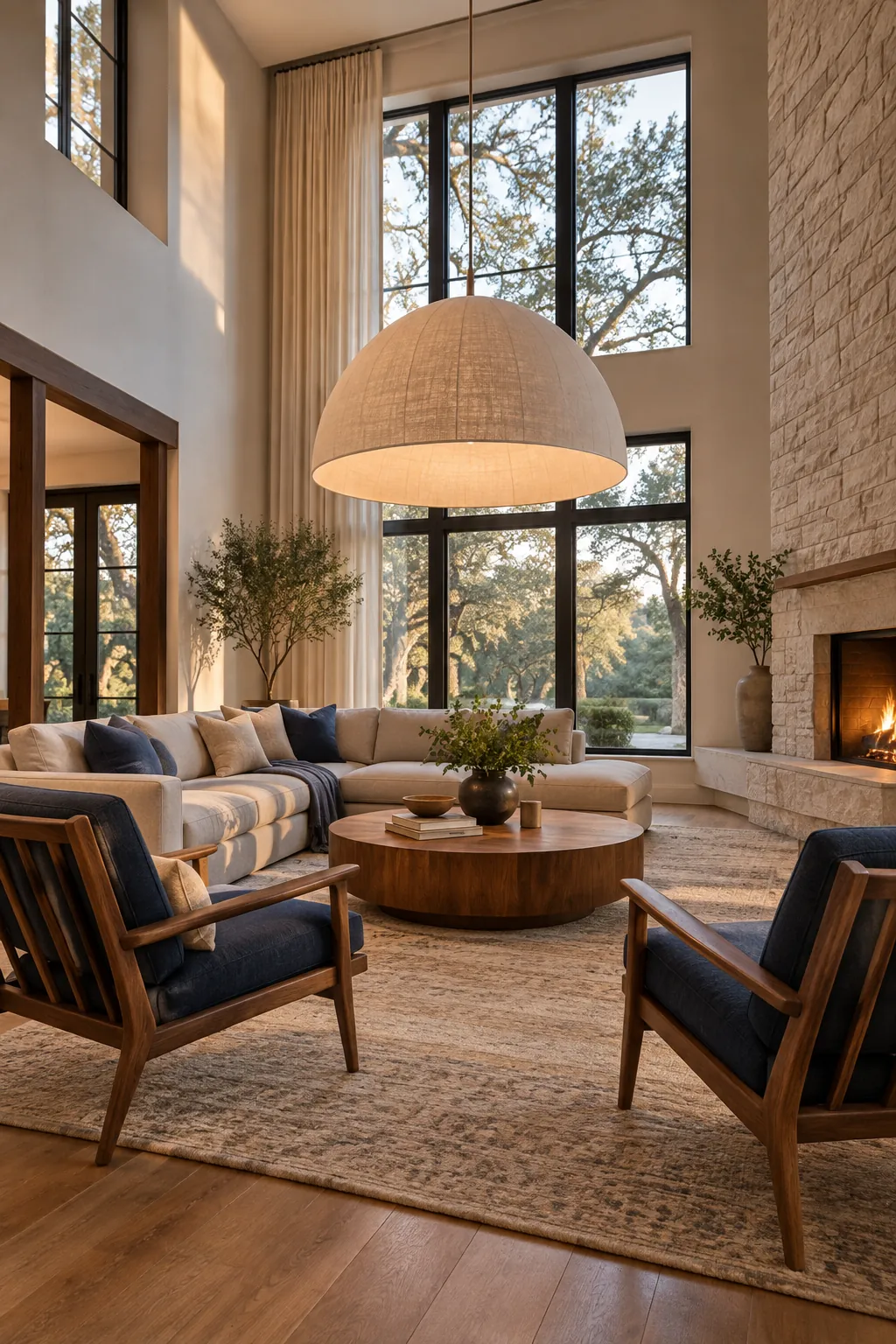
Pull sofas and chairs toward one another instead of lining the perimeter. A tighter group improves conversation and makes the tall shell feel less dominant. Keep a clear route outside the rug so movement does not split the group.
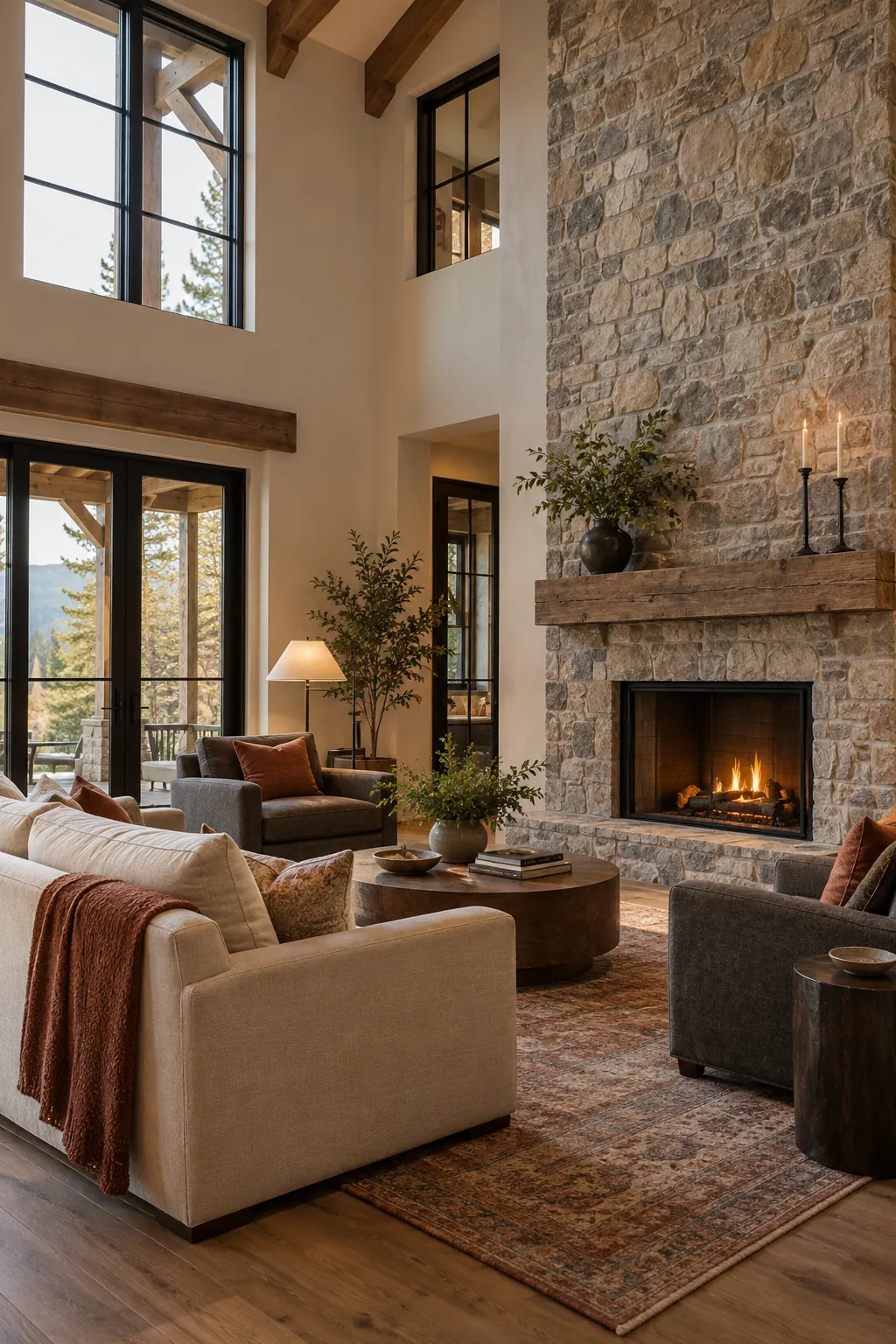
Use a Large Rug to Ground the Seats
A properly sized rug gives a large room a visible center and absorbs some of the echo. Place at least the front legs of the main seats on it. Choose a dense, comfortable texture that suits daily cleaning rather than a fragile showpiece.
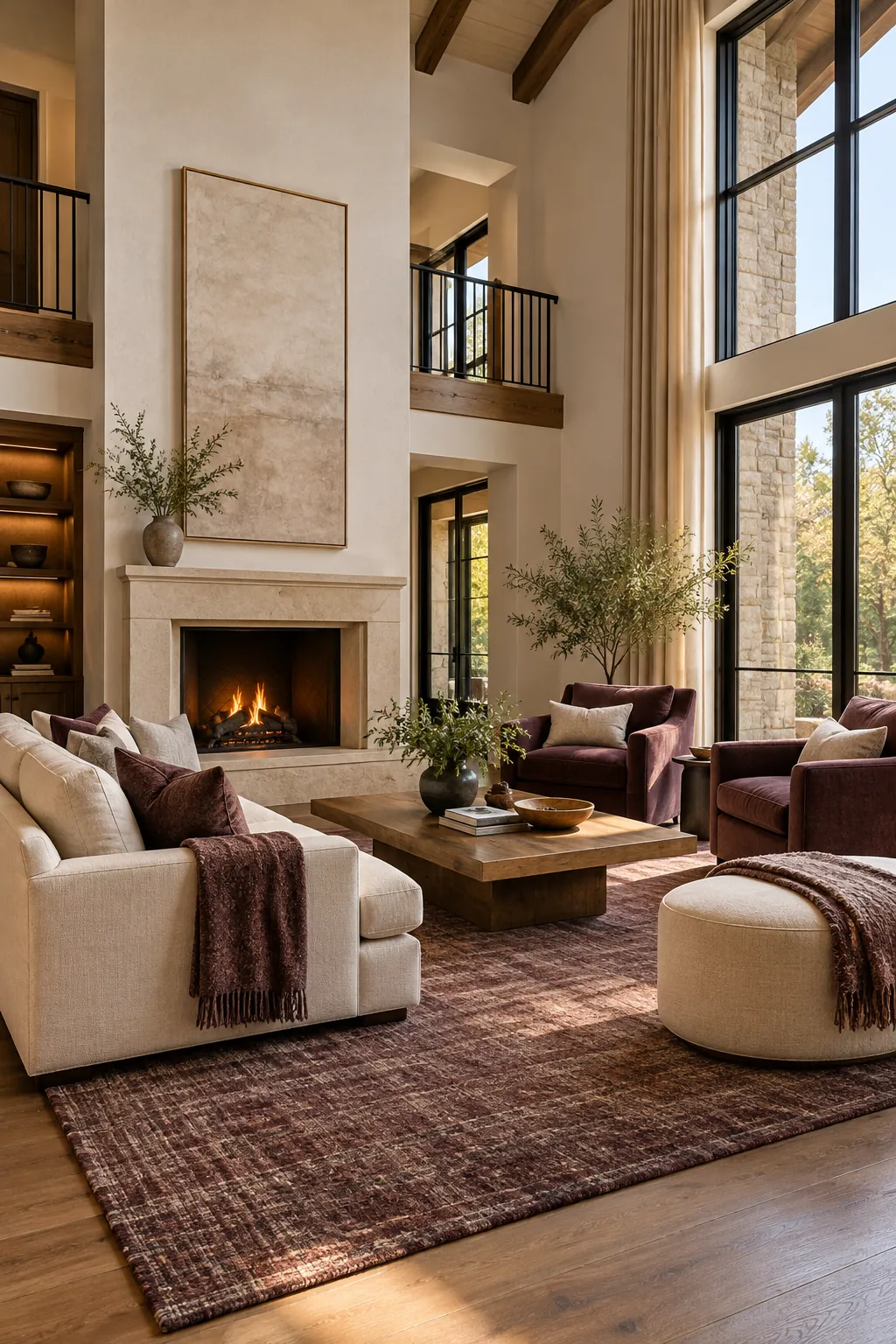
Choose a Sofa With Visual Weight
Small furniture can look stranded beneath a double height ceiling. A deeper sofa with broad arms and supportive cushions provides a stronger base without becoming oversized. Balance its mass with lighter chairs so the room remains easy to move through.
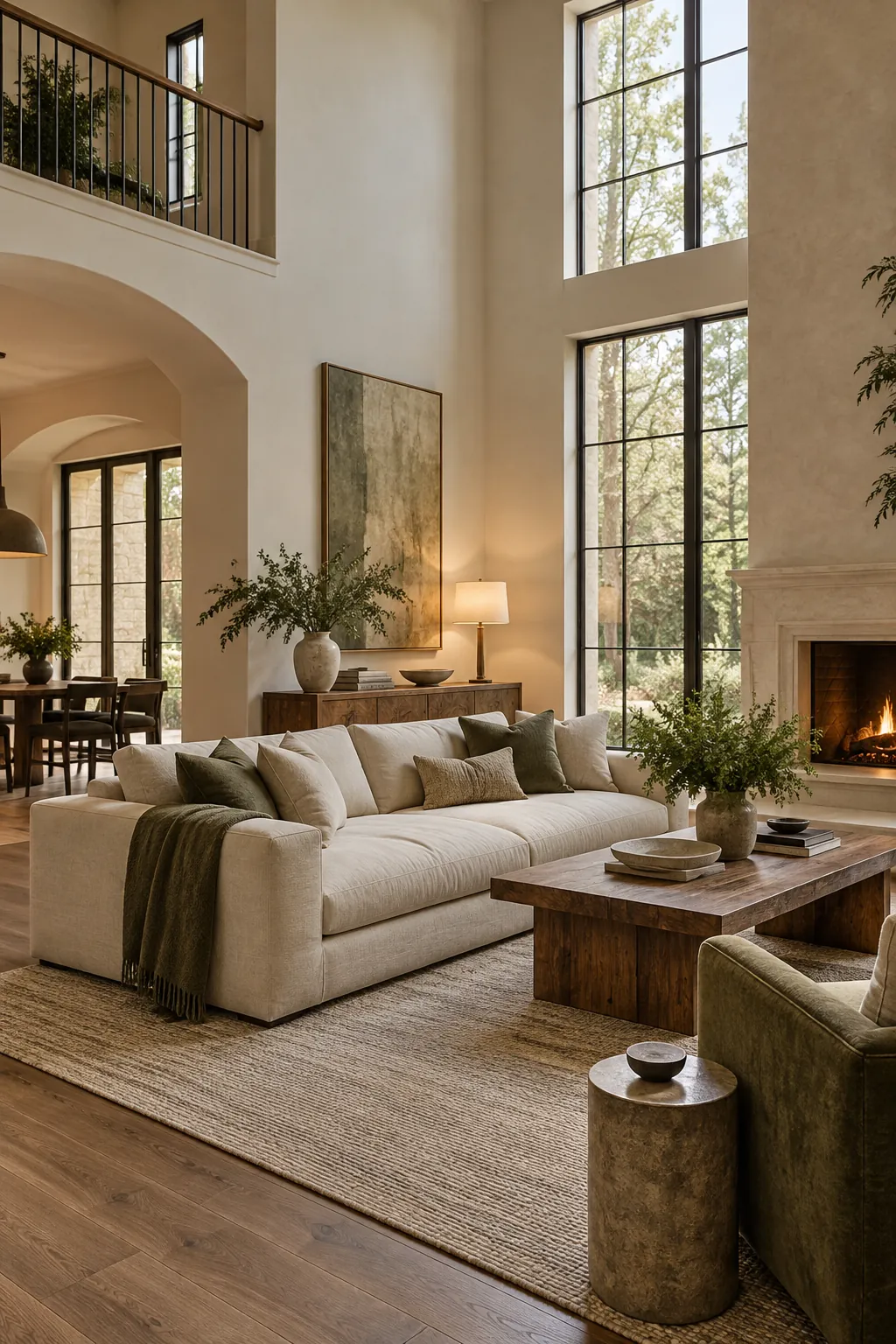
Layer Floor and Table Lamps
Ceiling light cannot create comfort on its own. Combine shaded floor lamps, table lamps, and a dim general source so light stays near people after dark. Match color temperature across bulbs to avoid a patchwork of yellow and blue.
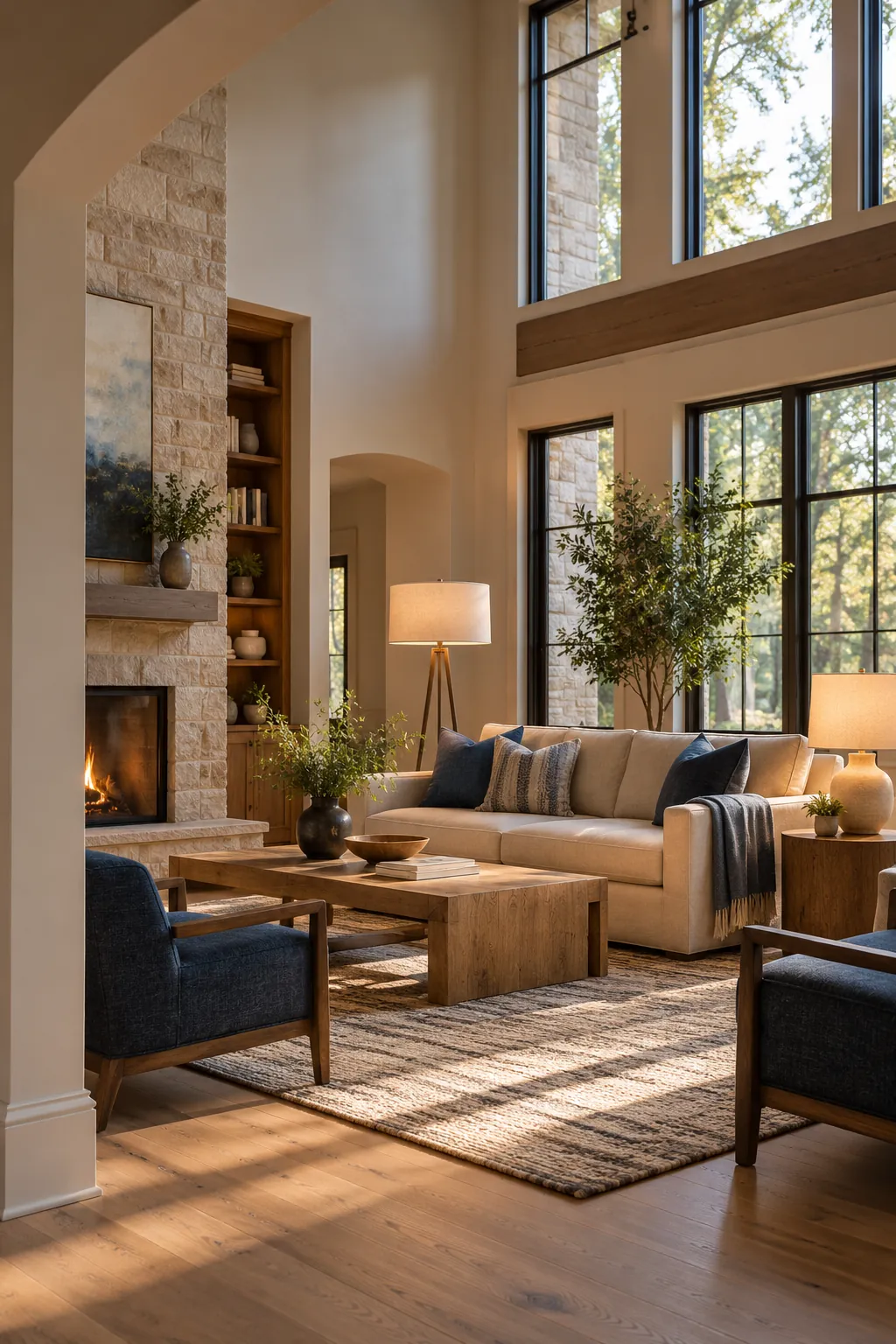
Hang Curtains Above the Windows
Mounting curtains above the window can connect lower furnishings to the tall architecture. Use enough fabric for real fullness and let it end cleanly at the floor. Do not hang panels so high that opening or cleaning them becomes impractical.
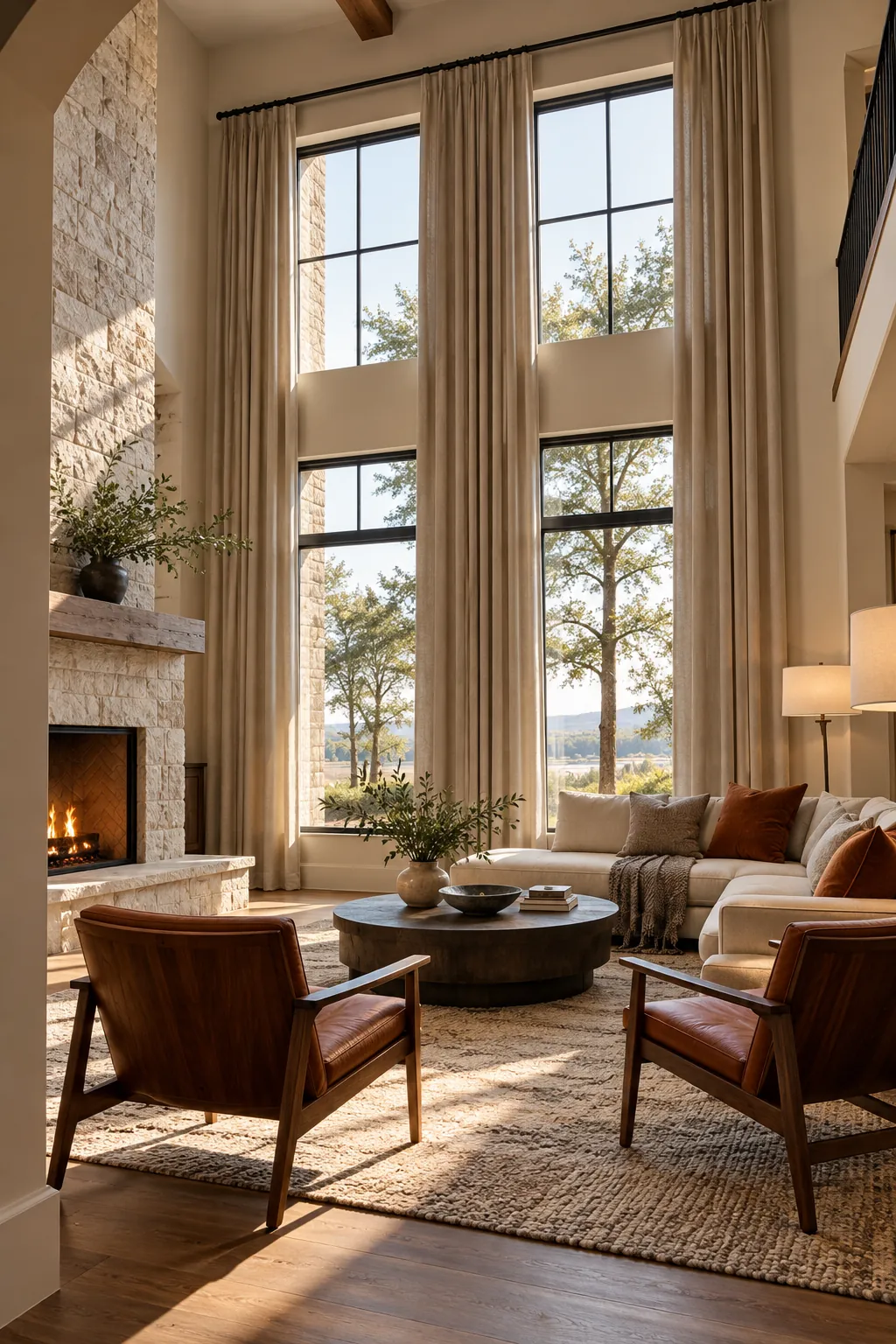
Add One Tall Bookcase
One tall bookcase adds vertical scale while keeping useful detail within reach. Anchor it correctly and reserve upper shelves for light, infrequently handled objects. The surrounding wall can stay simple so the bookcase reads as deliberate.
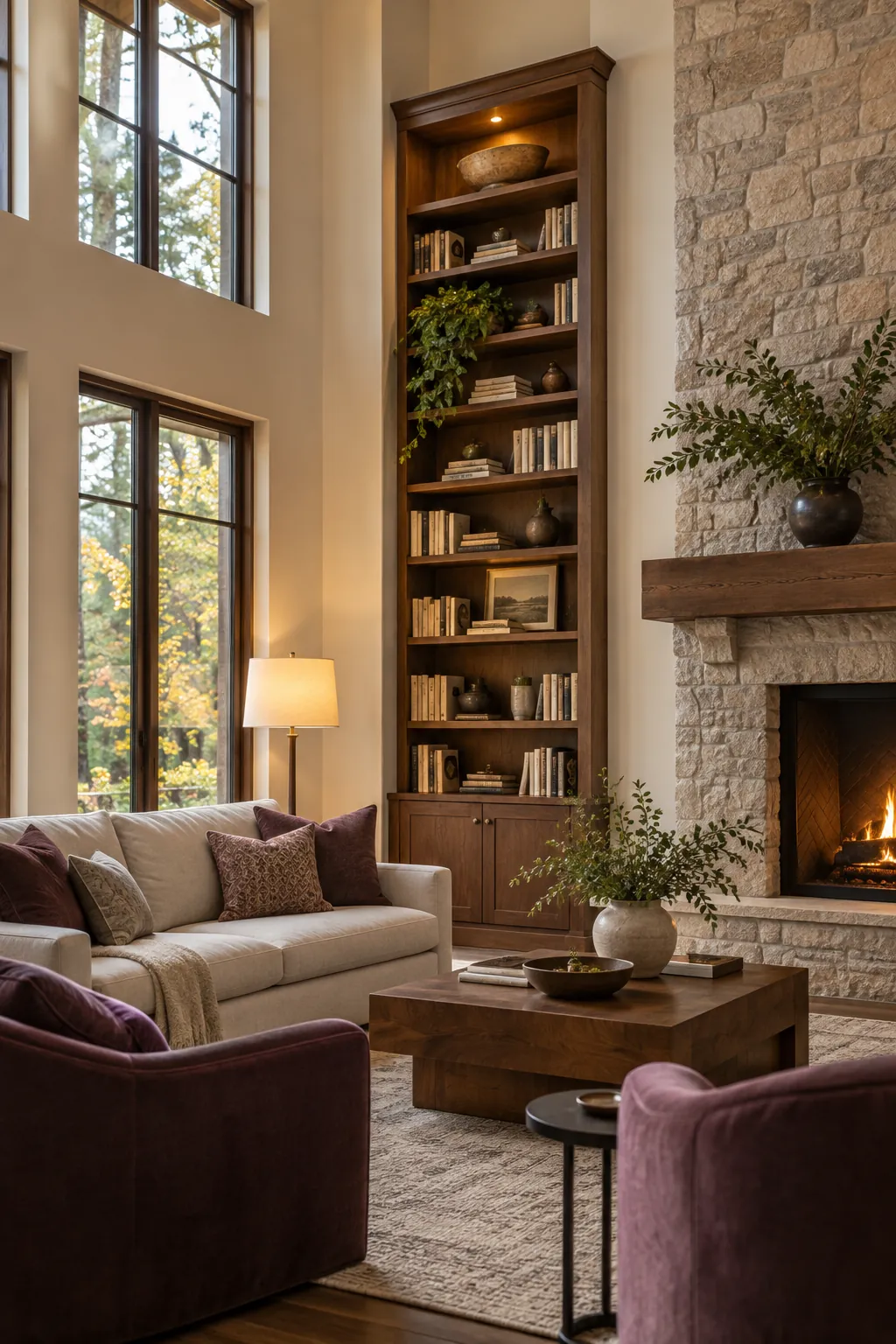
Use a Broad Console Under the Television
A wide console gives the television wall a stable base and keeps devices from floating in the large volume. Closed doors reduce cable clutter and strengthen the horizontal line. Choose a height that keeps the screen comfortable for seated viewing.
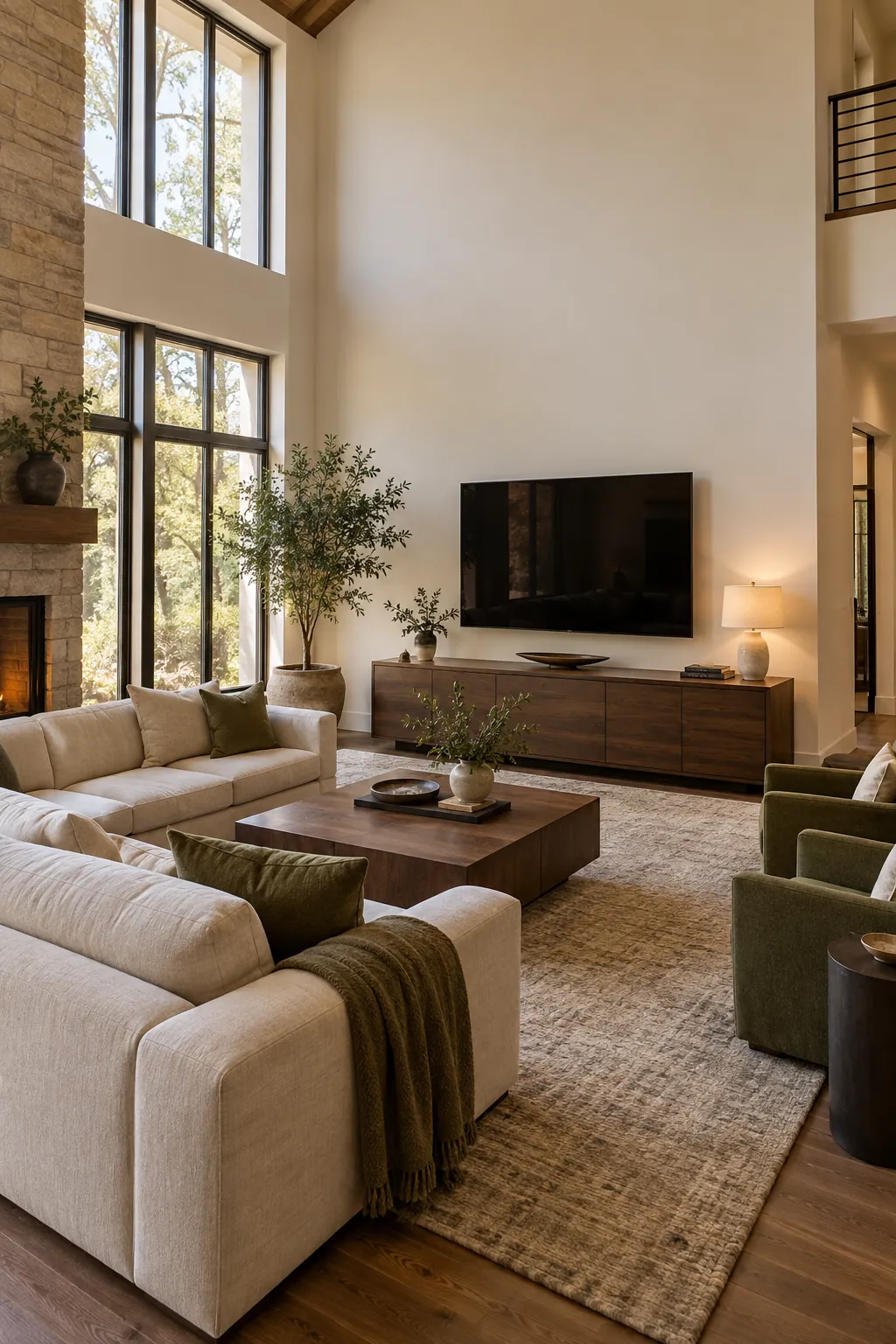
Bring in Full Length Texture
Wool, linen, velvet, and woven baskets add softness that tall hard surfaces often lack. Repeat a small set of textures across curtains, seating, and rugs. Too many unrelated fabrics can make the room busy without making it warmer.
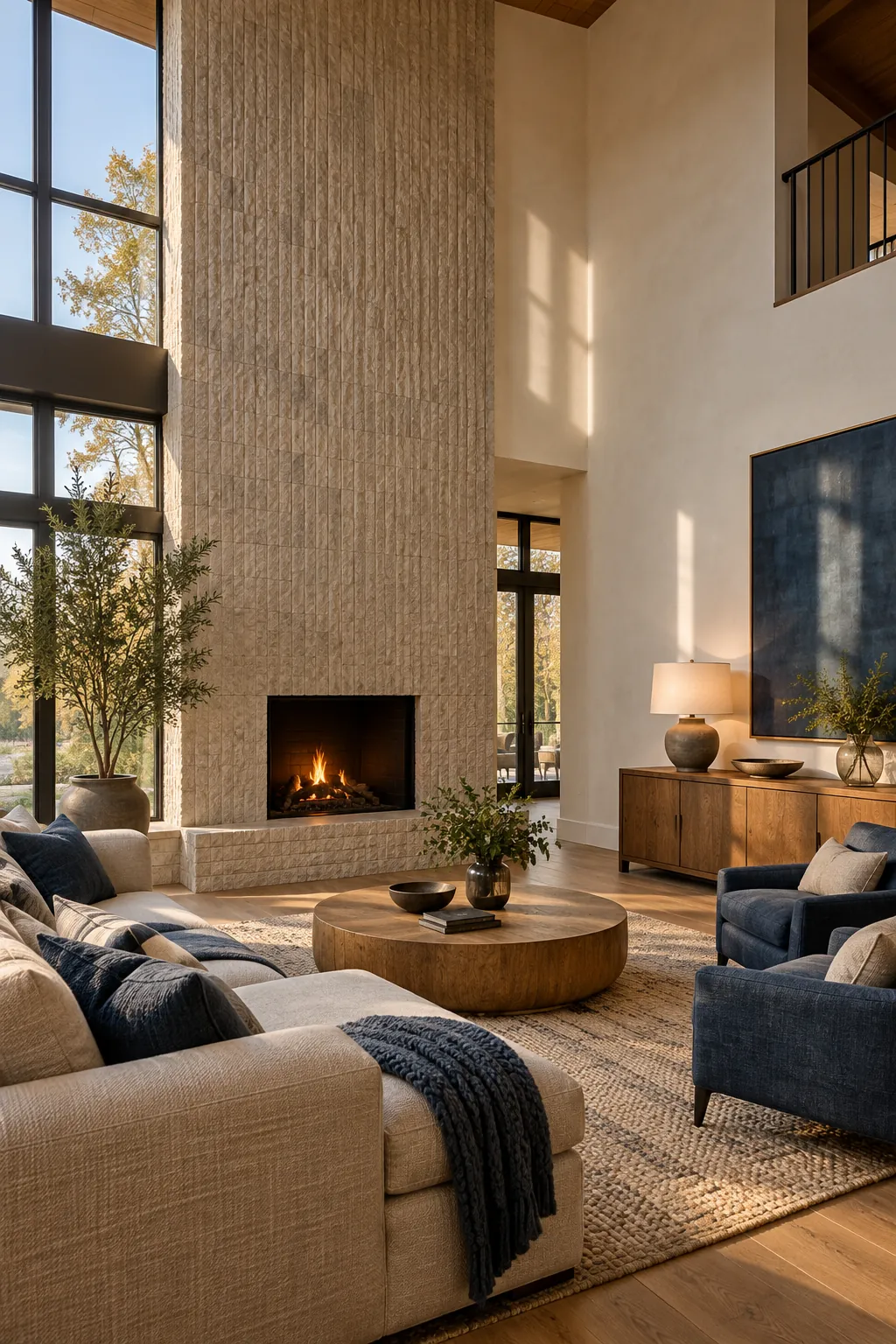
Paint the Ceiling a Warmer Tone
A slightly warmer ceiling color can reduce stark contrast at the top of the room. Test a large sample in daylight and evening light before committing. Keep the change subtle so the ceiling still feels open rather than heavy.
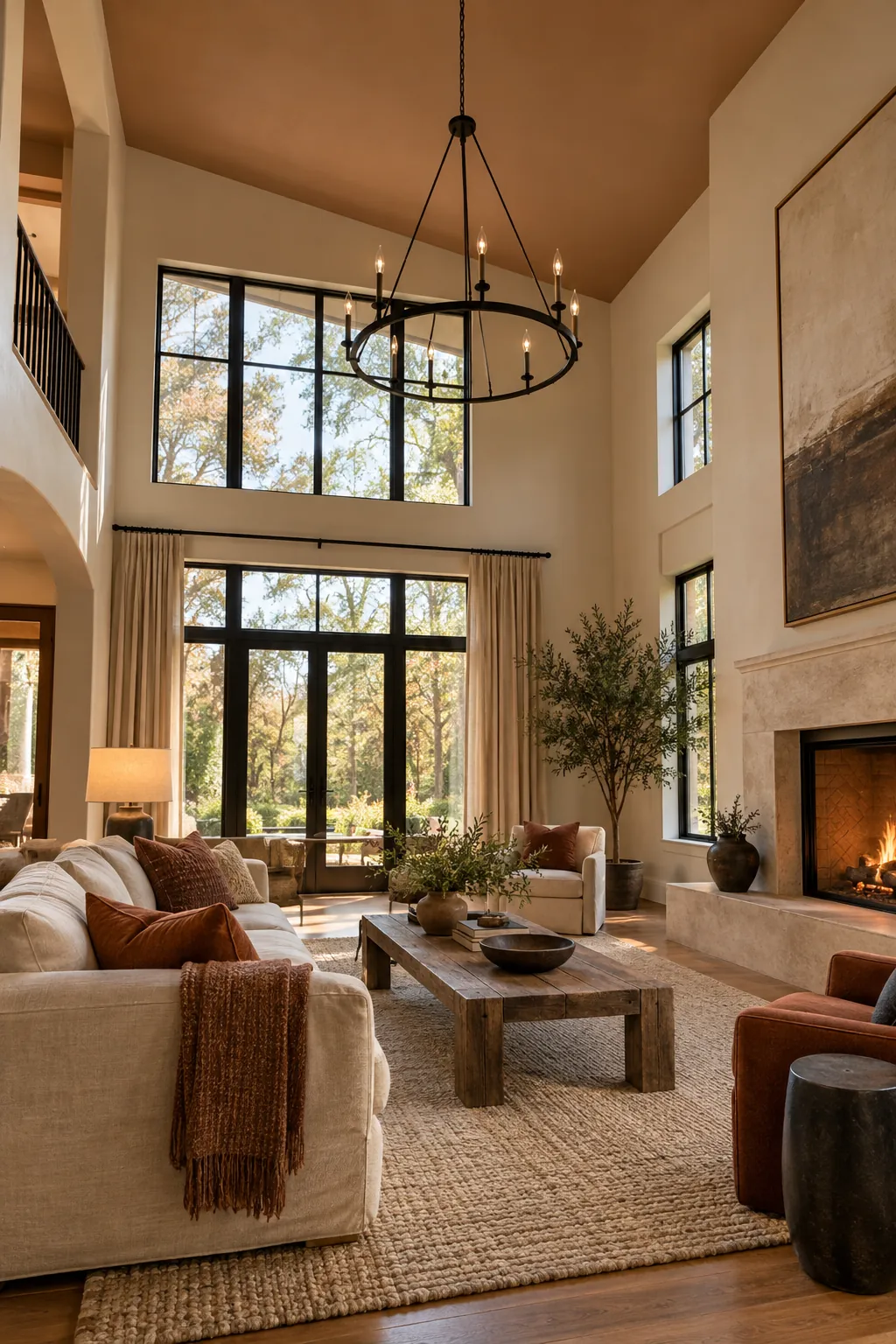
Repeat Wood at Several Heights
Repeating the same wood tone in a coffee table, shelving, and a taller lamp or beam detail ties the full room together. The repetition should travel upward without becoming a themed set. Natural grain adds warmth even when the palette stays quiet.
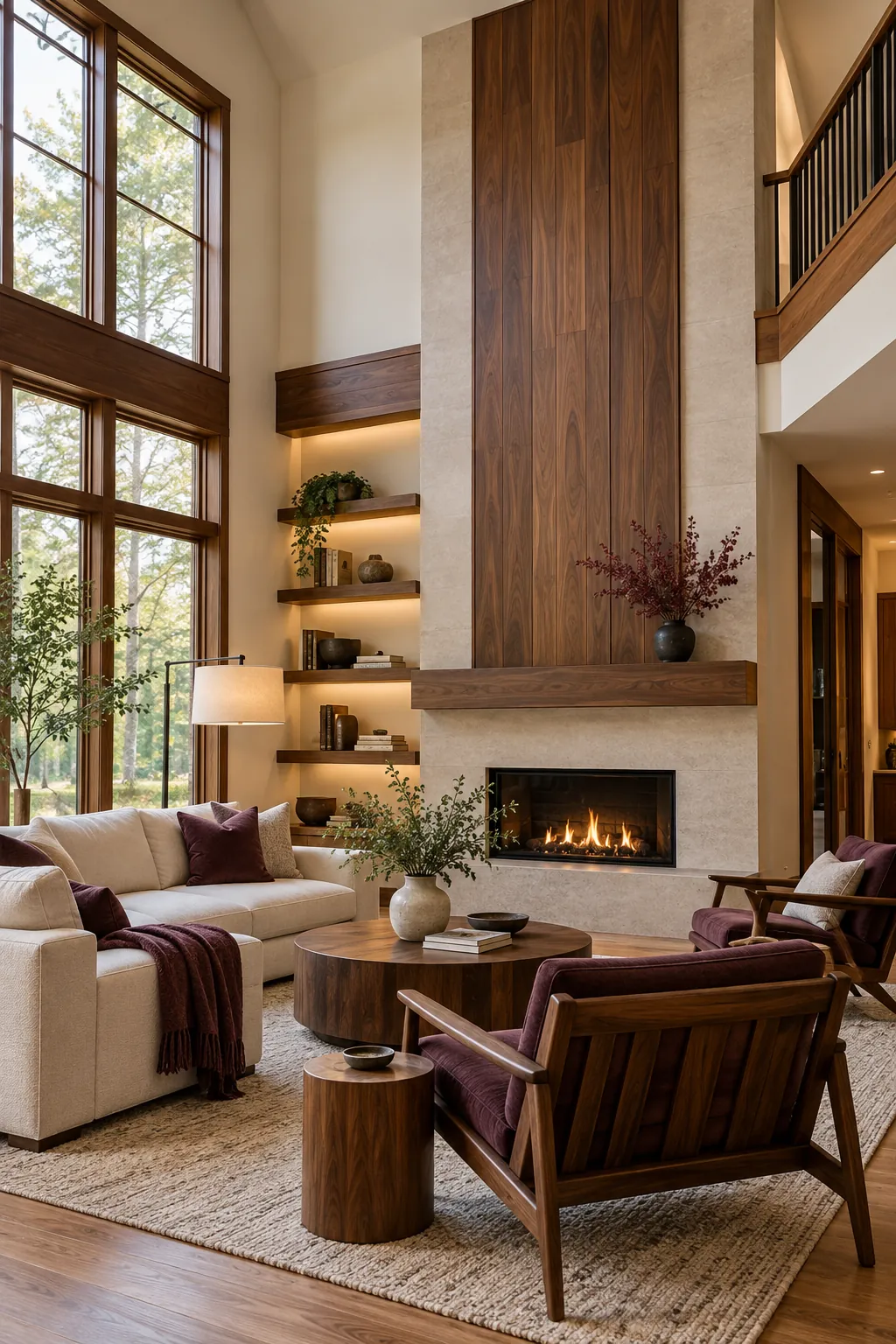
Place Tall Plants Near the Light
A tall plant can bridge the gap between seat height and windows without covering the wall. Place it where the species receives appropriate light and where watering is safe. One healthy specimen is more convincing than several undersized plants scattered around.
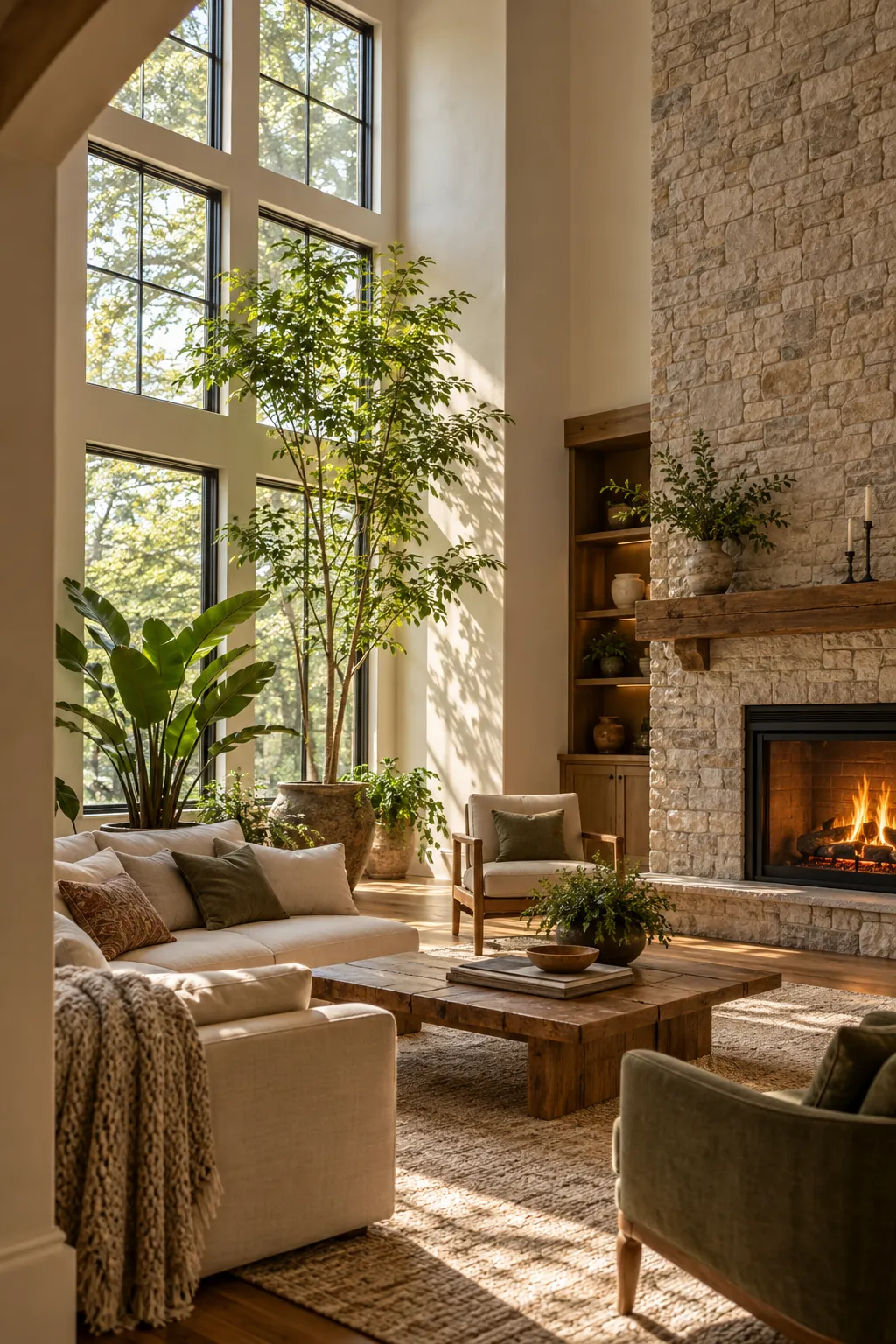
Use One Large Artwork at Eye Level
A single generous artwork can hold a tall wall when it is hung in relation to the sofa, not the ceiling. Choose a piece with enough scale to read across the room and leave breathing space around it. The subject should support the room rather than compete with every furnishing.
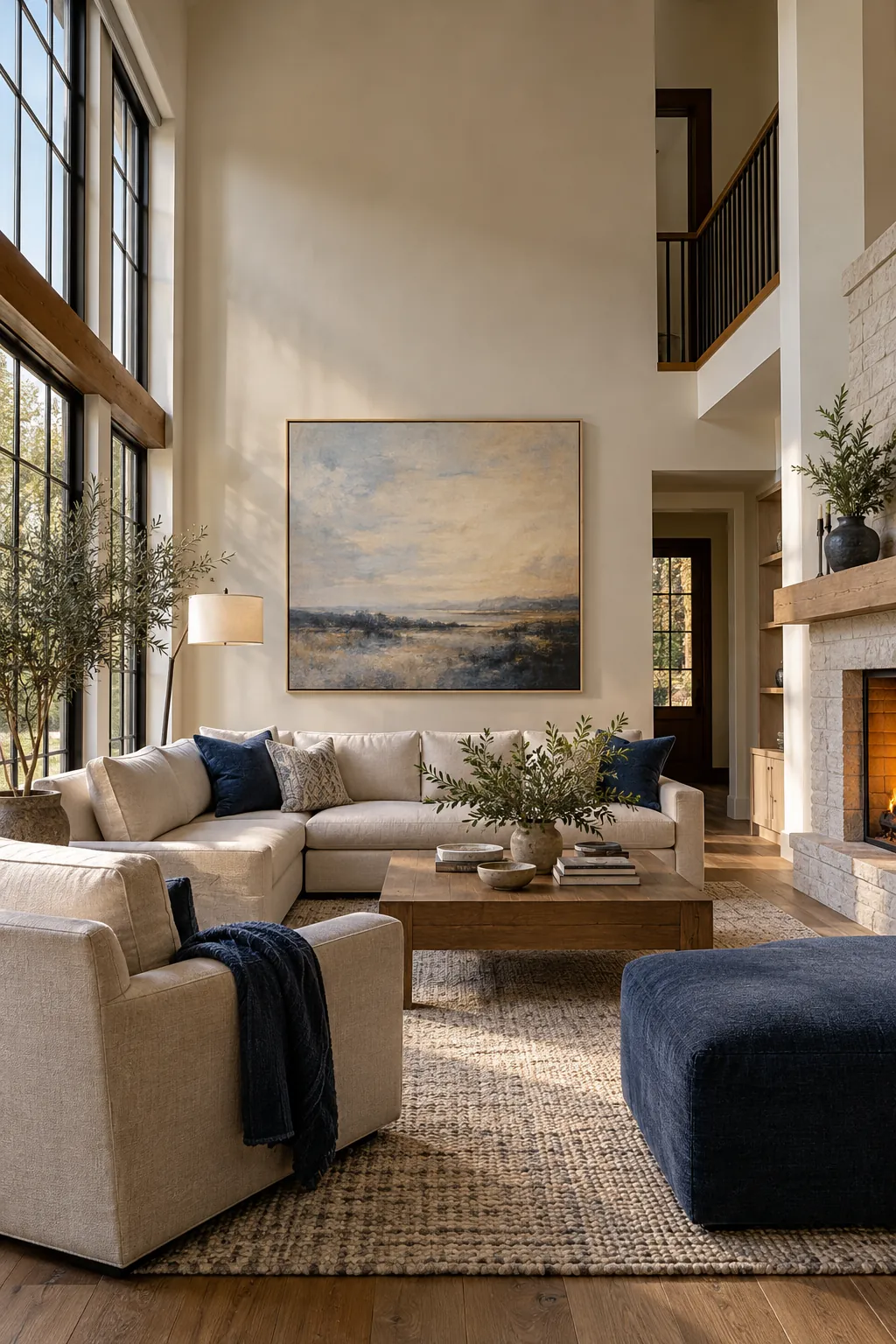
Create a Low Library Wall
Low bookcases or cabinets create a strong horizontal band that brings attention back to daily reach. Fill them with books and closed storage instead of tiny decor. A lamp or one artwork above can complete the zone without climbing the wall.
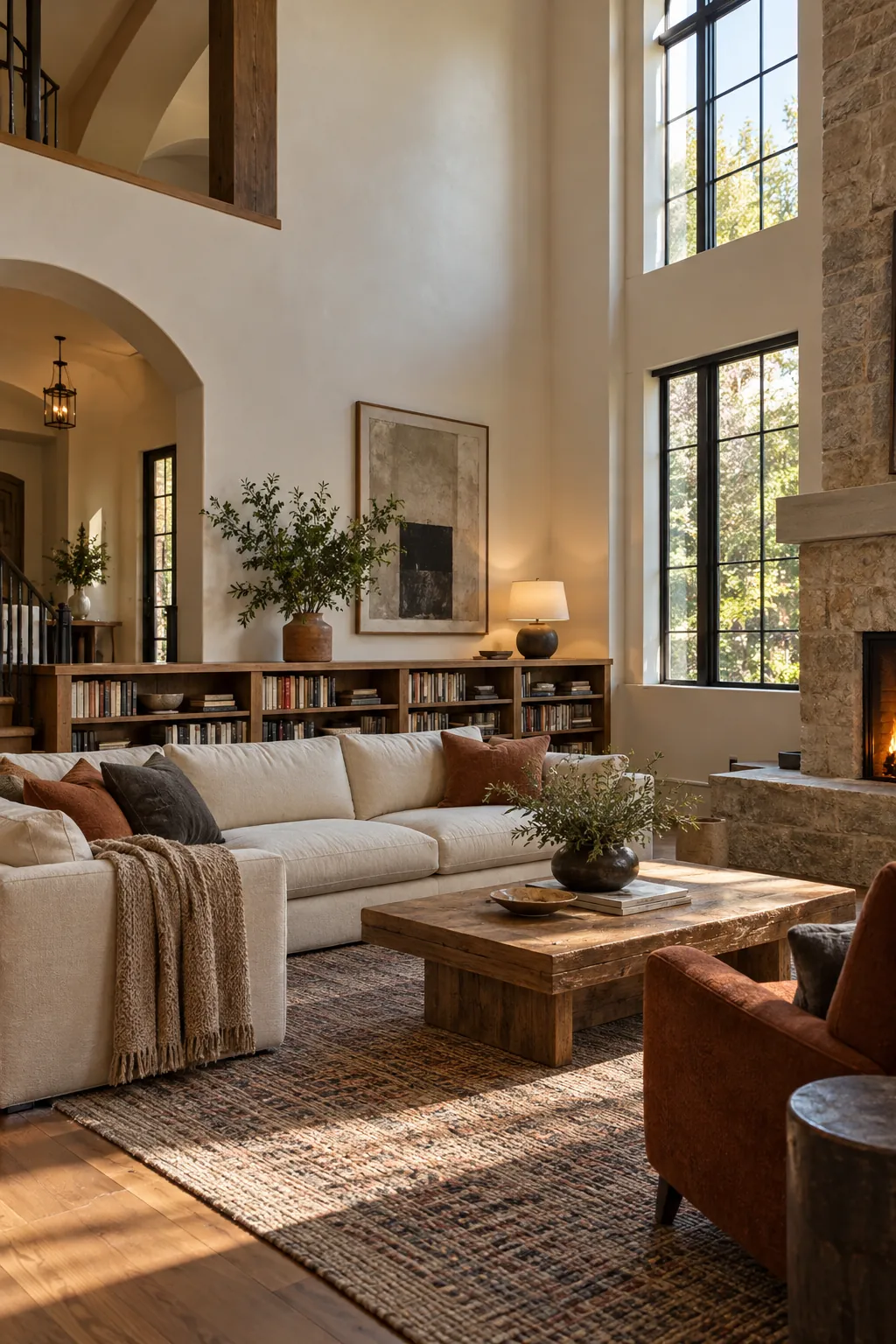
Add Upholstered Ottomans
Ottomans add low upholstered mass, extra seating, and flexible lounging. Place them where they can move without blocking the main path. Repeating the sofa fabric or color makes the seating group feel more enclosed.
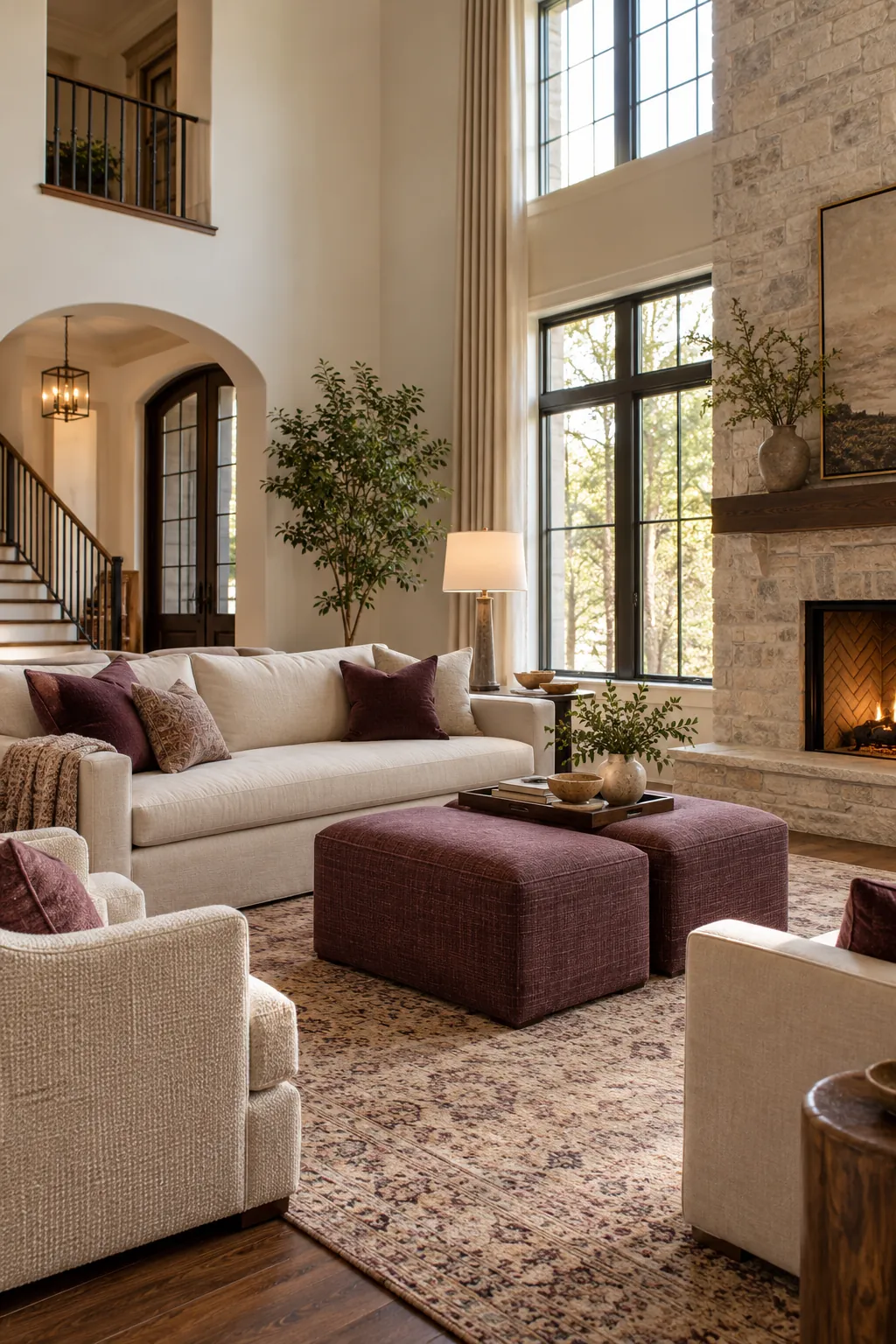
Break the Room Into Two Seating Areas
A very large room may feel warmer as two linked groups rather than one enormous circle. Use one zone for conversation and another for reading or music. Overlap their rugs or sight lines so the areas remain connected.
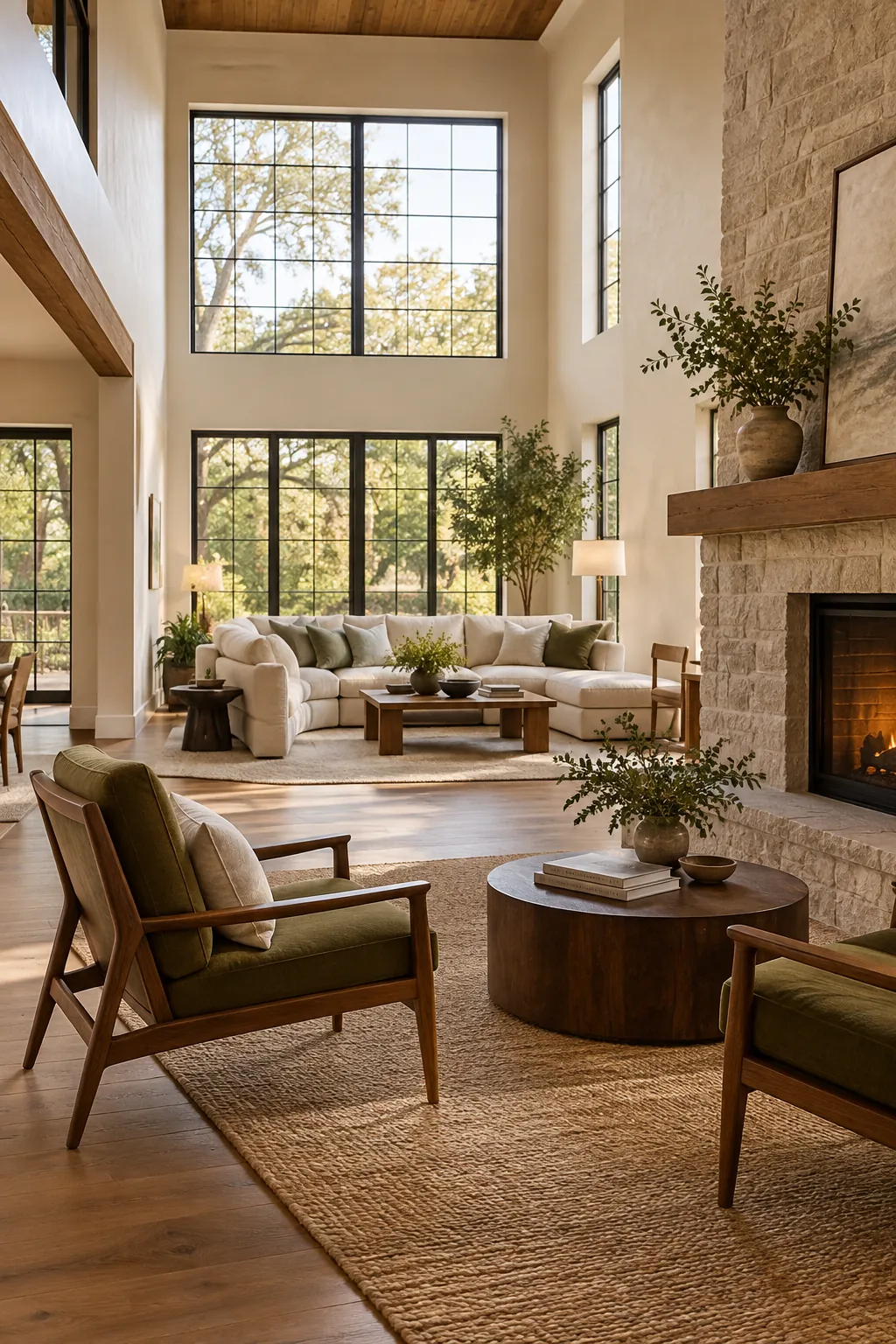
Choose a Substantial Coffee Table
A substantial coffee table gives widely spaced seating a common center. Choose a shape that leaves comfortable knee and walking clearance. Natural wood or upholstered texture can soften the scale more effectively than a thin glass surface.
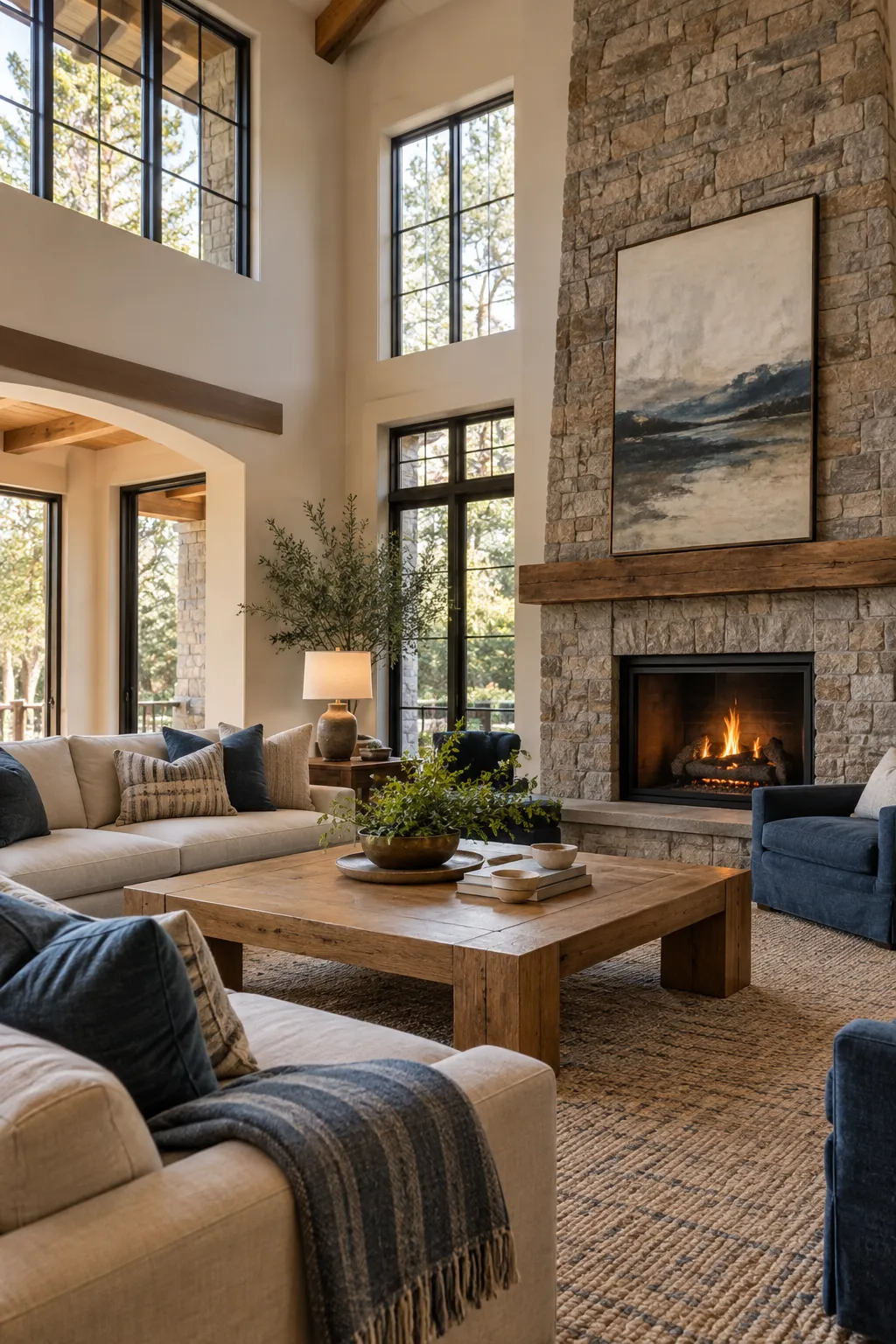
Soften Echo With Fabric and Books
Echo makes a high room feel empty even when it contains furniture. Rugs, curtains, upholstered seats, books, and fabric shades all absorb sound at useful heights. Add them gradually and listen for improvement rather than covering every surface.
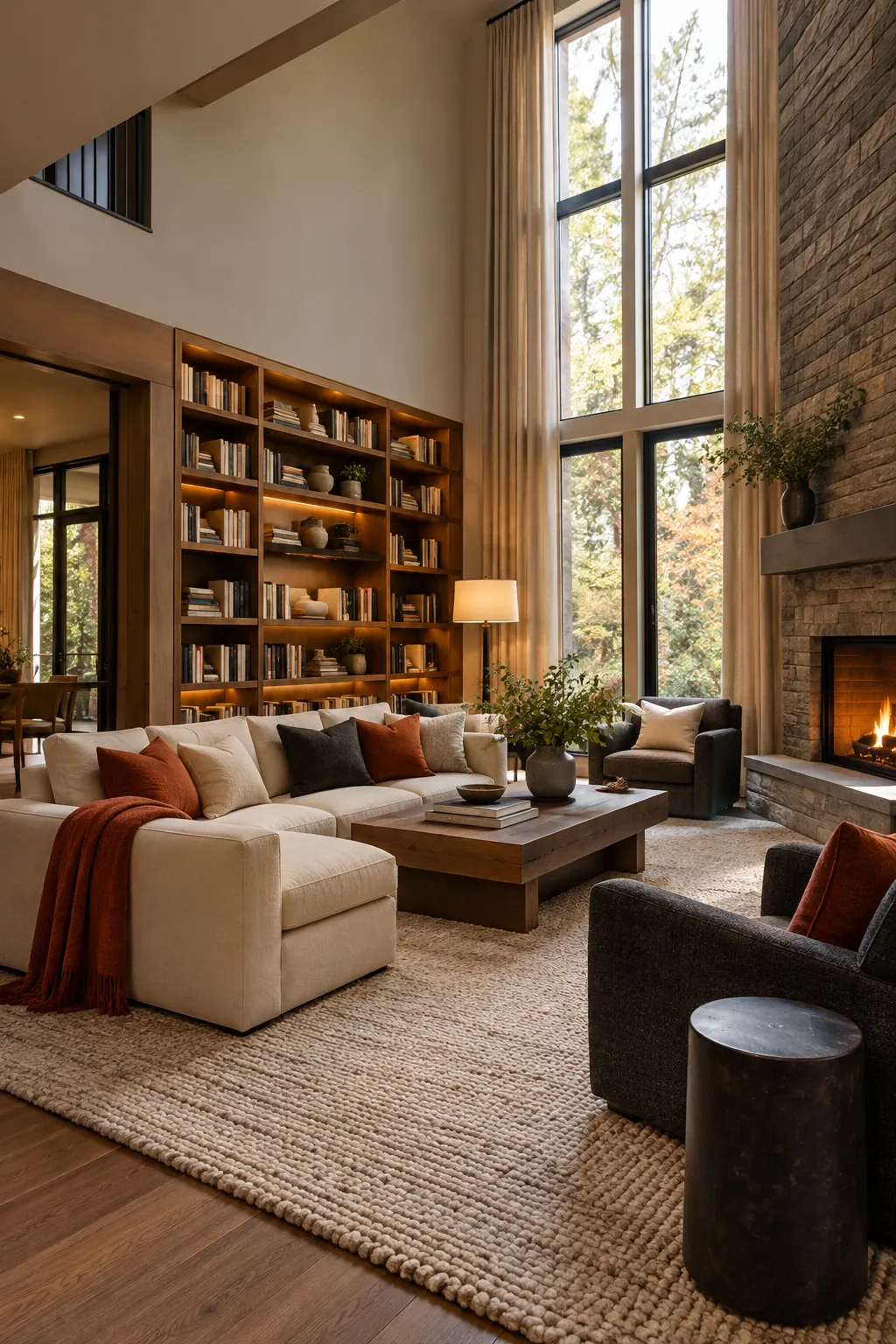
Use Wall Sconces Below the Upper Void
Sconces place light within the occupied part of the room and reduce dependence on the ceiling. Install them where they support seating or artwork, with safe wiring and reachable controls. Their glow should spread softly instead of creating sharp cones.
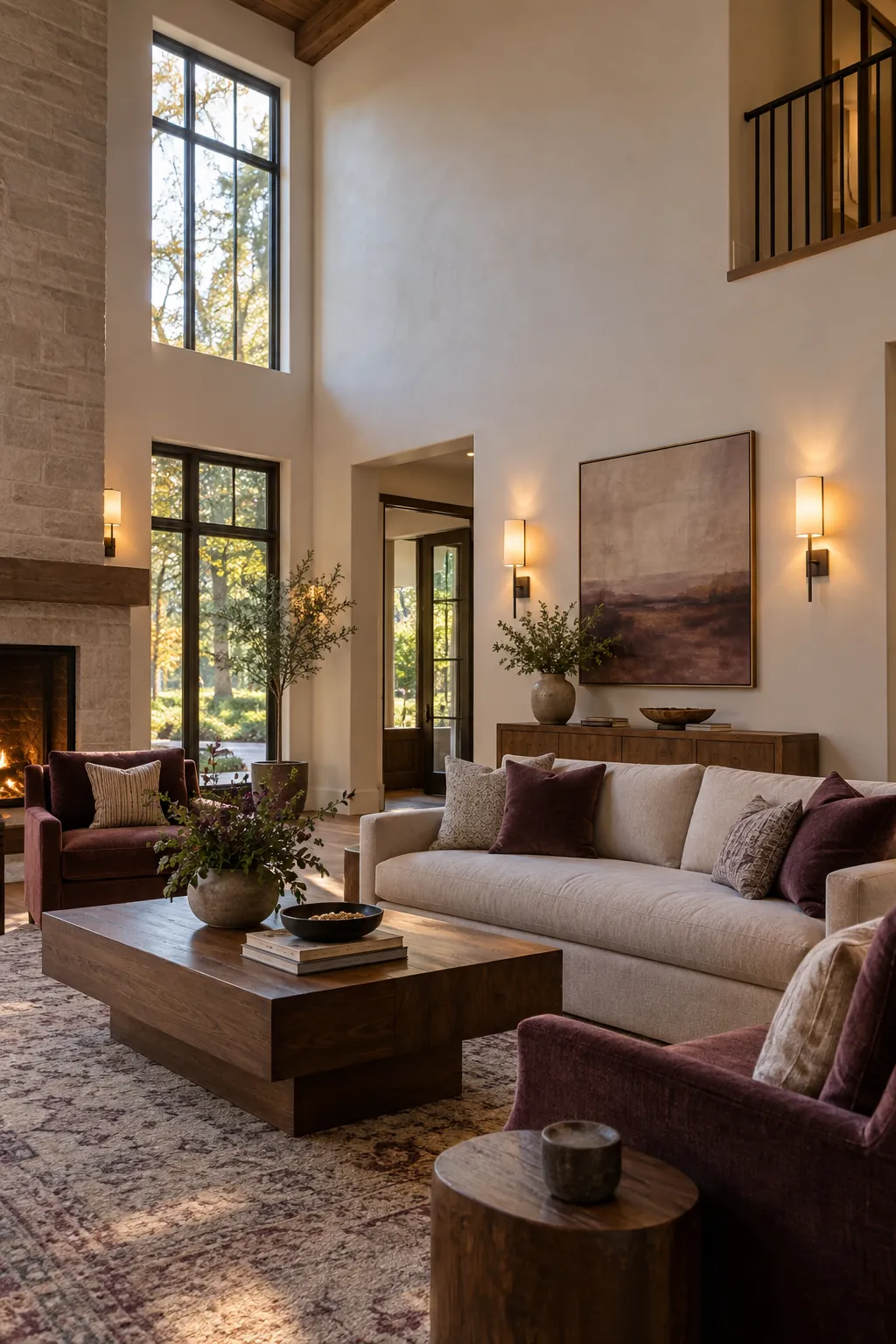
Keep Upper Walls Intentionally Quiet
Not every tall wall needs a gallery that reaches upward. Leaving the highest section quiet can make lower furniture and art feel more intentional. The blank space becomes architecture rather than a decorating problem.
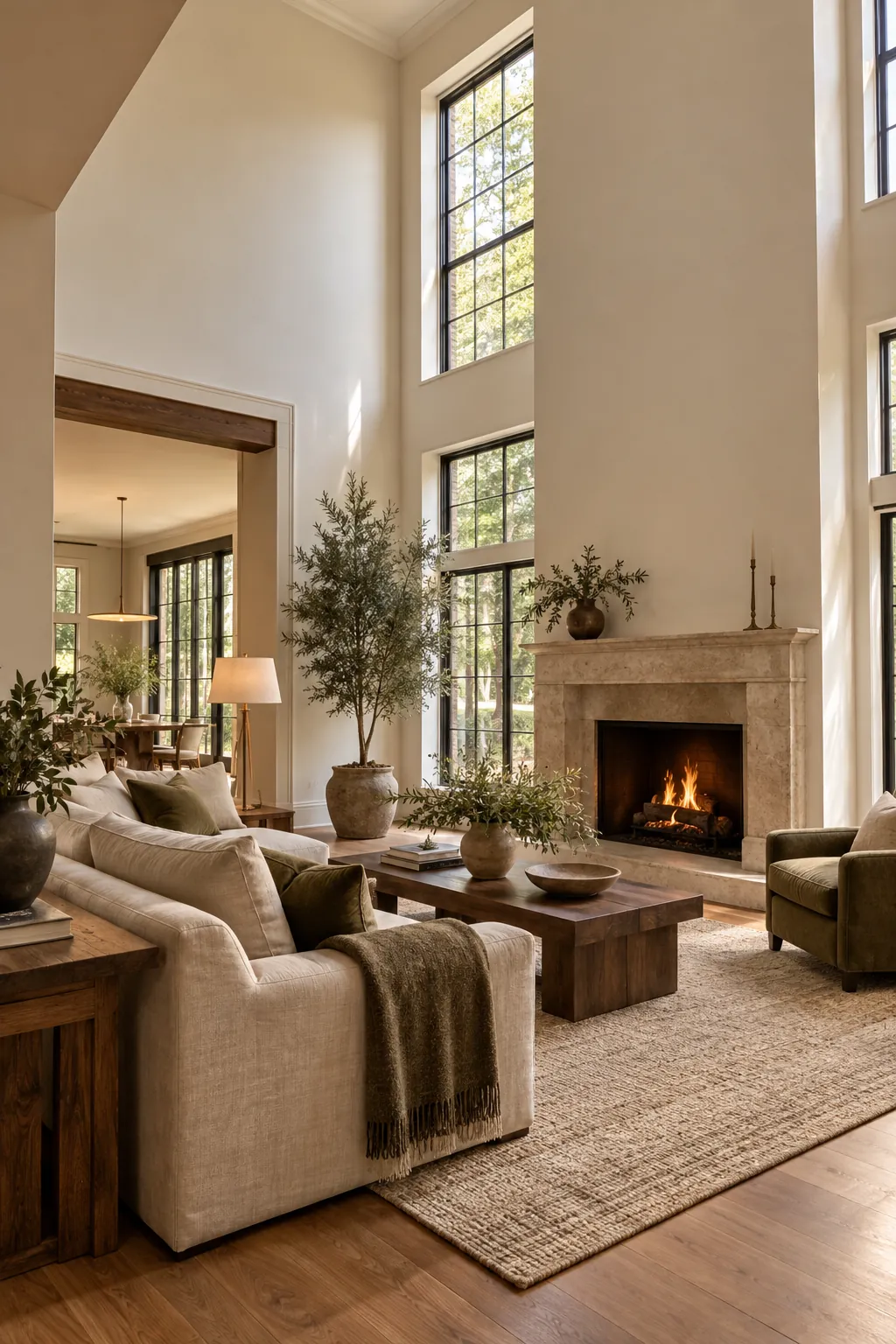
Frame the Fireplace With Balanced Mass
A fireplace gains presence when nearby furniture, cabinets, or tall lamps provide balanced mass. Keep combustible materials at safe distances and preserve the hearth as a usable focus. The goal is a grounded composition, not a tower of decor.
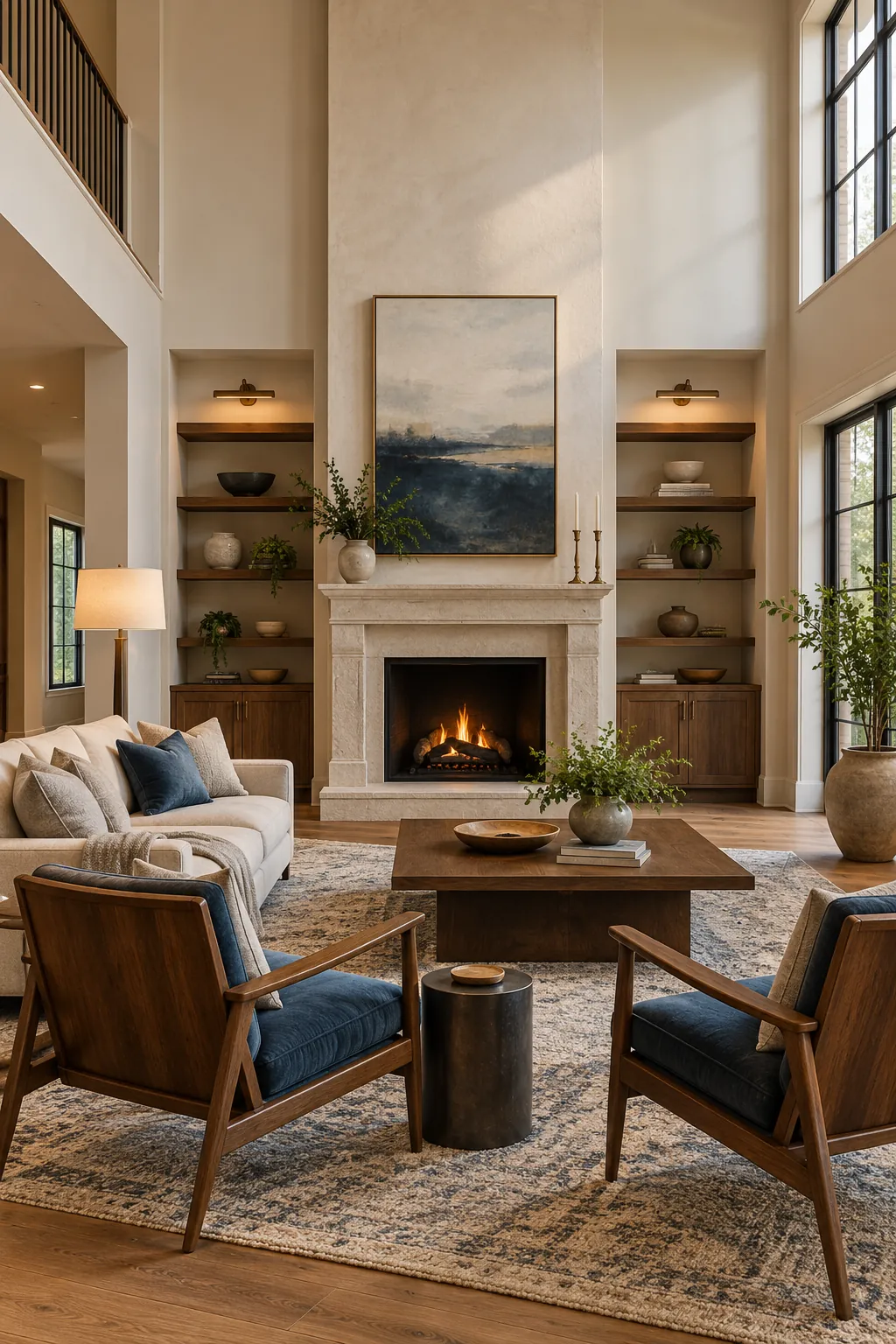
Finish With Warm Pools of Evening Light
At night, several warm pools of light make a tall room feel inhabited from within. Dim the overhead source and let lamps define seats, tables, and the fireplace. The room should feel comfortable at face level while the ceiling recedes softly.