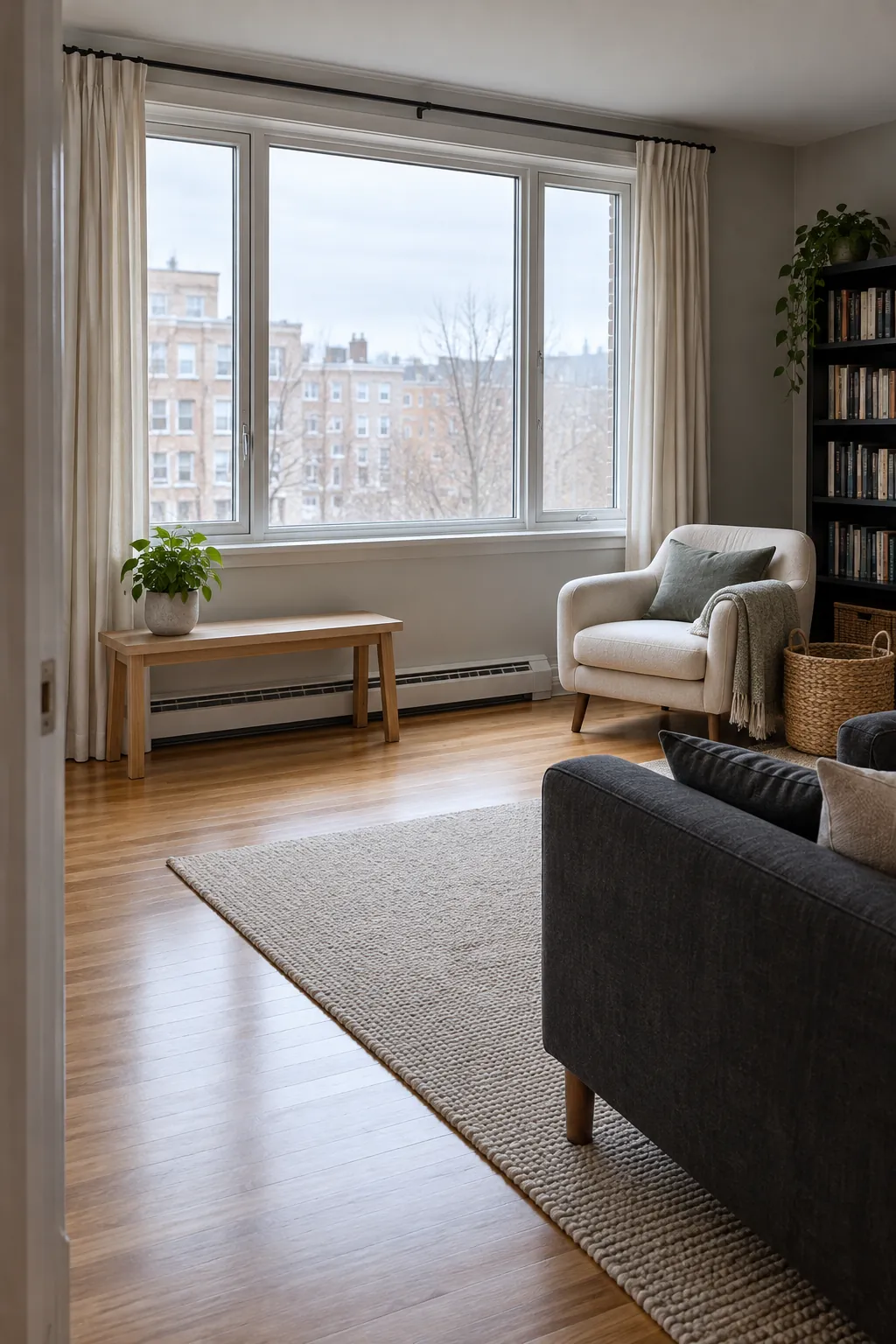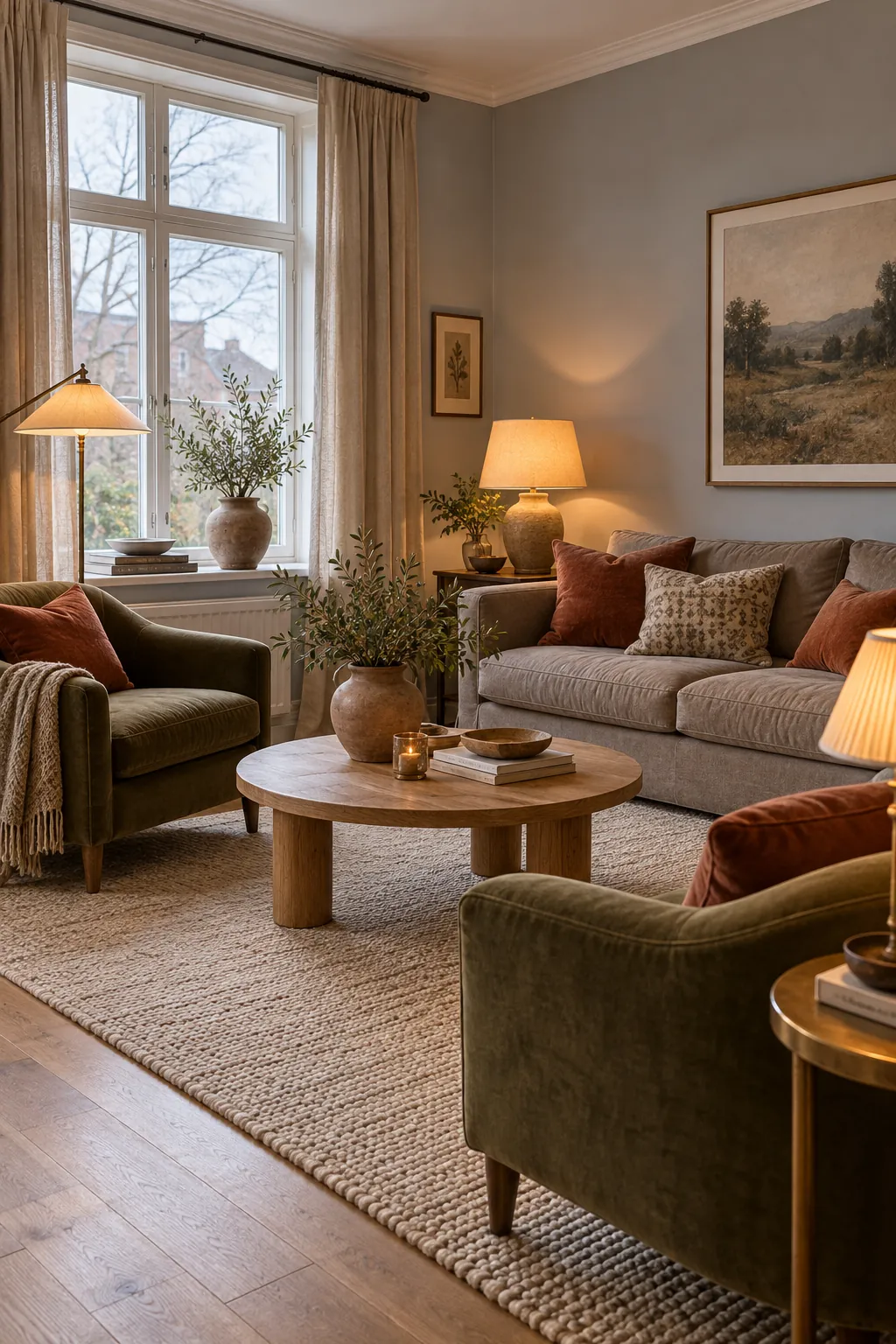
Cool indirect daylight can make familiar furniture look flatter and grayer than it does in another room. The answer is not to cover every surface with orange or switch on one bright ceiling light. A warmer result comes from several small changes that improve contrast, texture, reflection, and the quality of light after sunset.
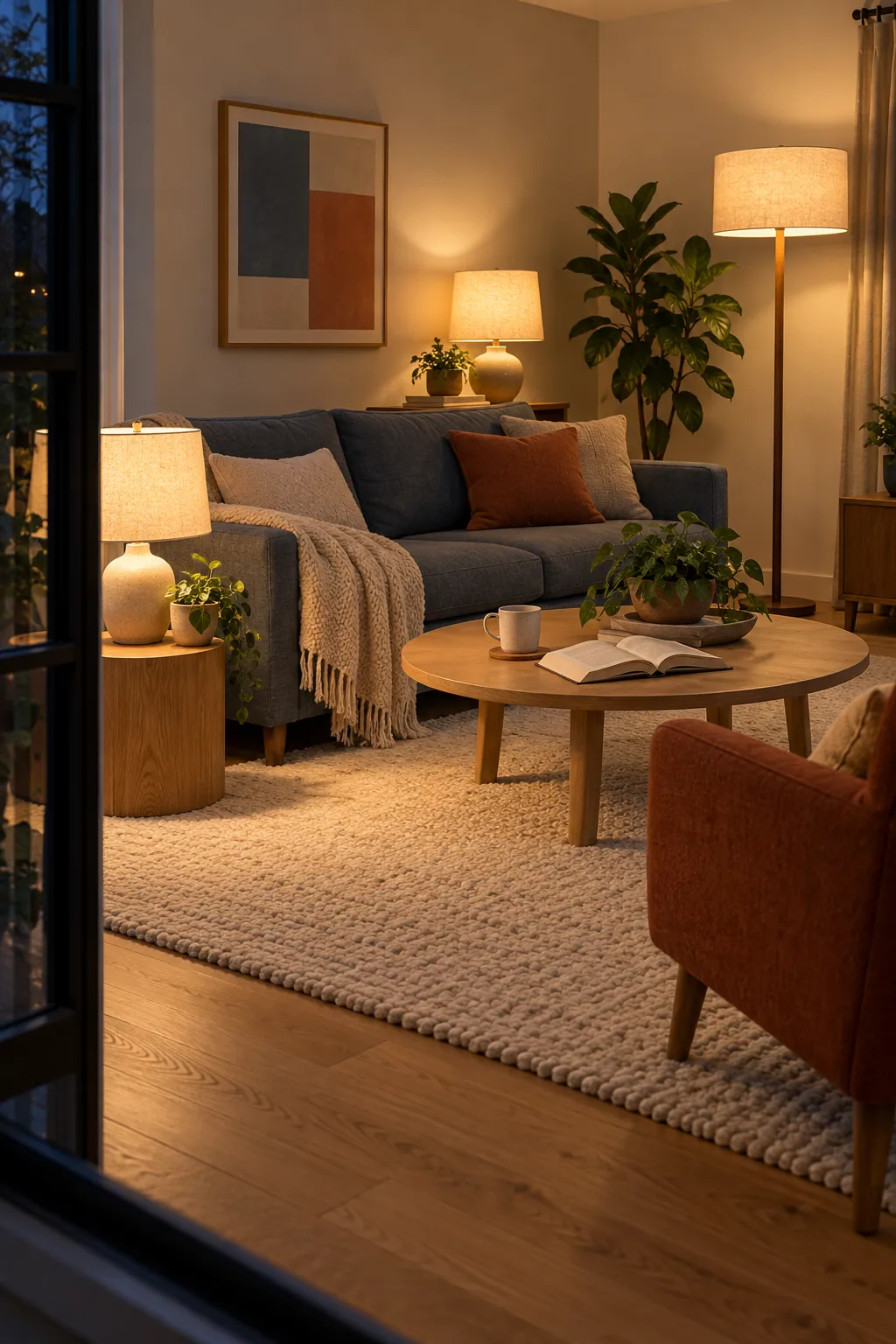
Layer lamps at three heights
Use a floor lamp, a table lamp, and one lower accent light instead of relying on the ceiling fixture. Separate pools of warm ambient lighting give faces and fabrics more depth. Put each lamp near an activity, then choose shades that soften glare without turning the room orange.
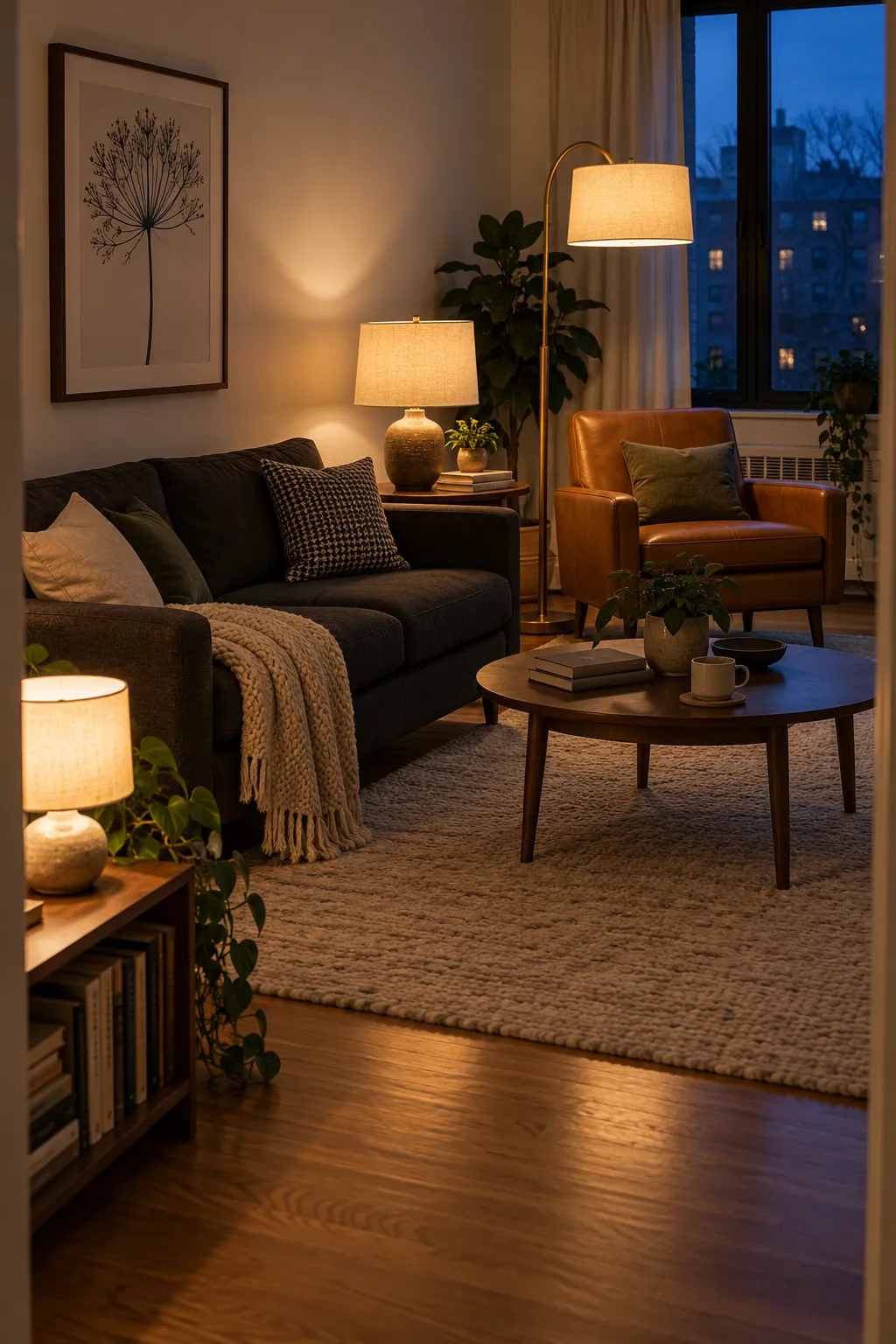
Move a mirror beside the window
A mirror placed beside or perpendicular to the window can redirect useful daylight deeper into the room. Test the reflection from the sofa before hanging it, because direct glare is not warmer or more comfortable. A wood or aged brass frame adds another warm material without changing the wall color.
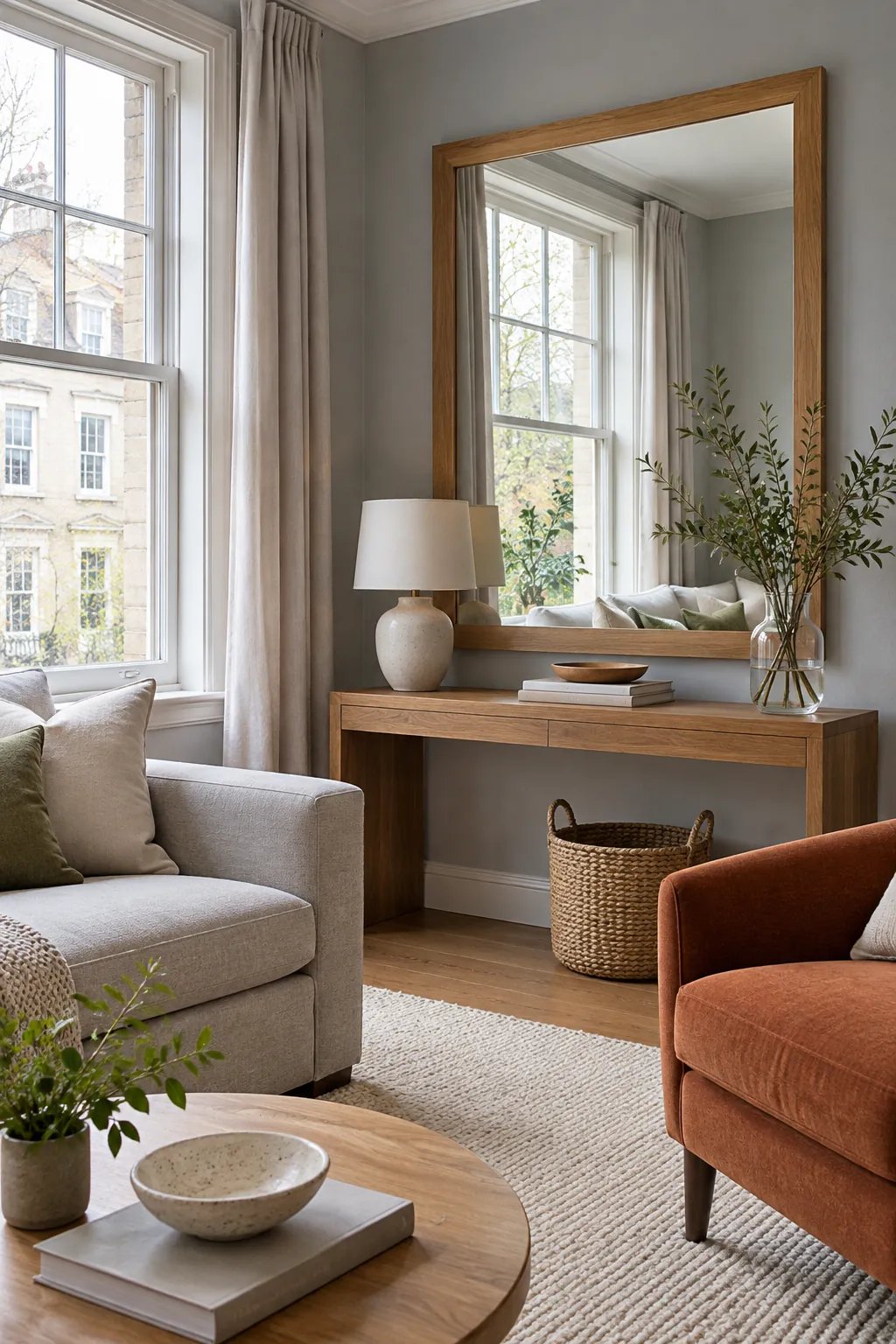
Replace one cool rug with a warmer weave
A large rug changes more of the visible room than a few small accessories. Look for oatmeal, rust, muted berry, camel, or warm gray rather than a strong orange pattern. A tactile wool or wool blend also makes the low daylight living room feel physically softer underfoot.
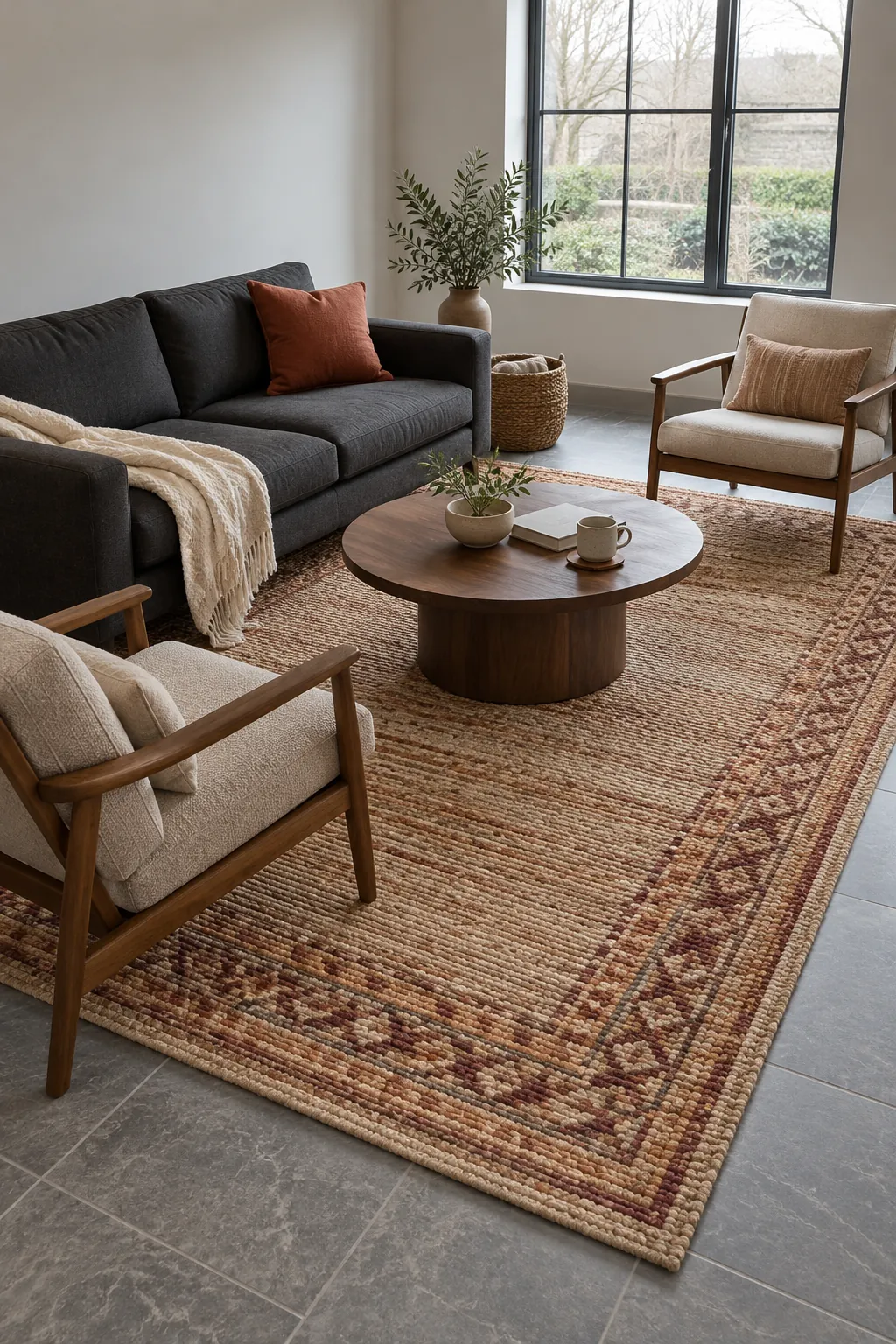
Bring in wood at eye level
Wood has more effect when it appears on a lamp, side table, shelf, or picture frame where the eye meets it. Choose medium warm tones with visible grain instead of covering the room in dark heavy pieces. Repeating the same family of wood twice makes the choice look intentional.

Add rust and clay in small amounts
Rust, terracotta, and clay can counter cool daylight without overwhelming warm neutral interiors. Repeat one accent through a cushion, a throw, and a ceramic vessel, but vary the texture. Leave plenty of cream, taupe, and natural wood around it so the palette stays calm.

Use linen curtains that clear the glass
Heavy curtains can steal the limited daylight even when they are open. Mount a wider rod so the panels stack beyond the glass, then choose linen or a textured blend in cream or flax. The fabric adds softness while the clear window preserves every available hour of light.
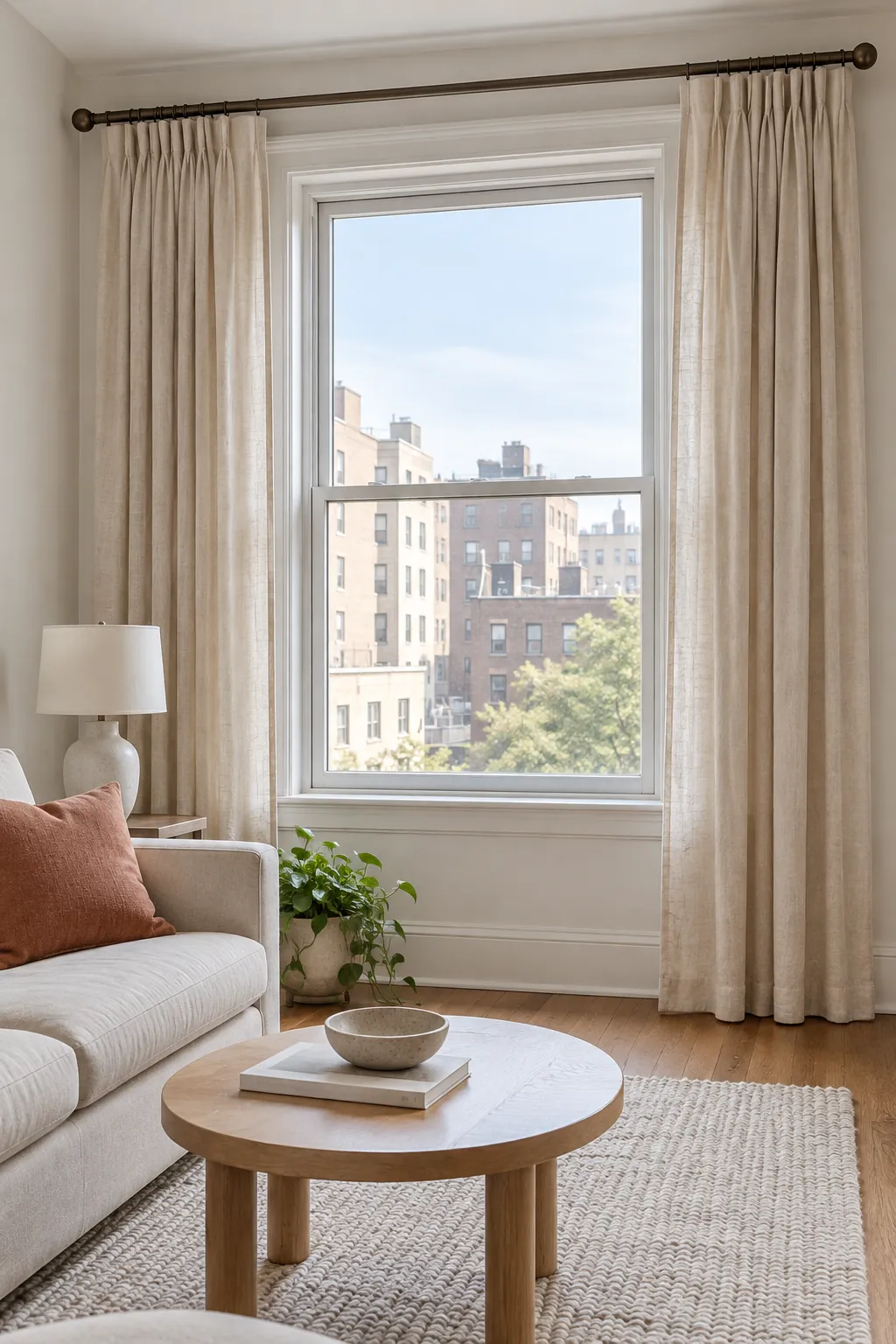
Mix smooth surfaces with soft textiles
A room filled with only flat cool surfaces can feel colder than its temperature. Combine a smooth ceramic lamp or metal tray with wool, velvet, linen, and a knitted throw. Layered natural textures catch indirect light differently, which creates the depth that dim rooms often lack.

Swap chrome for aged brass details
You do not need to replace every fitting. Change one lamp base, tray, frame, or pair of small hardware pieces from bright chrome to aged brass or dark bronze. A restrained warm metal catches gray daylight gently and connects well with wood, clay, and soft living room textiles.

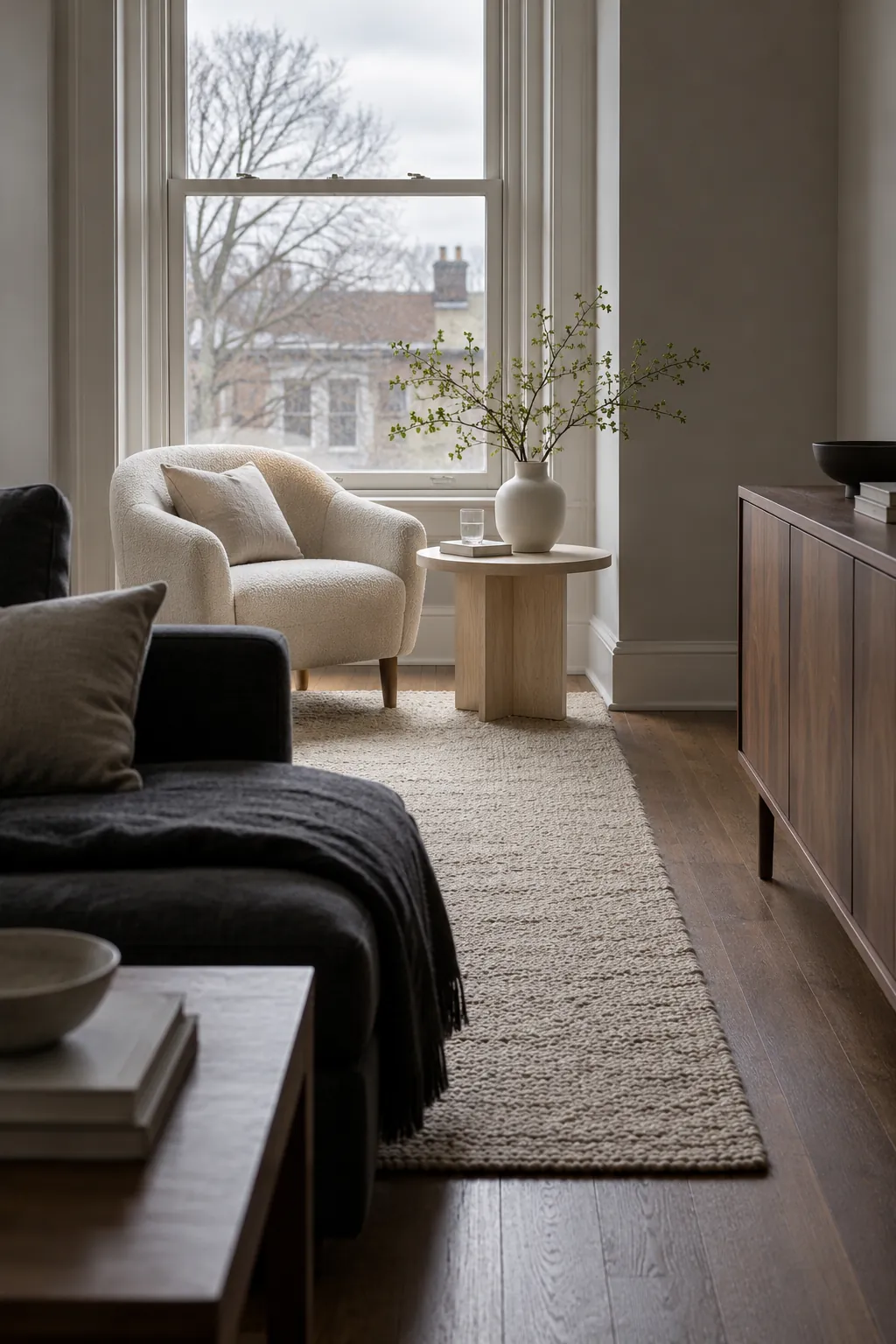
Place a light surface near the window
A pale wood table, cream chair, or light rug near the window can return soft light into the room. Keep the surface matte, since a glossy finish may create glare. This is useful when dark living room ideas have left too much visual weight around the only source of daylight.
Choose warmer bulbs with good color quality
Bulb warmth matters, but color quality matters too. Use warm white bulbs that render fabric, wood, and skin tones naturally, and keep bulb color consistent across lamps used together. Add dimmers or lower output bulbs so evening light feels gentle rather than muddy or overly amber.
Edit dark clutter around the window
Dark objects clustered around a north window absorb light and make the opening look smaller. Move tall furniture, dense plants, and stacks away from the glass, then keep only one or two low pieces nearby. The change costs nothing, preserves the existing paint, and helps every warmer layer in the room work harder.