
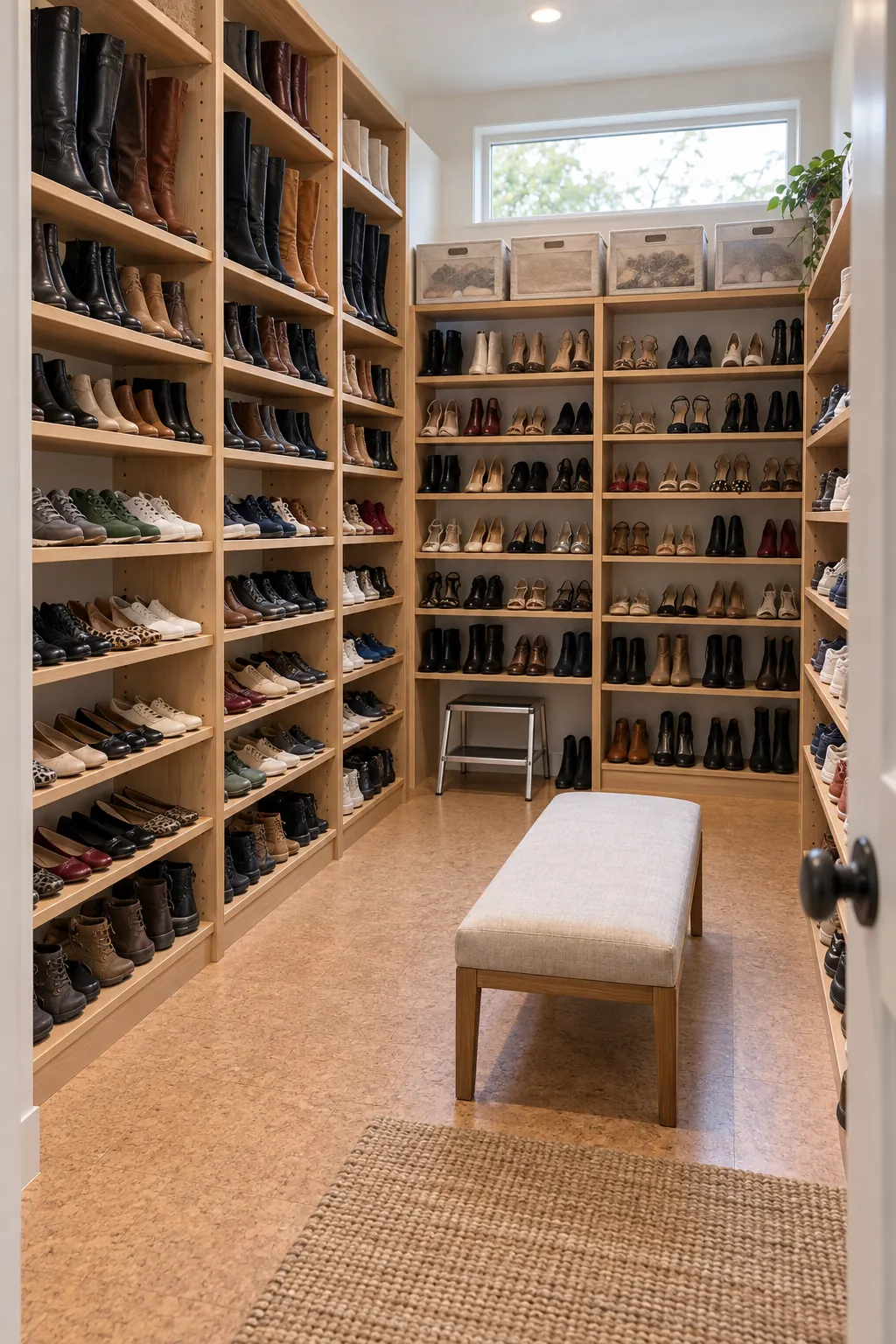
A collection of 100 pairs cannot be managed as one pile of identical objects. Boots need height, delicate leather needs protection, frequently worn shoes need fast access, and special occasion pairs can live farther away. The first task is to understand the collection before deciding how much shelving it needs.
Plan for visibility, airflow, weight, and a route that lets you reach every pair safely. A shoe wall can hold a large collection, but it should not turn a bedroom or closet into a narrow obstacle course.
Count pairs by storage shape
Sort the collection into flat shoes, sneakers, heels, ankle boots, tall boots, and delicate or boxed pairs. Count each group and measure the widest, deepest, and tallest examples. This creates a real capacity plan instead of assuming that every pair fits the same cubby.
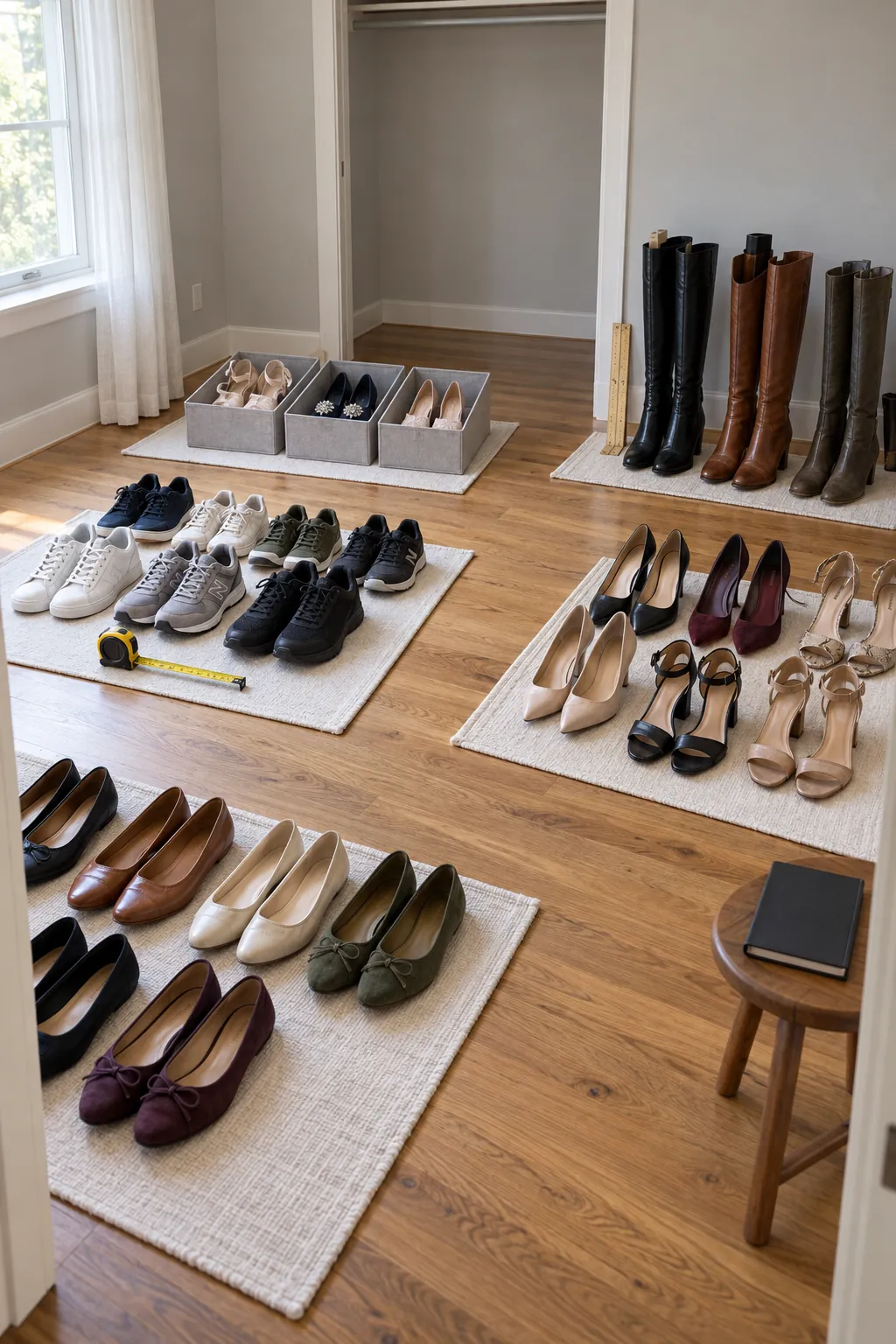
Separate daily access from archive storage
Keep the most frequently worn pairs between knee and shoulder height where they can be seen and returned easily. Place occasional shoes higher or lower, and move true seasonal pairs into protected storage. This prevents 100 choices from slowing every morning.
Reserve the entryway for only the active daily pairs. The main collection belongs in a closet, dressing room, or other dry interior area with enough structure for its weight. A simple rotation can change the active zone when weather or work routines change.
Calculate floor to ceiling shelf capacity
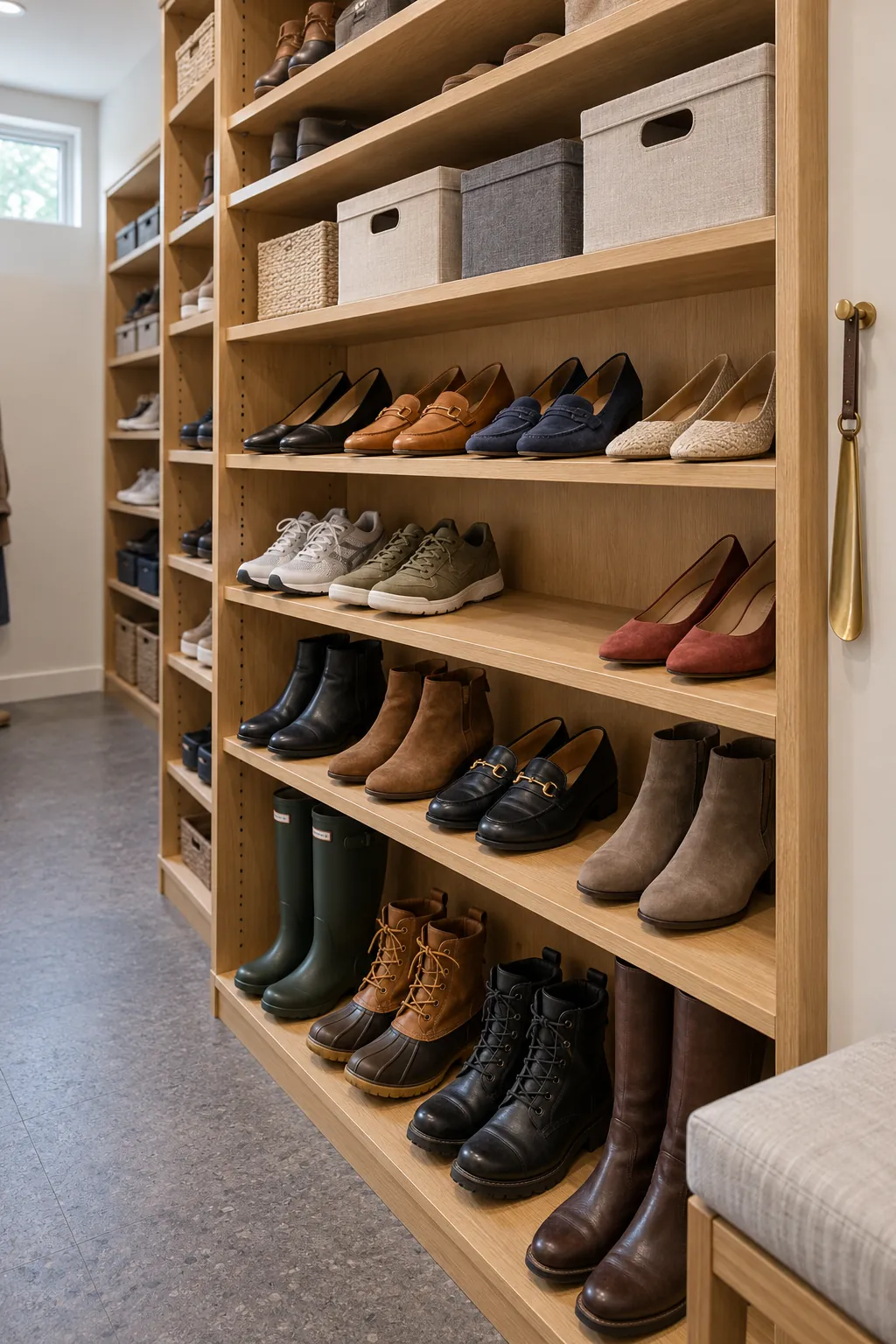
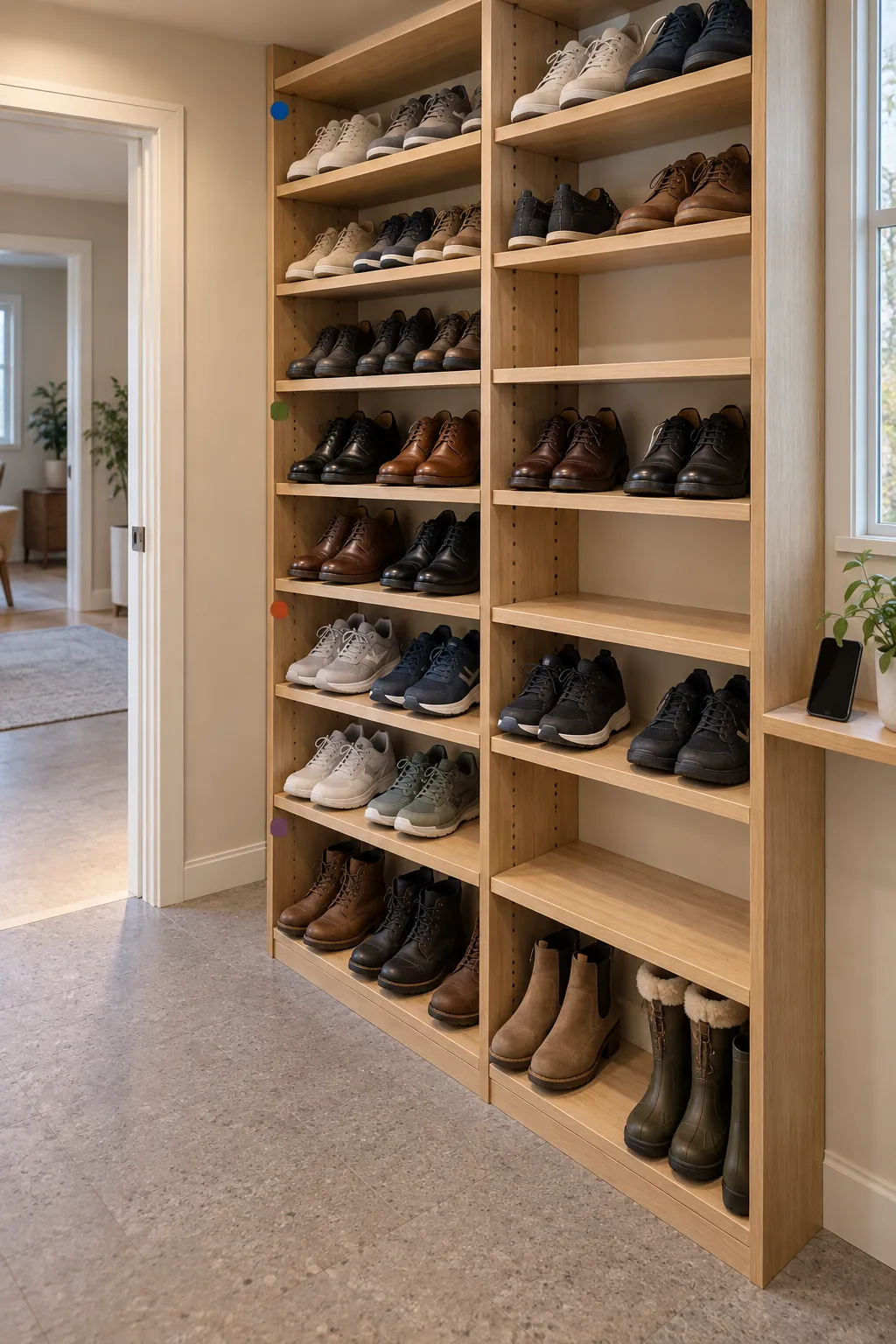
Measure the usable wall width and height, then subtract space for baseboards, doors, outlets, vents, and safe access. Adjustable shelves use height efficiently because rows can change for sneakers, heels, and boots. Include breathing room and do not force toes or heels against the shelf above.
Secure floor to ceiling shoe shelves to suitable structure and confirm that shelves will not sag under the combined load. A narrow lip can stop shoes from sliding, while a stable step stool can make upper rows accessible. Never place the collection where it blocks an exit or required service access.
Choose open shelves or protective boxes by material
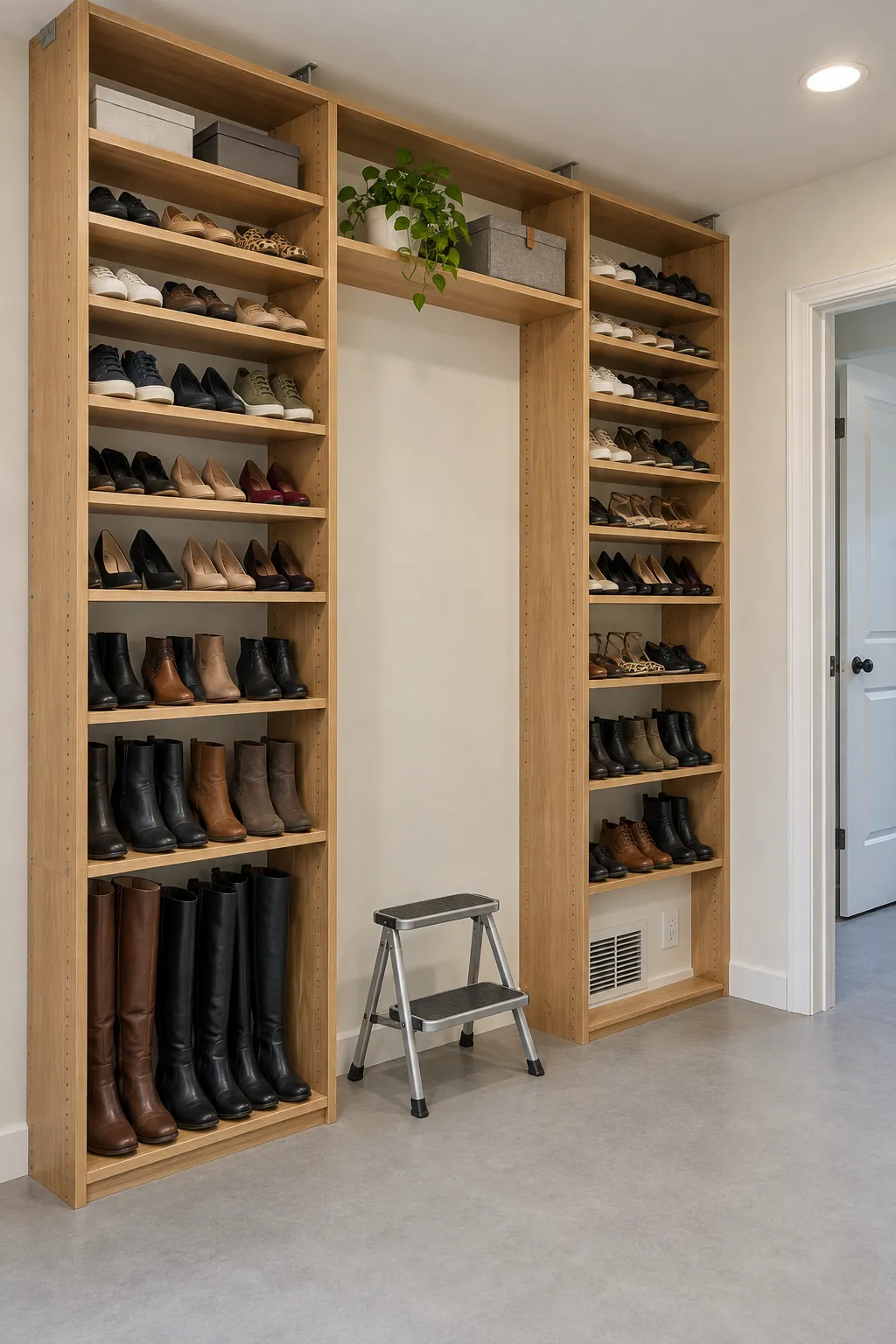
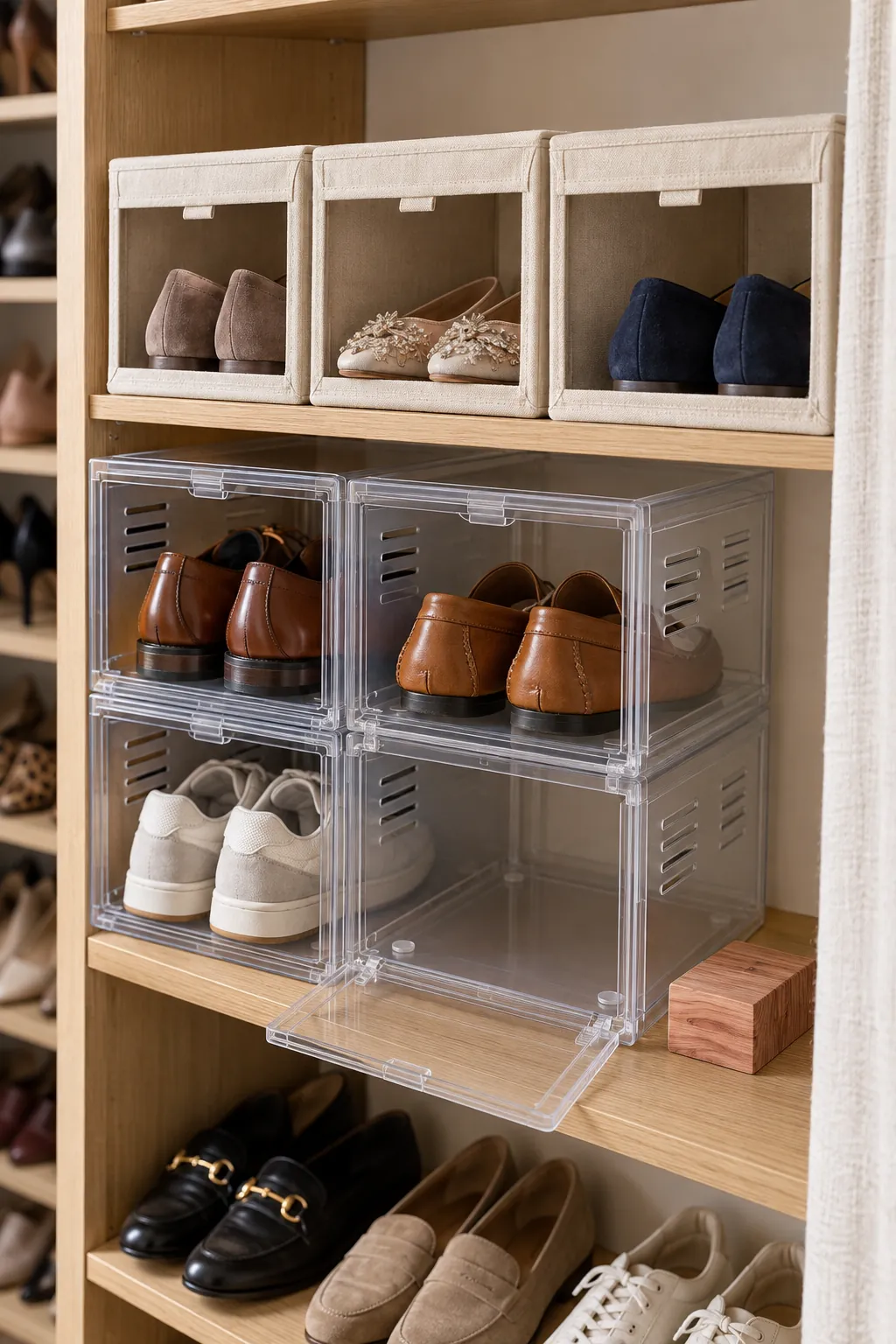
Open shelves provide the best visibility and fastest return, but they need regular dusting. Breathable fabric boxes or suitable clear shoe boxes can protect delicate pairs while keeping them identifiable. Store shoes only after they are clean and fully dry, and allow the container type to match the material’s care needs.
Use a rotating rack only where clearance allows
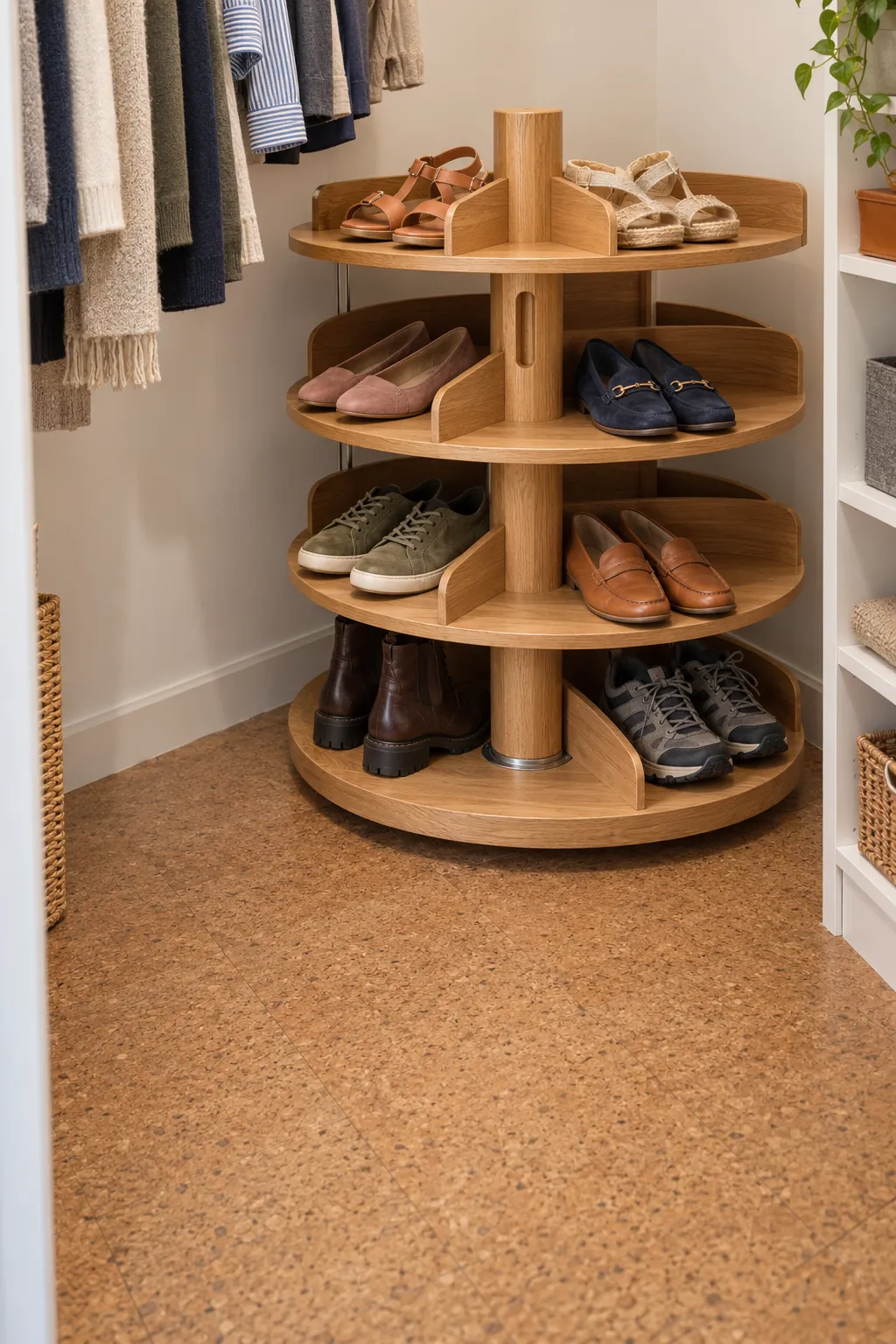
A rotating shoe rack can make a deep corner useful, but it needs stable support and enough room to turn without striking a wall or hanging clothes. Test the largest pair at every position before relying on the stated capacity. Keep heavier shoes low and do not overload a moving mechanism.
Create a location system that stays current
Divide the storage into simple zones and record each pair’s location in a note or photo catalog. Use short, consistent zone names rather than a complicated code. A small removable shelf marker can help the collection return to the correct place without putting permanent adhesive on the shoes.
Maintain the collection in sections
Inspect one zone at a time for dust, moisture, pests, sole breakdown, fading, or lost pairs. Clean shelves and shoes with methods appropriate to their materials, then update the location record. A section routine is easier to finish than emptying all 100 pairs at once.
Large shoe collection storage works when every pair has the right amount of space and a clear reason for its location. Plan from actual measurements, protect materials according to their needs, and keep the active group easy to reach. The collection will stay visible without taking over the path through the home.