
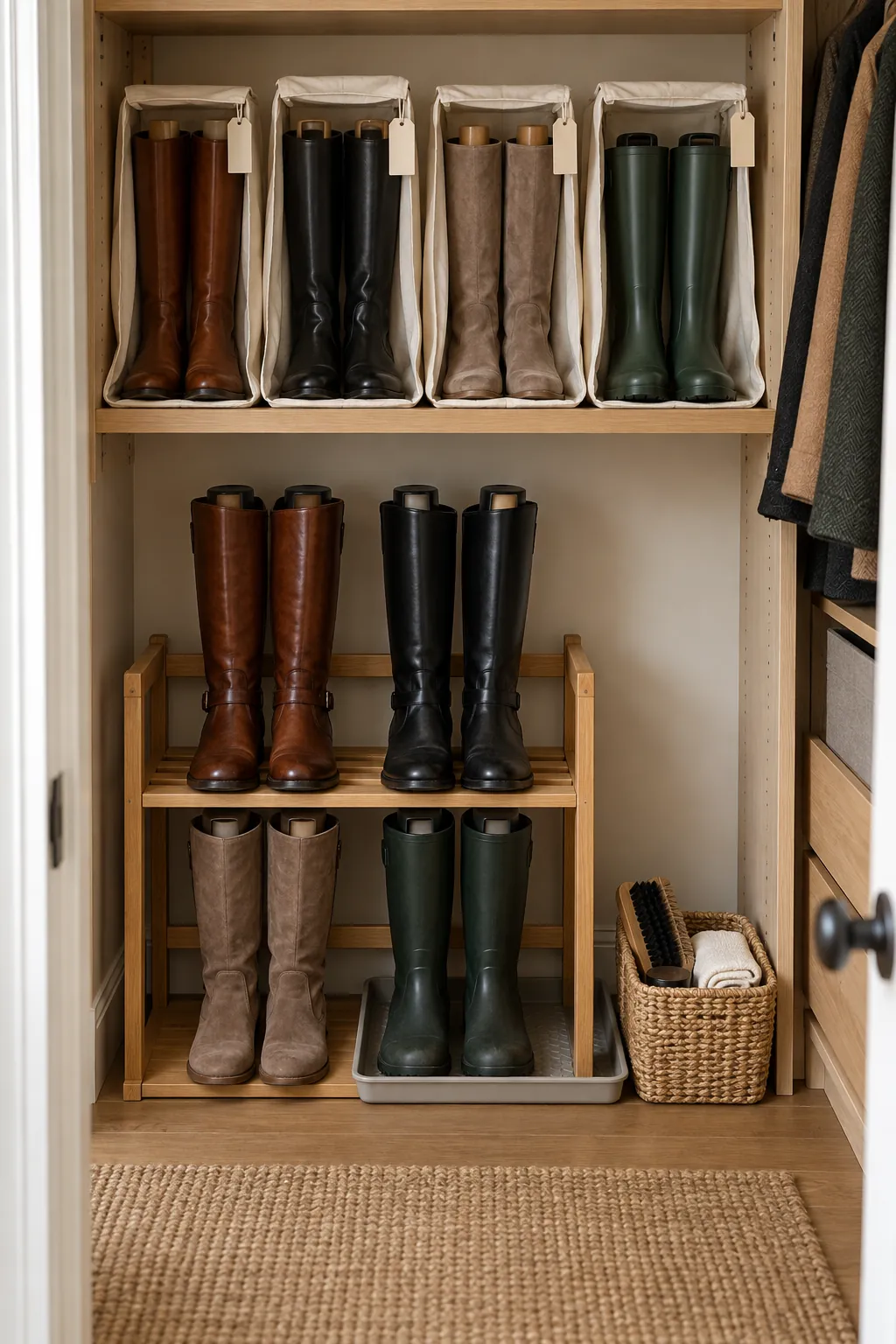
Tall boots often look neat when they are new, then slowly collapse into a crowded pile. Soft shafts fold, leather creases, and pairs become difficult to reach. The useful answer is not one special organizer. It is a storage setup that supports each shaft, fits the available closet space, and matches how often you wear the boots.
Start with the boots rather than the product aisle. Measure their height, width, and sole depth. Then decide which pairs need daily access and which pairs can move to seasonal footwear storage. This prevents a common mistake: buying a closet boot rack that fits the shelf but not the boots.
Measure the Boots and the Closet Together
Measure each tall pair from the floor to the highest point of the shaft. Also measure the widest part of the calf and the total depth from toe to heel. Group pairs with similar dimensions. A slim riding boot and a wide winter boot may need different spaces even when both are knee high.
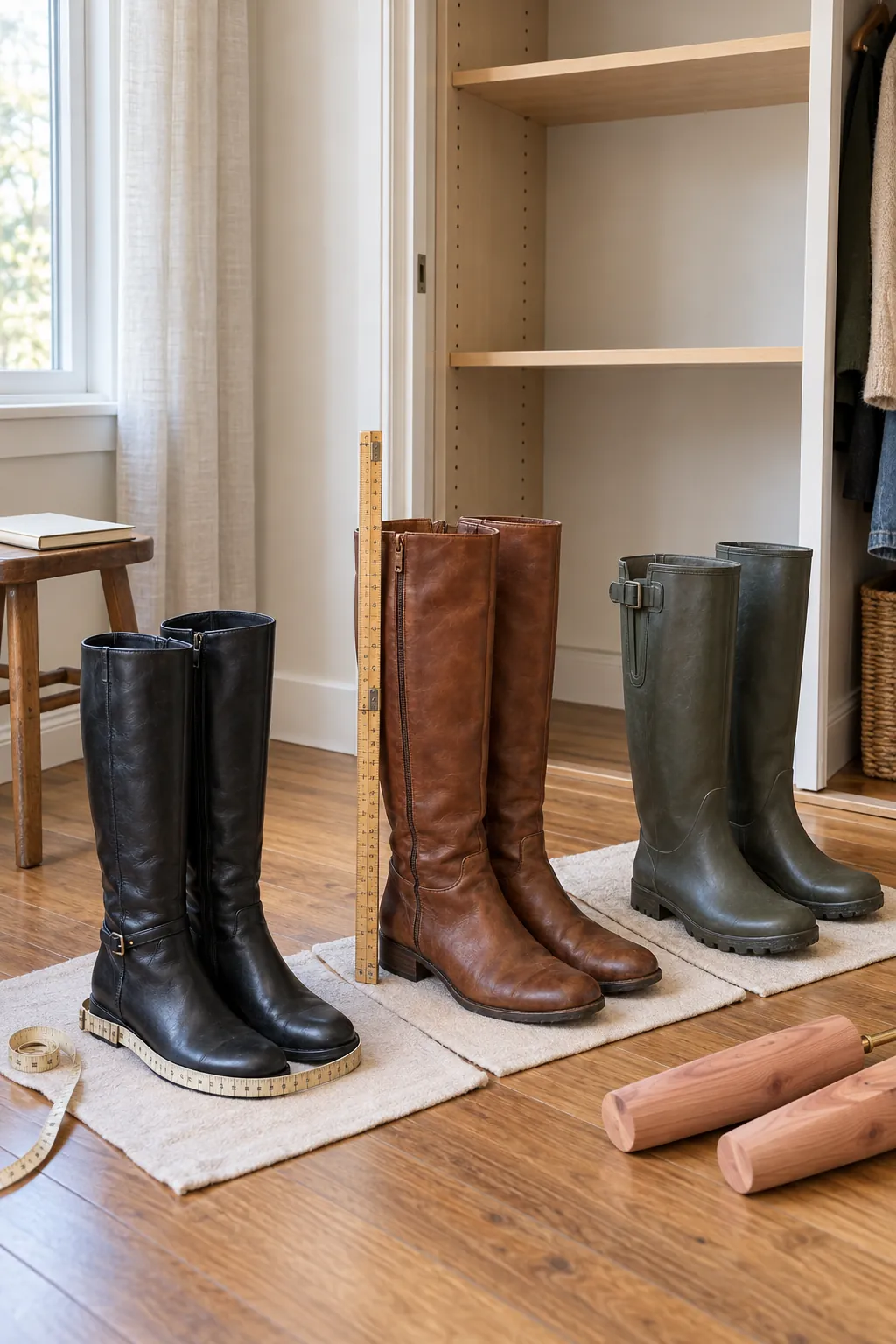
Next, measure the clear height below a shelf and the usable width between closet walls or dividers. Leave enough space to lift a boot without scraping the shelf above. If a shelf is adjustable, place one pair in the closet before moving it. This simple test shows whether the shelf height works in normal use.
Count pairs by season and frequency. Daily pairs deserve the easiest position, usually between knee and waist level or on an open floor rack. Occasional pairs can sit higher or farther back. Boots that are wet, muddy, or salty need a separate drying place before they enter the closet.
Support Every Shaft Before It Folds
Boot shapers for a closet protect the part that is most likely to collapse. Choose a shaper that fills the shaft gently without stretching it. The top should stay upright, while the ankle keeps its natural curve. This is especially important for soft leather, suede, and fabric boots.
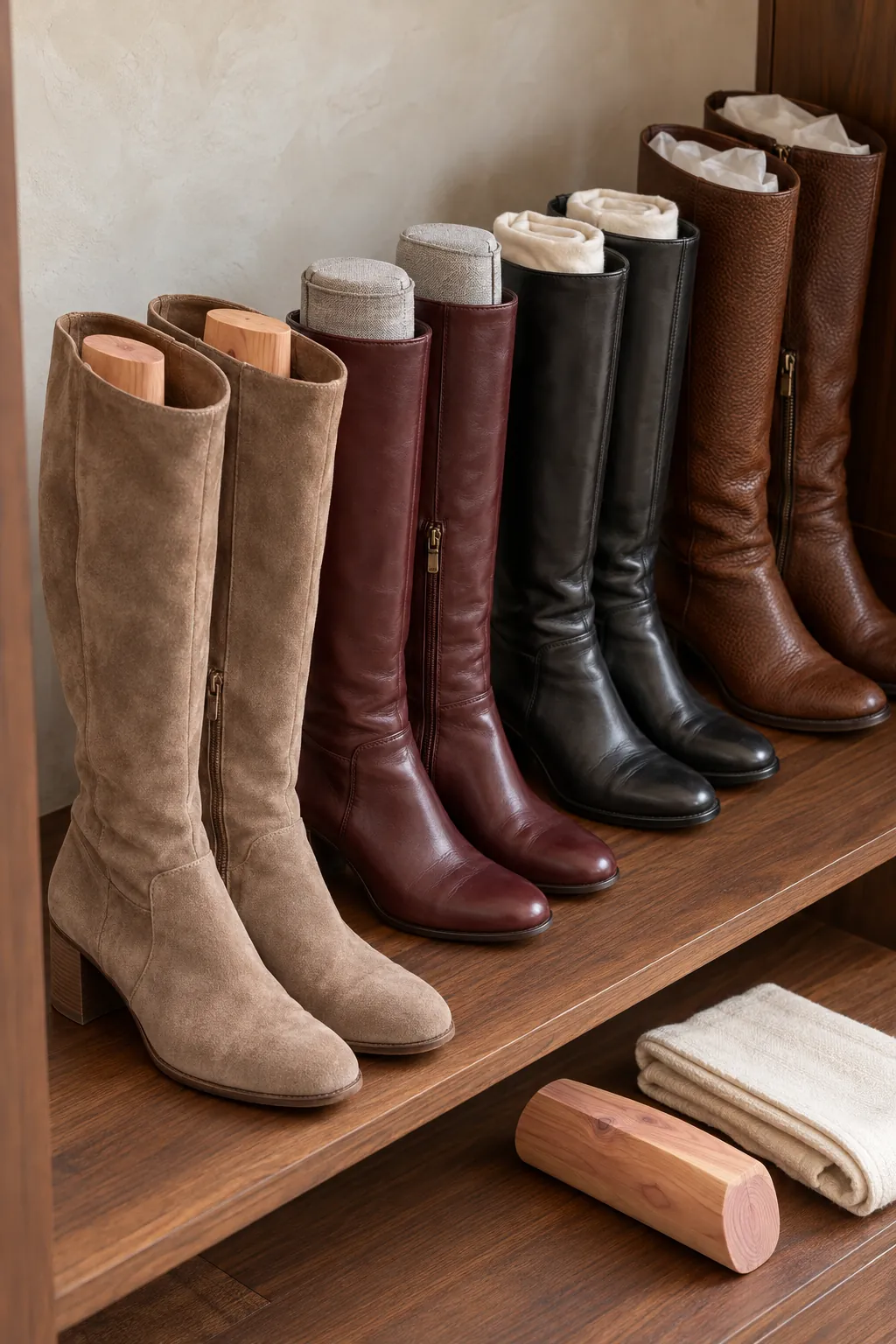
Spring shapers are quick to insert and remove. Rolled acid free paper or clean fabric can work for pairs that are rarely worn. Avoid tightly packed newspaper because ink and moisture can transfer. Pool noodles are sometimes suggested, but a cut edge can shed material and an oversize piece can push against delicate leather.
Let boots dry fully before adding any insert. Wipe away dust and grit, then follow the care directions for the material. A breathable fabric cover can reduce dust during long storage. Do not seal damp leather or suede in plastic, since trapped moisture can create odor or surface damage.
Use a Floor Rack for Frequently Worn Pairs
A low closet boot rack is the simplest option when floor space is available. Choose a rack with enough depth for the sole and enough separation for wide shafts. Place a washable tray below wet weather boots. The tray catches grit without forcing every pair into a closed box.
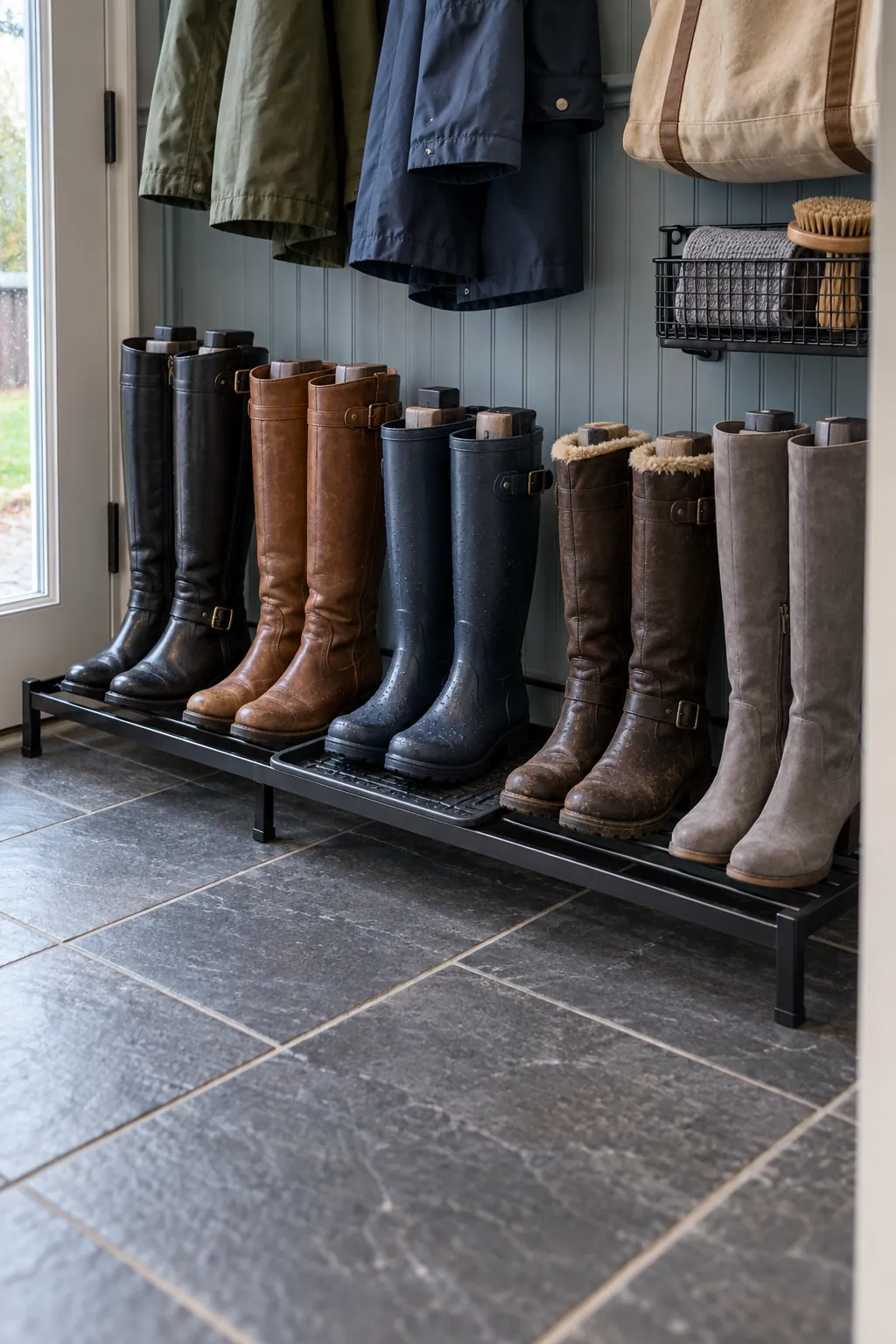
Keep each pair together and point the toes in the same direction. This makes the available space easy to read. It also reduces the chance that one boot hides behind another. If the closet is narrow, alternate the toe direction of adjacent pairs only when that creates real clearance.
Do not stack tall boots on top of one another. The weight can flatten the lower shaft and mark the upper. A second shelf is useful only when it leaves complete vertical clearance for both levels. Test the lowest pair before filling the rack.
Hang Boots When the Floor Must Stay Clear
A hanging boot organizer can create vertical boot storage in a small closet. Use purpose made hangers with broad, padded clips. Place the clips on a strong section near the top edge and check that they do not leave pressure marks. Delicate suede and very soft leather may be safer on a shelf with internal support.
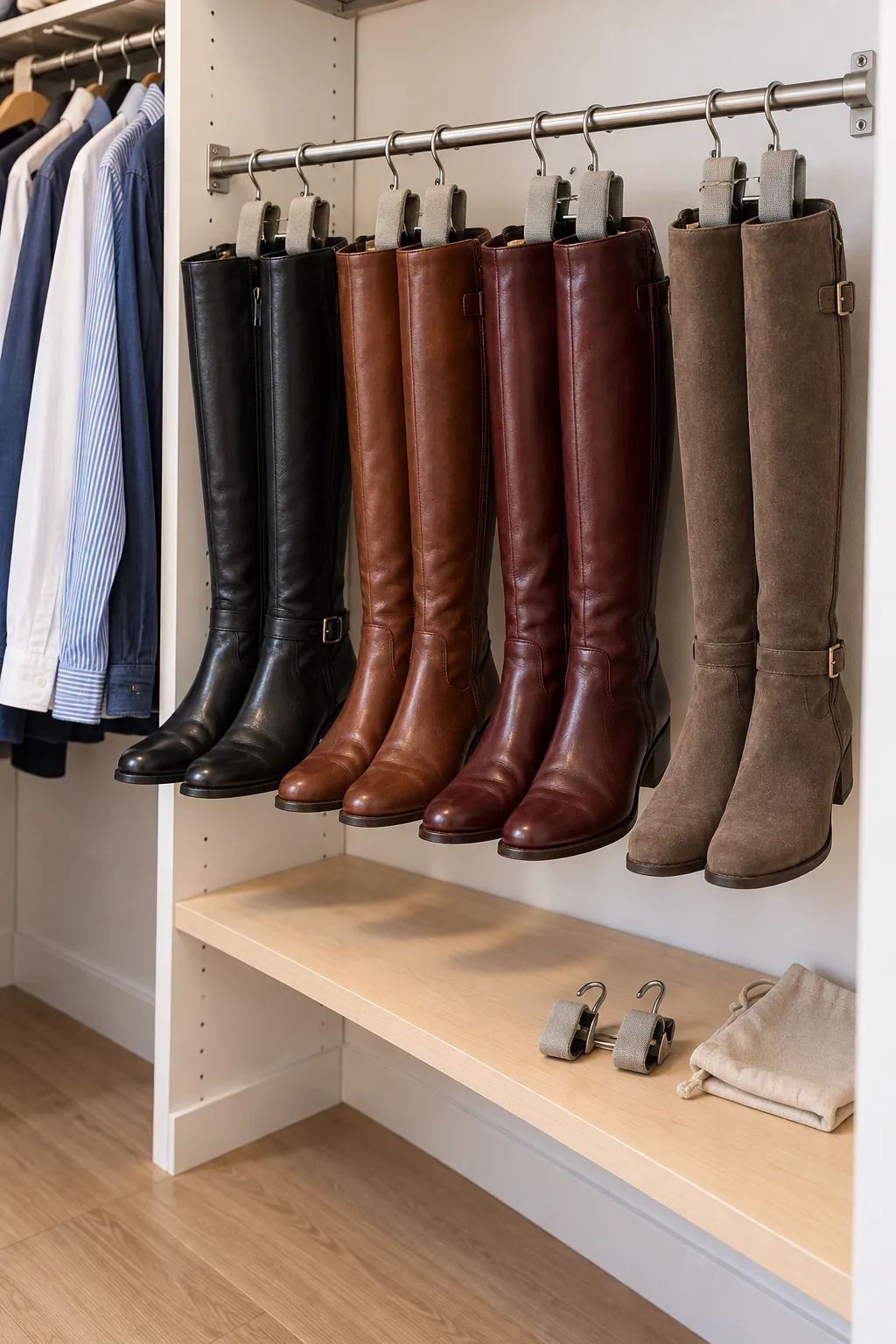
Check the rod height before choosing this method. The toes should clear the floor, storage box, or shelf below. Hanging pairs also need side clearance so buckles and zippers do not rub nearby clothes. A short secondary rod can keep boots in their own zone and leave the main clothing rail free.
Never hang a boot from a pull tab unless the manufacturer designed that tab to hold the full weight. Avoid narrow metal clips on finished leather. If you see an indentation after a short test, stop and choose an upright shelf method instead.
Protect Seasonal Boots Without Hiding Them
Seasonal footwear storage should reduce dust while keeping each pair easy to identify. Clear, ventilated boot boxes work well on upper shelves when their internal height fits the supported shaft. A fabric boot bag uses less space, but it should have a simple label or photo tag so you do not open every bag.
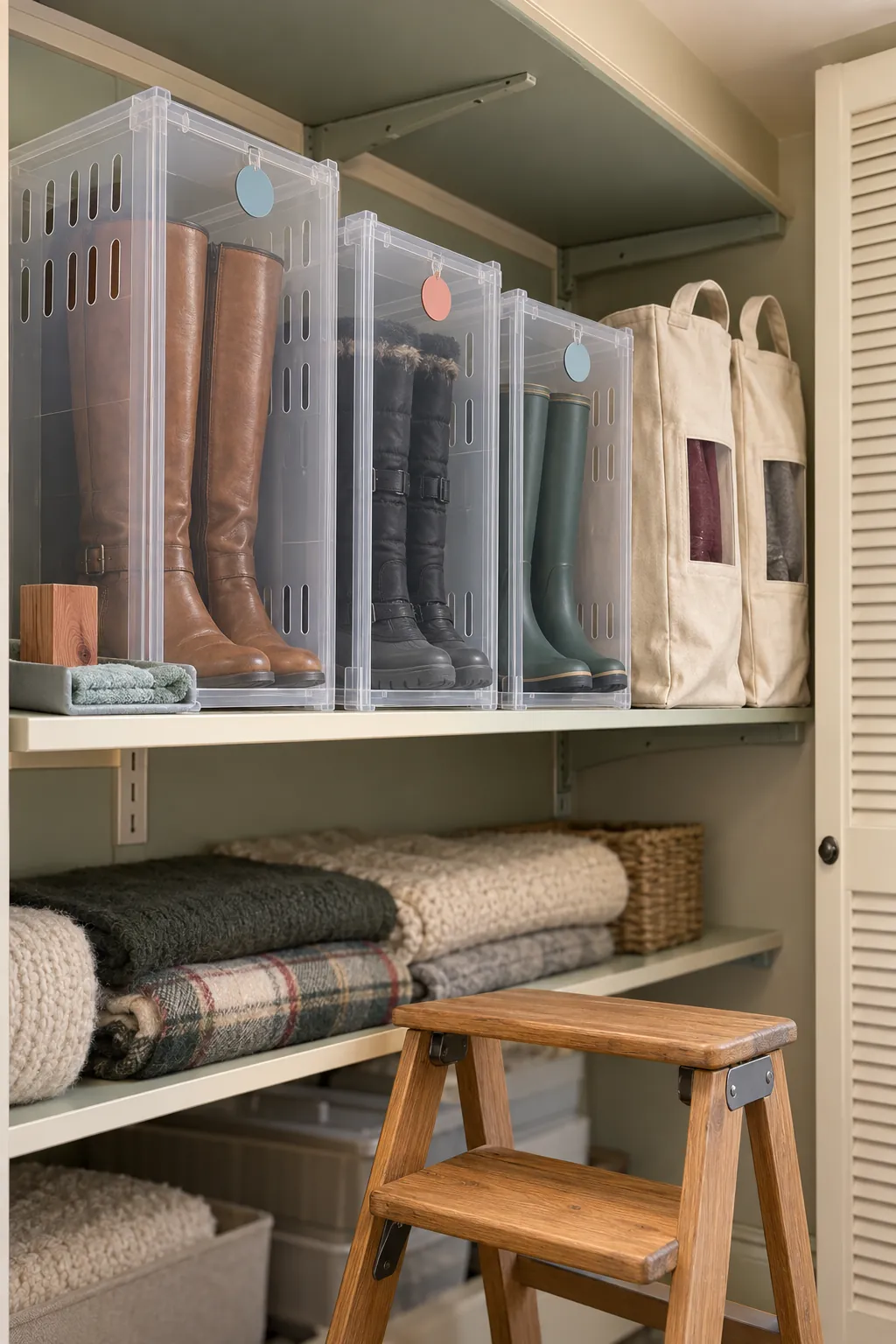
Clean and condition each pair as appropriate before long storage. Remove loose dirt from the soles. Add a dry shaft support, fasten zippers without forcing them, and place the pair in its container. Store the heaviest boxes low enough that you can lift them safely.
Leave air around the containers. Do not press boots against a damp exterior wall or a hot vent. A stable closet temperature and normal household humidity are better than an attic, garage, or basement with large changes. Check stored pairs when the season changes, even if you do not plan to wear them immediately.
Keep One Simple Boot Zone Working
The best small closet shoe organization is easy to reset. Give tall boots one defined zone, then keep the care supplies close enough to use. A small cloth, brush, and spare shaft supports can sit in a nearby basket. The supplies should not rest directly on clean boots.
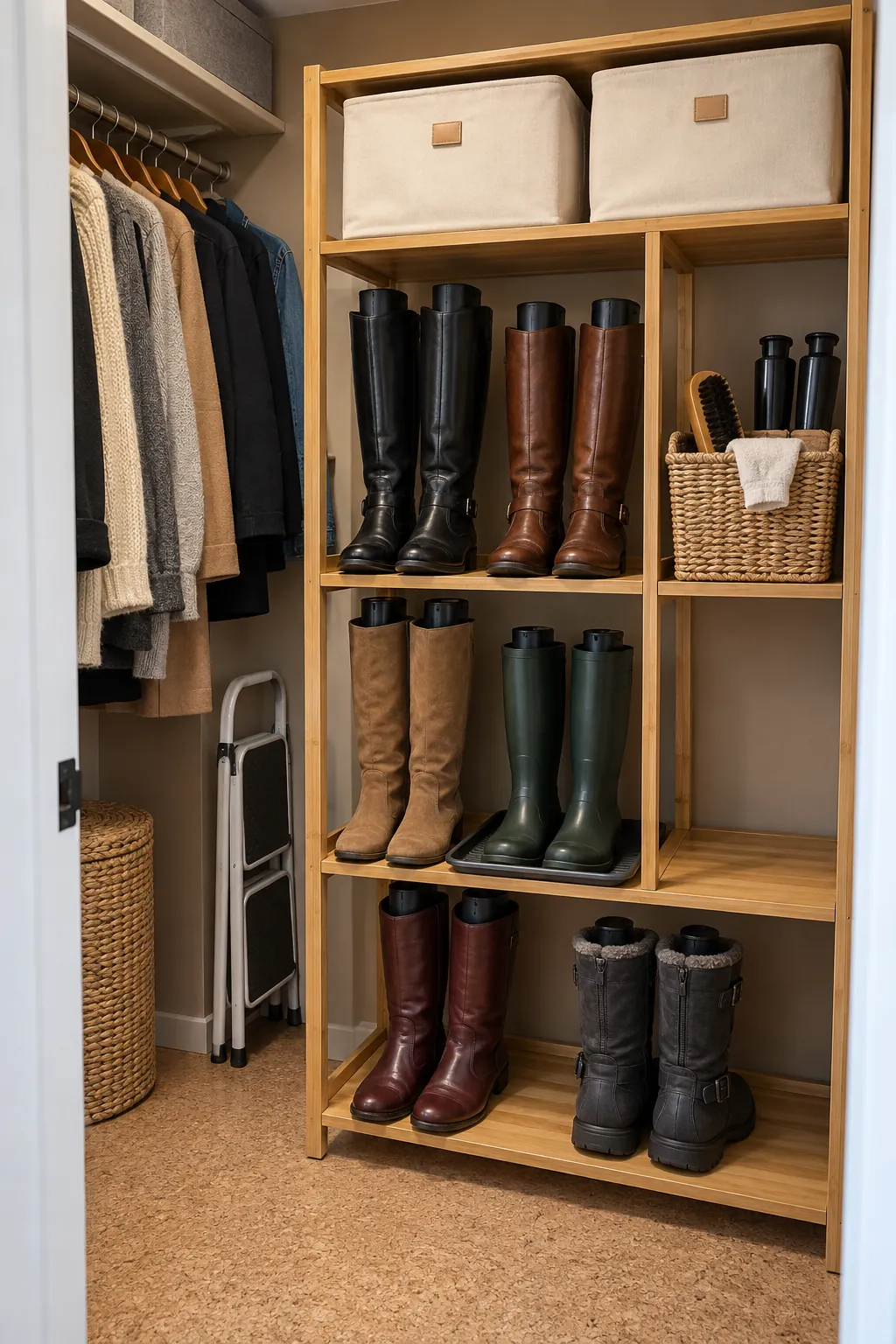
Return dry boots to the same place after each wear. Rotate seasonal pairs when the weather changes, and remove any pair that no longer fits or gets used. This keeps the boot zone from spreading into clothing space. It also makes damage visible while it is still easy to address.
A strong setup can combine several methods. Daily pairs can stand on a floor rack, delicate pairs can use shaped supports on a shelf, and occasional pairs can stay in ventilated containers above. The shared rule is simple: keep every shaft supported, every pair dry, and every storage position easy to reach.