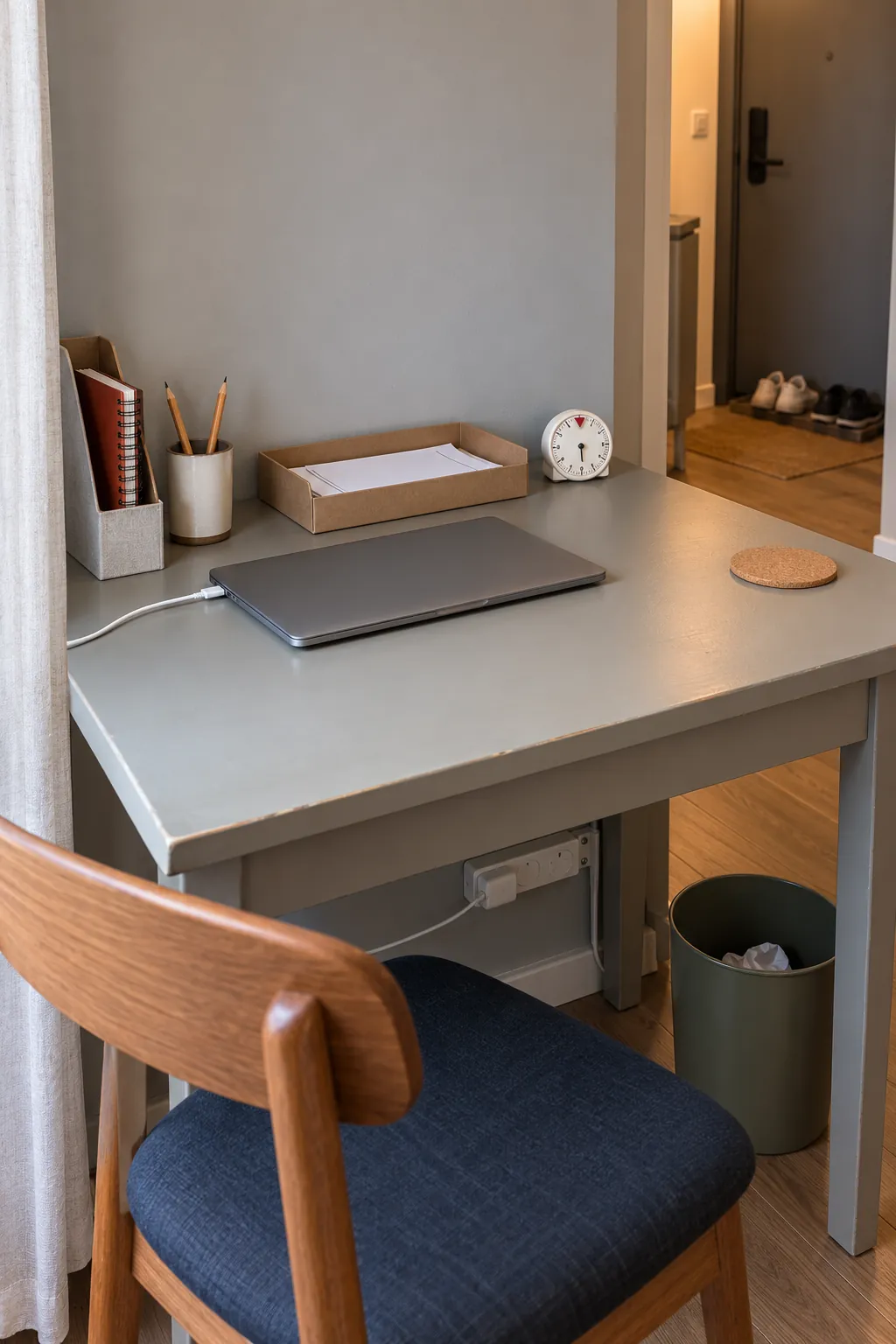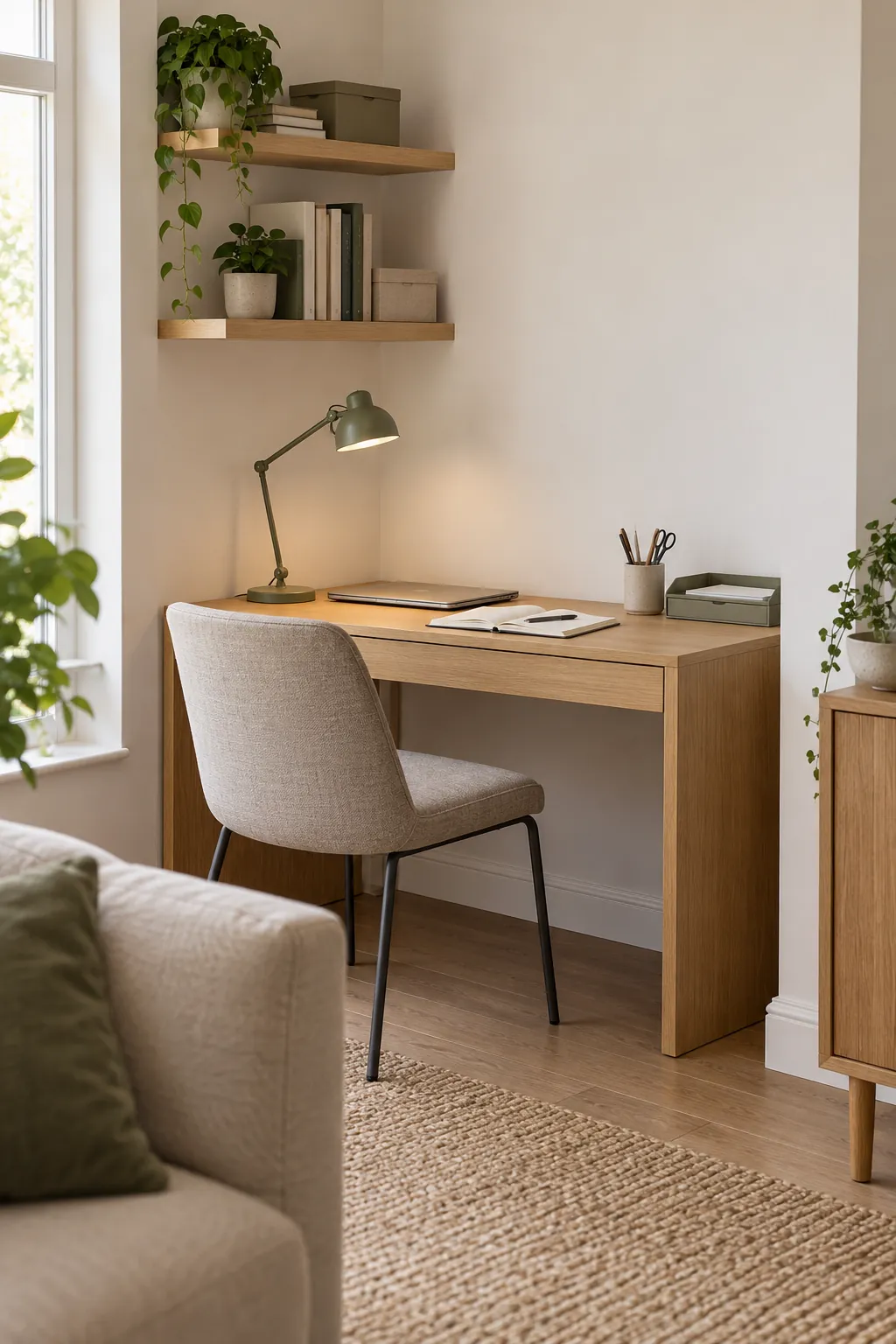
A cramped desk becomes frustrating when every task competes for the same few inches. Books cover the writing area, charging cords catch on notebooks, and supplies migrate into the rest of the room. A useful study nook does not need more furniture. It needs clear priorities, a home for each tool, and a reset that is easy enough to repeat.
Choose the smallest workable footprint
Start by measuring the actual open area, including chair movement and nearby doors. A compact desk setup works when the surface supports the main task without blocking a walkway. Place the desk where the user can sit comfortably, reach an outlet, and leave the chair without moving other furniture.
Decide what must happen here before buying storage. A laptop based study nook needs less depth than a station for open textbooks, worksheets, and drawing tools. If the desk also supports gaming or crafts, give each activity a removable kit so the surface can change purpose without becoming permanent storage.
Protect a clear writing surface
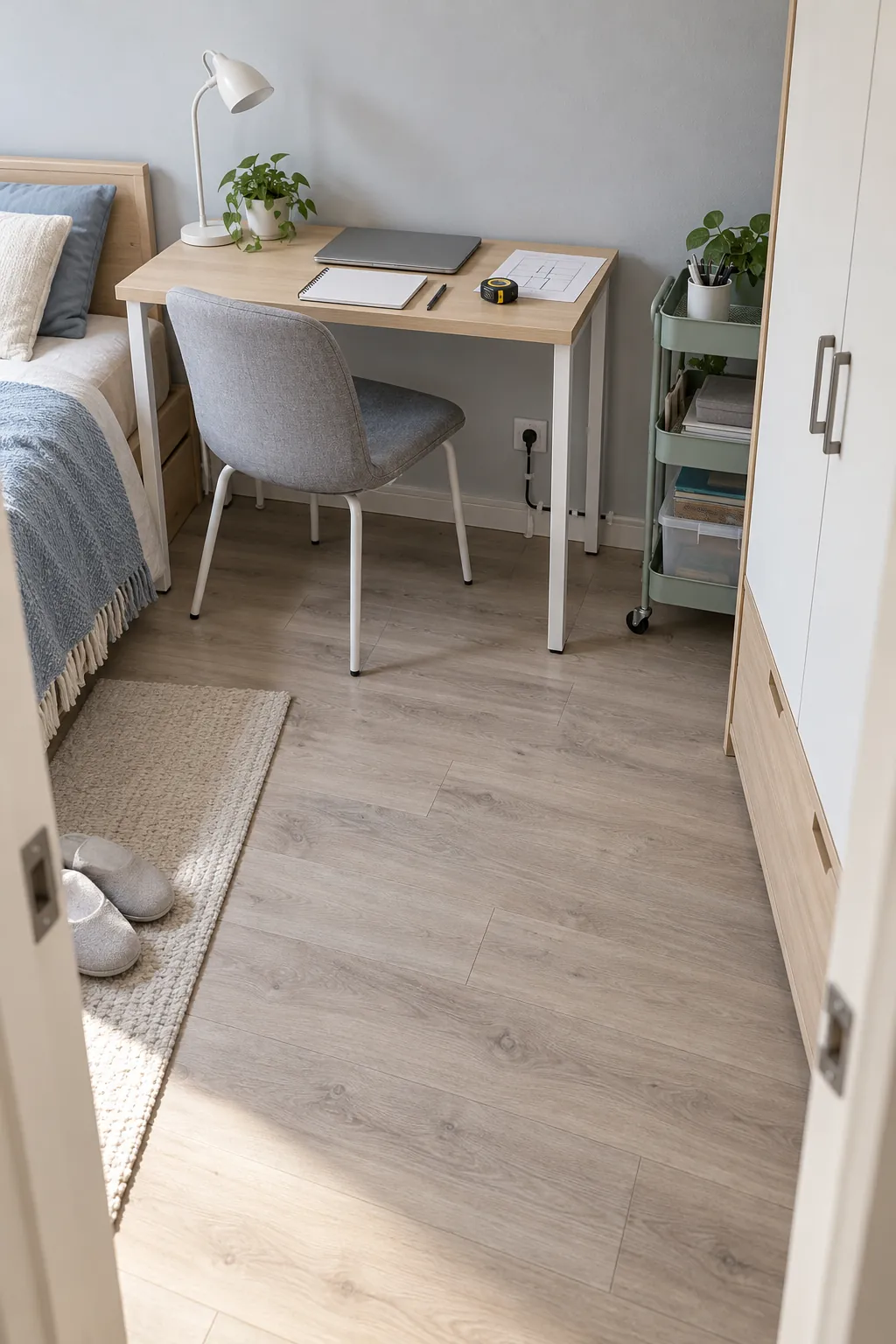
The center of the desk should stay open enough for the work that matters most. Put a monitor on a stable riser if that creates useful space below it, then keep only the current notebook and one writing tool within immediate reach. A shallow tray can hold the active project, but it should leave as soon as the session ends.
Use the edges for small fixed functions. One side can hold a lamp and charging point, while the other holds a pencil cup or narrow file. This boundary prevents useful objects from slowly taking over the whole surface. It also makes clutter obvious before it becomes difficult to clear.
Use the wall without crowding it
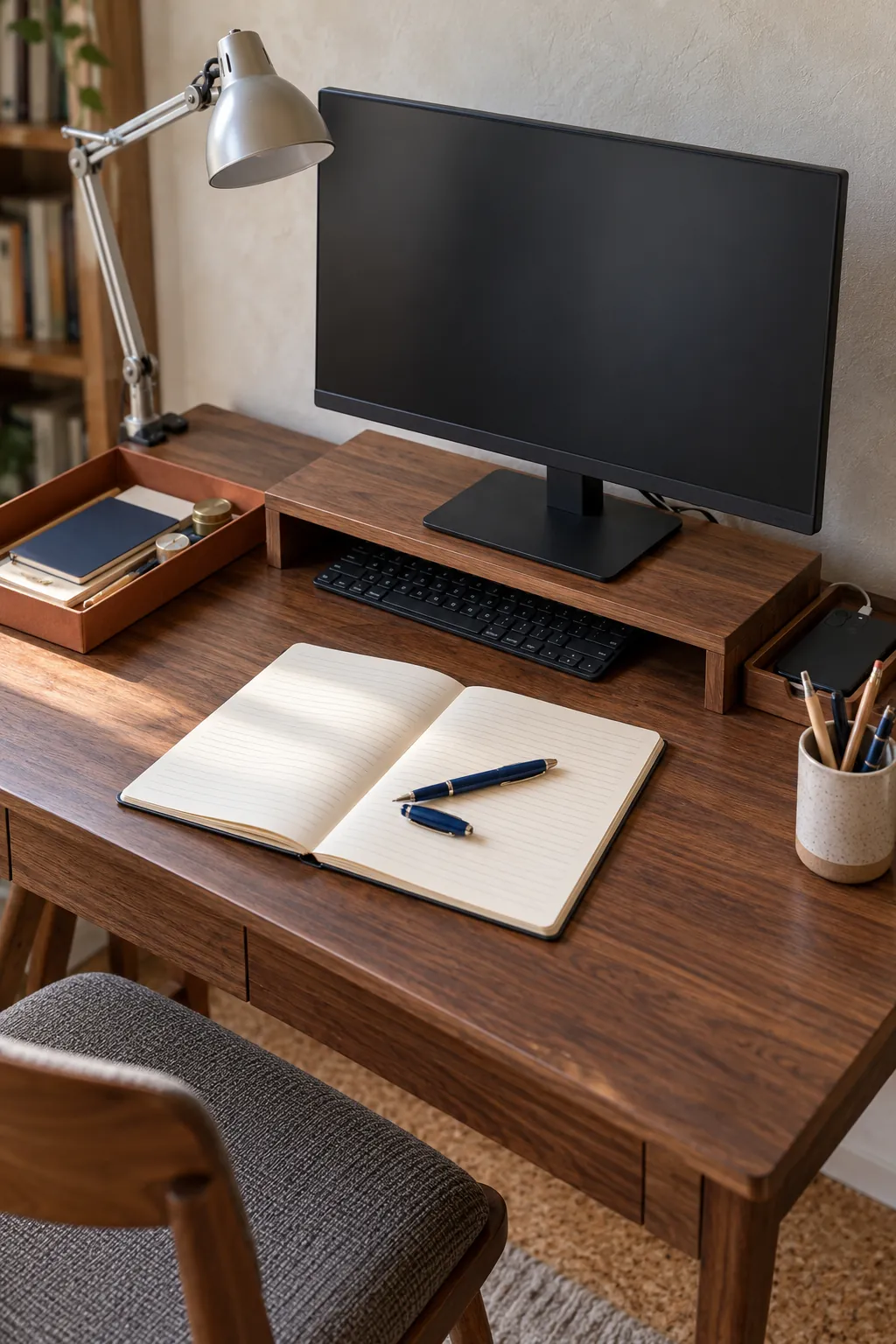
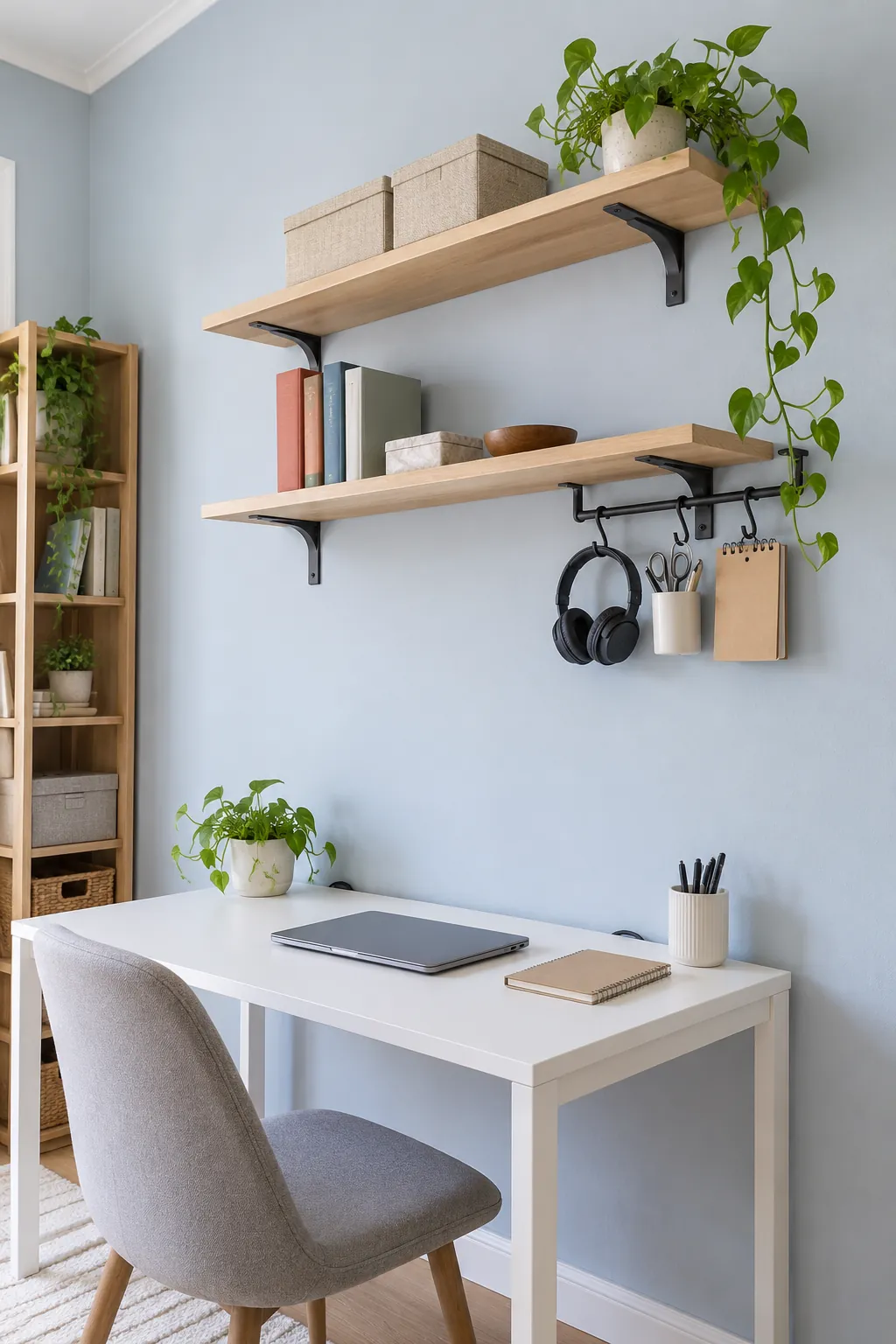
Wall shelves above a desk can free the surface, but deep shelves at head level make a tiny corner feel boxed in. Choose shallow shelves and mount the lowest one high enough that the user can stand without hitting it. Store light items above eye level and keep heavy books on the lowest shelf or in a floor level file.
A small rail or pegboard can hold scissors, headphones, and a note pad in less space than several containers. Leave part of the wall empty so the arrangement still feels calm. Renters can use a narrow freestanding shelf beside the desk or an over desk unit that does not require permanent holes.
Give every tool a return address
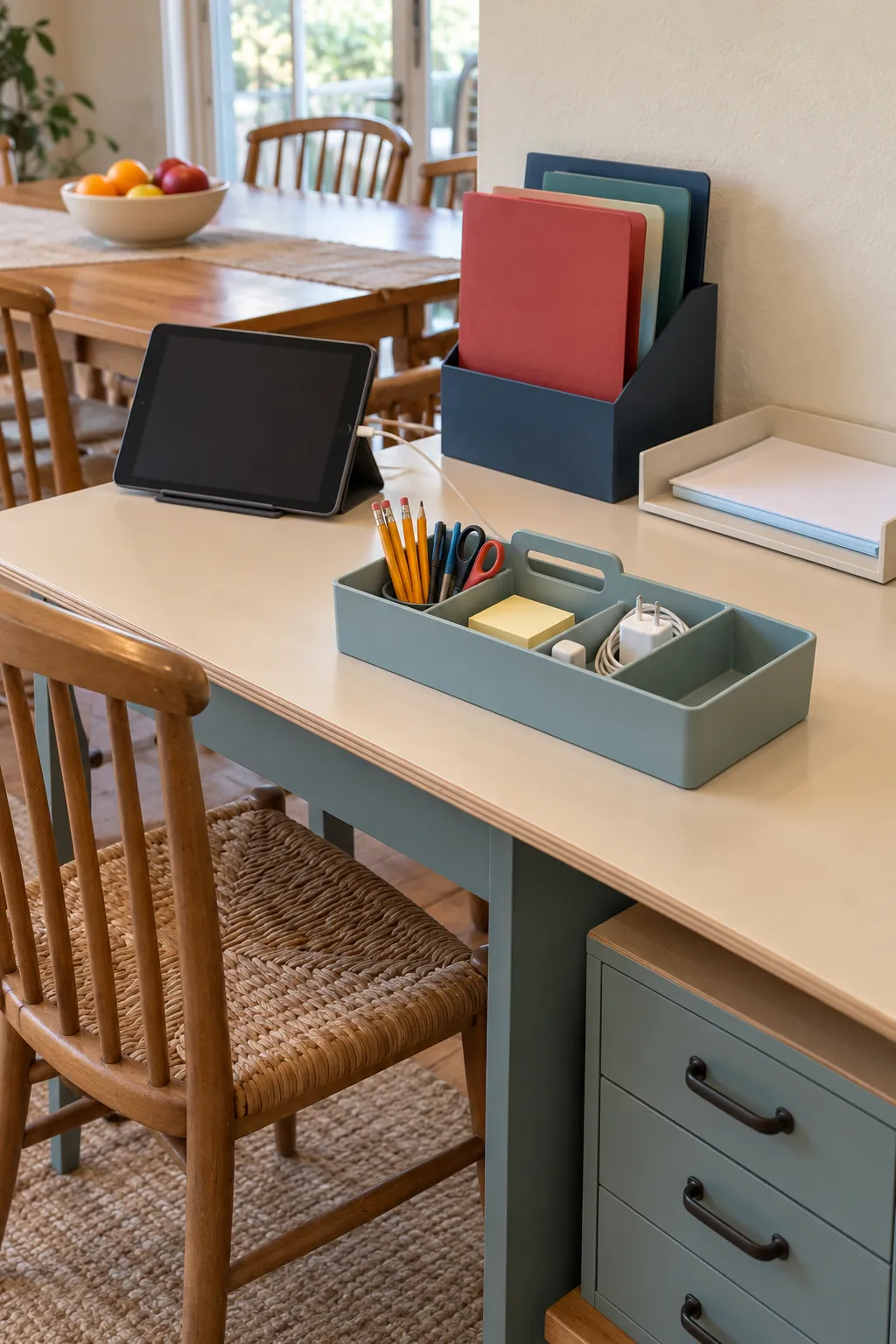
Small items create most of the visual noise because they are easy to set down anywhere. Group supplies by action rather than by appearance. Keep note taking tools together, charging items together, and reference papers together. The correct home should be close to where the item is used and easy to reach with one hand.
Closed storage is useful for spare stock and rarely used tools. Open storage is better for the few objects needed during every session. Labeling can help a shared homework station, especially when several people return supplies. Avoid filling every container. A little empty space makes each item easier to remove and replace.
Build lighting in layers
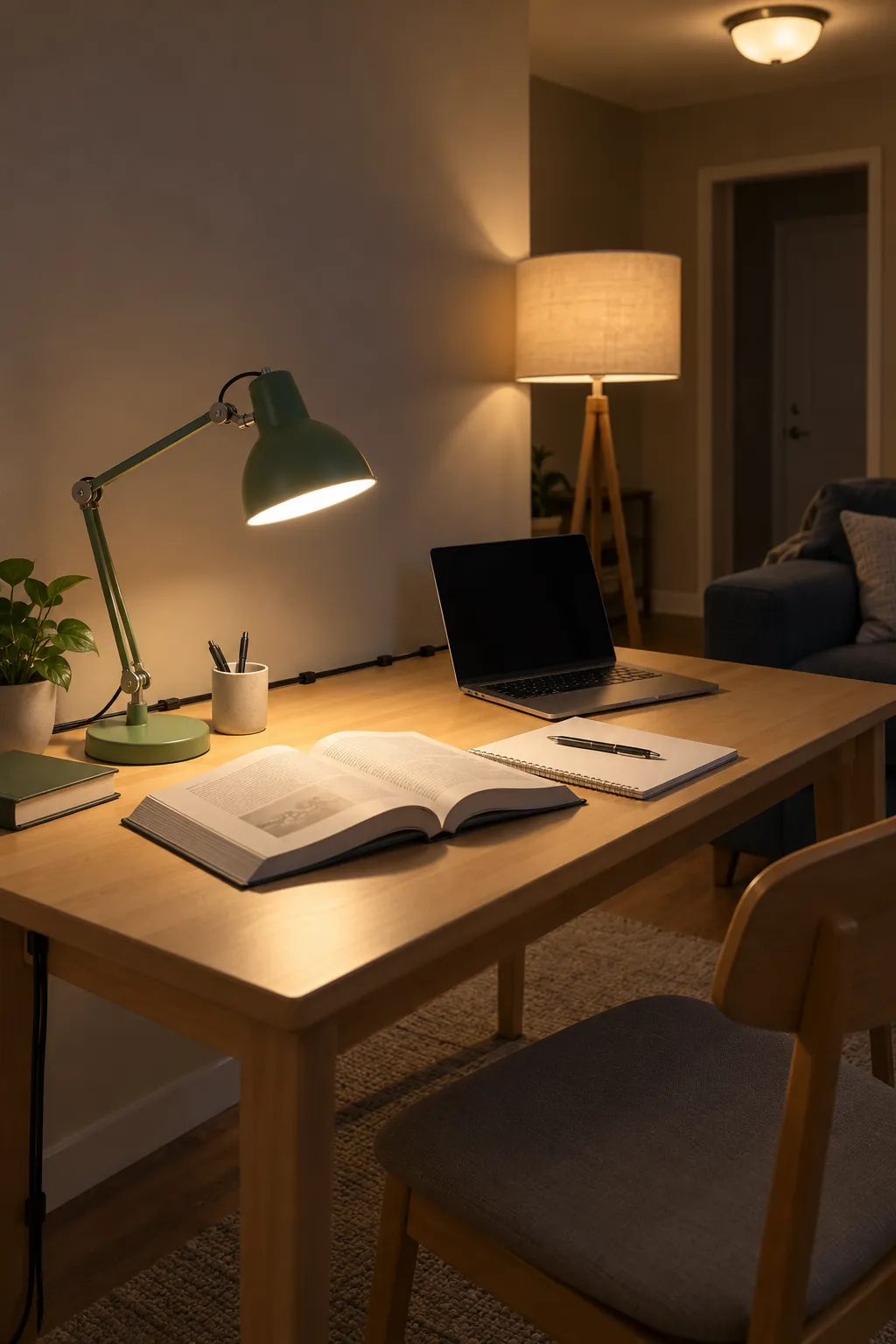
A ceiling light alone often leaves shadows across a notebook. Place an adjustable task lamp on the side opposite the writing hand so the hand does not block the light. Aim the beam at the work surface rather than the eyes or screen. A warm room light can soften the contrast around the desk during evening sessions.
If the study corner sits near a window, turn the desk so daylight reaches it from the side. This reduces screen glare and keeps the view from becoming the main focus. In a windowless living room corner, choose a lamp with a broad shade and enough reach to light the full working area. Route its cord along the back edge so it cannot snag books or feet.
Reset the area in three minutes
An organized study area fails when putting things away requires too many decisions. End each session by returning supplies, placing loose papers in one inbox, clearing cups, and connecting devices to their chargers. Keep the sequence the same every time so it becomes a closing cue instead of another chore.
Review the inbox once a week and remove anything that belongs elsewhere. If the same object keeps landing on the desk, its assigned home is probably inconvenient. Move that home closer rather than blaming the user. The best minimal study space stays orderly because the system follows real habits and makes the next study session easier to begin.