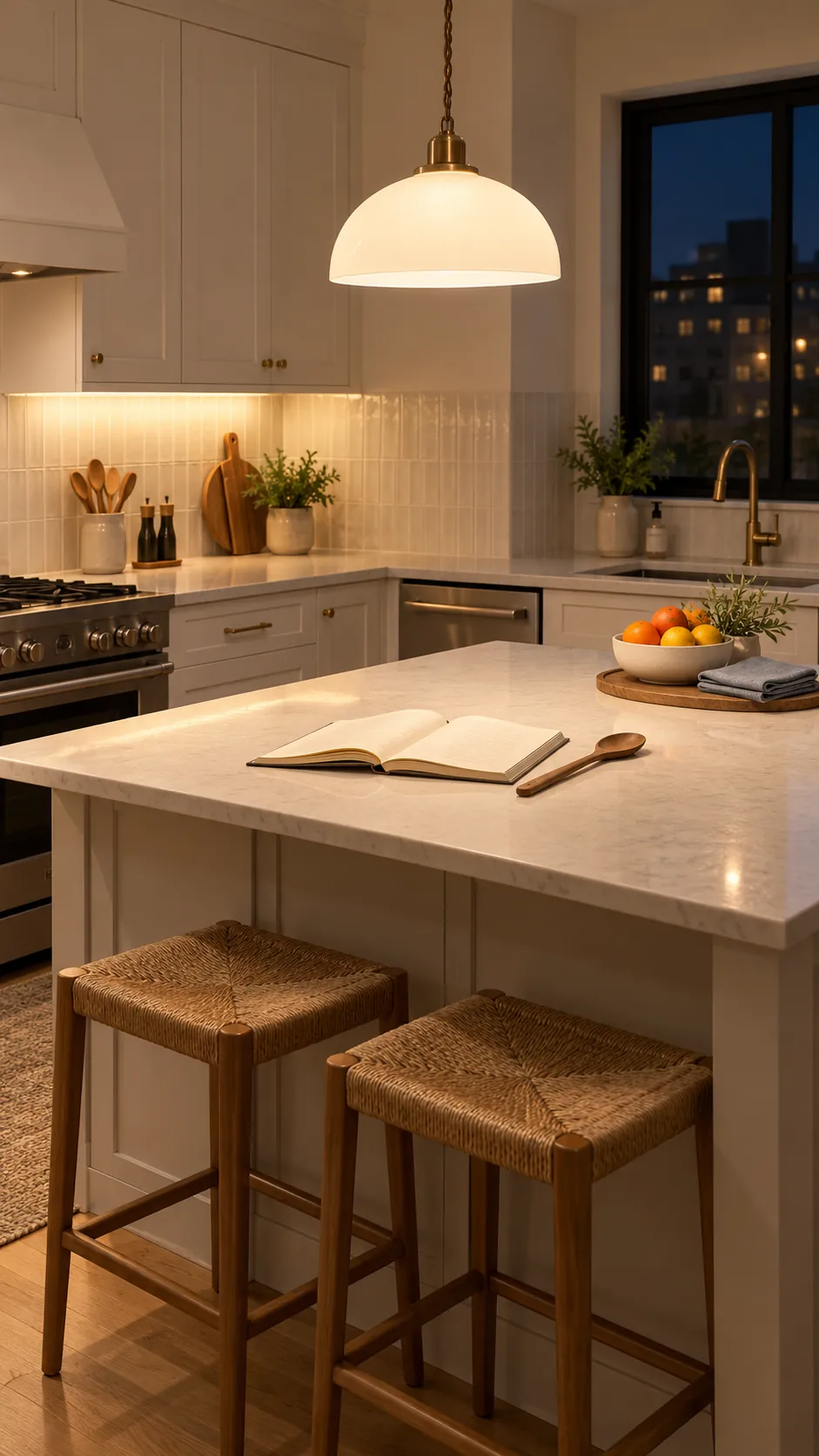
A small kitchen island can look unfinished when it is completely bare, yet a few decorative objects can quickly consume the only useful prep surface. The answer is not to fill the center. It is to choose one compact arrangement that moves easily, supports daily cooking, and leaves the island ready for meals, groceries, or homework.
Keep the work zone dominant
Decide which part of the island must remain open before placing any decor. Protect the side closest to the sink, refrigerator, or range because that area usually carries groceries, mixing bowls, and hot pans. A useful arrangement should occupy no more space than you can lift with both hands.
Check nearby doors and stools as well. Decor should not interfere with a dishwasher, refrigerator, or seated knees. If the island already feels tight, mark the proposed footprint with a folded towel for a day and notice whether it interrupts normal movement.
Choose one compact anchor
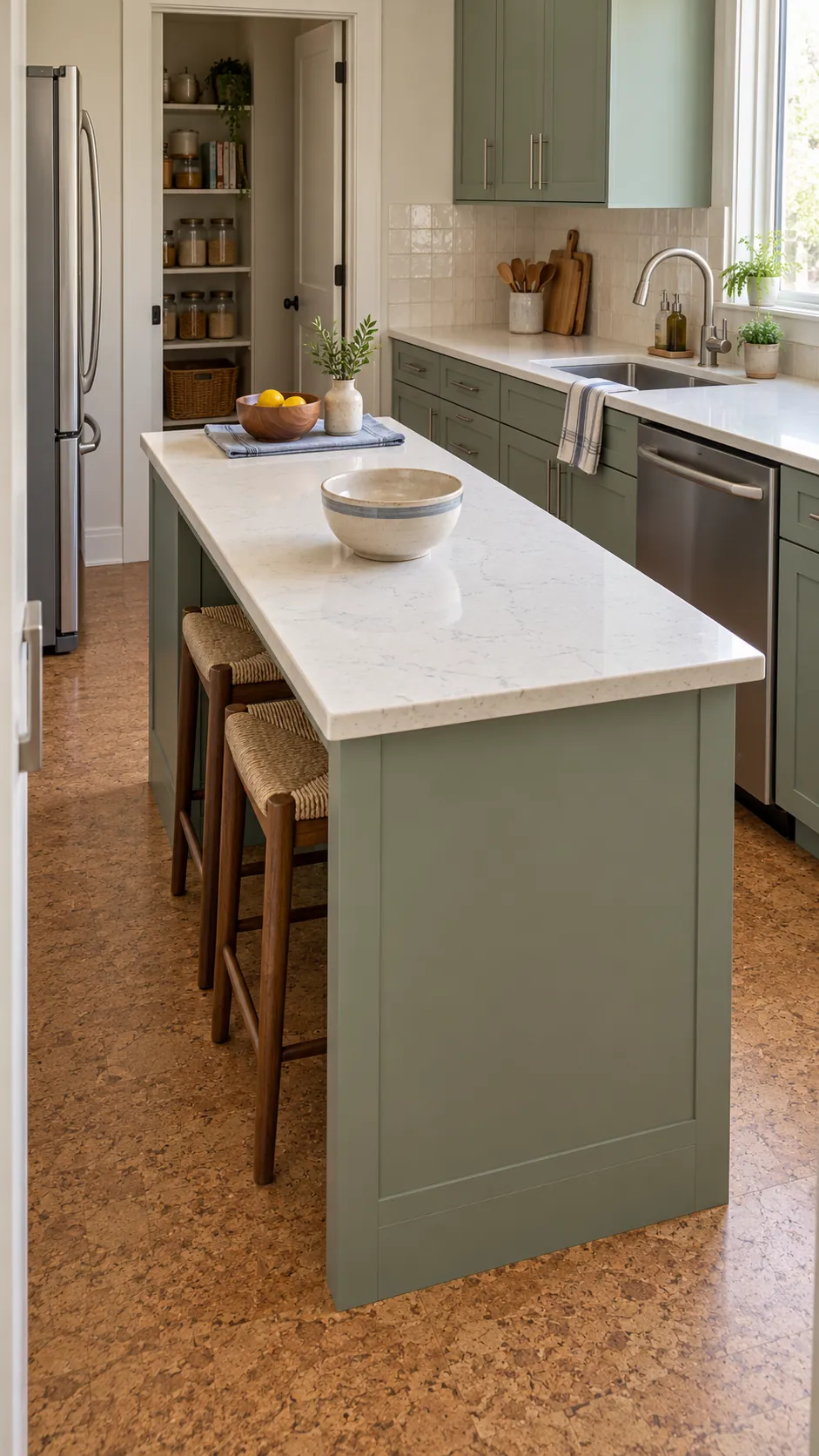
One object with a clear shape looks calmer than several unrelated pieces. A small vase, a fruit bowl, or a useful crock can anchor the island without turning it into a display shelf. Choose a height that does not block conversation or the view across the kitchen.
Scale matters more than drama. The anchor should relate to the width of the counter and leave a broad border of empty surface around it. A low rounded form often works well because it softens the straight lines of cabinets while staying easy to move.
Use a tray as a movable kit
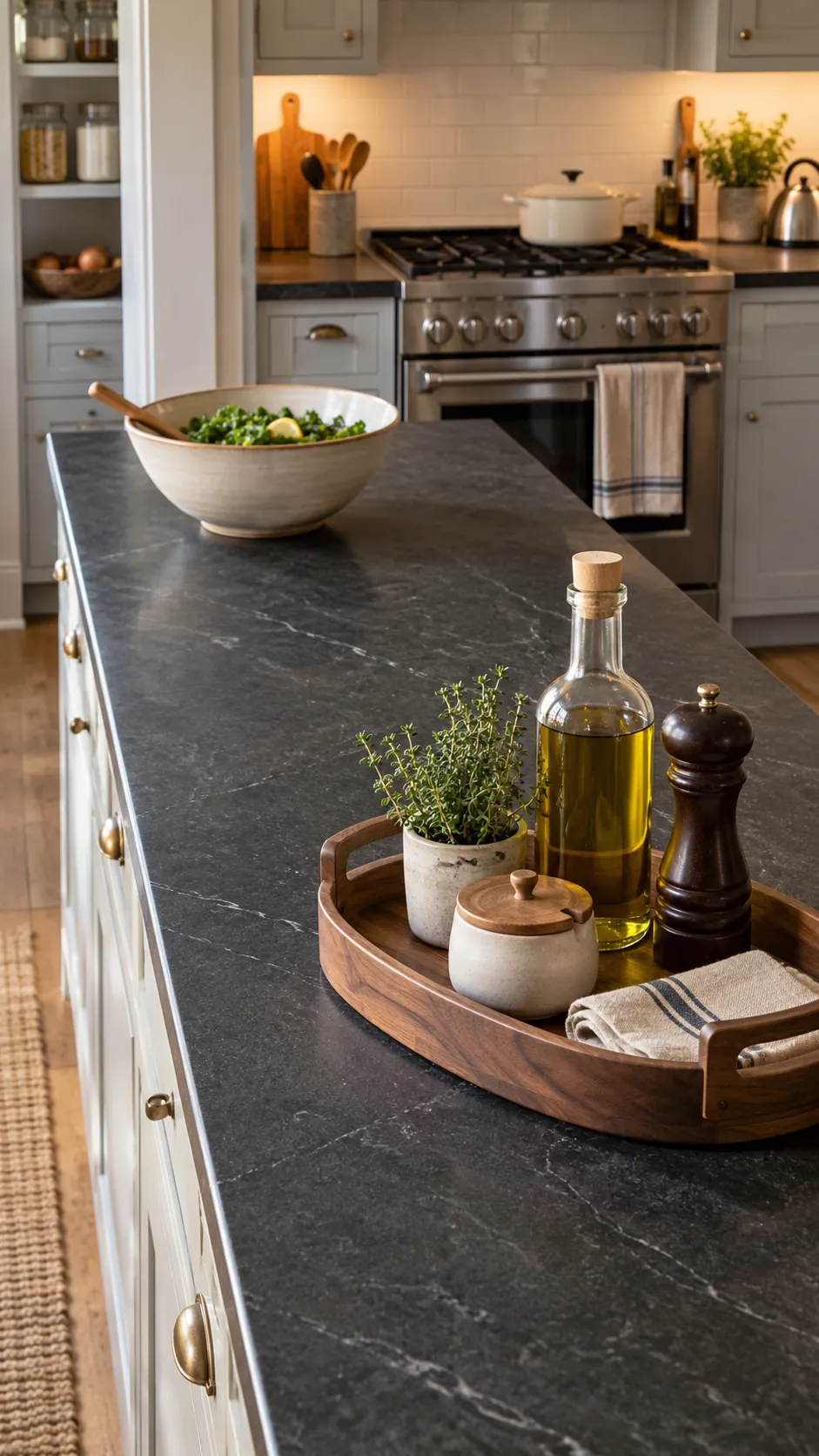
Kitchen island tray styling works best when the tray has a job. It can gather oil, salt, and a small herb pot near the cooking side, or hold napkins and a fruit bowl near seating. The tray creates one visual boundary and lets you clear everything in a single motion.
Avoid trays that nearly match the island width. Choose a shallow model with handles or a secure rim, then leave visible counter around it. Limit the contents to a few items used during the week. Spare bottles and decorative fillers belong in a cabinet.
Let cutting boards earn their place
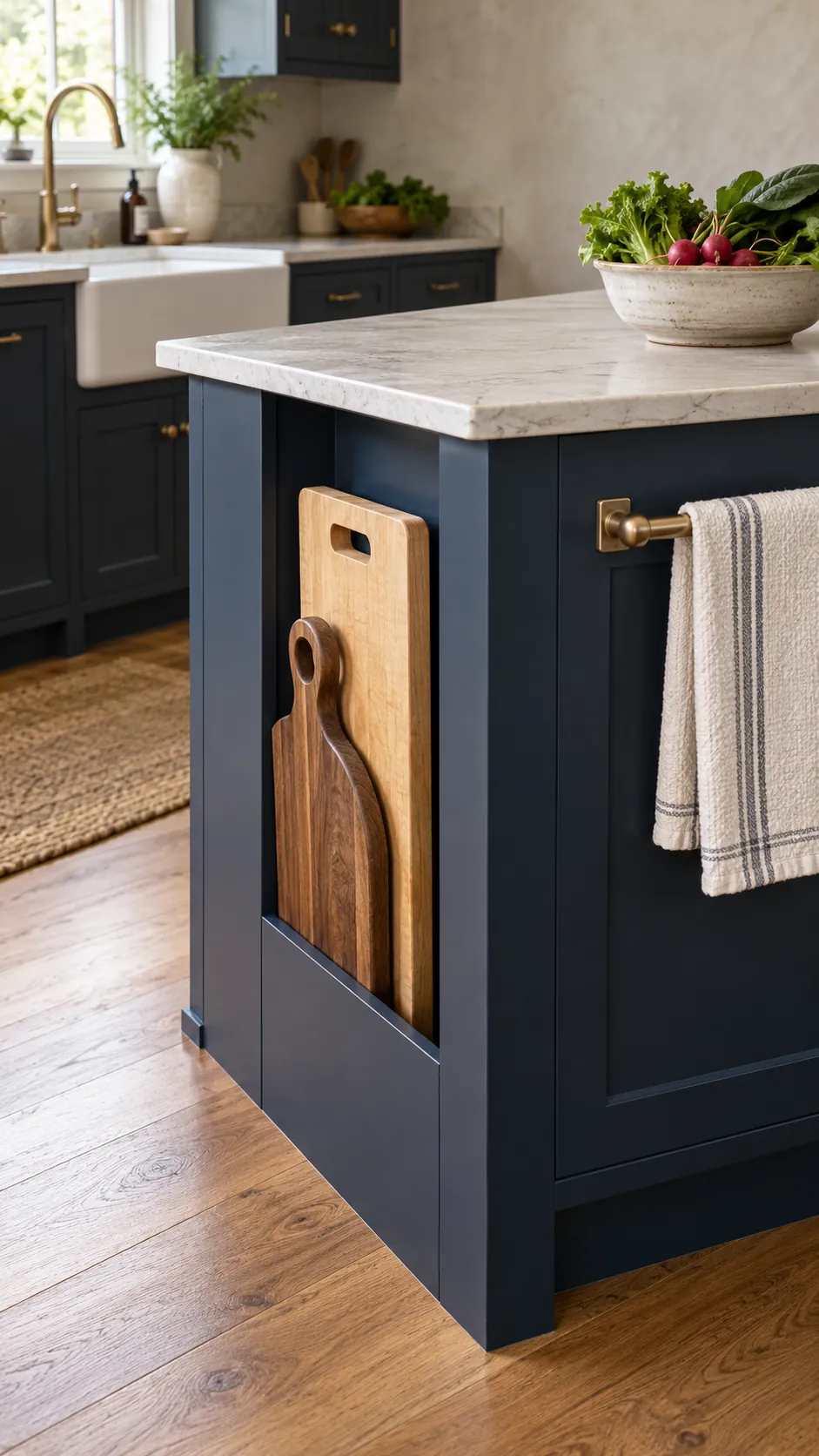
A cutting board display can add warmth without introducing a purely decorative object. Rest one or two clean boards against the island end only when they remain stable and do not narrow the walkway. Different wood tones can add depth, but their shapes should stay simple.
Keep boards away from sink splashes and grease. If the island lacks a raised end or secure ledge, store them vertically in a cabinet instead. Function must decide the location. A board that falls, collects dust, or blocks a stool is not useful decor.
Add one living detail
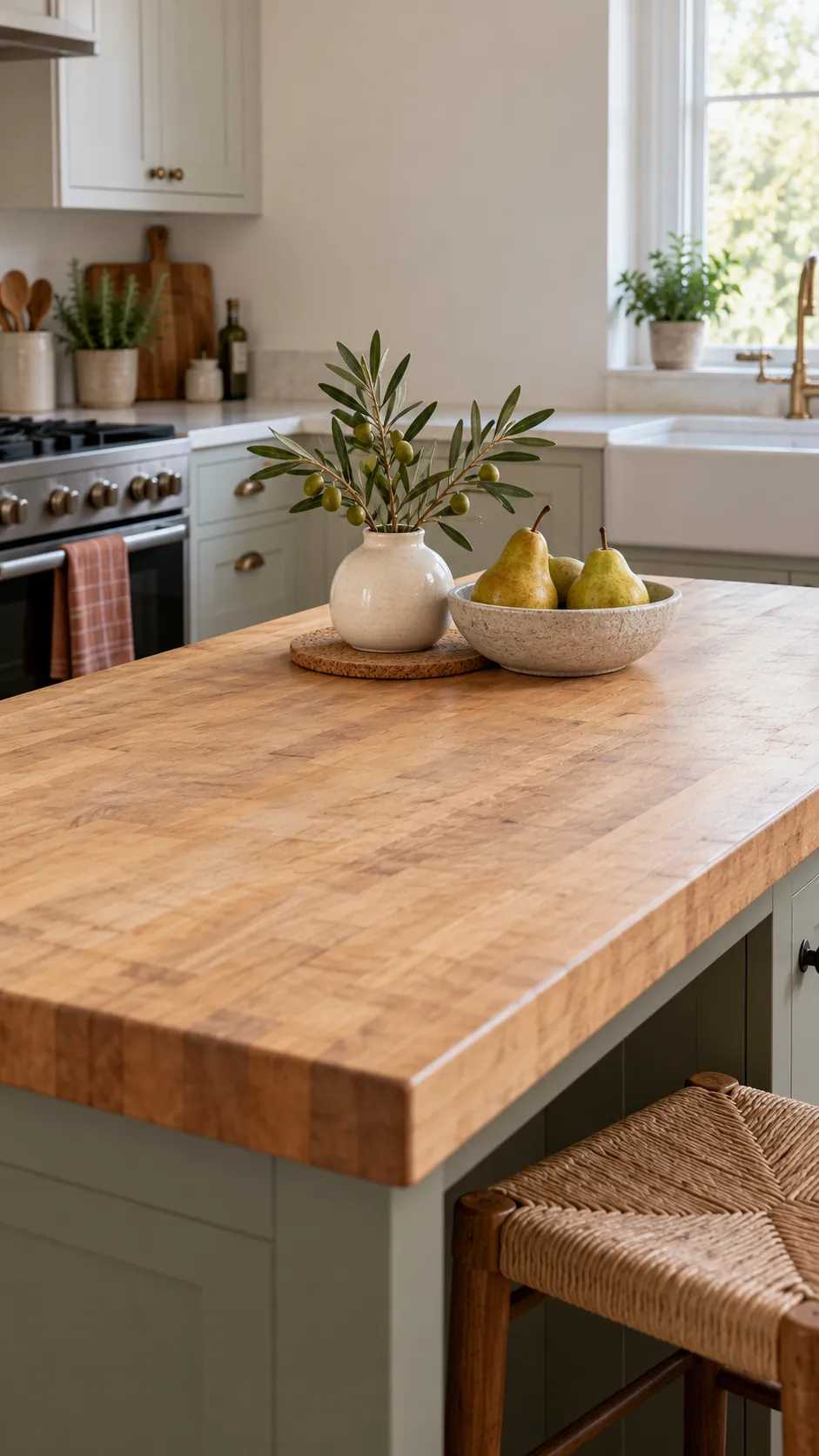
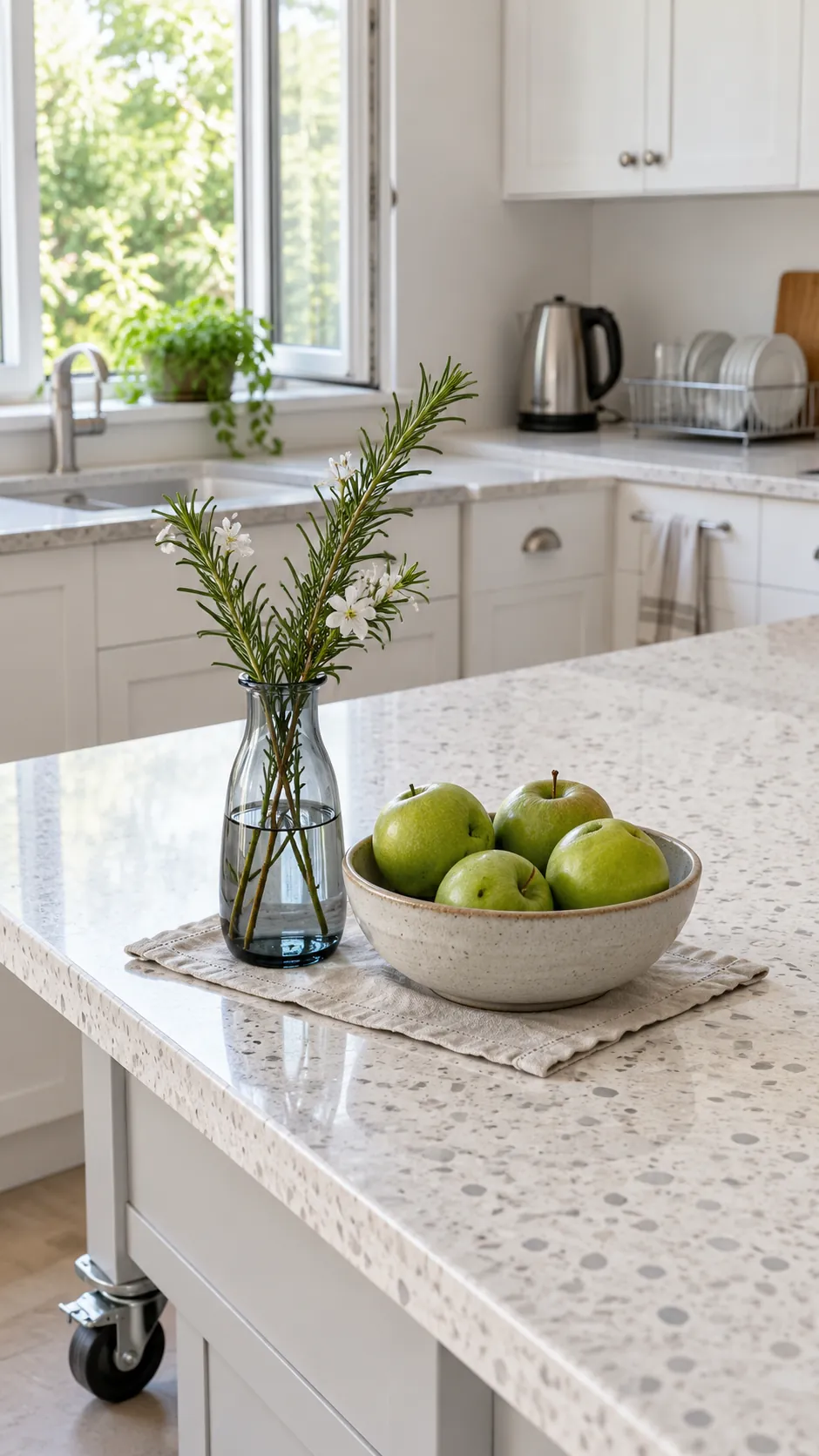
A small vase with a few clipped stems or a compact herb can make the island feel cared for. Choose something that tolerates the available light and does not shed leaves over food preparation. A narrow vessel uses less surface than a broad arrangement and is easier to relocate.
Fresh produce can provide the same effect. A low bowl of fruit adds color while keeping useful food visible. Edit the contents before they become crowded, and clean beneath the bowl often. The best living accent changes naturally rather than demanding another storage system.
Let lighting complete the island
Good kitchen island lighting makes a modest arrangement look intentional and keeps the remaining counter useful. A pendant should illuminate the full work surface without hanging in the sight line. If a pendant is not possible, bright ceiling light and a nearby under cabinet source can provide balanced task light.
Look at the island after dark and remove anything that creates awkward shadows across the prep zone. Keep the final arrangement low, compact, and easy to lift. When the light reveals more empty counter than decor, the island will feel styled without losing the reason it exists.