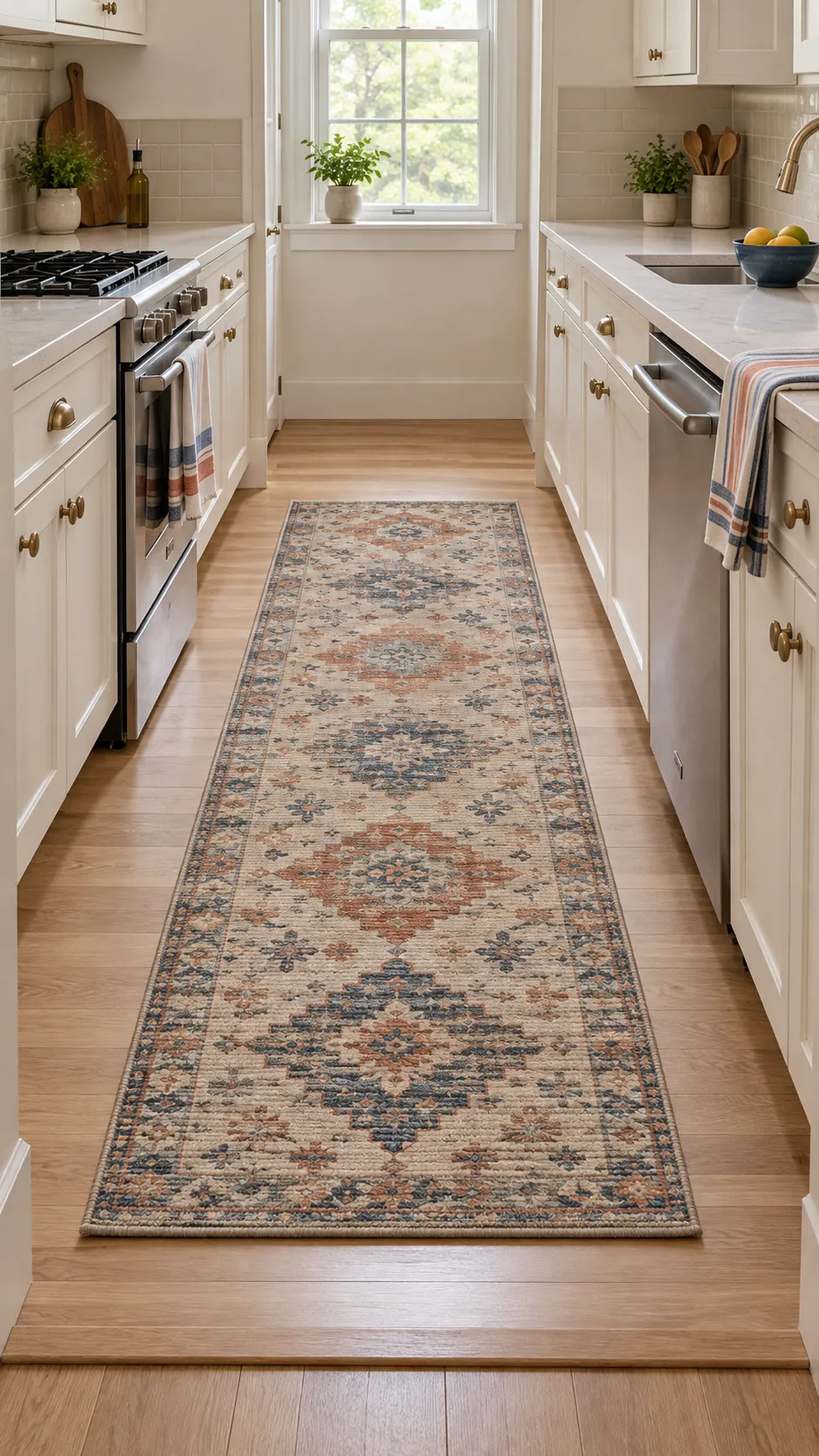
A tiny kitchen does not feel welcoming when every surface is decorated. It feels welcoming when the useful objects are easy to reach, the worktop is ready, and a few deliberate materials carry the room. Styling should reduce visual noise while protecting the space needed for cooking.
Edit what stays visible
Begin with the items already sitting out. Keep appliances on the counter only when they are used often enough to justify the space. Store duplicate tools, spare containers, and occasional equipment behind closed doors or on a nearby cart.
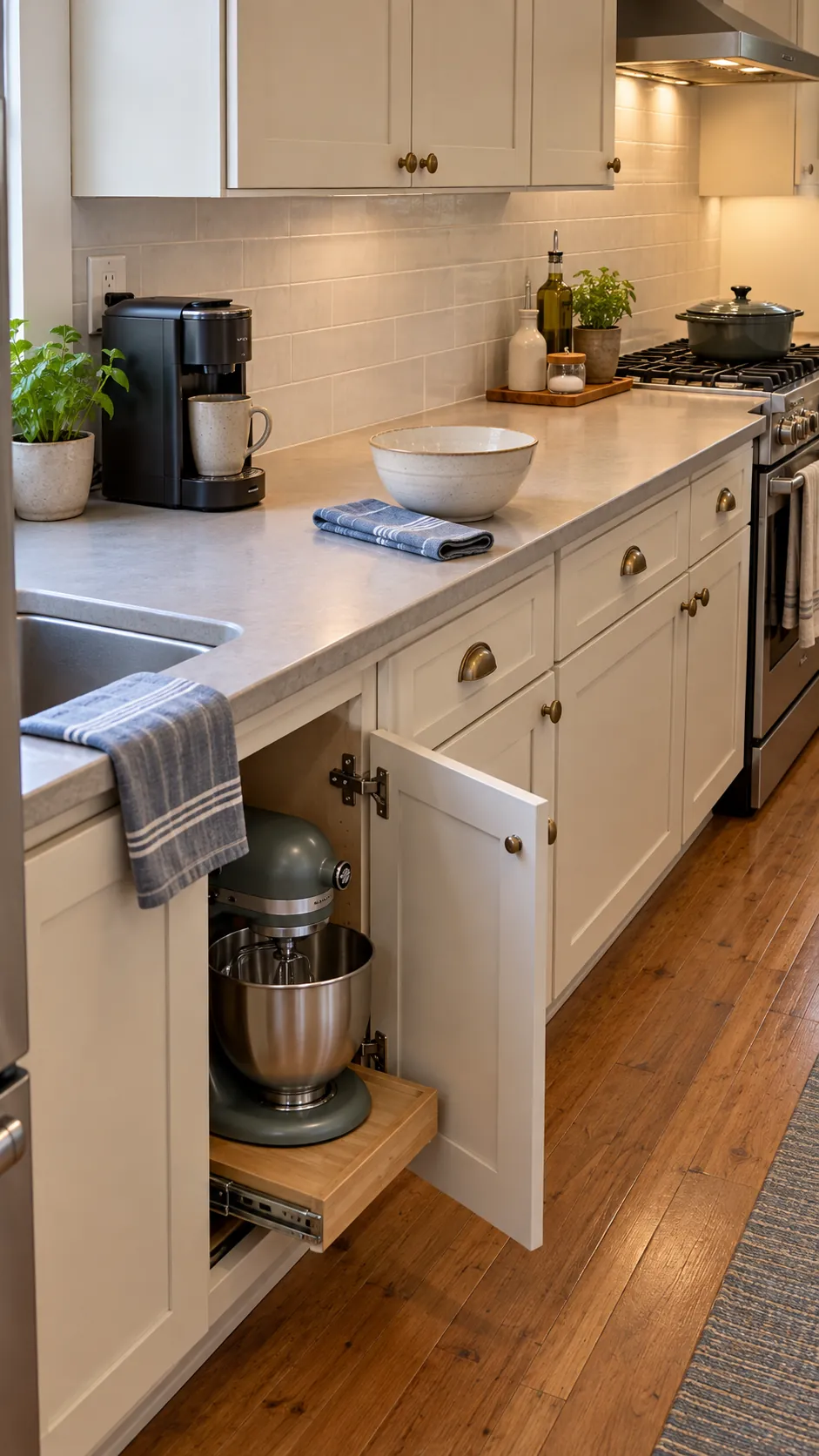
Group the remaining objects by task. A coffee area, cooking tray, or baking bin looks calmer than scattered pieces because each group has a reason to exist. Leave open counter between groups so the kitchen can still handle groceries and preparation.
Build a light palette with contrast
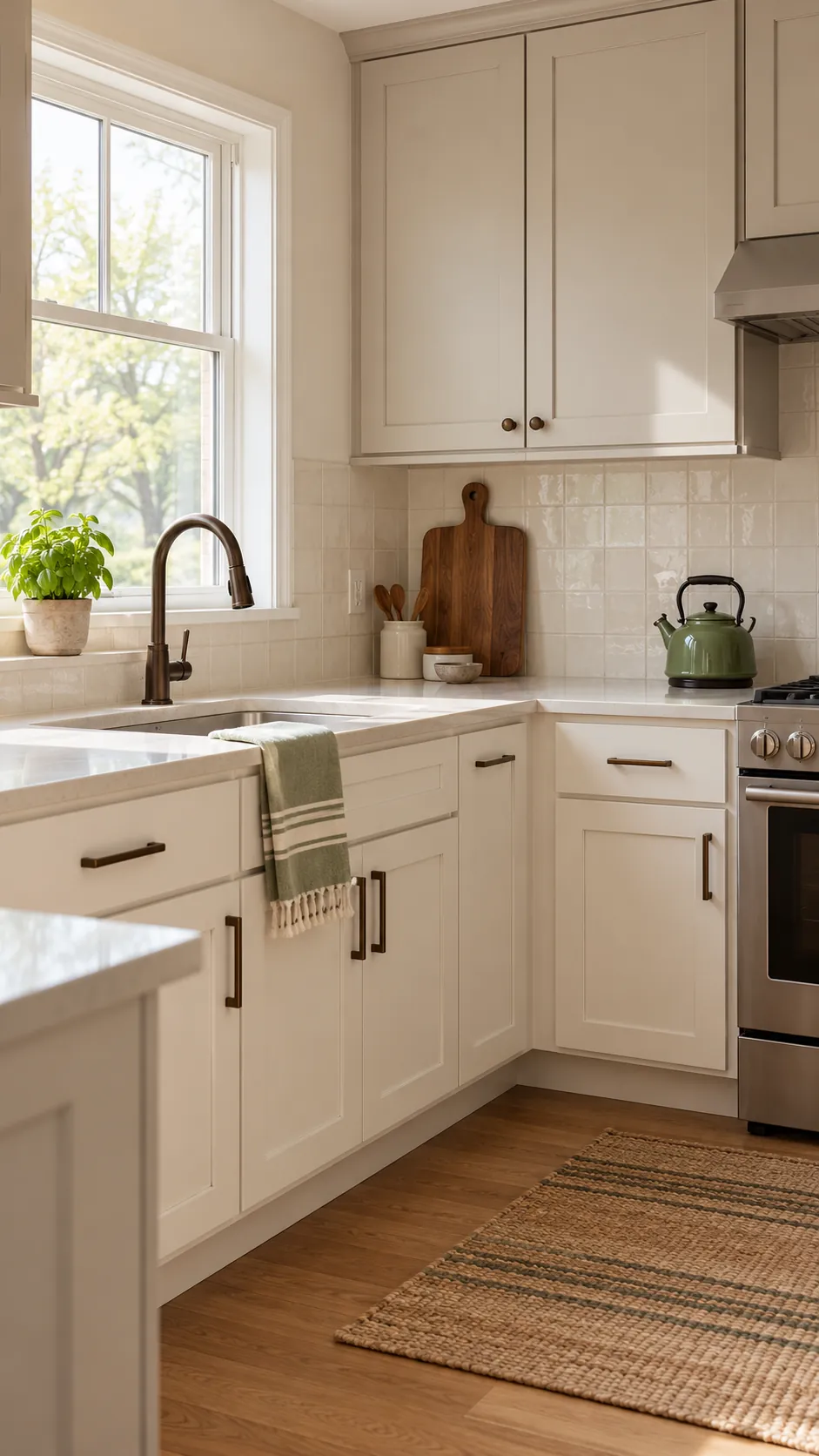
A light kitchen color palette can spread daylight, but an entirely pale room may feel flat. Use warm white, soft stone, or a quiet cabinet color as the background, then add a small amount of darker wood, metal, or textile for depth. The contrast helps edges stay clear without making the room busy.
Repeat one accent in two or three places. A muted green kettle can relate to a striped towel and a small herb pot. Repetition creates cohesion without requiring matched sets or decorative signs.
Style one useful open shelf
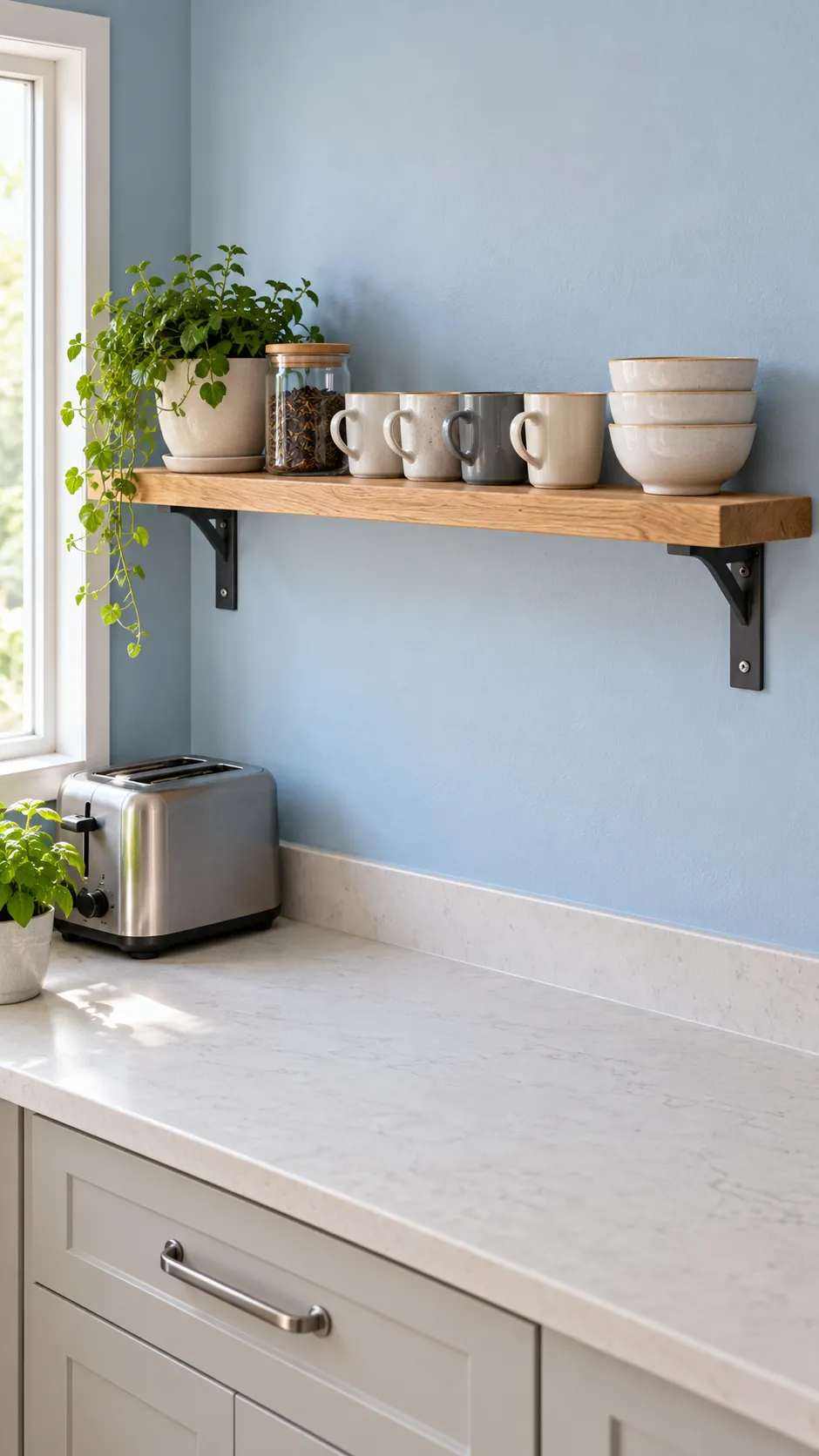
Open shelf kitchen decor works when the shelf stores things used through the week. Arrange a short row of cups, a stack of bowls, and one small plant or serving piece. Keep enough space around each group to lift items without moving everything else.
Place the shelf away from grease and strong steam when possible. Too many small objects create cleaning work and visual clutter. If the shelf keeps collecting unrelated items, replace part of it with closed storage rather than trying to style the clutter.
Keep countertop styling movable
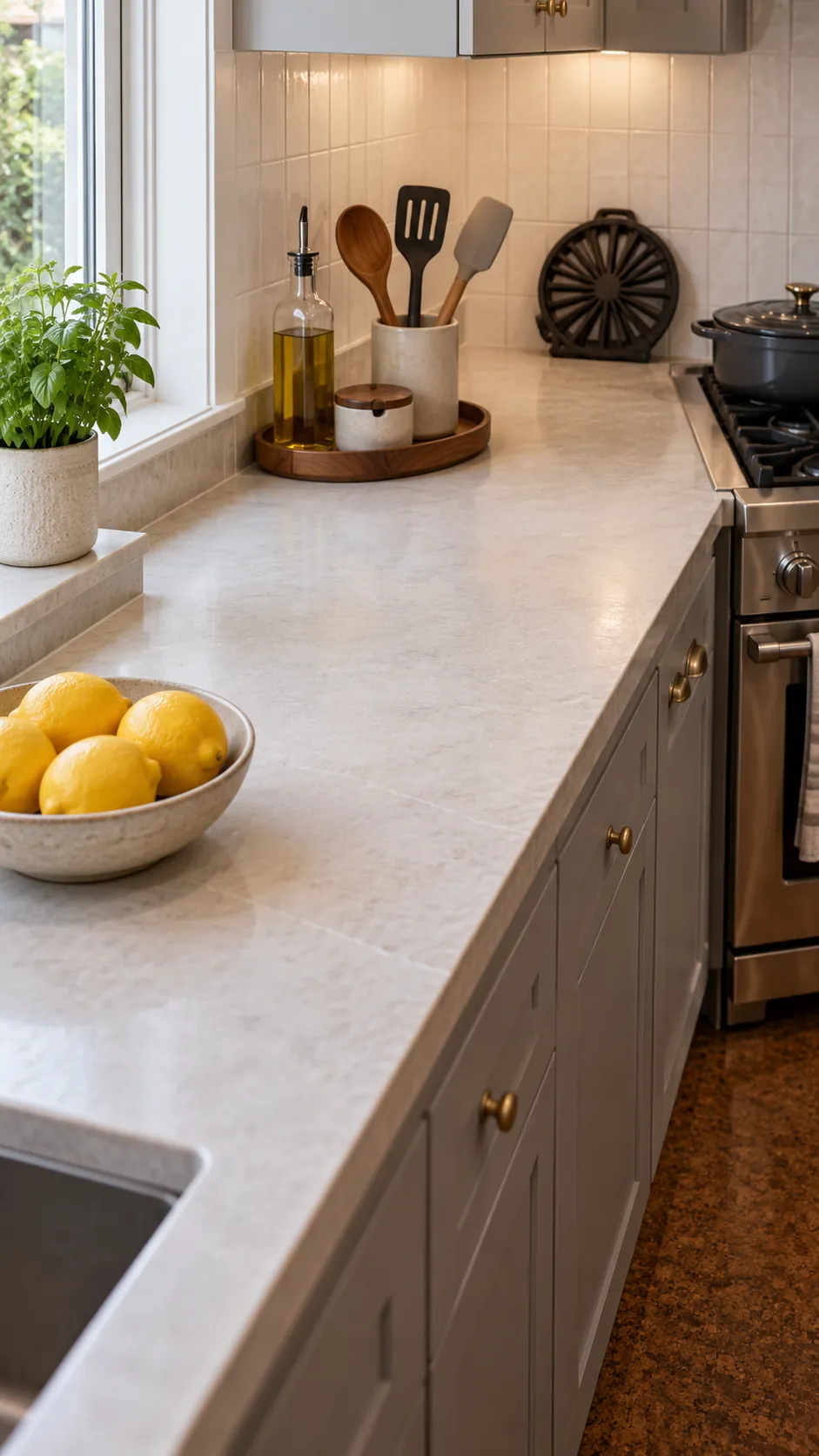
Minimal countertop styling should move in one or two motions. Put oil, salt, and a utensil crock on a compact tray near the range. Keep a fruit bowl or vase separate so either group can leave when the surface is needed for baking or meal preparation.
Choose containers with simple shapes and materials that already belong in the room. Glass, wood, and ceramic add texture without extra pattern. Avoid filling empty corners merely because they are visible. A clear corner is often the best landing place for a hot pan or grocery bag.
Choose furniture that can step aside
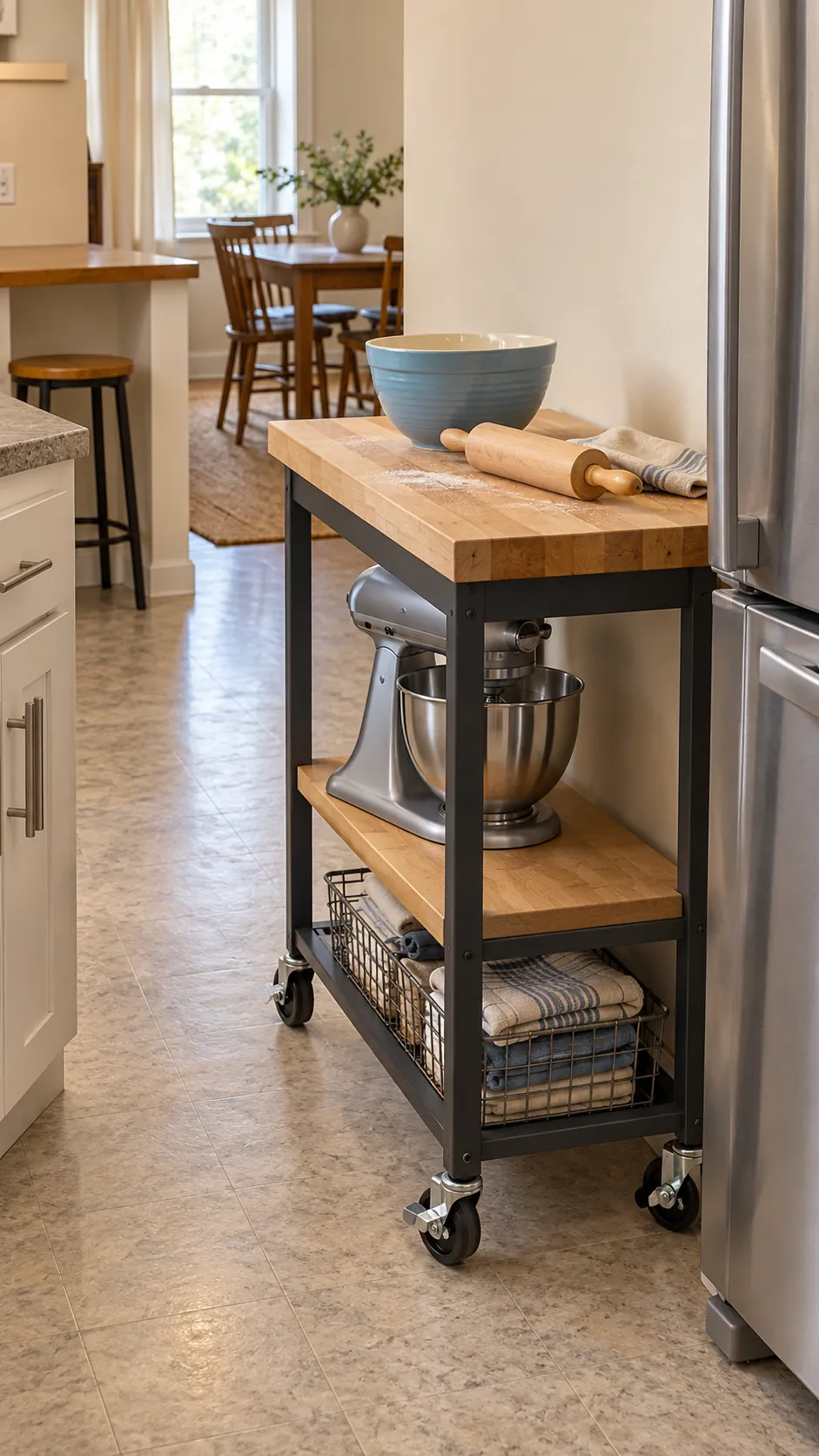
Compact kitchen furniture should solve a specific shortage. A narrow cart can add a baking surface and hold a mixer below. A drop leaf table can serve meals, then reduce its footprint. Backless stools can disappear under a counter when nobody is seated.
Measure the furniture with doors and drawers open. Wheels need locks, and a work cart needs a stable top at a useful height. Furniture that must be moved every time the refrigerator opens will make the room harder to use, even if it looks charming in a photograph.
Ground the room with a washable rug
A small kitchen rug can soften sound and introduce color without using counter space. Choose a flat weave that allows doors to pass above it and does not create a raised edge in the main path. A narrow runner often fits better than several small mats.
Use a secure rug pad and select a material that suits spills and frequent cleaning. The pattern should relate to the room palette without becoming the loudest surface. When the rug, towel, and one accent color connect, the kitchen can feel cozy while the counters stay clear and ready.