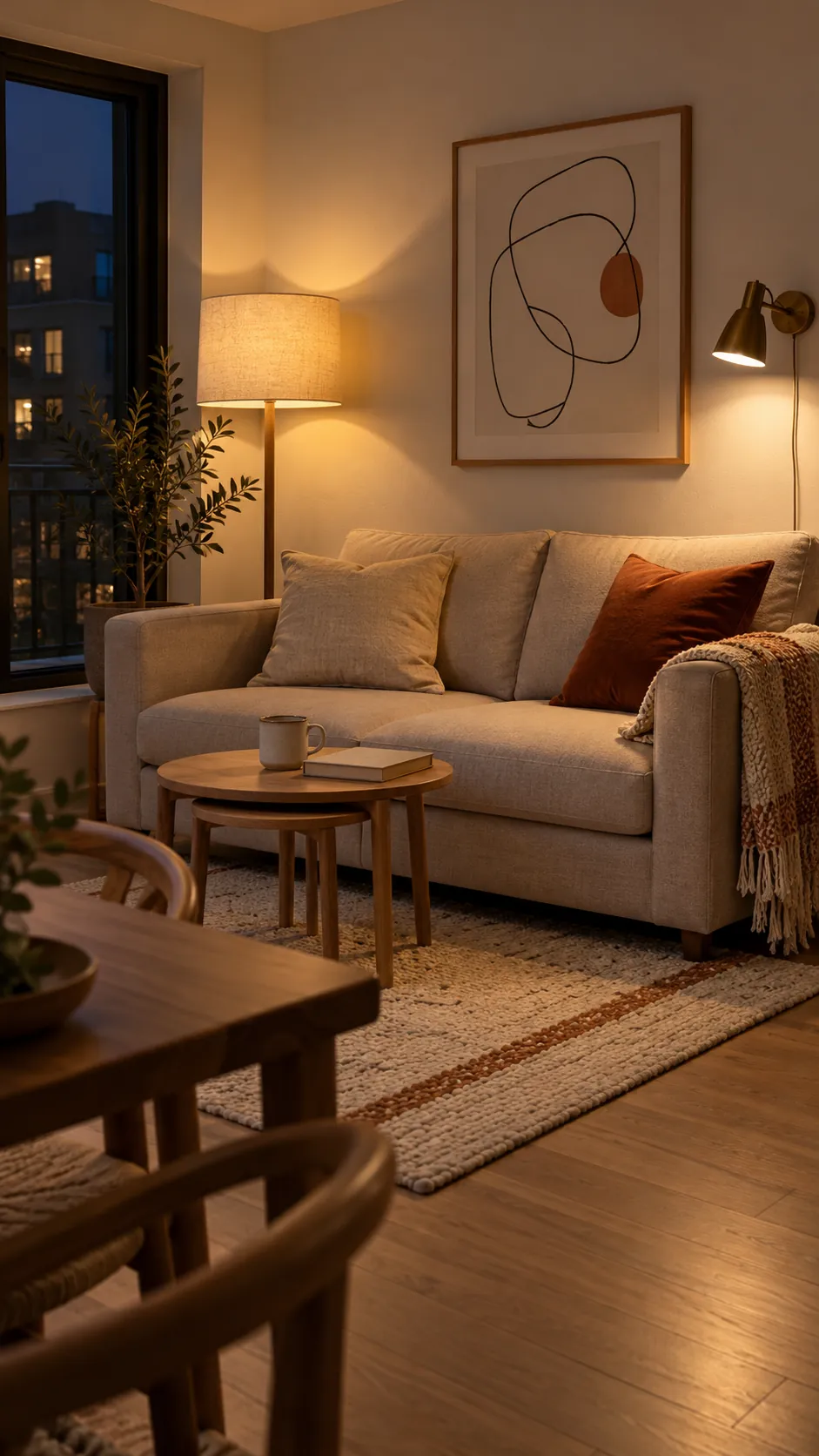
A tiny living room feels crowded when every useful function demands a separate piece of furniture. Seating, dining, television, storage, and work may all share the same square area. The room becomes easier when one clear path and one comfortable conversation zone guide every choice.
Draw the walking route before arranging furniture
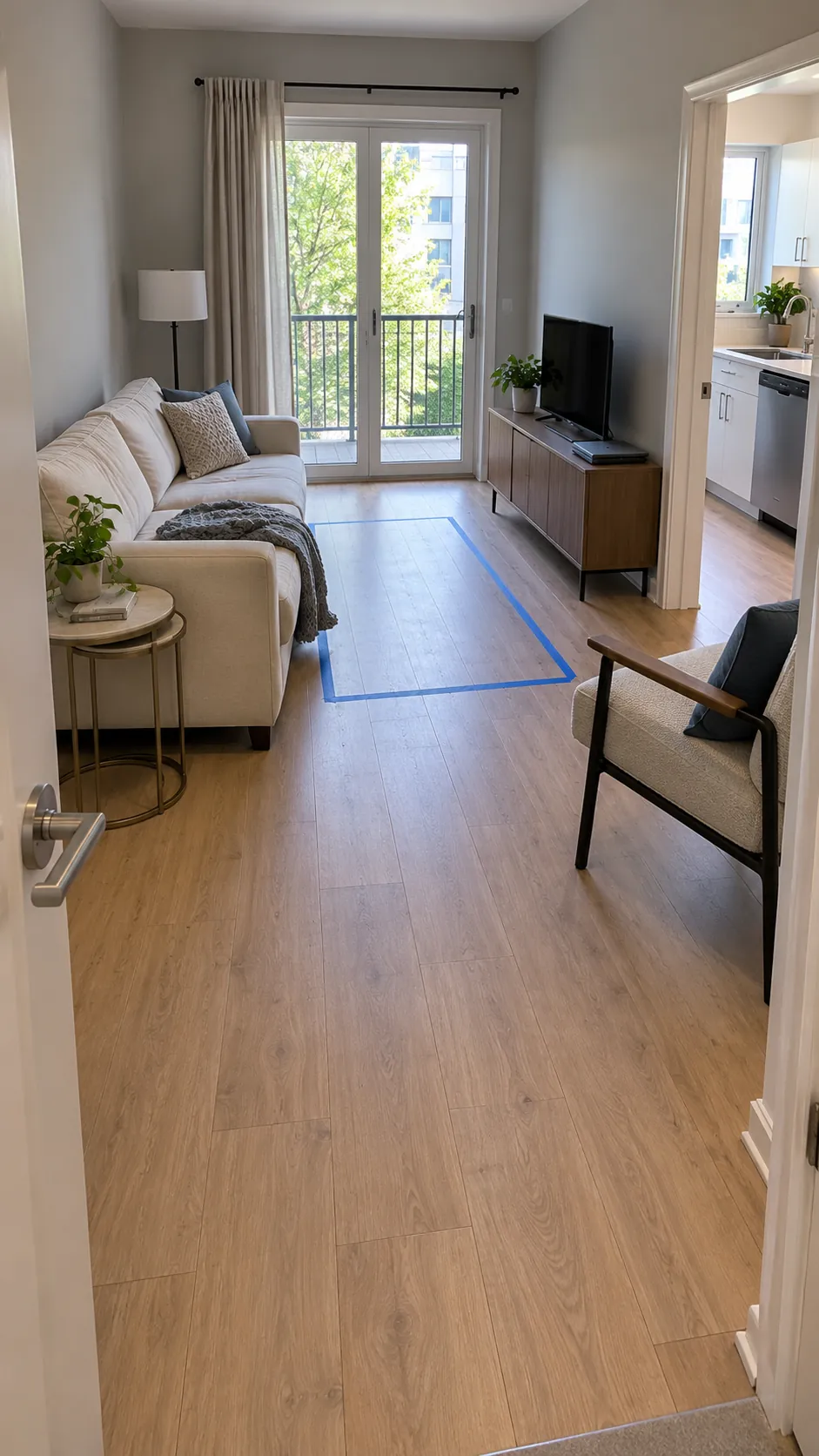
Mark the path from the entry to the kitchen, window, balcony, and any adjoining room. Keep that route free before deciding where the sofa belongs. Furniture can sit closer together inside the seating zone, but it should not force people to turn sideways during normal movement.
Use painter tape to test the footprint of a table or cabinet. Include open doors, pulled out drawers, and the space needed to sit down. A layout that works only when every piece is perfectly tucked away will become frustrating during daily use.
Let one sofa define the seating zone
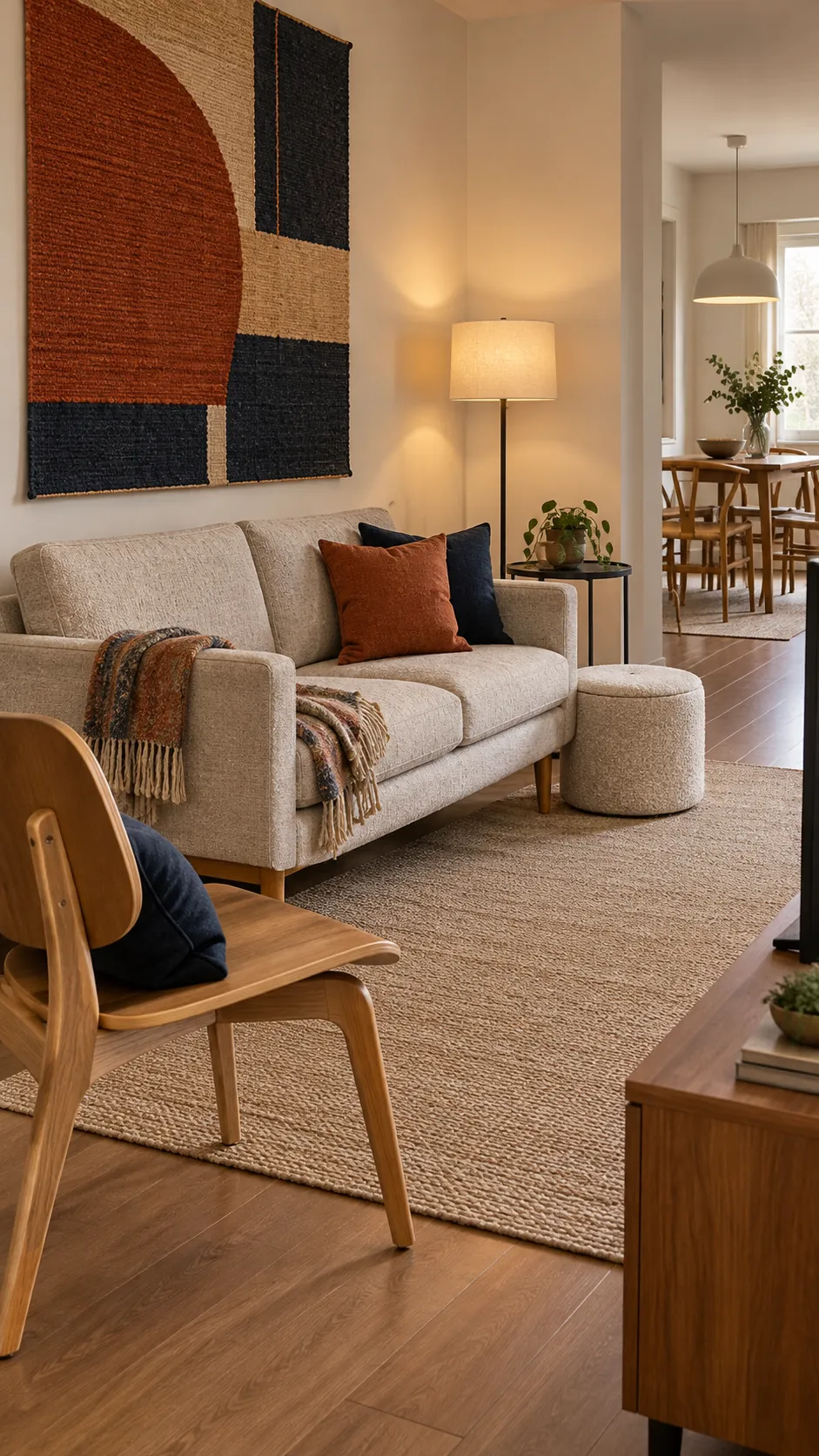
A compact sofa with visible legs and slim arms can provide full comfort without carrying unnecessary bulk. If the existing sofa is large and loved, keep the other furniture lighter instead of replacing everything at once. Place the sofa where it supports the main activity and leaves a direct path beside it.
Add one movable chair, stool, or floor cushion only when extra seating is actually needed. Avoid matching sets that fill every wall. A small apartment living room often feels calmer when the sofa is the only dominant piece and the supporting seats can move.
Use the rug to connect the room
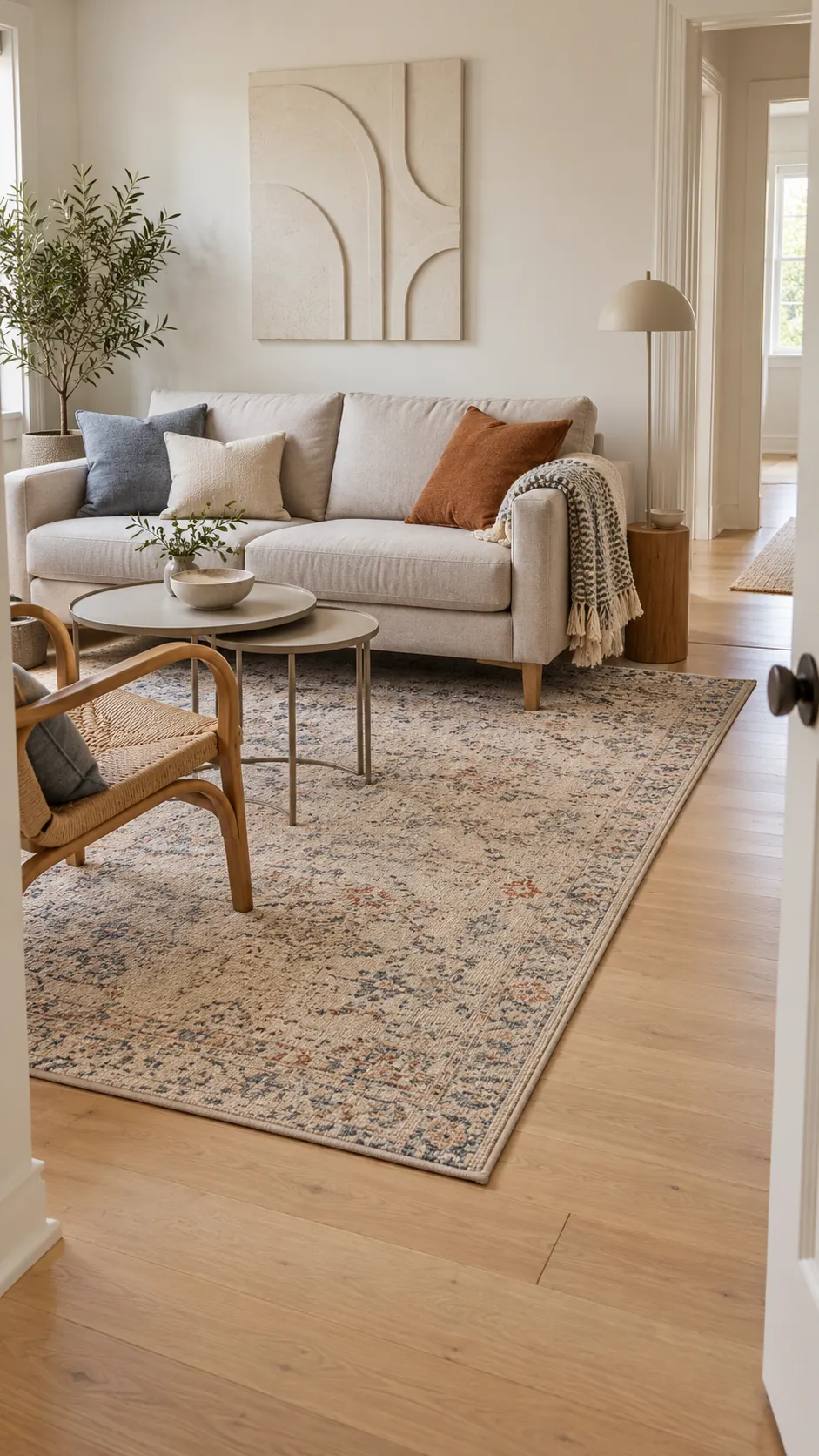
A small living room rug should connect the seating rather than float like a mat in the center. Choose a size that allows the front sofa legs and at least part of the supporting seat to rest on it. This creates one visual zone and can make the room feel broader.
Keep the pattern quiet if the room already contains many functions. A low contrast design adds warmth without cutting the floor into smaller pieces. Use a secure pad, check door clearance, and leave the main walking route smooth.
Replace one large table with nesting surfaces
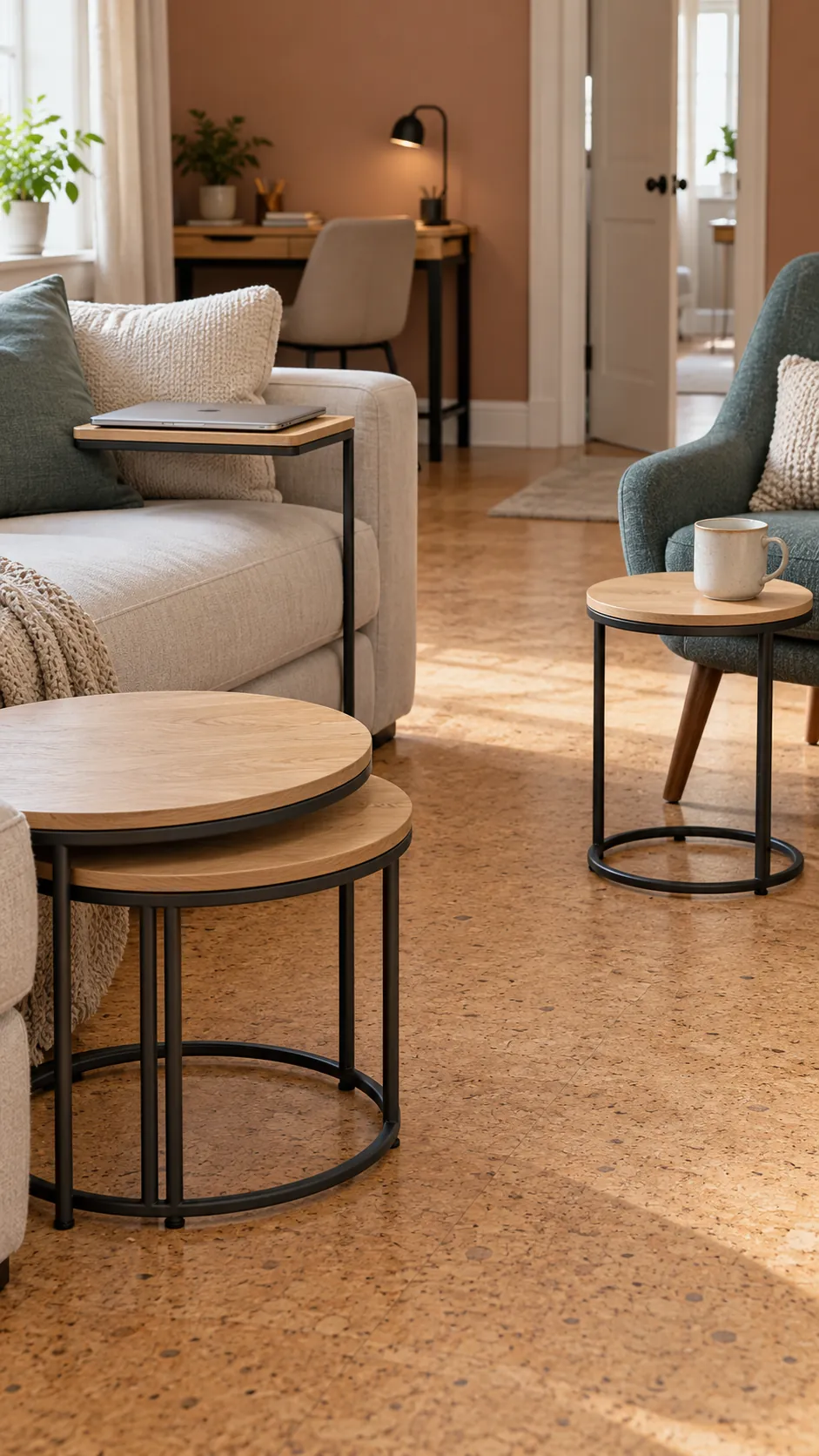
Nesting coffee tables provide a surface for meals, drinks, or a laptop without creating one permanent obstacle. Keep them stacked for daily movement, then separate them when guests arrive. Rounded edges are helpful in a narrow route because they are easier to pass.
A slim side table can serve the sofa while the center of the room stays open. Choose tables light enough to move with one hand but stable enough for their real task. Clear tops and thin frames reduce visual weight, yet durability matters more than a delicate appearance.
Move storage up the wall
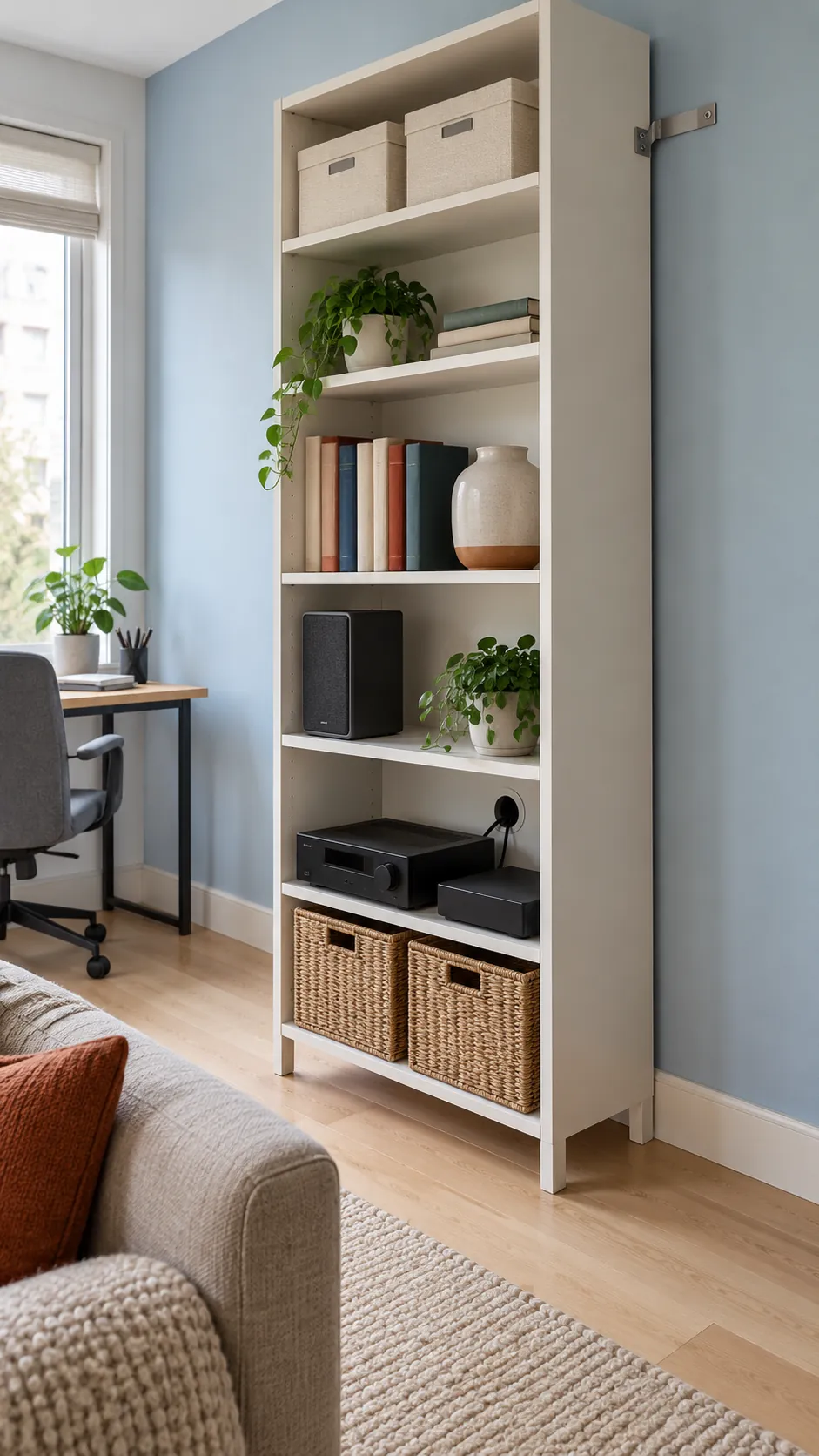
Vertical living room storage can replace several low cabinets that consume floor space. Use a tall bookcase, a narrow wall cabinet, or a short series of secure shelves. Keep the lower levels for heavier items and daily access, then reserve the highest area for lighter occasional storage.
Leave some open wall around the storage so it does not become a solid block. Closed boxes can hide cables, games, and office supplies, while a few visible books and useful objects add character. Secure tall furniture to the wall, especially in homes with children or pets.
Create coziness through light and texture
A cozy neutral living room needs variation in texture more than a large collection of decorations. Combine a woven throw, one or two cushions, a wood surface, and a soft rug within a restrained palette. Repeat one muted accent so separate pieces feel related.
Use a floor lamp or wall mounted light to brighten the seating area without occupying the main table. Add a smaller reading source if the room also serves as an office. When the lighting supports each activity and the textiles stay edited, the room feels warm without becoming visually full.