
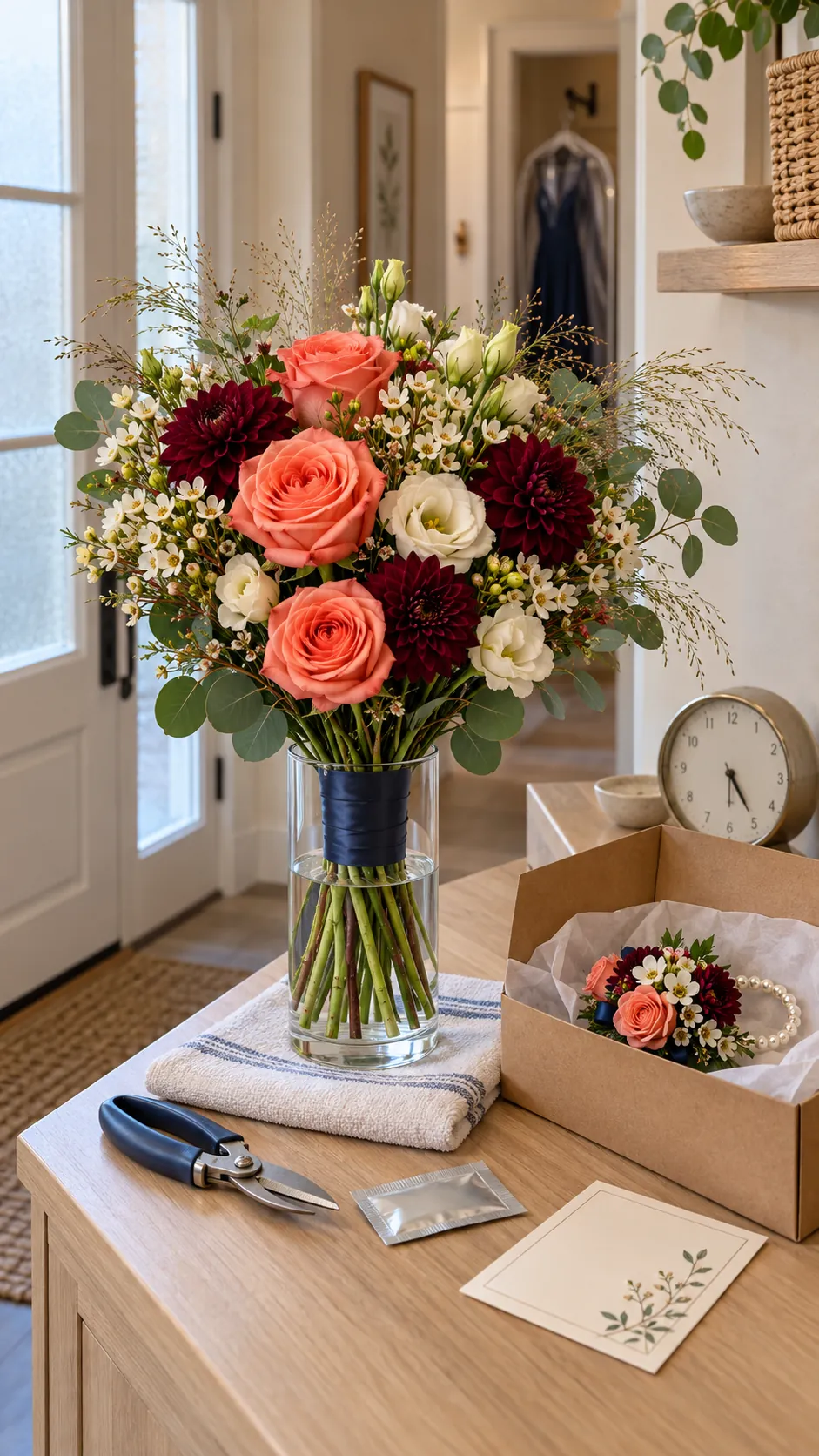
Fresh homecoming flowers usually fail for one of three reasons: they lose water, get too warm, or are handled too much before the event starts. A little planning protects the petals and also removes one more source of stress from an already busy day.
The correct care depends on the item. A hand tied bouquet can drink from a vase. A corsage or boutonniere has cut stems wrapped into a wearable design, so it needs cool storage and protection from crushing. Keep the florist instructions with the order because delicate flowers may need different care from roses, carnations, or chrysanthemums.
Schedule Pickup Close to the Event
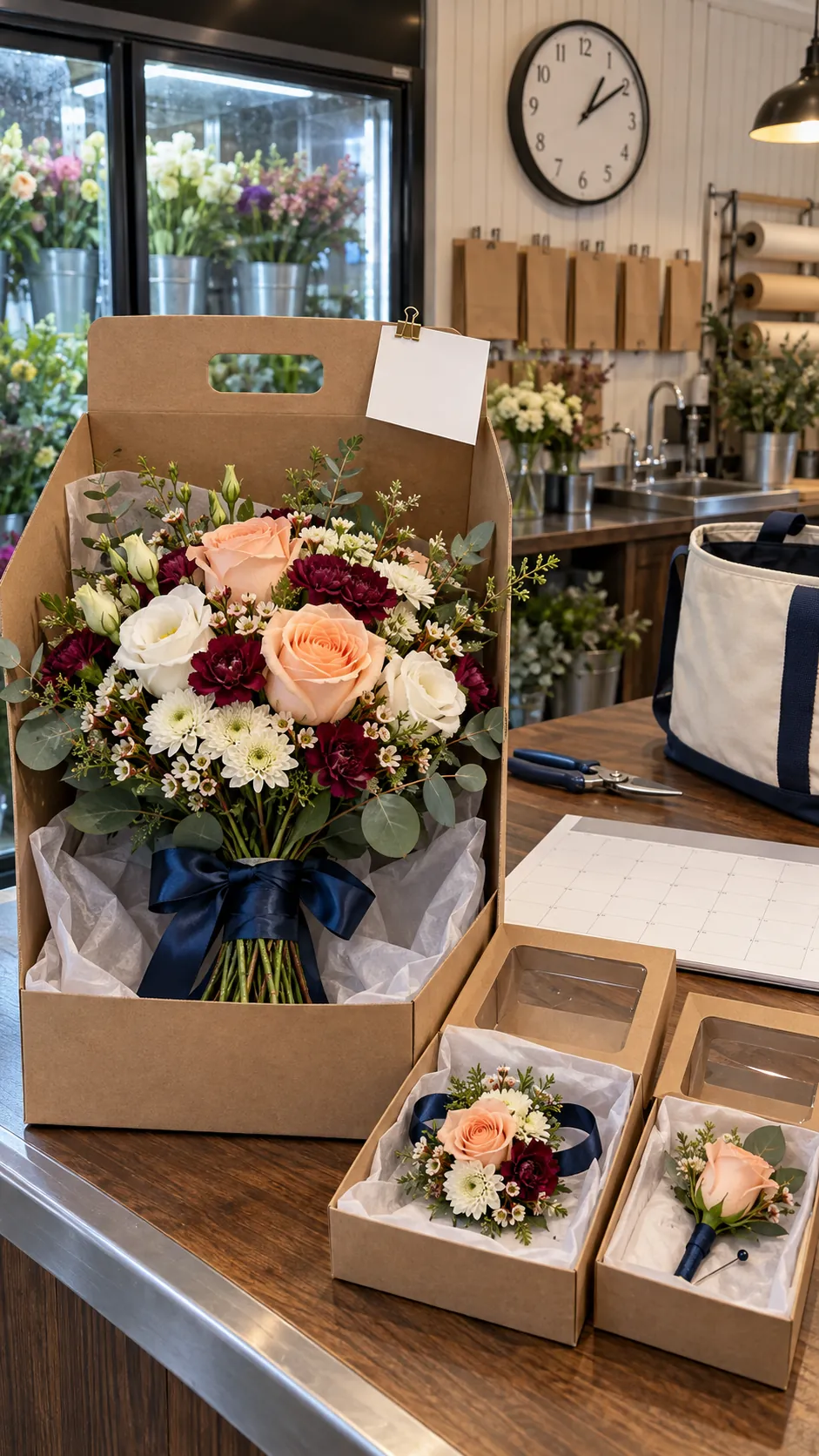
Ask the florist when the order will be made and when it should be collected. Same day pickup is often simplest because it shortens the time that flowers must be stored at home. If pickup must happen the day before, confirm whether the chosen blooms are sturdy enough and ask for exact overnight instructions.
Build the schedule backward from photos, dinner, and the dance. Include travel time and a quiet window for checking the order. A rushed pickup can leave flowers in a warm car while everyone finishes dressing, which is one of the easiest ways to lose freshness.
Give a Bouquet Clean Water
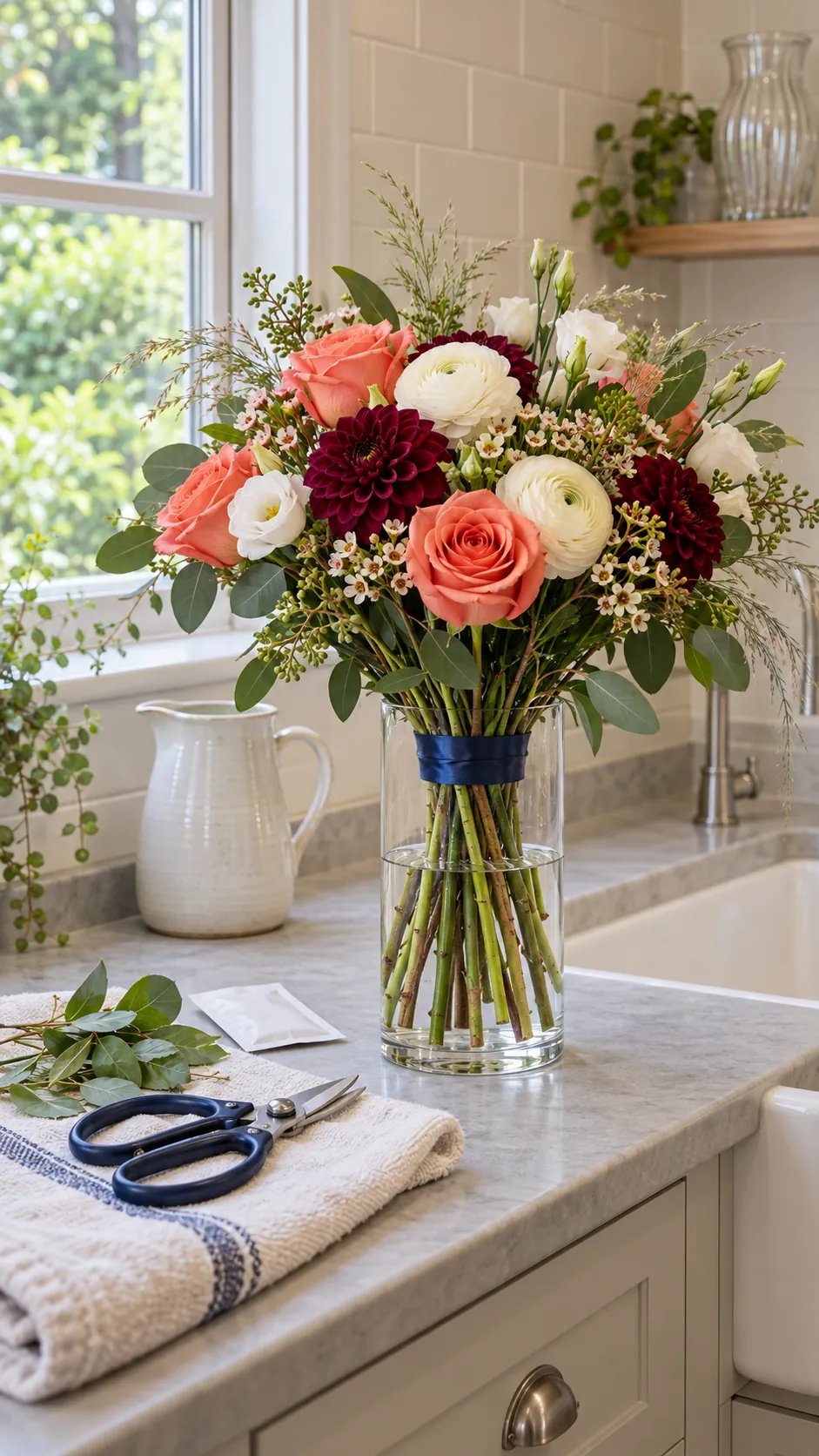
Place a hand tied bouquet in a clean vase as soon as the florist wrap allows. Use cool or room temperature water and the flower food supplied with the order. Keep leaves above the water line so decaying foliage does not contaminate the vase.
If the florist says the stems may be trimmed, use clean sharp snips and make a small fresh cut before placing them in water. Do not remove a structural tie that holds the arrangement together. Check the water level before leaving because a dense bouquet can drink more than expected.
Store Wearable Flowers Without Crushing Them
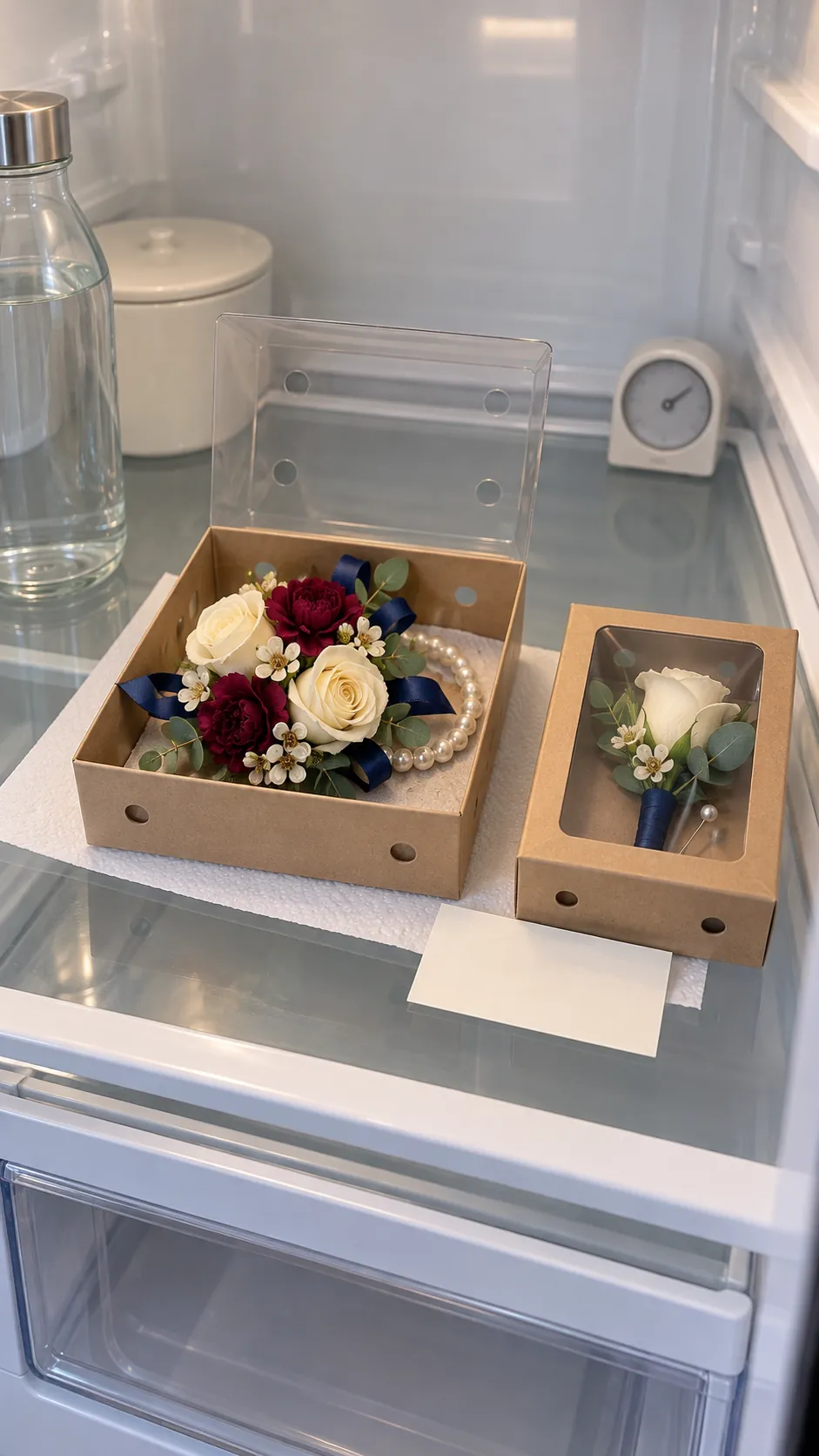
Leave a corsage or boutonniere in its protective box until it is time to dress. The box prevents petals from rubbing against clothes, bags, and other items. Keep the flower facing upward and do not stack anything on top.
Follow the florist’s recommendation about refrigeration. If cool storage is advised, use a clean shelf with stable temperature and enough room around the box. Keep it away from the freezer vent, wet surfaces, and produce because some fruits release gases that speed flower aging.
Do not put the box in a freezer. Do not seal damp flowers in an improvised airtight bag. Extra moisture can mark petals, while freezing temperatures can damage them even when they still look firm at first.
Choose a Cool Holding Spot
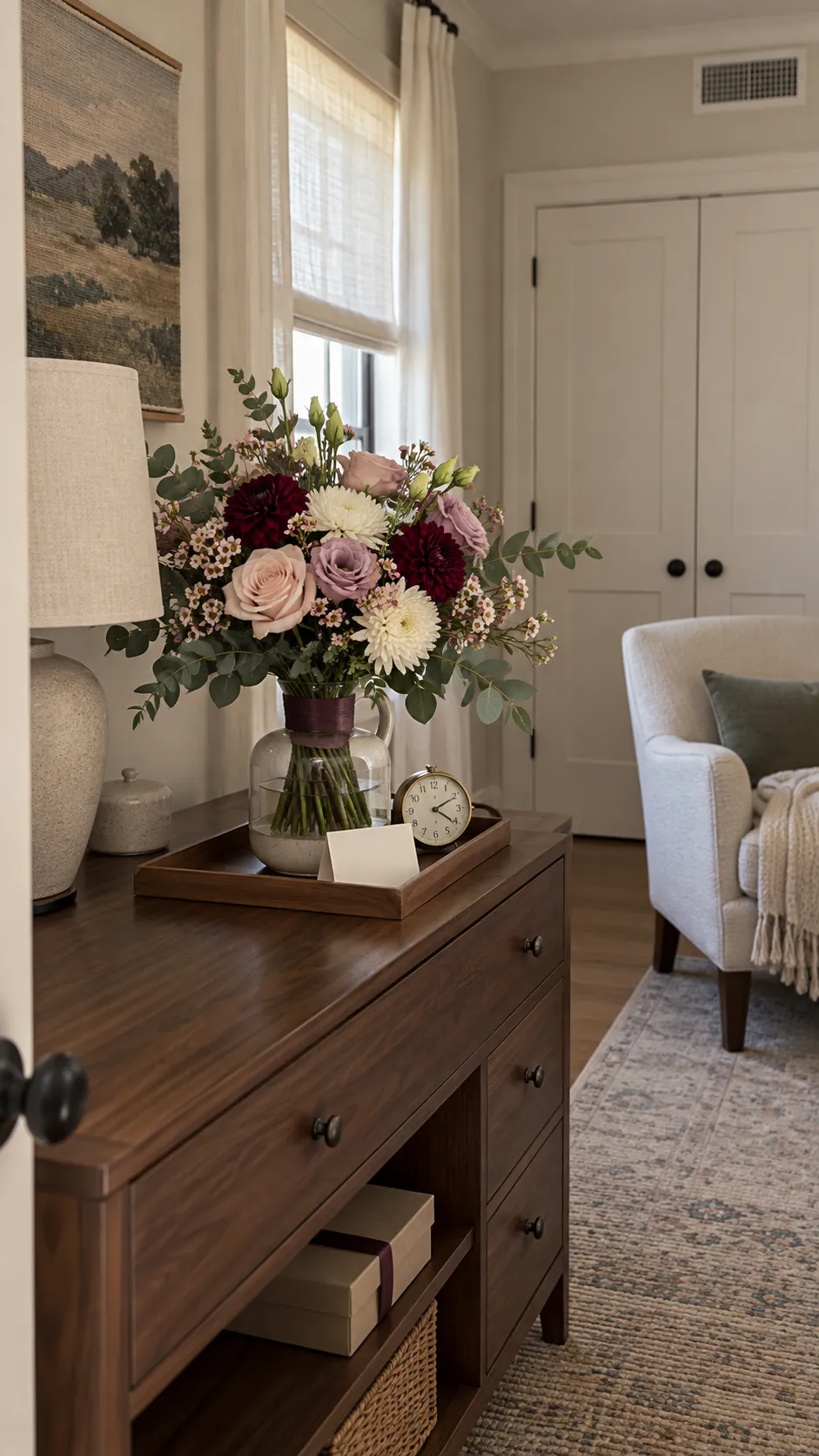
Keep flowers away from direct sun, heating vents, hot kitchens, and steamy bathrooms. A cool interior room with indirect light is better for a bouquet that is drinking in a vase. Place it where pets, children, sleeves, and open doors cannot knock it over.
Air conditioning helps, but a strong vent can dry petals. Choose still, cool air rather than a cold draft. If the house is busy, label the area mentally as a no touch zone and move bags, makeup, food, and hair products to another surface.
Transport Flowers Upright and Shaded
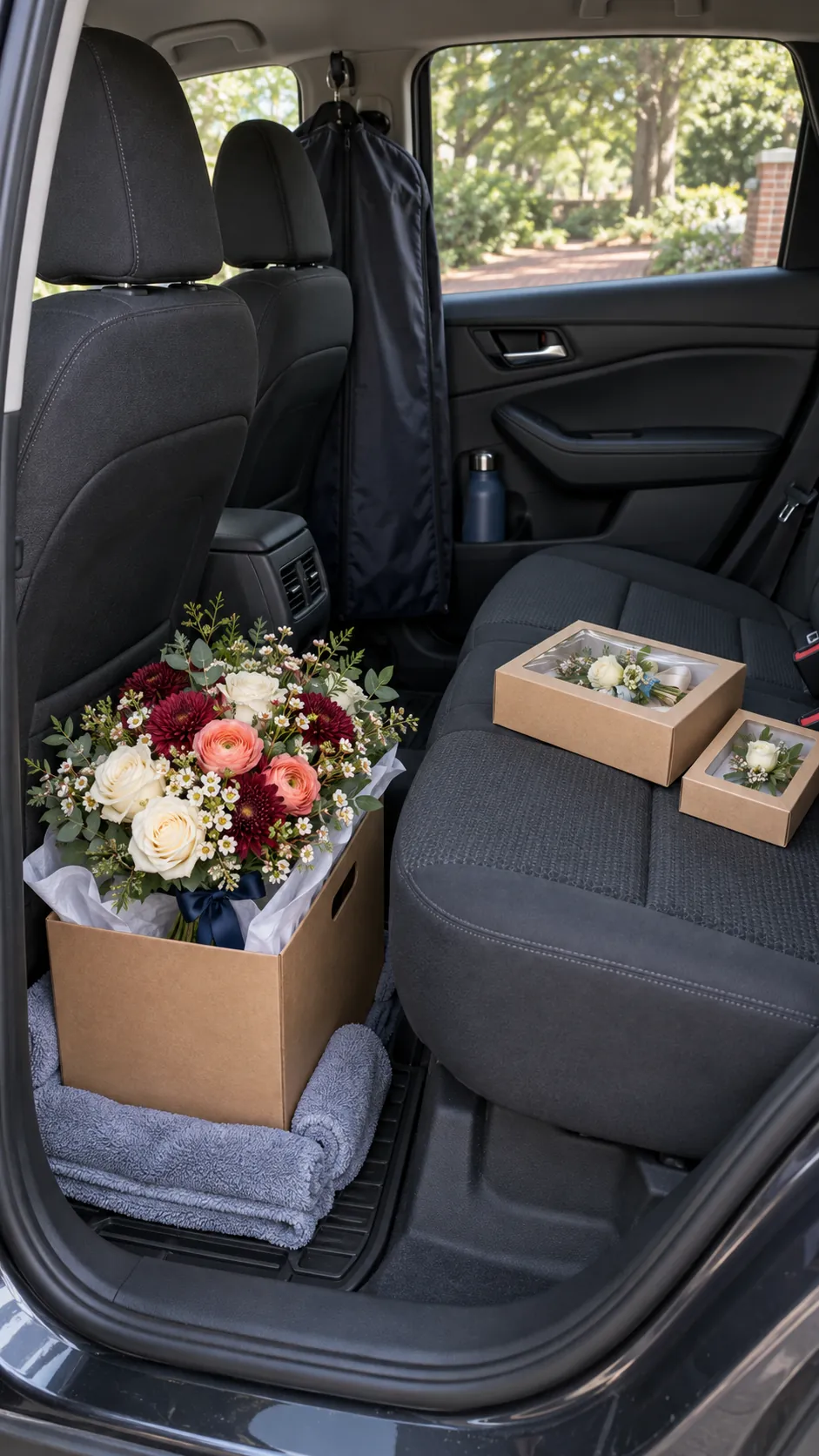
Cool the car before loading the flowers. Secure a bouquet upright in a florist box or stable container on the floor, where it cannot tip during a turn. Keep wearable flowers flat in their box and shield them from luggage, garment bags, and direct sunlight through the window.
Never leave fresh flowers in a parked car. Interior temperatures can rise quickly even on a mild day. Carry the order inside at every long stop, and plan the route so flowers do not spend unnecessary time away from water or controlled temperature.
Do a Gentle Final Check
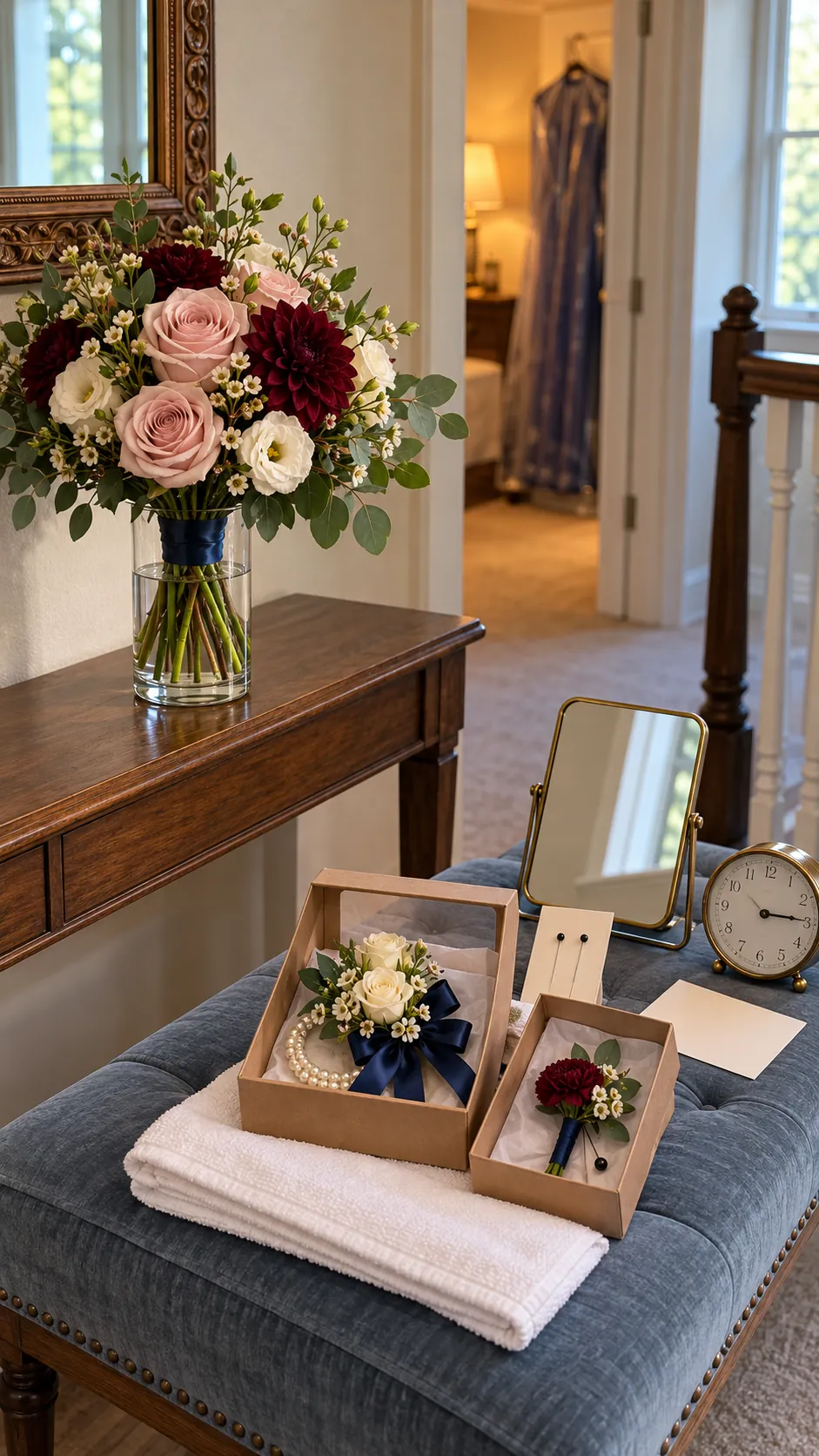
Take the flowers out shortly before they are needed. Check for loose ribbon, pooled water, bruised petals, or a shifting pin. Remove only a clearly damaged outer petal if the florist has said that is safe. Avoid repeated handling because fingers transfer heat and can crease delicate blooms.
Keep the bouquet in water until the last practical moment, then dry the lower wrap before handing it over. Put on a corsage or boutonniere after hair products, fragrance, and makeup are finished. The best bouquet preparation checklist is simple: fresh water, cool shade, secure transport, and gentle handling from pickup to photos.